

Lateral line ablation by ototoxic compounds results in distinct rheotaxis profiles in larval zebrafish
Open accessPublished version of a preprint
The DOI matches its Crossref record; 56 of the 56 references it cites were found in a registry or an index.
Abstract
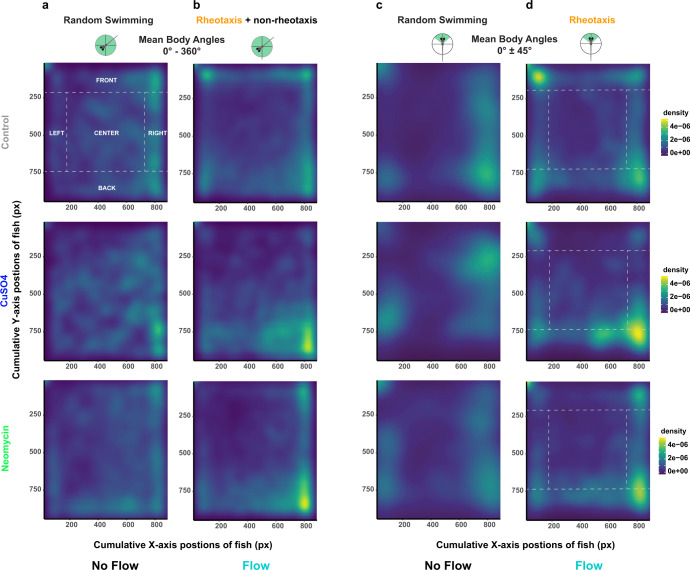
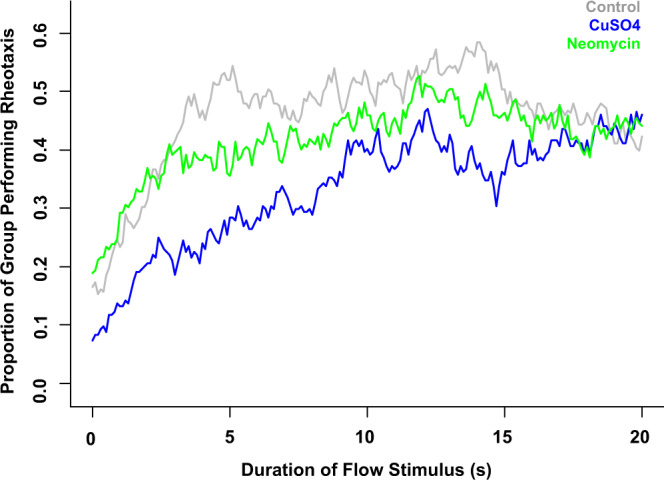
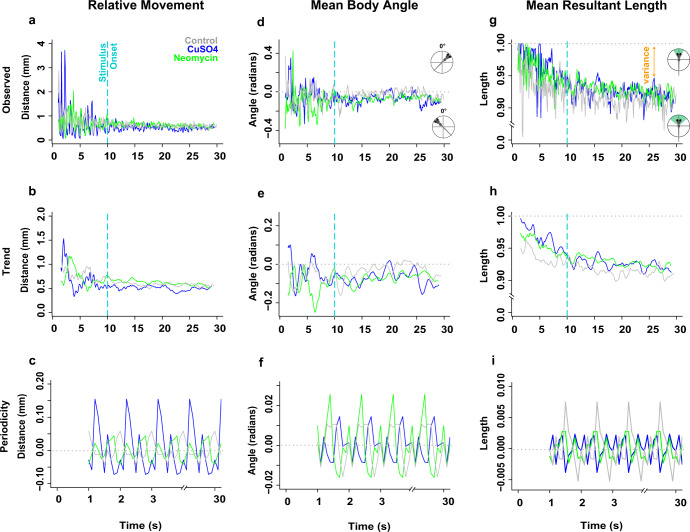
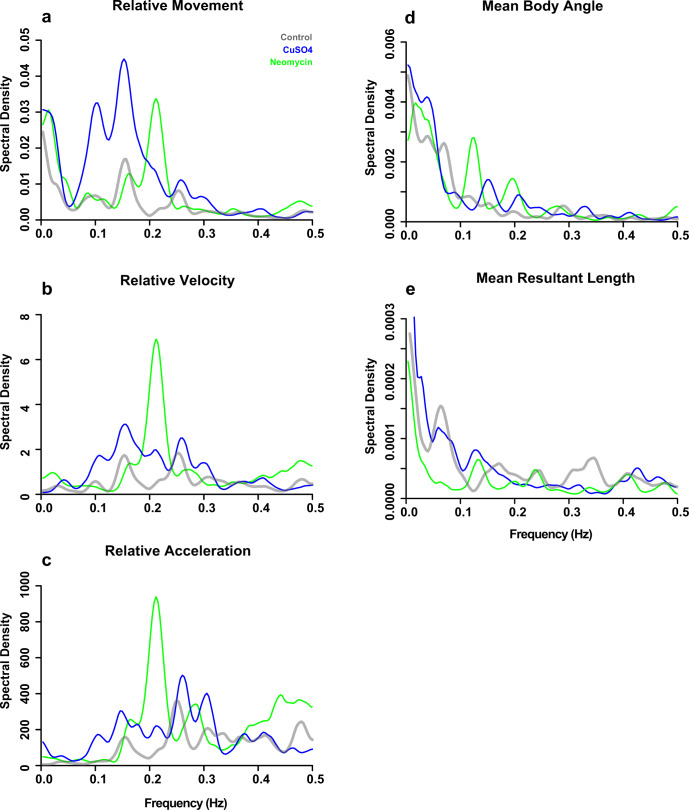
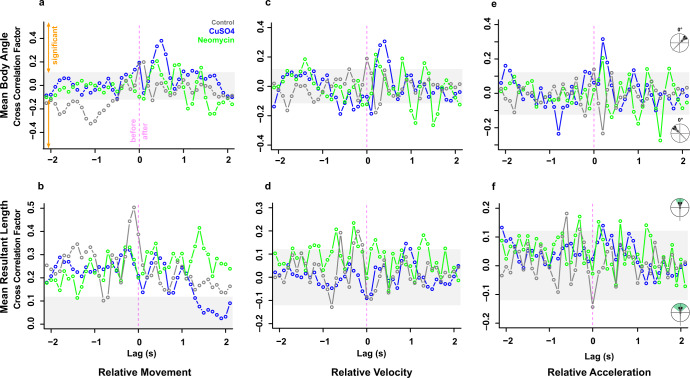
The zebrafish lateral line is an established model for hair cell organ damage, yet few studies link mechanistic disruptions to changes in biologically relevant behavior. We used larval zebrafish to determine how damage via ototoxic compounds impact rheotaxis. Larvae were treated with CuSO 4 or neomycin to disrupt lateral line function then exposed to water flow stimuli. Their swimming behavior was recorded on video then DeepLabCut and SimBA software were used to track movements and classify rheotaxis behavior, respectively. Lateral line-disrupted fish performed rheotaxis, but they swam greater distances, for shorter durations, and with greater angular variance than controls. Furthermore, spectral decomposition analyses confirmed that lesioned fish exhibited ototoxic compound-specific behavioral profiles with distinct changes in the magnitude, frequency, and cross-correlation between fluctuations in linear and angular movements. Our observations demonstrate that lateral line input is needed for fish to hold their station in flow efficiently and reveals that commonly used lesion methods have unique effects on rheotaxis behavior.
Overview
The claims and statistics of this paper haven’t been checked yet.
Free: it reads the open-access text and checks the first 5 claims that cite a source we can check. Create a free account to check every claim.
Integrity signals
Registry
Cites
Statistics
Figures
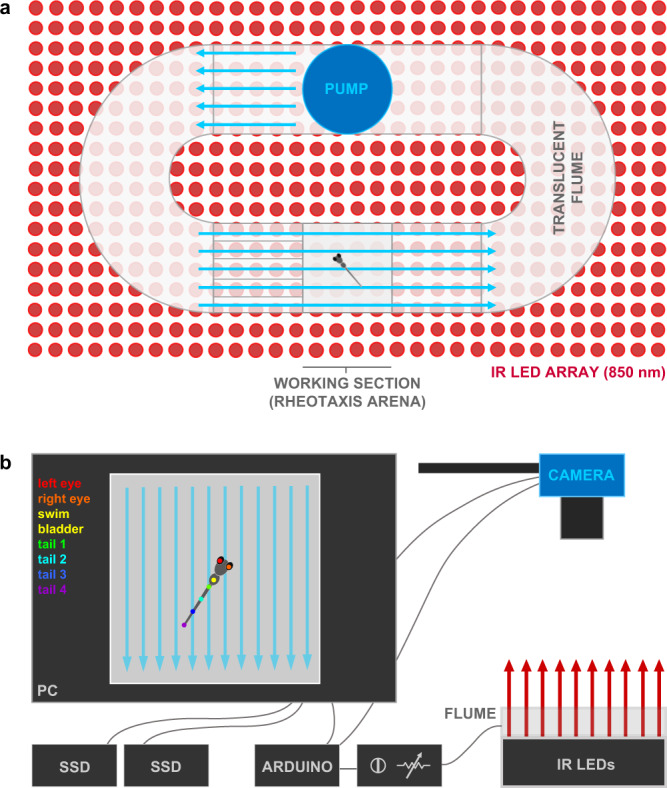
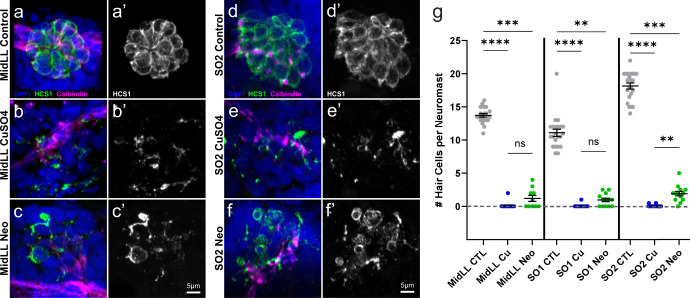
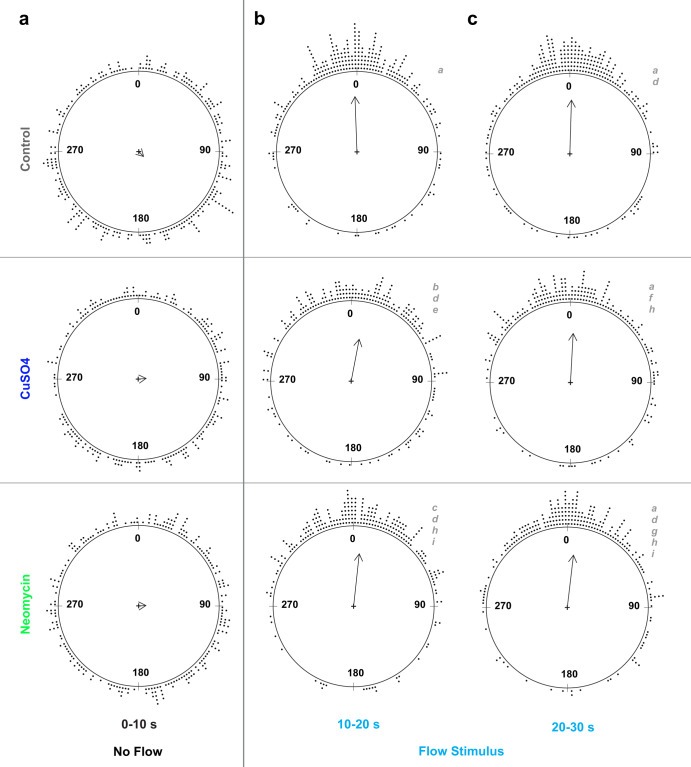
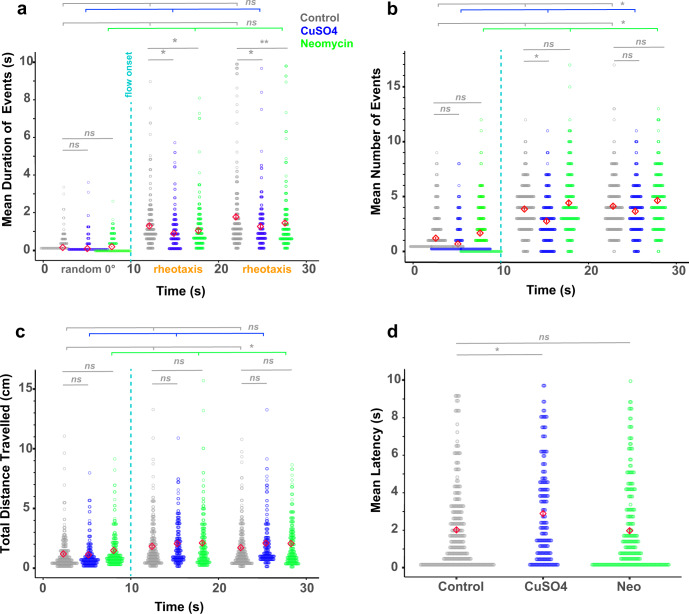
Verification
Claims the paper makes
The claims and statistics of this paper haven’t been checked yet.
Free: it reads the open-access text and checks the first 5 claims that cite a source we can check. Create a free account to check every claim.
Claims other papers make about this one
Each is checked against this paper’s own text: does it say what the citing paper says it does?
The source backs part of the claim, not all of it — or backs it for a different population, condition or comparison.
In the citing paper
“Although multiple sensory modalities, including mechanosensation and proprioception, influence rheotaxis (36, 71), simZFish circuits alone can effectively drive rheotaxis if visual information is available.”
From Artificial embodied circuits uncover neural architectures of vertebrate visuomotor behaviors (2025) · cites this paper as [71]
Experimental — accuracy not yet measured
Self-check
Percentages, sums and reported differences re-computed from the paper’s own numbers.
The self-check needs the paper’s full text.
Citations
Cites
R: A Language and Environment for Statistical Computing
R Core Team (2025) · doi:10.32614/r.manuals · Cited by 352,181
Fitting Linear Mixed-Effects Models Using lme4
Bates, D., Mächler, M., Bolker, B., & Walker, S. (2015) · Journal of Statistical Software · doi:10.18637/jss.v067.i01 · Cited by 86,835
Wickham, H. (2016) · Use R! · doi:10.1007/978-3-319-24277-4 · Cited by 33,115
lmerTest Package: Tests in Linear Mixed Effects Models
Kuznetsova, A., Brockhoff, P. B., & Christensen, R. H. B. (2017) · Journal of Statistical Software · doi:10.18637/jss.v082.i13 · Cited by 24,346
Wickham, H., Averick, M., Bryan, J., Chang, W., McGowan, L., François, R., Grolemund, G., Hayes, A., Henry, L., Hester, J., et al. (2019) · Journal of Open Source Software · doi:10.21105/joss.01686 · Cited by 22,138
DeepLabCut: markerless pose estimation of user-defined body parts with deep learning
Mathis, A., Mamidanna, P., Cury, K. M., Abe, T., Murthy, V. N., Mathis, M. W., & Bethge, M. (2018) · Nature Neuroscience · doi:10.1038/s41593-018-0209-y · Cited by 5,187
The Split-Apply-Combine Strategy for Data Analysis
Wickham, H. (2011) · Journal of Statistical Software · doi:10.18637/jss.v040.i01 · Cited by 2,705
Using DeepLabCut for 3D markerless pose estimation across species and behaviors
Nath, T., Mathis, A., Chen, A. C., Patel, A., Bethge, M., & Mathis, M. W. (2019) · Nature Protocols · doi:10.1038/s41596-019-0176-0 · Cited by 1,505
zoo : S3 Infrastructure for Regular and Irregular Time Series
Zeileis, A., & Grothendieck, G. (2005) · Journal of Statistical Software · doi:10.18637/jss.v014.i06 · Cited by 1,243
topicmodels : An R Package for Fitting Topic Models
Grün, B., & Hornik, K. (2011) · Journal of Statistical Software · doi:10.18637/jss.v040.i13 · Cited by 1,072
Zebrafish: A Practical Approach
(2002) · doi:10.1093/oso/9780199638086.001.0001 · Cited by 584
The lateral line can mediate rheotaxis in fish
Montgomery, J. C., Baker, C. F., & Carton, A. G. (1997) · Nature · doi:10.1038/40135 · Cited by 553
Locomotor repertoire of the larval zebrafish: swimming, turning and prey capture
Budick, S. A., & O’Malley, D. M. (2000) · Journal of Experimental Biology · doi:10.1242/jeb.203.17.2565 · Cited by 499
Harris, J. A., Cheng, A. G., Cunningham, L. L., MacDonald, G., Raible, D. W., & Rubel, E. W. (2003) · JARO - Journal of the Association for Research in Otolaryngology · doi:10.1007/s10162-002-3022-x · Cited by 462
Yarberry, W. (2021) · CRAN Recipes · doi:10.1007/978-1-4842-6876-6_1 · Cited by 367
ARNOLD, G. P. (1974) · Biological Reviews · doi:10.1111/j.1469-185x.1974.tb01173.x · Cited by 257
A novel diuretic hormone receptor in Drosophila: evidence for conservation of CGRP signaling
Johnson, E. C., Shafer, O. T., Trigg, J. S., Park, J., Schooley, D. A., Dow, J. A., & Taghert, P. H. (2005) · Journal of Experimental Biology · doi:10.1242/jeb.01529 · Cited by 254
Notch Signaling Regulates the Extent of Hair Cell Regeneration in the Zebrafish Lateral Line
Ma, E. Y., Rubel, E. W., & Raible, D. W. (2008) · The Journal of Neuroscience · doi:10.1523/jneurosci.4372-07.2008 · Cited by 243
Cell turnover in neuromasts of zebrafish larvae
Williams, J. A., & Holder, N. (2000) · Hearing Research · doi:10.1016/s0378-5955(00)00039-3 · Cited by 228
Nilsson, S. R., Goodwin, N. L., Choong, J. J., Hwang, S., Wright, H. R., Norville, Z. C., Tong, X., Lin, D., Bentzley, B. S., Eshel, N., et al. (2020) · bioRxiv (Cold Spring Harbor Laboratory) · doi:10.1101/2020.04.19.049452 · Cited by 212
Self-citationA novel mechanism for mechanosensory-based rheotaxis in larval zebrafish
Oteiza, P., Odstrcil, I., Lauder, G., Portugues, R., & Engert, F. (2017) · Nature · doi:10.1038/nature23014 · Cited by 199
Hernández, P. P., Moreno, V., Olivari, F. A., & Allende, M. L. (2006) · Hearing Research · doi:10.1016/j.heares.2005.10.015 · Cited by 193
Rheotaxis in Larval Zebrafish Is Mediated by Lateral Line Mechanosensory Hair Cells
Suli, A., Watson, G. M., Rubel, E. W., & Raible, D. W. (2012) · PLoS ONE · doi:10.1371/journal.pone.0029727 · Cited by 188
Beck, J. C., Gilland, E., Tank, D. W., & Baker, R. (2004) · Journal of Neurophysiology · doi:10.1152/jn.00311.2004 · Cited by 167
Liao, J. C. (2006) · Journal of Experimental Biology · doi:10.1242/jeb.02487 · Cited by 160
Olivari, F. A., Hernández, P. P., & Allende, M. L. (2008) · Brain Research · doi:10.1016/j.brainres.2008.09.050 · Cited by 158
Entrainment by River Chub Nocomis Micropogon and Smallmouth Bass Micropterus Dolomieu on Cylinders
Webb, P. W. (1998) · Journal of Experimental Biology · doi:10.1242/jeb.201.16.2403 · Cited by 153
The sensory basis of rheotaxis in the blind Mexican cave fish, Astyanax fasciatus
Baker, C. F., & Montgomery, J. C. (1999) · Journal of Comparative Physiology A · doi:10.1007/s003590050351 · Cited by 148
ON RHEOTROPISM. I. — RHEOTROPISM IN FISHES
Lyon, E. P. (1904) · American Journal of Physiology-Legacy Content · doi:10.1152/ajplegacy.1904.12.2.149 · Cited by 132
Dissolved copper triggers cell death in the peripheral mechanosensory system of larval fish
Linbo, T. L., Stehr, C. M., Incardona, J. P., & Scholz, N. L. (2006) · Environmental Toxicology and Chemistry · doi:10.1897/05-241r.1 · Cited by 119
Coffin, A. B., Rubel, E. W., & Raible, D. W. (2013) · Journal of the Association for Research in Otolaryngology · doi:10.1007/s10162-013-0404-1 · Cited by 119
Untersuchungen �ber die Funktion der Seitenorgane an Fischen
Dykgraaf, S. (1933) · Journal of Comparative Physiology A · doi:10.1007/bf00340757 · Cited by 100
Olszewski, J., Haehnel, M., Taguchi, M., & Liao, J. C. (2012) · PLoS ONE · doi:10.1371/journal.pone.0036661 · Cited by 98
Quantification of vestibular-induced eye movements in zebrafish larvae
Mo, W., Chen, F., Nechiporuk, A., & Nicolson, T. (2010) · BMC Neuroscience · doi:10.1186/1471-2202-11-110 · Cited by 94
Fitak, R. R., & Johnsen, S. (2017) · Journal of Experimental Biology · doi:10.1242/jeb.167056 · Cited by 92
Rheotaxis revisited: a multi-behavioral and multisensory perspective on how fish orient to flow
Coombs, S., Bak-Coleman, J., & Montgomery, J. (2020) · Journal of Experimental Biology · doi:10.1242/jeb.223008 · Cited by 88
Ototoxin-induced cellular damage in neuromasts disrupts lateral line function in larval zebrafish
Buck, L., Winter, M. J., Redfern, W. S., & Whitfield, T. T. (2011) · Hearing Research · doi:10.1016/j.heares.2011.12.001 · Cited by 79
Insights into sensory hair cell regeneration from the zebrafish lateral line
Kniss, J. S., Jiang, L., & Piotrowski, T. (2016) · Current Opinion in Genetics & Development · doi:10.1016/j.gde.2016.05.012 · Cited by 73
Hernández, P. P., Undurraga, C. A., Gallardo, V. E., Mackenzie, N. C., Allende, M. L., & Reyes, A. E. (2011) · Biological Research · doi:10.4067/s0716-97602011000100002 · Cited by 68
Dopamine Modulates the Activity of Sensory Hair Cells
Toro, C. P., Trapani, J. G., Pacentine, I. V., Maeda, R., Sheets, L., Mo, W., & Nicolson, T. A. (2015) · Journal of Neuroscience · doi:10.1523/jneurosci.1691-15.2015 · Cited by 64
Self-citationAvoiding the flow: refuges expand the swimming potential of coral reef fishes
Johansen, J. L., Fulton, C. J., & Bellwood, D. R. (2007) · Coral Reefs · doi:10.1007/s00338-007-0217-y · Cited by 63
Synaptically silent sensory hair cells in zebrafish are recruited after damage
Zhang, Q., Li, S., Wong, H.-T. C., He, X. J., Beirl, A., Petralia, R. S., Wang, Y.-X., & Kindt, K. S. (2018) · Nature Communications · doi:10.1038/s41467-018-03806-8 · Cited by 63
Rheotaxis of Larval Zebrafish: Behavioral Study of a Multi-Sensory Process
Olive, R., Wolf, S., Dubreuil, A. M., Bormuth, V., Debrégeas, G., & Candelier, R. (2016) · Frontiers in Systems Neuroscience · doi:10.3389/fnsys.2016.00014 · Cited by 62
Lateral line mediated rheotaxis in the Antarctic fish Pagothenia borchgrevinki
Baker, C. F., & Montgomery, J. C. (1999) · Polar Biology · doi:10.1007/s003000050366 · Cited by 61
Water Waves to Sound Waves: Using Zebrafish to Explore Hair Cell Biology
Pickett, S. B., & Raible, D. W. (2019) · Journal of the Association for Research in Otolaryngology · doi:10.1007/s10162-018-00711-1 · Cited by 60
Laterality in a non-visual sensory modality — the lateral line of fish
de Perera, T. B., & Braithwaite, V. A. (2005) · Current Biology · doi:10.1016/j.cub.2005.03.035 · Cited by 46
Bak-Coleman, J. B., Court, A., Paley, D. A., & Coombs, S. (2013) · Journal of Experimental Biology · doi:10.1242/jeb.090480 · Cited by 45
Information Encoding and Processing by the Peripheral Lateral Line System
Chagnaud, B. P., & Coombs, S. (2013) · Springer handbook of auditory research · doi:10.1007/2506_2013_15 · Cited by 38
The influence of turbulence on the sensory basis of rheotaxis
Elder, J., & Coombs, S. (2015) · Journal of Comparative Physiology A · doi:10.1007/s00359-015-1014-7 · Cited by 29
Van Trump, W. J., & McHenry, M. J. (2013) · Integrative and Comparative Biology · doi:10.1093/icb/ict064 · Cited by 29
Han, E., Oh, K. H., Park, S., Rah, Y. C., Park, H., Koun, S., & Choi, J. (2020) · NeuroToxicology · doi:10.1016/j.neuro.2020.03.005 · Cited by 29
Functional development and regeneration of hair cells in the zebrafish lateral line
Hardy, K., Amariutei, A. E., Faveri, F. D., Hendry, A., Marcotti, W., & Ceriani, F. (2021) · The Journal of Physiology · doi:10.1113/jp281522 · Cited by 28
Sedentary behavior as a factor in determining lateral line contributions to rheotaxis
Bak-Coleman, J. B., & Coombs, S. (2014) · Journal of Experimental Biology · doi:10.1242/jeb.102574 · Cited by 24
Hearing Loss, Protection, and Regeneration in the Larval Zebrafish Lateral Line
Coffin, A. B., Brignull, H. R., Raible, D. W., & Rubel, E. W. (2013) · Springer handbook of auditory research · doi:10.1007/2506_2013_20 · Cited by 17
Reactions of dace to linear accelerations
Pavlov, D. S., & Tjurjukov, S. N. (1995) · Journal of Fish Biology · doi:10.1111/j.1095-8649.1995.tb01600.x · Cited by 11
PascalKieslich/readbulk: readbulk 1.1.2
Kieslich, P. J., & Henninger, F. (2016) · Zenodo (CERN European Organization for Nuclear Research) · doi:10.5281/zenodo.596649 · Cited by 5
Research works printed but not linked: 1
- Pavlov D Tyuryukov S The role of lateral-line organs and equilibrium in the behavior and orientation of the dace, Leuciscus leuciscus, in a turbulent flow J. Ichthyol. 1993 33 71 77
Cited by
Goodwin, N. L., Choong, J. J., Hwang, S., Pitts, K., Bloom, L., Islam, A., Zhang, Y. Y., Szelenyi, E. R., Tong, X., Newman, E. L., et al. (2024) · Nature Neuroscience · doi:10.1038/s41593-024-01649-9 · Cited by 198
“…battery of runtime-optimized feature calculators covering frequentist and circular statistics, anomaly scores, temporal and spectral analyses, relationships between pose estimation and user-defined ROIs, bounding box methods and other machine learning distribution comparison techniques 18,30,39 .”
Self-citationUnderstanding (and appreciating) behavioral complexity of zebrafish novel tank assays
Golushko, N. I., Matrynov, D., Galstyan, D. S., Apukhtin, K. V., de Abreu, M. S., Yang, L., Stewart, A., & Kalueff, A. V. (2025) · Behavioural Processes · doi:10.1016/j.beproc.2025.105230 · Cited by 24
Liu, L.-Z., Zhong, Y., Zheng, T., Zhao, J., Ding, S., Lv, J., Xu, Q., & Zhang, Y. (2024) · Fish & Shellfish Immunology · doi:10.1016/j.fsi.2024.109657 · Cited by 20
SAMPL is a high-throughput solution to study unconstrained vertical behavior in small animals
Zhu, Y., Auer, F., Gelnaw, H., Davis, S. N., Hamling, K. R., May, C. E., Ahamed, H., Ringstad, N., Nagel, K. I., & Schoppik, D. (2023) · Cell Reports · doi:10.1016/j.celrep.2023.112573 · Cited by 20
Hair cell toxicology: With the help of a little fish
Barrallo‐Gimeno, A., & Llorens, J. (2022) · Frontiers in Cell and Developmental Biology · doi:10.3389/fcell.2022.1085225 · Cited by 16
“, 2022), even in an ototoxin-specific manner (Newton et al., 2022).”
Background
Metadata
- Authors
- Newton, K. C., Kacev, D., Nilsson, S. R. O., Saettele, A. L., Golden, S. A., & Sheets, L.
- Affiliations
- Oregon State University (US)
- Scripps Institution of Oceanography (US)
- University of Washington (US)
- Washington University in St. Louis (US)
- Corresponding author
- Newton, Kyle C.
- Sheets, Lavinia
- Venue
- Communications Biology
- Published
- 2023-01-21
- Volume
- 6
- Issue
- 1
- Pages
- 84-84
- ISSN
- 2399-3642 (ISSN-L)
- PMC
- PMC9867717
- OpenAlex
- W4317663954
- Cited by
- 36
- References
- 55
- Citations by year
- 2026: 6 · 2025: 9 · 2024: 11 · 2023: 8
- FWCI
- 4.92
- Type
- journal article
- Language
- en
- Open access
- gold
- doi.org
- Licence
- cc-by
- creativecommons.org/licenses/by/4.0 (tdm)
- creativecommons.org/licenses/by/4.0 (vor)
- Locations
- Communications Biology (publishedVersion, cc-by)
- bioRxiv (Cold Spring Harbor Laboratory) (acceptedVersion)
- PubMed Central (publishedVersion, cc-by)
- PubMed (publishedVersion)
- Digital Commons@Becker (Washington University School of Medicine) (submittedVersion, cc-by)
- DOAJ (DOAJ: Directory of Open Access Journals) (submittedVersion, cc-by-sa)
- Funders
- U.S. Department of Health & Human Services | NIH | National Institute on Deafness and Other Communication Disorders (R01DC016066)
- U.S. Department of Health & Human Services | NIH | National Institute on Drug Abuse (P30 DA048736, R00DA045662)
- Brain and Behavior Research Foundation (27082)
- Topics
- Life Sciences › Biochemistry, Genetics and Molecular Biology › Cell Biology › Zebrafish Biomedical Research Applications
- Physical Sciences › Environmental Science › Nature and Landscape Conservation › Fish biology, ecology, and behavior
- Life Sciences › Neuroscience › Neurology › Vestibular and auditory disorders
- Keywords
- lateral line, rheotaxis, zebrafish larvae, copper sulfate, neomycin, hair cell damage, swimming behavior, flow behavior, behavioral tracking, spectral decomposition
- MeSH terms
- Animals, Hair Cells, Auditory, Larva, Swimming, Zebrafish, Lateral Line System
About these checks
Registry, retraction, Cites and statistics results are computed, not judged, with one exception: a printed reference that no index lists is read once by a model before it counts as a citation error. Claims are extracted by a model and kept only when their quote appears verbatim in the text; each cited source is then checked, with a model’s help, for whether it says what the claim relies on. Those verdicts can be wrong — read the claim’s quote and the cited source before relying on one.
Statistics and arithmetic are recomputed, not judged.
Confidence bands are shown only for fields calibrated on our annotated test set. None is calibrated yet, so no band is shown.
What counts as a claim ›How we measure confidence ›How we check this ›
Are you an author, or do you see a problem with this page? Request a review
Data sources
Bibliographic data: Semantic Scholar, OpenAlex, Crossref.
Contains information from the Semantic Scholar Academic Graph Datasets, made available under the ODC Attribution License (ODC-BY 1.0).
Semantic Scholar’s data is described in: Kinney, R., et al. (2023). The Semantic Scholar Open Data Platform. arXiv:2301.10140.
