

Opsin 3 mediates UVA-induced keratinocyte supranuclear melanin cap formation
Open accessThe DOI matches its Crossref record; 55 of the 55 references it cites were found in a registry or an index.
Abstract
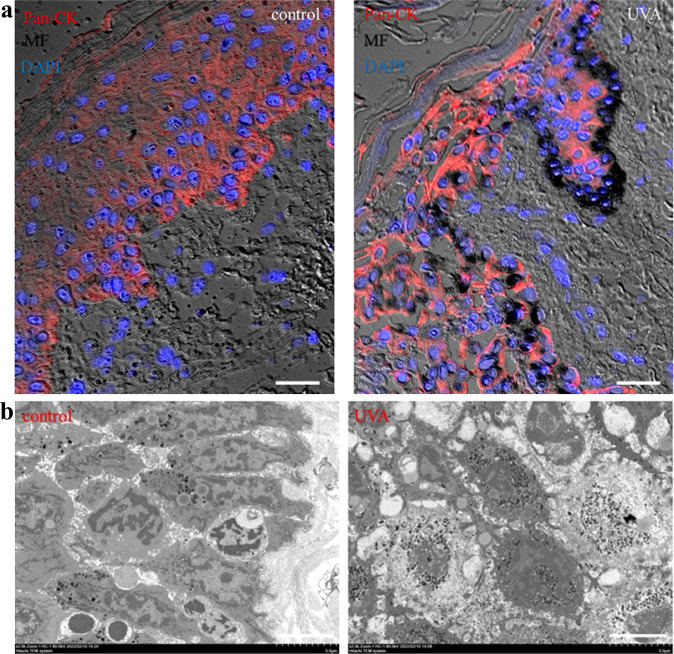
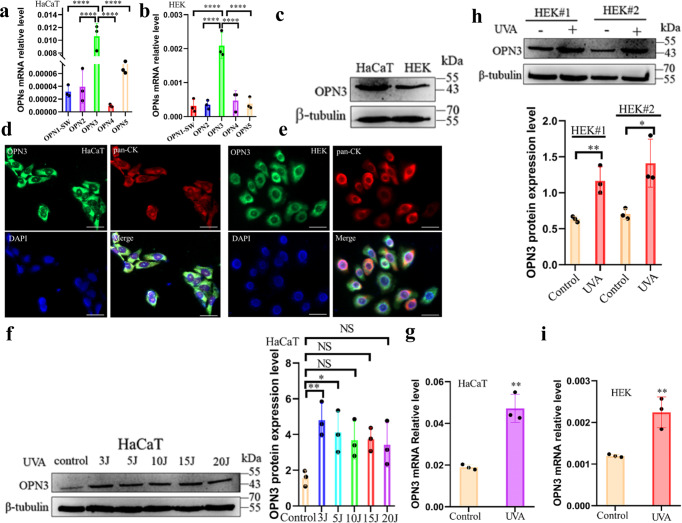
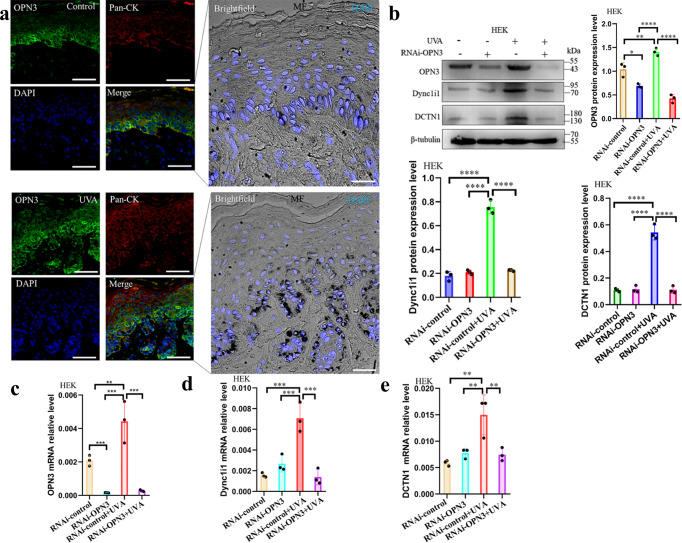
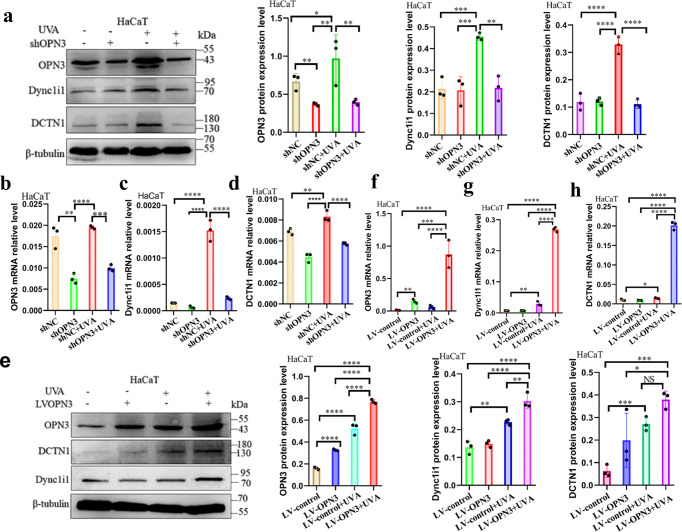
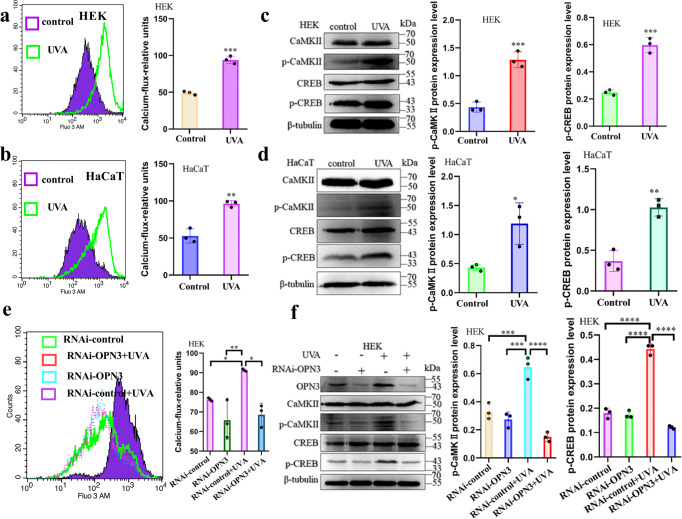
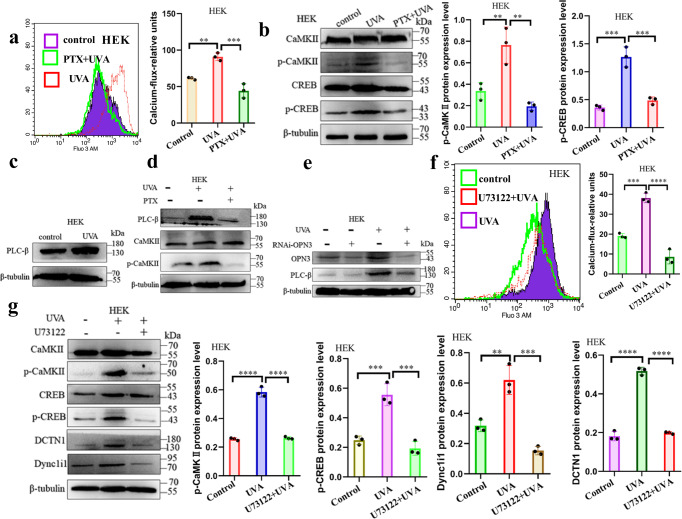
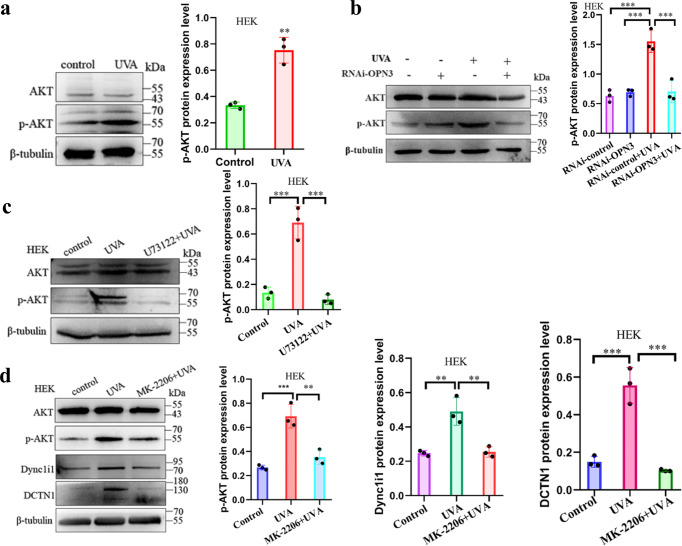
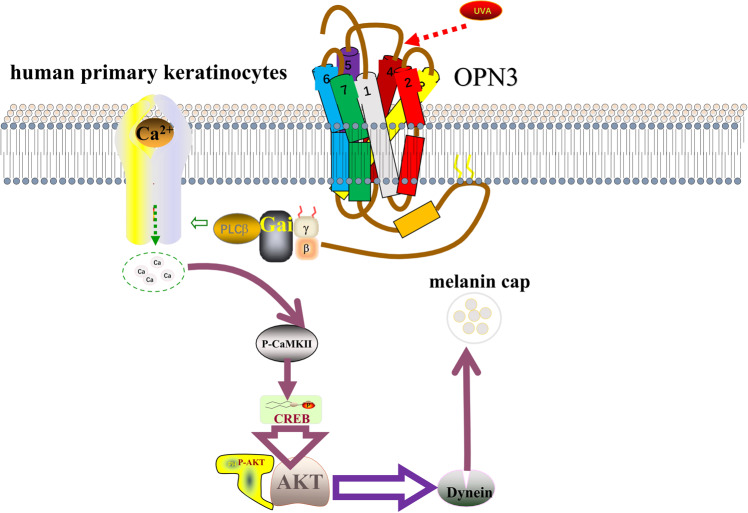
Solar ultraviolet (UV) radiation-induced DNA damage is a major risk factor for skin cancer development. UV-induced redistribution of melanin near keratinocyte nuclei leads to the formation of a supranuclear cap, which acts as a natural sunscreen and protects DNA by absorbing and scattering UV radiation. However, the mechanism underlying the intracellular movement of melanin in nuclear capping is poorly understood. In this study, we found that OPN3 is an important photoreceptor in human epidermal keratinocytes and is critical for UVA-mediated supranuclear cap formation. OPN3 mediates supranuclear cap formation via the calcium-dependent G protein-coupled receptor signaling pathway and ultimately upregulates Dync1i1 and DCTN1 expression in human epidermal keratinocytes via activating calcium/CaMKII, CREB, and Akt signal transduction. Together, these results clarify the role of OPN3 in regulating melanin cap formation in human epidermal keratinocytes, greatly expanding our understanding of the phototransduction mechanisms involved in physiological function in skin keratinocytes.
Overview
The claims and statistics of this paper haven’t been checked yet.
Free: it reads the open-access text and checks the first 5 claims that cite a source we can check. Create a free account to check every claim.
Integrity signals
Registry
Cites
Statistics
Figures
Verification
Claims the paper makes
The claims and statistics of this paper haven’t been checked yet.
Free: it reads the open-access text and checks the first 5 claims that cite a source we can check. Create a free account to check every claim.
Claims other papers make about this one
Each is checked against this paper’s own text: does it say what the citing paper says it does?
The cited source says what the claim attributes to it.
In the citing paper
“Indeed, it was recently reported that UVA radiation induces melanin polarization through the G-protein-coupled receptor opsin 3 [ 120 ].”
From Melanin's Journey from Melanocytes to Keratinocytes: Uncovering the Molecular Mechanisms of Melanin Transfer and Processing (2023) · cites this paper as [120]
Self-check
Percentages, sums and reported differences re-computed from the paper’s own numbers.
The self-check needs the paper’s full text.
Citations
Cites
Human skin pigmentation: Melanocytes modulate skin color in response to stress
Costin, G.-E., & Hearing, V. J. (2007) · The FASEB Journal · doi:10.1096/fj.06-6649rev · Cited by 976
Hirai, H., Sootome, H., Nakatsuru, Y., Miyama, K., Taguchi, S., Tsujioka, K., Ueno, Y., Hatch, H., Majumder, P. K., Pan, B.-S., et al. (2010) · Molecular Cancer Therapeutics · doi:10.1158/1535-7163.mct-09-1012 · Cited by 860
Phototransduction Motifs and Variations
Yau, K.-W., & Hardie, R. C. (2009) · Cell · doi:10.1016/j.cell.2009.09.029 · Cited by 492
Evolution of opsins and phototransduction
Shichida, Y., & Matsuyama, T. (2009) · Philosophical Transactions of the Royal Society B: Biological Sciences · doi:10.1098/rstb.2009.0051 · Cited by 471
Melanocytes Sense Blue Light and Regulate Pigmentation through Opsin-3
Regazzetti, C., Sormani, L., Debayle, D., Bernerd, F., Tulic, M. K., De Donatis, G. M., Chignon-Sicard, B., Rocchi, S., & Passeron, T. (2018) · Journal of Investigative Dermatology · doi:10.1016/j.jid.2017.07.833 · Cited by 336
Keratinocyte-Melanocyte Interactions During Melanosome Transfer
Seiberg, M. (2001) · Pigment Cell Research · doi:10.1034/j.1600-0749.2001.140402.x · Cited by 290 · cited 1×
“(4) Silencing of OPN3 in the HaCaT using Lentivirus transfection technology, and then co-culture with MC (1:3 ratio) in a mixed medium (Medium 254 and DMEM at a 1:1 ratio).”
MethodVisible light. Part I: Properties and cutaneous effects of visible light
Austin, E., Geisler, A. N., Nguyen, J., Kohli, I., Hamzavi, I., Lim, H. W., & Jagdeo, J. (2021) · Journal of the American Academy of Dermatology · doi:10.1016/j.jaad.2021.02.048 · Cited by 238
Homologs of vertebrate Opn3 potentially serve as a light sensor in nonphotoreceptive tissue
Koyanagi, M., Takada, E., Nagata, T., Tsukamoto, H., & Terakita, A. (2013) · Proceedings of the National Academy of Sciences · doi:10.1073/pnas.1219416110 · Cited by 188
Direct detection of a single photon by humans
Tinsley, J. N., Molodtsov, M. I., Prevedel, R., Wartmann, D., Espigulé-Pons, J., Lauwers, M., & Vaziri, A. (2016) · Nature Communications · doi:10.1038/ncomms12172 · Cited by 187
Mimicking Melanosomes: Polydopamine Nanoparticles as Artificial Microparasols
Huang, Y., Li, Y., Hu, Z., Yue, X., Proetto, M. T., Jones, Y., & Gianneschi, N. C. (2017) · ACS Central Science · doi:10.1021/acscentsci.6b00230 · Cited by 162
Research works printed but not linked: 1
- Lu H Marks R Effect of UV irradiation on melanin in the superficial corneocytes J. Clin. Dermatol. 1999 28 2
Cited by
Bento-Lopes, L., Cabaço, L. C., Charneca, J., Neto, M. V., Seabra, M. C., & Barral, D. C. (2023) · International Journal of Molecular Sciences · doi:10.3390/ijms241411289 · Cited by 114
Significance of melanin distribution in the epidermis for the protective effect against UV light
Zamudio Díaz, D. F., Busch, L., Kröger, M., Klein, A. L., Lohan, S. B., Mewes, K. R., Vierkotten, L., Witzel, C., Rohn, S., & Meinke, M. C. (2024) · Scientific Reports · doi:10.1038/s41598-024-53941-0 · Cited by 71
Biology of melanocytes in mammals
Cui, Y.-Z., & Man, X. (2023) · Frontiers in Cell and Developmental Biology · doi:10.3389/fcell.2023.1309557 · Cited by 54
Bao, M., Gempeler, M., & Campiche, R. (2025) · International Journal of Molecular Sciences · doi:10.3390/ijms26178630 · Cited by 42
“In keratinocytes, melanin forms supranuclear caps that protect DNA from UV-induced damage [7,8].”
Non-image-forming functional roles of OPN3, OPN4 and OPN5 photopigments
Ramanujam, K., Davies, W. I. L., & Gunhaga, L. (2023) · Journal of Photochemistry and Photobiology · doi:10.1016/j.jpap.2023.100177 · Cited by 27
Metadata
- Authors
- Lan, Y., Zeng, W., Wang, Y., Dong, X., Shen, X., Gu, Y., Zhang, W., & Lu, H.
- Affiliations
- Affiliated Hospital of Guizhou Medical University (CN)
- Venue
- Communications Biology
- Published
- 2023-03-03
- Volume
- 6
- Issue
- 1
- Pages
- 238-238
- ISSN
- 2399-3642 (ISSN-L)
- PMC
- PMC9984416
- OpenAlex
- W4323048333
- Semantic Scholar
- ce1b3ebadc8d2a406389bbfb439919b3da4958a3
- Cited by
- 22
- References
- 54
- Citations by year
- 2026: 4 · 2025: 10 · 2024: 4 · 2023: 4
- FWCI
- 3.17
- Type
- journal article
- Language
- en
- Open access
- gold
- doi.org
- Licence
- cc-by
- creativecommons.org/licenses/by/4.0 (tdm)
- creativecommons.org/licenses/by/4.0 (vor)
- Locations
- Communications Biology (publishedVersion, cc-by)
- PubMed Central (publishedVersion, cc-by)
- PubMed (publishedVersion)
- DOAJ (DOAJ: Directory of Open Access Journals) (submittedVersion, cc-by-sa)
- Funders
- National Natural Science Foundation of China (82060568, 81972920, 82173397)
- Topics
- Life Sciences › Biochemistry, Genetics and Molecular Biology › Cell Biology › melanin and skin pigmentation
- Health Sciences › Medicine › Dermatology › Skin Protection and Aging
- Life Sciences › Biochemistry, Genetics and Molecular Biology › Molecular Biology › Melanoma and MAPK Pathways
- Keywords
- OPN3, UVA, keratinocytes, phototransduction, G protein-coupled receptor signaling, CREB, Akt signaling, DCTN1, epidermal melanin, UV-induced DNA damage, skin cancer prevention
- MeSH terms
- Calcium, Epidermis, Humans, Melanins, Keratinocytes, Rod Opsins, Opsins
About these checks
Registry, retraction, Cites and statistics results are computed, not judged, with one exception: a printed reference that no index lists is read once by a model before it counts as a citation error. Claims are extracted by a model and kept only when their quote appears verbatim in the text; each cited source is then checked, with a model’s help, for whether it says what the claim relies on. Those verdicts can be wrong — read the claim’s quote and the cited source before relying on one.
Statistics and arithmetic are recomputed, not judged.
Confidence bands are shown only for fields calibrated on our annotated test set. None is calibrated yet, so no band is shown.
What counts as a claim ›How we measure confidence ›How we check this ›
Are you an author, or do you see a problem with this page? Request a review
Data sources
Bibliographic data: Semantic Scholar, OpenAlex, Crossref.
Contains information from the Semantic Scholar Academic Graph Datasets, made available under the ODC Attribution License (ODC-BY 1.0).
Semantic Scholar’s data is described in: Kinney, R., et al. (2023). The Semantic Scholar Open Data Platform. arXiv:2301.10140.
