

Increased matrix stiffness promotes fibrogenesis of hepatic stellate cells through AP-1-induced chromatin priming
Open accessPublished version of a preprint
The DOI matches its Crossref record; 116 of the 116 references it cites were found in a registry or an index.
Abstract
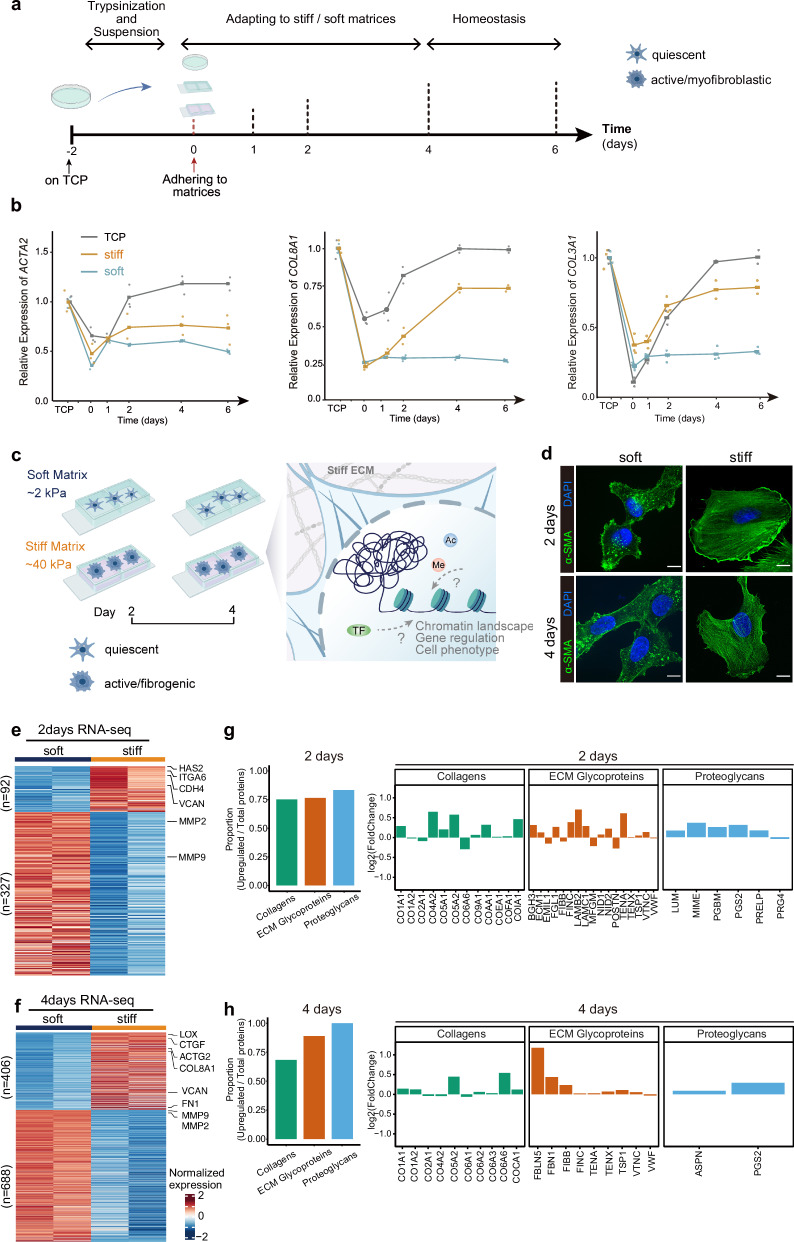
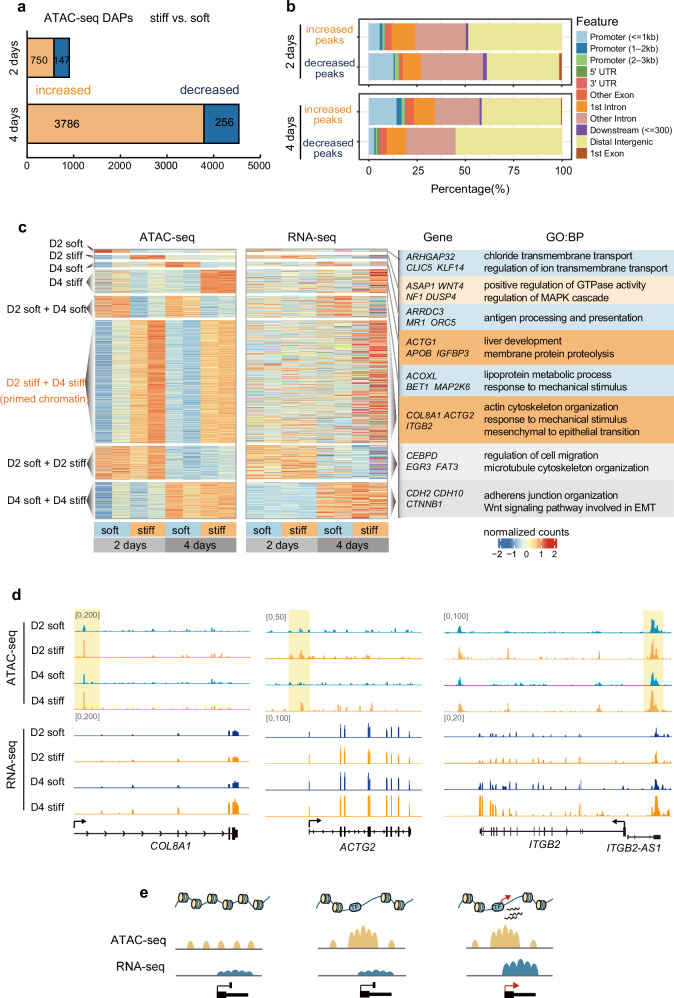
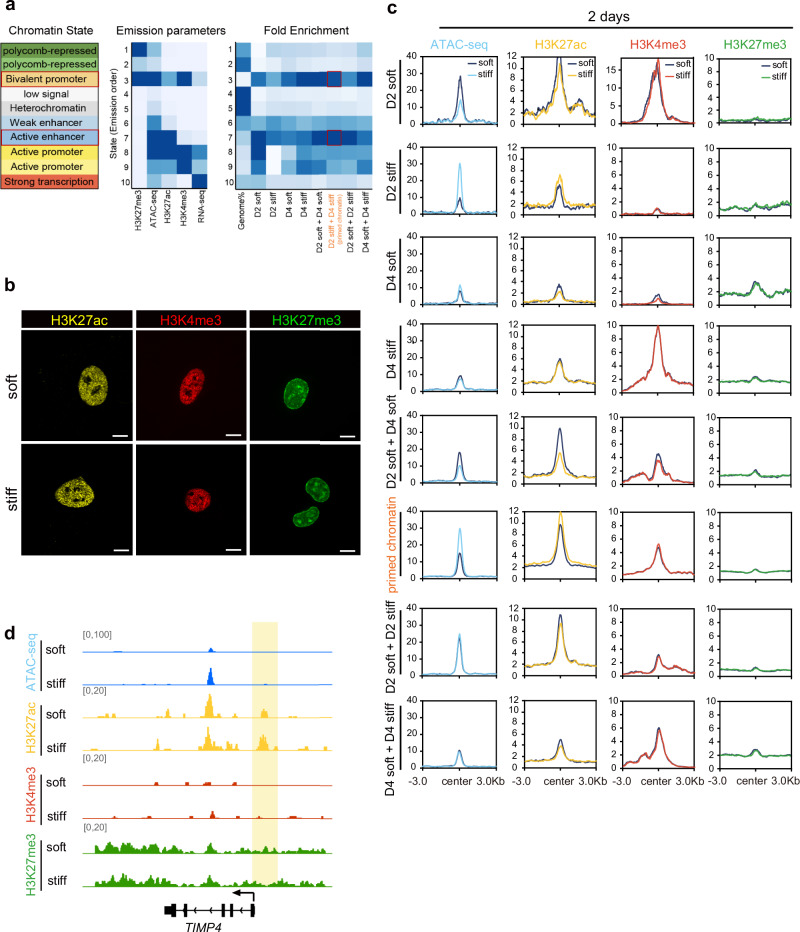
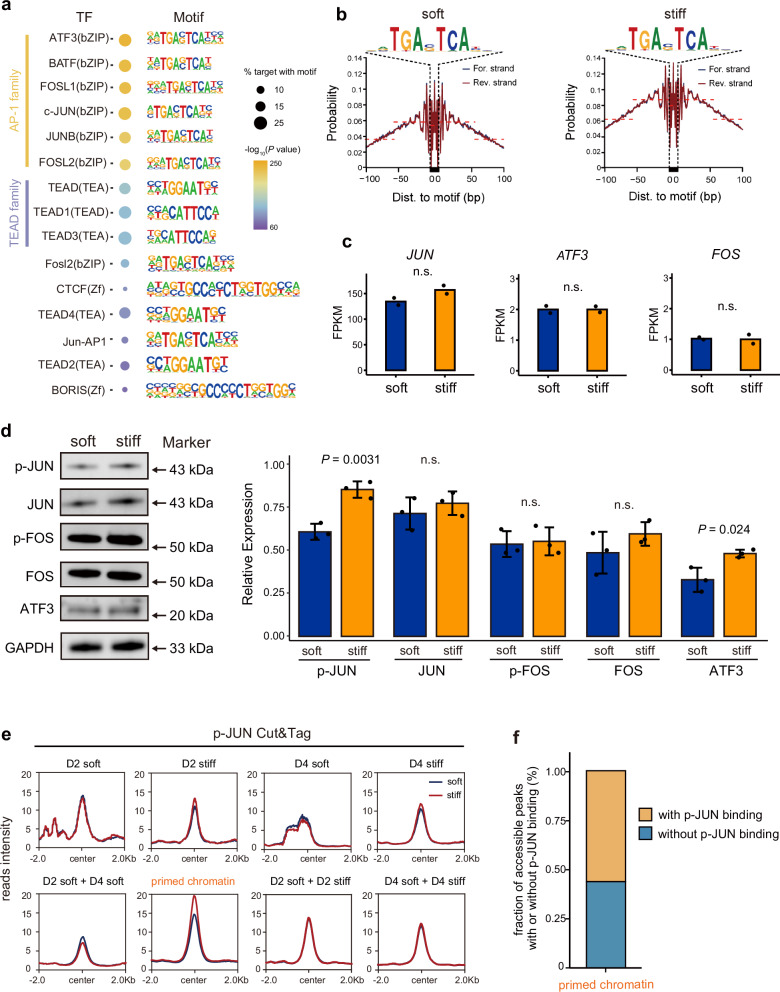
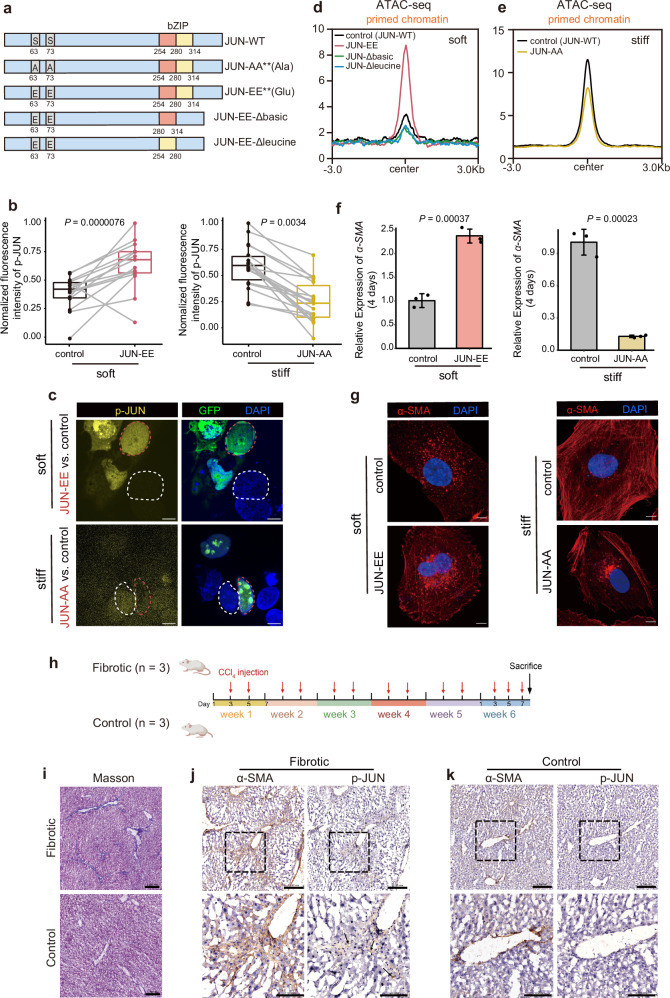
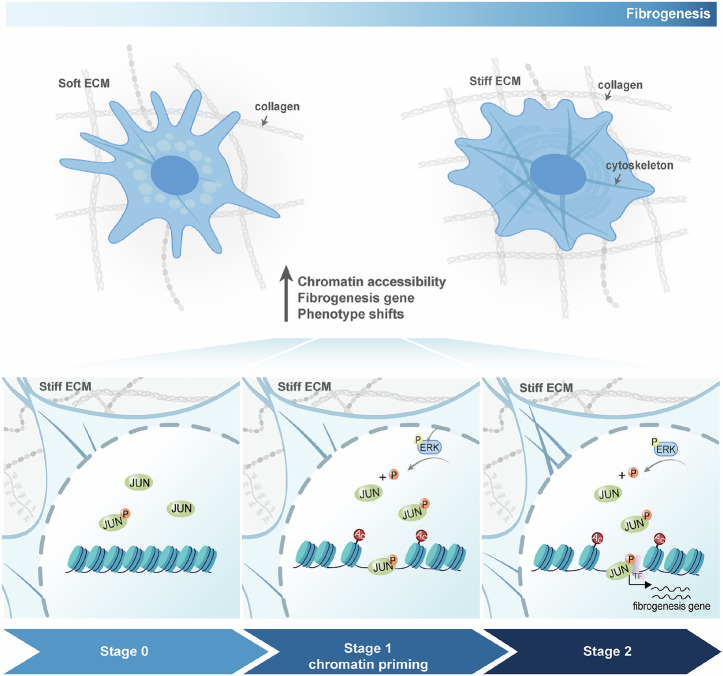
Matrix stiffness has significant effects on cell behavior, however, less is known regarding the epigenomic and transcriptional regulation underling the effect of matrix stiffness on cells. In this study, we use an in vitro system to assess the phenotypic shifts of hepatic stellate cells (HSCs) following changes in matrix stiffness, and integrate multi-omics with imaging and biochemical assays to investigate the molecular mechanisms. We show that cells cultured on a stiff matrix display more accessible chromatin sites, which consist of primed chromatin regions that become more accessible prior to the upregulation of nearby genes. These regions are enriched in fibrosis-associated genes that function in cytoskeletal organization and response to mechanical stimulus. We also identify activation of p-JUN in response to the stiff matrix and promoting phenotypic shifts. The identified chromatin accessibility-dependent effect of matrix stiffness may be responsible for various fibrotic diseases and provide insight into intervening approaches.
Overview
The claims and statistics of this paper haven’t been checked yet.
Free: it reads the open-access text and checks the first 5 claims that cite a source we can check. Create a free account to check every claim.
Integrity signals
Registry
Cites
Statistics
Figures
Verification
Claims the paper makes
The claims and statistics of this paper haven’t been checked yet.
Free: it reads the open-access text and checks the first 5 claims that cite a source we can check. Create a free account to check every claim.
Self-check
Percentages, sums and reported differences re-computed from the paper’s own numbers.
The self-check needs the paper’s full text.
Citations
Cites
Moderated estimation of fold change and dispersion for RNA-seq data with DESeq2
Love, M. I., Huber, W., & Anders, S. (2014) · Genome Biology · doi:10.1186/s13059-014-0550-8 · Cited by 95,106 · cited 2×
“The differentially accessible regions were identi fi ed using DEseq2 104 with a cutoff of Fold Change ≥ 2 and p value 0.05 through pairwise spatiotemporal comparisons (D2 soft vs. D2 stiff, D4 soft vs. D4 stiff, D2 soft vs. D4 soft, D4 stiff vs. D4 stiff).”
InfluentialFast gapped-read alignment with Bowtie 2
Langmead, B., & Salzberg, S. L. (2012) · Nature Methods · doi:10.1038/nmeth.1923 · Cited by 56,400 · cited 2×
“TrimGalore 101 was used to cut adapters, and trimmed reads were then alignedtothehumangenomehg19usingBowtie2 109 .”
Subramanian, A., Tamayo, P., Mootha, V. K., Mukherjee, S., Ebert, B. L., Gillette, M. A., Paulovich, A., Pomeroy, S. L., Golub, T. R., Lander, E. S., et al. (2005) · Proceedings of the National Academy of Sciences · doi:10.1073/pnas.0506580102 · Cited by 53,625
STAR: ultrafast universal RNA-seq aligner
Dobin, A., Davis, C. A., Schlesinger, F., Drenkow, J., Zaleski, C., Jha, S., Batut, P., Chaisson, M., & Gingeras, T. R. (2013) · Bioinformatics · doi:10.1093/bioinformatics/bts635 · Cited by 51,709
HTSeq—a Python framework to work with high-throughput sequencing data
Anders, S., Pyl, P. T., & Huber, W. (2015) · Bioinformatics · doi:10.1093/bioinformatics/btu638 · Cited by 21,464 · cited 1×
“High-quality mapped reads were quanti fi ed using htseq-count 103 .”
Model-based Analysis of ChIP-Seq (MACS)
Zhang, Y., Liu, T., Meyer, C. A., Eeckhoute, J., Johnson, D. S., Bernstein, B. E., Nusbaum, C., Myers, R. M., Brown, M., Li, W., et al. (2008) · Genome Biology · doi:10.1186/gb-2008-9-9-r137 · Cited by 18,386
Twelve years of SAMtools and BCFtools
Danecek, P., Bonfield, J. K., Liddle, J., Marshall, J., Ohan, V., Pollard, M. O., Whitwham, A., Keane, T., McCarthy, S. A., Davies, R. M., et al. (2021) · GigaScience · doi:10.1093/gigascience/giab008 · Cited by 15,343
Matrix elasticity directs stem cell lineage specification
Engler, A. J., Sen, S., Sweeney, H. L., & Discher, D. E. (2006) · Cell · doi:10.1016/j.cell.2006.06.044 · Cited by 13,915
Heinz, S., Benner, C., Spann, N., Bertolino, E., Lin, Y. C., Laslo, P., Cheng, J. X., Murre, C., Singh, H., & Glass, C. K. (2010) · Molecular Cell · doi:10.1016/j.molcel.2010.05.004 · Cited by 13,382 · cited 2×
“To explore potential TFs responsible for the primed chromatin regions induced by a stiff matrix, we performed HOMER enrichment analysis to identify enriched TF binding motifs 52 .”
Mootha, V. K., Lindgren, C. M., Eriksson, K.-F., Subramanian, A., Sihag, S., Lehar, J., Puigserver, P., Carlsson, E., Ridderstråle, M., Laurila, E., et al. (2003) · Nature Genetics · doi:10.1038/ng1180 · Cited by 10,197
Cited by
Li, L., Ji, J., Ren, H. J., Gao, L., Li, X., Li, N., Zhang, S., Tang, K., Li, Z., Ren, W., et al. (2026) · The Innovation · doi:10.1016/j.xinn.2026.101307 · Cited by 25
“215 Typically, it is only when liver fibrosis advances to the cirrhotic stage that the exceedingly high liver stiffness will facilitate the progression of hepatocellular carcinoma (HCC).”
Bio-fabrication of fibrotic liver microtissues as a scalable and drug-responsive in vitro model
Majidi, F., Choshali, M. A., Izadi, A., Hajari, M. A., Saheli, M., Ziai, S. A., Vosough, M., & Piryaei, A. (2025) · International Journal of Pharmaceutics · doi:10.1016/j.ijpharm.2025.126242 · Cited by 5
Macrophage mechanobiology: from sensing to disease
D’Ambrosio, M., Warasnhe, K., Eldesouki, M. H., Joshi, V., Beyder, A., & Cipriani, G. (2026) · Frontiers in Immunology · doi:10.3389/fimmu.2026.1812501 · Cited by 6
Liver aging and associated diseases
Xu, Y., Deng, Q., Chen, Y., & Wang, H. (2026) · Chinese Science Bulletin (Chinese Version) · doi:10.1360/csb-2025-5918 · Cited by 2
“衰老肝脏中肝星状细胞 (hepatic stellate cells, HSCs) 的数量并无明显变化 , 但出现显著的端粒损伤 [9] , 同时细胞内脂滴数量和大小增加 , 并呈现出自发的激 活状态 , 表现为以 α-SMA 和 Acta2 等为代表的激活标志 物表达显著增加 , 以及基质重塑相关基因的表达上调 [26] .”
Hemodynamics and matrix stiffness shape the pathogenicity of SPP1+ macrophages
Zhang, H., Han, J., Zhu, S., Yi, M., Fan, K., Chang, R., Shi, Y., & Dong, H. (2026) · Frontiers in Immunology · doi:10.3389/fimmu.2026.1856522 · Cited by 2
Martínez, E. M., Juárez‐Mercado, A. P., González‐Gallardo, A., Núñez-Ríos, J. D., Díaz‐Muñoz, M., Hernández-Muñoz, R. E., & Vázquez‐Cuevas, F. G. (2025) · Cells · doi:10.3390/cells14231845 · Cited by 1
“Interestingly, activation can occur spontaneously, driven by biophysical conditions, when HSC are cultured in plastic Petri dishes for five to seven days [1,5].”
Moustafa, R. I., Farouk, S., Elsayed, H., Shousha, H. I., Elbrashy, M. M., Gabr, A., Yousif, A. A., Ramadan, A., Yosry, A., Abdelaziz, A. O., et al. (2026) · Infectious Agents and Cancer · doi:10.1186/s13027-026-00735-w · Cited by 1
“FOSL2, (Fra-2), an AP-1 transcription complex component, mediates pro-inflammatory and fibrogenic signaling to regulate macrophage activation and hepatic remodeling during chronic liver injury [38, 39].”
Epigenetic reprogramming of hepatic antigen presenting cells in chronic liver disease
Ángel‐Gomis, E., Juanola, O., Caparrós, E., & Francés, R. (2026) · Frontiers in Immunology · doi:10.3389/fimmu.2026.1783588 · Cited by 1
“…are highlighted as powerful tools to link transcriptional states to epigenetic regulation in NASH and other liver diseases, but their application has so far concentrated on hepatocytes, stellate cells and broad NPC compartments rather than on dedicated hepatic APC subsets (11, 111, 113 – 116).”
He, B., Wang, N., Yan, R., Jiao, J., Zhang, H., Huang, Q., 席奇, Chang, Z., Guan, X., Yan, S., et al. (2026) · Frontiers in Physiology · doi:10.3389/fphys.2026.1803238 · Cited by 1
“…progression, the persistently stiff ECM acts as a mechanical signal that feeds back to further promote HSC metabolic reprogramming (Lachowski et al., 2019; Zhao et al., 2025), thereby amplifying HSC activation and liver fi brosis to form a pathological positive feedback loop (Olsen et al., 2011).”
Charoenthanakitkul, D., & Ariyachet, C. (2026) · International Journal of Molecular Medicine · doi:10.3892/ijmm.2026.5962 · Cited by 2
“Mechanistically, c‑JUN activation downstream of MATII‑mediated PI3K/AKT signaling integrates metabolic and inflammatory inputs to sustain fibrogenic transcription and HSC activation (45,46).”
The Emerging Role of Cellular Mechanical Memory in Aqueous Humor Outflow Dysfunction in Glaucoma
Herberg, S. (2026) · Journal of Biomechanical Engineering · doi:10.1115/1.4072760 · Cited by 1
An oxo-mechanical coupling determines cell statePreprint
Sreepadmanabh, M., Hariharan, N., Palakodeti, D., & Bhattacharjee, T. (2026) · bioRxiv (Cold Spring Harbor Laboratory) · doi:10.64898/2026.03.12.711491
Nadir, Y., Esselmani, H., Oukhdouch, A., Nechchadi, H., Ennadi, R., Lkousse, M. A., Farouk, I., Najimi, M., & Merzouki, M. (2026) · BioMedInformatics · doi:10.3390/biomedinformatics6030023
“In fibrogenic settings, AP-1 activity within HSCs primes chromatin and promotes profibrotic gene expression, supporting a route by which an EGR1-FOS/AP-1 module can sustain fibrogenic transcription over time [53].”
Epigenetically tunable biomaterials for immune modulation
Foudah, A. I., Ahmad, A., & Alam, A. (2026) · Chinese Chemical Letters · doi:10.1016/j.cclet.2026.113069
A PIEZO ‐Gated Mechanotransduction Timing Window Governs Scar Commitment in Wound Healing
Hamad, R. S., Ali, M. A. M., Chaudhary, A. A., Elmorsy, E. A., Amer, M. M., Abdel-Hamed, M. R., El-kott, A. F., Eltantawy, W., AlShehri, M. A., Eissa, H., et al. (2026) · Wound Repair and Regeneration · doi:10.1111/wrr.70205
“As a result, intermediate phenotypes disappear and lineage identity becomes persistent even if initial mechanosensory activation declines [13, 14, 74, 75] (Figure 4; Table 4).”
Hui, Y., & Liu, Q. (2026) · Toxics · doi:10.3390/toxics14100873
“Increased matrix stiffness promotes fibrogenic changes in hepatic stellate cells through AP-1-associated changes in chromatin accessibility [15].”
Materials for liver-on-a-chip: modules, properties, and future directions
Wang, H.-R., Li, J.-X., Wan, C., Zhou, J., & Bao, N. (2026) · Microchimica Acta · doi:10.1007/s00604-026-08448-y
“Fibrotic liver stiffens to 12–40 kPa, a difference that directly drives hepatic stellate cell activation [140].”
Engineering in vitro models of liver fibrosis
Berlin, D., & Smith, Q. (2026) · Matrix Biology Plus · doi:10.1016/j.mbplus.2026.100209
Fibroblast mechanopharmacology: mechanical regulation of fibroblast states and therapeutic response
Li, X., & Hao, H. (2026) · Frontiers in Pharmacology · doi:10.3389/fphar.2026.2003726
Metadata
- Authors
- Zhao, W., Yuan, W., Dong, T., Qi, W., Feng, Z., Li, C., & Sun, Y.
- Affiliations
- Peking University (CN)
- Second Hospital of Hebei Medical University (CN)
- Hebei Medical University (CN)
- Corresponding author
- Feng, Zhijie
- Li, Cheng
- Sun, Yujie
- Venue
- Communications Biology
- Published
- 2025-06-12
- Volume
- 8
- Issue
- 1
- Pages
- 920-920
- ISSN
- 2399-3642 (ISSN-L)
- PMC
- PMC12162834
- OpenAlex
- W4411224691
- Cited by
- 16
- References
- 116
- Citations by year
- 2026: 14 · 2025: 2
- FWCI
- 7.95
- Type
- journal article
- Language
- en
- Open access
- gold
- doi.org
- Licence
- cc-by
- creativecommons.org/licenses/by/4.0 (tdm)
- creativecommons.org/licenses/by/4.0 (vor)
- Locations
- Communications Biology (publishedVersion, cc-by)
- Research Square (acceptedVersion, cc-by)
- Europe PMC (PubMed Central) (publishedVersion, cc-by)
- PubMed Central (publishedVersion, cc-by)
- PubMed (publishedVersion)
- DOAJ (DOAJ: Directory of Open Access Journals) (submittedVersion, cc-by-sa)
- Funders
- National Natural Science Foundation of China (32025006, 32288102, 22127804)
- Peking University
- National Key Research and Development Program of China (2022YFA3401100, 2021YFA1100300)
- Topics
- Life Sciences › Biochemistry, Genetics and Molecular Biology › Cell Biology › Cellular Mechanics and Interactions
- Health Sciences › Medicine › Hepatology › Liver physiology and pathology
- Life Sciences › Biochemistry, Genetics and Molecular Biology › Molecular Biology › Genomics and Chromatin Dynamics
- Keywords
- extracellular matrix stiffness, hepatic stellate cells, liver fibrosis, fibrogenesis, chromatin accessibility, AP-1, epigenetic regulation, mechanotransduction, cytoskeletal organization, gene expression regulation
- MeSH terms
- Animals, Chromatin, Extracellular Matrix, Gene Expression Regulation, Humans, Liver Cirrhosis, Transcription Factor AP-1, Hepatic Stellate Cells
About these checks
Registry, retraction, Cites and statistics results are computed, not judged, with one exception: a printed reference that no index lists is read once by a model before it counts as a citation error. Claims are extracted by a model and kept only when their quote appears verbatim in the text; each cited source is then checked, with a model’s help, for whether it says what the claim relies on. Those verdicts can be wrong — read the claim’s quote and the cited source before relying on one.
Statistics and arithmetic are recomputed, not judged.
Confidence bands are shown only for fields calibrated on our annotated test set. None is calibrated yet, so no band is shown.
What counts as a claim ›How we measure confidence ›How we check this ›
Are you an author, or do you see a problem with this page? Request a review
Data sources
Bibliographic data: Semantic Scholar, OpenAlex, Crossref.
Contains information from the Semantic Scholar Academic Graph Datasets, made available under the ODC Attribution License (ODC-BY 1.0).
Semantic Scholar’s data is described in: Kinney, R., et al. (2023). The Semantic Scholar Open Data Platform. arXiv:2301.10140.
