

Increased matrix stiffness promotes fibrogenesis of hepatic stellate cells through AP-1-induced chromatin priming
Open accessPublished version of a preprint
The DOI matches its Crossref record; 116 of the 116 references it cites were found in a registry or an index.
Abstract
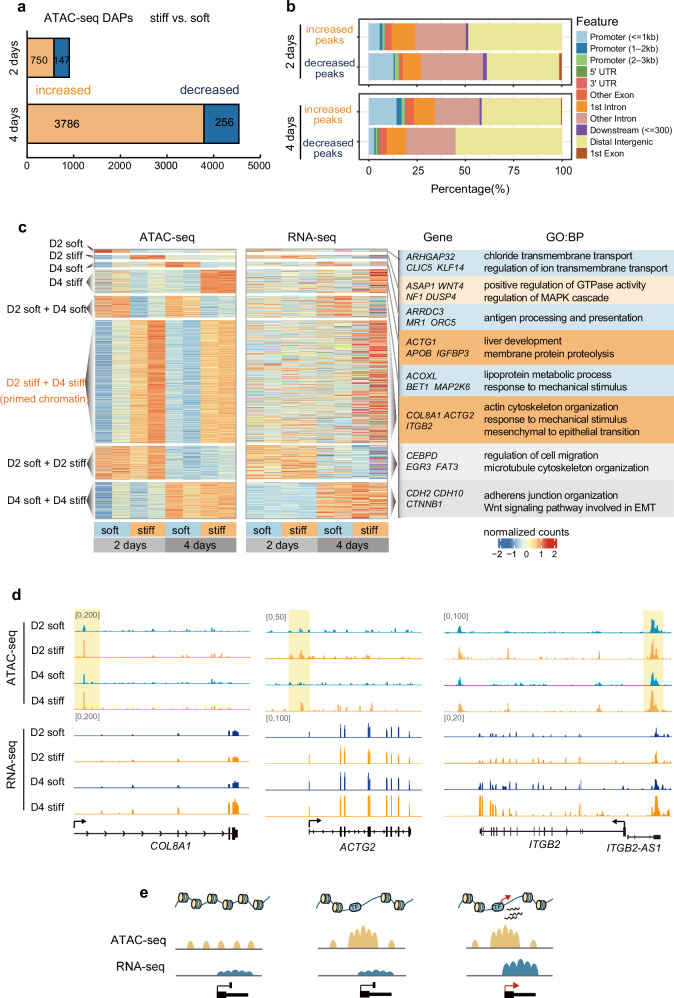
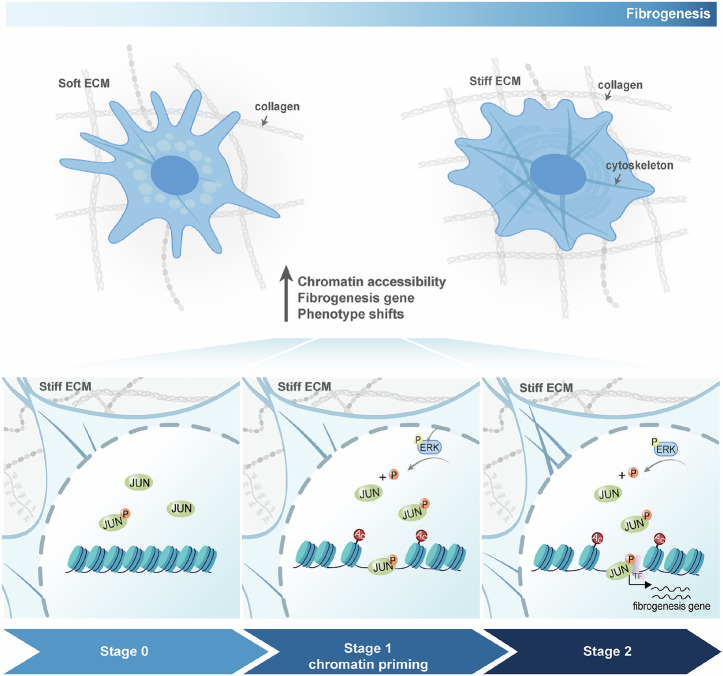
Matrix stiffness has significant effects on cell behavior, however, less is known regarding the epigenomic and transcriptional regulation underling the effect of matrix stiffness on cells. In this study, we use an in vitro system to assess the phenotypic shifts of hepatic stellate cells (HSCs) following changes in matrix stiffness, and integrate multi-omics with imaging and biochemical assays to investigate the molecular mechanisms. We show that cells cultured on a stiff matrix display more accessible chromatin sites, which consist of primed chromatin regions that become more accessible prior to the upregulation of nearby genes. These regions are enriched in fibrosis-associated genes that function in cytoskeletal organization and response to mechanical stimulus. We also identify activation of p-JUN in response to the stiff matrix and promoting phenotypic shifts. The identified chromatin accessibility-dependent effect of matrix stiffness may be responsible for various fibrotic diseases and provide insight into intervening approaches.
Overview
The claims and statistics of this paper haven’t been checked yet.
Free: it reads the open-access text and checks the first 5 claims that cite a source we can check. Create a free account to check every claim.
Integrity signals
Registry
Cites
Statistics
Figures
Verification
Claims the paper makes
The claims and statistics of this paper haven’t been checked yet.
Free: it reads the open-access text and checks the first 5 claims that cite a source we can check. Create a free account to check every claim.
Self-check
Percentages, sums and reported differences re-computed from the paper’s own numbers.
The self-check needs the paper’s full text.
Citations
Cites
Moderated estimation of fold change and dispersion for RNA-seq data with DESeq2
Love, M. I., Huber, W., & Anders, S. (2014) · Genome Biology · doi:10.1186/s13059-014-0550-8 · Cited by 95,106 · cited 2×
“The differentially accessible regions were identi fi ed using DEseq2 104 with a cutoff of Fold Change ≥ 2 and p value 0.05 through pairwise spatiotemporal comparisons (D2 soft vs. D2 stiff, D4 soft vs. D4 stiff, D2 soft vs. D4 soft, D4 stiff vs. D4 stiff).”
InfluentialFast gapped-read alignment with Bowtie 2
Langmead, B., & Salzberg, S. L. (2012) · Nature Methods · doi:10.1038/nmeth.1923 · Cited by 56,400 · cited 2×
“TrimGalore 101 was used to cut adapters, and trimmed reads were then alignedtothehumangenomehg19usingBowtie2 109 .”
Subramanian, A., Tamayo, P., Mootha, V. K., Mukherjee, S., Ebert, B. L., Gillette, M. A., Paulovich, A., Pomeroy, S. L., Golub, T. R., Lander, E. S., et al. (2005) · Proceedings of the National Academy of Sciences · doi:10.1073/pnas.0506580102 · Cited by 53,625
STAR: ultrafast universal RNA-seq aligner
Dobin, A., Davis, C. A., Schlesinger, F., Drenkow, J., Zaleski, C., Jha, S., Batut, P., Chaisson, M., & Gingeras, T. R. (2013) · Bioinformatics · doi:10.1093/bioinformatics/bts635 · Cited by 51,709
HTSeq—a Python framework to work with high-throughput sequencing data
Anders, S., Pyl, P. T., & Huber, W. (2015) · Bioinformatics · doi:10.1093/bioinformatics/btu638 · Cited by 21,464 · cited 1×
“High-quality mapped reads were quanti fi ed using htseq-count 103 .”
Model-based Analysis of ChIP-Seq (MACS)
Zhang, Y., Liu, T., Meyer, C. A., Eeckhoute, J., Johnson, D. S., Bernstein, B. E., Nusbaum, C., Myers, R. M., Brown, M., Li, W., et al. (2008) · Genome Biology · doi:10.1186/gb-2008-9-9-r137 · Cited by 18,386
Twelve years of SAMtools and BCFtools
Danecek, P., Bonfield, J. K., Liddle, J., Marshall, J., Ohan, V., Pollard, M. O., Whitwham, A., Keane, T., McCarthy, S. A., Davies, R. M., et al. (2021) · GigaScience · doi:10.1093/gigascience/giab008 · Cited by 15,343
Matrix elasticity directs stem cell lineage specification
Engler, A. J., Sen, S., Sweeney, H. L., & Discher, D. E. (2006) · Cell · doi:10.1016/j.cell.2006.06.044 · Cited by 13,915
Heinz, S., Benner, C., Spann, N., Bertolino, E., Lin, Y. C., Laslo, P., Cheng, J. X., Murre, C., Singh, H., & Glass, C. K. (2010) · Molecular Cell · doi:10.1016/j.molcel.2010.05.004 · Cited by 13,382 · cited 2×
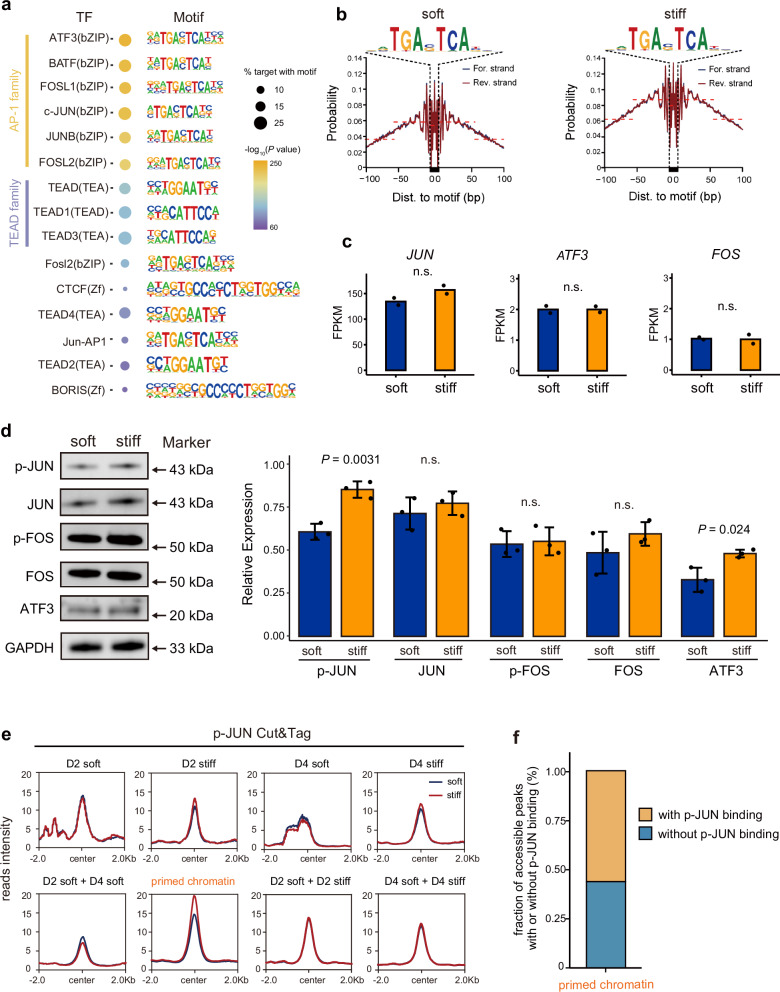
“To explore potential TFs responsible for the primed chromatin regions induced by a stiff matrix, we performed HOMER enrichment analysis to identify enriched TF binding motifs 52 .”
Mootha, V. K., Lindgren, C. M., Eriksson, K.-F., Subramanian, A., Sihag, S., Lehar, J., Puigserver, P., Carlsson, E., Ridderstråle, M., Laurila, E., et al. (2003) · Nature Genetics · doi:10.1038/ng1180 · Cited by 10,197
Hynes (2002) · doi:10.1016/s0092-8674(02)00971-6 · Cited by 8,606 · cited 1×
“Simultaneously, this stiffness can be detected by HSC surface receptors called integrins, allowing HSC activation and differentiation to myo fi broblasts 92,93 .”
deepTools2: a next generation web server for deep-sequencing data analysis
Ramírez, F., Ryan, D. P., Grüning, B., Bhardwaj, V., Kilpert, F., Richter, A. S., Heyne, S., Dündar, F., & Manke, T. (2016) · Nucleic Acids Research · doi:10.1093/nar/gkw257 · Cited by 8,096
Sherman, B. T., Hao, M., Qiu, J., Jiao, X., Baseler, M. W., Lane, H. C., Imamichi, T., & Chang, W. (2022) · Nucleic Acids Research · doi:10.1093/nar/gkac194 · Cited by 6,142
Role of YAP/TAZ in mechanotransduction
Dupont, S., Morsut, L., Aragona, M., Enzo, E., Giulitti, S., Cordenonsi, M., Zanconato, F., Le Digabel, J., Forcato, M., Bicciato, S., et al. (2011) · Nature · doi:10.1038/nature10137 · Cited by 5,979 · cited 1×
“In addition, many transcription factors, such as YAP/TAZ and MRTF, are regulated by the mechanical stimuli 15,16 ; however, the relationship between chromatin state and mechanotransduction during these processes is unclear, and the manner by which gene expression is regulated by chromatin…”
A bivalent chromatin structure marks key developmental genes in embryonic stem cells
Bernstein, B. E., Mikkelsen, T. S., Xie, X., Kamal, M., Huebert, D. J., Cuff, J., Fry, B., Meissner, A., Wernig, M., Plath, K., et al. (2006) · Cell · doi:10.1016/j.cell.2006.02.041 · Cited by 5,361 · cited 2×
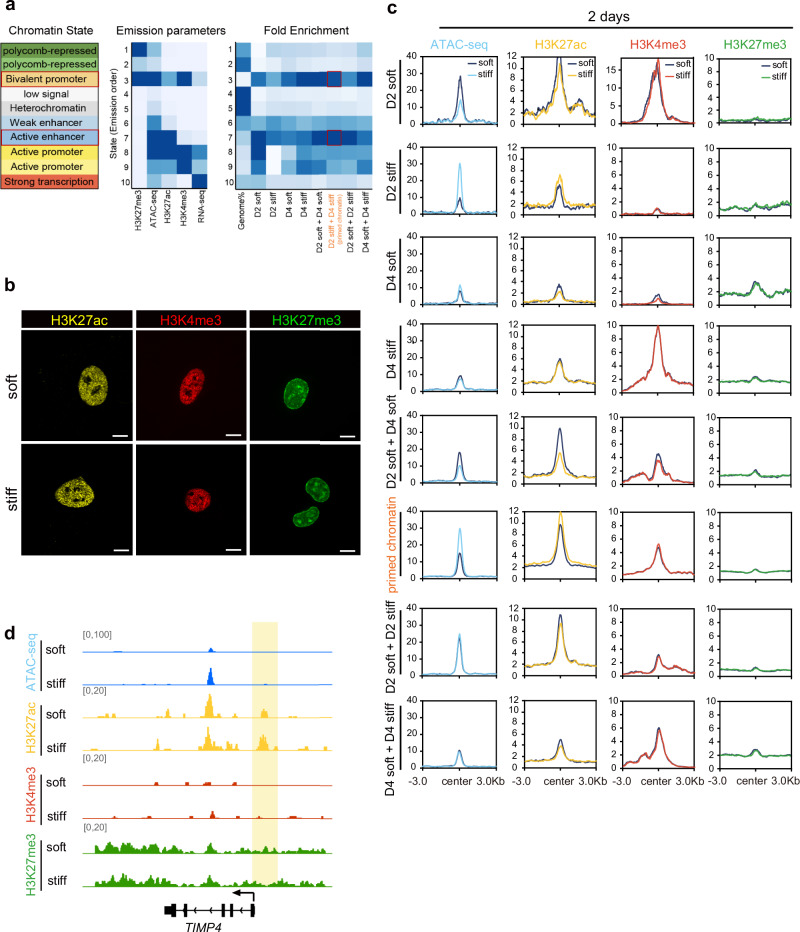
“3a) containing both H3K27me3 and H3K4me3, representing repressive and activating histone modi fi cations that maintain these chromatin regions poised for activation 43 .”
Histone H3K27ac separates active from poised enhancers and predicts developmental state
Creyghton, M. P., Cheng, A. W., Welstead, G. G., Kooistra, T., Carey, B. W., Steine, E. J., Hanna, J., Lodato, M. A., Frampton, G. M., Sharp, P. A., et al. (2010) · Proceedings of the National Academy of Sciences · doi:10.1073/pnas.1016071107 · Cited by 4,302 · cited 2×
“This fi ndingisconsistentwithpreviousreports that H3K27ac contributes to chromatin accessibility and distinguishes active from inactive regulatory elements 44 .”
AP-1 as a regulator of cell life and death
Shaulian, E., & Karin, M. (2002) · Nature Cell Biology · doi:10.1038/ncb0502-e131 · Cited by 2,961
Mechanisms of hepatic stellate cell activation
Tsuchida, T., & Friedman, S. L. (2017) · Nature Reviews Gastroenterology & Hepatology · doi:10.1038/nrgastro.2017.38 · Cited by 2,909
ChromHMM: automating chromatin-state discovery and characterization
Ernst, J., & Kellis, M. (2012) · Nature Methods · doi:10.1038/nmeth.1906 · Cited by 2,475 · cited 2×
“To explore the mechanism underlying the establishment of primed chromatin, we characterized the genomic features of the primed chromatin regions and subsequently employed chromHMM to train 10 chromatin states of HSCs using fi ve epigenetic markers 42 .”
BEDTools: The Swiss‐Army Tool for Genome Feature Analysis
Quinlan, A. R. (2014) · Current Protocols in Bioinformatics · doi:10.1002/0471250953.bi1112s47 · Cited by 2,370 · cited 1×
“All mapped BAM fi les were converted to bigwig using bedtools 102 for visualization in IGV.”
AP-1: a double-edged sword in tumorigenesis
Eferl, R., & Wagner, E. F. (2003) · Nature Reviews Cancer · doi:10.1038/nrc1209 · Cited by 2,242 · cited 1×
“…AP-1 is a menagerie of dimeric basic region-leucine zipper (bZIP)proteinsthatbelongtotheJun(c-Jun,JunB,JunD),Fos(c-Fos,FosB, Fra-1andFra2),Maf(c-Maf,MafB,MafA,MafG/F/KandNrl)andATF (ATF2,LRF1/ATF3,B-ATF,JDP1,JDP2)sub-families,eachsub-familyof TFssharesomesimilaritiesinstructureandfunction 56,57 .”
Transcription factors: from enhancer binding to developmental control
Spitz, F., & Furlong, E. E. M. (2012) · Nature Reviews Genetics · doi:10.1038/nrg3207 · Cited by 2,227 · cited 1×
“Previous studies fi cation, since it allows for a more rapid response to external signals 33,34 .”
CUT&Tag for efficient epigenomic profiling of small samples and single cells
Kaya-Okur, H. S., Wu, S. J., Codomo, C. A., Pledger, E. S., Bryson, T. D., Henikoff, J. G., Ahmad, K., & Henikoff, S. (2019) · Nature Communications · doi:10.1038/s41467-019-09982-5 · Cited by 2,187
Differential oestrogen receptor binding is associated with clinical outcome in breast cancer
Ross-Innes, C. S., Stark, R., Teschendorff, A. E., Holmes, K. A., Ali, H. R., Dunning, M. J., Brown, G. D., Gojis, O., Ellis, I. O., Green, A. R., et al. (2012) · Nature · doi:10.1038/nature10730 · Cited by 2,173
Molecular and cellular mechanisms of liver fibrosis and its regression
Kisseleva, T., & Brenner, D. (2021) · Nature Reviews Gastroenterology & Hepatology · doi:10.1038/s41575-020-00372-7 · Cited by 2,024
The Biology of YAP/TAZ: Hippo Signaling and Beyond
Piccolo, S., Dupont, S., & Cordenonsi, M. (2014) · Physiological Reviews · doi:10.1152/physrev.00005.2014 · Cited by 1,802 · cited 1×
“Additionally,TEADproteinshavebeenshowntointeractwith YAP/TAZ, a key component of the Hippo signaling pathway, could sense the physical nature and drive tumorigenesis 86,87 .”
Resolving the fibrotic niche of human liver cirrhosis at single-cell level
Ramachandran, P., Dobie, R., Wilson-Kanamori, J. R., Dora, E. F., Henderson, B. E. P., Luu, N. T., Portman, J. R., Matchett, K. P., Brice, M., Marwick, J. A., et al. (2019) · Nature · doi:10.1038/s41586-019-1631-3 · Cited by 1,784
AP-1 in cell proliferation and survival
Shaulian, E., & Karin, M. (2001) · Oncogene · doi:10.1038/sj.onc.1204383 · Cited by 1,736
A census of human transcription factors: function, expression and evolution
Vaquerizas, J. M., Kummerfeld, S. K., Teichmann, S. A., & Luscombe, N. M. (2009) · Nature Reviews Genetics · doi:10.1038/nrg2538 · Cited by 1,573 · cited 1×
“Although TF expression provides the fi rst line of evidence for the locations in which they may function, their activity often depends on post-transcriptional events, and the mRNA levels do not necessarily indicate regulatory activity 58 .”
Mechanobiology of YAP and TAZ in physiology and disease
Panciera, T., Azzolin, L., Cordenonsi, M., & Piccolo, S. (2017) · Nature Reviews Molecular Cell Biology · doi:10.1038/nrm.2017.87 · Cited by 1,461
Differential Oestrogen Receptor Binding is Associated with Clinical Outcome in Breast Cancer
Stark, R. (2012) · Lecture Notes in Computer Science · doi:10.1007/978-3-642-29627-7_30 · Cited by 1,403
Naba, A., Clauser, K. R., Hoersch, S., Liu, H., Carr, S. A., & Hynes, R. O. (2012) · Molecular & Cellular Proteomics · doi:10.1074/mcp.m111.014647 · Cited by 1,354 · cited 1×
“CompositionsofECMare qualitativelyandquantitativelydynamicduringtissue fi brosis 29 .”
Actin dynamics control SRF activity by regulation of its coactivator MAL
Miralles, F., Posern, G., Zaromytidou, A.-I., & Treisman, R. (2003) · Cell · doi:10.1016/s0092-8674(03)00278-2 · Cited by 1,327 · cited 1×
“In addition, many transcription factors, such as YAP/TAZ and MRTF, are regulated by the mechanical stimuli 15,16 ; however, the relationship between chromatin state and mechanotransduction during these processes is unclear, and the manner by which gene expression is regulated by chromatin…”
Genome-wide association between YAP/TAZ/TEAD and AP-1 at enhancers drives oncogenic growth
Zanconato, F., Forcato, M., Battilana, G., Azzolin, L., Quaranta, E., Bodega, B., Rosato, A., Bicciato, S., Cordenonsi, M., & Piccolo, S. (2015) · Nature Cell Biology · doi:10.1038/ncb3216 · Cited by 1,219
ERK signalling: A master regulator of cell behaviour, life and fate
Lavoie, H., Gagnon, J., & Therrien, M. (2020) · Nature Reviews Molecular Cell Biology · doi:10.1038/s41580-020-0255-7 · Cited by 1,185 · cited 1×
“Theconservedextracellularsignal-regulatedkinase (ERK) signaling pathway is activated by a variety of extracellular stimulus 61,65 .”
Chromatin Potential Identified by Shared Single-Cell Profiling of RNA and Chromatin
Ma, S., Zhang, B., LaFave, L. M., Earl, A. S., Chiang, Z., Hu, Y., Ding, J., Brack, A., Kartha, V. K., Tay, T., et al. (2020) · Cell · doi:10.1016/j.cell.2020.09.056 · Cited by 1,146
Preparation of Hydrogel Substrates with Tunable Mechanical Properties
Tse, J. R., & Engler, A. J. (2010) · Current Protocols in Cell Biology · doi:10.1002/0471143030.cb1016s47 · Cited by 1,070
The role of matrix stiffness in regulating cell behavior†
Wells, R. G. (2008) · Hepatology · doi:10.1002/hep.22193 · Cited by 1,059 · cited 1×
“For example, matrix stiffness, which refers to the rigidity of the extracellular matrix (ECM) surrounding cells, exerts various effects on cellular behavior such as proliferation, differentiation, migration, and ECM production 1 .”
Human hepatic stellate cell lines, LX-1 and LX-2: new tools for analysis of hepatic fibrosis
Xu, L., Hui, A. Y., Albanis, E., Arthur, M. J., O’Byrne, S. M., Blaner, W. S., Mukherjee, P., Friedman, S. L., & Eng, F. J. (2005) · Gut · doi:10.1136/gut.2004.042127 · Cited by 1,014
Interplay of matrix stiffness and protein tethering in stem cell differentiation
Wen, J. H., Vincent, L. G., Fuhrmann, A., Choi, Y. S., Hribar, K. C., Taylor-Weiner, H., Chen, S., & Engler, A. J. (2014) · Nature Materials · doi:10.1038/nmat4051 · Cited by 937
c-Jun overexpression in CAR T cells induces exhaustion resistance
Lynn, R. C., Weber, E. W., Sotillo, E., Gennert, D., Xu, P., Good, Z., Anbunathan, H., Lattin, J., Jones, R., Tieu, V., et al. (2019) · Nature · doi:10.1038/s41586-019-1805-z · Cited by 891 · cited 2×
“5b, c), which is consistent with the expected functions of JUN mutants 63 .”
Henderson, N. C., Arnold, T. D., Katamura, Y., Giacomini, M. M., Rodriguez, J. D., McCarty, J. H., Pellicoro, A., Raschperger, E., Betsholtz, C., Ruminski, P. G., et al. (2013) · Nature Medicine · doi:10.1038/nm.3282 · Cited by 866
A PCR primer bank for quantitative gene expression analysis
Wang, X. (2003) · Nucleic Acids Research · doi:10.1093/nar/gng154 · Cited by 859
Pioneer Transcription Factors Target Partial DNA Motifs on Nucleosomes to Initiate Reprogramming
Soufi, A., Garcia, M. F., Jaroszewicz, A., Osman, N., Pellegrini, M., & Zaret, K. S. (2015) · Cell · doi:10.1016/j.cell.2015.03.017 · Cited by 780
Nava, M. M., Miroshnikova, Y. A., Biggs, L. C., Whitefield, D. B., Metge, F., Boucas, J., Vihinen, H., Jokitalo, E., Li, X., García Arcos, J. M., et al. (2020) · Cell · doi:10.1016/j.cell.2020.03.052 · Cited by 646 · cited 1×
“Forexample,transientnucleardeformationandcyclictensile (H3K27me3)topromotecell reprogrammingormaintaingenomeintegrity 13,14 .”
Transcription upregulation via force-induced direct stretching of chromatin
Tajik, A., Zhang, Y., Wei, F., Sun, J., Jia, Q., Zhou, W., Singh, R., Khanna, N., Belmont, A. S., & Wang, N. (2016) · Nature Materials · doi:10.1038/nmat4729 · Cited by 629 · cited 1×
“Recent advances have shown that mechanical force can regulate chromatin organization and that mechanosensitive transcription factors participatein the regulation of gene expression and cell state 8,9 .”
Dynamic and Coordinated Epigenetic Regulation of Developmental Transitions in the Cardiac Lineage
Wamstad, J. A., Alexander, J. M., Truty, R. M., Shrikumar, A., Li, F., Eilertson, K. E., Ding, H., Wylie, J. N., Pico, A. R., Capra, J. A., et al. (2012) · Cell · doi:10.1016/j.cell.2012.07.035 · Cited by 610
Mechanisms regulating zygotic genome activation
Schulz, K. N., & Harrison, M. M. (2019) · Nature Reviews Genetics · doi:10.1038/s41576-018-0087-x · Cited by 555 · cited 1×
“H3K27ac is not absolutely required for chromatin opening 49 .”
Elastic modulus measurements of human liver and correlation with pathology
Yeh, W.-C., Li, P.-C., Jeng, Y.-M., Hsu, H.-C., Kuo, P.-L., Li, M.-L., Yang, P.-M., & Lee, P. H. (2002) · Ultrasound in Medicine & Biology · doi:10.1016/s0301-5629(02)00489-1 · Cited by 458 · cited 1×
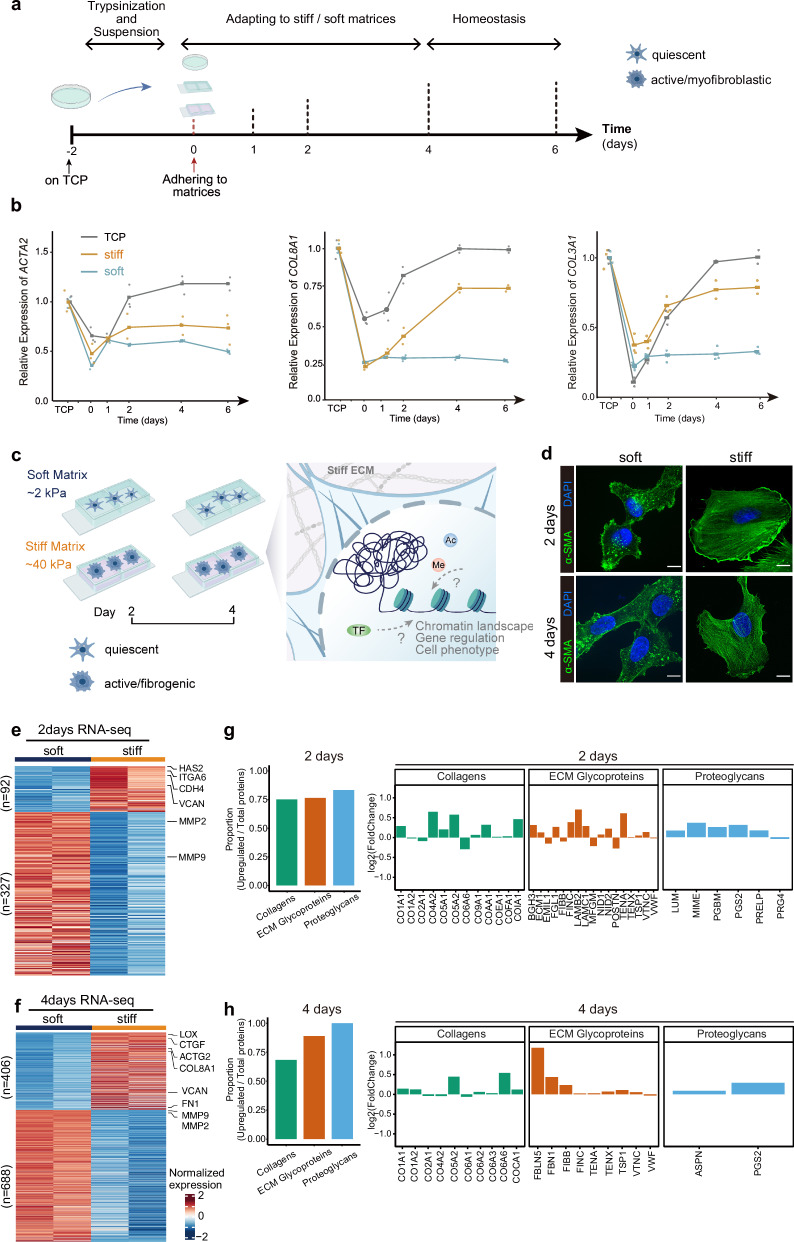
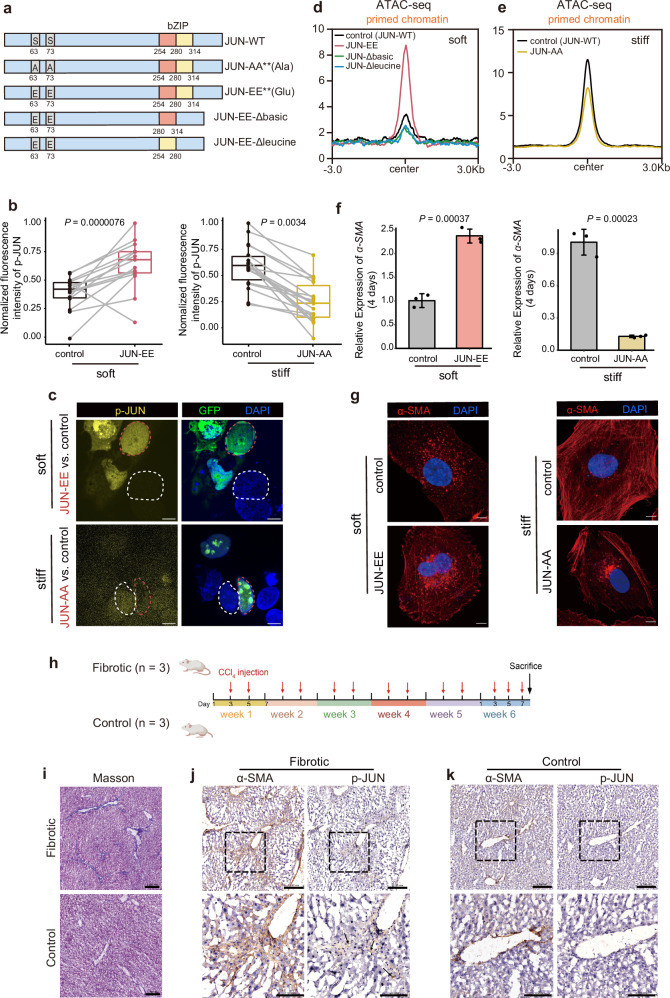
“Human LX-2 HSCs, a commonly used cell line for the study of liver disease 20 – 22 , were seeding on hydrogels possessing a Young ’ s moduli similar to that of normal (~2 kPa, soft) orcirrhotic(~40 kPa, stiff)livertissue 23,24 forfourdays.”
AP-1 Transcription Factors and the BAF Complex Mediate Signal-Dependent Enhancer Selection
Vierbuchen, T., Ling, E., Cowley, C. J., Couch, C. H., Wang, X., Harmin, D. A., Roberts, C. W. M., & Greenberg, M. E. (2017) · Molecular Cell · doi:10.1016/j.molcel.2017.11.026 · Cited by 455
Regulation of genome organization and gene expression by nuclear mechanotransduction
Uhler, C., & Shivashankar, G. V. (2017) · Nature Reviews Molecular Cell Biology · doi:10.1038/nrm.2017.101 · Cited by 445 · cited 1×
“Recent advances have shown that mechanical force can regulate chromatin organization and that mechanosensitive transcription factors participatein the regulation of gene expression and cell state 8,9 .”
Fibrosis-dependent mechanisms of hepatocarcinogenesis
Zhang, D. Y., & Friedman, S. L. (2012) · Hepatology · doi:10.1002/hep.25670 · Cited by 444 · cited 1×
“Simultaneously, this stiffness can be detected by HSC surface receptors called integrins, allowing HSC activation and differentiation to myo fi broblasts 92,93 .”
Transcriptional and Epigenetic Dynamics during Specification of Human Embryonic Stem Cells
Gifford, C. A., Ziller, M. J., Gu, H., Trapnell, C., Donaghey, J., Tsankov, A., Shalek, A. K., Kelley, D. R., Shishkin, A. A., Issner, R., et al. (2013) · Cell · doi:10.1016/j.cell.2013.04.037 · Cited by 435
Liver stiffness: a novel parameter for the diagnosis of liver disease
Mueller, S. (2010) · Hepatic Medicine: Evidence and Research · doi:10.2147/hmer.s7394 · Cited by 434 · cited 1×
“Current models regard the relationship between ECM stiffness and HSC phenotypic transition as a chain of circumstances that results in end-stage fi brotic disease 94 .”
Single-cell transcriptomics uncovers zonation of function in the mesenchyme during liver fibrosis
Dobie, R., Wilson-Kanamori, J. R., Henderson, B. E. P., Smith, J. R., Matchett, K. P., Portman, J. R., Wallenborg, K., Picelli, S., Zagorska, A., Pendem, S. V., et al. (2019) · Cell Reports · doi:10.1016/j.celrep.2019.10.024 · Cited by 420
The Hippo pathway effector YAP controls mouse hepatic stellate cell activation
Mannaerts, I., Leite, S. B., Verhulst, S., Claerhout, S., Eysackers, N., Thoen, L. F. R., Hoorens, A., Reynaert, H., Halder, G., & van Grunsven, L. A. (2015) · Journal of Hepatology · doi:10.1016/j.jhep.2015.04.011 · Cited by 410 · cited 1×
“Many previous studies have reported that YAP1 is a critical driver of HSC activation, as its nuclear translocation is followed by the induction of YAP1 target genes during activation 82 – 84 , and pharmacological inhibition of YAP1 improves liver fi brosis in mice 85 .”
Cellular Traction Stresses Increase with Increasing Metastatic Potential
Kraning-Rush, C. M., Califano, J. P., & Reinhart-King, C. A. (2012) · PLoS ONE · doi:10.1371/journal.pone.0032572 · Cited by 400
Hepatic stellate cells require a stiff environment for myofibroblastic differentiation
Olsen, A. L., Bloomer, S. A., Chan, E. P., Gaça, M. D. A., Georges, P. C., Sackey, B., Uemura, M., Janmey, P. A., & Wells, R. G. (2011) · American Journal of Physiology-Gastrointestinal and Liver Physiology · doi:10.1152/ajpgi.00412.2010 · Cited by 355
The regulation of AP-1 activity by mitogen-activated protein kinases
Karin, M., & Marshall, C. J. (1996) · Philosophical Transactions of the Royal Society of London. Series B: Biological Sciences · doi:10.1098/rstb.1996.0008 · Cited by 329 · cited 1×
“Since some of the AP-1 TFs (JUN, FOS) can be phosphorylated at distinct residues by different kinases and thus possess enhanced transcriptional activity 59 , we compared the change of protein levels of JUN, p-JUN, FOS, p-FOS, and ATF3 by western blot using speci fi c antibodies (Table 1).”
Biomaterials and engineered microenvironments to control YAP/TAZ-dependent cell behaviour
Brusatin, G., Panciera, T., Gandin, A., Citron, A., & Piccolo, S. (2018) · Nature Materials · doi:10.1038/s41563-018-0180-8 · Cited by 272 · cited 1×
“2c) 39 , which have been reported to be activated during fi brotic progression 40,41 , indicating that the activation of mechanical signaling transduction pathways affects cell behavior.”
Non-invasive evaluation of portal hypertension using ultrasound elastography
Berzigotti, A. (2017) · Journal of Hepatology · doi:10.1016/j.jhep.2017.02.003 · Cited by 271 · cited 2×
“Human LX-2 HSCs, a commonly used cell line for the study of liver disease 20 – 22 , were seeding on hydrogels possessing a Young ’ s moduli similar to that of normal (~2 kPa, soft) orcirrhotic(~40 kPa, stiff)livertissue 23,24 forfourdays.”
YAP/TAZ: Drivers of Tumor Growth, Metastasis, and Resistance to Therapy
Thompson, B. J. (2020) · BioEssays · doi:10.1002/bies.201900162 · Cited by 259
Pioneer factors as master regulators of the epigenome and cell fate
Balsalobre, A., & Drouin, J. (2022) · Nature Reviews Molecular Cell Biology · doi:10.1038/s41580-022-00464-z · Cited by 251
Fattet, L., Jung, H.-Y., Matsumoto, M. W., Aubol, B. E., Kumar, A., Adams, J. A., Chen, A. C., Sah, R. L., Engler, A. J., Pasquale, E. B., et al. (2020) · Developmental Cell · doi:10.1016/j.devcel.2020.05.031 · Cited by 245 · cited 1×
“Moreover, fi brotic diseases, ECM dysregulation, wound healing, and tumorigenesis are intimately associated with alterations in the mechanical microenvironment 4 – 7 .”
Cruz-Molina, S., Respuela, P., Tebartz, C., Kolovos, P., Nikolic, M., Fueyo, R., van Ijcken, W. F. J., Grosveld, F., Frommolt, P., Bazzi, H., et al. (2017) · Cell Stem Cell · doi:10.1016/j.stem.2017.02.004 · Cited by 240 · cited 1×
“Previous studies fi cation, since it allows for a more rapid response to external signals 33,34 .”
Rapid and sustained nuclear–cytoplasmic ERK oscillations induced by epidermal growth factor
Shankaran, H., Ippolito, D. L., Chrisler, W. B., Resat, H., Bollinger, N., Opresko, L. K., & Wiley, H. S. (2009) · Molecular Systems Biology · doi:10.1038/msb.2009.90 · Cited by 235
Mechanical communication in fibrosis progression
Long, Y., Niu, Y., Liang, K., & Du, Y. (2022) · Trends in Cell Biology · doi:10.1016/j.tcb.2021.10.002 · Cited by 233
Stowers, R. S., Shcherbina, A., Israeli, J., Gruber, J. J., Chang, J., Nam, S., Rabiee, A., Teruel, M. N., Snyder, M. P., Kundaje, A., et al. (2019) · Nature Biomedical Engineering · doi:10.1038/s41551-019-0420-5 · Cited by 226 · cited 5×
“Matrix stiffness induces shifts in the fi brotic phenotype and transcriptome ,weutilizedawell-studiedinvitrosysteminwhich matrixstiffnesscanbetunedtomimicthatofphysiologicaltissue 4 , allowing us to study the effect of mechanical stimulus on cell behavior.”
InfluentialPanciera, T., Citron, A., Di Biagio, D., Battilana, G., Gandin, A., Giulitti, S., Forcato, M., Bicciato, S., Panzetta, V., Fusco, S., et al. (2020) · Nature Materials · doi:10.1038/s41563-020-0615-x · Cited by 220 · cited 1×
“PreviouspublicationshavediscoveredthecontributionofECMstiff-nesstocellphenotypictransitionthroughtranscriptomealterations 2,68,69 .”
Martin, K., Pritchett, J., Llewellyn, J., Mullan, A. F., Athwal, V. S., Dobie, R., Harvey, E., Zeef, L., Farrow, S., Streuli, C., et al. (2016) · Nature Communications · doi:10.1038/ncomms12502 · Cited by 219
Unifying mechanism for different fibrotic diseases
Wernig, G., Chen, S.-Y., Cui, L., Van Neste, C., Tsai, J. M., Kambham, N., Vogel, H., Natkunam, Y., Gilliland, D. G., Nolan, G., et al. (2017) · Proceedings of the National Academy of Sciences · doi:10.1073/pnas.1621375114 · Cited by 206
DUX4 recruits p300/CBP through its C-terminus and induces global H3K27 acetylation changes
Choi, S. H., Gearhart, M. D., Cui, Z., Bosnakovski, D., Kim, M., Schennum, N., & Kyba, M. (2016) · Nucleic Acids Research · doi:10.1093/nar/gkw141 · Cited by 196
Herum, K., Lunde, I., McCulloch, A., & Christensen, G. (2017) · Journal of Clinical Medicine · doi:10.3390/jcm6050053 · Cited by 179
Hepatic stellate cells contribute to progenitor cells and liver regeneration
Kordes, C., Sawitza, I., Götze, S., Herebian, D., & Häussinger, D. (2014) · Journal of Clinical Investigation · doi:10.1172/jci74119 · Cited by 170 · cited 1×
“Since HSCs have also been described as a liver-residentMSCs population and can transdifferentiate to myo fi broblasts 77,78 , it is interesting to fi nd that these cell types have distinct mechanisms regulating chromatin accessibility upon mechanical stimulus, indicating that there are still many…”
Linking genome structures to functions by simultaneous single-cell Hi-C and RNA-seq
Liu, Z., Chen, Y., Xia, Q., Liu, M., Xu, H., Chi, Y., Deng, Y., & Xing, D. (2023) · Science · doi:10.1126/science.adg3797 · Cited by 168
Single-cell and single-molecule epigenomics to uncover genome regulation at unprecedented resolution
Shema, E., Bernstein, B. E., & Buenrostro, J. D. (2019) · Nature Genetics · doi:10.1038/s41588-018-0290-x · Cited by 167
Wang, M., Chen, Z., & Zhang, Y. (2022) · The EMBO Journal · doi:10.15252/embj.2022112012 · Cited by 163
Mechanical Regulation of Transcription: Recent Advances
Wagh, K., Ishikawa, M., Garcia, D. A., Stavreva, D. A., Upadhyaya, A., & Hager, G. L. (2021) · Trends in Cell Biology · doi:10.1016/j.tcb.2021.02.008 · Cited by 154 · cited 1×
“Notably, the genes associated with primed chromatin regions were enriched in functionsrelatedtoactincytoskeletonorganization,responsetomechanical stimulus,andmesenchymal-to-epithelialtransition,whichhavebeen reportedinactivatedHSCs 37,38 .”
Jang, M., An, J., Oh, S. W., Lim, J. Y., Kim, J., Choi, J. K., Cheong, J., & Kim, P. (2020) · Nature Biomedical Engineering · doi:10.1038/s41551-020-00657-x · Cited by 145 · cited 1×
“Jang et al., using thehumangastriccancercellline,revealedthattheDNAmethylationofthe 5 .”
Epigenetic Mechanisms that Regulate Cell Identity
Barrero, M. J., Boué, S., & Belmonte, J. C. I. (2010) · Cell stem cell · doi:10.1016/j.stem.2010.10.009 · Cited by 143 · cited 1×
“Furthermore, TFs are regarded as master regulators of the epigenome and global transcriptional activity 50,51 .”
Ondeck, M. G., Kumar, A., Placone, J. K., Plunkett, C. M., Matte, B. F., Wong, K. C., Fattet, L., Yang, J., & Engler, A. J. (2019) · Proceedings of the National Academy of Sciences · doi:10.1073/pnas.1814204116 · Cited by 143 · cited 1×
“PreviouspublicationshavediscoveredthecontributionofECMstiff-nesstocellphenotypictransitionthroughtranscriptomealterations 2,68,69 .”
Transient nuclear deformation primes epigenetic state and promotes cell reprogramming
Song, Y., Soto, J., Chen, B., Hoffman, T., Zhao, W., Zhu, N., Qin, P., Liu, L., Ly, C., Wong, P. K., et al. (2022) · Nature Materials · doi:10.1038/s41563-022-01312-3 · Cited by 140
Self-citationAdler, V, Franklin, C. C., & Kraft, A. S. (1992) · Proceedings of the National Academy of Sciences · doi:10.1073/pnas.89.12.5341 · Cited by 139
Gerardo, H., Lima, A. F., Carvalho, J., Ramos, J. R. D., Couceiro, S., Travasso, R. D. M., das Neves, R. P., & Grãos, M. (2019) · Scientific Reports · doi:10.1038/s41598-019-45352-3 · Cited by 137 · cited 2×
“Evaluationof genome-wide chromatin accessibility using ATAC-seq of cells stimulated by mechanical cues (including stiffness, stretch, and topography) revealed a dramatic effect on the global chromatin structure 4,62,73 – 76 .”
Machado, M. V., Michelotti, G. A., Pereira, T. A., Xie, G., Premont, R., Cortez-Pinto, H., & Diehl, A. M. (2015) · Journal of Hepatology · doi:10.1016/j.jhep.2015.05.031 · Cited by 135
Bian, E., Huang, C. Z., Ma, T., Tao, H., Zhang, H., Chang, C. K., Lv, X., & Li, J. (2012) · Toxicology and Applied Pharmacology · doi:10.1016/j.taap.2012.06.022 · Cited by 134
Hedgehog regulates yes‐associated protein 1 in regenerating mouse liver
Swiderska‐Syn, M., Xie, G., Michelotti, G. A., Jewell, M. L., Premont, R. T., Syn, W., & Diehl, A. M. (2016) · Hepatology · doi:10.1002/hep.28542 · Cited by 122
Enhancers with tissue-specific activity are enriched in intronic regions
Borsari, B., Villegas-Mirón, P., Pérez-Lluch, S., Turpín, I., Laayouni, H., Segarra‐Casas, A., Bertranpetit, J., Guigó, R., & Acosta, S. (2021) · Genome Research · doi:10.1101/gr.270371.120 · Cited by 120
Schulien, I., Hockenjos, B., Schmitt-Graeff, A., Perdekamp, M. G., Follo, M., Thimme, R., & Hasselblatt, P. (2019) · Cell Death & Differentiation · doi:10.1038/s41418-018-0239-8 · Cited by 111
Smart, D. E., Vincent, K. J., Arthur, M. J. P., Eickelberg, O., Castellazzi, M., Mann, J., & Mann, D. A. (2001) · Journal of Biological Chemistry · doi:10.1074/jbc.m101840200 · Cited by 97 · cited 1×
“Our fi ndings are consistent with previously studied that AP-1 acts as “ activating ” TF in the activated HSCs by controlling transcription of potent pro-fi brogenic genes 89,90 .”
Gradually softening hydrogels for modeling hepatic stellate cell behavior during fibrosis regression
Caliari, S. R., Perepelyuk, M., Soulas, E. M., Lee, G. Y., Wells, R. G., & Burdick, J. A. (2016) · Integrative Biology · doi:10.1039/c6ib00027d · Cited by 97 · cited 1×
“When theHSCsculturedontissuecultureplasticfor7days(similartoLX-2cellsin ourwork)werethentransferredtoeitherasoftorstiffmatrixforfurther cultivation,thecellstookafewdaystransitingfromaroundedshapetoa morespread,myo fi broblast-like phenotype 25 .”
Chromatin features and the epigenetic regulation of pluripotency states in ESCs
Tee, W.-W., & Reinberg, D. (2014) · Development · doi:10.1242/dev.096982 · Cited by 95 · cited 1×
“Epigenetic regulators and TF can also organize the genome into accessible or closed regions, orchestrating the appropriate transcriptional program in the cell 81 .”
Transcriptional regulation of Hepatic Stellate Cell activation in NASH
Marcher, A.-B., Bendixen, S. M., Terkelsen, M. K., Hohmann, S. S., Hansen, M. H., Larsen, B. D., Mandrup, S., Dimke, H., Detlefsen, S., & Ravnskjaer, K. (2019) · Scientific Reports · doi:10.1038/s41598-019-39112-6 · Cited by 95 · cited 1×
“Epigenetic events that control HSC activation and function are highly dynamic processes 70 , and several relevant epigenetic mechanisms have been reported 71 .”
Mechanoepigenetic regulation of extracellular matrix homeostasis via Yap and Taz
Jones, D. L., Hallström, G. F., Jiang, X., Locke, R. C., Evans, M. K., Bonnevie, E. D., Srikumar, A., Leahy, T. P., Nijsure, M. P., Boerckel, J. D., et al. (2023) · Proceedings of the National Academy of Sciences · doi:10.1073/pnas.2211947120 · Cited by 92
Marquardt, J. U., Seo, D., Gómez-Quiroz, L. E., Uchida, K., Gillen, M. C., Kitade, M., Kaposi-Novak, P., Conner, E. A., Factor, V. M., & Thorgeirsson, S. S. (2012) · Biochimica et Biophysica Acta (BBA) - Molecular Basis of Disease · doi:10.1016/j.bbadis.2012.02.012 · Cited by 88
ATF3 drives senescence by reconstructing accessible chromatin profiles
Zhang, C., Zhang, X., Huang, L., Guan, Y., Huang, X., Tian, X., Zhang, L., & Tao, W. (2021) · Aging Cell · doi:10.1111/acel.13315 · Cited by 84
Initiation of hepatic stellate cell activation extends into chronic liver disease
De Smet, V., Eysackers, N., Merens, V., Kazemzadeh Dastjerd, M., Halder, G., Verhulst, S., Mannaerts, I., & van Grunsven, L. A. (2021) · Cell Death & Disease · doi:10.1038/s41419-021-04377-1 · Cited by 78 · cited 1×
“ThegenesignaturesusedinRNA-seq analysis have been reported previously 108 .”
Dynamically remodeled hepatic extracellular matrix predicts prognosis of early-stage cirrhosis
Wu, Y., Cao, Y., Xu, K., Zhu, Y., Qiao, Y., Wu, Y., Chen, J., Li, C., Zeng, R., & Ge, G. (2021) · Cell Death and Disease · doi:10.1038/s41419-021-03443-y · Cited by 73 · cited 1×
“This fi nding is consistent with previous research, in which Wu et al., using LC-MS/ MS, analyzed and found that the expression of core ECM proteins in the fi brotic livers of CCl 4 -treated mice was also upregulated 30 .”
Self-citationGap junctions in liver disease: Implications for pathogenesis and therapy
Hernández‐Guerra, M., Hadjihambi, A., & Jalan, R. (2018) · Journal of Hepatology · doi:10.1016/j.jhep.2018.12.023 · Cited by 63 · cited 1×
“2c) 39 , which have been reported to be activated during fi brotic progression 40,41 , indicating that the activation of mechanical signaling transduction pathways affects cell behavior.”
Zhang, H., Lin, F., Huang, J., & Xiong, C. (2020) · Acta Biomaterialia · doi:10.1016/j.actbio.2020.02.004 · Cited by 62 · cited 1×
“A greater number of genes were differentially expressed at four days than at two days, and this alteration in gene expression is consistent with those reported in previous studies on active HSCs in liver fi brosis 26 – 28 .”
A guide to ERK dynamics, part 1: mechanisms and models
Ram, A. R., Murphy, D. A., DeCuzzi, N. L., Patankar, M., Hu, J., Pargett, M., & Albeck, J. G. (2023) · Biochemical Journal · doi:10.1042/bcj20230276 · Cited by 61 · cited 1×
“…reported that the translocation of ERK can be either transient, with a peak at around 10 – 15 min after stimulation, or prolonged, where most ERK molecules enter the nucleus within 10 min and can be retained there by various nuclear anchoring moieties for up to 3 h or even longer (>10 h) 66,67 .”
Castilho–Fernandes, A., de Almeida, D. C., Fontes, A. M., Melo, F. U. F., Picanço‐Castro, V., de Freitas, M. C. C., Orellana, M. D., Palma, P. V. B., Hackett, P. B., Friedman, S. L., et al. (2011) · Experimental and Molecular Pathology · doi:10.1016/j.yexmp.2011.09.002 · Cited by 60
Tian, W., Fan, Z., Li, J., Hao, C., Li, M., Xu, H., Wu, X., Zhou, B., Zhang, L., Fang, M., et al. (2015) · The International Journal of Biochemistry & Cell Biology · doi:10.1016/j.biocel.2015.12.005 · Cited by 59
Kaylan, K. B., Berg, I. C., Biehl, M. J., Brougham-Cook, A., Jain, I., Jamil, S. M., Sargeant, L. H., Cornell, N. J., Raetzman, L. T., & Underhill, G. H. (2018) · eLife · doi:10.7554/elife.38536 · Cited by 45 · cited 2×
“The polyacrylamide (PA) hydrogels were prepared following previous protocols 96 – 98 .”
Arpa, E. M., & Durbeej, B. (2023) · Physical Chemistry Chemical Physics · doi:10.1039/d3cp00842h · Cited by 45
ZNF416 is a pivotal transcriptional regulator of fibroblast mechanoactivation
Jones, D. L., Meridew, J. A., Link, P. A., Ducharme, M. T., Lydon, K. L., Choi, K. M., Caporarello, N., Tan, Q., Diaz Espinosa, A. M., Xiong, Y., et al. (2021) · Journal of Cell Biology · doi:10.1083/jcb.202007152 · Cited by 41
Walker, C. J., Batan, D., Bishop, C. T., Ramirez, D., Aguado, B. A., Schroeder, M. E., Crocini, C., Schwisow, J. A., Moulton, K. S., Macdougall, L. J., et al. (2022) · Bioengineering & Translational Medicine · doi:10.1002/btm2.10394 · Cited by 40
Wang, W., Li, F., Lai, X., Liu, H., Wu, S., Han, Y., & Shen, Y. (2021) · Cell Death Discovery · doi:10.1038/s41420-021-00536-7 · Cited by 37
Nakhaei‐Rad, S., Nakhaeizadeh, H., Götze, S., Kordes, C., Sawitza, I., Hoffmann, M. J., Franke, M., Schulz, W. A., Scheller, J., Piekorz, R. P., et al. (2016) · Journal of Biological Chemistry · doi:10.1074/jbc.m115.700088 · Cited by 35 · cited 1×
“Since HSCs have also been described as a liver-residentMSCs population and can transdifferentiate to myo fi broblasts 77,78 , it is interesting to fi nd that these cell types have distinct mechanisms regulating chromatin accessibility upon mechanical stimulus, indicating that there are still many…”
Seet, L., Toh, L. Z., Chu, S. W. L., Finger, S. N., Chua, J., & Wong, T. T. L. (2017) · Disease Models & Mechanisms · doi:10.1242/dmm.028555 · Cited by 33 · cited 1×
“Althoughindividualclusterswere enrichedinGOtermsforvariousfunctions,mostclusterswereenrichedin GOfunctionsrelatedtoHSCactivationinliverdisease(Fig.2c) 35,36 .”
Reversion of hepatic stellate cell to a quiescent phenotype: From myth to reality?
Mallat, A., & Lotersztajn, S. (2013) · Journal of Hepatology · doi:10.1016/j.jhep.2013.03.031 · Cited by 30 · cited 1×
“Considering the diverse phenotypic shifts that occur in hepatic stellate cells (HSCs) during the development and regression of liver fi brosis, the epigenetic 10 .”
Jain, I., Brougham-Cook, A., & Underhill, G. H. (2023) · Acta Biomaterialia · doi:10.1016/j.actbio.2023.06.018 · Cited by 26
Allen, S. C., Widman, J. A., Datta, A., & Suggs, L. J. (2020) · Integrative Biology · doi:10.1093/intbio/zyaa012 · Cited by 24
Park, E. Y., Shin, S. M., Ma, C. J., Kim, Y. C., & Kim, S. G. (2005) · Planta Medica · doi:10.1055/s-2005-864131 · Cited by 22
Principi, L., Ferrini, E., Ciccimarra, R., Pagani, L., Chinello, C., Previtali, P., Smith, A. J., Villetti, G., Zoboli, M., Ravanetti, F., et al. (2023) · International Journal of Molecular Sciences · doi:10.3390/ijms24054410 · Cited by 19
Wang, M., Liu, J., Tu, Y., Zhao, Z., Qu, J., Chen, K., Chen, Y., Sun, Y., Zhao, H., Deng, Y., et al. (2020) · Journal of Biological Chemistry · doi:10.1074/jbc.ra120.014413 · Cited by 7 · cited 1×
“It has been suggested that ECM stiffness may regulate the activitiesof cytoplasmic kinases and subsequently in fl uencecellbehavior 64 .”
Self-citation
Cited by
Li, L., Ji, J., Ren, H. J., Gao, L., Li, X., Li, N., Zhang, S., Tang, K., Li, Z., Ren, W., et al. (2026) · The Innovation · doi:10.1016/j.xinn.2026.101307 · Cited by 25
“215 Typically, it is only when liver fibrosis advances to the cirrhotic stage that the exceedingly high liver stiffness will facilitate the progression of hepatocellular carcinoma (HCC).”
Bio-fabrication of fibrotic liver microtissues as a scalable and drug-responsive in vitro model
Majidi, F., Choshali, M. A., Izadi, A., Hajari, M. A., Saheli, M., Ziai, S. A., Vosough, M., & Piryaei, A. (2025) · International Journal of Pharmaceutics · doi:10.1016/j.ijpharm.2025.126242 · Cited by 5
Macrophage mechanobiology: from sensing to disease
D’Ambrosio, M., Warasnhe, K., Eldesouki, M. H., Joshi, V., Beyder, A., & Cipriani, G. (2026) · Frontiers in Immunology · doi:10.3389/fimmu.2026.1812501 · Cited by 6
Liver aging and associated diseases
Xu, Y., Deng, Q., Chen, Y., & Wang, H. (2026) · Chinese Science Bulletin (Chinese Version) · doi:10.1360/csb-2025-5918 · Cited by 2
“衰老肝脏中肝星状细胞 (hepatic stellate cells, HSCs) 的数量并无明显变化 , 但出现显著的端粒损伤 [9] , 同时细胞内脂滴数量和大小增加 , 并呈现出自发的激 活状态 , 表现为以 α-SMA 和 Acta2 等为代表的激活标志 物表达显著增加 , 以及基质重塑相关基因的表达上调 [26] .”
Hemodynamics and matrix stiffness shape the pathogenicity of SPP1+ macrophages
Zhang, H., Han, J., Zhu, S., Yi, M., Fan, K., Chang, R., Shi, Y., & Dong, H. (2026) · Frontiers in Immunology · doi:10.3389/fimmu.2026.1856522 · Cited by 2
Metadata
- Authors
- Zhao, W., Yuan, W., Dong, T., Qi, W., Feng, Z., Li, C., & Sun, Y.
- Affiliations
- Peking University (CN)
- Second Hospital of Hebei Medical University (CN)
- Hebei Medical University (CN)
- Corresponding author
- Feng, Zhijie
- Li, Cheng
- Sun, Yujie
- Venue
- Communications Biology
- Published
- 2025-06-12
- Volume
- 8
- Issue
- 1
- Pages
- 920-920
- ISSN
- 2399-3642 (ISSN-L)
- PMC
- PMC12162834
- OpenAlex
- W4411224691
- Cited by
- 16
- References
- 116
- Citations by year
- 2026: 14 · 2025: 2
- FWCI
- 7.95
- Type
- journal article
- Language
- en
- Open access
- gold
- doi.org
- Licence
- cc-by
- creativecommons.org/licenses/by/4.0 (tdm)
- creativecommons.org/licenses/by/4.0 (vor)
- Locations
- Communications Biology (publishedVersion, cc-by)
- Research Square (acceptedVersion, cc-by)
- Europe PMC (PubMed Central) (publishedVersion, cc-by)
- PubMed Central (publishedVersion, cc-by)
- PubMed (publishedVersion)
- DOAJ (DOAJ: Directory of Open Access Journals) (submittedVersion, cc-by-sa)
- Funders
- National Natural Science Foundation of China (32025006, 32288102, 22127804)
- Peking University
- National Key Research and Development Program of China (2022YFA3401100, 2021YFA1100300)
- Topics
- Life Sciences › Biochemistry, Genetics and Molecular Biology › Cell Biology › Cellular Mechanics and Interactions
- Health Sciences › Medicine › Hepatology › Liver physiology and pathology
- Life Sciences › Biochemistry, Genetics and Molecular Biology › Molecular Biology › Genomics and Chromatin Dynamics
- Keywords
- extracellular matrix stiffness, hepatic stellate cells, liver fibrosis, fibrogenesis, chromatin accessibility, AP-1, epigenetic regulation, mechanotransduction, cytoskeletal organization, gene expression regulation
- MeSH terms
- Animals, Chromatin, Extracellular Matrix, Gene Expression Regulation, Humans, Liver Cirrhosis, Transcription Factor AP-1, Hepatic Stellate Cells
About these checks
Registry, retraction, Cites and statistics results are computed, not judged, with one exception: a printed reference that no index lists is read once by a model before it counts as a citation error. Claims are extracted by a model and kept only when their quote appears verbatim in the text; each cited source is then checked, with a model’s help, for whether it says what the claim relies on. Those verdicts can be wrong — read the claim’s quote and the cited source before relying on one.
Statistics and arithmetic are recomputed, not judged.
Confidence bands are shown only for fields calibrated on our annotated test set. None is calibrated yet, so no band is shown.
What counts as a claim ›How we measure confidence ›How we check this ›
Are you an author, or do you see a problem with this page? Request a review
Data sources
Bibliographic data: Semantic Scholar, OpenAlex, Crossref.
Contains information from the Semantic Scholar Academic Graph Datasets, made available under the ODC Attribution License (ODC-BY 1.0).
Semantic Scholar’s data is described in: Kinney, R., et al. (2023). The Semantic Scholar Open Data Platform. arXiv:2301.10140.
