

The DOI matches its Crossref record; 44 of the 46 references it cites were found in a registry or an index.
Large-scale chemical language representations capture molecular structure and properties
Open accessPublished version of a preprint
Overview
The claims and statistics of this paper haven’t been checked yet.
Run the check — free, no account needed. It reads the open-access text and checks the sources it cites.
Integrity signals
Registry
Cites
Statistics
Figures
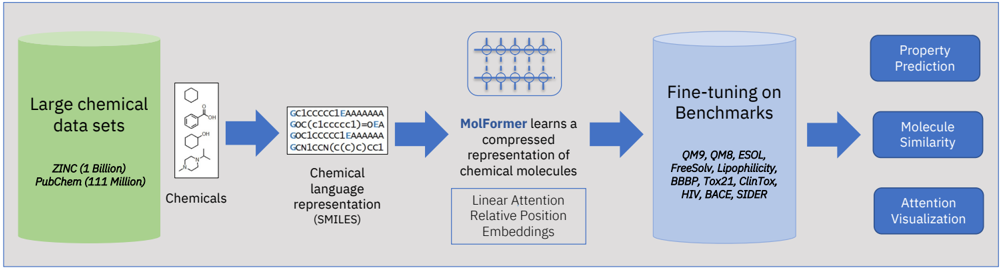
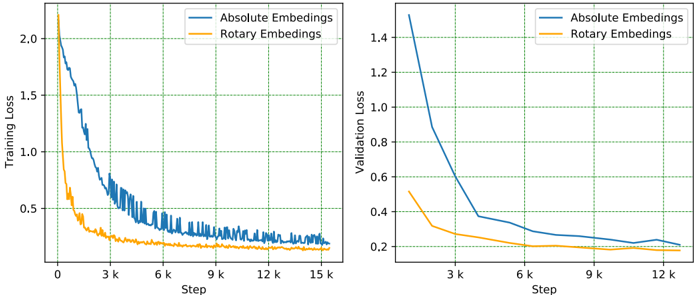
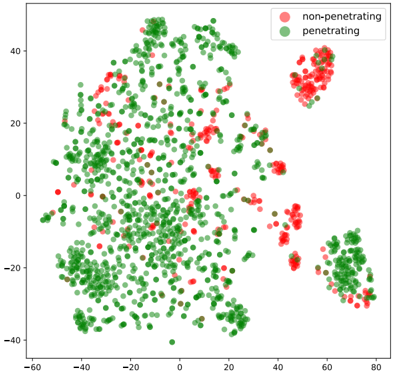
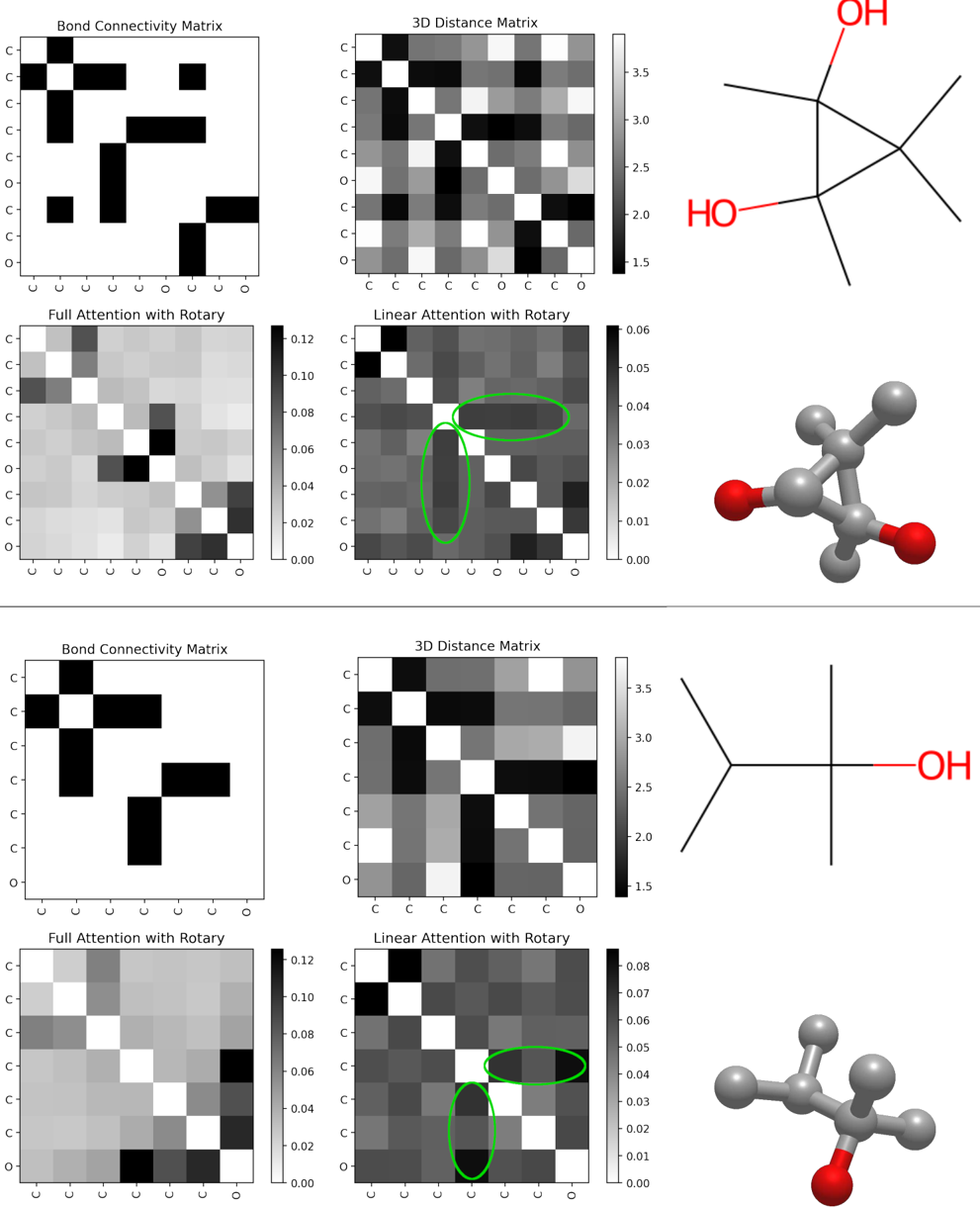
Verification
Claims the paper makes
The claims and statistics of this paper haven’t been checked yet.
Run the check — free, no account needed. It reads the open-access text and checks the sources it cites.
Claims other papers make about this one
Each is checked against this paper’s own text: does it say what the citing paper says it does?
The cited source says what the claim attributes to it.
In the citing paper
“MoLFormer (Ross et al. 2022), a high-capacity molecular SMILES transformer model incorporating relative position embedding.”
From Large language models (LLMs): survey, technical frameworks, and future challenges (2024) · cites this paper as Ross et al. 2022
Self-check
Percentages, sums and reported differences re-computed from the paper’s own numbers.
The self-check needs the paper’s full text.
Citations
Cites
Vaswani, A., Shazeer, N., Parmar, N., Uszkoreit, J., Jones, L., Gomez, A. N., Kaiser, L., & Polosukhin, I. (2017) · arXiv · doi:10.48550/arxiv.1706.03762 · Cited by 120,404
BERT: Pre-training of Deep Bidirectional Transformers for Language Understanding
Devlin, J., Chang, M.-W., Lee, K., & Toutanova, K. (2019) · Proceedings of the 2019 Conference of the North American Chapter of the Association for Computational Linguistics: Human Language Technologies, Volume 1 (Long and Short Papers) · doi:10.18653/v1/n19-1423 · Cited by 54,325
RoBERTa: A Robustly Optimized BERT Pretraining Approach
Liu, Y., Ott, M., Goyal, N., Du, J., Joshi, M., Chen, D., Levy, O., Lewis, M., Zettlemoyer, L., & Stoyanov, V. (2019) · arXiv · doi:10.48550/arxiv.1907.11692 · Cited by 16,515
Exploring the Limits of Transfer Learning with a Unified Text-to-Text Transformer
Raffel, C., Shazeer, N., Roberts, A., Lee, K., Narang, S., Matena, M., Zhou, Y., Li, W., & Liu, P. J. (2019) · arXiv · doi:10.48550/arxiv.1910.10683 · Cited by 10,929
Extended-Connectivity Fingerprints
Rogers, D. O. W., & Hahn, M. (2010) · Journal of Chemical Information and Modeling · doi:10.1021/ci100050t · Cited by 7,925
Weininger, D. (1988) · Journal of Chemical Information and Computer Sciences · doi:10.1021/ci00057a005 · Cited by 7,436
Modeling Relational Data with Graph Convolutional Networks
Schlichtkrull, M., Kipf, T. N., Bloem, P., van den Berg, R., Titov, I., & Welling, M. (2018) · Lecture Notes in Computer Science · doi:10.1007/978-3-319-93417-4_38 · Cited by 5,570
ZINC − A Free Database of Commercially Available Compounds for Virtual Screening
Irwin, J. J., & Shoichet, B. K. (2005) · Journal of Chemical Information and Modeling · doi:10.1021/ci049714+ · Cited by 4,058
Rives, A., Meier, J., Sercu, T., Goyal, S., Lin, Z., Liu, J., Guo, D., Ott, M., Zitnick, C. L., Ma, J., et al. (2021) · Proceedings of the National Academy of Sciences · doi:10.1073/pnas.2016239118 · Cited by 3,286
Rives, A., Meier, J., Sercu, T., Goyal, S., Lin, Z., Liu, J., Guo, D., Ott, M., Zitnick, C. L., Ma, J., et al. (2019) · doi:10.1101/622803 · Cited by 3,280
Research works printed but not linked: 20
- Goh, G. B., Hodas, N. O., Siegel, C. & Vishnu, A. SMILES2Vec: an interpretable general-purpose deep neural network for predicting chemical properties. Preprint at https://arxiv.org/abs/1712.02034 (2017). · arXiv
- Shin, B., Park, S., Kang, K. & Ho, J. C. Self-attention based molecule representation for predicting drug–target interaction. Proc. Mach. Learn. Res. 106, 230–248 (2019).
- Gao, W., Fu, T., Sun, J. & Coley, C. W. Sample efficiency matters: a benchmark for practical molecular optimization. In Thirty-Sixth Conference on Neural Information Processing Systems Datasets and Benchmarks Track (2022).
- Defferrard, M., Bresson, X. & Vandergheynst, P. Convolutional neural networks on graphs with fast localized spectral filtering. Adv. Neural Inf. Process. Syst. 29 (2016).
- Kipf, T. N. & Welling, M. Semi-supervised classification with graph convolutional networks. In 5th International Conference on Learning Representations (OpenReview.net, 2017).
- Li, Y., Tarlow, D., Brockschmidt, M. & Zemel, R. Gated graph sequence neural networks. In 4th International Conference on Learning Representations (eds Bengio, Y. & LeCun, Y.) (OpenReview.net, 2016).
- Veličković, P. et al. Graph attention networks. In International Conference on Learning Representations (2018).
- Hamilton, W., Ying, Z. & Leskovec, J. Inductive representation learning on large graphs. Adv. Neural Inf. Process. Syst. 30, 1025–1035 (Curran Associates Inc., 2017).
- Gilmer, J., Schoenholz, S. S., Riley, P. F., Vinyals, O. & Dahl, G. E. Neural message passing for quantum chemistry. Proc. Mach. Learn Res. 70, 1263–1272 (2017).
- Liao, R., Zhao, Z., Urtasun, R. & Zemel, R. S. LanczosNet: multi-scale deep graph convolutional networks. In 7th International Conference on Learning Representations (OpenReview.net, 2019).
- Chen, P., Liu, W., Hsieh, C.-Y., Chen, G. & Zhang, S. Utilizing edge features in graph neural networks via variational information maximization. Preprint at https://arxiv.org/abs/1906.05488 (2019). · arXiv
- Chithrananda, S., Grand, G. & Ramsundar, B. ChemBERTa: large-scale self-supervised pretraining for molecular property prediction. Preprint at https://arxiv.org/abs/2010.09885 (2020). · arXiv
- Katharopoulos, A., Vyas, A., Pappas, N. & Fleuret, F. Transformers are RNNs: fast autoregressive transformers with linear attention. Proc. Mach. Learn. Res. 119, 5156–5165 (2020).
- Liu, S., Demirel, M. F. & Liang, Y. N-gram graph: simple unsupervised representation for graphs, with applications to molecules. In NIPS’19: Proc. 33rd International Conference on Neural Information Processing Systems (eds Wallach, H. et al.) 8464–8476 (Curran Associates, Inc., 2019).
- Chen, T., Kornblith, S., Norouzi, M. & Hinton, G. A simple framework for contrastive learning of visual representations. Proc. Mach. Learn. Res. 119, 1597–1607 (2020).
- Oord, A. V. D., Li, Y. & Vinyals, O. Representation learning with contrastive predictive coding. Preprint at https://arxiv.org/abs/1807.03748 (2018). · arXiv
- Klicpera, J., Groß, J. & Günnemann, S. Directional message passing for molecular graphs. In 8th International Conference on Learning Representations (OpenReview.net, 2020).
- Ke, G., He, D. & Liu, T.-Y. Rethinking positional encoding in language pre-training. In 9th International Conference on Learning Representations (OpenReview.net, 2021).
- Beltagy, I., Peters, M. E. & Cohan, A. Longformer: the long-document transformer. Preprint at https://arxiv.org/abs/2004.05150 (2020). · arXiv
- Kitaev, N., Kaiser, L. & Levskaya, A. Reformer: the efficient transformer. In 8th International Conference on Learning Representations (OpenReview.net, 2020).
Cited by
Sorted by citations
Items 501–600 of 635
Galindo, M. M., Sbodio, M. L., Zayats, M., Ordóñez-Hurtado, R., Fernández-Díaz, R., Garcia, V. L., & Lam, H. T. (2026) · Nature Communications · doi:10.1038/s41467-026-74487-x
Peng, J., Liu, X., Wang, L., & Zhu, X. (2026) · Journal of Biomedical Informatics · doi:10.1016/j.jbi.2026.105076
Multimodal feature fusion for molecular property classification
Liu, J., Li, X. J., Wang, Y., Wu, Q., Tao, W., Wang, Y., Wu, J., & Luo, J. (2026) · Journal of Cheminformatics · doi:10.1186/s13321-026-01256-9
Smiles-based bioactivity prediction through molecular encoder selection and data augmentation
Lee, J. H., Choi, S., Özbulak, U., Vankerschaver, J., & Neve, W. D. (2026) · Journal of Cheminformatics · doi:10.1186/s13321-026-01251-0
Murakami, Y. (2026) · Computers & Chemical Engineering · doi:10.1016/j.compchemeng.2026.109789
Teng, C., Zhu, H., & Chen, F. (2026) · Computational and Theoretical Chemistry · doi:10.1016/j.comptc.2026.115946
Wu, T., Tang, H., & Wang, W. (2026) · Neoplasia · doi:10.1016/j.neo.2026.101336
Tao, L., SHI, S., Zhu, R., Liu, Z. H., Yang, B., Liu, L., Chen, W., Long, Q., Jiao, N., Zhang, G., et al. (2026) · Database · doi:10.1093/database/baag038
Quality-Aware 3D-to-1D Distillation for Molecular Property Prediction
Wu, J., Xu, D., & Yang, Z. (2026) · Lecture notes in computer science · doi:10.1007/978-981-92-3447-9_10
Hierarchical Contrastive Learning for Multi-domain Protein-Ligand Binding
Zhang, S., Hong, R., Zhang, H., & Liu, J. K. (2026) · Lecture notes in computer science · doi:10.1007/978-981-92-3719-7_20
Zhang, X., Lan, W., Huang, T., & Huy, H. (2026) · Lecture notes in computer science · doi:10.1007/978-981-92-3719-7_21
Qian, R., Duan, J., Liu, X., Wang, W., Zhu, T., Jiang, D., Liu, J., Deng, Y., Lü, A., & Cao, D. (2026) · The Innovation Drug Discovery · doi:10.59717/j.xinn-drugdisc.2026.100028
Assessment of Anti-Influenza Activity of Pyrimidin-4(3H)-one Derivatives Using Prediction Models
Gorohov, Y. V., Egorov, A. D., Andriyashina, N. M., Lobov, A. N., Balashova, I. S., Volobueva, A. S., Grabovsky, S. A., & Borisevich, S. S. (2026) · Scientia Pharmaceutica · doi:10.3390/scipharm94030060
Dey, S., Lu, P., Wallqvist, A., & AbdulHameed, M. D. M. (2026) · Journal of Cheminformatics · doi:10.1186/s13321-026-01258-7
Shen, S., Shi, C., Wang, Y., Chen, X., Zhou, Y., & Xia, B. (2026) · Analytical Chemistry · doi:10.1021/acs.analchem.6c03104
Alvarez, M., Herrera, S., & Cruz, D. (2026) · International Journal of Pharmaceutical and Phytopharmacological Research · doi:10.51847/nk0xqwaewk
Chung, M. L., Park, S., & Lee, H. (2026) · Journal of Cheminformatics · doi:10.1186/s13321-026-01259-6
e-Resources Relevant to Machine Learning Tools for Medicinal Chemistry
Barua, S., Balaji, B., & Balaji, S. (2026) · Royal Society of Chemistry eBooks · doi:10.1039/9781837070206-00583
Machine Learning Applications in Vaccine Design
Parvathy, P. S., Kumar, V. A., Biswas, R., & Mohan, C. G. (2026) · Royal Society of Chemistry eBooks · doi:10.1039/9781837070206-00682
Empowering chemical structures with biological insights for scalable phenotypic virtual screening
Lian, X., Ma, P., Ma, T., Ren, Z., Cai, X., Cheng, Z., Song, B., Wang, H., Pan, X., Chen, Y., et al. (2026) · Bioinformatics · doi:10.1093/bioinformatics/btag517
Deep learning as a bridge between sequencing-derived biological data and functional interpretation
Hong, H., Liu, L., Liao, W., Zhao, J., Liu, Y., He, X., Li, J., He, R., Jin, Y., Sha, L., et al. (2026) · Discover Artificial Intelligence · doi:10.1007/s44163-026-01739-6
Kaushal, N., & Penmatsa, A. M. (2026) · Machine Learning Science and Technology · doi:10.1088/2632-2153/ae911d
Task-Specific Sparse Feature Masks for Molecular Toxicity Prediction with Chemical Language Models
Lee, K. S., Chen, J., Chung, F. S. F., Zhao, T., Chen, Z., & Wang, D. D. (2026) · International Conference on Bioinformatics and Computational Biology (ICBCB) · doi:10.1109/icbcb69424.2026.11621727
A Preparation-Free Mixture-of-Experts Framework for Protein-Ligand Affinity PredictionPreprint
Bao, H., & Dong, S. (2026) · bioRxiv (Cold Spring Harbor Laboratory) · doi:10.64898/2026.07.24.740495
Stratified Molecular Data Splitting using Topological Graph Barycenter
Albi, G., Sclavi, G., Malovini, A. L., Atlante, S., Gaetano, C., Bellazzi, R., & Dagliati, A. (2026) · ACM International Conference on Bioinformatics, Computational Biology, and Health Informatics (ACM-BCB) · doi:10.1145/3807503.3819382
Attention-Based Multi-Omics Fusion for Drug Synergy Prediction
Debnath, K., Rana, P., & Ghosh, P. (2026) · ACM International Conference on Bioinformatics, Computational Biology, and Health Informatics (ACM-BCB) · doi:10.1145/3807503.3819481
Denvis, O. (2026) · SSRN Electronic Journal · doi:10.2139/ssrn.6955478
Deep Contrastive Learning for High‐Throughput Prediction of Drug Resistance Mutations from Sequences
Hu, X., Zhang, P., Wu, S., Sun, H., Li, M., Tsoka, S., Sheng, Z., & Deng, L. (2026) · Advanced Science · doi:10.1002/advs.202514899
How Bias Shapes the Leaderboard: Scoring Function Performance Under ScrutinyPreprint
Graber, D., Kopko, J., Stockinger, P., Nakandalage, R., Kuhn, B., & Mishra, S. (2026) · bioRxiv (Cold Spring Harbor Laboratory) · doi:10.64898/2026.07.27.740774
When Do Models Win? A Learning Curve Benchmark for Molecular Property Prediction in Low-Data RegimesPreprint
Lee¹, J. (2026) · ChemRxiv · doi:10.26434/chemrxiv.15001253/v5
Domain generalization meets mutual bi-attention: A novel approach to drug-target prediction
Yang, J., Li, W., Qian, K., & Cheng, Z. (2026) · Neurocomputing · doi:10.1016/j.neucom.2026.134626
OdorNet: An Approach for Smell Digitization and Classification
Sharma, A. K., Nigam, A., Bhavsar, A., Shrivastava, A., Lakha, N., Kumar, A., & Pandey, A. (2026) · Lecture notes in computer science · doi:10.1007/978-3-032-31930-2_37
Rahmaniar, W., Sunarwidhi, A. L., & Hernawan, A. (2026) · Computational Biology and Chemistry · doi:10.1016/j.compbiolchem.2026.109280
武藤, 里., Kumada, A., & Sato, M. (2026) · Applied Physics Letters · doi:10.1063/5.0326955
Gaps in AI-Driven Pharmacokinetic Property Prediction for Early Drug Development: A Scoping Review
Tomin, L., Bodaghi-Namileh, V., Schwartz, D. G., Samudrala, R., & Falls, Z. (2026) · Journal of Chemical Information and Modeling · doi:10.1021/acs.jcim.6c01331
Khan, S., Samuelsson, J. G., Cai, X., Natarajan, K., & Madhavan, S. (2026) · Drug Discovery Today · doi:10.1016/j.drudis.2026.104754
A Geometry-Aware Pretraining Network for Molecular Representation Learning
Xu, J., & Bi, Y. (2026) · Youth Academic Annual Conference of Chinese Association of Automation (YAC) · doi:10.1109/yac71005.2026.11616249
Short-Term Memory Active Learning for Drug Development
Xiang, Y., Wang, J., Fralish, Z., & Reker, D. (2026) · Journal of Chemical Information and Modeling · doi:10.1021/acs.jcim.6c00687
GLACIER: A Multimodal Student-Teacher Foundation Model for Molecular Property Prediction
Nguyen, E., Hong, Y., Toshniwal, H., Liu, Y., & Luttens, A. (2026) · ACM SIGKDD Conference on Knowledge Discovery and Data Mining (KDD) · doi:10.1145/3770855.3819032
Liu, S., Zhuo, J., Lei, S., Wu, T., Han, J., Wu, C., Wang, Y., & Xie, W. (2026) · bioRxiv (Cold Spring Harbor Laboratory) · doi:10.64898/2026.08.03.742461
Yang, Z. (2026) · Chemometrics and Intelligent Laboratory Systems · doi:10.1016/j.chemolab.2026.105849
Zhao, J., Li, H., He, T., Liu, C., Xu, L., He, X. D., & Fang, G. (2026) · The Journal of Physical Chemistry Letters · doi:10.1021/acs.jpclett.6c02004
Khoury, O., Ross, E., Lefevre, J.-M., & Al-Hammadi, A. (2024) · Pharmacophore · doi:10.51847/rbfe0o1wzp
Fedorova, E., Volkov, A., Morozova, I., & Kuznetsov, D. (2025) · Pharmacophore · doi:10.51847/bwoobpcfdp
Hu, X., Huang, H., Sun, H., Zhao, Y., Wang, Z., Chen, H., Wu, M., & Deng, L. (2026) · Bioinformatics · doi:10.1093/bioinformatics/btag599
Zhang, M., Takahashi, D., Benali, Y., & Liu, X. (2025) · Pharmacophore · doi:10.51847/efvx6kqqna
Stankova, E., Brown, C., Aisyah, S., & Durand, O. (2025) · Pharmacophore · doi:10.51847/enwqtllm3h
PTER-DTA: Drug Target Affinity Prediction Model Based on Pre-trained Enhanced Representations
Wang, P., & Yan, X. (2026) · International Conference on Electronic Information Technology and Computer Engineering (EITCE) · doi:10.1109/eitce70137.2026.11634558
DILI Prediction Using Molecular Fingerprints and ChemBERTa
Li, W., Shi, N., He, S., Bo, X., & Zan, P. (2026) · IEEE China Conference on System Simulation Technology and its Applications (CCSSTA) · doi:10.1109/ccssta69471.2026.11635627
A Controlled Study of Tokenizer Scale in SMILES-Based Foundation Models
Choi, S., Lee, J. H., Özbulak, U., Vankerschaver, J., & Neve, W. D. (2026) · Lecture notes in computer science · doi:10.1007/978-3-032-35390-0_18
Walker, J., Harris, O., & Wilson, G. (2026) · Pharmacophore · doi:10.51847/44vwgwgyvz
Anderson, M., Wong, L., & Lee, S. (2025) · International Journal Of Pharmaceutical Research And Allied Sciences · doi:10.51847/lcrwzgnvqy
DNA-encoded libraries through a machine learning lens: challenges and opportunities
Bahia, M. S., Jiang, Y., Gonse, A., Batey, R. A., & Koziarski, M. (2026) · Digital Discovery · doi:10.1039/d6dd00117c
Liu, A., Fang, C., Li, Y., Wang, Z., Qi, T., & Hu, G. (2026) · The Journal of Physical Chemistry Letters · doi:10.1021/acs.jpclett.6c02089
Hariri, Y., Nasser, H., & Zahra, F. (2025) · International Journal Of Pharmaceutical Research And Allied Sciences · doi:10.51847/doitqhesxy
Al-Fahd, S., Al-Khalifa, N., & Al-Turki, O. (2025) · International Journal Of Pharmaceutical Research And Allied Sciences · doi:10.51847/0r77qjpuot
Binary interaction parameters of a million mixtures for PCP-SAFT using deep learning
Hemprich, C., Bauer, G., Chaparro, G., Bardow, A., & Rehner, P. (2026) · Digital Discovery · doi:10.1039/d6dd00195e
Zhang, Y., Ling, X., Li, Z., Song, L., Jia, Y., Wang, Y., & You, Z. (2026) · Engineering Applications of Artificial Intelligence · doi:10.1016/j.engappai.2026.115976
Fischer, D., Meier, L., Koch, S., & Braun, T. (2026) · International Journal Of Pharmaceutical Research And Allied Sciences · doi:10.51847/ajdbgzrfdc
Khan, D. U., Aamer, N., Sajjad, M., Vollmer, S., Dengel, A., & Asim, M. N. (2026) · Research Square · doi:10.21203/rs.3.rs-10420771/v1
When Do Simple Models Win? Machine Learning Architectures for UV Absorption Prediction
Arampath, U., Pero, B., Stewart, D. E., & Demirjian, D. (2026) · Journal of Chemical Information and Modeling · doi:10.1021/acs.jcim.6c00943
Chen, K., Huang, J., Xu, J., Bai, D., Bi, T., Liu, Z., Sun, Q., & Dai, Y. (2026) · RSC Advances · doi:10.1039/d6ra03044k
The Evolution of Generative Chemistry in Medicinal Chemistry
Koshty, R. E., Shehata, M. A., Allah, A. M. G., Zaki, M. B., & Elshaier, Y. A. M. M. (2026) · ChemistrySelect · doi:10.1002/slct.74240
AI-powered medicinal chemistry and translational drug development
Kaicheng, U., Zhang, S. M., Yu, Z., Zhang, Z., Zhang, J., He, C., Liu, A., Chen, R., Wang, S., Yan, L., et al. (2026) · Chemical Society Reviews · doi:10.1039/d5cs01469g
A multimodal representation learning platform for accurate molecular ADMET predictionPreprint
Luo, Z., Huang, D., Shao, Y., Yu, Q., & Li, Y. (2026) · bioRxiv (Cold Spring Harbor Laboratory) · doi:10.64898/2026.08.24.746660
Stability prediction of organic field-effect transistors by machine learning
Qi, J., Chen, S., Liu, H., Hu, H., Zhang, L., Chen, X., Li, L., & Hu, W. (2026) · Science China Technological Sciences · doi:10.1007/s11431-025-3287-9
Yu, Z., Liang, J., Xie, Z., & He, J. (2026) · Analytica Chimica Acta · doi:10.1016/j.aca.2026.346160
Machine Learning‐Aided Small‐Molecule Virtual Screening: Recent Advances and Future Perspectives
Wang, Y., Bansal, N., Wa, S., Sciabola, S., & Wang, Y. (2026) · Wiley Interdisciplinary Reviews Computational Molecular Science · doi:10.1002/wcms.70084
Transfer learning for honey bee toxicity prediction: MolFormer versus classical QSAR representations
Pinho, A. V. D. S., Filho, E. B. D. A., & Neto, R. F. D. O. (2026) · Ecotoxicology · doi:10.1007/s10646-026-03149-x
Global descriptors informed learning for organic melting-point prediction
Pu, X., Meng, Y., & Liu, T. (2026) · RSC Advances · doi:10.1039/d6ra05490k
When Do Models Win? A Learning Curve Benchmark for Molecular Property Prediction in Low-Data RegimesPreprint
Lee¹, J. (2026) · ChemRxiv · doi:10.26434/chemrxiv.15001253/v6
Huang, H., Wang, Q., Zhang, M., Dou, P., Yang, X., Li, H., & Li, S. (2026) · JACS Au · doi:10.1021/jacsau.6c01105
Liu, R., Yuan, T., & 郭万林 (2026) · Journal of Chemical Information and Modeling · doi:10.1021/acs.jcim.6c01547
Simonetti, S. O., Moroni, A. B., Zanardi, M. M., Kozielski, F., Wells, G., & Porta, E. O. J. (2026) · Drug Discovery Today · doi:10.1016/j.drudis.2026.104794
TMC-LewisGen: Automated Generation of Lewis-like Structures for Transition–Metal Complexes
Reecy-Z, Zhu, J., Tong, S. H., Xiao, L., & Lin, Z. (2026) · Journal of Chemical Information and Modeling · doi:10.1021/acs.jcim.6c02278
Chang, A., Zhu, H., Chen, H., Wang, C., Wang, X., Zeng, X., Ding, Y., Xiong, P., & Zhou, S. K. (2026) · bioRxiv (Cold Spring Harbor Laboratory) · doi:10.64898/2026.09.02.748859
Evolutionary shifts in representation learning for DTI prediction from sequences to structures
Qin, W. (2026) · Letters in Drug Design & Discovery · doi:10.1016/j.lddd.2026.100556
ActiveFusion: Fused Representations Improve Active Learning for Molecular Property Prediction
Evbarunegbe, N. I., Wa, S., Taylor, L., & Green, A. G. (2026) · Journal of Chemical Information and Modeling · doi:10.1021/acs.jcim.6c01708 · Cited by 1
Pollmann, J., Bushuiev, R., Bushuiev, A., Pluskal, T., & Huber, F. (2026) · ChemRxiv · doi:10.26434/chemrxiv.15000536/v3
Bi, X., Wang, Y., Wang, J., & Liu, C. (2026) · Frontiers in Pharmacology · doi:10.3389/fphar.2026.1927954
DFRL-Mol: a dual-stage framework of reinforcement learning for multi-scenario molecule optimization
Wu, Z., Zhao, P., Li, J., Wang, Q., Zhang, Q., Yu, H., Yu, Z., & Shi, J. (2026) · Briefings in Bioinformatics · doi:10.1093/bib/bbag493
Luo, G., Zhang, Q., Wang, C., Yi, Z., Wang, A. J., Tang, J. P., & Li, M. (2026) · Advanced Science · doi:10.1002/advs.77238
Wang, B., lv, Z., Ning, N., Zhang, Y., & Zhang, J. (2026) · Molecules · doi:10.3390/molecules31183251
SMILESGNN: Interpretable Clinical Toxicity Prediction via SMILES-Graph Cross-Attention Fusion
Nguyen, Q. M., Nguyen, T. Q., Le, D. M., Nguyen, H. N. M., Doan, T. L. D., & Nguyen, T. N. (2026) · International Conference on Multimedia Analysis and Pattern Recognition (MAPR) · doi:10.1109/mapr72750.2026.11685822
Hamada, L., Kishimoto, A., Miyaguchi, K., Hirose, M., Fuchiwaki, J., Priyadarsini, I., & Takeda, S. (2026) · Nature Computational Science · doi:10.1038/s43588-026-01036-3
Mohamed, F. A. A. A., & El-sagheir, A. M. K. (2026) · Medicinal Chemistry Research · doi:10.1007/s00044-026-03616-4
Li, Y., Liu, X., Liu, Y., Yuan, J., Liu, T., Wang, X., Ma, T., & Guo, Q. (2026) · European Journal of Medicinal Chemistry · doi:10.1016/j.ejmech.2026.119336
Generative AI for Drug Discovery: GPT-2 and LSTM-Based Models for Designing EGFR Inhibitors
Dasser, O., Benaceur, O. F., Fadel, S., & Kaanane, R. (2026) · Medinformatics · doi:10.47852/bonviewmedin62029449
Large Language Models in Chemistry and Materials Science: A Comprehensive SurveyPreprint
LI, J., LIU, C., WEI, C., Wang, Y., Zhao, B., YAN, Z., Cai, W., WU, W., 田双艳, WANG, Z., et al. (2026) · ChemRxiv · doi:10.26434/chemrxiv.15009184/v1
Kengkanna, A., & Ohue, M. (2026) · Advanced Intelligent Discovery · doi:10.1002/aidi.70161
Language-model-derived training data for polymer glass transition prediction: a controlled benchmarkPreprint
Rusev, R. (2026) · ChemRxiv · doi:10.26434/chemrxiv.15009353/v1
Zhu, Y., & Liu, Q. (2026) · Journal of Chemical Information and Modeling · doi:10.1021/acs.jcim.6c02202
McPherson, J. K., Sharma, S., Mishra, B., Shehadeh, F., & Mylonakis, E. E. (2026) · Frontiers in Bacteriology · doi:10.3389/fbrio.2026.1926678
Huang, Y., Wan, J., Wu, G., Dong, D., Lin, Y.-C.-D., Huang, H., & Huang, H.-D. (2026) · bioRxiv (Cold Spring Harbor Laboratory) · doi:10.64898/2026.09.21.753060
Shin, Y., Mada, S., & Dakshanamurthy, S. (2026) · Pharmaceuticals · doi:10.3390/ph19101524
Liu, Q., Li, G., Kang, H., Song, M., Cheng, Y., Jiang, B., Zhao, F., Lei, Z., & Xu, P. (2026) · Chemical Engineering Science · doi:10.1016/j.ces.2026.125235
Zhai, J., Cai, L., Niu, T., Xie, L., & Junmei, W. (2026) · Digital Discovery · doi:10.1039/d6dd00139d
Hajal, A. A. (2026) · Journal of Computer-Aided Molecular Design · doi:10.1007/s10822-026-00946-8
Kaufmann, L., Breton, L. L., Carraz-Billat, E., Fournier, Q., & Lemieux, S. (2026) · bioRxiv (Cold Spring Harbor Laboratory) · doi:10.64898/2026.09.28.755146 · Cited by 1
Assessing chemical toxicity across Eukaryota using multimodal transformersPreprint
Käll, S., Gustavsson, M. B., Svedberg, P., Dalman, M., Henriksson, J., Backhaus, T., & Kristiansson, E. (2026) · bioRxiv (Cold Spring Harbor Laboratory) · doi:10.64898/2026.09.23.753795
Metadata
- Authors
- Ross, J., Belgodere, B., Chenthamarakshan, V., Padhi, I., Mroueh, Y., & Das, P.
- Affiliations
- IBM (United States) (US)
- Corresponding author
- Ross, Jerret
- Das, Payel
- Venue
- Nature Machine Intelligence
- Published
- 2022-12-21
- Volume
- 4
- Issue
- 12
- Pages
- 1256-1264
- ISSN
- 2522-5839 (ISSN-L)
- OpenAlex
- W4313485929
- Cited by
- 590
- References
- 46
- Citations by year
- 2026: 222 · 2025: 212 · 2024: 112 · 2023: 42 · 2022: 2
- FWCI
- 49.91
- Type
- journal article
- Language
- en
- Open access
- green
- doi.org
- Licence
- Locations
- Nature Machine Intelligence (publishedVersion)
- Research Square (acceptedVersion, cc-by)
- arXiv (Cornell University) (submittedVersion)
- arXiv (Cornell University)
- Topics
- Life Sciences › Pharmacology, Toxicology and Pharmaceutics › Drug Discovery › Computational Drug Discovery Methods
- Physical Sciences › Materials Science › Materials Chemistry › Machine Learning in Materials Science
- Physical Sciences › Physics and Astronomy › Atomic and Molecular Physics, and Optics › Advanced Chemical Physics Studies
- Keywords
- molecular embeddings, Transformer encoder, rotary positional embeddings, linear attention, SMILES, molecular property prediction, quantum chemical properties, attention analysis, drug discovery, material design, self-supervised learning
About these checks
Registry, retraction, Cites and statistics results are computed, not judged, with one exception: a printed reference that no index lists is read once by a model before it counts as a citation error. Claims are extracted by a model and kept only when their quote appears verbatim in the text; each cited source is then checked, with a model’s help, for whether it says what the claim relies on. Those verdicts can be wrong — read the claim’s quote and the cited source before relying on one.
Statistics and arithmetic are recomputed, not judged.
Confidence bands are shown only for fields calibrated on our annotated test set. None is calibrated yet, so no band is shown.
What counts as a claim ›How we measure confidence ›How we check this ›
Are you an author, or do you see a problem with this page? Request a review
