

The economic value of targeting aging
Open accessThe DOI matches its Crossref record; 34 of the 34 references it cites were found in a registry or an index; 8 of the 18 sources its claims cite were checked for support.
Abstract
Developments in life expectancy and the growing emphasis on biological and ‘healthy’ aging raise a number of important questions for health scientists and economists alike. Is it preferable to make lives healthier by compressing morbidity, or longer by extending life? What are the gains from targeting aging itself compared to efforts to eradicate specific diseases? Here we analyze existing data to evaluate the economic value of increases in life expectancy, improvements in health and treatments that target aging. We show that a compression of morbidity that improves health is more valuable than further increases in life expectancy, and that targeting aging offers potentially larger economic gains than eradicating individual diseases. We show that a slowdown in aging that increases life expectancy by 1 year is worth US$38 trillion, and by 10 years, US$367 trillion. Ultimately, the more progress that is made in improving how we age, the greater the value of further improvements.
Overview
CoChat Summary
TL;DR
Using a value-of-statistical-life economic model calibrated to US data, the paper finds that health-improving compression of morbidity is more valuable than further life extension, and that targeting aging itself yields larger economic gains than eradicating individual diseases. A slowdown in aging that adds 1 year of life expectancy is worth US$37.6 trillion, and one adding 10 years is worth US$366.8 trillion.
Key findings
- The willingness to pay for an extra year of healthy life expectancy always exceeds that for an extra year of life expectancy; individuals prefer compression of morbidity over further life extension.
- A 2017 slowdown in aging producing a 1-year increase in life expectancy is worth US$37.6 trillion total (US$29.7 trillion for those alive in 2017 and US$7.9 trillion for unborn generations); a 10-year increase is worth US$366.8 trillion (US$291.9 trillion and US$74.8 trillion, respectively). At a 2% interest rate, the 10-year gain is US$7.2 trillion annually, or 33.6% of 2019 GDP.
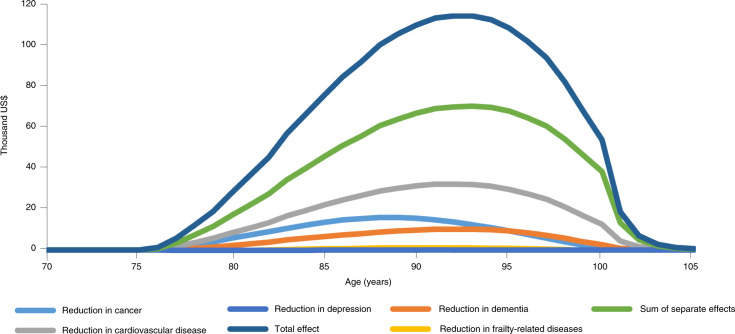
- Metformin, used as an example of targeting aging, often matches or exceeds the value of eradicating cancer, dementia, or cardiovascular diseases; treatment starting at age 75 raises life expectancy at birth by 2.9 years and at age 80 by 4.3 years, with healthy life expectancy gains of 1.7–2.5 years.
- Targeting aging creates a virtuous circle: the more society improves how it ages, the greater the aggregate economic value of further improvements, because gains rise with the average age of society and the number of older people.
Methods
- The authors use an economic model based on Murphy and Topel, calibrated to current US data, in which optimizing individuals choose consumption, hours worked, and leisure; willingness to pay is measured via value of statistical life, incorporating both quantity and quality of remaining life.
- Demographic inputs include a Gompertz survival function, a health deficit function, and 2017 US Census population structure and birth rates; baseline life expectancy at birth is 78.9 years and healthy life expectancy is 68.5 years, with adult VSL set at US$11.5 million for ages 25–65.
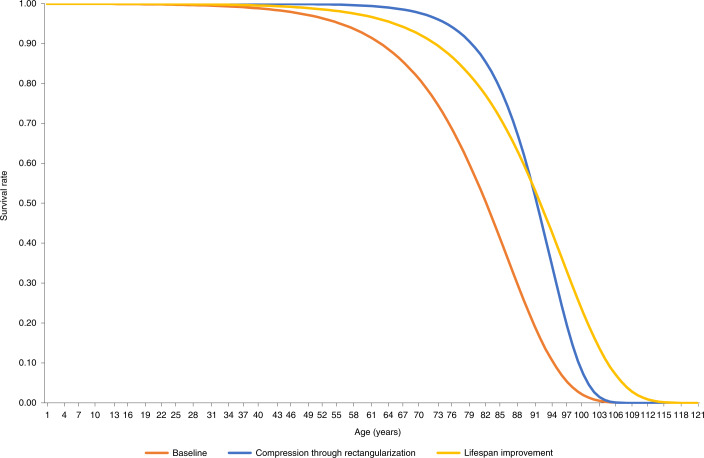
- Simulations cover life extension (Struldbrugg), compression of morbidity (Dorian Gray), slowing aging (Peter Pan), reversing aging (Wolverine), and metformin effects based on a study of 41,204 men with diabetes; aggregate WTP sums age-specific values using census data.
Limitations
- The paper states that metformin’s efficacy awaits confirmation from large trials such as TAME; the metformin estimates rely on a study of 41,204 men over 65 with diabetes, so factors may not accurately capture effects for women, non-diabetics, or those under 65, and metformin may have less impact at higher ages.
- The paper states that estimates abstract from inequalities in health and income; allowing for health inequalities likely increases aggregate gains, while income inequality raises distributional issues, and dollar WTP values are sensitive to model calibration though relative treatment rankings are not.
- Evident from the text: results are simulation-based rather than direct empirical estimates, depend on VSL and utility assumptions, and the Wolverine scenario requires additional auxiliary assumptions; aggregate projections also assume zero net immigration and current birth and mortality rates.
Model-written summary. Check it against the paper before relying on it.
Integrity signals
Registry
Cites
Statistics
Figures
Verification
Claims the paper makes
6 Valid · 1 Not valid · 9 Not checked · 52 Own results and interpretations
Every source the paper cites for this claim was checked and supports it.
In the paper
“These calculations abstract from the diversity of health across the US population32,33, so they are likely to underestimate the aggregate gains from delaying aging.”
§ The economic value of targeting aging > Results > Aggregate gains
What the sources say
- Supportedcites [32] Cantu, P. A., Hayward, M. D., Hummer, R. A. & Chiu, C.-T. New estimates of racial/ethnic differences in life expectancy with chronic morbidity and functional loss: evidence from the National Health Interview Survey. J. Cross Cult. Geront.28, 283–297 (2013). PMC4029590 23949255 source
The citation follows the statement that aggregate calculations abstract from health diversity across the US population. The Data, Measures, and Approach section reports substantial differences in life expectancy and lifetime health across racial/ethnic groups and between men and women, supporting that point. The subsequent inference about gains from delaying aging is the citing authors’ own conclusion, not a finding attributed to this source. (LLM, conf=0.89)
- Supportedcites [33] Garcia MA Educational benefits and cognitive health life expectancies: racial/ethnic, nativity, and gender disparities Gerontologist 2020 61 330 340 10.1093/geront/gnaa112 PMC8023372 32833008 source
The Discussion reports differences in cognitive health life expectancy by race/ethnicity, nativity, and gender, supporting the cited point that health varies across the US population. The claim that aggregate gains are likely underestimated follows the citation and is the citing authors’ inference, not a finding attributed to this paper. (LLM, conf=0.88)
hedgedstates a possible cause- Asserted: passes — The authors put it forward as true.
- Checkable: passes — It can be checked against evidence.
- Load-bearing: unclear — It is unclear whether the paper’s conclusions depend on it.
- Based: passes — The paper gives a reason why it holds.
- Supported
The cited sources support only part of this claim — read each source’s verdict below.
In the paper
“Recent advances have shown that such regeneration is possible in mice and humans25,26.”
§ The economic value of targeting aging > Results > Reversing aging (the Wolverine case)
What the sources say
- Supportedcites [25] Fahy GM Reversal of epigenetic aging and immunosenescent trends in humans Aging Cell 2019 18 e13028 10.1111/acel.13028 31496122 PMC6826138 source
This source supports the human part of the sentence: the Discussion reports highly significant evidence of thymic regeneration in normal aging men, and the Results report improved thymic MRI measures in 7 of 9 volunteers. The sentence has two citations; this human study need not establish the separate claim about mice. (LLM, conf=0.91)
- Partly supportedcites [26] Lu Y Reprogramming to recover youthful epigenetic information and restore vision Nature 2020 588 124 129 10.1038/s41586-020-2975-4 33268865 PMC7752134 sourceExperimental — accuracy not yet measured
The “OSK stimulates axon regeneration” section reports axon regeneration in mice. “Axon regeneration in human neurons” reports recovery of axon growth in cultured human neurons, not regeneration demonstrated in human patients. The claim is supported for mice but overextends the human-cell result to humans. (LLM, conf=0.87)
hedged- Asserted: passes — The authors put it forward as true.
- Checkable: passes — It can be checked against evidence.
- Load-bearing: passes — The paper’s conclusions depend on it.
- Based: passes — The paper gives a reason why it holds.
- Supported
A result the paper states — it cites no source for it, so there is none to check. The quote shows it is in the paper.
In the paper
“The magnitude of these aggregation and complementarity effects increases with the number of diseases under consideration.”
§ The economic value of targeting aging > Results > Targeting aging versus single diseases
plainstates a cause- Asserted: passes — The authors put it forward as true.
- Checkable: passes — It can be checked against evidence.
- Load-bearing: passes — The paper’s conclusions depend on it.
- Based: passes — The paper gives a reason why it holds.
A result the paper states — it cites no source for it, so there is none to check. The quote shows it is in the paper.
In the paper
“If instead we focus on percentage improvements in aging (for example, a 1% slowdown in biological aging rather than a slowdown generating a 1-year increase in LE) then we have increasing WTP at an individual level.”
§ The economic value of targeting aging > Results > Aggregate gains
plainstates a cause- Asserted: passes — The authors put it forward as true.
- Checkable: passes — It can be checked against evidence.
- Load-bearing: passes — The paper’s conclusions depend on it.
- Based: passes — The paper gives a reason why it holds.
A result the paper states — it cites no source for it, so there is none to check. The quote shows it is in the paper.
In the paper
“This also explains why extending healthspan is eventually preferable to rectangularization.”
§ The economic value of targeting aging > Results > Compressing morbidity (the Dorian Gray case)
plainstates a cause- Asserted: passes — The authors put it forward as true.
- Checkable: passes — It can be checked against evidence.
- Load-bearing: passes — The paper’s conclusions depend on it.
- Based: passes — The paper gives a reason why it holds.
- Rests on an assumption not shown here.
34 more claims
Create a free account to see all 68 claims and to verify the 1 reference still open.
- Probably not a substantial claim. 7
- It may state two separate claims as one. 24
Claims other papers make about this one
Each is checked against this paper’s own text: does it say what the citing paper says it does?
The source backs part of the claim, not all of it — or backs it for a different population, condition or comparison.
In the citing paper
“Chronological age is the major predictor for most of the diseases that account for the bulk of morbidity, mortality and health costs across low-, middle- and high-income countries2–7.”
From Cellular senescence and senolytics: the path to the clinic (2022) · cites this paper as [4]
Experimental — accuracy not yet measuredThe source backs part of the claim, not all of it — or backs it for a different population, condition or comparison.
In the citing paper
“By understanding and targeting cellular senescence and the other pillars of aging, rather than targeting individual diseases that are downstream of fundamental aging processes, it is conceivable that multimorbidity could be reduced and healthspan increased, with realization of substantial societal and economic benefits4,6.”
From Cellular senescence and senolytics: the path to the clinic (2022) · cites this paper as [4]
Experimental — accuracy not yet measuredThe cited source says what the claim attributes to it.
In the citing paper
“Nevertheless, modest slowing of the pace of aging can have profound effects on population health11–13.”
From Effect of long-term caloric restriction on DNA methylation measures of biological aging in healthy adults from the CALERIE trial (2023) · cites this paper as [11]
Self-check
Percentages, sums and reported differences re-computed from the paper’s own numbers.
Each contradiction between two passages listed here was confirmed by an independent check.
Rated minor: it would not touch a result — a value no result rests on, a p-value that stays on the same side of the significance level, or a conflict that is clerical, resolved elsewhere in the paper, or outside its own findings.
In the paper
§ The economic value of targeting aging > Results > Life extension (the Struldbrugg case)
“The rectangularization curve shows a survival function in which improvements in LE are achieved through compressing morbidity.”
§ The economic value of targeting aging > Results > Life extension (the Struldbrugg case)
“The result is an expansion of morbidity such that the ratio of HLE to LE deteriorates.”
Citations
Cites
The Epidemiologic Transition: A Theory of the Epidemiology of Population Change
OMRAN, A. R. (2005) · The Milbank Quarterly · doi:10.1111/j.1468-0009.2005.00398.x · Cited by 3,823
Gompertz, B. (1825) · Philosophical Transactions of the Royal Society of London · doi:10.1098/rstl.1825.0026 · Cited by 3,816
Aging, natural death, and the compression of morbidity
Fries, J. F. (1980) · New England Journal of Medicine · doi:10.1056/nejm198007173030304 · Cited by 3,356
Broken Limits to Life Expectancy
Oeppen, J., & Vaupel, J. W. (2002) · Science · doi:10.1126/science.1069675 · Cited by 2,819
Wang, H., Abbas, K. M., Abbasifard, M., Abbasi-Kangevari, M., Abbastabar, H., Abd-Allah, F., Abdelalim, A., Abolhassani, H., Abreu, L. G., Abrigo, M. R. M., et al. (2020) · The Lancet · doi:10.1016/s0140-6736(20)30977-6 · Cited by 1,971
From discoveries in ageing research to therapeutics for healthy ageing
Campisi, J., Kapahi, P., Lithgow, G. J., Melov, S., Newman, J. C., & Verdin, E. (2019) · Nature · doi:10.1038/s41586-019-1365-2 · Cited by 1,389
Metformin as a tool to target aging
Barzilai, N., Crandall, J. P., Kritchevsky, S. B., & Espeland, M. A. (2016) · Cell Metabolism · doi:10.1016/j.cmet.2016.05.011 · Cited by 1,096
The Fourth Stage of the Epidemiologic Transition: The Age of Delayed Degenerative Diseases
Olshansky, S. J., & Ault, A. B. (1986) · The Milbank Quarterly · doi:10.2307/3350025 · Cited by 820
Reprogramming to recover youthful epigenetic information and restore vision
Lu, Y., Brommer, B., Tian, X., Krishnan, A., Meer, M., Wang, C., Vera, D. L., Zeng, Q., Yu, D., Bonkowski, M. S., et al. (2020) · Nature · doi:10.1038/s41586-020-2975-4 · Cited by 820
Self-citationKirkwood, T. B. L. (2015) · Philosophical Transactions of the Royal Society B: Biological Sciences · doi:10.1098/rstb.2014.0379 · Cited by 608
Research works printed but not linked: 1
- Barzilai N Age Later: Health Span, Life Span, and the New Science of Longevity 2020 St Martin’s Press
Cited by
Cellular senescence and senolytics: the path to the clinic
Chaib, S., Tchkonia, T., & Kirkland, J. L. (2022) · Nature Medicine · doi:10.1038/s41591-022-01923-y · Cited by 1,134
Cai, Y., Song, W., Li, J., Jing, Y., Liang, C., Zhang, L., Zhang, X., Zhang, W., Liu, B., An, Y., et al. (2022) · Science China Life Sciences · doi:10.1007/s11427-022-2161-3 · Cited by 408
Nandi, A., Counts, N., Chen, S., Seligman, B., Tortorice, D., Vigo, D., & Bloom, D. E. (2022) · eClinicalMedicine · doi:10.1016/j.eclinm.2022.101580 · Cited by 402
Chen, S., Cao, Z., Nandi, A., Counts, N., Jiao, L., Prettner, K., Kuhn, M., Seligman, B., Tortorice, D., Vigo, D., et al. (2024) · The Lancet Global Health · doi:10.1016/s2214-109x(24)00264-x · Cited by 294
Waziry, R., Ryan, C. P., Corcoran, D. L., Huffman, K. M., Kobor, M. S., Kothari, M., Graf, G. H., Kraus, V. B., Kraus, W. E., Lin, D. T. S., et al. (2023) · Nature Aging · doi:10.1038/s43587-022-00357-y · Cited by 217
“Nevertheless, modest slowing of the pace of aging can have profound effects on population health 11–13 .”
Amuthavalli Thiyagarajan, J., Mikton, C., Harwood, R. H., Gichu, M., Gaigbe-Togbe, V., Jhamba, T., Pokorna, D., Stoevska, V., Hada, R., Steffan, G. S., et al. (2022) · Age and Ageing · doi:10.1093/ageing/afac147 · Cited by 195
“While chronic diseases related to ageing continue to hinder health span improvement, there are numerous ways to influence the relationship between chronological age and health [6, 7].”
BackgroundTargeting ageing with rapamycin and its derivatives in humans: a systematic review
Lee, D. J. W., Hodzic Kuerec, A., & Maier, A. B. (2024) · The Lancet Healthy Longevity · doi:10.1016/s2666-7568(23)00258-1 · Cited by 175
Influences on Skin and Intrinsic Aging: Biological, Environmental, and Therapeutic Insights
Hussein, R. S., Bin Dayel, S., Abahussein, O., & El‐Sherbiny, A. A. (2025) · Journal of Cosmetic Dermatology · doi:10.1111/jocd.16688 · Cited by 143
Bischoff-Ferrari, H. A., Gängler, S., Wieczorek, M., Belsky, D. W., Ryan, J., Kressig, R. W., Stähelin, H. B., Theiler, R., Dawson-Hughes, B., Rizzoli, R., et al. (2025) · Nature Aging · doi:10.1038/s43587-024-00793-y · Cited by 140
“Further, even small changes in biological aging, if sustained, may have relevant effects on population health 32–34 .”
Kulkarni, A. S., Aleksić, S., Berger, D. M., Sierra, F., Kuchel, G. A., & Barzilai, N. (2022) · Aging Cell · doi:10.1111/acel.13596 · Cited by 141
“…economic value that can be derived from applying geroscience principles to healthcare has been recently reassessed showing that a slowdown in aging that increases life expectancy by just one year is worth $38 trillion a year, due to complementary gains in health and longevity (Scott et al., 2021).”
BackgroundScott, A. J. (2021) · The Lancet Healthy Longevity · doi:10.1016/s2666-7568(21)00247-6 · Cited by 184
Self-citationEpigenetic reprogramming as a key to reverse ageing and increase longevity
Pereira, B., Correia, F. P., Alves, I. A., Costa, M., Gameiro, M. D., Martins, A. P., & Saraiva, J. A. (2024) · Ageing Research Reviews · doi:10.1016/j.arr.2024.102204 · Cited by 129
“3 ) (Scott et al., 2021).”
BackgroundExtracellular Matrix Dynamics as an Emerging yet Understudied Hallmark of Aging and Longevity
Statzer, C., Park, J. Y. C., & Ewald, C. Y. (2023) · Aging and Disease · doi:10.14336/ad.2022.1116 · Cited by 114
“demonstrated that compressing morbidity is more valuable than merely prolonging lifespan [4].”
BackgroundStress, diet, exercise: Common environmental factors and their impact on epigenetic age
Galkin, F., Kovalchuk, O., Koldasbayeva, D., Zhavoronkov, A. A., & Bischof, E. Y. (2023) · Ageing Research Reviews · doi:10.1016/j.arr.2023.101956 · Cited by 119
Kubzansky, L. D., Kim, E. S., Boehm, J. K., Davidson, R. J., Huffman, J. C., Loucks, E. B., Lyubomirsky, S., Picard, R. W., Schueller, S. M., Trudel‐Fitzgerald, C., et al. (2023) · Affective Science · doi:10.1007/s42761-022-00167-w · Cited by 129
“For example, recent work has identified the economic value of targeting and delaying aging (Scott et al., 2021).”
BackgroundFien, S., Linton, C., Mitchell, J., Wadsworth, D., Szabo, H., Askew, C. D., & Schaumberg, M. A. (2022) · Aging Clinical and Experimental Research · doi:10.1007/s40520-022-02079-y · Cited by 88
Pharmaceutical and nutraceutical activation of FOXO3 for healthy longevity
McIntyre, R. L., Liu, Y. J., Hu, I. M., Morris, B. J., Willcox, B. J., Donlon, T. A., Houtkooper, R. H., & Janssens, G. E. (2022) · Ageing Research Reviews · doi:10.1016/j.arr.2022.101621 · Cited by 70
Multi-omic underpinnings of epigenetic aging and human longevity
Mavromatis, L. A., Rosoff, D. B., Bell, A. S., Jung, J., Wagner, J., & Lohoff, F. W. (2023) · Nature Communications · doi:10.1038/s41467-023-37729-w · Cited by 67
Wang, B., Wang, L., Gasek, N. S., Kuo, C.-L., Nie, J., Kim, T., Yan, P., Zhu, J., Torrance, B. L., Zhou, Y., et al. (2024) · Cell Metabolism · doi:10.1016/j.cmet.2024.07.006 · Cited by 59
Galkin, F., Kochetov, K., Koldasbayeva, D., Faria, M., Fung, H. H.-L., Chen, A. X., & Zhavoronkov, A. A. (2022) · Aging · doi:10.18632/aging.204264 · Cited by 64
Biomarkers of aging: from molecules and surrogates to physiology and function
Furrer, R., & Handschin, C. (2025) · Physiological Reviews · doi:10.1152/physrev.00045.2024 · Cited by 74
Murray, K. O., Mahoney, S. A., Venkatasubramanian, R., Seals, D. R., & Clayton, Z. S. (2023) · Experimental Gerontology · doi:10.1016/j.exger.2023.112105 · Cited by 65
Scott, A. J. (2021) · The Lancet Healthy Longevity · doi:10.1016/s2666-7568(21)00250-6 · Cited by 78
Self-citationFitzgerald, K. N., Campbell, T., Makarem, S. C., & Hodges, R. (2023) · Aging · doi:10.18632/aging.204602 · Cited by 55
Pathogenic mitochondrial dysfunction and metabolic abnormalities
Moos, W. H., Faller, D. V., Glavas, I. P., Harpp, D. N., Kamperi, N., Kanara, I., Kodukula, K., Mavrakis, A. N., Pernokas, J., Pernokas, M., et al. (2021) · Biochemical Pharmacology · doi:10.1016/j.bcp.2021.114809 · Cited by 55
Senolytic therapeutics: An emerging treatment modality for osteoarthritis
Ansari, M. M., Ghosh, M., Lee, D., & Son, Y. (2024) · Ageing Research Reviews · doi:10.1016/j.arr.2024.102275 · Cited by 57
Lyu, Y.-X., Fu, Q., Wilczok, D., Ying, K., King, A., Antebi, A., Vojta, A., Stolzing, A., Moskalev, A., Georgievskaya, A., et al. (2024) · Aging · doi:10.18632/aging.206135 · Cited by 75
Self-citationEpigenetic Regulation of Aging and its Rejuvenation
An, Y., Wang, Q., Gao, K., Zhang, C., Ouyang, Y., Li, R., Zhou, M., Wu, T., Zhou, L., Xie, Z., et al. (2025) · MedComm · doi:10.1002/mco2.70369 · Cited by 68
Longevity interventions temporally scale healthspan in Caenorhabditis elegans
Statzer, C., Reichert, P., Dual, J., & Ewald, C. Y. (2022) · iScience · doi:10.1016/j.isci.2022.103983 · Cited by 44
“Current estimates indicate that delaying the onset of these chronic diseases by one year would save $38 trillion in the US alone (Scott et al., 2021).”
BackgroundDeath-seq identifies regulators of cell death and senolytic therapies
Colville, A., Liu, J., Rodríguez-Mateo, C., Thomas, S. M., Ishak, H. D., Zhou, R., Klein, J. D. D., Morgens, D. W., Goshayeshi, A., Salvi, J. S., et al. (2023) · Cell Metabolism · doi:10.1016/j.cmet.2023.08.008 · Cited by 44
Nazzi, C., Avenanti, A., & Battaglia, S. (2024) · Antioxidants · doi:10.3390/antiox13060701 · Cited by 37
“The application of these new hypothetical treatment avenues may help restructure the mental healthcare system by providing an alleviation of the burden on the societal and economic level usually associated with neurodegenerative disorders [136–139].”
BackgroundThe role of Caenorhabditis elegans in the discovery of natural products for healthy aging
Kirchweger, B., Zwirchmayr, J., Grienke, U., & Rollinger, J. M. (2023) · Natural Product Reports · doi:10.1039/d3np00021d · Cited by 43
Diwan, B., & Sharma, R. (2022) · Food Science and Biotechnology · doi:10.1007/s10068-022-01114-y · Cited by 40
“It is conceivable that age-related disorders may be linked to the basic process of aging, and thus strategies aimed at targeting these disorders within the purview of cellular senescence and aging may provide a new therapeutic as well as economic perspective to the traditional disease-specific research focus (Blagoskl…”
BackgroundPartial cellular reprogramming: A deep dive into an emerging rejuvenation technology
Paine, P., Nguyen, A. T., & Ocampo, A. (2023) · Aging Cell · doi:10.1111/acel.14039 · Cited by 44
“It is estimated that increasing healthspan in the elderly by just 1 year is valued at over 38 trillion dollars (Scott et al., 2021).”
BackgroundAssociation of PM2.5 Components with Acceleration of Aging: Moderating Role of Sex Hormones
Pan, R., Wang, J., Chang, W., Song, J. G., Yi, W., Zhao, F., Zhang, Y., Fang, J., Du, P., Cheng, J., et al. (2023) · Environmental Science & Technology · doi:10.1021/acs.est.2c09005 · Cited by 35
Tubular lysosome induction couples animal starvation to healthy aging
Villalobos, T. V., Ghosh, B., DeLeo, K. R., Alam, S., Ricaurte, C., Wang, A., Mercola, B. M., Butsch, T. J., Ramos, C. D., Das, S., et al. (2023) · Nature Aging · doi:10.1038/s43587-023-00470-6 · Cited by 38
Mao, S., Su, J., Wang, L., Bo, X., Li, C., & Chen, H. (2023) · Genome Research · doi:10.1101/gr.277491.122 · Cited by 38
“As the burden of aging-related diseases significantly increases in an aging world, there is a growing need to better understand the underlying biological process, quantify the impacts of aging, and provide reju-venating interventions (Partridge et al. 2018; Scott et al. 2021).”
BackgroundIntestinal interoceptive dysfunction drives age-associated cognitive decline
Cox, T. O., Devason, A. S., de Araujo, A., Mason, S., Subramanian, M., Salvador, A. F. M., Descamps, H. C., Kim, J., Zhu, Y., Litichevskiy, L., et al. (2026) · Nature · doi:10.1038/s41586-026-10191-6 · Cited by 46
McGee, K. C., Sullivan, J., Hazeldine, J., Schmunk, L. J., Martin-Herranz, D. E., Jackson, T., & Lord, J. M. (2024) · GeroScience · doi:10.1007/s11357-024-01138-8 · Cited by 37
“These interventions could extend healthy lifespan and with economists estimating that extending lifespan by 1 year could save $37 trillion over 10 years, such interventions could be hugely beneficial from both a public health and economic perspective [19].”
BackgroundStructural and functional network mechanisms of rescuing cognitive control in aging
Jones, K. T., Johnson, E. L., Gazzaley, A. H., & Zanto, T. P. (2022) · NeuroImage · doi:10.1016/j.neuroimage.2022.119547 · Cited by 33
Primary cilia shape hallmarks of health and aging
Silva, D. F., & Cavadas, C. (2023) · Trends in Molecular Medicine · doi:10.1016/j.molmed.2023.04.001 · Cited by 35
Macroeconomic impacts of changes in life expectancy and fertility
Miles, D. K. (2022) · The Journal of the Economics of Ageing · doi:10.1016/j.jeoa.2022.100425 · Cited by 38
AnthropoAge, a novel approach to integrate body composition into the estimation of biological age
Fermín‐Martínez, C. A., Márquez‐Salinas, A., Guerra, E. C., Zavala‐Romero, L., Antonio‐Villa, N. E., Fernández‐Chirino, L., Sandoval-Colin, D. E., Barquera‐Guevara, D. A., Muñoz, A. C., Vargas‐Vázquez, A., et al. (2022) · Aging Cell · doi:10.1111/acel.13756 · Cited by 32
“Consideration of multiple markers of aging may increase the likelihood of modeling complex interactions between different biological domains and it may prove useful to tailor specific strategies to reduce the burden associated with unhealthy aging (Scott et al., 2021).”
BackgroundKhaskheli, M. B., & Zhao, Y. (2025) · Sustainability · doi:10.3390/su17052050 · Cited by 30
Jones, K. T., Ostrand, A. E., Gazzaley, A. H., & Zanto, T. P. (2023) · Scientific Reports · doi:10.1038/s41598-023-34582-1 · Cited by 37
The economics of longevity – An introduction
Scott, A. J. (2022) · The Journal of the Economics of Ageing · doi:10.1016/j.jeoa.2022.100439 · Cited by 34
Self-citationNeves, V. C. M., Okajima, L. S., Elbahtety, E., Joseph, S., Daly, J. J., Menon, A., Fan, D., Volkyte, A., Mainas, G., Fung, K., et al. (2023) · Journal of Translational Medicine · doi:10.1186/s12967-023-04456-1 · Cited by 29
“Aging has been recently classified as a treatable disease by the WHO and targeting aging has been shown to be as economically viable as a horizon governmental policy [67].”
BackgroundBaghdadi, M., Nespital, T., Monzó, C., Deelen, J., Grönke, S., & Partridge, L. (2024) · Molecular Metabolism · doi:10.1016/j.molmet.2024.101902 · Cited by 29
“Advancing age is the predominant risk factor for most diseases [2], including the major chronic conditions [3], and there is considerable interest in improving health later in life to bene fi t both older people and the societies in which they live [4].”
BackgroundSchmunk, L. J., Call, T. P., McCartney, D. L., Javaid, H., Hastings, W. J., Jovičević, V., Kojadinović, D., Tomkinson, N., Zlamalova, E., McGee, K. C., et al. (2025) · Aging Cell · doi:10.1111/acel.14444 · Cited by 29
“A slowdown in ageing that results in an increase in human life expectancy by 1 year is understood to be worth US$38 trillion (Scott et al., 2021 ).”
Polyoxidovanadates a new therapeutic alternative for neurodegenerative and aging diseases
González‐Cano, S. I., Flores, G., Guevara, J., Morales‐Medina, J. C., Treviño, S., & Díaz, A. (2023) · Neural Regeneration Research · doi:10.4103/1673-5374.380877 · Cited by 28
“Therefore, effective and therapeutic preventive and therapeutic approaches will be needed, constituting a challenge for the health sector (Hou et al., 2019; Scott et al., 2021).”
BackgroundMandelblatt, J. S., Antoni, M. H., Bethea, T. N., Cole, S. W., Hudson, B. I., Penedo, F. J., Ramírez, A. G., Rebeck, G. W., Sarkar, S., Schwartz, A. G., et al. (2024) · JNCI Journal of the National Cancer Institute · doi:10.1093/jnci/djae211 · Cited by 29
Ki, M., Kim, D. H., Abdelhamid, M. A. A., & Pack, S. P. (2025) · Biosensors · doi:10.3390/bios15110737 · Cited by 35
Achieving a three-dimensional longevity dividend
Scott, A. J. (2021) · Nature Aging · doi:10.1038/s43587-021-00074-y · Cited by 32
Self-citationSARS-CoV-2 and EBV; the cost of a second mitochondrial “whammy”?
Nunn, A. V. W., Guy, G. W., Botchway, S. W., & Bell, J. D. (2021) · Immunity & Ageing · doi:10.1186/s12979-021-00252-x · Cited by 24
“Indeed a recent analysis suggests that slowing ageing across society could be, by far, the most sensible thing to do economically [36].”
BackgroundIndividual predictors and electrophysiological signatures of working memory enhancement in aging
Johnson, E. L., Arciniega, H., Jones, K. T., Kilgore-Gomez, A., & Berryhill, M. E. (2022) · NeuroImage · doi:10.1016/j.neuroimage.2022.118939 · Cited by 25
“The rapidly growing population of OA provides incentive to establish safe, effective, affordable ways to maintain WM in aging (Scott et al., 2021).”
BackgroundLI, S., Hamaya, R., Zhu, H., Chen, B. H., Pereira, A. C., Ivey, K. L., Rist, P. M., Manson, J. E., Dong, Y., & Sesso, H. D. (2026) · Nature Medicine · doi:10.1038/s41591-026-04239-3 · Cited by 30
Jones, K. T., Gallen, C. L., Ostrand, A. E., Rojas, J. C., Wais, P. E., Rini, J. F., Chan, B., Lago, A. L., Boxer, A. L., Zhao, M., et al. (2023) · Neurobiology of Aging · doi:10.1016/j.neurobiolaging.2023.04.005 · Cited by 26
“It is estimated that any intervention which slows down cognitive impairment in aging and increases independence and life expectancy, even by a single year, would save $367 trillion over 10 years (Scott et al., 2021).”
Ahmadi, N. K., & Ahmadi, V. (2024) · Biology · doi:10.3390/biology13110862 · Cited by 27
Sharma, R., & Bala, E. (2024) · Phytomedicine Plus · doi:10.1016/j.phyplu.2024.100579 · Cited by 21
Exploring the anti-aging effects of fisetin in telomerase-deficient progeria mouse model
Zhao, R., Kou, H., Jiang, D., & Wang, F. (2023) · PeerJ · doi:10.7717/peerj.16463 · Cited by 18
Global Healthspan Summit 2023: closing the gap between healthspan and lifespan
Khan, M., Al‐Saud, H., Sierra, F., Pérez, V., Greene, W. H., Asiry, S. A., Pathai, S., & Torres, M. (2024) · Nature Aging · doi:10.1038/s43587-024-00593-4 · Cited by 18
Hernández‐González, F., Pietrocola, F., Cameli, P., Bargagli, E., Prieto‐González, S., Cruz, T., Mendoza, N., Rojas, M. M., Serrano, M., Agustí, A. G. N., et al. (2024) · International Journal of Molecular Sciences · doi:10.3390/ijms25147554 · Cited by 19
“The primary predictor for many diseases is chronological age, which contributes significantly to morbidity, mortality, and healthcare costs [1].”
BackgroundMao, Z., Liú, W., Zou, R., Sun, L., Huang, S., Wu, L., Chen, L., Wu, J., Lu, S., Song, Z., et al. (2025) · Signal Transduction and Targeted Therapy · doi:10.1038/s41392-025-02157-3 · Cited by 22
Wang, Y., Guo, K., Wang, Q., Zhong, G., Zhang, W., Jiang, Y., Mao, X., Li, X., & Huang, Z. (2022) · Critical Reviews in Food Science and Nutrition · doi:10.1080/10408398.2022.2130875 · Cited by 23
“Take as an example healthspan, which is becoming a central topic in aging and nutritional studies (Lee et al. 2021; Olshansky 2018; Scott, Ellison, and Sinclair 2021; Seals, Justice, and LaRocca 2016; Wickramasinghe et al. 2020).”
BackgroundOkamoto, S., Sakamoto, H., Kamimura, K., Komamura, K., Kobayashi, E., & Liang, J. (2023) · Health Economics Review · doi:10.1186/s13561-023-00442-x · Cited by 28
“Only two studies in the United States estimated the potential economic gains of healthy ageing as the statistical value of life by a willingness-to-pay approach [10] and using the costs of major entitlement programs (e.”
BackgroundResultWei, X., Huang, Y., & Sun, C. (2025) · The Science of The Total Environment · doi:10.1016/j.scitotenv.2025.178491 · Cited by 16
Patel, S. K., Bons, J., Rose, J., Chappel, J. R., Beres, R. L., Watson, M. A., Webster, C. M., Burton, J. B., Bruderer, R., Desprez, P. Y., et al. (2025) · Aging · doi:10.18632/aging.206292 · Cited by 25
“The aging population is at an increased risk for chronic diseases, which could result in a significant public health crisis [2, 3].”
Spatial omics: An innovative frontier in aging research
Chen, Y., Yang, S., Yu, K., Zhang, J., Wu, M., Zheng, Y., Zhu, Y., Dai, J., Wang, C., Zhu, X., et al. (2023) · Ageing Research Reviews · doi:10.1016/j.arr.2023.102158 · Cited by 17
Martinović, A., Mantovani, M., Trpchevska, N., Novak, E., Milev, N. B., Bode, L., Ewald, C. Y., Bischof, E. Y., Reichmuth, T., Lapides, R. A., et al. (2024) · Frontiers in Aging · doi:10.3389/fragi.2024.1495029 · Cited by 22
“Moreover, many of the discussed interventions are currently only accessible to select groups of people, either due to high costs, lack of regulatory approval, or geographical disparities in healthcare infrastructure (Scott et al., 2021).”
Senotherapy for chronic lung disease
Barnes, P. J. (2025) · Pharmacological Reviews · doi:10.1016/j.pharmr.2025.100069 · Cited by 18
“The aim of senotherapies is to extend healthspan and economic predictions estimate that they may have great economic bene fi ts in the future; extension of healthspan by only 1 year is estimated to save a staggering US $40 trillion in global healthcare costs (Scott et al, 2021).”
From Life Span to Health Span: Declaring “Victory” in the Pursuit of Human Longevity
Olshansky, S. J. (2022) · Cold Spring Harbor Perspectives in Medicine · doi:10.1101/cshperspect.a041480 · Cited by 22
“Two main articles (Goldman et al. 2013; Scott et al. 2021) document the health and economic gains associated with successful efforts to slow aging and extend health span as a primary target and demonstratethat the absolute numberof frail older individuals would be far fewer by mid-century (relative…”
BackgroundBarnes, P. J. (2023) · Advances in pharmacology · doi:10.1016/bs.apha.2023.04.001 · Cited by 15
Gilmore, N. J., Grant, S. J., Bethea, T. N., Schiaffino, M. K., Klepin, H. D., Dale, W., Hardi, A., Mandelblatt, J. S., & Mohile, S. G. (2024) · Journal of the American Geriatrics Society · doi:10.1111/jgs.18881 · Cited by 14
“80 – 88 Thus, future work at the intersection of cancer, older age, and disparities should include greater collaboration between survivor and caregiver stake-holders and broader multi-disciplinary research teams to ensure attention to outcomes with special attention to diverse survivors, especially…”
BackgroundInhibiting or promoting: Population aging and economic development in China
Yang, X., & Qi, M. (2024) · PLoS ONE · doi:10.1371/journal.pone.0303197 · Cited by 14
Infante, A., & Rodríguez, C. I. (2021) · Journal of Personalized Medicine · doi:10.3390/jpm11101043 · Cited by 14
Discovering Biological Mechanisms of Exceptional Human Health Span and Life Span
Milman, S., & Barzilai, N. (2023) · Cold Spring Harbor Perspectives in Medicine · doi:10.1101/cshperspect.a041204 · Cited by 14
Martín-Rodríguez, A., Dalamitros, A. A., Madrigal-Cerezo, R., Sánchez-Conde, P., Clemente‐Suárez, V. J., & Tornero-Aguilera, J. F. (2025) · Geriatrics · doi:10.3390/geriatrics10060143 · Cited by 21
“Health benefits will be discussed later, but it is convenient to briefly outline that slowing down aging generates complementary benefits in terms of health and longevity, leading to a vicious circle where slowing down aging produces greater longevity [34].”
Slade, L., Etheridge, T., & Szewczyk, N. J. (2024) · Ageing Research Reviews · doi:10.1016/j.arr.2024.102456 · Cited by 14
“Recent mathematical projections suggest that a compression of morbidity, rather than an extension of life-span, would provide greater socio-economic gain (Scott et al., 2021).”
BackgroundCox, L. S., & Faragher, R. (2022) · The Lancet Healthy Longevity · doi:10.1016/s2666-7568(22)00095-2 · Cited by 13
Transcriptomic reprogramming for neuronal age reversal
Pleşa, A. M., Shadpour, M., Boyden, E. S., & Church, G. M. (2023) · Human Genetics · doi:10.1007/s00439-023-02529-1 · Cited by 13
“1 3 1 year (Scott et al. 2021), highlighting the hidden costs of aging.”
BackgroundWaziry, R., Corcoran, D., Huffman, K. M., Kobor, M., Kothari, M., Kraus, V. B., Kraus, W., Lin, D., Pieper, C. F., Ramaker, M. E., et al. (2021) · medRxiv · doi:10.1101/2021.09.21.21263912 · Cited by 13
Wong, J. E. L., Fried, L. P., & Dzau, V. J. (2022) · The Journal of the Economics of Ageing · doi:10.1016/j.jeoa.2022.100421 · Cited by 16
Verschoor, C. P., Theou, O., Ma, J., Montgomery, P., Mossey, S., Nangia, P., Saskin, R., & Savage, D. W. (2024) · BMC Geriatrics · doi:10.1186/s12877-024-04842-4 · Cited by 18
“…reducing the number of years lived with multiple chronic conditions would yield greater economic value than eradicating any single condition including cancer, dementia or cardiovascular diseases alone, with an overall impact in the tens of tril-lions of dollars per year in the United States [2].”
BackgroundKawamura, T., Higuchi, M., Ito, T., Kawakami, R., Usui, C., McGreevy, K. M., Horvath, S., Radak, Z. O., Torii, S., Suzuki, K., et al. (2024) · Frontiers in Nutrition · doi:10.3389/fnut.2024.1373806 · Cited by 12
Singh, S. K., Parihar, S., Jain, S., Ho, J. A., & Vankayala, R. (2024) · Journal of Materials Chemistry B · doi:10.1039/d4tb00578c · Cited by 14
Hay, S. I., Nam, P., Saqib, H., McLaughlin, S. A., Bisignano, C., Ostroff, S. M., Ng, M., Nomura, S., Schumacher, A. E., & Murray, C. J. L. (2026) · The Lancet Public Health · doi:10.1016/s2468-2667(26)00098-8 · Cited by 16
Insight into functional decline assessment in older adults: A physiotherapist's perspective
Jahan, A. M. (2024) · Archives of Gerontology and Geriatrics Plus · doi:10.1016/j.aggp.2024.100048 · Cited by 12
A Cellular Senescence-Centric Integrated Approach to Understanding Organismal Aging
Sharma, R., & Diwan, B. (2022) · Current Aging Science · doi:10.2174/1874609815666220914104548 · Cited by 9
Liang, Y., Mazlan, N. S., Mohamed, A. B., Bani, N. Y. M., & Liang, B. (2023) · PLoS ONE · doi:10.1371/journal.pone.0282913 · Cited by 17
“[5] and Liu [6] got the same conclusion.”
BackgroundTranslational longevity medicine: a Swiss perspective in an ageing country
Ruckstuhl, M., Bischof, E. Y., Armon, D. B., Buhayer, A., Goldhahn, J., Battegay, E. J., Tichelli, A., & Ewald, C. Y. (2023) · Swiss Medical Weekly · doi:10.57187/smw.2023.40088 · Cited by 14
“Alternatively, if we could delay the onset of age-related diseases by one year, it would save USD 38 trillion, as estimated only for the US [58].”
BackgroundChen, P., Wang, Y., & Zhou, B. (2024) · Mechanisms of Ageing and Development · doi:10.1016/j.mad.2024.111918 · Cited by 13
Exergames for falls prevention in sheltered homes: a feasibility study
Stanmore, E., Eost‐Telling, C., Meekes, W. M. A., Banham, K., Chillala, J., Roy, B., & Firth, J. (2024) · Frontiers in Public Health · doi:10.3389/fpubh.2024.1344019 · Cited by 11
“For example, by 2050, the average age of the population is expected to increase by 30% in the United Kingdom, and 22% globally with more than a 75% increase in the proportion of those aged ≥ 65 years (1–3).”
BackgroundTowards Precision Geromedicine in Singapore
Amalaraj, J. J. P., Island, L., Ong, J. Y. Y., Wang, L. Y. T., Valderas, J. M., Dunn, M., Chong, Y. S., Meij, J., & Maier, A. B. (2025) · GeroScience · doi:10.1007/s11357-025-01686-7 · Cited by 8
“Direct investments aimed at slowing ageing or extending life expectancy by a single year have demonstrated superior economic outcomes, with annual benefits equivalent to 4–5% of GDP, amounting to approximately US$38 trillion [13, 14].”
Mitochondrial homeostasis in stem cell senescence
Peng, B., & Zhang, H. (2025) · Oral Science and Homeostatic Medicine · doi:10.26599/oshm.2025.9610006 · Cited by 12
van Galen, I., Birkisdóttir, M. B., Ozinga, R. A., Brandt, R. M. C., Barnhoorn, S., Imholz, S., van Oostrom, C. T., van der Marel, R. W. G. N., Smit, K., Rijksen, Y., et al. (2025) · npj Metabolic Health and Disease · doi:10.1038/s44324-025-00064-3 · Cited by 11
From whole-body to organ-specific biological age clocks
Zalesky, A., Wen, J., & Tian, Y. (2026) · Nature Aging · doi:10.1038/s43587-026-01113-2 · Cited by 15
“Despite the small effect sizes reported (1–3% reduction in age gaps), it is argued that a modest slowing of the pace of aging can have profound population health effects and economic benefits 55 .”
Pupíková, M., Šimko, P., Lamoš, M., Gajdoš, M., & Rektorová, I. (2022) · Scientific Reports · doi:10.1038/s41598-022-25016-5 · Cited by 9
Cong, W., Wang, Y., Yuan, C., Mei, X., Wang, H., Hu, Y., Dai, X., Weng, Y., Timashev, P. S., Liang, X., et al. (2023) · Theranostics · doi:10.7150/thno.81817 · Cited by 9
“Aging is a main risk factor for diabetes, cancers, cardiovascular diseases and neurodegenerative diseases [1-3].”
BackgroundHealthy ageing trends in England between 2002 to 2018: Improving but slowing and unequal
Old, J., & Scott, A. J. (2023) · The Journal of the Economics of Ageing · doi:10.1016/j.jeoa.2023.100470 · Cited by 10
Self-citationPrävention und Gesundheitsförderung im und für das Alter stärken
Gellert, P. R., Brandenburg, H., Franke, A., Kessler, E., Krupp, S., Pantel, J., Schramek, R., Simm, A., Swoboda, W. J., Wurm, S., et al. (2023) · Zeitschrift für Gerontologie und Geriatrie · doi:10.1007/s00391-023-02262-4 · Cited by 10
Metadata
- Authors
- Scott, A. J., Ellison, M., & Sinclair, D. A.
- Affiliations
- London Business School (GB)
- University of Oxford (GB)
- Harvard University (US)
- Corresponding author
- Scott, Andrew J.
- Venue
- Nature Aging
- Published
- 2021-07-05
- Volume
- 1
- Issue
- 7
- Pages
- 616-623
- ISSN
- 2662-8465 (ISSN-L)
- PMC
- PMC10154220
- OpenAlex
- W3180012192
- Cited by
- 267
- References
- 34
- Citations by year
- 2026: 64 · 2025: 64 · 2024: 59 · 2023: 40 · 2022: 28 · 2021: 12
- FWCI
- 40.82
- Type
- journal article
- Language
- en
- Open access
- hybrid
- doi.org
- Licence
- cc-by
- creativecommons.org/licenses/by/4.0 (tdm)
- creativecommons.org/licenses/by/4.0 (vor)
- Locations
- Nature Aging (publishedVersion, cc-by)
- PubMed Central (publishedVersion, cc-by)
- PubMed (publishedVersion)
- London Business School Research Online (London Business School) (acceptedVersion, cc-by)
- Funders
- RCUK | Economic and Social Research Council (T002204)
- Oxford University | John Fell Fund, University of Oxford
- Glenn Foundation for Medical Research
- Topics
- Social Sciences › Economics, Econometrics and Finance › Economics and Econometrics › Global Health Care Issues
- Social Sciences › Economics, Econometrics and Finance › Economics and Econometrics › Health Systems, Economic Evaluations, Quality of Life
- Social Sciences › Demography › Insurance, Mortality, Demography, Risk Management
- Keywords
- aging, life expectancy, compression of morbidity, healthy aging, anti-aging interventions, disease eradication, health gains, economic valuation of health
- MeSH terms
- Health Status, Life Expectancy, Morbidity
About these checks
Registry, retraction, Cites and statistics results are computed, not judged, with one exception: a printed reference that no index lists is read once by a model before it counts as a citation error. Claims are extracted by a model and kept only when their quote appears verbatim in the text; each cited source is then checked, with a model’s help, for whether it says what the claim relies on. Those verdicts can be wrong — read the claim’s quote and the cited source before relying on one.
The claim verdicts this report counts are experimental: their accuracy is not yet measured.
A language model drew the claims from the paper on 2026-11-08, under version 3 of the claim definition (model deepseek-v4.1-flash, prompt extract-v3).
A second model labelled each claim on 2026-11-08 (model jev-1.13-20260917, definition revision gold-guideline-v0.2).
Cited sources are checked with a language model’s help (gpt-6-sol).
Statistics and arithmetic are recomputed, not judged.
Confidence bands are shown only for fields calibrated on our annotated test set. None is calibrated yet, so no band is shown.
What counts as a claim ›How we measure confidence ›How we check this ›
Are you an author, or do you see a problem with this page? Request a review
Data sources
Bibliographic data: Semantic Scholar, OpenAlex, Crossref.
Contains information from the Semantic Scholar Academic Graph Datasets, made available under the ODC Attribution License (ODC-BY 1.0).
Semantic Scholar’s data is described in: Kinney, R., et al. (2023). The Semantic Scholar Open Data Platform. arXiv:2301.10140.
