

The economic value of targeting aging
Open accessThe DOI matches its Crossref record; 34 of the 34 references it cites were found in a registry or an index; 8 of the 18 sources its claims cite were checked for support.
Abstract
Developments in life expectancy and the growing emphasis on biological and ‘healthy’ aging raise a number of important questions for health scientists and economists alike. Is it preferable to make lives healthier by compressing morbidity, or longer by extending life? What are the gains from targeting aging itself compared to efforts to eradicate specific diseases? Here we analyze existing data to evaluate the economic value of increases in life expectancy, improvements in health and treatments that target aging. We show that a compression of morbidity that improves health is more valuable than further increases in life expectancy, and that targeting aging offers potentially larger economic gains than eradicating individual diseases. We show that a slowdown in aging that increases life expectancy by 1 year is worth US$38 trillion, and by 10 years, US$367 trillion. Ultimately, the more progress that is made in improving how we age, the greater the value of further improvements.
Overview
CoChat Summary
TL;DR
Using a value-of-statistical-life economic model calibrated to US data, the paper finds that health-improving compression of morbidity is more valuable than further life extension, and that targeting aging itself yields larger economic gains than eradicating individual diseases. A slowdown in aging that adds 1 year of life expectancy is worth US$37.6 trillion, and one adding 10 years is worth US$366.8 trillion.
Key findings
- The willingness to pay for an extra year of healthy life expectancy always exceeds that for an extra year of life expectancy; individuals prefer compression of morbidity over further life extension.
- A 2017 slowdown in aging producing a 1-year increase in life expectancy is worth US$37.6 trillion total (US$29.7 trillion for those alive in 2017 and US$7.9 trillion for unborn generations); a 10-year increase is worth US$366.8 trillion (US$291.9 trillion and US$74.8 trillion, respectively). At a 2% interest rate, the 10-year gain is US$7.2 trillion annually, or 33.6% of 2019 GDP.
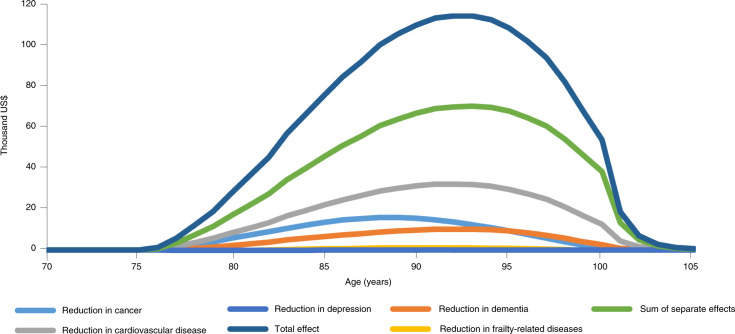
- Metformin, used as an example of targeting aging, often matches or exceeds the value of eradicating cancer, dementia, or cardiovascular diseases; treatment starting at age 75 raises life expectancy at birth by 2.9 years and at age 80 by 4.3 years, with healthy life expectancy gains of 1.7–2.5 years.
- Targeting aging creates a virtuous circle: the more society improves how it ages, the greater the aggregate economic value of further improvements, because gains rise with the average age of society and the number of older people.
Methods
- The authors use an economic model based on Murphy and Topel, calibrated to current US data, in which optimizing individuals choose consumption, hours worked, and leisure; willingness to pay is measured via value of statistical life, incorporating both quantity and quality of remaining life.
- Demographic inputs include a Gompertz survival function, a health deficit function, and 2017 US Census population structure and birth rates; baseline life expectancy at birth is 78.9 years and healthy life expectancy is 68.5 years, with adult VSL set at US$11.5 million for ages 25–65.
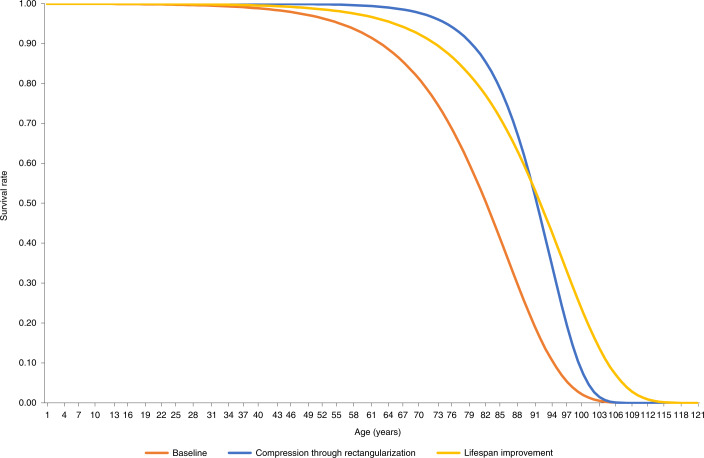
- Simulations cover life extension (Struldbrugg), compression of morbidity (Dorian Gray), slowing aging (Peter Pan), reversing aging (Wolverine), and metformin effects based on a study of 41,204 men with diabetes; aggregate WTP sums age-specific values using census data.
Limitations
- The paper states that metformin’s efficacy awaits confirmation from large trials such as TAME; the metformin estimates rely on a study of 41,204 men over 65 with diabetes, so factors may not accurately capture effects for women, non-diabetics, or those under 65, and metformin may have less impact at higher ages.
- The paper states that estimates abstract from inequalities in health and income; allowing for health inequalities likely increases aggregate gains, while income inequality raises distributional issues, and dollar WTP values are sensitive to model calibration though relative treatment rankings are not.
- Evident from the text: results are simulation-based rather than direct empirical estimates, depend on VSL and utility assumptions, and the Wolverine scenario requires additional auxiliary assumptions; aggregate projections also assume zero net immigration and current birth and mortality rates.
Model-written summary. Check it against the paper before relying on it.
Integrity signals
Registry
Cites
Statistics
Figures
Verification
Claims the paper makes
6 Valid · 1 Not valid · 9 Not checked · 52 Own results and interpretations
Every source the paper cites for this claim was checked and supports it.
In the paper
“These calculations abstract from the diversity of health across the US population32,33, so they are likely to underestimate the aggregate gains from delaying aging.”
§ The economic value of targeting aging > Results > Aggregate gains
What the sources say
- Supportedcites [32] Cantu, P. A., Hayward, M. D., Hummer, R. A. & Chiu, C.-T. New estimates of racial/ethnic differences in life expectancy with chronic morbidity and functional loss: evidence from the National Health Interview Survey. J. Cross Cult. Geront.28, 283–297 (2013). PMC4029590 23949255 source
The citation follows the statement that aggregate calculations abstract from health diversity across the US population. The Data, Measures, and Approach section reports substantial differences in life expectancy and lifetime health across racial/ethnic groups and between men and women, supporting that point. The subsequent inference about gains from delaying aging is the citing authors’ own conclusion, not a finding attributed to this source. (LLM, conf=0.89)
- Supportedcites [33] Garcia MA Educational benefits and cognitive health life expectancies: racial/ethnic, nativity, and gender disparities Gerontologist 2020 61 330 340 10.1093/geront/gnaa112 PMC8023372 32833008 source
The Discussion reports differences in cognitive health life expectancy by race/ethnicity, nativity, and gender, supporting the cited point that health varies across the US population. The claim that aggregate gains are likely underestimated follows the citation and is the citing authors’ inference, not a finding attributed to this paper. (LLM, conf=0.88)
hedgedstates a possible cause- Asserted: passes — The authors put it forward as true.
- Checkable: passes — It can be checked against evidence.
- Load-bearing: unclear — It is unclear whether the paper’s conclusions depend on it.
- Based: passes — The paper gives a reason why it holds.
- Supported
The cited sources support only part of this claim — read each source’s verdict below.
In the paper
“Recent advances have shown that such regeneration is possible in mice and humans25,26.”
§ The economic value of targeting aging > Results > Reversing aging (the Wolverine case)
What the sources say
- Supportedcites [25] Fahy GM Reversal of epigenetic aging and immunosenescent trends in humans Aging Cell 2019 18 e13028 10.1111/acel.13028 31496122 PMC6826138 source
This source supports the human part of the sentence: the Discussion reports highly significant evidence of thymic regeneration in normal aging men, and the Results report improved thymic MRI measures in 7 of 9 volunteers. The sentence has two citations; this human study need not establish the separate claim about mice. (LLM, conf=0.91)
- Partly supportedcites [26] Lu Y Reprogramming to recover youthful epigenetic information and restore vision Nature 2020 588 124 129 10.1038/s41586-020-2975-4 33268865 PMC7752134 sourceExperimental — accuracy not yet measured
The “OSK stimulates axon regeneration” section reports axon regeneration in mice. “Axon regeneration in human neurons” reports recovery of axon growth in cultured human neurons, not regeneration demonstrated in human patients. The claim is supported for mice but overextends the human-cell result to humans. (LLM, conf=0.87)
hedged- Asserted: passes — The authors put it forward as true.
- Checkable: passes — It can be checked against evidence.
- Load-bearing: passes — The paper’s conclusions depend on it.
- Based: passes — The paper gives a reason why it holds.
- Supported
A result the paper states — it cites no source for it, so there is none to check. The quote shows it is in the paper.
In the paper
“The magnitude of these aggregation and complementarity effects increases with the number of diseases under consideration.”
§ The economic value of targeting aging > Results > Targeting aging versus single diseases
plainstates a cause- Asserted: passes — The authors put it forward as true.
- Checkable: passes — It can be checked against evidence.
- Load-bearing: passes — The paper’s conclusions depend on it.
- Based: passes — The paper gives a reason why it holds.
A result the paper states — it cites no source for it, so there is none to check. The quote shows it is in the paper.
In the paper
“If instead we focus on percentage improvements in aging (for example, a 1% slowdown in biological aging rather than a slowdown generating a 1-year increase in LE) then we have increasing WTP at an individual level.”
§ The economic value of targeting aging > Results > Aggregate gains
plainstates a cause- Asserted: passes — The authors put it forward as true.
- Checkable: passes — It can be checked against evidence.
- Load-bearing: passes — The paper’s conclusions depend on it.
- Based: passes — The paper gives a reason why it holds.
A result the paper states — it cites no source for it, so there is none to check. The quote shows it is in the paper.
In the paper
“This also explains why extending healthspan is eventually preferable to rectangularization.”
§ The economic value of targeting aging > Results > Compressing morbidity (the Dorian Gray case)
plainstates a cause- Asserted: passes — The authors put it forward as true.
- Checkable: passes — It can be checked against evidence.
- Load-bearing: passes — The paper’s conclusions depend on it.
- Based: passes — The paper gives a reason why it holds.
- Rests on an assumption not shown here.
34 more claims
Create a free account to see all 68 claims and to verify the 1 reference still open.
- Probably not a substantial claim. 7
- It may state two separate claims as one. 24
Claims other papers make about this one
Each is checked against this paper’s own text: does it say what the citing paper says it does?
The source backs part of the claim, not all of it — or backs it for a different population, condition or comparison.
In the citing paper
“Chronological age is the major predictor for most of the diseases that account for the bulk of morbidity, mortality and health costs across low-, middle- and high-income countries2–7.”
From Cellular senescence and senolytics: the path to the clinic (2022) · cites this paper as [4]
Experimental — accuracy not yet measuredThe source backs part of the claim, not all of it — or backs it for a different population, condition or comparison.
In the citing paper
“By understanding and targeting cellular senescence and the other pillars of aging, rather than targeting individual diseases that are downstream of fundamental aging processes, it is conceivable that multimorbidity could be reduced and healthspan increased, with realization of substantial societal and economic benefits4,6.”
From Cellular senescence and senolytics: the path to the clinic (2022) · cites this paper as [4]
Experimental — accuracy not yet measuredThe cited source says what the claim attributes to it.
In the citing paper
“Nevertheless, modest slowing of the pace of aging can have profound effects on population health11–13.”
From Effect of long-term caloric restriction on DNA methylation measures of biological aging in healthy adults from the CALERIE trial (2023) · cites this paper as [11]
Self-check
Percentages, sums and reported differences re-computed from the paper’s own numbers.
Each contradiction between two passages listed here was confirmed by an independent check.
Rated minor: it would not touch a result — a value no result rests on, a p-value that stays on the same side of the significance level, or a conflict that is clerical, resolved elsewhere in the paper, or outside its own findings.
In the paper
§ The economic value of targeting aging > Results > Life extension (the Struldbrugg case)
“The rectangularization curve shows a survival function in which improvements in LE are achieved through compressing morbidity.”
§ The economic value of targeting aging > Results > Life extension (the Struldbrugg case)
“The result is an expansion of morbidity such that the ratio of HLE to LE deteriorates.”
Citations
Cites
The Epidemiologic Transition: A Theory of the Epidemiology of Population Change
OMRAN, A. R. (2005) · The Milbank Quarterly · doi:10.1111/j.1468-0009.2005.00398.x · Cited by 3,823
Gompertz, B. (1825) · Philosophical Transactions of the Royal Society of London · doi:10.1098/rstl.1825.0026 · Cited by 3,816
Aging, natural death, and the compression of morbidity
Fries, J. F. (1980) · New England Journal of Medicine · doi:10.1056/nejm198007173030304 · Cited by 3,356
Broken Limits to Life Expectancy
Oeppen, J., & Vaupel, J. W. (2002) · Science · doi:10.1126/science.1069675 · Cited by 2,819
Wang, H., Abbas, K. M., Abbasifard, M., Abbasi-Kangevari, M., Abbastabar, H., Abd-Allah, F., Abdelalim, A., Abolhassani, H., Abreu, L. G., Abrigo, M. R. M., et al. (2020) · The Lancet · doi:10.1016/s0140-6736(20)30977-6 · Cited by 1,971
From discoveries in ageing research to therapeutics for healthy ageing
Campisi, J., Kapahi, P., Lithgow, G. J., Melov, S., Newman, J. C., & Verdin, E. (2019) · Nature · doi:10.1038/s41586-019-1365-2 · Cited by 1,389
Metformin as a tool to target aging
Barzilai, N., Crandall, J. P., Kritchevsky, S. B., & Espeland, M. A. (2016) · Cell Metabolism · doi:10.1016/j.cmet.2016.05.011 · Cited by 1,096
The Fourth Stage of the Epidemiologic Transition: The Age of Delayed Degenerative Diseases
Olshansky, S. J., & Ault, A. B. (1986) · The Milbank Quarterly · doi:10.2307/3350025 · Cited by 820
Reprogramming to recover youthful epigenetic information and restore vision
Lu, Y., Brommer, B., Tian, X., Krishnan, A., Meer, M., Wang, C., Vera, D. L., Zeng, Q., Yu, D., Bonkowski, M. S., et al. (2020) · Nature · doi:10.1038/s41586-020-2975-4 · Cited by 820
Self-citationKirkwood, T. B. L. (2015) · Philosophical Transactions of the Royal Society B: Biological Sciences · doi:10.1098/rstb.2014.0379 · Cited by 608
Research works printed but not linked: 1
- Barzilai N Age Later: Health Span, Life Span, and the New Science of Longevity 2020 St Martin’s Press
Cited by
Items 101–200 of 274
Harinath, G., Zalzala, S., Nyquist, A., Wouters, M. C. A., Isman, A., Moel, M., Verdin, E. M., Kaeberlein, M. R., Kennedy, B. K., & Bischof, E. Y. (2024) · Ageing Research Reviews · doi:10.1016/j.arr.2024.102293 · Cited by 9
“…2022 ; Moqri et al QoL: quality of life; FDA: Food and Drug Administration G. Harinath et al. aging was highlighted in a recent publication, which showed that delaying aging to increase healthy life expectancy by one year is worth $38 trillion USD in savings in the US alone (Scott et al., 2021).”
BackgroundThe Funding Channels of GerosciencePreprint
Lederman, S. (2022) · Cold Spring Harbor Perspectives in Medicine · doi:10.1101/cshperspect.a041210 · Cited by 8
International Gains to Achieving Healthy LongevityPreprint
Scott, A. J., Ashwin, J., Ellison, M., & Sinclair, D. (2022) · Cold Spring Harbor Perspectives in Medicine · doi:10.1101/cshperspect.a041202 · Cited by 9
Self-citationRetirement Makes You Old? Causal Effect of Retirement on Biological Age
Furuya, S., & Fletcher, J. M. (2024) · Demography · doi:10.1215/00703370-11380637 · Cited by 11
Molecular Framework of the Onset and Progression of Skeletal Muscle Aging
Horlem, T., Carvalhal, S. R. S., Bonatto, S. J. R., & Fernandes, L. C. (2025) · International Journal of Molecular Sciences · doi:10.3390/ijms262010145 · Cited by 9
“As a result, aging not only impacts life quality but also progressively burdens public economies like the healthcare and pension systems [2].”
LOU, V. W. Q., Cheng, C. Y. M., Ng, D. K.-S., Chan, F. H. W., Mo, S. S.-L., Kung, E. K.-M., & Luk, J. K.-H. (2022) · Journal of Gerontological Social Work · doi:10.1080/01634372.2022.2068722 · Cited by 9
“A recent study showed that targeting aging with effective intervention proves to be more valuable than eradicating individual diseases (Scott et al., 2021).”
BackgroundMethodAn Updated Prioritization of Geroscience- Guided FDA-Approved Drugs Repurposed to Target Aging
Leone, M., & Barzilai, N. (2024) · Medical Research Archives · doi:10.18103/mra.v12i2.5138 · Cited by 12
Liu, M. A., Shahabi, S., Jati, S., Tang, K., Gao, H., Jin, Z., Miller, W., Meunier, F. A., Ying, W., van den Bogaart, G., et al. (2022) · Frontiers in Endocrinology · doi:10.3389/fendo.2022.1037465 · Cited by 7
Cardioprotective response and senescence in aged sEH null female mice exposed to LPS
Yousef, A., Sosnowski, D. K., Fang, L., Legaspi, R. J., Korodimas, J., Lee, A., Magor, K. E., & Seubert, J. M. (2024) · American Journal of Physiology-Heart and Circulatory Physiology · doi:10.1152/ajpheart.00706.2023 · Cited by 8
Li, W., Hu, M., Yin, Q., Liu, Y., Chen, L., Ru, Q., Xu, G., & Wu, Y. (2025) · Frontiers in Physiology · doi:10.3389/fphys.2025.1616874 · Cited by 9
Enduring impacts of El Niño on life expectancy in past and future climates
Xu, Y., Zhu, W., Samanta, D., & Horton, B. P. (2026) · Nature Climate Change · doi:10.1038/s41558-025-02534-4 · Cited by 9
“VSL is a widely used concept in health economics and policy for quantifying the trade-off between income and the risk of death 82–85 .”
The ethics case for longevity science
Han, Z. Z., & de Magalhães, J. P. (2026) · Ageing Research Reviews · doi:10.1016/j.arr.2026.103054 · Cited by 6
Fingelkurts, A. A., & Fingelkurts, A. A. (2023) · Brain Sciences · doi:10.3390/brainsci13030520 · Cited by 7
Thompson, S. D., Barrett, K. L., Rugel, C. L., Redmond, R. S., Rudofski, A., Kurian, J., Curtin, J. L., Dayanidhi, S., & Lavasani, M. (2023) · GeroScience · doi:10.1007/s11357-023-00892-5 · Cited by 8
“Importantly, due to the multi-factorial nature of aging (e.g., genetic, environmental, lifestyle), targeting individual muscles/tissues to regain function is now increasingly being recognized as a fruitless endeavor [27].”
BackgroundLartey, S. T., Lung, T. W.-C., Serhal, S., Bereznicki, L., Bereznicki, B. J., Emmerton, L., Bosnic-Anticevich, S. Z., Saini, B., Billot, L., Krass, I., et al. (2023) · PLoS ONE · doi:10.1371/journal.pone.0279748 · Cited by 7
“A body of literature has shown that increasing age is associated with increasing risk for frailty, disability, and therefore, healthcare costs, be it direct or indirect [41].”
BackgroundJo, H.-G., Baek, C. Y., Hwang, Y., Baek, E., Song, H. S., & Lee, D. (2024) · Nutrients · doi:10.3390/nu16152435 · Cited by 6
“OA is characterized by chronic pain, progressive joint destruction, and irreversible dysfunction and is increasingly recognized as a global health concern [3].”
BackgroundAdvancing longevity research through decentralized science
Unfried, M. (2024) · Frontiers in Aging · doi:10.3389/fragi.2024.1353272 · Cited by 8
“It has the potential to extend healthspan, thereby reducing the socioeconomic burden of age-related diseases on healthcare systems (Olshansky et al., 2007; Scott et al., 2021).”
BackgroundCox, L. S. (2022) · The Journal of the Economics of Ageing · doi:10.1016/j.jeoa.2022.100423 · Cited by 8
Bringing Geroscience into the Mainstream: From Education to Clinical Practice, What Will It Take?
Al‐Naggar, I. M., Campellone, K. G., Espinoza, S. E., Justice, J. N., Orr, M. E., Kozikowski, C., van der Willik, O., Thatcher, C., Schmader, K. E., Pignolo, R. J., et al. (2024) · The Journals of Gerontology Series A · doi:10.1093/gerona/glae020 · Cited by 7
Jo, H.-G., Baek, C. Y., Hwang, Y., Baek, E., Park, C., Song, H. S., & Lee, D. (2024) · International Journal of Molecular Sciences · doi:10.3390/ijms25179594 · Cited by 7
“Over the past 30 years, the healthcare burden of OA has increased due to global aging, making it a major public health issue [2,3].”
BackgroundJo, H.-G., Baek, C. Y., Ilyas, S., Hwang, Y., Baek, E., Song, H. S., & Lee, D. (2025) · Journal of Ethnopharmacology · doi:10.1016/j.jep.2025.119915 · Cited by 5
Why We Can Thrive past Seventy‐Five: In Favor of Efforts to Extend the Human Lifespan
Ringel, C. B., Ringel, M. S., & Caplan, A. L. (2025) · The Hastings Center Report · doi:10.1002/hast.5007 · Cited by 5
Aging Like Struldbruggs, Dorian Gray or Peter Pan
Olshansky, S. J. (2021) · Nature Aging · doi:10.1038/s43587-021-00087-7 · Cited by 5
Graham, Z., Bubak, M. P., Raymond‐Pope, C. J., Cutter, G., McAdam, J. S., Tuggle, S. C., Siedlik, J. A., de Sousa, L. G. O., Chappe, E., Meece, K., et al. (2025) · Journal of Applied Physiology · doi:10.1152/japplphysiol.00486.2025 · Cited by 4
“Interventions that successfully improve CRF and fMQ could extend healthspan, decrease functional disability and have major health, quality of life, and economic impacts 12 .”
The macroeconomic impact of chronic disease in the United Kingdom
Schindler, Y., & Scott, A. J. (2025) · The Journal of the Economics of Ageing · doi:10.1016/j.jeoa.2025.100590 · Cited by 4
Self-citationA Bayesian model of later life mortality trends and implications for longevity
Ashwin, J., & Scott, A. J. (2025) · Journal of the Royal Statistical Society Series A (Statistics in Society) · doi:10.1093/jrsssa/qnaf026 · Cited by 6
Self-citationLiving healthily to 120: Implications for entrepreneurship
van Gelderen, M. (2025) · Journal of Business Venturing · doi:10.1016/j.jbusvent.2025.106512 · Cited by 5
Malic enzyme 1 reverses cardiomyocyte senescence in a nitric oxide-dependent manner
Wu, W., Lei, R., Xu, H., Lü, L., Song, C., Wu, D., Li, M., Chen, L., Yu, Y., & Fang, X. (2025) · Free Radical Biology and Medicine · doi:10.1016/j.freeradbiomed.2025.07.048 · Cited by 4
Ke, J., Li, S., Cao, J., Wang, Y., Li, S., Qiu, F., Zhao, F., & Cheng, X. L. (2025) · Scientific Reports · doi:10.1038/s41598-025-16405-7 · Cited by 4
“3–5).”
Polu, P. R., & Mishra, S. (2025) · Journal of Neurogenetics · doi:10.1080/01677063.2025.2571127 · Cited by 5
“While the potential to prevent multiple age-related diseases could reduce healthcare costs substantially, the upfront investment in treating healthy individuals requires new models for healthcare financing and insurance coverage (Scott et al. , 2021).”
Kim, S., Lee, H., & Kang, M. (2025) · PLoS ONE · doi:10.1371/journal.pone.0333620 · Cited by 3
“Nutritional improvements are also expected to produce broader socioeconomic benefits, including reductions in national healthcare expenditures and improvements in population-level well-being [21,22].”
Probiotic Modulation in Aging: Strain-Specific Geroprotective Effects in Caenorhabditis elegans
Sciandrone, B., Squarzanti, D. F., Malfa, P., & Regonesi, M. E. (2025) · International Journal of Molecular Sciences · doi:10.3390/ijms262211205 · Cited by 3
“Moreover, the 2024 WHO report shows that the number of people aged 60 and over is expected to double in the next 30 years [5] and, therefore, a growing field in the biology of healthy aging is focused on counteracting aging-related changes using geroprotector agents [6,7].”
Midlife Cardiorespiratory Fitness and Healthy Aging
Meernik, C., Leonard, D., Shuval, K., Barlow, C. E., Leonard, T., Pavlovic, A., Lee, I.-M. M., Radford, N. B., Berry, J. D., & DeFina, L. F. (2026) · Journal of the American College of Cardiology · doi:10.1016/j.jacc.2026.02.5122 · Cited by 3
Aging rate indicators and the search for anti-aging drugs
Austad, S. N., Kaeberlein, M. R., & Miller, R. A. (2026) · Frontiers in Science · doi:10.3389/fsci.2026.1821393 · Cited by 5
“This broad set of interconnected issues (161, 162) has been comprehensively reviewed elsewhere, with attention to regulation (163, 164), ethics and equity (165 – 169), and economics (170 – 173).”
Verlinden, S. F. F. (2024) · Frontiers in Aging · doi:10.3389/fragi.2024.1452453 · Cited by 5
“The duration of life spent in increasingly poor health or disability is approximately 13.5 years, cumulating in an average LS of 80.1 years (Eurostat, 2019; Scott et al., 2021).”
BackgroundInfluentialPharmacology of Aging: Drosophila as a Tool to Validate Drug Targets for Healthy Lifespan
Cochemé, H. M., & dos Santos, E. (2024) · doi:10.59368/agingbio.20240034 · Cited by 9
“Age-related disorders are responsible for major healthcare costs and a growing burden on healthcare provision and caregiving, which threaten to become unsustainable from an economic and societal standpoint 6,7 .”
BackgroundJo, H.-G., Baek, C. Y., Lee, J., Hwang, Y., Baek, E., Song, A., Song, H. S., & Lee, D. (2024) · International Journal of Molecular Sciences · doi:10.3390/ijms251910647 · Cited by 4
Weinkove, D. (2024) · Proceedings of The Nutrition Society · doi:10.1017/s0029665124004890 · Cited by 3
Forecasting Subjective Cognitive Decline: AI Approach Using Dynamic Bayesian Networks
Etholén, A., Roos, T., Hänninen, M., Bouri, I., Kulmala, J., Rahkonen, O., Kouvonen, A. M., & Lallukka, T. M. (2025) · Journal of Medical Internet Research · doi:10.2196/65028 · Cited by 6
“The economic impact of aging is profound, with health and social care costs surging worldwide [2,3].”
Monteiro, A. M., Rodrigues, S., Matos, S., Encarnação, S., Teixeira, J. E., Barbosa, T. M., Rodrigues, F. F., & Forte, P. M. (2023) · Applied Sciences · doi:10.3390/app13148044 · Cited by 4
“The aging population poses a significant economic burden due to potential functional dependency and long-term care requirements [1].”
BackgroundFunding Life-Extension ResearchPreprint
Khan, M. (2023) · Cold Spring Harbor Perspectives in Medicine · doi:10.1101/cshperspect.a041208 · Cited by 3
Lyu, D., Wang, M., Qiu, L., Hu, S., & Zhang, Y. (2024) · bioRxiv (Cold Spring Harbor Laboratory) · doi:10.1101/2024.03.09.584196 · Cited by 3
“Currently, this trend presents significant challenges in both domains of medicine and socio-economics [5, 6].”
BackgroundInvestors' Perspective on Healthspan in 2025Preprint
Friebe, M., Mittler-Matica, R., & Niestroj, B. (2025) · Qeios · doi:10.32388/y79b4d · Cited by 3
CpGeneAge: multi-omics aging clocks associated with Nf-κB signaling pathway in agingPreprint
Varga, B., & Kerepesi, C. (2025) · bioRxiv (Cold Spring Harbor Laboratory) · doi:10.1101/2025.06.26.661785 · Cited by 4
Dietary patterns and psychosocial health status among elderly in West Bengal-India
Ghosh, R., Jalli, V., Balakrishna, N., & Rao, S. F. (2024) · Cogent Gerontology · doi:10.1080/28324897.2024.2347620 · Cited by 2
Real World Case Series: Integrated Skincare With Advanced RGN ‐6 Serum
Alexis, A. F., Beach, R. A., Brieva, P. M., Guénin, S., Ibrahimi, O. A., Rodrigues, M. A., Woolery-Lloyd, H. C., & Callender, V. D. (2025) · Journal of Cosmetic Dermatology · doi:10.1111/jocd.70303 · Cited by 2
“Collagen is an important part of skin architecture and serves as the scaffold for extracellular matrix (ECM) components that draw in hydration and maintain skin smoothness and firmness [1, 2].”
InfluentialConrado, F., Giacomini, G., Marraffa, P., Golzio, F., Tagliabò, V., & Gianino, M. M. (2025) · Archives of Public Health · doi:10.1186/s13690-025-01719-9 · Cited by 5
“Therefore, greater focus on health education and prevention is advisable, as it would reduce the burden of disease and healthcare expenditure [5, 59].”
Social norms alleviate the disadvantaged positions of elderly people in charity markets
Wu, X., Liu, Z., & Feng, S. (2025) · China Economic Review · doi:10.1016/j.chieco.2025.102587 · Cited by 2
Chen, X., DONG, H., Shi, F., Qin, F., & Zhao, Y. X. (2025) · Scientific Reports · doi:10.1038/s41598-025-25877-6 · Cited by 5
“Such research is crucial not only for reducing the socio-economic and healthcare burdens posed by age-related diseases but also for developing strategies that promote healthy aging 12 .”
A sex-adjusted 7-biomarker clinical aging clock for translational preventative medicine
Meyer, D. H., Mejia, G., Molière, A., Wangprapa, P., Khunlertkit, T., Teekakirikul, P., Ewald, C. Y., & Viecelli, C. (2025) · Scientific Reports · doi:10.1038/s41598-025-27478-9 · Cited by 4
Ma, R., LiYuan, R. A. N., Geng, J., Zhang, Y., Liu, J., Yu, Z., Liang, B., Qiang, L., & Wu, Y. (2026) · Diabetes Obesity and Metabolism · doi:10.1111/dom.70655 · Cited by 2
Roch-Dupré, D., Aracil, E., & Calvo-Bascones, P. (2024) · Structural Change and Economic Dynamics · doi:10.1016/j.strueco.2024.08.007 · Cited by 3
The Macroeconomics of Improving AgingPreprint
DeBacker, J. M., Evans, R., & Romanni, R. (2025) · SSRN Electronic Journal · doi:10.2139/ssrn.5067690 · Cited by 3
Accelerating the promise of geroscience through The Academy of Health & Lifespan Research
Barzilai, N., Starr, R., Verdin, E. M., Niedernhofer, L. J., Bertram, A., Lithgow, G. J., & Maier, A. B. (2025) · Nature Aging · doi:10.1038/s43587-025-00832-2 · Cited by 1
A Restructuring of Health Systems
Moingeon, P. E. (2025) · Springer eBooks · doi:10.1007/978-3-031-91668-7_12 · Cited by 1
Hooten, N. N., Mode, N. A., Valipour, S., Zonderman, A. B., & Evans, M. K. (2025) · The Journals of Gerontology Series A · doi:10.1093/gerona/glaf214 · Cited by 2
Thapa, D. K., Najam, W., Parker, E. S., Wang, X. R., Smith, D. L., Beyaztaş, U., Nelson, J. F., Austad, S. N., Churchill, G. A., & Allison, D. B. (2025) · GeroScience · doi:10.1007/s11357-025-01925-x · Cited by 2
“We echo Scott [59], who calls for the next”
The value of extending healthy life expectancy: A framework for healthcare policy evaluation
Ito, K., Tanizawa, Y., & Takashima, R. (2025) · Economics & Human Biology · doi:10.1016/j.ehb.2025.101557 · Cited by 1
Parish, A. J., Ioannidis, J. P. A., Zhang, K., Barardo, D., Swindell, W. R., & de Magalhães, J. P. (2025) · npj Aging · doi:10.1038/s41514-025-00287-0 · Cited by 2
“Furthermore, previous work has suggested that some interventions mayhavedifferenteffectsifstartedlateinanorganism ’ slifespanratherthan early 26,27 , and there is signi fi cant interest in discovering interventions that slow aging in older adults 28 .”
Fan, G., Zuo, H., Shi, X.-H., Lin, L., & Xu, C. (2025) · Medicine · doi:10.1097/md.0000000000046395 · Cited by 1
“[4] Each year, about 0.1% of the population in the United States and Europe experience a cardiac arrest outside of a hospital setting, as evaluated by medical services.”
InfluentialXu, W., Chen, H., Gong, H., Zhao, T., Yang, Y., Wang, F., Huang, N., Yang, M., Gao, N., Li, H., et al. (2026) · Phytotherapy Research · doi:10.1002/ptr.70220 · Cited by 1
Bordoni, L., Mansouri, F., Rucci, C., de Sousa, J. A., & von Meyenn, F. (2026) · Clinical Nutrition · doi:10.1016/j.clnu.2026.106703 · Cited by 2
Aging and the Ethics of Longevity Science
Farrelly, C. (2026) · doi:10.1093/9780197830062.001.0001 · Cited by 2
Molecular signatures of the gut microbiota that affect longevity
Beyoğlu, D., & Idle, J. R. (2026) · Biochemical Pharmacology · doi:10.1016/j.bcp.2026.118267 · Cited by 3
Reframing the epidemiological transition as increasing returns to tackling aging-related diseases
Ashwin, J., Bloom, D. E., Lee, N., Piot, P., & Scott, A. J. (2026) · Nature Aging · doi:10.1038/s43587-026-01210-2 · Cited by 2
“This emphasizes the importance of tackling aging-related diseases and the growing interest in the biology of aging 19 , and our finding of increasing returns to tackling aging-related diseases implies this is only likely to increase.”
Self-citationIn Silico Screening of Life-Extending Drugs Using Machine Learning and Omics Data
Fedintsev, A., Syromyatnikov, M., Popov, V. N., & Moskalev, A. (2023) · Healthy ageing and longevity · doi:10.1007/978-3-031-35176-1_8 · Cited by 1
Neuroprotective Effect of Curcumin–Metavanadate in the Hippocampus of Aged Rats
González‐Cano, S. I., Peña‐Rosas, U., Muñoz‐Arenas, G., Torres‐Cinfuentes, D. M., Treviño, S., Morán, C., Flores, G., Guevara, J., & Díaz, A. (2025) · Synapse · doi:10.1002/syn.70008 · Cited by 1
“The United Nations estimates that by 2050, one in six people will be over 65 years old and the number of people over 80 years old will triple (Scott, Ellison, and Sinclair 2021).”
Economic impact of population aging in India, 1991–2050: evidence based on micro-simulation modeling
Chakraborty, K., & Goli, S. (2025) · China Population and Development Studies · doi:10.1007/s42379-025-00187-6 · Cited by 2
Ageing and the allocation of time among older Americans
Ferranna, M. (2025) · The Journal of the Economics of Ageing · doi:10.1016/j.jeoa.2025.100572 · Cited by 17
Accelerating activity in the longevity biopharmaceutical sector
Ringel, M. S., Zhang, Y., & Lim, W. K. (2025) · Nature Aging · doi:10.1038/s43587-025-00983-2 · Cited by 1
Introduction: Trends, Puzzles, and Hopes for the Future of Healthcare
Ehsani, S., Glauner, P., Plugmann, P., & Thieringer, F. M. (2022) · Future of business and finance · doi:10.1007/978-3-030-99838-7_1 · Cited by 1
Longevity interventions temporally scale healthspan in Caenorhabditis elegansPreprint
Statzer, C., Reichert, P., Dual, J., & Ewald, C. Y. (2021) · bioRxiv (Cold Spring Harbor Laboratory) · doi:10.1101/2021.05.31.446397 · Cited by 1
Longevity interventions temporally scale healthspan in Caenorhabditis elegansPreprint
Statzer, C., Reichert, P., Dual, J., & Ewald, C. Y. (2021) · Repository for Publications and Research Data (ETH Zurich) · doi:10.3929/ethz-b-000525654 · Cited by 1
Fitzgerald, K. N., Campbell, T., Makarem, S. C., & Hodges, R. (2023) · doi:10.31219/osf.io/24fhs · Cited by 1
Slade, L., Etheridge, T., & Szewczyk, N. J. (2024) · Preprints.org · doi:10.20944/preprints202403.1866.v1 · Cited by 1
An, Y., Zhu, J., Wang, X., Huang, L., Huang, W., Sun, X., Luo, C., Dang, Y., Huang, B., Zhang, B., et al. (2021) · SSRN Electronic Journal · doi:10.2139/ssrn.3979179
Die Verlangsamung des Alterns erhöht den statistischen Wert des Lebens
del Toro, I. C. (2022) · Lernen und Lernstörungen · doi:10.1024/2235-0977/a000379
Active Aging: Spatial Analytical Framework to Evaluate Aging-in-Place PracticePreprint
Tu, Y., Wang, Y., Fan, Y., & Yang, Y. (2023) · SSRN Electronic Journal · doi:10.2139/ssrn.4487071
Cellular Aging from Physiological and Economical Perspectives
Assefi, M., Lewandrowski, K., Sharafshah, A., & Hosseini, S. M. (2023) · Physiology · doi:10.5772/intechopen.111516
Gallus, S., Mosconi, G., Stival, C., Amerio, A., Bertolini, G., Bosetti, C., d’Oro, L. C., Fanucchi, T., Iacoviello, L., Lugo, A., et al. (2023) · Aging Clinical and Experimental Research · doi:10.1007/s40520-023-02586-6 · Cited by 1
“In other words, even if we are living longer, we are just extending our lives by unhealthy years [4].”
The association between the value of a statistical life and frailty in Burkina FasoPreprint
Freidoony, L., Goodman, D., Barker, F., Bountogo, M., Geldsetzer, P., Harling, G., Hirschhorn, L. R., Manne‐Goehler, J., Siedner, M. J., Trautmann, S. T., et al. (2024) · medRxiv · doi:10.1101/2024.02.10.24302634
“This is particularly important given that frailty is a highly dynamic state, thus VSLY captured in frail individuals may change if that person changes frailty status [34].”
Background¿Combatir la senescencia para un envejecimiento saludable?
Resano, M. M. (2024) · doi:10.18567/sebbmdiv_r.202403
Evidências do envelhecimento populacional e implicações fiscais no Brasil
de Lima, D. V., dos Santos, B. A., Wilbert, M. D., da Silva, M. A. R., & Garcia, K. R. (2024) · Redeca Revista Eletrônica do Departamento de Ciências Contábeis & Departamento de Atuária e Métodos Quantitativos · doi:10.23925/2446-9513.2024v11id66409
Ahmad, M. F., & Ghapar, W. R. G. B. W. A. (2024) · Lecture notes in networks and systems · doi:10.1007/978-981-97-3305-7_46
Cost-effectiveness of the biological age calculator
Arbatskiy, M. S., Balandin, D. E., & Melnitskaia, A. A. (2024) · Problems of Geroscience · doi:10.37586/2949-4745-1-2024-22-29
O’Mahony, S. (2024) · Gastroenterology · doi:10.1053/j.gastro.2024.09.019
Ataguba, J. E.-O. (2024) · Journal of Social and Economic Development · doi:10.1007/s40847-024-00391-z
The Future of Antiaging Medicine
Tsubota, K. (2024) · Springer eBooks · doi:10.1007/978-981-97-8514-8_11
Life Expectancy at Risk: The Enduring Impact of El Niño on Human MortalityPreprint
Xu, Y., Zhu, W., Horton, B. P., & Samanta, D. (2025) · SSRN Electronic Journal · doi:10.2139/ssrn.5138883
Bridging the Gap between Longevity and Vitality: The Value of Extending Healthy Life ExpectancyPreprint
Tanizawa, Y., Ito, K., & Takashima, R. (2025) · SSRN Electronic Journal · doi:10.2139/ssrn.5147106 · Cited by 1
Graham, Z., Bubak, M. P., Raymond‐Pope, C. J., Cutter, G., McAdam, J. S., Tuggle, S. C., Siedlik, J. A., de Sousa, L. G. O., Chappe, E., Meece, K., et al. (2025) · medRxiv · doi:10.1101/2025.05.27.25328425
“Interventions that successfully improve CRF and fMQ could extend healthspan, decrease functional disability and have major health, quality of life, and economic impacts 12 .”
Arcos-Ortiz, L. J., Guerrero-Robalino, N. A., & Cárate-Toro, B. F. (2025) · Sanitas. Revista arbitrada de ciencias de la salud. · doi:10.62574/scqsmj03
Biomarkers of aging as it relates osteoarthritis: we can’t improve what we can’t measure
Diekman, B. O., & Hsueh, M.-F. (2025) · Connective Tissue Research · doi:10.1080/03008207.2025.2528792
“The OA field may benefit from paying close attention to the proposed Targeting Aging with Metformin (TAME) trial, which seeks to treat participants for the prevention of age-related diseases and therefore have an even greater societal and economic impact 29 .”
Environment-friendly diet and policy priorities to promote sustainable healthy aging across China
Ye, B., Yang, J., Xia, M., & Liu, Y. (2025) · Sustainable Production and Consumption · doi:10.1016/j.spc.2025.08.008 · Cited by 1
Cheng, A., Shawa, H., Uttke, Z., & Cotter, D. G. (2025) · PubMed · Cited by 1
The Longevity Economy: An Informational Medicine Paradigm
Belen, B. (2025) · Sustainable finance · doi:10.1007/978-3-031-95870-0_2
The Ethics, Economics, and Demographics of Delaying Aging
Kuruc, K., & Manley, D. (2025) · Oxford University Press eBooks · doi:10.1093/9780191979972.003.0027
The Metabolic and Neurochemical Etiopathology of Passive Exposition to Alcohol Consumers
Lamothe, N., Lamothe, M., Lamothe, D., Ernesto, V., Pilar, B., Alonso-Altamirano, A., Adriana, C., Estuardo, H., Castillo-Vázquez, F. G., & Andrės, G. R. (2021) · Journal of Public Health International · doi:10.14302/issn.2641-4538.jphi-21-4036
A Great Asset to Society: Older People with a Sustained Physical and Cognitive Function
Degens, H. (2025) · Signals and communication technology · doi:10.1007/978-3-031-89537-1_1
Metadata
- Authors
- Scott, A. J., Ellison, M., & Sinclair, D. A.
- Affiliations
- London Business School (GB)
- University of Oxford (GB)
- Harvard University (US)
- Corresponding author
- Scott, Andrew J.
- Venue
- Nature Aging
- Published
- 2021-07-05
- Volume
- 1
- Issue
- 7
- Pages
- 616-623
- ISSN
- 2662-8465 (ISSN-L)
- PMC
- PMC10154220
- OpenAlex
- W3180012192
- Semantic Scholar
- ad404ae104dc4ad629cefe24a1a386f0dcbacec0
- Cited by
- 267
- References
- 34
- Citations by year
- 2026: 64 · 2025: 64 · 2024: 59 · 2023: 40 · 2022: 28 · 2021: 12
- FWCI
- 40.82
- Type
- journal article
- Language
- en
- Open access
- hybrid
- doi.org
- Licence
- cc-by
- creativecommons.org/licenses/by/4.0 (tdm)
- creativecommons.org/licenses/by/4.0 (vor)
- Locations
- Nature Aging (publishedVersion, cc-by)
- PubMed Central (publishedVersion, cc-by)
- PubMed (publishedVersion)
- London Business School Research Online (London Business School) (acceptedVersion, cc-by)
- Funders
- RCUK | Economic and Social Research Council (T002204)
- Oxford University | John Fell Fund, University of Oxford
- Glenn Foundation for Medical Research
- Topics
- Social Sciences › Economics, Econometrics and Finance › Economics and Econometrics › Global Health Care Issues
- Social Sciences › Economics, Econometrics and Finance › Economics and Econometrics › Health Systems, Economic Evaluations, Quality of Life
- Social Sciences › Demography › Insurance, Mortality, Demography, Risk Management
- Keywords
- aging, life expectancy, compression of morbidity, healthy aging, anti-aging interventions, disease eradication, health gains, economic valuation of health
- MeSH terms
- Health Status, Life Expectancy, Morbidity
About these checks
Registry, retraction, Cites and statistics results are computed, not judged, with one exception: a printed reference that no index lists is read once by a model before it counts as a citation error. Claims are extracted by a model and kept only when their quote appears verbatim in the text; each cited source is then checked, with a model’s help, for whether it says what the claim relies on. Those verdicts can be wrong — read the claim’s quote and the cited source before relying on one.
The claim verdicts this report counts are experimental: their accuracy is not yet measured.
A language model drew the claims from the paper on 2026-11-08, under version 3 of the claim definition (model deepseek-v4.1-flash, prompt extract-v3).
A second model labelled each claim on 2026-11-08 (model jev-1.13-20260917, definition revision gold-guideline-v0.2).
Cited sources are checked with a language model’s help (gpt-6-sol).
Statistics and arithmetic are recomputed, not judged.
Confidence bands are shown only for fields calibrated on our annotated test set. None is calibrated yet, so no band is shown.
What counts as a claim ›How we measure confidence ›How we check this ›
Are you an author, or do you see a problem with this page? Request a review
Data sources
Bibliographic data: Semantic Scholar, OpenAlex, Crossref.
Contains information from the Semantic Scholar Academic Graph Datasets, made available under the ODC Attribution License (ODC-BY 1.0).
Semantic Scholar’s data is described in: Kinney, R., et al. (2023). The Semantic Scholar Open Data Platform. arXiv:2301.10140.
