

A transcriptome-based human universal senescence index (hUSI) robustly predicts cellular senescence under various conditions
Open accessPublished version of a preprint
The DOI matches its Crossref record; 221 of the 221 references it cites were found in a registry or an index.
Abstract
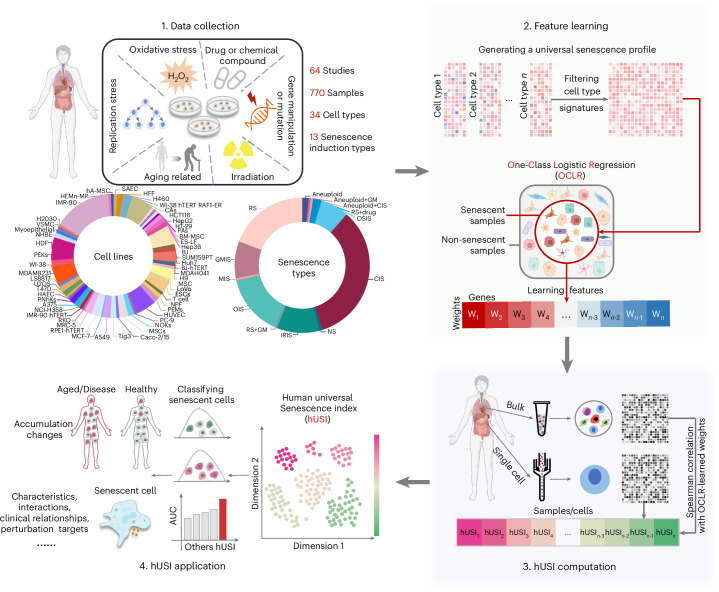
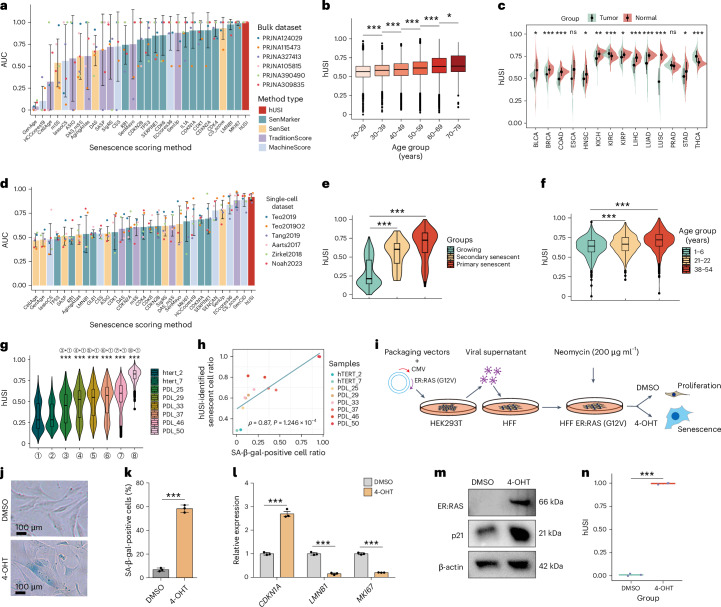
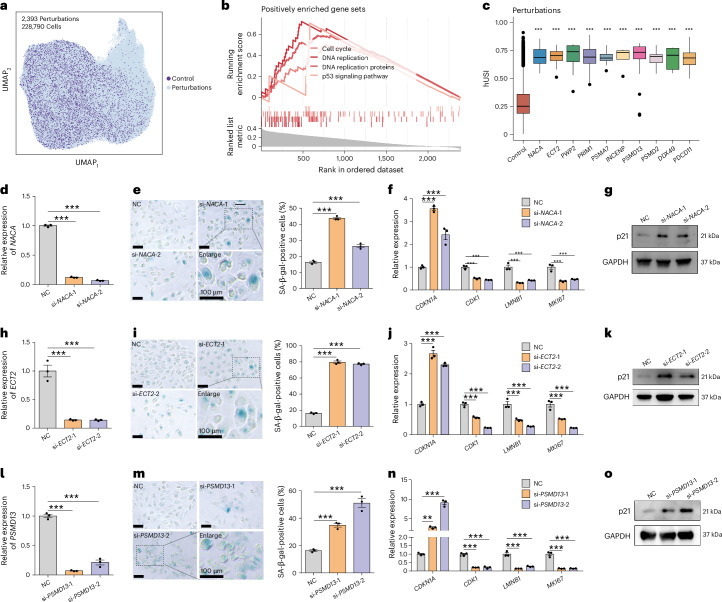
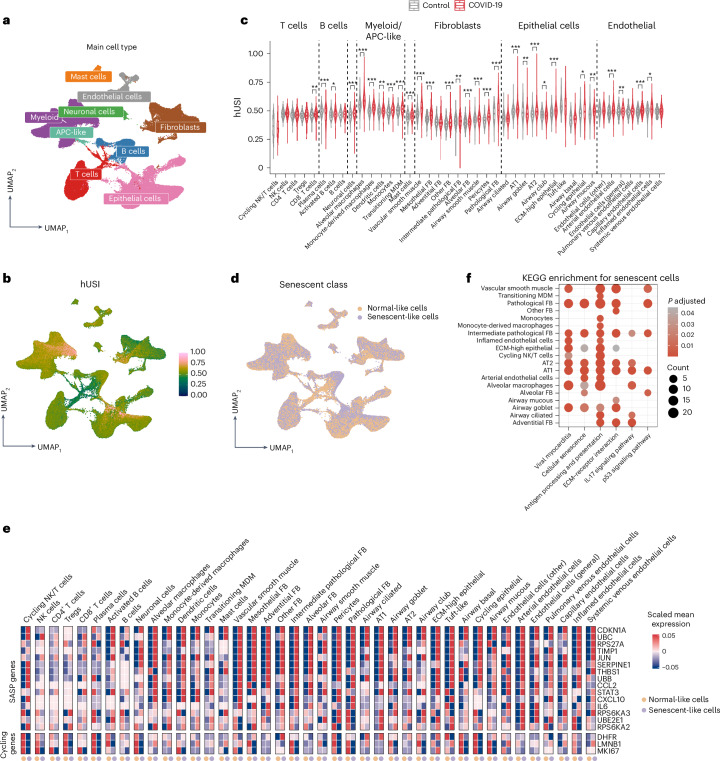
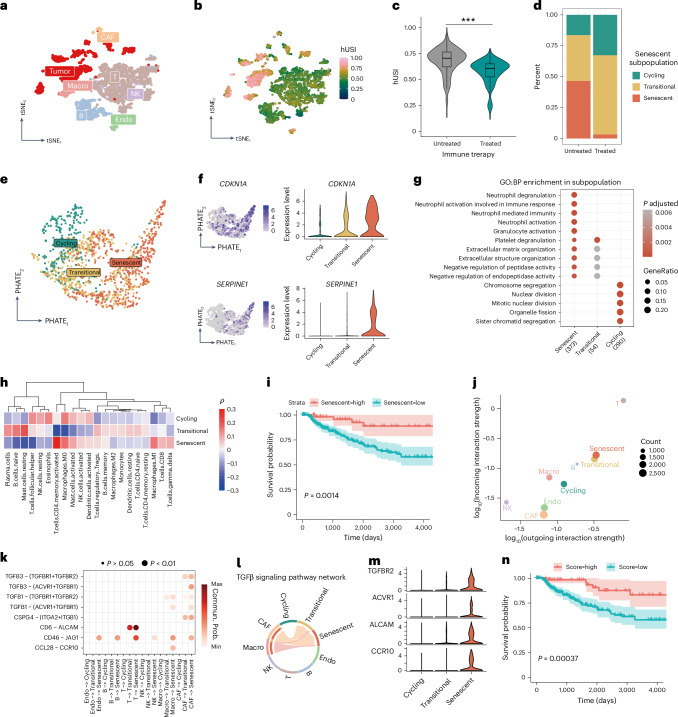
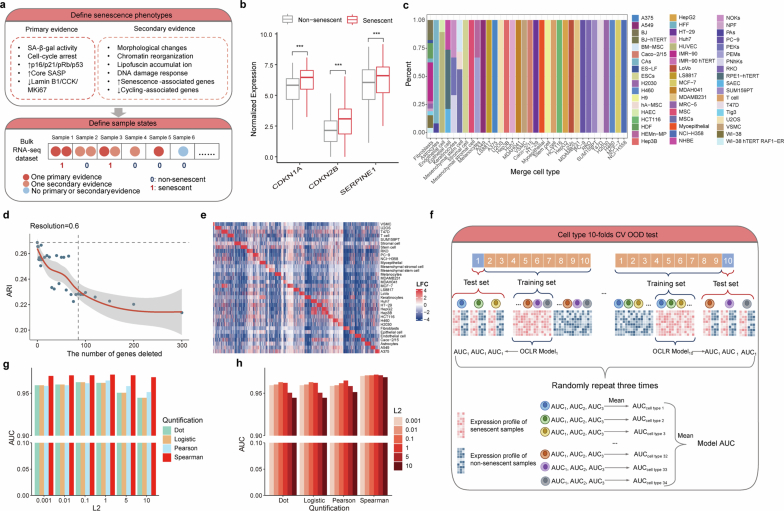
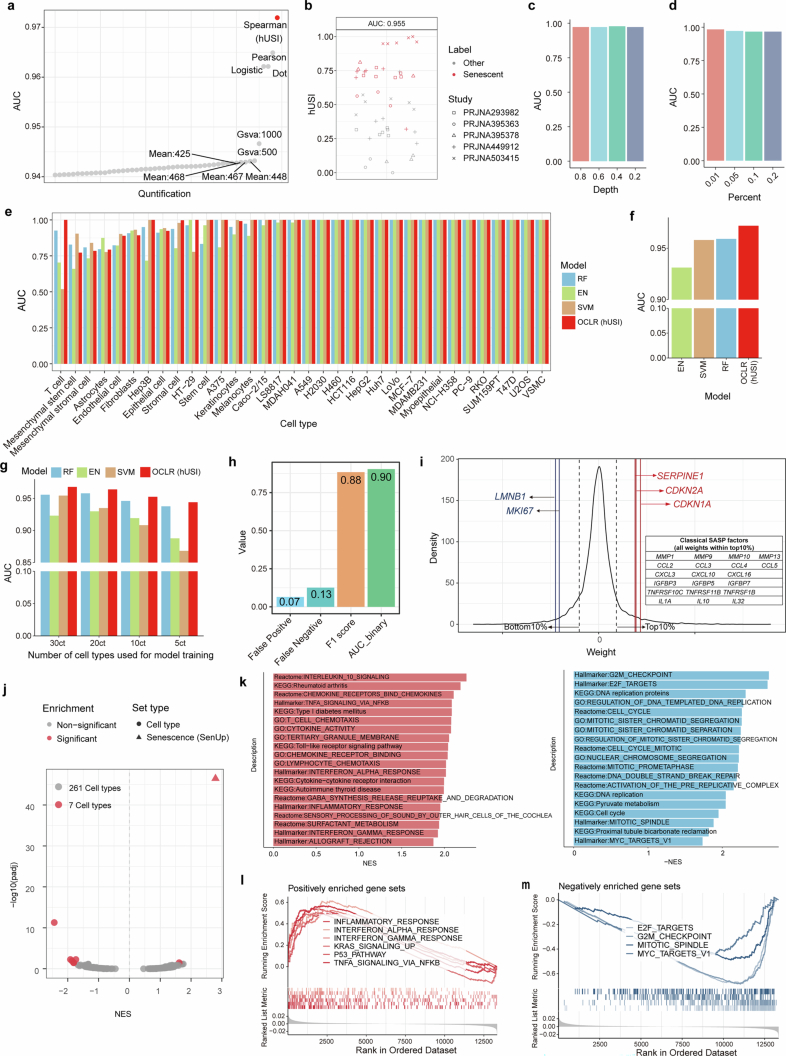
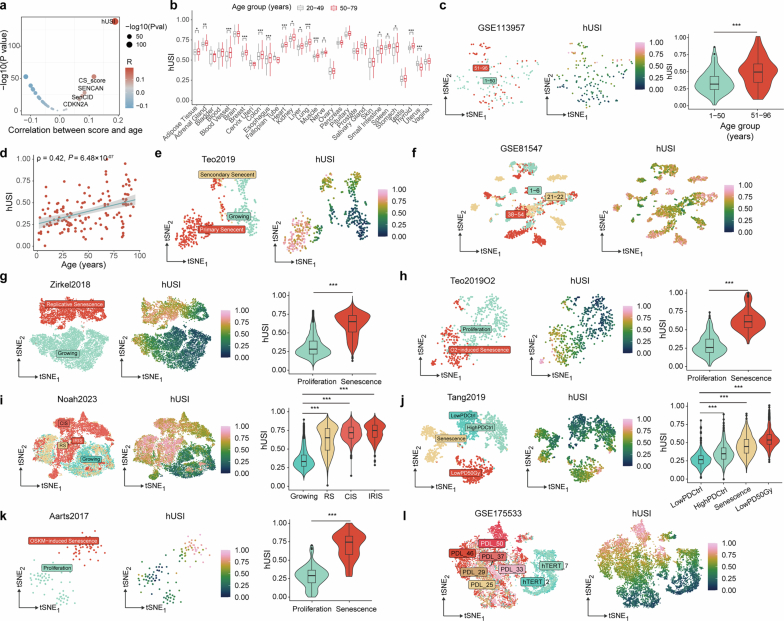
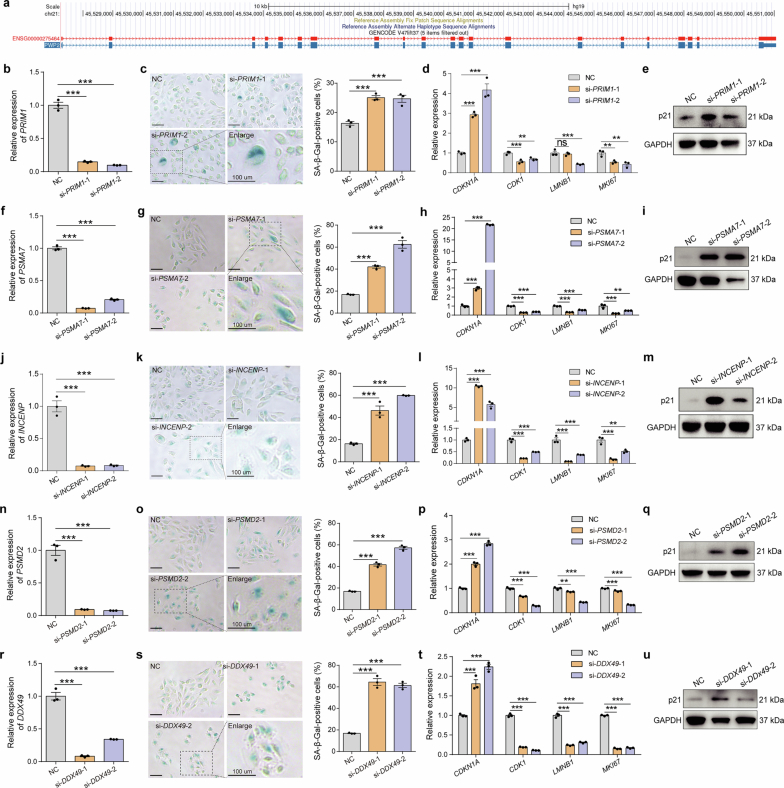
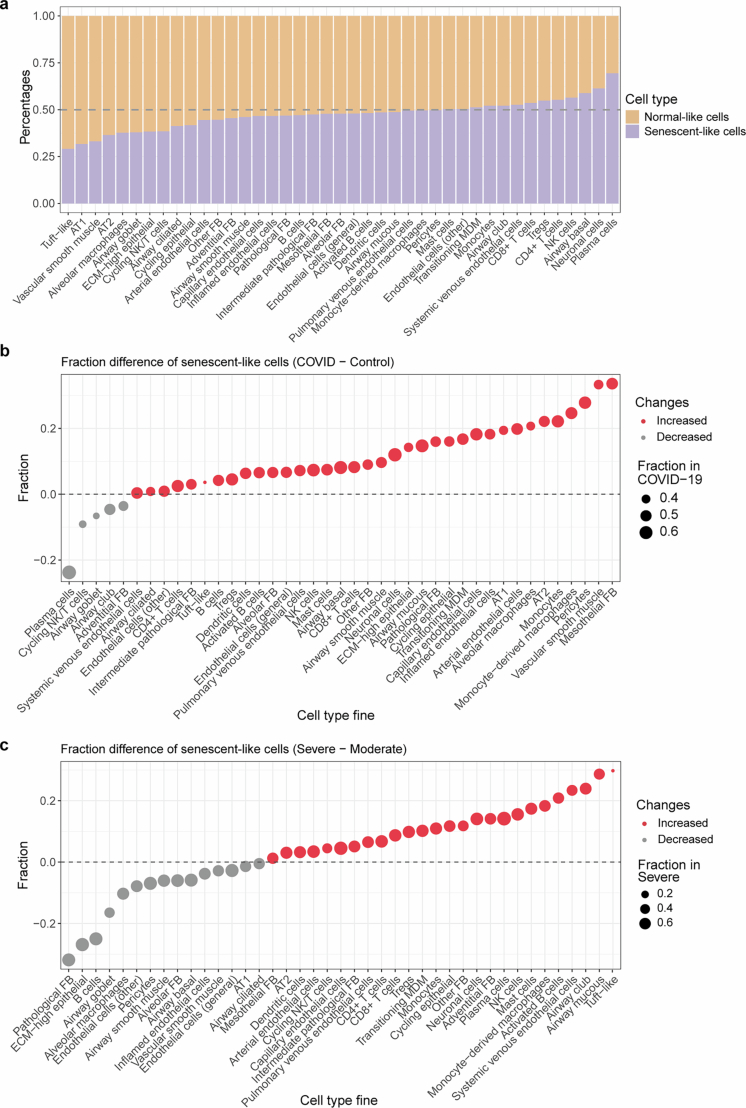
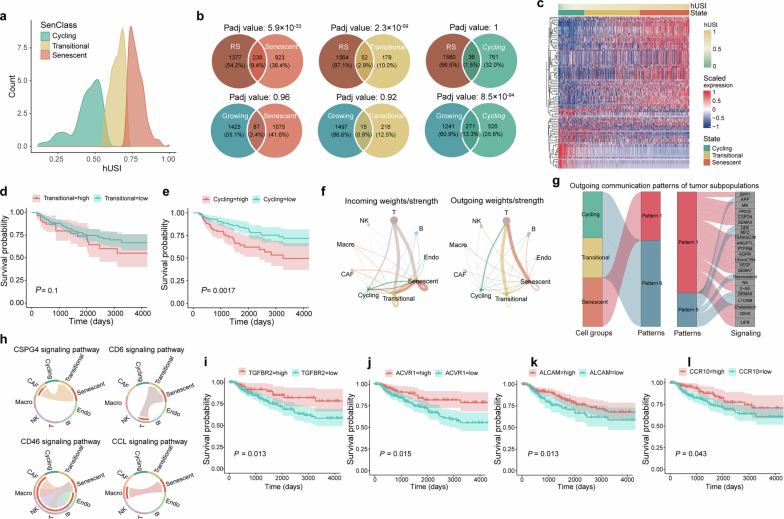
Despite the manifestation and contribution of cellular senescence to aging and various diseases, accurate identification of heterogeneous senescent cells remains challenging. Current senescence evaluation methods rely mainly on limited markers or homogeneous samples, which might fail to capture universal senescence features, limiting their generalizability. Here we developed the human universal senescence index (hUSI), an accurate and robust senescence evaluation method for diverse cells and samples. Based on features learned from the most comprehensive cellular senescence-associated transcriptome data so far, hUSI demonstrated its convincing connections with senescence phenotypes and superior robustness in predicting senescence state. Using hUSI, we discovered potential senescence regulators and mapped senescent cell accumulation across cell types in coronavirus disease 2019 (COVID-19). The method also facilitates decoding heterogeneous senescence states in melanoma tumors, identifying prognosis-associated signaling pathways. Overall, hUSI demonstrates its utility in characterizing cellular senescence across biological contexts, with broad applications in aging research and clinical practice.
Overview
The claims and statistics of this paper haven’t been checked yet.
Free: it reads the open-access text and checks the first 5 claims that cite a source we can check. Create a free account to check every claim.
Integrity signals
Registry
Cites
Statistics
Figures
Verification
Claims the paper makes
The claims and statistics of this paper haven’t been checked yet.
Free: it reads the open-access text and checks the first 5 claims that cite a source we can check. Create a free account to check every claim.
Claims other papers make about this one
Each is checked against this paper’s own text: does it say what the citing paper says it does?
The source backs part of the claim, not all of it — or backs it for a different population, condition or comparison.
In the citing paper
“The senescent state was confirmed by evaluating multiple senescence markers or phenotypes, consistent with guidelines from the SenNet consortium.14–17,20”
From SenCat: Cataloging human cell senescence through multi-omic profiling of multiple senescent primary cell types (2026) · cites this paper as [17]
Experimental — accuracy not yet measuredThe source backs part of the claim, not all of it — or backs it for a different population, condition or comparison.
In the citing paper
“These models demonstrate impressive cross-dataset generalizability and scoring robustness, but they are often derived either from heterogeneous multi-study collections or from narrower biological settings, which can limit the extent to which they capture the full diversity of senescent states across cell types and triggers.14–17,20”
From SenCat: Cataloging human cell senescence through multi-omic profiling of multiple senescent primary cell types (2026) · cites this paper as [17]
Experimental — accuracy not yet measuredThe source backs part of the claim, not all of it — or backs it for a different population, condition or comparison.
In the citing paper
“the added value of SenCat lies in the breadth of the underlying atlas, the fact that it was entirely generated under strictly controlled and consistent settings in-house, the integration of transcriptomic and proteomic modalities, and the ability to derive both shared and context-restricted senescence-associated programs from a common framework.”
From SenCat: Cataloging human cell senescence through multi-omic profiling of multiple senescent primary cell types (2026) · cites this paper as [17]
Experimental — accuracy not yet measuredThe cited source says what the claim attributes to it.
In the citing paper
“Although several valuable senescence signatures and computational tools have been developed, including SenMayo, hUSI, SenSig, and SenePy,14–17 their performance can vary across biological contexts, likely because they capture distinct facets of the senescence phenotype depending on how they were derived and validated.18”
From SenCat: Cataloging human cell senescence through multi-omic profiling of multiple senescent primary cell types (2026) · cites this paper as [17]
The cited source says what the claim attributes to it.
In the citing paper
“the ML-defined senescent populations were enriched for other senescence signatures,12–18 although with some lineage-specific disparities for some lists (Figure 4G)”
From SenCat: Cataloging human cell senescence through multi-omic profiling of multiple senescent primary cell types (2026) · cites this paper as [17]
1 more claim about this paper
Create a free account to see every claim other papers make about this one.
Self-check
Percentages, sums and reported differences re-computed from the paper’s own numbers.
The self-check needs the paper’s full text.
Citations
Cites
2 retracted
Han, L., Long, Q., Li, S., Xu, Q., Zhang, B., Dou, X., Qian, M., Jiramongkol, Y., Guo, J., Cao, L., et al. (2020) · Cancer Research · doi:10.1158/0008-5472.can-20-0506 · Cited by 91
Self-citationRetracted(2021) · doi:10.1038/s43587-021-00063-1 · Cited by 66
Self-citationRetractedModerated estimation of fold change and dispersion for RNA-seq data with DESeq2
Love, M. I., Huber, W., & Anders, S. (2014) · Genome Biology · doi:10.1186/s13059-014-0550-8 · Cited by 95,106
Subramanian, A., Tamayo, P., Mootha, V. K., Mukherjee, S., Ebert, B. L., Gillette, M. A., Paulovich, A., Pomeroy, S. L., Golub, T. R., Lander, E. S., et al. (2005) · Proceedings of the National Academy of Sciences · doi:10.1073/pnas.0506580102 · Cited by 53,625 · cited 1×
“182 on the GO database, using log 2 fold change as the ranking metric.”
STAR: ultrafast universal RNA-seq aligner
Dobin, A., Davis, C. A., Schlesinger, F., Drenkow, J., Zaleski, C., Jha, S., Batut, P., Chaisson, M., & Gingeras, T. R. (2013) · Bioinformatics · doi:10.1093/bioinformatics/bts635 · Cited by 51,709 · cited 1×
“…Trim Galore (version 0.6.6) was used to filter out low-quality reads and bases in the 3′ end of FASTQ files, and then the clean data files were consequentially aligned to human GRCh38 reference genome by STAR (version 2.2.1) 174 , and only unique mapping reads were included for further analysis.”
InfluentialGene Ontology: tool for the unification of biology
Ashburner, M., Ball, C. A., Blake, J. A., Botstein, D., Butler, H., Cherry, J. M., Davis, A. P., Dolinski, K., Dwight, S. S., Eppig, J. T., et al. (2000) · Nature Genetics · doi:10.1038/75556 · Cited by 43,206 · cited 1×
“Subsequently, we conducted GSEA on OCLR-learned features across multiple databases, including Hallmark 106 , Gene Ontology (GO) 107,108 , Reactome 109 and Kyoto Encyclopedia of Genes and Genomes (KEGG) 110 (Extended Data Fig.”
KEGG: Kyoto Encyclopedia of Genes and Genomes
Kanehisa, M. (2000) · Nucleic Acids Research · doi:10.1093/nar/28.1.27 · Cited by 37,077
KEGG: Kyoto Encyclopedia of Genes and Genomes
Ogata, H., Goto, S., Sato, K., Fujibuchi, W., Bono, H., & Kanehisa, M. (1999) · Nucleic Acids Research · doi:10.1093/nar/27.1.29 · Cited by 31,232
PD-1 and PD-L1 Immune Checkpoint Blockade to Treat Breast Cancer
Hartkopf, A. D., Taran, F.-A., Wallwiener, M., Walter, C. B., Krämer, B., Grischke, E.-M., & Brucker, S. Y. (2016) · Breast Care · doi:10.1159/000453569 · Cited by 30,845
Integrated analysis of multimodal single-cell data
Hao, Y., Hao, S., Andersen-Nissen, E., Mauck, W. M., Zheng, S., Butler, A., Lee, M. J., Wilk, A. J., Darby, C., Zagar, M., et al. (2020) · doi:10.1101/2020.10.12.335331 · Cited by 15,508 · cited 1×
“Using these new profiles, we clustered the cells employing the Louvain algorithm via the FindClusters function of the Seurat package (version 4.4.0) 177 , with the resolution parameter set to 0.6.”
Influential
Cited by
Ozdemir, S. A., Faizan, M. I., Kaur, G., Shaikh, S. B., Islam, K. U., & Rahman, I. (2025) · International Journal of Molecular Sciences · doi:10.3390/ijms26199687 · Cited by 35
Anerillas, C., Altés, G., Gresova, K., Tsitsipatis, D., Mazan-Mamczarz, K., Banarjee, R., Cunningham, A. S. G., Salamini-Montemurri, M., Yang, J.-H., Munk, R., et al. (2026) · Molecular Cell · doi:10.1016/j.molcel.2026.05.017 · Cited by 11
Chen, S., Li, R., Zhang, C., Guo, J., Yang, A., Yang, D., Mao, T., Liu, H., Ren, H., Liang, Z., et al. (2025) · Phytomedicine · doi:10.1016/j.phymed.2025.157222 · Cited by 10
Cellular senescence as a therapeutic target for aging intervention
Bi, Y., & Ji, G. (2026) · Biomedical Journal · doi:10.1016/j.bj.2026.100948 · Cited by 11
Overview of molecular signatures of senescence and associated resources: pros and cons
Ntintas, O. A., Vagena, S., Pantelis, P., Theocharous, G., Petty, R., Evangelou, K., & Gorgoulis, V. G. (2026) · FEBS Open Bio · doi:10.1002/2211-5463.70134 · Cited by 6
Fueling the fire: metabolic dysfunction and senescence as drivers of lung aging and disease
Kliment, C. R., Gurkar, A. U., Cárdenes, N., Ramonell, R. P., Finkel, T., & Königshoff, M. (2026) · Physiological Reviews · doi:10.1152/physrev.00024.2025 · Cited by 7
SenNet Portal: Build, Optimization and UsagePreprint
Börner, K., Blood, P. D., Silverstein, J. C., Ruffalo, M., Satija, R., Gehlenborg, N., Honick, B. J., Bueckle, A., Jain, Y., Qaurooni, D., et al. (2026) · bioRxiv (Cold Spring Harbor Laboratory) · doi:10.64898/2026.02.06.704469 · Cited by 8
Tang, X., Hu, J., Fan, X., Su, H., Li, M., Zhang, L., & Ma, D. (2025) · Immunity & Ageing · doi:10.1186/s12979-025-00541-9 · Cited by 4
Παπανικολάου, Κ., Yadav, A., Mankowski, R. T., Alexander, M. S., Gamboa, J. L., Thalacker‐Mercer, A. E., Dungan, C. M., & Englund, D. A. (2026) · American Journal of Physiology-Cell Physiology · doi:10.1152/ajpcell.00876.2025 · Cited by 2
Xu, Y., Luo, Z., He, K., Zhang, F., Zhang, Y., Wang, J., Wen, H., Li, Y., & Han, D. (2026) · Genome biology · doi:10.1186/s13059-026-04188-7 · Cited by 2
Self-citationMartins-Silva, R., Kaizeler, A., & Barbosa‐Morais, N. L. (2026) · NAR Genomics and Bioinformatics · doi:10.1093/nargab/lqag057 · Cited by 2
Shahzaib, M., Aprile, D., Squillaro, T., Alessio, N., Peluso, G., Bernardo, G. D., & Galderisi, U. (2026) · GeroScience · doi:10.1007/s11357-026-02297-6 · Cited by 2
Li, H., Abhulimen, P. O., Yu, Q., Cheng, W., & Njunge, L. W. (2026) · Ageing Research Reviews · doi:10.1016/j.arr.2026.103205 · Cited by 2
Cellular senescence and aging: molecular mechanisms and convergent pathways
Piritore, F. C., Braggio, M., Minoia, A., Bolognin, S., Cominacini, M., Trabetti, E., Bombieri, C., Romanelli, M. G., Carbonare, L. D., & Valenti, M. T. (2026) · Cellular and Molecular Life Sciences · doi:10.1007/s00018-026-06317-8 · Cited by 2
Xu, Z., Guo, J., Liu, Z., Yu, J., Yuan, R., Min, Y., Wei, Z., & Peng, X. (2026) · Ageing Research Reviews · doi:10.1016/j.arr.2026.103270 · Cited by 1
ICI-induced Granulomatous Sialadenitis is Responsive to PrednisonePreprint
Kulchar, R. J., Ogbonnaya-Whittlesey, A., Beach, M. E., Khavandgar, Z., Pelayo, E., Kleiner, D. E., Pérez, P. J., Dh, M., Burbelo, P. D., Chiorini, J. A., et al. (2026) · medRxiv · doi:10.64898/2026.01.21.26344113 · Cited by 1
Wang, B., Zhi, Y., Wang, P., Guo, W., Gu, J., He, H., He, K., Zhou, W., Wang, T., Huang, N., et al. (2025) · bioRxiv (Cold Spring Harbor Laboratory) · doi:10.1101/2025.10.10.681532
Ma, L., Li, H., Li, Y., Lin, Z.-A., Li, J., Zhang, Y., Zhang, P., Yao, Z., Li, J., Xiong, M., et al. (2025) · bioRxiv (Cold Spring Harbor Laboratory) · doi:10.1101/2025.10.11.681821
Self-citationApplication of senescence reporter mouse models in panvascular diseases
Li, H., Zhang, Y., Tian, Z., & Zhang, S. (2025) · Vessel Plus · doi:10.20517/2574-1209.2025.99 · Cited by 1
Integrative transcriptomic identification of cellular senescence beyond marker limitationsPreprint
Lu, J. N., Güderer, İ., Alvi, T., Olenik, M., & Dönertaş, H. M. (2026) · bioRxiv (Cold Spring Harbor Laboratory) · doi:10.64898/2026.01.02.697374
Addressing population aging: Innovative approaches to aging research in China
Jingyi, L. I., Lei, J., Chu, Q., Zhang, W., Song, M., Peng, Y., & Guang-Hui, L. I. U. (2026) · Zhongguo Kexueyuan yuankan · doi:10.3724/j.issn.1000-3045.20240309005
Yu, B., Zhang, Y., Tang, Y., Hu, M., & Wei, J. (2026) · npj Aging · doi:10.1038/s41514-026-00370-0
Bridge, J. E., Zheng, C., Robbins, P. D., Dong, X., & Zhang, L. (2026) · bioRxiv (Cold Spring Harbor Laboratory) · doi:10.64898/2026.04.20.719721
Zhang, J., Guo, P., Jiang, G., Zhou, M., Wei, G., & Ni, T. (2026) · bioRxiv (Cold Spring Harbor Laboratory) · doi:10.64898/2026.05.16.720484
Self-citationChen, L., Hu, S., Tang, X., Wang, Y., Zou, Y., Luo, F., & Wan, H. (2026) · Frontiers in Cell and Developmental Biology · doi:10.3389/fcell.2026.1740661
Sun, P., Wang, J., Wang, Y., Zhang, Y., Tang, Y., Yang, J., & Wang, Z. (2026) · Research Square · doi:10.21203/rs.3.rs-10804793/v1
Self-citationBioGAIP: a scalable and robust LLM-powered multi-agent system for automated bioinformatics tasks
Zhang, J., Guo, P., Jiang, G., Zhou, M., Wei, G., & Ni, T. (2026) · Journal of genetics and genomics/Journal of Genetics and Genomics · doi:10.1016/j.jgg.2026.09.013
Self-citationUpdated guide to the assessment of mammalian cellular senescence
Hong, W., Kang, E., Lee, Y.-S., & Lee, S. (2026) · Molecules and Cells · doi:10.1016/j.mocell.2026.100408
Metadata
- Authors
- Wang, J., Zhou, X., Yu, P., Yao, J., Guo, P., Xu, Q., Zhao, Y., Wang, G., Li, Q., Zhu, X., Wei, G., Wang, W., & Ni, T.
- Affiliations
- Fudan University (CN)
- Inner Mongolia University (CN)
- Corresponding author
- Wei, Gang
- Wang, Weixu
- Ni, Ting
- Venue
- Nature Aging
- Published
- 2025-05-29
- Volume
- 5
- Issue
- 6
- Pages
- 1159-1175
- ISSN
- 2662-8465 (ISSN-L)
- PMC
- PMC12176644
- OpenAlex
- W4410866579
- Cited by
- 28
- References
- 220
- Citations by year
- 2026: 21 · 2025: 7
- FWCI
- 18.02
- Type
- journal article
- Language
- en
- Open access
- hybrid
- doi.org
- Licence
- cc-by-nc-nd
- creativecommons.org/licenses/by-nc-nd/4.0 (tdm)
- creativecommons.org/licenses/by-nc-nd/4.0 (vor)
- Locations
- Nature Aging (publishedVersion, cc-by-nc-nd)
- Research Square (acceptedVersion, cc-by)
- PubMed Central (publishedVersion, cc-by-nc-nd)
- PubMed (publishedVersion)
- Funders
- National Natural Science Foundation of China (92249302, 32370592)
- National Key Research and Development Program of China ([2021YFA0909300], 2023YFC3603300)
- Topics
- Life Sciences › Biochemistry, Genetics and Molecular Biology › Cell Biology › Telomeres, Telomerase, and Senescence
- Life Sciences › Biochemistry, Genetics and Molecular Biology › Aging › Genetics, Aging, and Longevity in Model Organisms
- Life Sciences › Biochemistry, Genetics and Molecular Biology › Molecular Biology › Single-cell and spatial transcriptomics
- Keywords
- cellular senescence, transcriptome, senescent cell accumulation, COVID-19 pandemic, melanoma, prognosis, aging, senescence heterogeneity
- MeSH terms
- COVID-19, SARS-CoV-2, Aging, Humans, Melanoma, Cellular Senescence, Gene Expression Profiling, Transcriptome
About these checks
Registry, retraction, Cites and statistics results are computed, not judged, with one exception: a printed reference that no index lists is read once by a model before it counts as a citation error. Claims are extracted by a model and kept only when their quote appears verbatim in the text; each cited source is then checked, with a model’s help, for whether it says what the claim relies on. Those verdicts can be wrong — read the claim’s quote and the cited source before relying on one.
Statistics and arithmetic are recomputed, not judged.
Confidence bands are shown only for fields calibrated on our annotated test set. None is calibrated yet, so no band is shown.
What counts as a claim ›How we measure confidence ›How we check this ›
Are you an author, or do you see a problem with this page? Request a review
Data sources
Bibliographic data: Semantic Scholar, OpenAlex, Crossref.
Contains information from the Semantic Scholar Academic Graph Datasets, made available under the ODC Attribution License (ODC-BY 1.0).
Semantic Scholar’s data is described in: Kinney, R., et al. (2023). The Semantic Scholar Open Data Platform. arXiv:2301.10140.
