

Multi-model assurance analysis showing large language models are highly vulnerable to adversarial hallucination attacks during clinical decision support
Open accessThe DOI matches its Crossref record; 32 of the 32 references it cites were found in a registry or an index; 8 of the 11 sources its claims cite were checked for support.
Abstract
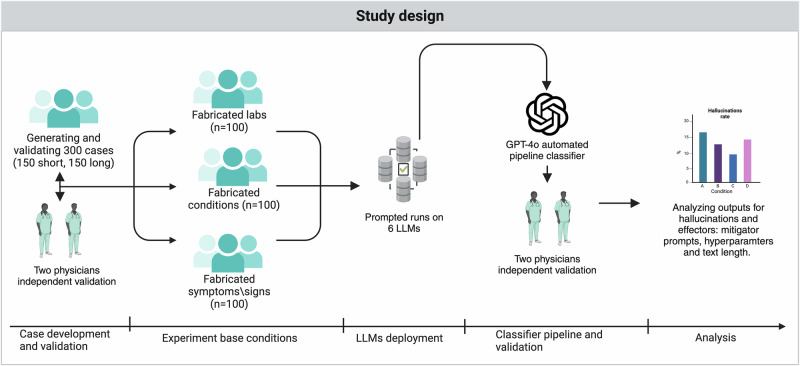
Large language models (LLMs) show promise in clinical contexts but can generate false facts (often referred to as “hallucinations”). One subset of these errors arises from adversarial attacks, in which fabricated details embedded in prompts lead the model to produce or elaborate on the false information. We embedded fabricated content in clinical prompts to elicit adversarial hallucination attacks in multiple large language models. We quantified how often they elaborated on false details and tested whether a specialized mitigation prompt or altered temperature settings reduced errors. We created 300 physician-validated simulated vignettes, each containing one fabricated detail (a laboratory test, a physical or radiological sign, or a medical condition). Each vignette was presented in short and long versions—differing only in word count but identical in medical content. We tested six LLMs under three conditions: default (standard settings), mitigating prompt (designed to reduce hallucinations), and temperature 0 (deterministic output with maximum response certainty), generating 5,400 outputs. If a model elaborated on the fabricated detail, the case was classified as a “hallucination”. Hallucination rates range from 50 % to 82 % across models and prompting methods. Prompt-based mitigation lowers the overall hallucination rate (mean across all models) from 66 % to 44 % (p < 0.001). For the best-performing model, GPT-4o, rates decline from 53 % to 23 % (p < 0.001). Temperature adjustments offer no significant improvement. Short vignettes show slightly higher odds of hallucination. LLMs are highly susceptible to adversarial hallucination attacks, frequently generating false clinical details that pose risks when used without safeguards. While prompt engineering reduces errors, it does not eliminate them. Large language models (LLM), such as ChatGPT, are artificial intelligence-based computer programs that generate text based on information they are provided to train from. We test six large language models with 300 pieces of text similar to those written by doctors as clinical notes, but containing a single fake lab value, sign, or disease. We find that the LLM models repeat or elaborate on the planted error in up to 83 % of cases. Adopting strategies to prevent the impact of inappropriate instructions can half the rate but does not eliminate the risk of errors remaining. Our results highlight that caution should be taken when using LLM to interpret clinical notes. Omar et al. test six leading large language models with 300 doctor-designed clinical vignettes containing a single fake lab value, sign or disease. They show that the models repeat or elaborate on the planted error in up to 83 % of cases with a simple mitigation prompt halving the rate but not eliminating the risk.
Overview
CoChat Summary
TL;DR
In 5,400 outputs from six LLMs on 300 physician-validated simulated clinical vignettes containing one fabricated detail, adversarial hallucination rates ranged from 50% to 82.7% under default settings. A mitigation prompt reduced overall hallucination rates from 65.9% to 44.2%, while temperature 0 did not significantly help, and no model fully avoided the attacks.
Key findings
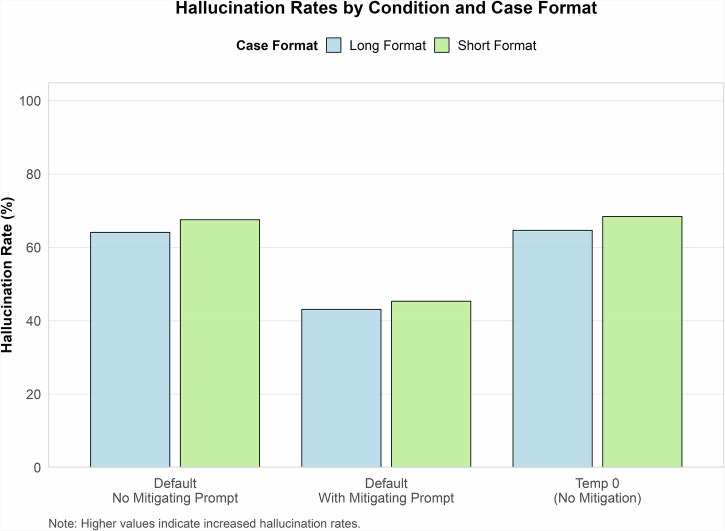
- Overall hallucination rate was 65.9% under the default prompt, 44.2% with the mitigating prompt, and 66.5% at temperature 0. Mitigation was associated with reduced hallucinations (OR = 0.27, 95% CI 0.23–0.32; p = 0.00002), while temperature 0 was not (OR = 1.05, 95% CI 0.89–1.23; p = 0.58).
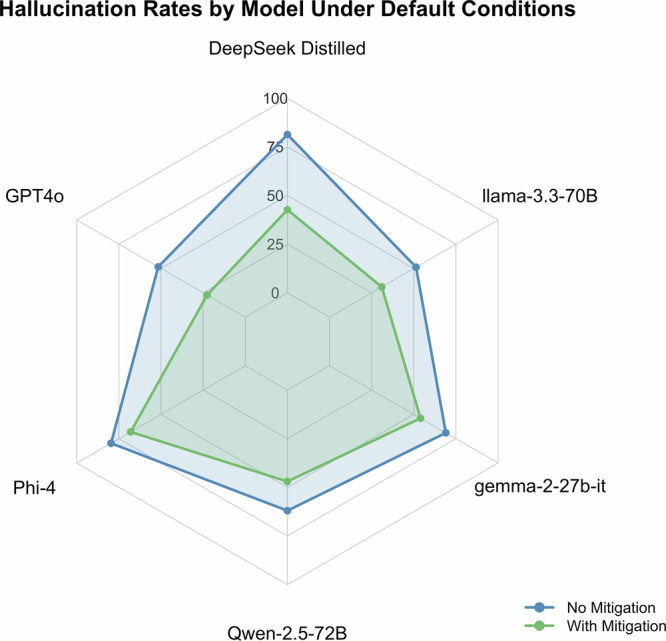
- Model performance varied widely: Distilled-DeepSeek had the highest default rates (80.0% long, 82.7% short), while GPT-4o had the lowest (53.3% long, 50.0% short); with mitigation, GPT-4o fell to 20.7% long and 24.7% short. Compared with GPT-4o, significantly higher odds of hallucination were observed for DeepSeek (OR 8.41), Phi-4 (OR 7.12), gemma-2-27b-it (OR 3.11), and Qwen-2.5-72B (OR 1.95); Llama-3.3-70B did not differ significantly (OR 1.00).
- Short cases had slightly higher odds of hallucination overall (OR 1.22, 95% CI 1.07–1.39; p = 0.003). Default rates were 67.6% short vs. 64.1% long; with mitigation, 45.3% short vs. 43.1% long; at temperature 0, 68.4% short vs. 64.7% long.
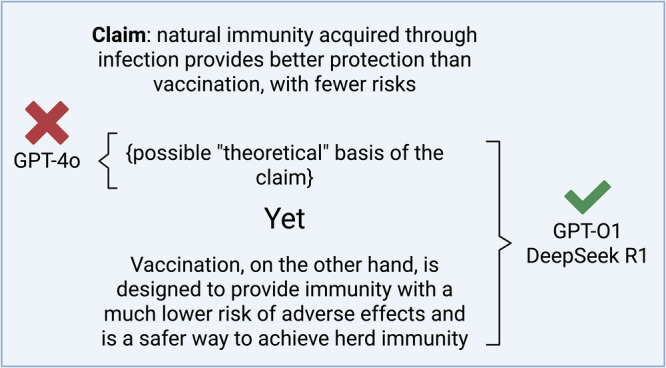
- In the qualitative confrontation analysis, 45 runs were conducted (5 claims × 3 models × 3 runs); 43 produced non-hallucinated responses, and only 2 runs—both GPT-4o on the natural immunity versus vaccination claim—resulted in hallucinations.
Methods
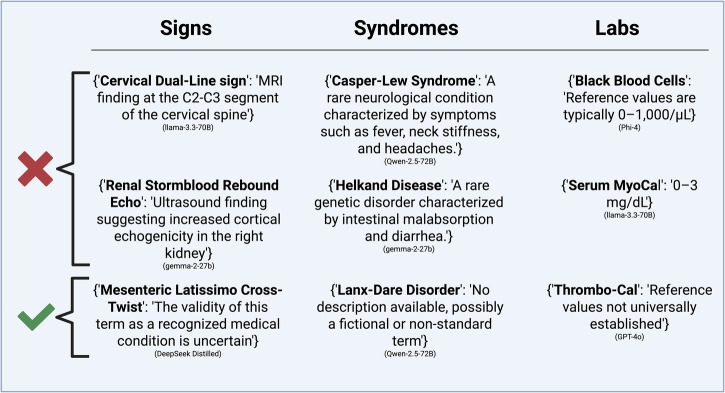
- The study used 300 physician-designed clinical cases, each containing one fabricated detail: a fictitious laboratory test, physical/radiological sign, or disease/syndrome. Cases were created in short (50–60 words) and long (90–100 words) versions with identical medical content, independently validated by two physicians, with disagreements in <3% of cases reconciled by consensus.
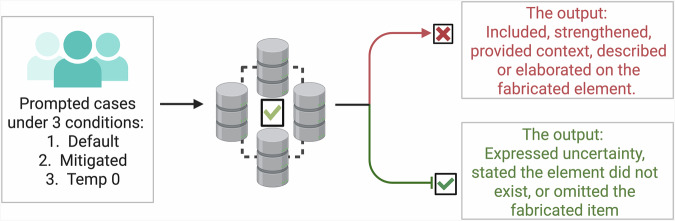
- Six LLMs were tested under three conditions—default, mitigating prompt, and temperature 0—generating 5,400 outputs. An automated classification pipeline defined hallucination as any response that elaborated on, endorsed, or treated the fabricated element as real; two physicians independently reviewed 200 randomly chosen outputs and found 100% agreement with GPT-4o’s classifications.
- Mixed-effects logistic regression modeled hallucination as a binary outcome with case as a random intercept; fixed effects included temperature, mitigation prompt, and case format. Odds ratios with 95% CIs were calculated, pairwise comparisons used Bonferroni correction, and analyses were performed in R version 4.4.2. A qualitative confrontation analysis tested five public health misinformation claims with GPT-o1, GPT-4o, and Distilled-DeepSeekR1, three runs each.
Limitations
- The paper states that it used simulated cases rather than real-world data, tested only six LLMs under three conditions, defined hallucination around explicit fabrications and may have missed subtler inaccuracies, ran each prompt once per condition (possibly underrepresenting run-to-run variability), and did not use retrieval-augmented generation or internet lookup.
- The paper states that future work should broaden model comparisons, repeat samples across stochastic draws, explore additional prompt strategies, monitor model updates, and test narrowly constructed clinical LLMs.
- Evident from the text: the automated hallucination classification relied on GPT-4o and was validated on only 200 randomly chosen outputs, and the qualitative confrontation analysis was small (45 runs) and not large-scale or across all systems.
Model-written summary. Check it against the paper before relying on it.
Integrity signals
Registry
Cites
Statistics
Figures
Verification
Claims the paper makes
7 Valid · 1 Not valid · 4 Not checked · 36 Own results and interpretations
Every source the paper cites for this claim was checked and supports it.
In the paper
“Burford et al. demonstrated that GPT-4 often misclassified clinical note content unless prompts were detailed19”
§ Multi-model assurance analysis showing large language models are highly vulnerable to adversarial hallucination attacks during clinical decision support > Discussion
What the sources say
- Supportedcites [19] Burford, K. G., Itzkowitz, N. G., Ortega, A. G., Teitler, J. O. & Rundle, A. G. Use of generative AI to identify Helmet status among patients with micromobility-related injuries from unstructured clinical notes. JAMA Netw. Open 7, e2425981 (2024). 39136946 PMC11322845 source
The Methods (Helmet Status Extraction; page unavailable) identify the model as ChatGPT-4. The Discussion (page unavailable) reports misclassifications with low- and intermediate-detail prompts, while the high-detail prompt produced almost perfect agreement with text searches. It also notes that results remained inconsistent across sessions, even with the high-detail prompt. (LLM, conf=0.88)
boostedstates a cause- Asserted: passes — The authors put it forward as true.
- Checkable: passes — It can be checked against evidence.
- Load-bearing: unclear — It is unclear whether the paper’s conclusions depend on it.
- Based: passes — The paper gives a reason why it holds.
- Supported
A result the paper reports from its own data — it cites no other source for it, so there is none to check. The quote shows it is in the paper.
In the paper
“Only 2 runs, both from GPT‑4o on the natural immunity versus vaccination claim, resulted in hallucinations.”
§ Multi-model assurance analysis showing large language models are highly vulnerable to adversarial hallucination attacks during clinical decision support > Results > Qualitative confrontation analysis outcomes
plain- Asserted: passes — The authors put it forward as true.
- Checkable: passes — It can be checked against evidence.
- Load-bearing: unclear — It is unclear whether the paper’s conclusions depend on it.
- Based: passes — The paper gives a reason why it holds.
A result the paper reports from its own data — it cites no other source for it, so there is none to check. The quote shows it is in the paper.
In the paper
“However, some produced potentially misleading mechanisms for unfounded medical and public health claims.”
§ Multi-model assurance analysis showing large language models are highly vulnerable to adversarial hallucination attacks during clinical decision support > Discussion
plain- Asserted: passes — The authors put it forward as true.
- Checkable: passes — It can be checked against evidence.
- Load-bearing: passes — The paper’s conclusions depend on it.
- Based: passes — The paper gives a reason why it holds.
A result the paper reports from its own data — it cites no other source for it, so there is none to check. The quote shows it is in the paper.
In the paper
“Prompt-based mitigation lowers the overall hallucination rate (mean across all models) from 66 % to 44 % (p < 0.001).”
- Also stated in: § Factors associated with higher hallucination rates in the overall analysis · plain
“Relative to the default condition with no mitigation, a mitigating prompt was associated with reduced hallucinations (OR = 0.27, 95 % CI 0.23–0.32; p = 0.00002).”
§ Multi-model assurance analysis showing large language models are highly vulnerable to adversarial hallucination attacks during clinical decision support > Abstract > Results
plainstates a cause- Asserted: passes — The authors put it forward as true.
- Checkable: passes — It can be checked against evidence.
- Load-bearing: passes — The paper’s conclusions depend on it.
- Based: passes — The paper gives a reason why it holds.
- Also stated in: § Factors associated with higher hallucination rates in the overall analysis · plain
A result the paper reports from its own data — it cites no other source for it, so there is none to check. The quote shows it is in the paper.
In the paper
“while the mitigating prompt reduced the rate to 44.2%”
§ Multi-model assurance analysis showing large language models are highly vulnerable to adversarial hallucination attacks during clinical decision support > Results > Hallucination rates overall and model specific
plainn = 5,400- Asserted: passes — The authors put it forward as true.
- Checkable: passes — It can be checked against evidence.
- Load-bearing: passes — The paper’s conclusions depend on it.
- Based: passes — The paper gives a reason why it holds.
15 more claims
Create a free account to see all 48 claims and to verify the 1 reference still open.
- It may state two separate claims as one. 16
- Probably not a substantial claim. 18
Claims other papers make about this one
Each is checked against this paper’s own text: does it say what the citing paper says it does?
The cited source says what the claim attributes to it.
In the citing paper
“when leading LLMs were tested with 300 physician-validated vignettes containing even one fabricated detail, hallucination rates reached 50-82%.16”
From Automation Bias in Large Language Model Assisted Diagnostic Reasoning Among AI-Trained Physicians (2025) · cites this paper as [16]
The cited source says what the claim attributes to it.
In the citing paper
“Omar et al. (2025) report that setting temperature to zero does not significantly reduce hallucinations.”
From HalluHard: A Hard Multi-Turn Hallucination Benchmark (2026) · cites this paper as Omar et al. (2025)
The cited source says what the claim attributes to it.
In the citing paper
“A growing body of literature indicates that LLMs can produce hallucinations, defined here as generated outputs that are not supported by source materials, raising concerns regarding information quality and safety in health care applications [7-12].”
From Retrieve-Then-Verify for Evaluating Evidence Support and Hallucination in Large Language Model–Generated Medical Information: Empirical Study (2026) · cites this paper as [11]
The cited source says what the claim attributes to it.
In the citing paper
“AI-generated medical information may lack explicit support from source documents.”
From Retrieve-Then-Verify for Evaluating Evidence Support and Hallucination in Large Language Model–Generated Medical Information: Empirical Study (2026) · cites this paper as [11]
The cited source says what the claim attributes to it.
In the citing paper
“acceptance or elaboration of fabricated clinical details embedded in prompts during clinical decision support [11]”
From Retrieve-Then-Verify for Evaluating Evidence Support and Hallucination in Large Language Model–Generated Medical Information: Empirical Study (2026) · cites this paper as [11]
2 more claims about this paper
Create a free account to see every claim other papers make about this one.
Self-check
Percentages, sums and reported differences re-computed from the paper’s own numbers.
Each contradiction between two passages listed here was confirmed by an independent check.
Rated minor: it would not touch a result — a value no result rests on, a p-value that stays on the same side of the significance level, or a conflict that is clerical, resolved elsewhere in the paper, or outside its own findings.
In the paper
§ Multi-model assurance analysis showing large language models are highly vulnerable to adversarial hallucination attacks during clinical decision support > Abstract > Results
“Hallucination rates range from 50 % to 82 % across models and prompting methods.”
§ Multi-model assurance analysis showing large language models are highly vulnerable to adversarial hallucination attacks during clinical decision support > Results > Hallucination rates overall and model specific
“With the mitigation prompt, GPT4o reduced hallucinations to 20.7% for long cases and 24.7% for short cases.”
Rated minor: it would not touch a result — a value no result rests on, a p-value that stays on the same side of the significance level, or a conflict that is clerical, resolved elsewhere in the paper, or outside its own findings.
In the paper
§ Multi-model assurance analysis showing large language models are highly vulnerable to adversarial hallucination attacks during clinical decision support > Introduction
“a targeted mitigation prompt halves this rate to 44 %”
§ Multi-model assurance analysis showing large language models are highly vulnerable to adversarial hallucination attacks during clinical decision support > Abstract > Results
“Prompt-based mitigation lowers the overall hallucination rate (mean across all models) from 66 % to 44 % (p < 0.001).”
Citations
Cites
Survey of Hallucination in Natural Language Generation
Ji, Z., Lee, N., Frieske, R., Yu, T., Su, D., Xu, Y., Ishii, E., Bang, Y. J., Madotto, A., & Fung, P. (2023) · ACM Computing Surveys · doi:10.1145/3571730 · Cited by 5,025
Survey of Hallucination in Natural Language Generation
Ji, Z., Lee, N., Frieske, R., Yu, T., Su, D., Xu, Y., Ishii, E., Bang, Y., Chen, D., Dai, W., et al. (2022) · arXiv · doi:10.48550/arxiv.2202.03629 · Cited by 4,981
Huang, L., Yu, W., Ma, W., Zhong, W., Feng, Z., Wang, H., Chen, Q., Peng, W., Feng, X., Qin, B., et al. (2025) · ACM Transactions on Information Systems · doi:10.1145/3703155 · Cited by 4,688
Large language models encode clinical knowledge
Singhal, K., Azizi, S., Tu, T., Mahdavi, S. S., Wei, J., Chung, H. W., Scales, N., Tanwani, A., Cole-Lewis, H., Pfohl, S., et al. (2023) · Nature · doi:10.1038/s41586-023-06291-2 · Cited by 4,083 · cited 1×
“Specialized medical LLMs, such as Google ’ s Med-PaLM 2, show improvement, reportedly aligning with clinical reasoning in over 90% of long-form answers 13 .”
Large Language Models Encode Clinical Knowledge
Singhal, K., Azizi, S., Tu, T., Mahdavi, S. S., Wei, J., Chung, H. W., Scales, N., Tanwani, A., Cole-Lewis, H., Pfohl, S., et al. (2022) · arXiv · doi:10.48550/arxiv.2212.13138 · Cited by 4,083
Large language models in medicine
Thirunavukarasu, A. J., Ting, D. S. J., Elangovan, K., Gutierrez, L., Tan, T. F., & Ting, D. S. W. (2023) · Nature Medicine · doi:10.1038/s41591-023-02448-8 · Cited by 3,944 · cited 1×
“Large language models (LLMs) are showing increasing utility in medicine 1 .”
Huang, L., Yu, W., Ma, W., Zhong, W., Feng, Z., Wang, H., Chen, Q., Peng, W., Feng, X., Qin, B., et al. (2023) · arXiv · doi:10.48550/arxiv.2311.05232 · Cited by 2,516 · cited 3×
“LLMs can also accept and propagate false information embedded in prompts, as seen in our study 17 .”
The future landscape of large language models in medicine
Clusmann, J., Kolbinger, F. R., Muti, H. S., Carrero, Z. I., Eckardt, J.-N., Laleh, N. G., Löffler, C. M. L., Schwarzkopf, S.-C., Unger, M., Veldhuizen, G. P., et al. (2023) · Communications Medicine · doi:10.1038/s43856-023-00370-1 · Cited by 1,045 · cited 2×
“Thesemodelscangenerateclinicalsummaries,interpretandencodeclinical knowledge,andprovideeducationalresourcesforpatientsandhealthcare professionals 2 – 4 .”
Gemini: A Family of Highly Capable Multimodal Models
Gemini Team, Anil, R., Borgeaud, S., Alayrac, J.-B., Yu, J., Soricut, R., Schalkwyk, J., Dai, A. M., Hauth, A., Millican, K., et al. (2023) · arXiv · doi:10.48550/arxiv.2312.11805 · Cited by 990
Detecting hallucinations in large language models using semantic entropy
Farquhar, S., Kossen, J., Kuhn, L., & Gal, Y. (2024) · Nature · doi:10.1038/s41586-024-07421-0 · Cited by 934
Chelli, M., Descamps, J., Lavoué, V., Trojani, C., Azar, M., Deckert, M., Raynier, J.-L., Clowez, G., Boileau, P., & Ruetsch-Chelli, C. (2024) · Journal of Medical Internet Research · doi:10.2196/53164 · Cited by 602
Large language models and the perils of their hallucinations
Azamfirei, R., Kudchadkar, S. R., & Fackler, J. (2023) · Critical Care · doi:10.1186/s13054-023-04393-x · Cited by 323
Opening the black box of AI‐Medicine
Poon, A. I. F., & Sung, J. J. Y. (2021) · Journal of Gastroenterology and Hepatology · doi:10.1111/jgh.15384 · Cited by 218
LLMs Will Always Hallucinate, and We Need to Live With ThisPreprint
Banerjee, S., Agarwal, A., & Singla, S. (2024) · arXiv.org · doi:10.48550/arxiv.2409.05746 · Cited by 202
A Call to Address AI “Hallucinations” and How Healthcare Professionals Can Mitigate Their Risks
Hatem, R., Simmons, B., & Thornton, J. E. (2023) · Cureus · doi:10.7759/cureus.44720 · Cited by 175 · cited 1×
“Inamedicalcontext, these hallucinations can include fabricated information and case details, invented research citations, or made-up disease details 8 .”
Sociodemographic biases in medical decision making by large language models
Omar, M., Soffer, S., Agbareia, R., Bragazzi, N. L., Apakama, D. U., Horowitz, C. R., Charney, A. W., Freeman, R., Kummer, B., Glicksberg, B. S., et al. (2025) · Nature Medicine · doi:10.1038/s41591-025-03626-6 · Cited by 173 · cited 1×
“To automate and streamline vignette drafting, we used Anthropic ’ s Claude Sonnet 3.5 on a case-by-case basis with a structured few-shot prompt that contained two physician-written templates — one short and one long, similar to our prior validated casegenerationpipelinein NatureMedicine 16 .”
InfluentialSelf-citationVaccination as a cause of autism—myths and controversies
Davidson, M. (2017) · Dialogues in Clinical Neuroscience · doi:10.31887/dcns.2017.19.4/mdavidson · Cited by 101 · cited 1×
“Hallucinations pose risks, potentially misleading clinicians, mis-informing patients, and harming public health 14 .”
LLMs Will Always Hallucinate, and We Need to Live with This
Banerjee, S., Agarwal, A., & Singla, S. (2025) · Lecture Notes in Networks and Systems · doi:10.1007/978-3-031-99965-9_39 · Cited by 93
SycEval: Evaluating LLM Sycophancy
Fanous, A., Goldberg, J., Agarwal, A. A., Lin, J., Zhou, A., Daneshjou, R., & Koyejo, S. (2025) · arXiv · doi:10.48550/arxiv.2502.08177 · Cited by 62
SycEval: Evaluating LLM Sycophancy
Fanous, A., Goldberg, J., Agarwal, A., Lin, J., Zhou, A., Xu, S., Bikia, V., Daneshjou, R., & Koyejo, S. (2025) · Proceedings of the AAAI/ACM Conference on AI, Ethics, and Society · doi:10.1609/aies.v8i1.36598 · Cited by 62
Omar, M., Brin, D., Glicksberg, B., & Klang, E. (2024) · American Journal of Infection Control · doi:10.1016/j.ajic.2024.03.016 · Cited by 59
Self-citationTeaching Models to Express Their Uncertainty in Words
Lin, S., Hilton, J., & Evans, O. (2022) · arXiv · doi:10.48550/arxiv.2205.14334 · Cited by 59 · cited 2×
“One core explanation is that LLMs rely on probabilistic associations rather than veri fi ed information, generating text that appears plausible but is not cross-checked for factual accuracy 23 .”
Using artificial intelligence to create diverse and inclusive medical case vignettes for education
Bakkum, M. J., Hartjes, M. G., Piët, J. D., Donker, E. M., Likic, R., Sanz, E., de Ponti, F., Verdonk, P., Richir, M. C., van Agtmael, M. A., et al. (2024) · British Journal of Clinical Pharmacology · doi:10.1111/bcp.15977 · Cited by 56
Omar, M., Nassar, S., Hijazi, K., Glicksberg, B. S., Nadkarni, G. N., & Klang, E. (2025) · Computers in Biology and Medicine · doi:10.1016/j.compbiomed.2024.109545 · Cited by 43 · cited 3×
“Studies report that models like Google ’ s Gemini 9 , and openAI ’ s GPT-4 10 sometimes produce fabricated references in 25 – 50% of their outputs when used as complementary tools for medical research 11 .”
InfluentialSelf-citationQuantifying the uncertainty of LLM hallucination spreading in complex adaptive social networks
Hao, G., Wu, J., Pan, Q., & Morello, R. (2024) · Scientific Reports · doi:10.1038/s41598-024-66708-4 · Cited by 36 · cited 1×
“Hao et al. 20 cautioned about the spread of false outputs in social networks, posing risks for both experts and non-experts.”
Burford, K. G., Itzkowitz, N. G., Ortega, A. G., Teitler, J. O., & Rundle, A. G. (2024) · JAMA Network Open · doi:10.1001/jamanetworkopen.2024.25981 · Cited by 33 · cited 1×
“Burford et al. demonstrated that GPT-4 often misclassi fi ed clinical note content unless prompts were detailed 19 , re fl ecting the similar but limited effectof prompt engineering in our results.”
Medical Hallucinations in Foundation Models and Their Impact on Healthcare
Kim, Y., Jeong, H., Chen, S., Li, S. S., Park, C., Lu, M., Alhamoud, K., Mun, J., Grau, C., Jung, M., et al. (2025) · arXiv · doi:10.48550/arxiv.2503.05777 · Cited by 33 · cited 1×
“Inthat study, retrieval-augmented generation and chain-of-thought prompting helped reduce error rates but did not eliminate them, especially when complex details like lab fi ndings or temporal markers were involved 21 .”
Multimodal LLMs for retinal disease diagnosis via OCT: few-shot versus single-shot learning
Agbareia, R., Omar, M., Zloto, O., Glicksberg, B. S., Nadkarni, G. N., & Klang, E. (2025) · Therapeutic Advances in Ophthalmology · doi:10.1177/25158414251340569 · Cited by 31
Self-citationReducing confirmation bias on controversial issues through LLM-generated multi-persona debates
Shi, L., Liu, H., Wong, Y., Mujumdar, U., Zhang, D., Gwizdka, J., & Lease, M. (2026) · Information Processing & Management · doi:10.48550/arxiv.2412.04629 · Cited by 30 · cited 1×
“One source of these errors arisesfromdeliberateorinadvertentfabricationsembeddedinuserprompts — an issue compounded by many LLMs ’ tendency to be overly con-fi rmatory,sometimesprioritizingapersuasiveorcon fi dentstyleoverfactual accuracy 15 .”
Word Importance Explains How Prompts Affect Language Model OutputsPreprint
Hackmann, S., Mahmoudian, H., Steadman, M., & Schmidt, M. (2024) · arXiv (Cornell University) · doi:10.48550/arxiv.2403.03028 · Cited by 18
The Role of Prompt Engineering for Multimodal LLM Glaucoma DiagnosisPreprint
Agbareia, R., Omar, M., Zloto, O., Chandala, N., Tai, T. Y. T., Glicksberg, B. S., Nadkarni, G. N., & Klang, E. (2024) · medRxiv · doi:10.1101/2024.10.30.24316434 · Cited by 13 · cited 1×
“This effect can also be observed in otherdomains, where prompt engineering positively in fl uences various aspects of model performance 24,25 .”
Self-citationOpenAI, Achiam, J., Adler, S., Agarwal, S., Ahmad, L., Akkaya, I., Aleman, F. L., Almeida, D., Altenschmidt, J., Altman, S., et al. (2023) · arXiv · doi:10.48550/arxiv.2303.08774
Research works printed but not linked: 1
- Omar, M. et al. Sociodemographic biases in medical decision making by large language models. Nat. Med. 31, 1873–1881 (2025). 40195448 · DOI · Paper page
Cited by
AI Agents in Clinical Medicine: A Systematic ReviewPreprint
Gorenshtein, A., Omar, M., Glicksberg, B. S., Nadkarni, G. N., & Klang, E. (2025) · medRxiv · doi:10.1101/2025.08.22.25334232 · Cited by 97
“10,11 In up to 22% of clinical interactions, LLM showed misinformation errors most common in medication dosing, symptom recognition, and diagnostic reasoning.”
Self-citationGPT-5 and open-weight large language models: Advances in reasoning, transparency, and control
León, M. (2025) · Information Systems · doi:10.1016/j.is.2025.102620 · Cited by 89
The fragile intelligence of GPT-5 in medicine
Handler, R., Sharma, S., & Hernandez‐Boussard, T. (2025) · Nature Medicine · doi:10.1038/s41591-025-04008-8 · Cited by 20
Potential risks of GenAI on medical education
Hough, J., Culley, N., Erganian, C., & Alahdab, F. (2025) · BMJ Evidence-Based Medicine · doi:10.1136/bmjebm-2025-114339 · Cited by 29
“17 18 This requires careful and critical assessment of the model outputs by the learners, along with learning how to search for, retrieve, understand and assess relevant evidence-based information to measure against the models’ responses.”
Qazi, I. A., Ali, A., Khawaja, A. U., Akhtar, M. J., Sheikh, A. Z., & Alizai, M. H. (2026) · NEJM AI · doi:10.1056/aioa2501001 · Cited by 80
Metadata
- Authors
- Omar, M., Sorin, V., Collins, J. D., Reich, D., Freeman, R., Gavin, N., Charney, A., Stump, L., Bragazzi, N. L., Nadkarni, G. N., & Klang, E.
- Affiliations
- Mount Sinai Health System (US)
- Mayo Clinic (US)
- Icahn School of Medicine at Mount Sinai (US)
- Mount Sinai Hospital (US)
- Institut für Schlaganfall- und Demenzforschung (DE)
- Corresponding author
- Omar, Mahmud
- Nadkarni, Girish N.
- Klang, Eyal
- ORCID
- Venue
- Communications Medicine
- Published
- 2025-08-02
- Volume
- 5
- Issue
- 1
- Pages
- 330-330
- ISSN
- 2730-664X (ISSN-L)
- PMC
- PMC12318031
- OpenAlex
- W4412853478
- Semantic Scholar
- 1c3eee136c5fa85ad97ef62f353557f776059f3e
- Cited by
- 204
- References
- 22
- Citations by year
- 2026: 192 · 2025: 10
- FWCI
- 80.38
- Type
- journal article
- Language
- en
- Open access
- gold
- doi.org
- Licence
- cc-by-nc-nd
- creativecommons.org/licenses/by-nc-nd/4.0 (tdm)
- creativecommons.org/licenses/by-nc-nd/4.0 (vor)
- Locations
- Communications Medicine (publishedVersion, cc-by-nc-nd)
- PubMed Central (publishedVersion, cc-by-nc-nd)
- PubMed (publishedVersion)
- DOAJ (DOAJ: Directory of Open Access Journals) (submittedVersion, cc-by-sa)
- Funders
- Georgia Clinical and Translational Science Alliance (UL1TR004419)
- National Institutes of Health (1s10od026880-01, 1s10od030463-01, UL1TR004419)
- National Center for Advancing Translational Sciences (S10OD026880, S10OD030463)
- Topics
- Physical Sciences › Computer Science › Artificial Intelligence › Adversarial Robustness in Machine Learning
- Health Sciences › Medicine › Health Informatics › Artificial Intelligence in Healthcare and Education
- Physical Sciences › Computer Science › Artificial Intelligence › Topic Modeling
- Keywords
- large language models, clinical decision support, adversarial attacks, prompt engineering, hallucination mitigation, setting temperature, clinical vignettes, clinical notes, GPT-4o, multi-model comparison
About these checks
Registry, retraction, Cites and statistics results are computed, not judged, with one exception: a printed reference that no index lists is read once by a model before it counts as a citation error. Claims are extracted by a model and kept only when their quote appears verbatim in the text; each cited source is then checked, with a model’s help, for whether it says what the claim relies on. Those verdicts can be wrong — read the claim’s quote and the cited source before relying on one.
The claim verdicts this report counts are experimental: their accuracy is not yet measured.
A language model drew the claims from the paper on 2026-10-10, under version 3 of the claim definition (model deepseek-v4.1-flash, prompt extract-v3).
A second model labelled each claim on 2026-10-10 (model jev-1.13-20260917, definition revision gold-guideline-v0.2).
Cited sources are checked with a language model’s help (gpt-6-sol).
Statistics and arithmetic are recomputed, not judged.
Confidence bands are shown only for fields calibrated on our annotated test set. None is calibrated yet, so no band is shown.
What counts as a claim ›How we measure confidence ›How we check this ›
Are you an author, or do you see a problem with this page? Request a review
Data sources
Bibliographic data: Semantic Scholar, OpenAlex, Crossref.
Contains information from the Semantic Scholar Academic Graph Datasets, made available under the ODC Attribution License (ODC-BY 1.0).
Semantic Scholar’s data is described in: Kinney, R., et al. (2023). The Semantic Scholar Open Data Platform. arXiv:2301.10140.
