

Integrated genomic analysis and CRISPRi implicates EGFR in Alzheimer’s disease risk
Open accessThe DOI matches its Crossref record; 83 of the 83 references it cites were found in a registry or an index; none of the 39 sources its claims cite is checked for support yet.
Abstract
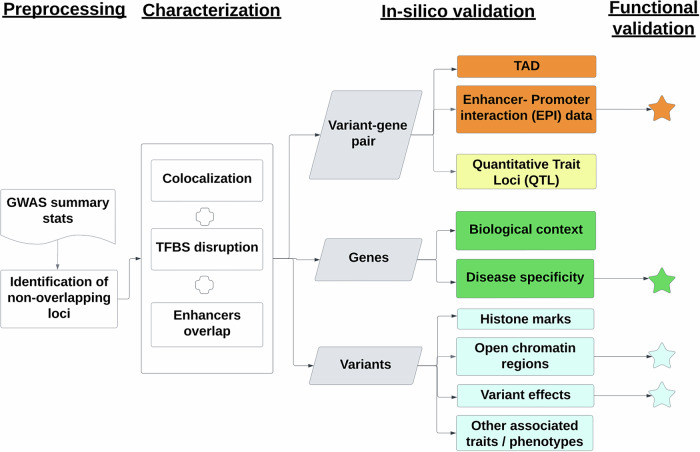
Genome-wide association studies (GWAS) have identified numerous loci linked to late-onset Alzheimer’s disease (LOAD), but the pan-brain regional effects of these loci remain largely uncharacterized. To address this, we systematically analyzed all LOAD-associated regions reported by Bellenguez et al. using the FILER functional genomics catalog across 174 datasets, including enhancers, transcription factors, and quantitative trait loci. We identified 41 candidate causal variant-effector gene pairs and assessed their impact using enhancer–promoter interaction data, variant annotations, and brain cell-type-specific gene expression. Notably, the LOAD risk allele of rs74504435 at the SEC61G locus was computationally predicted to increase EGFR expression in LOAD-related cell types: microglia, astrocytes, and neurons. Functional validation using promoter-focused Capture C, ATAC-seq, and CRISPR interference in the HMC3 human microglia cell line confirmed this regulatory relationship. Our findings reveal a microglial enhancer regulating EGFR in LOAD, suggesting EGFR inhibitors as a potential therapeutic avenue for the disease.
Overview
CoChat Summary
TL;DR
This study integrates LOAD GWAS signals with brain functional genomics to prioritize non-coding variant-to-gene pairs, identifying 41 candidate pairs and nominating EGFR as a microglial enhancer-regulated target. CRISPRi in HMC3 microglia validated that the rs74504435 region regulates EGFR expression.
Key findings
- The framework analyzed 174 datasets from 10 data sources and identified 41 candidate V2G pairs comprising 14 variants and 26 protein-coding genes outside APOE.
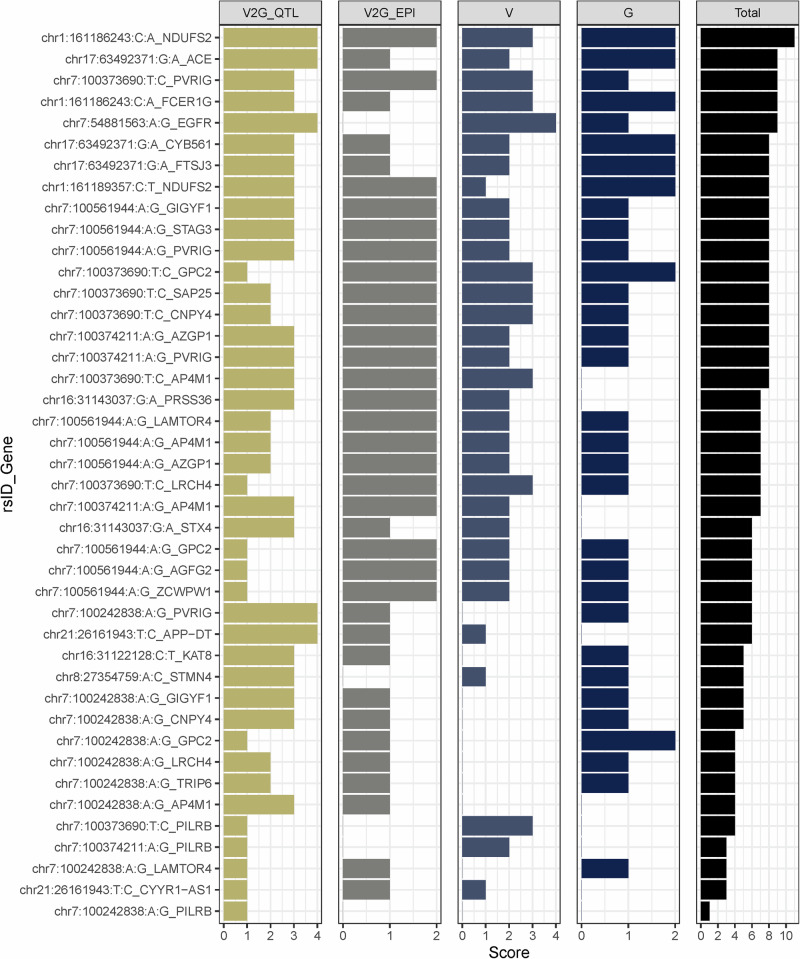
- Top-ranked pairs were chr1:161186243:C:A_NDUFS2 (tier 11) and four tier-9 pairs: chr7:54881563:A:G_EGFR, chr1:161186243:C:A_FCER1G, chr7:100373690_PVRIG, and chr17:63492371:G:A_ACE.
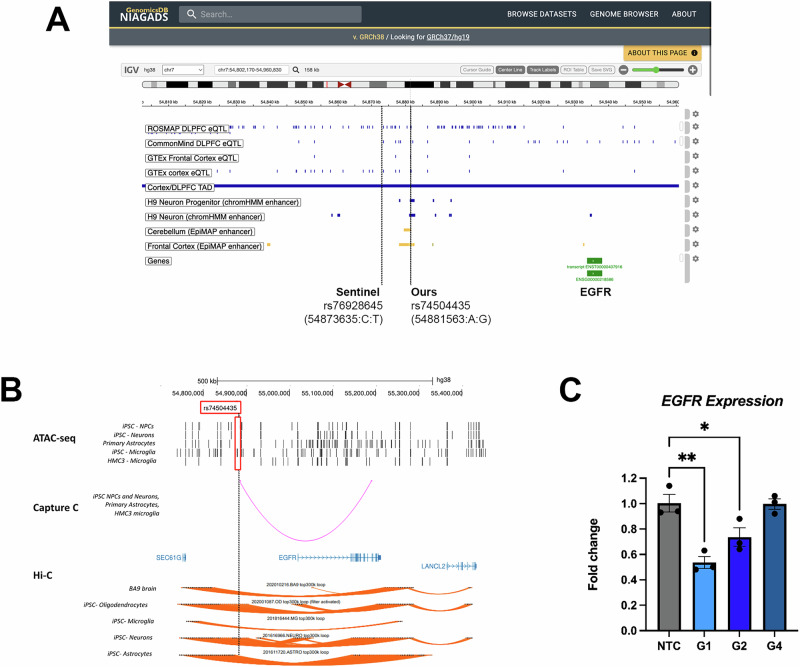
- The LOAD risk allele at rs74504435 was computationally predicted to increase EGFR expression in microglia, astrocytes, and neurons; functional assays showed rs74504435 in open chromatin and chromatin loops with EGFR in brain-relevant cell types.
- CRISPRi in HMC3 microglia showed two of three targeting guides significantly reduced EGFR expression: G1 by 47% (Tukey p = 0.0004) and G2 by 27% (p = 0.04); one-way ANOVA p = 0.0002; G4 had no effect.
- Using full GWAS summary statistics plus LD expansion yielded 9144 candidate variants vs. 2024 from top-variant analysis, 2040 vs. 408 unique colocalized variants, and 1529 vs. 762 candidate target genes across GTEx data.
Methods
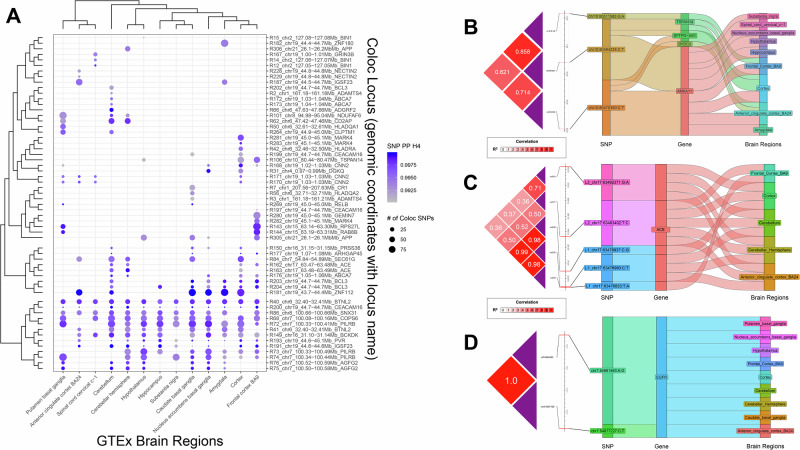
- Analyzed Bellenguez et al. Stage 1 LOAD GWAS summary statistics (788,989 individuals; effective sample size 382,472; 19,767,628 SNPs and 1,333,486 indels; SNPs only), performed LD pruning/expansion with the 1000 Genomes EUR panel, annotated variants with FILER/SparkINFERNO/HOMER, and ran Bayesian colocalization against GTEx v8 brain eQTLs.
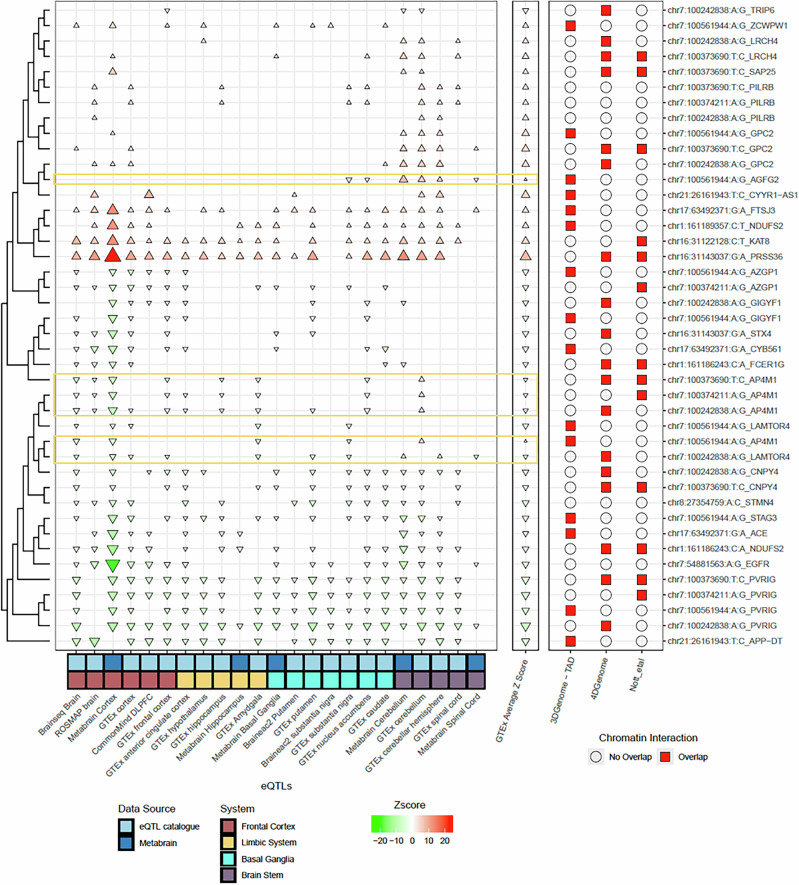
- In silico validation used independent QTL and enhancer–promoter interaction datasets (MetaBrain, eQTL Catalogue, MiGA, 3DGenome, 4DGenome, Nott et al.) harmonized with hipFG, plus a tier ranking system combining eQTL, EPI, variant, and gene evidence.
- Functional validation used promoter-focused Capture C, ATAC-seq, RNA-seq, and Hi-C in brain-relevant cell types, and CRISPRi in the HMC3 human microglial cell line expressing dCas9-ZIM3-KRAB with three sgRNAs targeting rs74504435 and two non-targeting controls, assessed by qPCR (N = 3; one-way ANOVA with Tukey test).
Limitations
- Stated: the study restricted analyses to SNPs; indels were excluded because they are inconsistently represented across QTL datasets, with only eQTL Catalogue among the validation QTL sources containing indels.
- Stated: analyses used European-ancestry GWAS data; non-European GWAS were not included because of small sample sizes, and the authors note the scarcity of non-European functional genomics resources limits generalizability.
- Evident: experimental validation was limited to one V2G pair and primarily to the HMC3 microglial cell line; the other top-ranked pairs were not validated by Capture C in the investigated cell types, and the authors note that directionality/Z-score consistency checks were not formal hypothesis testing.
Model-written summary. Check it against the paper before relying on it.
Integrity signals
Registry
Cites
Statistics
Figures
Verification
Claims the paper makes
0 Valid · 0 Not valid · 21 Not checked · 42 Own results and interpretations
In the paper
“Notably, seven non-APOE variants did not affect the annotated (typically closest) genes in the original GWAS (Table 1)5.”
§ Integrated genomic analysis and CRISPRi implicates EGFR in Alzheimer’s disease risk > Results > Characterization: identification of putative causal variants, genes, and variant-gene pairs
What the sources say
- Not checked yetcites [5] Bellenguez, C. et al. New insights into the genetic etiology of Alzheimer’s disease and related dementias. Nat. Genet. 54, 412–436 (2022). 35379992 PMC9005347 source
plain- Asserted: passes — The authors put it forward as true.
- Checkable: passes — It can be checked against evidence.
- Load-bearing: unclear — It is unclear whether the paper’s conclusions depend on it.
- Based: passes — The paper gives a reason why it holds.
A result the paper reports from its own data — it cites no other source for it, so there is none to check. The quote shows it is in the paper.
In the paper
“We note that this top rs74504435 variant is also detected when using the most stringent pruning (LD = 0.1) and colocalization (PP.H4.abf >0.99) thresholds (Supplementary Data 4).”
§ Integrated genomic analysis and CRISPRi implicates EGFR in Alzheimer’s disease risk > Results > Functional validation: an enhancer region harboring rs74504435 influences EGFR expression
plain- Asserted: passes — The authors put it forward as true.
- Checkable: passes — It can be checked against evidence.
- Load-bearing: unclear — It is unclear whether the paper’s conclusions depend on it.
- Based: passes — The paper gives a reason why it holds.
None of the sources cited for this claim have been checked yet.
In the paper
“Via the ATAC-seq dataset, we observed that rs74504435 lies within open chromatin in several brain-relevant cell types, including iPSC-derived cortical neural progenitors and neurons49, primary astrocytes50, and iPSC-derived microglia48.”
§ Integrated genomic analysis and CRISPRi implicates EGFR in Alzheimer’s disease risk > Results > Functional validation: an enhancer region harboring rs74504435 influences EGFR expression
What the sources say
- Not checked yetcites [49] Su, C. et al. 3D promoter architecture re-organization during iPSC-derived neuronal cell differentiation implicates target genes for neurodevelopmental disorders. Prog. Neurobiol. 201, 102000 (2021). 33545232 PMC8096691 source
- Not checked yetcites [50] Littleton, S. H. et al. Variant-to-function analysis of the childhood obesity chr12q13 locus implicates rs7132908 as a causal variant within the 3’ UTR of FAIM2. Cell Genom. 4, 100556 (2024). 38697123 PMC11099382 source
- Not checked yetcites [48] Burton, E.A. et. al. Variant‐to‐function mapping of late‐onset Alzheimer’s disease GWAS loci in human microglial models implicates RTFDC1 as an effector gene at the CASS4 locus. Alzheimers Dement. 20(Suppl 1), 089683 (2025). source
plainstates an association- Asserted: passes — The authors put it forward as true.
- Checkable: passes — It can be checked against evidence.
- Load-bearing: passes — The paper’s conclusions depend on it.
- Based: passes — The paper gives a reason why it holds.
In the paper
“Of the 229 colocalized candidate variants, 68 (29.69%) overlap predicted HOMER27 TFBS (Method: Transcription factor binding site (TFBS) disruption).”
§ Integrated genomic analysis and CRISPRi implicates EGFR in Alzheimer’s disease risk > Results > Characterization: identification of putative causal variants, genes, and variant-gene pairs
What the sources say
- Not checked yetcites [27] Heinz, S. et al. Simple combinations of lineage-determining transcription factors prime cis-regulatory elements required for macrophage and B cell identities. Mol. Cell 38, 576–589 (2010). 20513432 PMC2898526 source
plain- Asserted: passes — The authors put it forward as true.
- Checkable: passes — It can be checked against evidence.
- Load-bearing: unclear — It is unclear whether the paper’s conclusions depend on it.
- Based: passes — The paper gives a reason why it holds.
A result the paper reports from its own data — it cites no other source for it, so there is none to check. The quote shows it is in the paper.
In the paper
“The LOAD risk allele at rs74504435 is associated with increased EGFR expression in multiple eQTL datasets (Fig. 5a), suggesting EGFR as a promising candidate for therapeutic targeting with existing EGFR inhibitors.”
- Also stated in: § Functional validation: an enhancer region harboring rs74504435 influences EGFR expression · plain
“rs74504435 regulates EGFR in 4 eQTLs: ROSMAP DLPFC, CommonMind DLPFC, GTEx Frontal Cortex, and GTEx cortex.”
§ Integrated genomic analysis and CRISPRi implicates EGFR in Alzheimer’s disease risk > Results > Functional validation: an enhancer region harboring rs74504435 influences EGFR expression
plainstates an association- Asserted: passes — The authors put it forward as true.
- Checkable: passes — It can be checked against evidence.
- Load-bearing: passes — The paper’s conclusions depend on it.
- Based: passes — The paper gives a reason why it holds.
- Also stated in: § Functional validation: an enhancer region harboring rs74504435 influences EGFR expression · plain
20 more claims
Create a free account to see all 63 claims and to verify the 39 references still open.
- It may state two separate claims as one. 23
- The quote only partly states this claim. 1
- Probably not a substantial claim. 20
Self-check
Percentages, sums and reported differences re-computed from the paper’s own numbers.
Rated minor: it would not touch a result — a value no result rests on, a p-value that stays on the same side of the significance level, or a conflict that is clerical, resolved elsewhere in the paper, or outside its own findings.
In the paper
“The V2G_EPI tier evaluated whether a V2G pair appeared in brain enhancer–promoter interaction datasets from 3DGenome41, 4DGenome40, or Nott et al.43. A score of 1 was assigned for each presence, and the total V2G_EPI tier ranged from 0 to 2.”
§ Integrated genomic analysis and CRISPRi implicates EGFR in Alzheimer’s disease risk > Methods > Ranking of variant-gene (V2G) pairs (tier system)
Reported 2 · recomputed 3
Rated minor: it would not touch a result — a value no result rests on, a p-value that stays on the same side of the significance level, or a conflict that is clerical, resolved elsewhere in the paper, or outside its own findings.
In the paper
“The overall tier for the V2G pair is the sum of all four components. The overall tier ranges from 1 to 11.”
§ Integrated genomic analysis and CRISPRi implicates EGFR in Alzheimer’s disease risk > Methods > Ranking of variant-gene (V2G) pairs (tier system)
Reported 11 · recomputed 12
Citations
Cites
Fast gapped-read alignment with Bowtie 2
Langmead, B., & Salzberg, S. L. (2012) · Nature Methods · doi:10.1038/nmeth.1923 · Cited by 56,400
A global reference for human genetic variation
The 1000 Genomes Project Consortium, authors, C., Auton, A., Abecasis, G. R., Steering committee, Altshuler, D. M., Durbin, R. M., Abecasis, G. R., Bentley, D. R., Chakravarti, A., et al. (2015) · Nature · doi:10.1038/nature15393 · Cited by 18,247
Self-citationHeinz, S., Benner, C., Spann, N., Bertolino, E., Lin, Y. C., Laslo, P., Cheng, J. X., Murre, C., Singh, H., & Glass, C. K. (2010) · Molecular Cell · doi:10.1016/j.molcel.2010.05.004 · Cited by 13,382
Fast and accurate long-read alignment with Burrows-Wheeler transform.
Li, H., & Durbin, R. (2010) · Bioinformatics · doi:10.1093/bioinformatics/btp698 · Cited by 12,063 · cited 1×
“Sequencing data were processed using BWA 76 to map each read end separately to the GRCh38 reference genomes.”
Corder, E. H., Saunders, A. M., Strittmatter, W. J., Schmechel, D. E., Gaskell, P. C., Small, G. W., Roses, A. D., Haines, J. L., & Pericak-Vance, M. A. (1993) · Science · doi:10.1126/science.8346443 · Cited by 9,429
A 3D Map of the Human Genome at Kilobase Resolution Reveals Principles of Chromatin Looping
Rao, S. S. P., Huntley, M. H., Durand, N. C., Stamenova, E. K., Bochkov, I. D., Robinson, J. T., Sanborn, A. L., Machol, I., Omer, A. D., Lander, E. S., et al. (2014) · Cell · doi:10.1016/j.cell.2014.11.021 · Cited by 9,212
Integrative analysis of 111 reference human epigenomes
Roadmap Epigenomics Consortium, Kundaje, A., Meuleman, W., Ernst, J., Bilenky, M., Yen, A., Heravi-Moussavi, A., Kheradpour, P., Zhang, Z., Wang, J., et al. (2015) · Nature · doi:10.1038/nature14248 · Cited by 6,368
Neuroinflammation in Alzheimer's disease
Heneka, M. T., Carson, M. J., Khoury, J. E., Landreth, G. E., Brosseron, F., Feinstein, D. L., Jacobs, A. H., Wyss-Coray, T., Vitorica, J., Ransohoff, R. M., et al. (2015) · The Lancet Neurology · doi:10.1016/s1474-4422(15)70016-5 · Cited by 6,226
The GTEx Consortium atlas of genetic regulatory effects across human tissues
The GTEx Consortium, Aguet, F., Anand, S., Ardlie, K. G., Gabriel, S., Getz, G. A., Graubert, A., Hadley, K., Handsaker, R. E., Huang, K. H., et al. (2020) · Science · doi:10.1126/science.aaz1776 · Cited by 5,547
Self-citationMeta-Analysis of 74,046 Individuals Identifies 11 New Susceptibility Loci for Alzheimer’s Disease
(EADI), E. A. D. I., Lambert, J.-C., (GERAD), G. A. E. R. I. A. D., Alzheimer's Disease Genetic Consortium (ADGC), (CHARGE), C. F. H. A. A. R. I. G. E., Ibrahim-Verbaas, C. A., Harold, D., Naj, A. C., Sims, R., Bellenguez, C., et al. (2013) · Nature Genetics · doi:10.1038/ng.2802 · Cited by 4,336
Cited by
HMC3 revealed: how much do these “Microglia” really tell us?
Buccarello, L., Privitera, A., Partsinevelos, K., Serwa, K., Carota, G., Pietro, L. D., Cardaci, V., Mangione, R., Sibbitts, J., Lazzarino, G., et al. (2026) · Frontiers in Immunology · doi:10.3389/fimmu.2026.1778798 · Cited by 3
CSF proteogenomics implicates novel proteins and humoral immunity in Alzheimer’s disease riskPreprint
Wingo, A. P., Liu, Y., Mei, Z. L., Wang, M., Vattathil, S., Gerasimov, E. S., Shantaraman, A., Wu, F., Duong, D. M., Fox, E. J., et al. (2025) · medRxiv · doi:10.1101/2025.09.21.25336297 · Cited by 3
Chen, J., Yin, X., Dong, Y., Shi, Q., Tan, E., Yan, Z., Zhang, P., Li, W., Xiao, M., Wang, Q., et al. (2026) · Pharmacological Research · doi:10.1016/j.phrs.2026.108376 · Cited by 1
Aquino, J., Lee, A., Zheng, J., Ku, W. L., Han, M., & Chen, J. (2026) · Research Square · doi:10.21203/rs.3.rs-10820900/v1
Causal analysis of Alzheimer’s disease molecular data
Loo, R. T. J., & Glaab, E. (2026) · Alzheimer s Research & Therapy · doi:10.1186/s13195-026-02235-w
TailEnrich enables discovery of dysregulated genes through disease sample enrichment testingPreprint
Li, H., Liu, Y., Lin, C., Wang, S., Pan, H., & Wang, S. (2026) · bioRxiv (Cold Spring Harbor Laboratory) · doi:10.64898/2026.11.04.764457
Metadata
- Authors
- Leung, Y. Y., Kuksa, P. P., Carter, L., Cifello, J., Greenfest-Allen, E., Valladares, O., Boateng, L., Laub, S., Tulina, N., Moura, S., Ramirez, A., Celis, K., Jin, F., Feng, R., Wang, G., De Jager, P., Vance, J. M., Wang, L., Grant, S. F. A., Schellenberg, G. D., Chesi, A., & Wang, L.-S.
- Affiliations
- University of Pennsylvania (US)
- University of Miami (US)
- Case Western Reserve University (US)
- Columbia University (US)
- Children's Hospital of Philadelphia (US)
- Corresponding author
- Leung, Yuk Yee
- ORCID
- Venue
- npj Dementia
- Published
- 2025-12-16
- Volume
- 1
- Issue
- 1
- Pages
- 42-42
- ISSN
- 3005-1940 (ISSN-L)
- PMC
- PMC12711570
- OpenAlex
- W4417420293
- Cited by
- 6
- References
- 82
- Citations by year
- 2026: 5 · 2025: 1
- FWCI
- 1.40
- Type
- journal article
- Language
- en
- Open access
- hybrid
- doi.org
- Licence
- cc-by
- creativecommons.org/licenses/by/4.0 (tdm)
- creativecommons.org/licenses/by/4.0 (vor)
- Locations
- npj Dementia (publishedVersion, cc-by)
- medRxiv (submittedVersion, cc-by-nc)
- PubMed Central (publishedVersion, cc-by)
- PubMed (publishedVersion)
- PubMed Central (submittedVersion, cc-by-nc)
- PubMed (submittedVersion)
- Funders
- National Institute on Aging
- Topics
- Life Sciences › Neuroscience › Cellular and Molecular Neuroscience › Alzheimer's disease research and treatments
- Life Sciences › Biochemistry, Genetics and Molecular Biology › Genetics › Genetic Associations and Epidemiology
- Health Sciences › Medicine › Psychiatry and Mental health › Dementia and Cognitive Impairment Research
- Keywords
- late-onset Alzheimer's disease, EGFR, enhancer-promoter interactions, microglia, transcription factors, quantitative trait loci, EGFR inhibitors, therapeutic target
About these checks
Registry, retraction, Cites and statistics results are computed, not judged, with one exception: a printed reference that no index lists is read once by a model before it counts as a citation error. Claims are extracted by a model and kept only when their quote appears verbatim in the text; each cited source is then checked, with a model’s help, for whether it says what the claim relies on. Those verdicts can be wrong — read the claim’s quote and the cited source before relying on one.
A language model drew the claims from the paper on 2026-11-27, under version 3 of the claim definition (model deepseek-v4.1-flash, prompt extract-v3).
A second model labelled each claim on 2026-11-27 (model jev-1.13-20260917, definition revision gold-guideline-v0.2).
Statistics and arithmetic are recomputed, not judged.
Confidence bands are shown only for fields calibrated on our annotated test set. None is calibrated yet, so no band is shown.
What counts as a claim ›How we measure confidence ›How we check this ›
Are you an author, or do you see a problem with this page? Request a review
Data sources
Bibliographic data: Semantic Scholar, OpenAlex, Crossref.
Contains information from the Semantic Scholar Academic Graph Datasets, made available under the ODC Attribution License (ODC-BY 1.0).
Semantic Scholar’s data is described in: Kinney, R., et al. (2023). The Semantic Scholar Open Data Platform. arXiv:2301.10140.
