

The DOI matches its Crossref record; 40 of the 40 references it cites were found in a registry or an index.
Association of perceived physician communication style with patient satisfaction, distress, cancer-related self-efficacy, and perceived control over the disease
Open accessAbstract
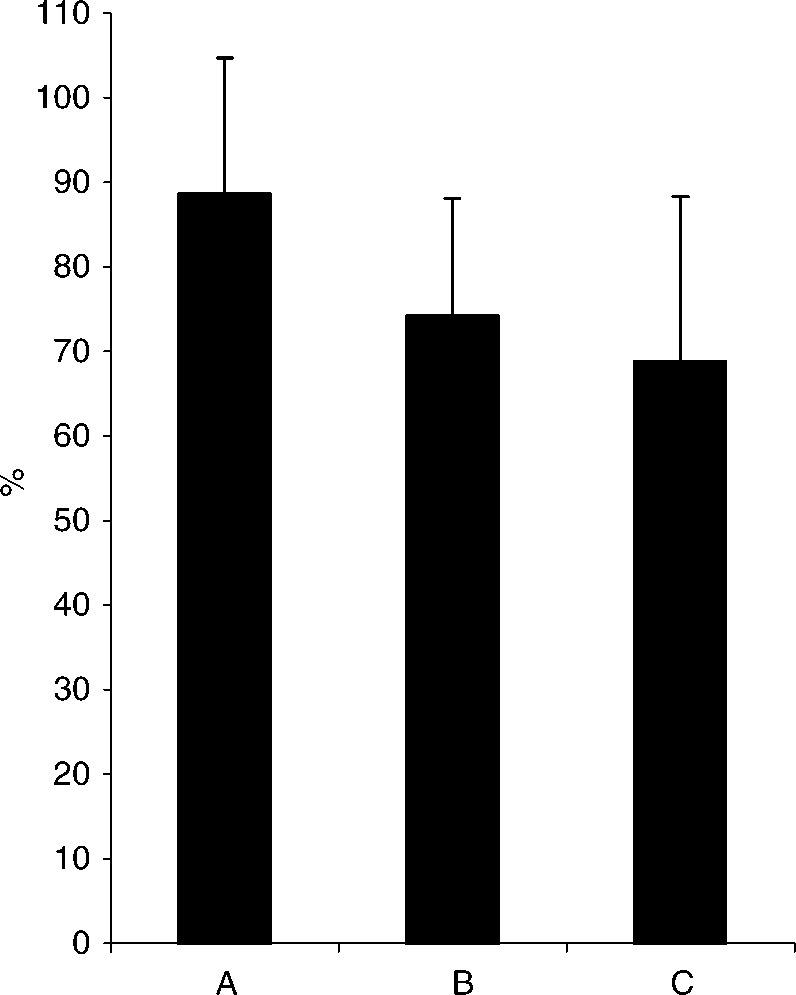
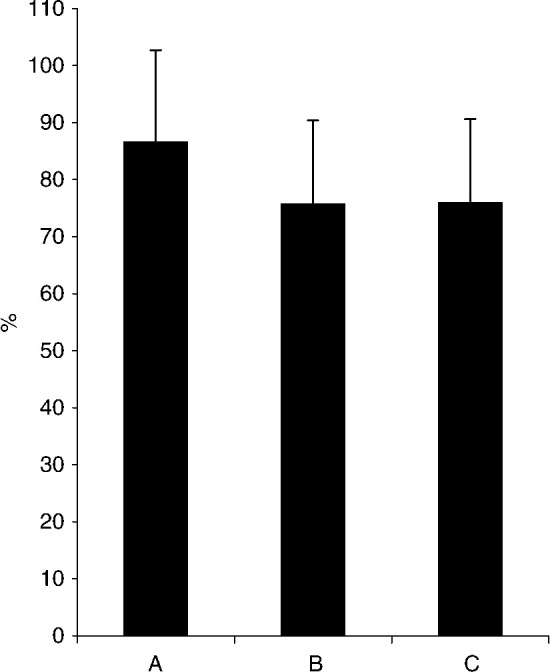
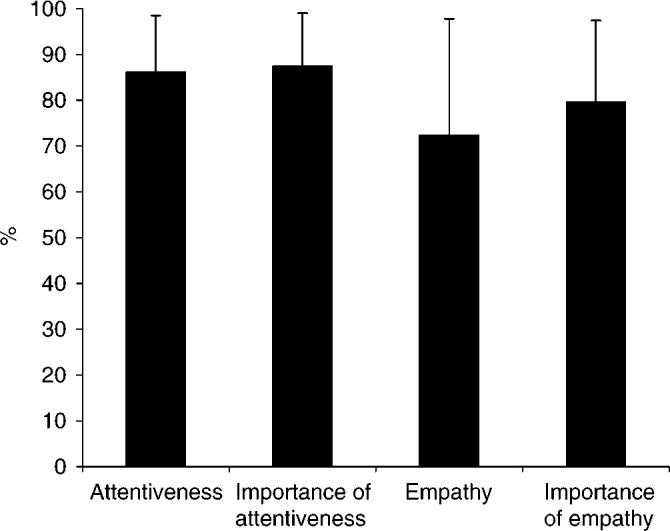
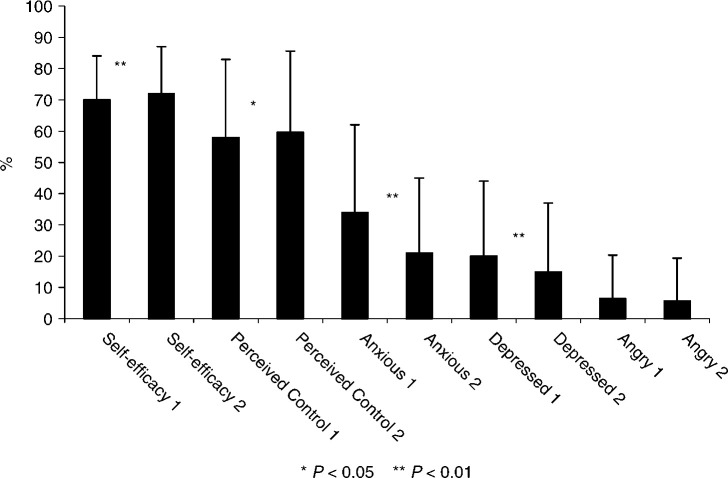
The aim of the study was to investigate the association of physician communication behaviours as perceived by the patient with patient reported satisfaction, distress, cancer-related self-efficacy, and perceived control over the disease in cancer patients. Questionnaires measuring distress, self-efficacy, and perceived control were completed prior to and after the consultation by 454 patients attending an oncology outpatient clinic. After the consultation, the patients also rated the physicians' communicative behaviours by completing a patient-physician relationship inventory (PPRI), and the physicians were asked to estimate patient satisfaction. The overall results showed that higher PPRI scores of physician attentiveness and empathy were associated with greater patient satisfaction, increased self-efficacy, and reduced emotional distress following the consultation. In contrast, lower PPRI scores were associated with reduced ability of the physician to estimate patient satisfaction. The results confirm and expand previous findings, suggesting that communication is a core clinical skill in oncology.
Overview
The claims and statistics of this paper haven’t been checked yet.
Run the check — free, no account needed. It reads the open-access text and checks the sources it cites.
Integrity signals
Registry
Cites
Statistics
Figures
Verification
Claims the paper makes
The claims and statistics of this paper haven’t been checked yet.
Run the check — free, no account needed. It reads the open-access text and checks the sources it cites.
Claims other papers make about this one
Each is checked against this paper’s own text: does it say what the citing paper says it does?
In the citing paper
“Many studies have documented the positive effect of provider empathy on patients, which include increased patient satisfaction, adherence, self-efficacy, perceptions of control, less emotional distress, and better outcomes.87–90”
From Reducing Racial Bias Among Health Care Providers: Lessons from Social-Cognitive Psychology (2007) · cites this paper as [90]
Self-check
Percentages, sums and reported differences re-computed from the paper’s own numbers.
The self-check needs the paper’s full text.
Citations
Cites
Effective physician-patient communication and health outcomes: a review.
(1995) · Europe PMC (PubMed Central) · Cited by 4,085
Doctor-patient communication: a review of the literature
Ong, L. M. L., de Haes, J. C. J. M., Hoos, A. M., & Lammes, F. B. (1995) · Social Science & Medicine · doi:10.1016/0277-9536(94)00155-m · Cited by 2,430 · cited 2×
“The results thus confirmed hypothesis 1 and are in support of previous results showing that higher frequency of patient-centred behaviours is associated with greater patient satisfaction (Stewart, 1984; Roter et al, 1987; Ong et al, 1995).”
BackgroundResultReduction of Postoperative Pain by Encouragement and Instruction of Patients
Egbert, L. D., Battit, G. E., Welch, C. E., & Bartlett, M. K. (1964) · New England Journal of Medicine · doi:10.1056/nejm196404162701606 · Cited by 1,147 · cited 1×
“…Ford et al, 1996), including greater symptom resolution, reduced stress, lower blood pressure in hypertensive patients (Orth et al, 1987), lower blood glucose levels in diabetics (Greenfield et al, 1988), and better postoperative pain control with reduced use of analgesics (Egbert et al, 1964).”
BackgroundPatients’ participation in medical care
Greenfield, S., Kaplan, S. H., Ware, J. E., Yano, E. M., & Frank, H. J. L. (1988) · Journal of General Internal Medicine · doi:10.1007/bf02595921 · Cited by 1,117
Meta-analysis of correlates of provider behavior in medical encounters
Hall, J. A., Roter, D. L., & Katz, N. R. (1988) · Medical Care · doi:10.1097/00005650-198807000-00002 · Cited by 1,069 · cited 1×
“Some studies have used direct observations of a limited number of consultations (Hall et al, 1988) or structured patient interviews (Stewart, 1984; Butow et al, 1994), while others have used questionnaires (Cantwell and Ramirez, 1997; Detmar et al, 2000).”
BackgroundAttributions, beliefs about control, and adjustment to breast cancer.
Taylor, S. E., Lichtman, R. R., & Wood, J. V. (1984) · Journal of Personality and Social Psychology · doi:10.1037//0022-3514.46.3.489 · Cited by 953 · cited 1×
“This finding is in concordance with previous findings that even illusory positive beliefs of women with breast cancer about their disease and their ability to control disease were associated with positive mental health but independent of the objective medical evidence (Taylor et al, 1984).”
ResultPsychiatric morbidity and its recognition by doctors in patients with cancer
Fallowfield, L., Ratcliffe, D., Jenkins, V, & Saul, J. (2001) · British Journal of Cancer · doi:10.1054/bjoc.2001.1724 · Cited by 694 · cited 1×
“Although recognition of psychological distress is a crucial aspect of patient care, oncologists often fail to detect general distress in patients (Ford et al, 1994; Cull et al, 1995; Fallowfield et al, 2001) and ask few questions regarding patients’ psychological health (Ford et al, 1996).”
BackgroundROTER, D. L. (1995) · Archives of Internal Medicine · doi:10.1001/archinte.155.17.1877 · Cited by 651
Effective communication skills are the key to good cancer care
Fallowfield, L. J., & Jenkins, V. A. (1999) · European Journal of Cancer · doi:10.1016/s0959-8049(99)00212-9 · Cited by 558 · cited 3×
“…Research UK Keywords: patient–physician relationship; communication skills; self-efficacy ; anxiety ; depression; anger Patient dissatisfaction can lead to low understanding and recall of information, poor compliance, lengthier recovery periods, and increased complication rates (Fallowfield, 1992).”
BackgroundImproving Physicians' Interviewing Skills and Reducing Patients' Emotional Distress
ROTER, D. L. (1995) · Archives of Internal Medicine · doi:10.1001/archinte.1995.00430170071009 · Cited by 421 · cited 1×
“Our results are in concordance with previous findings that a training course designed to enhance the physicians’ emotion-handling skills was associated with reduced emotional distress in patients (Roter et al, 1995).”
ResultWhat is a successful doctor-patient interview? a study of interactions and outcomes
Stewart, M. (1984) · Social Science & Medicine · doi:10.1016/0277-9536(84)90284-3 · Cited by 403 · cited 4×
“The results thus confirmed hypothesis 1 and are in support of previous results showing that higher frequency of patient-centred behaviours is associated with greater patient satisfaction (Stewart, 1984; Roter et al, 1987; Ong et al, 1995).”
BackgroundResultInfluentialDoctor-patient interactions in oncology
Ford, S., Fallowfield, L. J., & Lewis, S. W. (1996) · Social Science & Medicine · doi:10.1016/0277-9536(95)00265-0 · Cited by 391 · cited 2×
“Although recognition of psychological distress is a crucial aspect of patient care, oncologists often fail to detect general distress in patients (Ford et al, 1994; Cull et al, 1995; Fallowfield et al, 2001) and ask few questions regarding patients’ psychological health (Ford et al, 1996).”
BackgroundROTER, D. L., Hall, J. A., & Katz, N. R. (1987) · Medical Care · doi:10.1097/00005650-198705000-00007 · Cited by 380 · cited 1×
“The results thus confirmed hypothesis 1 and are in support of previous results showing that higher frequency of patient-centred behaviours is associated with greater patient satisfaction (Stewart, 1984; Roter et al, 1987; Ong et al, 1995).”
ResultDetmar, S. B., Aaronson, N. K., Wever, L., Muller, M. J., & Schornagel, J. H. (2000) · Journal of Clinical Oncology · doi:10.1200/jco.2000.18.18.3295 · Cited by 347 · cited 2×
“…that patients want technical expertise rather than good communication, this illogically implying an either/or situation (Fallowfield, 1992), and it has been shown that cancer patients are in fact generally willing to address their emotional and psychosocial functioning (Detmar et al, 2000).”
BackgroundBennett, J., & Bridger, P. (1992) · BMJ · doi:10.1136/bmj.305.6864.1294-a · Cited by 309
Satisfying solutions? A review of some unresolved issues in the measurement of patient satisfaction
Avis, M., Bond, M., & Arthur, A. J. (1995) · Journal of Advanced Nursing · doi:10.1046/j.1365-2648.1995.22020316.x · Cited by 286 · cited 1×
“It should be noted that several factors, including expectations, aspirations, and perceived health status may influence and confound measurements of satisfaction of seriously ill patients (Avis et al, 1995; Fakhoury, 1998).”
BackgroundFord, S., Fallowfield, L., & Lewis, S. (1994) · British Journal of Cancer · doi:10.1038/bjc.1994.393 · Cited by 259 · cited 1×
“Although recognition of psychological distress is a crucial aspect of patient care, oncologists often fail to detect general distress in patients (Ford et al, 1994; Cull et al, 1995; Fallowfield et al, 2001) and ask few questions regarding patients’ psychological health (Ford et al, 1996).”
BackgroundROTER, D. L., Hall, J. A., Kern, D. E., Barker, L. R., Cole, K. A., & Roca, R. P. (1995) · PubMed · Cited by 250
Self‐efficacy for coping with cancer: revision of the Cancer Behavior Inventory (version 2.0)
Merluzzi, T. V., Nairn, R. C., Hegde, K., Sanchez, M. A. M., & Dunn, L. (2001) · Psycho-Oncology · doi:10.1002/pon.511 · Cited by 236 · cited 3×
“Research suggests that cancer patients who report greater efficacy with respect to their capacity to cope with the disease and its treatment are better adjusted and experience greater quality of life than patients who feel less efficacious (Merluzzi et al, 2001).”
BackgroundMethodInfluentialPatient participation in the cancer consultation: Evaluation of a question prompt sheet
Butow, P. N., Dunn, S. M., Tattersall, M. H. N., & Jones, Q. J. (1994) · Annals of Oncology · doi:10.1093/oxfordjournals.annonc.a058793 · Cited by 216 · cited 1×
“Some studies have used direct observations of a limited number of consultations (Hall et al, 1988) or structured patient interviews (Stewart, 1984; Butow et al, 1994), while others have used questionnaires (Cantwell and Ramirez, 1997; Detmar et al, 2000).”
BackgroundOrth, J. E., Stiles, W. B., Scherwitz, L. W., Hennrikus, D. J., & al, E. (1987) · Health Psychology · doi:10.1037//0278-6133.6.1.29 · Cited by 176
Merluzzi, T. V., & Martinez Sanchez, M. A. (1997) · Health Psychology · doi:10.1037/0278-6133.16.2.163 · Cited by 172
Merluzzi, T. V., & Sanchez, M. A. M. (1997) · Health Psychology · doi:10.1037//0278-6133.16.2.163 · Cited by 146
Getting it taped: the 'bad news' consultation with cancer patients.
Hogbin, B., & Fallowfield, L. J. (1989) · PubMed · Cited by 144
Orth, J. E., Stiles, W. B., Scherwitz, L., Hennrikus, D. J., & Vallbona, C. (1987) · Health Psychology · doi:10.1037/0278-6133.6.1.29 · Cited by 141 · cited 1×
“…outcomes (Stewart, 1995; Ford et al, 1996), including greater symptom resolution, reduced stress, lower blood pressure in hypertensive patients (Orth et al, 1987), lower blood glucose levels in diabetics (Greenfield et al, 1988), and better postoperative pain control with reduced use of…”
BackgroundImproving physician-patient communication in cancer care: outcome of a workshop for oncologists.
Baile, W. F., Lenzi, R., Kudelka, A. P., Maguire, P., Novack, D. H., Goldstein, M. G., Myers, E., & Bast, R. C. (1997) · PubMed · doi:10.1080/08858199709528481 · Cited by 138
Gifford, A. L., Laurent, D. D., Gonzales, V. M., Chesney, M. A., & Lorig, K. R. (1998) · Journal of Acquired Immune Deficiency Syndromes and Human Retrovirology · doi:10.1097/00042560-199806010-00005 · Cited by 132 · cited 1×
“…UK C li n ic a l medical interview or general health education programmes, on patient self-efficacy, has been studied in several patient groups (Gifford et al, 1998; Tennstedt, 2000), we are not aware of any studies specifically investigating the association between physician communication…”
BackgroundWhy are sicker patients less satisfied with their medical care? Tests of two explanatory models.
Hall, J. A., Milburn, M. A., ROTER, D. L., & Daltroy, L. H. (1998) · Health Psychology · doi:10.1037//0278-6133.17.1.70 · Cited by 124
Inaccuracies in Physicians' Perceptions of Their Patients
Hall, J. A., Stein, T. S., ROTER, D. L., & Rieser, N. (1999) · Medical Care · doi:10.1097/00005650-199911000-00008 · Cited by 102 · cited 3×
“This is considerably fewer than the median 38% dissatisfied hospital outpatients reported by Ley (1988), and could perhaps be a result of the cutoff used when dichotomising the data.”
BackgroundResultWhy are sicker patients less satisfied with their medical care? Tests of two explanatory models.
Hall, J. A., Milburn, M. A., ROTER, D. L., et al. (1998) · Health Psychology · doi:10.1037/0278-6133.17.1.70 · Cited by 100 · cited 2×
“Patients who are less healthy have been found to be less satisfied than healthier patients (Hall et al, 1998), a finding that is confirmed by our findings that patients in palliative care were less satisfied than the remaining patients.”
BackgroundResultAssessment of and intervention for psychosocial problems in routine oncology practice
Cull, A., Stewart, M., & Altman, D. G. (1995) · British Journal of Cancer · doi:10.1038/bjc.1995.308 · Cited by 99 · cited 1×
“Although recognition of psychological distress is a crucial aspect of patient care, oncologists often fail to detect general distress in patients (Ford et al, 1994; Cull et al, 1995; Fallowfield et al, 2001) and ask few questions regarding patients’ psychological health (Ford et al, 1996).”
BackgroundDoctor‐patient communication: a study of junior house officers
Cantwell, B., & Ramirez, A. J. (1997) · Medical Education · doi:10.1111/j.1365-2923.1997.tb00037.x · Cited by 96 · cited 1×
“Some studies have used direct observations of a limited number of consultations (Hall et al, 1988) or structured patient interviews (Stewart, 1984; Butow et al, 1994), while others have used questionnaires (Cantwell and Ramirez, 1997; Detmar et al, 2000).”
BackgroundRamanaiah, N. V., Schill, T. R., & Leung, L. S. (1977) · Journal of Research in Personality · doi:10.1016/0092-6566(77)90022-8 · Cited by 82
EMPOWERING OLDER PATIENTS TO COMMUNICATE MORE EFFECTIVELY IN THE MEDICAL ENCOUNTER
Tennstedt, S. L. (2000) · Clinics in Geriatric Medicine · doi:10.1016/s0749-0690(05)70008-2 · Cited by 68 · cited 2×
“…Barthsgade 5,3, 8200 Århus N, Denmark ; E-mail: bzach@akh.aaa.dk British Journal of Cancer (2003) 88, 658 – 665 & 2003 Cancer Research UK All rights reserved 0007 – 0920/03 $25.00 www.bjcancer.com C lin ic a l increased adherence to treatment, and positive treatment outcomes (Tennstedt, 2000).”
BackgroundInfluentialFallowfield, L. J. (1992) · PubMed · Cited by 50
Presentation of information to cancer patients: A comparison of two centres in the UK and USA
Newall, D. J., Gadd, E. M., & Priestman, T. J. (1987) · British Journal of Medical Psychology · doi:10.1111/j.2044-8341.1987.tb02722.x · Cited by 46 · cited 1×
“As a consequence, cancer patients often feel they lack information, which can lead to uncertainty, anxiety and depression (Newall et al, 1987).”
BackgroundSatisfaction with palliative care: what should we be aware of ?
Fakhoury, W. K. H. (1998) · International Journal of Nursing Studies · doi:10.1016/s0020-7489(98)00026-1 · Cited by 36 · cited 1×
“It should be noted that several factors, including expectations, aspirations, and perceived health status may influence and confound measurements of satisfaction of seriously ill patients (Avis et al, 1995; Fakhoury, 1998).”
BackgroundPhysician virtues and communicating with patients.
Gilligan, T. D., & Raffin, T. A. (1997) · PubMed · Cited by 34
Unrecognized responses and feelings of residents and fellows during interviews of patients
Smith, R. C. (1986) · Academic Medicine · doi:10.1097/00001888-198612000-00007 · Cited by 23
The prevalence of psychological distress by cancer site
Zabora, J., BrintzenhofeSzoc, K., Curbow, B., Hooker, C., & Piantadosi, S. (2001) · Psycho-Oncology · doi:10.1002/1099-1611(200101/02)10:1
Research works printed but not linked: 2
- Bandura A (1997) Self-efficacy – The Exercize of Control. New York: Freeman and Company
- Pedersen CG, Christensen S, Zachariae R, Bonde-Jensen A, Lehbrink M, Maase H (2001) Psychosocial and demographic predictors of pain, discomfort and satisfaction with the patient–physician relationship in a group of women attending a mammography clinic. Psycho-Oncology 10: S23
Cited by
Sorted by citations
How does communication heal? Pathways linking clinician–patient communication to health outcomes
Street, R. L., Makoul, G. T., Arora, N. K., & Epstein, R. M. (2009) · Patient Education and Counseling · doi:10.1016/j.pec.2008.11.015 · Cited by 2,702
“Clinicians can facilitate the patient’s ability to manage emotions by presenting diagnostic and treatment information clearly and honestly [72], by showing interest in the patient’s life [73], by attentive listening, and by validating patient’s expressions of feelings [65,74].”
BackgroundPhysiciansʼ Empathy and Clinical Outcomes for Diabetic Patients
Hojat, M., Louis, D. Z., Markham, F. W., Wender, R. C., Rabinowitz, C., & Gonnella, J. S. (2011) · Academic Medicine · doi:10.1097/acm.0b013e3182086fe1 · Cited by 1,251
Teaching Empathy to Medical Students
Batt-Rawden, S., Chisolm, M. S., Anton, B., & Flickinger, T. (2013) · Academic Medicine · doi:10.1097/acm.0b013e318299f3e3 · Cited by 614
Patient-clinician communication: American Society of Clinical Oncology consensus guideline
Gilligan, T., Coyle, N., Frankel, R. M., Berry, D. L., Bohlke, K., Epstein, R. M., Finlay, E., Jackson, V. A., Lathan, C. S., Loprinzi, C. L., et al. (2017) · Journal of Clinical Oncology · doi:10.1200/jco.2017.75.2311 · Cited by 610
Stepien, K. A., & Baernstein, A. (2006) · Journal of General Internal Medicine · doi:10.1111/j.1525-1497.2006.00443.x · Cited by 576
Metadata
- Authors
- Zachariae, R., Pedersen, C. G., Jensen, A. B., Ehrnrooth, E., Rossen, P. B., & von der Maase, H.
- Affiliations
- Aarhus University Hospital (DK)
- Corresponding author
- Zachariae, R
- Venue
- British Journal of Cancer
- Published
- 2003-03
- Volume
- 88
- Issue
- 5
- Pages
- 658-665
- ISSN
- 0007-0920 (ISSN-L)
- 1532-1827
- PMC
- PMC2376357
- OpenAlex
- W2058562152
- Cited by
- 601
- References
- 40
- Citations by year
- 2026: 13 · 2025: 17 · 2024: 25 · 2023: 32 · 2022: 47 · 2021: 37 · 2020: 34 · 2019: 27 · 2018: 27 · 2017: 40 · 2016: 30 · 2015: 40 · 2014: 30 · 2013: 41 · 2012: 43
- FWCI
- 17.82
- Type
- journal article
- Language
- en
- Open access
- hybrid
- doi.org
- Licence
- cc-by-nc-sa
- www.springer.com/tdm (unspecified)
- Locations
- British Journal of Cancer (publishedVersion, cc-by-nc-sa)
- Europe PMC (PubMed Central) (publishedVersion, cc-by)
- PubMed Central (publishedVersion, cc-by)
- PubMed (publishedVersion)
- Research at the University of Copenhagen (University of Copenhagen) (submittedVersion)
- Funders
- Aarhus Universitet
- Aarhus Universitetshospital
- Kræftens Bekæmpelse
- Topics
- Health Sciences › Health Professions › General Health Professions › Patient-Provider Communication in Healthcare
- Health Sciences › Medicine › Psychiatry and Mental health › Empathy and Medical Education
- Health Sciences › Medicine › Oncology › Cancer survivorship and care
- Keywords
- patient satisfaction, emotional distress, perceived control, physician empathy, physician-patient relationship
- MeSH terms
- Humans, Neoplasms, Physician-Patient Relations, Surveys and Questionnaires, Stress, Psychological, Patient Satisfaction, Self Efficacy
About these checks
Registry, retraction, Cites and statistics results are computed, not judged, with one exception: a printed reference that no index lists is read once by a model before it counts as a citation error. Claims are extracted by a model and kept only when their quote appears verbatim in the text; each cited source is then checked, with a model’s help, for whether it says what the claim relies on. Those verdicts can be wrong — read the claim’s quote and the cited source before relying on one.
Statistics and arithmetic are recomputed, not judged.
Confidence bands are shown only for fields calibrated on our annotated test set. None is calibrated yet, so no band is shown.
What counts as a claim ›How we measure confidence ›How we check this ›
Are you an author, or do you see a problem with this page? Request a review
