

The DOI matches its Crossref record; 40 of the 40 references it cites were found in a registry or an index.
Association of perceived physician communication style with patient satisfaction, distress, cancer-related self-efficacy, and perceived control over the disease
Open accessAbstract
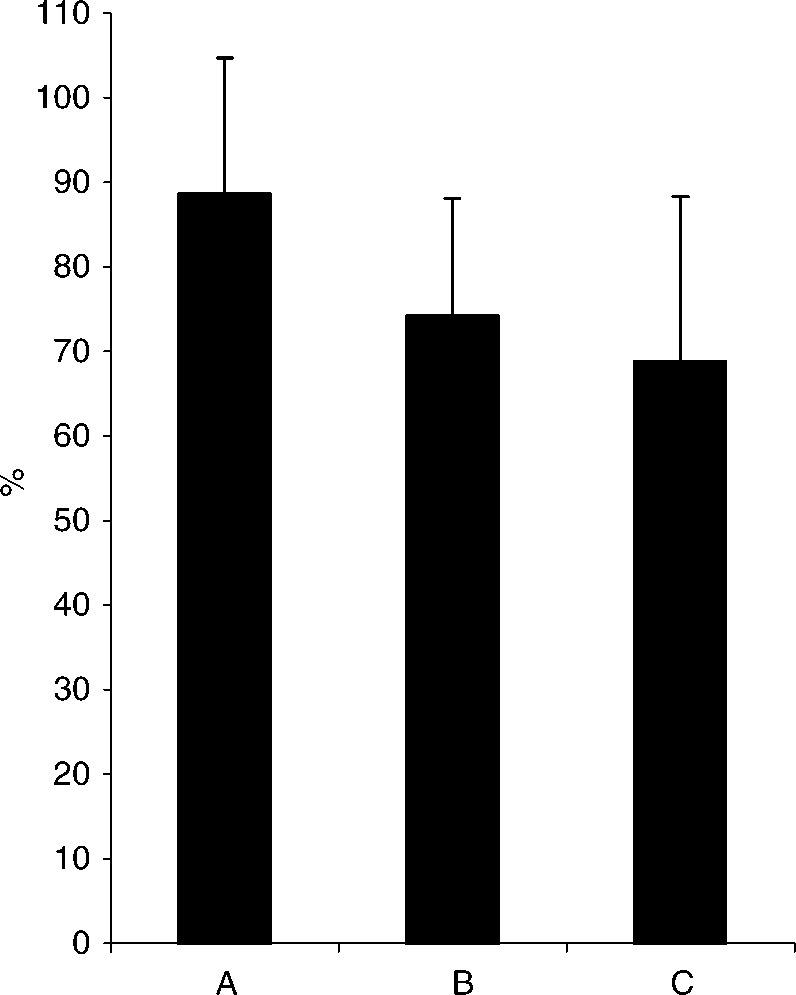
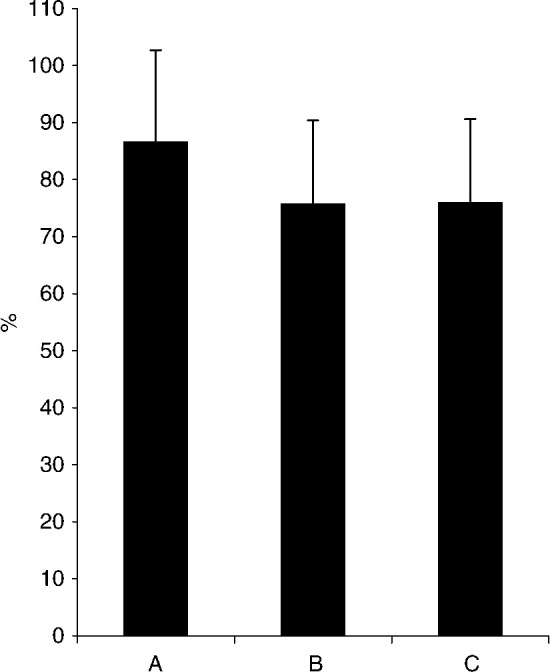
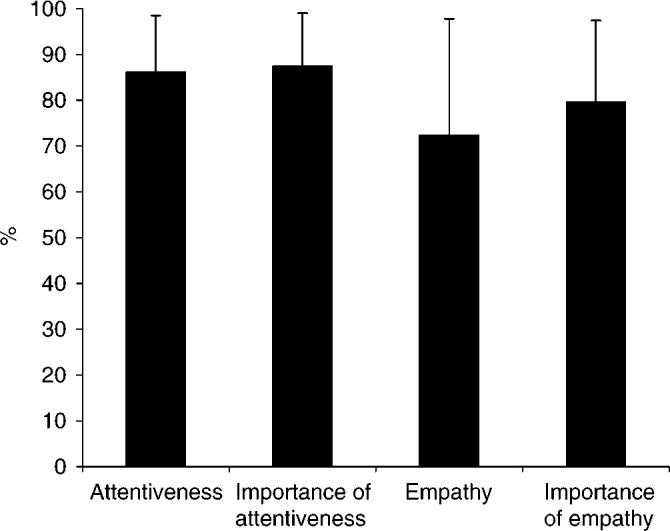
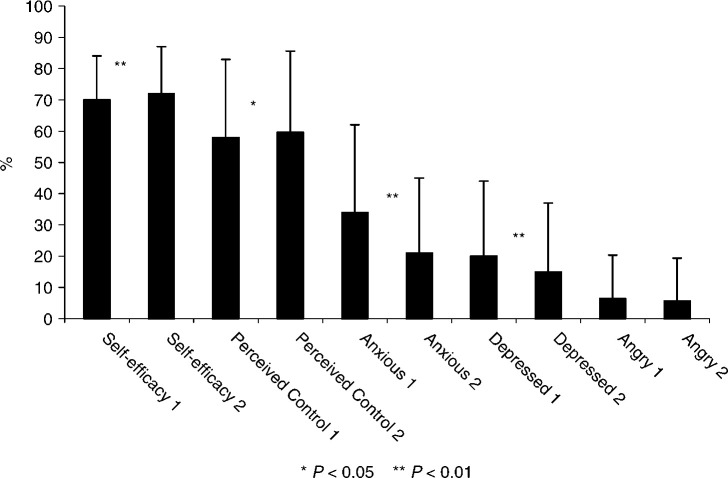
The aim of the study was to investigate the association of physician communication behaviours as perceived by the patient with patient reported satisfaction, distress, cancer-related self-efficacy, and perceived control over the disease in cancer patients. Questionnaires measuring distress, self-efficacy, and perceived control were completed prior to and after the consultation by 454 patients attending an oncology outpatient clinic. After the consultation, the patients also rated the physicians' communicative behaviours by completing a patient-physician relationship inventory (PPRI), and the physicians were asked to estimate patient satisfaction. The overall results showed that higher PPRI scores of physician attentiveness and empathy were associated with greater patient satisfaction, increased self-efficacy, and reduced emotional distress following the consultation. In contrast, lower PPRI scores were associated with reduced ability of the physician to estimate patient satisfaction. The results confirm and expand previous findings, suggesting that communication is a core clinical skill in oncology.
Overview
The claims and statistics of this paper haven’t been checked yet.
Run the check — free, no account needed. It reads the open-access text and checks the sources it cites.
Integrity signals
Registry
Cites
Statistics
Figures
Verification
Claims the paper makes
The claims and statistics of this paper haven’t been checked yet.
Run the check — free, no account needed. It reads the open-access text and checks the sources it cites.
Claims other papers make about this one
Each is checked against this paper’s own text: does it say what the citing paper says it does?
In the citing paper
“Many studies have documented the positive effect of provider empathy on patients, which include increased patient satisfaction, adherence, self-efficacy, perceptions of control, less emotional distress, and better outcomes.87–90”
From Reducing Racial Bias Among Health Care Providers: Lessons from Social-Cognitive Psychology (2007) · cites this paper as [90]
Self-check
Percentages, sums and reported differences re-computed from the paper’s own numbers.
The self-check needs the paper’s full text.
Citations
Cites
Effective physician-patient communication and health outcomes: a review.
(1995) · Europe PMC (PubMed Central) · Cited by 4,085
Doctor-patient communication: a review of the literature
Ong, L. M. L., de Haes, J. C. J. M., Hoos, A. M., & Lammes, F. B. (1995) · Social Science & Medicine · doi:10.1016/0277-9536(94)00155-m · Cited by 2,430 · cited 2×
“The results thus confirmed hypothesis 1 and are in support of previous results showing that higher frequency of patient-centred behaviours is associated with greater patient satisfaction (Stewart, 1984; Roter et al, 1987; Ong et al, 1995).”
BackgroundResultReduction of Postoperative Pain by Encouragement and Instruction of Patients
Egbert, L. D., Battit, G. E., Welch, C. E., & Bartlett, M. K. (1964) · New England Journal of Medicine · doi:10.1056/nejm196404162701606 · Cited by 1,147 · cited 1×
“…Ford et al, 1996), including greater symptom resolution, reduced stress, lower blood pressure in hypertensive patients (Orth et al, 1987), lower blood glucose levels in diabetics (Greenfield et al, 1988), and better postoperative pain control with reduced use of analgesics (Egbert et al, 1964).”
BackgroundPatients’ participation in medical care
Greenfield, S., Kaplan, S. H., Ware, J. E., Yano, E. M., & Frank, H. J. L. (1988) · Journal of General Internal Medicine · doi:10.1007/bf02595921 · Cited by 1,117
Meta-analysis of correlates of provider behavior in medical encounters
Hall, J. A., Roter, D. L., & Katz, N. R. (1988) · Medical Care · doi:10.1097/00005650-198807000-00002 · Cited by 1,069 · cited 1×
“Some studies have used direct observations of a limited number of consultations (Hall et al, 1988) or structured patient interviews (Stewart, 1984; Butow et al, 1994), while others have used questionnaires (Cantwell and Ramirez, 1997; Detmar et al, 2000).”
BackgroundAttributions, beliefs about control, and adjustment to breast cancer.
Taylor, S. E., Lichtman, R. R., & Wood, J. V. (1984) · Journal of Personality and Social Psychology · doi:10.1037//0022-3514.46.3.489 · Cited by 953 · cited 1×
“This finding is in concordance with previous findings that even illusory positive beliefs of women with breast cancer about their disease and their ability to control disease were associated with positive mental health but independent of the objective medical evidence (Taylor et al, 1984).”
ResultPsychiatric morbidity and its recognition by doctors in patients with cancer
Fallowfield, L., Ratcliffe, D., Jenkins, V, & Saul, J. (2001) · British Journal of Cancer · doi:10.1054/bjoc.2001.1724 · Cited by 694 · cited 1×
“Although recognition of psychological distress is a crucial aspect of patient care, oncologists often fail to detect general distress in patients (Ford et al, 1994; Cull et al, 1995; Fallowfield et al, 2001) and ask few questions regarding patients’ psychological health (Ford et al, 1996).”
BackgroundROTER, D. L. (1995) · Archives of Internal Medicine · doi:10.1001/archinte.155.17.1877 · Cited by 651
Effective communication skills are the key to good cancer care
Fallowfield, L. J., & Jenkins, V. A. (1999) · European Journal of Cancer · doi:10.1016/s0959-8049(99)00212-9 · Cited by 558 · cited 3×
“…Research UK Keywords: patient–physician relationship; communication skills; self-efficacy ; anxiety ; depression; anger Patient dissatisfaction can lead to low understanding and recall of information, poor compliance, lengthier recovery periods, and increased complication rates (Fallowfield, 1992).”
BackgroundImproving Physicians' Interviewing Skills and Reducing Patients' Emotional Distress
ROTER, D. L. (1995) · Archives of Internal Medicine · doi:10.1001/archinte.1995.00430170071009 · Cited by 421 · cited 1×
“Our results are in concordance with previous findings that a training course designed to enhance the physicians’ emotion-handling skills was associated with reduced emotional distress in patients (Roter et al, 1995).”
Result
Research works printed but not linked: 2
- Bandura A (1997) Self-efficacy – The Exercize of Control. New York: Freeman and Company
- Pedersen CG, Christensen S, Zachariae R, Bonde-Jensen A, Lehbrink M, Maase H (2001) Psychosocial and demographic predictors of pain, discomfort and satisfaction with the patient–physician relationship in a group of women attending a mammography clinic. Psycho-Oncology 10: S23
Cited by
Sorted by citations
How does communication heal? Pathways linking clinician–patient communication to health outcomes
Street, R. L., Makoul, G. T., Arora, N. K., & Epstein, R. M. (2009) · Patient Education and Counseling · doi:10.1016/j.pec.2008.11.015 · Cited by 2,702
“Clinicians can facilitate the patient’s ability to manage emotions by presenting diagnostic and treatment information clearly and honestly [72], by showing interest in the patient’s life [73], by attentive listening, and by validating patient’s expressions of feelings [65,74].”
BackgroundPhysiciansʼ Empathy and Clinical Outcomes for Diabetic Patients
Hojat, M., Louis, D. Z., Markham, F. W., Wender, R. C., Rabinowitz, C., & Gonnella, J. S. (2011) · Academic Medicine · doi:10.1097/acm.0b013e3182086fe1 · Cited by 1,251
Teaching Empathy to Medical Students
Batt-Rawden, S., Chisolm, M. S., Anton, B., & Flickinger, T. (2013) · Academic Medicine · doi:10.1097/acm.0b013e318299f3e3 · Cited by 614
Patient-clinician communication: American Society of Clinical Oncology consensus guideline
Gilligan, T., Coyle, N., Frankel, R. M., Berry, D. L., Bohlke, K., Epstein, R. M., Finlay, E., Jackson, V. A., Lathan, C. S., Loprinzi, C. L., et al. (2017) · Journal of Clinical Oncology · doi:10.1200/jco.2017.75.2311 · Cited by 610
Stepien, K. A., & Baernstein, A. (2006) · Journal of General Internal Medicine · doi:10.1111/j.1525-1497.2006.00443.x · Cited by 576
Canale, S. D., Louis, D. Z., Maio, V., Wang, X., Rossi, G., Hojat, M., & Gonnella, J. S. (2012) · Academic Medicine · doi:10.1097/acm.0b013e3182628fbf · Cited by 512
Reducing Racial Bias Among Health Care Providers: Lessons from Social-Cognitive Psychology
Burgess, D., van Ryn, M., Dovidio, J., & Saha, S. (2007) · Journal of General Internal Medicine · doi:10.1007/s11606-007-0160-1 · Cited by 495
Neumann, M., Bensing, J. M., Mercer, S. W., Ernstmann, N., Ommen, O., & Pfaff, H. (2009) · Patient Education and Counseling · doi:10.1016/j.pec.2008.11.013 · Cited by 411
The communication goals and needs of cancer patients: a review
Hack, T. F., Degner, L. F., & Parker, P. A. (2005) · Psycho-Oncology · doi:10.1002/pon.949 · Cited by 398
“Patient satisfaction with personal contact with the physician and with the physician’s handling of medical care issues are significantly associated with the perception that the physician is attentive and empathic (Zachariae et al., 2003).”
BackgroundInterventions to cultivate physician empathy: a systematic review
Kelm, Z., Womer, J. W., Walter, J. K., & Feudtner, C. (2014) · BMC Medical Education · doi:10.1186/1472-6920-14-219 · Cited by 401
“The lack of empathy among physicians and the decline in empathy throughout medical training offer reasons for concern, especially given the relationship between physician empathy and patient health and well-being [6-20].”
BackgroundCurricula for empathy and compassion training in medical education: A systematic review
Patel, S. N., Pelletier‐Bui, A., Smith, S., Roberts, M., Kilgannon, H., Trzeciak, S., & Roberts, B. W. (2019) · PLoS ONE · doi:10.1371/journal.pone.0221412 · Cited by 414
A systematic review of the associations between empathy measures and patient outcomes in cancer care
Lelorain, S., Brédart, A., Dolbeault, S., & Sultan, S. (2012) · Psycho-Oncology · doi:10.1002/pon.2115 · Cited by 313
“In most samples, patients were assessed at the beginning of treatment or during treatment, but six studies included patients with advanced cancer or in palliative treatment [39,45,46,48,54,55].”
BackgroundResultInfluentialEmpirical research on empathy in medicine—A critical review
Pedersen, R. (2009) · Patient Education and Counseling · doi:10.1016/j.pec.2009.06.012 · Cited by 293
“However, 51 of the predominantly quantitative studies selected did not describe how empathy was evaluated or indicated that empathy was measured in an implicit or imprecise way [14–64].”
BackgroundEfficacy of communication skills training courses in oncology: a systematic review and meta-analysis
Barth, J., & Lannen, P. (2010) · Annals of Oncology · doi:10.1093/annonc/mdq441 · Cited by 295
The effects of trust in physician on self-efficacy, adherence and diabetes outcomes
Lee, Y.-Y., & Lin, J. L. (2009) · Social Science & Medicine · doi:10.1016/j.socscimed.2008.12.033 · Cited by 302
Zimmermann, C., Piccolo, L. D., Bensing, J. M., Bergvik, S., de Haes, J. C. J. M., Eide, H., Fletcher, I. J., Goss, C., Heaven, C. M., Humphris, G. M., et al. (2010) · Patient Education and Counseling · doi:10.1016/j.pec.2010.03.017 · Cited by 271
“To verbalize clearly one’s own feelings in the presence of an attentive and interested listener predicts competent coping [7,33] and feeling understood and supported increases patients’ satisfaction and collaboration [33,34].”
BackgroundNeumann, M., Wirtz, M. A., Bollschweiler, E., Mercer, S. W., Warm, M. R., Wolf, J., & Pfaff, H. (2007) · Patient Education and Counseling · doi:10.1016/j.pec.2007.07.003 · Cited by 255
Is there a cost to poor communication in cancer care?: a critical review of the literature
Thorne, S. E., Bultz, B. D., & Baile, W. F. (2005) · Psycho-Oncology · doi:10.1002/pon.947 · Cited by 250
“Among the most commonly documented associations in this field is a relationship between poor communication and reduced patient satisfaction (Ong et al., 2000; Zachariae et al., 2003).”
BackgroundFields, S. K., Mahan, P., Tillman, P., Harris, J., Maxwell, K., & Hojat, M. (2011) · Journal of Interprofessional Care · doi:10.3109/13561820.2011.566648 · Cited by 246
“, 1993); more accurate prognosis (Dubnicki, 1977), and increased patient satisfaction (Zachariae et al., 2003).”
BackgroundTen Approaches for Enhancing Empathy in Health and Human Services Cultures
Hojat, M. (2009) · Journal of Health and Human Services Administration · doi:10.1177/107937390903100403 · Cited by 242
“…the clinical environment leads to greater patient satisfaction (Beckman, & Frankel, 1984; Bertakis, Roter, & Putman, 1991; Francis & Morris, 1969; Zachariae, Pedersen, Jensen, Ehrnrooth, Rossen, et al., 2003), better compliance (DiMatteo, Sherbourne, Hays, Ordway, Kravitz, et al., 1993;…”
Street, R. L., & Haidet, P. (2010) · Journal of General Internal Medicine · doi:10.1007/s11606-010-1453-3 · Cited by 237
A preliminary study of empathy, emotional intelligence and examination performance in MBChB students
Austin, E. J., Evans, P., Magnus, B., & O'Hanlon, K. (2007) · Medical Education · doi:10.1111/j.1365-2923.2007.02795.x · Cited by 240
Hou, J., & Shim, M. (2010) · Journal of Health Communication · doi:10.1080/10810730.2010.522691 · Cited by 228
“Patients’ higher evaluation of doctor’s attentiveness and empathy was also associated with greater patient satisfaction (Zachariae et al., 2003).”
BackgroundChirico, A., Lucidi, F., Merluzzi, T. V., Alivernini, F., Laurentiis, M. D., Botti, G., & Giordano, A. (2017) · Oncotarget · doi:10.18632/oncotarget.15758 · Cited by 221
“Three studies did not find any correlation/predictor effect of coping efficacy with cancer [15, 18, 42], one found an improvement of the variable after a medical consult (mammogram) [41], one did not show/provided any information [23].”
Background“Could this Be Something Serious?”
Epstein, R. M., Hadee, T., Carroll, J. K., Meldrum, S. C., Lardner, J., & Shields, C. G. (2007) · Journal of General Internal Medicine · doi:10.1007/s11606-007-0416-9 · Cited by 217
Recipients’ perspective on breaking bad news: How you put it really makes a difference
Mast, M. S., Kindlimann, A., & Langewitz, W. A. (2005) · Patient Education and Counseling · doi:10.1016/j.pec.2005.05.005 · Cited by 209
“A patient-centered communication of breaking bad news yielded the highest satisfaction scores, confirming existing findings in the literature [8,22].”
ResultBreaking bad news–what patients want and what they get: evaluating the SPIKES protocol in Germany
Seifart, C., Hofmann, M., Bär, T., Riera Knorrenschild, J., Seifart, U., & Rief, W. (2014) · Annals of Oncology · doi:10.1093/annonc/mdt582 · Cited by 177
Reliability and Validity of the Jefferson Scale of Empathy in Undergraduate Nursing Students
Ward, J., Schaal, M., Sullivan, J., Bowen, M. E., Erdmann, J. B., & Hojat, M. (2009) · Journal of Nursing Measurement · doi:10.1891/1061-3749.17.1.73 · Cited by 186
“It has been reported that empathy in the clinical environment leads to greater patient satisfaction (Bertakis, Roter, & Putman, 1991; Zachariae et al., 2003), better compliance (DiMatteo et al.”
BackgroundDoes Age Really Matter? Recall of Information Presented to Newly Referred Patients With Cancer
Jansen, J., Butow, P. N., van Weert, J. C. M., van Dulmen, S., Devine, R. J., Heeren, T. J., Bensing, J. M., & Tattersall, M. H. N. (2008) · Journal of Clinical Oncology · doi:10.1200/jco.2007.15.2322 · Cited by 171
Undergraduate medical students' empathy: current perspectives
Quince, T. A., Thiemann, P., BENSON, J. A., & Hyde, S. (2016) · Advances in Medical Education and Practice · doi:10.2147/amep.s76800 · Cited by 168
Quince, T. A., Parker, R. A., Wood, D., & BENSON, J. A. (2011) · BMC Medical Education · doi:10.1186/1472-6920-11-90 · Cited by 162
“Patients have been found to report higher levels of satisfaction, comfort and self-efficacy when doctors are more empathetic [4-6].”
BackgroundZwingmann, J., Baile, W. F., Schmier, J. W., Bernhard, J., & Keller, M. (2017) · Cancer · doi:10.1002/cncr.30694 · Cited by 161
Quince, T. A., Kinnersley, P., Hales, J. M., Silva, A. S. D., Moriarty, H., Thiemann, P., Hyde, S., Brimicombe, J. D., Wood, D., Barclay, M., et al. (2016) · BMC Medical Education · doi:10.1186/s12909-016-0603-7 · Cited by 161
Stamer, T., Steinhäuser, J., & Flägel, K. (2023) · Journal of Medical Internet Research · doi:10.2196/43311 · Cited by 160
“In addition, the patient’s adherence to treatment [9] and adoptive preventive health behaviors [10] have been found to benefit substantially if they perceive their communication with the health care provider as pleasant.”
Carr, C. T., Wohn, D. Y., & Hayes, R. A. (2016) · Computers in Human Behavior · doi:10.1016/j.chb.2016.03.087 · Cited by 173
Empathy in patient care: from ‘Clinical Empathy’ to ‘Empathic Concern’
Guidi, C., & Traversa, C. (2021) · Medicine Health Care and Philosophy · doi:10.1007/s11019-021-10033-4 · Cited by 161
Hojat, M., Erdmann, J. B., & Gonnella, J. S. (2013) · Medical Teacher · doi:10.3109/0142159x.2013.785654 · Cited by 158
“…positive language, appropriate touching, eye contact and bodily posture, can lead to patient satisfaction (Hall et al. 1988; DiMatteo et al. 1993; Zachariae et al. 2003; Kim et al. 2004), greater compliance (DiMatteo et al. 1986; Falvo & Tippy 1988; Squier 1990), patients’ feelings of being…”
BackgroundSong, Y., & Shi, M. (2017) · PLoS ONE · doi:10.1371/journal.pone.0171665 · Cited by 146
Healthcare providers versus patients' understanding of health beliefs and values
Kennedy, B. M., Rehman, M., Johnson, W. D., Magee, M. B., Leonard, R., & Katzmarzyk, P. T. (2017) · Patient Experience Journal · doi:10.35680/2372-0247.1237 · Cited by 144
Wolf, M. S., Chang, C., Davis, T. C., & Makoul, G. T. (2004) · Patient Education and Counseling · doi:10.1016/j.pec.2004.09.005 · Cited by 136
Shame, guilt, and the medical learner: ignored connections and why we should care
Bynum, W. E., & Goodie, J. L. (2014) · Medical Education · doi:10.1111/medu.12521 · Cited by 142
Ekberg, K., Barr, C., & Hickson, L. M. H. (2014) · American Journal of Audiology · doi:10.1044/2014_aja-14-0011 · Cited by 136
The effect of surgeon empathy and emotional intelligence on patient satisfaction
Weng, H., Steed, J. F., Yu, S.-W., Liu, Y.-T., Hsu, C.-C., Yu, T.-J., & Chen, W. (2011) · Advances in Health Sciences Education · doi:10.1007/s10459-011-9278-3 · Cited by 133
Flickinger, T., Saha, S., ROTER, D. L., Korthuis, P. T., Sharp, V., Cohn, J. A., Eggly, S. S., Moore, R. D., & Beach, M. C. (2015) · Patient Education and Counseling · doi:10.1016/j.pec.2015.09.001 · Cited by 126
Measuring Empathy in Pharmacy Students
Fjortoft, N. F., Winkle, L. J. V., & Hojat, M. (2011) · American Journal of Pharmaceutical Education · doi:10.5688/ajpe756109 · Cited by 127
Zheng, L., Miao, M., & Gan, Y. (2020) · Applied Psychology Health and Well-Being · doi:10.1111/aphw.12232 · Cited by 132
“Prior research has found that perceived control improves as uncertainty decreases (Zachariae et al., 2003).”
BackgroundAhrweiler, F., Neumann, M., Goldblatt, H., Hahn, E. G., & Scheffer, C. (2014) · BMC Medical Education · doi:10.1186/1472-6920-14-122 · Cited by 121
“: improved metabolic status in diabetic patients [9]; shorter duration and less severe course of the common cold [10]; improved physical and psychological health [11-14]; better compliance and satisfaction of patients [14,15]; enhanced patient enablement and coping [12,13,16,17]; better information exchange between ph…”
BackgroundKim, B., & White, K. (2017) · International Journal of Adolescence and Youth · doi:10.1080/02673843.2017.1330696 · Cited by 120
“…effective illness management and health education (Alfano, Zbikowski, Robinson, Klesges, & Scarinci, 2002; Bonito, Horowitz, McCorkle, & Chagpar, 2013; Bultman & Svarstad, 2000; Kelly, Kratz, Bielski, & Rinehart, 2002; Pollak et al., 2010; Thorne, Bultz, & Baile, 2005; Zachariae et al., 2003).”
BackgroundImpact of a Workshop About Aging on the Empathy Scores of Pharmacy and Medical Students
Winkle, L. J. V., Fjortoft, N. F., & Hojat, M. (2012) · American Journal of Pharmaceutical Education · doi:10.5688/ajpe7619 · Cited by 117
Using artificial intelligence to analyse and teach communication in healthcare
Butow, P., & Hoque, E. (2020) · The Breast · doi:10.1016/j.breast.2020.01.008 · Cited by 118
Patient-physician communication
Suarez-Almazor, M. E. (2004) · Current Opinion in Rheumatology · doi:10.1097/00002281-200403000-00003 · Cited by 114
Quaschning, K., Körner, M., & Wirtz, M. A. (2013) · Patient Education and Counseling · doi:10.1016/j.pec.2012.12.007 · Cited by 112
van Vliet, L. M., van der Wall, E., Plum, N., & Bensing, J. M. (2013) · Journal of Clinical Oncology · doi:10.1200/jco.2012.45.5865 · Cited by 112
Overview of research on health-related quality of life in patients with chronic liver disease.
Gutteling, J. J., de Man, R. A., Busschbach, J. J. V., & Darlington, A.-S. E. (2007) · PubMed · Cited by 108
Zazulak, J., Sanaee, M., Frolic, A. N., Knibb, N., Tesluk, E., Hughes, E., & Grierson, L. (2017) · Medical Humanities · doi:10.1136/medhum-2016-011180 · Cited by 116
Cancer patient and caregiver experiences: communication and pain management issues
Kimberlin, C. L., Brushwood, D. B., Allen, W. L., Radson, E. A., & Wilson, D. L. (2004) · Journal of Pain and Symptom Management · doi:10.1016/j.jpainsymman.2004.03.005 · Cited by 110
A Review of Empathy, Its Importance, and Its Teaching in Surgical Training
Han, J. L., & Pappas, T. N. (2017) · Journal of surgical education · doi:10.1016/j.jsurg.2017.06.035 · Cited by 109
“In the oncology outpatient clinic, patients who rated their physicians with higher scores for attentiveness and empathy were also more likely to report greater satisfaction, increased self-efficacy, and decreased emotional stress after the consultation.(4) Physician empathy was shown to be significantly associated wit…”
BackgroundMethodGoelz, T., Wünsch, A., Stubenrauch, S., Ihorst, G., de Figueiredo, M., Bertz, H., Wirsching, M., & Fritzsche, K. (2011) · Journal of Clinical Oncology · doi:10.1200/jco.2010.31.6372 · Cited by 108
Strasser, F., Palmer, J. L., Willey, J., Shen, L., Shin, K., Sivesind, D., Beale, E., & Bruera, E. (2005) · Journal of Pain and Symptom Management · doi:10.1016/j.jpainsymman.2004.08.011 · Cited by 98
Williams, B. A., Brown, T., McKenna, L., Boyle, M. J., Palermo, C. E., Nestel, D., Brightwell, R. F., McCall, L., & Russo, V. (2014) · Advances in Medical Education and Practice · doi:10.2147/amep.s57569 · Cited by 110
Diagnostik und Therapie des hepatozellulären Karzinoms
Greten, T. F., Malek, N. P., Schmidt, S., Arends, J., Bartenstein, P., Bechstein, W. O., Bernatik, T., Bitzer, M., Chavan, A., Dollinger, M. M., et al. (2013) · Zeitschrift für Gastroenterologie · doi:10.1055/s-0033-1355841 · Cited by 101
Maly, R. C., Stein, J. A., Umezawa, Y., LEAKE, B. D., & Anglin, M. D. (2008) · Health Psychology · doi:10.1037/0278-6133.27.6.728 · Cited by 101
“Physician emotional support has been reported to alleviate patient distress and increase patient perceived efficacy in coping with cancer (Zachariae et al., 2003), which in turn may enhance patient QoL.”
Han, W. T., Collie, K., Koopman, C., Azarow, J., Classen, C. C., Morrow, G. R., Michel, B., Brennan-O'Neill, E., & Spiegel, D. (2004) · Psycho-Oncology · doi:10.1002/pon.852 · Cited by 99
“Given and Given, 1989; Golin et al., 1996; Miller, 1997; Zachariae et al., 2003).”
InfluentialA 3-stage model of patient-centered communication for addressing cancer patients’ emotional distress
Dean, M., & Street, R. L. (2013) · Patient Education and Counseling · doi:10.1016/j.pec.2013.09.025 · Cited by 102
“First, clinicians’ efforts to acknowledge and explore has some therapeutic value that alleviates some of cancer patients’ emotional distress [6] and responding empathetically to negative emotions does decrease patients’ distress and increases their quality of life [39].”
BackgroundClinician characteristics, communication, and patient outcome in oncology: a systematic review
Vries, A. M. M. D., de Roten, Y., Meystre, C., Passchier, J., Despland, J., & Stiefel, F. (2013) · Psycho-Oncology · doi:10.1002/pon.3445 · Cited by 100
“However, one study showed no impact of clinician preference on patient satisfaction, distress, self-efficacy, or perceived control [45].”
BackgroundMeasuring emotion regulation and emotional expression in breast cancer patients: A systematic review
Brandão, T., Tavares, R., Schulz, M. S., & Matos, P. M. (2015) · Clinical Psychology Review · doi:10.1016/j.cpr.2015.10.002 · Cited by 95
Cultivating Empathy for the Mentally Ill Using Simulated Auditory Hallucinations
Bunn, W., & Terpstra, J. (2009) · Academic Psychiatry · doi:10.1176/appi.ap.33.6.457 · Cited by 92
Patient-rated physician empathy and patient satisfaction during pain clinic consultations
Walsh, S., O’Neill, A., Hannigan, A., & Harmon, D. (2019) · Irish Journal of Medical Science (1971 -) · doi:10.1007/s11845-019-01999-5 · Cited by 91
Cancer care communication: The power to harm and the power to heal?
Thorne, S. E., Hislop, T. G., Armstrong, E.-A., & Oglov, V. (2007) · Patient Education and Counseling · doi:10.1016/j.pec.2007.11.010 · Cited by 90
“It is well understood that, as a result of poor communication, patients can experience heightened anxiety and depression [1–3], poor psychological adjustment [4–8], ineffective coping [9–11], hopelessness [12], reduced quality of life [13–15] and reduced perception of control over the disease [16,17].”
BackgroundHaight, S. J., Chibnall, J. T., Schindler, D. L., & Slavin, S. J. (2012) · Academic Medicine · doi:10.1097/acm.0b013e318248e9d0 · Cited by 89
Meggiolaro, E., Berardi, M. A., Andritsch, E., Nanni, M. G., Sirgo, A., Samorì, E., Farkas, C., Ruffilli, F., Caruso, R., Bellé, M., et al. (2015) · Palliative & Supportive Care · doi:10.1017/s1478951515000760 · Cited by 86
“…empathy, caring attitude and a patient-centered and facilitative approach have been reported to favor patients’ satisfaction with care (Wang et al., 2013), psychological adjustment (Gilbar & Zusman, 2007), lower levels of anxiety (Takayama et al., 2001), and distress (Zachariae et al., 2003).”
BackgroundAdams, K., Cimino, J. W., Arnold, R. M., & Anderson, W. G. (2012) · Patient Education and Counseling · doi:10.1016/j.pec.2012.04.005 · Cited by 85
“Despite these benefits, outpatient studies have shown that physicians infrequently respond with empathy to patient expressions of negative emotion [1–3,5,12–15].”
Empathy and burnout of emergency professionals of a health region
Yuguero, O., Forné, C., Esquerda, M., Pifarré, J., Abadías, M. J., & Salas, J. V. (2017) · Medicine · doi:10.1097/md.0000000000008030 · Cited by 95
Nicolai, J., Buchholz, A., Seefried, N., Reuter, K., Härter, M. C., Eich, W., & Bieber, C. S. (2015) · Patient Education and Counseling · doi:10.1016/j.pec.2015.11.019 · Cited by 81
Holwerda, N., Sanderman, R., Pool, G., Hinnen, C., Langendijk, J. A., Bemelman, W. A., Hagedoorn, M., & Sprangers, M. A. G. (2012) · Acta Oncologica · doi:10.3109/0284186x.2012.689856 · Cited by 79
Pun, J., Matthiessen, C. M. I. M., Murray, K. A., & Slade, D. (2015) · International Journal of Emergency Medicine · doi:10.1186/s12245-015-0095-y · Cited by 78
“Empathy has been shown to increase self-efficacy and emotional distress during oncological consultations [21].”
BackgroundProviders’ Perceptions of Communication Breakdowns in Cancer Care
Prouty, C. D., Mazor, K. M., Greene, S. M., Roblin, D. W., Firneno, C., Lemay, C. A., Robinson, B. E., & Gallagher, T. H. (2014) · Journal of General Internal Medicine · doi:10.1007/s11606-014-2769-1 · Cited by 77
Smith, A. B., Juraskova, I., Butow, P. N., Miguel, C., Lopez, A.-L., Chang, S. E., Brown, R., & Bernhard, J. (2010) · Patient Education and Counseling · doi:10.1016/j.pec.2010.04.001 · Cited by 74
“For example, a survey of 454 patients attending an oncology outpatient clinic showed that physician attentiveness and empathy were associated with greater patient satisfaction, increased self-efficacy, and reduced emotional distress [12].”
Background“I am worried, Doctor!” Emotions in the doctor–patient relationship
Finset, A. (2012) · Patient Education and Counseling · doi:10.1016/j.pec.2012.06.022 · Cited by 76
“Yet, there are some studies which suggest that opening up for patient emotions and providing empathic responses may be associated with positive patient outcome in terms of reduced distress [45,46], patient adherence [47,48] and symptom resolution [49,50].”
BackgroundWhat is empathy? Oncology patient perspectives on empathic clinician behaviors
Sanders, J. J., Dubey, M., Hall, J. A., Catzen, H. Z., Blanch‐Hartigan, D., & Schwartz, R. (2021) · Cancer · doi:10.1002/cncr.33834 · Cited by 72
Communication and Quality of Care on Palliative Care Units: A Qualitative Study
Seccareccia, D., Wentlandt, K., Kevork, N., Workentin, K., Blacker, S., Gagliese, L., Grossman, D. L., & Zimmermann, C. (2015) · Journal of Palliative Medicine · doi:10.1089/jpm.2014.0408 · Cited by 81
“Ethnicity European 26 (67) 21 (91) 20 (87) Non-European 8 (20) 2 (9) 3 (13) Not answered 5 (13) 0 0”
Patterns in clinicians’ responses to patient emotion in cancer care
Finset, A., Heyn, L. G., & Ruland, C. M. (2013) · Patient Education and Counseling · doi:10.1016/j.pec.2013.04.023 · Cited by 71
Teaching Medical Students How to Break Bad News with Standardized Patients
Kiluk, J. V., Dessureault, S., & Quinn, G. P. (2012) · Journal of Cancer Education · doi:10.1007/s13187-012-0312-9 · Cited by 71
“Moreover, the benefits of good communication skills are evident in the clinical setting, as patients who rate highly their doctor's communication style have increased cancer related selfefficacy and reduced emotional distress [21].”
La empatía médica, ¿nace o se hace? Evolución de la empatía en estudiantes de medicina
Esquerda, M., Yuguero, O., Salas, J. V., & Pifarré, J. (2015) · Atención Primaria · doi:10.1016/j.aprim.2014.12.012 · Cited by 69
Stiefel, F., Bourquin, C., Salmon, P., Jeanneret, L. A., Dauchy, S., Ernstmann, N., Grassi, L. G., Libert, Y., Vitinius, F., Santini, D., et al. (2024) · ESMO Open · doi:10.1016/j.esmoop.2024.103496 · Cited by 70
Hart, C. N., Kelleher, K. J., Drotar, D., & Scholle, S. H. (2007) · Patient Education and Counseling · doi:10.1016/j.pec.2007.06.003 · Cited by 69
Street, R. L., Mazor, K. M., & Arora, N. K. (2016) · Journal of Oncology Practice · doi:10.1200/jop.2016.013334 · Cited by 70
Shay, L. A., Carpentier, M. Y., & Vernon, S. W. (2016) · Supportive Care in Cancer · doi:10.1007/s00520-016-3317-9 · Cited by 71
Finset, A., & Mjaaland, T. A. (2009) · Patient Education and Counseling · doi:10.1016/j.pec.2008.12.007 · Cited by 66
“For instance, Zachariae reported in a large study of oncology patients that higher scores of physician attentiveness and empathy were associated with greater patient satisfaction, increased self-efficacy, and reduced emotional distress following the consultation [42].”
BackgroundEmpathy promoting interventions for health professionals: a systematic review of RCTs
Kiosses, V., Karathanos, V. T., & Tatsioni, A. (2016) · Journal of Compassionate Health Care · doi:10.1186/s40639-016-0024-9 · Cited by 76
“The reason for which clinical empathy has been introduced to health care curricula is related to empathy’s expected positive attributes, including dutifulness, prosaic behavior, moral reasoning, reduced malpractice litigation, improved history taking and physical examination, patient satisfaction, physician satisfacti…”
BackgroundAssociation between Sick Leave Prescribing Practices and Physician Burnout and Empathy
Torres, O. Y., Esquerda, M., Marsal, J. R., & Soler-González, J. (2015) · PLoS ONE · doi:10.1371/journal.pone.0133379 · Cited by 64
“Some studies suggest that indicators of empathic involvement in patient care (such as good verbal or nonverbal communication with the patient) and duration of visits may lead to increased patient satisfaction [19][20][21][22] and greater treatment adherence [23][24][25].”
BackgroundJohanson, D. L., Ahn, H. S., & Broadbent, E. (2020) · International Journal of Social Robotics · doi:10.1007/s12369-020-00719-9 · Cited by 63
“has shown that patients are easily able to identify empathetic behaviours in their clinician [29], and that these behaviours”
BackgroundContemporary Quality of Life Issues Affecting Gynecologic Cancer Survivors
Carter, J., Penson, R. T., Barakat, R. R., & Wenzel, L. B. (2011) · Hematology/Oncology Clinics of North America · doi:10.1016/j.hoc.2011.11.001 · Cited by 63
Do patient perceptions of provider communication relate to experiences of physical pain?
Ruben, M. A., Meterko, M. M., & Bokhour, B. G. (2017) · Patient Education and Counseling · doi:10.1016/j.pec.2017.08.002 · Cited by 63
Gutteling, J. J., Darlington, A., Janssen, H. L. A., Duivenvoorden, H. J., Busschbach, J. J. V., & de Man, R. A. (2008) · Quality of Life Research · doi:10.1007/s11136-008-9308-7 · Cited by 60
“Furthermore, various studies have shown that when communication with the physician encompasses both physical and psychosocial issues, patients have better treat-ment compliance, are more satisfied with the consultation, and report less symptoms [6–8].”
Aomatsu, M., Abe, H., Abe, K., Yasui, H., Suzuki, T., Sato, J., Ban, N., & Mercer, S. W. (2013) · Family Practice · doi:10.1093/fampra/cmt053 · Cited by 59
“Construct validity was examined by comparison of CARE Measure scores with overall patients’ satisfaction about the consultations, since on both theoretical and empirical grounds perceived empathy (CARE Measure score) would be expected significantly and positively related to the satisfaction scores (21,22).”
MethodStoewen, D. L., Coe, J. B., MacMartin, C., STONE, E. A., & Dewey, C. E. (2014) · Journal of the American Veterinary Medical Association · doi:10.2460/javma.245.7.785 · Cited by 61
Ekberg, K., McDermott, J., Moynihan, C., Brindle, L. A., Little, P. S., & Leydon, G. (2014) · Journal of Psychosocial Oncology · doi:10.1080/07347332.2014.897294 · Cited by 58
“These findings support previous research in other medical settings that has found that physician attentiveness and empathy are associated with greater patient satisfaction and reduced emotional distress (e.g., Ong, Visser, Lammes, & de Haes, 2000; Roberts & Aruguete, 2000; Takayama, Yamazaki, & Katsumata, 2001; Zachar…”
BackgroundResultModern Practices in Radiation Therapy
Natanasabapathi, G. (2012) · InTech eBooks · doi:10.5772/2019 · Cited by 59
Patient-Clinician Communication: American Society of Clinical Oncology Consensus Guideline Summary
Gilligan, T. D., Bohlke, K., & Baile, W. F. (2017) · Journal of Oncology Practice · doi:10.1200/jop.2017.027144 · Cited by 58
Metadata
- Authors
- Zachariae, R., Pedersen, C. G., Jensen, A. B., Ehrnrooth, E., Rossen, P. B., & von der Maase, H.
- Affiliations
- Aarhus University Hospital (DK)
- Corresponding author
- Zachariae, R
- Venue
- British Journal of Cancer
- Published
- 2003-03
- Volume
- 88
- Issue
- 5
- Pages
- 658-665
- ISSN
- 0007-0920 (ISSN-L)
- 1532-1827
- PMC
- PMC2376357
- OpenAlex
- W2058562152
- Cited by
- 601
- References
- 40
- Citations by year
- 2026: 13 · 2025: 17 · 2024: 25 · 2023: 32 · 2022: 47 · 2021: 37 · 2020: 34 · 2019: 27 · 2018: 27 · 2017: 40 · 2016: 30 · 2015: 40 · 2014: 30 · 2013: 41 · 2012: 43
- FWCI
- 17.82
- Type
- journal article
- Language
- en
- Open access
- hybrid
- doi.org
- Licence
- cc-by-nc-sa
- www.springer.com/tdm (unspecified)
- Locations
- British Journal of Cancer (publishedVersion, cc-by-nc-sa)
- Europe PMC (PubMed Central) (publishedVersion, cc-by)
- PubMed Central (publishedVersion, cc-by)
- PubMed (publishedVersion)
- Research at the University of Copenhagen (University of Copenhagen) (submittedVersion)
- Funders
- Aarhus Universitet
- Aarhus Universitetshospital
- Kræftens Bekæmpelse
- Topics
- Health Sciences › Health Professions › General Health Professions › Patient-Provider Communication in Healthcare
- Health Sciences › Medicine › Psychiatry and Mental health › Empathy and Medical Education
- Health Sciences › Medicine › Oncology › Cancer survivorship and care
- Keywords
- patient satisfaction, emotional distress, perceived control, physician empathy, physician-patient relationship
- MeSH terms
- Humans, Neoplasms, Physician-Patient Relations, Surveys and Questionnaires, Stress, Psychological, Patient Satisfaction, Self Efficacy
About these checks
Registry, retraction, Cites and statistics results are computed, not judged, with one exception: a printed reference that no index lists is read once by a model before it counts as a citation error. Claims are extracted by a model and kept only when their quote appears verbatim in the text; each cited source is then checked, with a model’s help, for whether it says what the claim relies on. Those verdicts can be wrong — read the claim’s quote and the cited source before relying on one.
Statistics and arithmetic are recomputed, not judged.
Confidence bands are shown only for fields calibrated on our annotated test set. None is calibrated yet, so no band is shown.
What counts as a claim ›How we measure confidence ›How we check this ›
Are you an author, or do you see a problem with this page? Request a review
