

The DOI matches its Crossref record; 15 of the 16 references it cites were found in a registry or an index.
Survival Analysis Part II: Multivariate data analysis – an introduction to concepts and methods
Open accessAbstract
Survival analysis involves the consideration of the time between a fixed starting point (e.g. diagnosis of cancer) and a terminating event (e.g. death). The key feature that distinguishes such data from other types is that the event will not necessarily have occurred in all individuals by the time the study ends, and for these patients, their full survival times are unknown. For instance, in studies that measure the length of survival after diagnosis of cancer, it is common for a proportion of individuals to remain alive and disease-free at the end of the follow-up period, and for these patients, we know only a lower limit on their actual time to event. Thus, special methods are required for these type of data. The explanation and demonstration of some of the methods proposed to analyse such data are the basis of this series.
Overview
The claims and statistics of this paper haven’t been checked yet.
Run the check — free, no account needed. It reads the open-access text and checks the sources it cites.
Integrity signals
Registry
Cites
Statistics
Figures
Verification
Claims the paper makes
The claims and statistics of this paper haven’t been checked yet.
Run the check — free, no account needed. It reads the open-access text and checks the sources it cites.
Claims other papers make about this one
Each is checked against this paper’s own text: does it say what the citing paper says it does?
In the citing paper
“The proportional hazards assumption was assessed using the log(−log(survival)) plot, and those that failed the assumption or that were deemed to be time dependent were entered as continuous time-dependent covariates (Bradburn et al, 2003).”
From Cohort study of adherence to adjuvant endocrine therapy, breast cancer recurrence and mortality (2013) · cites this paper as Bradburn et al, 2003
Self-check
Percentages, sums and reported differences re-computed from the paper’s own numbers.
The self-check needs the paper’s full text.
Citations
Cites
Regression Models and Life-Tables
Cox, D. R. (1972) · Journal of the Royal Statistical Society Series B: Statistical Methodology · doi:10.1111/j.2517-6161.1972.tb00899.x · Cited by 39,793
Miller, R. G. (1981) · Cited by 3,336
Modelling for Survival Data in Medical Research
(1995) · Technometrics · doi:10.1080/00401706.1995.10485920 · Cited by 2,159
Modelling Survival Data in Medical Research
Collett, D. (1994) · Springer eBooks · doi:10.1007/978-1-4899-3115-3 · Cited by 1,064
Survival Analysis Part I: Basic concepts and first analyses
Clark, T. G., Bradburn, M. J., Love, S., & Altman, D. G. (2003) · British Journal of Cancer · doi:10.1038/sj.bjc.6601118 · Cited by 1,045 · cited 11×
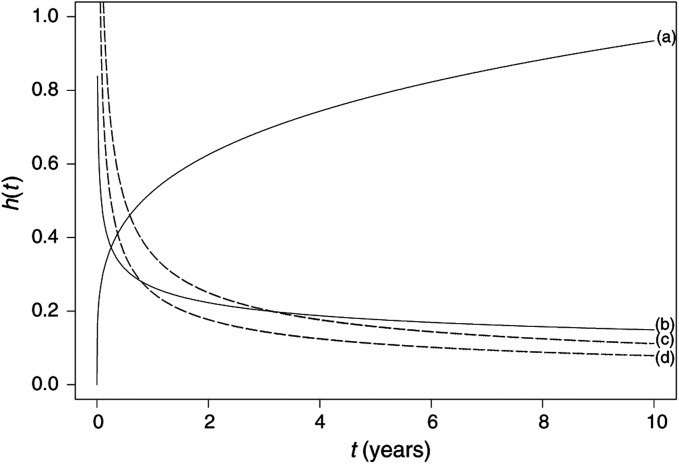
“Examples of survival and hazard functions derived from some of these parametric models were presented in the previous paper (Clark et al , 2003).”
InfluentialSelf-citationLinear regression with censored data
Buckley, J. D., & JAMES, I. R. (1979) · Biometrika · doi:10.1093/biomet/66.3.429 · Cited by 1,032 · cited 1×
“Alternative methods include the method of Buckley and James (1979), which is discussed by Stare et al (2000), and semiparametric AFT models, in which the baseline survivor function is estimated nonparame-trically (see Wei, 1992, for an overview), but have not yet been widely implemented in…”
Modelling Survival Data in Medical Research.
McLachlan, G. J., & Collett, D. (1994) · Biometrics · doi:10.2307/2533471 · Cited by 1,023
Wei, L. J. (1992) · Statistics in Medicine · doi:10.1002/sim.4780111409 · Cited by 827 · cited 1×
“…include the method of Buckley and James (1979), which is discussed by Stare et al (2000), and semiparametric AFT models, in which the baseline survivor function is estimated nonparame-trically (see Wei, 1992, for an overview), but have not yet been widely implemented in statistical software.”
A linear regression model for the analysis of life times
Aalen, O. O. (1989) · Statistics in Medicine · doi:10.1002/sim.4780080803 · Cited by 725 · cited 1×
“These important issues will be addressed in the subsequent paper in this series.”
Multivariate survival analysis using Cox's regression model
Christensen, E. I. (1987) · Hepatology · doi:10.1002/hep.1840070628 · Cited by 372 · cited 1×
“This information could then be displayed via tabular or Christensen (1987) based on the Cox model, but can also be used when fitting fully parametric models.”
Cited by
Sorted by citations
Items 401–500 of 738
Bátiz-Zuk, E. E., López‐Gallo, F., Mohamed, A., & Sánchez‐Cajal, F. (2021) · International Journal of Finance & Economics · doi:10.1002/ijfe.2397 · Cited by 5
A Mobile and Evolving Tool to Predict Colorectal Cancer Survivability
Silva, A., de Oliveira, T. C. R., Julián, V., Neves, J., & Nováis, P. (2016) · IFIP advances in information and communication technology · doi:10.1007/978-3-319-44944-9_2 · Cited by 5
Prognostic and Biological Roles of Parkinson's Disease‐Associated Genes in Cancer
Fiume, S., Molinari, F., Vai, B., Poletti, S., Citterio, G., Fiumara, F., Papin, S., Paganetti, P., Callari, M., & Colnaghi, L. (2025) · Movement Disorders · doi:10.1002/mds.30321 · Cited by 4
“Overall survival (OS) was evaluated using univariate and multivariate Cox regression 37,38 analyses implemented in the survival (v.3.1) R/Bioconductor package.”
InfluentialKolbeck, S. G. (2022) · Journal of Offender Rehabilitation · doi:10.1080/10509674.2022.2093307 · Cited by 4
“…tð Þ ¼ h0 tð Þ expðb1 x1 þ b2 x2 þ . . .þ bpxpÞ Here, hðtÞ represents the hazard function, which is determined by a set of p covariates (xp Þ whose impact is measured by coefficients (bp), and h0 reflects the baseline hazard at which all covariates are equal to zero (Bradburn et al., 2003).”
Zhang, Y., & Miller, E. J. (2022) · Environment and Planning B Urban Analytics and City Science · doi:10.1177/23998083221143386 · Cited by 4
“An alternative method is the Cox Proportional Hazard (CPH) regression analysis, which works for both quantitative and categorical predictor variables (Bradburn et al., 2003; David, 1972).”
MethodPiussi, R., Simonson, R., Högberg, J., Thomeé, R., Samuelsson, K., & Senorski, E. H. (2023) · International Journal of Sports Physical Therapy · doi:10.26603/001c.81064 · Cited by 4
Siqueira, S. M., Campos‐do‐Carmo, G., da Silva, P. R. G., Small, I. A., & de Melo, A. C. (2024) · Infectious Agents and Cancer · doi:10.1186/s13027-023-00564-1 · Cited by 4
“A p -value of < 0.05 was considered as statistically significant [18].”
MethodInfluentialXie, X., Luo, C., Wu, S., Qiao, W., Deng, W., Jin, L., Lu, J., Bu, L., Duffau, H., Zhang, J., et al. (2024) · BMC Cancer · doi:10.1186/s12885-024-12542-w · Cited by 4
“…groups within the full cohort (χ2 = 50.8, P 0.01) and the lower-grade subset (χ2 = 13.9, P 0.01) commonly used method for survival analysis, it has limitations, including the need to verify the proportional hazards assumption and to understand potential interactions between variables [13, 35].”
InfluentialErasmus, M. C., & Geyser, J. M. (2024) · Agrekon · doi:10.1080/03031853.2024.2401787 · Cited by 4
“Autocorrelated errors in static models, leading to a subsequent decline in statistical efficiency, can be addressed using Cochrane-Orcutt transformation and vector autoregression (VAR) (Lien and Tse 1999; Bradburn et al. 2003).”
Hailay, A. (2015) · American Journal of Health Research · doi:10.11648/j.ajhr.20150305.11 · Cited by 4
“American Journal of Health Research 2015; 3(5): 257-269 Published online July 24, 2015 (http://www.”
BackgroundInfluentialNajafabadi, M. Z., Samani, E. B., & Ganjali, M. (2020) · Journal of Biopharmaceutical Statistics · doi:10.1080/10543406.2020.1765372 · Cited by 4
“Clark et al. (2003) and Bradburn et al. (2003), in their articles collections, introduced the properties and methods of modeling these kinds of data.”
BackgroundHsieh, Y., Lin, Y., Lo, M., Chen, Y., Lin, C., Lin, C., Chung, F., Lo, L., Chang, S., Chao, T., et al. (2021) · Journal of Cardiovascular Electrophysiology · doi:10.1111/jce.15033 · Cited by 4
“Having fitting data to the Cox model, the predicted survival proportion at any time point for a particular risk was plotted using a multivariate Cox proportional model that had been adjusted for confounders as follows: age, sex, underlying diseases of chronic obstructive pulmonary disease, chronic kidney disease, CHA2…”
MethodNgari, M., Schmitz, S., Maronga, C., Mramba, L., & Vaillant, M. (2021) · BMC Medical Research Methodology · doi:10.1186/s12874-021-01280-3 · Cited by 4
“The Cox Proportional Hazard (CPH) regression method, a semi-parametric model, is one of the most frequently used methods in survival regression analysis [5, 6].”
BackgroundMethoddos Santos, A. C., dos Santos, J. M. B., Lima, E. D. C., & Land, M. G. P. (2021) · Cancer Reports · doi:10.1002/cnr2.1533 · Cited by 4
Huang, H., Xie, L., Feng, X., Zheng, Z., Ouyang, J., Li, Y., & Yu, J. (2021) · Annals of Translational Medicine · doi:10.21037/atm-21-3211 · Cited by 3
“A set of KM plots (29) from both the univariate analysis (considering only gene expression) and multivariate analysis (considering clinical parameters along with gene expression) were provided from the output page of the survival analysis after using the “scan by gene” option in UALCAN.”
MethodFitt, B., Loy, G., Christopher, E., Brennan, P. M., & Poon, M. T. C. (2022) · PLoS ONE · doi:10.1371/journal.pone.0264740 · Cited by 4
Mihevc, M., Podgoršek, D., Gajšek, J., Mikuletič, S., Homar, V., Kolšek, M., & Šter, M. P. (2023) · Croatian Medical Journal · doi:10.3325/cmj.2023.64.170 · Cited by 4
Iddrisu, A., Otoo, D., Kwasi, A., & Gumedze, F. N. (2024) · Health Science Reports · doi:10.1002/hsr2.1892 · Cited by 4
Moons, E. G. M., Altman, D. G., Reitsma, J. B., Macaskill, P., Steyerberg, E. W., Vickers, A. J., Ransohoff, D. F., & Collins, P. G. S. (2015) · Cited by 4
Self-citationPredicting Survivability in Lost Person Cases
Pajewski, M., Kulkarni, C., Daga, N., & Rijhwani, R. (2021) · Systems and Information Engineering Design Symposium · doi:10.1109/sieds52267.2021.9483790 · Cited by 4
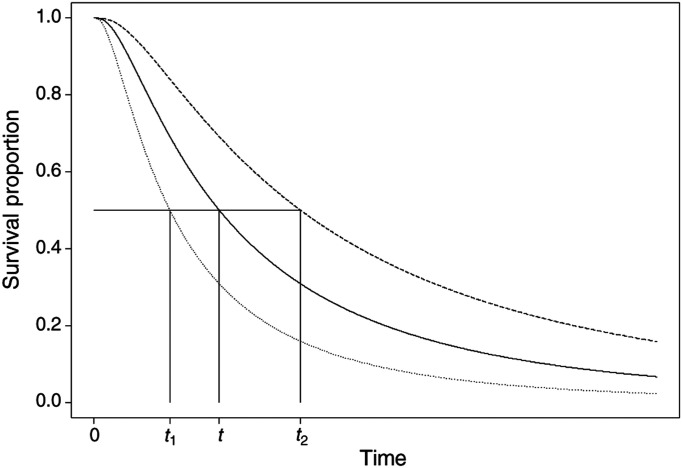
“Commonly used to predict time until death for disease patients in healthcare settings, the AFT model makes the assumption that the effect of a co-variate is to accelerate or decelerate the life course of a event by some constant [1].”
MethodAssessment of Significance of Novel Proteins in Breast Cancer Using Tissue Microarray Technology
Mulrane, L., Gallagher, W. M., & O’Connor, D. P. (2016) · Methods in molecular biology · doi:10.1007/978-1-4939-6475-8_16 · Cited by 4
Santos, J. A., Soares, P., Leite, A., Duarte, R., & Nunes, C. (2021) · Public Health · doi:10.1016/j.puhe.2021.09.033 · Cited by 4
Ullmann, A. J. (2024) · The Review of International Organizations · doi:10.1007/s11558-024-09565-0 · Cited by 3
“To account for this, I employ survival analysis, which considers the time between a fixed starting point (treaty ratification) and a terminating event (ICP accep - tance) (Bradburn et al., 2003).”
Sezikli, İ., & Kendirci, M. (2025) · Journal of Tissue Viability · doi:10.1016/j.jtv.2025.100950 · Cited by 3
The Cox regression and Kaplan-Meier for time-to-event of survival data patients with renal failure
Elamin, A. M. K., & Mohmmed, A. O. A. (2023) · World Journal of Advanced Engineering Technology and Sciences · doi:10.30574/wjaets.2023.8.1.0183 · Cited by 3
Lee, C.-H., Su, Y., Lin, S., Lee, I., Tsai, C.-I., & Li, T. (2024) · Frontiers in Medicine · doi:10.3389/fmed.2023.1320861 · Cited by 3
Survival analysis of freezing stress in the North American native perennial flax, Linum lewisii
Gossweiler, A., Smart, B. C., & Hulke, B. S. (2024) · AoB Plants · doi:10.1093/aobpla/plae022 · Cited by 3
Feyisa, B. R., Shiferaw, D., Ashemo, M. Y., Shama, A. T., Duressa, L. T., & Biru, B. (2024) · BMJ Open · doi:10.1136/bmjopen-2023-082356 · Cited by 3
Coşar, R., Süt, N., Parlar, Ş. E., Özgüven, Y., Nurlu, D., Tastekin, E., Batu, S., Şenödeyici, E., Özler, T., Dedeli, M., et al. (2024) · Radiation Oncology · doi:10.1186/s13014-024-02474-x · Cited by 3
“Then, multivariate Cox regression analysis with a backward elimination method was used to estimate hazard ratios and to identify independent prognostic factors [29].”
MethodSamy, G. N., Ahmad, R., & Ismail, Z. (2012) · InTech eBooks · doi:10.5772/31868 · Cited by 3
“event of the incidences will be presented in terms of hazard function and of covariates (Bradburn et al., 2003).”
Time-Dependent Effects of Prognostic Factors in Advanced Gastric Cancer Patients
Kwon, J.-O., Jin, S., Min, J.-S., Kim, M., Lee, H.-W., Park, S., Yu, H.-J., Bang, H. Y., & Lee, J. I. (2015) · Journal of the Korean Gastric Cancer Association · doi:10.5230/jgc.2015.15.4.238 · Cited by 3
“If some variables violate the PH assumption, a multivariate study using the Cox model may provide inaccurate or distorted analytical results.(4,5) As a result, some significant prognostic factors could be missed and the relative hazard ratio of a time-dependent prognostic factor might be overestimated or underestimate…”
MethodOn the Use of Cox Regression for Statistical Analysis of Fatigue Life Results
Ulu, K. N., Huneau, B., Verron, E., Béranger, A.-S., & Heuillet, P. (2019) · Journal of Testing and Evaluation · doi:10.1520/jte20180541 · Cited by 3
Takao-Okuma, H., Terao, R., Nagahara, M., Azuma, K., Inoue, T., Uemura, Y., & Obata, R. (2020) · Canadian Journal of Ophthalmology · doi:10.1016/j.jcjo.2020.08.004 · Cited by 3
“In medicine or biosciences, some researchers have estimated the mortality using this model.(4,5) A Weibull model with a change point was better fitted than a simple Weibull model without any change point.”
MethodArellano, R. A. B., Jandoc, K. R. L., & Ramos, Y. A. G. (2020) · Journal of Child & Adolescent Substance Abuse · doi:10.1080/1067828x.2021.1922324 · Cited by 3
“The effect of covariate xk is interpreted as follows: when all other covariates are held fixed, for each unit increase in xk, the hazard is multiplied by expfbkg (Bradburn et al., 2003).”
BackgroundKidney Cancer Biomarker Selection Using Regularized Survival Models
Peixoto, C., Martins, M., Costa, L., & Vinga, S. (2022) · Cells · doi:10.3390/cells11152311 · Cited by 3
“These survival regression models describe the relationship between the survival times and a set of covariates [12] such as genes.”
BackgroundMethodLee, J.-K., Jha, N., Kim, Y., & Lee, D.-Y. (2022) · Applied Sciences · doi:10.3390/app122211655 · Cited by 3
Li, J., Li, W., Wang, H., Ni, B., & Liu, Y. (2023) · Molecular Medicine Reports · doi:10.3892/mmr.2023.12943 · Cited by 3
Death After Liver Transplantation: Mining Interpretable Risk Factors for Survival Prediction
Guidetti, V., Dolci, G., Franceschini, E., Bacca, E., Burastero, G. J., Ferrari, D., Serra, V., Benedetto, F. D., Mussini, C., & Mandreoli, F. (2023) · IEEE International Conference on Data Science and Advanced Analytics (DSAA) · doi:10.1109/dsaa60987.2023.10302622 · Cited by 3
Omer, M. E., Mustafa, M. S., Ali, N., & Rahman, N. H. A. (2023) · Asian Pacific Journal of Cancer Prevention · doi:10.31557/apjcp.2023.24.12.4167 · Cited by 3
“In the realm of cancer research, the utilization of the Weibull distribution is widespread for its flexibility in modelling survival data (Bradburn et al., 2003b).”
BackgroundGenetic dependencies associated with transcription factor activities in human cancer cell lines
Thatikonda, V., Supper, V., Wachter, J., Kaya, O., Kombara, A., Bilgilier, C., Ravichandran, M. C., Lipp, J., Sharma, R., Badertscher, L., et al. (2024) · Cell Reports · doi:10.1016/j.celrep.2024.114175 · Cited by 3
Ntsama, F., Noh, S. M., Tizzani, P., Ntsama, C. F. A., Ella, G. S. N., Awada, L., & Tidjou, G. S. D. (2024) · Research in Veterinary Science · doi:10.1016/j.rvsc.2024.105278 · Cited by 3
Maulana, F. I., Lestari, D. E., Purnomo, A., Arifuddin, R., Widartha, V. P., & Adi, P. D. P. (2024) · International Seminar on Intelligent Technology and Its Applications · doi:10.1109/isitia63062.2024.10668194 · Cited by 3
“[20], [21], [22].”
Linde, M., Tendeiro, J. N., & van Ravenzwaaij, D. (2025) · Journal of Applied Statistics · doi:10.1080/02664763.2025.2472150 · Cited by 3
Rosentritt, M., Heidtkamp, F., Hösl, H., Hahnel, S., & Preis, V. (2015) · Clinical Oral Investigations · doi:10.1007/s00784-015-1502-8 · Cited by 3
Pugh, S. L. (2016) · Neuro-Oncology Practice · doi:10.1093/nop/npw012 · Cited by 4
Yi, M., Zhu, R., & Stephens, R. M. (2018) · PLoS ONE · doi:10.1371/journal.pone.0207590 · Cited by 3
Algahtani, S., & Shoukri, M. M. (2021) · Open Journal of Statistics · doi:10.4236/ojs.2021.111005 · Cited by 3
Implication of Statistical Methods on Patient Data: An Approach for Cancer Survivability Prediction
Mondal, S., Bhattacharya, N., Das, T., Ghosh, Z., & Khatua, S. (2021) · EAI/Springer Innovations in Communication and Computing · doi:10.1007/978-3-030-67051-1_4 · Cited by 3
Laboratory biomarkers of an effective antitumor immune response. Clinical significance.
Malkova, A. M., Sharoyko, V. V., Zhukova, N. V., Gubal, A. R., & Орлова, Р. В. (2021) · Cancer Treatment and Research Communications · doi:10.1016/j.ctarc.2021.100489 · Cited by 5
Chen, Z., Tian, X., Qu, J., Chen, J., Yang, Y., & Li, J. (2023) · Rheumatology and Immunology Research · doi:10.2478/rir-2023-0005 · Cited by 3
Lim, H., & Bae, K. (2014) · The Journal of Clinical Pharmacology · doi:10.1002/jcph.427 · Cited by 3
“The results of AFT models are more easily interpretable than those of PH models, in that AFT models provide us the information in the form of a percentage difference in the time expectancy to the event according to the values of covariates.(22) The inverse value of acceleration factors (1/AF) value 1 indicates that th…”
MethodANN as a prognostic tool after treatment of non-seminoma testicular cancer
Marszałł, M. P., Krysiński, J., Sroka, W. D., Nyczak, Z., Stefanowicz, M., Waśniewski, T., Romaszko, J., & Buciński, A. (2012) · Open Medicine · doi:10.2478/s11536-012-0027-7 · Cited by 3
Tsai, Y. C., Chang, Y. H., Chang, Y., & Chuang, C. M. (2016) · Journal of the Turkish-German Gynecological Association · doi:10.5152/jtgga.2016.16087 · Cited by 3
Interpreting Clinical Trial Data
Amin, M., No, D. J., Darji, K., & Wu, J. J. (2017) · Springer eBooks · doi:10.1007/978-3-319-66884-0_3 · Cited by 3
Understanding Survival Analyses
Subramaniam, S. (2018) · Springer eBooks · doi:10.1007/978-3-319-94355-8_4 · Cited by 3
Davis, P. K., Hermann, C. A., Freedman, S., & Lucenti, L. (2020) · Criminal Justice and Behavior · doi:10.1177/0093854820918621 · Cited by 2
“…and survival time decreases (i.e., covariate is positively associated with the outcome), whereas HRs less than 1 indicate that as the covariate increases, the outcome hazard decreases and survival time increases (i.e., covariate is negatively associated with the outcome) (Bradburn et al., 2003).”
BackgroundMethodNajafabadi, M. Z., Samani, E. B., & Ganjali, M. (2021) · Communication in Statistics- Theory and Methods · doi:10.1080/03610926.2021.1872635 · Cited by 3
“Bradburn et al. (2003) and Qi (2009) compared PH and AFT models and suggested that the results of AFT models may be easier to interpret and could provide a more appropriate description of the data.”
BackgroundMethodResultInfluentialMuresan, B., Mamolo, C. M., Cappelleri, J. C., Mokgokong, R., Palaka, A., Soikkeli, F., & Heeg, B. M. S. (2021) · Future Oncology · doi:10.2217/fon-2020-1287 · Cited by 3
Overview: Management Control Systems as a Source for Creating Value
Mooraj, S., & Oyon, D. F. (1999) · European Management Journal · Cited by 3
Onset and Progression of Infection Based on Viral Loads in Rhesus Macaques Exposed to Zika Virus
Triplett, C. A., Dufek, S., Niemuth, N. A., Kobs, D. J., Cirimotich, C. M., Mack, K., & Sanford, D. (2022) · Applied Microbiology · doi:10.3390/applmicrobiol2030042 · Cited by 3
Hadas, T. C., Gaete, A. E. G., & Pianovski, M. A. D. (2014) · Revista Médica da UFPR · doi:10.5380/rmu.v1i4.40690 · Cited by 3
Coelho‐Silva, J. L., Silveira, D. R., Pereira‐Martins, D. A., Rojas, C. A. O., Lucena-Araujo, A. R., Rego, E. M., Machado‐Neto, J. A., Bendit, I., Rocha, V., & Traina, F. (2021) · Scientific Reports · doi:10.1038/s41598-020-80918-6 · Cited by 3
Measuring Patient Survival on Hemodialysis
Brunelli, S. M. (2009) · Journal of the American Society of Nephrology · doi:10.1681/asn.2009070689 · Cited by 3
Survival analysis approaches for prostate cancer.
Alhasawi, E. (2015) · Lu Zone Ul (Laurentian University) · Cited by 3
miRDriver: A Tool to Infer Copy Number Derived miRNA-Gene Networks in CancerPreprint
Bose, B., & Bozdag, S. (2019) · bioRxiv (Cold Spring Harbor Laboratory) · doi:10.1101/652156 · Cited by 3
“We computed the hazard ratio (HR) of higher degree selected genes (genes targeted by four or more miRNAs) and lower degree selected genes (genes targeted by three or fewer miRNAs) using multivariate Cox regression analysis [46].”
MethodMarket ResiliencePreprint
Danı́elsson, J., Panayi, E., Peters, G. W., & Zigrand, J. (2018) · SSRN Electronic Journal · doi:10.2139/ssrn.3169755 · Cited by 3
A History Embedded Accelerated Failure Time Model to Estimate Nursing Home Length of Stay
Keno, H. A., Lou, Z., Kong, N., Landry, S. J., & Callahan, C. M. (2018) · IEEE Transactions on Automation Science and Engineering · doi:10.1109/tase.2018.2876673 · Cited by 2
“, yields more precise estimate through smaller standard errors [36].”
Speckman, R. A. (2020) · PM&R · doi:10.1002/pmrj.12535 · Cited by 2
“Are there other variables that could cause confounding bias? Are there other variables of interest that might be associated with the outcome? Can any of these other variables change values over time? Multiple regression is a large class of statistical techniques that allow researchers to take additional variables into…”
Huchzermeyer, C. R., Lämmer, R., Mardin, C. Y., Kruse, F. E., Kremers, J., & Horn, F. K. (2024) · Graefe s Archive for Clinical and Experimental Ophthalmology · doi:10.1007/s00417-023-06364-y · Cited by 2
“Furthermore, survival analysis is superior for longitudinal analyses when patients are lost to follow-up [37, 38].”
BackgroundTowards the recalibration of US dollar’s international dominance
Iliyasu, J., Mamman, S. O., & Abubakar, A. B. (2024) · Journal of Financial Economic Policy · doi:10.1108/jfep-08-2023-0206 · Cited by 2
Park, I., Lee, H. B., Kim, N., Lee, S., Park, K., Son, M., Cho, H., & Kim, D. (2024) · Journal of Biotechnology · doi:10.1016/j.jbiotec.2024.09.003 · Cited by 2
Choi, S., & Kim, S. (2024) · Sustainability · doi:10.3390/su16209140 · Cited by 2
Ndlovu, L., Marshal, J. P., van der Goot, A. C., & Müller, H. P. (2025) · African Journal of Wildlife Research · doi:10.3957/056.055.0212 · Cited by 2
Wheezing on admission: a marker for bronchiolitis severity and asthma development
Patricio Astudillo, P., Rodriguez-Fernández, M., Castro-Rodríguez, J. A., & López‐Lastra, M. (2025) · Pediatric Research · doi:10.1038/s41390-025-04096-9 · Cited by 2
Impact of APOE4‐related dementia risk in underrepresented groups from the All of Us research program
Ghisays, V., Khajouei, E., Piras, I. S., Malek‐Ahmadi, M. H., Protas, H. D., Goradia, D. D., Chen, Y., Naymik, M., Saner, D., Veatch, O. J., et al. (2025) · Alzheimer s & Dementia · doi:10.1002/alz.70245 · Cited by 2
“We used Cox proportional hazards ratio (HR) and 95% confidence intervals(CIs) 28,29 withdatafromparticipantswitheachofthesegenotypes and chi-squared to compare APOE4 allelic frequency in the ethnora-cialandsexgroups.”
Jiang, N., Xu, Z., Zhao, S., Gelfond, J., Strong, R., & Nelson, J. F. (2025) · The Journals of Gerontology Series A · doi:10.1093/gerona/glaf138 · Cited by 4
Zhou, J., Tian, M., Zhang, X., Xiong, L., Huang, J., Xu, M., Liang, X., & Wei, S. (2025) · Frontiers in Endocrinology · doi:10.3389/fendo.2025.1392283 · Cited by 2
“…hazards model is suitable for analyzing survival data over time (26), and it can be used to adjust for baseline differences between groups and provide hazard ratios (calculation of con fi dence intervals by 1000 iterations) to quantify the effect of any single factor on the survival curve (27, 28).”
Guo, K., Li, J., Ye, H., & Yi, X. (2025) · Cancer Medicine · doi:10.1002/cam4.71322 · Cited by 2
Lin, K., He, Y., Zeng, X., Zhang, J., Ou, Y., & He, H. (2025) · Child and Adolescent Psychiatry and Mental Health · doi:10.1186/s13034-025-01006-z · Cited by 2
“For variables violating this assumption, stratified Cox models were applied to allow for non-proportional hazards across strata [23, 27].”
Cortés, J., Nielsen, R. O., & Casals, M. (2025) · BMJ Open Sport & Exercise Medicine · doi:10.1136/bmjsem-2025-002800 · Cited by 2
Thu, W., McIvor, N., Douglas, R. G., Cavadino, A., Tin, S. T., & Elwood, M. (2026) · Cancer Epidemiology · doi:10.1016/j.canep.2026.102995 · Cited by 2
Kim, H., Pan, L., Talati, A., Gameroff, M. J., Weissman, M. M., & Simpson, H. B. (2026) · JCPP Advances · doi:10.1002/jcv2.70117 · Cited by 2
“We utilized the semi - parametric Cox regression model, which makes fewer assumptions about survival function than other parametric models (e.g., Weibull, exponential) (Bradburn et al., 2003; Collett, 2023), making it a practical and appropriate choice.”
Equity or Equality? Which Approach Brings More Satisfaction in a Kidney-Exchange Chain?
Hosseinzadeh, A., Najafi, M., Cheungpasitporn, W., Thongprayoon, C., & Fathi, M. (2021) · Journal of Personalized Medicine · doi:10.3390/jpm11121383 · Cited by 2
Contributing Factors in Pedestrians Waiting Time at Signalized Intersections Using Survival Analysis
Hashemi, H., Bargegol, I., & Hamedi, G. H. (2022) · Computational Research Progress in Applied Science and Engineering · doi:10.52547/crpase.8.2228 · Cited by 2
BatMan: Mitigating Batch Effects Via Stratification for Survival Outcome Prediction
Ni, A., Liu, M., & Qin, L. (2023) · JCO Clinical Cancer Informatics · doi:10.1200/cci.22.00138 · Cited by 2
“In stratified Cox regression models, the baseline hazard is stratum-specific and a common hazard ratio for each covariate is aggregated over strata (Bradburn et al. , 2003, Cochran, 1968).”
BackgroundSeparate-and-conquer survival action rule learning
Henzel, J., Hermansa, M., Kozielski, M., Sikora, M., & Wróbel, Ł. (2023) · Knowledge-Based Systems · doi:10.1016/j.knosys.2023.110981 · Cited by 2
Jiang, C., Li, M., Hu, Y., Du, X., Li, X., He, L., Lai, Y., Chen, T., Li, Y., Guo, X., et al. (2023) · Pacing and Clinical Electrophysiology · doi:10.1111/pace.14829 · Cited by 2
Parga‐Pazos, M., Cusimano, N., Rábano, M., Akhmatskaya, E. V., & Vivanco, M. D. (2023) · Laboratory Investigation · doi:10.1016/j.labinv.2023.100286 · Cited by 2
“In addition, the METABRIC cohort was used to produce univariate and multivariate Cox proportional-hazard regression models 41 that further helped to examine the predictive capabilities of the signature and allowed for comparison with other previously identi fi ed gene signatures for resistance to…”
Method2-Methoxybenzaldehyde effectively repels ants
Kay, T., Siegenthaler, G., Kench, T., & Keller, L. (2023) · Journal of Economic Entomology · doi:10.1093/jee/toad225 · Cited by 2
REEVE, J. (2024) · Royal Society Open Science · doi:10.1098/rsos.221597 · Cited by 2
“The time to capsize was made the outcome variable in Cox Proportional Hazard models [39] that included determinants of potential interest such as pre-infection complement protein levels and the presence or absence of pulmonary clotting.”
MethodHong, Y., Zhang, L., Lin, W., Yang, Y., Cao, Z., Feng, X., Yu, Z., & Gao, Y. (2024) · International Journal of Molecular Sciences · doi:10.3390/ijms25031643 · Cited by 2
“A novel prognostic model was constructed using multivariate Cox proportional hazards regression analysis [45].”
MethodZhang, W., Wu, Y., & Deng, G. (2024) · Transportation Research Part A Policy and Practice · doi:10.1016/j.tra.2024.104089 · Cited by 2
Rujescu, C. I., Sicoe-Murg, O. M., Milin, I. A., & Ciolac, R. M. (2024) · Sustainability · doi:10.3390/su16156344 · Cited by 2
Latimer, N. R., Taylor, K., Hatswell, A. J., Ho, S., Okorogheye, G., Chen, C. C., Kim, I., Borrill, J., & Bertwistle, D. (2024) · PharmacoEconomics · doi:10.1007/s40273-024-01429-0 · Cited by 2
“To test this assumption quantile-quantile plots are the appropriate choice [7, 55].”
Assessment of NSCLC disease burden: A survival model-based meta-analysis study
Kudryashova, N., Shulgin, B., Katuninks, N., Kulesh, V., Helmlinger, G., Zhudenkov, K., & Peskov, K. V. (2024) · Computational and Structural Biotechnology Journal · doi:10.1016/j.csbj.2024.09.012 · Cited by 2
Bieszk‐Stolorz, B. (2025) · Econometrics · doi:10.3390/econometrics13010001 · Cited by 2
“Research indicates that the parametric model is more informative than the Cox model (Bradburn et al., 2003).”
Data-driven prior elicitation for Bayes factors in Cox regression for nine subfields in biomedicine
Linde, M., Jochim, L., Tendeiro, J. N., & van Ravenzwaaij, D. (2025) · PLoS ONE · doi:10.1371/journal.pone.0322144 · Cited by 2
“Among the many existing forms of survival analysis - for example, Kaplan-Meier product-limit estimator [39], parametric survival analyses (e.g., Exponential, Gompertz, and Weibull), and Cox regression [38] - the latter is used most frequently within biomedicine (e.g., [10]).”
Legal traditions and the ratification of the Paris agreement
Fredriksson, P. G., Sharma, S., & Wollscheid, J. R. (2025) · Energy Economics · doi:10.1016/j.eneco.2025.108719 · Cited by 2
A Practical Guide for Statistics in Wildlife Studies
Olea‐Popelka, F. J., & Rosen, L. E. (2018) · Elsevier eBooks · doi:10.1016/b978-0-323-55228-8.00005-9 · Cited by 2
Metadata
- Authors
- Bradburn, M. J., Clark, T. G., Love, S. B., & Altman, D. G.
- Affiliations
- Cancer Research UK (GB)
- Corresponding author
- Bradburn, M J
- Venue
- British Journal of Cancer
- Published
- 2003-07-29
- Volume
- 89
- Issue
- 3
- Pages
- 431-436
- ISSN
- 0007-0920 (ISSN-L)
- 1532-1827
- PMC
- PMC2394368
- OpenAlex
- W2107482271
- Cited by
- 741
- References
- 16
- Citations by year
- 2026: 31 · 2025: 55 · 2024: 86 · 2023: 67 · 2022: 54 · 2021: 91 · 2020: 55 · 2019: 41 · 2018: 43 · 2017: 35 · 2016: 26 · 2015: 21 · 2014: 27 · 2013: 15 · 2012: 24
- FWCI
- 7.17
- Type
- journal article
- Language
- en
- Open access
- hybrid
- doi.org
- Licence
- cc-by-nc-sa
- www.springer.com/tdm (unspecified)
- Locations
- British Journal of Cancer (publishedVersion, cc-by-nc-sa)
- PubMed Central (publishedVersion, cc-by)
- PubMed (publishedVersion)
- White Rose Research Online (University of Leeds, The University of Sheffield, University of York) (acceptedVersion)
- LSHTM Research Online (London School of Hygiene and Tropical Medicine) (acceptedVersion)
- Funders
- Cancer Research UK
- Topics
- Physical Sciences › Mathematics › Statistics and Probability › Statistical Methods and Inference
- Physical Sciences › Mathematics › Statistics and Probability › Probability and Statistical Research
- Physical Sciences › Mathematics › Statistics and Probability › Statistical Distribution Estimation and Applications
- Keywords
- survival analysis, multivariate survival data, censored data, time to event, cancer survival, censoring
- MeSH terms
- Clinical Trials as Topic, Humans, Neoplasms, Models, Statistical, Multivariate Analysis, Survival Analysis
About these checks
Registry, retraction, Cites and statistics results are computed, not judged, with one exception: a printed reference that no index lists is read once by a model before it counts as a citation error. Claims are extracted by a model and kept only when their quote appears verbatim in the text; each cited source is then checked, with a model’s help, for whether it says what the claim relies on. Those verdicts can be wrong — read the claim’s quote and the cited source before relying on one.
Statistics and arithmetic are recomputed, not judged.
Confidence bands are shown only for fields calibrated on our annotated test set. None is calibrated yet, so no band is shown.
What counts as a claim ›How we measure confidence ›How we check this ›
Are you an author, or do you see a problem with this page? Request a review
