

The DOI matches its Crossref record; 41 of the 41 references it cites were found in a registry or an index.
Hyaluronidase induces a transcapillary pressure gradient and improves the distribution and uptake of liposomal doxorubicin (Caelyx™) in human osteosarcoma xenografts
Open accessAbstract
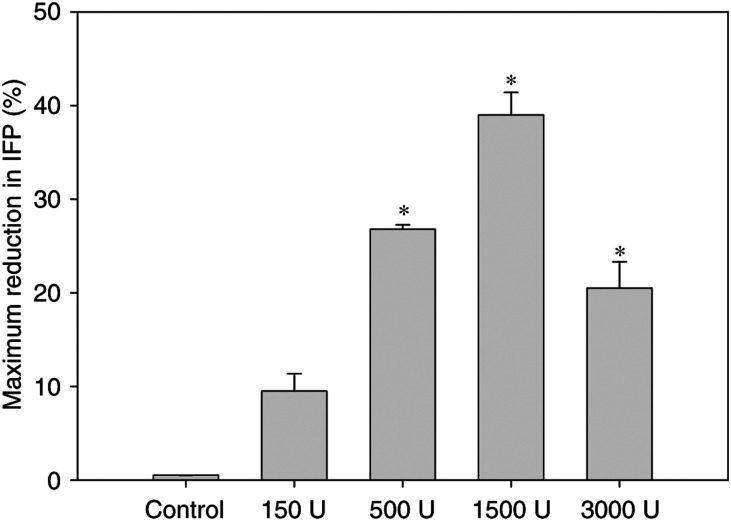
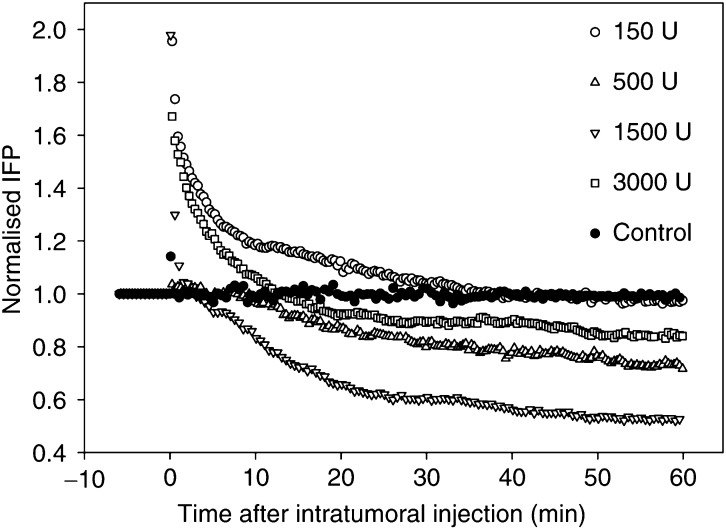
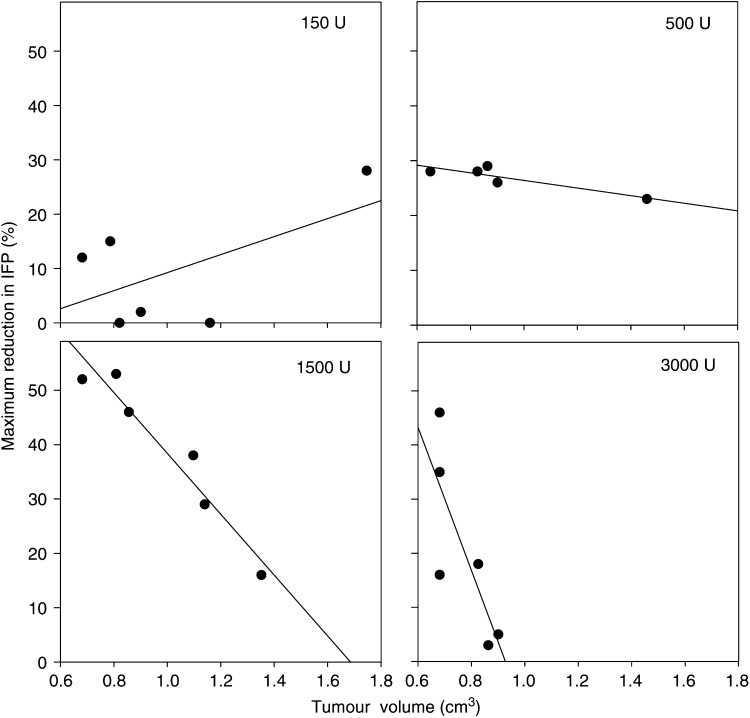
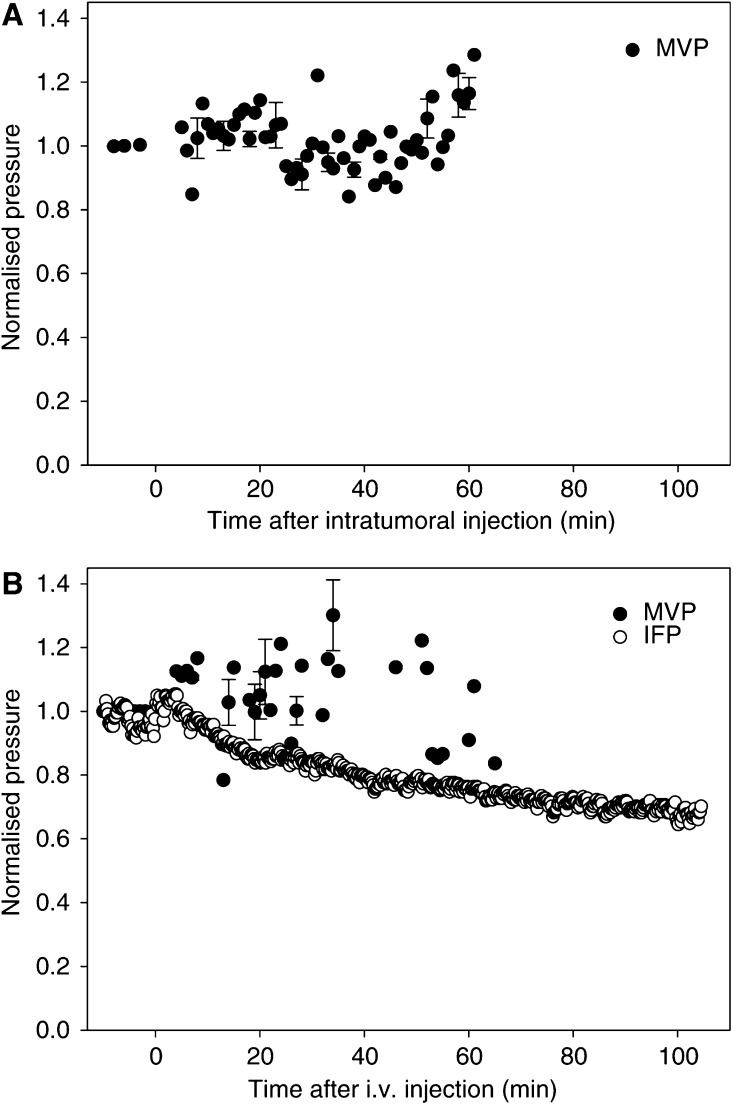
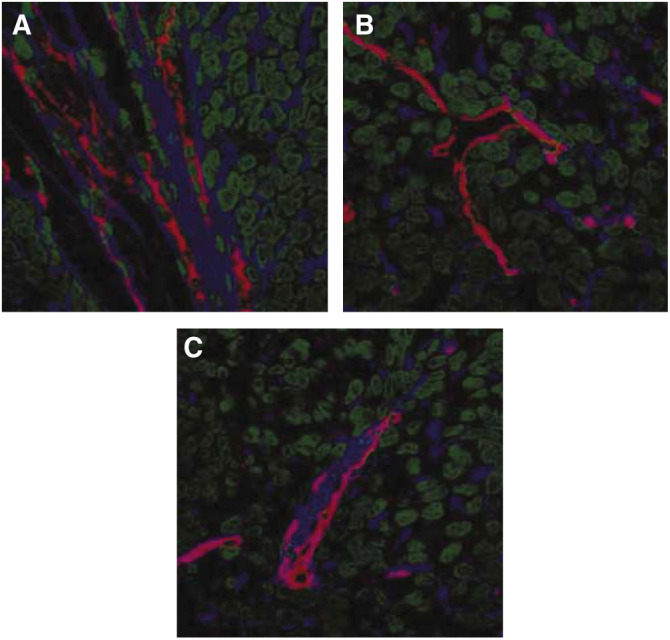
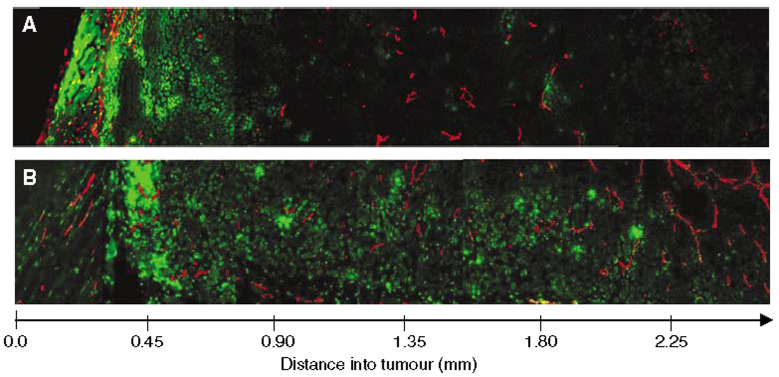
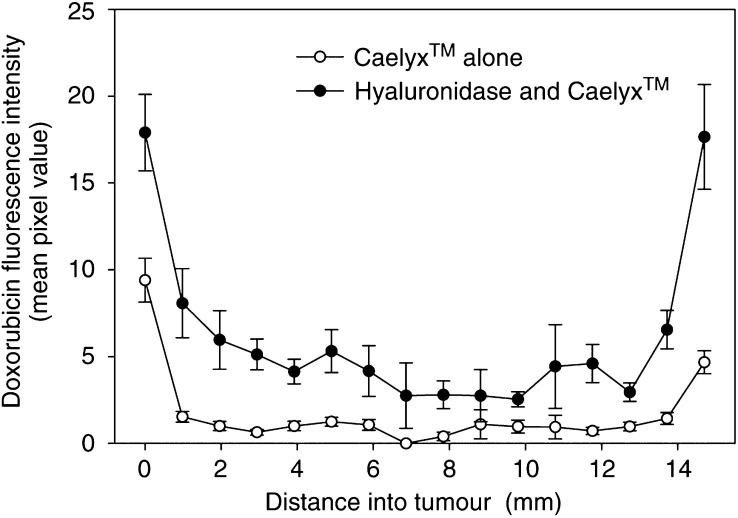
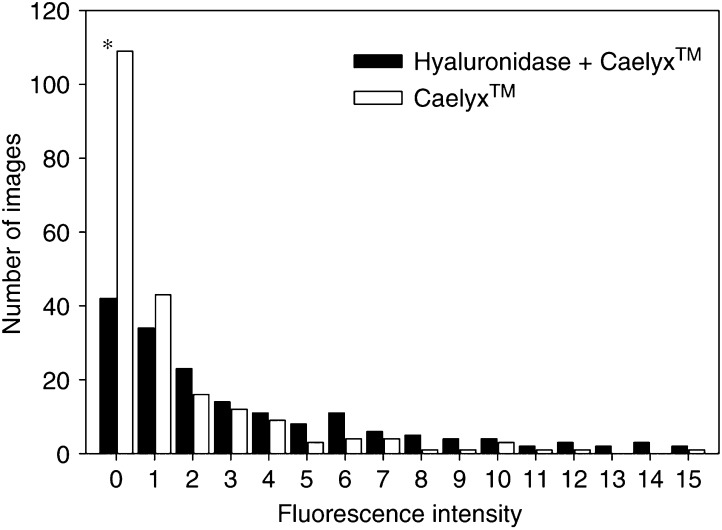
Liposomal drug delivery enhances the tumour selective localisation and may improve the uptake compared to free drug. However, the drug distribution within the tumour tissue may still be heterogeneous. Degradation of the extracellular matrix is assumed to improve the uptake and penetration of drugs. The effect of the ECM-degrading enzyme hyaluronidase on interstitial fluid pressure and microvascular pressure were measured in human osteosarcoma xenografts by the wick-in-needle and micropipette technique, respectively. The tumour uptake and distribution of liposomal doxorubicin were studied on tumour sections by confocal laser scanning microscopy. The drugs were injected i.v. 1 h after the hyaluronidase pretreatment. Intratumoral injection of hyaluronidase reduced interstitial fluid pressure in a nonlinear dose-dependent manner. Maximum interstitial fluid pressure reduction of approximately 50% was found after injection of 1500 U hyaluronidase. Neither intratumoral nor i.v. injection of hyaluronidase induced any changes in the microvascular pressure. Thus, hyaluronidase induced a transcapillary pressure gradient, resulting in a four-fold increase in the tumour uptake and improving the distribution of the liposomal doxorubicin. Hyaluronidase reduces a major barrier for drug delivery by inducing a transcapillary pressure gradient, and administration of hyaluronidase adjuvant with liposomal doxorubicin may thus improve the therapeutic outcome.
Overview
The claims and statistics of this paper haven’t been checked yet.
Run the check — free, no account needed. It reads the open-access text and checks the sources it cites.
Integrity signals
Registry
Cites
Statistics
Figures
Verification
Claims the paper makes
The claims and statistics of this paper haven’t been checked yet.
Run the check — free, no account needed. It reads the open-access text and checks the sources it cites.
Claims other papers make about this one
Each is checked against this paper’s own text: does it say what the citing paper says it does?
In the citing paper
“Besides, for the fibrotic lesion, degradation of the extracellular matrix using collagenase or hyaluronidase can be effective strategies to enhance accumulation [161, 162].”
From Non-viral delivery systems for CRISPR/Cas9-based genome editing: challenges and opportunities (2018) · cites this paper as [162]
Self-check
Percentages, sums and reported differences re-computed from the paper’s own numbers.
The self-check needs the paper’s full text.
Citations
Cites
Gabizón, A., Catane, R., Uziely, B., Kaufman, B., Safra, T., Cohen, R., Martin, F., Huang, A., & Barenholz, Y. (1994) · PubMed · Cited by 1,382
Yuan, F., Leunig, M., Huang, S. K., Berk, D. A., Papahadjopoulos, D., & Jain, R. K. (1994) · PubMed · Cited by 908
Dynamic imaging of collagen and its modulation in tumors in vivo using second-harmonic generation
Brown, E. B., McKee, T. D., DiTomaso, E., Pluen, A., Seed, B., Boucher, Y., & Jain, R. K. (2003) · Nature Medicine · doi:10.1038/nm879 · Cited by 844
(1990) · PubMed · Cited by 757
Jain, R. K., & Baxter, L. T. (1988) · PubMed · Cited by 710
Pluen, A., Boucher, Y., Ramanujan, S., McKee, T. D., Gohongi, T., di Tomaso, E., Brown, E. B., Izumi, Y., Campbell, R. B., Berk, D. A., et al. (2001) · Proceedings of the National Academy of Sciences · doi:10.1073/pnas.081626898 · Cited by 613
Harris, L. N., Batist, G., Belt, R. J., Rovira, D., Navari, R. M., Azarnia, N., Welles, L., Winer, E. P., & TLC D‐99 Study Group (2001) · Cancer · doi:10.1002/cncr.10201 · Cited by 517
Boucher, Y., & Jain, R. K. (1992) · PubMed · Cited by 510
Polyethylenglykol-umhülltes (pegyliertes) liposomales Doxorubicin
Gabizón, A., & Martin, F. (1997) · Drugs · doi:10.2165/00003495-199700544-00005 · Cited by 478
Pulsatile pressures in the microcirculation of frog's mesentery
Wiederhielm, C. A., Woodbury, J. W., Kirk, S., & Rushmer, R. F. (1964) · American Journal of Physiology-Legacy Content · doi:10.1152/ajplegacy.1964.207.1.173 · Cited by 439
Cited by
Sorted by citations
Items 101–200 of 221
Strategies for improving the intratumoral distribution of liposomal drugs in cancer therapy
Goins, B., Phillips, W. T., & Bao, A. (2016) · Expert Opinion on Drug Delivery · doi:10.1517/17425247.2016.1167035 · Cited by 52
“mouse osteosarcoma xenograft model.[54] Tumor uptake”
Schütze, F., Roehrig, F., Vorlová, S., Gätzner, S., Kühn, A., Ergün, S., & Henke, E. (2015) · Scientific Reports · doi:10.1038/srep17576 · Cited by 49
Extracellularly activatable nanocarriers for drug delivery to tumors
Abouelmagd, S. A., Hyun, H., & Yeo, Y. (2014) · Expert Opinion on Drug Delivery · doi:10.1517/17425247.2014.930434 · Cited by 50
“Approaches to overcome these challenges involve pre- or co-treatment of tumors with enzymes to degrade the ECM [29,38-41], priming tumors with an apoptotic-inducer [42-45] or employing external stimuli to increase the mobility of NPs in tumors [46] or to disrupt the ECM [47-52].”
BackgroundWei, R., Zhou, J., Bui, B., & Liu, X. (2024) · BMC Cancer · doi:10.1186/s12885-024-12751-3 · Cited by 55
“In two of these studies [42, 43], improved vascular perfusion and reduced vessel collapse were observed after hyaluronidase treatment.”
BackgroundPink, D., Schulte, W., Parseghian, M. H., Zijlstra, A., & Lewis, J. D. (2012) · PLoS ONE · doi:10.1371/journal.pone.0033760 · Cited by 48
“be enhanced, thereby relieving interstitial hypertension [7,8].”
MethodSchott, C. R., Koehne, A. L., Sayles, L. C., Young, E. P., Luck, C., Yu, K., Lee, A. G., Breese, M. R., Leung, S. G., Xu, H., et al. (2023) · Clinical Cancer Research · doi:10.1158/1078-0432.ccr-23-0873 · Cited by 47
Bridging the Knowledge of Different Worlds to Understand the Big Picture of Cancer Nanomedicines
Balasubramanian, V., Liu, Z., Hirvonen, J. J., & Santos, H. A. (2017) · Advanced Healthcare Materials · doi:10.1002/adhm.201700432 · Cited by 48
Overcoming the challenges of cancer drug resistance through bacterial‐mediated therapy
Zargar, A., Chang, S., Kothari, A., Snijders, A. M., Mao, J., Wang, J. C., Hernández, A. C., Keasling, J. D., & Bivona, T. G. (2019) · Chronic Diseases and Translational Medicine · doi:10.1016/j.cdtm.2019.11.001 · Cited by 51
“As such, ECM remodeling enzymes such as hyaluronidase and collagenase have been used in conjunction with anticancer drugs to increase drug penetration.(21,22) However, the timing and control of”
MethodAugmentation of the EPR effect by mild hyperthermia to improve nanoparticle delivery to the tumor
Aloss, K., & Hamar, P. (2024) · Biochimica et Biophysica Acta (BBA) - Reviews on Cancer · doi:10.1016/j.bbcan.2024.189109 · Cited by 49
Cui, T., Yan, Z., Qin, H., Sun, Y., Ren, J., & Qu, X. (2019) · Small · doi:10.1002/smll.201903323 · Cited by 44
Recent advances in tumor microenvironment associated therapeutic strategies and evaluation models
Haider, T., Sandha, K. K., Soni, V., & Gupta, P. N. (2020) · Materials Science and Engineering C · doi:10.1016/j.msec.2020.111229 · Cited by 44
Nano-sized drug carriers: Extravasation, intratumoral distribution, and their modeling
Nichols, J. W., Sakurai, Y., Harashima, H., & Bae, Y. H. (2017) · Journal of Controlled Release · doi:10.1016/j.jconrel.2017.08.003 · Cited by 44
Liu, X., Hao, Y., Popovtzer, R., Feng, L., & Liu, Z. (2020) · Advanced Healthcare Materials · doi:10.1002/adhm.202001167 · Cited by 44
van Wamel, A. J. E. T., Healey, A., Sontum, P. C., Kvåle, S., Bush, N., Bamber, J. C., & Davies, C. D. L. (2016) · Journal of Controlled Release · doi:10.1016/j.jconrel.2016.01.023 · Cited by 42
Sulheim, E., Kim, J., van Wamel, A. J. E. T., Kim, E., Snipstad, S., Vidić, I., Grimstad, I. H., Widerøe, M., TORP, S. H., Lundgren, S., et al. (2018) · Journal of Controlled Release · doi:10.1016/j.jconrel.2018.04.026 · Cited by 43
Rygh, C. B., Qin, S., Seo, J. W., Mahakian, L. M., Zhang, H., Adamson, R. H., Chen, J. Q., Borowsky, A. D., Cardiff, R. D., Reed, R. K., et al. (2010) · Clinical Cancer Research · doi:10.1158/1078-0432.ccr-10-2049 · Cited by 40
“High IFP and low diffusion and convection will influence the penetration depths of liposomes, as reported in multicellular tumor spheroids (43, 44) and in experimental solid tumors (45) and thus the relative distribution of the tracers is likely to indicate the distribution of large pores.”
BackgroundTherapeutic antibodies – natural and pathological barriers and strategies to overcome them
Ojaimi, Y. A., Blin, T., Lamamy, J., Gracia, M., Pitiot, A., Denevault‐Sabourin, C., Joubert, N., Pouget, J., Gouilleux‐Gruart, V., Heuzé‐Vourc'h, N., et al. (2021) · Pharmacology & Therapeutics · doi:10.1016/j.pharmthera.2021.108022 · Cited by 43
Kirtane, A. R., Sadhukha, T., Kim, H., Khanna, V., Koniar, B., & Panyam, J. (2017) · Cancer Research · doi:10.1158/0008-5472.can-16-1646 · Cited by 38
“This result is manifested as both enhanced intratumoral distribution of the drug as well as improved tumor perfusion (9, 20, 21).”
Engineered drug delivery nanosystems for tumor microenvironment normalization therapy
Yang, B., Meng, F., Zhang, J., Chen, K., Meng, S., Cai, K., Zhao, Y., & Dai, L. (2023) · Nano Today · doi:10.1016/j.nantod.2023.101766 · Cited by 37
Focused starvation of tumor cells using glucose oxidase: A comprehensive review
Agrawal, S., Singh, G. K., & Tiwari, S. (2024) · International Journal of Biological Macromolecules · doi:10.1016/j.ijbiomac.2024.136444 · Cited by 35
Miraculous Role of Salicylic Acid in Plant and Animal System
Ansari, M. S., & Misra, N. (2006) · American Journal of Plant Physiology · doi:10.3923/ajpp.2007.51.58 · Cited by 35
Tansi, F. L., Fröbel, F., Maduabuchi, W. O., Steiniger, F., Westermann, M., Quaas, R., Teichgräber, U. K.-M., & Hilger, I. (2021) · Nanomaterials · doi:10.3390/nano11020438 · Cited by 37
“Thus, the reduced heating further substantiates ECM loosening and reduction in the interstitial pressure [42–44], due to hyaluronidase I-S action, and the improved infiltration of Dex-MNP into the tumor stroma as a consequence.”
Advances in nuclei targeted delivery of nanoparticles for the management of cancer
Goyal, P., & Malviya, R. (2023) · Biochimica et Biophysica Acta (BBA) - Reviews on Cancer · doi:10.1016/j.bbcan.2023.188881 · Cited by 33
Stromal disruption facilitating invasion of a ‘nano-arsenal’ into the solid tumor
Fu, Y., Saraswat, A. L., Monpara, J. D., & Patel, K. R. (2021) · Drug Discovery Today · doi:10.1016/j.drudis.2021.11.015 · Cited by 33
Lavilla-Alonso, S., Bauer, M., Abo‐Ramadan, U., Ristimaki, A. P., Halavaara, J. T., Desmond, R. A., Wang, D., Escutenaire, S., Ahtiainen, L., Saksela, K., et al. (2011) · Cancer Gene Therapy · doi:10.1038/cgt.2011.76 · Cited by 34
Polymer Therapeutics: Biomarkers and New Approaches for Personalized Cancer Treatment
Atkinson, S. P., Andreu, Z., & Vicent, M. J. (2018) · Journal of Personalized Medicine · doi:10.3390/jpm8010006 · Cited by 30
“Redox responsive PTs include dual-responsive Dox loaded micelles of PEG-polycarbonate diblock copolymers functionalized with disulfide bonds and pH-responsive carboxylic acid groups [159], PEG-modified redox-responsive chain-shattering polymeric therapeutic (CSPT) drug carriers [160] and additional PUMPT strategies [1…”
BackgroundInfluentialSchott, C. R., Shah, A. T., & Sweet-Cordero, A. (2020) · Advances in experimental medicine and biology · doi:10.1007/978-3-030-43085-6_1 · Cited by 30
Effect of Acoustic Radiation Force on the Distribution of Nanoparticles in Solid Tumors
Afadzi, M., Myhre, O. F., Yemane, P. T., Bjørkøy, A., TORP, S. H., van Wamel, A. J. E. T., Lélu, S., Angelsen, B., & Davies, C. D. L. (2020) · IEEE Transactions on Ultrasonics Ferroelectrics and Frequency Control · doi:10.1109/tuffc.2020.3027072 · Cited by 28
“Various strategies including enzymatic degradation of the ECM [12], radioactive NPs [13], antiangiogenic therapy causing normalization of BVs [14] have been proposed.”
Ait‐Oudhia, S., Straubinger, R. M., & Mager, D. E. (2012) · Journal of Pharmacology and Experimental Therapeutics · doi:10.1124/jpet.112.199109 · Cited by 28
Restriction of drug transport by the tumor environment
Nandigama, R., Upcin, B., Aktas, B. H., Ergün, S., & Henke, E. (2018) · Histochemistry and Cell Biology · doi:10.1007/s00418-018-1744-z · Cited by 28
Lee, W. T., Lee, J., Kim, H., Nguyen, N. T., Lee, E. S., Oh, K. T., Choi, H., & Youn, Y. S. (2021) · Materials Today Bio · doi:10.1016/j.mtbio.2021.100164 · Cited by 26
Boosting cisplatin chemotherapy by nanomotor-enhanced tumor penetration and DNA adducts formation
Xu, L., Zhang, K., Ma, X., Li, Y., Jin, Y., Liang, C., Wang, Y., Duan, W., Zhang, Z., Zhang, Z., et al. (2022) · Journal of Nanobiotechnology · doi:10.1186/s12951-022-01622-3 · Cited by 26
Hurdles to healing: Overcoming cellular barriers for viral and nonviral gene therapy
Honrath, S., Burger, M., & Leroux, J. (2025) · International Journal of Pharmaceutics · doi:10.1016/j.ijpharm.2025.125470 · Cited by 28
Improving drug penetration to curb tumor drug resistance
Marcucci, F., & Corti, A. (2012) · Drug Discovery Today · doi:10.1016/j.drudis.2012.06.004 · Cited by 26
The impact of enzymatic degradation on the uptake of differently sized therapeutic molecules.
Erikson, A., Tufto, I., Bjønnum, A. B., Bruland, Ø. S., & Davies, C. D. L. (2008) · PubMed · Cited by 24
Nakamura, H., Doi, Y., Lila, A. S. A., Nagao, A., Ishida, T., & Kiwada, H. (2013) · European Journal of Pharmaceutics and Biopharmaceutics · doi:10.1016/j.ejpb.2013.12.007 · Cited by 23
Higashi, T., Kogo, T., Sato, N., Hirotsu, T., Misumi, S., Nakamura, H., Iohara, D., Onodera, R., Motoyama, K., & Arima, H. (2020) · ACS Applied Bio Materials · doi:10.1021/acsabm.0c00070 · Cited by 23
The Scandinavian Sarcoma Group
Alvegård, T. A., Hall, K. S., Bauer, H. C. F., & Rydholm, A. (2009) · Acta Orthopaedica · doi:10.1080/17453690610046602 · Cited by 23
Fu, Y., Cen, D., Zhang, T., Jiang, S., Wang, Y., Cai, X., Li, X., & Han, G. (2020) · Chemical Engineering Journal · doi:10.1016/j.cej.2020.126204 · Cited by 22
Lampe, H., Tam, L., & Hansen, A. R. (2024) · Frontiers in Pharmacology · doi:10.3389/fphar.2024.1399802 · Cited by 21
Stimuli-responsive polyprodrug for cancer therapy
Lin, C., Liang, Y., Guo, M., Saw, P. E., & Xu, X. (2022) · Materials Today Advances · doi:10.1016/j.mtadv.2022.100266 · Cited by 21
Gao, B., Tan, C., Roshani, D., Yang, R., Lv, Z., Li, P., & Shang, N. (2024) · Critical Reviews in Food Science and Nutrition · doi:10.1080/10408398.2024.2438408 · Cited by 22
Kinetic analysis of hyaluronidase activity using a bioactive MRI contrast agent
Shiftan, L., & Neeman, M. (2006) · Contrast Media & Molecular Imaging · doi:10.1002/cmmi.96 · Cited by 21
“Specifically, hyaluronidase activity was implicated in modulating the angiogenic capacity of the tumor microenvironment (10) and in addition this enzyme was demonstrated to play an important role in regulating the tumor interstitial pressure and thus drug delivery (42,43).”
BackgroundНиколаевна, Д. И., Nikonova, E. E., Ignatova, N. I., Koryakina, I., Zyuzin, M. V., Mozherov, A. M., Kozlov, D., Krylov, D. P., Kuznetsova, D. S., Lisitsa, U., et al. (2022) · Cancers · doi:10.3390/cancers14225487 · Cited by 20
Strategies to improve the EPR effect for the delivery of anti-cancer nanomedicines
Danhier, F., & Véronique Préat, A. (2015) · Cancer Cell & Microenvironment · doi:10.14800/ccm.808 · Cited by 21
“Delivery of drug into tumor occurs by two independent mechanisms: diffusion because of the concentration gradient and convection due to pressure gradient [30] .”
Lai, P., Lechtman, E., Mashouf, S., Pignol, J., & Reilly, R. M. (2016) · International Journal of Pharmaceutics · doi:10.1016/j.ijpharm.2016.11.001 · Cited by 19
Tang, H., Rui, M., Mai, J., Guo, W. M., & Xu, Y. (2019) · Acta Pharmaceutica Sinica B · doi:10.1016/j.apsb.2019.06.011 · Cited by 19
Sequeira, G. R., Vanzulli, S. I., Rojas, P. A., Lamb, C. A., Colombo, L. L., May, M., Molinolo, A., & Lanari, C. (2014) · Oncotarget · doi:10.18632/oncotarget.1922 · Cited by 19
“Other drugs have also been proposed to alter the tumor microenvironment such as hialuronidase that improved the access of PEG-LD in osteosarcoma xenografts [37], or losartan, an angiotensin receptor inhibitor that inhibits the synthesis of collagen type I present in desmoplastic tumors [38].”
BackgroundSandha, K. K., Shukla, M. K., & Gupta, P. N. (2020) · Current Pharmaceutical Design · doi:10.2174/1381612826666200728141601 · Cited by 18
Scodeller, P. (2014) · Journal of Carcinogenesis & Mutagenesis · doi:10.4172/2157-2518.1000178 · Cited by 18
“Hyaluronidase has also shown to augment the tumor penetration of nanosized structures like liposomal Doxorubicin [42] and an oncolytic adenovirus ICOVIR5 [43], improving the efficacy of the treatments in both cases.”
BackgroundHeinrich, M. A., Uboldi, I., Kuninty, P. R., Ankoné, M. J. K., van Baarlen, J., Zhang, Y. S., Jain, K., & Prakash, J. (2022) · Bioactive Materials · doi:10.1016/j.bioactmat.2022.09.015 · Cited by 19
Ishida, T., & Kiwada, H. (2013) · Biological and Pharmaceutical Bulletin · doi:10.1248/bpb.b13-00121 · Cited by 17
Targeting tumor extracellular matrix activates the tumor-draining lymph nodes
Najibi, A. J., Shih, T., Zhang, D. K. Y., Lou, J., Sobral, M. C., Wang, H., Dellacherie, M. O., Adu‐Berchie, K., & Mooney, D. J. (2022) · Cancer Immunology Immunotherapy · doi:10.1007/s00262-022-03212-6 · Cited by 16
“For instance, intratumoral hyaluronidase (HAase) injection reduced IFP of osteosarcoma and prostate cancer xenografts and improved penetration of chemotherapeutic agents [12, 13].”
BackgroundThe role and mechanism of compressive stress in tumor
Tan, M., Song, B., Zhao, X., & Du, J. (2024) · Frontiers in Oncology · doi:10.3389/fonc.2024.1459313 · Cited by 19
Doi, Y., Lila, A. S. A., Matsumoto, H., Okada, T., Shimizu, T., & Ishida, T. (2016) · International Journal of Nanomedicine · doi:10.2147/ijn.s119069 · Cited by 15
“…as vascular endothelial growth factor (VEGF) inhibitors, 12 angiotensin-II, 13 tumor necrosis factor α (TNF-α ), 14 tumor matrix modifying agents, 15 and low dose transforming growth factor-beta type I receptor inhibitor, 16 in order to induce alteration in cancer-associated neovasculature or…”
Fang, L., Kong, S., Zhong, L., Wang, C.-M., Liu, Y., Ding, H., Sun, J., Zhang, Y., Li, F., & Huang, P. C. (2018) · Acta Pharmacologica Sinica · doi:10.1038/s41401-018-0038-2 · Cited by 15
Schnell, E. A., Eikenes, L., Tufto, I., Erikson, A., Juthajan, A., Lindgren, M., & Davies, C. D. L. (2008) · Journal of Biomedical Optics · doi:10.1117/1.3042274 · Cited by 15
“The transport in the avascular multicellular spheroids is only governed by diffusion, whereas in the vascularized tumor tissue growing in transparent window chambers, both diffusion and convection driven by the pressure gradient take place.(24,25) The values of the diffusion coefficients of the dextran molecules were…”
BackgroundZhao, Y., Liu, C., Zhang, X., Gu, T., Wang, Y., Zuo, T., Liu, S., Xu, X., & Meng, H. (2026) · ACS Nano · doi:10.1021/acsnano.5c21857 · Cited by 18
Gao, M. Q., Zhang, D., Jin, Q., Jiang, C., Wang, C., Li, J., Peng, F., Huang, D., Zhang, J., & Song, S. (2016) · Oncotarget · doi:10.18632/oncotarget.11249 · Cited by 14
Mathematical modeling of the heterogeneous distributions of nanomedicines in solid tumors
He, H., Liu, C., Liu, Y., Liu, X., Wu, Y., Fan, J., Zhao, L. Y., & Cao, Y. (2019) · European Journal of Pharmaceutics and Biopharmaceutics · doi:10.1016/j.ejpb.2019.06.005 · Cited by 14
Brundel, D. H. S., Feeney, O. M., Nowell, C. J., Suys, E. J. A., Gracia, G., Kaminskas, L. M., McIntosh, M. P., Kang, D. W., & Porter, C. J. H. (2021) · Nanomedicine · doi:10.2217/nnm-2020-0433 · Cited by 14
Composite Hydrogel Embedded with Porous Microspheres for Long-Term pH-Sensitive Drug Delivery
Liu, X., Fundora, K. A., Zhou, Z., Miller, A. L., & Lu, L. (2018) · Tissue Engineering Part A · doi:10.1089/ten.tea.2018.0071 · Cited by 13
“While these carriers can capitalize on the disorganized and leaky vasculature of solid tumors, their clinical use has shown the risk of other unwanted reactions.(11,15) Continuous infusion with dosages equal to bolus injections but given over an extended period of time has demonstrated reduced cardiotoxicity and yield…”
BackgroundNano-Based Strategies Aiming at Tumor Microenvironment for Improved Cancer Therapy
Liu, T., Lu, C., Jiang, X., Wang, Y., Chen, Z., Qi, C., Xu, X., Feng, X., & Wang, Q. (2025) · Molecular Pharmaceutics · doi:10.1021/acs.molpharmaceut.4c01267 · Cited by 12
Multifunctional Enveloped Nanodevices (MENDs)
Sato, Y., Nakamura, T., Yamada, Y., Akita, H., & Harashima, H. (2014) · Advances in genetics · doi:10.1016/b978-0-12-800148-6.00006-7 · Cited by 13
Targeted drug delivery for cancer therapy
Stirland, D. L., Nichols, J. W., Denison, T. A., & Bae, Y. H. (2013) · Elsevier eBooks · doi:10.1533/9780857096760.1.31 · Cited by 12
Oncolytic Viruses for Potential Osteosarcoma Therapy
Hingorani, P., Sampson, V. B., Lettieri, C. K., & Kolb, E. A. (2014) · Advances in experimental medicine and biology · doi:10.1007/978-3-319-04843-7_14 · Cited by 12
Uterine perfusion model for analyzing barriers to transport in fibroids
Stirland, D. L., Nichols, J. W., Jarboe, E. A., Adelman, M., Dassel, M., Janat-Amsbury, M.-M., & Bae, Y. H. (2015) · Journal of Controlled Release · doi:10.1016/j.jconrel.2015.07.006 · Cited by 12
Rasouli, S. S., Jolma, I. W., & Friis, H. A. (2019) · Informatics in Medicine Unlocked · doi:10.1016/j.imu.2019.100175 · Cited by 10
Enhancing carrier flux for efficient drug delivery in cancer tissues
Arango-Restrepo, A., Rubı́, J. M., Kjelstrup, S., Angelsen, B., & Davies, C. D. L. (2021) · Biophysical Journal · doi:10.1016/j.bpj.2021.10.036 · Cited by 10
Pink, D., Luhrs, K. A., Zhou, L., Schulte, W., Chase, J., Frosch, C., Haberl, U., Nguyen, V., Roy, A., Lewis, J. D., et al. (2015) · Scientific Reports · doi:10.1038/srep15756 · Cited by 10
Changing the pathophysiology of solid tumours: The potential of TNF and other vasoactive agents
ten Hagen, T. L. M., & Eggermont, A. M. M. (2006) · International Journal of Hyperthermia · doi:10.1080/02656730600738616 · Cited by 10
Ferreira, A. H., Marques, F. L. N., Real, C. C., Thipe, V. C., de Freitas, L. F., de Lima, C. S. A., de Souza, L. E., Junqueira, M. D. S., Faria, D. D. P., Varca, G. H. C., et al. (2024) · Nanotechnology Science and Applications · doi:10.2147/nsa.s474194 · Cited by 9
Николаевна, Д. И., Komarova, A. D., Nikonova, E. E., Baigildin, V. A., Mozherov, A. M., Shakirova, J. R., Lisitsa, U., Shcheslavskiy, V. I., Ignatova, N. I., Shirshin, E. A., et al. (2023) · International Journal of Molecular Sciences · doi:10.3390/ijms25010049 · Cited by 9
Derenne, A., Tassin, A., Nguyen, T. H., Roeck, E. D., Jenart, V., Ansseau, E., Belayew, A., Coppée, F., Declèves, A., & Legrand, A. (2020) · Scientific Reports · doi:10.1038/s41598-020-68135-7 · Cited by 9
Pressure Gradients in Solid Tumors
Stapleton, S., & Milosevic, M. (2013) · Springer eBooks · doi:10.1007/978-1-4614-7876-8_9 · Cited by 8
A Continuum Mechanics Model of Enzyme-Based Tissue Degradation in Cancer Therapies
Deville, M., Roberto Natalini, D., & Poignard, C. (2018) · Bulletin of Mathematical Biology · doi:10.1007/s11538-018-0515-2 · Cited by 8
Nanoparticles as a Tool in Neuro-Oncology Theranostics
Klein, A. L., Nugent, G., Cavendish, J. Z., Geldenhuys, W. J., Sriram, K., Porter, D. W., Fladeland, R. A., Lockman, P. R., & Sherman, J. H. (2021) · Pharmaceutics · doi:10.3390/pharmaceutics13070948 · Cited by 7
“More experimental methods include pretreating the tumor with ECM-modifying enzymes to break down the physical barrier of the ECM and improve tissue penetration [186], as well as generating ROS local to the tumor using an external stimulating device, therefore reducing cell burden and increasing tissue penetration by n…”
MethodOptimization of Sentinel Lymph Node Imaging Methodology Using Anionic Liposome and Hyaluronidase
Sakurai, Y., Suzuoki, M., Gomi, M., Tanaka, H., & Akita, H. (2021) · Pharmaceutics · doi:10.3390/pharmaceutics13091462 · Cited by 7
“HAase (2500 U) was administered into tumor tissue, whose amount was determined based on our and other groups’ previous reports [15,19,20].”
MethodLee, C. (2022) · International Journal of Nanomedicine · doi:10.2147/ijn.s370194 · Cited by 7
Hyaluronidase binds differently DPPC, DPPS or GlcNAc-bearing glycolipid biomimetic monolayers
Gonçalves, S. B., Matar, G., Tsan, P., Lafont, D., Boullanger, P., Salim, V. M. M., Alves, T. L. M., Lancelin, J., & Besson, F. (2009) · Colloids and Surfaces B Biointerfaces · doi:10.1016/j.colsurfb.2009.09.020 · Cited by 7
Fagerland, S.-M. T., Berg, S., Hill, D. K., Snipstad, S., Sulheim, E., Hyldbakk, A., Kim, J., & Davies, C. D. L. (2020) · Ultrasound in Medicine & Biology · doi:10.1016/j.ultrasmedbio.2020.07.004 · Cited by 7
“In the prostate, Cab and NP might not encounter the same barriers as in solid tumors, such as the high interstitial fluid pressure and dense stroma (Boucher et al. 1990; Netti et al. 2000; Eikenes et al. 2005).”
BackgroundLong Circulation and Tumor Accumulation
Ekdawi, S. N., Mikhail, A. S., Stapleton, S., Zheng, J., Eetezadi, S., Jaffray, D. A., & Allen, C. J. (2013) · Springer eBooks · doi:10.1007/978-1-4614-7876-8_20 · Cited by 7
Park, S., Kim, J., & Lee, C. (2022) · Biomedicine & Pharmacotherapy · doi:10.1016/j.biopha.2022.113910 · Cited by 6
Zhang, S., Wang, D., Li, J., Wu, X., Huo, Q., Song, S., Tian, X., Ma, F., Shen, J. Q., & Shi, L. (2025) · Biomaterials Science · doi:10.1039/d5bm00786k · Cited by 5
Maji, D., Miguela, V., Cameron, A. D., Campbell, D. A., Sasset, L., Yao, X., Thompson, A. T., Sussman, C., Yang, D. X., Miller, R. C., et al. (2024) · Pharmaceutics · doi:10.3390/pharmaceutics16040547 · Cited by 6
“The ECM’s ability to maintain its gel-like consistency and hydration is compromised, leading to a reduction in the ECM’s viscosity and its ability to trap water and ions, including electrolytes [59].”
BackgroundExtracellular Matrix Degrading Enzymes for Nanocarrier-Based Anticancer Therapy
Scodeller, P. (2016) · Fundamental biomedical technologies · doi:10.1007/978-3-319-43525-1_3 · Cited by 5
Li, H., Lei, Y., Tian, Y., Nie, H., Li, Y., & Mi, Y. (2025) · Materials Today Bio · doi:10.1016/j.mtbio.2025.102437 · Cited by 5
Emran, T. B., Amin, M. A., Rab, S. O., Jahnavi, P., Vodeti, R., Gupta, J. K., Arjun, U. V. N. V., Umamaheswari, T. N., Balaji, P., Dayalan, G., et al. (2025) · 3 Biotech · doi:10.1007/s13205-025-04651-5 · Cited by 5
“Hyaluronidase pre - treatment of tumors enhances the absorption of liposomal doxorubicin by degrading the ECM and forming a transcap-illary pressure gradient (Eikenes et al. 2005 ).”
Recent Developments in the Study of the Microenvironment of Cancer and Drug Delivery
Chaudhary, B., Kumar, P., Arya, P., Singla, D., Kumar, V., Kumar, D., Roshan, S., Wadhwa, S., Gulati, M., Singh, S. K., et al. (2022) · Current Drug Metabolism · doi:10.2174/1389200224666230110145513 · Cited by 4
Distraction-suppression effect on osteosarcoma
Liu, W., He, H., Zhang, C., Liu, Y.-P., & Wan, J. (2018) · Medical Hypotheses · doi:10.1016/j.mehy.2018.09.004 · Cited by 4
Physiological Determinants and Plausible ‘6R’ Roadmap for Clinical Success of Nanomedicines
Shahiwala, A. (2023) · Nanomedicine · doi:10.2217/nnm-2023-0114 · Cited by 4
Ettrich, T. J., Ebert, M. P., Lorenzen, S., Moehler, M. H., Vogel, A., Witkowski, L., Seufferlein, T. T. W., & Reinacher‐Schick, A. (2018) · Zeitschrift für Gastroenterologie · doi:10.1055/s-0044-101757 · Cited by 4
Yemane, P. T., Åslund, A., Grendstad, K., Bjørkøy, A., Snipstad, S., van Wamel, A. J. E. T., Berg, S., Mørch, Y. A., Hansen, R., Angelsen, B., et al. (2018) · IEEE International Ultrasonics Symposium · doi:10.1109/ultsym.2018.8580082 · Cited by 4
Nanotechnology-based targeted drug delivery systems and drug resistance in colorectal cancer
Zhao, P., Li, F., & Huang, Y. (2020) · Elsevier eBooks · doi:10.1016/b978-0-12-819937-4.00010-8 · Cited by 3
Clinical Use of Hyaluronidase in Combination Cancer Chemotherapy
Baumgartner, G., & Hamilton, G. (2009) · Elsevier eBooks · doi:10.1016/b978-012374178-3.10019-5 · Cited by 3
Tumor‐Targeted Nanoparticles: State‐of‐the‐Art and Remaining Challenges
Bajaj, G., & Yeo, Y. (2013) · Wiley eBooks · doi:10.1002/9780470571224.pse488 · Cited by 3
Macro-, micro- and nanoscale drug delivery systems in oncotherapy: current clinical status
Tărăbuță, P. A. (2025) · Biomaterials Advances · doi:10.1016/j.bioadv.2025.214365 · Cited by 2
Zhao, D., Liu, Y., Liu, Z., Guo, X., Zhang, L., Zhang, H., Li, Q., Yang, L., Zheng, C., & Liang, B. (2025) · International Journal of Biological Macromolecules · doi:10.1016/j.ijbiomac.2025.149868 · Cited by 2
Targeting Tumor Stroma: Current Challenges and Future Directions
Wang, S., Hu, H., Zeng, W., Qin, L., Chen, X., Liao, Z., Liu, F., & Zhang, Z. (2026) · MedComm · doi:10.1002/mco2.70763 · Cited by 2
Biological barriers to cancer drug delivery, efficacy and cancer models
Madkour, L. H. (2019) · Elsevier eBooks · doi:10.1016/b978-0-12-819777-6.00018-4 · Cited by 2
Metadata
- Authors
- Eikenes, L., Tari, M., Tufto, I., Bruland, Ø. S., & de Lange Davies, C.
- Affiliations
- Norwegian University of Science and Technology (NO)
- University of Oslo (NO)
- Corresponding author
- Eikenes, L
- Venue
- British Journal of Cancer
- Published
- 2005-06-07
- Volume
- 93
- Issue
- 1
- Pages
- 81-88
- ISSN
- 0007-0920 (ISSN-L)
- 1532-1827
- PMC
- PMC2361478
- OpenAlex
- W1985957186
- Cited by
- 221
- References
- 41
- Citations by year
- 2026: 7 · 2025: 8 · 2024: 10 · 2023: 9 · 2022: 19 · 2021: 13 · 2020: 17 · 2019: 13 · 2018: 15 · 2017: 11 · 2016: 14 · 2015: 11 · 2014: 16 · 2013: 10 · 2012: 12
- FWCI
- 2.04
- Type
- journal article
- Language
- en
- Open access
- hybrid
- doi.org
- Licence
- cc-by-nc-sa
- www.springer.com/tdm (unspecified)
- Locations
- British Journal of Cancer (publishedVersion, cc-by-nc-sa)
- PubMed Central (publishedVersion, cc-by)
- PubMed (publishedVersion)
- Funders
- Kreftforeningen
- Topics
- Life Sciences › Biochemistry, Genetics and Molecular Biology › Cell Biology › Proteoglycans and glycosaminoglycans research
- Physical Sciences › Materials Science › Biomaterials › Nanoparticle-Based Drug Delivery
- Physical Sciences › Engineering › Biomedical Engineering › Ultrasound and Hyperthermia Applications
- Keywords
- hyaluronidase, liposomal doxorubicin, pegylated liposomal doxorubicin, osteosarcoma, interstitial fluid pressure, extracellular matrix degradation, microvascular pressure, tumor xenografts, drug delivery enhancement
- MeSH terms
- Animals, Antibiotics, Antineoplastic, Doxorubicin, Female, Humans, Hyaluronoglucosaminidase, Liposomes, Mice, Inbred BALB C, Osteosarcoma, Transplantation, Heterologous, Microscopy, Confocal, Mice
About these checks
Registry, retraction, Cites and statistics results are computed, not judged, with one exception: a printed reference that no index lists is read once by a model before it counts as a citation error. Claims are extracted by a model and kept only when their quote appears verbatim in the text; each cited source is then checked, with a model’s help, for whether it says what the claim relies on. Those verdicts can be wrong — read the claim’s quote and the cited source before relying on one.
Statistics and arithmetic are recomputed, not judged.
Confidence bands are shown only for fields calibrated on our annotated test set. None is calibrated yet, so no band is shown.
What counts as a claim ›How we measure confidence ›How we check this ›
Are you an author, or do you see a problem with this page? Request a review
