

The DOI matches its Crossref record; 31 of the 31 references it cites were found in a registry or an index.
PTEN loss of expression predicts cetuximab efficacy in metastatic colorectal cancer patients
Open accessAbstract
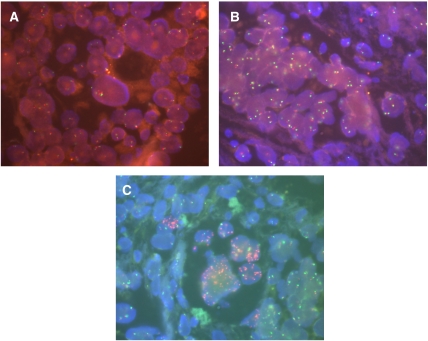
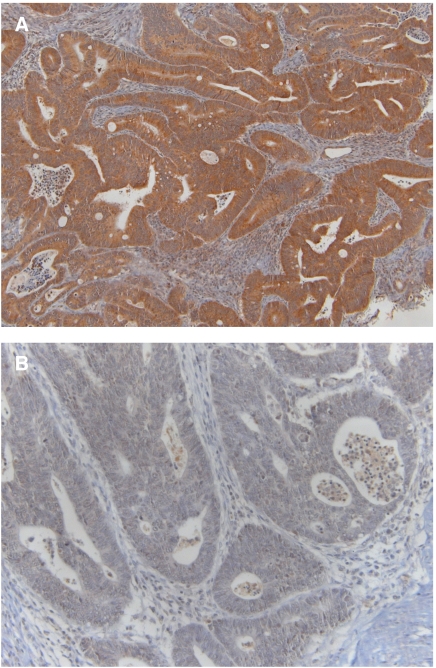
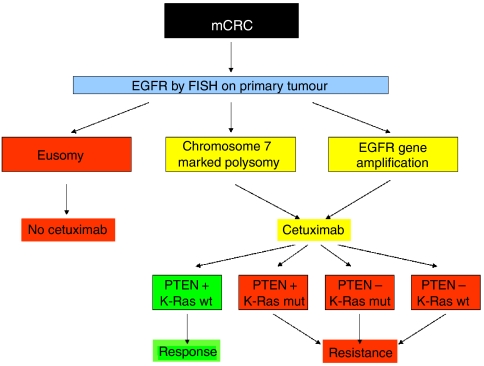
To evaluate whether the epidermal growth factor receptor (EGFR), K-Ras and PTEN, all members of the EGFR signalling pathway, may affect the clinical response in cetuximab-treated metastatic colorectal cancer (mCRC) patients. Twenty-seven cetuximab-treated mCRC patients were evaluated for drug response and investigated for EGFR protein expression and gene status, K-Ras mutational status and PTEN protein expression. Ten patients achieved a partial response (PR) to cetuximab-based therapy. All 27 patients showed EGFR protein overexpression. Epidermal growth factor receptor gene amplification was observed in eight out of 27 (30%) and chromosome 7 marked polysomy in 16 (59%) patients. Partial response was observed in six out of eight patients with EGFR gene amplification, four out of 16 with marked polysomy and none out of three with eusomy (P<0.05). The K-Ras wild-type sequence was observed in 17 patients, and nine of them experienced a PR. Conversely, K-Ras was mutated in 10 cases, of which one patient experienced a PR (P<0.05). The PTEN protein was normally expressed in 16 patients, and 10 of them achieved a PR. In contrast, no benefit was documented in 11 patients with loss of PTEN activity (P<0.001). Patients with EGFR gene amplification or chromosome 7 marked polysomy respond to cetuximab. In addition to K-Ras mutations, we demonstrate for the first time that the loss of PTEN protein expression is associated with nonresponsiveness to cetuximab.
Overview
The claims and statistics of this paper haven’t been checked yet.
Run the check — free, no account needed. It reads the open-access text and checks the sources it cites.
Integrity signals
Registry
Cites
Statistics
Figures
Verification
Claims the paper makes
The claims and statistics of this paper haven’t been checked yet.
Run the check — free, no account needed. It reads the open-access text and checks the sources it cites.
Claims other papers make about this one
Each is checked against this paper’s own text: does it say what the citing paper says it does?
In the citing paper
“PTEN inactivation (usually assessed as lack of protein expression) has been associated with nonresponsiveness to anti-EGFR moAbs in mCRC patients in several studies [19, 73, 75, 76]”
From Primary and acquired resistance to EGFR-targeted therapies in colorectal cancer: impact on future treatment strategies (2014) · cites this paper as [75]
In the citing paper
“Patients with PTEN-negative status showed a worse response rate and shorter progression-free survival (PFS) than those with PTEN-positive status [106, 108, 109].”
From Resistance to anti-EGFR therapies in metastatic colorectal cancer: underlying mechanisms and reversal strategies (2021) · cites this paper as [109]
Self-check
Percentages, sums and reported differences re-computed from the paper’s own numbers.
The self-check needs the paper’s full text.
Citations
Cites
PD-1 and PD-L1 Immune Checkpoint Blockade to Treat Breast Cancer
Hartkopf, A. D., Taran, F., Wallwiener, M., Walter, C. B., Krämer, B., Grischke, E., & Brucker, S. Y. (2016) · Breast Care · doi:10.1159/000453569 · Cited by 30,989
New Guidelines to Evaluate the Response to Treatment in Solid Tumors
Therasse, P., Arbuck, S. G., Eisenhauer, E. A., Wanders, J., Kaplan, R. S., Rubinstein, L., Verweij, J., Van Glabbeke, M., van Oosterom, A. T., Christian, M. C., et al. (2000) · JNCI: Journal of the National Cancer Institute · doi:10.1093/jnci/92.3.205 · Cited by 15,660
A genetic model for colorectal tumorigenesis
Fearon, E. R., & Vogelstein, B. (1990) · Cell · doi:10.1016/0092-8674(90)90186-i · Cited by 12,132
Cunningham, D., Humblet, Y., Siena, S., Khayat, D., Bleiberg, H., Santoro, A., Bets, D., Mueser, M., Harstrick, A., Verslype, C., et al. (2004) · New England Journal of Medicine · doi:10.1056/nejmoa033025 · Cited by 5,035
KRAS Mutation Status Is Predictive of Response to Cetuximab Therapy in Colorectal Cancer
Lièvre, A., Bachet, J.-B., Le Corre, D., Boige, V., Landi, B., Emile, J.-F., Côté, J.-F., Tomasic, G., Penna, C., Ducreux, M., et al. (2006) · Cancer Research · doi:10.1158/0008-5472.can-06-0191 · Cited by 2,229
Saltz, L. B., Meropol, N. J., Loehrer, P. J., Needle, M. N., Kopit, J., & Mayer, R. J. (2004) · Journal of Clinical Oncology · doi:10.1200/jco.2004.10.182 · Cited by 1,694
Chung, K. Y., Shia, J., Kemeny, N. E., Shah, M., Schwartz, G. K., Tse, A., Hamilton, A., Pan, D., Schrag, D., Schwartz, L., et al. (2005) · Journal of Clinical Oncology · doi:10.1200/jco.2005.08.037 · Cited by 1,081
Moroni, M., Veronese, S., Benvenuti, S., Marrapese, G., Sartore-Bianchi, A., Di Nicolantonio, F., Gambacorta, M., Siena, S., & Bardelli, A. (2005) · The Lancet Oncology · doi:10.1016/s1470-2045(05)70102-9 · Cited by 941
Saal, L. H., Holm, K., Maurer, M. S., Memeo, L., Su, T., Wang, X., Yu, J. S., Malmström, P.-O., MANSUKHANI, M. M., Enoksson, J., et al. (2005) · Cancer Research · doi:10.1158/0008-5472-can-04-3913 · Cited by 877
Di Fiore, F., Blanchard, F., Charbonnier, F., Le Pessot, F., Lamy, A., Galais, M. P., Bastit, L., Killian, A., Sesboüé, R., Tuech, J. J., et al. (2007) · British Journal of Cancer · doi:10.1038/sj.bjc.6603685 · Cited by 734
Research works printed but not linked: 4
- Jennis A, Polikoff J, Mitchell E, Badarinath S, Graham C, Chen T, Gustafson T, Langer C (2005) Erbitux (Cetuximab) plus FOLFOX for colorectal cancer (EXPLORE): preliminary efficacy analysis of a randomised phase III trial. J Clin Oncol 23(16S): 3574
- Rosenberg AH, Loehrer PJ, Needle MN, Waksal H, Hollywood E, Ramos L, Saltz LB (2002) Erbitux (IMC-C225) plus weekly irinotecan (CPT-11), fluorouracil (5FU) and leucovorin (LV) in colorectal cancer (CRC) that express the epidermal growth factor receptor (EGFr). Proc Am Soc Clin Oncol 21: 536
- Saltz L, Rubin M, Hochster H, Tchekmeydian NS, Waksal H, Needle M, LoBuglio A (2001) Cetuximab (IMC-C225) plus irinotecan (CPT-11) is active in CPT-11-refractory colorectal cancer (CRC) that expresses epidermal growth factor receptor. Proc Am Soc Clin Oncol 20: 7
- Van Laethem JL, Raoul JL, Mitry E, Brezault C, Husseini F, Cals L, Vedovato JC, Mueser MM, Rougier P (2003) Cetuximab (C225) in combination with bi-weekly irinotecan (CPT-11), infusional 5-fluorouracil (5FU) and folinic acid (FA) in patients (pts) with metastatic colorectal cancer (CRC) expressing the epidermal growth factor receptor (EGFR). Preliminary safety and efficacy results. Proc Am Soc Clin Oncol 22: 1058
Cited by
Sorted by citations
Items 301–400 of 540
Liu, Y., Tian, S., Yi, B., Feng, Z., Chu, T., Liu, J. H., Zhang, C., Zhang, S., & Wang, Y. (2022) · Frontiers in Oncology · doi:10.3389/fonc.2022.1046143 · Cited by 19
“In addition to the direct regulation of this pathway by EGFR, various proteins affect Akt activation (1, 6).”
BackgroundBhushan, S., McLeod, H. L., & Walko, C. M. (2009) · Clinical Colorectal Cancer · doi:10.3816/ccc.2009.n.003 · Cited by 20
Neia, C. P., Cavalloni, G., Fenocchio, E., Cagnazzo, C., Gammaitoni, L., Cereda, S., Nasti, G., Satolli, M. A., Aprile, G., Reni, M., et al. (2018) · PLoS ONE · doi:10.1371/journal.pone.0191593 · Cited by 19
Self-citationYip, W. K., Choo, C. W., Leong, V. C., Leong, P. P., Jabar, M. F., & Seow, H. F. (2013) · Apmis · doi:10.1111/apm.12152 · Cited by 20
Okada, Y., Miyamoto, H., Goji, T., & Takayama, T. (2014) · Digestion · doi:10.1159/000356202 · Cited by 18
Russo, R., Matrone, N., Belli, V., Ciardiello, D., Valletta, M., Esposito, S., Pedone, P. V., Ciardiello, F., Troiani, T., & Chambery, A. (2019) · Cancers · doi:10.3390/cancers11101430 · Cited by 17
Troiani, T., Napolitano, S., Martini, G., Martinelli, E., Cardone, C., Normanno, N., Vitagliano, D., Morgillo, F., Fenizia, F., Lambiase, M., et al. (2015) · Clinical Cancer Research · doi:10.1158/1078-0432.ccr-15-0211 · Cited by 18
“In fact, deregulation of other effectors of the EGFR signaling cascade, such as mutations in BRAF or PIK3CA genes, loss of PTEN expression and amplification of KRAS are also to be thought to affect primary response to EGFR blockade (7,11-14).”
BackgroundKondo, N., Tsukuda, M., Taguchi, T., Nakazaki, K., Sakakibara, A., Takahashi, H., Toth, G., & Nishimura, G. (2011) · Cancer Science · doi:10.1111/j.1349-7006.2011.01999.x · Cited by 17
Weng, W., Leung, W., Pang, Y.-J., Kuo, L., & Hsu, H.-H. (2018) · Oncology Letters · doi:10.3892/ol.2018.9408 · Cited by 17
“The evidence identities that ~50% of CRCs exhibit no response to anti-EGFR therapy, including cetuximab or panitumumab (1-11).”
BackgroundYeoh, Y., Low, T. Y., Abu, N., & Lee, P. Y. (2021) · PeerJ · doi:10.7717/peerj.12338 · Cited by 16
“, p53, phosphatase and tensin homolog (PTEN)) (Boyer et al., 2004; Frattini et al., 2007; Sartore-Bianchi et al., 2009), (iii) under-expression of cell signalling regulator (e.”
BackgroundFabi, A., Merola, R., Ferretti, G., Benedetto, A. D., Antoniani, B., Ercolani, C., Nisticò, C., Papaldo, P., Ciccarese, M., Sperduti, I., et al. (2013) · Expert Opinion on Pharmacotherapy · doi:10.1517/14656566.2013.779672 · Cited by 17
“In contrast with our data and other reports [22,24], both Algars [25] in colon cancer and Hirsch [23] in NSCLC demonstrated a significant correlation between EGFR IHC overexpression and increase in EGFR GCN.”
ResultKim, J. S., Kim, J. E., Kim, K., Lee, J., Park, J. O., Lim, H. Y., Park, Y. S., Kang, W. K., & Kim, S. T. (2017) · Journal of Cancer · doi:10.7150/jca.19458 · Cited by 17
“The loss of PTEN protein expression is a biomarker of nonresponsiveness to EGFR inhibitors [33].”
BackgroundRasmy, A. A., Fayed, A., Omar, A., & Fahmy, N. (2019) · Journal of Gastrointestinal Oncology · doi:10.21037/jgo.2019.05.04 · Cited by 18
“Although point alterations in codon 12 are the furthermost KRAS mutations in CRC, this test can detect up to 19 KRAS mutations (5).”
BackgroundGenomic variation as a marker of response to neoadjuvant therapy in locally advanced rectal cancer
Douglas, J. K., Callahan, R. E., Hothem, Z. A., Cousineau, C. S., Kawak, S., Thibodeau, B. J., Bergeron, S., Li, W., Peeples, C., & Wasvary, H. J. (2020) · Molecular & Cellular Oncology · doi:10.1080/23723556.2020.1716618 · Cited by 17
“The absence of PTEN in colorectal metastases has been noted to be predictive of a poor response to cetuximab therapy.(17) As a result, methods of restoring PTEN activity are presently being investigated”
BackgroundEffectiveness of Vigna unguiculata seed extracts in preventing colorectal cancer
Panzeri, D., Guzzetti, L., Sacco, G., Tedeschi, G., Nonnis, S., Airoldi, C., Labra, M., Fusi, P. A., Forcella, M. E., & Regonesi, M. E. (2020) · Food & Function · doi:10.1039/d0fo00913j · Cited by 17
Prevalence of APC and PTEN Alterations in Urachal Cancer
Nagy, N. T., Reis, H., Hadaschik, B. A., Niedworok, C., Módos, O., Szendrői, A., Bíró, K., Hager, T., Herold, T., Ablat, J., et al. (2020) · Pathology & Oncology Research · doi:10.1007/s12253-020-00872-6 · Cited by 17
“Loss of PTEN protein expression was shown to be associated with resistance to anti-epidermal growth factor receptor (EGFR) therapy [22], while this therapy demonstrated effectiveness in UrC [14].”
BackgroundBovio, F., Epistolio, S., Mozzi, A., Monti, E., Fusi, P. A., Forcella, M. E., & Frattini, M. (2020) · International Journal of Molecular Sciences · doi:10.3390/ijms21228805 · Cited by 17
Self-citationThe Dark Side of the Moon: The PI3K/PTEN/AKT Pathway in Colorectal Carcinoma
Silvestris, N., Tommasi, S., Petriella, D., Santini, D., Fistola, E., Russo, A. D., Numico, G., Tonini, G., Maiello, E., & Colucci, G. (2009) · Oncology · doi:10.1159/000258498 · Cited by 17
Bando, H., Yoshino, T., Yuki, S., Shinozaki, E., Nishina, T., Kadowaki, S., Yamazaki, K., Kajiura, S., Tsuchihara, K., Fujii, S., et al. (2012) · Japanese Journal of Clinical Oncology · doi:10.1093/jjco/hys160 · Cited by 17
Hertogh, G. D., & Geboes, K. (2010) · Archives of Pathology & Laboratory Medicine · doi:10.5858/134.6.853 · Cited by 18
Prospective Biomarker Study in Advanced RAS Wild-Type Colorectal Cancer: POSIBA Trial (GEMCAD 10-02)
García‐Albéniz, X., Alonso, V., Escudero, P., Méndez, M., Gallego-Plazas, J., Rodríguez, J. R., Salud, A., Fernández-Plana, J., Manzano, H., Zanui, M., et al. (2019) · The Oncologist · doi:10.1634/theoncologist.2018-0728 · Cited by 16
“Frattini, 2007 [7] PTEN Retrospective Retrospective cohort positive NA”
BackgroundProgress and prospects of targeted therapy and immunotherapy for urachal carcinoma
Zheng, Y., Peng, H., Xu, H., Ou, Y., Wang, D., Wang, H., & Ren, S. (2023) · Frontiers in Pharmacology · doi:10.3389/fphar.2023.1199395 · Cited by 16
“9 months; however, theMET status of this patient was unknown (Frattini et al., 2007).”
BackgroundTargeting tyrosine kinases in cancer
Dumur, C. I., Idowu, M. O., & Powers, C. N. (2012) · Cancer Cytopathology · doi:10.1002/cncy.21225 · Cited by 16
“Thus, neuroblastoma v-ras oncogene homolog (NRAS), BRAF, and PI3K activating mutations(86) may abrogate the effects of antiEGFR–based therapies, similar to a loss of phosphatase and tensin homolog (PTEN).(87)”
BackgroundLü, Y., Li, X., Lu, H., & Fan, Z. (2010) · PLoS ONE · doi:10.1371/journal.pone.0015823 · Cited by 16
“Among the 70–80% of patients with nonresponsive disease, 30–35% had K-Ras mutations, 20% had B-Raf and PI3K mutations, and the rest had other aberrations [13].”
BackgroundSunakawa, Y., Yang, D., Moran, M., Astrow, S. H., Tsuji, A., Stephens, C. L., Zhang, W., Cao, S., Takahashi, T., Denda, T., et al. (2016) · Cancer Biology & Therapy · doi:10.1080/15384047.2016.1178426 · Cited by 17
Alternate dosing of cetuximab for patients with metastatic colorectal cancer.
Hubbard, J. M., & Alberts, S. R. (2013) · Europe PMC (PubMed Central) · Cited by 16
Serna, G., Ruiz-Pace, F., Cecchi, F., Fasani, R., Jimenez, J., Thyparambil, S., Landolfi, S., Elez, E., Vivancos, A., Hembrough, T., et al. (2019) · Scientific Reports · doi:10.1038/s41598-019-49867-7 · Cited by 16
Modest, D. P., Reinacher‐Schick, A., Stintzing, S., Giessen, C. A., Tannapfel, A., Laubender, R. P., Brodowicz, T., Knittelfelder, R., Vrbanec, D., Schmiegel, W., et al. (2012) · Anti-Cancer Drugs · doi:10.1097/cad.0b013e328352ff1d · Cited by 17
Targeting metastatic colorectal cancer in 2008: a long way from 5-FU.
Pohl, A., Zhang, W., Ning, Y., Manegold, P. C., Lurje, G., & Lenz, H. (2008) · PubMed · Cited by 15
Panitumumab: the evidence for its use in the treatment of metastatic colorectal cancer
Berardi, R. (2010) · Core evidence · doi:10.2147/ce.s7035 · Cited by 14
“66,67 71 In mCRC, it has been reported that loss of PTEN expression, which occurs in 30% of sporadic cases, may be associated with lack of response to cetuximab.”
Zuo, Q., Shi, M., Li, L., Chen, J., & Luo, R. (2010) · Biomedicine & Pharmacotherapy · doi:10.1016/j.biopha.2010.03.003 · Cited by 14
Novel biomarkers of metastatic cancer
Dawood, S. S. (2010) · Expert Review of Molecular Diagnostics · doi:10.1586/erm.10.35 · Cited by 14
Muhammad, S., Jiang, Z., Liu, Z., Kaur, K., & Wang, X. (2013) · Europe PMC (PubMed Central) · doi:10.3978/j.issn.2078-6891.2012.044 · Cited by 13
Inoue, M., Takahashi, S. I., Soeda, H., Shimodaira, H., Watanabe, M., Miura, K., Sasaki, I., Kato, S., & Ishioka, C. (2015) · International Journal of Clinical Oncology · doi:10.1007/s10147-015-0841-4 · Cited by 13
KRAS Testing and Its Importance in Colorectal Cancer
Patil, D. T., Fraser, C. R., & Plesec, T. P. (2010) · Current Oncology Reports · doi:10.1007/s11912-010-0099-y · Cited by 13
“41 [42] 63 0”
BackgroundPharmacogenetics in chemotherapy of colorectal cancer
Tanja, L. H., Guchelaar, H., & Gelderblom, H. A. J. (2009) · Best Practice & Research Clinical Gastroenterology · doi:10.1016/j.bpg.2009.02.011 · Cited by 13
Current Approaches for Predicting a Lack of Response to Anti-EGFR Therapy inKRASWild-Type Patients
Er, T., Chen, C.-C., Bujanda, L., & Herreros‐Villanueva, M. (2014) · BioMed Research International · doi:10.1155/2014/591867 · Cited by 13
“Moreover, exon 20 mutations lie in the kinase domain and require p85 binding but are independent of GTP bound RAS [5].”
BackgroundValidation of blood testing for K-ras mutations in colorectal and pancreatic cancer.
Rogosnitzky, M., & Danks, R. (2010) · PubMed · Cited by 13
Biomarkers in Colorectal Cancer
Lim, H. Y., & Toh, H. C. (2011) · Proceedings of Singapore Healthcare · doi:10.1177/201010581102000105 · Cited by 13
Khelwatty, S. A., Puvanenthiran, S., Seddon, A. M., Bagwan, I., Essapen, S., & Modjtahedi, H. (2025) · Cancers · doi:10.3390/cancers17172810 · Cited by 14
“Indeed, there is a wide variation in the expression of EGFR in the literature, which ranges between 8% and 100% [32,162,163] (Table 4).”
Gu, R., Fang, H., Wang, R., Dai, W., & Cai, G. (2024) · Clinical and Translational Medicine · doi:10.1002/ctm2.1764 · Cited by 14
“109,110 Therefore, the abnormal activity of the PI3K signalling, along with reactivation of MAPK signalling, may explain the modest efficacy observed in patients with BRAF V600E -mutant CRC treated with BRAF inhibitors alone.”
BackgroundTumor biology and cancer therapy – an evolving relationship
Seufferlein, T. T. W., Ahn, J., Krndija, D., Lother, U., Adler, G., & von Wichert, G. (2009) · Cell Communication and Signaling · doi:10.1186/1478-811x-7-19 · Cited by 12
Epidermal growth factor receptor (EGFR) gene copy number in colorectal adenoma-carcinoma progression
Flora, M., Piana, S., Bassano, C., Bisagni, A., Marco, L. D., Ciarrocchi, A., Tagliavini, E., Gardini, G., Tamagnini, I., Banzi, C., et al. (2012) · Cancer Genetics · doi:10.1016/j.cancergen.2012.10.005 · Cited by 12
NAKAMOTO, K., Nagahara, H., Maeda, K., Noda, E., Inoue, T., Yashiro, M., Nishiguchi, Y., Ohira, M., & Hirakawa, K. (2013) · Oncology Letters · doi:10.3892/ol.2013.1187 · Cited by 12
“…of expression of amphiregulin and epiregulin (19), FCGR2A and FCGR3A polymorphisms (20), BRAF mutation, PIK3CA mutation and PTEN inactivation (18,21-26) have been reported to be associated with response to Cmab, but at present, these markers cannot be used to select patients who are eligible…”
Raja, M., Zverev, M., Seipel, K., Williams, G. T., Clarke, A. R., & Shaw, P. H. (2015) · Molecular Cancer Therapeutics · doi:10.1158/1535-7163.mct-15-0223 · Cited by 13
“Moreover, PTEN loss is associated with poor prognosis and predicts non-response to anti-EGFR agents currently available for KRAS wildtype CRC patients (21, 22).”
BackgroundChen, X., & Zhao, Y. (2020) · Journal of Clinical Laboratory Analysis · doi:10.1002/jcla.23283 · Cited by 12
Multidisciplinary management in rectal cancer
Hervas, A., de Paredes, M. G., & Martínez, E. L. (2010) · Clinical & Translational Oncology · doi:10.1007/s12094-010-0602-9 · Cited by 12
Personeni, N., Rimassa, L., Verusio, C., Barni, S., Rubino, L., Bozzarelli, S., Villa, E., Carnaghi, C., Tronconi, M. C., Gerardi, C., et al. (2015) · Clinical Colorectal Cancer · doi:10.1016/j.clcc.2015.02.006 · Cited by 12
Can we accurately report PTEN status in advanced colorectal cancer?
Hocking, C. M., Hardingham, J. E., Broadbridge, V. T., Wrin, J., Townsend, A. R., Tebbutt, N. C., Cooper, J. E., Ruszkiewicz, A. R., Lee, C. K., & Price, T. J. (2014) · BMC Cancer · doi:10.1186/1471-2407-14-128 · Cited by 12
“In the largest cohort of mCRC patients, PTEN loss was defined as no staining in any cells at any intensity [8], while other groups have used various cut-offs of reduced PTEN expression [17,28-30].”
BackgroundFakih, M. (2008) · Expert Review of Anticancer Therapy · doi:10.1586/14737140.8.9.1471 · Cited by 11
The Marriage of Growth Factor Inhibitors and Chemotherapy: Bliss or Bust?
Staal, S. P., O’Connell, M. J., & Allegra, C. J. (2009) · Journal of Clinical Oncology · doi:10.1200/jco.2008.20.3224 · Cited by 11
Differential gene expression during colon-to-lung metastasis
Kim (2011) · Oncology Reports · doi:10.3892/or.2011.1142 · Cited by 10
Li, W., Shi, Q., Wang, W., Liu, J., Ren, J., Li, Q., & Hou, F. (2014) · Colorectal Disease · doi:10.1111/codi.12749 · Cited by 10
New Trends in Epidermal Growth Factor Receptor-Directed Monoclonal Antibodies
Markman, B., Capdevila, J., Élez, E., & Tabernero, J. M. (2009) · Immunotherapy · doi:10.2217/imt.09.66 · Cited by 10
SKP2/P27Kip1pathway is associated with Advanced Ovarian Cancer in Saudi Patients
Hafez, M. M., Alhoshani, A., Alhosaini, K. A., AlSharari, S. D., Al-Rejaie, S. S., Sayed‐Ahmed, M. M., & Al‐Shabanah, O. A. (2015) · Asian Pacific Journal of Cancer Prevention · doi:10.7314/apjcp.2015.16.14.5807 · Cited by 10
“…suggested that the elevated expression levels of EGFR gene is related to the response to anti-EGFR agents, whereas the resistance to antiEGFR MoAbs associated with mutations in the KRAS, NRAS, BRAF or PIK3CA genes or loss of PTEN protein expression (Moroni et al., 2005; Frattini et al., 2007).”
BackgroundRole of anti-EGFR target therapy in colorectal carcinoma
Enrique, A.-A. (2011) · Frontiers in Bioscience-Elite · doi:10.2741/357 · Cited by 10
“Its loss is associated with an intrinsic activation of the AKT pathway and is known to confer resistance to inhibitors of the EGFR in vitro (34) and in vivo (35-37).”
BackgroundPhenotypic characterization of the novel, non‑hotspot oncogenic KRAS mutants E31D and E63K
Angeles, A. K., Yu, R. T. D., la Paz, E. C.-D., & Garcia, R. L. (2019) · Oncology Letters · doi:10.3892/ol.2019.10325 · Cited by 9
“5 (Dassault Systèmes BIOvIA, San Diego, CA, USA) using the MODELER protocol, which scores and optimizes the conformation of a mutated residue and its neighbors within a defined structure (15).”
MethodEpidermal Growth Factor Receptor Inhibitors: Current Status and Future Directions
Chen, H. X., Cleck, J. N., Coelho, R. P., & Dancey, J. E. (2009) · Current Problems in Cancer · doi:10.1016/j.currproblcancer.2009.10.002 · Cited by 10
Dual-Antibody Therapy in Advanced Colorectal Cancer: Gather Ye Rosebuds While Ye May
Blanke, C. D. (2008) · Journal of Clinical Oncology · doi:10.1200/jco.2008.21.2522 · Cited by 10
Dazio, G., Epistolio, S., Frattini, M., & Saletti, P. (2022) · Journal of Clinical Medicine · doi:10.3390/jcm11247523 · Cited by 10
“However, to date data are controversial, especially regarding PTEN loss [5,46,48,49] and further studies are warranted.”
BackgroundSelf-citationBoedigheimer, M. J., Freeman, D. J., Kiaei, P., Damore, M. A., & Radinsky, R. (2013) · Neoplasia · doi:10.1593/neo.121038 · Cited by 9
“Although some progress has been made to help stratify patients using biomarkers such as gene amplification, mutations in genes including KRAS, BRAF, PI3K, and PTEN; and expression of EGFR ligands, many patients with normal expression of these markers progress on anti-EGFR therapy [19–25].”
BackgroundSelect Biomarkers for Tumors of the Gastrointestinal Tract: Present and Future
Bartley, A. N., & Hamilton, S. R. (2014) · Archives of Pathology & Laboratory Medicine · doi:10.5858/arpa.2014-0189-ra · Cited by 9
KLF4 p.A472D Mutation Contributes to Acquired Resistance to Cetuximab in Colorectal Cancer
Ye, S., Hu, X., Ni, C., Jin, W., Xu, Y., Chang, L., Zhou, H., Jiang, J., & Yang, L. (2020) · Molecular Cancer Therapeutics · doi:10.1158/1535-7163.mct-18-1385 · Cited by 9
“HER-2 amplification and PTEN loss may also be regarded as prognostic biomarkers for cetuximab resistanceofKRASwild-typepatients (9, 10).”
BackgroundWanebo, H. J., & Berz, D. (2010) · Journal of Surgical Oncology · doi:10.1002/jso.21691 · Cited by 9
“Along with that, most authorities agree that PTEN loss confers resistance to EGFR-directed moAb therapy [53].”
BackgroundBiomarkers and anti-EGFR therapies for KRAS wild-type metastatic colorectal cancer
García-Sáenz, J. Á., Sastre, J., & Díaz‐Rubio, E. (2009) · Clinical & Translational Oncology · doi:10.1007/s12094-009-0436-5 · Cited by 10
Cost-Effectiveness of Cetuximab for Advanced Esophageal Squamous Cell Carcinoma
Janmaat, V. T., Bruno, M. J., Polinder, S., Lorenzen, S., Lordick, F., Peppelenbosch, M. P., & Spaander, M. C. W. (2016) · PLoS ONE · doi:10.1371/journal.pone.0153943 · Cited by 9
“Tumor specific EGFR downstream signaling mutations in KRAS, [8, 31] BRAF, [31, 32] PTEN, [33] and PIK3CA [31, 34] cause reduced benefit of cetuximab therapy in colon carcinoma patients.”
BackgroundPrice, T. J., Tebbutt, N. C., Karapetis, C. S., Segelov, E., Pavlakis, N., Cunningham, D., Sobrero, A. F., Haller, D. G., & Shapiro, J. D. (2010) · Clinical Colorectal Cancer · doi:10.3816/ccc.2010.n.001 · Cited by 9
Sesboüé, R., Pessot, F. L., Fiore, F. D., & Frébourg, T. (2011) · British Journal of Cancer · doi:10.1038/bjc.2011.570 · Cited by 10
“…several studies have shown that there is a clear association between EGFR amplification and clinical response, with percentages of responders varying from 10 up to 89% among patients displaying EGFR amplification (Moroni et al, 2005; Frattini et al, 2007; Cascinu et al, 2008; Razis et al, 2008).”
BackgroundIseki, Y., Shibutani, M., Maeda, K., Nagahara, H., Fukuoka, T., Ikeya, T., MATSUTANI, S., Kimura, K., Toyokawa, T., Amano, R., et al. (2016) · Anticancer Research · doi:10.21873/anticanres.11084 · Cited by 8
KRAS mutational analysis for colorectal cancerApplication: Pharmacogenomic
Wang, G., Kelley, R. K., & GAPPNet (2010) · PLoS Currents · doi:10.1371/currents.rrn1175 · Cited by 8
Ágoston, E. I., Micsík, T., Ács, B., Fekete, K., Hahn, O., Baranyai, Z., Dede, K., Bodoky, G., Bursics, A., Kulka, J., et al. (2016) · Diagnostic Pathology · doi:10.1186/s13000-016-0508-0 · Cited by 8
“A high concordance of PTEN expression levels in matched primary and metastatic CRCs was found and these expression levels significantly correlated with survival [27, 28].”
BackgroundInfluentialMolecular testing to optimize therapeutic decision making in advanced colorectal cancer.
Semrad, T. J., & Kim, E. J.-H. (2016) · Europe PMC (PubMed Central) · doi:10.3978/j.issn.2078-6891.2015.094 · Cited by 7
“In small retrospective series of 27 patients with CRC who received cetuximab as part of their therapy, 10 of 16 patients with intact PTEN had objective response in contrast to none of the 11 patients with loss of PTEN (68).”
BackgroundResultLoupakis, F., Cremolini, C., Fontanini, G., Stasi, I., Salvatore, L., & Falcone, A. (2009) · Therapeutic Advances in Medical Oncology · doi:10.1177/1758834009348984 · Cited by 8
“…anti-EGFRs has been suggested in a small series of 27 patients, treated with cetuximab alone or associated with chemotherapy, where none of 11 patients with loss of PTEN responded in comparison with 10 out of 16 patients in which the protein was normally expressed (p< 0.001) [Frattini et al. 2007].”
ResultInfluentialThe endothelin axis in the metastatic process of colon carcinoma.
Sørby, L. A., Kleiveland, C. R., Andersen, S. N., Bukholm, I., & Jacobsen, M. (2011) · PubMed · Cited by 8
Yu, A., Zhang, J., Mei, Y., Zhong, H., Chen, S., & Song, Q. (2020) · Genetic Testing and Molecular Biomarkers · doi:10.1089/gtmb.2019.0269 · Cited by 8
“Its disruption has been associated with the occurrence and development of human tumors (Myers et al. , 1998; Frattini et al. , 2007).”
Evolving role of cetuximab in the treatment of colorectal cancer.
Schuch, G., Kobold, S., & Bokemeyer, C. (2009) · PubMed Central · Cited by 8
Stücheli, S., Araya, S., Ercan, C., Moser, S. O., Gallon, J., Jenö, P., Piscuoglio, S., Terracciano, L., & Odermatt, A. (2022) · Cancers · doi:10.3390/cancers14133074 · Cited by 6
“In colorectal cancer, the response of EGFR to treatment with cetuximab is dependent on PTEN status, and in PC-3 cells, restoration of PTEN expression improved response to cetuximab-induced apoptosis and the inhibition of cell proliferation [48,49].”
BackgroundMolecular testing in colorectal cancer
Thomas, J. S., & Shi, C. (2023) · Elsevier eBooks · doi:10.1016/b978-0-12-822824-1.00018-3 · Cited by 7
Predictive and prognostic biomarkers in gastrointestinal tract tumours
Nowak, K. M., & Chetty, R. (2024) · Pathology · doi:10.1016/j.pathol.2023.12.412 · Cited by 7
Lim, S. H., Lee, S.-Y., Hong, J. Y., Lee, J., & Kim, S. T. (2024) · Translational Cancer Research · doi:10.21037/tcr-24-20 · Cited by 8
“Concomitant occurrence of BRAF mutation and PTEN loss is considered a predictive marker for poor prognosis of cetuximab treatment (22-24).”
Lockhart, C. (2009) · OncoTargets and Therapy · doi:10.2147/ott.s3849 · Cited by 7
“In CRC, majority of the mutations (70%) occur in codon 12, with 30% occurring in codon 13.(59) Mutations of the KRAS gene may activate downstream signal transduction leading to resistance to upstream inhibition of the EGFR by monoclonal antibodies.”
Review: Medical treatment of advanced colorectal cancer in 2009
Grothey, A. (2009) · Therapeutic Advances in Medical Oncology · doi:10.1177/1758834009343302 · Cited by 7
“Further predictive biomarkers for the activity of EGFR antibodies in CRC have been identified in retrospective studies, in which the activity of cetuximab was correlated with the maintained expression of phosphatase and tensin homolog (PTEN) and higher levels of the EGFR ligands, amphiregulin and epiregulin [Loupakis…”
BackgroundIntegrating Biomarkers Into Clinical Decision Making for Colorectal Cancer
Wilson, P. M., & Lenz, H. (2010) · Clinical Colorectal Cancer · doi:10.3816/ccc.2010.s.003 · Cited by 7
New and potential clinical applications ofKRASas a cancer biomarker
Kriegshäuser, G., Auner, V., & Zeillinger, R. (2010) · Expert Opinion on Medical Diagnostics · doi:10.1517/17530059.2010.510512 · Cited by 7
Tsoukalas, N., Tzovaras, A. A., Tolia, M., Kostakis, I. D., Papakostidi, A., Pistamaltzian, N. F., & Ardavanis, A. (2012) · PubMed · Cited by 6
Ham-Karim, H. A., Negm, O. H., Ahmad, N., & Ilyas, M. (2023) · Cancer Cell International · doi:10.1186/s12935-023-03020-7 · Cited by 6
Pfeiffer, P., Qvortrup, C., & Bjerregaard, J. K. (2009) · PubMed Central · Cited by 6
Prognostic markers in colorectal pathology: is morphology enough?
Wang, L. M., & Sheahan, K. D. (2011) · Diagnostic histopathology · doi:10.1016/j.mpdhp.2011.06.016 · Cited by 6
Resistance--the true face of biological defiance
Emami-Shahri, N., & Hagemann, T. (2011) · Rheumatology · doi:10.1093/rheumatology/ker326 · Cited by 6
Cho, B. C., Kim, J. H., Soo, R. A., & Yang, C.-H. (2009) · Yonsei Medical Journal · doi:10.3349/ymj.2010.51.1.1 · Cited by 6
Deyati, A., Bagewadi, S., Senger, P., Hofmann‐Apitius, M., & Novac, N. (2015) · Scientific Reports · doi:10.1038/srep08013 · Cited by 6
Advances in the Treatment of Metastatic Colorectal Cancer
Kurkjian, C. D., & Kummar, S. (2010) · Disease-a-Month · doi:10.1016/j.disamonth.2009.12.005 · Cited by 6
Picker, A., & Jackson, D. (2011) · Expert Review of Molecular Diagnostics · doi:10.1586/erm.11.45 · Cited by 6
Mishra, R. K., Ahmad, A., Vyawahare, A., Kumar, A., & Khan, R. (2020) · Current Topics in Medicinal Chemistry · doi:10.2174/1568026620666200616133814 · Cited by 6
Integration of Anti-Epidermal Growth Factor Receptor Therapies With Cytotoxic Chemotherapy
Serrano, C., Markman, B., & Tabernero, J. M. (2010) · The Cancer Journal · doi:10.1097/ppo.0b013e3181e07670 · Cited by 5
miRNAs as Modulators of EGFR Therapy in Colorectal Cancer
Pereira, D. M., & Rodrigues, C. M. P. (2018) · Advances in experimental medicine and biology · doi:10.1007/978-3-030-02771-1_9 · Cited by 5
de Bruin, L. B., Wachters, J. E., Schrijvers, M. L., Slagter‐Menkema, L., Mastik, M. F., Langendijk, J. A., van der Wal, J. E., Schuuring, E. M. D., & van der Laan, B. F. A. M. (2019) · Laryngoscope Investigative Otolaryngology · doi:10.1002/lio2.272 · Cited by 5
“Frattini et al showed in a series of colorectal cancer patients that loss of PTEN expression by immunohistochemistry distinguished responder from nonresponder patients to cetuximab.(43) Studies in prostate cancer cells showed a comparable relation and PTEN reintroduction restored the cell response to cetuximab.”
ResultMolecular Testing in Colorectal Cancer
Thomas, J. S., & Shi, C. (2016) · Elsevier eBooks · doi:10.1016/b978-0-12-800886-7.00024-8 · Cited by 5
Han, C., Ma, J.-T., Li, F., & Zou, H. (2011) · Journal of Cancer Therapy · doi:10.4236/jct.2011.25090 · Cited by 6
Laurent‐Puig, P., Lièvre, A., & Blons, H. (2009) · European Journal of Cancer · doi:10.1016/s0959-8049(09)70063-2 · Cited by 6
Metadata
- Authors
- Frattini, M., Saletti, P., Romagnani, E., Martin, V, Molinari, F., Ghisletta, M., Camponovo, A., Etienne, L. L., Cavalli, F., & Mazzucchelli, L.
- Affiliations
- Istituto Cantonale di Patologia (CH)
- Ospedale San Giovanni Bellinzona (CH)
- Corresponding author
- Frattini, M
- Venue
- British Journal of Cancer
- Published
- 2007-10
- Volume
- 97
- Issue
- 8
- Pages
- 1139-1145
- ISSN
- 0007-0920 (ISSN-L)
- 1532-1827
- PMC
- PMC2360431
- OpenAlex
- W2100589633
- Cited by
- 540
- References
- 31
- Citations by year
- 2026: 3 · 2025: 3 · 2024: 9 · 2023: 7 · 2022: 8 · 2021: 14 · 2020: 16 · 2019: 14 · 2018: 9 · 2017: 15 · 2016: 20 · 2015: 30 · 2014: 38 · 2013: 38 · 2012: 63
- FWCI
- 33.57
- Type
- journal article
- Language
- en
- Open access
- hybrid
- doi.org
- Licence
- cc-by-nc-sa
- www.springer.com/tdm (unspecified)
- Locations
- British Journal of Cancer (publishedVersion, cc-by-nc-sa)
- PubMed Central (publishedVersion, cc-by)
- PubMed (publishedVersion)
- Funders
- Oncosuisse
- Topics
- Health Sciences › Medicine › Oncology › Colorectal Cancer Treatments and Studies
- Health Sciences › Medicine › Pulmonary and Respiratory Medicine › Lung Cancer Treatments and Mutations
- Health Sciences › Medicine › Oncology › HER2/EGFR in Cancer Research
- Keywords
- PTEN loss, cetuximab, metastatic colorectal cancer, EGFR overexpression, EGFR amplification, KRAS mutation, chromosome 7 polysomy, drug response prediction, predictive biomarkers
- MeSH terms
- Cetuximab, Adult, Aged, Algorithms, Antibodies, Monoclonal, Antineoplastic Agents, Chromosomes, Human, Pair 7, Female, Gene Amplification, Humans, Immunohistochemistry, Male, Middle Aged, Proto-Oncogene Proteins, Biomarkers, Tumor, Colorectal Neoplasms, Gene Expression, Proto-Oncogene Proteins p21(ras), In Situ Hybridization, Fluorescence, ras Proteins, Drug Resistance, Neoplasm, PTEN Phosphohydrolase, Antibodies, Monoclonal, Humanized, ErbB Receptors
About these checks
Registry, retraction, Cites and statistics results are computed, not judged, with one exception: a printed reference that no index lists is read once by a model before it counts as a citation error. Claims are extracted by a model and kept only when their quote appears verbatim in the text; each cited source is then checked, with a model’s help, for whether it says what the claim relies on. Those verdicts can be wrong — read the claim’s quote and the cited source before relying on one.
Statistics and arithmetic are recomputed, not judged.
Confidence bands are shown only for fields calibrated on our annotated test set. None is calibrated yet, so no band is shown.
What counts as a claim ›How we measure confidence ›How we check this ›
Are you an author, or do you see a problem with this page? Request a review
