

The DOI matches its Crossref record; 31 of the 31 references it cites were found in a registry or an index.
PTEN loss of expression predicts cetuximab efficacy in metastatic colorectal cancer patients
Open accessAbstract
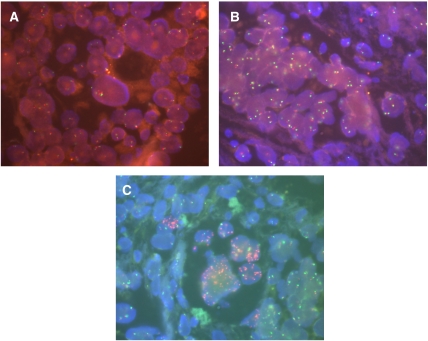
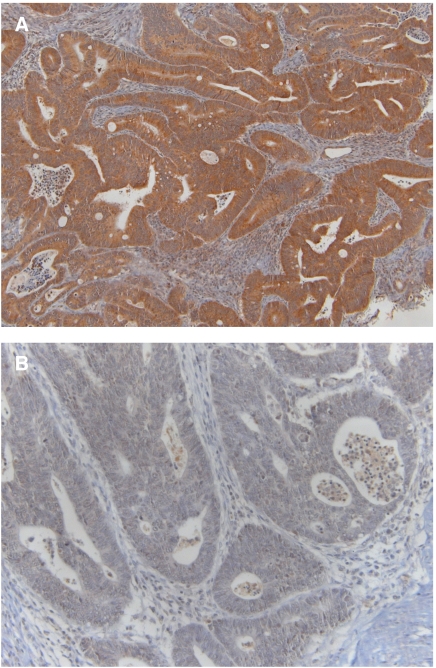
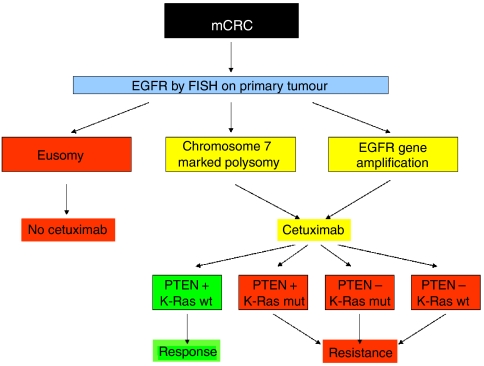
To evaluate whether the epidermal growth factor receptor (EGFR), K-Ras and PTEN, all members of the EGFR signalling pathway, may affect the clinical response in cetuximab-treated metastatic colorectal cancer (mCRC) patients. Twenty-seven cetuximab-treated mCRC patients were evaluated for drug response and investigated for EGFR protein expression and gene status, K-Ras mutational status and PTEN protein expression. Ten patients achieved a partial response (PR) to cetuximab-based therapy. All 27 patients showed EGFR protein overexpression. Epidermal growth factor receptor gene amplification was observed in eight out of 27 (30%) and chromosome 7 marked polysomy in 16 (59%) patients. Partial response was observed in six out of eight patients with EGFR gene amplification, four out of 16 with marked polysomy and none out of three with eusomy (P<0.05). The K-Ras wild-type sequence was observed in 17 patients, and nine of them experienced a PR. Conversely, K-Ras was mutated in 10 cases, of which one patient experienced a PR (P<0.05). The PTEN protein was normally expressed in 16 patients, and 10 of them achieved a PR. In contrast, no benefit was documented in 11 patients with loss of PTEN activity (P<0.001). Patients with EGFR gene amplification or chromosome 7 marked polysomy respond to cetuximab. In addition to K-Ras mutations, we demonstrate for the first time that the loss of PTEN protein expression is associated with nonresponsiveness to cetuximab.
Overview
The claims and statistics of this paper haven’t been checked yet.
Run the check — free, no account needed. It reads the open-access text and checks the sources it cites.
Integrity signals
Registry
Cites
Statistics
Figures
Verification
Claims the paper makes
The claims and statistics of this paper haven’t been checked yet.
Run the check — free, no account needed. It reads the open-access text and checks the sources it cites.
Claims other papers make about this one
Each is checked against this paper’s own text: does it say what the citing paper says it does?
The source backs part of the claim, not all of it — or backs it for a different population, condition or comparison.
In the citing paper
“Patients with PTEN-negative status showed a worse response rate and shorter progression-free survival (PFS) than those with PTEN-positive status [106, 108, 109].”
From Resistance to anti-EGFR therapies in metastatic colorectal cancer: underlying mechanisms and reversal strategies (2021) · cites this paper as [109]
Experimental — accuracy not yet measuredIn the citing paper
“PTEN inactivation (usually assessed as lack of protein expression) has been associated with nonresponsiveness to anti-EGFR moAbs in mCRC patients in several studies [19, 73, 75, 76]”
From Primary and acquired resistance to EGFR-targeted therapies in colorectal cancer: impact on future treatment strategies (2014) · cites this paper as [75]
Self-check
Percentages, sums and reported differences re-computed from the paper’s own numbers.
The self-check needs the paper’s full text.
Citations
Cites
PD-1 and PD-L1 Immune Checkpoint Blockade to Treat Breast Cancer
Hartkopf, A. D., Taran, F., Wallwiener, M., Walter, C. B., Krämer, B., Grischke, E., & Brucker, S. Y. (2016) · Breast Care · doi:10.1159/000453569 · Cited by 30,989
New Guidelines to Evaluate the Response to Treatment in Solid Tumors
Therasse, P., Arbuck, S. G., Eisenhauer, E. A., Wanders, J., Kaplan, R. S., Rubinstein, L., Verweij, J., Van Glabbeke, M., van Oosterom, A. T., Christian, M. C., et al. (2000) · JNCI: Journal of the National Cancer Institute · doi:10.1093/jnci/92.3.205 · Cited by 15,660
A genetic model for colorectal tumorigenesis
Fearon, E. R., & Vogelstein, B. (1990) · Cell · doi:10.1016/0092-8674(90)90186-i · Cited by 12,132
Cunningham, D., Humblet, Y., Siena, S., Khayat, D., Bleiberg, H., Santoro, A., Bets, D., Mueser, M., Harstrick, A., Verslype, C., et al. (2004) · New England Journal of Medicine · doi:10.1056/nejmoa033025 · Cited by 5,035
KRAS Mutation Status Is Predictive of Response to Cetuximab Therapy in Colorectal Cancer
Lièvre, A., Bachet, J.-B., Le Corre, D., Boige, V., Landi, B., Emile, J.-F., Côté, J.-F., Tomasic, G., Penna, C., Ducreux, M., et al. (2006) · Cancer Research · doi:10.1158/0008-5472.can-06-0191 · Cited by 2,229
Saltz, L. B., Meropol, N. J., Loehrer, P. J., Needle, M. N., Kopit, J., & Mayer, R. J. (2004) · Journal of Clinical Oncology · doi:10.1200/jco.2004.10.182 · Cited by 1,694
Chung, K. Y., Shia, J., Kemeny, N. E., Shah, M., Schwartz, G. K., Tse, A., Hamilton, A., Pan, D., Schrag, D., Schwartz, L., et al. (2005) · Journal of Clinical Oncology · doi:10.1200/jco.2005.08.037 · Cited by 1,081
Moroni, M., Veronese, S., Benvenuti, S., Marrapese, G., Sartore-Bianchi, A., Di Nicolantonio, F., Gambacorta, M., Siena, S., & Bardelli, A. (2005) · The Lancet Oncology · doi:10.1016/s1470-2045(05)70102-9 · Cited by 941
Saal, L. H., Holm, K., Maurer, M. S., Memeo, L., Su, T., Wang, X., Yu, J. S., Malmström, P.-O., MANSUKHANI, M. M., Enoksson, J., et al. (2005) · Cancer Research · doi:10.1158/0008-5472-can-04-3913 · Cited by 877
Di Fiore, F., Blanchard, F., Charbonnier, F., Le Pessot, F., Lamy, A., Galais, M. P., Bastit, L., Killian, A., Sesboüé, R., Tuech, J. J., et al. (2007) · British Journal of Cancer · doi:10.1038/sj.bjc.6603685 · Cited by 734
Research works printed but not linked: 4
- Jennis A, Polikoff J, Mitchell E, Badarinath S, Graham C, Chen T, Gustafson T, Langer C (2005) Erbitux (Cetuximab) plus FOLFOX for colorectal cancer (EXPLORE): preliminary efficacy analysis of a randomised phase III trial. J Clin Oncol 23(16S): 3574
- Rosenberg AH, Loehrer PJ, Needle MN, Waksal H, Hollywood E, Ramos L, Saltz LB (2002) Erbitux (IMC-C225) plus weekly irinotecan (CPT-11), fluorouracil (5FU) and leucovorin (LV) in colorectal cancer (CRC) that express the epidermal growth factor receptor (EGFr). Proc Am Soc Clin Oncol 21: 536
- Saltz L, Rubin M, Hochster H, Tchekmeydian NS, Waksal H, Needle M, LoBuglio A (2001) Cetuximab (IMC-C225) plus irinotecan (CPT-11) is active in CPT-11-refractory colorectal cancer (CRC) that expresses epidermal growth factor receptor. Proc Am Soc Clin Oncol 20: 7
- Van Laethem JL, Raoul JL, Mitry E, Brezault C, Husseini F, Cals L, Vedovato JC, Mueser MM, Rougier P (2003) Cetuximab (C225) in combination with bi-weekly irinotecan (CPT-11), infusional 5-fluorouracil (5FU) and folinic acid (FA) in patients (pts) with metastatic colorectal cancer (CRC) expressing the epidermal growth factor receptor (EGFR). Preliminary safety and efficacy results. Proc Am Soc Clin Oncol 22: 1058
Cited by
Sorted by citations
K-ras Mutations and Benefit from Cetuximab in Advanced Colorectal Cancer
Karapetis, C. S., Khambata-Ford, S., Jonker, D. J., O'Callaghan, C. J., Tu, D., Tebbutt, N. C., Simes, R. J., Chalchal, H., Shapiro, J. D., Robitaille, S., et al. (2008) · New England Journal of Medicine · doi:10.1056/nejmoa0804385 · Cited by 3,622
EGFR Antagonists in Cancer Treatment
Ciardiello, F., & Tortora, G. (2008) · New England Journal of Medicine · doi:10.1056/nejmra0707704 · Cited by 2,095
Wild-Type BRAF Is Required for Response to Panitumumab or Cetuximab in Metastatic Colorectal Cancer
Di Nicolantonio, F., Martini, M., Molinari, F., Sartore-Bianchi, A., Arena, S., Saletti, P., De Dosso, S., Mazzucchelli, L., Frattini, M., Siena, S., et al. (2008) · Journal of Clinical Oncology · doi:10.1200/jco.2008.18.0786 · Cited by 1,591
Self-citationAllegra, C. J., Jessup, J. M., Somerfield, M. R., Hamilton, S. R., Hammond, E. H., Hayes, D. F., McAllister, P. K., Morton, R. F., & Schilsky, R. L. (2009) · Journal of Clinical Oncology · doi:10.1200/jco.2009.21.9170 · Cited by 1,156
Molecular Mechanisms of Resistance to Cetuximab and Panitumumab in Colorectal Cancer
Bardelli, A., & Siena, S. (2010) · Journal of Clinical Oncology · doi:10.1200/jco.2009.24.6116 · Cited by 746
De Roock, W., Jonker, D. J., Di Nicolantonio, F., Sartore-Bianchi, A., Tu, D., Siena, S., Lamba, S., Arena, S., Frattini, M., Piessevaux, H., et al. (2010) · JAMA · doi:10.1001/jama.2010.1535 · Cited by 748
“KRAS mutation analysis was performed by direct sequencing as described previously.(6-8) All patients in the Leuven and Italian datasetsprovidedwritten informedconsenttotheoriginalclinicaltrialandtomolecular analyses.”
MethodSelf-citationLinardou, H., Dahabreh, I. J., Kanaloupiti, D., Siannis, F., Bafaloukos, D., Kosmidis, P., Papadimitriou, C. A., & Murray, S. (2008) · The Lancet Oncology · doi:10.1016/s1470-2045(08)70206-7 · Cited by 739
Sartore-Bianchi, A., Martini, M., Molinari, F., Veronese, S., Nichelatti, M., Artale, S., Di Nicolantonio, F., Saletti, P., De Dosso, S., Mazzucchelli, L., et al. (2009) · Cancer Research · doi:10.1158/0008-5472.can-08-2466 · Cited by 739
“In CRC, we have previously reported that loss of PTEN expression, which occurs in 30% of sporadic cases, may be associated with lack of response to cetuximab (16).”
BackgroundMethodSelf-citationLaurent-Puig, P., Cayre, A., Manceau, G., Buc, E., Bachet, J.-B., Lecomte, T., Rougier, P., Lievre, A., Landi, B., Boige, V., et al. (2009) · Journal of Clinical Oncology · doi:10.1200/jco.2008.21.6796 · Cited by 673
Roock, W. D., de Vriendt, V., Normanno, N., Ciardiello, F., & Tejpar, S. (2010) · The Lancet Oncology · doi:10.1016/s1470-2045(10)70209-6 · Cited by 626
Epidermal growth factor receptor targeting in cancer: a review of trends and strategies
Yewale, C., Baradia, D., Vhora, I., Patil, S., & Misra, A. (2013) · Biomaterials · doi:10.1016/j.biomaterials.2013.07.100 · Cited by 533
“Two other reported response predictors, namely PI3KCA mutation and PTEN inactivation, also contribute to the resistance to mAbs in colorectal cancer [201,202].”
BackgroundResistance to anti-EGFR therapy in colorectal cancer: From heterogeneity to convergent evolution
Misale, S., Di Nicolantonio, F., Sartore-Bianchi, A., Siena, S., & Bardelli, A. (2014) · Cancer Discovery · doi:10.1158/2159-8290.cd-14-0462 · Cited by 513
Siena, S., Sartore-Bianchi, A., Di Nicolantonio, F., Balfour, J., & Bardelli, A. (2009) · JNCI: Journal of the National Cancer Institute · doi:10.1093/jnci/djp280 · Cited by 429
Regulation of mammary stem/progenitor cells by PTEN/Akt/β-catenin signaling
Korkaya, H., Paulson, A., Charafe-Jauffret, E., Ginestier, C., Brown, M., Dutcher, J., Clouthier, S. G., & Wicha, M. S. (2009) · PLoS Biology · doi:10.1371/journal.pbio.1000121 · Cited by 523
“The PTEN/ PI3-K/Akt pathway has been described as a major pathway conferring resistance to conventional therapies in multiple tumor types [15–17].”
BackgroundBibeau, F., Lopez-Crapez, E., Di Fiore, F., Thezenas, S., Ychou, M., Blanchard, F., Lamy, A., Penault-Llorca, F., Frébourg, T., Michel, P., et al. (2009) · Journal of Clinical Oncology · doi:10.1200/jco.2008.18.0463 · Cited by 521
Pharmacologic resistance in colorectal cancer: a review
Hammond, W. A., Swaika, A., & Mody, K. (2015) · Therapeutic Advances in Medical Oncology · doi:10.1177/1758834015614530 · Cited by 544
Jhawer, M., Goel, S., Wilson, A. J., Montagna, C., Ling, Y.-H., Byun, D.-S., Nasser, S., Arango, D., Shin, J., Klampfer, L., et al. (2008) · Cancer Research · doi:10.1158/0008-5472.can-07-5659 · Cited by 460
Implications for KRAS status and EGFR-targeted therapies in metastatic CRC
Normanno, N., Tejpar, S., Morgillo, F., De Luca, A., Van Cutsem, E., & Ciardiello, F. (2009) · Nature Reviews Clinical Oncology · doi:10.1038/nrclinonc.2009.111 · Cited by 436
Baldus, S. E., Schaefer, K.-L., Engers, R., Hartleb, D., Stoecklein, N. H., & Gabbert, H. E. (2010) · Clinical Cancer Research · doi:10.1158/1078-0432.ccr-09-2446 · Cited by 432
Perrone, F., Lampis, A., Orsenigo, M., Di Bartolomeo, M., Gevorgyan, A., Losa, M., Frattini, M., Riva, C., Andreola, S., Bajetta, E., et al. (2009) · Annals of Oncology · doi:10.1093/annonc/mdn541 · Cited by 410
“However, the nondefinitive role of EGFR gene copy number as a biomarker capable of identifying cetuximabresponsive patients implies that patients without any signs of EGFR signalling pathway activation (50% of our cohort) should not be denied access to anti-EGFR treatment because they may respond to cetuximab [2, 4, 5…”
BackgroundMethodResultInfluentialSelf-citationLoupakis, F., Pollina, L., Stasi, I., Ruzzo, A., Scartozzi, M., Santini, D., Masi, G., Graziano, F., Cremolini, C., Rulli, E., et al. (2009) · Journal of Clinical Oncology · doi:10.1200/jco.2008.20.2796 · Cited by 403
Therkildsen, C., Bergmann, T. K., Schnack, T. H., Ladelund, S., & Nilbert, M. C. (2014) · Acta Oncologica · doi:10.3109/0284186x.2014.895036 · Cited by 406
Sepulveda, A. R., Hamilton, S. R., Allegra, C. J., Grody, W. W., Cushman‐Vokoun, A. M., Funkhouser, W. K., Kopetz, S., Lieu, C. H., Lindor, N. M., Minsky, B. D., et al. (2017) · Journal of Clinical Oncology · doi:10.1200/jco.2016.71.9807 · Cited by 374
The role of PTEN signaling perturbations in cancer and in targeted therapy
Keniry, M. E., & Parsons, R. E. (2008) · Oncogene · doi:10.1038/onc.2008.248 · Cited by 365
Tejpar, S., Celik, I., Schlichting, M., Sartorius, U., Bokemeyer, C., & Van Cutsem, E. (2012) · Journal of Clinical Oncology · doi:10.1200/jco.2012.42.2592 · Cited by 353
Nicolantonio, F. D., Arena, S., Tabernero, J. M., Grosso, S., Molinari, F., Macarulla, T. M., Russo, M., Cancelliere, C., Zecchin, D., Mazzucchelli, L., et al. (2010) · Journal of Clinical Investigation · doi:10.1172/jci37539 · Cited by 348
“tions was performed and evaluated according to the literature (38).”
MethodSelf-citationA perspective on anti-EGFR therapies targeting triple-negative breast cancer.
Nakai, K., Hung, M., & Yamaguchi, H. (2016) · Europe PMC (PubMed Central) · Cited by 336
van Krieken, J. H., Jung, A., Kirchner, T., Carneiro, F., Seruca, R., Bosman, F. T., Quirke, P., Fléjou, J., Hansen, T. P., Hertogh, G. D., et al. (2008) · Archiv für Pathologische Anatomie und Physiologie und für Klinische Medicin · doi:10.1007/s00428-008-0665-y · Cited by 294
“The loss of PTEN protein expression negatively predicts efficacy of cetuximab therapy in patients with metastatic colorectal cancer [50].”
BackgroundMolecular mechanisms of resistance to the EGFR monoclonal antibody cetuximab
Brand, T. M., Iida, M., & Wheeler, D. L. (2011) · Cancer Biology & Therapy · doi:10.4161/cbt.11.9.15050 · Cited by 287
Khambata‐Ford, S., Harbison, C. T., Hart, L. L., Awad, M., Xu, L., Horak, C. E., Dakhil, S. R., Hermann, R. C., Lynch, T. J., & Weber, M. R. (2010) · Journal of Clinical Oncology · doi:10.1200/jco.2009.25.2890 · Cited by 265
“Absence of PTEN (a downstream negative regulator of EGFR signaling) may be associated with cetuximab resistance in mCRC.(47,48) Evidence from SWOG 0342 and 0536, as well as from the BR.”
BackgroundSartore-Bianchi, A., Di Nicolantonio, F., Nichelatti, M., Molinari, F., De Dosso, S., Saletti, P., Martini, M., Cipani, T., Marrapese, G., Mazzucchelli, L., et al. (2009) · PLoS ONE · doi:10.1371/journal.pone.0007287 · Cited by 259
“We and others have previously shown that loss of PTEN expression, which occurs in 30% of sporadic cases, is associated with lack of response to cetuximab [24], and that PIK3CA/PTEN deregulation may be a biomarker of resistance in KRAS wild-type patients [25,26] and cellular models of CRC [27].”
BackgroundMethodSelf-citationZhou, J., Ji, Q., & Li, Q. (2021) · Journal of Experimental & Clinical Cancer Research · doi:10.1186/s13046-021-02130-2 · Cited by 246
Therapeutic Targeting of Cancers with Loss of PTEN Function
Dillon, L. M., & Miller, T. W. (2014) · Current Drug Targets · doi:10.2174/1389450114666140106100909 · Cited by 246
S3-Leitlinie – Kolorektales Karzinom
Schmiegel, W., Buchberger, B., Follmann, M., Graeven, U., Heinemann, V., Langer, T. G., Nothacker, M., Porschen, R., Rödel, C. M., Rösch, T., et al. (2017) · Zeitschrift für Gastroenterologie · doi:10.1055/s-0043-121106 · Cited by 247
Metastatic Colorectal Cancer: From Improved Survival to Potential Cure
Gallagher, D. J., & Kemeny, N. E. (2010) · Oncology · doi:10.1159/000315730 · Cited by 241
Molecular mechanisms of acquired resistance to tyrosine kinase targeted therapy
Sierra, J. R., Cepero, V., & Giordano, S. (2010) · Molecular Cancer · doi:10.1186/1476-4598-9-75 · Cited by 234
Licitra, L. F., Mesı́a, R., Rivera, F., Remenár, É., Hitt, R., Erfan, J., Rottey, S., Kawecki, A., Zabolotnyy, D., Benasso, M., et al. (2010) · Annals of Oncology · doi:10.1093/annonc/mdq588 · Cited by 226
“While some studies reported an association of high EGFR gene copy number and improved outcome in mCRC and NSCLC patients receiving cetuximab [10–14], other studies failed to identify similar associations [15–17].”
Santini, D., Vincenzi, B., Addeo, R., Garufi, C., Masi, G., Scartozzi, M., Mancuso, A. P., Frezza, A. M., Venditti, O., Imperatori, M., et al. (2012) · Annals of Oncology · doi:10.1093/annonc/mdr623 · Cited by 212
“Loss of phosphatase and tensin homolog protein, a negative regulator of PI3K, has also been associated with resistance to anti-EGFR therapy [20–22].”
BackgroundTol, J., Dijkstra, J. R., Klomp, M., Teerenstra, S., Dommerholt, M., Vink-Börger, M. E., van Cleef, P. H. J., van Krieken, J. H., Punt, C. J. A., & Nagtegaal, I. D. (2010) · European Journal of Cancer · doi:10.1016/j.ejca.2010.03.036 · Cited by 215
Colorectal Cancer Biomarkers: Where Are We Now?
González‐Pons, M., & Cruz-Correa, M. R. (2015) · BioMed Research International · doi:10.1155/2015/149014 · Cited by 214
Heinemann, V., Stintzing, S., Kirchner, T., Boeck, S. H., & Jung, A. (2008) · Cancer Treatment Reviews · doi:10.1016/j.ctrv.2008.11.005 · Cited by 209
KRAS Mutation in Stage III Colon Cancer and Clinical Outcome Following Intergroup Trial CALGB 89803
Ogino, S., Meyerhardt, J. A., Irahara, N., Niedzwiecki, D., Hollis, D. R., Saltz, L. B., Mayer, R. J., Schaefer, P., Whittom, R., Hantel, A., et al. (2009) · Clinical Cancer Research · doi:10.1158/1078-0432.ccr-09-1570 · Cited by 197
KRAS and BRAF Mutations Predict Primary Resistance to Imatinib in Gastrointestinal Stromal Tumors
Miranda, C., Nucifora, M., Molinari, F., Conca, E., Anania, M. C., Bordoni, A., Saletti, P., Mazzucchelli, L., Pilotti, S., Pierotti, M. A., et al. (2012) · Clinical Cancer Research · doi:10.1158/1078-0432.ccr-11-2230 · Cited by 182
“Furthermore, mutational analyses were conducted using widely accepted protocols (15, 16).”
MethodSelf-citationHGF Rescues Colorectal Cancer Cells from EGFR Inhibition via MET Activation
Liska, D., Chen, C.-T., Bachleitner-Hofmann, T., Christensen, J. G., & Weiser, M. R. (2011) · Clinical Cancer Research · doi:10.1158/1078-0432.ccr-10-0568 · Cited by 176
“Similarly, activating mutations in the PIK3CA p110 subunit and inactivation of the PTEN phosphatase (which can occur parallel to KRAS or BRAF mutations) have also been shown to be associated with cetuximab resistance (21-25).”
Sepulveda, A. R., Hamilton, S. R., Allegra, C. J., Grody, W. W., Cushman‐Vokoun, A. M., Funkhouser, W. K., Kopetz, S., Lieu, C. H., Lindor, N. M., Minsky, B. D., et al. (2017) · Archives of Pathology & Laboratory Medicine · doi:10.5858/arpa.2016-0554-cp · Cited by 177
McCubrey, J. A., Steelman, L. S., Kempf, C., Chappell, W. H., Abrams, S. L., Stivala, F., Malaponte, G., Nicoletti, F., Libra, M., Bäsecke, J., et al. (2011) · Journal of Cellular Physiology · doi:10.1002/jcp.22647 · Cited by 177
“There is also a poorer response to Herceptin (trastuzumab) in combination with taxane in PTEN-deficient tumors (Nagata et al., 2004; Frattini et al., 2007).”
BackgroundDahabreh, I. J., Terasawa, T., Castaldi, P. J., & Trikalinos, T. A. (2011) · Annals of Internal Medicine · doi:10.7326/0003-4819-154-1-201101040-00006 · Cited by 174
“…et al, 2007 (57) Moroni et al, 2005 (52) Sartore-Bianchi et al, 2009 (79) Van Cutsem et al, 2009 (16) Di Nicolantonio et al, 2008 (60) Frattini et al, 2007 (56) Graziano et al, 2010 (83)Garm Spindler et al, 2009 (67) Loupakis et al, 2009 (70) Loupakis et al, 2009 (71) Bokemeyer et…”
A Review of the Most Promising Biomarkers in Colorectal Cancer: One Step Closer to Targeted Therapy
Deschoolmeester, V., Baay, M. F. D., Specenier, P. M., Lardon, F., & Vermorken, J. B. (2010) · The Oncologist · doi:10.1634/theoncologist.2010-0025 · Cited by 172
The prognostic role of KRAS, BRAF, PIK3CA and PTEN in colorectal cancer
Eklöf, V., Wikberg, M. L., Edin, S., Dahlin, A. M., Jonsson, B.-A., Öberg, Å., Rutegård, M., & Palmqvist, R. (2013) · British Journal of Cancer · doi:10.1038/bjc.2013.212 · Cited by 171
“PIK3CA and PTEN have been suggested to harbour aberrations in 30–40% of all sporadic CRC cases (Samuels and Ericson, 2006; Frattini et al, 2007), which might explain part of this resistance.”
BackgroundFunctions and Regulation of the PTEN Gene in Colorectal Cancer
Molinari, F., & Frattini, M. (2014) · Frontiers in Oncology · doi:10.3389/fonc.2013.00326 · Cited by 171
“A preliminary work on a retrospective series of patients reported that loss of PTEN expression, observed in 40% of primary tumor in mCRC patients, was significantly associated with non-responsiveness to cetuximab (44).”
BackgroundSelf-citationMartin, V, Landi, L., Molinari, F., Fountzilas, G., Geva, R., Riva, A., Saletti, P., De Dosso, S., Spitale, A., Tejpar, S., et al. (2013) · British Journal of Cancer · doi:10.1038/bjc.2013.4 · Cited by 156
“Some of the data on partial cohorts have been previously published for other purposes (Frattini et al, 2007; Personeni et al, 2008; De Roock et al, 2010).”
BackgroundMethodInfluentialSelf-citationAcquired resistance to EGFR‐targeted therapies in colorectal cancer
Emburgh, B. O. V., Bianchi, A. S., Nicolantonio, F. D., Siena, S., & Bardelli, A. (2014) · Molecular Oncology · doi:10.1016/j.molonc.2014.05.003 · Cited by 162
“…SartoreBianchi et al., 2009); amplification of HER2 (Bertotti et al., 2011), MET (Bardelli et al., 2013), and KRAS (Smith et al., 2010; Valtorta et al., 2013); and loss of PTEN expression (Frattini et al., 2007), all of which are components of or interact with the EGFR signal transduction pathway.”
BackgroundMolinari, F., Felicioni, L., Buscarino, M., De Dosso, S., Buttitta, F., Malatesta, S., Movilia, A., Luoni, M., Boldorini, R., Alabiso, O., et al. (2011) · Clinical Cancer Research · doi:10.1158/1078-0432.ccr-10-3137 · Cited by 159
“Furthermore, mutational analyses were performed using widely accepted protocols (4, 17), and the laboratory”
BackgroundMethodInfluentialSelf-citationKarapetis, C. S., Jonker, D. J., Daneshmand, M., Hanson, J. E. L., O'Callaghan, C. J., Marginean, C. E., Zalcberg, J. R., Simes, J. R., Moore, M. J., Tebbutt, N. C., et al. (2013) · Clinical Cancer Research · doi:10.1158/1078-0432.ccr-13-0606 · Cited by 164
“monoclonal antibodies in patients with metastatic colorectal cancer (25, 31, 37).”
Molecular Biomarkers for the Evaluation of Colorectal Cancer
Sepulveda, A. R., Hamilton, S. R., Allegra, C. J., Grody, W. W., Cushman‐Vokoun, A. M., Funkhouser, W. K., Kopetz, S., Lieu, C. H., Lindor, N. M., Minsky, B. D., et al. (2017) · Journal of Molecular Diagnostics · doi:10.1016/j.jmoldx.2016.11.001 · Cited by 148
PTEN as a Prognostic/Predictive Biomarker in Cancer: An Unfulfilled Promise?
Bazzichetto, C., Conciatori, F., Pallocca, M., Falcone, I., Fanciulli, M., Cognetti, F., Milella, M., & Ciuffreda, L. (2019) · Cancers · doi:10.3390/cancers11040435 · Cited by 151
“demonstrated that PTEN loss in metastases could also be predictive for the combined treatment outcome of cetuximab plus irinotecan [130,131].”
BackgroundRoy, S., Yu, Y., Padhyé, S., Sarkar, F. H., & Majumdar, A. P. N. (2013) · PLoS ONE · doi:10.1371/journal.pone.0068543 · Cited by 146
“pathway confers drug resistance to different malignancies including colorectal cancer [5,6,7,8].”
BackgroundDetection of KRAS and BRAF Mutations in Colorectal Carcinoma
Arcila, M. E., Lau, C., Nafa, K., & Ladanyi, M. (2011) · Journal of Molecular Diagnostics · doi:10.1016/j.jmoldx.2010.11.005 · Cited by 138
Mittmann, N., Au, H., Tu, D., O'Callaghan, C. J., Isogai, P. K., Karapetis, C. S., Zalcberg, J. R., Evans, W. K., Moore, M. J., Siddiqui, J., et al. (2009) · JNCI Journal of the National Cancer Institute · doi:10.1093/jnci/djp232 · Cited by 139
The biological properties of cetuximab
Vincenzi, B., Schiavon, G., Silletta, M., Santini, D., & Tonini, G. (2008) · Critical Reviews in Oncology/Hematology · doi:10.1016/j.critrevonc.2008.07.006 · Cited by 148
“[107] Frattini M, Saletti P, Romagnani E, et al.”
BackgroundFrattini, M., Gallino, G., Signoroni, S., Balestra, D., Lusa, L., Battaglia, L., Sozzi, G., Bertario, L., Leo, E., Pilotti, S., et al. (2008) · Cancer Letters · doi:10.1016/j.canlet.2008.03.021 · Cited by 136
“to the efficacy of anti-EGFR monoclonal antibodies administration [21–28].”
BackgroundSelf-citationMutations and Response to Epidermal Growth Factor Receptor Inhibitors
Laurent‐Puig, P., Lièvre, A., & Blons, H. (2009) · Clinical Cancer Research · doi:10.1158/1078-0432.ccr-08-0905 · Cited by 134
Tian, S., Simon, I., Moreno, V., Roepman, P., Tabernero, J., Snel, M., van't Veer, L., Salazar, R., Bernards, R., & Capella, G. (2013) · Gut · doi:10.1136/gutjnl-2012-302423 · Cited by 128
Turning Off AKT: PHLPP as a Drug Target
Newton, A. C., & Trotman, L. C. (2014) · The Annual Review of Pharmacology and Toxicology · doi:10.1146/annurev-pharmtox-011112-140338 · Cited by 135
“Studies have shown that the successful response to several RTK target therapies correlates well with intact PTEN gene status and function (93, 94).”
BackgroundSawai, H., Yasuda, A., Ochi, N., Ma, J., Matsuo, Y., Wakasugi, T., Takahashi, H., Funahashi, H., Sato, M., & Takeyama, H. (2008) · BMC Gastroenterology · doi:10.1186/1471-230x-8-56 · Cited by 129
“List of abbreviations PTEN: phosphatase and tensin homolog; PI3K: phosphatidylinositol 3-kinase; PIP3: phosphoinositol-3,4,5triphosphate; EGFR: epidermal growth factor receptor.”
BackgroundImplementing prognostic and predictive biomarkers in CRC clinical trials
Schaeybroeck, S. V., Allen, W. L., Turkington, R. C., & Johnston, P. G. (2011) · Nature Reviews Clinical Oncology · doi:10.1038/nrclinonc.2011.15 · Cited by 128
Ettl, T., Schwarz‐Furlan, S., Gosau, M., & Reichert, T. E. (2012) · Oral and Maxillofacial Surgery · doi:10.1007/s10006-012-0350-9 · Cited by 126
Saridaki, Z., Tzardi, M. N., Papadaki, C., Sfakianaki, M., Pega, F., Kalikaki, A., Tsakalaki, E., Trypaki, M., Messaritakis, I., Stathopoulos, E. N., et al. (2011) · PLoS ONE · doi:10.1371/journal.pone.0015980 · Cited by 131
CETUXIMAB: From Bench to Bedside
Vincenzi, B., Zoccoli, A., Pantano, F., Venditti, O., & Galluzzo, S. (2010) · Current Cancer Drug Targets · doi:10.2174/156800910790980241 · Cited by 126
“evaluated PTEN protein tumor expression in 27 cetuximab-treated mCRC patients and demonstrated for the first time that the loss of PTEN protein expression is associated with non responsiveness to cetuximab [137].”
BackgroundDay, F. L., Jorissen, R. N., Lipton, L. R., Mouradov, D., Sakthianandeswaren, A., Christie, M., Li, S., Tsui, C., Tie, J., Desai, J., et al. (2013) · Clinical Cancer Research · doi:10.1158/1078-0432.ccr-12-3614 · Cited by 125
Molecular mechanisms of curcumin and its analogs in colon cancer prevention and treatment
Selvam, C., Prabu, S. L., Jordan, B. C., Purushothaman, Y., Umamaheswari, A., Hosseini‐Zare, M. S., & Thilagavathi, R. (2019) · Life Sciences · doi:10.1016/j.lfs.2019.117032 · Cited by 125
EGFR and KRAS in Colorectal Cancer
Markman, B., Ramos, F. J., Capdevila, J., & Tabernero, J. M. (2010) · Advances in clinical chemistry · doi:10.1016/s0065-2423(10)51004-7 · Cited by 130
Katz, D., Lazar, A. J., & Lev, D. C. (2009) · Expert Reviews in Molecular Medicine · doi:10.1017/s1462399409001227 · Cited by 124
Maron, S. B., Alpert, L., Kwak, H. A., Lomnicki, S., Chase, L. M., Xu, D., O’Day, E., Nagy, R. J., Lanman, R. B., Cecchi, F., et al. (2018) · Cancer Discovery · doi:10.1158/2159-8290.cd-17-1260 · Cited by 128
“HER2, n (%) Positive 2 (25) 29 (22) 1 Negative 6 (75) 90 (68) Equivocal 0 (0) 2 (2) Unknown 0 (0) 11 (8)”
Sforza, V., Martinelli, E., Ciardiello, F., Gambardella, V., Napolitano, S., Martini, G., della Corte, C., Cardone, C., Ferrara, M. L., Reginelli, A., et al. (2016) · World Journal of Gastroenterology · doi:10.3748/wjg.v22.i28.6345 · Cited by 123
The Role of KRAS Mutation Testing in the Management of Patients With Metastatic Colorectal Cancer
Monzon, F. A., Ogino, S., Hammond, M. E., Halling, K. C., Bloom, K. J., & Nikiforova, M. N. (2009) · Archives of Pathology & Laboratory Medicine · doi:10.5858/133.10.1600 · Cited by 122
Molinari, F., Martin, V, Saletti, P., De Dosso, S., Spitale, A., Camponovo, A., Bordoni, A., Crippa, S., Mazzucchelli, L., & Frattini, M. (2009) · British Journal of Cancer · doi:10.1038/sj.bjc.6604848 · Cited by 122
“Second, besides the expected occurrence of G12D mutation (Frattini et al, 2007), we observed an unusual high frequency of G12A mutations, suggesting that this type of K-Ras alteration may confer a higher aggressive phenotype.”
BackgroundMethodResultInfluentialSelf-citationShalaby, A., Presneau, N., Ye, H., Halai, D., Berisha, F., Idowu, B. D., Leithner, A., Liegl, B., Briggs, T. W. R., Bácsi, K., et al. (2010) · The Journal of Pathology · doi:10.1002/path.2818 · Cited by 117
Oncogenic mutations as predictive factors in colorectal cancer
Lièvre, A., Blons, H., & Laurent-Puig, P. (2010) · Oncogene · doi:10.1038/onc.2010.89 · Cited by 117
“The loss of PTEN protein expression (30% of colorectal tumours) may therefore be an additional factor of PI3K/AKT pathway activation, which may be responsible for resistance to anti-EGFR antibodies, as it was firstly reported in a small series of 27 patients in which PTEN protein expression was evaluated by immunohist…”
BackgroundMethodInfluentialA Multicenter Blinded Study to Evaluate KRAS Mutation Testing Methodologies in the Clinical Setting
Whitehall, V., Tran, K. L., Umapathy, A., Grieu, F., Hewitt, C., Evans, T., Ismail, T., Li, W. Q., Collins, P., Ravetto, P. F., et al. (2009) · Journal of Molecular Diagnostics · doi:10.2353/jmoldx.2009.090057 · Cited by 113
EGFR mutations and the terminal respiratory unit
Yatabe, Y. (2010) · Cancer and Metastasis Reviews · doi:10.1007/s10555-010-9205-8 · Cited by 112
Targeted therapies: how personal should we go?
Martini, M., Vecchione, L., Siena, S., Tejpar, S., & Bardelli, A. (2011) · Nature Reviews Clinical Oncology · doi:10.1038/nrclinonc.2011.164 · Cited by 112
Targeted therapy for hepatocellular carcinoma
Spangenberg, H. C., Thimme, R., & Blum, H. E. (2009) · Nature Reviews Gastroenterology & Hepatology · doi:10.1038/nrgastro.2009.86 · Cited by 112
Tumour suppressor genes in chemotherapeutic drug response
Lai, D., Grieve, S., & Yang, X. (2012) · Bioscience Reports · doi:10.1042/bsr20110125 · Cited by 110
KRAS Mutation Testing in Colorectal Cancer
Plesec, T. P., & Hunt, J. L. (2009) · Advances in Anatomic Pathology · doi:10.1097/pap.0b013e3181a9d4ed · Cited by 108
Vecchione, L., Jacobs, B., Normanno, N., Ciardiello, F., & Tejpar, S. (2011) · Experimental Cell Research · doi:10.1016/j.yexcr.2011.08.021 · Cited by 109
Present and future of metastatic colorectal cancer treatment: A review of new candidate targets
Martini, G., Troiani, T., Cardone, C., Vitiello, P. P., Sforza, V., Ciardiello, D., Napolitano, S., Corte, C. M. D., Morgillo, F., Raucci, A., et al. (2017) · World Journal of Gastroenterology · doi:10.3748/wjg.v23.i26.4675 · Cited by 106
Rizzo, S., Bronte, G., Fanale, D., Corsini, L. R., Silvestris, N., Santini, D., Gulotta, G., Bazan, V., Gebbia, N., Fulfaro, F., et al. (2010) · Cancer Treatment Reviews · doi:10.1016/s0305-7372(10)70021-9 · Cited by 165
Manceau, G., Imbeaud, S., Thiébaut, R., Liébaert, F., Fontaine, K., Rousseau, F., Génin, B., Corre, D. L., Didelot, A., Vincent, M., et al. (2014) · Clinical Cancer Research · doi:10.1158/1078-0432.ccr-13-2750 · Cited by 105
Targeted therapy for triple‐negative breast cancer: Where are we?
Duffy, M. J., McGowan, P. M., & Crown, J. P. (2012) · International Journal of Cancer · doi:10.1002/ijc.27632 · Cited by 105
Mao, C., Huang, Y., Yang, Z., Zheng, D., Chen, J., & Tang, J. (2012) · Cancer · doi:10.1002/cncr.27804 · Cited by 101
“Moroni 2005(13) Italy 21 72 [41-85] 17 (81) 12 (57) 11 (52) 1 (5) 4 (19) 16(76) DS RECIST Lievre 2006(6) France 30 62 [41-78] 19 (63) 1 (3) 3 (10) 3 (10) 10 (33) 17(57) DS RECIST Benvenuti 2007(18) Italy 22 68 [39-84] 17 (77) 12 (55) 11 (50) 1 (5) 4 (18) 17(77) DS RECIST Frattini 2007(14) Switzerland 27 67 [29-84] 18…”
Sood, A., McClain, D., Maitra, R., Basu-Mallick, A., Seetharam, R. N., Kaubisch, A., Rajdev, L. N., Mariadason, J. M., Tanaka, K. E., & Goel, S. (2012) · Clinical Colorectal Cancer · doi:10.1016/j.clcc.2011.12.001 · Cited by 100
“This identification of PTEN/ PIK3CA status as a putative biomarker is consistent with prior reports [24, 26–29, 53–55].”
ResultSchilder, R. J., Pathak, H. B., Lokshin, A. E., Holloway, R. W., Alvarez, R. D., Aghajanian, C. A., Min, H., Devarajan, K., Ross, E. A., Drescher, C. W., et al. (2009) · Gynecologic Oncology · doi:10.1016/j.ygyno.2008.12.003 · Cited by 99
EGFR in melanoma: clinical significance and potential therapeutic target
Boone, B., Jacobs, K., Ferdinande, L., Taildeman, J., Lambert, J., Peeters, M., Bracke, M., Pauwels, P., & Brochez, L. (2011) · Journal of Cutaneous Pathology · doi:10.1111/j.1600-0560.2011.01673.x · Cited by 97
Custodio, A., & Feliú, J. (2012) · Critical Reviews in Oncology/Hematology · doi:10.1016/j.critrevonc.2012.05.001 · Cited by 100
“[43] Frattini M, Saletti P, Romagnani E, et al.”
BackgroundInfluentialTonini, G., Imperatori, M., Vincenzi, B., Frezza, A. M., & Santini, D. (2013) · Journal of Experimental & Clinical Cancer Research · doi:10.1186/1756-9966-32-92 · Cited by 98
“However, the overall response rate (ORR) to cetuximab or panitumumab based regimens is less than 30%, suggesting that primary resistance mechanisms are present in many cases [6-19].”
BackgroundCetuximab-Based Immunotherapy and Radioimmunotherapy of Head and Neck Squamous Cell Carcinoma
Niu, G., Sun, X., Cao, Q., Courter, D. L., Koong, A. C., Le, Q., Gambhir, S. S., & Chen, X. S. (2010) · Clinical Cancer Research · doi:10.1158/1078-0432.ccr-09-2495 · Cited by 95
“KRAS mutation and PTEN loss have also been reported to be related to the resistance of colorectal cancers to cetuximab treatment (33, 34).”
BackgroundQiu, L., Mao, C., Zhang, J., Zhu, X.-D., Liao, R.-Y., Xue, K., Li, J., & Chen, Q. (2010) · European Journal of Cancer · doi:10.1016/j.ejca.2010.05.022 · Cited by 98
Therapeutic value of EGFR inhibition in CRC and NSCLC: 15 years of clinical evidence
Troiani, T., Napolitano, S., Della Corte, C. M., Martini, G., Martinelli, E., Morgillo, F., & Ciardiello, F. (2016) · ESMO Open · doi:10.1136/esmoopen-2016-000088 · Cited by 104
Potential value of PTEN in predicting cetuximab response in colorectal cancer: An exploratory study
Razis, E. D., Briasoulis, E. C., Vrettou, E., Skarlos, D. V., Papamichael, D., Kostopoulos, I. S., Samantas, E., Xanthakis, I., Bobos, M., Galanidi, E., et al. (2008) · BMC Cancer · doi:10.1186/1471-2407-8-234 · Cited by 92
“More importantly, the recently published report by Frattini et al [10] also examined PTEN by IHC and discovered a correlation between loss of PTEN protein expression and lack of response to cetuximab.”
BackgroundInfluential
Metadata
- Authors
- Frattini, M., Saletti, P., Romagnani, E., Martin, V, Molinari, F., Ghisletta, M., Camponovo, A., Etienne, L. L., Cavalli, F., & Mazzucchelli, L.
- Affiliations
- Istituto Cantonale di Patologia (CH)
- Ospedale San Giovanni Bellinzona (CH)
- Corresponding author
- Frattini, M
- Venue
- British Journal of Cancer
- Published
- 2007-10
- Volume
- 97
- Issue
- 8
- Pages
- 1139-1145
- ISSN
- 0007-0920 (ISSN-L)
- 1532-1827
- PMC
- PMC2360431
- OpenAlex
- W2100589633
- Cited by
- 540
- References
- 31
- Citations by year
- 2026: 3 · 2025: 3 · 2024: 9 · 2023: 7 · 2022: 8 · 2021: 14 · 2020: 16 · 2019: 14 · 2018: 9 · 2017: 15 · 2016: 20 · 2015: 30 · 2014: 38 · 2013: 38 · 2012: 63
- FWCI
- 33.57
- Type
- journal article
- Language
- en
- Open access
- hybrid
- doi.org
- Licence
- cc-by-nc-sa
- www.springer.com/tdm (unspecified)
- Locations
- British Journal of Cancer (publishedVersion, cc-by-nc-sa)
- PubMed Central (publishedVersion, cc-by)
- PubMed (publishedVersion)
- Funders
- Oncosuisse
- Topics
- Health Sciences › Medicine › Oncology › Colorectal Cancer Treatments and Studies
- Health Sciences › Medicine › Pulmonary and Respiratory Medicine › Lung Cancer Treatments and Mutations
- Health Sciences › Medicine › Oncology › HER2/EGFR in Cancer Research
- Keywords
- PTEN loss, cetuximab, metastatic colorectal cancer, EGFR overexpression, EGFR amplification, KRAS mutation, chromosome 7 polysomy, drug response prediction, predictive biomarkers
- MeSH terms
- Cetuximab, Adult, Aged, Algorithms, Antibodies, Monoclonal, Antineoplastic Agents, Chromosomes, Human, Pair 7, Female, Gene Amplification, Humans, Immunohistochemistry, Male, Middle Aged, Proto-Oncogene Proteins, Biomarkers, Tumor, Colorectal Neoplasms, Gene Expression, Proto-Oncogene Proteins p21(ras), In Situ Hybridization, Fluorescence, ras Proteins, Drug Resistance, Neoplasm, PTEN Phosphohydrolase, Antibodies, Monoclonal, Humanized, ErbB Receptors
About these checks
Registry, retraction, Cites and statistics results are computed, not judged, with one exception: a printed reference that no index lists is read once by a model before it counts as a citation error. Claims are extracted by a model and kept only when their quote appears verbatim in the text; each cited source is then checked, with a model’s help, for whether it says what the claim relies on. Those verdicts can be wrong — read the claim’s quote and the cited source before relying on one.
Statistics and arithmetic are recomputed, not judged.
Confidence bands are shown only for fields calibrated on our annotated test set. None is calibrated yet, so no band is shown.
What counts as a claim ›How we measure confidence ›How we check this ›
Are you an author, or do you see a problem with this page? Request a review
