

Recovery of phospho-ERK activity allows melanoma cells to escape from BRAF inhibitor therapy
Open accessThe DOI matches its Crossref record; 29 of the 29 references it cites were found in a registry or an index.
Abstract
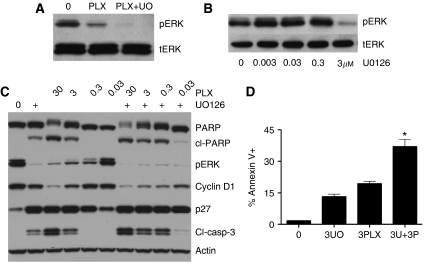
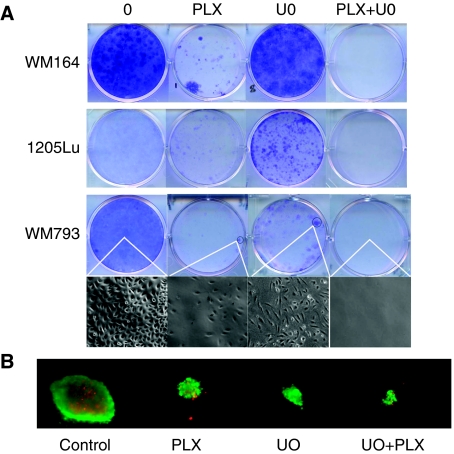
BACKGROUND: Resistance to BRAF inhibitors is an emerging problem in the melanoma field. Strategies to prevent and overcome resistance are urgently required. METHODS: The dynamics of cell signalling, BrdU incorporation and cell-cycle entry after BRAF inhibition was measured using flow cytometry and western blot. The ability of combined BRAF/MEK inhibition to prevent the emergence of resistance was demonstrated by apoptosis and colony formation assays and in 3D organotypic cell culture. RESULTS: BRAF inhibition led to a rapid recovery of phospho-ERK (pERK) signalling. Although most of the cells remained growth arrested in the presence of drug, a minor population of cells retained their proliferative potential and escaped from BRAF inhibitor therapy. A function for the rebound pERK signalling in therapy escape was demonstrated by the ability of combined BRAF/MEK inhibition to enhance the levels of apoptosis and abrogate the onset of resistance. CONCLUSION: Combined BRAF/MEK inhibition may be one strategy to prevent the emergence of drug resistance in BRAF-V600E-mutated melanomas.
Overview
The claims and statistics of this paper haven’t been checked yet.
Free: it reads the open-access text and checks the first 5 claims that cite a source we can check. Create a free account to check every claim.
Integrity signals
Registry
Cites
Statistics
Figures
Verification
Claims the paper makes
The claims and statistics of this paper haven’t been checked yet.
Free: it reads the open-access text and checks the first 5 claims that cite a source we can check. Create a free account to check every claim.
Claims other papers make about this one
Each is checked against this paper’s own text: does it say what the citing paper says it does?
The source backs part of the claim, not all of it — or backs it for a different population, condition or comparison.
In the citing paper
“BRAF inhibition in BRAFV600 mutant cancers leads to loss of negative feedback signals regulated by the MAPK pathway, leading to receptor tyrosine kinase (RTK)-mediated reactivation of MAPK signaling through wild type RAS and RAF, particularly in specific tumor types, such as colorectal cancer (9–12).”
From Vertical Pathway Inhibition Overcomes Adaptive Feedback Resistance to KRASG12C Inhibition (2020) · cites this paper as [9]
Experimental — accuracy not yet measured
Self-check
Percentages, sums and reported differences re-computed from the paper’s own numbers.
The self-check needs the paper’s full text.
Citations
Cites
Mutations of the BRAF gene in human cancer
Davies, H., Bignell, G. R., Cox, C., Stephens, P., Edkins, S., Clegg, S., Teague, J., Woffendin, H., Garnett, M. J., Bottomley, W., et al. (2002) · Nature · doi:10.1038/nature00766 · Cited by 10,674 · cited 2×
“…UK Keywords: melanoma; BRAF; resistance; therapy The discovery that B50% of human melanomas harbour activating V600E mutations in the serine/threonine kinase BRAF has raised the possibility that these tumours may be amenable to targeted therapy (Davies et al, 2002; Smalley and Flaherty, 2009).”
BackgroundDiscovery of a selective inhibitor of oncogenic B-Raf kinase with potent antimelanoma activity
Tsai, J., Lee, J. T., Wang, W., Zhang, J., Cho, H., Mamo, S., Bremer, R., Gillette, S., Kong, J., Haass, N. K., et al. (2008) · Proceedings of the National Academy of Sciences · doi:10.1073/pnas.0711741105 · Cited by 1,346 · cited 2×
“Of these, PLX4032 and PLX4720 (Plexxikon/Roche, Nutley, NJ, USA), have been exciting great interest, with recent studies from our group and others showing these compounds to have excellent anti-tumour activity in vitro and in vivo (Cartlidge et al, 2008; Sala et al, 2008; Tsai et al, 2008).”
BackgroundSelf-citationThe RAF proteins take centre stage
Wellbrock, C., Karasarides, M., & Marais, R. (2004) · Nature Reviews Molecular Cell Biology · doi:10.1038/nrm1498 · Cited by 1,228 · cited 3×
“There is already evidence that both ARAF and CRAF affect pathways other than MEK, and although not well characterised, it is possible that other BRAF targets may exist (”
BackgroundSawyers, C. (2004) · Nature · doi:10.1038/nature03095 · Cited by 1,165 · cited 1×
“These observations mirror the pattern of response seen to targeted therapy in CML, GIST (Sawyers, 2004; Bauer et al, 2007) and most recently medulloblastoma (Rudin et al, 2009; Yauch et al, 2009), where an initial period of tumour regression is later followed by relapse.”
ResultTreatment of Medulloblastoma with Hedgehog Pathway Inhibitor GDC-0449
Rudin, C. M., Hann, C. L., Laterra, J., Yauch, R. L., Callahan, C. A., Fu, L., Holcomb, T., Stinson, J., Gould, S. E., Coleman, B., et al. (2009) · New England Journal of Medicine · doi:10.1056/nejmoa0902903 · Cited by 1,019
Smoothened Mutation Confers Resistance to a Hedgehog Pathway Inhibitor in Medulloblastoma
Yauch, R. L., Dijkgraaf, G. J. P., Alicke, B., Januario, T., Ahn, C. P., Holcomb, T., Pujara, K., Stinson, J., Callahan, C. A., Tang, T., et al. (2009) · Science · doi:10.1126/science.1179386 · Cited by 839 · cited 1×
“These observations mirror the pattern of response seen to targeted therapy in CML, GIST (Sawyers, 2004; Bauer et al, 2007) and most recently medulloblastoma (Rudin et al, 2009; Yauch et al, 2009), where an initial period of tumour regression is later followed by relapse.”
ResultMEK1 mutations confer resistance to MEK and B-RAF inhibition
Emery, C. M., Vijayendran, K. G., Zipser, M. C., Sawyer, A. M., Niu, L., Kim, J. J., Hatton, C., Chopra, R., Oberholzer, P. A., Karpova, M. B., et al. (2009) · Proceedings of the National Academy of Sciences · doi:10.1073/pnas.0905833106 · Cited by 633 · cited 8×
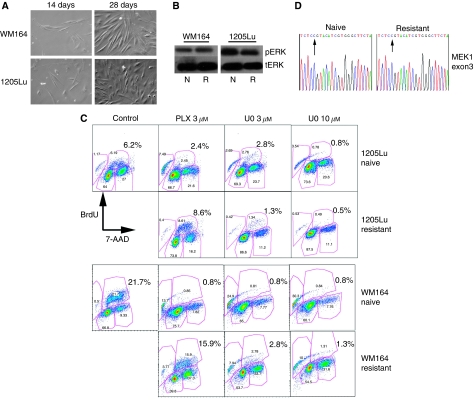
“Earlier studies have suggested that acquired resistance to the MEK inhibitor AZD6244 occurs as the result of an acquired mutation in MEK1 (Emery et al, 2009).”
BackgroundMethodInfluentialPratilas, C. A., Taylor, B. S., Ye, Q., Viale, A., Sander, C., Solit, D. B., & Rosen, N. (2009) · Proceedings of the National Academy of Sciences · doi:10.1073/pnas.0900780106 · Cited by 614 · cited 2×
“Although targeting the same pathway at two points seems redundant, it is likely that dual inhibition may be a good strategy to counteract the feedback inhibition loops that are relieved after pathway blockade at a single point (Pratilas et al, 2009).”
BackgroundElevated CRAF as a Potential Mechanism of Acquired Resistance to BRAF Inhibition in Melanoma
Montagut, C., Sharma, S. V., Shioda, T., McDermott, U., Ulman, M., Ulkus, L. E., Dias-Santagata, D., Stubbs, H., Lee, D. Y., Singh, A., et al. (2008) · Cancer Research · doi:10.1158/0008-5472.can-07-6787 · Cited by 508 · cited 4×
“There is already evidence that both ARAF and CRAF affect pathways other than MEK, and although not well characterised, it is possible that other BRAF targets may exist (Wellbrock et al, 2004a).”
BackgroundInfluentialSmalley, K. S. M., Haass, N. K., Brafford, P. A., Lioni, M., Flaherty, K. T., & Herlyn, M. (2006) · Molecular Cancer Therapeutics · doi:10.1158/1535-7163.mct-06-0084 · Cited by 463 · cited 2×
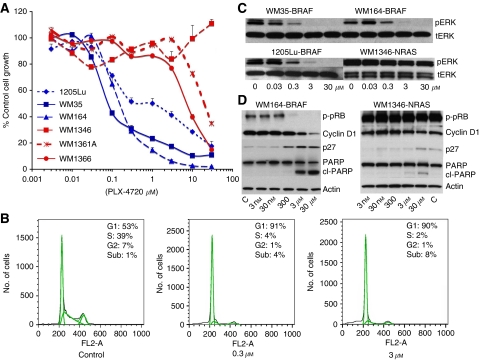
“Cells were seeded in 10 cm plates at a density of 100 000 cells ml 1 and grown overnight before being treated with PLX4720 (3 mM) for 72 h or 1, 2, 3 and 4 weeks.”
MethodSelf-citation
Cited by
Items 101–200 of 318
Youssif, B. G. M., Gouda, A. M., Moustafa, A. H., Abdelhamid, A. A., Gomaa, H. A. M., Kamal, I., & Marzouk, A. A. E. (2021) · Journal of Molecular Structure · doi:10.1016/j.molstruc.2021.132218 · Cited by 59
Schmieder, R., Puehler, F., Neuhaus, R., Kissel, M., Adjei, A. A., Miner, J. N., Mumberg, D., Ziegelbauer, K. B., & Scholz, A. (2013) · Neoplasia · doi:10.1593/neo.13812 · Cited by 60
“Evidence favoring the first possibility has been reported in melanoma cells where the combination of a BRAF inhibitor and MEK inhibitor enhanced apoptosis and prevented the onset of resistance [35].”
BackgroundTargeted therapy and immunotherapy in advanced melanoma: an evolving paradigm
Khattak, M. A., Fisher, R. A., Turajlic, S., & Larkin, J. (2012) · Therapeutic Advances in Medical Oncology · doi:10.1177/1758834012466280 · Cited by 62
The Evolution of S100B Inhibitors for the Treatment of Malignant Melanoma
Hartman, K. G., McKnight, L. E., Liriano, M. A., & Weber, D. J. (2012) · Future Medicinal Chemistry · doi:10.4155/fmc.12.191 · Cited by 53
Inhibition of mutant EGFR in lung cancer cells triggers SOX2-FOXO6-dependent survival pathways
Rothenberg, S. M., Concannon, K., Cullen, S. J., Boulay, G., Turke, A. B., Faber, A. C., Lockerman, E. L., Rivera, M. N., Engelman, J. A., Maheswaran, S., et al. (2015) · eLife · doi:10.7554/elife.06132 · Cited by 50
“…loss of ERK signaling triggered by RAF or MEK inhibitors in BRAF mutant melanoma cells relieves ERK-dependent inhibition of RAS and CRAF, whose activation through ErbB receptor signaling may lead to paradoxical proliferative signals (Pratilas et al., 2009; Paraiso et al., 2010; Lito et al., 2012).”
BackgroundGirotti, M. R., Saturno, G., Lorigan, P. C., & Marais, R. (2014) · Molecular Oncology · doi:10.1016/j.molonc.2014.07.027 · Cited by 59
The role of MEK inhibitors in the treatment of metastatic melanoma
Grimaldi, A. M., Simeone, E., & Ascierto, P. A. (2014) · Current Opinion in Oncology · doi:10.1097/cco.0000000000000050 · Cited by 54
Dabrafenib plus Trametinib: a Review in Advanced Melanoma with a BRAF V600 Mutation
Dhillon, S. (2016) · Targeted Oncology · doi:10.1007/s11523-016-0443-8 · Cited by 50
“Indeed, preclinical studies showed that the combination of BRAF and MEK inhibition abrogated the onset of resistance [7] and reduced paradoxical activation of the MAPK pathway (Sect.”
BackgroundCDK4/6 and MAPK—Crosstalk as Opportunity for Cancer Treatment
Scheiblecker, L., Kollmann, K., & Sexl, V. (2020) · Pharmaceuticals · doi:10.3390/ph13120418 · Cited by 55
“Simultaneous blocking of Raf and MEK prevents reactivation of ERK signaling and delays resistance development [144].”
BackgroundTowards new therapeutic approaches for malignant melanoma
Pacheco, I., Buzea, C., & Tron, V. A. (2011) · Expert Reviews in Molecular Medicine · doi:10.1017/s146239941100202x · Cited by 55
NF-κB dysregulation in multiple myeloma
Matthews, G. M., Simoes, R. D. M., Dhimolea, E., Sheffer, M., Gandolfi, S., Dashevsky, O., Sorrell, J., & Mitsiades, C. S. (2016) · Seminars in Cancer Biology · doi:10.1016/j.semcancer.2016.08.005 · Cited by 53
Wu, S., & Singh, R. K. (2011) · Current Molecular Medicine · doi:10.2174/156652411800615153 · Cited by 51
“This is supported by a preclinical study, which confirmed that co-treatment with BRAF and MEK inhibitors induced apoptosis and significantly suppressed resistant melanoma cells [64].”
ResultPhadke, M. S., Sini, P., & Smalley, K. S. M. (2015) · Molecular Cancer Therapeutics · doi:10.1158/1535-7163.mct-14-0832 · Cited by 48
“By contrast it was noted that the same cell lines when treated with vemurafenib, gave rise to resistant colonies in every case (22).”
Self-citationGibney, G. T., & Smalley, K. S. M. (2013) · Cancer Discovery · doi:10.1158/2159-8290.cd-13-0017 · Cited by 61
Self-citationChen, G., McQuade, J. L., Panka, D. J., Hudgens, C. W., Amin‐Mansour, A., Mu, X. J., Bahl, S., Jané‐Valbuena, J., Wani, K., Reuben, A., et al. (2016) · JAMA Oncology · doi:10.1001/jamaoncol.2016.0509 · Cited by 54
Proteasome inhibition and ROS generation by 4‐nerolidylcatechol induces melanoma cell death
Brohem, C. A., Massaro, R. R., Tiago, M., Marinho, C. E., Jasiulionis, M. G., de Almeida, R. L., Rivelli, D. P., Albuquerque, R. C., de Oliveira, T. F., Loureiro, A. P. D. M., et al. (2012) · Pigment Cell & Melanoma Research · doi:10.1111/j.1755-148x.2012.00992.x · Cited by 51
“Therefore, efforts to generate new therapeutic strategies are essential (Gray-Schopfer et al., 2007; Hersey and Zhang, 2001; Miller et al., 2009; Paraiso et al., 2010; Soengas and Lowe, 2003; Sorolla et al., 2008).”
BackgroundBRAF plus MEK-targeted drugs: a new standard of treatment for BRAF-mutant advanced melanoma
Queirolo, P., & Spagnolo, F. (2017) · Cancer and Metastasis Reviews · doi:10.1007/s10555-017-9660-6 · Cited by 47
Dabrafenib inhibits the growth of BRAF‐WT cancers through CDK16 and NEK9 inhibition
Phadke, M. A., Rix, L. L. R., Smalley, I., Bryant, A. T., Luo, Y., Lawrence, H. R., Schaible, B., Chen, Y. A., Rix, U., & Smalley, K. S. M. (2017) · Molecular Oncology · doi:10.1002/1878-0261.12152 · Cited by 50
“Published by FEBS Press and John Wiley & Sons Ltd. were stained with crystal violet dye, as described in Paraiso et al. (2010).”
MethodSelf-citationMutational and network level mechanisms underlying resistance to anti-cancer kinase inhibitors
Mancini, M., & Yarden, Y. (2015) · Seminars in Cell and Developmental Biology · doi:10.1016/j.semcdb.2015.09.018 · Cited by 47
Specifically targeting ERK1 or ERK2 kills Melanoma cells
Qin, J., Xin, H., & Nickoloff, B. J. (2012) · Journal of Translational Medicine · doi:10.1186/1479-5876-10-15 · Cited by 43
“First, since drug resistance to PLX4032 is linked to recovery of pERK activity [34], it was therapeutically beneficial that sustained and near complete reduction in both pERK1 and pERK2 can be accomplished using the shRNAs to obviate this problem.”
BackgroundCombination of targeted therapy and immunotherapy in melanoma
Blank, C. U., Hooijkaas, A. I., Haanen, J. B. A. G., & Schumacher, T. N. (2011) · Cancer Immunology Immunotherapy · doi:10.1007/s00262-011-1079-2 · Cited by 54
“Indeed, dual BRAF/MEK inhibition prevented onset of resistance observed upon single BRAF inhibition [19].”
BackgroundJohn, J. K., Paraiso, K. H. T., Rebecca, V. W., Cantini, L. P., Abel, E. V., Pagano, N., Meggers, E., Mathew, R. A., Krepler, C., Izumi, V., et al. (2012) · Journal of Investigative Dermatology · doi:10.1038/jid.2012.237 · Cited by 49
“Materials & Methods Cell culture and growth inhibition Melanoma cells lines were grown as described in (Paraiso et al., 2010).”
Self-citationMaverakis, E., Tran, K. A., Cheng, M., Mitra, A., Ogawa, H., Shi, V. Y., Olney, L. P., & Kloxin, A. M. (2015) · Drug Design Development and Therapy · doi:10.2147/dddt.s93545 · Cited by 52
“An increase in RTK ligands, either through autocrine production from tumor cells, paracrine secretion from stroma, or systemic production, promotes resistance to kinase inhibitors.(24,73) BRAF inhibitor resistance mediated by EGFR was shown in both cell culture”
BackgroundThe role of phenotypic plasticity in the escape of cancer cells from targeted therapy
Emmons, M. F., Faião‐Flores, F., & Smalley, K. S. M. (2016) · Biochemical Pharmacology · doi:10.1016/j.bcp.2016.06.014 · Cited by 42
Self-citationCutaneous melanoma in adolescents and young adults
Indini, A., Brecht, I. B., Vecchio, M. D., Sultan, I. Y., Signoroni, S., & Ferrari, A. (2018) · Pediatric Blood & Cancer · doi:10.1002/pbc.27292 · Cited by 44
Optimal treatment strategy for metastatic melanoma patients harboring BRAF-V600 mutations
Giunta, E. F., Falco, V. D., Napolitano, S., Argenziano, G., Brancaccio, G., Moscarella, E., Ciardiello, D., Ciardiello, F., & Troiani, T. (2020) · Therapeutic Advances in Medical Oncology · doi:10.1177/1758835920925219 · Cited by 44
VEGF blockade enhances the antitumor effect of BRAFV600E inhibition
Comunanza, V., Corà, D., Orso, F., Consonni, F. M., Middonti, E., Nicolantonio, F. D., Buzdin, A. A., Sica, A., Médico, E., Sangiolo, D., et al. (2016) · EMBO Molecular Medicine · doi:10.15252/emmm.201505774 · Cited by 40
“A combination of BRAF and MEK inhibition further improves time to progression and overall survival in patients with metastatic melanomas when compared with single-agent BRAF inhibition (Paraiso et al, 2010).”
BackgroundYu, L., Favoino, E., Wang, Y., Ma, Y., Deng, X., & Wang, X. (2011) · Immunologic Research · doi:10.1007/s12026-011-8232-z · Cited by 42
“MEL-28, and SK-MEL-37) were subjected to long-term culture [11, 30 ] with gradually increasing concentrations of PLX4032 as described (Table 2). Simultaneously, the induction of acquired resistance to PLX4032 was also conducted in the presence of the CSPG4-specific mAb 225.28 or an isotype mAb control.”
MethodInfluentialTheodosakis, N., Micevic, G., Langdon, C. G., Ventura, A., Means, R. E., Stern, D. F., & Bosenberg, M. (2017) · Journal of Investigative Dermatology · doi:10.1016/j.jid.2016.12.033 · Cited by 40
“Although this represented a significant improvement over historical overall survival of 6e10 months for patients on dacarbazine-based chemotherapy (Paraiso et al., 2010; Silva et al., 2014), the vast majority of patients treated with BRAF inhibitors develop progressive disease between 2 and 18…”
BackgroundBiological challenges of BRAF inhibitor therapy
Puzanov, I., Burnett, P., & Flaherty, K. T. (2011) · Molecular Oncology · doi:10.1016/j.molonc.2011.01.005 · Cited by 36
Self-citationDittmer, J. (2011) · International Journal of Oncology · doi:10.3892/ijo.2011.1073 · Cited by 42
Emerging strategies to treat rare and intractable subtypes of melanoma
Alicea, G. M., & Rebecca, V. W. (2020) · Pigment Cell & Melanoma Research · doi:10.1111/pcmr.12880 · Cited by 39
“A few years later, the combination of a BRAF inhibitor and a MEK inhibitor was observed to further increase the response rate to ~76% leading to the 2014 FDA approval of dabrafenib and trametinib (Paraiso et al., 2010; Queirolo, Picasso, & Spagnolo, 2015).”
BackgroundMelanoma Mutagenesis and Aberrant Cell Signaling
Bello, D. M., Ariyan, C. E., & Carvajal, R. D. (2013) · Cancer Control · doi:10.1177/107327481302000404 · Cited by 40
Theodosakis, N., Held, M. A., Marzuka-Alcalá, A., Meeth, K. M., Micevic, G., Long, G. V., Scolyer, R. A., Stern, D. F., & Bosenberg, M. (2015) · Molecular Cancer Therapeutics · doi:10.1158/1535-7163.mct-15-0080 · Cited by 39
“force behind neoplastic growth and metabolism without destabilizing cells enough to cause apoptosis, levels of which have previously been noted to be variable and frequently minimal (39, 41).”
BackgroundCross-Resistance Among Sequential Cancer Therapeutics: An Emerging Issue
Loria, R., Vici, P., Lisa, F. S. D., Soddu, S., Maugeri‐Saccà, M., & Bon, G. (2022) · Frontiers in Oncology · doi:10.3389/fonc.2022.877380 · Cited by 42
The anti-rheumatic drug, leflunomide, synergizes with MEK inhibition to suppress melanoma growth
Hanson, K., Robinson, S. D., Al‐Yousuf, K., Hendry, A. E., Sexton, D. W., Sherwood, V., & Wheeler, G. N. (2017) · Oncotarget · doi:10.18632/oncotarget.23378 · Cited by 36
“The effects of these MAPK treatments are however only transient due to the emergence of a variety of drug resistance mechanisms [12, 13–16] and as a result, metastatic melanoma patients receiving these treatments as monotherapies eventually succumb to their disease.”
Ingeson-Carlsson, C., Martinez‐Monleon, A., & Nilsson, M. (2015) · Experimental Cell Research · doi:10.1016/j.yexcr.2015.08.003 · Cited by 33
Autophagy Inhibition in BRAF-Driven Cancers
Foth, M., & McMahon, M. (2021) · Cancers · doi:10.3390/cancers13143498 · Cited by 34
“Consistent with these observations, inhibition of AKT promoted autophagy and sensitized PTENNull prostate cancer xenograft tumors to lysosomotropic agents [175].”
BackgroundInfluentialKhaddour, K., Maahs, L., Rodriguez, A. M. A., Maamar, Y., Samaan, S., & Ansstas, G. (2021) · Cancers · doi:10.3390/cancers13225847 · Cited by 37
“BRAF inhibitors were combined with MEK inhibitors in clinical trials due to their synergism, which can delay tumor progression and increase acquired resistance [14].”
BackgroundLai, F., Jiang, C. C., Farrelly, M. L., Zhang, X. D., & Hersey, P. (2012) · Melanoma Research · doi:10.1097/cmr.0b013e328353eff2 · Cited by 34
Big Data Approaches for Modeling Response and Resistance to Cancer Drugs
Jiang, P., Sellers, W. R., & Liu, X. S. (2018) · Annual Review of Biomedical Data Science · doi:10.1146/annurev-biodatasci-080917-013350 · Cited by 36
“Currently, most clinically approved combinations, such as dual BRAF and MEK inhibition in BRAF-mutant tumors, are developed from observations in drug-resistant samples or empirical evaluation of drug combinations (143, 144).”
The Emerging Role of Ras Pathway Signaling in Pediatric Cancer
Ney, G. M., McKay, L. M., Koschmann, C. J., Mody, R. J., & Li, Q. (2020) · Cancer Research · doi:10.1158/0008-5472.can-20-0916 · Cited by 36
The Current State of Targeted Therapy in Melanoma: This Time It's Personal
Smalley, K. S. M., & McArthur, G. A. (2012) · Seminars in Oncology · doi:10.1053/j.seminoncol.2012.01.008 · Cited by 37
Self-citationInhibition of MERTK Promotes Suppression of Tumor Growth in BRAF Mutant and BRAF Wild-Type Melanoma
Sinik, L., Minson, K. A., Tentler, J. J., Carrico, J. A., Bagby, S. M., Robinson, W. A., Kami, R., Burstyn‐Cohen, T., Eckhardt, S. G., Wang, X., et al. (2019) · Molecular Cancer Therapeutics · doi:10.1158/1535-7163.mct-18-0456 · Cited by 34
Narita, Y., Okamoto, K., Kawada, M. I., Takase, K., Minoshima, Y., Kodama, K., Iwata, M., Miyamoto, N., & Sawada, K. (2014) · Molecular Cancer Therapeutics · doi:10.1158/1535-7163.mct-13-0667 · Cited by 35
Melanoma: oncogenic drivers and the immune system.
Karachaliou, N., Pilotto, S., Teixidó, C., Viteri, S., González‐Cao, M., Riso, A. A., Morales-Espinosa, D., Molina‐Vila, M. Á., CHAIB-OUKADOUR, I., Santarpía, M., et al. (2015) · Europe PMC (PubMed Central) · doi:10.3978/j.issn.2305-5839.2015.08.06 · Cited by 34
“In this context, reactivation of MAPK signaling following BRAF inhibition is important for therapeutic escape with increased levels of cell death and tumor regression being seen when BRAF and MEK are co-targeted (95,97).”
BackgroundMEK and RAF inhibitors for BRAF-mutated cancers
Belden, S. E., & Flaherty, K. T. (2012) · Expert Reviews in Molecular Medicine · doi:10.1017/erm.2012.11 · Cited by 32
Self-citationKlein, R. M., & Higgins, P. J. (2011) · Molecular Cancer · doi:10.1186/1476-4598-10-114 · Cited by 32
Mohamed, A. M., Abou‐Ghadir, O. F., Mostafa, Y. A., Dahlous, K. A., Bräse, S., & Youssif, B. G. M. (2024) · Frontiers in Chemistry · doi:10.3389/fchem.2024.1447618 · Cited by 30
“Preclinical evidence of enhanced apoptosis and delayed resistance to BRAF (Rapidly Accelerated Fibrosarcoma, B-family) inhibitors (Paraiso et al., 2010; Flaherty et al., 2012), for example, prompted the FDA to approve a combination of dabrafenib (BRAF inhibitor) and trametinib (MEK inhibitor) for…”
Jazirehi, A. R., Nazarian, R., Torres‐Collado, A. X., & Economou, J. S. (2014) · Europe PMC (PubMed Central) · Cited by 35
Kudchadkar, R. R., Smalley, K. S. M., Glass, L. F., Trimble, J. S., & Sondak, V. K. (2013) · Clinics in Dermatology · doi:10.1016/j.clindermatol.2012.08.013 · Cited by 40
Self-citationMolecular testing in malignant melanoma
Grossmann, A. H., Grossmann, K. F., & Wallander, M. L. (2012) · Diagnostic Cytopathology · doi:10.1002/dc.22810 · Cited by 30
Krebs, F. K., Trzeciak, E. R., Zimmer, S., Özistanbullu, D., Mitzel-Rink, H., Meißner, M., Grabbe, S., Loquai, C., & Tuettenberg, A. (2021) · Cancer Medicine · doi:10.1002/cam4.3710 · Cited by 29
BRAF and MEK inhibition for the treatment of advanced BRAF mutant melanoma
Richman, J., Martín-Liberal, J., Diem, S., & Larkin, J. (2015) · Expert Opinion on Pharmacotherapy · doi:10.1517/14656566.2015.1044971 · Cited by 29
Metastatic melanoma: the new era of targeted therapy
Guida, M., Pisconti, S., & Colucci, G. (2012) · Expert Opinion on Therapeutic Targets · doi:10.1517/14728222.2011.645807 · Cited by 27
“One such approach is the combination of MEK inhibitors with BRAF inhibitors [58,59].”
BackgroundMolecular genetics and therapeutic targets of pediatric low-grade gliomas
Tateishi, K., Nakamura, T., & Yamamoto, T. (2019) · Brain Tumor Pathology · doi:10.1007/s10014-019-00340-3 · Cited by 27
Current advances and perspectives in the treatment of advanced melanoma
Livingstone, E., Zimmer, L., Vaübel, J., & Schadendorf, D. (2012) · JDDG Journal der Deutschen Dermatologischen Gesellschaft · doi:10.1111/j.1610-0387.2012.07895.x · Cited by 29
Mutations in the Serine/Threonine Kinase BRAF: Oncogenic Drivers in Solid Tumors
Roa, P., Bremer, N. V., Foglizzo, V., & Cocco, E. (2024) · Cancers · doi:10.3390/cancers16061215 · Cited by 29
“This can reduce the efficacy of treatments and even cause secondary skin cancers to occur in some patients [138].”
BackgroundPLX4032: does it keep its promise for metastatic melanoma treatment?
Livingstone, E., Zimmer, L., Piel, S., & Schadendorf, D. (2010) · Expert Opinion on Investigational Drugs · doi:10.1517/13543784.2010.527945 · Cited by 26
“Furthermore, a number of new papers have appeared showing that PLX4032 resistant melanoma cell lines are dependent on MEK signaling [44,45] making combinations of agents targeting mutant BRAF and MEK1/MEK2 of high interest [46].”
BackgroundA Melanoma Patient-Derived Xenograft Model
Xiao, M., Rebecca, V. W., & Herlyn, M. (2019) · Journal of Visualized Experiments · doi:10.3791/59508 · Cited by 25
BRAF Inhibitors Induce Feedback Activation of RAS Pathway in Thyroid Cancer Cells
Bonaldi, E., Gargiuli, C., Cecco, L. D., Micali, A., Rizzetti, M. G., Greco, A., Borrello, M. G., & Minna, E. (2021) · International Journal of Molecular Sciences · doi:10.3390/ijms22115744 · Cited by 24
“By this approach, some possible mechanisms responsible for drug resistance have been proposed, involving, for instance, either the over expression of the HER3 receptor [34,35] or activation of other players [36,37], often associated with rebound activation of phospho-ERK [34,35,38,39], as observed in the present study…”
ResultBRAF and beyond: Tailoring strategies for the individual melanoma patient
Khushalani, N. I., & Jarkowski, A. (2014) · Journal of Carcinogenesis · doi:10.4103/1477-3163.126759 · Cited by 24
“[49] In addition, another benefit of MEK and BRAF combination therapy is the potential for reduced rates of SCC development, which has been associated with MAPK activation.”
Tsai, Y.-T., Chuang, M., Tang, S., Wu, S., Chen, Y., Sun, G., Hsiao, P., Huang, S., Lee, H., Yu, C., et al. (2015) · Cancer Research · doi:10.1158/0008-5472.can-14-3264 · Cited by 23
“The 4-HPR–mediated ROS evokes Akt conformation change by forming an intramolecular disulfide bond.”
InfluentialKoomen, J. M., & Smalley, K. S. M. (2011) · Oncotarget · doi:10.18632/oncotarget.263 · Cited by 21
“The emerging evidence suggests that acquired resistance to vemurafenib is complex and multi-factorial [17, 22-26].”
BackgroundSelf-citationTumor Cell Resistance to the Inhibition of BRAF and MEK1/2
Chen, W., & Park, J. (2023) · International Journal of Molecular Sciences · doi:10.3390/ijms241914837 · Cited by 23
“/2 reactivation has been identified as a primary mechanism of BRAFi resistance in BRAF V600E melanoma, colon, and thyroid cancers [34,35].”
The anti-apoptotic BAG3 protein is involved in BRAF inhibitor resistance in melanoma cells
Guerriero, L., Palmieri, G., Marco, M. D., Cossu, A., Remondelli, P., Capunzo, M., Turco, M. C., & Rosati, A. (2017) · Oncotarget · doi:10.18632/oncotarget.18902 · Cited by 22
“Interestingly, extended Vemurafenib treatment induced a rebound of phospho-ERK1/2 as a first sign of resistance establishment [23].”
BackgroundInflammatory side effects of BRAF and MEK inhibitors
Mackin, A. G., Pecen, P. E., Dinsmore, A. L., Patnaik, J. L., Gonzalez, R. C., Robinson, W. A., & Palestine, A. G. (2019) · Melanoma Research · doi:10.1097/cmr.0000000000000599 · Cited by 22
Hodgkinson, A., Cam, L. L., Trucu, D., & Radulescu, O. (2018) · Journal of Theoretical Biology · doi:10.1016/j.jtbi.2018.11.037 · Cited by 23
Feng, Y., Lau, E. K., Scortegagna, M., Ruller, C. M., De, S. K., Barile, E., Krajewski, S., Aza‐Blanc, P., Williams, R. M., Pinkerton, A. B., et al. (2012) · Pigment Cell & Melanoma Research · doi:10.1111/pcmr.12033 · Cited by 22
“Today, third-generation BRAF inhibitors and inhibitors of other components of the MAPK pathway (e.g. MEK; Paraiso et al., 2010) are being evaluated in clinical trials, often in combination with inhibitors of other signaling pathways (i.e. AKT/PI3K; Paraiso et al., 2011; Villanueva et al., 2010) or…”
BackgroundHaugh, A. M., Salama, A. K. S., & Johnson, D. B. (2020) · Hematology/Oncology Clinics of North America · doi:10.1016/j.hoc.2020.09.005 · Cited by 21
Therapeutic Inhibitors against Mutated BRAF and MEK for the Treatment of Metastatic Melanoma
Ryu, S., Youn, C.-K., Moon, A. R., Howland, A., Armstrong, C. A., & Song, P. I. (2017) · Chonnam Medical Journal · doi:10.4068/cmj.2017.53.3.173 · Cited by 23
“Although vemurafenib is associated with a relatively significant risk reduction compared with sorafenib and/or dacarbazine,(17) a resistance to BRAF inhibition in melanoma patients has already been reported.(18,19) The resistance to BRAF inhibition was mediated through either receptor tyrosine kinase (RTK)-mediated ac…”
BackgroundNew targeted and epigenetic therapeutic strategies for the treatment of uveal melanoma
Wei, A. Z., Maniar, A. B., & Carvajal, R. D. (2022) · Cancer Gene Therapy · doi:10.1038/s41417-022-00443-8 · Cited by 20
Thompson, E. L., Hu, J., & Niedernhofer, L. J. (2021) · Cancers · doi:10.3390/cancers13092241 · Cited by 20
“The use of MEK inhibitors (MEKi) in combination with BRAFi was to prevent the paradoxical and reactivation of the MAPK pathway that leads to resistance and cSCC development [58,93,100,101].”
BackgroundBan, M. J., Byeon, H. K., Yang, Y. J., An, S.-J., Kim, J. W., Kim, J. H., Kim, D., Yang, J., Kee, H. J., & Koh, Y. W. (2018) · Cancer Science · doi:10.1111/cas.13839 · Cited by 33
Conquering oncogenic KRAS and its bypass mechanisms
Hou, P., & Wang, Y. (2022) · Theranostics · doi:10.7150/thno.71260 · Cited by 23
TargetingNRASMutations in Advanced Melanoma
Phadke, M. S., & Smalley, K. S. M. (2023) · Journal of Clinical Oncology · doi:10.1200/jco.23.00205 · Cited by 21
Self-citationKim, Y.-K., Ahn, S. K., & Lee, M. (2012) · Cancer Letters · doi:10.1016/j.canlet.2012.03.006 · Cited by 18
Roller, D. G., Capaldo, B. J., Bekiranov, S., Mackey, A. J., Conaway, M. R., Petricoin, E. F., Gioeli, D. G., & Weber, M. J. (2015) · Oncotarget · doi:10.18632/oncotarget.6548 · Cited by 19
Alves-Fernandes, D. K., de Oliveira, E. A., Faião‐Flores, F., Alicea-Rebecca, G., Weeraratna, A. T., Smalley, K. S. M., Barros, S. B. D. M., & Maria–Engler, S. S. (2018) · Pharmacological Research · doi:10.1016/j.phrs.2018.12.006 · Cited by 19
Self-citationFlint, A. C., Mitchell, D. K., Angus, S. P., Smith, A. E., Bessler, W., Jiang, L., Mang, H. E., Li, X., Lu, Q., Rodriguez, B., et al. (2023) · Clinical Cancer Research · doi:10.1158/1078-0432.ccr-22-2854 · Cited by 18
Multiple roles of NF1 in the melanocyte lineage
Larribère, L., & Utikal, J. S. (2016) · Pigment Cell & Melanoma Research · doi:10.1111/pcmr.12488 · Cited by 19
“Moreover, these results corroborate with a previous study that already described a role of RAS and CRAF in acquired BRAF inhibitor resistance in melanoma (Paraiso et al., 2010).”
ResultTargeted inhibition of BRAF kinase: opportunities and challenges for therapeutics in melanoma
Pérez‐Lorenzo, R., & Zheng, B. (2011) · Bioscience Reports · doi:10.1042/bsr20110068 · Cited by 17
Smalley, I., Fang, B., Munko, A., Gibney, G. T., Koomen, J. M., & Smalley, K. S. M. (2014) · PROTEOMICS · doi:10.1002/pmic.201400200 · Cited by 17
“Treatment of BRAF- and NRAS-mutant melanoma cell lines with BRAF and MEK inhibitors, respectively, led to a rewiring of the signaling networks.”
BackgroundInfluentialSelf-citationSilveira, E. R., Cavalcante, I. P., Kremer, J. L., de Mendonça, P. O. R., & Lotfi, C. F. P. (2018) · Cancer Cell International · doi:10.1186/s12935-018-0527-x · Cited by 16
“The mechanism of nilotinib involves the ERK1/2 pathway Given that ERK1/2 is known to influence tyrosine kinase inhibitor resistance in tumor cells [42, 43], we investigated the activation of the ERK pathway in the presence of nilotinib.”
BackgroundPrecision Medicine for Colorectal Cancer with Liquid Biopsy and Immunotherapy
Nagayama, S., Low, S., Kiyotani, K., & Nakamura, Y. (2021) · Cancers · doi:10.3390/cancers13194803 · Cited by 17
Dividing and conquering: controlling advanced melanoma by targeting oncogene-defined subsets
Flaherty, K. T. (2012) · Clinical & Experimental Metastasis · doi:10.1007/s10585-012-9488-y · Cited by 17
Self-citationWarthaka, M., Adelmann, C. H., Kaoud, T. S., Edupuganti, R., Yan, C., Johnson, W. H., Ferguson, S. B., Tavares, C. D. J., Pence, L. J., Anslyn, E. V., et al. (2014) · ACS Medicinal Chemistry Letters · doi:10.1021/ml500198b · Cited by 16
Reversibility of regorafenib effects in hepatocellular carcinoma cells
D’Alessandro, R., Refolo, M. G., Lippolis, C., Messa, C., Cavallini, A., Rossi, R., Resta, L., Carlo, A. D., & Carr, B. I. (2013) · Cancer Chemotherapy and Pharmacology · doi:10.1007/s00280-013-2269-8 · Cited by 15
“Others have also noted reversibility of tumor cell growth after cessation of kinase inhibitor actions [15, 24].”
Coventry, B. J., Lilly, C. A., Hersey, P., Michele, A., & Bright, R. (2014) · Journal for ImmunoTherapy of Cancer · doi:10.1186/2051-1426-2-9 · Cited by 18
Targeted Therapies in Melanoma: Translational Research at Its Finest
Ho, A. W., & Tsao, H. (2015) · Journal of Investigative Dermatology · doi:10.1038/jid.2015.14 · Cited by 15
“Early studies targeting RAF employed sorafenib, a multi-kinase inhibitor that has activity against BRAF and CRAF, but resulted in little to no clinical activity as monotherapy (Eisen et al., 2006; Ott et al., 2010).”
Enhancing the evaluation of PI 3K inhibitors through 3D melanoma models
Shannan, B., Chen, Q., Watters, A. K., Perego, M., Krepler, C., Thombre, R., Li, L., Rajan, G. S., Peterson, S., Gimotty, P. A., et al. (2016) · Pigment Cell & Melanoma Research · doi:10.1111/pcmr.12465 · Cited by 19
“This was next investigated in vivo using mutant BRAF 1205Lu melanoma cells that were previously shown to be partially responsive to PLX4720 (Paraiso et al., 2010).”
BackgroundFeng, Y., Barile, E., De, S. K., Stebbins, J. L., Cortez, A., Aza‐Blanc, P., Villanueva, J., Heryln, M., Krajewski, S., Pellecchia, M., et al. (2011) · Pigment Cell & Melanoma Research · doi:10.1111/j.1755-148x.2011.00867.x · Cited by 14
Schneider, M., Korzeniewski, N., Merkle, K., Schüler, J. B., Grüllich, C., Hadaschik, B. A., Hohenfellner, M., & Duensing, S. M. (2014) · Urologic Oncology Seminars and Original Investigations · doi:10.1016/j.urolonc.2014.06.001 · Cited by 16
“Although this possibility remains to be tested in dasatinib-treated prostate cancer, a role of the phospho-ERK survival signal in TKI resistance has previously been shown in other malignancies, including malignant melanoma and lung cancer [9,10].”
BackgroundResultBlank, C., Gadiot, J., Hooijkaas, A. I., & Deken, M. A. (2013) · OncoTargets and Therapy · doi:10.2147/ott.s52552 · Cited by 16
“25,26 Additionally, such a combination was expected to reduce the skin toxicity observed with either treatment, as these drugs are thought to have antagonistic effects on ERK activation in keratinocytes.”
Optimal Use of BRAF Targeting Therapy in the Immunotherapy Era
Wood, K., & Luke, J. J. (2016) · Current Oncology Reports · doi:10.1007/s11912-016-0554-5 · Cited by 14
Case Report: Successful Use of BRAF/MEK Inhibitors in Aggressive BRAF-mutant Craniopharyngioma
Wu, Z.-P., Wang, Y., Wang, L.-C., Liu, Z., Fan, R., Zan, X., Liang, R., Yang, J., Zhou, L., & Xu, J. (2023) · World Neurosurgery · doi:10.1016/j.wneu.2023.08.137 · Cited by 13
The GIST of Targeted Therapy for Malignant Melanoma
Bello, D. M., DeMatteo, R. P., & Ariyan, C. E. (2014) · Annals of Surgical Oncology · doi:10.1245/s10434-013-3373-z · Cited by 15
“Inhibition of mutant BRAF in cell lines leads to the weakening of MEK/ERK signaling, a reduction in cyclin D1 expression, and cell cycle arrest.(58) However, a small subset of BRAF-mutant melanoma cell lines harbor cyclin D1 amplifications.”
Functional Analysis and Molecular Targeting of Aurora Kinases A and B in Advanced Melanoma
Wang, X., Moschos, S. J., & Becker, D. (2010) · Genes & Cancer · doi:10.1177/1947601910388936 · Cited by 13
Rebecca, V. W., & Smalley, K. S. M. (2011) · Expert Opinion on Investigational Drugs · doi:10.1517/13543784.2011.546218 · Cited by 13
“The observation that melanoma cells quickly compensate for the lack of a mutated BRAF signal is also supported by studies showing that MAPK signaling recovers very rapidly (often within 48 h) following treatment with BRAF inhibitors [6-8].”
BackgroundSelf-citationTargeted therapy for melanoma: is double hitting a home run?
Smalley, K. S. M., & Sondak, V. K. (2012) · Nature Reviews Clinical Oncology · doi:10.1038/nrclinonc.2012.215 · Cited by 12
Self-citation
Metadata
- Authors
- Paraiso, K. H. T., Fedorenko, I. V., Cantini, L. P., Munko, A. C., Hall, M., Sondak, V. K., Messina, J. L., Flaherty, K. T., & Smalley, K. S. M.
- Affiliations
- Moffitt Cancer Center (US)
- University of South Florida (US)
- Massachusetts General Hospital (US)
- Corresponding author
- Smalley, K S M
- Venue
- British Journal of Cancer
- Published
- 2010-06
- Volume
- 102
- Issue
- 12
- Pages
- 1724-1730
- ISSN
- 0007-0920 (ISSN-L)
- 1532-1827
- PMC
- PMC2883709
- OpenAlex
- W1970039331
- Semantic Scholar
- 902519b5b657cc83ab817259ebcc30d016a6a89a
- Cited by
- 314
- References
- 29
- Citations by year
- 2026: 3 · 2025: 5 · 2024: 10 · 2023: 19 · 2022: 12 · 2021: 15 · 2020: 13 · 2019: 16 · 2018: 19 · 2017: 22 · 2016: 16 · 2015: 22 · 2014: 34 · 2013: 28 · 2012: 40
- FWCI
- 14.06
- Type
- journal article
- Language
- en
- Open access
- hybrid
- doi.org
- Licence
- cc-by-nc-sa
- www.springer.com/tdm (unspecified)
- Locations
- British Journal of Cancer (publishedVersion, cc-by-nc-sa)
- Europe PMC (PubMed Central) (publishedVersion, cc-by)
- PubMed Central (publishedVersion, cc-by)
- PubMed (publishedVersion)
- Funders
- American Cancer Society (93-032-13)
- Melanoma Research Foundation
- Melanoma Research Alliance
- Moffitt Cancer Center
- Plexxikon
- National Institutes of Health
- National Cancer Institute (U54CA143970)
- State of Florida
- Topics
- Life Sciences › Biochemistry, Genetics and Molecular Biology › Molecular Biology › Melanoma and MAPK Pathways
- Life Sciences › Biochemistry, Genetics and Molecular Biology › Molecular Biology › Protein Tyrosine Phosphatases
- Health Sciences › Medicine › Pulmonary and Respiratory Medicine › Lung Cancer Treatments and Mutations
- Keywords
- melanoma, BRAF inhibitor resistance, BRAF V600E mutation, ERK signaling, MEK inhibition, combination therapy, apoptosis, cell cycle
- MeSH terms
- Dose-Response Relationship, Drug, Humans, Indoles, Melanoma, Mutation, Sulfonamides, Time Factors, Signal Transduction, Apoptosis, Drug Resistance, Neoplasm, Mitogen-Activated Protein Kinases, MAP Kinase Signaling System, Cell Line, Tumor, Extracellular Signal-Regulated MAP Kinases, Proto-Oncogene Proteins B-raf
About these checks
Registry, retraction, Cites and statistics results are computed, not judged, with one exception: a printed reference that no index lists is read once by a model before it counts as a citation error. Claims are extracted by a model and kept only when their quote appears verbatim in the text; each cited source is then checked, with a model’s help, for whether it says what the claim relies on. Those verdicts can be wrong — read the claim’s quote and the cited source before relying on one.
Statistics and arithmetic are recomputed, not judged.
Confidence bands are shown only for fields calibrated on our annotated test set. None is calibrated yet, so no band is shown.
What counts as a claim ›How we measure confidence ›How we check this ›
Are you an author, or do you see a problem with this page? Request a review
Data sources
Bibliographic data: Semantic Scholar, OpenAlex, Crossref.
Contains information from the Semantic Scholar Academic Graph Datasets, made available under the ODC Attribution License (ODC-BY 1.0).
Semantic Scholar’s data is described in: Kinney, R., et al. (2023). The Semantic Scholar Open Data Platform. arXiv:2301.10140.
