

Recovery of phospho-ERK activity allows melanoma cells to escape from BRAF inhibitor therapy
Open accessThe DOI matches its Crossref record; 29 of the 29 references it cites were found in a registry or an index.
Abstract
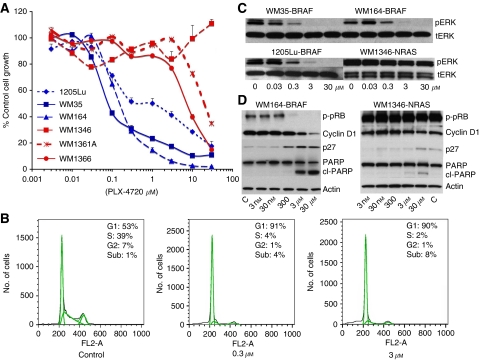
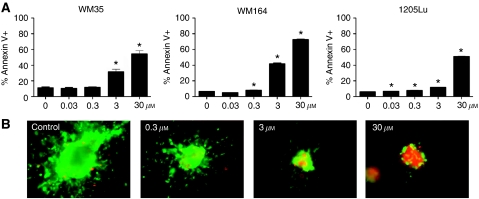
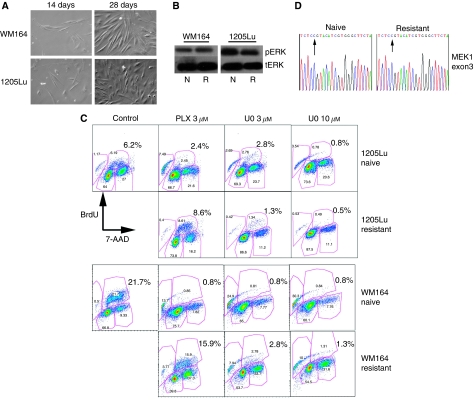
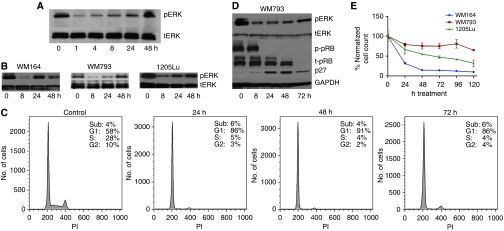
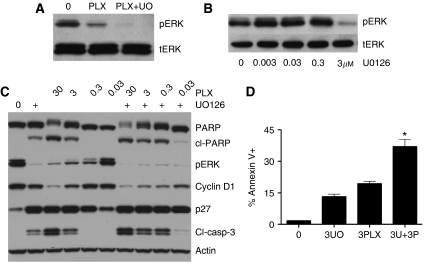
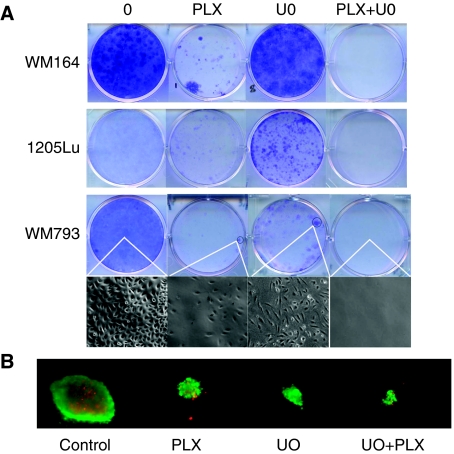
BACKGROUND: Resistance to BRAF inhibitors is an emerging problem in the melanoma field. Strategies to prevent and overcome resistance are urgently required. METHODS: The dynamics of cell signalling, BrdU incorporation and cell-cycle entry after BRAF inhibition was measured using flow cytometry and western blot. The ability of combined BRAF/MEK inhibition to prevent the emergence of resistance was demonstrated by apoptosis and colony formation assays and in 3D organotypic cell culture. RESULTS: BRAF inhibition led to a rapid recovery of phospho-ERK (pERK) signalling. Although most of the cells remained growth arrested in the presence of drug, a minor population of cells retained their proliferative potential and escaped from BRAF inhibitor therapy. A function for the rebound pERK signalling in therapy escape was demonstrated by the ability of combined BRAF/MEK inhibition to enhance the levels of apoptosis and abrogate the onset of resistance. CONCLUSION: Combined BRAF/MEK inhibition may be one strategy to prevent the emergence of drug resistance in BRAF-V600E-mutated melanomas.
Overview
The claims and statistics of this paper haven’t been checked yet.
Free: it reads the open-access text and checks the first 5 claims that cite a source we can check. Create a free account to check every claim.
Integrity signals
Registry
Cites
Statistics
Figures
Verification
Claims the paper makes
The claims and statistics of this paper haven’t been checked yet.
Free: it reads the open-access text and checks the first 5 claims that cite a source we can check. Create a free account to check every claim.
Claims other papers make about this one
Each is checked against this paper’s own text: does it say what the citing paper says it does?
The source backs part of the claim, not all of it — or backs it for a different population, condition or comparison.
In the citing paper
“BRAF inhibition in BRAFV600 mutant cancers leads to loss of negative feedback signals regulated by the MAPK pathway, leading to receptor tyrosine kinase (RTK)-mediated reactivation of MAPK signaling through wild type RAS and RAF, particularly in specific tumor types, such as colorectal cancer (9–12).”
From Vertical Pathway Inhibition Overcomes Adaptive Feedback Resistance to KRASG12C Inhibition (2020) · cites this paper as [9]
Experimental — accuracy not yet measured
Self-check
Percentages, sums and reported differences re-computed from the paper’s own numbers.
The self-check needs the paper’s full text.
Citations
Cites
Mutations of the BRAF gene in human cancer
Davies, H., Bignell, G. R., Cox, C., Stephens, P., Edkins, S., Clegg, S., Teague, J., Woffendin, H., Garnett, M. J., Bottomley, W., et al. (2002) · Nature · doi:10.1038/nature00766 · Cited by 10,674 · cited 2×
“…UK Keywords: melanoma; BRAF; resistance; therapy The discovery that B50% of human melanomas harbour activating V600E mutations in the serine/threonine kinase BRAF has raised the possibility that these tumours may be amenable to targeted therapy (Davies et al, 2002; Smalley and Flaherty, 2009).”
BackgroundDiscovery of a selective inhibitor of oncogenic B-Raf kinase with potent antimelanoma activity
Tsai, J., Lee, J. T., Wang, W., Zhang, J., Cho, H., Mamo, S., Bremer, R., Gillette, S., Kong, J., Haass, N. K., et al. (2008) · Proceedings of the National Academy of Sciences · doi:10.1073/pnas.0711741105 · Cited by 1,346 · cited 2×
“Of these, PLX4032 and PLX4720 (Plexxikon/Roche, Nutley, NJ, USA), have been exciting great interest, with recent studies from our group and others showing these compounds to have excellent anti-tumour activity in vitro and in vivo (Cartlidge et al, 2008; Sala et al, 2008; Tsai et al, 2008).”
BackgroundSelf-citationThe RAF proteins take centre stage
Wellbrock, C., Karasarides, M., & Marais, R. (2004) · Nature Reviews Molecular Cell Biology · doi:10.1038/nrm1498 · Cited by 1,228 · cited 3×
“There is already evidence that both ARAF and CRAF affect pathways other than MEK, and although not well characterised, it is possible that other BRAF targets may exist (”
BackgroundSawyers, C. (2004) · Nature · doi:10.1038/nature03095 · Cited by 1,165 · cited 1×
“These observations mirror the pattern of response seen to targeted therapy in CML, GIST (Sawyers, 2004; Bauer et al, 2007) and most recently medulloblastoma (Rudin et al, 2009; Yauch et al, 2009), where an initial period of tumour regression is later followed by relapse.”
ResultTreatment of Medulloblastoma with Hedgehog Pathway Inhibitor GDC-0449
Rudin, C. M., Hann, C. L., Laterra, J., Yauch, R. L., Callahan, C. A., Fu, L., Holcomb, T., Stinson, J., Gould, S. E., Coleman, B., et al. (2009) · New England Journal of Medicine · doi:10.1056/nejmoa0902903 · Cited by 1,019
Smoothened Mutation Confers Resistance to a Hedgehog Pathway Inhibitor in Medulloblastoma
Yauch, R. L., Dijkgraaf, G. J. P., Alicke, B., Januario, T., Ahn, C. P., Holcomb, T., Pujara, K., Stinson, J., Callahan, C. A., Tang, T., et al. (2009) · Science · doi:10.1126/science.1179386 · Cited by 839 · cited 1×
“These observations mirror the pattern of response seen to targeted therapy in CML, GIST (Sawyers, 2004; Bauer et al, 2007) and most recently medulloblastoma (Rudin et al, 2009; Yauch et al, 2009), where an initial period of tumour regression is later followed by relapse.”
ResultMEK1 mutations confer resistance to MEK and B-RAF inhibition
Emery, C. M., Vijayendran, K. G., Zipser, M. C., Sawyer, A. M., Niu, L., Kim, J. J., Hatton, C., Chopra, R., Oberholzer, P. A., Karpova, M. B., et al. (2009) · Proceedings of the National Academy of Sciences · doi:10.1073/pnas.0905833106 · Cited by 633 · cited 8×
“Earlier studies have suggested that acquired resistance to the MEK inhibitor AZD6244 occurs as the result of an acquired mutation in MEK1 (Emery et al, 2009).”
BackgroundMethodInfluentialPratilas, C. A., Taylor, B. S., Ye, Q., Viale, A., Sander, C., Solit, D. B., & Rosen, N. (2009) · Proceedings of the National Academy of Sciences · doi:10.1073/pnas.0900780106 · Cited by 614 · cited 2×
“Although targeting the same pathway at two points seems redundant, it is likely that dual inhibition may be a good strategy to counteract the feedback inhibition loops that are relieved after pathway blockade at a single point (Pratilas et al, 2009).”
BackgroundElevated CRAF as a Potential Mechanism of Acquired Resistance to BRAF Inhibition in Melanoma
Montagut, C., Sharma, S. V., Shioda, T., McDermott, U., Ulman, M., Ulkus, L. E., Dias-Santagata, D., Stubbs, H., Lee, D. Y., Singh, A., et al. (2008) · Cancer Research · doi:10.1158/0008-5472.can-07-6787 · Cited by 508 · cited 4×
“There is already evidence that both ARAF and CRAF affect pathways other than MEK, and although not well characterised, it is possible that other BRAF targets may exist (Wellbrock et al, 2004a).”
BackgroundInfluentialSmalley, K. S. M., Haass, N. K., Brafford, P. A., Lioni, M., Flaherty, K. T., & Herlyn, M. (2006) · Molecular Cancer Therapeutics · doi:10.1158/1535-7163.mct-06-0084 · Cited by 463 · cited 2×
“Cells were seeded in 10 cm plates at a density of 100 000 cells ml 1 and grown overnight before being treated with PLX4720 (3 mM) for 72 h or 1, 2, 3 and 4 weeks.”
MethodSelf-citation
Cited by
Items 201–300 of 318
What is new in the treatment of advanced melanoma? State of the art
Mackiewicz, J. (2012) · Współczesna Onkologia · doi:10.5114/wo.2012.31763 · Cited by 12
Drug Combinations Targeting FAK and MEK Overcomes Tumor Heterogeneity in Glioblastoma
Furqan, M., Elliott, R. J. R., Nagle, P. W., Dawson, J. C., Masalmeh, R. H. A., Garcia, V. A., Munro, A. F., Drake, C., Morrison, G. M., Pollard, S. M., et al. (2025) · Pharmaceutics · doi:10.3390/pharmaceutics17050549 · Cited by 14
“Thus, combining dabrafenib with the MEK inhibitor trametinib was postulated to prevent tumors from using this escape mechanism and has demonstrated increased efficacy in preclinical tumor models and clinical studies [10–12].”
BRAF inhibition sensitizes melanoma cells to α-amanitin via decreased RNA polymerase II assembly
Frischknecht, L., Britschgi, C., Galliker, P., Christinat, Y., Vichalkovski, A., Gstaiger, M., Kovacs, W. J., & Krek, W. (2019) · Scientific Reports · doi:10.1038/s41598-019-44112-7 · Cited by 13
Martinez, R., Huang, W., Buck, H., Rea, S., Defnet, A. E., Kane, M. A., & Shapiro, P. (2022) · ACS Omega · doi:10.1021/acsomega.1c05361 · Cited by 12
Voon, P. J., Chen, E. X., Chen, H. X., Lockhart, A. C., Sahebjam, S., Kelly, K. L., Vaishampayan, U. N., Subbiah, V., Razak, A. R. A., Renouf, D. J., et al. (2022) · Journal of Experimental & Clinical Cancer Research · doi:10.1186/s13046-021-02236-7 · Cited by 11
“Currently, most of the approved indications of trametinib are in combination with dabrafenib in line with the concept of simultaneous inhibition of two kinases in the MAPK pathway will produce a greater suppression of signal transduction than either inhibitor alone [17].”
BackgroundHicks, H. M., Pozdeyev, N. V., Sams, S. B., Pugazhenthi, U., Bales, E. S., Hofmann, M.-C. C., McKenna, L. R., & Schweppe, R. E. (2023) · Molecular Cancer Research · doi:10.1158/1541-7786.mcr-22-1031 · Cited by 10
Talimogene laherparepvec in the treatment of melanoma
Appleton, E. S., Turnbull, S. J., Ralph, C., West, E. J., Scott, K. J., Harrington, K. J., Pandha, H., & Melcher, A. A. (2015) · Expert Opinion on Biological Therapy · doi:10.1517/14712598.2015.1084280 · Cited by 10
“Despite these impressive results, a significant proportion (50%) of patients treated with BRAF/MEK inhibitor monotherapy exhibit rapid disease progression at 6 -- 7 months [10], thought to be due to the acquisition of resistance within tumour cells and subsequent rapid recovery of the MAPK signal-transduction pathway…”
Change or die: Targeting adaptive signaling to kinase inhibition in cancer cells
Rebecca, V. W., & Smalley, K. S. M. (2014) · Biochemical Pharmacology · doi:10.1016/j.bcp.2014.07.031 · Cited by 12
“Initial preclinical studies demonstrated that the reactivation of ERK signaling could be abrogated through the co-targeting of BRAF and MEK and showed that this limited therapeutic escape by enhancing the level of apoptosis and preventing reentry into the cell cycle [79, 80].”
BackgroundSelf-citationMaking Sense of MEK1 Mutations in Intrinsic and Acquired BRAF Inhibitor Resistance
Paraiso, K. H. T., & Smalley, K. S. M. (2012) · Cancer Discovery · doi:10.1158/2159-8290.cd-12-0128 · Cited by 11
Self-citationHong, S. P., & Ahn, S. K. (2017) · Life Sciences · doi:10.1016/j.lfs.2017.06.021 · Cited by 10
“Because BRAF inhibitors have been recently reported to cause a rapid recovery of phospho-ERK by reactivating the RAS-CRAF pathway or mitigating ERK-dependent negative feedback [32,33], we next investigated the time-course effect of INU-152 on pERK recovery.”
Future of combination therapy with dabrafenib and trametinib in metastatic melanoma
Zia, Y., Chen, L. R., & DAUD, A. I. (2015) · Expert Opinion on Pharmacotherapy · doi:10.1517/14656566.2015.1085509 · Cited by 10
“Concurrent dabrafenib and trametinib therapy is known to result in both fewer toxicities and a delayed onset of adaptive resistance due to a more complete interruption of MAPK signaling [35,36].”
BackgroundDoroshow, D. B., & Doroshow, J. H. (2019) · The Cancer Journal · doi:10.1097/ppo.0000000000000386 · Cited by 8
Huang, X., Gao, H., Lee, S., Chang, K., Tang, L., & Tsai, N. (2020) · International Journal of Medical Sciences · doi:10.7150/ijms.49423 · Cited by 9
“For instance, BRAF inhibition results in a rapid recovery of phospho-ERK (pERK) signaling result in drug resistance [41]; activation of JNK is associated with cell proliferation and shorter relapse-free period for patients with superficial spreading melanomas [42, 43]; p38 activity contribute to metastasis result in p…”
BackgroundTherapeutic options in cutaneous melanoma: latest developments
Amaria, R. N., Lewis, K. D., & Gonzalez, R. C. (2011) · Therapeutic Advances in Medical Oncology · doi:10.1177/1758834011415308 · Cited by 13
“The combination of BRAF and MEK inhibition completely destroyed the population of resistant cells [Paraiso et al. 2010].”
McClure, E., Carr, M. J., & Zager, J. S. (2020) · Expert Review of Anticancer Therapy · doi:10.1080/14737140.2020.1796646 · Cited by 9
Simpson, C., Ferrari, N., Calvo, F., & Bakal, C. (2018) · SSRN Electronic Journal · doi:10.2139/ssrn.3188455 · Cited by 10
Are we there yet? Prolonged MAPK inhibition in BRAFV600-mutant melanoma
Khushalani, N. I., & Sondak, V. K. (2016) · The Lancet Oncology · doi:10.1016/s1470-2045(16)30368-0 · Cited by 9
Self-citationBRAF and MEK Gene Rearrangements in Melanoma: Implications for Targeted Therapy
Madureira, P., & de Mello, R. A. (2014) · Molecular Diagnosis & Therapy · doi:10.1007/s40291-013-0081-0 · Cited by 11
“Laboratory-based investigations utilising V600 BRAF mutant melanoma cell lines discovered that with long-term exposure to a selective BRAF inhibitor, ERK phosphorylation could be restored after initial suppression [38].”
Methodde Souza, N., de Oliveira, E. A., Faião‐Flores, F., Pimenta, L. D. A., Quincoces, J., Sampaio, S. C., & Maria–Engler, S. S. (2020) · Anti-Cancer Agents in Medicinal Chemistry · doi:10.2174/1871520620666200218111422 · Cited by 8
Targeting the mercapturic acid pathway for the treatment of melanoma
Singhal, S. S., Srivastava, S., Mirzapoiazova, T., Horne, D. A., Awasthi, S., & Salgia, R. (2021) · Cancer Letters · doi:10.1016/j.canlet.2021.06.004 · Cited by 8
Latimer, N. R., Amonkar, M. M., Stapelkamp, C., & Sun, P. G. (2015) · Melanoma Research · doi:10.1097/cmr.0000000000000193 · Cited by 7
Wu, J. H., Das, J., Kalra, M., & Ratto, B. E. (2021) · Journal of Comparative Effectiveness Research · doi:10.2217/cer-2020-0249 · Cited by 7
Targeted Therapies for Metastatic Melanoma
Chandra, S., & Pavlick, A. C. (2012) · Dermatologic Clinics · doi:10.1016/j.det.2012.05.001 · Cited by 10
“melanoma cells to the BRAF inhibitors was associated with the rebound activation of the RAF/MEK/ ERK pathway.(22) In line with this finding, activating signals to downstream MEK/ERK has been shown to switch to ARAF(25) or CRAF(25,26) via N-RAS upregulation(23) toovercometheeffect ofBRAF inhibition.”
BackgroundXia, Y., & Sun, J. (2017) · Clinical and Experimental Dermatology · doi:10.1111/ced.13283 · Cited by 7
Ahmadian, Z., Ghasemian, M., Hakimi, F., & Orive, G. (2024) · ACS symposium series · doi:10.1021/bk-2024-1464.ch006 · Cited by 6
Morris, V. K. (2019) · Current Colorectal Cancer Reports · doi:10.1007/s11888-019-00429-z · Cited by 8
TREATMENT OF BRAFV600E POSITIVE ANAPLASTIC THYROID CARCINOMA: CASE REPORT
Алексеевич, Н. П., Rumyantsev, P. O., Sleptsov, I. V., Васильевна, У. Т., Slashchuk, K. Y., Vorobyev, S. L., Serzhenko, S. S., AIu, A., Kudryavtseva, A. V., Семенов, А. А., et al. (2020) · Siberian Journal of Oncology · doi:10.21294/1814-4861-2020-19-5-131-144 · Cited by 6
Growth factor transduction pathways: paradigm of anti-neoplastic targeted therapy
Carlomagno, F., & Chiariello, M. (2014) · Journal of Molecular Medicine · doi:10.1007/s00109-014-1177-7 · Cited by 8
“Among them, MEK inhibitors (MEKi), such as trametinib (GlaxoSmithKline), selumetinib (Astra Zeneca), MEK162 (Novartis), and cobimetinib (Roche), have been suggested as potentially useful drugs for combination regiments in melanoma therapy [37].”
BackgroundAcciardo, S., Mignion, L., Joudiou, N., Bouzin, C., Baurain, J., Gallez, B., & Jordan, B. F. (2018) · Oncotarget · doi:10.18632/oncotarget.24709 · Cited by 6
“This phaenomenon has previously been observed in vitro: phospho-ERK levels measured in melanoma cells treated with the BRAFi PLX4720 were completely recovered after 24h of treatment, even though cell growth arrest and apoptotic cell death were still present at later time points, as evidenced by annexin-V flow cytometr…”
BRAF Mutation in Melanoma and Dietary Polyphenols as Adjunctive Treatment Strategy
Aquilato, A., López, V. V., Doonan, B. B., Hsieh, T., Pinto, J. T., Wu, E., & WU, J. M. (2013) · Polyphenols in Human Health and Disease · doi:10.1016/b978-0-12-398456-2.00102-x · Cited by 8
Chapman, P. B., Hauschild, A., & Sondak, V. K. (2014) · American Society of Clinical Oncology Educational Book · doi:10.14694/edbook_am.2014.34.e412 · Cited by 9
Self-citationDeconstructing Signaling Pathways in Cancer for Optimizing Cancer Combination Therapies
Yamaguchi, R., & Perkins, G. A. (2017) · International Journal of Molecular Sciences · doi:10.3390/ijms18061258 · Cited by 5
“In fact, restoring phospho-ERK activity allows melanoma cells to escape from BRAF inhibitor therapy [34].”
BackgroundAceves-Hernández, J. M., Nicolás‐Vázquez, M. I., Rivera, J. L. G., Godínez, A. E., Flores, J. M., Guzmán, J. D. J. C., & Castaño, V. M. (2023) · Chemistry & Biodiversity · doi:10.1002/cbdv.202200554 · Cited by 5
Yu, G., Packeiser, E., Wendt, S., Sekora, A., Cavalleri, J. V., Pratscher, B., Alammar, M., Hühns, M., Brenig, B., Junghanß, C., et al. (2024) · Genes · doi:10.3390/genes15020202 · Cited by 5
“Furthermore, there has been a study using a pan-RAF inhibitor in combination with a MEK inhibitor (trametinib), evaluated in human melanoma cell lines, that achieved a significant inhibitory effect on cells growth [38].”
BackgroundRebecca, V. W., Xiao, M., Kossenkov, A. V., Godok, T., Brown, G. S., Fingerman, D., Alicea, G. M., Wei, M., Ji, H., Portuallo, M. E., et al. (2026) · iScience · doi:10.1016/j.isci.2026.114669 · Cited by 5
Targeted Therapies in Melanoma: Successes and Pitfalls
Palmieri, G., Colombino, M., Cristina, M., Ascierto, P. A., Lissia, A., & Cossu, A. (2013) · InTech eBooks · doi:10.5772/53624 · Cited by 9
“Cooperation between BRAF and MEK inhibitors has also been demonstrated in preclinical studies with a consistent increase of apoptosis and abroga‐ tion of ERK activation compared to BRAF inhibitor alone [130].”
ResultSmalley, K. S. M., & Forsyth, P. A. (2017) · Pharmacological Research · doi:10.1016/j.phrs.2017.11.013 · Cited by 6
Self-citationDefining melanoma combination therapies that provide senolytic sensitivity in human melanoma cells
Tchelougou, D., Malaquin, N., Cardin, G. B., Desmul, J., Turcotte, S., & Rodier, F. (2024) · Frontiers in Cell and Developmental Biology · doi:10.3389/fcell.2024.1368711 · Cited by 6
Badawi, W. A., Ezz-ElDien, E. S., El‐Atawy, M. A., Omar, A. Z., Hamed, E. A., Ahmed, H. A., Jaremko, M., Emwas, A.-H. M., Okda, T. M., El-Readi, M. Z., et al. (2025) · Bioorganic Chemistry · doi:10.1016/j.bioorg.2025.108943 · Cited by 4
Favre, G. (2014) · Bulletin de l Académie Nationale de Médecine · doi:10.1016/s0001-4079(19)31345-7 · Cited by 7
BRAF-MEK inhibition in melanoma brain metastases: a new hope
Forsyth, P. A., Smalley, K. S. M., & Sondak, V. K. (2017) · The Lancet Oncology · doi:10.1016/s1470-2045(17)30449-7 · Cited by 5
Self-citationDabrafenib and trametinib induced pancreatitis: a case report and review of the literature
Ogliari, F. R., Masera, G., Gueli, R., & Chini, C. (2020) · Anti-Cancer Drugs · doi:10.1097/cad.0000000000001009 · Cited by 4
Nguyen, C., & Jacob, S. E. (2016) · Journal of the Dermatology Nurses’ Association · doi:10.1097/jdn.0000000000000264 · Cited by 6
“Combination therapy with BRAF and MEK inhibitors has been studied and has shown increased apoptosis of tumor cells and delayed onset of resistance to therapy (Paraiso et al., 2010).”
HSP90 Inhibitor-Based Strategies for Cancer Therapy: Advancing Toward Clinical Impact
Proia, D. A., & Bates, R. C. (2015) · Heat shock proteins · doi:10.1007/978-3-319-17211-8_15 · Cited by 3
Freeman, A. K., & Morrison, D. K. (2013) · Resistance to targeted anti-cancer therapeutics · doi:10.1007/978-1-4614-7070-0_3 · Cited by 4
Dermatologic adverse events associated with targeted therapies for melanoma
Scarpato, L., Festino, L., Vanella, V., Madonna, G., Mastroianni, M., Palla, M., & Ascierto, P. A. (2021) · Expert Opinion on Drug Safety · doi:10.1080/14740338.2022.1986000 · Cited by 3
“inhibitors (MEKi) (trametinib, cobimetinib and binimetinib) could delay the onset of resistance and avoid the paradoxical activation of the MAPK pathway [31,32].”
BackgroundPharmacological ascorbate induces sustained mitochondrial dysfunction
Carroll, R. S., Du, J., O’Leary, B. R., Steers, G. J., Goswami, P. C., Buettner, G. R., & Cullen, J. J. (2023) · Free Radical Biology and Medicine · doi:10.1016/j.freeradbiomed.2023.04.023 · Cited by 4
Oncogene-Directed Small Molecule Inhibitors for the Treatment of Cutaneous Melanoma
Eliades, P. J., Flaherty, K. T., & Tsao, H. (2015) · Melanoma Management · doi:10.2217/mmt.15.5 · Cited by 5
Self-citationDual inhibition of BRAF and MEK in BRAF-mutated metastatic non-small cell lung cancer
Kim, Y. H. (2016) · Journal of Thoracic Disease · doi:10.21037/jtd.2016.09.16 · Cited by 3
“com Based on the preclinical data that dual inhibition of BRAF and MEK had a synergistic effect and delayed the emergence of resistance (13,14), combination of both BRAF and MEK inhibitors has been extensively evaluated in BRAF-mutated melanoma.”
BackgroundWhat Is the Timing and Role of Targeted Therapy in Metastatic Melanoma?
Hadfield, M. J., & Sullivan, R. J. (2024) · The Cancer Journal · doi:10.1097/ppo.0000000000000712 · Cited by 2
BRAF V600E Mutated Gene Variant as a Circulating Molecular Marker in Metastatic Melanoma Patients
Vallacchi, V., Rivoltini, L., & Rodolfo, M. (2011) · InTech eBooks · doi:10.5772/20779 · Cited by 2
“In fact, data obtained in preclinical studies demonstrated a synergism between BRAF and MEK inhibitors AZD6244 and GSK1120212 (Emery et al., 2009; Joseph et al., 2010; Paraiso et al., 2010).”
BackgroundAcquired Resistance to Targeted MAPK Inhibition in Melanoma
Gowrishankar, K., Matteo, S., & Rizos, H. (2013) · InTech eBooks · doi:10.5772/53629 · Cited by 3
“Irrespective of the precise mechanisms of resistance to class I RAF inhibitors, tumors that acquire resistance or are inherently insensitive to these inhibitors often maintain some dependency on the MAPK pathway [29, 33, 38, 55, 57, 74].”
BackgroundMudunov, A. M., Pkheshkhova, B. G., Zeynalova, P. A., Феденко, А. А., Batsev, A. F., & Пак, М. Б. (2022) · MD-Onco · doi:10.17650/2782-3202-2022-2-4-22-26 · Cited by 2
Datta, K. K., Kore, H., & Gowda, H. (2024) · Experimental Cell Research · doi:10.1016/j.yexcr.2024.114215 · Cited by 2
Tridente, G. (2017) · Elsevier eBooks · doi:10.1016/b978-0-12-809400-6.00024-x · Cited by 1
Zhang, P., Zhang, Y., Sun, Y., Chen, Y., Cao, X. M., He, Y., Tan, Y., Zhang, Z., Deng, S., Zhou, W., et al. (2025) · Journal of Medicinal Chemistry · doi:10.1021/acs.jmedchem.5c01055 · Cited by 1
Solé-Blanch, C., España, S., de la Puente-Noël, A., Marín-Béjar, O., Manzano, J. L., & Martínez‐Cardús, A. (2025) · Biochimica et Biophysica Acta (BBA) - Reviews on Cancer · doi:10.1016/j.bbcan.2025.189503 · Cited by 1
BRAF Inhibition–Associated Nuclear Remodeling is Linked to Cancer-Associated Fibroblast Activation
Wang, J. J., Soley, B. D. S., Xiao, Y., Siegfried, L. G., Zhou, L., Xu, M., Millar, S. E., Andl, T., & Zhang, Y. (2026) · Cancer Research Communications · doi:10.1158/2767-9764.crc-25-0682 · Cited by 1
Melanoma and Other Skin Cancers
Paraiso, K. H. T., John, J. K., & Smalley, K. S. M. (2012) · Humana Press eBooks · doi:10.1007/978-1-61779-615-9_17 · Cited by 1
Self-citationTargeted Therapies in Melanoma: Knowledge, Resistance and Perspectives
Colombino, M. (2012) · Journal of Carcinogenesis & Mutagenesis · doi:10.4172/2157-2518.s4-004 · Cited by 1
“The addition of a MEK inhibitor to the RAF inhibitor seem to increase the magnitude and/or durability of response, as shown in several studies [37,47-48,130-131].”
ResultHepatocyte growth factor in the neighborhood reverses resistance to BRAF inhibitor in melanoma
Nickoloff, B. J., & Woude, G. V. (2012) · Pigment Cell & Melanoma Research · doi:10.1111/pcmr.12020 · Cited by 1
“…inhibitors in the battle against melanoma such as MEK inhibitors (Falchook et al., 2012; Flaherty et al., 2012; Lorusso et al., 2005; Von Euw et al., 2012), AKT inhibitors (Villanueva et al., 2010), and/ ª 2012 John Wiley & Sons A/S 759 or ERK inhibitors (Paraiso et al., 2010; Wilson et al., 2012).”
BackgroundMelanoma — The pieces of the puzzle finally start coming together!
Spatz, A., & Eggermont, A. M. M. (2011) · Molecular Oncology · doi:10.1016/j.molonc.2011.03.005 · Cited by 1
“However, resistance to BRAF inhibitors is a significant clinical challenge (Nazarian et al., 2010; Paraiso et al., 2010; Poulikakos and Rosen, 2011; Solit and Rosen, 2011; Villanueva et al., 2010).”
BackgroundRoukos, D. H., Papaloukas, C. L., & Tzaphlidou, M. (2012) · Future Oncology · doi:10.2217/fon.12.169 · Cited by 1
Altered Signal Transduction Pathways in Melanoma
Lau, E. K., & Ronai, Z. A. (2011) · Springer eBooks · doi:10.1007/978-3-7091-0371-5_7 · Cited by 1
Effets secondaires carcinogènes et résistances aux thérapies ciblées anti-BRAF
Capovilla, M. (2013) · Annales de Pathologie · doi:10.1016/j.annpat.2013.09.003 · Cited by 2
[Progress in the Treatment of Non-small Cell Lung Cancer with BRAF Inhibitors].
Kang, X., Zhu, N., & Song, X. (2016) · Europe PMC (PubMed Central) · doi:10.3779/j.issn.1009-3419.2016.10.13 · Cited by 1
Basile, D., Lisanti, C., Pizzichetta, M. A., Baldo, P., Fornasier, G., Re, F. L., Corona, G., & Puglisi, F. (2019) · Recent Patents on Anti-Cancer Drug Discovery · doi:10.2174/1574892814666190726130351 · Cited by 1
Tridente, G. (2017) · Elsevier eBooks · doi:10.1016/b978-0-12-809400-6.00023-8 · Cited by 1
Molecular Testing for Diagnostics, Prognostication, and Treatment Stratification in Cancers
Heneidi, S. G., Golden, J. A., & Vail, E. (2023) · The Cancer Journal · doi:10.1097/ppo.0000000000000643 · Cited by 1
Precision medicine for colorectal cancer
Hızel, C., Tüzmen, Ş., Amirfallah, A., Calibasi‐Kocal, G., Abbasoğlu, D., Onat, H., Yıldırım, Y., & Baskın, Y. (2018) · CRC Press eBooks · doi:10.1201/9781315154749-5 · Cited by 1
Moving Forward: Making BRAF-Targeted Therapy Better
Flaherty, K. T. (2014) · Cancer drug discovery and develogment/Cancer drug discovery and development · doi:10.1007/978-1-4939-2143-0_9
Self-citationMcCorkle, J. R. (2010) · UKnowledge (University of Kentucky)
Indução de estresse de retículo endoplasmático como estratégia de quimiossensibilização de melanoma
Saito, R. D. F. (2014) · Digital Library of Theses and Dissertations (Universidade de São Paulo) · doi:10.11606/t.5.2014.tde-26082014-085846 · Cited by 1
Promising Experimental Therapies for Metastatic Melanoma
Lam, B., Patrick, A., & Anna, C. (2011) · InTech eBooks · doi:10.5772/19179
“In preclinical models, it has been reported that acquired resistance of melanoma cells to the BRAF inhibitors was associated with rebound activation of the RAF/MEK/ERK pathway (Paraiso et al. 2010).”
BackgroundInfluentialSkin Diseases-Related Enzymes: Mechanisms and Clinical Applications
Park, Y., Yang, J., & Lü, Z.-R. (2011) · Enzyme Research · doi:10.4061/2011/464507
“Furthermore, it is also now well established that targeting V600EB-Raf not only induces resistance to various therapeutic agents but also stimulates the activity of C-Raf and wt B-Raf signaling thereby triggering the formation of keratoacanthomas and basal cell carcinomas [7, 184].”
BackgroundWhere to start with systemic melanoma therapy?
Gibney, G. T., Sondak, V. K., & Smalley, K. S. M. (2014) · Melanoma Management · doi:10.2217/mmt.14.3
Self-citationTargeted drug development in melanoma and nonsmall cell lung cancer: BRAF, MEK, and ALK inhibitors
Chi, M., & Puzanov, I. J. (2012) · memo - Magazine of European Medical Oncology · doi:10.1007/s12254-012-0058-4 · Cited by 1
“MEK1 mutations [27], over expression of COT/TPL2”
Melanoma treatment: where are we now and what’s on the horizon?
Pavlick, A. C. (2013) · Clinical Practice · doi:10.2217/cpr.13.10
Augustine, C. K., Freedman, J. A., Beasley, G. M., & Tyler, D. S. (2012) · Elsevier eBooks · doi:10.1016/b978-0-12-382227-7.00066-5
McCubrey, J. A., Steelman, L. S., Bäsecke, J., & Martelli, A. M. (2014) · Springer eBooks · doi:10.1007/978-1-4939-1393-0_14
Javaid, S. (2012) · University of Minnesota Digital Conservancy (University of Minnesota)
dos Santos, M. T. (2016) · Digital Library of Theses and Dissertations (Universidade de São Paulo) · doi:10.11606/t.9.2016.tde-25022016-110122
Personalised therapy for melanoma
Brozić, J. M., & Đaković, N. (2014) · Rad Hrvatske akademije znanosti i umjetnosti Medicinske znanosti
ONCOGENE DEPENDENT REGULATION OF MIGRATION AND PROLIFERATION IN HUMAN TUMOR CELLS
Garay, T. (2014) · Semmelweis University Repository (Semmelweis University) · doi:10.14753/se.2014.1924
“Unfortunately, despite the promising first results, BRAF-mutant melanoma often shows intrinsic or acquired resistance against vemurafenib treatment (Bollag et al. 2010; Flaherty et al. 2010; Paraiso et al. 2010; Ribas and Flaherty 2011).”
BackgroundBRAF-Targeted Therapy in Metastatic Melanoma
Kim, N., & Deng, A. (2013) · Pan Stanford Publishing eBooks · doi:10.1201/b15029-18
Sullivan, R. J., & Flaherty, K. T. (2017) · Springer eBooks · doi:10.1007/978-3-319-41319-8_16
Self-citationAre we there yet? Prolonged MAPK inhibition in BRAF V600 -mutant melanoma
Gschmeissner, S. (2016)
Counteracting Resistance to BRAF V600E Mutation in Melanoma Using Dietary Polyphenols
Hsieh, T., Doonan, B. B., Aquilato, A., & WU, J. M. (2018) · Elsevier eBooks · doi:10.1016/b978-0-12-813008-7.00015-1
Targeted Therapies for BRAF-Mutant Metastatic Melanoma
Johnson, D. B., Dummer, R., Flaherty, K. T., & Smalley, K. S. M. (2018) · Springer eBooks · doi:10.1007/978-3-319-46029-1_40-1
Self-citationAnnunziata, C. M., & Dennis, P. A. (2013) · Cancer drug discovery and develogment/Cancer drug discovery and development · doi:10.1007/978-1-4614-9135-4_1
Altered Signal Transduction Pathways in Melanoma
Chéli, Y., Lau, E. K., & Ronai, Z. A. (2017) · Springer eBooks · doi:10.1007/978-3-319-41319-8_7
Targeted Therapies for BRAF-Mutant Metastatic Melanoma
Johnson, D. B., Dummer, R., Flaherty, K. T., & Smalley, K. S. M. (2020) · Springer eBooks · doi:10.1007/978-3-030-05070-2_40
Self-citationKopetz, S. (2013) · Faculty Opinions – Post-Publication Peer Review of the Biomedical Literature · doi:10.3410/f.717958121.793472345
Indini, A., Pappo, A. S., Eigentler, T., Collini, P., & Ferrari, A. (2022) · Pediatric oncology · doi:10.1007/978-3-030-92071-5_40
Metastatic Melanoma: Targeted Therapy
Baksh, K. A., & Kudchadkar, R. R. (2015) · Oxford University Press eBooks · doi:10.1093/med/9780199971015.003.0009
Paraiso, K. H. T., Xiang, Y., Rebecca, V. W., Abel, E. V., Chen, Y. A., Munko, A. C., Wood, E., Fedorenko, I. V., Sondak, V. K., Anderson, A. R. A., et al. (2023) · doi:10.1158/0008-5472.c.6502911.v1
Self-citationJiang, X., Zhou, J., Giobbie‐Hurder, A., Wargo, J. A., & Hodi, F. S. (2023) · doi:10.1158/1078-0432.c.6522353.v1
Data from Vertical Pathway Inhibition Overcomes Adaptive Feedback Resistance to KRASG12C Inhibition
Ryan, M. B., de la Cruz, F. F., Phat, S., Myers, D. T., Wong, E., Shahzade, H. A., Hong, C. B., & Corcoran, R. B. (2023) · doi:10.1158/1078-0432.c.6529850.v1
Data from Vertical Pathway Inhibition Overcomes Adaptive Feedback Resistance to KRASG12C Inhibition
Ryan, M. B., de la Cruz, F. F., Phat, S., Myers, D. T., Wong, E., Shahzade, H. A., Hong, C. B., & Corcoran, R. B. (2023) · doi:10.1158/1078-0432.c.6529850
Data from Tumor-Agnostic Precision Medicine from the AACR GENIE Database: Clinical Implications
Gouda, M. A., Nelson, B. E., Buschhorn, L., Wahida, A., & Subbiah, V. (2023) · doi:10.1158/1078-0432.c.6626953
Metadata
- Authors
- Paraiso, K. H. T., Fedorenko, I. V., Cantini, L. P., Munko, A. C., Hall, M., Sondak, V. K., Messina, J. L., Flaherty, K. T., & Smalley, K. S. M.
- Affiliations
- Moffitt Cancer Center (US)
- University of South Florida (US)
- Massachusetts General Hospital (US)
- Corresponding author
- Smalley, K S M
- Venue
- British Journal of Cancer
- Published
- 2010-06
- Volume
- 102
- Issue
- 12
- Pages
- 1724-1730
- ISSN
- 0007-0920 (ISSN-L)
- 1532-1827
- PMC
- PMC2883709
- OpenAlex
- W1970039331
- Semantic Scholar
- 902519b5b657cc83ab817259ebcc30d016a6a89a
- Cited by
- 314
- References
- 29
- Citations by year
- 2026: 3 · 2025: 5 · 2024: 10 · 2023: 19 · 2022: 12 · 2021: 15 · 2020: 13 · 2019: 16 · 2018: 19 · 2017: 22 · 2016: 16 · 2015: 22 · 2014: 34 · 2013: 28 · 2012: 40
- FWCI
- 14.06
- Type
- journal article
- Language
- en
- Open access
- hybrid
- doi.org
- Licence
- cc-by-nc-sa
- www.springer.com/tdm (unspecified)
- Locations
- British Journal of Cancer (publishedVersion, cc-by-nc-sa)
- Europe PMC (PubMed Central) (publishedVersion, cc-by)
- PubMed Central (publishedVersion, cc-by)
- PubMed (publishedVersion)
- Funders
- American Cancer Society (93-032-13)
- Melanoma Research Foundation
- Melanoma Research Alliance
- Moffitt Cancer Center
- Plexxikon
- National Institutes of Health
- National Cancer Institute (U54CA143970)
- State of Florida
- Topics
- Life Sciences › Biochemistry, Genetics and Molecular Biology › Molecular Biology › Melanoma and MAPK Pathways
- Life Sciences › Biochemistry, Genetics and Molecular Biology › Molecular Biology › Protein Tyrosine Phosphatases
- Health Sciences › Medicine › Pulmonary and Respiratory Medicine › Lung Cancer Treatments and Mutations
- Keywords
- melanoma, BRAF inhibitor resistance, BRAF V600E mutation, ERK signaling, MEK inhibition, combination therapy, apoptosis, cell cycle
- MeSH terms
- Dose-Response Relationship, Drug, Humans, Indoles, Melanoma, Mutation, Sulfonamides, Time Factors, Signal Transduction, Apoptosis, Drug Resistance, Neoplasm, Mitogen-Activated Protein Kinases, MAP Kinase Signaling System, Cell Line, Tumor, Extracellular Signal-Regulated MAP Kinases, Proto-Oncogene Proteins B-raf
About these checks
Registry, retraction, Cites and statistics results are computed, not judged, with one exception: a printed reference that no index lists is read once by a model before it counts as a citation error. Claims are extracted by a model and kept only when their quote appears verbatim in the text; each cited source is then checked, with a model’s help, for whether it says what the claim relies on. Those verdicts can be wrong — read the claim’s quote and the cited source before relying on one.
Statistics and arithmetic are recomputed, not judged.
Confidence bands are shown only for fields calibrated on our annotated test set. None is calibrated yet, so no band is shown.
What counts as a claim ›How we measure confidence ›How we check this ›
Are you an author, or do you see a problem with this page? Request a review
Data sources
Bibliographic data: Semantic Scholar, OpenAlex, Crossref.
Contains information from the Semantic Scholar Academic Graph Datasets, made available under the ODC Attribution License (ODC-BY 1.0).
Semantic Scholar’s data is described in: Kinney, R., et al. (2023). The Semantic Scholar Open Data Platform. arXiv:2301.10140.
