

Recovery of phospho-ERK activity allows melanoma cells to escape from BRAF inhibitor therapy
Open accessThe DOI matches its Crossref record; 29 of the 29 references it cites were found in a registry or an index.
Abstract
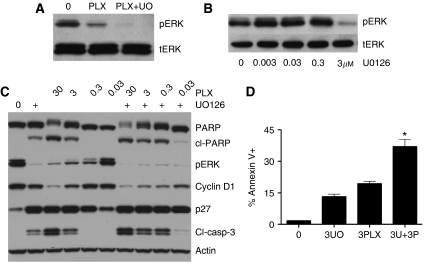
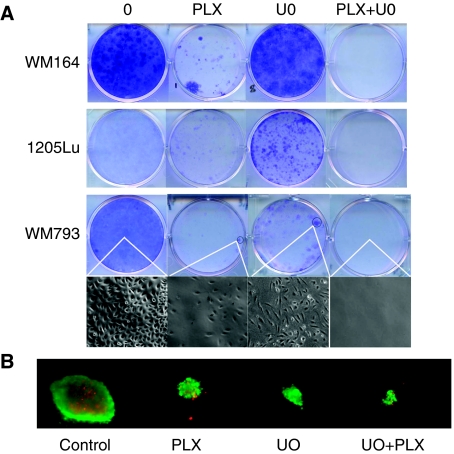
BACKGROUND: Resistance to BRAF inhibitors is an emerging problem in the melanoma field. Strategies to prevent and overcome resistance are urgently required. METHODS: The dynamics of cell signalling, BrdU incorporation and cell-cycle entry after BRAF inhibition was measured using flow cytometry and western blot. The ability of combined BRAF/MEK inhibition to prevent the emergence of resistance was demonstrated by apoptosis and colony formation assays and in 3D organotypic cell culture. RESULTS: BRAF inhibition led to a rapid recovery of phospho-ERK (pERK) signalling. Although most of the cells remained growth arrested in the presence of drug, a minor population of cells retained their proliferative potential and escaped from BRAF inhibitor therapy. A function for the rebound pERK signalling in therapy escape was demonstrated by the ability of combined BRAF/MEK inhibition to enhance the levels of apoptosis and abrogate the onset of resistance. CONCLUSION: Combined BRAF/MEK inhibition may be one strategy to prevent the emergence of drug resistance in BRAF-V600E-mutated melanomas.
Overview
The claims and statistics of this paper haven’t been checked yet.
Free: it reads the open-access text and checks the first 5 claims that cite a source we can check. Create a free account to check every claim.
Integrity signals
Registry
Cites
Statistics
Figures
Verification
Claims the paper makes
The claims and statistics of this paper haven’t been checked yet.
Free: it reads the open-access text and checks the first 5 claims that cite a source we can check. Create a free account to check every claim.
Claims other papers make about this one
Each is checked against this paper’s own text: does it say what the citing paper says it does?
The source backs part of the claim, not all of it — or backs it for a different population, condition or comparison.
In the citing paper
“BRAF inhibition in BRAFV600 mutant cancers leads to loss of negative feedback signals regulated by the MAPK pathway, leading to receptor tyrosine kinase (RTK)-mediated reactivation of MAPK signaling through wild type RAS and RAF, particularly in specific tumor types, such as colorectal cancer (9–12).”
From Vertical Pathway Inhibition Overcomes Adaptive Feedback Resistance to KRASG12C Inhibition (2020) · cites this paper as [9]
Experimental — accuracy not yet measured
Self-check
Percentages, sums and reported differences re-computed from the paper’s own numbers.
The self-check needs the paper’s full text.
Citations
Cites
Mutations of the BRAF gene in human cancer
Davies, H., Bignell, G. R., Cox, C., Stephens, P., Edkins, S., Clegg, S., Teague, J., Woffendin, H., Garnett, M. J., Bottomley, W., et al. (2002) · Nature · doi:10.1038/nature00766 · Cited by 10,674 · cited 2×
“…UK Keywords: melanoma; BRAF; resistance; therapy The discovery that B50% of human melanomas harbour activating V600E mutations in the serine/threonine kinase BRAF has raised the possibility that these tumours may be amenable to targeted therapy (Davies et al, 2002; Smalley and Flaherty, 2009).”
BackgroundDiscovery of a selective inhibitor of oncogenic B-Raf kinase with potent antimelanoma activity
Tsai, J., Lee, J. T., Wang, W., Zhang, J., Cho, H., Mamo, S., Bremer, R., Gillette, S., Kong, J., Haass, N. K., et al. (2008) · Proceedings of the National Academy of Sciences · doi:10.1073/pnas.0711741105 · Cited by 1,346 · cited 2×
“Of these, PLX4032 and PLX4720 (Plexxikon/Roche, Nutley, NJ, USA), have been exciting great interest, with recent studies from our group and others showing these compounds to have excellent anti-tumour activity in vitro and in vivo (Cartlidge et al, 2008; Sala et al, 2008; Tsai et al, 2008).”
BackgroundSelf-citationThe RAF proteins take centre stage
Wellbrock, C., Karasarides, M., & Marais, R. (2004) · Nature Reviews Molecular Cell Biology · doi:10.1038/nrm1498 · Cited by 1,228 · cited 3×
“There is already evidence that both ARAF and CRAF affect pathways other than MEK, and although not well characterised, it is possible that other BRAF targets may exist (”
BackgroundSawyers, C. (2004) · Nature · doi:10.1038/nature03095 · Cited by 1,165 · cited 1×
“These observations mirror the pattern of response seen to targeted therapy in CML, GIST (Sawyers, 2004; Bauer et al, 2007) and most recently medulloblastoma (Rudin et al, 2009; Yauch et al, 2009), where an initial period of tumour regression is later followed by relapse.”
ResultTreatment of Medulloblastoma with Hedgehog Pathway Inhibitor GDC-0449
Rudin, C. M., Hann, C. L., Laterra, J., Yauch, R. L., Callahan, C. A., Fu, L., Holcomb, T., Stinson, J., Gould, S. E., Coleman, B., et al. (2009) · New England Journal of Medicine · doi:10.1056/nejmoa0902903 · Cited by 1,019
Smoothened Mutation Confers Resistance to a Hedgehog Pathway Inhibitor in Medulloblastoma
Yauch, R. L., Dijkgraaf, G. J. P., Alicke, B., Januario, T., Ahn, C. P., Holcomb, T., Pujara, K., Stinson, J., Callahan, C. A., Tang, T., et al. (2009) · Science · doi:10.1126/science.1179386 · Cited by 839 · cited 1×
“These observations mirror the pattern of response seen to targeted therapy in CML, GIST (Sawyers, 2004; Bauer et al, 2007) and most recently medulloblastoma (Rudin et al, 2009; Yauch et al, 2009), where an initial period of tumour regression is later followed by relapse.”
ResultMEK1 mutations confer resistance to MEK and B-RAF inhibition
Emery, C. M., Vijayendran, K. G., Zipser, M. C., Sawyer, A. M., Niu, L., Kim, J. J., Hatton, C., Chopra, R., Oberholzer, P. A., Karpova, M. B., et al. (2009) · Proceedings of the National Academy of Sciences · doi:10.1073/pnas.0905833106 · Cited by 633 · cited 8×
“Earlier studies have suggested that acquired resistance to the MEK inhibitor AZD6244 occurs as the result of an acquired mutation in MEK1 (Emery et al, 2009).”
BackgroundMethodInfluentialPratilas, C. A., Taylor, B. S., Ye, Q., Viale, A., Sander, C., Solit, D. B., & Rosen, N. (2009) · Proceedings of the National Academy of Sciences · doi:10.1073/pnas.0900780106 · Cited by 614 · cited 2×
“Although targeting the same pathway at two points seems redundant, it is likely that dual inhibition may be a good strategy to counteract the feedback inhibition loops that are relieved after pathway blockade at a single point (Pratilas et al, 2009).”
BackgroundElevated CRAF as a Potential Mechanism of Acquired Resistance to BRAF Inhibition in Melanoma
Montagut, C., Sharma, S. V., Shioda, T., McDermott, U., Ulman, M., Ulkus, L. E., Dias-Santagata, D., Stubbs, H., Lee, D. Y., Singh, A., et al. (2008) · Cancer Research · doi:10.1158/0008-5472.can-07-6787 · Cited by 508 · cited 4×
“There is already evidence that both ARAF and CRAF affect pathways other than MEK, and although not well characterised, it is possible that other BRAF targets may exist (Wellbrock et al, 2004a).”
BackgroundInfluentialSmalley, K. S. M., Haass, N. K., Brafford, P. A., Lioni, M., Flaherty, K. T., & Herlyn, M. (2006) · Molecular Cancer Therapeutics · doi:10.1158/1535-7163.mct-06-0084 · Cited by 463 · cited 2×
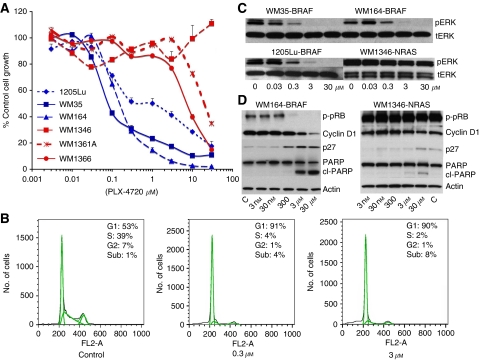
“Cells were seeded in 10 cm plates at a density of 100 000 cells ml 1 and grown overnight before being treated with PLX4720 (3 mM) for 72 h or 1, 2, 3 and 4 weeks.”
MethodSelf-citation
Cited by
Combined BRAF and MEK inhibition in melanoma with BRAF V600 mutations
Flaherty, K. T., Infante, J. R., Daud, A., Gonzalez, R., Kefford, R. F., Sosman, J., Hamid, O., Schuchter, L., Cebon, J., Ibrahim, N., et al. (2012) · New England Journal of Medicine · doi:10.1056/nejmoa1210093 · Cited by 2,810
“Vomiting 0 8 (15) 2 (4) 23 (43) 1 (2) 22 (40)”
Self-citationCombined BRAF and MEK Inhibition versus BRAF Inhibition Alone in Melanoma
Long, G. V., Stroyakovskiy, D., Gogas, H., Levchenko, E., de Braud, F., Larkin, J., Garbe, C., Jouary, T., Hauschild, A., Grob, J. J., et al. (2014) · New England Journal of Medicine · doi:10.1056/nejmoa1406037 · Cited by 1,899
Self-citationTsoi, J., Robert, L., Paraiso, K., Galvan, C., Sheu, K. M., Lay, J., Wong, D. J. L., Atefi, M., Shirazi, R., Wang, X., et al. (2018) · Cancer Cell · doi:10.1016/j.ccell.2018.03.017 · Cited by 938
“Of note, at this prolonged treatment time point, pERK levels rebounded likely due to feedback mechanisms that have previously been observed to begin within a few days during MAPK inhibition (Figure S7B) (Lito et al., 2012; Paraiso et al., 2010).”
BackgroundSelf-citationTargeting the RAS/RAF/MAPK pathway for cancer therapy: from mechanism to clinical studies
Bahar, M. E., Kim, H. J., & Kim, D. R. (2023) · Signal Transduction and Targeted Therapy · doi:10.1038/s41392-023-01705-z · Cited by 888
“408 The combination of RAFi together with other down-stream inhibitors (e.g., MEK inhibitors) can maximize MAPK pathway inhibition and minimize cancer resistance.”
BackgroundVemurafenib: the first drug approved for BRAF-mutant cancer
Bollag, G., Tsai, J., Zhang, J., Zhang, C., Ibrahim, P., Nolop, K., & Hirth, P. (2012) · Nature Reviews Drug Discovery · doi:10.1038/nrd3847 · Cited by 822
De Luca, A., Maiello, M. R., D'Alessio, A., Pergameno, M., & Normanno, N. (2012) · Expert Opinion on Therapeutic Targets · doi:10.1517/14728222.2011.639361 · Cited by 735
“Recent studies reveal potential mechanisms of acquired resistance to BRAF inhibitors, including a rapid activation of phospho-ERK signalling following blockade with these agents [57].”
BackgroundParaiso, K. H. T., Xiang, Y., Rebecca, V. W., Abel, E. V., Chen, Y. A., Munko, A. C., Wood, E., Fedorenko, I. V., Sondak, V. K., Anderson, A. R. A., et al. (2011) · Cancer Research · doi:10.1158/0008-5472.can-10-2954 · Cited by 551
“in melanoma cells harboring the BRAF V600E mutation and were cytostatic and cytotoxic in both in vitro cell culture systems and in vivo xenograft melanoma models (5, 6, 8).”
Self-citationVertical Pathway Inhibition Overcomes Adaptive Feedback Resistance to KRASG12C Inhibition
Ryan, M. B., Fece de la Cruz, F., Phat, S., Myers, D. T., Wong, E., Shahzade, H. A., Hong, C. B., & Corcoran, R. B. (2020) · Clinical Cancer Research · doi:10.1158/1078-0432.ccr-19-3523 · Cited by 496
Jiang, X., Zhou, J., Giobbie-Hurder, A., Wargo, J., & Hodi, F. S. (2013) · Clinical Cancer Research · doi:10.1158/1078-0432.ccr-12-2731 · Cited by 485
Sullivan, R. J., Infante, J. R., Janku, F., Wong, D. J. L., Sosman, J. A., Keedy, V., Patel, M. R., Shapiro, G. I., Mier, J. W., Tolcher, A. W., et al. (2018) · Cancer Discovery · doi:10.1158/2159-8290.cd-17-1119 · Cited by 426
“Central to these mechanisms of resistance is the reactivation of ERK signaling, which enables the rapid recovery of MAPK pathway signaling and escape of tumor cells from single-agent BRAF inhibitors or combination BRAF/MEK inhibitor therapies (32, 33).”
BackgroundSelf-citationLiu, C., Peng, W., Xu, C., Lou, Y., Zhang, M., Wargo, J. A., Chen, J. Q., Li, H. S., Watowich, S. S., Yang, Y., et al. (2013) · Clinical Cancer Research · doi:10.1158/1078-0432.ccr-12-1626 · Cited by 381
Self-citationTrunzer, K., Pavlick, A. C., Schuchter, L., Gonzalez, R., McArthur, G. A., Hutson, T. E., Moschos, S. J., Flaherty, K. T., Kim, K. B., Weber, J. S., et al. (2013) · Journal of Clinical Oncology · doi:10.1200/jco.2012.44.7888 · Cited by 367
Self-citationOncogenic NRAS signaling differentially regulates survival and proliferation in melanoma
Kwong, L. N., Costello, J. C., Liu, H., Jiang, S., Helms, T. L., Langsdorf, A. E., Jakubosky, D., Genovese, G., Muller, F. L., Jeong, J. H., et al. (2012) · Nature Medicine · doi:10.1038/nm.2941 · Cited by 358
Self-citationClinical Development of BRAF plus MEK Inhibitor Combinations
Subbiah, V., Baik, C., & Kirkwood, J. M. (2020) · Trends in Cancer · doi:10.1016/j.trecan.2020.05.009 · Cited by 344
Dual or multi-targeting inhibitors: The next generation anticancer agents
Raghavendra, N. M., Pingili, D., Kadasi, S., Mettu, A., & Prasad, S. V. U. M. (2018) · European Journal of Medicinal Chemistry · doi:10.1016/j.ejmech.2017.10.021 · Cited by 333
Intra- and Inter-Tumor Heterogeneity of BRAFV600EMutations in Primary and Metastatic Melanoma
Yancovitz, M., Litterman, A., Yoon, J., Ng, E., Shapiro, R. L., Berman, R. S., Pavlick, A. C., Darvishian, F., Christos, P., Mazumdar, M., et al. (2012) · PLoS ONE · doi:10.1371/journal.pone.0029336 · Cited by 283
“As activation of the MAPK pathway appears to be one of the critical elements contributing to melanoma cell proliferation and survival [38,44] current strategies to combat resistance to BRAF inhibitor therapy are focused on combination therapies that simultaneously target more than one component of the MAPK pathway, su…”
BackgroundKakadia, S., Yarlagadda, N., Awad, R., Kundranda, M., Niu, J., Naraev, B., Mina, L., Dragovich, T., Gimbel, M., & Mahmoud, F. (2018) · OncoTargets and Therapy · doi:10.2147/ott.s182721 · Cited by 277
“48,69,70 Adding MEK inhibitors to BRAFi can overcome resistance to BRAFi and enhance Montagut et al 37 Paraiso et al 38”
BRAF targeted therapy changes the treatment paradigm in melanoma
Ribas, A., & Flaherty, K. T. (2011) · Nature Reviews Clinical Oncology · doi:10.1038/nrclinonc.2011.69 · Cited by 271
“One possibility is combining these agents with RAF inhibitors, or as part of a combined MAPK and PI3K/AKT pathway inhibition, broadening the antitumor activity of other inhibitors by selectively blocking oncogenic signaling, or when used as combinations to lower the cancer escape mechanisms to single-agent oncogene in…”
BackgroundSelf-citationMutant BRAF Melanomas—Dependence and Resistance
Poulikakos, P. I., & Rosen, N. (2011) · Cancer Cell · doi:10.1016/j.ccr.2011.01.008 · Cited by 250
Reversing Melanoma Cross-Resistance to BRAF and MEK Inhibitors by Co-Targeting the AKT/mTOR Pathway
Atefi, M., von Euw, E., Attar, N., Ng, C., Chu, C., Guo, D., Nazarian, R., Chmielowski, B., Glaspy, J. A., Comin-Anduix, B., et al. (2011) · PLoS ONE · doi:10.1371/journal.pone.0028973 · Cited by 227
“The development of in vitro acquired resistance to PLX4720, an analogue of vemurafenib, has been linked to the re-activation of pERK [12].”
BackgroundZimmer, L., Hillen, U., Livingstone, E., Lacouture, M. E., Busam, K., Carvajal, R. D., Egberts, F., Hauschild, A., Kashani-Sabet, M., Goldinger, S. M., et al. (2012) · Journal of Clinical Oncology · doi:10.1200/jco.2011.41.1660 · Cited by 231
“In vitro studies confirmed that recovery of phospho-ERK activity allows melanoma cells to escape from BRAF inhibitor therapy.(29) In RAS-mutated tumors harboring the BRAF wild type, inhibitor binding induces RAF dimerization (CRAF-BRAF, CRAF-CRAF complexes), transactivates the drug-free promoter, and thereby activates…”
BackgroundSafaee Ardekani, G., Jafarnejad, S. M., Tan, L., Saeedi, A., & Li, G. (2012) · PLoS ONE · doi:10.1371/journal.pone.0047054 · Cited by 224
Johnson, D. B., Flaherty, K. T., Weber, J. S., Infante, J. R., Kim, K. B., Kefford, R. F., Hamid, O., Schuchter, L., Cebon, J., Sharfman, W. H., et al. (2014) · Journal of Clinical Oncology · doi:10.1200/jco.2014.57.3535 · Cited by 216
“In preclinical models, combined BRAF and MEK inhibition achieves more thorough abrogation of MAPK signaling, thereby forestalling the development of acquired resistance and suppressing paradoxic activation of the MAPK pathway.(18,26) We conducted a phase I/II study to evaluate the safety and clinical efficacy of combi…”
MethodSelf-citationCombined PKC and MEK inhibition in uveal melanoma with GNAQ and GNA11 mutations
Chen, X., Wu, Q., Tan, L., Porter, D., Jager, M. J., Emery, C., & Bastian, B. C. (2014) · Oncogene · doi:10.1038/onc.2013.418 · Cited by 208
Trametinib: First Global Approval
Wright, C. J. M., & McCormack, P. L. (2013) · Drugs · doi:10.1007/s40265-013-0096-1 · Cited by 206
“BRAF inhibition can lead to rebound recovery of downstream pERK signalling to escape inhibition [21].”
BackgroundParadoxical oncogenesis—the long-term effects of BRAF inhibition in melanoma
Gibney, G. T., Messina, J. L., Fedorenko, I. V., Sondak, V. K., & Smalley, K. S. M. (2013) · Nature Reviews Clinical Oncology · doi:10.1038/nrclinonc.2013.83 · Cited by 197
Self-citationAcquired and intrinsic BRAF inhibitor resistance in BRAF V600E mutant melanoma
Fedorenko, I. V., Paraiso, K. H. T., & Smalley, K. S. M. (2011) · Biochemical Pharmacology · doi:10.1016/j.bcp.2011.05.015 · Cited by 186
“Indeed, a number of groups have already shown pre-clinically that dual BRAF and MEK inhibition may prevent or delay the onset of resistance [67, 68, 73] and that dual BRAF/MEK and PI3K/AKT/mTOR inhibition has synergistically proapoptotic effects [78, 79].”
BackgroundSelf-citationMelanoma treatment: from conventional to nanotechnology
Mishra, H., Mishra, P. K., Ekielski, A., Jaggi, M., Iqbal, Z., & Talegaonkar, S. (2018) · Journal of Cancer Research and Clinical Oncology · doi:10.1007/s00432-018-2726-1 · Cited by 179
Resistance to Selective BRAF Inhibition Can Be Mediated by Modest Upstream Pathway Activation
Su, F., Bradley, W. D., Wang, Q., Yang, H., Xu, L., Higgins, B., Kolinsky, K., Packman, K., Kim, M. J., Trunzer, K., et al. (2012) · Cancer Research · doi:10.1158/0008-5472.can-11-1875 · Cited by 179
“These findings, together with preclinical evidence that combined inhibition of BRAF and MEK abrogates the emergence of resistance (30), support the clinical evaluation of combination therapy strategies incorporating MEK inhibition with BRAF inhibitors to combat emerging resistance.”
ResultDabrafenib and Trametinib, Alone and in Combination for BRAF-Mutant Metastatic Melanoma
Menzies, A. M., & Long, G. V. (2014) · Clinical Cancer Research · doi:10.1158/1078-0432.ccr-13-2054 · Cited by 170
“Preclinical studies demonstrated that the combination of a BRAF and MEK inhibitor delayed the onset of resistance and increased apoptosis compared with BRAF inhibitor monotherapy (43).”
ResultThe HSP90 Inhibitor XL888 Overcomes BRAF Inhibitor Resistance Mediated through Diverse Mechanisms
Paraiso, K. H. T., Haarberg, H. E., Wood, E., Rebecca, V. W., Chen, Y. A., Xiang, Y., Ribas, A., Lo, R. S., Weber, J. S., Sondak, V. K., et al. (2012) · Clinical Cancer Research · doi:10.1158/1078-0432.ccr-11-2612 · Cited by 169
“A potential role for Mcl-1 in the tolerance of BRAF inhibition was suggested by the studies showing that acquired vemurafenib resistance led to the recovery of MAPK signaling, whereas resistant cells maintained their Mcl-1 expression in the presence of vemurafenib, and that the forced overexpression of Mcl-1 decreased…”
BackgroundMethodSelf-citationMechanisms and strategies to overcome resistance to molecularly targeted therapy for melanoma
Lim, S. Y., Menzies, A. M., & Rizos, H. (2017) · Cancer · doi:10.1002/cncr.30435 · Cited by 162
“a MEK inhibitor in combination with vemurafenib delayed resistance and significantly inhibited melanoma growth and survival.(89) The concomitant administration of BRAF and MEK inhibitors has also been shown to abrogate paradoxical BRAF inhibitor–induced MAPK signaling and reduce the occurrences of proliferative skin l…”
BackgroundClinicopathological relevance of BRAF mutations in human cancer
Pakneshan, S., Salajegheh, A., Anthony Smith, R., & King-Yin Lam, A. (2013) · Pathology · doi:10.1097/pat.0b013e328360b61d · Cited by 156
Mechanisms of Acquired BRAF Inhibitor Resistance in Melanoma: A Systematic Review
Proietti, I., Skroza, N., Bernardini, N., Tolino, E., Balduzzi, V., Marchesiello, A., Michelini, S., Volpe, S., Mambrin, A., Mangino, G., et al. (2020) · Cancers · doi:10.3390/cancers12102801 · Cited by 145
“MEK inhibitors block the MEK/ERK signaling pathway that is activated in cells during treatment with BRAF inhibitors, thereby delaying the development of resistance and increasing the duration of response [188,189].”
Fibroblast-mediated drug resistance in cancer
Paraiso, K. H. T., & Smalley, K. S. M. (2013) · Biochemical Pharmacology · doi:10.1016/j.bcp.2013.01.018 · Cited by 164
Self-citationMolecular Pathways and Mechanisms of BRAF in Cancer Therapy
Poulikakos, P. I., Sullivan, R. J., & Yaeger, R. (2022) · Clinical Cancer Research · doi:10.1158/1078-0432.ccr-21-2138 · Cited by 145
Systemic treatment for BRAF-mutant melanoma: where do we go next?
Menzies, A. M., & Long, G. V. (2014) · The Lancet Oncology · doi:10.1016/s1470-2045(14)70072-5 · Cited by 152
Targeting BRAF for patients with melanoma
Arkenau, H., Kefford, R. F., & Long, G. V. (2010) · British Journal of Cancer · doi:10.1038/sj.bjc.6606030 · Cited by 159
“…2011 Cancer Research UK All rights reserved 0007 – 0920/11 www.bjcancer.com associated with a poorer survival from time of first metastasis (Long et al, 2010) or time from first resected metastasis (Houben et al, 2004), although not consistently observed in smaller studies (Ugurel et al, 2007).”
ResultFibroblasts Contribute to Melanoma Tumor Growth and Drug Resistance
Flach, E. H., Rebecca, V. W., Herlyn, M., Smalley, K. S. M., & Anderson, A. R. A. (2011) · Molecular Pharmaceutics · doi:10.1021/mp200421k · Cited by 136
Self-citationParticipation of the Elderly Population in Clinical Trials: Barriers and Solutions
Denson, A. C., & Mahipal, A. (2014) · Cancer Control · doi:10.1177/107327481402100305 · Cited by 138
Molecular‐targeted agents combination therapy for cancer: Developments and potentials
Li, F., Zhao, C., & Wang, L. (2013) · International Journal of Cancer · doi:10.1002/ijc.28261 · Cited by 160
Metastatic Melanoma: Insights Into the Evolution of the Treatments and Future Challenges
Millet, A., Martin, A. R., Ronco, C., Rocchi, S., & Benhida, R. (2016) · Medicinal Research Reviews · doi:10.1002/med.21404 · Cited by 142
Corcoran, R. B., Settleman, J., & Engelman, J. A. (2011) · Oncotarget · doi:10.18632/oncotarget.262 · Cited by 131
“Furthermore, one study showed that initial treatment with the combination of a BRAF and MEK inhibitors can prevent or delay emergence of resistance due to ERK pathway reactivation in BRAF mutant melanomas [54].”
BackgroundMarzuka-Alcalá, A., & Flaherty, K. T. (2012) · Clinical Cancer Research · doi:10.1158/1078-0432.ccr-11-0997 · Cited by 128
“cell lines treated with BRAF inhibitors show rebound phosphorylated ERK (pERK) activation and escape from BRAF inhibition (9).”
BackgroundSelf-citationWong, D. J., Robert, L., Atefi, M. S., Lassen, A., Avarappatt, G., Cerniglia, M., Avramis, E., Tsoi, J., Foulad, D., Graeber, T. G., et al. (2014) · Molecular Cancer · doi:10.1186/1476-4598-13-194 · Cited by 122
“Previous data supports that pERK signaling recovers rapidly after vemurafenib treatment, yet cells remain growth arrested [16].”
Stat3-Targeted Therapies Overcome the Acquired Resistance to Vemurafenib in Melanomas
Liu, F., Cao, J., Wu, J., Sullivan, K., Shen, J. L., Ryu, B., Xu, Z., Wei, W., & Cui, R. (2013) · Journal of Investigative Dermatology · doi:10.1038/jid.2013.32 · Cited by 135
“Drug combination therapies involving 1) Braf inhibitors and MEK inhibitors (Basse et al., 2010; Bollag et al., 2010; Joseph et al., 2010; Paraiso et al., 2010; Villanueva et al., 2010), 2) PI3K/AKT/mTOR inhibitors (Dankort et al., 2009; Shi et al., 2011; Villanueva et al., 2010) and 3) different…”
BackgroundBRAF Gene and Melanoma: Back to the Future
Ottaviano, M., Giunta, E. F., Tortora, M., Curvietto, M., Attademo, L., Bosso, D., Cardalesi, C., Rosanova, M., Placido, P. D., Pietroluongo, E., et al. (2021) · International Journal of Molecular Sciences · doi:10.3390/ijms22073474 · Cited by 131
“Recovery of ERK activity in BRAF inhibitor resistant melanoma cells was demonstrated just a decade ago, suggesting the role of MEK inhibition in combination with BRAF inhibition to prevent ERK phosphorylation [98].”
BackgroundJiang, C. C., Lai, F., Thorne, R. F., Yang, F., Liu, H., Hersey, P., & Zhang, X. D. (2011) · Clinical Cancer Research · doi:10.1158/1078-0432.ccr-10-2225 · Cited by 117
“Althoughmolecular mechanisms that regulate sensitivity of B-RAF melanoma cells to apoptosis induced by specific inhibitors are currently not well understood, it has been reported that acquired resistance of melanoma cells to the inhibitors was associated with rebound activation of the RAF/MEK/ERK pathway (12, 13).”
InfluentialIrvine, M., Stewart, A., Pedersen, B., Boyd, S., Kefford, R., & Rizos, H. (2018) · Oncogenesis · doi:10.1038/s41389-018-0081-3 · Cited by 107
Resistance to MEK inhibitors: should we co-target upstream?
Poulikakos, P. I., & Solit, D. B. (2011) · Science Signaling · doi:10.1126/scisignal.2001948 · Cited by 119
Ocular Adverse Events Associated with Mek Inhibitors
Méndez-Martínez, S., Calvo, P., Ruiz-Moreno, O., Pardiñas Barón, N., Leciñena Bueno, J., Gil Ruiz, M. D. R., & Pablo, L. (2019) · Retina · doi:10.1097/iae.0000000000002451 · Cited by 117
Beyond BRAF: where next for melanoma therapy?
Fedorenko, I. V., Gibney, G. T., Sondak, V. K., & Smalley, K. S. M. (2014) · British Journal of Cancer · doi:10.1038/bjc.2014.476 · Cited by 130
“In this context, reactivation of MAPK signalling following BRAF inhibition is important for therapeutic escape with increased levels of cell death and tumour regression being seen when BRAF and MEK are co-targeted (Paraiso et al, 2010; Lito et al, 2012).”
BackgroundSelf-citationA Phosphoproteomic Comparison of B-RAFV600E and MKK1/2 Inhibitors in Melanoma Cells*
Stuart, S. A., Houel, S., Lee, T., Wang, N., Old, W. M., & Ahn, N. G. (2015) · Molecular & Cellular Proteomics · doi:10.1074/mcp.m114.047233 · Cited by 116
“Another common hypothesis used to explain the enhanced benefit of combination therapy is that the combination of inhibitors prevents the emergence of resistance mechanisms that still require MKK1/2 signaling (16, 18).”
BackgroundGouda, M. A., & Subbiah, V. (2023) · ESMO Open · doi:10.1016/j.esmoop.2023.100788 · Cited by 127
“Preclinical data suggested that the combination led to greater activity against BRAF V600-mutated tumors compared with either drug given as monotherapy.(75,76)”
Baik, C. S., Myall, N. J., & Wakelee, H. A. (2017) · The Oncologist · doi:10.1634/theoncologist.2016-0458 · Cited by 113
“Additionally, combinations of BRAFi andMEKi demonstrated synergistic antitumor activity and could prevent or delay the acquired resistance observed with BRAFi treatment [34, 35].”
Bhagwat, S. V., McMillen, W. T., Cai, S., Zhao, B., Whitesell, M., Shen, W., Kindler, L., Flack, R. S., Wu, W., Anderson, B., et al. (2020) · Molecular Cancer Therapeutics · doi:10.1158/1535-7163.mct-19-0183 · Cited by 107
“ERK reactivation is common to these mechanisms of acquired resistance leading to rapid recovery of ERK pathway resulting in resistance to single-agent BRAF inhibitor or combination of BRAF/MEK inhibitor therapies (18, 19).”
BackgroundTargeting Oncogenic Drivers and the Immune System in Melanoma
McArthur, G. A., & Ribas, A. (2013) · Journal of Clinical Oncology · doi:10.1200/jco.2012.45.5568 · Cited by 105
Navigating the Therapeutic Complexity of PI3K Pathway Inhibition in Melanoma
Kwong, L. N., & Davies, M. A. (2013) · Clinical Cancer Research · doi:10.1158/1078-0432.ccr-13-0142 · Cited by 132
“Multiple studies have shown that induction of apoptosis by BRAF orMEK inhibitors inmelanoma cell lines with activating BRAF mutations generally is not observed until theMAPK pathway has been suppressed for 48 to 72 hours (29, 65).”
BackgroundAcquaviva, J., Smith, D. L., Jimenez, J.-P., Zhang, C., Sequeira, M., He, S., Sang, J., Bates, R. C., & Proia, D. A. (2014) · Molecular Cancer Therapeutics · doi:10.1158/1535-7163.mct-13-0481 · Cited by 101
“the efficacy over single-agent treatments alone (29), but may also be an effective approach to prevent or delay the onset of resistance due to ERK reactivation (30, 31).”
BackgroundFaião-Flores, F., Alves-Fernandes, D. K., Pennacchi, P. C., Sandri, S., Vicente, A. L. S. A., Scapulatempo-Neto, C., Vazquez, V. L., Reis, R. M., Chauhan, J., Goding, C. R., et al. (2017) · Oncogene · doi:10.1038/onc.2016.348 · Cited by 99
Self-citationPolypharmacology-based ceritinib repurposing using integrated functional proteomics
Kuenzi, B. M., Rix, L. L. R., Stewart, P. A., Fang, B., Kinose, F., Bryant, A. T., Boyle, T. A., Koomen, J. M., Haura, E. B., & Rix, U. (2017) · Nature Chemical Biology · doi:10.1038/nchembio.2489 · Cited by 103
Advanced Melanoma: Current Treatment Options, Biomarkers, and Future Perspectives
Rozeman, E. A., Dekker, T. J. A., Haanen, J. B. A. G., & Blank, C. U. (2017) · American Journal of Clinical Dermatology · doi:10.1007/s40257-017-0325-6 · Cited by 109
“This combination enhanced tumor cell apoptosis, delayed resistance and decreased cutaneous hyperproliferative lesions in preclinical models [79, 80].”
BackgroundMechanisms of Resistance to RAF Inhibitors in Melanoma
Aplin, A. E., Kaplan, F. M., & Shao, Y. (2011) · Journal of Investigative Dermatology · doi:10.1038/jid.2011.147 · Cited by 100
“…in mutant B-RAF melanoma cell lines that have acquired resistance to RAF inhibitors (PLX4032 and its non-clinical tool compound PLX4720, AZ628, and SB-590885) through continued culture in the presence of drug (Montagut et al., 2008; Paraiso et al., 2010, Tap, 2010 #10676; Villanueva et al., 2010).”
BackgroundBRAF Mutations: Signaling, Epidemiology, and Clinical Experience in Multiple Malignancies
Hall, R. D., & Kudchadkar, R. R. (2014) · Cancer Control · doi:10.1177/107327481402100307 · Cited by 93
Genomics and the History of Precision Oncology
Doroshow, D. B., & Doroshow, J. H. (2019) · Surgical Oncology Clinics of North America · doi:10.1016/j.soc.2019.08.003 · Cited by 98
Systematic review of combinations of targeted or immunotherapy in advanced solid tumors
Tan, A. C., Bagley, S. J., Wen, P. Y., Lim, M. K., Platten, M., Colman, H., Ashley, D. M., Wick, W., Chang, S. M., Galanis, E., et al. (2021) · Journal for ImmunoTherapy of Cancer · doi:10.1136/jitc-2021-002459 · Cited by 96
Khunger, A., Khunger, M., & Velcheti, V. (2018) · Therapeutic Advances in Respiratory Disease · doi:10.1177/1753466618767611 · Cited by 90
Targeting drivers of melanoma with synthetic small molecules and phytochemicals
Strickland, L. R., Pal, H. C., Elmets, C. A., & Afaq, F. (2015) · Cancer Letters · doi:10.1016/j.canlet.2015.01.016 · Cited by 93
Kudchadkar, R. R., Paraiso, K. H. T., & Smalley, K. S. M. (2012) · The Cancer Journal · doi:10.1097/ppo.0b013e31824b436e · Cited by 99
Self-citationAnti-apoptotic proteins on guard of melanoma cell survival
Hartman, M. L., & Czyż, M. (2013) · Cancer Letters · doi:10.1016/j.canlet.2013.01.010 · Cited by 87
“cells resistant to vemurafenib (PLX4032), a drug targeting mutant BRAF, still maintained their Mcl-1 expression while overexpression of Mcl-1 diminished the vemurafenib-induced apoptotic response [111].”
BackgroundWong, H., Vernillet, L., Peterson, A., Ware, J. A., Lee, L., Martini, J.-F., Yu, P., Li, C., Rosario, G. D., Choo, E. F., et al. (2012) · Clinical Cancer Research · doi:10.1158/1078-0432.ccr-12-0445 · Cited by 79
“Both mechanisms of resistance have been reported for B-RAF and MEK inhibitors (26-28)”
BackgroundMelanoma — An Unlikely Poster Child for Personalized Cancer Therapy
Smalley, K. S. M., & Sondak, V. K. (2010) · New England Journal of Medicine · doi:10.1056/nejme1005370 · Cited by 78
Self-citationOxidative Stress-Related Mechanisms in Melanoma and in the Acquired Resistance to Targeted Therapies
Pizzimenti, S., Ribero, S., Cucci, M. A., Grattarola, M., Monge, C., Dianzani, C., Barrera, G., & Muzio, G. (2021) · Antioxidants · doi:10.3390/antiox10121942 · Cited by 79
Combined BRAF and MEK inhibition for the treatment of BRAF-mutated metastatic melanoma
Queirolo, P., Picasso, V., & Spagnolo, F. (2015) · Cancer Treatment Reviews · doi:10.1016/j.ctrv.2015.04.010 · Cited by 79
Broman, K. K., Dossett, L. A., Sun, J. X., Eroglu, Z., & Zager, J. S. (2019) · Expert Opinion on Drug Safety · doi:10.1080/14740338.2019.1607289 · Cited by 80
“Preclinical studies showed that the combination of a BRAF- and MEK-inhibitor delayed the onset of resistance and increased cell death compared with BRAF-inhibition alone [61,65] whereas sequential use of a MEK-inhibitor after progression on a BRAF-inhibitor did not induce a substantial response either in vitro [66,67]…”
BackgroundResultTargeting BRAF in Advanced Melanoma: A First Step toward Manageable Disease
Vultur, A., Villanueva, J., & Herlyn, M. (2011) · Clinical Cancer Research · doi:10.1158/1078-0432.ccr-10-0174 · Cited by 81
The role of mitogen‐ and stress‐activated protein kinase pathways in melanoma
Lopez‐Bergami, P. (2011) · Pigment Cell & Melanoma Research · doi:10.1111/j.1755-148x.2011.00908.x · Cited by 84
“Indeed, recovery of ERK phosphorylation is a good indicator of resistance to BRAF inhibitors (Paraiso et al., 2010).”
BackgroundSeo, B. R., DelNero, P., & Fischbach, C. (2014) · Advanced Drug Delivery Reviews · doi:10.1016/j.addr.2013.11.011 · Cited by 74
“however, cancer cells frequently evade therapy by assuming resistance mechanisms including secondary mutations and epigenetic modifications [1-3].”
BackgroundBRAF and MEK inhibition in melanoma
Dossett, L. A., Kudchadkar, R. R., & Zager, J. S. (2015) · Expert Opinion on Drug Safety · doi:10.1517/14740338.2015.1011618 · Cited by 79
“In preclinical models, rapid recovery of MAPK signaling has been associated with BRAF inhibitor resistance and complete inhibition of the MAPK pathway is needed to induce cell death [57,58].”
BackgroundCombined BRAF and HSP90 Inhibition in Patients with Unresectable BRAF V600E-Mutant Melanoma
Eroglu, Z., Chen, Y. A., Gibney, G. T., Weber, J. S., Kudchadkar, R. R., Khushalani, N. I., Markowitz, J., Brohl, A. S., Tetteh, L. F., Ramadan, H., et al. (2018) · Clinical Cancer Research · doi:10.1158/1078-0432.ccr-18-0565 · Cited by 79
“Preclinical studies showed that dual BRAF–MEK inhibition abrogated therapeutic escape in vitro and delayed treatment failure in human melanoma mouse xenograft models (7, 8).”
BackgroundSelf-citationTargeting oncogenic BRAF and aberrant MAPK activation in the treatment of cutaneous melanoma
Carlino, M. S., Long, G. V., Kefford, R. F., & Rizos, H. (2015) · Critical Reviews in Oncology/Hematology · doi:10.1016/j.critrevonc.2015.08.021 · Cited by 76
“The rationale for combining BRAF and MEK inhibitors comes from preclinical studies showing that the rapid recovery of MAPK signalling is often seen after BRAF inhibitor monotherapy, and that MAPK recovery is abrogated by the addition of a MEK inhibitor (Paraiso et al., 2010).”
BackgroundBH3-only protein silencing contributes to acquired resistance to PLX4720 in human melanoma
Shao, Y., & Aplin, A. E. (2012) · Cell Death and Differentiation · doi:10.1038/cdd.2012.94 · Cited by 76
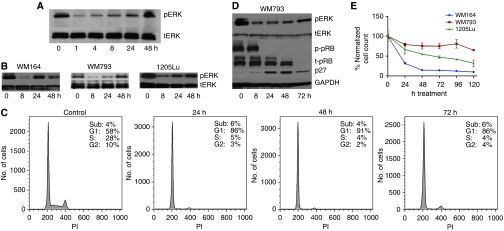
“Interestingly, extended PLX4720 treatment (24–48 h) induced a weak rebound of phospho-ERK1/2 in WM793 cells, an observation consistent with others’ findings.(35) This phospho-ERK1/2 rebound is not due to a quick turnover of the drug because drugs were replenished after 24 h.”
ResultTumor-Agnostic Precision Medicine from the AACR GENIE Database: Clinical Implications
Gouda, M. A., Nelson, B. E., Buschhorn, L., Wahida, A., & Subbiah, V. (2023) · Clinical Cancer Research · doi:10.1158/1078-0432.ccr-23-0090 · Cited by 74
Targeted Therapy Resistance Mechanisms and Therapeutic Implications in Melanoma
Chen, G., & Davies, M. A. (2014) · Hematology/Oncology Clinics of North America · doi:10.1016/j.hoc.2014.03.001 · Cited by 70
ERK1/2: An Integrator of Signals That Alters Cardiac Homeostasis and Growth
Gilbert, C. J., Longenecker, J. Z., & Accornero, F. (2021) · Biology · doi:10.3390/biology10040346 · Cited by 68
Glutamatergic Pathway Targeting in Melanoma: Single-Agent and Combinatorial Therapies
Lee, H. J., Wall, B. A., Wangari-Talbot, J., Shin, S.-S., Rosenberg, S., Chan, J. L.-K., Namkoong, J., Goydos, J. S., & Chen, S. (2011) · Clinical Cancer Research · doi:10.1158/1078-0432.ccr-11-0098 · Cited by 63
“However, its effectiveness has been hampered by the acquirement of drug resistance mechanisms including involvement of other RAF isoforms (21-24).”
Flaherty, K. T. (2012) · Annual Review of Medicine · doi:10.1146/annurev-med-050410-105655 · Cited by 64
Self-citationde Braud, F., Dooms, C., Heist, R. S., Lebbé, C., Wermke, M., Gazzah, A., Schadendorf, D., Rutkowski, P. L., Wolf, J., Ascierto, P. A., et al. (2023) · Journal of Clinical Oncology · doi:10.1200/jco.22.02018 · Cited by 64
“Dual blockade proved to be efficacious in cells harboring a protooncogene BRAF V600 mutation, which displays sensitivity to BRAF and MEK inhibition.(2) However, no approved therapies that specifically target tumors with NRAS mutations are available, despite NRAS being mutated in 15%-20% of melanomas.”
BackgroundTranslational pathology, genomics and the development of systemic therapies for acral melanoma
Chen, Y. A., Teer, J. K., Eroglu, Z., Wu, J.-Y., Koomen, J. M., Karreth, F. A., Messina, J. L., & Smalley, K. S. M. (2019) · Seminars in Cancer Biology · doi:10.1016/j.semcancer.2019.10.017 · Cited by 65
Self-citationWroblewski, D., Mijatov, B., Mohana-Kumaran, N., Lai, F., Gallagher, S. J., Haass, N. K., Zhang, X. D., & Hersey, P. (2013) · Carcinogenesis · doi:10.1093/carcin/bgs330 · Cited by 57
Rebecca, V. W., Massaro, R. R., Fedorenko, I. V., Sondak, V. K., Anderson, A. R. A., Kim, E., Amaravadi, R. K., Maria‐Engler, S. S., Messina, J. L., Gibney, G. T., et al. (2014) · Pigment Cell & Melanoma Research · doi:10.1111/pcmr.12227 · Cited by 58
“Recent work from our laboratory has further shown a role for adaptive PI3K/AKT signaling in the escape of BRAF mutant melanoma cells from the proapoptotic effects of BRAF inhibition (Paraiso et al., 2011).”
BackgroundSelf-citationNew drug targets in metastatic melanoma
Homet, B., & Ribas, A. (2013) · The Journal of Pathology · doi:10.1002/path.4259 · Cited by 63
Therapy for metastatic melanoma: an overview and update
Boyle, G. M. (2011) · Expert Review of Anticancer Therapy · doi:10.1586/era.11.25 · Cited by 62
Therapeutic Implications of Targeting AKT Signaling in Melanoma
Madhunapantula, S. V., & Robertson, G. P. (2011) · Enzyme Research · doi:10.4061/2011/327923 · Cited by 60
“Furthermore, it is also now well established that targeting V600EB-Raf not only induces resistance to various therapeutic agents but also stimulates the activity of C-Raf and wt B-Raf signaling thereby triggering the formation of keratoacanthomas and basal cell carcinomas [7, 184].”
BackgroundUpdate on the Targeted Therapy of Melanoma
Johnson, D. B., & Sosman, J. A. (2013) · Current Treatment Options in Oncology · doi:10.1007/s11864-013-0226-8 · Cited by 65
Targeting BRAF pathway in low-grade serous ovarian cancer
Perrone, C., Angioli, R., Luvero, D., Giannini, A., Donato, V. D., Cuccu, I., Muzii, L., Raspagliesi, F., & Bogani, G. (2024) · Journal of Gynecologic Oncology · doi:10.3802/jgo.2024.35.e104 · Cited by 56
“In an effort to address or preempt resistance, combination therapy targeting both BRAF and MEK, a downstream signaling target of BRAF in the MAPK pathway, was thoroughly investigated and demonstrated synergistic benefits [15].”
BackgroundPeng, L., Wang, Y., Hong, Y. K., Ye, X., Shi, P., Zhang, J., & Zhao, Q. (2017) · Oncotarget · doi:10.18632/oncotarget.21059 · Cited by 58
“The combination therapy increases apoptosis and delays the onset of resistance [10].”
Rager, T., Eckburg, A., Patel, M., Qiu, R., Gantiwala, S., Dovalovsky, K., Fan, K. D., Lam, K., Roesler, C., Rastogi, A., et al. (2022) · Cancers · doi:10.3390/cancers14153779 · Cited by 60
“Preclinical studies also demonstrated that acquired resistance to BRAFi can be due to MAPK pathway and blocking this pathway may induce apoptosis in BRAF V600 mutant melanoma [72].”
BackgroundNew Insights Into the Molecular Pathogenesis of Langerhans Cell Histiocytosis
Rizzo, F. M., Cives, M., Simone, V. D., & Silvestris, F. (2014) · The Oncologist · doi:10.1634/theoncologist.2013-0341 · Cited by 61
Vertical inhibition of the MAPK pathway enhances therapeutic responses in NRAS‐mutant melanoma
Rebecca, V. W., Alicea, G. M., Paraiso, K. H. T., Lawrence, H., Gibney, G. T., & Smalley, K. S. M. (2014) · Pigment Cell & Melanoma Research · doi:10.1111/pcmr.12303 · Cited by 53
“Plates were set up as described previously (Paraiso et al., 2010) and treated with vehicle (DMSO), 1 lM AZD6244, 30 nM trametinib, 100–300 nM VTX, 1 lM PD0332991, 1 lM GDC-0941, or the labeled combination of these agents (4 weeks).”
BackgroundMethodSelf-citation
Metadata
- Authors
- Paraiso, K. H. T., Fedorenko, I. V., Cantini, L. P., Munko, A. C., Hall, M., Sondak, V. K., Messina, J. L., Flaherty, K. T., & Smalley, K. S. M.
- Affiliations
- Moffitt Cancer Center (US)
- University of South Florida (US)
- Massachusetts General Hospital (US)
- Corresponding author
- Smalley, K S M
- Venue
- British Journal of Cancer
- Published
- 2010-06
- Volume
- 102
- Issue
- 12
- Pages
- 1724-1730
- ISSN
- 0007-0920 (ISSN-L)
- 1532-1827
- PMC
- PMC2883709
- OpenAlex
- W1970039331
- Semantic Scholar
- 902519b5b657cc83ab817259ebcc30d016a6a89a
- Cited by
- 314
- References
- 29
- Citations by year
- 2026: 3 · 2025: 5 · 2024: 10 · 2023: 19 · 2022: 12 · 2021: 15 · 2020: 13 · 2019: 16 · 2018: 19 · 2017: 22 · 2016: 16 · 2015: 22 · 2014: 34 · 2013: 28 · 2012: 40
- FWCI
- 14.06
- Type
- journal article
- Language
- en
- Open access
- hybrid
- doi.org
- Licence
- cc-by-nc-sa
- www.springer.com/tdm (unspecified)
- Locations
- British Journal of Cancer (publishedVersion, cc-by-nc-sa)
- Europe PMC (PubMed Central) (publishedVersion, cc-by)
- PubMed Central (publishedVersion, cc-by)
- PubMed (publishedVersion)
- Funders
- American Cancer Society (93-032-13)
- Melanoma Research Foundation
- Melanoma Research Alliance
- Moffitt Cancer Center
- Plexxikon
- National Institutes of Health
- National Cancer Institute (U54CA143970)
- State of Florida
- Topics
- Life Sciences › Biochemistry, Genetics and Molecular Biology › Molecular Biology › Melanoma and MAPK Pathways
- Life Sciences › Biochemistry, Genetics and Molecular Biology › Molecular Biology › Protein Tyrosine Phosphatases
- Health Sciences › Medicine › Pulmonary and Respiratory Medicine › Lung Cancer Treatments and Mutations
- Keywords
- melanoma, BRAF inhibitor resistance, BRAF V600E mutation, ERK signaling, MEK inhibition, combination therapy, apoptosis, cell cycle
- MeSH terms
- Dose-Response Relationship, Drug, Humans, Indoles, Melanoma, Mutation, Sulfonamides, Time Factors, Signal Transduction, Apoptosis, Drug Resistance, Neoplasm, Mitogen-Activated Protein Kinases, MAP Kinase Signaling System, Cell Line, Tumor, Extracellular Signal-Regulated MAP Kinases, Proto-Oncogene Proteins B-raf
About these checks
Registry, retraction, Cites and statistics results are computed, not judged, with one exception: a printed reference that no index lists is read once by a model before it counts as a citation error. Claims are extracted by a model and kept only when their quote appears verbatim in the text; each cited source is then checked, with a model’s help, for whether it says what the claim relies on. Those verdicts can be wrong — read the claim’s quote and the cited source before relying on one.
Statistics and arithmetic are recomputed, not judged.
Confidence bands are shown only for fields calibrated on our annotated test set. None is calibrated yet, so no band is shown.
What counts as a claim ›How we measure confidence ›How we check this ›
Are you an author, or do you see a problem with this page? Request a review
Data sources
Bibliographic data: Semantic Scholar, OpenAlex, Crossref.
Contains information from the Semantic Scholar Academic Graph Datasets, made available under the ODC Attribution License (ODC-BY 1.0).
Semantic Scholar’s data is described in: Kinney, R., et al. (2023). The Semantic Scholar Open Data Platform. arXiv:2301.10140.
