

Atomic structure and oxygen deficiency of the ultrathin aluminium oxide barrier in Al/AlOx/Al Josephson junctions
Open accessThe DOI matches its Crossref record; 40 of the 41 references it cites were found in a registry or an index.
Abstract
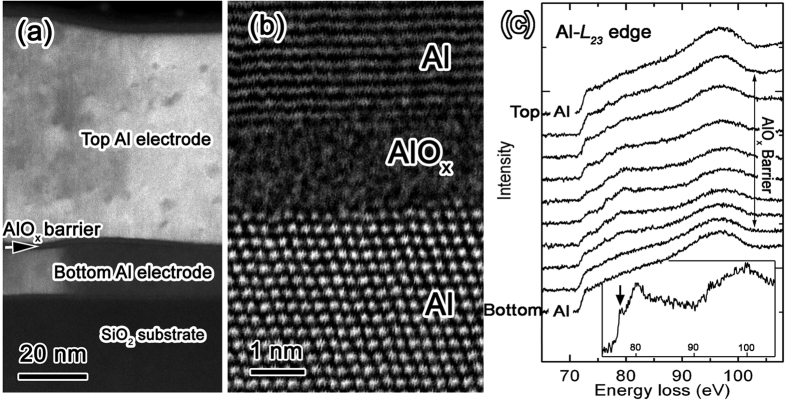
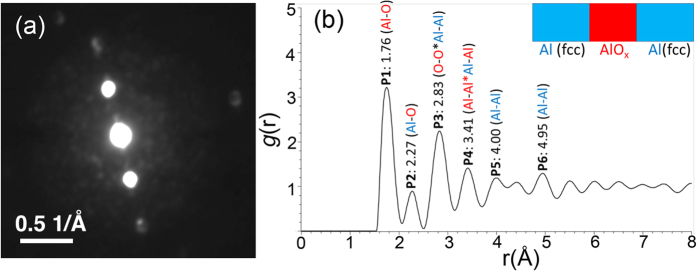
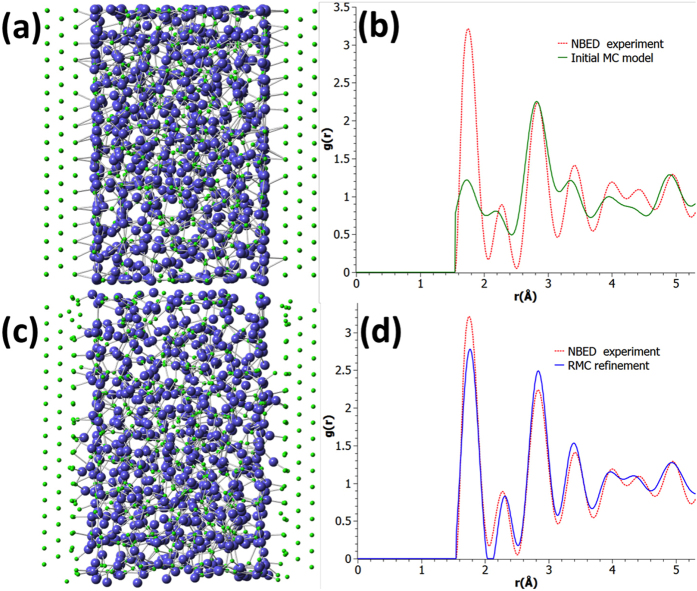
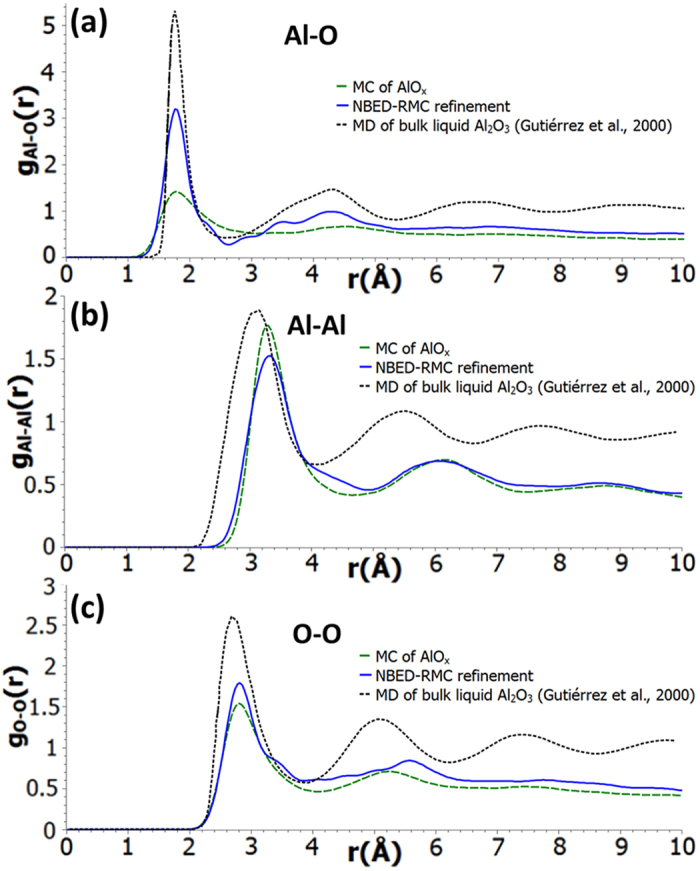
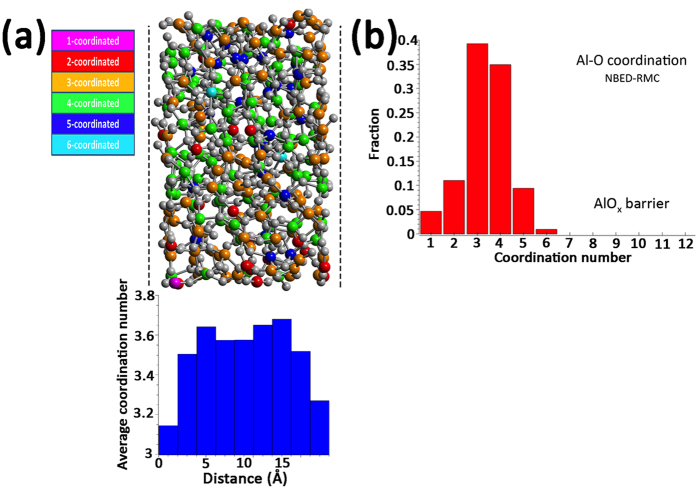
Al/AlO x /Al Josephson junctions are the building blocks of a wide range of superconducting quantum devices that are key elements for quantum computers, extremely sensitive magnetometers and radiation detectors. The properties of the junctions and the superconducting quantum devices are determined by the atomic structure of the tunnel barrier. The nanoscale dimension and disordered nature of the barrier oxide have been challenges for the direct experimental investigation of the atomic structure of the tunnel barrier. Here we show that the miniaturized dimension of the barrier and the interfacial interaction between crystalline Al and amorphous AlO x give rise to oxygen deficiency at the metal/oxide interfaces. In the interior of the barrier, the oxide resembles the atomic structure of bulk aluminium oxide. Atomic defects such as oxygen vacancies at the interfaces can be the origin of the two-level systems and contribute to decoherence and noise in superconducting quantum circuits.
Overview
The claims and statistics of this paper haven’t been checked yet.
Free: it reads the open-access text and checks the first 5 claims that cite a source we can check. Create a free account to check every claim.
Integrity signals
Registry
Cites
Statistics
Figures
Verification
Claims the paper makes
The claims and statistics of this paper haven’t been checked yet.
Free: it reads the open-access text and checks the first 5 claims that cite a source we can check. Create a free account to check every claim.
Claims other papers make about this one
Each is checked against this paper’s own text: does it say what the citing paper says it does?
The source backs part of the claim, not all of it — or backs it for a different population, condition or comparison.
In the citing paper
“These demonstrations have all been done with architectures utilizing transmon-style qubits15 with Al/AlOx/Al Josephson junctions (JJs)16–18, which are consistently fabricated using angled shadow evaporation and metal lift-off.”
From Advanced CMOS manufacturing of superconducting qubits on 300 mm wafers (2024) · cites this paper as [17]
Experimental — accuracy not yet measured
Self-check
Percentages, sums and reported differences re-computed from the paper’s own numbers.
The self-check needs the paper’s full text.
Citations
Cites
Clarke, J., & Wilhelm, F. K. (2008) · Nature · doi:10.1038/nature07128 · Cited by 2,076
Superconducting quantum circuits at the surface code threshold for fault tolerance
Barends, R., Kelly, J., Megrant, A., Veitia, A., Sank, D., Jeffrey, E., White, T. C., Mutus, J., Fowler, A. G., Campbell, B., et al. (2014) · Nature · doi:10.1038/nature13171 · Cited by 1,733
Reverse Monte Carlo Simulation: A New Technique for the Determination of Disordered Structures
McGreevy, R. L., & Pusztai, L. (1988) · Molecular Simulation · doi:10.1080/08927028808080958 · Cited by 1,678
Decoherence in Josephson Qubits from Dielectric Loss
Martinis, J. M., Cooper, K. B., McDermott, R., Steffen, M., Ansmann, M., Osborn, K. D., Cicak, K., Oh, S., Pappas, D. P., Simmonds, R. W., et al. (2005) · Physical Review Letters · doi:10.1103/physrevlett.95.210503 · Cited by 838
Molecular dynamics study of structural properties of amorphousAl2O3
Gutiérrez, G., & Johansson, B. (2002) · Physical Review B · doi:10.1103/physrevb.65.104202 · Cited by 347
Surface participation and dielectric loss in superconducting qubits
Wang, C., Axline, C., Gao, Y. Y., Brecht, T., Chu, Y., Frunzio, L., Devoret, M. H., & Schoelkopf, R. J. (2015) · Applied Physics Letters · doi:10.1063/1.4934486 · Cited by 340
Superconducting detectors and mixers for millimeter and submillimeter astrophysics
Zmuidzinas, J., & Richards, P. L. (2004) · Proceedings of the IEEE · doi:10.1109/jproc.2004.833670 · Cited by 294
Improved superconducting qubit coherence using titanium nitride
Chang, J. B., Vissers, M. R., Córcoles, A. D., Sandberg, M., Gao, J., Abraham, D. W., Chow, J. M., Gambetta, J. M., Beth Rothwell, M., Keefe, G. A., et al. (2013) · Applied Physics Letters · doi:10.1063/1.4813269 · Cited by 247
Structure of Amorphous Aluminum Oxide
Lee, S. K., Lee, S. B., Park, S. Y., Yi, Y. S., & Ahn, C. W. (2009) · Physical Review Letters · doi:10.1103/physrevlett.103.095501 · Cited by 188
Lamparter, P., & Kniep, R. (1997) · Physica B: Condensed Matter · doi:10.1016/s0921-4526(96)01044-7 · Cited by 178
Cited by
Towards understanding two-level-systems in amorphous solids: insights from quantum circuits
Müller, C., Cole, J. H., & Lisenfeld, J. (2019) · Reports on Progress in Physics · doi:10.1088/1361-6633/ab3a7e · Cited by 508
“[245] Lunjie Zeng, Dung Trung Tran, Cheuk-Wai Tai, Gunnar Svensson, and Eva Olsson, “Atomic structure and oxygen deficiency of the ultrathin aluminium oxide barrier in Al/AlOx/Al Josephson junctions,” Scientific Reports 6, 29679 (2016).”
BackgroundTowards understanding two-level-systems in amorphous solids - insights from quantum circuits
Müller, C., Cole, J. H., & Lisenfeld, J. (2024) · Figshare · Cited by 362
Material matters in superconducting qubits
Murray, C. E. (2021) · Materials Science and Engineering R Reports · doi:10.1016/j.mser.2021.100646 · Cited by 173
A ballistic graphene superconducting microwave circuit
Schmidt, F. E., Jenkins, M. D., Watanabe, K., Taniguchi, T., & Steele, G. A. (2018) · Nature Communications · doi:10.1038/s41467-018-06595-2 · Cited by 86
Advanced CMOS manufacturing of superconducting qubits on 300 mm wafers
Van Damme, J., Massar, S., Acharya, R., Ivanov, T., Perez Lozano, D., Canvel, Y., Demarets, M., Vangoidsenhoven, D., Hermans, Y., Lai, J. G., et al. (2024) · Nature · doi:10.1038/s41586-024-07941-9 · Cited by 63
Metadata
- Authors
- Zeng, L., Tran, D. T., Tai, C.-W., Svensson, G., & Olsson, E.
- Affiliations
- Chalmers University of Technology (SE)
- Stockholm University (SE)
- Corresponding author
- Olsson, Eva
- Venue
- Scientific Reports
- Published
- 2016-07-12
- Volume
- 6
- Issue
- 1
- Pages
- 29679-29679
- ISSN
- 2045-2322 (ISSN-L)
- PMC
- PMC4940733
- OpenAlex
- W2464741248
- Cited by
- 67
- References
- 41
- Citations by year
- 2026: 7 · 2025: 10 · 2024: 17 · 2023: 6 · 2022: 6 · 2021: 8 · 2020: 3 · 2019: 4 · 2018: 3 · 2017: 3
- FWCI
- 1.98
- Type
- journal article
- Language
- en
- Open access
- gold
- doi.org
- Licence
- cc-by
- creativecommons.org/licenses/by/4.0 (tdm)
- creativecommons.org/licenses/by/4.0 (vor)
- Locations
- Scientific Reports (publishedVersion, cc-by)
- Europe PMC (PubMed Central) (publishedVersion, cc-by)
- PubMed Central (publishedVersion, cc-by)
- PubMed (publishedVersion)
- Chalmers Publication Library (Chalmers University of Technology) (submittedVersion)
- Chalmers Research (Chalmers University of Technology) (submittedVersion)
- Funders
- Chalmers Tekniska Högskola
- Vetenskapsrådet (2012-04176)
- Stockholms Universitet
- Topics
- Physical Sciences › Physics and Astronomy › Condensed Matter Physics › Physics of Superconductivity and Magnetism
- Physical Sciences › Engineering › Electrical and Electronic Engineering › Superconducting and THz Device Technology
- Physical Sciences › Physics and Astronomy › Atomic and Molecular Physics, and Optics › Quantum Information and Cryptography
- Keywords
- oxygen deficiency, metal-oxide interface, oxygen vacancies, two-level system, decoherence, superconducting quantum circuits, ultrathin oxide
About these checks
Registry, retraction, Cites and statistics results are computed, not judged, with one exception: a printed reference that no index lists is read once by a model before it counts as a citation error. Claims are extracted by a model and kept only when their quote appears verbatim in the text; each cited source is then checked, with a model’s help, for whether it says what the claim relies on. Those verdicts can be wrong — read the claim’s quote and the cited source before relying on one.
Statistics and arithmetic are recomputed, not judged.
Confidence bands are shown only for fields calibrated on our annotated test set. None is calibrated yet, so no band is shown.
What counts as a claim ›How we measure confidence ›How we check this ›
Are you an author, or do you see a problem with this page? Request a review
Data sources
Bibliographic data: Semantic Scholar, OpenAlex, Crossref.
Contains information from the Semantic Scholar Academic Graph Datasets, made available under the ODC Attribution License (ODC-BY 1.0).
Semantic Scholar’s data is described in: Kinney, R., et al. (2023). The Semantic Scholar Open Data Platform. arXiv:2301.10140.
