

IGF-I induces senescence of hepatic stellate cells and limits fibrosis in a p53-dependent manner
Open accessThe DOI matches its Crossref record; 44 of the 44 references it cites were found in a registry or an index.
Abstract
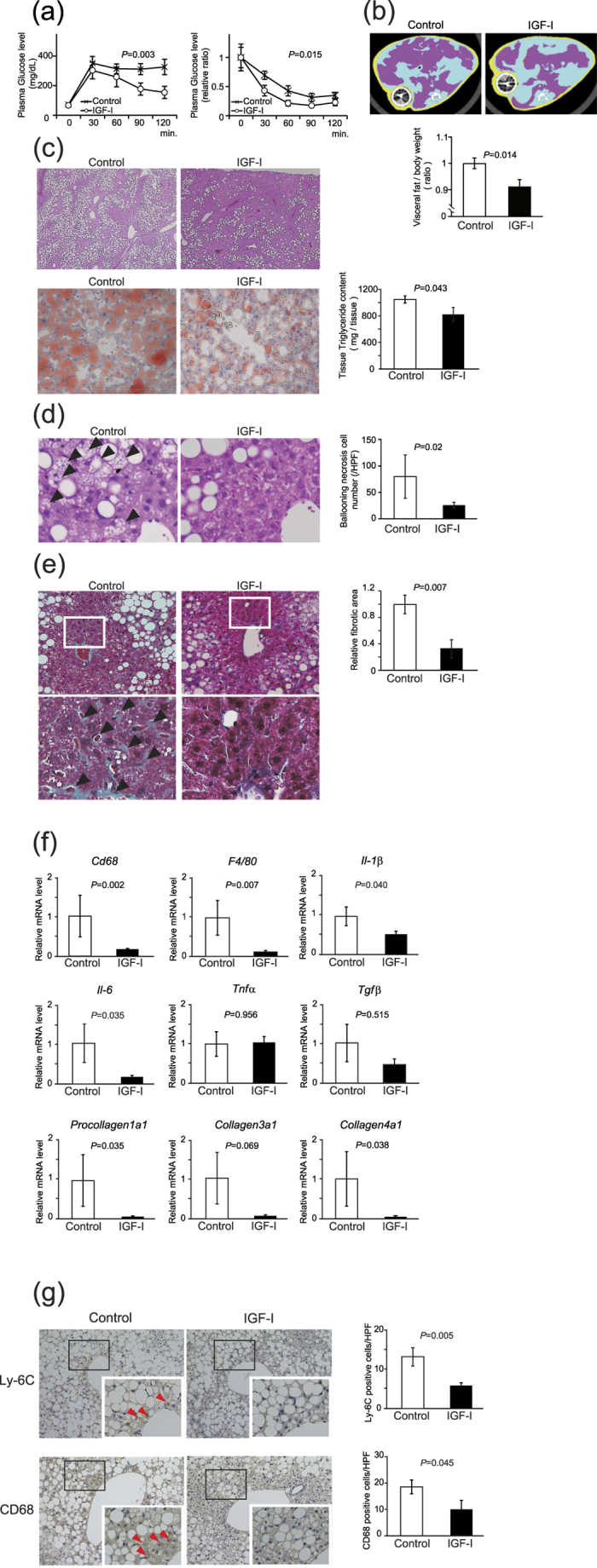
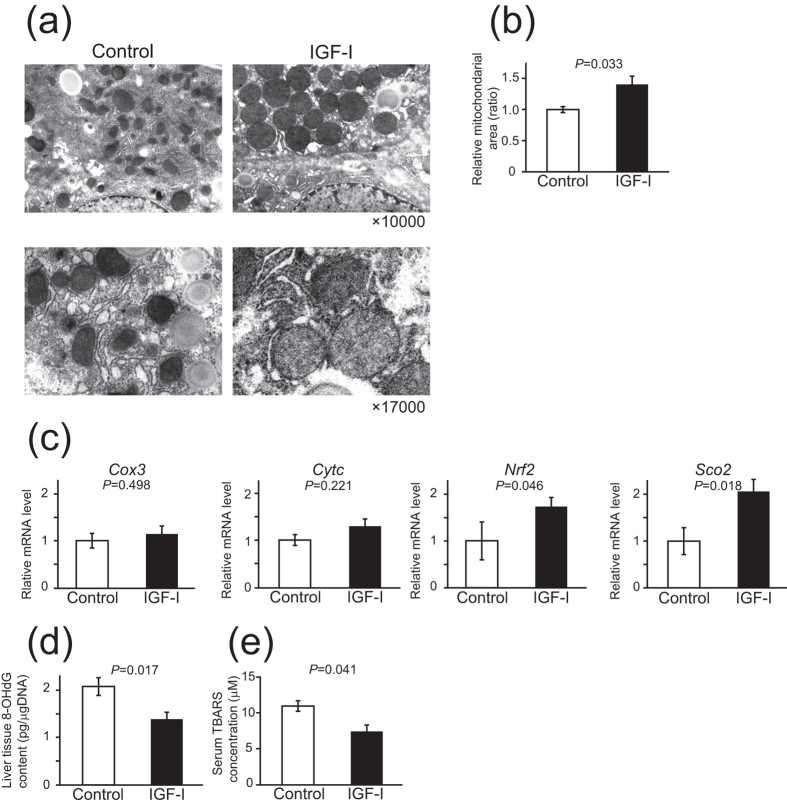
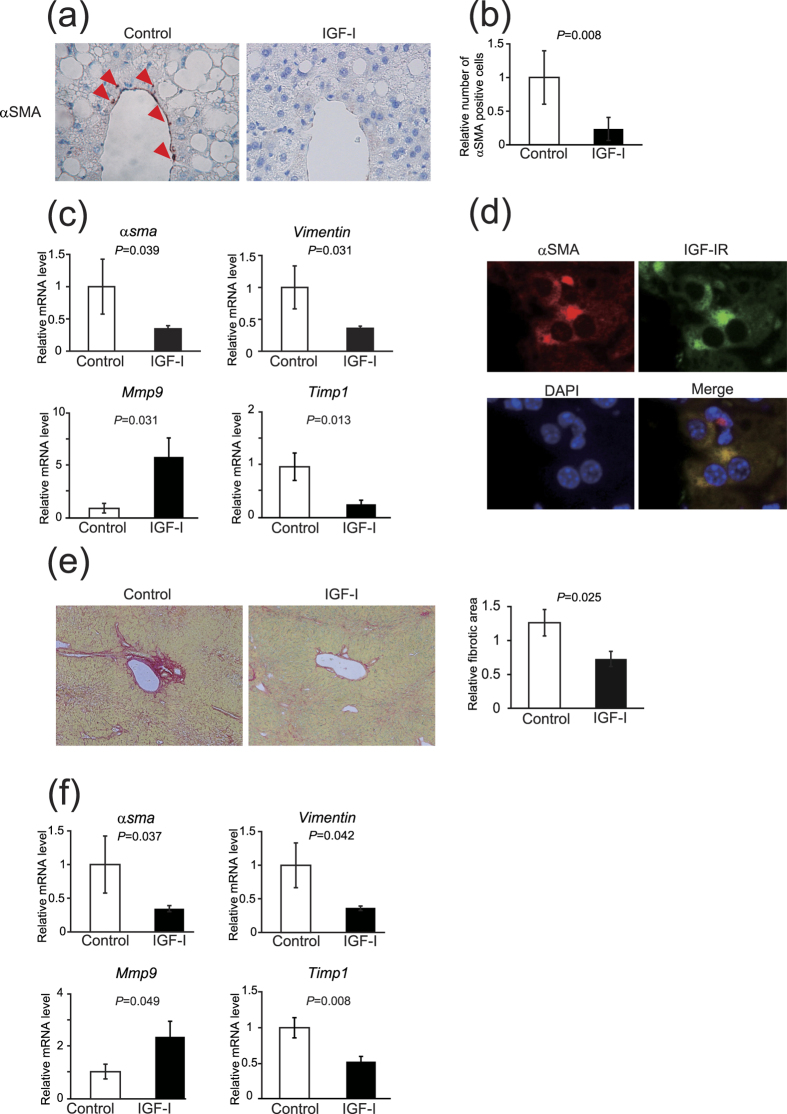
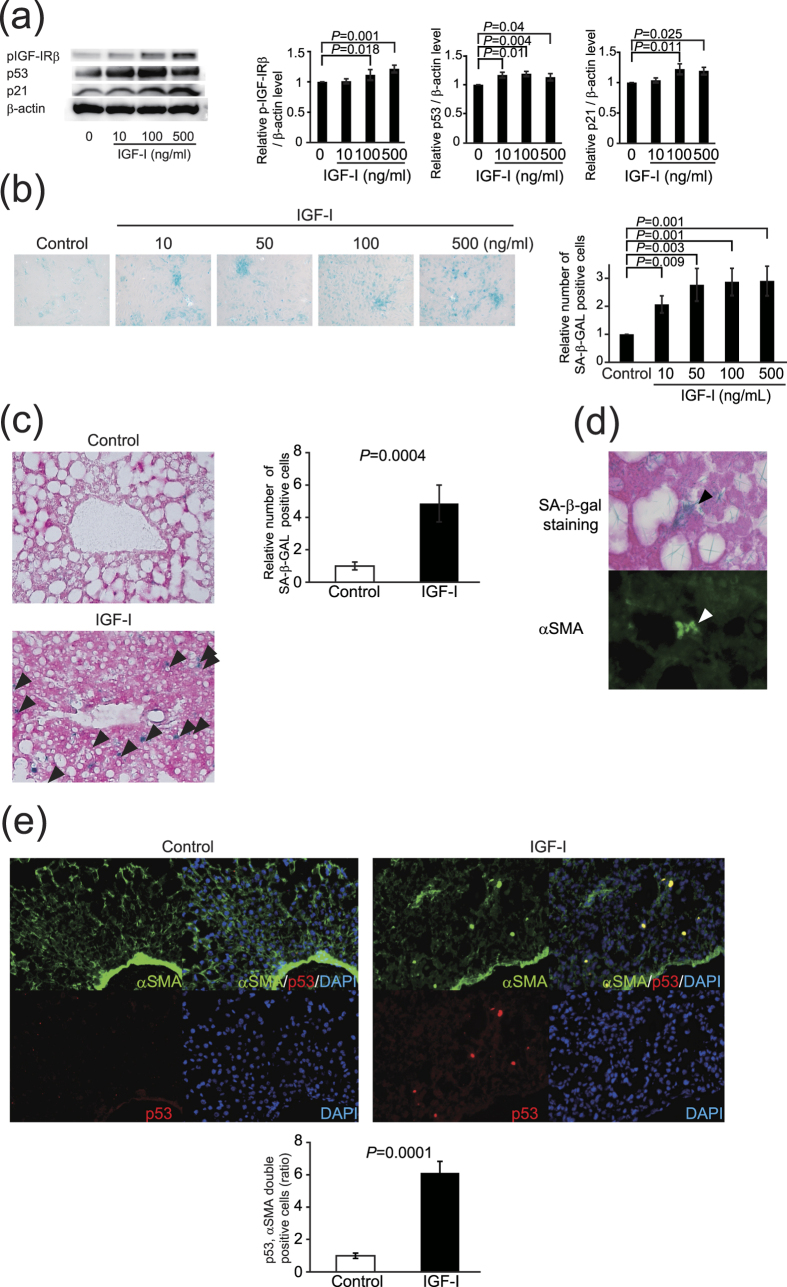
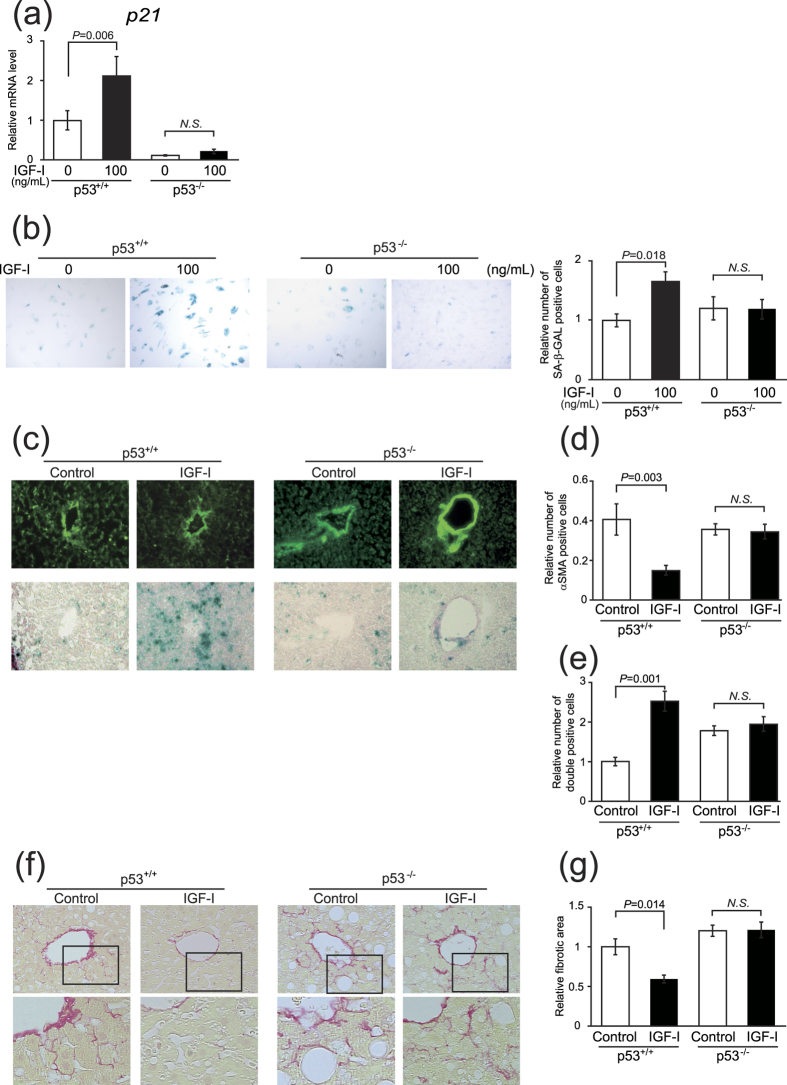
Hepatic fibrosis in nonalcoholic steatohepatitis (NASH) and cirrhosis determines patient prognosis; however, effective treatment for fibrosis has not been established. Oxidative stress and inflammation activate hepatic stellate cells (HSCs) and promote fibrosis. In contrast, cellular senescence inhibits HSCs' activity and limits fibrosis. The aim of this study was to explore the effect of IGF-I on NASH and cirrhotic models and to clarify the underlying mechanisms. We demonstrate that IGF-I significantly ameliorated steatosis, inflammation, and fibrosis in a NASH model, methionine-choline-deficient diet-fed db/db mice and ameliorated fibrosis in cirrhotic model, dimethylnitrosamine-treated mice. As the underlying mechanisms, IGF-I improved oxidative stress and mitochondrial function in the liver. In addition, IGF-I receptor was strongly expressed in HSCs and IGF-I induced cellular senescence in HSCs in vitro and in vivo. Furthermore, in mice lacking the key senescence regulator p53, IGF-I did not induce cellular senescence in HSCs or show any effects on fibrosis. Taken together, these results indicate that IGF-I induces senescence of HSCs, inactivates these cells and limits fibrosis in a p53-dependent manner and that IGF-I may be applied to treat NASH and cirrhosis.
Overview
The claims and statistics of this paper haven’t been checked yet.
Free: it reads the open-access text and checks the first 5 claims that cite a source we can check. Create a free account to check every claim.
Integrity signals
Registry
Cites
Statistics
Figures
Verification
Claims the paper makes
The claims and statistics of this paper haven’t been checked yet.
Free: it reads the open-access text and checks the first 5 claims that cite a source we can check. Create a free account to check every claim.
Claims other papers make about this one
Each is checked against this paper’s own text: does it say what the citing paper says it does?
In the citing paper
“IGF-1 also induces cellular senescence and inactivates hepatic stellate cells [129].”
From Emerging role of liver-bone axis in osteoporosis (2024) · cites this paper as [129]
Self-check
Percentages, sums and reported differences re-computed from the paper’s own numbers.
The self-check needs the paper’s full text.
Citations
Cites
Design and validation of a histological scoring system for nonalcoholic fatty liver disease†
Kleiner, D. E., Brunt, E. M., Van Natta, M., Behling, C., Contos, M. J., Cummings, O. W., Ferrell, L. D., Liu, Y., Torbenson, M. S., Unalp‐Arida, A., et al. (2005) · Hepatology · doi:10.1002/hep.20701 · Cited by 10,791
Oncogenic ras provokes premature cell senescence associated with accumulation of p53 and p16INK4a
Serrano, M., Lin, A. W., McCurrach, M. E., Beach, D., & Lowe, S. W. (1997) · Cell · doi:10.1016/s0092-8674(00)81902-9 · Cited by 5,218 · cited 1×
“Detection of Senescence-associated β -galactosidase (SA-β -gal) activity was performed at pH = 5.5 for mouse/rat tissue and pH = 6.0 for human cells as described previously 38 .”
InfluentialSteatohepatitis: A tale of two “hits”?
Day, C. P., & James, O. F. W. (1998) · Gastroenterology · doi:10.1016/s0016-5085(98)70599-2 · Cited by 4,285
Nonalcoholic Steatohepatitis: A Proposal for Grading and Staging The Histological Lesions
Brunt, E. M., Janney, C. G., Di Bisceglie, A. M., Neuschwander-Tetri, B. A., & Bacon, B. R. (1999) · American Journal of Gastroenterology · doi:10.1111/j.1572-0241.1999.01377.x · Cited by 3,907 · cited 1×
“To assess hepatic steatosis, the histopathological criteria proposed by Brunt et al. was adopted 40–43 .”
Pioglitazone, Vitamin E, or Placebo for Nonalcoholic Steatohepatitis
Sanyal, A. J., Chalasani, N., Kowdley, K. V., McCullough, A., Diehl, A. M., Bass, N. M., Neuschwander-Tetri, B. A., Lavine, J. E., Tonascia, J., Unalp, A., et al. (2010) · New England Journal of Medicine · doi:10.1056/nejmoa0907929 · Cited by 3,327 · cited 1×
“Treatment with the antioxidant vitamin E improved steatosis and inflammation but not fibrosis 31 .”
Ludwig, J., Viggiano, T. R., McGill, D. B., & Ott, B. J. (1980) · Mayo Clinic Proceedings · doi:10.1016/s0025-6196(24)00530-5 · Cited by 2,903
Kanda, H. (2006) · Journal of Clinical Investigation · doi:10.1172/jci26498 · Cited by 2,682
Senescence of Activated Stellate Cells Limits Liver Fibrosis
Krizhanovsky, V., Yon, M., Dickins, R. A., Hearn, S., Simon, J., Miething, C., Yee, H., Zender, L., & Lowe, S. W. (2008) · Cell · doi:10.1016/j.cell.2008.09.015 · Cited by 2,027 · cited 1×
“Recently, it was reported that cellular senescence of HSCs inhibits their function and limits fibrosis 4 ; however, it is unknown which factor regulates cellular senescence in these cells.”
Cellular senescence in cancer and aging.
Collado, M., Blasco, M. A., & Serrano, M. (2007) · Cell · doi:10.1016/j.cell.2007.07.003 · Cited by 1,708
Molitch, M. E., Clemmons, D. R., Malozowski, S., Merriam, G. R., & Vance, M. L. (2011) · The Journal of Clinical Endocrinology & Metabolism · doi:10.1210/jc.2011-0179 · Cited by 1,047
Cited by
Cellular Senescence: Aging, Cancer, and Injury
Calcinotto, A., Kohli, J., Zagato, E., Pellegrini, L., Demaria, M., & Alimonti, A. (2019) · Physiological Reviews · doi:10.1152/physrev.00020.2018 · Cited by 1,270
“Mice treated with recombinant CCN1, IL-22, or IGF-1 displayed accelerated fibrotic resolution (182, 186, 245), suggesting that prosenescence therapies could be promising agents to resolve liver fibrosis.”
BackgroundXu, X., Poulsen, K. L., Wu, L., Liu, S., Miyata, T., Song, Q., Wei, Q., Zhao, C., Lin, C., & Yang, J. (2022) · Signal Transduction and Targeted Therapy · doi:10.1038/s41392-022-01119-3 · Cited by 359
Insulin-Like Growth Factor (IGF) System in Liver Diseases
Adamek, A., & Kasprzak, A. (2018) · International Journal of Molecular Sciences · doi:10.3390/ijms19051308 · Cited by 284
“The animal models have also allowed to confirm that, especially IGF1, directly inactivates HSCs, limits fibrosis in a p53-dependent manner, and may be applied to treat liver cirrhosis [41].”
BackgroundPapatheodoridi, A., Chrysavgis, L., Koutsilieris, M., & Chatzigeorgiou, A. (2020) · Hepatology · doi:10.1002/hep.30834 · Cited by 209
“Importantly, these beneficial effects of IGF1 administration were not observed in p53-deficient mice.(73) Additionally, senescence may influence NASH resolution by affecting the liver regeneration process that is necessary for the reformation of the tissue.”
BackgroundHepatic fibrosis: It is time to go with hepatic stellate cell-specific therapeutic targets
Ezhilarasan, D., Sokal, E., & Najimi, M. (2018) · Hepatobiliary & Pancreatic Diseases International · doi:10.1016/j.hbpd.2018.04.003 · Cited by 204
Metadata
- Authors
- Nishizawa, H., Iguchi, G., Fukuoka, H., Takahashi, M., Suda, K., Bando, H., Matsumoto, R., Yoshida, K., Odake, Y., Ogawa, W., & Takahashi, Y.
- Affiliations
- Kobe University Hospital (JP)
- Kobe University (JP)
- Corresponding author
- Takahashi, Yutaka
- ORCID
- Venue
- Scientific Reports
- Published
- 2016-10-10
- Volume
- 6
- Issue
- 1
- Pages
- 34605-34605
- ISSN
- 2045-2322 (ISSN-L)
- PMC
- PMC5056388
- OpenAlex
- W2530507445
- Cited by
- 164
- References
- 44
- Citations by year
- 2026: 13 · 2025: 19 · 2024: 13 · 2023: 20 · 2022: 21 · 2021: 21 · 2020: 22 · 2019: 17 · 2018: 8 · 2017: 10
- FWCI
- 8.43
- Type
- journal article
- Language
- en
- Open access
- gold
- doi.org
- Licence
- cc-by
- creativecommons.org/licenses/by/4.0 (tdm)
- creativecommons.org/licenses/by/4.0 (vor)
- Locations
- Scientific Reports (publishedVersion, cc-by)
- PubMed Central (publishedVersion, cc-by)
- PubMed (publishedVersion)
- Institutional Repositories DataBase (IRDB) (acceptedVersion, cc-by)
- Kobe University Repository Kernel (Kobe University) (submittedVersion, cc-by)
- Funders
- Naito Foundation
- Daiichi Sankyo Foundation of Life Science
- Japan Society for the Promotion of Science (20200079, 26670459, 20390262)
- Daiichi Sankyo Europe
- Topics
- Health Sciences › Medicine › Hepatology › Liver physiology and pathology
- Health Sciences › Medicine › Hepatology › Liver Disease Diagnosis and Treatment
- Life Sciences › Biochemistry, Genetics and Molecular Biology › Cell Biology › Telomeres, Telomerase, and Senescence
- Keywords
- insulin-like growth factor I, hepatic stellate cells, cellular senescence, liver fibrosis, p53, nonalcoholic steatohepatitis, liver cirrhosis, oxidative stress, mitochondrial function, IGF-1 receptor, steatosis, liver inflammation, methionine-choline-deficient diet, N-nitrosodimethylamine
- MeSH terms
- Animals, Disease Models, Animal, Gene Expression Regulation, Insulin-Like Growth Factor I, Liver Cirrhosis, Male, Mice, Inbred ICR, Tumor Suppressor Protein p53, Cellular Senescence, Mice, Hepatic Stellate Cells, Non-alcoholic Fatty Liver Disease
About these checks
Registry, retraction, Cites and statistics results are computed, not judged, with one exception: a printed reference that no index lists is read once by a model before it counts as a citation error. Claims are extracted by a model and kept only when their quote appears verbatim in the text; each cited source is then checked, with a model’s help, for whether it says what the claim relies on. Those verdicts can be wrong — read the claim’s quote and the cited source before relying on one.
Statistics and arithmetic are recomputed, not judged.
Confidence bands are shown only for fields calibrated on our annotated test set. None is calibrated yet, so no band is shown.
What counts as a claim ›How we measure confidence ›How we check this ›
Are you an author, or do you see a problem with this page? Request a review
Data sources
Bibliographic data: Semantic Scholar, OpenAlex, Crossref.
Contains information from the Semantic Scholar Academic Graph Datasets, made available under the ODC Attribution License (ODC-BY 1.0).
Semantic Scholar’s data is described in: Kinney, R., et al. (2023). The Semantic Scholar Open Data Platform. arXiv:2301.10140.
