

High-Intensity Aerobic Exercise Improves Both Hepatic Fat Content and Stiffness in Sedentary Obese Men with Nonalcoholic Fatty Liver Disease
Open accessThe DOI matches its Crossref record; 53 of the 53 references it cites were found in a registry or an index.
Abstract
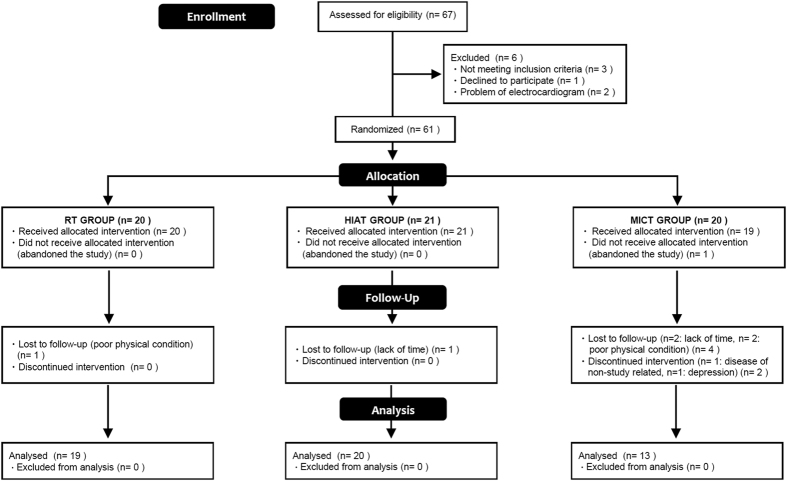
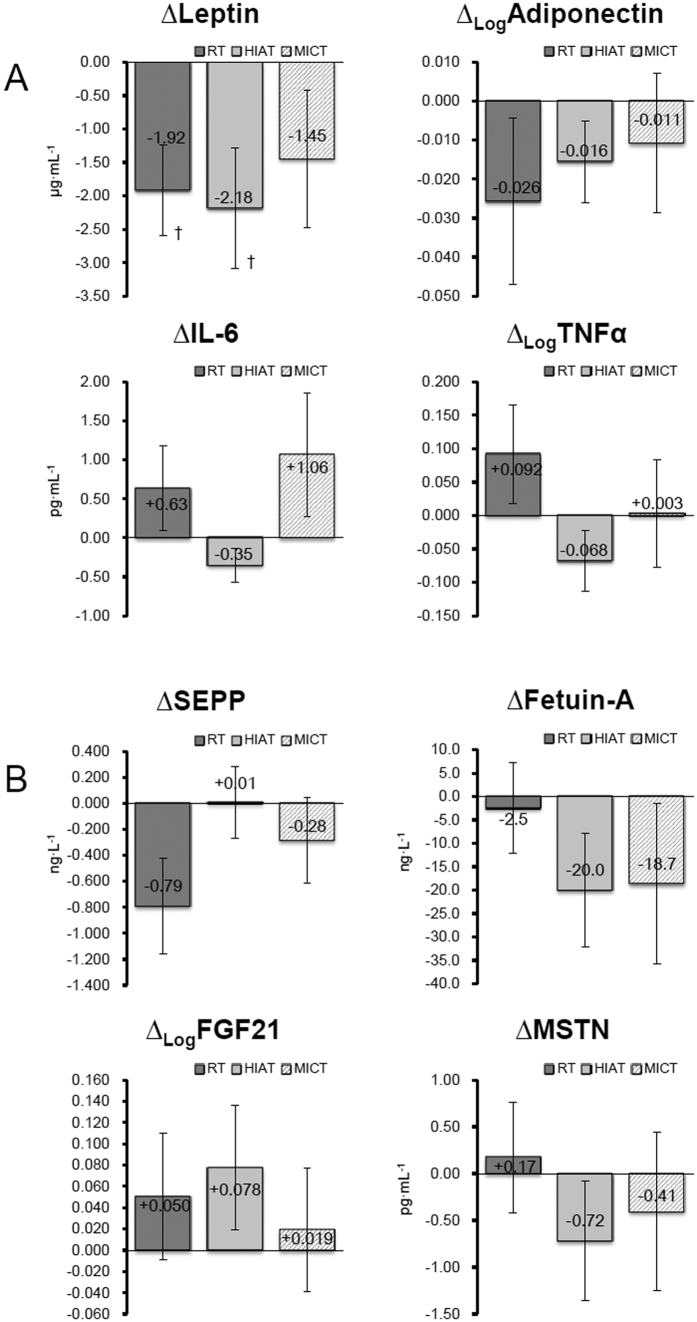
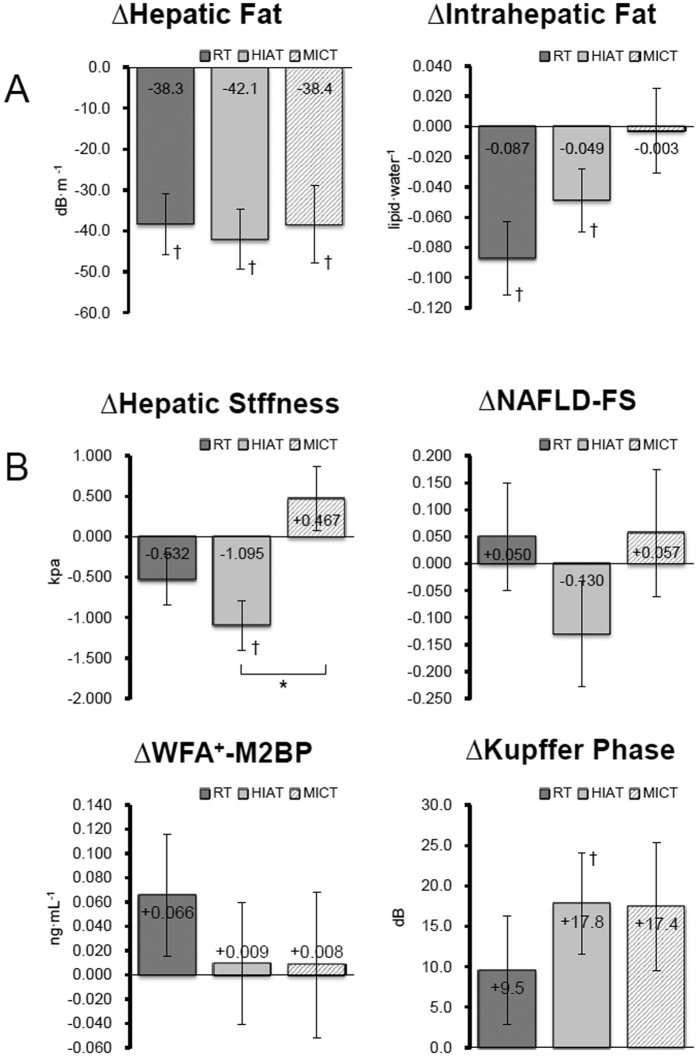
We compared the effects of 12-week programs of resistance training (RT), high-intensity interval aerobic training (HIAT), and moderate-intensity continuous aerobic training (MICT). The primary goal was to evaluate the therapeutic effects of the exercise modalities for the management of nonalcoholic fatty liver disease (NAFLD). A total of 61 sedentary obese men with NAFLD were randomized into one of the following exercise regimens (RT, HIAT, or MICT). Hepatic fat content was decreased to a similar extent in the RT, HIAT, and MICT groups (−14.3% vs. −13.7% vs. −14.3%) without significant changes in weight and visceral fat. The gene expression levels of fatty acid synthesis were significantly decreased in the subjects’ monocytes. Hepatic stiffness was decreased only in the HIAT group (−16.8%). The stiffness change was associated with restored Kupffer cell phagocytic function (+17.8%) and decreased levels of inflammation such as leptin (−13.2%) and ferritin (−14.1%). RT, HIAT, and MICT were equally effective in reducing hepatic fat content, but only HIAT was effective in improving hepatic stiffness and restoring Kupffer cell function. These benefits appeared to be independent of detectable weight and visceral fat reductions; the benefits were acquired through the modulation of in vivo fatty acid metabolism and obesity-related inflammatory conditions.
Overview
The claims and statistics of this paper haven’t been checked yet.
Free: it reads the open-access text and checks the first 5 claims that cite a source we can check. Create a free account to check every claim.
Integrity signals
Registry
Cites
Statistics
Figures
Verification
Claims the paper makes
The claims and statistics of this paper haven’t been checked yet.
Free: it reads the open-access text and checks the first 5 claims that cite a source we can check. Create a free account to check every claim.
Claims other papers make about this one
Each is checked against this paper’s own text: does it say what the citing paper says it does?
The source backs part of the claim, not all of it — or backs it for a different population, condition or comparison.
In the citing paper
“Moreover, enhanced hepatic insulin sensitivity reduces de novo lipogenesis and improves glucose regulation, effectively lowering lipid accumulation within the liver [100].”
From Effects of Mediterranean diet, exercise, and their combination on body composition and liver outcomes in metabolic dysfunction-associated steatotic liver disease: a systematic review and meta-analysis of randomized controlled trials (2025) · cites this paper as [100]
Experimental — accuracy not yet measuredThe source backs part of the claim, not all of it — or backs it for a different population, condition or comparison.
In the citing paper
“The significant reduction in liver fat percentage observed with aerobic exercise may be attributed to enhanced fat oxidation and improved hepatic insulin sensitivity [100, 101].”
From Effects of Mediterranean diet, exercise, and their combination on body composition and liver outcomes in metabolic dysfunction-associated steatotic liver disease: a systematic review and meta-analysis of randomized controlled trials (2025) · cites this paper as [100]
Experimental — accuracy not yet measured
Self-check
Percentages, sums and reported differences re-computed from the paper’s own numbers.
The self-check needs the paper’s full text.
Citations
Cites
Matthews, D. R., Hosker, J. P., Rudenski, A. S., Naylor, B. A., Treacher, D. F., & Turner, R. C. (1985) · Diabetologia · doi:10.1007/bf00280883 · Cited by 31,502
Toprak, O., Kurt, H., Sarı, Y., Şarkış, C., Us, H., & Kırık, A. (2017) · Kidney and Blood Pressure Research · doi:10.1159/000468530 · Cited by 29,627
Inflammation and metabolic disorders
Hotamisligil, G. S. (2006) · Nature · doi:10.1038/nature05485 · Cited by 9,199
Progression Models in Resistance Training for Healthy Adults
(2009) · Medicine & Science in Sports & Exercise · doi:10.1249/mss.0b013e3181915670 · Cited by 4,332
Donnelly, K. L., Smith, C. I., Schwarzenberg, S. J., Jessurun, J., Boldt, M. D., & Parks, E. J. (2005) · Journal of Clinical Investigation · doi:10.1172/jci23621 · Cited by 3,604
Angulo, P., Hui, J. M., Marchesini, G., Bugianesi, E., George, J., Farrell, G. C., Enders, F., Saksena, S., Burt, A. D., Bida, J. P., et al. (2007) · Hepatology · doi:10.1002/hep.21496 · Cited by 3,203
Progression Models in Resistance Training for Healthy Adults
(2002) · Medicine and Science in Sports and Exercise · doi:10.1097/00005768-200202000-00027 · Cited by 2,979
Transient elastography: a new noninvasive method for assessment of hepatic fibrosis
Sandrin, L., Fourquet, B., Hasquenoph, J.-M., Yon, S., Fournier, C., Mal, F., Christidis, C., Ziol, M., Poulet, B., Kazemi, F., et al. (2003) · Ultrasound in Medicine & Biology · doi:10.1016/j.ultrasmedbio.2003.07.001 · Cited by 2,738
DONNELLY, J. E., BLAIR, S. N., JAKICIC, J. M., MANORE, M. M., RANKIN, J. W., & SMITH, B. K. (2009) · Medicine & Science in Sports & Exercise · doi:10.1249/mss.0b013e3181949333 · Cited by 2,658
Obesity and nonalcoholic fatty liver disease: biochemical, metabolic, and clinical implications
Fabbrini, E., Sullivan, S., & Klein, S. (2010) · Hepatology · doi:10.1002/hep.23280 · Cited by 2,100
Research works printed but not linked: 1
- Yanagisawa K.. Phagocytosis of ultrasound contrast agent microbubbles by Kupffer cells. Ultrasound Med Biol 33 318– 325 (2007). 17207907 · DOI · Paper page
Cited by
Items 101–154 of 154
Qu, Y., Yh, S., Sun, R., Ma, Y., & Zhang, Y. (2024) · Physiological Research · doi:10.33549/physiolres.935164 · Cited by 4
Wang, C., Kao, H., Lai, K.-Y., Lin, C.-C., Lin, W., Liu, C.-S., & Chen, T. (2022) · Metabolites · doi:10.3390/metabo12100893 · Cited by 6
Lara, C., López-Bermudo, L., Gómez, M. F., Cornejo, A., Berná, G., & Romero‐Gómez, M. (2023) · Elsevier eBooks · doi:10.1016/b978-0-323-98368-6.00019-7 · Cited by 3
Yuan, X.-M., Xiang, M.-Q., Ping, Y., Zhang, P.-W., Yt, L., Liu, X.-W., Wei, J., Tang, Q., & Zhang, Y. (2024) · PubMed Central · doi:10.33549/physiolres.935195 · Cited by 9
Uchida, F., Oh, S., Shida, T., Suzuki, H., Yamagata, K., Mizokami, Y., Bukawa, H., Tanaka, K., & Shoda, J. (2021) · International Journal of Environmental Research and Public Health · doi:10.3390/ijerph18073470 · Cited by 11
“In a series of clinical and animal studies [22] we showed that exercise a) ameliorated hepatic fat accumulation and inflammation/fibrosis [18]; b) increased the phagocytic capacity of Kupffer cells [19]; c) increased the hepatic clearance of LPS and reduced the innate immune response to LPS [22]; d) activated the anti…”
BackgroundMethodSelf-citationHepatic Steatosis and Fibrosis, Cardiorespiratory Fitness, and Metabolic Mediators in the Community
Florea, V. V., Gajjar, P., Huang, S., Tang, J., Zhao, S., Davenport, M., Mi, M., Haff, M. G., Zhang, X., Miller, P. E., et al. (2024) · Liver International · doi:10.1111/liv.16147 · Cited by 2
“Prior studies have shown that higher physical activity leads not only to greater CRF [39] but also to reductions in hepatic steatosis in individuals with and without established SLD [37, 40].”
MASH in Type 2 Diabetes: Pathophysiology, Diagnosis, and Therapeutic Management—A Narrative Review
Ștefan, A. G., Mitrea, A., Clenciu, D., Vladu, I. M., Roșu, M. M., Timofticiuc, D. C. P., Gheonea, T. C., Efrem, I. C., Amzolini, A. M., Vladu, B. E., et al. (2026) · Medicina · doi:10.3390/medicina62020325 · Cited by 5
“Physical activity has been associated with reductions in hepatic steatosis and improvements in liver stiffness [81,97], independent of dietary interventions [98].”
Hsieh, P.-L., Liu, C., Wu, C., Wu, W., & Wang, L. (2026) · Scandinavian Journal of Medicine and Science in Sports · doi:10.1111/sms.70252 · Cited by 2
Pena, L. C., Couto, C. A., Correa, B. H. M., Ferrua, L. F. Q., Cançado, G. G. L., Faria, L. C., Mancuzo, E. V., & Ferrari, T. C. A. (2023) · Clinics and Research in Hepatology and Gastroenterology · doi:10.1016/j.clinre.2023.102163 · Cited by 2
Zhu, X., Jiao, J., Liang, W., Wang, X., & Zhang, H. (2025) · Journal of Sports Sciences · doi:10.1080/02640414.2025.2559518 · Cited by 4
Exercise might prevent cirrhosis in overweight and obese adults
Jan, C., Nfor, O. N., Huang, J., Hsu, S., Ko, P., Wu, M., Ho, C., & Liaw, Y. (2017) · Liver International · doi:10.1111/liv.13553 · Cited by 3
So, R., Murai, F., & Matsuo, T. (2020) · 体力科學 · doi:10.7600/jspfsm.69.437 · Cited by 2
Self-citationDoença hepática gordurosa não alcoólica, hormônios e exercício físico: uma abordagem fisiológica
Lima, W. P., & Vieira, A. L. R. (2018) · Revista Brasileira de Fisiologia do Exercício · doi:10.33233/rbfe.v16i5.2091 · Cited by 5
Physical Activity Improves Overall Survival in Patients with Hepatocellular Carcinoma
Song, B. G., Lee, M., CHO, J., Gwak, G., Kang, D., & Sinn, D. H. (2026) · Liver Cancer · doi:10.1159/000550923 · Cited by 1
Barari, A., pour, F. D., Abdi, A., & Farzanegi, P. (2020) · Medical Laboratory Journal · doi:10.29252/mlj.14.2.36 · Cited by 1
Non-alcoholic Fatty Liver Disease in Non-obese Patients
Schmoyer, C. J., & Siddiqui, M. S. (2017) · Current Hepatology Reports · doi:10.1007/s11901-017-0377-3 · Cited by 1
Exercise and Dietary Intervention in the Management of Overweight and Obese People
Zhang, Y., Guo, Q., Gao, X., Yang, J., Ye, J., Wang, W., Sun, Y., & Zeng, Q. (2018) · International Conference on Information Technology in Medicine and Education · doi:10.1109/itme.2018.00181 · Cited by 1
“This research also demonstrated that the improvement in liver indices were independent with reduction in body weight and visceral fat [13].”
BackgroundA review of the impact of energy balance on triple-negative breast cancer
Akingbesote, N. D., Owusu, D., Liu, R., Cartmel, B., Ferrucci, L. M., Zupa, M., Lustberg, M. B., Sanft, T. B., Blenman, K., Irwin, M. L., et al. (2023) · JNCI Monographs · doi:10.1093/jncimonographs/lgad011 · Cited by 2
Xu, J., Wang, Z., & Meng, Z. (2023) · Research Square · doi:10.21203/rs.3.rs-3493430/v1 · Cited by 1
Role of Exercise in NAFLD/NASH: What is the Right Prescription?
Bertot, L. C., & Adams, L. A. (2017) · Current Hepatology Reports · doi:10.1007/s11901-017-0374-6
Editorial: being out of shape may impact more than your figure
Konerman, M. A. (2018) · Alimentary Pharmacology & Therapeutics · doi:10.1111/apt.14915
“Most importantly, as highlighted by the authors, it would be of value to continue to evaluate the impact of change in physical fitness on liver disease burden, as lifestyle interventions remain first line therapy for this burgeoning disease.(8,9)”
BackgroundThe Effect of Aerobic Exercise on Body Composition and Psycho-Emotional State in Obese Women
Žlibinaitė, L., & Žagoraitytė, V. (2019) · Reabilitacijos mokslai slauga kineziterapija ergoterapija · doi:10.33607/rmske.v1i20.800
ESTUDO DA ASSOCIAÇÃO ENTRE O DESFRALDE E O USO DO EU
Moraes, A. V. P. M., Lerner, R., & Amaral, L. Q. (2020) · doi:10.22533/at.ed.1832017069 · Cited by 1
Fernandes, M. S. D. S., Departamento de Educa玢o f韘ica, A. P. M. R., Santos, G. C. J., de Lima, I. J., da Silva, W. F., Barbosa, S. D. S., Costa, M. R., dos Santos, R. M., de Oliveira, T. L. P. S., Ribeiro, I. D. C., et al. (2020) · Journal of Gastroenterology and Hepatology Research · doi:10.17554/j.issn.2224-3992.2020.09.957
High‐intensity interval training: Methodological caution to minimize risks of bias
Esteves, J. V. D. C., & Andreato, L. V. (2020) · Scandinavian Journal of Medicine and Science in Sports · doi:10.1111/sms.13839
Bakhteyari, M. M. M., Shakerian, S., & Ghanbarzadeh, M. (2021) · شهباز. · doi:10.61186/mlj.15.3.21
“Int J General Med; 2011; 4(2):723-727.”
BackgroundRuolo dei farmaci antidiabete nel trattamento della NAFLD
Mantovani, A. (2021) · il Diabete · doi:10.30682/ildia2102b
Exercise-Mediated Autophagy and Nonalcoholic Fatty Liver Disease
Li, F., Zou, K., & Chen, N. (2021) · Springer eBooks · doi:10.1007/978-981-16-4525-9_5
Novel aspects of exercise training to promote human metabolic health
Mancilla, R. (2022) · Research Publications (Maastricht University) · doi:10.26481/dis.20220210rm
Non-Alcoholic Steatohepatitis (NASH): An Update
Prakash, G. (2022) · International Journal of Research in Pharmaceutical Sciences · doi:10.26452/ijrps.v13i1.7
Hígado graso: Epidemiología, diagnóstico y tratamiento
Tagle, M. (2022) · Diagnóstico · doi:10.33734/diagnostico.v61i3.379
Yadegari, F., & Farhad, R. (2022) · Journal of Shahrekord University of Medical Sciences · doi:10.34172/jsums.2023.744 · Cited by 1
Adoption of Artificial Intelligence in Human and Clinical Genomics
Jain, D. K., Zhang, L., Zhang, G., & Shukla, P. K. (2023) · Frontiers research topics · doi:10.3389/978-2-8325-2184-7 · Cited by 1
Sedhunivas, R., & Chandramohan, R. (2024) · Bulletin of Faculty of Physical Therapy · doi:10.1186/s43161-023-00164-5 · Cited by 1
“Aerobic training in the form of high-intensity interval training and moderate-intensity continuous training was shown to be equally efficient in improving anthropometric parameters when carried out for a period of 8 weeks by Abdel Bassett et al. [16].”
MethodYadegari, F., & Rahmani-nia, F. (2023) · Annals of Sports Medicine and Research · doi:10.47739/2379-0571.sportsmedicine.1220
Future directions for fatty liver disease
Bartolomeo, A. D., & George, J. (2024) · Elsevier eBooks · doi:10.1016/b978-0-323-99649-5.00016-9
Exercise Therapy for Patients with Chronic Liver Disease:Liver Rehabilitation
Matsuse, H., Hashida, R., & Kawaguchi, T. (2024) · リハビリテーション医学 : 日本リハビリテーション医学会誌 · doi:10.2490/jjrmc.61.404
Zobeydi, A. M., Kordi, M. R., Gharakhanlou, R., Khalounejad, H., & Parastesh, M. (2025) · Archives of Physiology and Biochemistry · doi:10.1080/13813455.2025.2507306 · Cited by 2
“Our results are also in accord with Oh’s study, which indicated that 12-week exercise interventions (resistance training, high-intensity, and moderate-intensity aerobic training) ameliorate hepatic fat accumulation, independent of decreasing body weight in sedentary obese men (Oh et al., 2017).”
Web-based high-intensity interval training with calorie restriction for workplace metabolic-syndrome
So, R., Murai, F., Komatsu, M., Matsuda, W., & Matsuo, T. (2025) · Occupational Medicine · doi:10.1093/occmed/kqaf079
Self-citationΣυστημική μοντελοποίηση muti-omics δεδομένων για εύρεση μηχανισμών ανθρώπινων ασθενειών
Zareifi, D.-S. (2022) · DSpace - NTUA (National Technical University of Athens) · doi:10.26240/heal.ntua.22425
Moradian, R., Ghasem, A. H., Rahmati-Ahmadabad, S., & مرادی, ل. (2025) · Medical Laboratory Journal · doi:10.66224/mlj.19.3.48
Einfluss einer NASH-induzierenden Diät und Ausdauertraining im Rattenmodell
Buchheim-Dieckow, K. (2025) · publish.UP (University of Potsdam) · doi:10.25932/publishup-69352
Kumbaroğlu, F. B., Düger, T., Özdemir, P., & Balaban, Y. H. (2025) · Türk fizyoterapi ve rehabilitasyon dergisi · doi:10.21653/tjpr.2025.1629935
Szot, A., Babicz, M., Chudzicki, K., Czyżewski, W., Danielczyk, D., Malatyńska, N., Muller, O., Pałubska, J., Rosa, K., & Słoma, A. (2026) · International Journal of Innovative Technologies in Social Science · doi:10.31435/ijitss.1(49).2026.5326
Hepatic steatosis: A pandemic disease causing serious secondary diseases
Canbay, A., Figge, A., Patsalis, P., Baars, T., Özcürümez, M. K., & Götze, O. (2026) · Deutsches Ärzteblatt international · doi:10.3238/arztebl.m2026.0074
Jiang, J., Qin, L., & Shen, Y. (2026) · European Journal of Pediatrics · doi:10.1007/s00431-026-07112-0
“HIIT may serve as time-efficient option with evidence suggesting superior VAT reduction and comparable hepatic benefits to longer moderate protocols [12, 101, 102].”
Sawant, S., Motimath, B., & Chivate, D. (2026) · International Journal of Drug Delivery Technology · doi:10.25258/ijddt.16.59s.77
“Comparative trials found comparable reductions in hepatic fat in resistance, high-intensity aerobic interval, and moderate continuous exercise, and some specific changes in liver stiffness or immune-cell markers after high-intensity aerobic training [14].”
The Six Pillars of Lifestyle Medicine in MASLD : An Evidence‐Based Guide
Sharma, J., & Viveiros, K. (2026) · Liver international communications. · doi:10.1002/lci2.70054
Akanbi, A., Bridle, K. R., & Crawford, D. H. (2026) · Bioscience Reports · doi:10.1042/bsr20250106
“Current management strategies primarily focus on lifestyle interventions, exercise, and weight loss, which have been shown to improve liver histology and reduce disease progression [64,65].”
Tylec, P., Czerny, I., Pluta, W., Daniszewski, S., Bryl, J., Ściubak, A., Ostojska, K., Pacek, A., Drzewiecka, A., Surówka, B., et al. (2026) · Quality in Sport · doi:10.12775/qs.2026.76.75360
Myokines and mitochondrial function in cardiometabolic diseases
Saavedra, J., Gallo‐Villegas, J., & Calderón, J. C. (2026) · Journal of Physiology and Biochemistry · doi:10.1007/s13105-026-01233-8
“Myostatin : substantial evidence shows that both acute or long-term exercise or physical activity reduce muscle expression and circulating levels of myostatin in various populations, either healthy or with CMD, adults or older adults [102, 110, 257–259].”
Long, S., & Li, Y. (2026) · Frontiers in Physiology · doi:10.3389/fphys.2026.1976073
“…can alter intrahepatic lipid, insulin sensitivity, imaging-derived liver measures, and histological or metabolic surrogates (Bacchi et al., 2013; Houghton et al., 2017; Oh et al., 2017; O'Gorman et al., 2020; Huber et al., 2019; Cuthbertson et al., 2024; Mucinski et al., 2024; Houttu et al., 2025).”
dos Santos, E. E. P., de Araújo, R. C., Guijo, J. A., Fonseca, G. D., Balagopal, B., do Prado, W. L., & Botero, J. P. (2026) · European Journal of Gastroenterology & Hepatology · doi:10.1097/meg.0000000000003315
Metadata
- Authors
- Oh, S., So, R., Shida, T., Matsuo, T., Kim, B., Akiyama, K., Isobe, T., Okamoto, Y., Tanaka, K., & Shoda, J.
- Affiliations
- University of Tsukuba (JP)
- Japan Society for the Promotion of Science (JP)
- National Institute of Occupational Safety and Health (JP)
- Inje University (KR)
- Corresponding author
- Shoda, Junichi
- Venue
- Scientific Reports
- Published
- 2017-02-22
- Volume
- 7
- Issue
- 1
- Pages
- 43029-43029
- ISSN
- 2045-2322 (ISSN-L)
- PMC
- PMC5320441
- OpenAlex
- W2590963273
- Cited by
- 146
- References
- 53
- Citations by year
- 2026: 11 · 2025: 12 · 2024: 16 · 2023: 24 · 2022: 14 · 2021: 19 · 2020: 20 · 2019: 10 · 2018: 10 · 2017: 10
- FWCI
- 10.71
- Type
- journal article
- Language
- en
- Open access
- gold
- doi.org
- Licence
- cc-by
- creativecommons.org/licenses/by/4.0 (tdm)
- creativecommons.org/licenses/by/4.0 (vor)
- Locations
- Scientific Reports (publishedVersion, cc-by)
- PubMed Central (publishedVersion, cc-by)
- PubMed (publishedVersion)
- Institutional Repositories DataBase (IRDB) (publishedVersion)
- Terrestrial Environment Research Center (University of Tsukuba) (submittedVersion, cc-by)
- Funders
- Ministry of Education, Culture, Sports, Science and Technology (16H03255)
- Japan Society for the Promotion of Science (16H03255, 15K15037, 16K15188, 16H05220, 15K15488, 17K19888, 14F04009, 26293284, 26282191, 26293297)
- Topics
- Health Sciences › Medicine › Hepatology › Liver Disease Diagnosis and Treatment
- Health Sciences › Medicine › Physiology (medical) › Exercise and Physiological Responses
- Health Sciences › Medicine › Public Health, Environmental and Occupational Health › Physical Activity and Health
- Keywords
- non-alcoholic fatty liver disease, high-intensity interval training, resistance training, moderate-intensity continuous training, hepatic fat content, liver stiffness, leptin, ferritin, inflammation, exercise therapy
- MeSH terms
- Ferritins, Humans, Kupffer Cells, Leukocytes, Mononuclear, Liver, Male, Middle Aged, Obesity, Ultrasonography, Exercise, Leptin, Intra-Abdominal Fat, Lipid Metabolism, Resistance Training, Diffusion Tensor Imaging, Fatty Acid Synthases, Non-alcoholic Fatty Liver Disease
About these checks
Registry, retraction, Cites and statistics results are computed, not judged, with one exception: a printed reference that no index lists is read once by a model before it counts as a citation error. Claims are extracted by a model and kept only when their quote appears verbatim in the text; each cited source is then checked, with a model’s help, for whether it says what the claim relies on. Those verdicts can be wrong — read the claim’s quote and the cited source before relying on one.
Statistics and arithmetic are recomputed, not judged.
Confidence bands are shown only for fields calibrated on our annotated test set. None is calibrated yet, so no band is shown.
What counts as a claim ›How we measure confidence ›How we check this ›
Are you an author, or do you see a problem with this page? Request a review
Data sources
Bibliographic data: Semantic Scholar, OpenAlex, Crossref.
Contains information from the Semantic Scholar Academic Graph Datasets, made available under the ODC Attribution License (ODC-BY 1.0).
Semantic Scholar’s data is described in: Kinney, R., et al. (2023). The Semantic Scholar Open Data Platform. arXiv:2301.10140.
