

High-Intensity Aerobic Exercise Improves Both Hepatic Fat Content and Stiffness in Sedentary Obese Men with Nonalcoholic Fatty Liver Disease
Open accessThe DOI matches its Crossref record; 53 of the 53 references it cites were found in a registry or an index.
Abstract
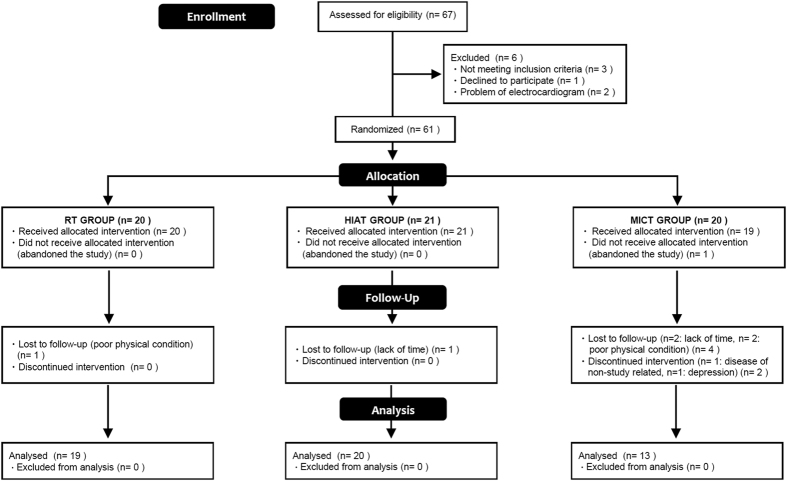
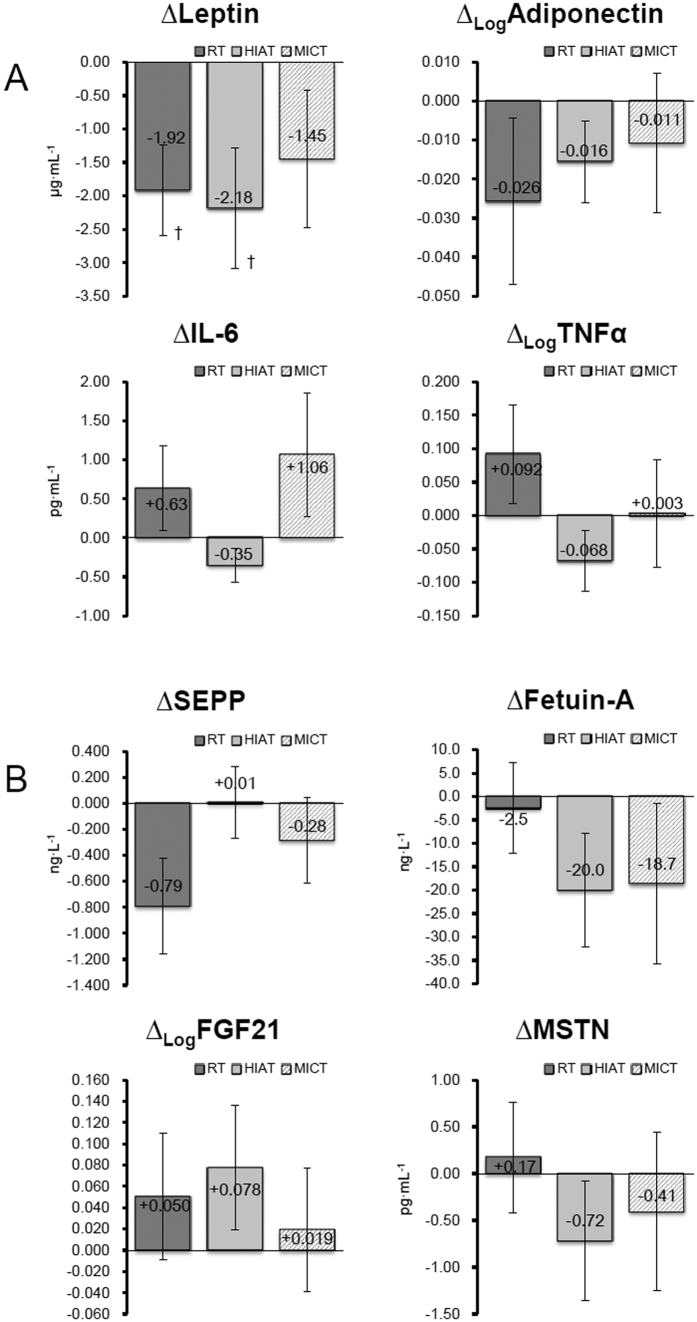
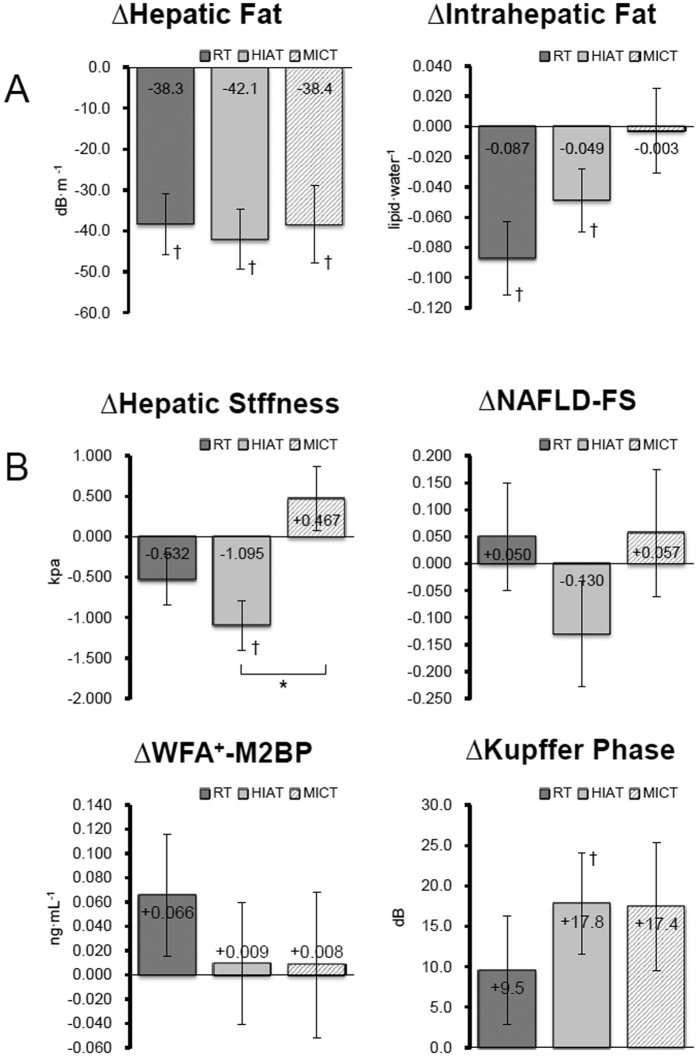
We compared the effects of 12-week programs of resistance training (RT), high-intensity interval aerobic training (HIAT), and moderate-intensity continuous aerobic training (MICT). The primary goal was to evaluate the therapeutic effects of the exercise modalities for the management of nonalcoholic fatty liver disease (NAFLD). A total of 61 sedentary obese men with NAFLD were randomized into one of the following exercise regimens (RT, HIAT, or MICT). Hepatic fat content was decreased to a similar extent in the RT, HIAT, and MICT groups (−14.3% vs. −13.7% vs. −14.3%) without significant changes in weight and visceral fat. The gene expression levels of fatty acid synthesis were significantly decreased in the subjects’ monocytes. Hepatic stiffness was decreased only in the HIAT group (−16.8%). The stiffness change was associated with restored Kupffer cell phagocytic function (+17.8%) and decreased levels of inflammation such as leptin (−13.2%) and ferritin (−14.1%). RT, HIAT, and MICT were equally effective in reducing hepatic fat content, but only HIAT was effective in improving hepatic stiffness and restoring Kupffer cell function. These benefits appeared to be independent of detectable weight and visceral fat reductions; the benefits were acquired through the modulation of in vivo fatty acid metabolism and obesity-related inflammatory conditions.
Overview
The claims and statistics of this paper haven’t been checked yet.
Free: it reads the open-access text and checks the first 5 claims that cite a source we can check. Create a free account to check every claim.
Integrity signals
Registry
Cites
Statistics
Figures
Verification
Claims the paper makes
The claims and statistics of this paper haven’t been checked yet.
Free: it reads the open-access text and checks the first 5 claims that cite a source we can check. Create a free account to check every claim.
Claims other papers make about this one
Each is checked against this paper’s own text: does it say what the citing paper says it does?
The source backs part of the claim, not all of it — or backs it for a different population, condition or comparison.
In the citing paper
“Moreover, enhanced hepatic insulin sensitivity reduces de novo lipogenesis and improves glucose regulation, effectively lowering lipid accumulation within the liver [100].”
From Effects of Mediterranean diet, exercise, and their combination on body composition and liver outcomes in metabolic dysfunction-associated steatotic liver disease: a systematic review and meta-analysis of randomized controlled trials (2025) · cites this paper as [100]
Experimental — accuracy not yet measuredThe source backs part of the claim, not all of it — or backs it for a different population, condition or comparison.
In the citing paper
“The significant reduction in liver fat percentage observed with aerobic exercise may be attributed to enhanced fat oxidation and improved hepatic insulin sensitivity [100, 101].”
From Effects of Mediterranean diet, exercise, and their combination on body composition and liver outcomes in metabolic dysfunction-associated steatotic liver disease: a systematic review and meta-analysis of randomized controlled trials (2025) · cites this paper as [100]
Experimental — accuracy not yet measured
Self-check
Percentages, sums and reported differences re-computed from the paper’s own numbers.
The self-check needs the paper’s full text.
Citations
Cites
Matthews, D. R., Hosker, J. P., Rudenski, A. S., Naylor, B. A., Treacher, D. F., & Turner, R. C. (1985) · Diabetologia · doi:10.1007/bf00280883 · Cited by 31,502
Toprak, O., Kurt, H., Sarı, Y., Şarkış, C., Us, H., & Kırık, A. (2017) · Kidney and Blood Pressure Research · doi:10.1159/000468530 · Cited by 29,627
Inflammation and metabolic disorders
Hotamisligil, G. S. (2006) · Nature · doi:10.1038/nature05485 · Cited by 9,199
Progression Models in Resistance Training for Healthy Adults
(2009) · Medicine & Science in Sports & Exercise · doi:10.1249/mss.0b013e3181915670 · Cited by 4,332
Donnelly, K. L., Smith, C. I., Schwarzenberg, S. J., Jessurun, J., Boldt, M. D., & Parks, E. J. (2005) · Journal of Clinical Investigation · doi:10.1172/jci23621 · Cited by 3,604
Angulo, P., Hui, J. M., Marchesini, G., Bugianesi, E., George, J., Farrell, G. C., Enders, F., Saksena, S., Burt, A. D., Bida, J. P., et al. (2007) · Hepatology · doi:10.1002/hep.21496 · Cited by 3,203
Progression Models in Resistance Training for Healthy Adults
(2002) · Medicine and Science in Sports and Exercise · doi:10.1097/00005768-200202000-00027 · Cited by 2,979
Transient elastography: a new noninvasive method for assessment of hepatic fibrosis
Sandrin, L., Fourquet, B., Hasquenoph, J.-M., Yon, S., Fournier, C., Mal, F., Christidis, C., Ziol, M., Poulet, B., Kazemi, F., et al. (2003) · Ultrasound in Medicine & Biology · doi:10.1016/j.ultrasmedbio.2003.07.001 · Cited by 2,738
DONNELLY, J. E., BLAIR, S. N., JAKICIC, J. M., MANORE, M. M., RANKIN, J. W., & SMITH, B. K. (2009) · Medicine & Science in Sports & Exercise · doi:10.1249/mss.0b013e3181949333 · Cited by 2,658
Obesity and nonalcoholic fatty liver disease: biochemical, metabolic, and clinical implications
Fabbrini, E., Sullivan, S., & Klein, S. (2010) · Hepatology · doi:10.1002/hep.23280 · Cited by 2,100
Research works printed but not linked: 1
- Yanagisawa K.. Phagocytosis of ultrasound contrast agent microbubbles by Kupffer cells. Ultrasound Med Biol 33 318– 325 (2007). 17207907 · DOI · Paper page
Cited by
New trends on obesity and NAFLD in Asia
Fan, J.-G., Kim, S.-U., & Wong, V. W.-S. (2017) · Journal of Hepatology · doi:10.1016/j.jhep.2017.06.003 · Cited by 1,083
Eslam, M., Sarin, S. K., Wong, V. W.-S., Fan, J.-G., Kawaguchi, T., Ahn, S. H., Zheng, M.-H., Shiha, G., Yilmaz, Y., Gani, R., et al. (2020) · Hepatology International · doi:10.1007/s12072-020-10094-2 · Cited by 833
NAFLD and cardiovascular diseases: a clinical review
Kasper, P., Martin, A., Lang, S., Kütting, F., Goeser, T., Demir, M., & Steffen, H.-M. (2021) · Clinical Research in Cardiology · doi:10.1007/s00392-020-01709-7 · Cited by 632
“Besides positive effects on the liver fat content [138, 139], moderate physical activity, especially combined with dietary intervention, also has a great effect on decreasing visceral adipose tissue, interestingly, independent of weight loss [32].”
BackgroundFarzanegi, P., Dana, A., Ebrahimpoor, Z., Asadi, M., & Azarbayjani, M. A. (2019) · European Journal of Sport Science · doi:10.1080/17461391.2019.1571114 · Cited by 379
“For instance, Oh et al. (2017) indicated that 12 weeks of moderate-intensity continuous cycling or vigorous-intensity interval cycling causes significant reductions in intrahepatic fat content (about 14”
BackgroundNovel Insights into the Pathogenesis and Management of the Metabolic Syndrome
Wang, H. H., Lee, D. K., Liu, M., Portincasa, P., & Wang, D. Q.-H. (2020) · Pediatric Gastroenterology, Hepatology & Nutrition · doi:10.5223/pghn.2020.23.3.189 · Cited by 281
“Furthermore, cardiorespiratory fitness and intensive physical activity prevent the development of the metabolic syndrome likely through their effects on each of the individual components [343,349,350].”
The effects of physical exercise on fatty liver disease.
van der Windt, D. J., Sud, V., Zhang, H., Tsung, A., & Huang, H. (2018) · Gene Expression · doi:10.3727/105221617x15124844266408 · Cited by 294
Sultana, R. N., Sabag, A., Keating, S. E., & Johnson, N. A. (2019) · Sports Medicine · doi:10.1007/s40279-019-01167-w · Cited by 286
Treatments for NAFLD: State of Art
Mantovani, A., & Dalbeni, A. (2021) · International Journal of Molecular Sciences · doi:10.3390/ijms22052350 · Cited by 202
“, resistance training, high‐intensity in‐ terval aerobic training, and moderate‐intensity continuous aerobic training were equally effective in reducing hepatic fat content, but only high‐intensity interval aerobic training was effective in improving hepatic stiffness and restoring Kupffer cell function [38].”
BackgroundPortincasa, P., Khalil, M., Mahdi, L., Perniola, V., Idone, V., Graziani, A., Baffy, G., & Ciaula, A. D. (2024) · International Journal of Molecular Sciences · doi:10.3390/ijms25115640 · Cited by 183
“Exercise can reduce hepatic steatosis and improve liver stiffness [207], independently of dietary changes [208].”
BackgroundFougerat, A., Montagner, A., Loiseau, N., Guillou, H., & Wahli, W. (2020) · Cells · doi:10.3390/cells9071638 · Cited by 156
Arab, J. P., Dirchwolf, M., Álvares-da-Silva, M. R., Barrera, F., Benítez, C., Castellanos-Fernandez, M., Castro-Narro, G., Chavez-Tapia, N., Chiodi, D., Cotrim, H., et al. (2020) · Annals of Hepatology · doi:10.1016/j.aohep.2020.09.006 · Cited by 141
Are Lifestyle Therapies Effective for NAFLD Treatment?
El-Agroudy, N. N., Kurzbach, A., Rodionov, R. N., O’Sullivan, J., Roden, M., Birkenfeld, A. L., & Pesta, D. H. (2019) · Trends in Endocrinology & Metabolism · doi:10.1016/j.tem.2019.07.013 · Cited by 141
“IHL, as measured by (1)H-MRS, and hepatic stiffness, as assessed by transient elastography, by ~17% [52].”
Low‐volume high‐intensity interval training for cardiometabolic health
Sabag, A., Little, J. P., & Johnson, N. A. (2022) · The Journal of Physiology · doi:10.1113/jp281210 · Cited by 124
“(Oh et al. 2017) 61 sedentary men with obesity and MAFLD.”
InfluentialKhalafi, M., & Symonds, M. E. (2020) · Scandinavian Journal of Medicine and Science in Sports · doi:10.1111/sms.13754 · Cited by 127
The effect of exercise intensity on chronic inflammation: A systematic review and meta-analysis
Rose, G. L., Skinner, T. L., Mielke, G. I., & Schaumberg, M. A. (2021) · Journal of Science and Medicine in Sport · doi:10.1016/j.jsams.2020.10.004 · Cited by 103
Sabag, A., Barr, L., Armour, M., Armstrong, A., Baker, C. J., Twigg, S. M., Chang, D., Hackett, D. A., Keating, S. E., George, J., et al. (2022) · The Journal of Clinical Endocrinology & Metabolism · doi:10.1210/clinem/dgab795 · Cited by 88
“Four studies exclusively recruited male participants (24, 33, 44, 46), while 2 studies did not report sex (32, 37).”
BackgroundInfluentialMarin-Alejandre, B. A., Abete, I., Cantero, I., Monreal, J. I., Elorz, M., Herrero, J. I., Benito-Boillos, A., Quiroga, J., Martinez-Echeverria, A., Uriz-Otano, J. I., et al. (2019) · Nutrients · doi:10.3390/nu11102543 · Cited by 82
“Strategies like changes in dietary patterns and exercise have demonstrated benefits for the prevention of the onset and progression of this morbid condition [13,14].”
BackgroundClinical assessment and management of liver fibrosis in non-alcoholic fatty liver disease
Campos-Murguía, A., Ruiz‐Margáin, A., González-Regueiro, J. A., & Macías‐Rodríguez, R. U. (2020) · World Journal of Gastroenterology · doi:10.3748/wjg.v26.i39.5919 · Cited by 86
Brouwers, B., Schrauwen-Hinderling, V. B., Jelenik, T., Gemmink, A., Sparks, L. M., Havekes, B., Bruls, Y., Dahlmans, D., Roden, M., Hesselink, M. K. C., et al. (2018) · American Journal of Physiology-Endocrinology and Metabolism · doi:10.1152/ajpendo.00266.2017 · Cited by 69
“Vigorous exercise, but not moderate exercise, has been shown to decrease the chance of having nonalcoholic steatohepatitis (24), and a recent study found reductions in IHL content after 12 wk of high-intensity aerobic training, but not moderate-intensity aerobic training, in obese people with NAFL (34).”
BackgroundExercising the hepatobiliary‐gut axis. The impact of physical activity performance
Molina‐Molina, E., Baccetto, R., Wang, D. Q. ‐., de Bari, O., Krawczyk, M. J., & Portincasa, P. (2018) · European Journal of Clinical Investigation · doi:10.1111/eci.12958 · Cited by 70
“Physical activity might partly mediate this effect.(181,182) Moreover, BA-induced activation of GPBAR1, also expressed in other immune cells such as 10 of 19 | MOLINA-MOLINA ET AL.”
BackgroundStine, J. G., Schreibman, I. R., Faust, A. J., Dahmus, J., Stern, B., Soriano, C., Rivas, G., Hummer, B., Kimball, S. R., Geyer, N. R., et al. (2022) · Hepatology · doi:10.1002/hep.32274 · Cited by 65
Xue, Y., Peng, Y., Zhang, L., Ba, Y., Jin, G., & Liu, G. (2024) · Scientific Reports · doi:10.1038/s41598-024-51470-4 · Cited by 61
Verdú, E., Homs, J., & Boadas‐Vaello, P. (2021) · International Journal of Environmental Research and Public Health · doi:10.3390/ijerph182413333 · Cited by 70
Exercise as Medicine: The Impact of Exercise Training on Nonalcoholic Fatty Liver Disease
Thorp, A., & Stine, J. G. (2020) · Current Hepatology Reports · doi:10.1007/s11901-020-00543-9 · Cited by 50
NAFLD and Physical Exercise: Ready, Steady, Go!
Berković, M. C., Bilić-Čurčić, I., Mrzljak, A., & Cigrovski, V. (2021) · Frontiers in Nutrition · doi:10.3389/fnut.2021.734859 · Cited by 60
“The main transcription factor controlling liver fatty acid metabolism, sterol regulatory element-binding protein 1 (SREBP-1), which is elevated in the NASH can be decreased by either 12-week aerobic exercise of high intensity or resistance training through the increase of AMPK, leading to reduction of de novo lipogene…”
BackgroundChai, X.-N., Zhou, B.-Q., Ning, N., Pan, T., Xu, F., He, S.-H., Chen, N.-N., & Sun, M. (2023) · Frontiers in Endocrinology · doi:10.3389/fendo.2023.1081096 · Cited by 52
“(34) Obesity and fibrosis scan-proven NAFLD Japan 61/52 46–53 52/0 27.”
BackgroundOne size does not fit all; practical, personal tailoring of the diet to NAFLD patients
Zelber‐Sagi, S., Grinshpan, L. S., Ivancovsky‐Wajcman, D., Goldenshluger, A., & Gepner, Y. (2022) · Liver International · doi:10.1111/liv.15335 · Cited by 49
Fouad, Y. M., Esmat, G., Elwakil, R., Zakaria, S., Yosry, A., Waked, I. A., El-Razky, M., Doss, W. H., El‐Serafy, M., Mostafa, E., et al. (2022) · Saudi Journal of Gastroenterology · doi:10.4103/sjg.sjg_357_21 · Cited by 55
“Regular physical activity and exercise have been demonstrated to have beneficial effects on the entire spectrum of MAFLD, including improvements in hepatic steatosis and health‐related quality of life[104] and reduction in liver stiffness, portal hypertension,[105] and risk of HCC.”
BackgroundThe Role of Exercise in Steatotic Liver Diseases: An Updated Perspective
Razzak, I. A., Fares, A., Stine, J. G., & Trivedi, H. D. (2024) · Liver International · doi:10.1111/liv.16220 · Cited by 61
“The direct effect of exercise on improving hepatic and metabolic outcomes in MASLD has been demonstrated in multiple clinical trials [41, 43–47 Pooled data from seven randomised controlled trials (RCTs) showed that exercise is more likely to result in this reduction (odds ratio 3.51, 95% confidence…”
InfluentialLifestyle modifications for nonalcohol-related fatty liver disease: a network meta-analysis
Buzzetti, E., Linden, A., Best, L. M., Madden, A. M., Roberts, D., Chase, T. J. G., Freeman, S. C., Cooper, N. J., Sutton, A. J., Fritche, D., et al. (2021) · Cochrane Database of Systematic Reviews · doi:10.1002/14651858.cd013156.pub2 · Cited by 46
Arita, V. A., Cabezas, M. C., Hernández Vargas, J. A., Trujillo-Cáceres, S. J., Mendez Pernicone, N., Bridge, L. A., Raeisi-Dehkordi, H., Dietvorst, C. A. W., Dekker, R., Uriza-Pinzón, J. P., et al. (2025) · BMC Medicine · doi:10.1186/s12916-025-04320-7 · Cited by 43
“Moreover, enhanced hepatic insulin sensitivity reduces de novo lipogenesis and improves glucose regulation, effectively lowering lipid accumulation within the liver [100].”
Aerobic Exercise in the Management of Metabolic Dysfunction Associated Fatty Liver Disease
Machado, M. V. (2021) · Diabetes, Metabolic Syndrome and Obesity: Targets and Therapy · doi:10.2147/dmso.s304357 · Cited by 39
“Also, a study on 61 sedentary obese men with NAFLD, randomized for high or moderate intensity aerobic exercise during 12 weeks, found that patients on the high-intensity arm improved liver fibrosis assessed by transient elastography.(158) Human trials assessing the effect of exercise on the severity of liver disease,…”
BackgroundKamada, Y., Takahashi, H., Shimizu, M., Kawaguchi, T., Sumida, Y., Fujii, H., Seko, Y., Fukunishi, S., Tokushige, K., Nakajima, A., et al. (2021) · Journal of Gastroenterology · doi:10.1007/s00535-021-01833-9 · Cited by 44
Kim, J., Lee, H., Lim, J., Oh, J.-H., Shin, S. C., & Yoon, M. (2017) · International Journal of Molecular Sciences · doi:10.3390/ijms18040846 · Cited by 42
“High-density aerobic exercise is also beneficial for improving obesity and NAFLD [44].”
BackgroundRetractedHadefi, A., Arvanitakis, M., Trépo, E., & Zelber‐Sagi, S. (2023) · United European Gastroenterology Journal · doi:10.1002/ueg2.12443 · Cited by 44
Steele, J., Plotkin, D. L., Every, D. W. V., Rosa, A., Zambrano, H., Mendelovits, B., Mercado, M., Grgić, J., & Schoenfeld, B. J. (2021) · Sports · doi:10.3390/sports9110155 · Cited by 45
Ekkekakis, P., Swinton, P. A., & Tiller, N. B. (2023) · Sports Medicine · doi:10.1007/s40279-023-01880-7 · Cited by 40
Non-alcoholic fatty liver disease: Immunological mechanisms and current treatments
Petagine, L., Zariwala, M. G., & Patel, V. B. (2023) · World Journal of Gastroenterology · doi:10.3748/wjg.v29.i32.4831 · Cited by 45
Omori, S., Uchida, F., Oh, S., So, R., Tsujimoto, T., Yanagawa, T., Sakai, S., Shoda, J., Tanaka, K., & Bukawa, H. (2018) · Therapeutics and Clinical Risk Management · doi:10.2147/tcrm.s153397 · Cited by 39
“Details of the strength and frequency of the resistance training were as follows: intensity (50%–70% 1 repetition maximum, 1–2 minutes rest, total 3 sets); crunches (15 repetitions [reps] per set); and leg extension, leg press, leg curl, chest press, seated row, and lat pull-down (all 12 reps per set).(15) In addition…”
Self-citationYamamura, S., Kawaguchi, T., Nakano, D., Tomiyasu, Y., Yoshinaga, S., Doi, Y., Takahashi, H., Anzai, K., Eguchi, Y., Torimura, T., et al. (2019) · Hepatology Research · doi:10.1111/hepr.13436 · Cited by 37
Houttu, V., Bouts, J., Vali, Y., Daams, J. G., Grefhorst, A., Nieuwdorp, M., & Holleboom, A. G. (2022) · Frontiers in Endocrinology · doi:10.3389/fendo.2022.1032164 · Cited by 40
Banitalebi, E., Faramarzi, M., Nasiri, S., Ghahfarrokhi, M. M., & Rabiee, V. (2019) · Clinical and Molecular Hepatology · doi:10.3350/cmh.2018.0086 · Cited by 35
“Similarity, some studies showed that high intensity training can improve hepatic parameters, independent of body composition.(38,42,43) The results of the present study did not confirm the hypothesis that SIT improves FSI in a superior manner than combined A+R training in T2D.”
ResultThe Effect of Exercise on Quality of Life in Type 2 Diabetes: A Systematic Review and Meta-analysis
Sabag, A., Chang, C. R., François, M. E., Keating, S. E., Coombes, J. S., Johnson, N. A., Pastor‐Valero, M., & Rey-López, J. P. (2023) · Medicine & Science in Sports & Exercise · doi:10.1249/mss.0000000000003172 · Cited by 40
Khalafi, M., & Symonds, M. E. (2021) · Physiology & Behavior · doi:10.1016/j.physbeh.2021.113416 · Cited by 34
Jamka, M., Makarewicz-Bukowska, A., Bokayeva, K., Śmidowicz, A., Geltz, J., Kokot, M., Kaczmarek, N., Żok, A., Kononets, V., Cielecka‐Piontek, J., et al. (2022) · International Journal of Environmental Research and Public Health · doi:10.3390/ijerph192214928 · Cited by 33
“However, one study included subjects with multiple cardiometabolic syndromes or cardiovascular disease risk factors [49], insulin resistance [50] and non-alcoholic fatty liver disease [53].”
BackgroundInfluentialKomine, S., Akiyama, K., Warabi, E., Oh, S., Kuga, K., Ishige, K., Togashi, S., Yanagawa, T., & Shoda, J. (2017) · Scientific Reports · doi:10.1038/s41598-017-12358-8 · Cited by 35
Self-citationThe role of the gut microbiome and exercise in non-alcoholic fatty liver disease
Houttu, V., Boulund, U., Grefhorst, A., Soeters, M. R., Pinto‐Sietsma, S., Nieuwdorp, M., & Holleboom, A. G. (2020) · Therapeutic Advances in Gastroenterology · doi:10.1177/1756284820941745 · Cited by 36
Sarcopenia and metabolic dysfunction associated steatotic liver disease: Time to address both
Wong, R., & Yuan, L. (2024) · World Journal of Hepatology · doi:10.4254/wjh.v16.i6.871 · Cited by 33
Exercise workload: a key determinant of immune health – a narrative review
Shi, X., Hu, L., Nieman, D. C., Li, F., Chen, P., Shi, H., & Shi, Y. (2025) · Frontiers in Immunology · doi:10.3389/fimmu.2025.1617261 · Cited by 45
NAFLD Fibrosis Progression and Type 2 Diabetes: The Hepatic–Metabolic Interplay
Cernea, S. (2024) · Life · doi:10.3390/life14020272 · Cited by 36
“Indeed, some but not all studies indicated a reduction in liver fibrosis with high-intensity interval training or moderate-to-vigorous aerobic exercise [128–130].”
BackgroundTaylor, J. L., Holland, D. J., Mielke, G. I., Bailey, T. G., Johnson, N. A., LEVERITT, M. D., Gomersall, S. R., Rowlands, A. V., Coombes, J. S., & Keating, S. E. (2020) · Obesity · doi:10.1002/oby.22833 · Cited by 30
“Exercise training has been shown to reduce liver fat (2-4) and VAT (5,6), even in the absence of weight loss.”
Uchida, F., Oh, S., Takashi, S., Hideo, S., Kenji, Y., Yuji, M., Hiroki, B., Kiyoji, T., & Junichi, S. (2021) · Terrestrial Environment Research Center (University of Tsukuba) · Cited by 28
Self-citationSargeant, J. A., Bawden, S., Aithal, G. P., Simpson, E. J., Macdonald, I. A., Turner, M. C., Cegielski, J., Smith, K., Dorling, J. L., Gowland, P. A., et al. (2018) · European Journal of Applied Physiology · doi:10.1007/s00421-018-3818-y · Cited by 23
“Observational evidence (Kistler et al. 2011) and experimental data (Cho et al. 2015; Oh et al. 2017) suggest that high-intensity exercise may be more potent in attenuating IHTG accumulation and NAFLD progression than moderateintensity exercise.”
BackgroundMetabolic-associated fatty liver disease and sarcopenia: A double whammy
Viswanath, A., Fouda, S., Fernandez, C. J., & Pappachan, J. M. (2024) · World Journal of Hepatology · doi:10.4254/wjh.v16.i2.152 · Cited by 22
Obesity and Exercise: New Insights and Perspectives
James, N. M., & Stanford, K. I. (2025) · Endocrine Reviews · doi:10.1210/endrev/bnaf017 · Cited by 20
Pharmacotherapies of NAFLD: updated opportunities based on metabolic intervention
Shao, Y., Chen, S., Liu, H., & Liu, J. (2023) · Nutrition & Metabolism · doi:10.1186/s12986-023-00748-x · Cited by 21
“Exercise Exercise has been demonstrated to reduce hepatic steatosis independently of diet changes [148]; additionally, exercise has also been found to improve liver stiffness [149].”
BackgroundResearch Progress of Pyroptosis in Fatty Liver Disease
Li, R., Xue, W., Wei, H., Fan, Q., Li, X., Qiu, Y., & Cui, D. (2023) · International Journal of Molecular Sciences · doi:10.3390/ijms241713065 · Cited by 24
Barbhuiya, P. A., Sen, S., & Pathak, M. P. (2023) · Phytochemistry Reviews · doi:10.1007/s11101-023-09912-w · Cited by 24
“Various types of physical exercise, such as aerobic exercise, resistance exercise, and high-intensity intermittent exercise, appear to elicit comparable impacts on the accumulation of fat in the liver as well as hepatic stiffness (Bacchi et al. 2013; Oh et al. 2017).”
Whole‐body vibration for patients with nonalcoholic fatty liver disease: a 6‐month prospective study
Oh, S., Oshida, N., Someya, N., Maruyama, T., Isobe, T., Okamoto, Y., Kim, T., Kim, B., & Shoda, J. (2019) · Physiological Reports · doi:10.14814/phy2.14062 · Cited by 23
“Our previous study (Oh et al. 2017) and that of Kistler et al. (2011) found that only high-intensity exercise improved inflammatory markers and hepatic stiffness.”
BackgroundResultSelf-citationPhysical Activity Modulating Lipid Metabolism in Gallbladder Diseases
Shanmugam, H., Molina‐Molina, E., Palo, D. M. D., Faienza, M. F., Ciaula, A. D., Garruti, G., Wang, D. Q. ‐., & Portincasa, P. (2020) · Journal of Gastrointestinal and Liver Diseases · doi:10.15403/jgld-544 · Cited by 22
“Physical activity might partially mediate this effect [139, 140].”
BackgroundSilva, M. G., Nunes, P. J., Oliveira, P. A., Ferreira, R. M., Fardilha, M., Moreira‐Gonçalves, D., Duarte, J. A., Oliveira, M. M., & Peixoto, F. (2022) · Biology · doi:10.3390/biology11121750 · Cited by 24
Exercise and tissue fibrosis: recent advances in therapeutic potential and molecular mechanisms
Zhao, Z., Zhu, Y., & Wan, D. (2025) · Frontiers in Endocrinology · doi:10.3389/fendo.2025.1557797 · Cited by 26
Makarewicz-Bukowska, A., Jamka, M., Geltz, J., Śmidowicz, A., Kokot, M., Kaczmarek, N., Mądry, E., & Walkowiak, J. (2022) · Healthcare · doi:10.3390/healthcare10061098 · Cited by 20
“Two studies were conducted in subjects with metabolic syndrome [20,43], and one included subjects with nonalcoholic fatty liver disease [19].”
BackgroundMethodInfluentialZhao, X., Shi, X., Gu, H., Zhou, W., & Zhang, Q. (2023) · Journal of Gastroenterology and Hepatology · doi:10.1111/jgh.16150 · Cited by 22
“30 In addition, skeletal muscle generates force by either shortening (concentrically) or lengthening (eccen-trically).”
BackgroundPerspectives on Interval Exercise Interventions for Non-Alcoholic Fatty Liver Disease
Hamasaki, H. (2019) · Medicines · doi:10.3390/medicines6030083 · Cited by 21
“[17] compared the effects of a 12-week HIIT, moderate-intensity continuous exercise training, and resistance training.”
BackgroundBarrón‐Cabrera, E., Soria-Rodriguez, R. A., Amador-Lara, F., & Martínez‐López, E. (2023) · Healthcare · doi:10.3390/healthcare11141992 · Cited by 27
“All three exercise modalities were equally effective in reducing hepatic fat content, regardless of significant weight and visceral reductions, but only the HIIT group significantly improved their hepatic stiffness associated with restoring the Kupffer cell function and decreased their inflammation markers (leptin and…”
BackgroundResultLin, S., Xian, Y.-J., Liu, Y., Cai, W., Song, J., & Zhang, X. (2018) · Medicine · doi:10.1097/md.0000000000010021 · Cited by 17
Tsamos, G., Vasdeki, D., Koufakis, T., Michou, V., Makedou, K., & Tzimagiorgis, G. (2023) · Metabolites · doi:10.3390/metabo13040517 · Cited by 16
“However, only high-intensity interval aerobic exercise had a beneficial effect on restoring Kupffer cell function [31].”
BackgroundKhaleghzadeh, H., Afzalpour, M. E., Ahmadi, M. M., Nematy, M., & Sardar, M. A. (2020) · Obesity Medicine · doi:10.1016/j.obmed.2019.100177 · Cited by 18
Association of hand-grip strength and non-alcoholic fatty liver disease index in older adults
Lee, I., Cho, J., Park, J., & Kang, H. (2018) · Physical Activity and Nutrition · doi:10.20463/jenb.2018.0031 · Cited by 17
Exercise Training as Treatment of Nonalcoholic Fatty Liver Disease
Glass, O., Radia, A., Kraus, W. E., & Abdelmalek, M. F. (2017) · Journal of Functional Morphology and Kinesiology · doi:10.3390/jfmk2040035 · Cited by 15
Miura, I., Komine, S., Okada, K., Wada, S., Warabi, E., Uchida, F., Oh, S., Suzuki, H., Mizokami, Y., & Shoda, J. (2021) · Physiological Reports · doi:10.14814/phy2.14859 · Cited by 13
“Furthermore, the reduction in the phagocytic capacity of KCs is restored by long- term high- intensity exercise, which is followed by amelioration of the inflammation and oxidative stress (Oh et al., 2017).”
BackgroundSelf-citationHyun, A.-H. (2021) · Applied Sciences · doi:10.3390/app112412129 · Cited by 15
“In order to manage weight gained by the viral environment, the American College of Sports Medicine (ACSM) recommends 150 min of aerobic exercise per week [16].”
BackgroundFGF21: A Sharp Weapon in the Process of Exercise to Improve NAFLD
Wang, Z., Sun, T., Yu, J., Li, S., Gong, L., & Zhang, Y. (2023) · Frontiers in Bioscience-Landmark · doi:10.31083/j.fbl2812351 · Cited by 15
“In addition, studies have shown that high-intensity aerobic exercise may improve liver fat content and stiffness in patients with NAFLD [42].”
BackgroundGalván, B., del Castillo, L. A. E., Olivares, L. A. F., Mendias, E. Q., Torres-Rojo, F. I., Balderrama, C. V. V., & Hernández, N. C. (2025) · Journal of Functional Morphology and Kinesiology · doi:10.3390/jfmk10030244 · Cited by 16
“In this context, concurrent exercise (combining resistance and aerobic training) may further optimize metabolic outcomes and reduce CVD risk factors [12–14].”
Chou, Y.-T., Sun, Z., Shen, W.-C., Yang, Y., Lu, F.-H., Chang, C., Li, C., & Wu, J. (2022) · Frontiers in Nutrition · doi:10.3389/fnut.2022.765206 · Cited by 12
Freer, C. L., George, E. S., Tan, S., Abbott, G., Dunstan, D. W., & Daly, R. M. (2022) · BMJ Open Diabetes Research & Care · doi:10.1136/bmjdrc-2022-002950 · Cited by 13
Curci, R., Bianco, A., Franco, I., Bonfiglio, C., Campanella, A., Mirizzi, A., Giannuzzi, V., Cozzolongo, R., Veronese, N., & Osella, A. R. (2023) · Nutrients · doi:10.3390/nu15163520 · Cited by 11
“However, these results are supported by some studies which evidenced that PA alone in the management of NAFLD is not sufficient, as it produces only a minimal reduction in body weight [12,42], although it improves the liver dysfunction underlying NAFLD including fat accumulation, inflammation, and fibrosis [43].”
ResultFigueroa, G., Castañeda, S. M., McLean, H., Dukandar, J., Wilson, S., Martin, P. B., George, S. M. S., Araya-Acero, L., & Jones, P. D. (2023) · Digestive Diseases and Sciences · doi:10.1007/s10620-023-08212-9 · Cited by 12
“Exercise has been shown to decrease steatosis by 20% to 30% in patients with NAFLD, regardless of weight loss, and to reduce fibrosis [4].”
Pathogenesis and Clinical Management of Metabolic Dysfunction-Associated Steatotic Liver Disease
Lucaciu, R. L., Coste, S. C., Hangan, A. C., Iancu, M., Orasan, O. H., Cozma, A., Bogdan, S. G., & Procopciuc, L. M. (2025) · International Journal of Molecular Sciences · doi:10.3390/ijms26125717 · Cited by 14
“Furthermore, it was found that physical activity can improve liver stiffness and reduce hepatic steatosis, independently of dietary changes [125].”
Kim, B., & Kim, S. (2020) · Diabetes Metabolic Syndrome and Obesity · doi:10.2147/dmso.s231981 · Cited by 13
“AE can improve several metabolic markers and cardiorespiratory capacity and decrease weight and fat mass.(8) However, recent studies have reported that RE may also be beneficial in reducing fat mass and improving cardiorespiratory capacity and that AE has a positive effect on the maintenance of muscle mass and strengt…”
BackgroundSelf-citationExtracellular vesicle‐encapsulated miR ‐30c‐5p reduces aging‐related liver fibrosis
Rodrigues, A. C., Heng, Y. J., & Slack, F. J. (2024) · Aging Cell · doi:10.1111/acel.14310 · Cited by 10
“So far, there is no evidence that EVs from exercised mice reduce liver fibrosis; however, high-intensity aerobic exercise improves fibrotic and inflammatory conditions of the liver in sedentary obese men with NAFLD (Oh et al., 2017 ).”
Bagheri, M. H., Jazi, A. A., Banitalebi, E., Kazeminasab, F., & Nasr‐Esfahani, M. H. (2020) · Science & Sports · doi:10.1016/j.scispo.2020.01.006 · Cited by 12
Fu, J., Liu, C., Yang, L., Zhang, B., Zhou, R., Deng, C., Zhang, H., Kong, J., Li, J., & Shi, J. (2025) · European Journal of Gastroenterology & Hepatology · doi:10.1097/meg.0000000000002964 · Cited by 10
“Of the included studies, three studies measured IHL using MRI [24,27,30] and three studies using proton-magnetic resonance spectroscopy [25,29,33], the remaining four studies used ultrasound [26,31,32] for the measurement of IHL and one study used transient elastography [28].”
InfluentialKeating, S. E., Croci, I., Wallen, M. P., Cox, E. R., Coombes, J. S., Burton, N. W., Macdonald, G. A., & Hickman, I. J. (2023) · Journal of Clinical and Translational Hepatology · doi:10.14218/jcth.2022.00091s · Cited by 11
Irandoust, K., Gholamhosseini, M., Samimi, R., Dergaa, I., Saad, H. B., & Taheri, M. (2024) · La Tunisie Médicale · doi:10.62438/tunismed.v102i1.4669 · Cited by 10
“There was also a significant increase in TRPV4 expression in hepatic fibrotic tissue (18).”
BackgroundTincopa, M. A., Patel, N., Shahab, A., Asefa, H., & Lok, A. S.-F. (2024) · Scientific Reports · doi:10.1038/s41598-024-57722-7 · Cited by 11
“Emerging data also suggest that exercise alone even in the absence of significant weight loss may improve hepatic inflammation and liver stiffness measurements 25 .”
BackgroundRegular Exercise as a Secondary Practical Treatment for Nonalcoholic Fatty Liver Disease
Oh, S., Han, G., Kim, B., & Shoda, J. (2018) · Exercise Medicine · doi:10.26644/em.2018.004 · Cited by 9
“These are intended as an optimal goal following a gradual increase in exercise [61].”
BackgroundSelf-citationKravchuk, S., Bychkov, M. A., Kozyk, M., Strubchevska, O., & Kozyk, A. (2025) · Cureus · doi:10.7759/cureus.84803 · Cited by 21
“A 12-week intervention with different exercise modalities resulted in a reduction in liver fat content ranging from 13.7% to 14.3%, depending on the type of physical activity, even without significant alterations in body weight or visceral adiposity [24].”
InfluentialRuíz-Uribe, M., Enríquez-Schmidt, J., Uarac, M. A. M., Mautner-Molina, C., Kalazich-Rosales, M., Muñoz, M., Fuentes-Leal, F., Cárcamo-Ibaceta, C., Fazakerley, D. J., Larance, M., et al. (2024) · Journal of Clinical Medicine · doi:10.3390/jcm13113273 · Cited by 10
“However, because of the nature of this study, it is not possible to identify the possible mechanisms behind these adaptations, which should be explored in future studies.”
BackgroundEffect of Aerobic Exercise on Lipid Metabolism in Rats With NAFLD
Zhou, T., Niu, M., Liu, R., & Li, L. (2022) · Frontiers in Genetics · doi:10.3389/fgene.2022.901827 · Cited by 8
The effect of low volume sprint interval training in patients with non-alcoholic fatty liver disease
MacLean, C., Dillon, J. F., Babraj, J., & Vollaard, N. B. J. (2017) · The Physician and Sportsmedicine · doi:10.1080/00913847.2018.1411171 · Cited by 9
“[44], looking at the therapeutic effects of aerobic HIIT, resistance training, and moderate-intensity continuous aerobic training in patients with NAFLD, demonstrated that each of these modalities was effective at reducing hepatic fat content, but that”
BackgroundGut microbiota: new links between exercise and disease
Wu, Y., Wang, Y., Zhang, Q., Yao, L., Ma, Z., & Chen, L. (2026) · Frontiers in Microbiology · doi:10.3389/fmicb.2026.1746359 · Cited by 11
Chihara, K., Okada, K., Uchida, F., Miura, I., Komine, S., Warabi, E., Takayama, T., Suzuki, H., Matsuzaka, T., Ishibashi–Kanno, N., et al. (2023) · PLoS ONE · doi:10.1371/journal.pone.0291880 · Cited by 9
“A reduction in the phagocytic capacity of KCs was restored by long-term high-intensity exercise, which was followed by the amelioration of inflammation and oxidative stress in NAFLD patients [28].”
Self-citationExercise Training Protocols to Improve Obesity, Glucose Homeostasis, and Subclinical Inflammation
Diniz, T. A., Antunes, B. M., Little, J. P., Lira, F. S., & Neto, J. C. R. (2021) · Methods in molecular biology · doi:10.1007/978-1-0716-1558-4_7 · Cited by 8
High-intensity interval aerobic exercise training (HIAT) in occupational health
Matsuo, T., So, R., Tanaka, K., & Mukai, C. N. (2021) · The Journal of Physical Fitness and Sports Medicine · doi:10.7600/jpfsm.10.145 · Cited by 6
Self-citationDecoding the mechanistic basis of liver–muscle communication in health and disease
Gamil, N. M., Elsayed, H. A., Salah, E. T., Mostafa, H. A., El‐Shiekh, R. A., Ghaiad, H. R., & Eitah, H. E. (2026) · Naunyn-Schmiedeberg s Archives of Pharmacology · doi:10.1007/s00210-026-05015-3 · Cited by 7
“Combining aerobic and resistance training may yield synergistic benefits for liver function and muscle preservation (Oh et al. 2017).”
Keating, S. E., Owen, P. J., Pugh, C. J. A., Cuthbertson, D. J., & Stine, J. G. (2025) · Hepatology Communications · doi:10.1097/hc9.0000000000000681 · Cited by 5
“Notably, improvements in histology or histology surrogates with exercise training have occurred in the absence of meaningful weight loss, [4,9,10] which is important given management guidelines promote substantial weight loss of at least 7% – 10% for histological improvement in MASH.”
Mika, A., Czumaj, A., Stepnowski, P., Macaluso, F., Spinoso, G., Barone, R., Felice, V. D., & Śledziński, T. (2019) · Frontiers in Physiology · doi:10.3389/fphys.2019.00602 · Cited by 5
Kavyani, Z., Dehghan, P., Khani, M., Khalafi, M., & Rosenkranz, S. K. (2023) · Frontiers in Nutrition · doi:10.3389/fnut.2023.1102862 · Cited by 5
“Previous studies have suggested that HIIT performed for 12 weeks significantly reduces intrahepatic lipid levels (71, 72).”
Metadata
- Authors
- Oh, S., So, R., Shida, T., Matsuo, T., Kim, B., Akiyama, K., Isobe, T., Okamoto, Y., Tanaka, K., & Shoda, J.
- Affiliations
- University of Tsukuba (JP)
- Japan Society for the Promotion of Science (JP)
- National Institute of Occupational Safety and Health (JP)
- Inje University (KR)
- Corresponding author
- Shoda, Junichi
- Venue
- Scientific Reports
- Published
- 2017-02-22
- Volume
- 7
- Issue
- 1
- Pages
- 43029-43029
- ISSN
- 2045-2322 (ISSN-L)
- PMC
- PMC5320441
- OpenAlex
- W2590963273
- Semantic Scholar
- 1d360d6ace5c2f69bdd36c2b8e4e80f8c260eb14
- Cited by
- 146
- References
- 53
- Citations by year
- 2026: 11 · 2025: 12 · 2024: 16 · 2023: 24 · 2022: 14 · 2021: 19 · 2020: 20 · 2019: 10 · 2018: 10 · 2017: 10
- FWCI
- 10.71
- Type
- journal article
- Language
- en
- Open access
- gold
- doi.org
- Licence
- cc-by
- creativecommons.org/licenses/by/4.0 (tdm)
- creativecommons.org/licenses/by/4.0 (vor)
- Locations
- Scientific Reports (publishedVersion, cc-by)
- PubMed Central (publishedVersion, cc-by)
- PubMed (publishedVersion)
- Institutional Repositories DataBase (IRDB) (publishedVersion)
- Terrestrial Environment Research Center (University of Tsukuba) (submittedVersion, cc-by)
- Funders
- Ministry of Education, Culture, Sports, Science and Technology (16H03255)
- Japan Society for the Promotion of Science (16H03255, 15K15037, 16K15188, 16H05220, 15K15488, 17K19888, 14F04009, 26293284, 26282191, 26293297)
- Topics
- Health Sciences › Medicine › Hepatology › Liver Disease Diagnosis and Treatment
- Health Sciences › Medicine › Physiology (medical) › Exercise and Physiological Responses
- Health Sciences › Medicine › Public Health, Environmental and Occupational Health › Physical Activity and Health
- Keywords
- non-alcoholic fatty liver disease, high-intensity interval training, resistance training, moderate-intensity continuous training, hepatic fat content, liver stiffness, leptin, ferritin, inflammation, exercise therapy
- MeSH terms
- Ferritins, Humans, Kupffer Cells, Leukocytes, Mononuclear, Liver, Male, Middle Aged, Obesity, Ultrasonography, Exercise, Leptin, Intra-Abdominal Fat, Lipid Metabolism, Resistance Training, Diffusion Tensor Imaging, Fatty Acid Synthases, Non-alcoholic Fatty Liver Disease
About these checks
Registry, retraction, Cites and statistics results are computed, not judged, with one exception: a printed reference that no index lists is read once by a model before it counts as a citation error. Claims are extracted by a model and kept only when their quote appears verbatim in the text; each cited source is then checked, with a model’s help, for whether it says what the claim relies on. Those verdicts can be wrong — read the claim’s quote and the cited source before relying on one.
Statistics and arithmetic are recomputed, not judged.
Confidence bands are shown only for fields calibrated on our annotated test set. None is calibrated yet, so no band is shown.
What counts as a claim ›How we measure confidence ›How we check this ›
Are you an author, or do you see a problem with this page? Request a review
Data sources
Bibliographic data: Semantic Scholar, OpenAlex, Crossref.
Contains information from the Semantic Scholar Academic Graph Datasets, made available under the ODC Attribution License (ODC-BY 1.0).
Semantic Scholar’s data is described in: Kinney, R., et al. (2023). The Semantic Scholar Open Data Platform. arXiv:2301.10140.
