

Patterns in the skin microbiota differ in children and teenagers between rural and urban environments
Open accessThe DOI matches its Crossref record; 60 of the 60 references it cites were found in a registry or an index.
Abstract
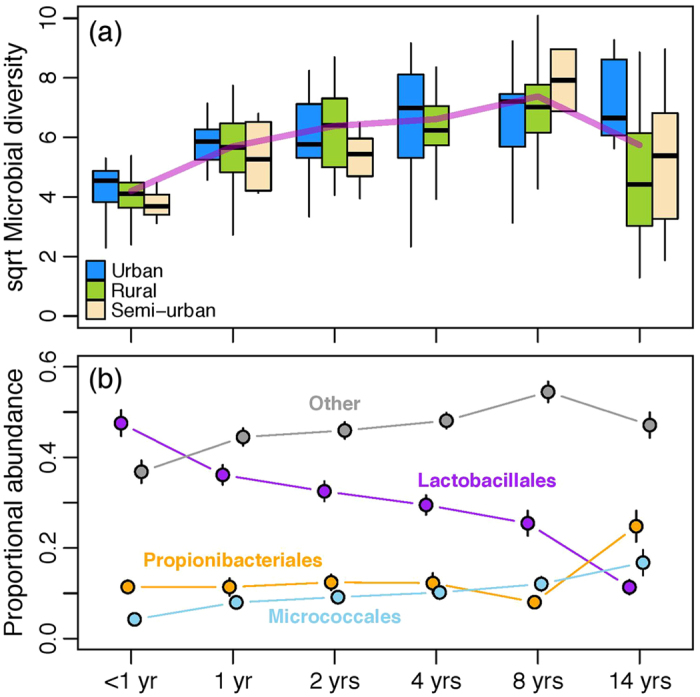
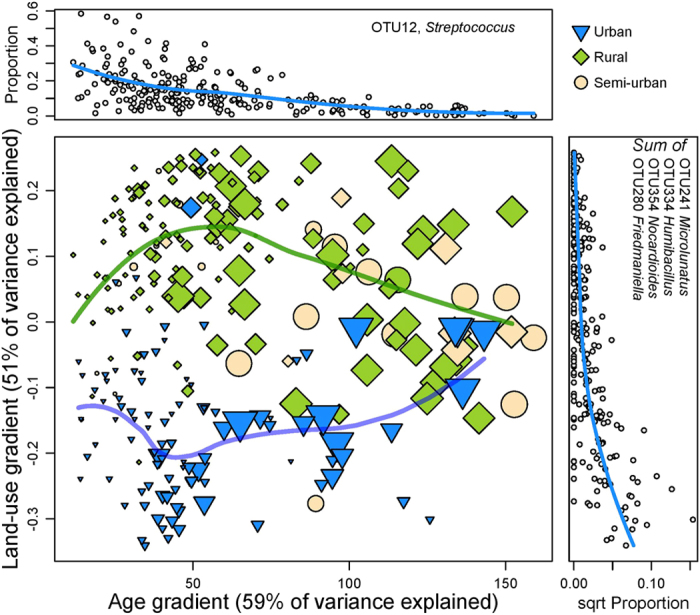
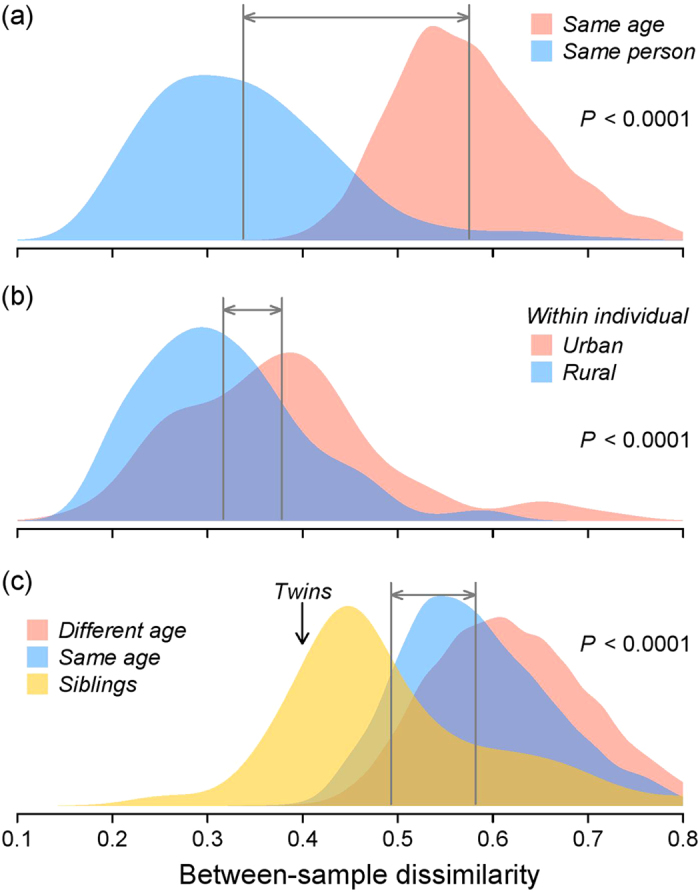
The composition of human microbiota is affected by a multitude of factors. Understanding the dynamics of our microbial communities is important for promoting human health because microbiota has a crucial role in the development of inflammatory diseases, such as allergies. We have studied the skin microbiota of both arms in 275 Finnish children of few months old to teenagers living in contrasting environments. We show that while age is a major factor affecting skin microbial composition, the living environment also discriminates the skin microbiota of rural and urban children. The effect of environment is age-specific; it is most prominent in toddlers but weaker for newborns and non-existent for teenagers. Within-individual variation is also related to age and environment. Surprisingly, variation between arms is smaller in rural subjects in all age groups, except in teenagers. We also collected serum samples from children for characterization of allergic sensitization and found a weak, but significant association between allergic sensitization and microbial composition. We suggest that physiological and behavioral changes, related to age and the amount of contact with environmental microbiota, jointly influence the dynamics of the skin microbiota, and explain why the association between the living environment skin microbiota is lost in teenager.
Overview
The claims and statistics of this paper haven’t been checked yet.
Free: it reads the open-access text and checks the first 5 claims that cite a source we can check. Create a free account to check every claim.
Integrity signals
Registry
Cites
Statistics
Figures
Verification
Claims the paper makes
The claims and statistics of this paper haven’t been checked yet.
Free: it reads the open-access text and checks the first 5 claims that cite a source we can check. Create a free account to check every claim.
Claims other papers make about this one
Each is checked against this paper’s own text: does it say what the citing paper says it does?
The cited source says what the claim attributes to it.
In the citing paper
“Skin microbiota patterns differ in children living in rural and urban environment [27].”
From EAACI Guidelines on the Importance of Green Space in Urban Environments for Allergy and Asthma Prevention (2026) · cites this paper as [27]
Self-check
Percentages, sums and reported differences re-computed from the paper’s own numbers.
The self-check needs the paper’s full text.
Citations
Cites
Cutadapt removes adapter sequences from high-throughput sequencing reads
Martin, M. (2011) · EMBnet.journal · doi:10.14806/ej.17.1.200 · Cited by 33,889
The SILVA ribosomal RNA gene database project: improved data processing and web-based tools
Quast, C., Pruesse, E., Yilmaz, P., Gerken, J., Schweer, T., Yarza, P., Peplies, J., & Glöckner, F. O. (2012) · Nucleic Acids Research · doi:10.1093/nar/gks1219 · Cited by 33,055
Schloss, P. D., Westcott, S. L., Ryabin, T., Hall, J. R., Hartmann, M., Hollister, E. B., Lesniewski, R. A., Oakley, B. B., Parks, D. H., Robinson, C. J., et al. (2009) · Applied and Environmental Microbiology · doi:10.1128/aem.01541-09 · Cited by 19,549
Classification and Regression by randomForest
Liaw, A. I., & Wiener, M. C. (2007) · Cited by 18,594
UPARSE: highly accurate OTU sequences from microbial amplicon reads
Edgar, R. C. (2013) · Nature Methods · doi:10.1038/nmeth.2604 · Cited by 16,707
FastTree 2 – Approximately Maximum-Likelihood Trees for Large Alignments
Price, M. N., Dehal, P. S., & Arkin, A. P. (2010) · PLoS ONE · doi:10.1371/journal.pone.0009490 · Cited by 14,894
Human gut microbiome viewed across age and geography
Yatsunenko, T., Rey, F. E., Manary, M. J., Trehan, I., Dominguez-Bello, M. G., Contreras, M., Magris, M., Hidalgo, G., Baldassano, R. N., Anokhin, A. P., et al. (2012) · Nature · doi:10.1038/nature11053 · Cited by 7,815
PEAR: a fast and accurate Illumina Paired-End reAd mergeR
Zhang, J., Kobert, K., Flouri, T., & Stamatakis, A. (2014) · Bioinformatics · doi:10.1093/bioinformatics/btt593 · Cited by 4,497
International Study of Asthma and Allergies in Childhood (ISAAC): rationale and methods
Asher, M., Keil, U., Anderson, H., Beasley, R., Crane, J., Martinez, F., Mitchell, E., Pearce, N., Sibbald, B., Stewart, A., et al. (1995) · European Respiratory Journal · doi:10.1183/09031936.95.08030483 · Cited by 3,724
Dynamics and Stabilization of the Human Gut Microbiome during the First Year of Life
Bäckhed, F., Roswall, J., Peng, Y., Feng, Q., Jia, H., Kovatcheva-Datchary, P., Li, Y., Xia, Y., Xie, H., Zhong, H., et al. (2015) · Cell Host & Microbe · doi:10.1016/j.chom.2015.04.004 · Cited by 3,315
Research works printed but not linked: 1
- Lane D. In Nucleic Acid Techniques in Bacterial Systematics, edited by Stackebrandt E. & Goodfellow M. (Wiley, New York, 1991).
Cited by
Human Skin Microbiome: Impact of Intrinsic and Extrinsic Factors on Skin Microbiota
Skowron, K., Bauza-Kaszewska, J., Kraszewska, Z., Wiktorczyk-Kapischke, N., Grudlewska-Buda, K., Kwiecińska-Piróg, J., Wałecka-Zacharska, E., Radtke, L., & Gospodarek-Komkowska, E. (2021) · Microorganisms · doi:10.3390/microorganisms9030543 · Cited by 345
“However, the results of studies obtained in other countries did not confirm this tendency, suggesting that other factors (cultural differences) also impact the skin microbiome [51].”
BackgroundResultRoslund, M. I., Puhakka, R., Grönroos, M., Nurminen, N., Oikarinen, S., Gazali, A. M., Cinek, O., Kramná, L., Siter, N., Vari, H. K., et al. (2020) · Science Advances · doi:10.1126/sciadv.aba2578 · Cited by 363
“Core reasons why skin microbiota changes with age are related to human physiology and increased influence of external factors, such as pets and living environment (18).”
BackgroundPrescott, S. L., Larcombe, D.-L., Logan, A. C., West, C., Burks, W., Caraballo, L., Levin, M., Etten, E. V., Horwitz, P., Kozyrskyj, A., et al. (2017) · World Allergy Organization Journal · doi:10.1186/s40413-017-0160-5 · Cited by 347
“Resident microbes are increasingly viewed as an integral part of the functional unit of the skin and other body surfaces, interacting with tissues and immune networks to influence the health and function not only of local systems, but wellbeing more generally [1].”
BackgroundDijkhoff, I. M., Drasler, B., Karakocak, B. B., Petri-Fink, A., Valacchi, G., Eeman, M., & Rothen-Rutishauser, B. (2020) · Particle and Fibre Toxicology · doi:10.1186/s12989-020-00366-y · Cited by 202
“, rural versus urban), indicating a possible link between PM exposure and the skin microbiome composition [118].”
BackgroundNew Insights into the Intrinsic and Extrinsic Factors That Shape the Human Skin Microbiome
Dimitriu, P. A., Iker, B., Malik, K., Leung, H., Mohn, W. W., & Hillebrand, G. G. (2019) · mBio · doi:10.1128/mbio.00839-19 · Cited by 186
“Among Finnish children ( 14 years old), age is associated with an increase in the abundance of Actinobacteria and Proteobacteria at the expense of Lactobacillales (15).”
BackgroundSoil exposure modifies the gut microbiota and supports immune tolerance in a mouse model
Ottman, N., Ruokolainen, L., Suomalainen, A., Sinkko, H., Karisola, P., Lehtimäki, J., Lehto, M., Hanski, I., Alenius, H., & Fyhrquist, N. (2019) · Journal of Allergy and Clinical Immunology · doi:10.1016/j.jaci.2018.06.024 · Cited by 177
Self-citationThe Insights of Microbes’ Roles in Wound Healing: A Comprehensive Review
Thambirajoo, M., Nurul, A. A., & Fauzi, M. B. (2021) · Pharmaceutics · doi:10.3390/pharmaceutics13070981 · Cited by 183
“The findings revealed that the type of outdoor activities and some physiological changes that occur due to different age range could diversify the dynamics of the normal flora on the skin [79].”
BackgroundSocial networks strongly predict the gut microbiota of wild mice
Raulo, A., Allen, B. E., Troitsky, T. S., Husby, A., Firth, J. A., Coulson, T. N., & Knowles, S. C. L. (2021) · The ISME Journal · doi:10.1038/s41396-021-00949-3 · Cited by 174
Skin Microbiome and its Interplay with the Environment
Callewaert, C., Helffer, K. R., & Lebaron, P. (2020) · American Journal of Clinical Dermatology · doi:10.1007/s40257-020-00551-x · Cited by 151
The impacts of nature connectedness on children's well-being: Systematic literature review
Arola, T., Aulake, M., Ott, A., Lindholm, M., Kouvonen, P., Virtanen, P., & Paloniemi, R. (2022) · Journal of Environmental Psychology · doi:10.1016/j.jenvp.2022.101913 · Cited by 145
Howard, B. W., Bascom, C. C., Hu, P., Binder, R. L., Fadayel, G. M., Huggins, T. G., Jarrold, B. B., Osborne, R., Rocchetta, H. L., Swift, D. D., et al. (2021) · Journal of Investigative Dermatology · doi:10.1016/j.jid.2021.11.029 · Cited by 126
“…CC BY-NC-ND license (http://creativecommons.org/licenses/by-nc-nd/4.0/). et al., 2019; Ferretti et al., 2018; Jugé et al., 2018; Kim et al., 2019; Lehtimäki et al., 2017; Moissl-Eichinger et al., 2017; Oh et al., 2012; Shibagaki et al., 2017; Somboonna et al., 2017; Song et al., 2013; Ying et…”
InfluentialUrbanized microbiota in infants, immune constitution, and later risk of atopic diseases
Lehtimäki, J., Thorsen, J., Rasmussen, M. A., Hjelmsø, M., Shah, S., Mortensen, M. S., Trivedi, U., Vestergaard, G., Bønnelykke, K., Chawes, B. L., et al. (2021) · Journal of Allergy and Clinical Immunology · doi:10.1016/j.jaci.2020.12.621 · Cited by 116
Self-citationSkin microbiome transplantation and manipulation: Current state of the art
Callewaert, C., Knödlseder, N., Karoglan, A., Güell, M., & Paetzold, B. (2021) · Computational and Structural Biotechnology Journal · doi:10.1016/j.csbj.2021.01.001 · Cited by 111
“Indigenous, non-urbanized people and farmers carry a considerably more diverse skin microbiome and are less prone to skin allergies, acne and other skin disorders [88].”
BackgroundRoslund, M. I., Puhakka, R., Nurminen, N., Oikarinen, S., Siter, N., Grönroos, M., Cinek, O., Kramná, L., Jumpponen, A., Laitinen, O. H., et al. (2021) · Environment International · doi:10.1016/j.envint.2021.106811 · Cited by 93
Mousavi, S. E., Delgado-Saborit, J. M., Adivi, A., Pauwels, S., & Godderis, L. (2021) · The Science of The Total Environment · doi:10.1016/j.scitotenv.2021.151654 · Cited by 98
Biodiversity and human health: A scoping review and examples of underrepresented linkages
Robinson, J. M., Breed, A. C., Camargo, A., Redvers, N., & Breed, M. F. (2024) · Environmental Research · doi:10.1016/j.envres.2024.118115 · Cited by 108
Early-life skin microbiota in hospitalized preterm and full-term infants
Younge, N. E., Araújo-Pérez, F., Brandon, D., & Seed, P. C. (2018) · Microbiome · doi:10.1186/s40168-018-0486-4 · Cited by 93
“A recent study demonstrated that the skin microbiota differs between children living in rural and urban environments, particularly during early childhood (ages 1–4), suggesting that the living environment alters the development of the skin microbiota [21].”
BackgroundImmunological resilience and biodiversity for prevention of allergic diseases and asthma
Haahtela, T., Alenius, H., Lehtimäki, J., Sinkkonen, A., Fyhrquist, N., Hyöty, H., Ruokolainen, L., & Mäkelä, M. J. (2021) · Allergy · doi:10.1111/all.14895 · Cited by 86
Self-citationMills, J. G., Bissett, A., Gellie, N. J. C., Lowe, A. J., Selway, C. A., Thomas, T., Weinstein, P., Weyrich, L. S., & Breed, M. F. (2020) · Restoration Ecology · doi:10.1111/rec.13175 · Cited by 90
“This loss is evident in the decrease of diversity in urban versus rural populations (von Hertzen et al. 2011; Lehtimäki et al. 2017).”
BackgroundSkin microbiota and allergic symptoms associate with exposure to environmental microbes
Lehtimäki, J., Sinkko, H., Hielm-Björkman, A., Salmela, E., Tiira, K., Laatikainen, T., Mäkeläinen, S., Kaukonen, M., Uusitalo, L., Hanski, I., et al. (2018) · Proceedings of the National Academy of Sciences · doi:10.1073/pnas.1719785115 · Cited by 81
“on the relationships between the living environment, microbiota, and health have failed to find a robust link between environmentassociated patterns in microbiota and allergic sensitization (3, 16), our simplified canine model has provided explicit empirical evidence of such interaction, as predicted by the biodiversi…”
BackgroundMethodSelf-citationHalf-lives of PAHs and temporal microbiota changes in commonly used urban landscaping materials
Roslund, M. I., Grönroos, M., Rantalainen, A., Jumpponen, A., Romantschuk, M., Parajuli, A., Hyöty, H., Laitinen, O. H., & Sinkkonen, A. (2018) · PeerJ · doi:10.7717/peerj.4508 · Cited by 88
“Many factors affect the composition of human commensal microbiota, and skin microbiota may differ between rural and urban children and this microbial composition is associated with allergic sensitization (Hanski et al., 2012; Lehtimäki et al., 2017).”
BackgroundSkin and gut microbiomes of a wild mammal respond to different environmental cues
Lavrinienko, A., Tukalenko, E., Mappes, T., & Watts, P. C. (2018) · Microbiome · doi:10.1186/s40168-018-0595-0 · Cited by 87
“However, as these locations are accessible to humans and relatively close to Kyiv (the 7th most populous city in Europe), there is some potential for anthropogenic impacts on environmental biodiversity, which may lead to an associated reduction in microbial diversity as described for animal and human SK microbiota [6,…”
BackgroundAge and Mothers: Potent Influences of Children’s Skin Microbiota
Zhu, T., Liu, X., Kong, F.-Q., Duan, Y., Yee, A. L., Kim, M., Galzote, C., Gilbert, J. A., & Quan, Z. (2019) · Journal of Investigative Dermatology · doi:10.1016/j.jid.2019.05.018 · Cited by 80
“, 2011) and reported in other early childhood studies (Lehtimäki et al., 2017).”
BackgroundIndividual signatures and environmental factors shape skin microbiota in healthy dogs
Cuscó, A., Belanger, J. M., Gershony, L. C., Islas‐Trejo, A., Levy, K., Medrano, J. F. F., Sánchez, A., Oberbauer, A. M., & Francino, O. (2017) · Microbiome · doi:10.1186/s40168-017-0355-6 · Cited by 74
“These clustering could be associated to the geographic region and its associated environment, as it has already been described for humans with geography [22, 27], geographical isolation [26], or urbanization [20, 28, 29] grouping differently skin microbial communities.”
BackgroundYard vegetation is associated with gut microbiota composition
Parajuli, A., Hui, N., Puhakka, R., Oikarinen, S., Grönroos, M., Selonen, V. A. O., Siter, N., Kramna, L., Roslund, M. I., Vari, H. K., et al. (2020) · Science of The Total Environment · doi:10.1016/j.scitotenv.2020.136707 · Cited by 64
“In line with this hypothesis, studies have demonstrated that the skin microbiota of children and adolescents are associatedwith the vegetation type and land cover, such as the proportion of built area in western urban society (Hanski et al., 2012; Ruokolainen et al., 2015; Lehtimäki et al., 2017).”
ResultNatural environments in the urban context and gut microbiota in infants
Nielsen, C. C., Gascón, M., Osornio-Vargas, Á. R., Shier, C. J., Guttman, D. S., Becker, A. B., Azad, M. B., Sears, M. R., Lefebvre, D. L., Moraes, T. J., et al. (2020) · Environment International · doi:10.1016/j.envint.2020.105881 · Cited by 66
Roslund, M. I., Rantala, S., Oikarinen, S., Puhakka, R., Hui, N., Parajuli, A., Laitinen, O. H., Hyöty, H., Rantalainen, A., Sinkkonen, A., et al. (2019) · Environment International · doi:10.1016/j.envint.2019.06.004 · Cited by 71
Particulate Matter and Its Molecular Effects on Skin: Implications for Various Skin Diseases
Paik, K., Na, J.-I., Huh, C.-H., & Shin, J.-W. (2024) · International Journal of Molecular Sciences · doi:10.3390/ijms25189888 · Cited by 64
Urban environment predisposes dogs and their owners to allergic symptoms
Hakanen, E., Lehtimäki, J., Salmela, E., Tiira, K., Anturaniemi, J., Hielm-Björkman, A. K., Ruokolainen, L., & Lohi, H. (2018) · Scientific Reports · doi:10.1038/s41598-018-19953-3 · Cited by 68
Self-citationRobinson, J. M., Mills, J. G., & Breed, M. F. (2018) · Challenges · doi:10.3390/challe9020040 · Cited by 62
“Furthermore, Finnish children from rural areas have a skin microbiota distinct to those from urban areas [58].”
Espenshade, J., Thijs, S., Gawronski, S. W., Bové, H., Weyens, N., & Vangronsveld, J. (2019) · Frontiers in Microbiology · doi:10.3389/fmicb.2019.00675 · Cited by 58
Aged related human skin microbiome and mycobiome in Korean women
Kim, H.-J., Oh, H. N., Park, T., Kim, H., Lee, H. G., An, S., & Sul, W. J. (2022) · Scientific Reports · doi:10.1038/s41598-022-06189-5 · Cited by 60
Social and environmental transmission spread different sets of gut microbes in wild mice
Raulo, A., Bürkner, P.-C., Finerty, G. E., Dale, J., Hanski, E., English, H. M., Lamberth, C., Firth, J. A., Coulson, T., & Knowles, S. C. L. (2024) · Nature Ecology & Evolution · doi:10.1038/s41559-024-02381-0 · Cited by 52
Gluten-degrading bacteria: availability and applications
Köiv, V., & Tenson, T. (2021) · Applied Microbiology and Biotechnology · doi:10.1007/s00253-021-11263-5 · Cited by 53
“There are a rising number of studies that show that a living environment, and changes therein, likely shape the skin as well as the composition of gut microbiota and are important for the development of a normal immune system and protection from immune-mediated diseases (Seiskari et al. 2007; Stein et al. 2016; Lehtim…”
BackgroundThe Skin Microbiome and its Significance for Dermatologists
Whiting, C., Azim, S. A., & Friedman, A. (2024) · American Journal of Clinical Dermatology · doi:10.1007/s40257-023-00842-z · Cited by 45
Tischer, C., Kirjavainen, P. V., Matterne, U., Tempes, J., Willeke, K., Keil, T. O. P., Apfelbacher, C., & Täubel, M. (2022) · The Science of The Total Environment · doi:10.1016/j.scitotenv.2022.153422 · Cited by 48
Barnes, E. M., Carter, E. L., & Lewis, J. D. (2020) · Frontiers in Microbiology · doi:10.3389/fmicb.2020.00101 · Cited by 45
Lehtimäki, J., Sinkko, H., Hielm-Björkman, A. K., Laatikainen, T. K., Ruokolainen, L., & Lohi, H. (2020) · Scientific Reports · doi:10.1038/s41598-020-79055-x · Cited by 43
Self-citationEarly life host-microbe interactions in skin
Dwyer, L. R., & Scharschmidt, T. C. (2022) · Cell Host & Microbe · doi:10.1016/j.chom.2022.02.016 · Cited by 41
Nationality and body location alter human skin microbiome
Wang, Y., Yu, Q., Zhou, R., Feng, T., Hilal, M. G., & Li, H. (2021) · Applied Microbiology and Biotechnology · doi:10.1007/s00253-021-11387-8 · Cited by 42
Facial Skin Microbiome Composition and Functional Shift with Aging
Garlet, A., Frei, V., Bene, N. D., Cameron, H. J., Samuga, A., Rawat, V., Ternes, P., & Okombi, S. (2024) · Microorganisms · doi:10.3390/microorganisms12051021 · Cited by 38
Chi, C., Xue, Y., Lv, N., Hao, Y., Liu, R., Wang, Y., Ding, X., Zeng, H., Li, G., Shen, Q., et al. (2019) · Frontiers in Microbiology · doi:10.3389/fmicb.2019.01105 · Cited by 38
“, 2017) as well as rural or urban environments (Lehtimäki et al., 2017).”
BackgroundHow do Rural Second Homes Affect Human Health and Well-being? Review of Potential Impacts
Pitkänen, K., Lehtimäki, J., & Puhakka, R. (2020) · International Journal of Environmental Research and Public Health · doi:10.3390/ijerph17186748 · Cited by 40
Self-citationEmbracing microbes in exposure science
Nazaroff, W. W. (2018) · Journal of Exposure Science & Environmental Epidemiology · doi:10.1038/s41370-018-0075-4 · Cited by 40
“[63] studied skin microbiota and found an age-dependent difference between rural and urban children.”
BackgroundSun, C., Hu, G., Yi, L., Ge, W., Yang, Q., Yang, X., He, Y., Liu, Z., & Chen, W. (2024) · Microbiome · doi:10.1186/s40168-024-01891-0 · Cited by 38
“Aging-related physiological changes, such as decreased collagen, sebaceous glands, and sweat [25], affect skin surface physiology [26, 27], influencing the facial microbiome [28].”
BackgroundGómez-Gallego, C., Forsgren, M., Selma‐Royo, M., Nermes, M., Collado, M. C., Salminen, S., Beasley, S. S., & Isolauri, E. (2021) · Microorganisms · doi:10.3390/microorganisms9030557 · Cited by 35
“The microbiota of children living in rural and urban environments differ significantly [3,4].”
BackgroundOttman, N., Barrientos‐Somarribas, M., Fyhrquist, N., Alexander, H., Wisgrill, L., Oláh, P., Tsoka, S., Greco, D., Levi‐Schaffer, F., Soumelis, V., et al. (2020) · Allergy · doi:10.1111/all.14606 · Cited by 33
Wolves, dogs and humans in regular contact can mutually impact each other’s skin microbiota
Wetzels, S. U., Strachan, C. R., Conrady, B., Wagner, M., Burgener, I. A., Virányi, Z., & Selberherr, E. (2021) · Scientific Reports · doi:10.1038/s41598-021-96160-7 · Cited by 35
Saarenpää, M., Roslund, M. I., Nurminen, N., Puhakka, R., Kummola, L., Laitinen, O. H., Hyöty, H., & Sinkkonen, A. (2024) · Environment International · doi:10.1016/j.envint.2024.108705 · Cited by 37
Khayyira, A. S., Rosdina, A. E., Irianti, M. I., & Malik, A. (2020) · Heliyon · doi:10.1016/j.heliyon.2020.e03700 · Cited by 31
Does childhood exposure to biodiverse greenspace reduce the risk of developing asthma?
Winnicki, M. H., Dunn, R. R., Winther‐Jensen, M., Jess, T., Allin, K. H., & Bruun, H. H. (2022) · The Science of The Total Environment · doi:10.1016/j.scitotenv.2022.157853 · Cited by 29
Green living environment protects against allergy, or does it?
Ruokolainen, L. (2017) · European Respiratory Journal · doi:10.1183/13993003.00481-2017 · Cited by 31
Self-citationUrban-level environmental factors related to pediatric asthma
Paciência, I., & Rufo, J. C. (2020) · Porto Biomedical Journal · doi:10.1097/j.pbj.0000000000000057 · Cited by 34
“ed the environment in which children grow up as an important factor affecting the composition of skin microbiome, which was related to their atopic diagnosis,(153) and suggest that the size of this effect varies with age.(154) In 2018, a canine model was considered to assess the association between exposure to environ…”
BackgroundPaciência, I., Sharma, N., Hugg, T. T., Rantala, A. K., Heibati, B., Al‐Delaimy, W. K., Jaakkola, M. S., & Jaakkola, J. J. K. (2024) · Environmental Health Perspectives · doi:10.1289/ehp13948 · Cited by 28
“7 – 9 A study conducted in the Russian and the Finnish Karelia showed signi fi cant di ff erences in the skin and nasal microbiota composition between the countries.”
BackgroundSkin microbiome profile of healthy Cameroonians and Japanese
Ogai, K., Nana, B. C., Lloyd, Y. M., Arios, J. P., Jiyarom, B., Awanakam, H., Esemu, L. F., Hori, A., Matsuoka, A., Nainu, F., et al. (2022) · Scientific Reports · doi:10.1038/s41598-022-05244-5 · Cited by 26
Towards standardized and reproducible research in skin microbiomes
Ruuskanen, M. O., Vats, D., Potbhare, R., RaviKumar, A., Munukka, E., Ashma, R., & Lahti, L. (2022) · Environmental Microbiology · doi:10.1111/1462-2920.15945 · Cited by 27
“After birth, bacterial diversity of the skin has been observed to increase with age, at least until the pre-puberty stage (Lehtimäki et al., 2017; Zhu et al., 2019).”
BackgroundInfluentialA short history from Karelia study to biodiversity and public health interventions
Haahtela, T., Alenius, H. T., Auvinen, P., Fyhrquist, N., von Hertzen, L., Jousilahti, P., Karisola, P., Laatikainen, T. K., Lehtimäki, J., Paalanen, L., et al. (2023) · Frontiers in Allergy · doi:10.3389/falgy.2023.1152927 · Cited by 28
Self-citationHealth by design; optimising our urban environmental microbiomes for human health
Matthews, K. E., Cavagnaro, T. R., Weinstein, P., & Stanhope, J. (2024) · Environmental Research · doi:10.1016/j.envres.2024.119226 · Cited by 23
Laiho, J. E., Laitinen, O. H., Malkamäki, J., Puustinen, L., Sinkkonen, A., Pärkkä, J., Hyöty, H., & HEDIMED Investigator group (2022) · Environmental Epidemiology · doi:10.1097/ee9.0000000000000212 · Cited by 23
Where environmental microbiome meets its host: Subway and passenger microbiome relationships
Peimbert, M., & Alcaraz, L. D. (2022) · Molecular Ecology · doi:10.1111/mec.16440 · Cited by 22
“The microbiome is also affected by various environmental factors; people cohabitating in a house normalize their microbiomes, and microbial signals from the land around the houses are evident in children (Lehtimäki et al., 2017; Leung et al., 2018).”
BackgroundBiodiversity, Microbiomes, and Human Health
Stanhope, J., Breed, M. F., & Weinstein, P. (2022) · Progress in inflammation research · doi:10.1007/978-3-030-91051-8_3 · Cited by 19
Diet, Microbes, and Cancer Across the Tree of Life: a Systematic Review
Kapsetaki, S. E., Alcaraz, G. M., Maley, C. C., Whisner, C. M., & Aktipis, A. (2022) · Current Nutrition Reports · doi:10.1007/s13668-022-00420-5 · Cited by 20
Arora, R., Kaur, R., Babbar, R., Dhingra, S., Dhingra, A. K., & Grewal, A. S. (2023) · Current Pharmaceutical Biotechnology · doi:10.2174/1389201024666230703115732 · Cited by 22
Early-life gut microbiota assembly patterns are conserved between laboratory and wild mice
Hanski, E., Raulo, A., & Knowles, S. C. L. (2024) · Communications Biology · doi:10.1038/s42003-024-07039-y · Cited by 19
“Perturbationofthegutmicrobiotaduringthiscriticalperiodhas been linked to altered functioning of the immune system in early life 13,14 , indicating an active role for the gut microbiota in host development.”
BackgroundNdhlovu, G. O. N., Dube, F. S., Moonsamy, R. T., Mankahla, A., Hlela, C., Levin, M. E., Lunjani, N., Shittu, A. O., & Abdulgader, S. M. (2022) · PLoS ONE · doi:10.1371/journal.pone.0265326 · Cited by 19
“Rural and urban living has been shown to strongly influence the diversity of the skin bacteriome, particularly in early life [38].”
BackgroundSchoolyard Biodiversity Determines Short-Term Recovery of Disturbed Skin Microbiota in Children
Mills, J. G., Selway, C. A., Thomas, T., Weyrich, L. S., & Lowe, A. J. (2022) · Microbial Ecology · doi:10.1007/s00248-022-02052-2 · Cited by 20
“Age-related physiological changes in skin microbial habitats (due to puberty) and use of beauty products have previously been proposed to override environmental effects in homogenising adolescent (14-year-old) skin microbiota relative to younger children [44].”
BackgroundInteractions between microbiome and underlying mechanisms in asthma
Losol, P., Sokołowska, M., & Chang, Y. (2023) · Respiratory Medicine · doi:10.1016/j.rmed.2023.107118 · Cited by 17
Nature‐oriented daycare diversifies skin microbiota in children—No robust association with allergies
Lehtimäki, J., Laatikainen, T. K., Karkman, A., von Hertzen, L., Haahtela, T., Hanski, I., & Ruokolainen, L. (2018) · Pediatric Allergy and Immunology · doi:10.1111/pai.12872 · Cited by 18
Self-citationKlimkaitė, L., Liveikis, T., Kaspute, G., Armalytė, J., & Aldonytė, R. (2023) · Future Microbiology · doi:10.2217/fmb-2022-0258 · Cited by 16
Co-aggregation of bacterial flora isolated from the human skin surface
Kumar, K. V., Pal, A., Bai, P., Kour, A., Sheeba, E., Pethannan, R., Kausar, A., Chatterjee, M., Prasad, G., Balayan, S., et al. (2019) · Microbial Pathogenesis · doi:10.1016/j.micpath.2019.103630 · Cited by 17
Wallen-Russell, C., Pearlman, N., Wallen-Russell, S., Cretoiu, D., Thompson, D. C., & Voinea, S. C. (2023) · Microorganisms · doi:10.3390/microorganisms11112784 · Cited by 14
Wang, X., Li, F., Sun, Y., Meng, F. G., Song, Y., & Su, X. (2025) · mSystems · doi:10.1128/msystems.00548-25 · Cited by 13
“Previous work concluded that age is a key factor driving alterations in the skin microbiome (24) and also observed age-associated dynamics such as increases in p__Actinobacteria and p__Proteobacteria and a decline in o__Lactobacil lales (25).”
Microbial Normal Flora: Its Existence And Their Contribution To Homeostasis
Sunarti, L. S. (2022) · Journal of Advances in Microbiology · doi:10.9734/jamb/2022/v22i930483 · Cited by 18
“even increase in other taxa, whereas the reduction in diversity in puberty is due to Actinobacteria (such as Propionibacterium acnes) becoming dominant [66].”
BackgroundSeget, S., Rusak, E., Partyka, M., Samulska, E., Pyziak-Skupień, A., Kamińska, H., Skała‐Zamorowska, E., & Jarosz-Chobot, P. A. (2020) · Acta Diabetologica · doi:10.1007/s00592-020-01601-w · Cited by 13
“Puberty and changes in skin physiology are probably important causes of changes in the composition and diversity of the microbial community [18].”
BackgroundDecoding the impact of ageing and environment stressors on skin cell communication
Faria, A. V. D. S., & Andrade, S. S. (2024) · Biogerontology · doi:10.1007/s10522-024-10145-3 · Cited by 13
“Lactobacillus species, including L. iners and L. crispatus , are predominantly found in the skin of young individuals and are known to have protective effects (Lehtimäki et al. 2017).”
Fischer, N., Darmstadt, G. L., Shahunja, K. M., Crowther, J. M., Kendall, L., Gibson, R. A., Ahmed, T., & Relman, D. A. (2021) · Journal of Global Health · doi:10.7189/jogh.11.04047 · Cited by 14
Saarenpää, M., Roslund, M. I., Puhakka, R., Grönroos, M., Parajuli, A., Hui, N., Nurminen, N., Laitinen, O. H., Hyöty, H., Cinek, O., et al. (2021) · International Journal of Environmental Research and Public Health · doi:10.3390/ijerph18073742 · Cited by 12
“It has been shown that the everyday living environment affects commensal microbiota and that the microbiota composition differs between people living in urban and in rural environments [23,24,57].”
BackgroundInfluentialYanomami skin microbiome complexity challenges prevailing concepts of healthy skin
Durack, J., Piceno, Y. M., Vuong, H. Q., Fanelli, B. C., Good, D. A., Hasan, N. A., Dadlani, M., Weiss, L., Oh, J., Kostic, A. D., et al. (2025) · Nature Communications · doi:10.1038/s41467-025-60131-7 · Cited by 12
Distinct healthy and atopic canine gut microbiota is influenced by diet and antibiotics
Sinkko, H., Lehtimäki, J., Lohi, H., Ruokolainen, L., & Hielm-Björkman, A. K. (2023) · Royal Society Open Science · doi:10.1098/rsos.221104 · Cited by 13
“DNA was extracted from faecal samples with QIAamp DNA Stool Mini Kit (Qiagen GmbH, Hilden, Germany) and, as previously described [35], was used as a template in PCR to amplify the V1–V3 regions of the bacterial 16S rRNA gene that was subsequently sequenced as in Lehtimäki et al.”
MethodSelf-citationRole of Cutaneous Microbiome in Dermatology
Mustari, A. P., Agrawal, I., Das, A., & Vinay, K. (2023) · Indian Journal of Dermatology · doi:10.4103/ijd.ijd_560_22 · Cited by 11
“…Actinobacteria ( Corynebacterium and Cutibacteria ) and Firmicutes ( Staphylococcus ), and lowers Proteobacteria and Bacteroidetes expression [12] [13] Extrinsic factors Sunlight Increase in Cyanobacteria Decrease in Staphylococcus aureus, Cutibacterium acnes , Lactobacillaceae and…”
Kummola, L., González‐Rodríguez, M. I., Marnila, P., Nurminen, N., Salomaa, T., Hiihtola, L., Mäkelä, I., Laitinen, O. H., Hyöty, H., Sinkkonen, A., et al. (2023) · BMC Immunology · doi:10.1186/s12865-023-00565-0 · Cited by 10
Impact of sampling and DNA extraction methods on skin microbiota assessment
Boulesnane, Y., Leloup, J., Lerch, T. Z., Roynette, A., Pensé‐Lhéritier, A., Mielcarek, C., & Changey, F. (2020) · Journal of Microbiological Methods · doi:10.1016/j.mimet.2020.105880 · Cited by 10
Haahtela, T., O'Mahony, L., Traidl‐Hoffmann, C., Akdis, M., Ceylan, O., Chaslaridis, P., Damialis, A., Del Giacco, S., Lauerma, A., Nadeau, K. C., et al. (2026) · Allergy · doi:10.1111/all.70182 · Cited by 9
Self-citationGrönroos, M., Jumpponen, A., Roslund, M. I., Nurminen, N., Oikarinen, S., Parajuli, A., Laitinen, O. H., Cinek, O., Kramná, L., Rajaniemi, J., et al. (2024) · Applied and Environmental Microbiology · doi:10.1128/aem.00903-24 · Cited by 9
“Many studies have related human microbiota with land cover [e.g., see references (35, 36)] and have shown that farm children often have more diverse microbiota than urban dwellers (37), although this relationship is complex (38).”
Skin microbiome profile in people living with HIV/AIDS in Cameroon
Ogai, K., Nana, B. C., Lloyd, Y. M., Arios, J. P., Jiyarom, B., Awanakam, H., Esemu, L. F., Hori, A., Matsuoka, A., Nainu, F., et al. (2023) · Frontiers in Cellular and Infection Microbiology · doi:10.3389/fcimb.2023.1211899 · Cited by 8
Bayal, N., Nagpal, S., Haque, M. M., Patole, M. S., Shouche, Y. S., Mande, S. C., & Mande, S. S. (2021) · Scientific Reports · doi:10.1038/s41598-020-80533-5 · Cited by 8
Role of Nutribiotics in Skin Care
Mourelle, M. L., Gómez, C. P., Legido, J. L., & Pereira, L. (2024) · Applied Sciences · doi:10.3390/app14083505 · Cited by 9
Li, D., Werfhorst, L. C. V. D., & Holden, P. A. (2022) · Journal of Applied Microbiology · doi:10.1111/jam.15577 · Cited by 8
“In the last decade, numerous studies have been performed to reveal human skin and urine microbiomes (Fouts et al., 2012; Grice et al., 2009; Lehtimäki et al., 2017; Lewis et al., 2013; Meisel et al., 2016; Oh et al., 2014; Siddiqui et al., 2011; Turnbaugh et al., 2007; van Rensburg et al., 2015).”
BackgroundMethodInfluentialAlenius, H. T., Sinkko, H., Moitinho‐Silva, L., Rodríguez, E., Broderick, C., Alexander, H., Reiger, M., Hjelmsø, M. H., Fyhrquist, N., Oláh, P., et al. (2021) · Experimental Dermatology · doi:10.1111/exd.14446 · Cited by 10
Cholewińska, P., Michalak, M., Wojnarowski, K., Skowera, S., Smoliński, J., & Czyż, K. (2021) · Agriculture · doi:10.3390/agriculture11040287 · Cited by 7
Wilborn, D., Kottner, J., Hillmann, K., Xu, S., Konietschke, F., & Blume‐Peytavi, U. (2021) · Dermatology Research and Practice · doi:10.1155/2021/4163705 · Cited by 7
“Other study results suggest associations between environmental conditions, age, and the skin microbiome [23, 24].”
Pets as a Novel Microbiome-Based Therapy
Garcia, M. C. S., Schorr, A. R., Arnold, W., Fei, N., & Gilbert, J. A. (2019) · Springer eBooks · doi:10.1007/978-3-030-30734-9_11 · Cited by 7
In utero exposure to DDT and incidence of diarrhea among boys from tropical Mexico
Cupul‐Uicab, L. A., Terrazas-Medina, E. A., Hernández‐Ávila, M., & Longnecker, M. P. (2017) · Environmental Research · doi:10.1016/j.envres.2017.08.027 · Cited by 7
“On the other hand, children living in urban settings tend to have higher rates of sensitization and allergies (Stemeseder et al., 2017), they also have a less diverse skin and gut microbiota than those living in rural settings (Lehtimaki et al., 2017; Mah et al., 2008).”
BackgroundWithey, Z., & Gweon, H. S. (2024) · The Science of The Total Environment · doi:10.1016/j.scitotenv.2024.175349 · Cited by 5
Urban Allergic Diseases Are Exacerbated by Adverse Environmental Factors
Shi, J., Zhang, R., Zhang, L., Wang, Y., Xu, Y. J., Wang, Y., Raghavan, V., & Wang, J. (2025) · Environmental Science & Technology · doi:10.1021/acs.est.5c09233 · Cited by 5
Exploring Human Bacterial Diversity Toward Prevention of Infectious Disease and Health Promotion
Yousuf, B., & Mishra, A. (2018) · Elsevier eBooks · doi:10.1016/b978-0-12-814849-5.00029-0 · Cited by 7
Lucas, E. J., Ching, C. B., Saraswat, S., Dabdoub, S. M., Kumar, P. P., & Justice, S. S. (2020) · Frontiers in Pediatrics · doi:10.3389/fped.2020.542413 · Cited by 6
“Unknown 3 (20) 8 (53) 1 (7) 0 (0) 1 (7) 2 (13) 0 (0) 3 (20) 9 (60)”
BackgroundHow the Built Environment Shapes Children’s Microbiome: A Systematic Review
Samira, R., Monsur, M., & Trina, N. A. (2025) · Microorganisms · doi:10.3390/microorganisms13040950 · Cited by 4
“For metabolomics data, tools like XCMS (Scripps Research, San Diego, CA, USA) and MZmine (OIST, Onna, Japan) are commonly used for data processing, with LC-MS data being analyzed through specialized software for peak detection, alignment, and compound identification.”
Peltonen, H., Kukkonen, A. K., Korkalo, L., Fogelholm, M., Mäkelä, M. J., Erkkola, M., & Vepsäläinen, H. (2024) · BMC Pediatrics · doi:10.1186/s12887-024-05218-8 · Cited by 5
“…Finnish children, living in an urban area has been associated with a healthier dietary pattern [44] and higher levels of moderate MVPA [45] as compared to living in a rural area, and the prevalence of common risk factors for allergic diseases has also differed between urban and rural children [46].”
Luo, R., Zhang, T., Wang, L., & Feng, Y. P. (2023) · Environmental Research · doi:10.1016/j.envres.2023.116575 · Cited by 4
Metadata
- Authors
- Lehtimäki, J., Karkman, A., Laatikainen, T., Paalanen, L., von Hertzen, L., Haahtela, T., Hanski, I., & Ruokolainen, L.
- Affiliations
- University of Helsinki (FI)
- Finnish Institute for Health and Welfare (FI)
- Helsinki University Hospital (FI)
- Corresponding author
- Lehtimäki, Jenni
- ORCID
- Venue
- Scientific Reports
- Published
- 2017-03-31
- Volume
- 7
- Issue
- 1
- Pages
- 45651-45651
- ISSN
- 2045-2322 (ISSN-L)
- PMC
- PMC5374497
- OpenAlex
- W2601718279
- Semantic Scholar
- 816826a15199bf2ac717f25f5377963363ef9258
- Cited by
- 131
- References
- 60
- Citations by year
- 2026: 5 · 2025: 13 · 2024: 16 · 2023: 14 · 2022: 19 · 2021: 21 · 2020: 18 · 2019: 7 · 2018: 12 · 2017: 6
- FWCI
- 13.39
- Type
- journal article
- Language
- en
- Open access
- gold
- doi.org
- Licence
- cc-by
- creativecommons.org/licenses/by/4.0 (tdm)
- creativecommons.org/licenses/by/4.0 (vor)
- Locations
- Scientific Reports (publishedVersion, cc-by)
- PubMed Central (publishedVersion, cc-by)
- PubMed (publishedVersion)
- UEF eRepo (University of Eastern Finland) (submittedVersion, cc-by)
- Työväentutkimus Vuosikirja (submittedVersion)
- STM:n Hallinnonalan avoin julkaisuarkisto (Julkari) (submittedVersion)
- WOS
- Funders
- Jane ja Aatos Erkon Säätiö
- Topics
- Health Sciences › Medicine › Dermatology › Dermatology and Skin Diseases
- Health Sciences › Medicine › Dermatology › Contact Dermatitis and Allergies
- Life Sciences › Biochemistry, Genetics and Molecular Biology › Molecular Biology › Gut microbiota and health
- Keywords
- skin microbiome, urban-rural differences, age-related changes, allergen sensitization, toddlers, adolescents, children, serum biomarkers
- MeSH terms
- Adolescent, Child, Child, Preschool, Environmental Microbiology, Female, Finland, Humans, Infant, Male, Rural Population, Skin, Urban Population, Microbiota
About these checks
Registry, retraction, Cites and statistics results are computed, not judged, with one exception: a printed reference that no index lists is read once by a model before it counts as a citation error. Claims are extracted by a model and kept only when their quote appears verbatim in the text; each cited source is then checked, with a model’s help, for whether it says what the claim relies on. Those verdicts can be wrong — read the claim’s quote and the cited source before relying on one.
Statistics and arithmetic are recomputed, not judged.
Confidence bands are shown only for fields calibrated on our annotated test set. None is calibrated yet, so no band is shown.
What counts as a claim ›How we measure confidence ›How we check this ›
Are you an author, or do you see a problem with this page? Request a review
Data sources
Bibliographic data: Semantic Scholar, OpenAlex, Crossref.
Contains information from the Semantic Scholar Academic Graph Datasets, made available under the ODC Attribution License (ODC-BY 1.0).
Semantic Scholar’s data is described in: Kinney, R., et al. (2023). The Semantic Scholar Open Data Platform. arXiv:2301.10140.
