

Patterns in the skin microbiota differ in children and teenagers between rural and urban environments
Open accessThe DOI matches its Crossref record; 60 of the 60 references it cites were found in a registry or an index.
Abstract
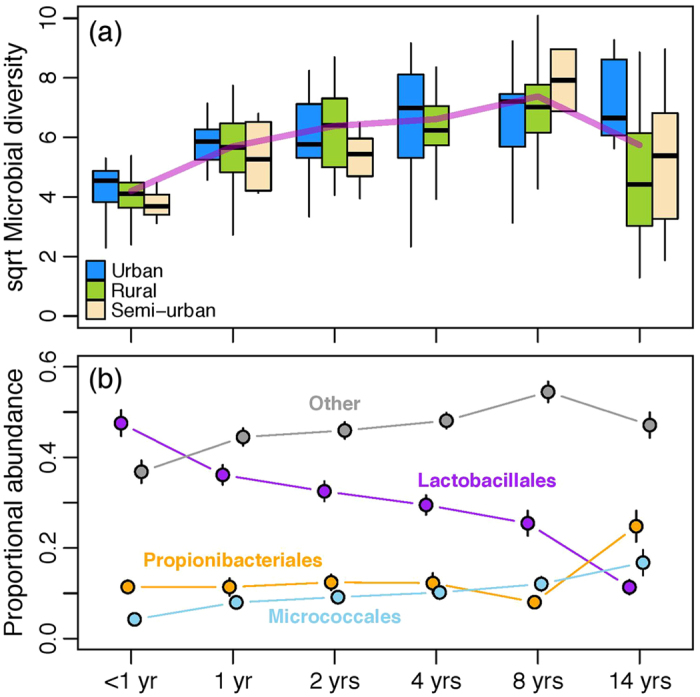
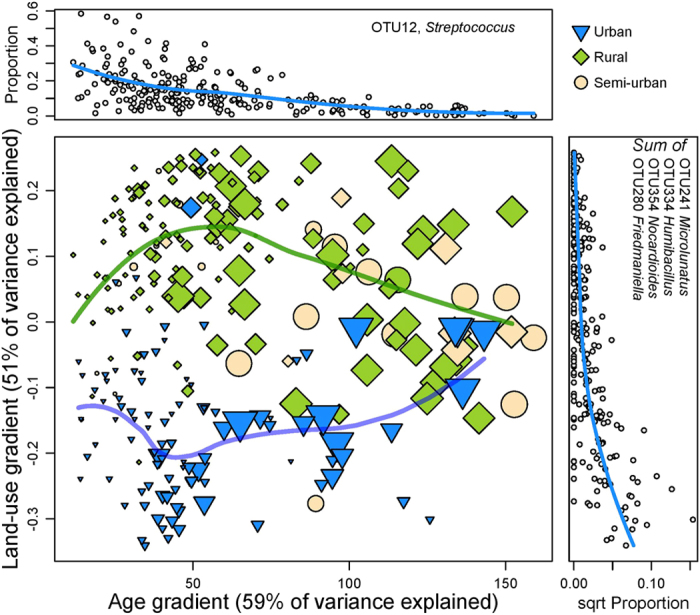
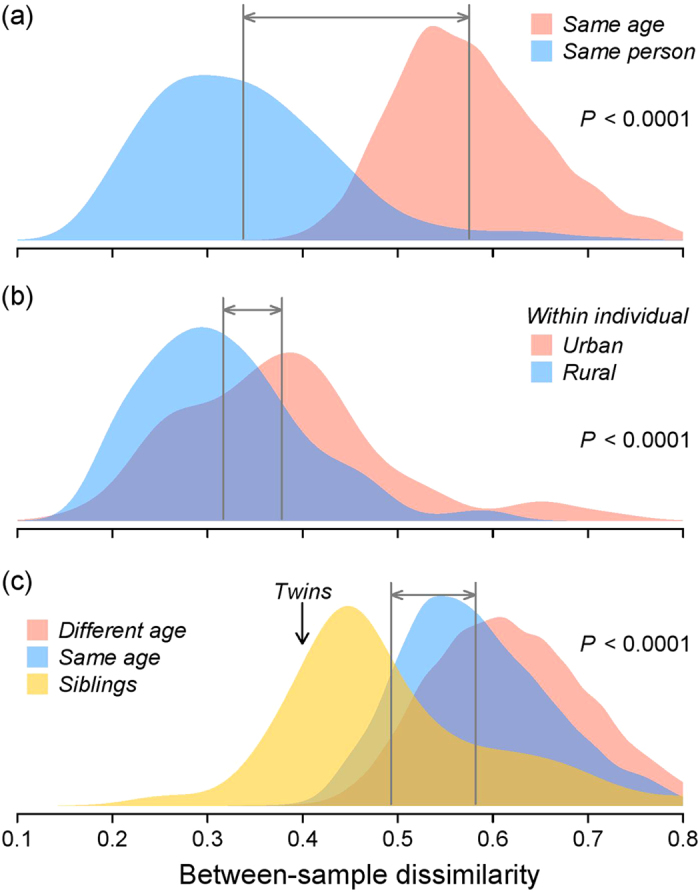
The composition of human microbiota is affected by a multitude of factors. Understanding the dynamics of our microbial communities is important for promoting human health because microbiota has a crucial role in the development of inflammatory diseases, such as allergies. We have studied the skin microbiota of both arms in 275 Finnish children of few months old to teenagers living in contrasting environments. We show that while age is a major factor affecting skin microbial composition, the living environment also discriminates the skin microbiota of rural and urban children. The effect of environment is age-specific; it is most prominent in toddlers but weaker for newborns and non-existent for teenagers. Within-individual variation is also related to age and environment. Surprisingly, variation between arms is smaller in rural subjects in all age groups, except in teenagers. We also collected serum samples from children for characterization of allergic sensitization and found a weak, but significant association between allergic sensitization and microbial composition. We suggest that physiological and behavioral changes, related to age and the amount of contact with environmental microbiota, jointly influence the dynamics of the skin microbiota, and explain why the association between the living environment skin microbiota is lost in teenager.
Overview
The claims and statistics of this paper haven’t been checked yet.
Free: it reads the open-access text and checks the first 5 claims that cite a source we can check. Create a free account to check every claim.
Integrity signals
Registry
Cites
Statistics
Figures
Verification
Claims the paper makes
The claims and statistics of this paper haven’t been checked yet.
Free: it reads the open-access text and checks the first 5 claims that cite a source we can check. Create a free account to check every claim.
Claims other papers make about this one
Each is checked against this paper’s own text: does it say what the citing paper says it does?
The cited source says what the claim attributes to it.
In the citing paper
“Skin microbiota patterns differ in children living in rural and urban environment [27].”
From EAACI Guidelines on the Importance of Green Space in Urban Environments for Allergy and Asthma Prevention (2026) · cites this paper as [27]
Self-check
Percentages, sums and reported differences re-computed from the paper’s own numbers.
The self-check needs the paper’s full text.
Citations
Cites
Cutadapt removes adapter sequences from high-throughput sequencing reads
Martin, M. (2011) · EMBnet.journal · doi:10.14806/ej.17.1.200 · Cited by 33,889
The SILVA ribosomal RNA gene database project: improved data processing and web-based tools
Quast, C., Pruesse, E., Yilmaz, P., Gerken, J., Schweer, T., Yarza, P., Peplies, J., & Glöckner, F. O. (2012) · Nucleic Acids Research · doi:10.1093/nar/gks1219 · Cited by 33,055
Schloss, P. D., Westcott, S. L., Ryabin, T., Hall, J. R., Hartmann, M., Hollister, E. B., Lesniewski, R. A., Oakley, B. B., Parks, D. H., Robinson, C. J., et al. (2009) · Applied and Environmental Microbiology · doi:10.1128/aem.01541-09 · Cited by 19,549
Classification and Regression by randomForest
Liaw, A. I., & Wiener, M. C. (2007) · Cited by 18,594
UPARSE: highly accurate OTU sequences from microbial amplicon reads
Edgar, R. C. (2013) · Nature Methods · doi:10.1038/nmeth.2604 · Cited by 16,707
FastTree 2 – Approximately Maximum-Likelihood Trees for Large Alignments
Price, M. N., Dehal, P. S., & Arkin, A. P. (2010) · PLoS ONE · doi:10.1371/journal.pone.0009490 · Cited by 14,894
Human gut microbiome viewed across age and geography
Yatsunenko, T., Rey, F. E., Manary, M. J., Trehan, I., Dominguez-Bello, M. G., Contreras, M., Magris, M., Hidalgo, G., Baldassano, R. N., Anokhin, A. P., et al. (2012) · Nature · doi:10.1038/nature11053 · Cited by 7,815
PEAR: a fast and accurate Illumina Paired-End reAd mergeR
Zhang, J., Kobert, K., Flouri, T., & Stamatakis, A. (2014) · Bioinformatics · doi:10.1093/bioinformatics/btt593 · Cited by 4,497
International Study of Asthma and Allergies in Childhood (ISAAC): rationale and methods
Asher, M., Keil, U., Anderson, H., Beasley, R., Crane, J., Martinez, F., Mitchell, E., Pearce, N., Sibbald, B., Stewart, A., et al. (1995) · European Respiratory Journal · doi:10.1183/09031936.95.08030483 · Cited by 3,724
Dynamics and Stabilization of the Human Gut Microbiome during the First Year of Life
Bäckhed, F., Roswall, J., Peng, Y., Feng, Q., Jia, H., Kovatcheva-Datchary, P., Li, Y., Xia, Y., Xie, H., Zhong, H., et al. (2015) · Cell Host & Microbe · doi:10.1016/j.chom.2015.04.004 · Cited by 3,315
Bacterial Community Variation in Human Body Habitats Across Space and Time
Costello, E. K., Lauber, C. L., Hamady, M., Fierer, N., Gordon, J. I., & Knight, R. (2009) · Science · doi:10.1126/science.1177486 · Cited by 3,231
Grice, E. A., & Segre, J. A. (2011) · Nature Reviews Microbiology · doi:10.1038/nrmicro2537 · Cited by 3,143
Animals in a bacterial world, a new imperative for the life sciences
McFall-Ngai, M., Hadfield, M. G., Bosch, T. C. G., Carey, H. V., Domazet-Lošo, T., Douglas, A. E., Dubilier, N., Eberl, G., Fukami, T., Gilbert, S. F., et al. (2013) · Proceedings of the National Academy of Sciences · doi:10.1073/pnas.1218525110 · Cited by 2,782
Edwards, U., Rogall, T., Blöcker, H., Emde, M., & Böttger, E. C. (1989) · Nucleic Acids Research · doi:10.1093/nar/17.19.7843 · Cited by 2,724
Differential abundance analysis for microbial marker-gene surveys
Paulson, J. N., Stine, O. C., Bravo, H. C., & Pop, M. (2013) · Nature Methods · doi:10.1038/nmeth.2658 · Cited by 2,428
VARIATION PARTITIONING OF SPECIES DATA MATRICES: ESTIMATION AND COMPARISON OF FRACTIONS
Peres-Neto, P. R., Legendre, P., Dray, S., & Borcard, D. (2006) · Ecology · doi:10.1890/0012-9658(2006)87[2614:vposdm]2.0.co;2 · Cited by 2,342
How colonization by microbiota in early life shapes the immune system
Gensollen, T., Iyer, S. S., Kasper, D. L., & Blumberg, R. S. (2016) · Science · doi:10.1126/science.aad9378 · Cited by 2,044
Kong, H. H., Oh, J., Deming, C., Conlan, S., Grice, E. A., Beatson, M. A., Nomicos, E., Polley, E. C., Komarow, H. D., Program, N. C. S., et al. (2012) · Genome Research · doi:10.1101/gr.131029.111 · Cited by 1,808
Early infancy microbial and metabolic alterations affect risk of childhood asthma
Arrieta, M.-C., Stiemsma, L. T., Dimitriu, P. A., Thorson, L., Russell, S., Yurist-Doutsch, S., Kuzeljevic, B., Gold, M. J., Britton, H. M., Lefebvre, D. L., et al. (2015) · Science Translational Medicine · doi:10.1126/scitranslmed.aab2271 · Cited by 1,786
The pls Package: Principal Component and Partial Least Squares Regression in R
Mevik, B.-H., & Wehrens, R. (2007) · Journal of Statistical Software · doi:10.18637/jss.v018.i02 · Cited by 1,782
Treatment of Childhood Atopic Dermatitis and Economic Burden of Illness in Asia Pacific Countries
Lee, B. W., & Detzel, P. R. (2015) · Annals of Nutrition and Metabolism · doi:10.1159/000370221 · Cited by 1,668
Topographic diversity of fungal and bacterial communities in human skin
NIH Intramural Sequencing Center Comparative Sequencing Program, Findley, K., Oh, J., Yang, J., Conlan, S., Deming, C., Meyer, J. A., Schoenfeld, D., Nomicos, E., Park, M., et al. (2013) · Nature · doi:10.1038/nature12171 · Cited by 1,206
Biogeography and individuality shape function in the human skin metagenome
Program, N. C. S., Oh, J., Byrd, A. L., Deming, C., Conlan, S., Kong, H. H., & Segre, J. A. (2014) · Nature · doi:10.1038/nature13786 · Cited by 1,148
Diet dominates host genotype in shaping the murine gut microbiota
Carmody, R. N., Gerber, G. K., Luevano, J. M., Gatti, D. M., Somes, L., Svenson, K. L., & Turnbaugh, P. J. (2015) · Cell Host & Microbe · doi:10.1016/j.chom.2014.11.010 · Cited by 1,103
Compartmentalized Control of Skin Immunity by Resident Commensals
Naik, S., Bouladoux, N., Wilhelm, C., Molloy, M. J., Salcedo, R., Kastenmuller, W., Deming, C., Quinones, M., Koo, L., Conlan, S., et al. (2012) · Science · doi:10.1126/science.1225152 · Cited by 1,092
Environmental biodiversity, human microbiota, and allergy are interrelated
Hanski, I., von Hertzen, L., Fyhrquist, N., Koskinen, K., Torppa, K., Laatikainen, T., Karisola, P., Auvinen, P., Paulin, L., Mäkelä, M. J., et al. (2012) · Proceedings of the National Academy of Sciences · doi:10.1073/pnas.1205624109 · Cited by 1,063
Self-citationTemporal Stability of the Human Skin Microbiome
Oh, J., Byrd, A. L., Park, M., Kong, H. H., & Segre, J. A. (2016) · Cell · doi:10.1016/j.cell.2016.04.008 · Cited by 1,036
Tuomisto, H. (2010) · Ecography · doi:10.1111/j.1600-0587.2009.05880.x · Cited by 1,024
How American Children Spend Their Time
Hofferth, S. L., & Sandberg, J. F. (2001) · Journal of Marriage and Family · doi:10.1111/j.1741-3737.2001.00295.x · Cited by 995
Longitudinal analysis of microbial interaction between humans and the indoor environment
Lax, S., Smith, D. P., Hampton-Marcell, J., Owens, S. M., Handley, K. M., Scott, N. M., Gibbons, S. M., Larsen, P., Shogan, B. D., Weiss, S., et al. (2014) · Science · doi:10.1126/science.1254529 · Cited by 917
Mechanisms regulating skin immunity and inflammation
Pasparakis, M., Haase, I., & Nestle, F. O. (2014) · Nature Reviews Immunology · doi:10.1038/nri3646 · Cited by 886
Soil biodiversity and human health
Wall, D. H., Nielsen, U. N., & Six, J. (2015) · Nature · doi:10.1038/nature15744 · Cited by 841
Dialogue between skin microbiota and immunity
Belkaid, Y., & Segre, J. A. (2014) · Science · doi:10.1126/science.1260144 · Cited by 749
Molecular analysis of human forearm superficial skin bacterial biota
Gao, Z., Tseng, C.-H., Pei, Z., & Blaser, M. J. (2007) · Proceedings of the National Academy of Sciences · doi:10.1073/pnas.0607077104 · Cited by 657
Diversity of the human skin microbiome early in life
Capone, K. A., Dowd, S. E., Stamatas, G. N., & Nikolovski, J. (2011) · Journal of Investigative Dermatology · doi:10.1038/jid.2011.168 · Cited by 532
Functions of the skin microbiota in health and disease
Sanford, J. A., & Gallo, R. L. (2013) · Seminars in Immunology · doi:10.1016/j.smim.2013.09.005 · Cited by 479
Continental-scale distributions of dust-associated bacteria and fungi
Barberán, A., Ladau, J., Leff, J. W., Pollard, K. S., Menninger, H. L., Dunn, R. R., & Fierer, N. (2015) · Proceedings of the National Academy of Sciences · doi:10.1073/pnas.1420815112 · Cited by 474
Bowers, R. M., McLetchie, S., Knight, R., & Fierer, N. (2011) · The ISME Journal · doi:10.1038/ismej.2010.167 · Cited by 461
Community differentiation of the cutaneous microbiota in psoriasis
Alekseyenko, A. V., Perez-Perez, G. I., De Souza, A., Strober, B., Gao, Z., Bihan, M., Li, K., Methé, B. A., & Blaser, M. J. (2013) · Microbiome · doi:10.1186/2049-2618-1-31 · Cited by 441
Robust estimation of microbial diversity in theory and in practice
Haegeman, B., Hamelin, J., Moriarty, J., Neal, P., Dushoff, J., & Weitz, J. S. (2013) · The ISME Journal · doi:10.1038/ismej.2013.10 · Cited by 431
The biodiversity hypothesis and allergic disease: world allergy organization position statement
Haahtela, T., Holgate, S., Pawankar, R., Akdis, C. A., Benjaponpitak, S., Caraballo, L., Demain, J., Portnoy, J., & von Hertzen, L. (2013) · World Allergy Organization Journal · doi:10.1186/1939-4551-6-3 · Cited by 426
Self-citationWaller, J. M., & Maibach, H. I. (2005) · Skin Research and Technology · doi:10.1111/j.0909-725x.2005.00151.x · Cited by 389
A consistent terminology for quantifying species diversity? Yes, it does exist
Tuomisto, H. (2010) · Oecologia · doi:10.1007/s00442-010-1812-0 · Cited by 380
Shifts in human skin and nares microbiota of healthy children and adults
Oh, J., Conlan, S., Polley, E. C., Segre, J. A., & Kong, H. H. (2012) · Genome Medicine · doi:10.1186/gm378 · Cited by 367
Home Life: Factors Structuring the Bacterial Diversity Found within and between Homes
Dunn, R. R., Fierer, N., Henley, J. B., Leff, J. W., & Menninger, H. L. (2013) · PLoS ONE · doi:10.1371/journal.pone.0064133 · Cited by 344
Immune-microbiota interactions in health and disease
Palm, N. W., de Zoete, M. R., & Flavell, R. A. (2015) · Clinical Immunology · doi:10.1016/j.clim.2015.05.014 · Cited by 315
von Hertzen, L., Hanski, I., & Haahtela, T. (2011) · The EMBO Reports · doi:10.1038/embor.2011.195 · Cited by 304
Self-citationThe ecology of microscopic life in household dust
Barberán, A., Dunn, R. R., Reich, B. J., Pacifici, K., Laber, E. B., Menninger, H. L., Morton, J. M., Henley, J. B., Leff, J. W., Miller, S. L., et al. (2015) · Proceedings of the Royal Society B: Biological Sciences · doi:10.1098/rspb.2015.1139 · Cited by 289
Green areas around homes reduce atopic sensitization in children
Ruokolainen, L., Hertzen, L., Fyhrquist, N., Laatikainen, T., Lehtomäki, J., Auvinen, P., Karvonen, A. M., Hyvärinen, A., Tillmann, V., Niemelä, O., et al. (2015) · Allergy · doi:10.1111/all.12545 · Cited by 273
Self-citationAmphibian skin may select for rare environmental microbes
Walke, J. B., Becker, M. H., Loftus, S. C., House, L. L., Cormier, G., Jensen, R. V., & Belden, L. K. (2014) · The ISME Journal · doi:10.1038/ismej.2014.77 · Cited by 266
Ying, S., Zeng, D.-N., Chi, L., Tan, Y., Galzote, C., Cardona, C., Lax, S., Gilbert, J., & Quan, Z.-X. (2015) · PLOS ONE · doi:10.1371/journal.pone.0141842 · Cited by 253
Morton, E. R., Lynch, J., Froment, A., Lafosse, S., Heyer, E., Przeworski, M., Blekhman, R., & Ségurel, L. (2015) · PLOS Genetics · doi:10.1371/journal.pgen.1005658 · Cited by 231
Acinetobacter species in the skin microbiota protect against allergic sensitization and inflammation
Fyhrquist, N., Ruokolainen, L., Suomalainen, A., Lehtimäki, S., Veckman, V., Vendelin, J., Karisola, P., Lehto, M., Savinko, T., Jarva, H., et al. (2014) · Journal of Allergy and Clinical Immunology · doi:10.1016/j.jaci.2014.07.059 · Cited by 203
Self-citationComplement modulates the cutaneous microbiome and inflammatory milieu
Chehoud, C., Rafail, S., Tyldsley, A. S., Seykora, J. T., Lambris, J. D., & Grice, E. A. (2013) · Proceedings of the National Academy of Sciences · doi:10.1073/pnas.1307855110 · Cited by 184
Parfrey, L. W., Walters, W. A., Lauber, C. L., Clemente, J. C., Berg-Lyons, D., Teiling, C., Kodira, C., Mohiuddin, M., Brunelle, J., Driscoll, M., et al. (2014) · Frontiers in Microbiology · doi:10.3389/fmicb.2014.00298 · Cited by 181
Predominance of Gram‐positive bacteria in house dust in the low‐allergy risk Russian Karelia
Pakarinen, J., Hyvärinen, A., Salkinoja‐Salonen, M., Laitinen, S., Nevalainen, A., Mäkelä, M. J., Haahtela, T., & Von Hertzen, L. (2008) · Environmental Microbiology · doi:10.1111/j.1462-2920.2008.01723.x · Cited by 122
Self-citationDeodorants and antiperspirants affect the axillary bacterial community
Callewaert, C., Hutapea, P. P., de Wiele, T. V., & Boon, N. (2014) · Archives of Dermatological Research · doi:10.1007/s00403-014-1487-1 · Cited by 103
Environment and host species shape the skin microbiome of captive neotropical bats
Lemieux‐Labonté, V., Tromas, N., Shapiro, B. J., & Lapointe, F. (2016) · PeerJ · doi:10.7717/peerj.2430 · Cited by 77
Adaptive immunity to murine skin commensals
Shen, W., Li, W., Hixon, J. A., Bouladoux, N., Belkaid, Y., Dzutzev, A., & Durum, S. K. (2014) · Proceedings of the National Academy of Sciences · doi:10.1073/pnas.1401820111 · Cited by 48
High-Resolution Analyses of Overlap in the Microbiota Between Mothers and Their Children
Schanche, M., Avershina, E., Dotterud, C., Øien, T., Storrø, O., Johnsen, R., & Rudi, K. (2015) · Current Microbiology · doi:10.1007/s00284-015-0843-5 · Cited by 35
Research works printed but not linked: 1
- Lane D. In Nucleic Acid Techniques in Bacterial Systematics, edited by Stackebrandt E. & Goodfellow M. (Wiley, New York, 1991).
Cited by
Human Skin Microbiome: Impact of Intrinsic and Extrinsic Factors on Skin Microbiota
Skowron, K., Bauza-Kaszewska, J., Kraszewska, Z., Wiktorczyk-Kapischke, N., Grudlewska-Buda, K., Kwiecińska-Piróg, J., Wałecka-Zacharska, E., Radtke, L., & Gospodarek-Komkowska, E. (2021) · Microorganisms · doi:10.3390/microorganisms9030543 · Cited by 345
“However, the results of studies obtained in other countries did not confirm this tendency, suggesting that other factors (cultural differences) also impact the skin microbiome [51].”
BackgroundResultRoslund, M. I., Puhakka, R., Grönroos, M., Nurminen, N., Oikarinen, S., Gazali, A. M., Cinek, O., Kramná, L., Siter, N., Vari, H. K., et al. (2020) · Science Advances · doi:10.1126/sciadv.aba2578 · Cited by 363
“Core reasons why skin microbiota changes with age are related to human physiology and increased influence of external factors, such as pets and living environment (18).”
BackgroundPrescott, S. L., Larcombe, D.-L., Logan, A. C., West, C., Burks, W., Caraballo, L., Levin, M., Etten, E. V., Horwitz, P., Kozyrskyj, A., et al. (2017) · World Allergy Organization Journal · doi:10.1186/s40413-017-0160-5 · Cited by 347
“Resident microbes are increasingly viewed as an integral part of the functional unit of the skin and other body surfaces, interacting with tissues and immune networks to influence the health and function not only of local systems, but wellbeing more generally [1].”
BackgroundDijkhoff, I. M., Drasler, B., Karakocak, B. B., Petri-Fink, A., Valacchi, G., Eeman, M., & Rothen-Rutishauser, B. (2020) · Particle and Fibre Toxicology · doi:10.1186/s12989-020-00366-y · Cited by 202
“, rural versus urban), indicating a possible link between PM exposure and the skin microbiome composition [118].”
BackgroundNew Insights into the Intrinsic and Extrinsic Factors That Shape the Human Skin Microbiome
Dimitriu, P. A., Iker, B., Malik, K., Leung, H., Mohn, W. W., & Hillebrand, G. G. (2019) · mBio · doi:10.1128/mbio.00839-19 · Cited by 186
“Among Finnish children ( 14 years old), age is associated with an increase in the abundance of Actinobacteria and Proteobacteria at the expense of Lactobacillales (15).”
Background
Metadata
- Authors
- Lehtimäki, J., Karkman, A., Laatikainen, T., Paalanen, L., von Hertzen, L., Haahtela, T., Hanski, I., & Ruokolainen, L.
- Affiliations
- University of Helsinki (FI)
- Finnish Institute for Health and Welfare (FI)
- Helsinki University Hospital (FI)
- Corresponding author
- Lehtimäki, Jenni
- ORCID
- Venue
- Scientific Reports
- Published
- 2017-03-31
- Volume
- 7
- Issue
- 1
- Pages
- 45651-45651
- ISSN
- 2045-2322 (ISSN-L)
- PMC
- PMC5374497
- OpenAlex
- W2601718279
- Semantic Scholar
- 816826a15199bf2ac717f25f5377963363ef9258
- Cited by
- 131
- References
- 60
- Citations by year
- 2026: 5 · 2025: 13 · 2024: 16 · 2023: 14 · 2022: 19 · 2021: 21 · 2020: 18 · 2019: 7 · 2018: 12 · 2017: 6
- FWCI
- 13.39
- Type
- journal article
- Language
- en
- Open access
- gold
- doi.org
- Licence
- cc-by
- creativecommons.org/licenses/by/4.0 (tdm)
- creativecommons.org/licenses/by/4.0 (vor)
- Locations
- Scientific Reports (publishedVersion, cc-by)
- PubMed Central (publishedVersion, cc-by)
- PubMed (publishedVersion)
- UEF eRepo (University of Eastern Finland) (submittedVersion, cc-by)
- Työväentutkimus Vuosikirja (submittedVersion)
- STM:n Hallinnonalan avoin julkaisuarkisto (Julkari) (submittedVersion)
- WOS
- Funders
- Jane ja Aatos Erkon Säätiö
- Topics
- Health Sciences › Medicine › Dermatology › Dermatology and Skin Diseases
- Health Sciences › Medicine › Dermatology › Contact Dermatitis and Allergies
- Life Sciences › Biochemistry, Genetics and Molecular Biology › Molecular Biology › Gut microbiota and health
- Keywords
- skin microbiome, urban-rural differences, age-related changes, allergen sensitization, toddlers, adolescents, children, serum biomarkers
- MeSH terms
- Adolescent, Child, Child, Preschool, Environmental Microbiology, Female, Finland, Humans, Infant, Male, Rural Population, Skin, Urban Population, Microbiota
About these checks
Registry, retraction, Cites and statistics results are computed, not judged, with one exception: a printed reference that no index lists is read once by a model before it counts as a citation error. Claims are extracted by a model and kept only when their quote appears verbatim in the text; each cited source is then checked, with a model’s help, for whether it says what the claim relies on. Those verdicts can be wrong — read the claim’s quote and the cited source before relying on one.
Statistics and arithmetic are recomputed, not judged.
Confidence bands are shown only for fields calibrated on our annotated test set. None is calibrated yet, so no band is shown.
What counts as a claim ›How we measure confidence ›How we check this ›
Are you an author, or do you see a problem with this page? Request a review
Data sources
Bibliographic data: Semantic Scholar, OpenAlex, Crossref.
Contains information from the Semantic Scholar Academic Graph Datasets, made available under the ODC Attribution License (ODC-BY 1.0).
Semantic Scholar’s data is described in: Kinney, R., et al. (2023). The Semantic Scholar Open Data Platform. arXiv:2301.10140.
