

Magnetofluidic micromixer based on a complex rotating magnetic field
Open accessThe DOI matches its Crossref record; 51 of the 51 references it cites were found in a registry or an index.
Abstract
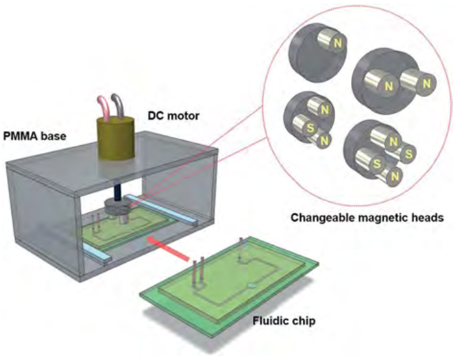
We report a magnetically actuated micromixer for mixing non-magnetic microparticles in a microfluidic system.
Overview
The claims and statistics of this paper haven’t been checked yet.
Free: it reads the open-access text and checks the first 5 claims that cite a source we can check. Create a free account to check every claim.
Integrity signals
Registry
Cites
Statistics
Figures
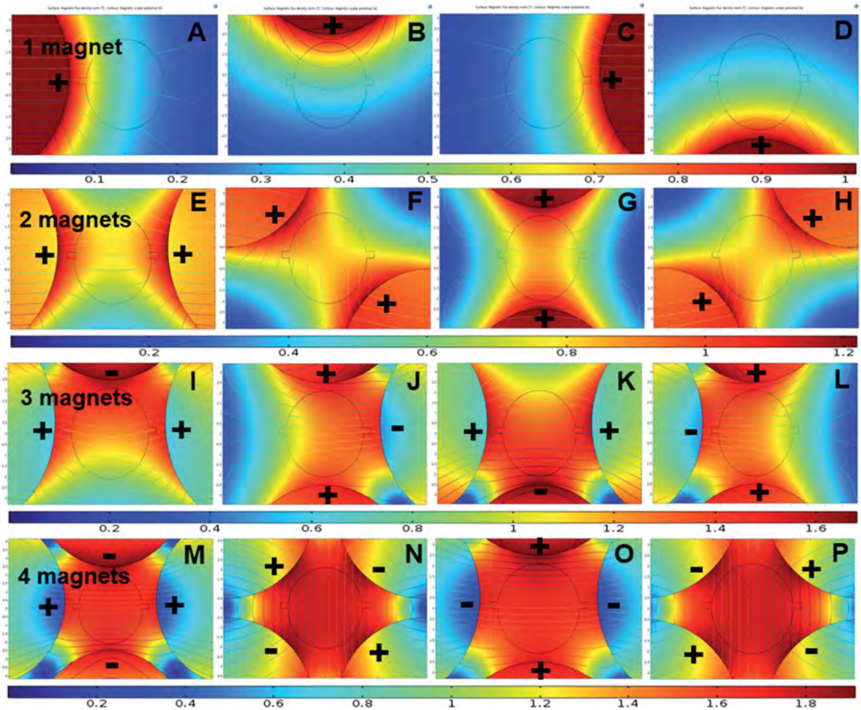
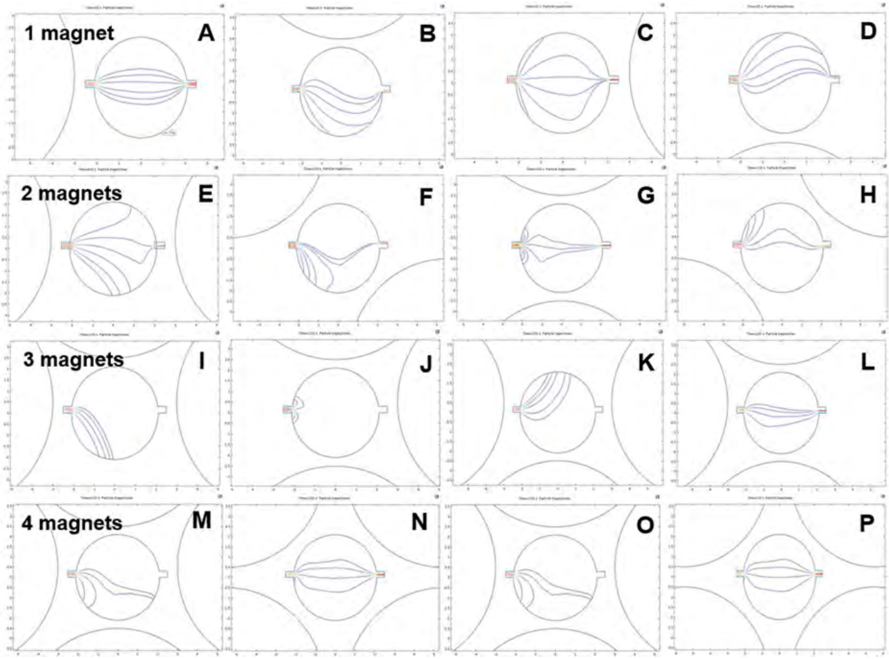
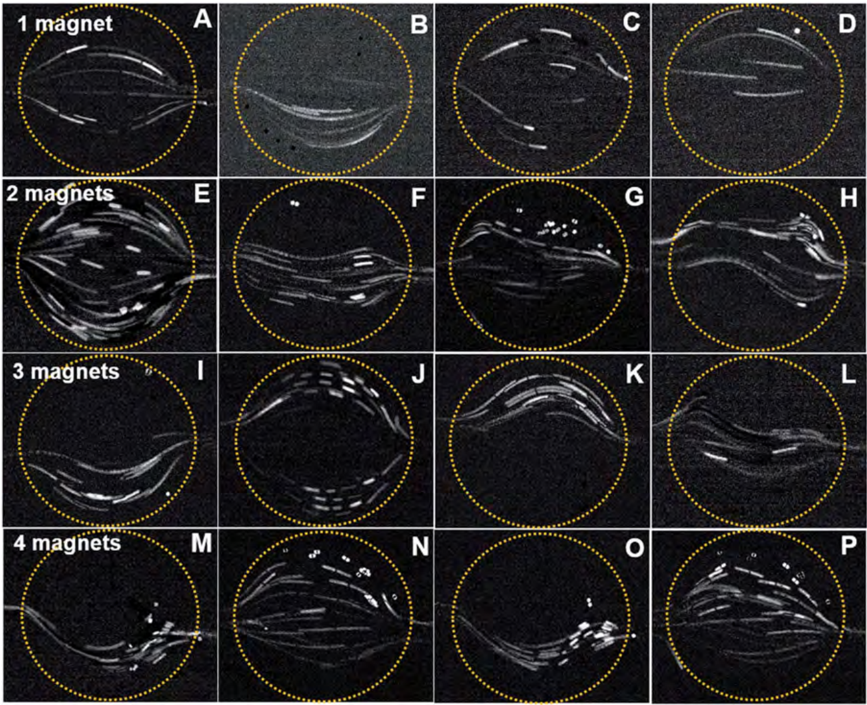
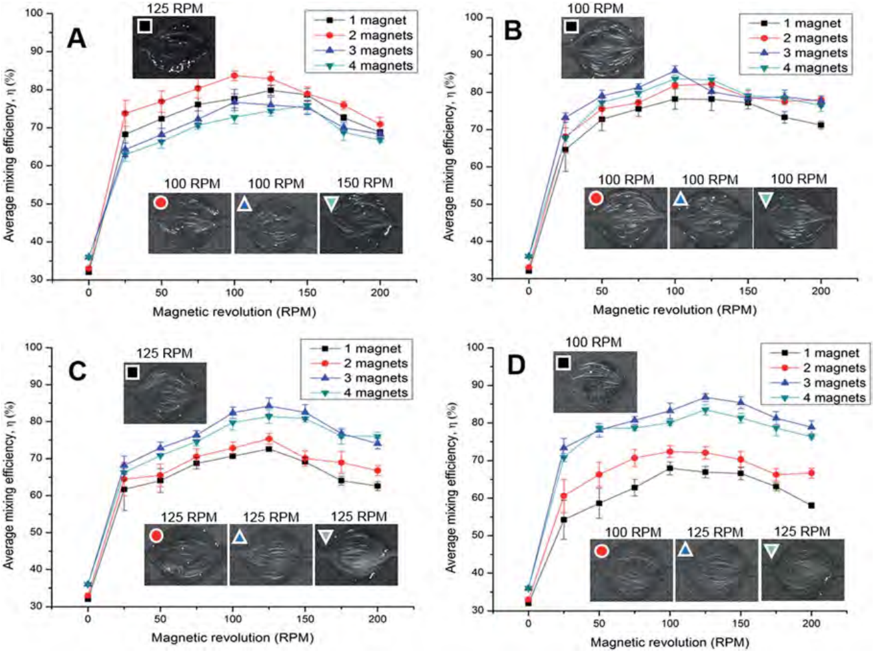
Verification
Claims the paper makes
The claims and statistics of this paper haven’t been checked yet.
Free: it reads the open-access text and checks the first 5 claims that cite a source we can check. Create a free account to check every claim.
Self-check
Percentages, sums and reported differences re-computed from the paper’s own numbers.
The self-check needs the paper’s full text.
Citations
Cites
Nguyen, N.-T., & Wu, Z. (2005) · Journal of Micromechanics and Microengineering · doi:10.1088/0960-1317/15/2/r01 · Cited by 1,652
Self-citationMicromixers—a review on passive and active mixing principles
Hessel, V., Löwe, H., & Schönfeld, F. (2005) · Chemical Engineering Science · doi:10.1016/j.ces.2004.11.033 · Cited by 1,479
Pamme, N. (2006) · Lab Chip · doi:10.1039/b513005k · Cited by 1,129
Lee, C.-Y., Chang, C.-L., Wang, Y.-N., & Fu, L.-M. (2011) · International Journal of Molecular Sciences · doi:10.3390/ijms12053263 · Cited by 1,111
Fundamentals and applications of inertial microfluidics: a review
Zhang, J., Yan, S., Yuan, D., Alici, G., Nguyen, N.-T., Ebrahimi Warkiani, M., & Li, W. (2016) · Lab on a Chip · doi:10.1039/c5lc01159k · Cited by 1,017
Self-citationEncyclopedia of Microfluidics and Nanofluidics
(2008) · Springer eBooks · doi:10.1007/978-0-387-48998-8 · Cited by 647
Continuous sorting of magnetic cells via on-chip free-flow magnetophoresis
Pamme, N., & Wilhelm, C. (2006) · Lab on a Chip · doi:10.1039/b604542a · Cited by 497
On-Chip Free-Flow Magnetophoresis: Continuous Flow Separation of Magnetic Particles and Agglomerates
Pamme, N., & Manz, A. (2004) · Analytical Chemistry · doi:10.1021/ac049183o · Cited by 475
A magnetic microstirrer and array for microfluidic mixing
Lu, L.-H., Ryu, K. S., & Liu, C. (2002) · Journal of Microelectromechanical Systems · doi:10.1109/jmems.2002.802899 · Cited by 446
Micro-magnetofluidics: interactions between magnetism and fluid flow on the microscale
Nguyen, N.-T. (2012) · Microfluidics and Nanofluidics · doi:10.1007/s10404-011-0903-5 · Cited by 390
Self-citation
Research works printed but not linked: 4
- N. Minc, Encyclopedia of Microuidics and Nanouidics, 2015, pp. 1681-1689.
- R. E. Rosensweig, Ferrohydrodynamics, Courier Corporation, 2013.
- L. D. Landau and E. M. Lifshitz, Fluid mechanics, Volume 6: Course of theoretical physics, Pergamon Press, 1987.
- A. Munaz and G.-S. Chung, Microsyst. Technol., 2015, 1-9.
Cited by
Microfluidics Based Magnetophoresis: A Review
Alnaimat, F., Dagher, S., Mathew, B., Hilal‐Alnqbi, A., & Khashan, S. (2018) · The Chemical Record · doi:10.1002/tcr.201800018 · Cited by 166
Recent advances and current challenges in magnetophoresis based micro magnetofluidics
Munaz, A., Shiddiky, M. J. A., & Nguyen, N.-T. (2018) · Biomicrofluidics · doi:10.1063/1.5035388 · Cited by 164
Self-citationA review of microfluidic-based mixing methods
Li, Z., Zhang, B., Dang, D., Yang, X., Yang, W., & Liang, W. (2022) · Sensors and Actuators A Physical · doi:10.1016/j.sna.2022.113757 · Cited by 159
Magnetofluidic mixing of a ferrofluid droplet under the influence of a time-dependent external field
Shyam, S., Mondal, P. K., & Mehta, B. (2021) · Journal of Fluid Mechanics · doi:10.1017/jfm.2021.245 · Cited by 69
Wychowaniec, J. K., & Brougham, D. F. (2022) · Advanced Science · doi:10.1002/advs.202202278 · Cited by 68
Effects of magnetic nanoparticles on mixing in droplet-based microfluidics
Maleki, M., Soltani, M., Kashaninejad, N., & Nguyen, N. (2019) · Physics of Fluids · doi:10.1063/1.5086867 · Cited by 63
Self-citationActive microparticle manipulation: Recent advances
Cheng, K., Guo, J., Fu, Y., & Guo, J. (2021) · Sensors and Actuators A Physical · doi:10.1016/j.sna.2021.112616 · Cited by 55
Magnetophoretic separation of diamagnetic particles through parallel ferrofluid streams
Munaz, A., Shiddiky, M. J. A., & Nguyen, N. (2018) · Sensors and Actuators B Chemical · doi:10.1016/j.snb.2018.07.176 · Cited by 48
Self-citationXue, M., Xiang, A., Guo, Y., Wang, L., Wang, R., Wang, W., Ji, G., & Lu, Z. (2019) · RSC Advances · doi:10.1039/c9ra08285a · Cited by 26
Micromixer driven by bubble-induced acoustic microstreaming for multi-ink 3D bioprinting
Hidaka, M., Kojima, M., & Sakai, S. (2024) · Lab on a Chip · doi:10.1039/d4lc00552j · Cited by 26
Μaniotis, Ν., Kalaitzidou, K., Asimoulas, E., & Simeonidis, K. (2023) · Journal of Water Process Engineering · doi:10.1016/j.jwpe.2023.103825 · Cited by 17
Numerical simulation of contact and separation of magnetic particles under uniform magnetic field
Xu, Z., Bo, X., Wu, H. Y., Tang, Z., Chen, F., Chen, K., Wang, X., Zhang, G., & Jiang, S. (2021) · Journal of Physics D Applied Physics · doi:10.1088/1361-6463/ac353a · Cited by 16
Boroun, S., & Larachi, F. (2019) · Chemical Engineering Journal · doi:10.1016/j.cej.2019.122504 · Cited by 14
Haghgoo, A. M., Naghash, T. H., Ghassemi, M., Bijarchi, M. A., & Shafii, M. B. (2026) · Sensors and Actuators A Physical · doi:10.1016/j.sna.2026.117475 · Cited by 7
Bao, B., Tian, X., Wang, R., & Li, D. (2025) · Analytical Chemistry · doi:10.1021/acs.analchem.5c03755 · Cited by 3
In-Silico Conceptualisation of Continuous Millifluidic Separators for Magnetic Nanoparticles
Wen, Y., Jiang, D., Gavriilidis, A., & Besenhard, M. O. (2021) · Materials · doi:10.3390/ma14216635 · Cited by 3
Control of microparticles through hydrodynamic interactions
Shum, H., Zoppello, M., Astwood, M., & Morandotti, M. (2025) · Journal of Fluid Mechanics · doi:10.1017/jfm.2024.1186 · Cited by 2
Chaichypour, B., Jegatheeswaran, S., Salari, A., Hood, Z. L., Wheeler, A. R., Hwang, D. K., Kolios, M. C., & Tsai, S. S. H. (2025) · Microfluidics and Nanofluidics · doi:10.1007/s10404-025-02845-0 · Cited by 2
Acoustic streaming micromixer with embedded obstacle arrays for dispersion enhancement
Miah, M. A. K., Islam, M. M. U., Ghosh, R., Tangudu, C., Olsen, M. G., & Juárez, J. J. (2026) · Heat and Mass Transfer · doi:10.1007/s00231-026-03759-5 · Cited by 1
Magnetically actuated systems for microfluidic applications
Silvério, V., & Cardoso, S. (2023) · Elsevier eBooks · doi:10.1016/b978-0-12-823294-1.00005-1 · Cited by 1
On the motion of a falling ferrofluid droplet pair under a nonuniform magnetic field
Wen, G., He, Y., & Jiao, F. (2025) · Physics of Fluids · doi:10.1063/5.0268430
Mehta, S. K., Baishya, P., Pathak, K., Kalita, J., Wongwises, S., & Mondal, P. K. (2026) · IEEE Transactions on Magnetics · doi:10.1109/tmag.2026.3695600
Curvature-driven passive mixing in three-dimensional conical helix micromixers
Bütün, İ., Parlayıcı, T., Çelik, S., Aptoula, E., & Koşar, A. (2026) · Microsystems & Nanoengineering · doi:10.1038/s41378-026-01461-4
Metadata
- Authors
- Munaz, A., Kamble, H., Shiddiky, M. J. A., & Nguyen, N.-T.
- Affiliations
- Griffith University (AU)
- Corresponding author
- Nguyen, Nam-Trung
- Venue
- RSC Advances
- Publisher
- Royal Society of Chemistry (RSC)
- Published
- 2017
- Volume
- 7
- Issue
- 83
- Pages
- 52465-52474
- ISSN
- 2046-2069 (ISSN-L)
- OpenAlex
- W2768608309
- Cited by
- 23
- References
- 51
- Citations by year
- 2026: 4 · 2025: 4 · 2024: 1 · 2023: 2 · 2022: 2 · 2021: 4 · 2019: 3 · 2018: 3
- FWCI
- 0.74
- Type
- journal article
- Language
- en
- Open access
- gold
- doi.org
- Locations
- RSC Advances (publishedVersion, cc-by)
- Griffith Research Online (submittedVersion, cc-by)
- Charles Sturt University Research Output (CRO) (submittedVersion, cc-by)
- Funders
- Griffith University
- Australian National Fabrication Facility
- Topics
- Physical Sciences › Engineering › Biomedical Engineering › Microfluidic and Bio-sensing Technologies
- Physical Sciences › Physics and Astronomy › Condensed Matter Physics › Micro and Nano Robotics
- Physical Sciences › Engineering › Biomedical Engineering › Microfluidic and Capillary Electrophoresis Applications
- Keywords
- rotating magnetic field, magnetic actuation, particle mixing, microfluidics
About these checks
Registry, retraction, Cites and statistics results are computed, not judged, with one exception: a printed reference that no index lists is read once by a model before it counts as a citation error. Claims are extracted by a model and kept only when their quote appears verbatim in the text; each cited source is then checked, with a model’s help, for whether it says what the claim relies on. Those verdicts can be wrong — read the claim’s quote and the cited source before relying on one.
Statistics and arithmetic are recomputed, not judged.
Confidence bands are shown only for fields calibrated on our annotated test set. None is calibrated yet, so no band is shown.
What counts as a claim ›How we measure confidence ›How we check this ›
Are you an author, or do you see a problem with this page? Request a review
Data sources
Bibliographic data: Semantic Scholar, OpenAlex, Crossref.
Contains information from the Semantic Scholar Academic Graph Datasets, made available under the ODC Attribution License (ODC-BY 1.0).
Semantic Scholar’s data is described in: Kinney, R., et al. (2023). The Semantic Scholar Open Data Platform. arXiv:2301.10140.
