

Thermogelation of nanoemulsions stabilized by a commercial pea protein isolate: high-pressure homogenization defines gel strength
Open accessThe DOI matches its Crossref record; 74 of the 74 references it cites were found in a registry or an index.
Abstract
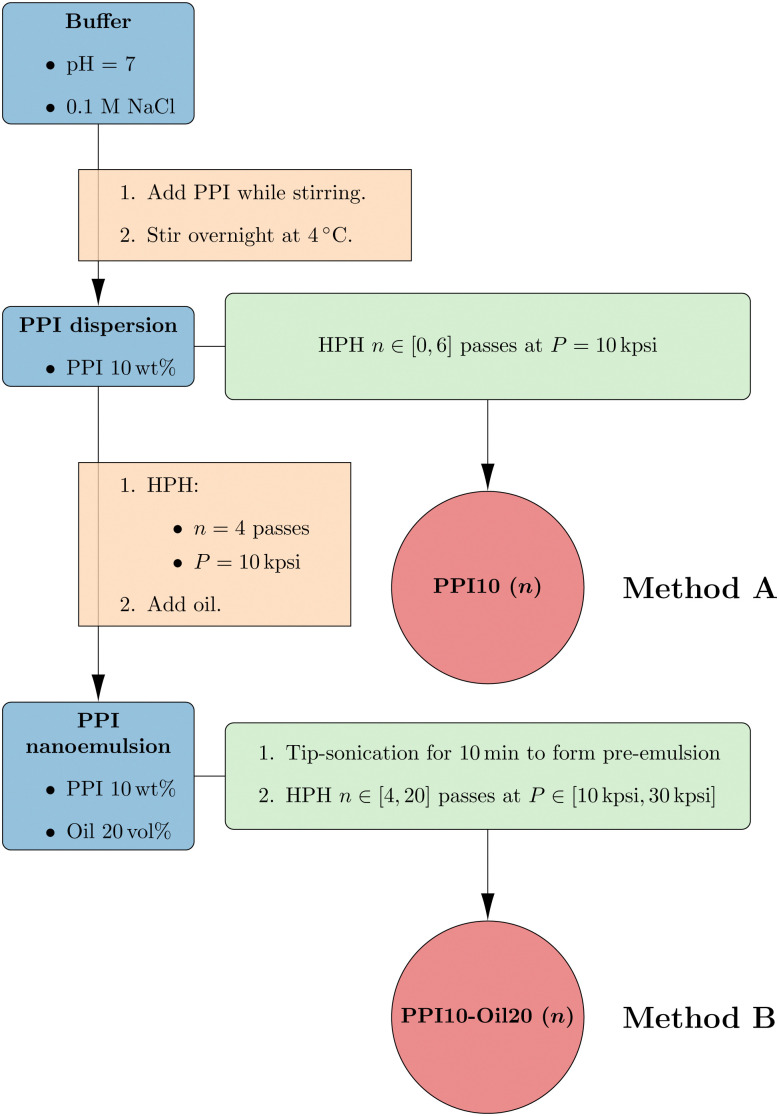
Structure formation by colloidal thermogelation of a complex plant-based nanoemulsion system stabilized by a commercial pea protein isolate.
Overview
The claims and statistics of this paper haven’t been checked yet.
Free: it reads the open-access text and checks the first 5 claims that cite a source we can check. Create a free account to check every claim.
Integrity signals
Registry
Cites
Statistics
Figures
Verification
Claims the paper makes
The claims and statistics of this paper haven’t been checked yet.
Free: it reads the open-access text and checks the first 5 claims that cite a source we can check. Create a free account to check every claim.
Claims other papers make about this one
Each is checked against this paper’s own text: does it say what the citing paper says it does?
The source backs part of the claim, not all of it — or backs it for a different population, condition or comparison.
In the citing paper
“High-pressure homogenization (HPH) improves solubility and emulsifying activity by inducing protein unfolding and modulating globulin subunit distribution [47,48].”
From Pea Protein Isolates: From Extraction to Functionality. (2025) · cites this paper as [48]
Experimental — accuracy not yet measuredThe source backs part of the claim, not all of it — or backs it for a different population, condition or comparison.
In the citing paper
“Pea protein stabilizes emulsions ranging from macro- to nanoemulsions and supports the formation of Pickering emulsions, providing stable delivery systems for food and nutraceutical applications [48,56].”
From Pea Protein Isolates: From Extraction to Functionality. (2025) · cites this paper as [48]
Experimental — accuracy not yet measuredThe source backs part of the claim, not all of it — or backs it for a different population, condition or comparison.
In the citing paper
“microfluidization at 100–150 MPa to produce protein nanoparticles with improved acid stability [48]”
From Pea Protein Isolates: From Extraction to Functionality. (2025) · cites this paper as [48]
Experimental — accuracy not yet measuredThe source backs part of the claim, not all of it — or backs it for a different population, condition or comparison.
In the citing paper
“The capability to produce stable, high-internal-phase emulsions through processing modulation expands the use of pea protein in sauces, dressings, and functional beverages [48,56].”
From Pea Protein Isolates: From Extraction to Functionality. (2025) · cites this paper as [48]
Experimental — accuracy not yet measured
Self-check
Percentages, sums and reported differences re-computed from the paper’s own numbers.
The self-check needs the paper’s full text.
Citations
Cites
Food in the Anthropocene: the EAT–Lancet Commission on healthy diets from sustainable food systems
Willett, W., Rockström, J., Loken, B., Springmann, M., Lang, T., Vermeulen, S., Garnett, T., Tilman, D., DeClerck, F., Wood, A., et al. (2019) · The Lancet · doi:10.1016/s0140-6736(18)31788-4 · Cited by 10,880
Reducing food's environmental impacts through producers and consumers
Poore, J., & Nemecek, T. (2018) · Science · doi:10.1126/science.aaq0216 · Cited by 6,085
Nanoemulsions: Formation, properties and applications
Gupta, A., Eral, H. B., Hatton, T. A., & Doyle, P. S. (2016) · Soft Matter · doi:10.1039/c5sm02958a · Cited by 1,633
Self-citationLarge amplitude oscillatory shear as a way to classify the complex fluids
Hyun, K., Kim, S. H., Ahn, K. H., & Lee, S. J. (2002) · Journal of Non-Newtonian Fluid Mechanics · doi:10.1016/s0377-0257(02)00141-6 · Cited by 930
Stone, A. K., Karalash, A., Tyler, R. T., Warkentin, T. D., & Nickerson, M. T. (2015) · Food Research International · doi:10.1016/j.foodres.2014.11.017 · Cited by 644
Bioactive proteins and peptides in pulse crops: Pea, chickpea and lentil
Roy, F., Boye, J. I., & Simpson, B. K. (2010) · Food Research International · doi:10.1016/j.foodres.2009.09.002 · Cited by 626
The science of plant‐based foods: Constructing next‐generation meat, fish, milk, and egg analogs
McClements, D. J., & Grossmann, L. (2021) · Comprehensive Reviews in Food Science and Food Safety · doi:10.1111/1541-4337.12771 · Cited by 600
Colloidal gels: equilibrium and non-equilibrium routes
Zaccarelli, E. (2007) · Journal of Physics: Condensed Matter · doi:10.1088/0953-8984/19/32/323101 · Cited by 574
Elasticity of Compressed Emulsions
Mason, T. G., Bibette, J., & Weitz, D. A. (1995) · Physical Review Letters · doi:10.1103/physrevlett.75.2051 · Cited by 551
Methylcellulose, a Cellulose Derivative with Original Physical Properties and Extended Applications
Nasatto, P., Pignon, F., Silveira, J., Duarte, M., Noseda, M., & Rinaudo, M. (2015) · Polymers · doi:10.3390/polym7050777 · Cited by 515
Linear Viscoelasticity of Colloidal Hard Sphere Suspensions near the Glass Transition
Mason, T. G., & Weitz, D. A. (1995) · Physical Review Letters · doi:10.1103/physrevlett.75.2770 · Cited by 511
Rheology of foams and highly concentrated emulsions
Princen, H. M., & Kiss, A. D. (1986) · Journal of Colloid and Interface Science · doi:10.1016/0021-9797(86)90111-6 · Cited by 412
Scaling behaviour of the rheology of aggregate networks formed from colloidal particles
Buscall, R., Mills, P. D. A., Goodwin, J. W., & Lawson, D. W. (1988) · Journal of the Chemical Society, Faraday Transactions 1: Physical Chemistry in Condensed Phases · doi:10.1039/f19888404249 · Cited by 384
Adebiyi, A. P., & Aluko, R. E. (2011) · Food Chemistry · doi:10.1016/j.foodchem.2011.03.116 · Cited by 377
Nanoemulsion: process selection and application in cosmetics – a review
Yukuyama, M. N., Ghisleni, D. D. M., Pinto, T. J. A., & Bou‐Chacra, N. A. (2016) · International Journal of Cosmetic Science · doi:10.1111/ics.12260 · Cited by 342
Two step yielding in attractive colloids: transition from gels to attractive glasses
Koumakis, N., & Petekidis, G. (2011) · Soft Matter · doi:10.1039/c0sm00957a · Cited by 342
A brief review of the science behind the design of healthy and sustainable plant-based foods
McClements, D. J., & Grossmann, L. (2021) · npj Science of Food · doi:10.1038/s41538-021-00099-y · Cited by 338
Application of Advanced Emulsion Technology in the Food Industry: A Review and Critical Evaluation
Tan, C., & McClements, D. J. (2021) · Foods · doi:10.3390/foods10040812 · Cited by 321
Gelation properties of salt-extracted pea protein induced by heat treatment
Sun, X. D., & Arntfield, S. D. (2010) · Food Research International · doi:10.1016/j.foodres.2009.09.039 · Cited by 304
Sun, X. D., & Arntfield, S. D. (2012) · Food Hydrocolloids · doi:10.1016/j.foodhyd.2011.12.014 · Cited by 279
Donley, G. J., Singh, P. K., Shetty, A., & Rogers, S. A. (2020) · Proceedings of the National Academy of Sciences · doi:10.1073/pnas.2003869117 · Cited by 248
Mession, J.-L., Chihi, M. L., Sok, N., & Saurel, R. (2015) · Food Hydrocolloids · doi:10.1016/j.foodhyd.2014.11.025 · Cited by 240
Percolation in interacting colloids
Safran, S. A., Webman, I., & Grest, G. S. (1985) · Physical Review A · doi:10.1103/physreva.32.506 · Cited by 217
Advances in edible nanoemulsions: Digestion, bioavailability, and potential toxicity
McClements, D. J. (2021) · Progress in Lipid Research · doi:10.1016/j.plipres.2020.101081 · Cited by 211
Fibril Formation from Pea Protein and Subsequent Gel Formation
Munialo, C. D., Martin, A. H., van der Linden, E., & de Jongh, H. H. J. (2014) · Journal of Agricultural and Food Chemistry · doi:10.1021/jf4055215 · Cited by 208
Plant-Based Diets for Cardiovascular Disease Prevention: All Plant Foods Are Not Created Equal
Hemler, E. C., & Hu, F. B. (2019) · Current Atherosclerosis Reports · doi:10.1007/s11883-019-0779-5 · Cited by 205
Shear structuring as a new method to make anisotropic structures from soy–gluten blends
Grabowska, K. J., Tekidou, S., Boom, R. M., & van der Goot, A.-J. (2014) · Food Research International · doi:10.1016/j.foodres.2014.08.010 · Cited by 205
Influence of pH and ionic strength on the thermal gelation behaviour of pea protein
Tanger, C., Müller, M., Andlinger, D., & Kulozik, U. (2022) · Food Hydrocolloids · doi:10.1016/j.foodhyd.2021.106903 · Cited by 194
Pea and lentil protein extraction and functionality
Swanson, B. G. (1990) · Journal of the American Oil Chemists' Society · doi:10.1007/bf02539676 · Cited by 193
Zhao, S., Huang, Y., McClements, D. J., Liu, X., Wang, P., & Liu, F. (2022) · Food Hydrocolloids · doi:10.1016/j.foodhyd.2021.107441 · Cited by 190
Gharsallaoui, A., Saurel, R., Chambin, O., & Voilley, A. (2012) · Food and Bioprocess Technology · doi:10.1007/s11947-010-0497-z · Cited by 180
Mesoporous organohydrogels from thermogelling photocrosslinkable nanoemulsions
Helgeson, M. E., Moran, S. E., An, H. Z., & Doyle, P. S. (2012) · Nature Materials · doi:10.1038/nmat3248 · Cited by 175
Self-citationTirtaatmadja, V., Tam, K. C., & Jenkins, D. (1997) · Macromolecules · doi:10.1021/ma961202b · Cited by 174
Dynamics of Colloidal Glasses and Gels
Joshi, Y. M. (2014) · Annual Review of Chemical and Biomolecular Engineering · doi:10.1146/annurev-chembioeng-060713-040230 · Cited by 161
Gupta, A., Eral, H. B., Hatton, T. A., & Doyle, P. S. (2016) · Soft Matter · doi:10.1039/c5sm02051d · Cited by 152
Self-citationStrain Hardening of Fractal Colloidal Gels
Gisler, T., Ball, R. C., & Weitz, D. A. (1999) · Physical Review Letters · doi:10.1103/physrevlett.82.1064 · Cited by 150
Cluster Mode-Coupling Approach to Weak Gelation in Attractive Colloids
Kroy, K., Cates, M. E., & Poon, W. C. K. (2004) · Physical Review Letters · doi:10.1103/physrevlett.92.148302 · Cited by 147
Crop harvests for direct food use insufficient to meet the UN’s food security goal
Ray, D. K., Sloat, L., Garcia, A., Davis, K. F., Ali, T., & Xie, W. (2022) · Nature Food · doi:10.1038/s43016-022-00504-z · Cited by 146
Rheology of attractive emulsions
Datta, S. S., Gerrard, D. D., Rhodes, T., Mason, T. G., & Weitz, D. A. (2011) · Physical Review E · doi:10.1103/physreve.84.041404 · Cited by 145
Microscopic theory of gelation and elasticity in polymer–particle suspensions
Chen, Y.-L., & Schweizer, K. S. (2004) · The Journal of Chemical Physics · doi:10.1063/1.1683077 · Cited by 144
High pressure homogenization shapes the techno-functionalities and digestibility of pea proteins
Melchior, S., Moretton, M., Calligaris, S., Manzocco, L., & Nicoli, M. C. (2021) · Food and Bioproducts Processing · doi:10.1016/j.fbp.2021.10.011 · Cited by 111
Adal, E., Sadeghpour, A., Connell, S., Rappolt, M., Ibanoglu, E., & Sarkar, A. (2017) · Biomacromolecules · doi:10.1021/acs.biomac.6b01857 · Cited by 102
Rheological behaviour of attractive emulsions differing in droplet-droplet interaction strength
Fuhrmann, P. L., Breunig, S., Sala, G., Sagis, L. M. C., Stieger, M., & Scholten, E. (2021) · Journal of Colloid and Interface Science · doi:10.1016/j.jcis.2021.08.124 · Cited by 99
Helgeson, M. E., Gao, Y., Moran, S. E., Lee, J., Godfrin, M. P., Tripathi, A., Bose, A., & Doyle, P. S. (2014) · Soft Matter · doi:10.1039/c3sm52951g · Cited by 99
Self-citationSun, X. D., & Arntfield, S. D. (2011) · Journal of Food Engineering · doi:10.1016/j.jfoodeng.2011.03.008 · Cited by 99
Geerts, M. E. J., Nikiforidis, C. V., van der Goot, A. J., & van der Padt, A. (2017) · Food Structure · doi:10.1016/j.foostr.2017.09.001 · Cited by 98
Pea flour as stabilizer of oil-in-water emulsions: Protein purification unnecessary
Sridharan, S., Meinders, M. B. J., Bitter, J. H., & Nikiforidis, C. V. (2020) · Food Hydrocolloids · doi:10.1016/j.foodhyd.2019.105533 · Cited by 96
Kang, Z., Bai, R., Lü, F., Zhang, T., Gao, Z., Zhao, S., Zhu, M., & Ma, H. (2021) · Food Hydrocolloids · doi:10.1016/j.foodhyd.2021.107261 · Cited by 96
Operating windows for oscillatory interfacial shear rheology
Renggli, D., Alicke, A. A., Ewoldt, R. H., & Vermant, J. (2019) · Journal of Rheology · doi:10.1122/1.5130620 · Cited by 89
Self-citationImpact of microfluidization on colloidal properties of insoluble pea protein fractions
Moll, P., Salminen, H., Schmitt, C., & Weiss, J. (2021) · European Food Research and Technology · doi:10.1007/s00217-020-03629-2 · Cited by 76
Bossard, F., Sfika, V., & Tsitsilianis, C. (2004) · Macromolecules · doi:10.1021/ma0353890 · Cited by 75
Ren, W., Xia, W., Gunes, D. Z., & Ahrné, L. (2024) · Food Hydrocolloids · doi:10.1016/j.foodhyd.2023.109417 · Cited by 69
Hinderink, E. B. A., Berton-Carabin, C. C., Schroën, K., Riaublanc, A., Houinsou-Houssou, B., Boire, A., & Genot, C. (2021) · Journal of Agricultural and Food Chemistry · doi:10.1021/acs.jafc.1c01005 · Cited by 69
Colloidal gelation with variable attraction energy
Zaccone, A., Crassous, J. J., & Ballauff, M. (2013) · The Journal of Chemical Physics · doi:10.1063/1.4794695 · Cited by 69
Keuleyan, E., Gélébart, P., Beaumal, V., Kermarrec, A., Ribourg-Birault, L., Gall, S. L., Meynier, A., Riaublanc, A., & Berton‐Carabin, C. (2023) · Food Hydrocolloids · doi:10.1016/j.foodhyd.2023.108671 · Cited by 68
High pressure homogenization to boost the technological functionality of native pea proteins
D'Alessio, G., Flamminii, F., Faieta, M., Prete, R., Di Michele, A., Pittia, P., & Di Mattia, C. D. (2023) · Current Research in Food Science · doi:10.1016/j.crfs.2023.100499 · Cited by 65
Strain Hardening Behavior of Poly(vinyl alcohol)/Borate Hydrogels
Huang, G., Zhang, H., Liu, Y., Chang, H., Zhang, H., Song, H., Xu, D., & Shi, T. (2017) · Macromolecules · doi:10.1021/acs.macromol.6b02393 · Cited by 65
Determining Relaxation Modes in Flowing Associative Polymers Using Superposition Flows
Mewis, J., Kaffashi, B., Vermant, J., & Butera, R. J. (2001) · Macromolecules · doi:10.1021/ma000987p · Cited by 60
Impact of native pea proteins on the gelation properties of pea protein isolates
Rodriguez, Y., & Beyrer, M. (2023) · Food Structure · doi:10.1016/j.foostr.2023.100340 · Cited by 54
Characterization of soluble and insoluble fractions obtained from a commercial pea protein isolate
Moll, P., Salminen, H., Seitz, O., Schmitt, C., & Weiss, J. (2023) · Journal of Dispersion Science and Technology · doi:10.1080/01932691.2022.2093214 · Cited by 53
Homogenization improves foaming properties of insoluble pea proteins
Moll, P., Salminen, H., Griesshaber, E., Schmitt, C., & Weiß, J. (2022) · Journal of Food Science · doi:10.1111/1750-3841.16320 · Cited by 52
Commercial plant protein isolates: The effect of insoluble particles on gelation properties
Janssen, S. W. P. M., Pouvreau, L., & de Vries, R. J. (2024) · Food Hydrocolloids · doi:10.1016/j.foodhyd.2024.110049 · Cited by 48
Chen, L., & Doyle, P. S. (2021) · Advanced Materials · doi:10.1002/adma.202008618 · Cited by 37
Self-citationInfluence of droplet size on repulsive and attractive nanoemulsion gelation
Erramreddy, V. V., & Ghosh, S. (2015) · Colloids and Surfaces A Physicochemical and Engineering Aspects · doi:10.1016/j.colsurfa.2015.07.027 · Cited by 36
Tuning the pea protein gel network to mimic the heterogenous microstructure of animal protein
Wang, Y., Kim, W., Naik, R. R., Spicer, P. T., & Selomulya, C. (2023) · Food Hydrocolloids · doi:10.1016/j.foodhyd.2023.108611 · Cited by 31
Hsiao, L. C., & Doyle, P. S. (2015) · Soft Matter · doi:10.1039/c5sm01581b · Cited by 24
Self-citationColloidal Gelation through Thermally Triggered Surfactant Displacement
Cheng, L., Sherman, Z. M., Swan, J. W., & Doyle, P. S. (2019) · Langmuir · doi:10.1021/acs.langmuir.9b00596 · Cited by 22
Self-citationXu, S., & Li, X. (2021) · Journal of Innovative Optical Health Sciences · doi:10.1142/s1793545821400101 · Cited by 22
Bridging Heterogeneity Dictates the Microstructure and Yielding Response of Polymer-Linked Emulsions
Keane, D. P., Constantine, C. J., Mellor, M. D., & Poling‐Skutvik, R. (2023) · Langmuir · doi:10.1021/acs.langmuir.3c00707 · Cited by 12
Seed to seed variation of proteins of the yellow pea (Pisum sativum L.)
Taghvaei, M., Sadeghi, R., & Smith, B. M. (2022) · PLoS ONE · doi:10.1371/journal.pone.0271887 · Cited by 11
Kobata, K., Zhang, Z., & McClements, D. J. (2023) · Colloids and Interfaces · doi:10.3390/colloids7040065 · Cited by 11
Thermal processing of thermogelling nanoemulsions as a route to tune material properties
Cheng, L., Godfrin, P. D., Swan, J. W., & Doyle, P. S. (2018) · Soft Matter · doi:10.1039/c8sm00814k · Cited by 10
Self-citationResponsive Telechelic Block Copolymers for Enhancing the Elasticity of Nanoemulsions
Keane, D. P., Mellor, M. D., & Poling‐Skutvik, R. (2022) · ACS Applied Nano Materials · doi:10.1021/acsanm.1c03666 · Cited by 10
Theory and simulation of gelation, arrest and yielding in attracting colloids
Cates, M. E., Fuchs, M., Kroy, K., Poon, W. C. K., & Puertas, A. M. (2004) · Journal of Physics Condensed Matter · doi:10.1088/0953-8984/16/42/005
Research works printed but not linked: 2
- Shewry P. R. Napier J. A. Tatham A. S. Plant Cell 1995 7 945 7640527 PMC160892
- Ewoldt R. H., Johnston M. T. and Caretta L. M., Experimental Challenges of Shear Rheology: How to Avoid Bad Data, Springer, New York, 2014, pp. 207–241
Cited by
Tinh, N. Q., Thành, Đ. V., Thu, N. V., Nhung, B. T. Q., Huyen, P. N., Hung, N. P., Thủy, N. T., Thuy, P. D., Mi, N. H., & Tâm, K. T. (2025) · RSC Advances · doi:10.1039/d5ra00386e · Cited by 22
Pea Protein Isolates: From Extraction to Functionality.
Harasym, J., Paroń, O., & Pejcz, E. (2025) · Molecules · doi:10.3390/molecules30234650 · Cited by 18
“…with ultrasound (8–15 kHz, 20–30 min) to enhance surface hydrophobicity and interfacial adsorption [49], succiny-lation to introduce anionic groups that maintain charge repulsion at low pH [51], and microfluidization at 100–150 MPa to produce protein nanoparticles with improved acid stability [48].”
InfluentialLi, Y., Masijn, Q., der Meeren, P. V., Goemaere, O., & Fraeye, I. (2025) · Innovative Food Science & Emerging Technologies · doi:10.1016/j.ifset.2025.104083 · Cited by 13
Tuning Nanostructure of Gels: From Structural and Functional Controls to Food Applications
Yang, T., Cao, L., Song, J., & Skirtach, A. G. (2025) · Gels · doi:10.3390/gels11080620 · Cited by 13
“In nano-emulsions stabilized by plant proteins, high-pressure homogenization (HPH) controls droplet size, which inversely affects gel strength (i.e., smaller droplets yield stronger gels) [145].”
Khoder, R. M., Khan, A. A., Rahman, Z., Iqbal, N., Huang, Q., You, J., Salah, M., Khalifa, I., Yin, T., & Liu, R. (2026) · Critical Reviews in Food Science and Nutrition · doi:10.1080/10408398.2026.2624475 · Cited by 5
“For instance, SPI-whey protein dual emulsions treated at 60 MPa demonstrated enhanced elastic properties and physical stability with significantly improved storage modulus compared to untreated controls (Wu, He, et al. 2023; Renggli and Doyle 2025).”
Metadata
- Authors
- Renggli, D., & Doyle, P. S.
- Affiliations
- Massachusetts Institute of Technology (US)
- Corresponding author
- Doyle, Patrick S.
- Venue
- Soft Matter
- Publisher
- Royal Society of Chemistry (RSC)
- Published
- 2025
- Volume
- 21
- Issue
- 4
- Pages
- 652-669
- ISSN
- 1744-683X (ISSN-L)
- 1744-6848
- PMC
- PMC11698122
- OpenAlex
- W4405498944
- Semantic Scholar
- 77cbb9e5811098499794afc185a36cdee2a34a4b
- Cited by
- 11
- References
- 72
- Citations by year
- 2026: 5 · 2025: 6
- FWCI
- 2.36
- Type
- journal article
- Language
- en
- Open access
- hybrid
- doi.org
- Licence
- Locations
- Soft Matter (publishedVersion, cc-by-nc)
- PubMed (publishedVersion)
- PubMed Central (publishedVersion, cc-by-nc)
- DSpace@MIT (Massachusetts Institute of Technology) (submittedVersion, cc-by-nc)
- Funders
- Schweizerischer Nationalfonds zur Förderung der Wissenschaftlichen Forschung (P500PN_210761)
- Topics
- Life Sciences › Agricultural and Biological Sciences › Food Science › Proteins in Food Systems
- Physical Sciences › Chemistry › Physical and Theoretical Chemistry › Surfactants and Colloidal Systems
- Physical Sciences › Materials Science › Materials Chemistry › Pickering emulsions and particle stabilization
- Keywords
- thermogelation, nanoemulsions, pea protein isolate, high-pressure homogenization, gel strength, droplet size, elastic modulus, protein gels, strain amplitude
- MeSH terms
- Pea Proteins, Emulsions, Gels, Pressure, Rheology, Temperature, Pisum sativum, Nanostructures, Nanoparticles
About these checks
Registry, retraction, Cites and statistics results are computed, not judged, with one exception: a printed reference that no index lists is read once by a model before it counts as a citation error. Claims are extracted by a model and kept only when their quote appears verbatim in the text; each cited source is then checked, with a model’s help, for whether it says what the claim relies on. Those verdicts can be wrong — read the claim’s quote and the cited source before relying on one.
Statistics and arithmetic are recomputed, not judged.
Confidence bands are shown only for fields calibrated on our annotated test set. None is calibrated yet, so no band is shown.
What counts as a claim ›How we measure confidence ›How we check this ›
Are you an author, or do you see a problem with this page? Request a review
Data sources
Bibliographic data: Semantic Scholar, OpenAlex, Crossref.
Contains information from the Semantic Scholar Academic Graph Datasets, made available under the ODC Attribution License (ODC-BY 1.0).
Semantic Scholar’s data is described in: Kinney, R., et al. (2023). The Semantic Scholar Open Data Platform. arXiv:2301.10140.
