

Chemical compound-based direct reprogramming for future clinical applications.
Open accessThe DOI matches its Crossref record; 104 of the 105 references it cites were found in a registry or an index.
Abstract
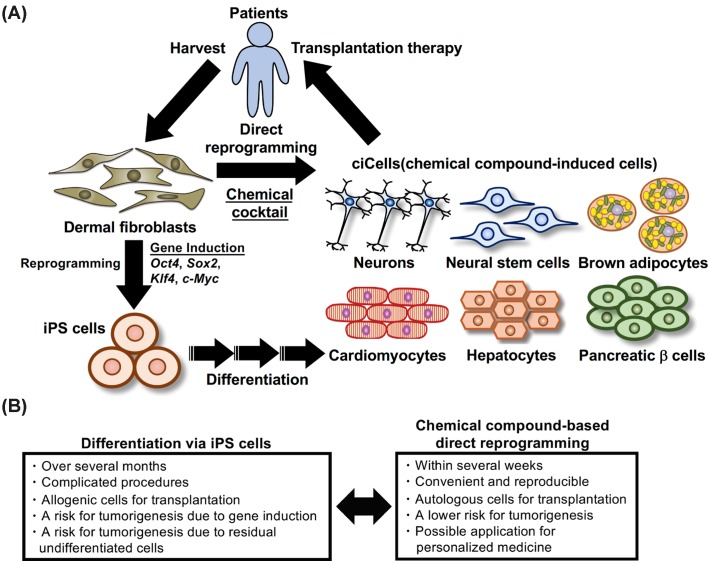
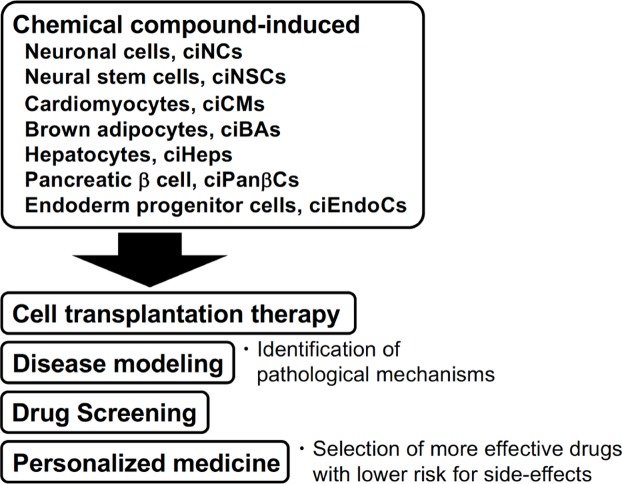
Recent studies have revealed that a combination of chemical compounds enables direct reprogramming from one somatic cell type into another without the use of transgenes by regulating cellular signaling pathways and epigenetic modifications. The generation of induced pluripotent stem (iPS) cells generally requires virus vector-mediated expression of multiple transcription factors, which might disrupt genomic integrity and proper cell functions. The direct reprogramming is a promising alternative to rapidly prepare different cell types by bypassing the pluripotent state. Because the strategy also depends on forced expression of exogenous lineage-specific transcription factors, the direct reprogramming in a chemical compound-based manner is an ideal approach to further reduce the risk for tumorigenesis. So far, a number of reported research efforts have revealed that combinations of chemical compounds and cell-type specific medium transdifferentiate somatic cells into desired cell types including neuronal cells, glial cells, neural stem cells, brown adipocytes, cardiomyocytes, somatic progenitor cells, and pluripotent stem cells. These desired cells rapidly converted from patient-derived autologous fibroblasts can be applied for their own transplantation therapy to avoid immune rejection. However, complete chemical compound-induced conversions remain challenging particularly in adult human-derived fibroblasts compared with mouse embryonic fibroblasts (MEFs). This review summarizes up-to-date progress in each specific cell type and discusses prospects for future clinical application toward cell transplantation therapy.
Overview
The claims and statistics of this paper haven’t been checked yet.
Free: it reads the open-access text and checks the first 5 claims that cite a source we can check. Create a free account to check every claim.
Integrity signals
Registry
Cites
Statistics
Figures

Verification
Claims the paper makes
The claims and statistics of this paper haven’t been checked yet.
Free: it reads the open-access text and checks the first 5 claims that cite a source we can check. Create a free account to check every claim.
Claims other papers make about this one
Each is checked against this paper’s own text: does it say what the citing paper says it does?
The source backs part of the claim, not all of it — or backs it for a different population, condition or comparison.
In the citing paper
“CHIR99021 is a GSK3α/β inhibitor, an effective inducer of CiPSCs and promoter of certain stem cell characteristics [66, 67].”
From Chemically induced reprogramming to reverse cellular aging (2023) · cites this paper as [67]
Experimental — accuracy not yet measured
Self-check
Percentages, sums and reported differences re-computed from the paper’s own numbers.
The self-check needs the paper’s full text.
Citations
Cites
Takahashi, K., & Yamanaka, S. (2006) · Cell · doi:10.1016/j.cell.2006.07.024 · Cited by 26,673
Induction of Pluripotent Stem Cells from Adult Human Fibroblasts by Defined Factors
Takahashi, K., Tanabe, K., Ohnuki, M., Narita, M., Ichisaka, T., Tomoda, K., & Yamanaka, S. (2007) · Cell · doi:10.1016/j.cell.2007.11.019 · Cited by 20,221
Beige Adipocytes Are a Distinct Type of Thermogenic Fat Cell in Mouse and Human
Wu, J., Boström, P., Sparks, L. M., Ye, L., Choi, J. H., Giang, A.-H., Khandekar, M., Virtanen, K. A., Nuutila, P., Schaart, G., et al. (2012) · Cell · doi:10.1016/j.cell.2012.05.016 · Cited by 3,319
Direct conversion of fibroblasts to functional neurons by defined factors
Vierbuchen, T., Ostermeier, A., Pang, Z. P., Kokubu, Y., Südhof, T. C., & Wernig, M. (2010) · Nature · doi:10.1038/nature08797 · Cited by 3,017
Direct reprogramming of fibroblasts into functional cardiomyocytes by defined factors
Ieda, M., Fu, J.-D., Delgado-Olguin, P., Vedantham, V., Hayashi, Y., Bruneau, B. G., & Srivastava, D. (2010) · Cell · doi:10.1016/j.cell.2010.07.002 · Cited by 2,454
PRDM16 controls a brown fat/skeletal muscle switch
Seale, P., Bjork, B., Yang, W., Kajimura, S., Chin, S., Kuang, S., Scimè, A., Devarakonda, S., Conroe, H. M., Erdjument-Bromage, H., et al. (2008) · Nature · doi:10.1038/nature07182 · Cited by 2,347
Zhang, Y., Sloan, S. A., Clarke, L. E., Caneda, C., Plaza, C. A., Blumenthal, P. D., Vogel, H., Steinberg, G. K., Edwards, M. S. B., Li, G., et al. (2016) · Neuron · doi:10.1016/j.neuron.2015.11.013 · Cited by 2,295
Generation of Functional Human Pancreatic β Cells In Vitro
Pagliuca, F. W., Millman, J. R., Gürtler, M., Segel, M., Van Dervort, A., Ryu, J. H., Peterson, Q. P., Greiner, D., & Melton, D. A. (2014) · Cell · doi:10.1016/j.cell.2014.09.040 · Cited by 2,025
In vivo reprogramming of adult pancreatic exocrine cells to β-cells
Zhou, Q., Brown, J., Kanarek, A., Rajagopal, J., & Melton, D. A. (2008) · Nature · doi:10.1038/nature07314 · Cited by 2,010
Huangfu, D., Maehr, R., Guo, W., Eijkelenboom, A., Snitow, M., Chen, A. E., & Melton, D. A. (2008) · Nature Biotechnology · doi:10.1038/nbt1418 · Cited by 1,606
Research works printed but not linked: 1
- Zhao, 2015, High-efficiency reprogramming of fibroblasts into cardiomyocytes requires suppression of pro-fibrotic signalling, Nat. Commun., 6, 8243, 10.1038/ncomms9243 · DOI · Paper page
Cited by
Chemically induced reprogramming to reverse cellular aging
Yang, J.-H., Petty, C. A., Dixon-McDougall, T., Lopez, M. V., Tyshkovskiy, A., Maybury-Lewis, S., Tian, X., Ibrahim, N., Chen, Z., Griffin, P. T., et al. (2023) · Aging · doi:10.18632/aging.204896 · Cited by 136
Cancer cell reprogramming: a promising therapy converting malignancy to benignity
Gong, L., Yan, Q., Zhang, Y., Fang, X., Liu, B., & Guan, X. (2019) · 癌症:英文版 · doi:10.1186/s40880-019-0393-5 · Cited by 90
“It is convenient to manufacture small molecules and scale their throughput to induce reprogramming with different lineages [94].”
BackgroundTumorigenicity risk of iPSCs in vivo: nip it in the bud
Zhong, C., Liu, M., Pan, X., & Zhu, H. (2022) · Precision Clinical Medicine · doi:10.1093/pcmedi/pbac004 · Cited by 82
Small Molecules that Promote Self-Renewal of Stem Cells and Somatic Cell Reprogramming
Chen, G., Guo, Y., Li, C., Li, S., & Wan, X. (2020) · Stem Cell Reviews and Reports · doi:10.1007/s12015-020-09965-w · Cited by 56
“cule compounds had been reported and reviewedmainly in the fields of nerve cells and cardiomyocytes [77].”
BackgroundChang, Y., Cho, B., Kim, S., & Kim, J. (2019) · Experimental & Molecular Medicine · doi:10.1038/s12276-019-0251-1 · Cited by 59
Takeda, Y., Harada, Y., Yoshikawa, T., & Dai, P. (2023) · International Journal of Molecular Sciences · doi:10.3390/ijms24021352 · Cited by 53
“The direct conversion methodology is chemical-based and serumfree, which is ideal and convenient for performing reproducible experiments such as basic studies, drug screening, and clinical uses [90].”
BackgroundSelf-citationJin, Y., Kim, H., Min, S., Choi, Y. S., Seo, S. J., Jeong, E., Kim, S. K., Lee, H., Jo, S.-H., Park, J.-H., et al. (2022) · Science Advances · doi:10.1126/sciadv.abn5768 · Cited by 47
Takeda, Y., & Dai, P. (2022) · Scientific Reports · doi:10.1038/s41598-022-10644-8 · Cited by 43
Self-citationA rapid chemical reprogramming system to generate human pluripotent stem cells
Wang, Y., Peng, F., Yang, Z., Cheng, L., Cao, J., Fu, X., He, H., Cai, R., Zeng, W., Dong, Y., et al. (2025) · Nature Chemical Biology · doi:10.1038/s41589-024-01799-8 · Cited by 47
Liu, X., Guo, C., Leng, T., Fan, Z., Mai, J., Chen, J., Xu, J., Li, Q., Jiang, B., Sai, K., et al. (2023) · Cell Death and Disease · doi:10.1038/s41419-023-05611-8 · Cited by 43
“Firstly, small molecules avoid importing viral genome into cells, which were usually used as the vector in transcription factor-mediated reprogramming [24, 25].”
BackgroundSweat gland regeneration: Current strategies and future opportunities
Chen, R., Zhu, Z., Ji, S., Geng, Z., Hou, Q., Sun, X., & Fu, X. (2020) · Biomaterials · doi:10.1016/j.biomaterials.2020.120201 · Cited by 39
Hu, Y., Zhang, F., Zhong, W., Liu, Y., He, Q., Yang, M., Chen, H., Xu, X., Bian, K., Xu, J., et al. (2019) · Journal of Materials Chemistry B · doi:10.1039/c9tb01929d · Cited by 36
Adult hypothalamic neurogenesis and sleep–wake dysfunction in aging
Kostin, A., Alam, A., McGinty, D., & Alam, M. N. (2020) · SLEEP · doi:10.1093/sleep/zsaa173 · Cited by 35
ETV2/ER71, the key factor leading the paths to vascular regeneration and angiogenic reprogramming
Kim, T. M., Lee, R. H., Kim, M. S., Lewis, C. A., & Park, C. (2023) · Stem Cell Research & Therapy · doi:10.1186/s13287-023-03267-x · Cited by 38
Stem cell therapies and benefaction of somatic cell nuclear transfer cloning in COVID-19 era
Singh, B., Mal, G., Verma, V., Tiwari, R., Khan, M. I., Mohapatra, R. K., Mitra, S., Alyami, S. A., Emran, T. B., Dhama, K., et al. (2021) · Stem Cell Research & Therapy · doi:10.1186/s13287-021-02334-5 · Cited by 31
“Notably, the mammalian cells can also be reprogrammed by ectopic or induced expression of exogenous genetic factors Oct5, Sox2, Klf4, and cMyc (OSKM), also known as Yamanaka factors [174]; non-genetic elements and small molecules [175]; microRNAs [176]; synthesized transcription factors [177]; combinations of chemical…”
BackgroundTakeda, Y., & Dai, P. (2024) · Scientific Reports · doi:10.1038/s41598-024-69364-w · Cited by 20
Self-citationA novel mesenchymal stem cell-based regimen for acute myeloid leukemia differentiation therapy
Sun, L., Yang, N., Chen, B., Bei, Y., Kang, Z., Zhang, C., Zhang, N., Xu, P., Yang, W., Wei, J., et al. (2023) · Acta Pharmaceutica Sinica B · doi:10.1016/j.apsb.2023.05.007 · Cited by 19
Min, S., Lee, H., Jin, Y., Kim, Y. H., Sung, J., Choi, H., & Cho, S. (2020) · Nano Letters · doi:10.1021/acs.nanolett.0c01141 · Cited by 19
Haage, V. C., Tuddenham, J. F., Comandante-Lou, N., Bautista, A. R., Monzel, A. S., Chiu, R., Fujita, M., Garcia, F. G., Bhattarai, P., Patel, R., et al. (2024) · bioRxiv (Cold Spring Harbor Laboratory) · doi:10.1101/2024.02.06.579103 · Cited by 16
Wang, X., Wu, J., Wang, W., Zhang, Y., He, D., Xiao, B., Zhang, H., Song, A., Xing, Y., & Li, B. (2022) · ACS Chemical Neuroscience · doi:10.1021/acschemneuro.2c00078 · Cited by 15
Fernandes, G. S., Singh, R. D., & Kim, K. K. (2022) · Biomedicines · doi:10.3390/biomedicines10040928 · Cited by 16
“Therefore, cellular reprogramming, directly converting somatic cells into neurons without going through the intermediate stages of development, has been introduced [6,7].”
BackgroundTakeda, Y., & Dai, P. (2020) · Scientific Reports · doi:10.1038/s41598-020-60769-x · Cited by 15
Self-citationInnovative approaches to boost mesenchymal stem cells efficacy in myocardial infarction therapy
An, C., Zhao, Y., Guo, L., Zhang, Z., Yan, C., Zhang, S., Zhang, Y., Shao, F., Qi, Y., wang, X., et al. (2025) · Materials Today Bio · doi:10.1016/j.mtbio.2025.101476 · Cited by 15
Generation of Leydig-like cells: approaches, characterization, and challenges
Li, Z., Lu, J.-D., Li, S., Chen, H.-L., & Su, Z. (2022) · Asian Journal of Andrology · doi:10.4103/aja202193 · Cited by 11
Cell and tissue reprogramming: Unlocking a new era in medical drug discovery
Sen, C. K., Friday, A. J., & Roy, S. (2025) · Pharmacological Reviews · doi:10.1016/j.pharmr.2025.100077 · Cited by 11
Tsifaki, M., Kelaini, S., Caines, R., Yang, C., & Margariti, A. (2018) · Frontiers in Cardiovascular Medicine · doi:10.3389/fcvm.2018.00109 · Cited by 9
Ge, J.-Y., Zheng, Y., Liu, L., Isoda, H., & Oda, T. (2019) · World Journal of Stem Cells · doi:10.4252/wjsc.v11.i9.650 · Cited by 9
Induced Pluripotent Stem Cells in Birds: Opportunities and Challenges for Science and Agriculture
Zahoor, N., Arif, A., Shuaib, M., Jin, K., Li, B., Li, Z., Pei, X., Zhu, X., Zuo, Q., Niu, Y., et al. (2024) · Veterinary Sciences · doi:10.3390/vetsci11120666 · Cited by 13
GSK‑3 inhibitor CHIR99021 enriches glioma stem‑like cells
Yang, Y., Wang, Q., Bozinov, O., Xu, R., Sun, Y., & Wang, S. (2020) · Oncology Reports · doi:10.3892/or.2020.7525 · Cited by 10
“It has been demonstrated to be useful for applications in molecular biology for transforming the cell type into induced pluripotent stem cells (iPSCs) and neurons (13,14).”
BackgroundÁlvarez-Córdoba, M., Talaverón-Rey, M., Povea-Cabello, S., Cilleros-Holgado, P., Gómez-Fernández, D., Piñero-Pérez, R., Reche-López, D., Munuera-Cabeza, M., Suárez-Carrillo, A., Romero-González, A., et al. (2023) · Pharmaceuticals · doi:10.3390/ph16101359 · Cited by 9
“Furthermore, genetic instability, the risk of generating tumors and mitochondrial DNA alterations are additional obstacles on iPSC development [100].”
BackgroundResveratrol’s neural protective effects for the injured embryoid body and cerebral organoid
Wang, Y., Wei, T., Wang, Q., Zhang, C., Li, K., & Deng, J. (2022) · BMC Pharmacology and Toxicology · doi:10.1186/s40360-022-00593-3 · Cited by 9
“The hiPSCs in the study are reprogrammed from urine exfoliated cells induced by transplanting stem cell transcription factors [8].”
MethodHomogeneity of XEN Cells Is Critical for Generation of Chemically Induced Pluripotent Stem Cells
Jeong, D., Lee, Y., Lee, S.-W., Ham, S., Lee, M., Choi, N. Y., Wu, G., Schöler, H. R., & Ko, K. (2023) · Molecules and Cells · doi:10.14348/molcells.2023.2127 · Cited by 6
“using transcription factors, the chemicals used for chemical reprogramming do not always activate the expression of a specific set of transcription factors required for cell fate transformation because these chemicals have extensive effects on gene expression and epigenetic modifications (Takeda et al., 2018).”
Chemical reprogramming culture for the expansion of salivary gland epithelial basal progenitor cells
Jeong, Y. J., Hong, Y., Yoon, Y., Sim, N. S., Hong, S.-M., & Lim, J. (2025) · Stem Cell Research & Therapy · doi:10.1186/s13287-025-04295-5 · Cited by 5
“This was achieved through chemical reprogramming, a process that utilizes small molecule compounds to induce a transition to a progenitor-like state [15, 16].”
Advances in transcription factors related to neuroglial cell reprogramming
Liu, K.-P., Ma, W., Li, C., Li, J., Zhang, X., Liu, J., Liu, W., Wu, Z., Zang, C., Liang, Y., et al. (2020) · Translational Neuroscience · doi:10.1515/tnsci-2020-0004 · Cited by 7
Nam, Y., Song, Y., Seo, S. J., Ko, G. R., Lee, S. H., Cha, E., Kwak, S. M., Kim, S., Shin, M., Jin, Y., et al. (2024) · MedComm · doi:10.1002/mco2.70005 · Cited by 7
Didiášová, M., Banning, A., & Tikkanen, R. (2023) · Journal of Inherited Metabolic Disease · doi:10.1002/jimd.12674 · Cited by 7
“18).”
Engineering fibroblast with reprogramming and spheronization for bone defect repair
Li, Y.-J., Jiang, B., Wu, Z., Ma, Z., Qiu, L., Cui, W., Zhao, Y., Yan, J., Ma, D., Wu, X., et al. (2025) · Bioactive Materials · doi:10.1016/j.bioactmat.2025.04.021 · Cited by 6
“Firstly, the safety profile of the reprogramming process from fibroblasts to osteoblasts still needs to be optimized [9].”
Neurodegenerative Diseases and Cell Reprogramming
Sallam, A., & Mousa, S. A. (2020) · Molecular Neurobiology · doi:10.1007/s12035-020-02039-5 · Cited by 4
Kurahashi, T., Nishime, C., Nishinaka, E., Komaki, Y., Seki, F., Urano, K., Harada, Y., Yoshikawa, T., & Dai, P. (2023) · International Journal of Molecular Sciences · doi:10.3390/ijms241813853 · Cited by 4
Self-citationChemical transdifferentiation of somatic cells to neural cells: a systematic review
Visintin, P. V., Zampieri, B. L., & Griesi‐Oliveira, K. (2024) · Einstein (São Paulo) · doi:10.31744/einstein_journal/2024rw0423 · Cited by 3
“(26,27) Although the mechanisms involved in this transcriptional landscape reprogramming have not yet been fully elucidated, some aspects are well-documented.”
Chemical journey of somatic cells to pluripotency
Abbey, D. (2022) · Cell Regeneration · doi:10.1186/s13619-022-00126-7 · Cited by 3
Kurahashi, T., Nishime, C., Nishinaka, E., Komaki, Y., Seki, F., Urano, K., Harada, Y., Yoshikawa, T., & Dai, P. (2025) · ACTA HISTOCHEMICA ET CYTOCHEMICA · doi:10.1267/ahc.24-00067 · Cited by 2
“Only a limited number of cell types can be produced by direct chemical reprogramming; their therapeutic efficacy is unknown, and chemically reprogrammed cells are currently studied [34, 35], and the production of pluripotent stem cells has been recently reported [11].”
Self-citationYamamoto, K., Kishida, T., Yamamoto, T., Sowa, Y., Seki, M., & Mazda, O. (2025) · Stem Cell Research & Therapy · doi:10.1186/s13287-025-04605-x · Cited by 2
“…gene transfer-mediated methods in terms of the absence of potential risk of tumorigenicity associated with exogenous genes, ease of mass production and preservation of the chemical compounds, easy control of concentrations and reaction time, lack of immunogenicity, and low economic burden [26, 27].”
Lin, X., Rong, C., & Wu, S. (2022) · Cellular Reprogramming · doi:10.1089/cell.2021.0143 · Cited by 2
“Chemical-based iPSC generation could solve problems related to both efficiency and safety through direct activation of pluripotency-inducing transcription factors, thereby obviating the need for exogenous transcription factors (Qin et al., 2017; Takeda et al., 2018).”
Mapping regulators of cell fate determination: Approaches and challenges
Kumar, A., & Mali, P. (2020) · APL Bioengineering · doi:10.1063/5.0004611 · Cited by 2
Methods in epigenetics-based systems biology and their applications
Jung, S., Ali, M., & del Sol, A. (2020) · Elsevier eBooks · doi:10.1016/b978-0-12-819414-0.00030-6 · Cited by 3
Developing chemical reprogramming strategies of non-hepatocytes for liver regeneration
Ge, D., Yang, W., Ren, H., & Wang, J. (2025) · Journal of Advanced Research · doi:10.1016/j.jare.2025.08.018 · Cited by 3
“Epigenetic regulators may non-specifically activate DNA demethylation in the promoter region, increasing the risk of cell carcinogenesis [82].”
Sizykh, A., Murtazalieva, K., Vyshkvorkina, Y. M., Stupnikov, A., & Medvedeva, Y. A. (2021) · F1000Research · doi:10.12688/f1000research.28439.1 · Cited by 1
Krishnamoorthy, V., & Haigh, J. J. (2021) · Re GEN Open · doi:10.1089/regen.2021.0003 · Cited by 1
iPS Cell and Renal Regenerative Medicine
Araoka, T., & Osafune, K. (2020) · Springer eBooks · doi:10.1007/978-981-15-1108-0_24
Somatic cell nuclear transfer in cellular medicine and biopharming
Singh, B., Mal, G., Sharma, R., Gopinath, D., Jairath, G., Sodhi, M., & Mukesh, M. (2021) · Elsevier eBooks · doi:10.1016/b978-0-323-90583-1.00018-0
Small Molecules Temporarily Induce Neuronal Features in Adult Canine Dermal Fibroblasts
Arai, K., Saito, F., Miyazaki, M., Kushige, H., Izu, Y., Maeta, N., & YAMAZOE, K. (2023) · International Journal of Molecular Sciences · doi:10.3390/ijms242115804
Haage, V. C., Tuddenham, J. F., Comandante-Lou, N., Bautista, A. R., Monzel, A. S., Chiu, R., Fujita, M., Garcia, F. G., Bhattarai, P., Patel, R., et al. (2024) · SSRN Electronic Journal · doi:10.2139/ssrn.4755485 · Cited by 3
In Vitro Generation of Brown and Beige Adipocytes via Cellular Reprogramming
Kurahashi, T., Harada, Y., & Dai, P. (2025) · Cellular Reprogramming · doi:10.1177/21524971251399164
“Moreover, this approach has induced new cell fates from starting cells beyond fi broblasts (Takeda et al., 2018; Wang et al., 2023; Zhang et al., 2023).”
Self-citationFuture Directions and Challenges of 3D Printing in Healthcare
Vikas, V., & Gautam, R. (2026) · Springer eBooks · doi:10.1007/978-981-95-6774-4_18 · Cited by 1
Haage, V. C., Tuddenham, J. F., Comandante-Lou, N., Bautista, A. R., Monzel, A. S., Garcia, F. G., Chiu, R., Fujita, M., Bhattarai, P., White, C. C., et al. (2026) · Cell Reports · doi:10.1016/j.celrep.2026.118031
Linking Mechanical Memory to Traumatic Brain Injury (TBI)-Induced Persistent Hippocampus Dysfunction
Kureel, S. K., & Namita (2026) · IntechOpen eBooks · doi:10.5772/intechopen.1017479
Metadata
- Authors
- Takeda, Y., Harada, Y., Yoshikawa, T., & Dai, P.
- Affiliations
- Kyoto Prefectural University of Medicine (JP)
- Louis Pasteur Center for Medical Research (JP)
- Corresponding author
- Dai, Ping
- Venue
- Bioscience Reports
- Publisher
- Portland Press Ltd.
- Published
- 2018-05-08
- Volume
- 38
- Issue
- 3
- ISSN
- 0144-8463 (ISSN-L)
- 1573-4935
- PMC
- PMC5938430
- OpenAlex
- W2800663083
- Cited by
- 57
- References
- 105
- Citations by year
- 2026: 3 · 2025: 9 · 2024: 6 · 2023: 10 · 2022: 9 · 2021: 4 · 2020: 11 · 2019: 4 · 2018: 1
- FWCI
- 0.49
- Type
- journal article
- Language
- en
- Open access
- gold
- doi.org
- Locations
- Bioscience Reports (publishedVersion, cc-by)
- Europe PMC (PubMed Central) (publishedVersion, cc-by)
- PubMed Central (publishedVersion, cc-by)
- PubMed (publishedVersion)
- Topics
- Life Sciences › Biochemistry, Genetics and Molecular Biology › Molecular Biology › Pluripotent Stem Cells Research
- Life Sciences › Biochemistry, Genetics and Molecular Biology › Molecular Biology › Developmental Biology and Gene Regulation
- Life Sciences › Neuroscience › Developmental Neuroscience › Neurogenesis and neuroplasticity mechanisms
- Keywords
- chemical reprogramming, induced pluripotent stem cells, epigenetic modifications, signaling pathways, autologous fibroblasts, cell transplantation therapy, neuronal differentiation, cardiomyocyte differentiation, brown adipocyte differentiation, neural stem cells, glial cells
- MeSH terms
- Animals, Cell Differentiation, Humans, Neurons, Pyridines, Pyrimidines, Gene Expression Regulation, Developmental, Epigenesis, Genetic, Regenerative Medicine, Mice, Induced Pluripotent Stem Cells, Neural Stem Cells, Cellular Reprogramming
About these checks
Registry, retraction, Cites and statistics results are computed, not judged, with one exception: a printed reference that no index lists is read once by a model before it counts as a citation error. Claims are extracted by a model and kept only when their quote appears verbatim in the text; each cited source is then checked, with a model’s help, for whether it says what the claim relies on. Those verdicts can be wrong — read the claim’s quote and the cited source before relying on one.
Statistics and arithmetic are recomputed, not judged.
Confidence bands are shown only for fields calibrated on our annotated test set. None is calibrated yet, so no band is shown.
What counts as a claim ›How we measure confidence ›How we check this ›
Are you an author, or do you see a problem with this page? Request a review
Data sources
Bibliographic data: Semantic Scholar, OpenAlex, Crossref.
Contains information from the Semantic Scholar Academic Graph Datasets, made available under the ODC Attribution License (ODC-BY 1.0).
Semantic Scholar’s data is described in: Kinney, R., et al. (2023). The Semantic Scholar Open Data Platform. arXiv:2301.10140.
