

Advancing Medical Imaging Informatics by Deep Learning-Based Domain Adaptation
Open accessThe DOI matches its Crossref record; 58 of the 58 references it cites were found in a registry or an index.
Abstract
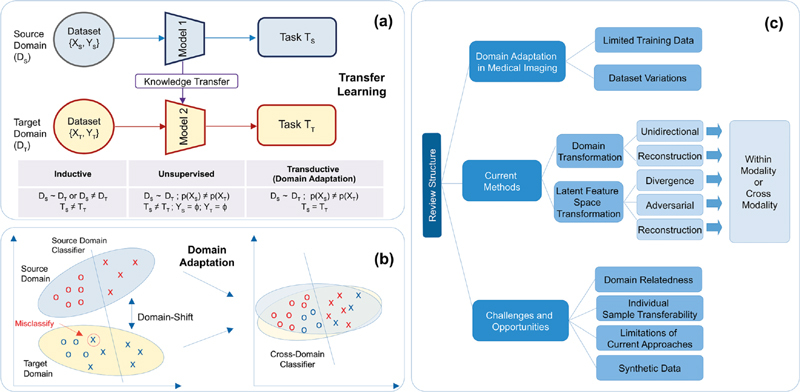
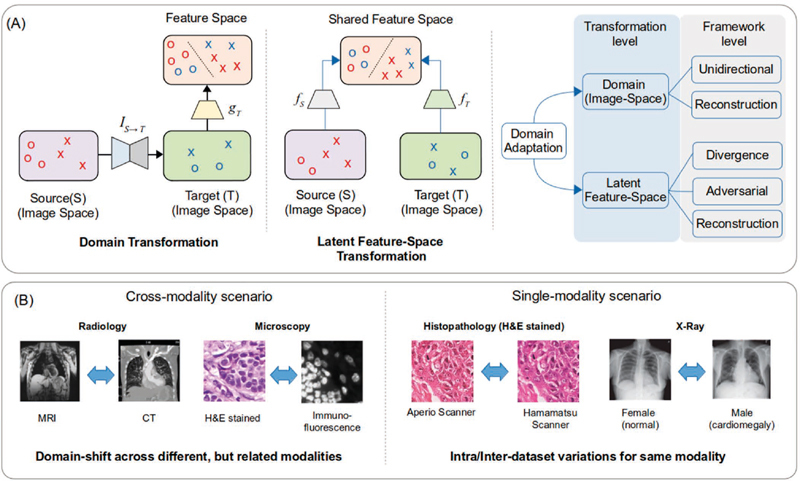
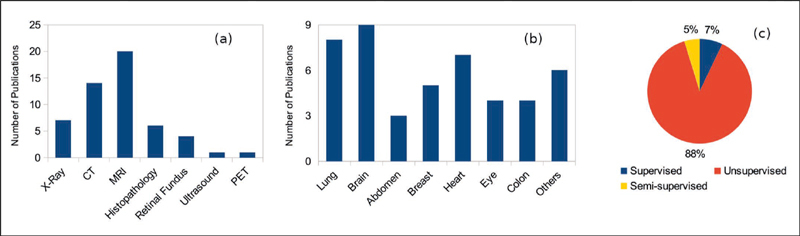
Introduction: There has been a rapid development of deep learning (DL) models for medical imaging. However, DL requires a large labeled dataset for training the models. Getting large-scale labeled data remains a challenge, and multi-center datasets suffer from heterogeneity due to patient diversity and varying imaging protocols. Domain adaptation (DA) has been developed to transfer the knowledge from a labeled data domain to a related but unlabeled domain in either image space or feature space. DA is a type of transfer learning (TL) that can improve the performance of models when applied to multiple different datasets. Objective: In this survey, we review the state-of-the-art DL-based DA methods for medical imaging. We aim to summarize recent advances, highlighting the motivation, challenges, and opportunities, and to discuss promising directions for future work in DA for medical imaging. Methods: We surveyed peer-reviewed publications from leading biomedical journals and conferences between 2017-2020, that reported the use of DA in medical imaging applications, grouping them by methodology, image modality, and learning scenarios. Results: We mainly focused on pathology and radiology as application areas. Among various DA approaches, we discussed domain transformation (DT) and latent feature-space transformation (LFST). We highlighted the role of unsupervised DA in image segmentation and described opportunities for future development. Conclusion: DA has emerged as a promising solution to deal with the lack of annotated training data. Using adversarial techniques, unsupervised DA has achieved good performance, especially for segmentation tasks. Opportunities include domain transferability, multi-modal DA, and applications that benefit from synthetic data.
Overview
The claims and statistics of this paper haven’t been checked yet.
Free: it reads the open-access text and checks the first 5 claims that cite a source we can check. Create a free account to check every claim.
Integrity signals
Registry
Cites
Statistics
Figures
Verification
Claims the paper makes
The claims and statistics of this paper haven’t been checked yet.
Free: it reads the open-access text and checks the first 5 claims that cite a source we can check. Create a free account to check every claim.
Claims other papers make about this one
Each is checked against this paper’s own text: does it say what the citing paper says it does?
The source backs part of the claim, not all of it — or backs it for a different population, condition or comparison.
In the citing paper
“Transfer learning mitigates scanner and protocol variations by leveraging knowledge from large-scale source domains (Choudhary et al., 2020; Gholizade et al., 2025).”
From Multimodal neuroimaging and AI integration in cognitive disorders: advances, challenges, and future directions for precision medicine (2026) · cites this paper as Choudhary et al., 2020
Experimental — accuracy not yet measured
Self-check
Percentages, sums and reported differences re-computed from the paper’s own numbers.
The self-check needs the paper’s full text.
Citations
Cites
Pan, S. J., & Yang, Q. (2010) · IEEE Transactions on Knowledge and Data Engineering · doi:10.1109/tkde.2009.191 · Cited by 23,387 · cited 1×
“Transfer learning (TL) [7] is a technique that applies knowledge learned from one”
BackgroundA survey on deep learning in medical image analysis
Litjens, G., Kooi, T., Bejnordi, B. E., Setio, A. A. A., Ciompi, F., Ghafoorian, M., van der Laak, J. A. W. M., van Ginneken, B., & Sánchez, C. I. (2017) · Medical Image Analysis · doi:10.1016/j.media.2017.07.005 · Cited by 15,332 · cited 2×
“During the past few years, medical imaging informatics has made remarkable progress due to the increasing availability of data and the rapid development of deep learning (DL) techniques [2].”
BackgroundConditional Generative Adversarial Nets
Mirza, M., & Osindero, S. (2014) · arXiv · doi:10.48550/arxiv.1411.1784 · Cited by 8,863
Domain-Adversarial Training of Neural Networks
Ganin, Y., Ustinova, E., Ajakan, H., Germain, P., Larochelle, H., Laviolette, F., Marchand, M., & Lempitsky, V. (2017) · Advances in Computer Vision and Pattern Recognition · doi:10.1007/978-3-319-58347-1_10 · Cited by 8,318
Attention U-Net: Learning Where to Look for the Pancreas
Oktay, O., Schlemper, J., Folgoc, L. L., Lee, M., Heinrich, M., Misawa, K., Mori, K., McDonagh, S., Hammerla, N. Y., Kainz, B., et al. (2018) · arXiv · doi:10.48550/arxiv.1804.03999 · Cited by 5,458
Jack, C. R., Knopman, D. S., Jagust, W. J., Petersen, R. C., Weiner, M. W., Aisen, P. S., Shaw, L. M., Vemuri, P., Wiste, H. J., Weigand, S. D., et al. (2013) · The Lancet Neurology · doi:10.1016/s1474-4422(12)70291-0 · Cited by 4,396
Review The Cancer Genome Atlas (TCGA): an immeasurable source of knowledge
Tomczak, K., Czerwińska, P., & Wiznerowicz, M. (2015) · Współczesna Onkologia · doi:10.5114/wo.2014.47136 · Cited by 3,492
Deep domain confusion Maximizing for domain invariance
Tzeng, E., Hoffman, J., Zhang, N., Saenko, K., & Darrell, T. (2014) · arXiv · doi:10.48550/arxiv.1412.3474 · Cited by 2,285
Deep visual domain adaptation: A survey
Wang, M., & Deng, W. (2018) · Neurocomputing · doi:10.1016/j.neucom.2018.05.083 · Cited by 2,209
Self-citationHistopathological Image Analysis: A Review
Gurcan, M. N., Boucheron, L. E., Can, A., Madabhushi, A., Rajpoot, N. M., & Yener, B. (2009) · IEEE Reviews in Biomedical Engineering · doi:10.1109/rbme.2009.2034865 · Cited by 2,052 · cited 1×
“As another example, Hematoxylin and Eosin (H&E) stained images are widely available, while immunohistochemistry (IHC) images, which clearly highlight nuclei via specific biomarkers [15], are not.”
Background
Research works printed but not linked: 54
- Chartsias A Joyce T Dharmakumar R Tsaftaris S AAdversarial image synthesis for unpaired multi-modal cardiac data. In: International workshop on simulation and synthesis in medical imaging; 2017 Sep 10. p. 3-13
- Irvin J Rajpurkar P Ko M Yu Y Ciurea-Ilcus S Chute C CheXpert: A Large Chest Radiograph Dataset with Uncertainty Labels and Expert Comparison. arXiv preprint arXiv: 1901.07031; 2019 Jan 21 · arXiv
- Ciompi F Geessink O Bejnordi B E De Souza G S Baidoshvili A Litjens G The importance of stain normalization in colorectal tissue classification with convolutional networks. In: IEEE 14th International Symposium on Biomedical Imaging, ISBI 2017; 2017. p. 160-3
- Lampert T Merveille O Schmitz J Forestier G Feuerhake F Wemmert CStrategies for training stain invariant CNNs. In: IEEE 16th International Symposium on Biomedical Imaging, ISBI 2019; p. 905-9
- Yang X Dou H Li R Wang X Bian C Li S Generalizing Deep Models for Ultrasound Image Segmentation. In: Medical Image Computing and Computer Assisted Intervention, MICCAI 2018; p. 497-505
- Chen C Dou Q Chen H Heng P ASemantic-aware generative adversarial nets for unsupervised domain adaptation in chest X-ray segmentation. In: International Workshop on Machine Learning in Medical Imaging 2018. p. 143-51
- Hoffman J Tzeng E Park T Zhu J Y Isola P Saenko K CyCADA: Cycle-Consistent Adversarial Domain Adaptation. In: International Conference on Machine Learning 2018. p. 1989-98
- Isola P Zhu J Y Zhou T Efros A AImage-to-image translation with conditional adversarial networks. In: Proceedings of the IEEE conference on computer vision and pattern recognition 2017. p. 1125-34
- Goodfellow I Pouget-Abadie J Mirza M Xu B Warde-Farley D Ozair S Courville A Generative adversarial nets. In: Advances in neural information processing systems 2014. p. 2672-80
- Bousmalis K Silberman N Dohan D Erhan D Krishnan DUnsupervised pixel-level domain adaptation with generative adversarial networks. In: Proceedings of the IEEE conference on computer vision and pattern recognition 2017. p. 3722-31
- Zhang Z Yang L Zheng YTranslating and segmenting multimodal medical volumes with cycle-and shape-consistency generative adversarial network. In: Proceedings of the IEEE conference on computer vision and pattern Recognition 2018. p. 9242-9251
- de Bel T Hermsen M Kers J Van Der Laak J Litjens GStain-transforming cycle-consistent generative adversarial networks for improved segmentation of renal histopathology. In: Proceedings of the 2nd International Conference on Medical Imaging with Deep Learning; Proceedings of Machine Learning Research 2019 May 24. p. 151-63
- Yoo D Kim N Park S Paek A S Kweon I SPixel-level domain transfer. In: European Conference on Computer Vision 2016. p. 517-32
- Liu M Y Tuzel OCoupled generative adversarial networks. In Advances in neural information processing systems 2016. p. 469-77
- Madani A Moradi M Karargyris A Syeda-Mahmood TSemi-supervised learning with generative adversarial networks for chest X-ray classification with ability of data domain adaptation. In: IEEE 15th International Symposium on Biomedical Imaging, ISBI 2018. p. 1038-42
- Zhao C Carass A Lee J He Y Prince J LWhole brain segmentation and labeling from CT using synthetic MR images. In: International Workshop on Machine Learning in Medical Imaging 2017. p. 291-8
- Zhu J Y Park T Isola P Efros A AUnpaired image-to-image translation using cycle-consistent adversarial networks. In: Proceedings of the IEEE international conference on computer vision 2017. p. 2223-32
- Choi Y Choi M Kim M Ha J W Kim S Choo JStarGAN: Unified generative adversarial networks for multi-domain image-to-image translation. In: Proceedings of the IEEE conference on computer vision and pattern recognition 2018. p. 8789-97
- Huang X Liu M Y Belongie S Kautz JMultimodal unsupervised image-to-image translation. In: Proceedings of the European Conference on Computer Vision, ECCV 2018. p. 172-89
- Zhang Y Miao S Mansi T Liao RTask driven generative modeling for unsupervised domain adaptation: Application to X-ray image segmentation. In: International Conference on Medical Image Computing and Computer-Assisted Intervention 2018. p. 599-607
- Hiasa Y Otake Y Takao M Matsuoka T Takashima K Carass A Cross-modality image synthesis from unpaired data using CycleGAN. In: International workshop on simulation and synthesis in medical imaging 2018. p. 31-41
- Liu X Wei X Yu A Pan ZUnpaired Data based Cross-domain Synthesis and Segmentation Using Attention Neural Network. In: Asian Conference on Machine Learning 2019. p. 987-1000
- Nguyen H Luo S Ramos FSemi-supervised Learning Approach to Generate Neuroimaging Modalities with Adversarial Training. In: Pacific-Asia Conference on Knowledge Discovery and Data Mining 2020. p. 409-21
- Sun B Saenko KDeep coral: Correlation alignment for deep domain adaptation. In: European conference on computer vision 2016. p. 443-50
- Bhushan Damodaran B Kellenberger B Flamary R Tuia D Courty NDeepjdot: Deep joint distribution optimal transport for unsupervised domain adaptation. In: Proceedings of the European Conference on Computer Vision (ECCV) 2018. p. 447-63
- Sun B Feng J Saenko KReturn of frustratingly easy domain adaptation. In: Thirtieth AAAI Conference on Artificial Intelligence 2016 Mar 2
- Kang G Jiang L Yang Y Hauptmann A GContrastive adaptation network for unsupervised domain adaptation. In: Proceedings of the IEEE Conference on Computer Vision and Pattern Recognition 2019. p. 4893-902
- Tzeng E Hoffman J Saenko K Darrell TAdversarial discriminative domain adaptation. In: Proceedings of the IEEE Conference on Computer Vision and Pattern Recognition 2017. p. 7167-76
- Tsai Y H Hung W C Schulter S Sohn K Yang M H Chandraker MLearning to adapt structured output space for semantic segmentation. In: Proceedings of the IEEE Conference on Computer Vision and Pattern Recognition 2018. p. 7472-81
- Ghifary M Kleijn W B Zhang M Balduzzi D Li WDeep reconstruction-classification networks for unsupervised domain adaptation. In: European Conference on Computer Vision 2016. p. 597-613
- Venkataramani R Ravishankar H Anamandra STowards Continuous Domain Adaptation For Medical Imaging. In: IEEE 16th International Symposium on Biomedical Imaging, ISBI 2019. p. 443-6
- Zhuang J Chen Z Zhang J Zhang D Cai ZDomain adaptation for retinal vessel segmentation using asymmetrical maximum classifier discrepancy. In: Proceedings of the ACM Turing Celebration Conference-China 2019. p. 1-6
- Zhang Y Chen H Wei Y Zhao P Cao J Fan X From whole slide imaging to microscopy: Deep microscopy adaptation network for histopathology cancer image classification. In: International Conference on Medical Image Computing and Computer-Assisted Intervention 2019. p. 360-8
- Kamnitsas K Baumgartner C Ledig C Newcombe V Simpson J Kane A Unsupervised domain adaptation in brain lesion segmentation with adversarial networks. In: International conference on information processing in medical imaging 2017. p. 597-609
- Orbes-Arteaga M Varsavsky T Sudre C H Eaton-Rosen Z Haddow L J Sørensen L PMC7610933 34109324
- Oliveira H Ferreira E Dos Santos J ATruly Generalizable Radiograph Segmentation with Conditional Domain Adaptation. IEEE Access 2020 May 1
- Ouyang C Kamnitsas K Biffi C Duan J Rueckert DData efficient unsupervised domain adaptation for Cross-Modality image segmentation. In: International Conference on Medical Image Computing and Computer-Assisted Intervention 2019. p. 669-77
- Peng X Bai Q Xia X Huang Z Saenko K Wang BMoment matching for multi-source domain adaptation. In: Proceedings of the IEEE International Conference on Computer Vision 2019. p. 1406-15
- Saito K Watanabe K Ushiku Y Harada TMaximum classifier discrepancy for unsupervised domain adaptation. In: Proceedings of the IEEE Conference on Computer Vision and Pattern Recognition 2018. p. 3723-32
- Cao Z Ma L Long M Wang JPartial adversarial domain adaptation. In: Proceedings of the European Conference on Computer Vision, ECCV 2018. p. 135-50
- Panareda Busto P Gall JOpen set domain adaptation. In: Proceedings of the IEEE International Conference on Computer Vision 2017. p. 754-63
- Goldberger J Ben-Reuven ETraining deep neural-networks using a noise adaptation layer. In: International Conference on Learning Representations 2017
- Arora S Ge R Liang Y Ma T Zhang YGeneralization and equilibrium in generative adversarial nets (gans). In: Proceedings of the 34th International Conference on Machine Learning Volume 70 2017 Aug 6. p. 224-32
- Martin A Lon BTowards principled methods for training generative adversarial networks. In: NIPS 2016 Workshop on Adversarial Training
- Shrivastava A Pfister T Tuzel O Susskind J Wang W Webb RLearning from simulated and unsupervised images through adversarial training. In: Proceedings of the IEEE conference on computer vision and pattern recognition 2017. p. 2107-16
- Ghorbani A Natarajan V Coz D Liu YDermGAN: Synthetic Generation of Clinical Skin Images with Pathology. arXiv preprint arXiv:1911.0871
- Gholami A Subramanian S Shenoy V Himthani N Yue X Zhao S A novel domain adaptation framework for medical image segmentation. In: International MICCAI Brainlesion Workshop 2018. p. 289-98
- Tang Y Tang Y Sandfort V Xiao J Summers R MTUNA-Net: Task-oriented UNsupervised Adversarial Network for Disease Recognition in Cross-Domain Chest X-rays. In: International Conference on Medical Image Computing and Computer-Assisted Intervention 2019. p. 431-40
- Dou Q Ouyang C Chen C Chen H Glocker B Zhuang X Pnp-adanet: Plug-and-play adversarial domain adaptation network with a benchmark at cross-modality cardiac segmentation. arXiv preprint arXiv:1812.07907; 2018 Dec 19 · arXiv
- Dong N Kampffmeyer M Liang X Wang Z Dai W Xing EUnsupervised domain adaptation for automatic estimation of cardiothoracic ration. In: International Conference on Medical Image Computing and Computer-assisted intervention 2018. p. 544-52
- Javanmardi M Tasdizen TDomain adaptation for biomedical image segmentation using adversarial training. In: IEEE 15th International Symposium on Biomedical Imaging 2018. p. 554-8
- Novosad P Fonov V Collins D LUnsupervised domain adaptation for the automated segmentation of neuroanatomy in MRI: a deep learning approach. bioRxiv preprint bioRxiv:845537 2019 Jan 1
- Wang S Yu L Li K Yang X Fu C W Heng P ABoundary and Entropy-driven Adversarial Learning for Fundus Image Segmentation. In: International Conference on Medical Image Computing and Computer-Assisted Intervention 2019. p. 102-10
- Hou X Liu J Xu B Liu B Chen X Ilyas M Dual Adaptive Pyramid Network for Cross-Stain Histopathology Image Segmentation. In: International Conference on Medical Image Computing and Computer-Assisted Intervention 2019. p. 101-9
Cited by
A survey on active learning and human-in-the-loop deep learning for medical image analysis
Budd, S., Robinson, E. C., & Kainz, B. (2021) · Medical Image Analysis · doi:10.1016/j.media.2021.102062 · Cited by 606
“We refer the reader to Guan and Liu (2021); Choudhary et al. (2020) for an overview of DA methods used for medical image analysis, and hope to see greater application of DA methods in AL scenarios in the future.”
MethodHamamoto, R., Suvarna, K., Yamada, M., Kobayashi, K., Shinkai, N., Miyake, M., Takahashi, M., Jinnai, S., Shimoyama, R., Sakai, A., et al. (2020) · Cancers · doi:10.3390/cancers12123532 · Cited by 207
Integrating multi-omics data with EHR for precision medicine using advanced artificial intelligence
Tong, L., Shi, W., Isgut, M., Zhong, Y., Lais, P., Gloster, L., Sun, J., Swain, A., Giuste, F., & Wang, M. D. (2024) · IEEE Reviews in Biomedical Engineering · doi:10.1109/rbme.2023.3324264 · Cited by 130
“It has emerged as a promising solution for dealing with the lack of annotated training data [153].”
BackgroundSelf-citationDynamic Memory to Alleviate Catastrophic Forgetting in Continual Learning with Medical Imaging
Perkonigg, M., Hofmanninger, J., Herold, C. J., Brink, J. A., Pianykh, O., Prosch, H., & Langs, G. (2021) · Nature Communications · doi:10.1038/s41467-021-25858-z · Cited by 106
Explainable, Domain-Adaptive, and Federated Artificial Intelligence in Medicine
Chaddad, A., Lu, Q., Li, J., Katib, Y., Kateb, R., Tanougast, C., Bouridane, A., & Abdulkadir, A. (2023) · IEEE/CAA Journal of Automatica Sinica · doi:10.1109/jas.2023.123123 · Cited by 141
“This idea has been developed with a task of re-weighting mechanism that considers loss function with dynamically update weights [118].”
MethodShi, W., Tong, L., Zhu, Y., & Wang, M. D. (2021) · IEEE Journal of Biomedical and Health Informatics · doi:10.1109/jbhi.2021.3074893 · Cited by 83
“However, most of these AI-related COVID-19 clinical decision support systems [9]–[13] are black-box deep learning models and lack proper explainability.”
BackgroundSelf-citationKumari, S., & Singh, P. P. (2023) · Computers in Biology and Medicine · doi:10.1016/j.compbiomed.2023.107912 · Cited by 122
Petersen, E., Potdevin, Y., Mohammadi, E., Zidowitz, S., Breyer, S., Nowotka, D., Henn, S., Pechmann, L., Leucker, M., Rostalski, P., et al. (2022) · IEEE Access · doi:10.1109/access.2022.3178382 · Cited by 113
“For recent reviews and applications to biomedical imaging, refer to, e.g., [149]–[151].”
BackgroundGaggion, N., Mansilla, L., Mosquera, C., Milone, D. H., & Ferrante, E. (2022) · IEEE Transactions on Medical Imaging · doi:10.1109/tmi.2022.3224660 · Cited by 98
“3) Domain shift (DS) evaluation: DS refers to a variation in the target (test) domain concerning the source (training) domain [53].”
BackgroundKhalil, Y. A., Amirrajab, S., Lorenz, C., Weese, J., Pluim, J. P. W., & Breeuwer, M. M. (2022) · Medical Image Analysis · doi:10.1016/j.media.2022.102688 · Cited by 85
Multistage transfer learning for medical images
Ayana, G., Dese, K., Abagaro, A. M., Jeong, K. C., Yoon, S.-D., & Choe, S.-W. (2024) · Artificial Intelligence Review · doi:10.1007/s10462-024-10855-7 · Cited by 57
“Understanding and addressing this heterogeneity is crucial for developing robust and generalizable models in the field of medical image analysis (Choudhary et al. 2020).”
CyCMIS: Cycle-consistent Cross-domain Medical Image Segmentation via diverse image augmentation
Wang, R., & Zheng, G. (2021) · Medical Image Analysis · doi:10.1016/j.media.2021.102328 · Cited by 64
Correcting data imbalance for semi-supervised COVID-19 detection using X-ray chest images
Calderon-Ramirez, S., Shengxiang-Yang, Moemeni, A., Elizondo, D. A., Colreavy‐Donnelly, S., Chavarría-Estrada, L. F., & Molina‐Cabello, M. A. (2021) · Applied Soft Computing · doi:10.1016/j.asoc.2021.107692 · Cited by 63
“This possibly would yield a very low performance [23,24].”
Deep Active Learning for Computer Vision Tasks: Methodologies, Applications, and Challenges
Wu, M., Li, C., & Yao, Z. (2022) · Applied Sciences · doi:10.3390/app12168103 · Cited by 60
CX-DaGAN: Domain Adaptation for Pneumonia Diagnosis on a Small Chest X-Ray Dataset
Sánchez, K., Hinojosa, C. A., Argüello, H., Kouamé, D., Meyrignac, O., & Basarab, A. (2022) · IEEE Transactions on Medical Imaging · doi:10.1109/tmi.2022.3182168 · Cited by 50
“…which translates images from one domain to another such that a specific task can be applied directly to the transformed images; and latent feature-space transformation (LFST-DA) which aligns the images from both domains in a hidden common feature space in which the task model is to be trained [31].”
BackgroundRezazadeh, N., Luca, A. D., Perfetto, D., Salami, M. R., & Lamanna, G. (2025) · Smart Materials and Structures · doi:10.1088/1361-665x/ade7db · Cited by 50
“Rather than requiring extensive data collection under every condition, TL capitalises on data or models from alternative domains, such as different structures or simulations, to improve diagnostic performance in new target settings [6].”
The RETA Benchmark for Retinal Vascular Tree Analysis
Lyu, X., Li, C., & Zhang, S. (2022) · Scientific Data · doi:10.1038/s41597-022-01507-y · Cited by 44
Impact of COVID-19 pandemic on radiology education, training, and practice: A narrative review
Majumder, M. A. A., Gaur, U., Singh, K., Kandamaran, L., Gupta, S., Haque, M., Rahman, S., Sa, B., Rahman, M., & Rampersad, F. S. (2021) · World Journal of Radiology · doi:10.4329/wjr.v13.i11.354 · Cited by 43
Convolutional neural network-based model for recognizing TBM rock chip gradation
Pang, Y.-E., Li, X., Dong, Z.-K., & Gong, Q. (2024) · Automation in Construction · doi:10.1016/j.autcon.2024.105414 · Cited by 39
Federated and transfer learning for cancer detection based on image analysis
Bechar, A., Medjoudj, R., Elmir, Y., Himeur, Y., & Amira, A. (2025) · Neural Computing and Applications · doi:10.1007/s00521-024-10956-y · Cited by 52
“The domain adaptation aspect arises from the ability to effectively integrate and transfer knowledge from data-rich source domains to data-poor target domains, without negative transfer when the domains are not closely related [305, 306].”
Application of Artificial Intelligence in COVID-19 Diagnosis and Therapeutics
Asada, K., Komatsu, M., Shimoyama, R., Takasawa, K., Shinkai, N., Sakai, A., Bolatkan, A., Yamada, M., Takahashi, S., Machino, H., et al. (2021) · Journal of Personalized Medicine · doi:10.3390/jpm11090886 · Cited by 33
GPT-Driven Radiology Report Generation with Fine-Tuned Llama 3
Voinea, Ș.-V., Mămuleanu, M., Teică, R. V., Florescu, L. M., Selișteanu, D., & Gheonea, I. A. (2024) · Bioengineering · doi:10.3390/bioengineering11101043 · Cited by 38
“Additionally, we employed LoRA adapters to accelerate the training process, ensuring efficient and effective fine-tuning on consumer-grade GPUs [13,14].”
MethodWang, R., & Zheng, G. (2024) · Computerized Medical Imaging and Graphics · doi:10.1016/j.compmedimag.2024.102406 · Cited by 27
Liu, J., Zhao, J., Xiao, J., Zhao, G., Xu, P., Yang, Y., & Gong, S. (2024) · Computers in Biology and Medicine · doi:10.1016/j.compbiomed.2024.108759 · Cited by 26
Kim, M. J., Kim, S. H., Kim, S. M., Nam, J. H., Hwang, Y., & Lim, Y. J. (2023) · Diagnostics · doi:10.3390/diagnostics13193023 · Cited by 28
“It involves feature alignment, an image alignment process that typically uses a framework for image conversion to reduce the differences in appearance among images [7,8].”
Multi-Modal Deep Learning Models for Alzheimer's Disease Prediction Using MRI and EHR
Prabhu, S. S., Berkebile, J. A., Rajagopalan, N., Yao, R., Shi, W., Giuste, F., Zhong, Y., Sun, J., & Wang, M. D. (2022) · IEEE International Conference on Bioinformatics and Bioengineering (BIBE) · doi:10.1109/bibe55377.2022.00044 · Cited by 26
“For skull stripping, we use transfer learning (domain adaptation) in medical imaging [13] to adopt existing known deep learning model U-net [14].”
MethodSelf-citationConvLoRA and AdaBN Based Domain Adaptation via Self-Training
Aleem, S., Dietlmeier, J., Arazo, E., & Little, S. (2024) · IEEE International Symposium on Biomedical Imaging (ISBI) · doi:10.1109/isbi56570.2024.10635661 · Cited by 34
“This issue is particularly pronounced in multi-center medical studies, where various imaging centers employ different scanners, protocols, and subject populations [2, 3].”
BackgroundSemi-supervised classification of radiology images with NoTeacher: A teacher that is not mean
Unnikrishnan, B., Nguyen, C., Balaram, S., Li, C., Foo, C.-S., & Krishnaswamy, P. (2021) · Medical Image Analysis · doi:10.1016/j.media.2021.102148 · Cited by 19
Pivotal challenges in artificial intelligence and machine learning applications for neonatal care
Jeong, H., & Kamaleswaran, R. (2022) · Seminars in Fetal and Neonatal Medicine · doi:10.1016/j.siny.2022.101393 · Cited by 21
Deep style transfer to deal with the domain shift problem on spheroid segmentation
García-Domínguez, M., Domínguez, C., Heras, J., Mata, E. J., & Pascual, V. (2023) · Neurocomputing · doi:10.1016/j.neucom.2023.127105 · Cited by 18
Kawamura, K., Lee, C., Yoshikawa, T., Al-Shareef, H., Usami, Y., Toyosawa, S., Tanaka, S., & Hiraoka, S.-I. (2022) · Cancer Medicine · doi:10.1002/cam4.5343 · Cited by 17
“44 However, since the images we used were completely anonymized, we believe that they can be collected without the need for such anonymization.”
BackgroundExplainable AI for Fighting COVID-19 Pandemic: Opportunities, Challenges, and Future Prospects
Abiodun, M. K., Awotunde, J. B., Aremu, D. R., & Adeniyi, A. E. (2022) · Disruptive technologies and digital transformations for society 5.0 · doi:10.1007/978-981-16-3783-4_15 · Cited by 21
Innovative Strategies for Early Autism Diagnosis: Active Learning and Domain Adaptation Optimization
Alam, M. S., Elsheikh, E. A. A., Suliman, F. M., Rashid, M. M., & Faizabadi, A. R. (2024) · Diagnostics · doi:10.3390/diagnostics14060629 · Cited by 18
“This approach facilitates seamless knowledge transfer between models, paving the way for effective feature space adaptation [15].”
BackgroundZhu, Y., Venugopalan, J., Zhang, Z., Chanani, N. K., Maher, K., & Wang, M. D. (2022) · Frontiers in Artificial Intelligence · doi:10.3389/frai.2022.640926 · Cited by 15
“Despite its success in image processing (Han et al., 2018; Lee et al., 2018; Choudhary et al., 2020), transfer learning has a limited impact on ICU data for predicting mortality risk and ICU readmission.”
BackgroundMethodSelf-citationAutomated prognosis of renal function decline in ADPKD patients using deep learning
Raj, A., Tollens, F., Caroli, A., Nörenberg, D., & Zöllner, F. G. (2023) · Zeitschrift für Medizinische Physik · doi:10.1016/j.zemedi.2023.08.001 · Cited by 13
“Furthermore, several approaches exist that help adapt networks to new datasets [32, 33, 34, 35, 36, 37], however, this is a subject of future work since our main focus was to show the feasibility of an automated prediction.”
BackgroundStreamlining neuroradiology workflow with AI for improved cerebrovascular structure monitoring
Banerjee, S., Nysjö, F., Toumpanakis, D., Dhara, A. K., Wikström, J., & Strand, R. (2024) · Scientific Reports · doi:10.1038/s41598-024-59529-y · Cited by 13
“Several methods have been proposed in the literature to tackle the issue 12–14 .”
MethodMulti-scale Multi-task Distillation for Incremental 3D Medical Image Segmentation
Tian, M., Yang, Q., & Gao, Y. (2023) · Lecture notes in computer science · doi:10.1007/978-3-031-25066-8_20 · Cited by 13
Unsupervised Domain Adaptation for Cross-domain Histopathology Image Classification
Li, X., Pan, C., He, L., & Li, X. (2023) · Multimedia Tools and Applications · doi:10.1007/s11042-023-16400-y · Cited by 13
Глинер, В., Makarov, V. V., Avetisyan, A. I., Schuster, A., & Yaniv, Y. (2023) · Scientific Reports · doi:10.1038/s41598-023-40693-6 · Cited by 15
“Hidden layers size was [8,16,32,64,128,256,512] for each of the convolutional layers, respectively.”
BackgroundBian, P., Xi-yu, Z., Liu, R., Li, H., Zhang, Q., & Dai, B. (2021) · Journal of Healthcare Engineering · doi:10.1155/2021/2603842 · Cited by 10
GraphSKT: Graph-Guided Structured Knowledge Transfer for Domain Adaptive Lesion Detection
Chen, C., Wang, J., Pan, J., Bian, C., & Zhang, Z. (2022) · IEEE Transactions on Medical Imaging · doi:10.1109/tmi.2022.3212784 · Cited by 9
“Choudhary et al. [32] systematically review the recent advances in domain adaptation for medical imaging informatics.”
BackgroundDang, M., Liu, B., Chen, Y., & Zhang, Z. (2026) · Psychoradiology · doi:10.1093/psyrad/kkag007 · Cited by 10
Nadkarni, P. M., & Merchant, S. A. (2022) · Artificial Intelligence in Medical Imaging · doi:10.35711/aimi.v3.i3.55 · Cited by 7
Segmentation of Breast Tubules in H&E Images Based on a DKS‐DoubleU‐Net Model
Chen, Y., Zhou, Y., Chen, G., Guo, Y., Lv, Y., Ma, M., Pei, Z., & Sun, Z. (2022) · BioMed Research International · doi:10.1155/2022/2961610 · Cited by 6
Artificial Intelligence In Field of Medical Imaging Informatics
Jha, M., & Hasija, Y. (2023) · International Conference on Advance Computing and Innovative Technologies in Engineering (ICACITE) · doi:10.1109/icacite57410.2023.10182498 · Cited by 5
“Bidirectional picture translation reduces the mapping space by enforcing semantic consistency between the original and rebuilt images using two generative adversarial networks [16].”
BackgroundDai, G., Su, J., Zhang, M., Liu, X., & Huang, W. (2023) · Neural Computing and Applications · doi:10.1007/s00521-023-09254-w · Cited by 6
“The main method of medical image modal translation based on deep learning is to generate adversarial network (GAN) [17, 18].”
Notable Papers and New Directions in Sensors, Signals, and Imaging Informatics
Hsu, W. W. Y., Baumgärtner, C., Deserno, T. M., & Section Editors of the IMIA Yearbook Section on Sensors, S. (2021) · Yearbook of Medical Informatics · doi:10.1055/s-0041-1726526 · Cited by 6
“In 2020, we observed three new reviews in this field [5-7].”
BackgroundDai, J., Wang, X., Li, Y., Liu, Z., Ng, Y.-L., Xiao, J., Fan, J. K. M., Lam, J., Dou, Q., Vardhanabhuti, V., et al. (2023) · Advanced Intelligent Systems · doi:10.1002/aisy.202200246 · Cited by 5
Deep Learning Based Cardiac MRI Segmentation: Do We Need Experts?
Skandarani, Y., Jodoin, P., & Lalande, A. (2021) · Algorithms · doi:10.3390/a14070212 · Cited by 5
“While some methods leverage partly-annotated data sets [9], others use domain adaptation strategies to compensate for small training data sets [10].”
MethodVisual blockage assessment at culverts using synthetic images to mitigate blockage-originated floods
Iqbal, U., Barthélemy, J., & Perez, P. (2023) · Journal of Hydroinformatics · doi:10.2166/hydro.2023.068 · Cited by 4
Baldeon-Calisto, M., Lai-Yuen, S. K., & Puente-Mejia, B. (2022) · Digital Health · doi:10.1177/20552076241277440 · Cited by 8
“7 The latter, also known as unsupervised domain adaptation (UDA), is especially relevant as the target domain is not required to be annotated and can broaden the applicability to different medical datasets.”
BackgroundSuitability of CT and MRI Imaging for Automatic Spine Segmentation Using Deep Learning
Kolařík, M., Bürget, R., Říha, K., & Bartusek, K. (2021) · International Conference on Telecommunications and Signal Processing (TSP) · doi:10.1109/tsp52935.2021.9522633 · Cited by 4
Attention-based Automated Chest CT Image Segmentation Method of COVID-19 Lung Infection
Lee, B. J., Martirosyan, S. T., Khan, Z., Chiu, H. Y., Wang, Z., Shi, W., Giuste, F., Zhong, Y., Sun, J., & Wang, M. D. (2022) · IEEE International Conference on Bioinformatics and Bioengineering (BIBE) · doi:10.1109/bibe55377.2022.00042 · Cited by 6
“Recently, most medical image segmentation methods reports are transfer learning domain adaptation [6], [7] of the U-Net architecture involving the concatenation of low-level and high-level feature maps.”
BackgroundMethodSelf-citationIntroducing Computer Vision into Healthcare Workflows
Mosquera, C., Lara, M. A. R., Díaz, F. N., Binder, F., & Benítez, S. (2023) · Health informatics · doi:10.1007/978-3-031-17666-1_4 · Cited by 5
Adaptation to CT Reconstruction Kernels by Enforcing Cross-Domain Feature Maps Consistency
Shimovolos, S., Shushko, A., Belyaev, M., & Shirokikh, B. (2022) · Journal of Imaging · doi:10.3390/jimaging8090234 · Cited by 4
“Domain shift is one of the most salient problems in medical computer vision [10].”
BackgroundA Domain Adaptive Adversarial Training Method Based on Self-Supervised Learning
Sun, C. (2022) · International Conference on Machine Learning and Intelligent Systems Engineering (MLISE) · doi:10.1109/mlise57402.2022.00070 · Cited by 3
“The core is to clear the air between the source and the target about different distributions . the same feature space [8] and a certain metric to make the "distance" in this space play an important part.”
BackgroundCross-Scanner Low-Dose Brain-PET Image Noise Reduction With Self-Ensembling
Wang, J., Guo, R., Miao, Y., Xue, S., Zhang, Y., Shi, K., Guoyan Zheng, A., & Li, B. (2023) · IEEE Transactions on Radiation and Plasma Medical Sciences · doi:10.1109/trpms.2023.3347602 · Cited by 3
“However, to the best knowledge of the authors, DA has not been exploited for PET image denoising, despite its successful applications in image classification [24], image segmentation [25], [26], and image translation [27].”
Domain Adaptation in Medical Imaging: Evaluating the Effectiveness of Transfer Learning
Eva, A. A., Jim, J. R., Rahman, A., Bhuiyan, H., & Kabir, M. M. (2024) · Studies in big data · doi:10.1007/978-981-97-3966-0_1 · Cited by 6
Domain Transformer: Predicting Samples of Unseen, Future Domains
Schneider, J. (2022) · International Joint Conference on Neural Networks (IJCNN) · doi:10.1109/ijcnn55064.2022.9892250 · Cited by 3
“in many domains such as health care [5] and autonomous driving [6].”
BackgroundInterpretable Evaluation of Diabetic Retinopathy Grade Regarding Eye Color Fundus Images
Li, Y., Hsu, J. S., Bari, N., Qiu, X., Viswanathan, M., Shi, W., Giuste, F., Zhong, Y., Sun, J., & Wang, M. D. (2022) · IEEE International Conference on Bioinformatics and Bioengineering (BIBE) · doi:10.1109/bibe55377.2022.00011 · Cited by 6
“In this study, we used deep learning model based domain adaptation in transfer learning [9], and stacking as our ensemble strategy because it outperforms individual models by emphasizing models having more confident predictions and ignoring those do not.”
MethodSelf-citationWei, X., Pan, Z., Peng, J., Zhao, C., Wei, Z., Yang, F., & Lu, Y. (2024) · Expert Systems with Applications · doi:10.1016/j.eswa.2024.125669 · Cited by 4
Baldeon-Calisto, M., & Lai-Yuen, S. K. (2022) · SPIE Medical Imaging: Image Processing · doi:10.1117/12.2611499 · Cited by 5
“c ∣∣∣∣∣∣∣1− ∑ nT ∑ i ŷ T ic nT SAvgPixc ∣∣∣∣∣∣∣+ ∑ c ( 1− 2 ∑ i ŷ s icy s ic ∑ i ŷ s ic + ∑ i y s ic ) , (8)”
Baldeon-Calisto, M., Lai-Yuen, S. K., & Puente-Mejia, B. (2022) · SSRN Electronic Journal · doi:10.2139/ssrn.4075460 · Cited by 2
AI in Modular Concepts of Natural Killer Cell Therapy
Vogt, Y., Kalweit, G., Alieva, M., Ullrich, E., Boedecker, J., & Kalweit, G. (2025) · Springer eBooks · doi:10.1007/978-3-662-68816-8_68-1 · Cited by 1
Deshpande, G., Lu, B., Huynh, N., & Rangaprakash, D. (2025) · Frontiers in Neuroinformatics · doi:10.3389/fninf.2025.1553035 · Cited by 3
From nanoparticles to nano-intelligence: deep learning-powered revolution in biomedical imaging
Rahdar, A., Najafi, M., Shirzad, M., & Ferreira, L. F. R. (2026) · Next Materials · doi:10.1016/j.nxmate.2026.102860 · Cited by 1
Mahale, A., Zhu, Y., Belhareth, S., Graf, A. N., Kruger, K. M., Krzak, J. J., & Wang, M. D. (2022) · IEEE-EMBS International Conference on Biomedical and Health Informatics (BHI ...) · doi:10.1109/bhi56158.2022.9926836 · Cited by 1
Self-citationSurvey on machine learning applied to medical image analysis
Olivier, A., Hoffmann, C., Mansour, A., Bressollette, L., & Clément, B. (2021) · International Congress on Image and Signal Processing (CISP) · doi:10.1109/cisp-bmei53629.2021.9624442 · Cited by 1
Learning Canonical TransformationsPreprint
Dulberg, Z., & Cohen, J. D. (2020) · arXiv (Cornell University) · doi:10.48550/arxiv.2011.08822 · Cited by 3
“In machine learning, failures to extrapolate knowledge into unfamiliar domains severely limits the effectiveness of automation in areas like diagnostics or medical imaging [32], and results in unacceptable bias when, for example, a network that is trained on a majority population performs poorly on and under-represent…”
BackgroundPetersen, E., Potdevin, Y., Mohammadi, E., Zidowitz, S., Breyer, S., Nowotka, D., Henn, S., Pechmann, L., Leucker, M., Rostalski, P., et al. (2021) · arXiv (Cornell University) · Cited by 1
Chen, H., Jiang, Y., Ko, H., & Loew, M. H. (2021) · arXiv (Cornell University) · doi:10.48550/arxiv.2110.06411 · Cited by 1
Reducing the Learning Domain by Using Image Processing to Diagnose COVID-19 from X-Ray Image
Abad, M., Casas-Roma, J., & Prados, F. (2022) · Frontiers in artificial intelligence and applications · doi:10.3233/faia220343
Belov, V. (2023) · eDiss (Georg-August-Universität Göttingen) · doi:10.53846/goediss-9834 · Cited by 1
Generative Adversary Network Based on Cross-Modal Transformer for CT to MR Images Transformation
Wu, Z., Huang, W., Cheng, X., & Wang, H. (2024) · Lecture notes in electrical engineering · doi:10.1007/978-981-97-0554-2_32
Usmani, U. A., Jaafar, J., Azis, I. A., Watada, J., & Usmani, A. Y. (2024) · SSRN Electronic Journal · doi:10.2139/ssrn.4896025
Haftu, K., & Assabie, Y. (2025) · Knowledge-Based Systems · doi:10.1016/j.knosys.2025.114034
Deep Learning for Breast Cancer Segmentation: A Comprehensive Analysis
Jabeen, R., & Wahid, A. (2025) · International Conference on Artificial Intelligence for Innovations in Healthcare Industries (ICAIIHI) · doi:10.1109/icaiihi67124.2025.11403643
Assessment of Early Breast Cancer Response to Chemotherapy with Ultrasound Radiomics
Dolui, S., Dogan, B. E., Wessner, C. E., Porembka, J. H., Machado, P., Ozcan, B., Unni, N. G., Abu-Khalaf, M. M., Forsberg, F., Nam, K., et al. (2026) · Diagnostics · doi:10.3390/diagnostics16060948
A study of machine learning and deep learning methods and their application to medical imaging
Wallis, D. (2021) · theses.fr (ABES) · doi:10.70675/136c540fz5d49z41f4zb634zbd9663332582 · Cited by 1
Sánchez-Bayuela, D. Á., Alarza, T. L.-B., González, R. G., & Castellano, C. R. (2026) · Progress in Biomedical Engineering · doi:10.1088/2516-1091/ae637d
“To address this issue, domain adaptation techniques—such as correlation alignment and adversarial learning—have been proposed to reduce discrepancies between simulated and clinical data distributions, thereby improving robustness and transferability [79].”
Abdulmutallib, A., Aliyu, R. Y., Ogedebe, P. M., Saidu, C. I., Mohammed, H., & Aliyu, A. (2025) · IEEE Connecting the Unconnected Europe, Middle East, and Africa Regional Summit (CTUS-EMEA) · doi:10.1109/ctus-emea68989.2025.11592115
“In computer vision, medical transformation has become a cornerstone, particularly in medical imaging [1].”
FedTri-B: Triple-Balanced Federated Learning Under Label Skew
Ma, X., & Ge, L. (2026) · Lecture notes in computer science · doi:10.1007/978-981-92-3450-9_15
The promise of quantitative approaches to computed tomography imaging in pulmonary sarcoidosis
Lippitt, W., & Carlson, N. E. (2026) · Current Opinion in Pulmonary Medicine · doi:10.1097/mcp.0000000000001301
Ghorpade, D., Maindarkar, M., Wadapurkar, R. M., & Vyas, R. (2026) · International Conference on Innovation & Growth in Next-Gen Intelligent Technology & Engineering (IGNITE) · doi:10.1109/ignite69592.2026.11706642
“However, in the context of clinical cohorts, MADA suffers from data sparsity [17].”
Metadata
- Authors
- Choudhary, A., Tong, L., Zhu, Y., & Wang, M. D.
- Affiliations
- Georgia Institute of Technology (US)
- Department of Biomedical Engineering, Georgia Institute of Technology and Emory University, GA, USA
- Corresponding author
- Wang, May D.
- Venue
- Yearbook of Medical Informatics
- Publisher
- Georg Thieme Verlag KG
- Published
- 2020-08
- Volume
- 29
- Issue
- 01
- Pages
- 129-138
- ISSN
- 0943-4747 (ISSN-L)
- 2364-0502
- PMC
- PMC7442502
- OpenAlex
- W3080892331
- Cited by
- 84
- References
- 39
- Citations by year
- 2026: 7 · 2025: 7 · 2024: 13 · 2023: 16 · 2022: 23 · 2021: 16 · 2020: 2
- FWCI
- 5.60
- Type
- journal article
- Language
- en
- Open access
- hybrid
- doi.org
- Licence
- Locations
- Yearbook of Medical Informatics (publishedVersion, cc-by-nc-nd)
- PubMed Central (publishedVersion, cc-by-nc-nd)
- PubMed (publishedVersion)
- Funders
- National Science Foundation (1651360)
- Children's Healthcare of Atlanta
- China Scholarship Council (201406010343)
- National Institutes of Health
- Parker H. Petit Institute for Bioengineering and Bioscience
- Topics
- Physical Sciences › Computer Science › Artificial Intelligence › Domain Adaptation and Few-Shot Learning
- Physical Sciences › Computer Science › Computer Vision and Pattern Recognition › Medical Image Segmentation Techniques
- Health Sciences › Medicine › Health Informatics › Artificial Intelligence in Healthcare and Education
- Keywords
- domain adaptation, diagnostic imaging, transfer learning, domain transformation, unsupervised domain adaptation, image segmentation, adversarial learning, synthetic data, pathology, radiology, limited annotated training data
- MeSH terms
- Machine Learning, Deep Learning, Diagnostic Imaging, Humans, Medical Informatics
About these checks
Registry, retraction, Cites and statistics results are computed, not judged, with one exception: a printed reference that no index lists is read once by a model before it counts as a citation error. Claims are extracted by a model and kept only when their quote appears verbatim in the text; each cited source is then checked, with a model’s help, for whether it says what the claim relies on. Those verdicts can be wrong — read the claim’s quote and the cited source before relying on one.
Statistics and arithmetic are recomputed, not judged.
Confidence bands are shown only for fields calibrated on our annotated test set. None is calibrated yet, so no band is shown.
What counts as a claim ›How we measure confidence ›How we check this ›
Are you an author, or do you see a problem with this page? Request a review
Data sources
Bibliographic data: Semantic Scholar, OpenAlex, Crossref.
Contains information from the Semantic Scholar Academic Graph Datasets, made available under the ODC Attribution License (ODC-BY 1.0).
Semantic Scholar’s data is described in: Kinney, R., et al. (2023). The Semantic Scholar Open Data Platform. arXiv:2301.10140.
