

Intersecting vulnerabilities: the impacts of COVID-19 on the psycho-emotional lives of young people in low-and middle-income countries
Open accessThe DOI matches its Crossref record; 25 of the 25 references it cites were found in a registry or an index.
Abstract
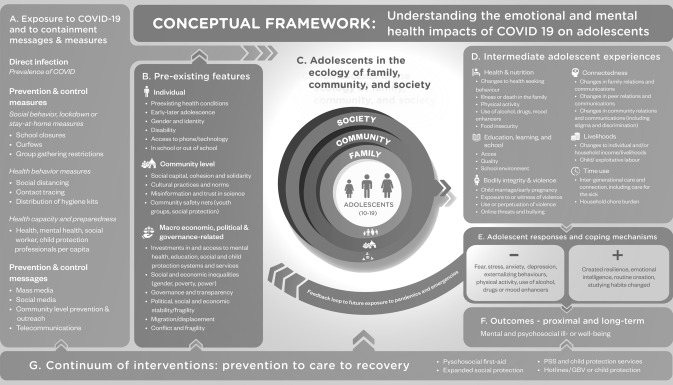
Across diverse contexts, emerging evidence suggests that the COVID-19 pandemic is increasing levels of anxiety and stress. In calling for greater attention to people’s psychosocial and emotional well-being, global actors have paid insufficient attention to the realities of the pandemic in low- and middle-income countries, where millions of people are already exposed to intersecting vulnerabilities. Chronic poverty, protracted violence, conflict and displacement, coupled with weak health, education and protection systems, provide the backdrop of many adolescents’ lives. Drawing on qualitative in-country telephone interviews with over 500 adolescents in Ethiopia, Côte d’Ivoire and Lebanon, this article unpacks the age and gendered dimensions of COVID-19 and its response. We conclude by discussing the implications for COVID-19 recovery efforts, arguing that embedding adolescent-centred, inclusive approaches in education, community-based health and social protection responses, has the potential to mitigate the psycho-emotional toll of the pandemic on young people and promote resilience.
Overview
The claims and statistics of this paper haven’t been checked yet.
Free: it reads the open-access text and checks the first 5 claims that cite a source we can check. Create a free account to check every claim.
Integrity signals
Registry
Cites
Statistics
Figures
Verification
Claims the paper makes
The claims and statistics of this paper haven’t been checked yet.
Free: it reads the open-access text and checks the first 5 claims that cite a source we can check. Create a free account to check every claim.
Self-check
Percentages, sums and reported differences re-computed from the paper’s own numbers.
The self-check needs the paper’s full text.
Citations
Cites
Our future: a Lancet commission on adolescent health and wellbeing
Patton, G. C., Sawyer, S. M., Santelli, J. S., Ross, D. A., Afifi, R., Allen, N. B., Arora, M., Azzopardi, P., Baldwin, W., Bonell, C., et al. (2016) · The Lancet · doi:10.1016/s0140-6736(16)00579-1 · Cited by 3,785
Salari, N., Hosseinian-Far, A., Jalali, R., Vaisi-Raygani, A., Rasoulpoor, S., Mohammadi, M., Rasoulpoor, S., & Khaledi-Paveh, B. (2020) · Globalization and Health · doi:10.1186/s12992-020-00589-w · Cited by 3,560
(1994) · Cited by 3,556
Charlson, F., van Ommeren, M., Flaxman, A., Cornett, J., Whiteford, H., & Saxena, S. (2019) · The Lancet · doi:10.1016/s0140-6736(19)30934-1 · Cited by 1,702
Promoting School Connectedness: Evidence from the National Longitudinal Study of Adolescent Health
McNeely, C. A., Nonnemaker, J. M., & Blum, R. W. (2002) · Journal of School Health · doi:10.1111/j.1746-1561.2002.tb06533.x · Cited by 1,187
Goldemberg, D., Azevedo, J. P., Iqbal, S. A., Hasan, A., & Geven, K. (2020) · doi:10.1596/1813-9450-9284 · Cited by 476
Do online mental health services improve help-seeking for young people? A systematic review
Kauer, S. D., Mangan, C., & Sanci, L. (2014) · Journal of Medical Internet Research · doi:10.2196/jmir.3103 · Cited by 339
Shinde, S., Weiss, H. A., Varghese, B., Khandeparkar, P., Pereira, B., Sharma, A., Gupta, R., Ross, D. A., Patton, G., & Patel, V. (2018) · The Lancet · doi:10.1016/s0140-6736(18)31615-5 · Cited by 219
Betancourt, T. S., McBain, R. K., Newnham, E. A., & Brennan, R. T. (2015) · Journal of Child Psychology and Psychiatry · doi:10.1111/jcpp.12389 · Cited by 187
Kilburn, K., Thirumurthy, H., Halpern, C. T., Pettifor, A., & Handa, S. (2016) · Journal of Adolescent Health · doi:10.1016/j.jadohealth.2015.09.023 · Cited by 164
Research works printed but not linked: 11
- ACPf The African report on violence against children 2014 Addis Ababa The African Child Policy forum (ACPf)
- Chaaban J el Khoury A Spotlight on youth in Lebanon 2016 Beirut, Lebanon United Nations Development Programme
- CSA and UNICEF Ethiopia Multidimensional child deprivation in Ethiopia 2018 Addis Ababa CSA and UNICEF Ethiopia
- Fund for Peace Fragile States Index annual report 2019 2019 Washington, DC The Fund for Peace
- Hanna-Amodio C Syrian refugee access to healthcare in Lebanon 2020 London Action on Armed Violence
- Institut Nationalde la Statistique (INS), Programme National de Lutte contre le Paludisme (PNLP) et ICF Enquête de prévalence parasitaire du paludisme et de l’anémie en Côte d’Ivoire 2016 2016 Rockville INS, PNLP et ICF
- Jones N Gebeyehu Y Gezahegne K Iyasu A Tilahun K Workneh F Yadete W Listening to young people’s voices under Covid-19. Exploring adolescents’ experiences and priorities in Ethiopia under Covid-19. Policy brief 2020 London Gender and Adolescence Global Evidence
- Małachowska A Al Abbadi T Al Amaireh W Banioweda K Al Heiwidi S Jones N Listening to young peoples voices under Covid-19. Exploring the impacts of Covid-19 on adolescents in Jordans refugee camps and host communities. Policy brief 2020 London Gender and Adolescence: Global Evidence
- Małachowska A Jones N Abu Hamad B Al Abbadi T Al Almaireh W Alheiwidi S Bani Odeh K Iyasu A Gebre Y Gezahegne K Guglielmi S Mitu K Pincock K Rashid S Saleh M Sultan M Tilahun K Workneh F Yadete W Youssef S GAGE virtual research toolkit: Qualitative research with young people on their Covid-19 experiences 2020 London Gender and Adolescence: Global Evidence
- Scales P Roehlkepartain E Lansford JE Banati P The contribution of nonfamily adults to adolescent well-being: A global research and policy perspective Handbook of adolescent development research and its impact on global policy 2018 Oxford Oxford University Press 150 172
- Stavropoulou M Jones N Off the balance sheet: The impact of the economic crisis on girls and young women 2013 London Overseas Development Institute
Cited by
Review: Mental health impacts of the COVID‐19 pandemic on children and youth – a systematic review
Samji, H., Wu, J., Ladak, A., Vossen, C., Stewart, E., Dove, N., Long, D., & Snell, G. (2022) · Child and Adolescent Mental Health · doi:10.1111/camh.12501 · Cited by 953
“Six studies reported occurrence of pandemic-related suicidal ideation in children and adolescents (Banati et al., 2020; Ellis et al., 2020; Jefsen et al., 2020; Matovu et al., 2021; Murata et al., 2021; Zhang, Zhang, et al., 2020).”
BackgroundInfluentialThe Impact of Migration Status on Adolescents’ Mental Health during COVID-19
Pieh, C., Dale, R., Jesser, A., Probst, T., Plener, P. L., & Humer, E. (2022) · Healthcare · doi:10.3390/healthcare10010176 · Cited by 174
The Economics of the COVID-19 Pandemic in Poor Countries
Miguel, E. A., & Mobarak, A. M. (2022) · Annual Review of Economics · doi:10.1146/annurev-economics-051520-025412 · Cited by 133
Waters, L., Cameron, K., Nelson-Coffey, S. K., Crone, D. L., Kern, M. L., Lomas, T., Oades, L., Owens, R. L., Pawelski, J. O., Rashid, T., et al. (2022) · The Journal of Positive Psychology · doi:10.1080/17439760.2021.1940251 · Cited by 98
“The negative effect of school closures is amplified for students who were already experiencing intersecting vulnerabilities (e.g., war, displacement, poverty, and weak healthcare and education systems; Banati et al., 2020).”
BackgroundMengesha, Z. B., Alloun, E., Weber, D., Smith, M., & Harris, P. J. (2022) · International Journal of Environmental Research and Public Health · doi:10.3390/ijerph19116624 · Cited by 92
“The added insecurity and instability created by the pandemic combined with physical distancing, stay at home orders, and fear of infection generated even more social separation, loneliness, and isolation from their support circles [29,33,40,43,47,49,50], with women and girls [29,40,50] singled out as particularly badl…”
BackgroundInfluentialMeherali, S. M., Adewale, B., Ali, S., Kennedy, M., Salami, B. O., Richter, S. M., Okeke‐Ihejirika, P., Ali, P. A., Silva, K. L., Adjorlolo, S., et al. (2021) · International Journal of Environmental Research and Public Health · doi:10.3390/ijerph182413221 · Cited by 84
“Adolescents in Cote d’Ivoire also reported difficulty accessing contraceptives due to disruptions to clinic hours and outreach, which was attributed to an increased rate of adolescent pregnancies [14].”
BackgroundInfluentialStress-Related Growth in Adolescents Returning to School After COVID-19 School Closure
Waters, L., Allen, K.-A., & Arslan, G. (2021) · Frontiers in Psychology · doi:10.3389/fpsyg.2021.643443 · Cited by 69
A Generation at Risk: The Impacts of Lebanon's Escalating Humanitarian Crisis on Children
Abouzeid, M., Halwani, D. A., Mokdad, A. H., & Habib, R. R. (2021) · Frontiers in Public Health · doi:10.3389/fpubh.2021.704678 · Cited by 58
“pose further health risks, with reports of alcohol and drug misuse among children of all nationalities in Lebanon, adopted as strategies to relieve the pressures of the pandemic and the economic crisis (87).”
BackgroundInfluentialJohansson, S. T., & Singal, N. (2021) · International Journal of Inclusive Education · doi:10.1080/13603116.2021.1965799 · Cited by 63
“Mounting evidence clearly notes that disrupted education is adversely a ff ecting learning outcomes and having a profound negative impact on the social and emotional well-being of children and young people (OECD 2020; Banati, Jones, and Youssef 2020; Engzell, Frey, and Ver-hagen 2021).”
Jones, N., Baird, S., Hamad, B. A. A., Bhutta, Z. A., Oakley, E. M., Shah, M., Sajdi, J., & Yount, K. M. (2022) · PLoS ONE · doi:10.1371/journal.pone.0261773 · Cited by 61
“Moreover, as also observed elsewhere [28, 96], the patterning of stressors reinforced existing social and economic inequalities [97], with girls—and especially married girls, as well as adolescents from the poorest households and those who are out of school—facing greater deprivations [17, 27, 98].”
Self-citationNishat, J. F., Shovo, T.-E.-A., Ahammed, B., Islam, M. A., Rahman, M. M., & Hossain, M. T. (2023) · Frontiers in Psychiatry · doi:10.3389/fpsyt.2022.1074208 · Cited by 37
Ramaiya, A., Chandra‐Mouli, V., Both, R., Gottert, A., Guglielmi, S., Beckwith, S., Li, M., & Blum, R. W. (2023) · Sexual and Reproductive Health Matters · doi:10.1080/26410397.2023.2187170 · Cited by 42
“Health services were not used due to COVID-19 stigma, restrictions in access to health facilities and financial cost.(48,56,64,84,88) Forgoing health services was higher among females and those lost to follow up for routine HIV care(70,89,90): A Ramaiya et al.”
BackgroundInfluentialHaag, K., Toit, S. D., Skeen, S., Roberts, K. J. S., Chideya, Y., Notholi, V., Sambudla, A., Gordon, S. L., Sherr, L., & Tomlinson, M. (2022) · Psychology Health & Medicine · doi:10.1080/13548506.2022.2108087 · Cited by 35
“…increased food insecurity, reduced access to education and other key services (e.g., HIV care, school-delivered meals, sexual and reproductive health services, psychosocial support) and limited social contacts (Banati et al., 2020; Headey et al., 2020; Sherr et al., 2021; Wang et al., 2021).”
BackgroundThe Economics of the COVID-19 Pandemic in Poor Countries
Miguel, E. A., & Mobarak, A. M. (2021) · National Bureau of Economic Research · doi:10.3386/w29339 · Cited by 58
Jones, N., Devonald, M., Dutton, R., Baird, S., Yadete, W., & Gezahegne, K. (2021) · Development Policy Review · doi:10.1111/dpr.12607 · Cited by 34
“…heightened other risks, including teenage pregnancies (Dickson et al., 2018), familial and sexual violence (Plan International, 2015; United Nations Development Programme (UNDP), 2015) and negative impacts on children’s mental health (Hallgarten, 2020b; Baird et al., 2020; Banati et al., 2020).”
BackgroundResultSelf-citationSocial Sharing of Emotion During the COVID-19 Pandemic
Kim, D., Park, C., Kim, E., Han, J., & Song, H. (2022) · Cyberpsychology Behavior and Social Networking · doi:10.1089/cyber.2021.0270 · Cited by 35
Bloom, J., Lachman, A., Gaxo, E., Pillay, J., & Seedat, S. (2022) · Child and Adolescent Psychiatry and Mental Health · doi:10.1186/s13034-022-00499-2 · Cited by 27
“Similarly, research conducted in LMIC’s including Ethiopia, Côte d’Ivoire and Lebanon has shown significant multidimensional, gender- and age-specific psycho-emotional effects due to the COVID19 pandemic and government containment measures on adolescents [40].”
BackgroundInfluentialHaffejee, S., Vostanis, P., O’Reilly, M. J., Law, E. L., Eruyar, Ş., Fleury, J., Hassan, S., & Getanda, E. M. (2022) · Children & Society · doi:10.1111/chso.12563 · Cited by 26
“Banati et al. (2020) found that the economic fallout of lockdown measures increased food insecurity for children in Lebanon, the Ivory Coast and Ethiopia.”
BackgroundDesie, Y., Habtamu, K., Asnake, M., Gina, E., & Mequanint, T. (2021) · BMC Psychology · doi:10.1186/s40359-021-00699-z · Cited by 25
Rajkumar, R. P. (2021) · Frontiers in Psychology · doi:10.3389/fpsyg.2021.646334 · Cited by 26
“Conversely, it has been observed that individuals who were already living in adverse circumstances prior to the pandemic, and who had reduced access to several commonly available GRRs, were more likely to experience psychological distress during the pandemic (Banati et al., 2020).”
BackgroundPositive education to promote flourishing in students returning to school after COVID-19 closure
Arslan, G., & Burke, J. (2021) · Journal of School and Educational Psychology · doi:10.47602/josep.v1i1.3 · Cited by 23
“The negative effect of school closures is amplified for students who live in marginalized communities and areas where they were already exposed to intersecting vulnerabilities (e.g., war, displacement, poverty, and weak healthcare and education systems; Banati et al., 2020).”
BackgroundAgency and Empowerment for Adolescent Girls: An Intentional Approach to Policy and Programming
Banati, P., Rumble, L., Jones, N., & Hendriks, S. (2021) · Journal of Youth Development · doi:10.5195/jyd.2021.1071 · Cited by 20
“Climate shocks and humanitarian crises, including global pandemics such as HIV and COVID-19, amplify pre-existing inequalities and present real risks of increasing child marriage, violence, school drop-out, and restricted access to social services (Banati et al., 2020; Jones et al., 2020; UNICEF, 2020; UN Women, 2020b…”
BackgroundSelf-citationCOVID-19 and common mental disorders among university students in South Africa
Bantjes, J. R., Swanevelder, S. A., Jordaan, E., Sampson, N. A., Petukhova, M. V., Löchner, C., Stein, D. J., & Kessler, R. C. (2023) · South African Journal of Science · doi:10.17159/sajs.2023/13594 · Cited by 24
“2015, 2017 and 2020) and (2) establishing if any changes in the prevalence of these disorders might be a result of changes in the demographic profile of students between 2015 and 2020.”
BackgroundNishat, J. F., Khan, U. S., Shovo, T.-E.-A., Ahammed, B., Rahman, M. M., & Hossain, M. T. (2023) · BMJ Open · doi:10.1136/bmjopen-2023-072279 · Cited by 18
“…marginalised families in both rural and urban settings from getting married off due to poverty, increase collective awareness about the outcomes of early marriage and also prioritise the needs of the victims of IPV and other SGBV, whether socially, culturally or legally, through survivor centres.”
BackgroundBanati, P., Jones, N., Moreau, C., Mmari, K., Kågesten, A., Austrian, K., & Lundgren, R. (2024) · The Lancet Child & Adolescent Health · doi:10.1016/s2352-4642(24)00079-8 · Cited by 19
Self-citationAdolescence, Interrupted: A narrative review of the impact of Covid-19 on adolescent wellbeing
Oakley, E. M., Vintges, J., Hamad, B. A. A., Mitu, K., Seager, J. E., Yadete, W., Jones, N., & Baird, S. (2024) · World Development · doi:10.1016/j.worlddev.2024.106786 · Cited by 18
Self-citationBanati, P., & Idele, P. (2021) · Frontiers in Psychiatry · doi:10.3389/fpsyt.2021.589827 · Cited by 18
Self-citationA double-duty food systems stimulus package to build back better nutrition from COVID-19
Hawkes, C., & Gallagher-Squires, C. (2021) · Nature Food · doi:10.1038/s43016-021-00260-6 · Cited by 17
Rice, M. F., & Cun, A. (2023) · Online Learning · doi:10.24059/olj.v27i3.3628 · Cited by 15
Early marriage of girls in the context of the COVID-19 pandemic: a literature review
Haq, S. M. A., Ahmed, M. N. Q., Lalin, S. A. A., Arno, A. T., & Ahmed, K. J. (2024) · Humanities and Social Sciences Communications · doi:10.1057/s41599-024-03085-3 · Cited by 15
“These include economic hardship within households (Banati et al., 2020; Bahl et al., 2021; Chowdhury, 2021; Musa et al., 2021; Rahiem, 2021), inability to provide basic necessities (Rahiem, 2021; Baird et al., 2022), extended school closures (Amin et al., 2020; Deane, 2021; Musa et al., 2021),…”
InfluentialHosozawa, M., Ando, S., Yamaguchi, S., Yamasaki, S., DeVylder, J., Miyashita, M., Endo, K., Stanyon, D., Knowles, G., Nakanishi, M., et al. (2023) · Journal of the American Academy of Child & Adolescent Psychiatry · doi:10.1016/j.jaac.2023.08.016 · Cited by 14
Oakley, E., Abuhamad, S., Seager, J., Avuwadah, B. Y., Hamory, J., Jones, N., Małachowska, A. M., Yadete, W., Hamad, B., & Baird, S. (2022) · EClinicalMedicine · doi:10.1016/j.eclinm.2022.101586 · Cited by 11
“…for girls, increased demands on time use for care work and other domestic tasks can combine with overall lower access to technology than male peers 66 and pressure for girls to marry at an early age due to economic stressors, 3 which all undermine girls’ ability to stay in (and succeed in) school.”
Self-citationHenson, S., Kambhampati, U. S., Mogues, T., Olsen, W. K., Prowse, M., Ramos, R., Rand, J., Rasiah, R., Roelen, K., Tiessen, R., et al. (2020) · European Journal of Development Research · doi:10.1057/s41287-020-00334-4 · Cited by 14
Duby, Z., Bunce, B., Fowler, C., Jonas, K., Govindasamy, D., Wagner, C., Mangoale, K., Ambrose, A., & Mathews, C. (2022) · Frontiers in Health Services · doi:10.3389/frhs.2022.903583 · Cited by 15
Gittings, L., Price, Y., Kelly, J., Kannemeyer, N., Thomas, A., Medley, S., Ralayo, N., Omollo, V., Cluver, L. D., Logie, C. H., et al. (2022) · Psychology Health & Medicine · doi:10.1080/13548506.2022.2108084 · Cited by 13
“, 2020; Murewanhema, 2020), violence and substance use (Banati et al., 2020; Bhatia et al., 2021) are indisputable.”
BackgroundInfluentialSharpe, D. M., Rajabi, M., Mesa, L. G., Hanafiah, A. N., Obuaku-Igwe, C. C., Davidson, J. C., & Chileshe, K. (2024) · Frontiers in Psychiatry · doi:10.3389/fpsyt.2024.1424836 · Cited by 16
Long, J., Zhang, S., Chu, L., Balkian, J., Giovannucci, I., Mui, C., Luan, Y., Chang, O., Chanthavilay, P., Goundar, K., et al. (2025) · The Lancet Regional Health - Western Pacific · doi:10.1016/j.lanwpc.2025.101674 · Cited by 17
The other pandemic: Mental illness in young people from low and middle-income countries
Lux, M. E., Merino, M. M., Viviescas, A., & Escobar, J. M. (2023) · Current Opinion in Psychology · doi:10.1016/j.copsyc.2023.101642 · Cited by 12
Tembo, C. P., Burns, S. K., & Portsmouth, L. (2022) · BMJ Open · doi:10.1136/bmjopen-2021-056765 · Cited by 10
Son, H., & Berdychevsky, L. (2022) · Leisure Sciences · doi:10.1080/01490400.2022.2054882 · Cited by 10
“Researchers and practitioners have raised alarms about the detrimental effects of lockdowns and cancelations of sport and recreation programs on youth ’ s mental and physical health (An, 2020; Banati et al., 2020; Kluger, 2020; Pearl, 2020).”
Logie, C. H., Okumu, M., Admassu, Z., Mackenzie, F., Tailor, L. S., Kortenaar, J., Perez‐Brumer, A., Ahmed, R., Batte, S., Hakiza, R., et al. (2024) · Journal of Migration and Health · doi:10.1016/j.jmh.2024.100215 · Cited by 9
“Displaced adolescents in Ethiopia and Lebanon also reported alcohol use as an escape from the pressures of the pandemic (Banati et al., 2020).”
BackgroundInfluentialKara, B., Scharf, N., McCormick, K. C., Bhreathnach, L., Currie, C. E., & Symonds, J. E. (2025) · Journal of Adolescence · doi:10.1002/jad.70038 · Cited by 10
“We have a lot of fights and problems …” (Banati et al. 2020, p. 1627).”
InfluentialBerner-Rodoreda, A., Baum, N., Zangerl, K. E., Wachinger, J., Hoegl, H., Li, L. Y., & Bärnighausen, T. (2023) · International Journal of Qualitative Studies on Health and Well-Being · doi:10.1080/17482631.2023.2271271 · Cited by 9
“The forced physical distance from friends during lock-downs (Banati et al., 2020) could be especially critical for adolescents due to their developmental stage, where autonomy and peer group become more significant (Patton et al., 2016).”
BackgroundHungo, M. O., Casinillo, L. F., Jacobe, G., Getes, J., Jusay, P. J. M., & Bagtindon, R. (2024) · Canadian Journal of Family and Youth / Le Journal Canadien de Famille et de la Jeunesse · doi:10.29173/cjfy30040 · Cited by 9
“Their investments in children's education, such as private schooling and tutoring, contribute to their advantage (Banati et al., 2020).”
BackgroundDavies, R. L., Rice, K., & Rock, A. J. (2022) · Frontiers in Global Women s Health · doi:10.3389/fgwh.2022.829559 · Cited by 9
Closson, K., Dong, E., Zulu, B., Dietrich, J. J., Zharima, C., Jesson, J., Pakhomova, T. E., Beksinska, M. E., & Kaida, A. (2024) · BMC Public Health · doi:10.1186/s12889-024-19238-7 · Cited by 8
“Our results provide insights into the mental health effects of the COVID-19 pandemic on South African youth, aligning with existing research on the subject [36, 37].”
ResultGendered time use during COVID-19 among adolescents and young adults in Nairobi, Kenya
Williams, A., Wood, S. N., Stuart, H. C., Wamue-Ngare, G., Thiongo, M. N., Gichangi, P., Devoto, B., & Decker, M. R. (2022) · EClinicalMedicine · doi:10.1016/j.eclinm.2022.101479 · Cited by 8
“15,23 The economic shock of the pandemic likely impacted youth dependency on parents, partners, and other family members.”
Vulnerabilities of Waste Scavengers to COVID-19 Impacts: Outcomes of an Exploratory Study in Ghana
Debrah, J. K., Vidal, D. G., & Dinis, M. A. P. (2022) · Climate change management · doi:10.1007/978-3-031-09879-6_12 · Cited by 8
COVID ‐19 emergency policies, financial security, and social equity: Worldwide evidence
An, B., Porcher, S., Tang, S., & Maille‐Lefranc, O. (2023) · Public Administration Review · doi:10.1111/puar.13652 · Cited by 8
Villalba, M. J. S., Olivencia, J. J. L., Sodis, J. L. G., & Fernández, M. J. A. D. O. (2024) · Education Sciences · doi:10.3390/educsci14030265 · Cited by 8
COVID-19 pandemic and adolescent mental health in China: Micro evidence and socioeconomic mechanisms
Chen, B., Zhao, C., Li, X., & Liu, J. (2022) · Frontiers in Psychology · doi:10.3389/fpsyg.2022.1041376 · Cited by 7
“In particular, using an identification method commonly used in the social sciences, we confirm the causal relationship between the COVID-19 pandemic and adolescent mental health loss in China (Adibelli and Sümen, 2020; Banati et al., 2020; Xiao et al., 2020).”
BackgroundMethodCOVID‐19, school closures and the retreat from educational aspirations
Glick, J. E., Alcaraz, M., Randrianasolo, A., & Yabiku, S. T. (2024) · Journal of Adolescence · doi:10.1002/jad.12406 · Cited by 7
“In such settings, disruptions that stem from health, environmental or geopolitical events may reduce aspirations and curtail schooling signi fi cantly (Adhikari et al., 2022; Banati et al., 2020; Young Lives, 2021).”
Baker, V., Arnold, G., Piot, S., Thwala, L., Glynn, J. R., Hargreaves, J., & Birdthistle, I. J. (2021) · JMIR Formative Research · doi:10.2196/30449 · Cited by 6
DECODING THE CHALLENGES OF PROMOTING DECENT WORK IN RURAL AND URBAN LABOR MARKETS
Parvez Ahmed Shaikh, A. A. S. (2023) · Pakistan Journal of International Affairs · doi:10.52337/pjia.v6i2.779 · Cited by 6
Prendergast, K. B., Hayward, B., Aoyagi, M., Burningham, K., Hasan, M. M., Jackson, T. P., Jha, V., Loukianov, A., Mattar, H., Schudel, I., et al. (2025) · Local Environment · doi:10.1080/13549839.2025.2454985 · Cited by 5
“It is also notable that focus groups were conducted prior to COVID-19, which has impacted inequalities and youth wellbeing in cities (Banati, Jones, and Youssef 2020; Pipitone and Jović 2021; WHO–UNICEF–Lancet Commissioners 2020).”
Shea, P., & Rice, M. F. (2023) · Online Learning · doi:10.24059/olj.v27i3.4152 · Cited by 6
Gichuhi, L. (2025) · Journal of Interactive Media in Education · doi:10.5334/jime.884 · Cited by 5
Crianças também sofrem: O sofrimento emocional em crianças durante a pandemia Covid-19
Tognetta, L. R. P., Cuadra-Martínez, D. J., Queiroz, D. M. D., & Bomfim, S. A. B. (2022) · Revista on line de Política e Gestão Educacional · doi:10.22633/rpge.v26iesp.3.16956 · Cited by 6
Janssen, C., Kövér, I., Kyratsis, Y., Kop, M., Boland, M., Boersma, K., & Cremers, A. L. (2023) · International Journal of Disaster Risk Reduction · doi:10.1016/j.ijdrr.2023.103608 · Cited by 5
“This creates an indirect link between crisis situations and adolescent well-being [13].”
Stress and the cardiovascular system performance: current state of the problem (literature overview)
Shushkovska, Y. Y., Afanasiuk, O. I., & Shmaliy, V. I. (2023) · Reports of Vinnytsia National Medical University · doi:10.31393/reports-vnmedical-2023-27(3)-22 · Cited by 4
Ygot, J., & Revalde, H. O. (2024) · American Journal of Multidisciplinary Research and Innovation · doi:10.54536/ajmri.v3i3.2659 · Cited by 4
“Raffaele (2021) and Banati et al .”
Kamal, T., Khan, M. A., Hamad, Z., Illiyan, A., Das, A. S., & Alkhuraydili, A. (2023) · Education Research International · doi:10.1155/2023/3665768 · Cited by 6
“In African countries, gender variations were predominantly owing to the gender digital divide as boys have larger access to personal phones and internet connectivity, whereas girls are informed of confined connectivity because of conservative gender norms [50].”
BackgroundHunersen, K., Ramaiya, A., Cabral, C. S., Maddaleno, M., & Mmari, K. (2024) · Journal of Adolescent Health · doi:10.1016/j.jadohealth.2024.08.007 · Cited by 4
COVID-19 and older people’s wellbeing in northern KwaZulu-Natal – the importance of relationships
Manyaapelo, T., Edwards, A., Mpanza, N., Nxumalo, S., Nxumalo, Z., Gumede, N. A., Ngwenya, N. B., & Seeley, J. (2022) · Wellcome Open Research · doi:10.12688/wellcomeopenres.17841.1 · Cited by 4
“The growing literature on the mental health impacts of the pandemic on young people has focused on a different age group, a different generation that are a group at risk (Álvarez-Iglesias et al., 2021; Banati et al., 2020).”
Rai, D., Bhattacharjee, S., Dhakal, R., Chattopadhyay, K., & Neupane, D. (2023) · JBI Evidence Synthesis · doi:10.11124/jbies-22-00034 · Cited by 6
COVID-19 and adolescent girls’ mental health in Uganda: A panel data analysis
Us-Salam, D., Avuwadah, B., Dell’Aira, C., Nabulumba, C., & Baird, S. (2023) · Advances in Global Health · doi:10.1525/agh.2023.1798880 · Cited by 4
Digital Governance Strategy for Social Inclusion in West Sumatra
Arianto, S. (2024) · Asian Digital Governance Problems · doi:10.71435/639133 · Cited by 3
Shehayeb, S. (2023) · International Journal on Studies in Education · doi:10.46328/ijonse.132 · Cited by 3
“MEHE also supplied feedback forms so that educators, professionals, and others could share their opinions on the paths (Banati et al., 2020).”
BackgroundAl-Masri, N., & Serhan, B. M. A. (2024) · Disability & Society · doi:10.1080/09687599.2024.2353077 · Cited by 3
“…anxiety/depression symptoms for persons with disability who often rely on assistance for delivery of food, medication, and personal care (Jumreornvong et al. 2020), and also exacerbated anxiety and stress due to limited access to health and education services (Banati, Jones, and youssef 2020).”
Sifunda, S., Sewpaul, R., Mokhele, T., Mabaso, M., Naidoo, I., Dukhi, N., Parker, S., Davids, A., Zungu, N. P., Shisana, O., et al. (2024) · Frontiers in Education · doi:10.3389/feduc.2024.1484849 · Cited by 3
Fankam, F. N., Ugarte, W. J., Akilimali, P. Z., Etah, E., & Åkerman, E. (2023) · BMJ Open · doi:10.1136/bmjopen-2023-072869 · Cited by 3
Østby, G., Gjerløw, H., Karim, S., & Dunlop, E. (2023) · Journal on Education in Emergencies · doi:10.33682/a1zn-5nda · Cited by 2
Lamb, J., Thorseth, A. H., MacDougall, A. M., Thorsen, W., & White, S. (2024) · Health Promotion International · doi:10.1093/heapro/daae117 · Cited by 3
Nägele, C., Kersh, N., & Stalder, B. E. (2021) · VBN Forskningsportal (Aalborg Universitet) · doi:10.5281/zenodo.5348202 · Cited by 2
Murphy, M. M., Pemberton, C., Wheeler, E., Gulston, L., Kerr-Layne, O., John, A., Baksh, B., Thomas, G., & Allen, C. (2024) · Frontiers in Psychiatry · doi:10.3389/fpsyt.2023.1285399 · Cited by 1
Chen, S., Logie, C. H., Mackenzie, F., Okumu, M., Hakiza, R., Katisi, B., Musoke, D. K., Nakitende, A., Bahri, B., & Kyambadde, P. (2025) · Global Social Welfare · doi:10.1007/s40609-025-00406-5 · Cited by 1
Gendered Youth Time Use in Southeast Asia: A Pre- and Post-COVID-19 Cross-Cohort Comparison
Zhou, X., Zhang, H., & Jordan, L. P. (2026) · Youth & Society · doi:10.1177/0044118x261423679 · Cited by 1
Ying, S. (2021) · English Language Literature & Culture · doi:10.11648/j.ellc.20210601.13 · Cited by 1
The impact of COVID-19 on adolescents’ mental health
Malik (2022) · Current Psychiatry · doi:10.12788/cp.0275 · Cited by 1
Akintunde, T. Y., Isangha, S. O., Kodzo, L. D., & Ibrahim, E. A. (2022) · Electronic Journal of General Medicine · doi:10.29333/ejgm/12542 · Cited by 2
“Psychosocial vulnerabilities were witnessed, affecting people’s life outcomes [55].”
BackgroundPrasetyo, Y. B. (2022) · Gaceta Médica de Caracas · doi:10.47307/gmc.2022.130.s5.20 · Cited by 1
That other pandemic: COVID-19 as Bogeyman and the rise of urban dystopias
Gomez, J. E. A. (2022) · City · doi:10.1080/13604813.2022.2144105 · Cited by 1
“Nonetheless, factors like chronic poverty and subsistence living coupled with weak health, education, and protection systems exacerbate pre-existing age vulnerabilities—for instance, for adolescents, and may lead to various reactions, including violence (Banati, Jones, and Youssef 2020, 1613, 1634).”
BackgroundNeupane, H. R., Brown, P., & Simkhada, P. P. (2023) · People Place and Policy Online · doi:10.3351/ppp.2023.6764342885 · Cited by 1
Universal Access to Family Planning Services for Adolescent Girls in Africa Amidst COVID-19
Bolarinwa, O. A., Ahinkorah, B. O., Seidu, A., & Ajayi, K. V. (2023) · Implementing the UN sustainable development goals - regional perspectives · doi:10.1007/978-3-030-91260-4_7-1 · Cited by 1
Emotional stratification in context: sources of anger and anxiety during the COVID-19 pandemic
Wunderlich, P., Soares, I. G., & von Scheve, C. (2025) · Emotions and Society · doi:10.1332/26316897y2025d000000078 · Cited by 1
Adolescent girls and COVID-19: Mapping the evidence on interventions
Blake, S., Temin, M., Abularrage, T. F., & Said, N. (2021) · doi:10.31899/sbsr2021.1023 · Cited by 1
“Common COVID-19 control measures, such as travel restrictions and business and school closures, reduce the threat of COVID-19 transmission while they also can exacerbate other threats to health, safety, and wellbeing (Abdullah et al., 2010; Banati et al., 2020; UNFPA, 2020; Youssef & Jones, 2020).”
BackgroundInfluentialCOVID-19 Pandemisinin Çalışan Çocuklara Olası Etkisi
Yığıtbaş, Ç., Koçak, M., & Yaman, Ç. (2020) · DergiPark (Istanbul University) · Cited by 2
Pitts, S., & Forman, S. F. (2021) · Current Opinion in Pediatrics · doi:10.1097/mop.0000000000001028
Xu, R., Zhang, X., Liu, D., Li, Q., Wang, Y., Jiao, R., Gong, X.-M., Hou, X., Xu, T., Qing, X., et al. (2021) · medRxiv · doi:10.1101/2021.11.30.21250895
The Impact of COVID-19 on the Mental Wellbeing of Youth Around the World: A Statistical AnalysisPreprint
McDermott, V. M., Mattapalli, S., Rodriguez-Solis, A., Anariba, A., Chang, C., Santoshi, A., Penttila, S., Salaices, S. A., & Kim, M. (2021) · SocArXiv (OSF Preprints) · doi:10.31235/osf.io/rbu2x
Psychological effects of COVID-19 pandemic on Indian population: a review
Patwekar, M., Patwekar, F., Riyaz, M., Tabassum, S., Tarkash, S., & Rather, G. A. (2022) · International Journal of Community Medicine and Public Health · doi:10.18203/2394-6040.ijcmph20221259
Children’s Well-Being Post the Pandemic and Amid the Economic Crisis in LebanonPreprint
Nasr, R., Haddad, C., Raidan, N., Ibrahim, S. A., Swaidan, E., & Karam, J. (2022) · Research Square · doi:10.21203/rs.3.rs-2190866/v1 · Cited by 1
Blakeway, H., Hookham, L., Nakabembe, E., Koech, A. C., Khalil, A. A., Ladhani, S. N., Temmerman, M., & Doaré, K. L. (2023) · Gates Open Research · doi:10.12688/gatesopenres.13777.1
Edwards, D. (2023) · Springer eBooks · doi:10.1007/978-3-031-31119-2_4
Journal on Education in Emergencies: Volume 9, Number 1 (Complete)
Thompson, N., Colón, S., Burde, D., Arlini, S. M., Chefchaouni, N. C., Chia, J., Gordon, M., Shrestha, N., Østby, G., Gjerløw, H., et al. (2023) · Journal on Education in Emergencies · doi:10.33682/kbsk-pke2
Suicidal thoughts and behaviors among adolescents during the COVID-19 pandemic
Robillard, C. L., Shen, A., & Turner, B. J. (2024) · Elsevier eBooks · doi:10.1016/b978-0-323-95648-2.00043-5
Alomari, I. (2024) · Journal of Languages and Language Teaching · doi:10.33394/jollt.v12i3.11454
“It was evident that emotions play a crucial role in online learning, impacting engagement, motivation, and academic achievement (Bashir et al., 2020; Banati et al., 2020).”
BackgroundUniversal Access to Family Planning Services for Adolescent Girls in Africa Amidst COVID-19
Bolarinwa, O. A., Ahinkorah, B. O., Seidu, A., & Ajayi, K. V. (2024) · Implementing the UN sustainable development goals - regional perspectives · doi:10.1007/978-3-031-17465-0_7 · Cited by 1
Asuma, M. N., & James, F. W. (2024) · International Journal of Innovative and Applied Research · doi:10.58538/ijiar/2112
Metadata
- Authors
- Banati, P., Jones, N., & Youssef, S.
- Affiliations
- United Nations Children's Fund (US)
- Open Data Institute (GB)
- Corresponding author
- Jones, Nicola
- Venue
- The European Journal of Development Research
- Published
- 2020-11-09
- Volume
- 32
- Issue
- 5
- Pages
- 1613-1638
- ISSN
- 0957-8811 (ISSN-L)
- 1743-9728
- PMC
- PMC7649704
- OpenAlex
- W3098353234
- Cited by
- 100
- References
- 25
- Citations by year
- 2026: 2 · 2025: 9 · 2024: 18 · 2023: 25 · 2022: 25 · 2021: 20 · 2020: 1
- FWCI
- 7.11
- Type
- journal article
- Language
- en
- Open access
- hybrid
- doi.org
- Licence
- cc-by
- creativecommons.org/licenses/by/4.0 (tdm)
- creativecommons.org/licenses/by/4.0 (vor)
- Locations
- European Journal of Development Research (publishedVersion, cc-by)
- PubMed Central (publishedVersion, cc-by)
- PubMed (publishedVersion)
- RePEc: Research Papers in Economics (submittedVersion)
- Funders
- Department for International Development (GAGE)
- Topics
- Social Sciences › Psychology › Clinical Psychology › COVID-19 and Mental Health
- Social Sciences › Sociology and Political Science › Social impacts of COVID-19
- Social Sciences › Psychology › Developmental and Educational Psychology › Student Stress and Coping
- Keywords
- COVID-19 pandemic, adolescents, youth mental health, psychosocial well-being, stress and anxiety, low- and middle-income countries, gender differences, age differences, resilience, social protection, community-based health, Ethiopia, Côte d'Ivoire, Lebanon
About these checks
Registry, retraction, Cites and statistics results are computed, not judged, with one exception: a printed reference that no index lists is read once by a model before it counts as a citation error. Claims are extracted by a model and kept only when their quote appears verbatim in the text; each cited source is then checked, with a model’s help, for whether it says what the claim relies on. Those verdicts can be wrong — read the claim’s quote and the cited source before relying on one.
Statistics and arithmetic are recomputed, not judged.
Confidence bands are shown only for fields calibrated on our annotated test set. None is calibrated yet, so no band is shown.
What counts as a claim ›How we measure confidence ›How we check this ›
Are you an author, or do you see a problem with this page? Request a review
Data sources
Bibliographic data: Semantic Scholar, OpenAlex, Crossref.
Contains information from the Semantic Scholar Academic Graph Datasets, made available under the ODC Attribution License (ODC-BY 1.0).
Semantic Scholar’s data is described in: Kinney, R., et al. (2023). The Semantic Scholar Open Data Platform. arXiv:2301.10140.
