

Bidirectional reduction effects of perceived stress and general self-efficacy among college students: a cross-lagged study
Open accessThe DOI matches its Crossref record; 60 of the 60 references it cites were found in a registry or an index.
Abstract
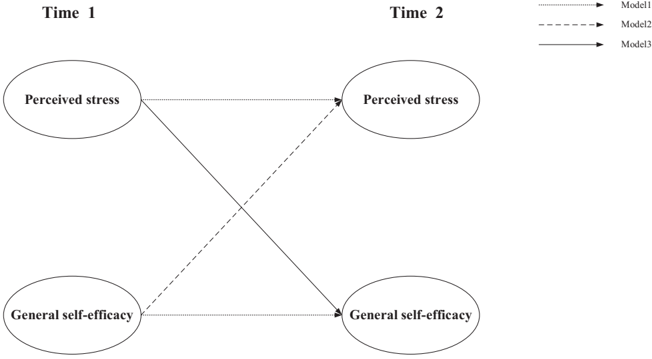
Perceived stress and general self-efficacy are important issues closely related to the mental health and academic performance of college students. Previous studies have explored the correlation between perceived stress and general self-efficacy, but the understanding of the reciprocal effects of these two factors is still limited. Based on two-wave longitudinal data, this study investigated the bidirectional relationship between perceived stress and general self-efficacy in a sample of Chinese college students. The correlation results showed that perceived stress was significantly negatively correlated with general self-efficacy. Furthermore, by cross-lagged analysis, it was found that perceived stress can significantly negatively predict subsequent general self-efficacy and that general self-efficacy can significantly negatively predict subsequent perceived stress. Bidirectional reduction effects between perceived stress and general self-efficacy are observed among Chinese college students. The results emphasize the necessity of timely stress intervention for college students and the establishment of measures to enhance general self-efficacy.
Overview
The claims and statistics of this paper haven’t been checked yet.
Free: it reads the open-access text and checks the first 5 claims that cite a source we can check. Create a free account to check every claim.
Integrity signals
Registry
Cites
Statistics
Figures
Verification
Claims the paper makes
The claims and statistics of this paper haven’t been checked yet.
Free: it reads the open-access text and checks the first 5 claims that cite a source we can check. Create a free account to check every claim.
Claims other papers make about this one
Each is checked against this paper’s own text: does it say what the citing paper says it does?
The check wasn’t confident either way, so it gives no verdict — never disputed.
In the citing paper
“The Sociocultural Self Model complements this by emphasizing the interdependent nature of self-concept in Chinese society, where individuals define themselves through family expectations and social roles [31].”
From Parental expectation and psychological distress of Chinese youth: the chain mediating effects of core self-worth and perceived stress (2025) · cites this paper as [31]
Experimental — accuracy not yet measured
Self-check
Percentages, sums and reported differences re-computed from the paper’s own numbers.
The self-check needs the paper’s full text.
Citations
Cites
Hu, L., & Bentler, P. M. (1999) · Structural Equation Modeling A Multidisciplinary Journal · doi:10.1080/10705519909540118 · Cited by 108,788
Kessler, R. C., Berglund, P., Demler, O., Jin, R., Merikangas, K. R., & Walters, E. E. (2005) · Archives of General Psychiatry · doi:10.1001/archpsyc.62.6.593 · Cited by 20,391
Significance tests and goodness of fit in the analysis of covariance structures.
Bentler, P. M., & Bonett, D. G. (1980) · Psychological Bulletin · doi:10.1037//0033-2909.88.3.588 · Cited by 19,023
Social Cognitive Theory: An Agentic Perspective
Bandura, A. (2001) · Annual Review of Psychology · doi:10.1146/annurev.psych.52.1.1 · Cited by 15,510
Sawyer, S. M., Azzopardi, P. S., Wickremarathne, D., & Patton, G. C. (2018) · The Lancet Child & Adolescent Health · doi:10.1016/s2352-4642(18)30022-1 · Cited by 3,666
Hattie, J. (2008) · doi:10.4324/9780203887332 · Cited by 3,051
Depression Anxiety Stress Scales
Lovibond, S. H., & Lovibond, P. F. (2011) · PsycTESTS Dataset · doi:10.1037/t01004-000 · Cited by 2,416
Klassen, R. M., & Chiu, M. M. (2010) · Journal of Educational Psychology · doi:10.1037/a0019237 · Cited by 2,353
The prevalence and correlates of depression, anxiety, and stress in a sample of college students
Beiter, R., Nash, R., McCrady, M., Rhoades, D., Linscomb, M., Clarahan, M., & Sammut, S. (2015) · Journal of Affective Disorders · doi:10.1016/j.jad.2014.10.054 · Cited by 2,030
Is General Self-Efficacy a Universal Construct?1
Scholz, U., Gutiérrez Doña, B., Sud, S., & Schwarzer, R. (2002) · European Journal of Psychological Assessment · doi:10.1027//1015-5759.18.3.242 · Cited by 1,637
Research works printed but not linked: 16
- Bandura A (1986) Social foundations of thought and action: a social cognitive theory. Prentice Hall, Englewood Cliffs, NJ. pp. 23-28
- Broman CL (2005) Stress, race and substance use in college. college Student. Journal 39(2):340-353
- Chan GC, Koh D (2007) Understanding the psychosocial and physical work environment in a Singapore medical school. Singap Med J 48(2):166-171
- Ehrenberg MF, Cox DN (1991) The relationship between self-efficacy and depression in adolescents. Adolescence 26(102):361
- Goldman CS, Wong EH (1997) Stress and the college student. Education 117:604
- Lazarus RS (1966) Psychological stress and the coping process. McGraw Hill
- Lazarus RS (1966) Psychological stress and the coping process. McGraw Hill Li H, Lin C (2003) College stress and psychological well-being of Chinese college students. Acta Psychol Sin 35(2):222-230
- McDonald S, McDonald E, Roberts A (2017) Effects of novel dog exposure on college students' stress prior to examination. North Am J Psychol 19:477
- Mowday RT, Porter LW, Steers RM (2013) Employee-organization linkages: The psychology of commitment, absenteeism, and turnover. Academic press
- Plunkett SW, Radmacher KA, Moll-Phanara D (2000) Adolescent life events, stress, and coping: A comparison of communities and genders. Prof Sch Couns 3(5):356
- Ross SE, Niebling BC, Heckert TM(1999) Sources of stress among college students. Coll Stud J 33:312
- Schunk DH, Pintrich PR, Meece JL (2008) Motivation in education: Theory, research, and applications. Upper Saddle River, N.J: Pearson/Merrill Prentice Hall Schwarzer R (1997) Optimistic self-beliefs: assessment of general perceived self- efficacy in thirteen cultures. World Psychol 3(1):177-190
- Schwarzer R (1997) Optimistic self-beliefs: assessment of general perceived self-efficacy in thirteen cultures. World Psychol 3(1):177–190
- Schwarzer R, Jerusalem M (1995) Generalized Self-Efficacyscale. In: Weinman J, Wright S, Johnston M. Measures in health psychology: auser's portfolio. Causal and control beliefs. NFER-NELSON, Windsor, UK. pp. 35-37
- Tong Y, Song S (2004) A study on general self-efficacy and subjective well-being of low SES-college students in a Chinese university. Coll Stud J 38(4):637
- Weinstein L, Laverghetta A (2009) College student stress and satisfaction with life. Coll Stud J 43(4):1161-1162
Cited by
Benítez-Agudelo, J. C., Restrepo, D., Navarro-Jiménez, E., & Clemente‐Suárez, V. J. (2025) · BMC Psychology · doi:10.1186/s40359-025-03041-z · Cited by 136
“In the academic context, stress arises from the interaction between perceived demands (e.g., exams, deadlines, academic workload) and the individual’s coping resources [11, 12].”
Liu, X., Zhu, C., Dong, Z., & Luo, Y. (2024) · Behavioral Sciences · doi:10.3390/bs14070537 · Cited by 90
“Previous studies have shown a significant negative correlation between general self-efficacy and stress, providing evidence for our research on the relationship between academic self-efficacy and stress among elite college students [54].”
ResultSelf-citationLiu, X., & Wang, J. (2024) · Humanities and Social Sciences Communications · doi:10.1057/s41599-024-03686-y · Cited by 85
Self-citationSong, X., & Hu, Q. (2024) · BMC Public Health · doi:10.1186/s12889-024-20738-9 · Cited by 47
Huang, Y., Yuan, Y., Sun, W., & Li, P. (2025) · Humanities and Social Sciences Communications · doi:10.1057/s41599-025-05316-7 · Cited by 45
Liu, X., Yuan, Y., Gao, W., & Luo, Y. (2024) · Humanities and Social Sciences Communications · doi:10.1057/s41599-024-03136-9 · Cited by 32
“Previous corroborative studies have extensively utilized and validated this dataset (Liu et al., 2023a, 2023b, 2023c, 2024).”
Self-citationChai, Y., Fu, G., Liu, Y., Song, Q., Xue, C., & Luo, S. (2024) · Frontiers in Public Health · doi:10.3389/fpubh.2024.1466700 · Cited by 28
“These detrimental effects can accumulate over time (10).”
BackgroundResultAcademic burnout among Chinese college students: A study based on FSQCA method
Chen, J., & Chen, G. (2025) · Acta Psychologica · doi:10.1016/j.actpsy.2025.104701 · Cited by 29
He, Q., Attan, S. A., Zhang, J., Shang, R., & He, D. (2024) · Scientific Reports · doi:10.1038/s41598-024-70753-4 · Cited by 27
“The first main factor, academic pressures and rigidity (A), includes three sub-factors that significantly impact students’ mental health 33 .”
BackgroundTao, Y., Wu, J., Li, H., Zheng, K., Liu, H., Tian, H., & Peng, L. H. (2024) · Frontiers in Public Health · doi:10.3389/fpubh.2024.1348416 · Cited by 27
Zhuan, S., Cao, J., Ye, Y., Li, H., Zhang, Q., & Wang, X. (2024) · Frontiers in Public Health · doi:10.3389/fpubh.2024.1434382 · Cited by 26
“Drawing on Time Motivation Theory (TMT) and self-regulation theory, Xu and others (12, 13).”
Zhou, J., Tang, W., Sun, Z., Xue, S., Liu, Q., Wu, S., Dai, Q., & Xu, J. (2025) · BMC Public Health · doi:10.1186/s12889-025-24759-w · Cited by 24
“The Sociocultural Self Model complements this by emphasizing the interdependent nature of self-concept in Chinese society, where individuals define themselves through family expectations and social roles [31].”
Lasmi, N. W., Komang Widhya Sedana Putra, P., & Sukarnasih, D. M. (2024) · Jurnal Ekobistek · doi:10.35134/ekobistek.v13i1.734 · Cited by 22
“Self-efficacy adalah isu-isu penting yang erat kaitannya dengan kesehatan mental [8].”
BackgroundLiu, Z., Bao, T., Yang, Z., Ruan, Y., Gao, C., & Wu, J. (2024) · Psychology Research and Behavior Management · doi:10.2147/prbm.s462202 · Cited by 16
“22 Based on this, the present study proposes Hypothesis H1 that high levels of psychological capital among college students will indirectly alleviate anxiety by increasing the use of positive emotion regulation strategies (cognitive reappraisal) and decreasing the use of negative emotion regulation…”
Zhang, R. (2025) · PLoS ONE · doi:10.1371/journal.pone.0331463 · Cited by 16
“This scale has been validated among Chinese university students and has shown good reliability and validity [55].”
Liu, X., Li, Y., & Gao, W. (2024) · Journal of Psychology in Africa · doi:10.1080/14330237.2024.2398871 · Cited by 16
“Thus, they faced serious challenges with psychological problems (Liu et al., 2023b, 2024).”
Self-citationZeb, I., Zhang, Y., Fang, S., & Khan, A. (2025) · Journal of Applied Research in Higher Education · doi:10.1108/jarhe-09-2024-0473 · Cited by 13
Zhao, M., Wang, R., Zhao, Z., Li, L., Luo, H., & Wu, L. (2024) · Frontiers in Psychology · doi:10.3389/fpsyg.2024.1414736 · Cited by 12
“Furthermore, longitudinal empirical studies have corroborated the dynamic trajectory of college students’ anxiety (Liu et al., 2024).”
BackgroundYang, X., Yang, Y., Qin, D., & Zhong, M. (2025) · Current Psychology · doi:10.1007/s12144-025-07334-9 · Cited by 10
“The accumulation of dissatisfaction may not only increase psychological stress but also diminish self-efficacy (Liu et al., 2024), leading to anxiety, depression, and a decline in self-esteem, ultimately raising the risk of mental health problems (Haferkamp & Krämer, 2011).”
Liu, X., Ji, X., & Zhang, Y. (2024) · Humanities and Social Sciences Communications · doi:10.1057/s41599-024-03107-0 · Cited by 10
Self-citationHu, F., Yaacob, N. R. N., & Zhang, F. (2026) · Journal of International Students · doi:10.32674/1rhza525 · Cited by 9
Yan, R., Ren, X., Wang, S. W., Bai, X., & Zhang, X. (2024) · International Journal of Human-Computer Interaction · doi:10.1080/10447318.2024.2364468 · Cited by 9
“Many HCI projects have focused on helping users identify their sources of stress (Gonz � alez Ram � ırez et al., 2023) to empower stress handling and improve self-efficacy (Liu et al., 2024).”
The Relationship between Emotional Regulation and Self-Efficacy with Students' Academic Resilience
Annisa, R. F., Nurfarhanah, N., Firman, F., & Hariko, R. (2024) · Journal of Educational Health and Community Psychology · doi:10.12928/jehcp.v13i2.28491 · Cited by 9
Cao, Y., & Luo, L. (2024) · Frontiers in Behavioral Neuroscience · doi:10.3389/fnbeh.2024.1428347 · Cited by 9
Perceived Stress Profiles Among Italian University Students: A Multivariate Approach
Micheluzzi, V., Sandri, E., Marchetti, A., Benedictis, A. D., Petrucci, G., Alvaro, R., Marinis, M. G. D., & Piredda, M. (2025) · Healthcare · doi:10.3390/healthcare13222830 · Cited by 6
“Students exhibiting higher self-confidence and emotional regulation clustered in the quadrant associated with lower stress, while those experiencing academic overload and emotional reactivity clustered in the vulnerability quadrant [45–47].”
Pan, Y. C., Ryan, C., Liu, Y., & Liu, Z. (2025) · International Journal of Intercultural Relations · doi:10.1016/j.ijintrel.2025.102228 · Cited by 5
Gaining insights into elementary school students' experiences of soft skills at school
Aygün, H. E., Zeren, Ş. G., Aşıkcan, M., Suskan, T., & TAKAN, E. N. (2026) · Acta Psychologica · doi:10.1016/j.actpsy.2026.107158 · Cited by 5
Hanik, K., Pramono, S. E., Yulianto, A., & Utomo, C. B. (2025) · Journal of Ecohumanism · doi:10.62754/joe.v4i1.5991 · Cited by 5
Liu, Y. (2024) · Frontiers in Psychology · doi:10.3389/fpsyg.2024.1425471 · Cited by 4
“…related to the relationship between perceived stress and self-efficacy, which may cause a rise in perceived stress when reading content with a stressful/suspenseful-emotional tone, which in turn affects college students’ psychological mood, which is consistent with Liu’s study (Liu et al., 2024).”
BackgroundResultZhang, X., Shao, X., & Zheng, Y. (2026) · International Journal of Hospitality Management · doi:10.1016/j.ijhm.2026.104819 · Cited by 3
Onyishi, C. N. (2024) · Journal of Advanced Guidance and Counseling · doi:10.21580/jagc.2024.5.2.23692 · Cited by 3
“It includes a teacher's assurance in managing classroom dynamics, implementing instructional strategies, and motivating students (Burić, Slišković, & Sorić, 2020; Liu, Li, & Cao, 2024; Ortan et al., 2021) .”
Luo, Y., Gao, W., & Liu, X. (2024) · Behavioral Sciences · doi:10.3390/bs14090774 · Cited by 3
“The descriptive statistics revealed a significant decline in stress levels among Chinese rural college students from their junior to senior years, consistent with findings from a previous study [62].”
ResultSelf-citationChoi, H., & Yu, T. (2024) · Environment and Social Psychology · doi:10.59429/esp.v9i11.3125 · Cited by 2
Benarfa, I., Oudghiri, D. E., Mountaj, N., Hessni, A. E., Mesfioui, A., & Ahyayauch, H. (2025) · Psychiatry International · doi:10.3390/psychiatryint6030103 · Cited by 2
“Several studies have investigated student well-being using various assessment criteria, including stress and anxiety [8], self-esteem [9], sleep quality [8] and motivation [10].”
So, Y., Shin, J., Won, S.-D., Im, W. Y., Seok, K.-H., Jin, M. J., Lee, S. H., & Bae, S. (2025) · Behavioral Sciences · doi:10.3390/bs15111496 · Cited by 2
“It is closely associated with poor academic performance, difficulties maintaining employment, inter-personal conflicts, and reduced life satisfaction (Brody & Hughes, 2025; Liu et al., 2024; Estrella-Proaño et al., 2024).”
Jin, K., Wu, Y., & Jin, T. (2026) · Depression and Anxiety · doi:10.1155/da/8705382 · Cited by 2
“Worthlessness may be closely related to low self-ef fi cacy, which has been associated with perceived stress and depressive symptoms [45, 46].”
Wang, J., & Liu, X. (2026) · New Directions for Child and Adolescent Development · doi:10.1155/cad/6312506 · Cited by 4
Self-citationComparative Study of Schoology and OpenLearning E-Learning Platforms for Enhancing English Skills
Rakhmadi, A., & Haryanti, Y. (2025) · E3S Web of Conferences · doi:10.1051/e3sconf/202562203003 · Cited by 2
“They integrate technological innovations to streamline the structuring, preparation, and presentation of educational materials while also supporting bidirectional communication between students and educators [13].”
Sustrami, D., Susanti, A., Putra, A. W. R., & Suhardiningsih, A. V. S. (2026) · Journal Of Nursing Practice · doi:10.30994/jnp.v9i2.997 · Cited by 2
“These pressures often arise from unmet needs, unsatisfactory academic performance, inability to sustain achievement, or challenges encountered during learning activities (Alharbi et al., 2025; Liu et al., 2024).”
Irfan, A., Choeroni, C., & Muchtar, A. (2024) · Jurnal Pendidikan Penggerak · doi:10.35870/jpp.v2i2.4001 · Cited by 1
Qü, P., Deng, H., Cao, Q., Liu, Y. S., Zhu, T., Fan, Z., & Wang, Y. (2025) · Applied Psychology Health and Well-Being · doi:10.1111/aphw.70102 · Cited by 1
Lin, Y., Wang, X., Zhou, Z., Li, Y., Liu, L., Zhang, Y., Zhou, Z., & Li, X. (2026) · BMC Psychology · doi:10.1186/s40359-026-04194-1 · Cited by 1
Self-citationHORELICOVÁ, L., Novák, L., Žídková, R., Tavel, P., & Maliňáková, K. (2026) · BMC Psychology · doi:10.1186/s40359-026-03996-7 · Cited by 1
“Concurrently, it is necessary to note that a wide range of health complaints, such as stress, may be associated with lower levels of SE [127, 128].”
Plaitano, E. G., Frumkin, M. R., Jacobson, N. C., Gray, J. J., Panchal, A. R., Watson, P., & Marsch, L. A. (2026) · npj Mental Health Research · doi:10.1038/s44184-026-00201-w · Cited by 1
“In another longitudinal study of college students, relationships were examined between two surveys with a time-lag of 1 year, and results suggested that higher perceived stress signi fi cantly predicted lower future self-ef fi cacy 121 .”
Liu, X., Shen, A., & Zhang, H. (2026) · Behavioral Sciences · doi:10.3390/bs16060999 · Cited by 1
Self-citationJin, K., Li, Y., Cai, X., Xue, M., Jiang, H., & Yao, C. (2026) · Lecture notes of the Institute for Computer Sciences, Social Informatics and Telecommunications Engineering · doi:10.1007/978-3-032-27582-0_5 · Cited by 1
Self-citationUçar, R., & Yakut, S. (2024) · Din ve insan dergisi. · doi:10.69515/dinveinsan.1561946 · Cited by 1
Akman, T. P., Akman, E., & Çıtak, Ş. (2025) · BMC Psychology · doi:10.1186/s40359-025-03327-2 · Cited by 1
“Individuals reporting high self-efficacy also tend to report being better equipped to manage stress and often display a more positive attitude towards difficulties encountered in life [9, 10].”
Cobo Enríquez de Luna, M. E. (2024) · Institutional Repository of the University of Granada (University of Granada) · Cited by 1
Autoeficacia en el estrés académico en los estudiantes de educación superior técnico, Trujillo, 2024
Tirado, J. G. D. (2025) · LA Referencia (Red Federada de Repositorios Institucionales de Publicaciones Científicas) · Cited by 1
Exploring the Interaction between Health-promoting and Health Risk Behaviours in Health
(2024) · Frontiers research topics · doi:10.3389/978-2-8325-4968-1
Funcionamiento familiar y estrés percibido en personas con escolaridad inconclusa
López, M. E. C., & Delgado, Á. (2024) · Pacha Revista de Estudios Contemporáneos del Sur Global · doi:10.46652/pacha.v5i14.279
Comparison of Academic Stress and Self-efficacy among Hindi and English Medium Students
Kumar, D., Singh, J., & Gupta, R. P. (2024) · International Journal of Indian Psychology · doi:10.25215/1301.219
Liu, S., Zhang, J., Chen, H., & Chen, L. (2025) · Frontiers in Public Health · doi:10.3389/fpubh.2025.1509339
Quỳnh, A. N., & Huy, P. T. (2025) · Tạp chí Kinh tế và Phát triển · doi:10.33301/jed.vi.2436
Palliative Care Competencies of Undergraduate Nursing Students in Thailand
Chaiviboontham, S., Pokpalagon, P., Patoomwan, A., Junda, T., Sumdaengrit, B., & Hanprasitkum, K. (2025) · SAGE Open · doi:10.1177/21582440251368448
“According to Social Cognitive Theory, low self-efficacy can increase fear and stress (Lipp et al., 2023; Liu et al., 2024), suggesting that limited practical experience or the emotional challenges of EOL care may be more influential in this context.”
Nurdin, N. N., Uleng, B. P., & Nurdiana, N. (2025) · EDULEC Education Language and Culture Journal · doi:10.56314/edulec.v5i2.350
“The narrower SE post-test deviation (6.47–7.05) implies more uniform improvements, supporting Schwarzer & Jerusalem’s (1995) assertion that SE interventions produce stable gains (Liu et al., 2024).”
InfluentialIntelligent Art Toy Interaction for Stress Management: A Multimodal Biofeedback Approach
Li, X. (2025) · IEEE International Conference on Image Processing and Computer Applications (ICIPCA) · doi:10.1109/icipca65645.2025.11138097
“This approach is supported by recent research demonstrating that effective stress management, through mechanisms such as improved self-efficacy[2] and resilience [3], can reduce stress-related harm and improve coping mechanisms.”
Fatima, R., & Sameer, A. (2025) · Health Problems of Civilization · doi:10.5114/hpc.2025.155224
Autoeficacia de los estudiantes de ciencias de la salud
Pinto Carral, A., Rodríguez‐Nogueira, Ó., Álvarez Álvarez, M. J., González García, A., & Hernández-Lucas, P. (2024) · Buleria (Universidad de León)
Luokanopettajaopiskelijoiden näkemyksiä psykologisten voimavarojen merkityksestä työelämässä
Ylönen, E. (2025) · UTUPub (University of Turku)
Rafiola, R. H., Tuasikal, J. M. S., Hamidah, A. U., & Alfaiz (2025) · Bisma The Journal of Counseling · doi:10.23887/bisma.v9i3.104017
Fereidani, M. A., & Niknejadi, F. (2026) · KMAN Counseling and Psychology Nexus · doi:10.61838/kman.cp.psynexus.4984
Coping Practices and Academic Attitudes of Maritime Students in the Philippines
Villasor, J. A., Turija, P. A., Loren, D., Tecson, E. P., Gapula, P. A. M., & Pecajas, R. (2026) · International Journal of Education, Research, and Innovation Perspectives · doi:10.5281/zenodo.19707631
Zhang, X., Wu, Y., Li, J., Dun, Y., Zhang, L., Chen, Y., wang, P., & gu, Y. (2026) · Research Square · doi:10.21203/rs.3.rs-9507474/v1
Saputra, A. W., Mardhiyatirrahmah, L., Anggraeni, D. I., Jaya, D. Y., Girinata, I. M. C., & Styawan, B. (2026) · Griya Journal of Mathematics Education and Application · doi:10.29303/griya.v6i2.1089
Wang, L., Xu, R., & Zheng, K. (2026) · Scientific Reports · doi:10.1038/s41598-026-54421-3
“Students with higher self-efficacy tend to transition more successfully from university to the workplace and generally outperform their peers, indicating its strong predictive role in employability 42 .”
Liu, X., Shen, A., & Zhang, H. (2026) · Scientific Reports · doi:10.1038/s41598-026-55989-6
Self-citationCao, X. (2026) · New Directions for Child and Adolescent Development · doi:10.1155/cad/7825384
Self-citationLam, A. H. Y., Cheuk, J., Choi, E. P. H., Li, P. W. C., & Kelvin Man Ping, W. A. N. G. (2026) · Journal of Nursing Education and Practice · doi:10.63564/jnep.v16n8p1
Peran Religiusitas dan Self-Efficacy Terhadap Stres Mahasiswa yang Sedang Mengerjakan Skripsi
Wirahmawan, G. U., & Andriani, F. (2026) · Universitas Airlangga Repository (Universitas Airlangga)
The Impact of Academic Pressure on Perceived Mental Well-being among Vietnamese Female Students
Huong, D. L., & Lương, T. T. M. (2026) · Asian Journal of Human Services · doi:10.14391/ajhs.e3004.1.010
Shubayr, N., Alomairy, N. A., Shajiri, H., Almalki, N., & Sabi, S. (2026) · International Medical Education · doi:10.3390/ime5030075
Ivziku, D., Curcio, F., Filomeno, L., Lachi, A., D’Agostino, F., Giannetta, N., Forte, D., Gori, N., González, C. I. A., & Tartaglini, D. (2026) · Journal of Nursing Scholarship · doi:10.1111/jnu.70121
Beyond Symptom Management: The Socratic Intention Method for Stress Dissolution in Coaching
Schaub, A. (2026) · International journal of evidence based coaching and mentoring · doi:10.1177/17418305261484760
College students’ psychological resilience and daily recovery: a narrative review
Li, C. (2026) · Frontiers in Psychology · doi:10.3389/fpsyg.2026.1944087
The more perceived neijuan, the more lying flat? The mediating role of self-efficacy
Li, X., & Xiang, Y. (2026) · Anxiety Stress & Coping · doi:10.1080/10615806.2026.2627418
“Furthermore, competitive behaviors often become maladaptive and counterproductive (e.g., excessive study hours), leading to increased pain, discomfort, and fatigue for individuals (Liu et al., 2024).”
Dou, G., Li, Y., Zhang, M., Dan, P., & Liu, F. (2026) · Frontiers in Psychology · doi:10.3389/fpsyg.2026.1870851
“The ensuing feelings of shame, powerlessness, and diminished prospects are theorized to dampen the psychological impetus for approach-oriented behavior, potentially yielding a systematic attenuation of Ms. (Liu et al., 2024; Vohs et al., 2006).”
Self-citationImpact of self-efficacy and peer support on academic stress at Ar-Rohmah Putri boarding school
Arbaini, D., Erlangga, E., & Sugiarti, R. (2026) · Cendikia Media Jurnal Ilmiah Pendidikan
Li, Y., Yang, Y., & Bao, S. (2026) · Frontiers in Psychology · doi:10.3389/fpsyg.2026.1975841
“Previous research has indicated that hassles can influence university students’ stress experiences, psychological states, and life satisfaction (Tachon et al., 2021), while stress levels are also closely related to self-efficacy (Liu et al., 2024).”
Self-citationMarkstein, O., Marques, S. C. S., Plettner1, F., & Doetsch, J. N. (2026) · Research Square · doi:10.21203/rs.3.rs-11564459/v1
Gong, Y., Zhang, X., Li, D., & Lau, A. D. (2026) · Frontiers in Psychiatry · doi:10.3389/fpsyt.2026.1946280
Metadata
- Authors
- Liu, X., Li, Y., & Cao, X.
- Affiliations
- Tianjin University (CN)
- Peking University (CN)
- Corresponding author
- Liu, Xinqiao
- Cao, Xiaojie
- Venue
- Humanities and Social Sciences Communications
- Published
- 2024-02-15
- Volume
- 11
- Issue
- 1
- ISSN
- 2055-1045 (ISSN-L)
- 2662-9992
- OpenAlex
- W4391841797
- Cited by
- 54
- References
- 60
- Citations by year
- 2026: 14 · 2025: 21 · 2024: 19
- FWCI
- 42.45
- Type
- journal article
- Language
- en
- Open access
- gold
- doi.org
- Licence
- cc-by
- creativecommons.org/licenses/by/4.0 (tdm)
- creativecommons.org/licenses/by/4.0 (vor)
- Locations
- Humanities and Social Sciences Communications (publishedVersion, cc-by)
- RePEc: Research Papers in Economics (submittedVersion)
- DOAJ (DOAJ: Directory of Open Access Journals) (submittedVersion, cc-by-sa)
- Greater South Information System
- Funders
- Tianjin Municipal Education Commission (2021JWZD02)
- Topics
- Social Sciences › Psychology › Developmental and Educational Psychology › Student Stress and Coping
- Social Sciences › Psychology › Clinical Psychology › Health and Well-being Studies
- Social Sciences › Psychology › Social Psychology › Stress and Burnout Research
- Keywords
- perceived stress, general self-efficacy, bidirectional relationship, reciprocal effects, university students, student mental health, stress interventions, Chinese university students
About these checks
Registry, retraction, Cites and statistics results are computed, not judged, with one exception: a printed reference that no index lists is read once by a model before it counts as a citation error. Claims are extracted by a model and kept only when their quote appears verbatim in the text; each cited source is then checked, with a model’s help, for whether it says what the claim relies on. Those verdicts can be wrong — read the claim’s quote and the cited source before relying on one.
Statistics and arithmetic are recomputed, not judged.
Confidence bands are shown only for fields calibrated on our annotated test set. None is calibrated yet, so no band is shown.
What counts as a claim ›How we measure confidence ›How we check this ›
Are you an author, or do you see a problem with this page? Request a review
Data sources
Bibliographic data: Semantic Scholar, OpenAlex, Crossref.
Contains information from the Semantic Scholar Academic Graph Datasets, made available under the ODC Attribution License (ODC-BY 1.0).
Semantic Scholar’s data is described in: Kinney, R., et al. (2023). The Semantic Scholar Open Data Platform. arXiv:2301.10140.
