

Brain ventricular volume changes induced by long-duration spaceflight
Open accessThe DOI matches its Crossref record; 16 of the 16 references it cites were found in a registry or an index.
Abstract
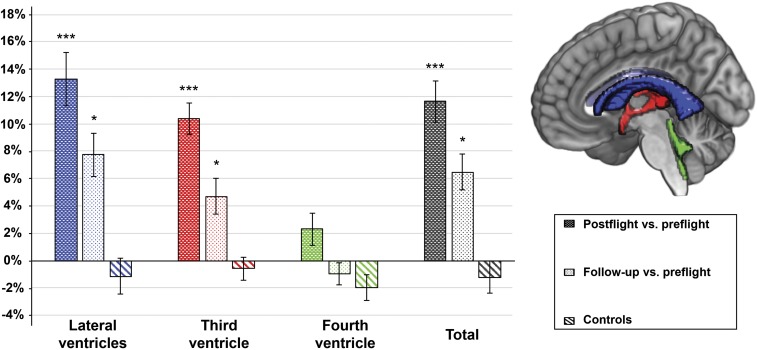
Significance: Long-duration spaceflight induces detrimental changes in human physiology due to microgravity. One example is a cephalic fluid shift. Here, we prospectively investigated the quantitative changes in cerebrospinal fluid (CSF) volume of the brain ventricular regions in space crew by means of a region of interest, observer-independent analysis on structural brain MRI scans. MRI scans were collected before the mission, shortly after and 7 mo after return to Earth. We found a significant increase in lateral and third ventricles at postflight and a trend to normalization at follow-up, but still significantly increased ventricular volumes. The observed spatiotemporal pattern of CSF compartment enlargement and recovery points to a reduced CSF resorption in microgravity as the underlying cause.
Overview
The claims and statistics of this paper haven’t been checked yet.
Free: it reads the open-access text and checks the first 5 claims that cite a source we can check. Create a free account to check every claim.
Integrity signals
Registry
Cites
Statistics
Figures
Verification
Claims the paper makes
The claims and statistics of this paper haven’t been checked yet.
Free: it reads the open-access text and checks the first 5 claims that cite a source we can check. Create a free account to check every claim.
Claims other papers make about this one
Each is checked against this paper’s own text: does it say what the citing paper says it does?
The source backs part of the claim, not all of it — or backs it for a different population, condition or comparison.
In the citing paper
“Most notably, a 10.7–14.6% ventricular enlargement (i.e., approximately a 2–3 ml increase) has been detected in astronauts and cosmonauts by multiple investigators56–59.”
From Red risks for a journey to the red planet: The highest priority human health risks for a mission to Mars (2020) · cites this paper as [57]
Experimental — accuracy not yet measured
Self-check
Percentages, sums and reported differences re-computed from the paper’s own numbers.
The self-check needs the paper’s full text.
Citations
Cites
Voxel-Based Morphometry—The Methods
Ashburner, J., & Friston, K. J. (2000) · NeuroImage · doi:10.1006/nimg.2000.0582 · Cited by 8,676
MRIQC: Advancing the automatic prediction of image quality in MRI from unseen sites
Esteban, O., Birman, D., Schaer, M., Koyejo, O. O., Poldrack, R. A., & Gorgolewski, K. J. (2017) · PLOS ONE · doi:10.1371/journal.pone.0184661 · Cited by 920
Anatomy and physiology of cerebrospinal fluid
Sakka, L., Coll, G., & Chazal, J. (2011) · European Annals of Otorhinolaryngology, Head and Neck Diseases · doi:10.1016/j.anorl.2011.03.002 · Cited by 815 · cited 1×
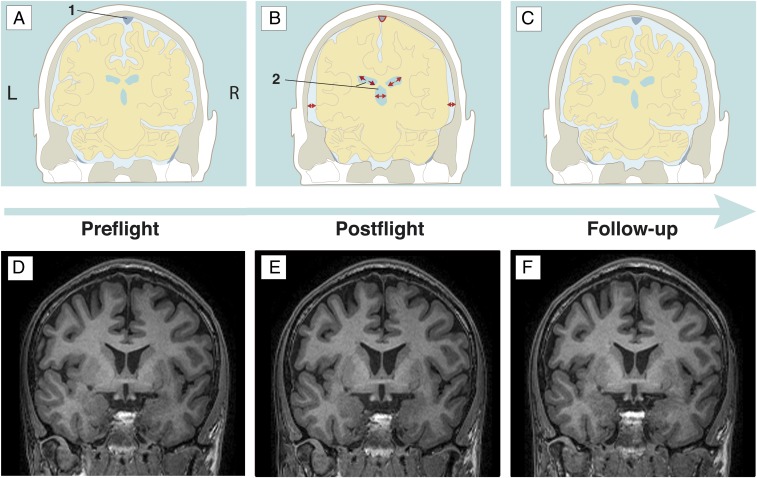
“This upward shift of the brain could lead to a compression of the superior sagittal sinus and Pachioni’s granulations, two structures responsible for the majority of CSF resorption (11).”
BackgroundMader, T. H., Gibson, C. R., Pass, A. F., Kramer, L. A., Lee, A. G., Fogarty, J., Tarver, W. J., Dervay, J. P., Hamilton, D. R., Sargsyan, A., et al. (2011) · Ophthalmology · doi:10.1016/j.ophtha.2011.06.021 · Cited by 748 · cited 3×
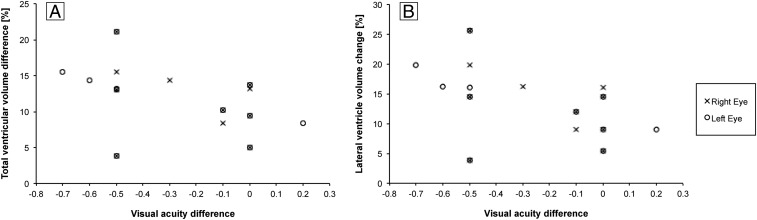
“2 and 3 for an overview), with a potential risk of permanent visual acuity changes (5).”
BackgroundEffects of Spaceflight on Astronaut Brain Structure as Indicated on MRI
Roberts, D. R., Albrecht, M. H., Collins, H. R., Asemani, D., Chatterjee, A. R., Spampinato, M. V., Zhu, X., Chimowitz, M. I., & Antonucci, M. U. (2017) · New England Journal of Medicine · doi:10.1056/nejmoa1705129 · Cited by 318 · cited 6×
“Another MRI study in ISS astronauts also observed a ventricular enlargement after spaceflight in combination with a narrowing of the central sulcus (6).”
BackgroundMethodInfluentialFundamentals of Space Medicine
Clément, G. (2011) · doi:10.1007/978-1-4419-9905-4 · Cited by 237
Microgravity-Induced Fluid Shift and Ophthalmic Changes
Nelson, E., Mulugeta, L., & Myers, J. (2014) · Life · doi:10.3390/life4040621 · Cited by 167 · cited 1×
“, arterial and venous structures) (2).”
Space flight-associated neuro-ocular syndrome (SANS)
Lee, A. G., Mader, T. H., Gibson, C. R., Brunstetter, T. J., & Tarver, W. J. (2018) · Eye · doi:10.1038/s41433-018-0070-y · Cited by 157 · cited 11×
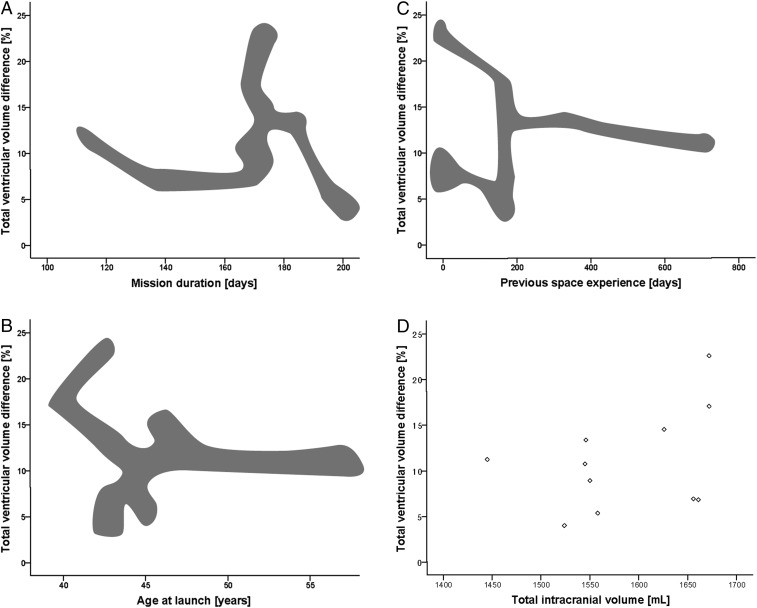
“In addition, risk factors, such as age, body mass index, head size, gender, CSF turnover rate, and craniospinal compliance (12), should be assessed to determine a specific individual’s likelihood to develop VIIP/SANS.”
BackgroundInfluentialBrain Tissue–Volume Changes in Cosmonauts
Van Ombergen, A., Jillings, S., Jeurissen, B., Tomilovskaya, E., Rühl, R. M., Rumshiskaya, A., Nosikova, I., Litvinova, L., Annen, J., Pechenkova, E. V., et al. (2018) · New England Journal of Medicine · doi:10.1056/nejmc1809011 · Cited by 124 · cited 5×
“Previously, we reported alterations in total gray matter, white matter, and CSF tissue volumes after long-duration spaceflight (7).”
BackgroundMethodInfluentialSelf-citationSpaceflight-induced changes in white matter hyperintensity burden in astronauts
Alperin, N., Bagci, A. M., & Lee, S. H. (2017) · Neurology · doi:10.1212/wnl.0000000000004475 · Cited by 73 · cited 3×
“Lastly, the periventricular white matter changes previously reported in astronauts (16) might be a direct consequence of transependymal water diffusion from the enlarged ventricles into periventricular structures, due to pressure peaks in a backed up CSF circulation.”
BackgroundInfluential
Research works printed but not linked: 1
- Tarver W, Otto C (2012) NASA’s spaceflight visual impairment intracranial pressure (VIIP) risk: Clinical correlations and pathophysiology. Aerospace Medicine Grand Rounds (NASA, Washington, DC).
Cited by
Items 101–162 of 162
la Torre, G. G. D., & González-Torre, S. (2023) · Journal of Clinical and Experimental Neuropsychology · doi:10.1080/13803395.2023.2225235 · Cited by 4
“…have observed an enlargement of the cerebrospinal fluid (CSF) compartment, including the subarachnoid space, directly after long-duration spaceflight (Van Ombergen et al., 2019) and also perivascular spaces alterations (PVS), especially in basal ganglia and white matter (Barisano et al., 2022).”
BackgroundCarter, K. J., Laurie, S. S., Warthen, K., Sater, S. H., Martin, B. A., Feng, C. M., Young, M., Hasan, K. M., Kramer, L. A., & Macias, B. R. (2025) · Journal of Applied Physiology · doi:10.1152/japplphysiol.00596.2024 · Cited by 3
Pettinau, F., & Orrù, A. (2026) · Applied Sciences · doi:10.3390/app16041860 · Cited by 3
The case for space as a model of accelerated aging
Manwaring-Mueller, M., Du, H., Valentino, T. R., Fuentealba, M., Chebykin, A., Wu, F., Furman, D., & Winer, D. A. (2026) · Nature Aging · doi:10.1038/s43587-026-01105-2 · Cited by 3
Spaceflight-associated neuro-ocular syndrome (SANS): expert consensus on diagnosis and management
Gew, J. J. Y., Hyder, Y. F., Grech, O., Brunstetter, T. J., Tarver, W. J., Mason, S. S., Gibson, C. R., Polk, J. D., Schneider, V. S., Baalen, M. G. V., et al. (2026) · Eye · doi:10.1038/s41433-026-04651-6 · Cited by 3
“A prospective study observed an association of lateral ventricular volume changes with visual acuity difference in the left eye pre and postflight, but not in the right eye [24, 34].”
Space brain research: progress and prospect
Yi, X., Xiaoping, C., Xu, X., Chengyu, L., Poo, M., & Chen, S. (2023) · Scientia Sinica Vitae · doi:10.1360/ssv-2022-0196 · Cited by 3
Manko, O. M., Smoleevsky, A. E., & Tomilovskaya, E. (2022) · Human Physiology · doi:10.1134/s0362119722070131 · Cited by 3
Self-citationClinical neuroimaging of Spaceflight Associated Neuro-Ocular Syndrome
Nunez, L. C., Aein, A., & Riascos, R. (2022) · Elsevier eBooks · doi:10.1016/b978-0-323-91524-3.00008-9 · Cited by 3
Cardiovascular Physiology and Fluid Shifts in Space
Hesham, A., & Hargens, A. R. (2022) · Springer eBooks · doi:10.1007/978-3-031-18440-6_2 · Cited by 3
Roy, B. L., Martin‐Krumm, C., Beauchamps, V., Jimenez, A., Giaume, L., Jacob, S., Voilque, A., Ferhani, O., Altena, E., & Trousselard, M. (2025) · PLoS ONE · doi:10.1371/journal.pone.0320588 · Cited by 3
Cai, L., Lv, K., Niu, H., Ren, P., Li, H., Xie, Y., Liu, Y., Li, K., Zhang, T., Ma, X., et al. (2025) · Quantitative Imaging in Medicine and Surgery · doi:10.21037/qims-24-1989 · Cited by 2
“Microgravity-induced fluid redistribution from the lower body to the head has been linked to varying degrees of visual impairment (21).”
Alterations in CNS-derived blood biomarkers during 30 days simulated microgravity
Schmidt, S. V., Odainic, A., Aretz, B., Frings‐Meuthen, P., Hönemann, J., Bohmeier, M., Liemersdorf, C., Mulder, E. R., Moestl, S., Heusser, K., et al. (2025) · Frontiers in Physiology · doi:10.3389/fphys.2025.1600708 · Cited by 2
The Thomas Pesquet PROXIMA mission: An overview of accomplishments and science results
Heider, E., & Pesquet, T. (2023) · Acta Astronautica · doi:10.1016/j.actaastro.2023.05.037 · Cited by 2
Русанов, В. Б., Fomina, E. V., & Orlov, O. I. (2022) · Frontiers in Space Technologies · doi:10.3389/frspt.2022.998610 · Cited by 2
Mikheeva, I. B., Zhujkova, N., Mikhailova, G. Z., Shtanchaev, R. S., Pavlik, L. L., & Arkhipov, V. (2023) · Brain Structure and Function · doi:10.1007/s00429-023-02704-0 · Cited by 2
“On the other hand, an increase in gray matter volume in the precentral and postcentral gyri has been shown (Lee et al. 2015; Koppelmans et al. 2017; Van Ombergen et al. 2019).”
BackgroundIn Reply: Brain Physiological Response and Adaptation during Spaceflight
Marshall-Goebel, K. J., Damani, R. H., & Bershad, E. M. (2019) · Neurosurgery · doi:10.1093/neuros/nyz374 · Cited by 2
Peschke, T., Feuerecker, M., Siegl, D., Schicktanz, N., Stief, C. G., zu Eulenburg, P., Choukèr, A., & Buchheim, J. (2024) · Methods and Protocols · doi:10.3390/mps7020031 · Cited by 1
Bersenev, E. Y., Demina, P. N., Евгеньевна, К. Д., Kaspransky, R. R., & Berseneva, I. А. (2024) · Cardiometry · doi:10.18137/cardiometry.2024.31.198207 · Cited by 1
taVNS as a potential countermeasure for neurocognitive decline in microgravity
Fricke, L., Wienke, C., & Zaehle, T. (2025) · Frontiers in Neuroscience · doi:10.3389/fnins.2025.1724872 · Cited by 1
Nimpal, M., Winter, P., Schnell, S., & zu Eulenburg, P. (2025) · Journal of Cerebral Blood Flow & Metabolism · doi:10.1177/0271678x251400470 · Cited by 1
The human brain in space: a meta-analysis of neuroimaging evidence
Anna, S., Silvia, S., & Ferrè, E. R. (2026) · Frontiers in Psychology · doi:10.3389/fpsyg.2026.1748118 · Cited by 1
“White matter changes have been identified in pathways involved in vestibular processing (Doroshin et al., 2022) and increased ventricular volume has been linked to cerebrospinal fluid shifts and intracranial pressure changes (Van Ombergen et al., 2019; Kramer et al., 2020).”
Fan, Y., Liang, X., Sun, L., Shi, Q., Le, Y., Yue, H., Ling, S., Tian, W., Shi, Y., Zhong, G., et al. (2026) · Fundamental Research · doi:10.1016/j.fmre.2026.04.022 · Cited by 1
Carter, K. J., Smith, J. D., Huang, A. S., Stern, C., Kramer, L. A., Hasan, K. M., Chen, X., Martin, B. A., Young, M., Brunstetter, T. J., et al. (2026) · JAMA Ophthalmology · doi:10.1001/jamaophthalmol.2026.2140 · Cited by 1
Machine learning ensemble reveals distinct molecular pathways of retinal damage in spaceflown mice
Casaletto, J. A., Scott, R. T., Rathod, A., Jain, A., Chandar, A., Adapala, A., Prajapati, A., Nautiyal, A., Jayaraman, A., Boddu, A., et al. (2026) · npj Microgravity · doi:10.1038/s41526-026-00625-w · Cited by 1
Alibekov, B., Gutoreva, A., & Ferrè, E. R. (2026) · Frontiers in Psychology · doi:10.3389/fpsyg.2026.1735872 · Cited by 1
Crew health—Psychological, biological, and medical issues and the need for a systems approach
Shelhamer, M., & Fogarty, J. A. (2024) · Elsevier eBooks · doi:10.1016/b978-0-323-91280-8.00001-0 · Cited by 1
Miller, N. V., Zobova, L. N., & Badakva, A. M. (2024) · Human Physiology · doi:10.31857/s0131164624040042 · Cited by 1
Clement, G. R. (2025) · Space technology library · doi:10.1007/978-1-0716-4422-5_6 · Cited by 1
zu Eulenburg, P., Ombergen, A. V., Tomilovskaya, E., & Wuyts, F. L. (2019) · Proceedings of the National Academy of Sciences · doi:10.1073/pnas.1913041116 · Cited by 1
Self-citationStructural Brain Changes Associated with Space
McGuire, S. (2020) · Springer eBooks · doi:10.1007/978-3-319-50909-9_48-1
Vertical Pupil in a Lemon Shark
Schwab, I. R., & Heidemann, D. G. (2021) · Ophthalmology · doi:10.1016/j.ophtha.2020.09.016
Long-duration spaceflight alters estimated intracranial pressure and cerebral blood velocity
Imaduddin, S. M., & Heldt, T. (2020) · DSpace@MIT (Massachusetts Institute of Technology)
Blood Biomarkers May Have Found a New Frontier in Spaceflight—Reply
zu Eulenburg, P. (2022) · JAMA Neurology · doi:10.1001/jamaneurol.2022.0673
Structural Brain Changes Associated with Space
McGuire, S. (2022) · Springer eBooks · doi:10.1007/978-3-030-05526-4_48
Space Headache During Long-Haul Flights in 66 AstronautsPreprint
van Oosterhout, W. P. J., Perenboom, M. J. L., Terwindt, G. M., Ferrari, M. D., & Vein, A. A. (2022) · SSRN Electronic Journal · doi:10.2139/ssrn.4167935
Human Health Risks Relevant to Deep Space Mars Exploration Missions
Patel, Z. S., Gibson, C. R., Mader, T. H., Whitmire, A. M., Norcross, J. R., Thompson, M. S., Nemec-Bakk, A. S., Boerma, M., & Huff, J. L. (2023) · American Institute of Aeronautics and Astronautics eBooks · doi:10.2514/5.9781624106545.0487.0542
Space Countermeasures and Medicine - Implementation into Earth medicine and Rehabilitation
Tomilovskaya, E. S., Petersen, N., McPhee, J., Iwase, S., Goswani, N., & Platts, S. (2023) · Frontiers research topics · doi:10.3389/978-2-8325-2592-0 · Cited by 1
Neuroplasticité corticale et cognition dans des environnements extrêmes
Friedl-Werner, A. (2023) · theses.fr (ABES) · doi:10.70675/302151f2zc682z41b5za512zae1e7d6e8458
Structural and functional changes in the brain of cosmonauts under the influence of microgravity
Латарцев, К. В., Demina, P. N., Yashina, V. I., & Kaspranskiy, R. R. (2024) · Medicine of Extreme Situations · doi:10.47183/mes.2024.008
Einfluss der thorakalen und abdominellen Atmung auf den Liquorfluss
Aktas, G. (2024) · eDiss (Georg-August-Universität Göttingen) · doi:10.53846/goediss-10625
Central nervous system during human spaceflight missions to Mars. A Meta-Analysis
Ghosh, D., Verma, E., Gershman, S., Anderson, T., Ghosh, R. K., & Peter (2023) · International Journal Of Medical Science And Clinical Invention · doi:10.18535/ijmsci/v10i01.07
Miller, N. V., Zobova, L. N., & Badakva, A. M. (2024) · Human Physiology · doi:10.1134/s0362119724700804
The Cardiovascular System in Space
Clement, G. R. (2025) · Space technology library · doi:10.1007/978-1-0716-4422-5_4
Feng, L., Lin, Y., Du, C., Ma, C., Ni, N., & Liu, S. (2025) · SSRN Electronic Journal · doi:10.2139/ssrn.5375486
McGregor, H. R., Hupfeld, K. E., Pasternak, O., Beltran, N. E., Dios, Y. E. D., Bloomberg, J. J., Wood, S. J., Riascos, R., Reuter‐Lorenz, P. A., & Seidler, R. D. (2025) · npj Microgravity · doi:10.1038/s41526-025-00505-9
[Potential biological mechanisms underlying spaceflight-induced depression symptoms in astronauts].
Li, Z., Liu, J., Liu, B., Wang, M., Ju, Y., & Zhang, Y. (2025) · PubMed Central · doi:10.11817/j.issn.1672-7347.2025.250380
“…[4] 显示:长期太空飞行后, 宇航员大脑出现中央沟变窄、脑组织向上移位及顶 部脑脊液空间减少等结构性改变。此外,研究 [5-6] 还 发现脑室周围白质高信号增多和脑室体积扩大的现 象,这些变化在短期任务中未见。长期太空飞行导 致小脑白质体积增加 [7] ,且这一改变可能长期存 在 [6-7] 。同时,腹侧额叶、颞叶、枕叶的灰质体积及 丘脑体积均显著减小 [8-9] 。功能磁共振成像 (functional magnetic resonance imaging , fMRI) 研究表明:宇航 员返回地球 9 d 后,默认模式网络的功能连接显著下 降 [10] ;返回地球 8…”
Romanella, S. M. (2023) · Florence Research (University of Florence)
UHAB-1: Physiological responses to a 48-hour spaceflight analog mission underwater
Möller, F. N., Haarslev, C., Mølgaard, J., Harris, N. S., Petersen, J. C. G., & Petersen, L. G. (2026) · Life Sciences in Space Research · doi:10.1016/j.lssr.2026.02.006
Longitudinal brain-age predictions comprising long-duration spaceflight missions
Tang, G., Patil, K. R., Hoffstaedter, F., More, S., Eickhoff, S. B., Jillings, S., Jeurissen, B., Tomilovskaya, E., Gerlach, D. A., Nosikova, I., et al. (2026) · npj Microgravity · doi:10.1038/s41526-026-00575-3
Self-citationAmini, R. R., Jain, R., & Korzh, V. P. (2026) · Research Square · doi:10.21203/rs.3.rs-8767756/v1
Updates on Spaceflight-Associated Neuro-Ocular Syndrome
Kholwadwala, A., Kadipasaoglu, C. M., & Lee, A. G. (2026) · Neurologic Clinics · doi:10.1016/j.ncl.2025.12.006
Drouvé, N. (2026) · Kölner Universitäts PublikationsServer (Universität zu Köln)
Li, Y., Lan, H., Ma, Q., Ding, R., Fang, M., Liu, Y., & Zhao, Y. (2026) · Life Sciences in Space Research · doi:10.1016/j.lssr.2026.04.003
Neurological complications in microgravity and long duration spaceflight
Coelho, G., Rabinstein, A. A., & Freeman, W. D. (2026) · npj Microgravity · doi:10.1038/s41526-026-00621-0
“Increasedvolumeofthelateralandthirdventriclesisprobablythemost consistent fi nding across studies 1,2,4,17,18,24 .”
Pasekova, O. B., Sigaleva, E. E., Ei, M., Marchenko, L. Y., Ivanov, K. P., Sigaleva, Т. V., Ilyin, V., Morozova, Y. А., & Tomilovskaya, E. S. (2025) · Human Physiology · doi:10.1134/s0362119726700143
“Evidence also indicates functional and structural brain changes associated with increased ICP during spaceflight [17–19].”
Self-citationRühl, R. M. (2026) · Electronic Theses of LMU Munich (Ludwig-Maximilians-Universität München) · doi:10.5282/edoc.37233
Self-citationAzargoonjahromi, A., & Abutalebian, F. (2026) · Life Sciences in Space Research · doi:10.1016/j.lssr.2026.08.004
The Vestibular System: a spatial reference to human cognition
Gammeri, R. (n.d.) · Institutional Research Information System University of Turin (University of Turin)
Ocular changes in human spaceflight
Gupta, R., Dongre, R., Langston, W., Stephanian, B., Alsawaf, A., Panzo, N., Memon, H., Ong, J., Afshin, E. E., Kim, J., et al. (2026) · Progress in Retinal and Eye Research · doi:10.1016/j.preteyeres.2026.101535
Effects of simulated spaceflight-relevant environmental stressors on cooperative task performance
Yao, Y., Liu, H., Yang, Z., Yao, D., Xia, Y., & Chen, K. (2026) · Life Sciences in Space Research · doi:10.1016/j.lssr.2026.10.006
Doroshin, A., Jillings, S., Jeurissen, B., Tomilovskaya, E., Pechenkova, E., Nosikova, I., Rumshiskaya, A., Litvinova, L., Rukavishnikov, I., Laet, C. D., et al. (2022) · doi:10.3389/fncir.2022.815838.s001
Self-citation
Metadata
- Authors
- Van Ombergen, A., Jillings, S., Jeurissen, B., Tomilovskaya, E., Rumshiskaya, A., Litvinova, L., Nosikova, I., Pechenkova, E., Rukavishnikov, I., Manko, O., Danylichev, S., Rühl, R. M., Kozlovskaya, I. B., Sunaert, S., Parizel, P. M., Sinitsyn, V., Laureys, S., Sijbers, J., zu Eulenburg, P., & Wuyts, F. L.
- Affiliations
- Lab for Equilibrium Investigations and Aerospace, University of Antwerp, 2610 Antwerp, Belgium;
- University of Antwerp (BE)
- Russian Academy of Sciences (RU)
- Radiology Department, Federal Center of Treatment and Rehabilitation, 125367 Moscow, Russia;
- National Research University Higher School of Economics (RU)
- Gagarin Research and Test Cosmonaut Training Center (RU)
- Ludwig-Maximilians-Universität München (DE)
- KU Leuven (BE)
- Lomonosov Moscow State University (RU)
- University of Liège (BE)
- Department of Neurology, Ludwig-Maximilians-University Munich, 81377 Munich, Germany;
- ORCID
- Venue
- Proceedings of the National Academy of Sciences
- Publisher
- National Academy of Sciences
- Published
- 2019-05-06
- Volume
- 116
- Issue
- 21
- Pages
- 10531-10536
- ISSN
- 0027-8424 (ISSN-L)
- 1091-6490
- PMC
- PMC6535034
- OpenAlex
- W2944370899
- Cited by
- 148
- References
- 16
- Citations by year
- 2026: 14 · 2025: 24 · 2024: 18 · 2023: 19 · 2022: 22 · 2021: 27 · 2020: 19 · 2019: 5
- FWCI
- 12.51
- Type
- journal article
- Language
- en
- Open access
- hybrid
- doi.org
- Licence
- Locations
- Proceedings of the National Academy of Sciences (publishedVersion, cc-by-nc-nd)
- Europe PMC (PubMed Central) (publishedVersion, cc-by-nc-nd)
- PubMed Central (publishedVersion, cc-by-nc-nd)
- PubMed (publishedVersion)
- Lirias (KU Leuven) (submittedVersion, cc-by-nc-nd)
- Open Repository and Bibliography (University of Liège) (submittedVersion, cc-by-nc-nd)
- Funders
- Bundesministerium für Bildung und Forschung (EO 0901, 01EO0901)
- Fonds Wetenschappelijk Onderzoek
- Russian Science Foundation
- Vlaamse regering
- Topics
- Health Sciences › Medicine › Physiology (medical) › Spaceflight effects on biology
- Health Sciences › Medicine › Clinical Neurology › Cerebrospinal fluid and hydrocephalus
- Health Sciences › Medicine › Cardiology and Cardiovascular Medicine › Cardiovascular Syncope and Autonomic Disorders
- Keywords
- long-duration spaceflight, microgravity, cerebrospinal fluid, lateral ventricle, third ventricle, post-flight recovery, space crews, structural MRI
- MeSH terms
- Adult, Cerebral Ventricles, Humans, Magnetic Resonance Imaging, Middle Aged, Prospective Studies, Space Flight, Case-Control Studies
About these checks
Registry, retraction, Cites and statistics results are computed, not judged, with one exception: a printed reference that no index lists is read once by a model before it counts as a citation error. Claims are extracted by a model and kept only when their quote appears verbatim in the text; each cited source is then checked, with a model’s help, for whether it says what the claim relies on. Those verdicts can be wrong — read the claim’s quote and the cited source before relying on one.
Statistics and arithmetic are recomputed, not judged.
Confidence bands are shown only for fields calibrated on our annotated test set. None is calibrated yet, so no band is shown.
What counts as a claim ›How we measure confidence ›How we check this ›
Are you an author, or do you see a problem with this page? Request a review
Data sources
Bibliographic data: Semantic Scholar, OpenAlex, Crossref.
Contains information from the Semantic Scholar Academic Graph Datasets, made available under the ODC Attribution License (ODC-BY 1.0).
Semantic Scholar’s data is described in: Kinney, R., et al. (2023). The Semantic Scholar Open Data Platform. arXiv:2301.10140.
