

Overlooked roles of DNA damage and maternal age in generating human germline mutations
Open accessPublished version of a preprint
The DOI matches its Crossref record; 91 of the 91 references it cites were found in a registry or an index.
Abstract
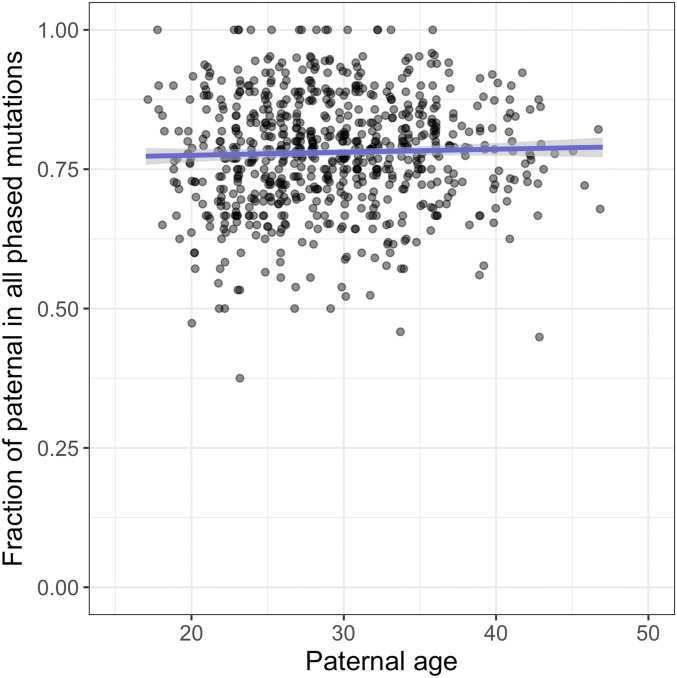
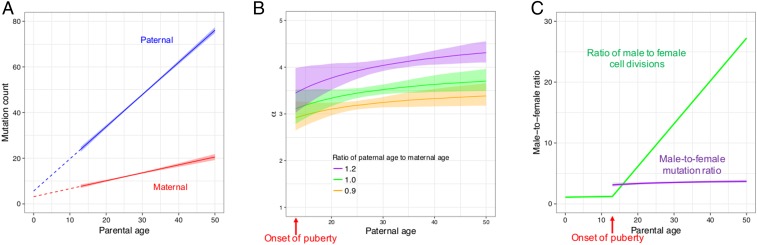
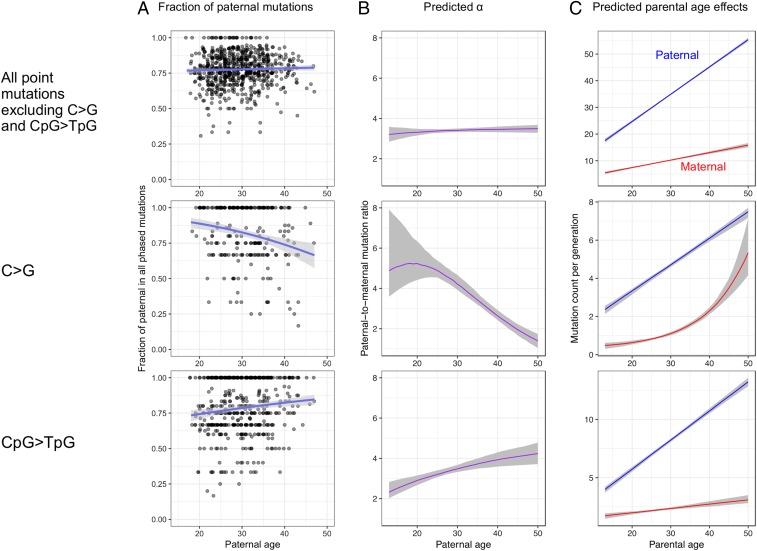
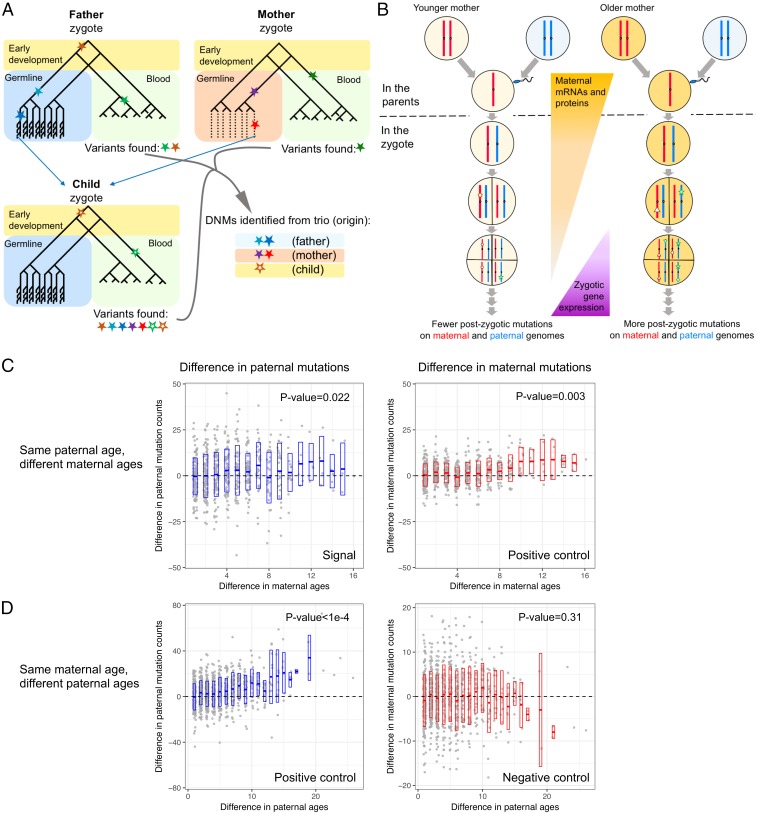
Significance: More than three-fourths of human germline mutations are paternal in origin and their total number increases with the father’s age at conception. These observations are thought to support the textbook view that germline point mutations stem mostly from DNA replication errors. Analyzing large germline mutation datasets for humans, we find that this understanding cannot explain the observed patterns of new mutations. Instead, we show that the male mutation bias is not driven by spermatogenesis. We further find evidence that a substantial fraction of mutations are not replicative in origin and uncover a potential effect of a mother’s age on the number of mutations that happen early in the development of the embryo.
Overview
The claims and statistics of this paper haven’t been checked yet.
Free: it reads the open-access text and checks the first 5 claims that cite a source we can check. Create a free account to check every claim.
Integrity signals
Registry
Cites
Statistics
Figures
Verification
Claims the paper makes
The claims and statistics of this paper haven’t been checked yet.
Free: it reads the open-access text and checks the first 5 claims that cite a source we can check. Create a free account to check every claim.
Claims other papers make about this one
Each is checked against this paper’s own text: does it say what the citing paper says it does?
The check wasn’t confident either way, so it gives no verdict — never disputed.
In the citing paper
“suggesting that the observed SNP heritability for autistic carriers reflects autism rather than factors associated with the generation of germline mutations57,58.”
From Genetic correlates of phenotypic heterogeneity in autism (2022) · cites this paper as [57]
Experimental — accuracy not yet measured
Self-check
Percentages, sums and reported differences re-computed from the paper’s own numbers.
The self-check needs the paper’s full text.
Citations
Cites
Signatures of mutational processes in human cancer
Initiative, A. P. C. G., Alexandrov, L. B., ICGC Breast Cancer Consortium, ICGC MMML-Seq Consortium, PedBrain, I., Nik-Zainal, S., Wedge, D. C., Aparicio, S. A. J. R., Behjati, S., Biankin, A. V., et al. (2013) · Nature · doi:10.1038/nature12477 · Cited by 9,660 · cited 1×
“Specific sources of DNA damage-induced mutations To explore possible mutational mechanisms, following previous studies (Alexandrov et al., 2013; Lindsay et al., 2016; Harris and Pritchard, 2017), we classified point DNMs into six disjoint and complementary mutation classes based on parental and…”
BackgroundHuman DNA methylomes at base resolution show widespread epigenomic differences
Lister, R., Pelizzola, M., Dowen, R. H., Hawkins, R. D., Hon, G., Tonti-Filippini, J., Nery, J. R., Lee, L., Ye, Z., Ngo, Q.-M., et al. (2009) · Nature · doi:10.1038/nature08514 · Cited by 4,673 · cited 4×
“Processing of ovary and testis methylation data at CpG sites The methylation data were generated as part of the Roadmap Epigenomics project (Lister et al., 2009).”
BackgroundMethodInfluentialEpigenetic Reprogramming in Mammalian Development
Reik, W., Dean, W., & Walter, J. (2001) · Science · doi:10.1126/science.1063443 · Cited by 3,078 · cited 2×
“After sex determination (around 7 wk postfertilization in humans), the methylation profiles of male and female germ cells diverge: Remethylation takes place early in males, before differentiation of spermatogonia, but very late in females, just shortly before ovulation (46, 47).”
BackgroundRate of de novo mutations and the importance of father’s age to disease risk
Kong, A., Frigge, M. L., Masson, G., Besenbacher, S., Sulem, P., Magnusson, G., Gudjonsson, S. A., Sigurdsson, A., Jonasdottir, A., Jonasdottir, A., et al. (2012) · Nature · doi:10.1038/nature11396 · Cited by 2,134 · cited 1×
“Further reducing the ability to detect either a pre- or postzygotic effect of maternal age is the high correlation between maternal and paternal ages (which is likely why a maternal age effect was not detected in earlier, smaller studies) (33, 36).”
Ancient DNA and the rewriting of human history: be sparing with Occam’s razor
Haber, M., Mezzavilla, M., Xue, Y., & Tyler-Smith, C. (2016) · Genome Biology · doi:10.1186/s13059-015-0866-z · Cited by 1,924
Braude, P., Bolton, V., & Moore, S. (1988) · Nature · doi:10.1038/332459a0 · Cited by 1,463
Demethylation of the zygotic paternal genome
Mayer, W., Niveleau, A., Walter, J., Fundele, R., & Haaf, T. (2000) · Nature · doi:10.1038/35000656 · Cited by 1,327 · cited 2×
“, oxidative stress may be higher in male germ cells) (67, 68) and after fertilization but before the first cleavage the two parental genomes experience distinct epigenetic remodeling and are replicated separately in their own pronuclei (69, 70).”
BackgroundBody size, metabolic rate, generation time, and the molecular clock.
Martin, A. P., & Palumbi, S. R. (1993) · Proceedings of the National Academy of Sciences · doi:10.1073/pnas.90.9.4087 · Cited by 1,239 · cited 3×
“2B)(Amster and Sella, 2016) and in rates of DNA damage (e.g., metabolic rates) that covary with life history traits (Martin and Palumbi, 1993; Wilson-Sayres et al., 2011).”
BackgroundChurchill, A. J., Gutiérrez, G. D., Singer, R. A., Lorberbaum, D. S., Fischer, K. A., & Sussel, L. (2017) · eLife · doi:10.7554/elife.20010 · Cited by 1,236
Estimate of the Mutation Rate per Nucleotide in Humans
Nachman, M. W., & Crowell, S. L. (2000) · Genetics · doi:10.1093/genetics/156.1.297 · Cited by 1,209
Research works printed but not linked: 1
- Müller H 1954 The nature of genetic effects produced by irradiation Radiation Biology: Ionizing Radiations Hollaender A McGraw-Hill New York 351 473
Cited by
Relationships among smoking, oxidative stress, inflammation, macromolecular damage, and cancer
Caliri, A. W., Tommasi, S., & Besaratinia, A. (2021) · Mutation Research/Reviews in Mutation Research · doi:10.1016/j.mrrev.2021.108365 · Cited by 681
“role in mutation accumulation than previously recognized [280].”
BackgroundEvolution of the germline mutation rate across vertebrates
Bergeron, L. A., Besenbacher, S., Zheng, J., Li, P., Bertelsen, M. F., Quintard, B., Hoffman, J. I., Li, Z., St. Leger, J., Shao, C., et al. (2023) · Nature · doi:10.1038/s41586-023-05752-y · Cited by 346
“For example, we found that among mammals, primates have the largest male bias with α = 3.8 (95% CI = 2.6–5.7), similar to what was previously reported for several species belonging to this group 12–14, 21, 22 , 32, 33 .”
InfluentialEpigenetics of Male Infertility: The Role of DNA Methylation
Rotondo, J. C., Lanzillotti, C., Mazziotta, C., Tognon, M., & Martini, F. (2021) · Frontiers in Cell and Developmental Biology · doi:10.3389/fcell.2021.689624 · Cited by 186
Sasani, T. A., Pedersen, B. S., Gao, Z., Baird, L., Przeworski, M., Jorde, L. B., & Quinlan, A. R. (2019) · eLife · doi:10.7554/elife.46922 · Cited by 186
Self-citationDifferences between germline genomes of monozygotic twins
Jonsson, H., Magnusdottir, E., Eggertsson, H. P., Stefansson, O. A., Arnadottir, G. A., Eiriksson, O., Zink, F., Helgason, E. A., Jonsdottir, I., Gylfason, A., et al. (2021) · Nature Genetics · doi:10.1038/s41588-020-00755-1 · Cited by 173
Direct estimation of mutations in great apes reconciles phylogenetic dating
Besenbacher, S., Hvilsom, C., Marques-Bonet, T., Mailund, T., & Schierup, M. H. (2019) · Nature Ecology & Evolution · doi:10.1038/s41559-018-0778-x · Cited by 165
Genetic correlates of phenotypic heterogeneity in autism
Warrier, V., Zhang, X., Reed, P., Havdahl, A., Moore, T. M., Cliquet, F., Leblond, C. S., Rolland, T., Rosengren, A., LEAP, E.-A., et al. (2022) · Nature Genetics · doi:10.1038/s41588-022-01072-5 · Cited by 152
“19), suggesting that the observed SNP heritability for autistic carriers reflects autism rather than factors associated with the generation of germline mutations.(51,52) This result is in line with our pTDT analyses which identify an overtransmission of PGS in carriers, and previous research that has identified a smal…”
ResultDe Novo Mutations Reflect Development and Aging of the Human Germline
Goldmann, J. M., Veltman, J. A., & Gilissen, C. (2019) · Trends in Genetics · doi:10.1016/j.tig.2019.08.005 · Cited by 146
Lack of transgenerational effects of ionizing radiation exposure from the Chernobyl accident
Yeager, M., Machiela, M. J., Kothiyal, P., Dean, M. C., Bodelón, C., Suman, S., Wang, M., Mirabello, L. J., Nelson, C. W., Zhou, W., et al. (2021) · Science · doi:10.1126/science.abg2365 · Cited by 127
Intergenerational Transfer of Ageing: Parental Age and Offspring Lifespan
Monaghan, P., Maklakov, A. A., & Metcalfe, N. B. (2020) · Trends in Ecology & Evolution · doi:10.1016/j.tree.2020.07.005 · Cited by 121
“, those on the downward slope illustrated in Box 1) are more likely to have DNA mutations, impaired mitochondrial function and shorter telomeres, all of which could increase offspring frailty and/or hasten the rate of ageing of the offspring [30,31].”
BackgroundIncreased mutation and gene conversion within human segmental duplications
Vollger, M. R., Dishuck, P. C., Harvey, W. T., DeWitt, W. S., Guitart, X., Goldberg, M. E., Rozanski, A. N., Lucas, J., Asri, M., Human Pangenome Reference Consortium, et al. (2023) · Nature · doi:10.1038/s41586-023-05895-y · Cited by 104
“%) in our candidate IGC regions consistent with previous observations showing increases in C>G mutations in regions of non-crossover gene conversion and double-strand breaks 43–45 .”
BackgroundResultAutism risk in offspring can be assessed through quantification of male sperm mosaicism
Breuss, M. W., Antaki, D., George, R. D., Kleiber, M. L., James, K. N., Ball, L., Hong, O., Mitra, I., Yang, X., Wirth, S. A., et al. (2019) · Nature Medicine · doi:10.1038/s41591-019-0711-0 · Cited by 113
The Role of Genetics and Oxidative Stress in the Etiology of Male Infertility—A Unifying Hypothesis?
Aitken, R. J., & Baker, M. A. (2020) · Frontiers in Endocrinology · doi:10.3389/fendo.2020.581838 · Cited by 111
“Indeed, a recent analysis has found that 75% of all de novo mutations arise in the male germ line via mechanisms that have little to do with replication error, as commonly supposed (83).”
BackgroundInfluentialThe deteriorating soma and the indispensable germline: gamete senescence and offspring fitness
Monaghan, P., & Metcalfe, N. B. (2019) · Proceedings of the Royal Society B Biological Sciences · doi:10.1098/rspb.2019.2187 · Cited by 110
“B 2860192187 5 mutations is already evident in the offspring of young human parents, and this difference remains relatively stable with increased parental age [45].”
BackgroundInfluentialA comparison of humans and baboons suggests germline mutation rates do not track cell divisions
Wu, F. L., Strand, A. I., Cox, L. A., Ober, C., Wall, J. D., Moorjani, P., & Przeworski, M. (2020) · PLoS Biology · doi:10.1371/journal.pbio.3000838 · Cited by 94
“Within humans, different studies have arrived at discrepant estimates of parental 132 age effects, mutation spectra, and mutation rates at a given paternal age (34); indeed, 133 significant differences are seen even between estimates based on two- versus three134 generation families within a single study (27).”
BackgroundResultInfluentialSelf-citationGenetic and chemotherapeutic influences on germline hypermutation
Kaplanis, J., Ide, B., Sanghvi, R., Neville, M. D. C., Danecek, P., Coorens, T. H. H., Prigmore, E., Short, P., Gallone, G., McRae, J. F., et al. (2022) · Nature · doi:10.1038/s41586-022-04712-2 · Cited by 102
Kessler, M. D., Loesch, D. P., Perry, J. A., Heard-Costa, N. L., Taliun, D., Cade, B. E., Wang, H., Daya, M., Ziniti, J., Datta, S., et al. (2020) · Proceedings of the National Academy of Sciences · doi:10.1073/pnas.1902766117 · Cited by 92
“Some of this repair-associated mutation accumulation has been found to be due to maternal agedependent DNA damage in oocytes and to maternal age-dependent postzygotic mutation increases (25).”
BackgroundShould we be measuring DNA damage in human spermatozoa? New light on an old question
Aitken, R. J., & Bakos, H. W. (2021) · Human Reproduction · doi:10.1093/humrep/deab004 · Cited by 93
Biased Mutation and Selection in RNA Viruses
Kustin, T., & Stern, A. (2020) · Molecular Biology and Evolution · doi:10.1093/molbev/msaa247 · Cited by 83
“Interestingly, this is consistent with a model suggesting that DNA damage is a major source of replication errors in humans (Gao et al. 2019).”
Verbiest, M. A., Maksimov, M., Ye, J., Anisimova, M. O., Gymrek, M., & Sonay, T. B. (2022) · Journal of Evolutionary Biology · doi:10.1111/jeb.14106 · Cited by 91
The impact of paternal age on new mutations and disease in the next generation
Wood, K., & Goriely, A. (2022) · Fertility and Sterility · doi:10.1016/j.fertnstert.2022.10.017 · Cited by 79
Somatic mosaicism reveals clonal distributions of neocortical development
Breuss, M. W., Yang, X., Schlachetzki, J. C. M., Antaki, D., Lana, A. J., Xu, X., Chung, C., Chai, G., Stanley, V., Song, Q., et al. (2022) · Nature · doi:10.1038/s41586-022-04602-7 · Cited by 74
Inheritance of paternal DNA damage by histone-mediated repair restriction
Wang, S., Meyer, D. H., & Schumacher, B. (2023) · Nature · doi:10.1038/s41586-022-05544-w · Cited by 68
Evolution of the mutation rate across primates
Chintalapati, M., & Moorjani, P. (2020) · Current Opinion in Genetics & Development · doi:10.1016/j.gde.2020.05.028 · Cited by 68
Self-citationDe novo mutations, genetic mosaicism and human disease
Mohiuddin, M., Kooy, R. F., & Pearson, C. E. (2022) · Frontiers in Genetics · doi:10.3389/fgene.2022.983668 · Cited by 78
“It has been reported that this ratio of paternal to maternal is independent of the age of the parents (Gao et al., 2019), as maternal DNMs also accumulate during aging, although the rate of accumulation is lesser than for the paternal allele.”
BackgroundInfluentialWang, R. J., Thomas, G. W. C., Raveendran, M., Harris, R. A., Doddapaneni, H., Muzny, D. M., Capitanio, J. P., Radivojac, P., Rogers, J., & Hahn, M. W. (2020) · Genome Research · doi:10.1101/gr.255174.119 · Cited by 65
Aitken, R. J. (2024) · Frontiers in Reproductive Health · doi:10.3389/frph.2024.1364352 · Cited by 84
Population sequencing data reveal a compendium of mutational processes in the human germ line
Seplyarskiy, V. B., Soldatov, R. A., Koch, E., McGinty, R. J., Goldmann, J. M., Hernandez, R. D., Barnes, K., Correa, A., Burchard, E. G., Ellinor, P. T., et al. (2021) · Science · doi:10.1126/science.aba7408 · Cited by 62
de Manuel, M., Wu, F. L., & Przeworski, M. (2022) · eLife · doi:10.7554/elife.80008 · Cited by 72
Self-citationMeiotic DNA breaks drive multifaceted mutagenesis in the human germ line
Hinch, R., Donnelly, P., & Hinch, A. G. (2023) · Science · doi:10.1126/science.adh2531 · Cited by 64
“In humans, indirect population-based approaches have shown an excess of rare C>G, A>G and C>T single nucleotide polymorphisms (SNPs) in recombination hotspots (20), with C>G elevation in specific scenarios (e.g. aging oocytes (21, 22), X chromosome in males (23)).”
BackgroundRoth, T. L., & Marson, A. (2021) · Annual Review of Pathology Mechanisms of Disease · doi:10.1146/annurev-pathmechdis-012419-032626 · Cited by 80
Evolutionary Dynamics and Consequences of Parthenogenesis in Vertebrates
Fujita, M. K., Singhal, S., Brunes, T. O., & Maldonado, J. A. (2020) · Annual Review of Ecology Evolution and Systematics · doi:10.1146/annurev-ecolsys-011720-114900 · Cited by 72
Male reproductive ageing: a radical road to ruin
Aitken, R. J. (2023) · Human Reproduction · doi:10.1093/humrep/dead157 · Cited by 59
“Around 75% of all de novo mutations in our species occur in the male germ line and are strongly associated with paternal age (Gao et al., 2019).”
BackgroundZhang, W., Chen, Z., Zhang, D., Zhao, B., Liu, L., Xie, Z., Yao, Y., & Zheng, P. (2019) · PLoS Biology · doi:10.1371/journal.pbio.3000468 · Cited by 64
“Alternatively, these two KHDC3L mutations may arise during the early embryonic development, when the fast DNA synthesis is mutagenic [7,69,70].”
BackgroundMurphy, D. A., Elyashiv, E., Amster, G., & Sella, G. (2023) · eLife · doi:10.7554/elife.76065 · Cited by 58
Self-citationThe origin of human mutation in light of genomic data
Seplyarskiy, V. B., & Sunyaev, S. R. (2021) · Nature Reviews Genetics · doi:10.1038/s41576-021-00376-2 · Cited by 67
Aitken, R. J. (2022) · Reproductive BioMedicine Online · doi:10.1016/j.rbmo.2022.03.012 · Cited by 67
Spisak, N., de Manuel, M., Milligan, W. R., Sella, G., & Przeworski, M. (2024) · PLoS Biology · doi:10.1371/journal.pbio.3002678 · Cited by 72
Self-citationDevelopmental and temporal characteristics of clonal sperm mosaicism
Yang, X., Breuss, M. W., Xu, X., Antaki, D., James, K. N., Stanley, V., Ball, L., George, R. D., Wirth, S. A., Cao, B., et al. (2021) · Cell · doi:10.1016/j.cell.2021.07.024 · Cited by 58
Wang, Y., McNeil, P., Abdulazeez, R., Pascual, M., Johnston, S. E., Keightley, P. D., & Obbard, D. J. (2023) · Genome Research · doi:10.1101/gr.277383.122 · Cited by 58
The germline mutational process in rhesus macaque and its implications for phylogenetic dating
Bergeron, L. A., Besenbacher, S., Bakker, J., Zheng, J., Li, P., Pacheco, G., Sinding, M. S., Kamilari, M., Gilbert, M. T. P., Schierup, M. H., et al. (2021) · GigaScience · doi:10.1093/gigascience/giab029 · Cited by 53
Campbell, C. R., Tiley, G. P., Poelstra, J. W., Hunnicutt, K. E., Larsen, P. A., Lee, H., Thorne, J. L., dos Reis, M., & Yoder, A. D. (2021) · Heredity · doi:10.1038/s41437-021-00446-5 · Cited by 51
The mutational dynamics of short tandem repeats in large, multigenerational families
Steely, C. J., Watkins, W. S., Baird, L. M., & Jorde, L. B. (2022) · Genome biology · doi:10.1186/s13059-022-02818-4 · Cited by 55
“These data have also been used in analyses of the role of maternal age and DNA damage in generating germline mutations (Gao et al. 2019) and in examining the association between SNV mutation rate and longevity (Cawthon et al. 2020).”
MethodSelf-citationAgarwal, I., & Przeworski, M. (2019) · Proceedings of the National Academy of Sciences · doi:10.1073/pnas.1900714116 · Cited by 45
“Instead, consistent with a greater role of spontaneous damage and its repair in both male and female germlines (52), our results are most readily explained if male and female mutational mechanisms are overall highly similar, underpinned by the shared mechanisms associated with replication, transcription, methylation,…”
BackgroundInfluentialSelf-citationWang, R. J., Raveendran, M., Harris, R. A., Murphy, W. J., Lyons, L. A., Rogers, J., & Hahn, M. W. (2022) · Molecular Biology and Evolution · doi:10.1093/molbev/msac147 · Cited by 44
“This approach assumes that mutations accumulate at a constant rate across the lifespan of an individual (see also Gao et al. 2019), and is therefore equivalent to comparing per-year estimates of the mutation rate (Besenbacher et al. 2019; Chintalapati and Moorjani 2020).”
BackgroundResultMaternal age and the risk of low birthweight and pre-term delivery: a pan-Nordic comparison
Aradhya, S., Tegunimataka, A., Kravdal, Ø., Martikainen, P., Myrskylä, M., Barclay, K., & Goisis, A. (2022) · International Journal of Epidemiology · doi:10.1093/ije/dyac211 · Cited by 57
Relating pathogenic loss-of-function mutations in humans to their evolutionary fitness costs
Agarwal, I., Fuller, Z. L., Myers, S. R., & Przeworski, M. (2023) · eLife · doi:10.7554/elife.83172 · Cited by 41
Self-citationMutation, Randomness, and Evolution
Stoltzfus, A. (2021) · doi:10.1093/oso/9780198844457.001.0001 · Cited by 54
Aitken, R. J., & Lewis, S. E. M. (2023) · Andrology · doi:10.1111/andr.13375 · Cited by 58
“15,16 Howeverthereissomedoubtthatthisisentirelydueto replication error.”
BackgroundThe Male Is Significantly Implicated as the Cause of Unexplained Infertility
Aitken, R. J. (2020) · Seminars in Reproductive Medicine · doi:10.1055/s-0040-1718941 · Cited by 45
Yoder, A. D., & Tiley, G. P. (2021) · Molecular Ecology · doi:10.1111/mec.16007 · Cited by 40
“…is being examined from variety of empirical perspectives including cellular function (Monaghan & Metcalfe, 2019), mutagenesis (Aitken et al., 2020), maternal aging (Gao et al., 2019), and the timing of puberty (Ségurel et al., 2014; Thomas et al., 2018; Wang et al., 2020, 2021; Wu et al., 2020).”
BackgroundInfluentialMutational Signatures: From Methods to Mechanisms
Kim, Y.-A., Leiserson, M. D. M., Moorjani, P., Sharan, R., Wójtowicz, D., & Przytycka, T. M. (2021) · Annual Review of Biomedical Data Science · doi:10.1146/annurev-biodatasci-122320-120920 · Cited by 39
“The enrichment of paternal CpG transitions accords with the temporal dynamics of methylation in germ cells, consistent with the expectation that remethylation takes place early during embryogenesis in males, but very late (shortly before ovulation) in females (16, 95).”
BackgroundSelf-citationBiomarkers of oxidative stress and reproductive complications
Marín, R., Abad, C., Rojas, D., Chiarello, D. I., & Teppa-Garrán, A. (2023) · Advances in clinical chemistry · doi:10.1016/bs.acc.2022.11.004 · Cited by 49
Kaltsas, A., Zikopoulos, A., Vrachnis, D. N., Skentou, C., Symeonidis, E. N., Dimitriadis, F., Stavros, S., Chrisofos, M., Sofikitis, N., Vrachnis, N., et al. (2024) · Journal of Clinical Medicine · doi:10.3390/jcm13102731 · Cited by 44
“Significantly, approximately 75% of new mutations in the human species stem from male reproductive cells and are tightly linked to paternal age [88].”
BackgroundBergero, R., Ellis, P. J. I., Haerty, W., Larcombe, L. D., Macaulay, I. C., Mehta, T. K., Mogensen, M. M., Murray, D. S., Nash, W. J., Neale, M. J., et al. (2021) · Biological reviews/Biological reviews of the Cambridge Philosophical Society · doi:10.1111/brv.12680 · Cited by 39
Germline mutation rates in young adults predict longevity and reproductive lifespan
Cawthon, R., Meeks, H., Sasani, T. A., Smith, K. R., Kerber, R. A., O’Brien, E. A., Baird, L. M., Dixon, M. M., Peiffer, A., Leppert, M., et al. (2020) · Scientific Reports · doi:10.1038/s41598-020-66867-0 · Cited by 39
Self-citationRajaei, M., Saxena, A. S., Johnson, L., Snyder, M. C., Crombie, T. A., Tanny, R. E., Andersen, E. C., Joyner‐Matos, J., & Baer, C. F. (2021) · Genome Research · doi:10.1101/gr.275372.121 · Cited by 32
“That can be done in three basic ways: by genotyping related individuals in a natural pedigree, as is now done commonly in humans (Gao et al. 2019; Halldorsson et al. 2019), by means of a “mutation accumulation” (MA) experiment, or by cataloging very rare segregating variants that have (presumably)…”
BackgroundGermline de novo mutation rates on exons versus introns in humans
Rodriguez-Galindo, M., Casillas, S., Weghorn, D., & Barbadilla, A. (2020) · Nature Communications · doi:10.1038/s41467-020-17162-z · Cited by 37
“Whether originating from replication errors, spontaneous deaminations or oxidative damage, the dominant mutational processes in the germline are expected to produce mismatches [24, 25, 26, 27, 28].”
BackgroundGoldberg, M. E., & Harris, K. (2021) · Genome Biology and Evolution · doi:10.1093/gbe/evab104 · Cited by 41
“In theory, many different biological mechanisms can cause mutation rates to evolve; these may be changes to cellular machinery (e.g., changes to a DNA repair protein) or to environmental/life history traits (e.g., longer generation time) (Shinbrot et al. 2014; Gao et al. 2019).”
BackgroundSperm mosaicism: implications for genomic diversity and disease
Breuss, M. W., Yang, X., & Gleeson, J. G. (2021) · Trends in Genetics · doi:10.1016/j.tig.2021.05.007 · Cited by 31
Mutation saturation for fitness effects at human CpG sites
Agarwal, I., & Przeworski, M. (2021) · eLife · doi:10.7554/elife.71513 · Cited by 37
Self-citationThe Mutagenic Consequences of DNA Methylation within and across Generations
Hanson, H. E., & Liebl, A. L. (2022) · Epigenomes · doi:10.3390/epigenomes6040033 · Cited by 30
Evolution of the Mutation Spectrum Across a Mammalian Phylogeny
Beichman, A. C., Robinson, J. A., Lin, M., Moreno‐Estrada, A., Nigenda‐Morales, S. F., & Harris, K. (2023) · Molecular Biology and Evolution · doi:10.1093/molbev/msad213 · Cited by 34
“…accumulation patterns are beginning to over-turn long-held theories about the biology of reproduction, including the assumption that most genetic variation stems from DNA replication errors in the adult testis (Gao et al. 2019; Wu et al. 2020; Seplyarskiy and Sunyaev 2021; Hahn et al. 2023).”
BackgroundPaternal age, de novo mutations, and offspring health? New directions for an ageing problem
Aitken, R. J. (2024) · Human Reproduction · doi:10.1093/humrep/deae230 · Cited by 32
“…essentially posits that ageing males are less able to repair and/or protect their DNA from damage than females and that de novo mutations appearing as a consequence of paternal age are the result of aberrant DNA repair or, in principle, abortive apoptosis (Gao et al. , 2019; Hahn et al. , 2023).”
BackgroundInfluentialInferring evolutionary dynamics of mutation rates through the lens of mutation spectrum variation
Carlson, J., DeWitt, W. S., & Harris, K. (2020) · Current Opinion in Genetics & Development · doi:10.1016/j.gde.2020.05.024 · Cited by 28
“Recent evidence also suggests that the maternal mutation rate may actually increase exponentially with age rather than linearly [44].”
BackgroundVersoza, C. J., Ehmke, E. E., Jensen, J. D., & Pfeifer, S. P. (2025) · Molecular Biology and Evolution · doi:10.1093/molbev/msaf034 · Cited by 22
Sequence diversity lost in early pregnancy
Arnadottir, G. A., Jónsson, H., Hartwig, T. S., Gruhn, J. R., Møller, P. L., Gylfason, A., Westergaard, D., Chan, A. C.-H., Oddsson, Á., Stefánsdóttir, L., et al. (2025) · Nature · doi:10.1038/s41586-025-09031-w · Cited by 30
“The high paternal contribution of DNMs to offspring is well known 6,35 and, for a fetus receiving two sets of paternal chromosomes (paternal triploidy), we would expect a corresponding excess of paternal DNMs. Consistent with this expectation, we found that the paternal triploidies showed a higher…”
Associations of parental age with offspring all-cause and cause-specific adult mortality
Carslake, D., Tynelius, P., van den Berg, G. J., & Smith, G. D. (2019) · Scientific Reports · doi:10.1038/s41598-019-52853-8 · Cited by 26
Marchetti, F., Douglas, G. R., & Yauk, C. L. (2019) · Environmental and Molecular Mutagenesis · doi:10.1002/em.22327 · Cited by 23
“More recent studies have also demonstrated an increase in de novo mutations, albeit smaller than the paternal effect, as function of maternal age (Maretty et al. 2017; Gao et al. 2019).”
BackgroundThe Evolutionary Interplay of Somatic and Germline Mutation Rates
Beichman, A. C., Zhu, L., & Harris, K. (2024) · Annual Review of Biomedical Data Science · doi:10.1146/annurev-biodatasci-102523-104225 · Cited by 29
“…errors occurring in spermatocytes and the early embryo, several lines of evidence now suggest that germline mutagenesis does not actually track cell divisions, but accumulates due to replication-independent DNA damage in quiescent female gametes as well as proliferating male gametes (114, 115).”
Zhang, J., Müller, B. S. F., Tyre, K. N., Hersh, H. L., Bai, F., Hu, Y., Resende, M. F. R., Rathinasabapathi, B., & Settles, A. M. (2020) · Frontiers in Plant Science · doi:10.3389/fpls.2020.00631 · Cited by 27
Neinavaie, F., Ibrahim‐Hashim, A., Kramer, A. M., Brown, J. S., & Richards, C. L. (2021) · Frontiers in Ecology and Evolution · doi:10.3389/fevo.2021.681100 · Cited by 27
Limited role of generation time changes in driving the evolution of the mutation spectrum in humans
Gao, Z., Zhang, Y., Cramer, N., Przeworski, M., & Moorjani, P. (2023) · eLife · doi:10.7554/elife.81188 · Cited by 26
“In short, as described in (Gao et al., 2019), we modeled the expected number of DNMs inherited from a parent as a linear function of parental age at conception, and assumed that the observed number of DNMs follows a Poisson distribution.”
BackgroundResultSelf-citationThe ‘faulty male’ hypothesis for sex-biased mutation and disease
Hahn, M. W., Peña-García, Y., & Wang, R. J. (2023) · Current Biology · doi:10.1016/j.cub.2023.09.028 · Cited by 28
“In humans, this bias is present for both point mutations 19 and microsatellites 24 , suggesting similar mechanisms for both.”
BackgroundGenome-scale patterns in the loss of heterozygosity incidence in Saccharomyces cerevisiae
Tutaj, H., Pirog, A., Tomala, K., & Korona, R. (2022) · Genetics · doi:10.1093/genetics/iyac032 · Cited by 21
“In the case of mutation, it has been shown that accumulation of mutations over many generations, known as a molecular clock, cannot be explained only by the number of cell divisions but also the average cell lifespan (Gao et al. 2016, 2019).”
BackgroundExamining the Effects of Hibernation on Germline Mutation Rates in Grizzly Bears
Wang, R. J., Peña-García, Y., Bibby, M. G., Raveendran, M., Harris, R. A., Jansen, H. T., Robbins, C. T., Rogers, J., Kelley, J. L., & Hahn, M. W. (2022) · Genome Biology and Evolution · doi:10.1093/gbe/evac148 · Cited by 25
“A hypothetical mechanism of accelerated replication would also explain the appearance of male bias in mutation number just after puberty in humans (Gao et al. 2019), and the marked similarity in the number of mutations just after puberty across a number of species (Thomas et al. 2018; Wang et al.…”
BackgroundTemperature predicts the rate of molecular evolution in Australian Eugongylinae skinks
Ivan, J., Moritz, C. C., Potter, S., Bragg, J. G., Turakulov, R. I., & Hua, X. (2021) · Evolution · doi:10.1111/evo.14342 · Cited by 20
AITKEN, R. J., & Gibb, Z. (2022) · Minerva Endocrinology · doi:10.23736/s2724-6507.21.03630-7 · Cited by 23
De novo mutations in children born after medical assisted reproduction
Smits, R., Xavier, M. J., Oud, M. S., Astuti, G., Meijerink, A. M., de Vries, P. F., Holt, G. S., Alobaidi, B., Batty, L. E., Khazeeva, G., et al. (2022) · Human Reproduction · doi:10.1093/humrep/deac068 · Cited by 24
“Furthermore, a recent study on 1500 parent-offspring trios showed evidence that germline variants not only arise from replication errors in germ cells, but that DNA damage-induced mutations might also play a substantial role (Gao et al. , 2019).”
Scaling the discrete-time Wright–Fisher model to biobank-scale datasets
Spence, J. P., Zeng, T., Mostafavi, H., & Pritchard, J. K. (2023) · Genetics · doi:10.1093/genetics/iyad168 · Cited by 20
Ribosomal DNA methylation in human and mouse oocytes increases with age
Potabattula, R., Trapphoff, T., Dittrich, M. T., Fic, K., Ptak, G., Dieterle, S., & Haaf, T. (2022) · Aging · doi:10.18632/aging.203891 · Cited by 24
Three generation families: Analysis of de novo variants in autism
Costa, C. I. S., Campos, G. D. S., Montenegro, E. M. D. S., Wang, J. Y. T., Scliar, M. O., Monfardini, F., Zachi, E. C., Lourenço, N. C. V., Chan, A. J. S., Pereira, S. L., et al. (2023) · European Journal of Human Genetics · doi:10.1038/s41431-023-01398-6 · Cited by 21
“Notably, in addition to de novo variants other mechanisms such as epigenetics might contribute to increased ASD risk with parental aging [16, 35].”
BackgroundBiases in arginine codon usage correlate with genetic disease risk
Schulze, K., Hanchard, N. A., & Wangler, M. F. (2020) · Genetics in Medicine · doi:10.1038/s41436-020-0813-6 · Cited by 20
Mounger, J., van Riemsdijk, I., Boquete, M. T., Wagemaker, C. A. M., Fatma, S., Robertson, M., Voors, S. A., Oberstaller, J., Gawehns, F., Hanley, T. C., et al. (2022) · Frontiers in Ecology and Evolution · doi:10.3389/fevo.2022.868826 · Cited by 20
Anderson, C. E., Malek, M. C., Jonas-Closs, R. A., Cho, Y., Peshkin, L., Kirschner, M. W., & Yampolsky, L. Y. (2022) · The American Naturalist · doi:10.1086/721148 · Cited by 15
“…in a variety of sexually reproducing species, such as Drosophila and other insects (Hercus and Hoffman 2000; Kern et al. 2001; Fox et al. 2003; Bloch Qazi et al. 2017; Wylde et al. 2019), birds (Bouwhuis et al. 2015; Schroeder et al. 2015), and humans (Gillespie et al. 2013; Gao et al. 2019).”
Population size interacts with reproductive longevity to shape the germline mutation rate
Zhu, L., Beichman, A. C., & Harris, K. (2025) · Proceedings of the National Academy of Sciences · doi:10.1073/pnas.2423311122 · Cited by 24
“To this end, we estimated the proportion of spermatogonial mutations S ∕ ( O + S ) using a likelihood function derived by Gao et al. [“ Estimating Sex - specific Mutation Parameters with a Model - based Approach ” from the Methods of (50)].”
Genetic correlates of phenotypic heterogeneity in autism
(2020) · doi:10.1101/2020.07.21.20159228 · Cited by 14
Andrianova, M. A., Seplyarskiy, V. B., Terradas, M., Sánchez‐Heras, A. B., Mur, P., Soto, J. L., Aiza, G., Borràs, E., Kondrashov, F. A., Kondrashov, A. S., et al. (2024) · European Journal of Human Genetics · doi:10.1038/s41431-024-01598-8 · Cited by 17
“…sequencing experiment, we expected this effect to be minor, with a ~15% increase in the overall number of mutations in Because of the ~10-fold higher number of cell divisions in spermatocytes compared to oocytes [15], one would also expect a larger increase in mutation rate in male gametes.”
BackgroundTranscriptional and mutational signatures of the Drosophila ageing germline
Witt, E., Langer, C. B., Svetec, N., & Zhao, L. (2023) · Nature Ecology & Evolution · doi:10.1038/s41559-022-01958-x · Cited by 20
Lewin, L. E., & Eyre‐Walker, A. (2025) · Molecular Biology and Evolution · doi:10.1093/molbev/msaf069 · Cited by 21
Sherwood, K., Ward, J. C., Soriano, I., Martin, L. M., Campbell, A., Rahbari, R., Kafetzopoulos, I., Sproul, D., Green, A. J., Sampson, J. R., et al. (2023) · Nature Communications · doi:10.1038/s41467-023-39248-0 · Cited by 23
Molecular basis of reproductive senescence: insights from model organisms
Quesada‐Candela, C., Loose, J. A., Ghazi, A., & Yanowitz, J. L. (2020) · Journal of Assisted Reproduction and Genetics · doi:10.1007/s10815-020-01959-4 · Cited by 17
Ji, Y., Feng, S., Wu, L., Fang, Q., Brüniche–Olsen, A., DeWoody, J. A., Cheng, Y., Zhang, D., Hao, Y., Song, G., et al. (2022) · Science Advances · doi:10.1126/sciadv.abo0099 · Cited by 16
Increased male investment in sperm competition results in reduced maintenance of gametes
Koppik, M., Baur, J., & Berger, D. (2023) · PLoS Biology · doi:10.1371/journal.pbio.3002049 · Cited by 18
“For instance, sex differences in the number of germline cell divisions do not perfectly predict male mutation bias across species [22,25,27,42,43], and in humans, differences in mutation rate between males of the same age can be many times greater than that between the sexes [12,13,30].”
BackgroundGolding, J., Gregory, S., Matthews, S., Major‐Smith, D., Suarez-Perez, A., Bowring, C. E., Iles‐Caven, Y., Birmingham, K. E., Pembrey, M. E., Suderman, M. J., et al. (2020) · Wellcome Open Research · doi:10.12688/wellcomeopenres.16257.1 · Cited by 9
“However, there is also room for much age variation among mothers between puberty and menopause (Gao et al., 2019; Marasco, Boner, Griffiths, Heidinger, & Monaghan, 2019).3,4 The age differences within couples at conception may also substantially change from one generation to another.”
BackgroundAmos, W. (2019) · Royal Society Open Science · doi:10.1098/rsos.191018 · Cited by 13
Adams, C. J., Conery, M., Auerbach, B. J., Jensen, S. T., Mathieson, I., & Voight, B. F. (2023) · PLoS Genetics · doi:10.1371/journal.pgen.1010807 · Cited by 13
Social insect colony size is correlated with rates of molecular evolution
Rubin, B. E. R. (2022) · Insectes Sociaux · doi:10.1007/s00040-022-00859-3 · Cited by 12
“While the accumulation of mutations in the human male germline and its impact on prezygotic mutations in offspring is well-established, the offspring of older human females accumulate more mutations during early development (Gao et al. 2019).”
BackgroundSex, senescence, sources and sinks
Galipaud, M., & Kokko, H. (2019) · Functional Ecology · doi:10.1111/1365-2435.13462 · Cited by 13
“The exact mechanisms at play are still mostly unknown, but possible candidates include higher mutation load in older parent germlines (Crow, 2006; Gao et al., 2019), the in‐ heritance of short telomeres (Bouwhuis et al., 2018; Heidinger et al., 2016), epigenetic inheritance (Lamb, 1994) or other…”
BackgroundAmster, G., Murphy, D. A., Milligan, W. R., & Sella, G. (2020) · Proceedings of the National Academy of Sciences · doi:10.1073/pnas.1915664117 · Cited by 15
Self-citation
Metadata
- Authors
- Gao, Z., Moorjani, P., Sasani, T. A., Pedersen, B. S., Quinlan, A. R., Jorde, L. B., Amster, G., & Przeworski, M.
- Affiliations
- Howard Hughes Medical Institute (US)
- University of California, Berkeley (US)
- University of Utah (US)
- Columbia University (US)
- Corresponding author
- Gao, Ziyue
- ORCID
- Venue
- Proceedings of the National Academy of Sciences
- Publisher
- National Academy of Sciences
- Published
- 2019-04-24
- Volume
- 116
- Issue
- 19
- Pages
- 9491-9500
- ISSN
- 0027-8424 (ISSN-L)
- 1091-6490
- PMC
- PMC6511033
- OpenAlex
- W2949269627
- Cited by
- 229
- References
- 88
- Citations by year
- 2026: 25 · 2025: 20 · 2024: 27 · 2023: 31 · 2022: 38 · 2021: 44 · 2020: 27 · 2019: 13
- FWCI
- 18.32
- Type
- journal article
- Language
- en
- Open access
- hybrid
- doi.org
- Licence
- Locations
- Proceedings of the National Academy of Sciences (publishedVersion, cc-by-nc-nd)
- bioRxiv (Cold Spring Harbor Laboratory) (acceptedVersion)
- PubMed Central (publishedVersion, cc-by-nc-nd)
- PubMed (publishedVersion)
- Funders
- HHS | National Institutes of Health (R01GM122975, R01GM059290, R01GM104390, R35GM118335, T32GM007464, U01HG009431)
- HHS | NIH | National Human Genome Research Institute (R01HG006693, R01HG009141)
- HHS | NIH | National Institute of General Medical Sciences (R01GM124355)
- HHS | NIH | National Cancer Institute (U24CA209999)
- Burroughs Wellcome Fund (CASI award)
- Topics
- Life Sciences › Biochemistry, Genetics and Molecular Biology › Genetics › Genomics and Rare Diseases
- Life Sciences › Biochemistry, Genetics and Molecular Biology › Molecular Biology › DNA Repair Mechanisms
- Life Sciences › Biochemistry, Genetics and Molecular Biology › Cancer Research › Cancer Genomics and Diagnostics
- Keywords
- germline mutations, de novo mutations, DNA damage, maternal age, paternal age, spermatogenesis, oocytes, DNA double-strand break repair, DNA methylation, base substitution mutations, postzygotic mutation, mutation rate
- MeSH terms
- Adolescent, Adult, DNA Repair, Female, Humans, Male, Maternal Age, Middle Aged, Oocytes, Pregnancy, Spermatogenesis, Germ-Line Mutation, Databases, Nucleic Acid, DNA Breaks, Double-Stranded
About these checks
Registry, retraction, Cites and statistics results are computed, not judged, with one exception: a printed reference that no index lists is read once by a model before it counts as a citation error. Claims are extracted by a model and kept only when their quote appears verbatim in the text; each cited source is then checked, with a model’s help, for whether it says what the claim relies on. Those verdicts can be wrong — read the claim’s quote and the cited source before relying on one.
Statistics and arithmetic are recomputed, not judged.
Confidence bands are shown only for fields calibrated on our annotated test set. None is calibrated yet, so no band is shown.
What counts as a claim ›How we measure confidence ›How we check this ›
Are you an author, or do you see a problem with this page? Request a review
Data sources
Bibliographic data: Semantic Scholar, OpenAlex, Crossref.
Contains information from the Semantic Scholar Academic Graph Datasets, made available under the ODC Attribution License (ODC-BY 1.0).
Semantic Scholar’s data is described in: Kinney, R., et al. (2023). The Semantic Scholar Open Data Platform. arXiv:2301.10140.
