

Overlooked roles of DNA damage and maternal age in generating human germline mutations
Open accessPublished version of a preprint
The DOI matches its Crossref record; 91 of the 91 references it cites were found in a registry or an index.
Abstract
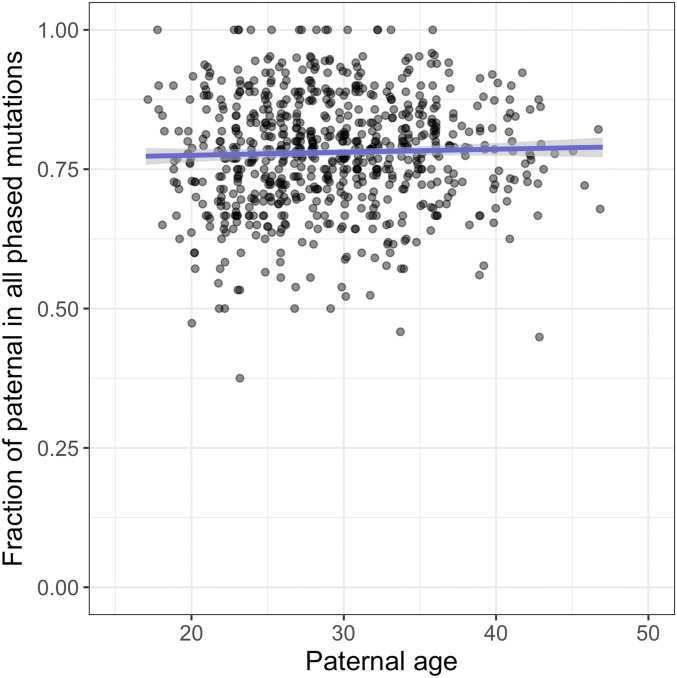
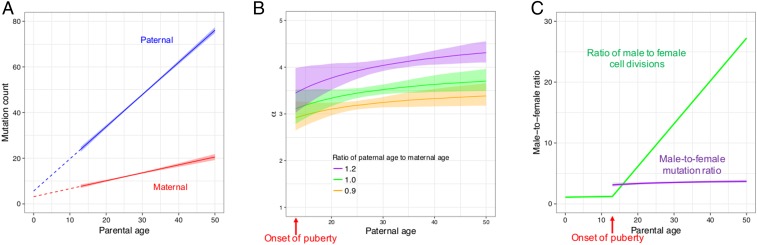
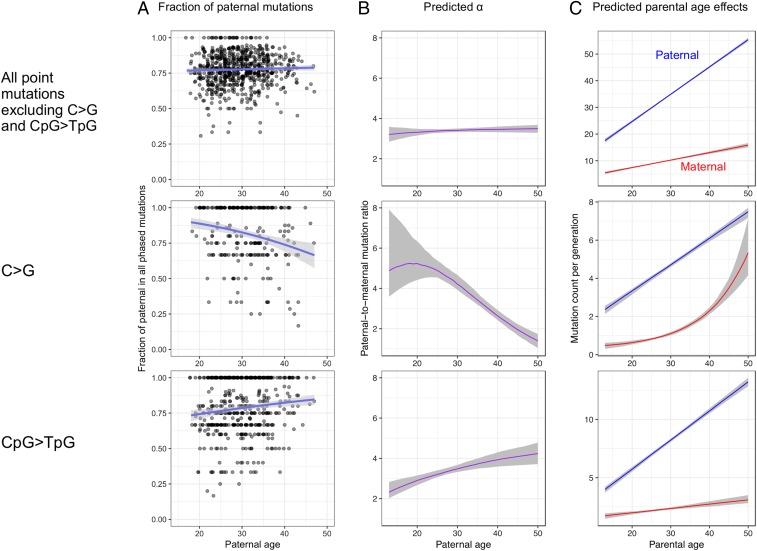
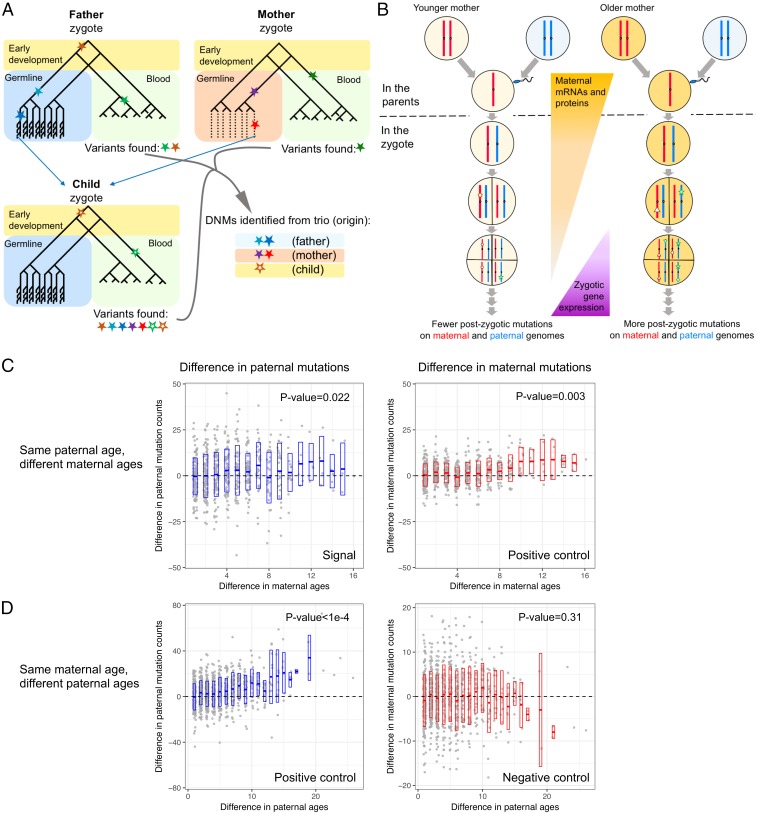
Significance: More than three-fourths of human germline mutations are paternal in origin and their total number increases with the father’s age at conception. These observations are thought to support the textbook view that germline point mutations stem mostly from DNA replication errors. Analyzing large germline mutation datasets for humans, we find that this understanding cannot explain the observed patterns of new mutations. Instead, we show that the male mutation bias is not driven by spermatogenesis. We further find evidence that a substantial fraction of mutations are not replicative in origin and uncover a potential effect of a mother’s age on the number of mutations that happen early in the development of the embryo.
Overview
The claims and statistics of this paper haven’t been checked yet.
Free: it reads the open-access text and checks the first 5 claims that cite a source we can check. Create a free account to check every claim.
Integrity signals
Registry
Cites
Statistics
Figures
Verification
Claims the paper makes
The claims and statistics of this paper haven’t been checked yet.
Free: it reads the open-access text and checks the first 5 claims that cite a source we can check. Create a free account to check every claim.
Claims other papers make about this one
Each is checked against this paper’s own text: does it say what the citing paper says it does?
The check wasn’t confident either way, so it gives no verdict — never disputed.
In the citing paper
“suggesting that the observed SNP heritability for autistic carriers reflects autism rather than factors associated with the generation of germline mutations57,58.”
From Genetic correlates of phenotypic heterogeneity in autism (2022) · cites this paper as [57]
Experimental — accuracy not yet measured
Self-check
Percentages, sums and reported differences re-computed from the paper’s own numbers.
The self-check needs the paper’s full text.
Citations
Cites
Signatures of mutational processes in human cancer
Initiative, A. P. C. G., Alexandrov, L. B., ICGC Breast Cancer Consortium, ICGC MMML-Seq Consortium, PedBrain, I., Nik-Zainal, S., Wedge, D. C., Aparicio, S. A. J. R., Behjati, S., Biankin, A. V., et al. (2013) · Nature · doi:10.1038/nature12477 · Cited by 9,660 · cited 1×
“Specific sources of DNA damage-induced mutations To explore possible mutational mechanisms, following previous studies (Alexandrov et al., 2013; Lindsay et al., 2016; Harris and Pritchard, 2017), we classified point DNMs into six disjoint and complementary mutation classes based on parental and…”
BackgroundHuman DNA methylomes at base resolution show widespread epigenomic differences
Lister, R., Pelizzola, M., Dowen, R. H., Hawkins, R. D., Hon, G., Tonti-Filippini, J., Nery, J. R., Lee, L., Ye, Z., Ngo, Q.-M., et al. (2009) · Nature · doi:10.1038/nature08514 · Cited by 4,673 · cited 4×
“Processing of ovary and testis methylation data at CpG sites The methylation data were generated as part of the Roadmap Epigenomics project (Lister et al., 2009).”
BackgroundMethodInfluentialEpigenetic Reprogramming in Mammalian Development
Reik, W., Dean, W., & Walter, J. (2001) · Science · doi:10.1126/science.1063443 · Cited by 3,078 · cited 2×
“After sex determination (around 7 wk postfertilization in humans), the methylation profiles of male and female germ cells diverge: Remethylation takes place early in males, before differentiation of spermatogonia, but very late in females, just shortly before ovulation (46, 47).”
BackgroundRate of de novo mutations and the importance of father’s age to disease risk
Kong, A., Frigge, M. L., Masson, G., Besenbacher, S., Sulem, P., Magnusson, G., Gudjonsson, S. A., Sigurdsson, A., Jonasdottir, A., Jonasdottir, A., et al. (2012) · Nature · doi:10.1038/nature11396 · Cited by 2,134 · cited 1×
“Further reducing the ability to detect either a pre- or postzygotic effect of maternal age is the high correlation between maternal and paternal ages (which is likely why a maternal age effect was not detected in earlier, smaller studies) (33, 36).”
Ancient DNA and the rewriting of human history: be sparing with Occam’s razor
Haber, M., Mezzavilla, M., Xue, Y., & Tyler-Smith, C. (2016) · Genome Biology · doi:10.1186/s13059-015-0866-z · Cited by 1,924
Braude, P., Bolton, V., & Moore, S. (1988) · Nature · doi:10.1038/332459a0 · Cited by 1,463
Demethylation of the zygotic paternal genome
Mayer, W., Niveleau, A., Walter, J., Fundele, R., & Haaf, T. (2000) · Nature · doi:10.1038/35000656 · Cited by 1,327 · cited 2×
“, oxidative stress may be higher in male germ cells) (67, 68) and after fertilization but before the first cleavage the two parental genomes experience distinct epigenetic remodeling and are replicated separately in their own pronuclei (69, 70).”
BackgroundBody size, metabolic rate, generation time, and the molecular clock.
Martin, A. P., & Palumbi, S. R. (1993) · Proceedings of the National Academy of Sciences · doi:10.1073/pnas.90.9.4087 · Cited by 1,239 · cited 3×
“2B)(Amster and Sella, 2016) and in rates of DNA damage (e.g., metabolic rates) that covary with life history traits (Martin and Palumbi, 1993; Wilson-Sayres et al., 2011).”
BackgroundChurchill, A. J., Gutiérrez, G. D., Singer, R. A., Lorberbaum, D. S., Fischer, K. A., & Sussel, L. (2017) · eLife · doi:10.7554/elife.20010 · Cited by 1,236
Estimate of the Mutation Rate per Nucleotide in Humans
Nachman, M. W., & Crowell, S. L. (2000) · Genetics · doi:10.1093/genetics/156.1.297 · Cited by 1,209
Research works printed but not linked: 1
- Müller H 1954 The nature of genetic effects produced by irradiation Radiation Biology: Ionizing Radiations Hollaender A McGraw-Hill New York 351 473
Cited by
Items 201–235 of 235
Mutations in ErbB2 accumulating in the male germline measured by error-corrected sequencingPreprint
Tiemann‐Boege, I., Yasari, A., Heinzl, M., Mair, T., Kariminian, T., Aldawla, S. M. A., Hartl, I., Lanzerstorfer, P., & Betancourt, A. J. (2024) · Research Square · doi:10.21203/rs.3.rs-4887284/v1
A Phylogeny-Based Approach to Discover Mutational Processes in PrimatesPreprint
Kitch, J. C., & Seplyarskiy, V. B. (2024) · bioRxiv (Cold Spring Harbor Laboratory) · doi:10.1101/2024.12.02.626204
Unprecedented female mutation bias in aye-ayesPreprint
Wang, R. J., Peña-García, Y., Raveendran, M., Harris, R. A., Nguyen, T. H. D., Gingras, M., Wu, Y., Perez, L. M., Yoder, A. D., Simmons, J. H., et al. (2024) · bioRxiv (Cold Spring Harbor Laboratory) · doi:10.1101/2024.12.13.628352
A Dirichlet-multinomial mixed model for determining differential abundance of mutational signatures
Gavarró, L. M., Couturier, D., & Markowetz, F. M. (2025) · BMC Bioinformatics · doi:10.1186/s12859-025-06055-x · Cited by 1
Beyond Darwin: Sperm Competition as an Evolutionary AcceleratorPreprint
Bäcker, A. (2025) · SSRN Electronic Journal · doi:10.2139/ssrn.5078885
Parental age selection in C. elegans influences progeny stress resistance capacity
Camp, B. T. V., & Curran, S. P. (2025) · The Journals of Gerontology Series A · doi:10.1093/gerona/glaf221 · Cited by 1
Grandmother Age Effects via Sperm Telomere Length and Egg Telomerase Transcripts
Kim, S., Chiara, V., & Velando, A. (2025) · Molecular Ecology · doi:10.1111/mec.70212 · Cited by 2
“…evidence that oocytes from old mothers have increased DNA mutations and impaired mitochondrial functions in humans (Eichenlaub-Ritter et al. 2011; Gao et al. 2019), shorter telomeres in mice (Yamada-Fukunaga et al. 2013) and decreased mRNA transcripts in three-spined sticklebacks (Kim et al.…”
Steely, C. J., Watkins, W. S., Baird, L., & Jorde, L. B. (2024) · Figshare · doi:10.6084/m9.figshare.26553272
Self-citationSteely, C. J., Watkins, W. S., Baird, L., & Jorde, L. B. (2024) · Figshare · doi:10.6084/m9.figshare.26553275
Self-citationSteely, C. J., Watkins, W. S., Baird, L., & Jorde, L. B. (2024) · Figshare · doi:10.6084/m9.figshare.26553281
Self-citationAdditional file 1 of Effects of alcohol use on sperm chromatin structure, a retrospective analysis
Trautman, A., Gurumoorthy, A., & Hansen, K. A. (2024) · Figshare · doi:10.6084/m9.figshare.26567048
Steely, C. J., Watkins, W. S., Baird, L., & Jorde, L. B. (2024) · Figshare · doi:10.6084/m9.figshare.26553269
Self-citationAdditional file 2 of Effects of alcohol use on sperm chromatin structure, a retrospective analysis
Trautman, A., Gurumoorthy, A., & Hansen, K. A. (2024) · Figshare · doi:10.6084/m9.figshare.26567051
Steely, C. J., Watkins, W. S., Baird, L., & Jorde, L. B. (2024) · Figshare · doi:10.6084/m9.figshare.26553263
Self-citationSteely, C. J., Watkins, W. S., Baird, L., & Jorde, L. B. (2024) · Figshare · doi:10.6084/m9.figshare.26553278
Self-citationSteely, C. J., Watkins, W. S., Baird, L., & Jorde, L. B. (2024) · Figshare · doi:10.6084/m9.figshare.26553266
Self-citationTian, D., Kerdoncuff, É., Wilson, K. P., Feuerbacher, O. G., Schwemm, M. R., Gumm, J. M., Moorjani, P., & Martin, C. (2026) · bioRxiv (Cold Spring Harbor Laboratory) · doi:10.64898/2026.01.11.698928
“Molecular architecture also plays a role, including DNA damage and repair mechanisms (Gao et al. 2019; Volkova et al. 2020), DNA methylation (Wolfe et al. 1989; Mugal et al. 2015), replication timing (Stamatoyannopoulos et al. 2009), genome size (Wang and Obbard 2023), fragile structural…”
Self-citationVersoza, C. J., Bales, K. L., Jensen, J. D., & Pfeifer, S. P. (2026) · bioRxiv (Cold Spring Harbor Laboratory) · doi:10.64898/2026.01.15.699688
“While this paternal age effect has been widely observed, there is also evidence from humans that a male bias already exists at the time of puberty and remains relatively stable thereafter (Jónsson et al. 2017; Gao et al. 2019).”
The effect of age and sex on the rate of de novo mutations in barn owlsPreprint
Topaloudis, A., Ducrest, A., Drago-Rosa, A., Simon, C., Almasi, B., Roulin, A., & Goudet, J. (2026) · bioRxiv (Cold Spring Harbor Laboratory) · doi:10.64898/2026.02.17.706346
“Continuous divisions can lead to accumulating mutations through replication errors although some of these mutations may be instead damage-65 induced (Gao et al. , 2016, 2019; Spisak et al. , 2024).”
Correlation between serum uric acid levels before delivery and adverse pregnancy outcomes
Pu, T., Xiong, S., Hong, Q., Zeng, R., Xie, Y., Shi, Y., Zhu, X., Chen, H., Shen, X., Tian, K., et al. (2026) · Free Radical Biology and Medicine · doi:10.1016/j.freeradbiomed.2026.02.043
Saclier, N. (2019) · theses.fr (ABES) · doi:10.70675/428a7961z0409z47adzaabbz52baacd50dc3 · Cited by 1
Gendered and Ageist Norms of Parenthood Manifested in Public Attitudes Towards IVG
Mertes, H. (2026) · Oxford University Press eBooks · doi:10.1093/9780197810415.003.0012
Evolution of the highest fidelity DNA replication systemsPreprint
Baehr, S., & Call, C. (2026) · bioRxiv (Cold Spring Harbor Laboratory) · doi:10.64898/2026.04.16.719065
A sibling study of variation in parental mutation ratesPreprint
Getseva, V., POYRAZ, P., Stolyarova, A. V., Agarwal, I., & Przeworski, M. (2026) · bioRxiv (Cold Spring Harbor Laboratory) · doi:10.64898/2026.05.10.724105 · Cited by 2
Self-citationGao, F., Zhang, Z., Feng, S., Du, T., Li, M., Zhu, L., Chu, B., Li, Z., Cheng, X., & Xiang, X.-L. (2026) · Aquatic Toxicology · doi:10.1016/j.aquatox.2026.107930
Safeguarding the development of offspring: the role of genetic integrity of the maternal germline
Cai, X., Hutt, K. J., Winship, A., Carroll, J., Sinclair, A. H., Ayers, K. L., & Tucker, E. J. (2026) · Endocrine Reviews · doi:10.1210/endrev/bnag027
A NHEJ1 mutator allele influencing germline mutation rates sex-specifically in humans
Wu, K., Nan, J., & Liu, H. (2026) · Science Advances · doi:10.1126/sciadv.aed2571
“Because mutation number is strongly correlated with parental age at conception ( 20 , 25 , 26 ), we first corrected the mutation counts in each family for paternal and maternal age using a linear model (fig.”
Intra-specific evidence to support the drift-barrier hypothesis of mutation rate evolutionPreprint
Zhang, C., Wang, H., Reid, K., Wang, D., Lv, L., Heimbrand, Y., Schierup, M. H., & Merilä, J. (2026) · bioRxiv (Cold Spring Harbor Laboratory) · doi:10.64898/2026.07.31.741990 · Cited by 2
“On the other hand, the positive effect of maternal age on germline mutation rates, despite the absence of cell divisions after puberty, has also been attributed to unrepaired DNA damage (Gao et al. 2019; Wu et al. 2020; Spisak et al. 2024).”
Pfenninger, M., Nieto‐Blázquez, M. E., & Bulut, B. (2026) · Molecular Ecology · doi:10.1111/mec.70503
“However, Gao et al. (2019) note that greater overdispersion of the mutation counts than expected under a Poisson distribution is expected to have minimal influence on estimates.”
Soni, V., Versoza, C. J., Shah, D., Pfeifer, S. P., & Jensen, J. D. (2026) · Genome Biology and Evolution · doi:10.1093/gbe/evag200 · Cited by 7
Maternal DNA repair safeguards genome stability during the oocyte-to-embryo transition
Grejo, M. P., Neto, J. D. A., dos Santos, A. C., Alves, L. O., Macabelli, C. H., Pereira-Junior, S. A. G., Cardoso, T. F., Pandey, A. K., Clemente, S. G. B., Yokomizo, D. N., et al. (2026) · Molecular Human Reproduction · doi:10.1093/molehr/gaag050
Ramos, S., & Marchetti, F. (2026) · Archives of Toxicology · doi:10.1007/s00204-026-04540-7 · Cited by 1
“These mutations have the fingerprint of age-dependent accumulation and misrepair of DNA damage in oocytes rather than being consistent with replication-dependent DNA errors (Gao et al. 2019 ).”
Zhang, J., Su, W., Duan, J., Sun, Y., & Liu, B. (2026) · The Innovation Life · doi:10.59717/j.xinn-life.2026.100262
Liu, X., Jia, R., Zhao, Y., Yu, S., Xu, B., Yang, L., & Hong, J. (2026) · Human Mutation · doi:10.1155/humu/4035027
Fucci, R., Iserani, A., Oliva, I., Badolato, L., Angelis, D. D., Cianchi, I., Rizzello, F., Evangelisti, P., Gensini, F., Falcone, P., et al. (2026) · Journal of Assisted Reproduction and Genetics · doi:10.1007/s10815-026-04066-y
Metadata
- Authors
- Gao, Z., Moorjani, P., Sasani, T. A., Pedersen, B. S., Quinlan, A. R., Jorde, L. B., Amster, G., & Przeworski, M.
- Affiliations
- Howard Hughes Medical Institute (US)
- University of California, Berkeley (US)
- University of Utah (US)
- Columbia University (US)
- Corresponding author
- Gao, Ziyue
- ORCID
- Venue
- Proceedings of the National Academy of Sciences
- Publisher
- National Academy of Sciences
- Published
- 2019-04-24
- Volume
- 116
- Issue
- 19
- Pages
- 9491-9500
- ISSN
- 0027-8424 (ISSN-L)
- 1091-6490
- PMC
- PMC6511033
- OpenAlex
- W2949269627
- Cited by
- 229
- References
- 88
- Citations by year
- 2026: 25 · 2025: 20 · 2024: 27 · 2023: 31 · 2022: 38 · 2021: 44 · 2020: 27 · 2019: 13
- FWCI
- 18.32
- Type
- journal article
- Language
- en
- Open access
- hybrid
- doi.org
- Licence
- Locations
- Proceedings of the National Academy of Sciences (publishedVersion, cc-by-nc-nd)
- bioRxiv (Cold Spring Harbor Laboratory) (acceptedVersion)
- PubMed Central (publishedVersion, cc-by-nc-nd)
- PubMed (publishedVersion)
- Funders
- HHS | National Institutes of Health (R01GM122975, R01GM059290, R01GM104390, R35GM118335, T32GM007464, U01HG009431)
- HHS | NIH | National Human Genome Research Institute (R01HG006693, R01HG009141)
- HHS | NIH | National Institute of General Medical Sciences (R01GM124355)
- HHS | NIH | National Cancer Institute (U24CA209999)
- Burroughs Wellcome Fund (CASI award)
- Topics
- Life Sciences › Biochemistry, Genetics and Molecular Biology › Genetics › Genomics and Rare Diseases
- Life Sciences › Biochemistry, Genetics and Molecular Biology › Molecular Biology › DNA Repair Mechanisms
- Life Sciences › Biochemistry, Genetics and Molecular Biology › Cancer Research › Cancer Genomics and Diagnostics
- Keywords
- germline mutations, de novo mutations, DNA damage, maternal age, paternal age, spermatogenesis, oocytes, DNA double-strand break repair, DNA methylation, base substitution mutations, postzygotic mutation, mutation rate
- MeSH terms
- Adolescent, Adult, DNA Repair, Female, Humans, Male, Maternal Age, Middle Aged, Oocytes, Pregnancy, Spermatogenesis, Germ-Line Mutation, Databases, Nucleic Acid, DNA Breaks, Double-Stranded
About these checks
Registry, retraction, Cites and statistics results are computed, not judged, with one exception: a printed reference that no index lists is read once by a model before it counts as a citation error. Claims are extracted by a model and kept only when their quote appears verbatim in the text; each cited source is then checked, with a model’s help, for whether it says what the claim relies on. Those verdicts can be wrong — read the claim’s quote and the cited source before relying on one.
Statistics and arithmetic are recomputed, not judged.
Confidence bands are shown only for fields calibrated on our annotated test set. None is calibrated yet, so no band is shown.
What counts as a claim ›How we measure confidence ›How we check this ›
Are you an author, or do you see a problem with this page? Request a review
Data sources
Bibliographic data: Semantic Scholar, OpenAlex, Crossref.
Contains information from the Semantic Scholar Academic Graph Datasets, made available under the ODC Attribution License (ODC-BY 1.0).
Semantic Scholar’s data is described in: Kinney, R., et al. (2023). The Semantic Scholar Open Data Platform. arXiv:2301.10140.
