

A regional nuclear conflict would compromise global food security
Open accessThe DOI matches its Crossref record; 78 of the 78 references it cites were found in a registry or an index.
Abstract
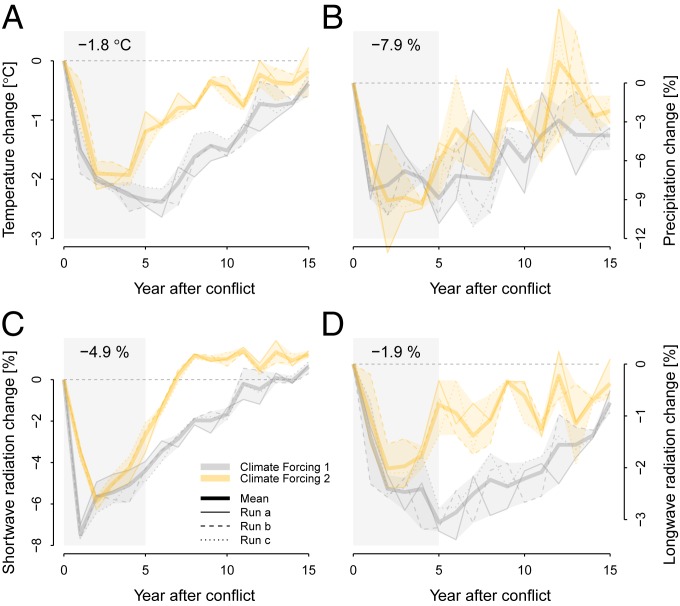
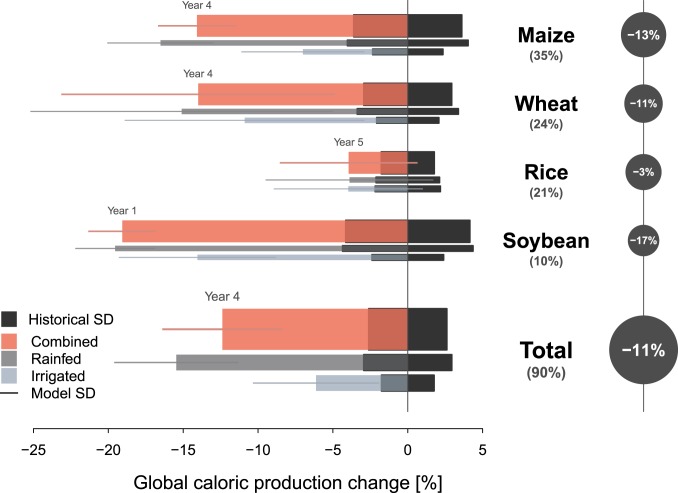
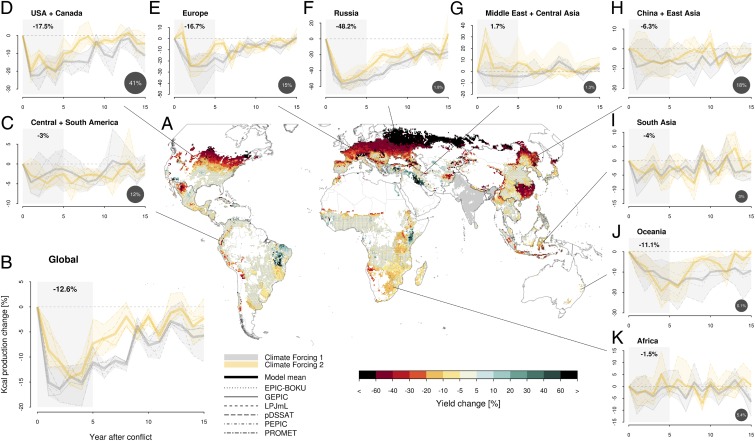
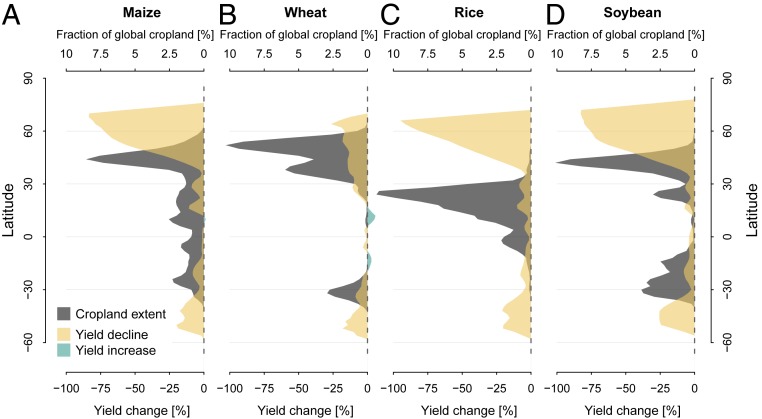
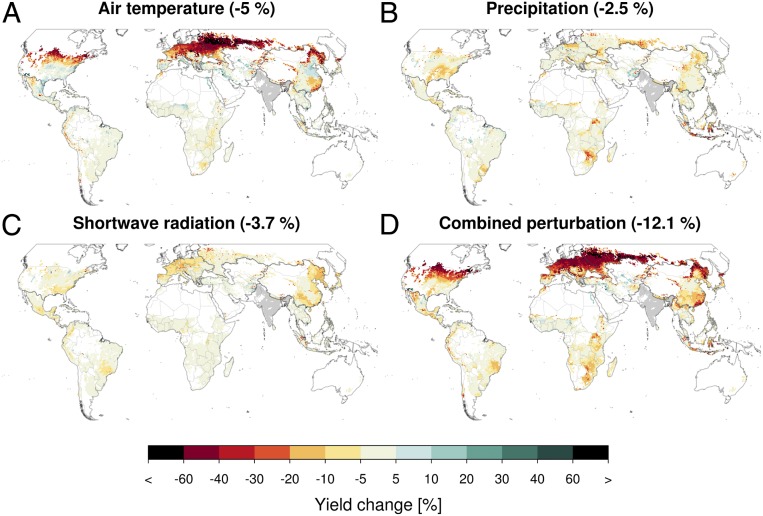
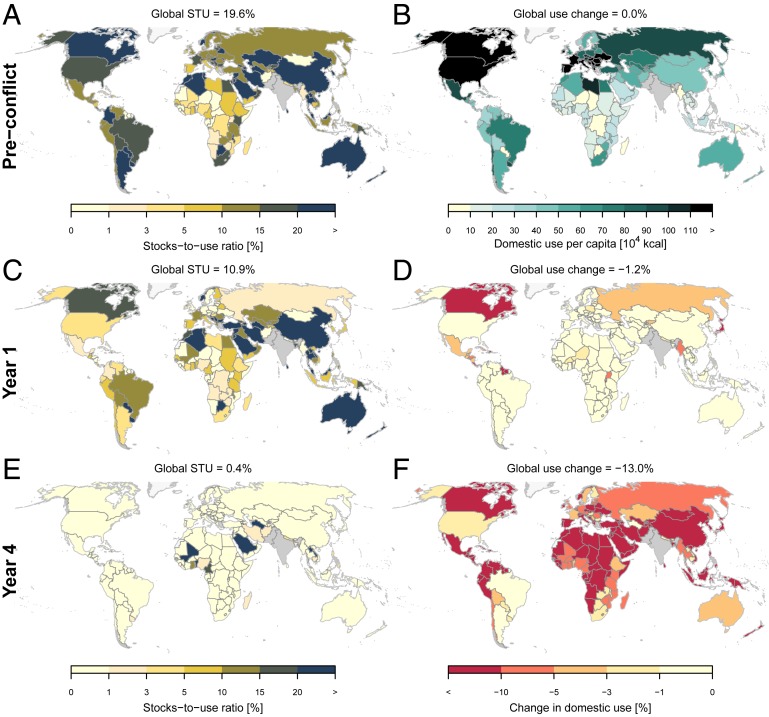
Significance: Impacts of global warming on agricultural productivity have been evaluated extensively. The implications of sudden cooling for global crop growth, however, are as yet little understood. While crop failures after historic volcanic eruptions are documented, a nuclear conflict can cause even more severe and longer-lasting climate anomalies. India and Pakistan are contributing to a de facto Asian arms race and the political instability in South Asia increasingly imposes a global threat. Based on comprehensive climate and crop model ensemble simulations, we provide critical quantitative information on how sudden cooling and perturbations of precipitation and solar radiation could disrupt food production and trade worldwide for about a decade—more than the impact from anthropogenic climate change by late century.
Overview
The claims and statistics of this paper haven’t been checked yet.
Free: it reads the open-access text and checks the first 5 claims that cite a source we can check. Create a free account to check every claim.
Integrity signals
Registry
Cites
Statistics
Figures
Verification
Claims the paper makes
The claims and statistics of this paper haven’t been checked yet.
Free: it reads the open-access text and checks the first 5 claims that cite a source we can check. Create a free account to check every claim.
Claims other papers make about this one
Each is checked against this paper’s own text: does it say what the citing paper says it does?
The source backs part of the claim, not all of it — or backs it for a different population, condition or comparison.
In the citing paper
“So far, an integrated estimate of the impacts of the entire range of war scenarios on both land- and ocean-based food production is missing.”
From Global food insecurity and famine from reduced crop, marine fishery and livestock production due to climate disruption from nuclear war soot injection (2022) · cites this paper as [14]
Experimental — accuracy not yet measuredThe source backs part of the claim, not all of it — or backs it for a different population, condition or comparison.
In the citing paper
“Although CLM5crop does not simulate winter wheat, we assume winter wheat production is changed by the same amount as spring wheat, which has been found in other studies 14 ; however, this may underestimate the winter wheat response, because winter wheat would experience colder temperatures during its growing period that would be more likely to cross critical thresholds 14 .”
From Global food insecurity and famine from reduced crop, marine fishery and livestock production due to climate disruption from nuclear war soot injection (2022) · cites this paper as [14]
Experimental — accuracy not yet measuredThe source backs part of the claim, not all of it — or backs it for a different population, condition or comparison.
In the citing paper
“This comes with the advantage of realistic internal variability important for crop modelling 12-14 but does not adjust changes in variance, which might be an unrealistic assumption under higher emission scenarios, such as the 150 Tg case.”
From Global food insecurity and famine from reduced crop, marine fishery and livestock production due to climate disruption from nuclear war soot injection (2022) · cites this paper as [14]
Experimental — accuracy not yet measuredThe cited source says what the claim attributes to it.
In the citing paper
“This comes with the advantage of realistic internal variability important for crop modelling 12-14 but does not adjust changes in variance, which might be an unrealistic assumption under higher emission scenarios, such as the 150 Tg case.”
From Global food insecurity and famine from reduced crop, marine fishery and livestock production due to climate disruption from nuclear war soot injection (2022) · cites this paper as [14]
The check wasn’t confident either way, so it gives no verdict — never disputed.
In the citing paper
“CLM5crop compares well with other crop models in response to nuclear war forcing 14 (Supplementary Fig. 2).”
From Global food insecurity and famine from reduced crop, marine fishery and livestock production due to climate disruption from nuclear war soot injection (2022) · cites this paper as [14]
Experimental — accuracy not yet measured
Self-check
Percentages, sums and reported differences re-computed from the paper’s own numbers.
The self-check needs the paper’s full text.
Citations
Cites
The DSSAT cropping system model
Jones, J. W., Hoogenboom, G., Porter, C. H., Boote, K. J., Batchelor, W. D., Hunt, L. A., Wilkens, P. W., Singh, U., Gijsman, A. J., & Ritchie, J. T. (2003) · European Journal of Agronomy · doi:10.1016/s1161-0301(02)00107-7 · Cited by 4,465 · cited 2×
“Six gridded global crop models participated in this study: EPIC-BOKU (59), GEPIC (60), LPJmL (61), pDSSAT (62, 63), PEPIC (64), and PROMET (65, 66), as part of the GGCMI (28, 29) within the Agricultural Model Intercomparison and Improvement Project (AgMIP) (67).”
BackgroundMethodThe Community Earth System Model: A Framework for Collaborative Research
Hurrell, J. W., Holland, M. M., Gent, P. R., Ghan, S., Kay, J. E., Kushner, P. J., Lamarque, J.-F., Large, W. G., Lawrence, D., Lindsay, K., et al. (2013) · Bulletin of the American Meteorological Society · doi:10.1175/bams-d-12-00121.1 · Cited by 2,686
Rosenzweig, C., Elliott, J., Deryng, D., Ruane, A. C., Müller, C., Arneth, A., Boote, K. J., Folberth, C., Glotter, M., Khabarov, N., et al. (2014) · Proceedings of the National Academy of Sciences · doi:10.1073/pnas.1222463110 · Cited by 2,319 · cited 5×
“Six well-established global mechanistic crop models (EPIC-BOKU, GEPIC, LPJmL, pDSSAT, PEPIC, and PROMET; see SI Appendix , Table S1 for details and full model names), as part of the global gridded crop model intercomparison (GGCMI) (28, 29), simulate impacts on crop production following a har-monized protocol; that is…”
BackgroundMethodInfluentialSelf-citationRecent patterns of crop yield growth and stagnation
Ray, D. K., Ramankutty, N., Mueller, N. D., West, P. C., & Foley, J. A. (2012) · Nature Communications · doi:10.1038/ncomms2296 · Cited by 1,595
Portmann, F. T., Siebert, S., & Döll, P. (2010) · Global Biogeochemical Cycles · doi:10.1029/2008gb003435 · Cited by 1,561
Albedo enhancement by stratospheric sulfur injections: a contribution to resolve a policy dilemma?
Crutzen, P. J. (2006) · Climatic Change · doi:10.1007/s10584-006-9101-y · Cited by 1,541 · cited 1×
“Using artificial stratospheric aerosols to reduce global warming has been suggested as a climate intervention (geoengi-neering) strategy (52).”
BackgroundIPCC (2022) · Cambridge University Press eBooks · doi:10.1017/9781009157940 · Cited by 1,482
Uncertainty in simulating wheat yields under climate change
Asseng, S., Ewert, F., Rosenzweig, C., Jones, J. W., Hatfield, J. L., Ruane, A. C., Boote, K. J., Thorburn, P. J., Rötter, R. P., Cammarano, D., et al. (2013) · Nature Climate Change · doi:10.1038/nclimate1916 · Cited by 1,341
Self-citationClimate Change from 1850 to 2005 Simulated in CESM1(WACCM)
Marsh, D. R., Mills, M. J., Kinnison, D. E., Lamarque, J.-F., Calvo, N., & Polvani, L. M. (2013) · Journal of Climate · doi:10.1175/jcli-d-12-00558.1 · Cited by 1,081
Weedon, G. P., Balsamo, G., Bellouin, N., Gomes, S., Best, M. J., & Viterbo, P. (2014) · Water Resources Research · doi:10.1002/2014wr015638 · Cited by 1,073
Cited by
Items 101–182 of 182
Rowan, N. J., Jansen, M. A. K., & Klimek, P. (2026) · Resources Environment and Sustainability · doi:10.1016/j.resenv.2026.100354
Universal republic or confederation of democracies?
Koenig‐Archibugi, M. (2024) · Oxford University Press eBooks · doi:10.1093/9780198921158.003.0008
Koenig‐Archibugi, M. (2024) · Oxford University Press eBooks · doi:10.1093/9780198921158.005.0001
Koenig‐Archibugi, M. (2024) · Oxford University Press eBooks · doi:10.1093/9780198921158.005.0002
Koenig‐Archibugi, M. (2024) · Oxford University Press eBooks · doi:10.1093/9780198921158.005.0004
Is the universal republic achievable?
Koenig‐Archibugi, M. (2024) · Oxford University Press eBooks · doi:10.1093/9780198921158.003.0005
Koenig‐Archibugi, M. (2024) · Oxford University Press eBooks · doi:10.1093/9780198921158.002.0004
Koenig‐Archibugi, M. (2024) · Oxford University Press eBooks · doi:10.1093/9780198921158.002.0005
Koenig‐Archibugi, M. (2024) · Oxford University Press eBooks · doi:10.1093/9780198921158.003.0010
Universal republic or polycentric democracy?
Koenig‐Archibugi, M. (2024) · Oxford University Press eBooks · doi:10.1093/9780198921158.003.0009
Koenig‐Archibugi, M. (2024) · Oxford University Press eBooks · doi:10.1093/9780198921158.003.0003
Koenig‐Archibugi, M. (2024) · Oxford University Press eBooks · doi:10.1093/9780198921158.003.0007
Would the universal republic be viable?
Koenig‐Archibugi, M. (2024) · Oxford University Press eBooks · doi:10.1093/9780198921158.003.0004
Koenig‐Archibugi, M. (2024) · Oxford University Press eBooks · doi:10.1093/9780198921158.003.0001
1439 Nuclear Weapons and their Health Consequences
Ruff, T. A. (2025) · De Gruyter eBooks · doi:10.1515/9783111250144-010
Robock, A. D., Xia, L., Harrison, C. S., et al. (2023) · doi:10.5194/acp-2022-852-rc1
Robock, A. D., Xia, L., Harrison, C. S., et al. (2023) · doi:10.5194/acp-2022-852-rc2
Robock, A. D. (2023) · Atmospheric chemistry and physics · doi:10.5194/acp-2022-852-ac1
Self-citationBoyd, M., Ragnarsson, S., Terry, S., Payne, B., & Wilson, N. (2023) · Research Square · doi:10.21203/rs.3.rs-3273609/v1
Crilley, R. (2023) · Manchester University Press eBooks · doi:10.7765/9781526170453.00016
How Many Bombs Are Out There, and How Could They Be Delivered?
Toon, O. B., & Robock, A. D. (2025) · Oxford University Press eBooks · doi:10.1093/9780197799734.003.0009
Self-citationToon, O. B., & Robock, A. D. (2025) · Oxford University Press eBooks · doi:10.1093/9780197799734.003.0001
Self-citationImpacts on Humans of Nuclear War
Toon, O. B., & Robock, A. D. (2025) · Oxford University Press eBooks · doi:10.1093/9780197799734.003.0015
Self-citationPreface: How We Met and a Brief History
Toon, O. B., & Robock, A. D. (2025) · Oxford University Press eBooks · doi:10.1093/9780197799734.002.0005
Self-citationCan We Stop an Asteroid or Comet Collision in the Future?
Toon, O. B., & Robock, A. D. (2025) · Oxford University Press eBooks · doi:10.1093/9780197799734.003.0006
Self-citationToon, O. B., & Robock, A. D. (2025) · Oxford University Press eBooks · doi:10.1093/9780197799734.002.0004
Self-citationClimate Disaster, Climate Models, and Natural Analogs
Toon, O. B., & Robock, A. D. (2025) · Oxford University Press eBooks · doi:10.1093/9780197799734.003.0014
Self-citationWorldwide Fires Killed the Dinosaurs
Toon, O. B., & Robock, A. D. (2025) · Oxford University Press eBooks · doi:10.1093/9780197799734.003.0005
Self-citationToon, O. B., & Robock, A. D. (2025) · Oxford University Press eBooks · doi:10.1093/9780197799734.003.0019
Self-citationClues from Craters, Assured Destruction, and Ejecta Layers
Toon, O. B., & Robock, A. D. (2025) · Oxford University Press eBooks · doi:10.1093/9780197799734.003.0004
Self-citationToon, O. B., & Robock, A. D. (2025) · Oxford University Press eBooks · doi:10.1093/9780197799734.003.0013
Self-citationWill Humans Become Extinct from an Asteroid Collision or a Nuclear War?
Toon, O. B., & Robock, A. D. (2025) · Oxford University Press eBooks · doi:10.1093/9780197799734.003.0017
Self-citationScenarios for War and Near Misses
Toon, O. B., & Robock, A. D. (2025) · Oxford University Press eBooks · doi:10.1093/9780197799734.003.0010
Self-citationToon, O. B., & Robock, A. D. (2025) · Oxford University Press eBooks · doi:10.1093/9780197799734.003.0008
Self-citationAre You Being Targeted with a Nuclear Weapon?
Toon, O. B., & Robock, A. D. (2025) · Oxford University Press eBooks · doi:10.1093/9780197799734.003.0011
Self-citationToon, O. B., & Robock, A. D. (2025) · Oxford University Press eBooks · doi:10.1093/9780197799734.003.0018
Self-citationThe Power of Asteroids and Comets: When Will the Next Big One Hit?
Toon, O. B., & Robock, A. D. (2025) · Oxford University Press eBooks · doi:10.1093/9780197799734.003.0003
Self-citationEmpirical study and model of warfare dynamics: Willingness to risk
Podobnik, B., Medvidović, L., Wild, D., & Boccaletti, S. (2025) · Chaos An Interdisciplinary Journal of Nonlinear Science · doi:10.1063/5.0277615
Nuclear war, nuclear winter, and the food system
Jehn, F. U. (2026) · doi:10.59350/hkngk-5fq39
Nuclear war, nuclear winter, and the food system
Jehn, F. U. (2026) · doi:10.59350/0by4q-nng34
Nuclear Conflict in Eastern Europe: Climate disruption and Radiological fallout
Ranjithkumar, A., Mayne, N. J., Jones, A. C., & Haywood, J. (2026) · npj Clean Air · doi:10.1038/s44407-026-00064-7
Crop yields under simulated nuclear winter: a growth chamber experimentPreprint
Blouin, S., Abrams, D. R., Ben-Zeev, R., Anderson, C. T., Lasky, J. R., & Denkenberger, D. (2026) · bioRxiv (Cold Spring Harbor Laboratory) · doi:10.64898/2026.05.05.723012
(2023) · Geoscientific model development · doi:10.5194/gmd-2023-74-rc1
(2023) · Geoscientific model development · doi:10.5194/gmd-2023-74-rc2
Ye, T. (2023) · Geoscientific model development · doi:10.5194/gmd-2023-74-ac1
Syaharuddin, Mandailina, V., Hidayat, R., Hulaimi, A., Ariani, Z., & Sahman (2026) · IOP Conference Series Earth and Environmental Science · doi:10.1088/1755-1315/1580/1/012010
Food security beyond borders: how crop imports affect drought risk of conflict-affected countries
Goulart, H. M. D., Hamed, R., Hogeboom, R. J., Meijer, K. S., & Dahm, R. J. (2025) · Environmental Research Letters · doi:10.1088/1748-9326/ae1bbf
Liang, J., Wang, S., Chen, X., Liu, K., Fang, C., Feng, K., Hubacek, K., & Yuan, W. (2026) · Geography and sustainability · doi:10.1016/j.geosus.2026.100516
After a nuclear war, the world’s emergency food supply could be seafood — if overfishing stops now
Galbraith, E. D., & Scherrer, K. (2020) · The Conversation · doi:10.64628/aam.jjj7eruqh
PEPIC: a tool for revealing global crop–water–environment relations
刘文锋 (2026) · Elsevier eBooks · doi:10.1016/b978-0-323-95592-8.00013-4
Bressler, R. D., Trager, R., & Dafoe, A. (2024) · doi:10.33774/apsa-2021-hk7gk-v2
The Effects of Extreme Weather Disasters in the European Food Availability
Bras, T. (2021) · Portuguese National Funding Agency for Science, Research and Technology (RCAAP Project by FCT)
Scherrer, K. (2021) · Tesis Doctorals en Xarxa (Consorci de Serveis Universitaris de Catalunya)
Studies in Global Warming and Cooling
Tarshish, N. (2024) · eScholarship (California Digital Library)
Simulated Response of Extreme Moisture Transport to Nuclear Conflict
Zhang, C., Winters, A. C., Coupe, J., & Toon, O. B. (2026) · Journal of Geophysical Research Atmospheres · doi:10.1029/2026jd047632
Self-citationGeleneksel ve Güncel Ekonometrik Yaklaşımlar İle Teorik ve Ampirik Analizler
KONAT, G., Koncak, A., Aydın, M., Ünal, H., Kutlu, M., Ürkmez, E., Demiralp, A., Yılmaz, T., Tok, Ş. A., Lögün, A., et al. (2025) · Özgür Yayınları eBooks · doi:10.58830/ozgur.pub866
(2023) · Geoscientific model development · doi:10.5194/gmd-2023-66-rc1
(2023) · Geoscientific model development · doi:10.5194/gmd-2023-66-rc2
Rabin, S. S. (2023) · Geoscientific model development · doi:10.5194/gmd-2023-66-ac1
Self-citation1 The Economics of Apocalypse: Imagining Capitalism After the End of the World
(2026) · Bristol University Press eBooks · doi:10.51952/9781529248784.ch001
(2026) · Bristol University Press eBooks · doi:10.51952/9781529248784.fm002
(2026) · Bristol University Press eBooks · doi:10.51952/9781529248784.ch004
(2026) · Bristol University Press eBooks · doi:10.51952/9781529248784.bm002
(2026) · Bristol University Press eBooks · doi:10.51952/9781529248784.fm001
5 Apocalypse Capitalism in Practice: The Spatio-Temporal-Legal Fix
(2026) · Bristol University Press eBooks · doi:10.51952/9781529248784.ch005
6 Apocalypse Communism: Spatio-Temporal-Revolutionary Fissures
(2026) · Bristol University Press eBooks · doi:10.51952/9781529248784.ch006
Apocalypse Capitalism: Economic Visions After Nuclear War
Preston, J. (2026) · Bristol University Press eBooks · doi:10.51952/9781529248784
2 Contracting Out the Unthinkable in the Late Cold War
(2026) · Bristol University Press eBooks · doi:10.51952/9781529248784.ch002
(2026) · Bristol University Press eBooks · doi:10.51952/9781529248784.ch003
(2026) · Bristol University Press eBooks · doi:10.51952/9781529248784.bm001
Winstead, D. J., Jacobson, M. G., & Gioia, F. D. (2023) · doi:10.3389/fsufs.2023.1117805.s001
Rozak, Z. F. A., & Mustofa, M. (2025) · International Journal of Education Language Literature Arts Culture and Social Humanities · doi:10.59024/ijellacush.v3i1.1263
Braithwaite, J. (2024) · OAPEN (The OAPEN Foundation)
Simple Solutions to Complex Catastrophes
Braithwaite, J. B. (2024) · Directory of Open access Books (OAPEN Foundation)
Educere Vol. 25, Nº 80: Enero-Abril/2021
- (2020) · Educere
Göbl, M. (2023) · Springer eBooks · doi:10.1007/978-3-658-37222-4_49-1
Göbl, M. (2024) · Springer eBooks · doi:10.1007/978-3-658-37218-7_49
Nuclear and Regime-Change Diplomacy: the Restorative Critique
Braithwaite, J. B. (2024) · Sustainable development goals series · doi:10.1007/978-3-031-48747-7_9
Optimization of Cultivation Parameters for Scale-Up Production of Streptomyces recifensis SN1E1
Lee, S. I., & Kwak, Y. (2026) · Journal of Microbiology and Biotechnology · doi:10.4014/jmb.2602.02031
Untitled work
International Committee of the Red Cross, & International Federation of Red Cross and Red Crescent Societies (2020) · ICRC/IFRC report
Metadata
- Authors
- Jägermeyr, J., Robock, A., Elliott, J., Müller, C., Xia, L., Khabarov, N., Folberth, C., Schmid, E., Liu, W., Zabel, F., Rabin, S. S., Puma, M. J., Heslin, A., Franke, J., Foster, I., Asseng, S., Bardeen, C. G., Toon, O. B., & Rosenzweig, C.
- Affiliations
- Goddard Institute for Space Studies (US)
- Rutgers, The State University of New Jersey (US)
- University of Chicago (US)
- Leibniz Association (DE)
- International Institute for Applied Systems Analysis (AT)
- BOKU University (AT)
- Université Paris-Saclay (FR)
- Ludwig-Maximilians-Universität München (DE)
- Karlsruhe Institute of Technology (DE)
- Argonne National Laboratory (US)
- University of Florida (US)
- NSF National Center for Atmospheric Research (US)
- University of Colorado Boulder (US)
- Corresponding author
- Jägermeyr, Jonas
- ORCID
- Venue
- Proceedings of the National Academy of Sciences
- Publisher
- National Academy of Sciences
- Published
- 2020-03-16
- Volume
- 117
- Issue
- 13
- Pages
- 7071-7081
- ISSN
- 0027-8424 (ISSN-L)
- 1091-6490
- PMC
- PMC7132296
- OpenAlex
- W3011955160
- Cited by
- 147
- References
- 78
- Citations by year
- 2026: 13 · 2025: 33 · 2024: 31 · 2023: 32 · 2022: 18 · 2021: 13 · 2020: 7
- FWCI
- 60.39
- Type
- journal article
- Language
- en
- Open access
- hybrid
- doi.org
- Licence
- Locations
- Proceedings of the National Academy of Sciences (publishedVersion, cc-by-nc-nd)
- PubMed Central (publishedVersion, cc-by-nc-nd)
- PubMed (publishedVersion)
- IIASA PURE (International Institute of Applied Systems Analysis) (acceptedVersion)
- Repository KITopen (Karlsruhe Institute of Technology) (submittedVersion, cc-by-nc-nd)
- HAL (submittedVersion, cc-by-nc-nd)
- DORA Eawag (Swiss Federal Institute of Aquatic Science and Technology (Eawag)) (submittedVersion, cc-by-nc-nd)
- OSTI OAI (U.S. Department of Energy Office of Scientific and Technical Information) (submittedVersion)
- Knowledge@UChicago (University of Chicago) (submittedVersion, cc-by-nc-nd)
- Publication Database PIK (Potsdam Institute for Climate Impact Research (PIK)) (submittedVersion, cc-by-nc-nd)
- KITopen
- University of Chicago
- Funders
- Open Philanthropy Project (NA)
- National Science Foundation (SES-146364, ACI-1532235, ACI-1532236)
- Topics
- Social Sciences › Political Science and International Relations › Nuclear Issues and Defense
- Life Sciences › Agricultural and Biological Sciences › Agronomy and Crop Science › Climate change impacts on agriculture
- Physical Sciences › Environmental Science › Management, Monitoring, Policy and Law › Environmental and Biological Research in Conflict Zones
- Keywords
- nuclear war, food security, India-Pakistan conflict, soot emissions, stratospheric aerosols, climate perturbation, crop yield loss, maize, wheat, rice, soybean, food trade networks, food reserves, Global South, temperate regions
- MeSH terms
- Edible Grain, Climate, Food Supply, Models, Biological, Nuclear Warfare, Glycine max
About these checks
Registry, retraction, Cites and statistics results are computed, not judged, with one exception: a printed reference that no index lists is read once by a model before it counts as a citation error. Claims are extracted by a model and kept only when their quote appears verbatim in the text; each cited source is then checked, with a model’s help, for whether it says what the claim relies on. Those verdicts can be wrong — read the claim’s quote and the cited source before relying on one.
Statistics and arithmetic are recomputed, not judged.
Confidence bands are shown only for fields calibrated on our annotated test set. None is calibrated yet, so no band is shown.
What counts as a claim ›How we measure confidence ›How we check this ›
Are you an author, or do you see a problem with this page? Request a review
Data sources
Bibliographic data: Semantic Scholar, OpenAlex, Crossref.
Contains information from the Semantic Scholar Academic Graph Datasets, made available under the ODC Attribution License (ODC-BY 1.0).
Semantic Scholar’s data is described in: Kinney, R., et al. (2023). The Semantic Scholar Open Data Platform. arXiv:2301.10140.
