

A regional nuclear conflict would compromise global food security
Open accessThe DOI matches its Crossref record; 78 of the 78 references it cites were found in a registry or an index.
Abstract
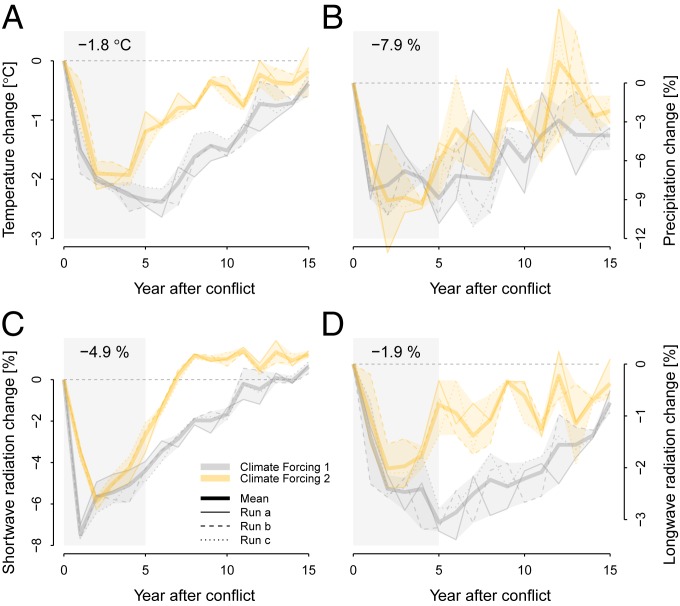
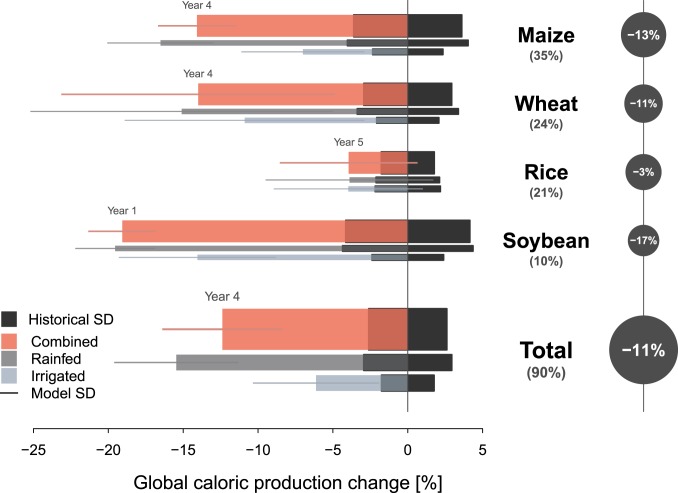
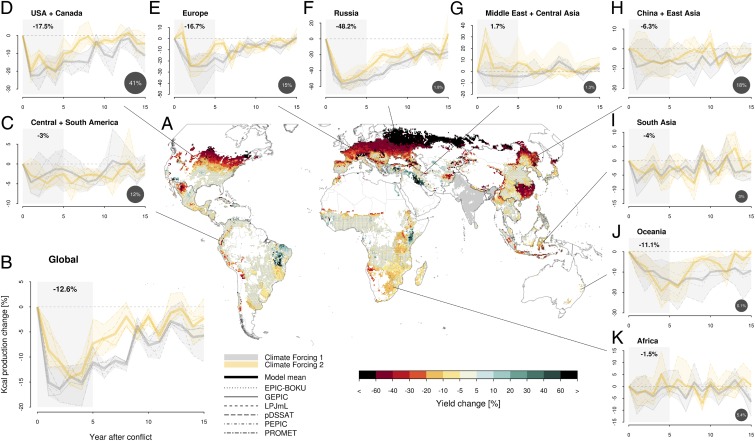
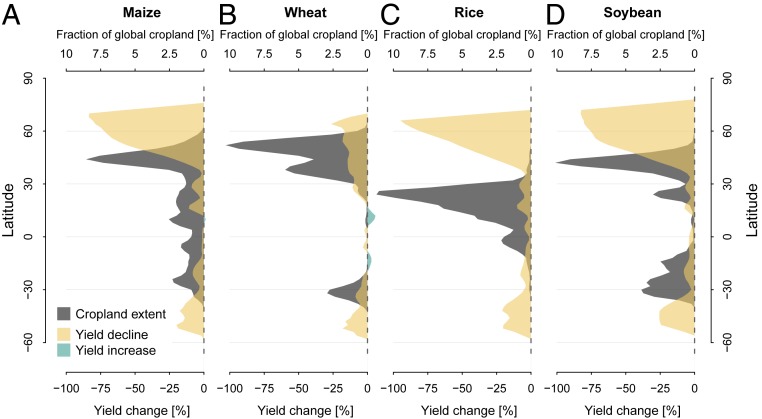
Significance: Impacts of global warming on agricultural productivity have been evaluated extensively. The implications of sudden cooling for global crop growth, however, are as yet little understood. While crop failures after historic volcanic eruptions are documented, a nuclear conflict can cause even more severe and longer-lasting climate anomalies. India and Pakistan are contributing to a de facto Asian arms race and the political instability in South Asia increasingly imposes a global threat. Based on comprehensive climate and crop model ensemble simulations, we provide critical quantitative information on how sudden cooling and perturbations of precipitation and solar radiation could disrupt food production and trade worldwide for about a decade—more than the impact from anthropogenic climate change by late century.
Overview
The claims and statistics of this paper haven’t been checked yet.
Free: it reads the open-access text and checks the first 5 claims that cite a source we can check. Create a free account to check every claim.
Integrity signals
Registry
Cites
Statistics
Figures
Verification
Claims the paper makes
The claims and statistics of this paper haven’t been checked yet.
Free: it reads the open-access text and checks the first 5 claims that cite a source we can check. Create a free account to check every claim.
Claims other papers make about this one
Each is checked against this paper’s own text: does it say what the citing paper says it does?
The source backs part of the claim, not all of it — or backs it for a different population, condition or comparison.
In the citing paper
“So far, an integrated estimate of the impacts of the entire range of war scenarios on both land- and ocean-based food production is missing.”
From Global food insecurity and famine from reduced crop, marine fishery and livestock production due to climate disruption from nuclear war soot injection (2022) · cites this paper as [14]
Experimental — accuracy not yet measuredThe source backs part of the claim, not all of it — or backs it for a different population, condition or comparison.
In the citing paper
“Although CLM5crop does not simulate winter wheat, we assume winter wheat production is changed by the same amount as spring wheat, which has been found in other studies 14 ; however, this may underestimate the winter wheat response, because winter wheat would experience colder temperatures during its growing period that would be more likely to cross critical thresholds 14 .”
From Global food insecurity and famine from reduced crop, marine fishery and livestock production due to climate disruption from nuclear war soot injection (2022) · cites this paper as [14]
Experimental — accuracy not yet measuredThe source backs part of the claim, not all of it — or backs it for a different population, condition or comparison.
In the citing paper
“This comes with the advantage of realistic internal variability important for crop modelling 12-14 but does not adjust changes in variance, which might be an unrealistic assumption under higher emission scenarios, such as the 150 Tg case.”
From Global food insecurity and famine from reduced crop, marine fishery and livestock production due to climate disruption from nuclear war soot injection (2022) · cites this paper as [14]
Experimental — accuracy not yet measuredThe cited source says what the claim attributes to it.
In the citing paper
“This comes with the advantage of realistic internal variability important for crop modelling 12-14 but does not adjust changes in variance, which might be an unrealistic assumption under higher emission scenarios, such as the 150 Tg case.”
From Global food insecurity and famine from reduced crop, marine fishery and livestock production due to climate disruption from nuclear war soot injection (2022) · cites this paper as [14]
The check wasn’t confident either way, so it gives no verdict — never disputed.
In the citing paper
“CLM5crop compares well with other crop models in response to nuclear war forcing 14 (Supplementary Fig. 2).”
From Global food insecurity and famine from reduced crop, marine fishery and livestock production due to climate disruption from nuclear war soot injection (2022) · cites this paper as [14]
Experimental — accuracy not yet measured
Self-check
Percentages, sums and reported differences re-computed from the paper’s own numbers.
The self-check needs the paper’s full text.
Citations
Cites
The DSSAT cropping system model
Jones, J. W., Hoogenboom, G., Porter, C. H., Boote, K. J., Batchelor, W. D., Hunt, L. A., Wilkens, P. W., Singh, U., Gijsman, A. J., & Ritchie, J. T. (2003) · European Journal of Agronomy · doi:10.1016/s1161-0301(02)00107-7 · Cited by 4,465 · cited 2×
“Six gridded global crop models participated in this study: EPIC-BOKU (59), GEPIC (60), LPJmL (61), pDSSAT (62, 63), PEPIC (64), and PROMET (65, 66), as part of the GGCMI (28, 29) within the Agricultural Model Intercomparison and Improvement Project (AgMIP) (67).”
BackgroundMethodThe Community Earth System Model: A Framework for Collaborative Research
Hurrell, J. W., Holland, M. M., Gent, P. R., Ghan, S., Kay, J. E., Kushner, P. J., Lamarque, J.-F., Large, W. G., Lawrence, D., Lindsay, K., et al. (2013) · Bulletin of the American Meteorological Society · doi:10.1175/bams-d-12-00121.1 · Cited by 2,686
Rosenzweig, C., Elliott, J., Deryng, D., Ruane, A. C., Müller, C., Arneth, A., Boote, K. J., Folberth, C., Glotter, M., Khabarov, N., et al. (2014) · Proceedings of the National Academy of Sciences · doi:10.1073/pnas.1222463110 · Cited by 2,319 · cited 5×
“Six well-established global mechanistic crop models (EPIC-BOKU, GEPIC, LPJmL, pDSSAT, PEPIC, and PROMET; see SI Appendix , Table S1 for details and full model names), as part of the global gridded crop model intercomparison (GGCMI) (28, 29), simulate impacts on crop production following a har-monized protocol; that is…”
BackgroundMethodInfluentialSelf-citationRecent patterns of crop yield growth and stagnation
Ray, D. K., Ramankutty, N., Mueller, N. D., West, P. C., & Foley, J. A. (2012) · Nature Communications · doi:10.1038/ncomms2296 · Cited by 1,595
Portmann, F. T., Siebert, S., & Döll, P. (2010) · Global Biogeochemical Cycles · doi:10.1029/2008gb003435 · Cited by 1,561
Albedo enhancement by stratospheric sulfur injections: a contribution to resolve a policy dilemma?
Crutzen, P. J. (2006) · Climatic Change · doi:10.1007/s10584-006-9101-y · Cited by 1,541 · cited 1×
“Using artificial stratospheric aerosols to reduce global warming has been suggested as a climate intervention (geoengi-neering) strategy (52).”
BackgroundIPCC (2022) · Cambridge University Press eBooks · doi:10.1017/9781009157940 · Cited by 1,482
Uncertainty in simulating wheat yields under climate change
Asseng, S., Ewert, F., Rosenzweig, C., Jones, J. W., Hatfield, J. L., Ruane, A. C., Boote, K. J., Thorburn, P. J., Rötter, R. P., Cammarano, D., et al. (2013) · Nature Climate Change · doi:10.1038/nclimate1916 · Cited by 1,341
Self-citationClimate Change from 1850 to 2005 Simulated in CESM1(WACCM)
Marsh, D. R., Mills, M. J., Kinnison, D. E., Lamarque, J.-F., Calvo, N., & Polvani, L. M. (2013) · Journal of Climate · doi:10.1175/jcli-d-12-00558.1 · Cited by 1,081
Weedon, G. P., Balsamo, G., Bellouin, N., Gomes, S., Best, M. J., & Viterbo, P. (2014) · Water Resources Research · doi:10.1002/2014wr015638 · Cited by 1,073
Impact of changes in diffuse radiation on the global land carbon sink
Mercado, L. M., Bellouin, N., Sitch, S., Boucher, O., Huntingford, C., Wild, M., & Cox, P. M. (2009) · Nature · doi:10.1038/nature07949 · Cited by 1,053
The Agricultural Model Intercomparison and Improvement Project (AgMIP): Protocols and pilot studies
Rosenzweig, C., Jones, J. W., Hatfield, J. L., Ruane, A. C., Boote, K. J., Thorburn, P., Antle, J. M., Nelson, G. C., Porter, C., Janssen, S., et al. (2013) · Agricultural and Forest Meteorology · doi:10.1016/j.agrformet.2012.09.011 · Cited by 1,048
Self-citationNuclear Winter: Global Consequences of Multiple Nuclear Explosions
Turco, R. P., Toon, O. B., Ackerman, T. P., Pollack, J. B., & Sagan, C. (1983) · Science · doi:10.1126/science.222.4630.1283 · Cited by 825
Self-citationImpacts of 1.5°C Global Warming on Natural and Human Systems
Hoegh‐Guldberg, O., Jacob, D., Bindi, M., Brown, S., Camilloni, I. A., Diédhiou, A., Djalante, R., Ebi, K. L., Engelbrecht, F. A., Guiot, J., et al. (2018) · Helda - University of Helsinki Institutional Repository · Cited by 643
Field crop responses to ultraviolet-B radiation: a review
Kakani, V. G., Reddy, K. R., Zhao, D., & Sailaja, K. (2003) · Agricultural and Forest Meteorology · doi:10.1016/j.agrformet.2003.08.015 · Cited by 510
The Great Tambora Eruption in 1815 and Its Aftermath
Stothers, R. B. (1984) · Science · doi:10.1126/science.224.4654.1191 · Cited by 455
Assessing the evolving fragility of the global food system
Puma, M. J., Bose, S., Chon, S. Y., & Cook, B. I. (2015) · Environmental Research Letters · doi:10.1088/1748-9326/10/2/024007 · Cited by 448
Self-citationRuane, A. C., Goldberg, R., & Chryssanthacopoulos, J. (2015) · Agricultural and Forest Meteorology · doi:10.1016/j.agrformet.2014.09.016 · Cited by 402
Black carbon lofts wildfire smoke high into the stratosphere to form a persistent plume
Yu, P., Toon, O. B., Bardeen, C. G., Zhu, Y., Rosenlof, K. H., Portmann, R. W., Thornberry, T. D., Gao, R.-S., Davis, S. M., Wolf, E. T., et al. (2019) · Science · doi:10.1126/science.aax1748 · Cited by 363 · cited 6×
“Recent CESM simulations successfully reproduced observed soot lofting and transport in the stratosphere after the 2017 forest fires in Canada, providing observational evidence and validation for some of the assumptions in the climate simulations used herein (6).”
InfluentialSelf-citationGlobal gridded crop model evaluation: benchmarking, skills, deficiencies and implications
Müller, C., Elliott, J., Chryssanthacopoulos, J., Arneth, A., Balkovic, J., Ciais, P., Deryng, D., Folberth, C., Glotter, M., Hoek, S., et al. (2017) · Geoscientific Model Development · doi:10.5194/gmd-10-1403-2017 · Cited by 358
Self-citationThe Global Gridded Crop Model Intercomparison: data and modeling protocols for Phase 1 (v1.0)
Elliott, J., Müller, C., Deryng, D., Chryssanthacopoulos, J., Boote, K. J., Büchner, M., Foster, I., Glotter, M., Heinke, J., Iizumi, T., et al. (2015) · Geoscientific Model Development · doi:10.5194/gmd-8-261-2015 · Cited by 294
Self-citationAn Evaluation of Summer Discomfort in the United State Using a Relative Climatological Index
Kalkstein, L. S., & Valimont, K. M. (1986) · Bulletin of the American Meteorological Society · doi:10.1175/1520-0477(1986)067<0842:aeosdi>2.0.co;2 · Cited by 278
The Atmosphere After a Nuclear War: Twilight at Noon
Crutzen, P. J., & Birks, J. W. (2016) · SpringerBriefs on Pioneers in Science and Practice · doi:10.1007/978-3-319-27460-7_5 · Cited by 262
Mauser, W., Klepper, G., Zabel, F., Delzeit, R., Hank, T., Putzenlechner, B., & Calzadilla, A. (2015) · Nature Communications · doi:10.1038/ncomms9946 · Cited by 236 · cited 7×
“Six well-established global mechanistic crop models (EPIC-BOKU, GEPIC, LPJmL, pDSSAT, PEPIC, and PROMET; see SI Appendix , Table S1 for details and full model names), as part of the global gridded crop model intercomparison (GGCMI) (28, 29), simulate impacts on crop production following a har-monized protocol; that is…”
InfluentialSelf-citationMillennium Ecosystem Assessment scenario drivers (1970–2050): Climate and hydrological alterations
Fekete, B. M., Wisser, D., Kroeze, C., Mayorga, E., Bouwman, L., Wollheim, W. M., & Vörösmarty, C. (2010) · Global Biogeochemical Cycles · doi:10.1029/2009gb003593 · Cited by 212
Long-Term Biological Consequences of Nuclear War
Ehrlich, P. R., Harte, J., Harwell, M. A., Raven, P. H., Sagan, C., Woodwell, G. M., Berry, J., Ayensu, E. S., Ehrlich, A. H., Eisner, T., et al. (1983) · Science · doi:10.1126/science.6658451 · Cited by 203
Kapp, J. L. D., Harrison, T. M., Kapp, P., Grove, M., Lovera, O. M., & Lin, D. (2005) · Journal of Geophysical Research: Solid Earth · doi:10.1029/2004jb003330 · Cited by 201
February 2003 marine atmospheric conditions and the bora over the northern Adriatic
Dorman, C. E., Carniel, S., Cavaleri, L., Sclavo, M., Chiggiato, J., Doyle, J., Haack, T., Pullen, J., Grbec, B., Vilibić, I., et al. (2006) · Journal of Geophysical Research: Oceans · doi:10.1029/2005jc003134 · Cited by 201
Robock, A., Oman, L., & Stenchikov, G. L. (2007) · Journal of Geophysical Research: Atmospheres · doi:10.1029/2006jd008235 · Cited by 200
Self-citationFromm, M., Bevilacqua, R., Servranckx, R., Rosen, J., Thayer, J. P., Herman, J., & Larko, D. (2005) · Journal of Geophysical Research: Atmospheres · doi:10.1029/2004jd005350 · Cited by 196
Wargent, J. J., & Jordan, B. R. (2013) · New Phytologist · doi:10.1111/nph.12132 · Cited by 196
Pan-European crop modelling with EPIC: Implementation, up-scaling and regional crop yield validation
Balkovič, J., van der Velde, M., Schmid, E., Skalský, R., Khabarov, N., Obersteiner, M., Stürmer, B., & Xiong, W. (2013) · Agricultural Systems · doi:10.1016/j.agsy.2013.05.008 · Cited by 190
Self-citationNuclear War and Climatic Catastrophe: Some Policy Implications
Sagan, C. (1983) · Foreign Affairs · doi:10.2307/20041818 · Cited by 189
Climatic consequences of regional nuclear conflicts
Robock, A., Oman, L., Stenchikov, G. L., Toon, O. B., Bardeen, C., & Turco, R. P. (2007) · Atmospheric Chemistry and Physics · doi:10.5194/acp-7-2003-2007 · Cited by 174
Self-citationFood Security in an Era of Economic Volatility
Naylor, R. L., & Falcon, W. P. (2010) · Population and Development Review · doi:10.1111/j.1728-4457.2010.00354.x · Cited by 166
The parallel system for integrating impact models and sectors (pSIMS)
Elliott, J. W., Kelly, D. J. A., Chryssanthacopoulos, J. P., Glotter, M. J., Jhunjhnuwala, K., Best, N., Wilde, M., & Foster, I. T. (2014) · Environmental Modelling & Software · doi:10.1016/j.envsoft.2014.04.008 · Cited by 165
Self-citationEstimating global agricultural effects of geoengineering using volcanic eruptions
Proctor, J., Hsiang, S., Burney, J., Burke, M., & Schlenker, W. (2018) · Nature · doi:10.1038/s41586-018-0417-3 · Cited by 159 · cited 2×
“Increased diffuse light due to sooty aerosols may therefore partially offset reductions in insolation, but the global gross significance of this complex relationship remains unresolved (44, 45).”
BackgroundCoupe, J., Bardeen, C. G., Robock, A., & Toon, O. B. (2019) · Journal of Geophysical Research: Atmospheres · doi:10.1029/2019jd030509 · Cited by 157
Self-citationCrop yields in a geoengineered climate
Pongratz, J., Lobell, D. B., Cao, L., & Caldeira, K. (2012) · Nature Climate Change · doi:10.1038/nclimate1373 · Cited by 155
(2018) · doi:10.5194/gmd-11-2789-2018 · Cited by 155
Self-citationOn transient climate change at the Cretaceous−Paleogene boundary due to atmospheric soot injections
Bardeen, C. G., Garcia, R. R., Toon, O. B., & Conley, A. J. (2017) · Proceedings of the National Academy of Sciences · doi:10.1073/pnas.1708980114 · Cited by 143
Self-citationFolberth, C., Gaiser, T., Abbaspour, K. C., Schulin, R., & Yang, H. (2012) · Agriculture Ecosystems & Environment · doi:10.1016/j.agee.2012.01.026 · Cited by 141
Self-citationMassive global ozone loss predicted following regional nuclear conflict
Mills, M. J., Toon, O. B., Turco, R. P., Kinnison, D. E., & Garcia, R. R. (2008) · Proceedings of the National Academy of Sciences · doi:10.1073/pnas.0710058105 · Cited by 140
Self-citationReserves and trade jointly determine exposure to food supply shocks
Marchand, P., Carr, J. A., Dell’Angelo, J., Fader, M., Gephart, J. A., Kummu, M., Magliocca, N. R., Porkka, M., Puma, M. J., Ratajczak, Z., et al. (2016) · Environmental Research Letters · doi:10.1088/1748-9326/11/9/095009 · Cited by 138
Self-citationA potato model intercomparison across varying climates and productivity levels
Fleisher, D. H., Condori, B., Quiroz, R., Alva, A., Asseng, S., Barreda, C., Bindi, M., Boote, K. J., Ferrise, R., Franke, A. C., et al. (2017) · Global Change Biology · doi:10.1111/gcb.13411 · Cited by 136
Self-citationMultidecadal global cooling and unprecedented ozone loss following a regional nuclear conflict
Mills, M. J., Toon, O. B., Lee‐Taylor, J., & Robock, A. (2014) · Earth's Future · doi:10.1002/2013ef000205 · Cited by 133
Self-citationPeculiarly pleasant weather for US maize
Butler, E. E., Mueller, N. D., & Huybers, P. (2018) · Proceedings of the National Academy of Sciences · doi:10.1073/pnas.1808035115 · Cited by 132
Franke, J., Müller, C., Elliott, J. W., Ruane, A. C., Jägermeyr, J., Balkovič, J., Ciais, P., Dury, M., Falloon, P., Folberth, C., et al. (2020) · Geoscientific model development · doi:10.5194/gmd-13-2315-2020 · Cited by 130
Self-citationToon, O. B., Turco, R. P., Robock, A., Bardeen, C., Oman, L., & Stenchikov, G. L. (2007) · Atmospheric Chemistry and Physics · doi:10.5194/acp-7-1973-2007 · Cited by 123
Self-citationGovernment trade restrictions and international price volatility
Anderson, K. (2012) · Global Food Security · doi:10.1016/j.gfs.2012.11.005 · Cited by 123
Global Spatially-Disaggregated Crop Production Statistics Data for 2005 Version 3.2
International Food Policy Research Institute, & International Institute For Applied Systems Analysis (2016) · IFPRI E-brary (International Food Policy Research Institute) · doi:10.7910/dvn/dhxbjx · Cited by 119
Rapidly expanding nuclear arsenals in Pakistan and India portend regional and global catastrophe
Toon, O. B., Bardeen, C. G., Robock, A., Xia, L., Kristensen, H., McKinzie, M., Peterson, R. J., Harrison, C. S., Lovenduski, N. S., & Turco, R. P. (2019) · Science Advances · doi:10.1126/sciadv.aay5478 · Cited by 115 · cited 24×
“Soot is injected into the upper tropo-sphere over the Indian subcontinent on 15 May 2013 (CF1) and 15 May 2000 (CF2).”
InfluentialSelf-citationHank, T., Bach, H., & Mauser, W. (2015) · Remote Sensing · doi:10.3390/rs70403934 · Cited by 107
Minoli, S., Müller, C., Elliott, J. W., Ruane, A. C., Jägermeyr, J., Zabel, F., Dury, M., Folberth, C., François, L., Hank, T., et al. (2019) · Earth s Future · doi:10.1029/2018ef001130 · Cited by 103
Self-citationGlobal investigation of impacts of PET methods on simulating crop-water relations for maize
Liu, W., Yang, H., Folberth, C., Wang, X., Luo, Q., & Schulin, R. (2016) · Agricultural and Forest Meteorology · doi:10.1016/j.agrformet.2016.02.017 · Cited by 101
Self-citationFolberth, C., Elliott, J. W., Müller, C., Balkovič, J., Chryssanthacopoulos, J. P., Izaurralde, R. C., Jones, C. D., Khabarov, N., Liu, W., Reddy, A., et al. (2019) · PLoS ONE · doi:10.1371/journal.pone.0221862 · Cited by 96
Self-citationEvaluating the utility of dynamical downscaling in agricultural impacts projections
Glotter, M. J., Elliott, J. W., McInerney, D., Best, N., Foster, I. T., & Moyer, E. J. (2014) · Proceedings of the National Academy of Sciences · doi:10.1073/pnas.1314787111 · Cited by 84
Self-citationRuane, A. C., Antle, J. M., Elliott, J. E., Folberth, C., Hoogenboom, G., Mason-D’Croz, D., Müller, C., Porter, C. H., Phillips, M., Raymundo, R., et al. (2018) · Climate Research · doi:10.3354/cr01520 · Cited by 74
Self-citationSimulating US agriculture in a modern Dust Bowl drought
Glotter, M. J., & Elliott, J. W. (2016) · Nature Plants · doi:10.1038/nplants.2016.193 · Cited by 72
Self-citationImpacts of stratospheric sulfate geoengineering on tropospheric ozone
Xia, L., Nowack, P. J., Tilmes, S., & Robock, A. (2017) · Atmospheric Chemistry and Physics · doi:10.5194/acp-17-11913-2017 · Cited by 72
Self-citationResilience to global food supply catastrophes
Baum, S. D., Denkenberger, D., Pearce, J. M., Robock, A. D., & Winkler, R. L. (2015) · Environment Systems & Decisions · doi:10.1007/s10669-015-9549-2 · Cited by 71
Self-citationConsequences of Regional-Scale Nuclear Conflicts
Toon, O. B., Robock, A., Turco, R. P., Bardeen, C., Oman, L., & Stenchikov, G. L. (2007) · Science · doi:10.1126/science.1137747 · Cited by 65
Self-citationGovernment trade restrictions and international price volatility
Anderson, K. (2012) · ANU Open Research (Australian National University) · doi:10.1093/oxrep/grs001 · Cited by 63
Albedo enhancement by stratospheric sulfur injections: More research needed
Robock, A. (2016) · Earth's Future · doi:10.1002/2016ef000407 · Cited by 53
Self-citationClimate and chemistry effects of a regional scale nuclear conflict
Stenke, A., Hoyle, C. R., Luo, B., Rozanov, E., Gröbner, J., Maag, L., Brönnimann, S., & Peter, T. (2013) · Atmospheric Chemistry and Physics · doi:10.5194/acp-13-9713-2013 · Cited by 52
India, Pakistan, and the Kashmir dispute: unpacking the dynamics of a South Asian frozen conflict
Ganguly, Š., Smetana, M., Abdullah, S., & Karmazín, A. (2018) · Asia Europe Journal · doi:10.1007/s10308-018-0526-5 · Cited by 51
Kravitz, B., Robock, A., Shindell, D. T., & Miller, M. A. (2012) · Journal of Geophysical Research: Atmospheres · doi:10.1029/2011jd017341 · Cited by 48
Self-citationPausata, F. S. R., Lindvall, J., Ekman, A. M. L., & Svensson, G. (2016) · Earth's Future · doi:10.1002/2016ef000415 · Cited by 47
Impacts of a nuclear war in South Asia on rice production in Mainland China
Xia, L., & Robock, A. (2013) · Climatic Change · doi:10.1007/s10584-012-0475-8 · Cited by 42
Self-citationImpacts of a nuclear war in South Asia on soybean and maize production in the Midwest United States
Özdoğan, M., Robock, A., & Kucharik, C. J. (2013) · Climatic Change · doi:10.1007/s10584-012-0518-1 · Cited by 41 · cited 1×
“Crop model results are in line with previous provisional estimates under a similar 5 Tg soot scenario (20, 22), also confirming that irrigated systems are more resilient—this study provides a comprehensive global multimodel assessment across major crops (six different crop models and two different climate model config…”
Self-citationDecadal reduction of Chinese agriculture after a regional nuclear war
Xia, L., Robock, A., Mills, M., Stenke, A., & Helfand, I. (2015) · Earth's Future · doi:10.1002/2014ef000283 · Cited by 36
Self-citationA review of the risks of sudden global cooling and its effects on agriculture
Engvild, K. C. (2003) · Agricultural and Forest Meteorology · doi:10.1016/s0168-1923(02)00253-8 · Cited by 29
The environmental consequences of a nuclear war
Preining, O. (1987) · Journal of Aerosol Science · doi:10.1016/0021-8502(87)90073-5 · Cited by 24
India–Pakistan nuclear escalation: where could it lead?
Pulla, P. (2019) · Nature · doi:10.1038/d41586-019-02578-5 · Cited by 17
Ecological and agricultural effects
Harwell, M. A., & Hutchinson, T. C. (1985) · Medical Entomology and Zoology · Cited by 16
Early Canadian Weather Observers and the “Year Without a Summer”
Hamilton, K. (1986) · Bulletin of the American Meteorological Society · doi:10.1175/1520-0477(1986)067<0524:ecwoat>2.0.co;2 · Cited by 10
Simulated soya bean production during the recovery phase of a nuclear winter
Sinclair, T. R. (1986) · Agriculture Ecosystems & Environment · doi:10.1016/0167-8809(86)90041-1 · Cited by 3
South Asian Stability Workshop, A Crisis Simulation Exercise
French, R. W., & Khan, F. H. (2013) · Naval Postgraduate School (U.S.). Center for Contemporary Conflict · Cited by 2
Cited by
Climate impacts on global agriculture emerge earlier in new generation of climate and crop models
Jägermeyr, J., Müller, C., Ruane, A. C., Elliott, J., Balkovic, J., Castillo, O., Faye, B., Foster, I., Folberth, C., Franke, J. A., et al. (2021) · Nature Food · doi:10.1038/s43016-021-00400-y · Cited by 1,010
Self-citationXia, L., Robock, A., Scherrer, K., Harrison, C. S., Bodirsky, B. L., Weindl, I., Jägermeyr, J., Bardeen, C. G., Toon, O. B., & Heneghan, R. (2022) · Nature Food · doi:10.1038/s43016-022-00573-0 · Cited by 398
“The changes would induce a catastrophic disruption of global food markets, as even a 7% global yield decline compared with the control simulation would exceed the largest anomaly ever recorded since the beginning of Food and Agricultural Organization (FAO) observational records in 1961 14 .”
BackgroundMethodResultInfluentialSelf-citationSeverity of drought and heatwave crop losses tripled over the last five decades in Europe
Brás, T. A., Seixas, J., Carvalhais, N., & Jägermeyr, J. (2021) · Environmental Research Letters · doi:10.1088/1748-9326/abf004 · Cited by 377
Self-citationLarge potential for crop production adaptation depends on available future varieties
Zabel, F., Müller, C., Elliott, J., Minoli, S., Jägermeyr, J., Schneider, J. M., Franke, J. A., Moyer, E., Dury, M., Francois, L., et al. (2021) · Global Change Biology · doi:10.1111/gcb.15649 · Cited by 164
“Participating crop models have been evaluated and simulated yields have been compared with statistics for historical periods in previous studies (Franke, Müller, Elliott, Ruane, Jägermeyr, Balkovic, et al., 2020; Jägermeyr et al., 2020; Müller et al., 2017).”
ResultSelf-citationPaudel, D., Neupane, R. C., Sigdel, S., Poudel, P., & Khanal, A. R. (2023) · Sustainability · doi:10.3390/su15108280 · Cited by 136
Metadata
- Authors
- Jägermeyr, J., Robock, A., Elliott, J., Müller, C., Xia, L., Khabarov, N., Folberth, C., Schmid, E., Liu, W., Zabel, F., Rabin, S. S., Puma, M. J., Heslin, A., Franke, J., Foster, I., Asseng, S., Bardeen, C. G., Toon, O. B., & Rosenzweig, C.
- Affiliations
- Goddard Institute for Space Studies (US)
- Rutgers, The State University of New Jersey (US)
- University of Chicago (US)
- Leibniz Association (DE)
- International Institute for Applied Systems Analysis (AT)
- BOKU University (AT)
- Université Paris-Saclay (FR)
- Ludwig-Maximilians-Universität München (DE)
- Karlsruhe Institute of Technology (DE)
- Argonne National Laboratory (US)
- University of Florida (US)
- NSF National Center for Atmospheric Research (US)
- University of Colorado Boulder (US)
- Corresponding author
- Jägermeyr, Jonas
- ORCID
- Venue
- Proceedings of the National Academy of Sciences
- Publisher
- National Academy of Sciences
- Published
- 2020-03-16
- Volume
- 117
- Issue
- 13
- Pages
- 7071-7081
- ISSN
- 0027-8424 (ISSN-L)
- 1091-6490
- PMC
- PMC7132296
- OpenAlex
- W3011955160
- Cited by
- 147
- References
- 78
- Citations by year
- 2026: 13 · 2025: 33 · 2024: 31 · 2023: 32 · 2022: 18 · 2021: 13 · 2020: 7
- FWCI
- 60.39
- Type
- journal article
- Language
- en
- Open access
- hybrid
- doi.org
- Licence
- Locations
- Proceedings of the National Academy of Sciences (publishedVersion, cc-by-nc-nd)
- PubMed Central (publishedVersion, cc-by-nc-nd)
- PubMed (publishedVersion)
- IIASA PURE (International Institute of Applied Systems Analysis) (acceptedVersion)
- Repository KITopen (Karlsruhe Institute of Technology) (submittedVersion, cc-by-nc-nd)
- HAL (submittedVersion, cc-by-nc-nd)
- DORA Eawag (Swiss Federal Institute of Aquatic Science and Technology (Eawag)) (submittedVersion, cc-by-nc-nd)
- OSTI OAI (U.S. Department of Energy Office of Scientific and Technical Information) (submittedVersion)
- Knowledge@UChicago (University of Chicago) (submittedVersion, cc-by-nc-nd)
- Publication Database PIK (Potsdam Institute for Climate Impact Research (PIK)) (submittedVersion, cc-by-nc-nd)
- KITopen
- University of Chicago
- Funders
- Open Philanthropy Project (NA)
- National Science Foundation (SES-146364, ACI-1532235, ACI-1532236)
- Topics
- Social Sciences › Political Science and International Relations › Nuclear Issues and Defense
- Life Sciences › Agricultural and Biological Sciences › Agronomy and Crop Science › Climate change impacts on agriculture
- Physical Sciences › Environmental Science › Management, Monitoring, Policy and Law › Environmental and Biological Research in Conflict Zones
- Keywords
- nuclear war, food security, India-Pakistan conflict, soot emissions, stratospheric aerosols, climate perturbation, crop yield loss, maize, wheat, rice, soybean, food trade networks, food reserves, Global South, temperate regions
- MeSH terms
- Edible Grain, Climate, Food Supply, Models, Biological, Nuclear Warfare, Glycine max
About these checks
Registry, retraction, Cites and statistics results are computed, not judged, with one exception: a printed reference that no index lists is read once by a model before it counts as a citation error. Claims are extracted by a model and kept only when their quote appears verbatim in the text; each cited source is then checked, with a model’s help, for whether it says what the claim relies on. Those verdicts can be wrong — read the claim’s quote and the cited source before relying on one.
Statistics and arithmetic are recomputed, not judged.
Confidence bands are shown only for fields calibrated on our annotated test set. None is calibrated yet, so no band is shown.
What counts as a claim ›How we measure confidence ›How we check this ›
Are you an author, or do you see a problem with this page? Request a review
Data sources
Bibliographic data: Semantic Scholar, OpenAlex, Crossref.
Contains information from the Semantic Scholar Academic Graph Datasets, made available under the ODC Attribution License (ODC-BY 1.0).
Semantic Scholar’s data is described in: Kinney, R., et al. (2023). The Semantic Scholar Open Data Platform. arXiv:2301.10140.
