

A regional nuclear conflict would compromise global food security
Open accessThe DOI matches its Crossref record; 78 of the 78 references it cites were found in a registry or an index.
Abstract
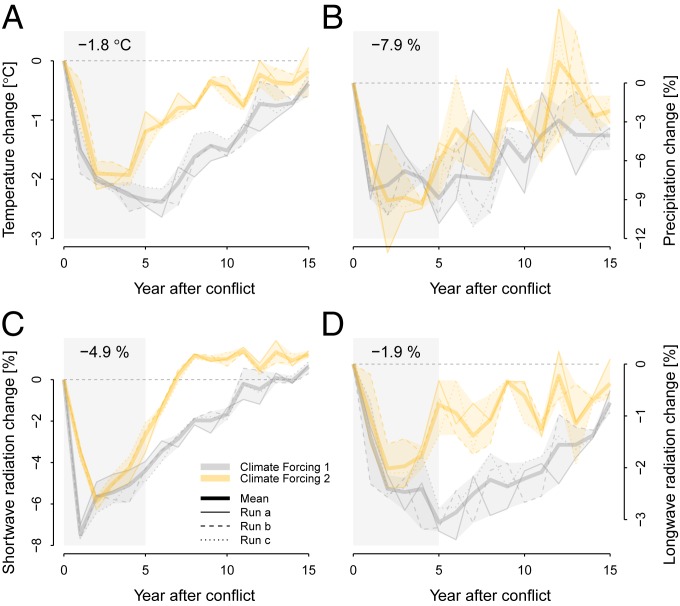
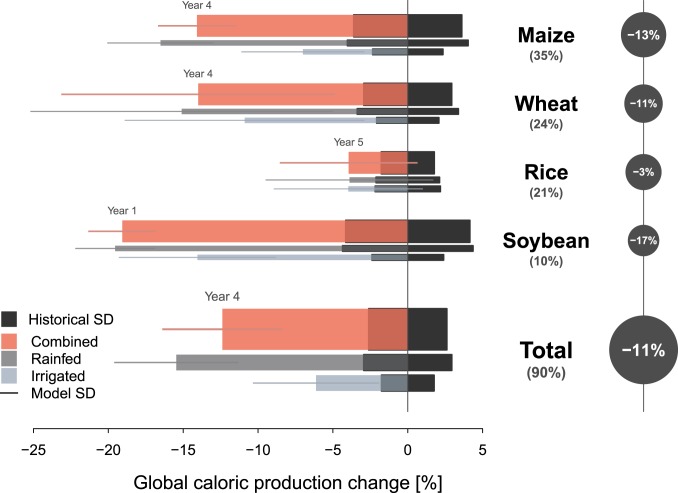
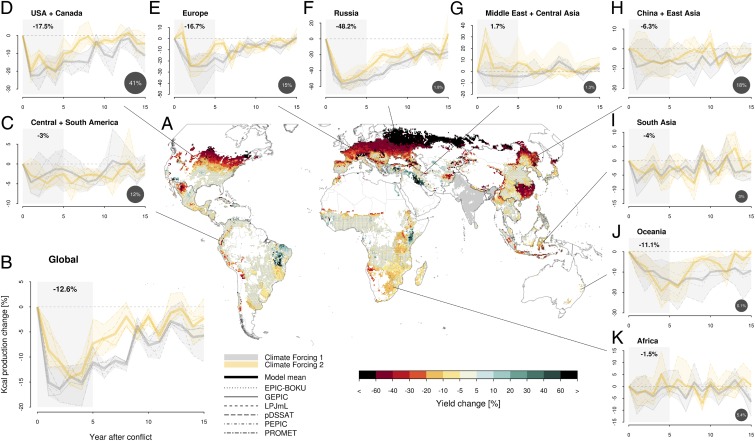
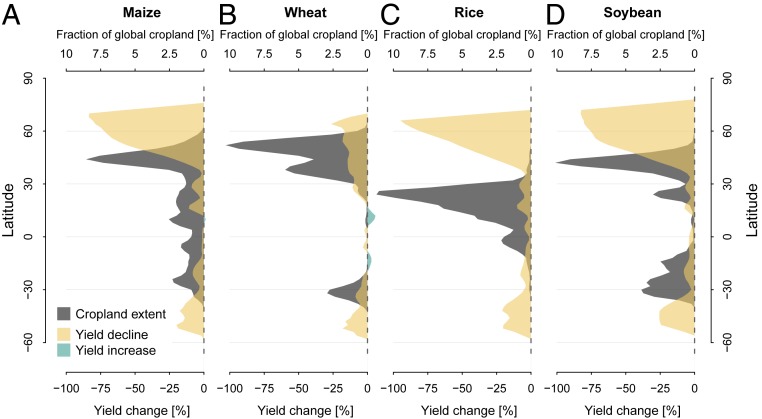
Significance: Impacts of global warming on agricultural productivity have been evaluated extensively. The implications of sudden cooling for global crop growth, however, are as yet little understood. While crop failures after historic volcanic eruptions are documented, a nuclear conflict can cause even more severe and longer-lasting climate anomalies. India and Pakistan are contributing to a de facto Asian arms race and the political instability in South Asia increasingly imposes a global threat. Based on comprehensive climate and crop model ensemble simulations, we provide critical quantitative information on how sudden cooling and perturbations of precipitation and solar radiation could disrupt food production and trade worldwide for about a decade—more than the impact from anthropogenic climate change by late century.
Overview
The claims and statistics of this paper haven’t been checked yet.
Free: it reads the open-access text and checks the first 5 claims that cite a source we can check. Create a free account to check every claim.
Integrity signals
Registry
Cites
Statistics
Figures
Verification
Claims the paper makes
The claims and statistics of this paper haven’t been checked yet.
Free: it reads the open-access text and checks the first 5 claims that cite a source we can check. Create a free account to check every claim.
Claims other papers make about this one
Each is checked against this paper’s own text: does it say what the citing paper says it does?
The source backs part of the claim, not all of it — or backs it for a different population, condition or comparison.
In the citing paper
“So far, an integrated estimate of the impacts of the entire range of war scenarios on both land- and ocean-based food production is missing.”
From Global food insecurity and famine from reduced crop, marine fishery and livestock production due to climate disruption from nuclear war soot injection (2022) · cites this paper as [14]
Experimental — accuracy not yet measuredThe source backs part of the claim, not all of it — or backs it for a different population, condition or comparison.
In the citing paper
“Although CLM5crop does not simulate winter wheat, we assume winter wheat production is changed by the same amount as spring wheat, which has been found in other studies 14 ; however, this may underestimate the winter wheat response, because winter wheat would experience colder temperatures during its growing period that would be more likely to cross critical thresholds 14 .”
From Global food insecurity and famine from reduced crop, marine fishery and livestock production due to climate disruption from nuclear war soot injection (2022) · cites this paper as [14]
Experimental — accuracy not yet measuredThe source backs part of the claim, not all of it — or backs it for a different population, condition or comparison.
In the citing paper
“This comes with the advantage of realistic internal variability important for crop modelling 12-14 but does not adjust changes in variance, which might be an unrealistic assumption under higher emission scenarios, such as the 150 Tg case.”
From Global food insecurity and famine from reduced crop, marine fishery and livestock production due to climate disruption from nuclear war soot injection (2022) · cites this paper as [14]
Experimental — accuracy not yet measuredThe cited source says what the claim attributes to it.
In the citing paper
“This comes with the advantage of realistic internal variability important for crop modelling 12-14 but does not adjust changes in variance, which might be an unrealistic assumption under higher emission scenarios, such as the 150 Tg case.”
From Global food insecurity and famine from reduced crop, marine fishery and livestock production due to climate disruption from nuclear war soot injection (2022) · cites this paper as [14]
The check wasn’t confident either way, so it gives no verdict — never disputed.
In the citing paper
“CLM5crop compares well with other crop models in response to nuclear war forcing 14 (Supplementary Fig. 2).”
From Global food insecurity and famine from reduced crop, marine fishery and livestock production due to climate disruption from nuclear war soot injection (2022) · cites this paper as [14]
Experimental — accuracy not yet measured
Self-check
Percentages, sums and reported differences re-computed from the paper’s own numbers.
The self-check needs the paper’s full text.
Citations
Cites
The DSSAT cropping system model
Jones, J. W., Hoogenboom, G., Porter, C. H., Boote, K. J., Batchelor, W. D., Hunt, L. A., Wilkens, P. W., Singh, U., Gijsman, A. J., & Ritchie, J. T. (2003) · European Journal of Agronomy · doi:10.1016/s1161-0301(02)00107-7 · Cited by 4,465 · cited 2×
“Six gridded global crop models participated in this study: EPIC-BOKU (59), GEPIC (60), LPJmL (61), pDSSAT (62, 63), PEPIC (64), and PROMET (65, 66), as part of the GGCMI (28, 29) within the Agricultural Model Intercomparison and Improvement Project (AgMIP) (67).”
BackgroundMethodThe Community Earth System Model: A Framework for Collaborative Research
Hurrell, J. W., Holland, M. M., Gent, P. R., Ghan, S., Kay, J. E., Kushner, P. J., Lamarque, J.-F., Large, W. G., Lawrence, D., Lindsay, K., et al. (2013) · Bulletin of the American Meteorological Society · doi:10.1175/bams-d-12-00121.1 · Cited by 2,686
Rosenzweig, C., Elliott, J., Deryng, D., Ruane, A. C., Müller, C., Arneth, A., Boote, K. J., Folberth, C., Glotter, M., Khabarov, N., et al. (2014) · Proceedings of the National Academy of Sciences · doi:10.1073/pnas.1222463110 · Cited by 2,319 · cited 5×
“Six well-established global mechanistic crop models (EPIC-BOKU, GEPIC, LPJmL, pDSSAT, PEPIC, and PROMET; see SI Appendix , Table S1 for details and full model names), as part of the global gridded crop model intercomparison (GGCMI) (28, 29), simulate impacts on crop production following a har-monized protocol; that is…”
BackgroundMethodInfluentialSelf-citationRecent patterns of crop yield growth and stagnation
Ray, D. K., Ramankutty, N., Mueller, N. D., West, P. C., & Foley, J. A. (2012) · Nature Communications · doi:10.1038/ncomms2296 · Cited by 1,595
Portmann, F. T., Siebert, S., & Döll, P. (2010) · Global Biogeochemical Cycles · doi:10.1029/2008gb003435 · Cited by 1,561
Albedo enhancement by stratospheric sulfur injections: a contribution to resolve a policy dilemma?
Crutzen, P. J. (2006) · Climatic Change · doi:10.1007/s10584-006-9101-y · Cited by 1,541 · cited 1×
“Using artificial stratospheric aerosols to reduce global warming has been suggested as a climate intervention (geoengi-neering) strategy (52).”
BackgroundIPCC (2022) · Cambridge University Press eBooks · doi:10.1017/9781009157940 · Cited by 1,482
Uncertainty in simulating wheat yields under climate change
Asseng, S., Ewert, F., Rosenzweig, C., Jones, J. W., Hatfield, J. L., Ruane, A. C., Boote, K. J., Thorburn, P. J., Rötter, R. P., Cammarano, D., et al. (2013) · Nature Climate Change · doi:10.1038/nclimate1916 · Cited by 1,341
Self-citationClimate Change from 1850 to 2005 Simulated in CESM1(WACCM)
Marsh, D. R., Mills, M. J., Kinnison, D. E., Lamarque, J.-F., Calvo, N., & Polvani, L. M. (2013) · Journal of Climate · doi:10.1175/jcli-d-12-00558.1 · Cited by 1,081
Weedon, G. P., Balsamo, G., Bellouin, N., Gomes, S., Best, M. J., & Viterbo, P. (2014) · Water Resources Research · doi:10.1002/2014wr015638 · Cited by 1,073
Cited by
Climate impacts on global agriculture emerge earlier in new generation of climate and crop models
Jägermeyr, J., Müller, C., Ruane, A. C., Elliott, J., Balkovic, J., Castillo, O., Faye, B., Foster, I., Folberth, C., Franke, J. A., et al. (2021) · Nature Food · doi:10.1038/s43016-021-00400-y · Cited by 1,010
Self-citationXia, L., Robock, A., Scherrer, K., Harrison, C. S., Bodirsky, B. L., Weindl, I., Jägermeyr, J., Bardeen, C. G., Toon, O. B., & Heneghan, R. (2022) · Nature Food · doi:10.1038/s43016-022-00573-0 · Cited by 398
“The changes would induce a catastrophic disruption of global food markets, as even a 7% global yield decline compared with the control simulation would exceed the largest anomaly ever recorded since the beginning of Food and Agricultural Organization (FAO) observational records in 1961 14 .”
BackgroundMethodResultInfluentialSelf-citationSeverity of drought and heatwave crop losses tripled over the last five decades in Europe
Brás, T. A., Seixas, J., Carvalhais, N., & Jägermeyr, J. (2021) · Environmental Research Letters · doi:10.1088/1748-9326/abf004 · Cited by 377
Self-citationLarge potential for crop production adaptation depends on available future varieties
Zabel, F., Müller, C., Elliott, J., Minoli, S., Jägermeyr, J., Schneider, J. M., Franke, J. A., Moyer, E., Dury, M., Francois, L., et al. (2021) · Global Change Biology · doi:10.1111/gcb.15649 · Cited by 164
“Participating crop models have been evaluated and simulated yields have been compared with statistics for historical periods in previous studies (Franke, Müller, Elliott, Ruane, Jägermeyr, Balkovic, et al., 2020; Jägermeyr et al., 2020; Müller et al., 2017).”
ResultSelf-citationPaudel, D., Neupane, R. C., Sigdel, S., Poudel, P., & Khanal, A. R. (2023) · Sustainability · doi:10.3390/su15108280 · Cited by 136
Crop models and their use in assessing crop production and food security: A review
Rita, Y. L., Papalexiou, S. M., Li, Y., ELSHORBAGY, A. A., Li, Z., & Schuster‐Wallace, C. J. (2023) · Food and Energy Security · doi:10.1002/fes3.503 · Cited by 136
Cinner, J. E., Caldwell, I. R., Thiault, L., Ben, J., Blanchard, J. L., Coll, M., Diedrich, A., Eddy, T. D., Everett, J. D., Folberth, C., et al. (2022) · Nature Communications · doi:10.1038/s41467-022-30991-4 · Cited by 137
Self-citationOpinion: How fear of nuclear winter has helped save the world, so far
Robock, A. D., Xia, L., Harrison, C. S., Coupe, J., Toon, O. B., & Bardeen, C. (2023) · Atmospheric chemistry and physics · doi:10.5194/acp-23-6691-2023 · Cited by 129
Self-citationAnalysis and vulnerability of the international wheat trade network
Gutiérrez, E., Adenso-Díaz, B., & Lozano, S. (2020) · Food Security · doi:10.1007/s12571-020-01117-9 · Cited by 105
The structure, dynamics, and vulnerability of the global food trade network
Ji, G., Zhong, H., Nzudie, H. L. F., Wang, P., & Tian, P. (2023) · Journal of Cleaner Production · doi:10.1016/j.jclepro.2023.140439 · Cited by 101
Agriculture, food security, and sustainability: a review
Islam, S. (2025) · Exploration of Foods and Foodomics · doi:10.37349/eff.2025.101082 · Cited by 94
Walne, C. H., & Reddy, K. R. (2022) · Agriculture · doi:10.3390/agriculture12040443 · Cited by 87
Agriculture's Historic Twin-Challenge Toward Sustainable Water Use and Food Supply for All
Jägermeyr, J. (2020) · Frontiers in Sustainable Food Systems · doi:10.3389/fsufs.2020.00035 · Cited by 83
Self-citationStructural Evolution of Global Soybean Trade Network and the Implications to China
Wang, M., Liu, D., Wang, Z., & Li, Y.-T. (2023) · Foods · doi:10.3390/foods12071550 · Cited by 66
A New Ocean State After Nuclear War
Harrison, C. S., Rohr, T. W., DuVivier, A. K., Maroon, E. A., Bachman, S., Bardeen, C., Coupe, J., Garza, V., Heneghan, R., Lovenduski, N. S., et al. (2022) · AGU Advances · doi:10.1029/2021av000610 · Cited by 64
Self-citationMarine wild-capture fisheries after nuclear war
Scherrer, K. J. N., Harrison, C. S., Heneghan, R. F., Galbraith, E., Bardeen, C. G., Coupe, J., Jägermeyr, J., Lovenduski, N. S., Luna, A., Robock, A., et al. (2020) · Proceedings of the National Academy of Sciences · doi:10.1073/pnas.2008256117 · Cited by 59
Self-citationAnalysing the Structure of the Global Wheat Trade Network: An ERGM Approach
Gutiérrez, E., Lozano, S., & Adenso-Díaz, B. (2020) · Agronomy · doi:10.3390/agronomy10121967 · Cited by 58
Extreme Ozone Loss Following Nuclear War Results in Enhanced Surface Ultraviolet Radiation
Bardeen, C. G., Kinnison, D. E., Toon, O. B., Mills, M. J., Vitt, F., Xia, L., Jägermeyr, J., Lovenduski, N. S., Scherrer, K. J. N., Clyne, M., et al. (2021) · Journal of Geophysical Research: Atmospheres · doi:10.1029/2021jd035079 · Cited by 55
“Assessments of impacts on agriculture and fisheries like those done by Jägermeyr et al. (2020) and Scherrer et al. (2020) for a regional nuclear war need to include the effects of UV and surface O 3 changes, and need to be done for the larger and differently sequenced effects that are generated by…”
BackgroundSelf-citationAir quality improvements can strengthen China’s food security
Liu, X., Chu, B., Tang, R., Liu, Y., Qiu, B., Gao, M. C., Li, X., Xiao, J., Sun, Z., Huang, X., et al. (2024) · Nature Food · doi:10.1038/s43016-023-00882-y · Cited by 55
Nuclear Niño response observed in simulations of nuclear war scenarios
Coupe, J., Stevenson, S. L., Lovenduski, N. S., Rohr, T. W., Harrison, C. S., Robock, A. D., Olivarez, H. C., Bardeen, C., & Toon, O. B. (2021) · Communications Earth & Environment · doi:10.1038/s43247-020-00088-1 · Cited by 54
Self-citationStrong regional influence of climatic forcing datasets on global crop model ensembles
Ruane, A. C., Phillips, M., Müller, C., Elliott, J. W., Jägermeyr, J., Arneth, A., Balkovič, J., Deryng, D., Folberth, C., Iizumi, T., et al. (2021) · Agricultural and Forest Meteorology · doi:10.1016/j.agrformet.2020.108313 · Cited by 53
Self-citationHow a small nuclear war would transform the entire planet
Witze, A. (2020) · Nature · doi:10.1038/d41586-020-00794-y · Cited by 51
Island refuges for surviving nuclear winter and other abrupt sunlight‐reducing catastrophes
Boyd, M., & Wilson, N. (2022) · Risk Analysis · doi:10.1111/risa.14072 · Cited by 49
Atmospheric opacity has a nonlinear effect on global crop yields
Proctor, J. (2021) · Nature Food · doi:10.1038/s43016-021-00240-w · Cited by 47
The Universal Republic: A Realistic Utopia?
Koenig‐Archibugi, M. (2024) · doi:10.1093/9780198921158.001.0001 · Cited by 39
Pham, A., Martínez, J. B. G., Brynych, V., Stormbjorne, R., Pearce, J. M., & Denkenberger, D. (2022) · Nutrients · doi:10.3390/nu14030492 · Cited by 37
Wilson, N., Valler, V., Cassidy, M., Boyd, M., Mani, L., & Brönnimann, S. (2023) · Scientific Reports · doi:10.1038/s41598-023-30729-2 · Cited by 31
Ruff, T. A. (2022) · Journal of Public Health Policy · doi:10.1057/s41271-021-00331-9 · Cited by 29
Ritchie, N. (2022) · International Relations · doi:10.1177/00471178221122959 · Cited by 29
Toward practical stratospheric aerosol albedo modification: Solar-powered lofting
Gao, R. S., Rosenlof, K. H., Kärcher, B., Tilmes, S., Toon, O. B., Maloney, C., & Yu, P. (2021) · Science Advances · doi:10.1126/sciadv.abe3416 · Cited by 28
Self-citationSeaweed as a Resilient Food Solution After a Nuclear War
Jehn, F. U., Dingal, F. J., Mill, A., Harrison, C. S., Ilin, E., Roleda, M. Y., James, S. C., & Denkenberger, D. (2024) · Earth s Future · doi:10.1029/2023ef003710 · Cited by 25
Rabin, S. S., Sacks, W. J., Lombardozzi, D., Xia, L., & Robock, A. D. (2023) · Geoscientific model development · doi:10.5194/gmd-16-7253-2023 · Cited by 24
Self-citationAdapting agriculture to climate catastrophes: the nuclear winter case
Shi, Y., Montes, F., Gioia, F. D., Xia, L., Bardeen, C., Anderson, C. T., Gil, Y., Khider, D., Ratnakar, V., & Kemanian, A. R. (2025) · Environmental Research Letters · doi:10.1088/1748-9326/adcfb5 · Cited by 23
Self-citationFood resilience in a dark catastrophe: A new way of looking at tropical wild edible plants
Winstead, D. J., & Jacobson, M. G. (2022) · AMBIO · doi:10.1007/s13280-022-01715-1 · Cited by 23
Boyd, M., & Wilson, N. (2023) · Risk Analysis · doi:10.1111/risa.14123 · Cited by 21
Zabel, F., Knüttel, M., & Poschlod, B. (2025) · Geoscientific model development · doi:10.5194/gmd-18-1067-2025 · Cited by 22
Self-citationBoyd, M., Ragnarsson, S., Terry, S., Payne, B., & Wilson, N. (2024) · Risk Analysis · doi:10.1111/risa.14297 · Cited by 20
Rasouli, F., Nasiri, Y., Hassanpouraghdam, M. B., Asadi, M., Qaderi, T., Trifa, A., Strzemski, M., Dresler, S., & Szczepanek, M. (2023) · Scientific Reports · doi:10.1038/s41598-023-39194-3 · Cited by 19
The Impact of Abrupt Sunlight Reduction Scenarios on Renewable Energy Production
Varne, A. R., Blouin, S., Williams, B., & Denkenberger, D. (2024) · Energies · doi:10.3390/en17205147 · Cited by 18
Four Global Catastrophic Risks – A Personal View
Blong, R. (2021) · Frontiers in Earth Science · doi:10.3389/feart.2021.740695 · Cited by 18
Wilson, N., Prickett, M., & Boyd, M. (2023) · New Zealand Medical Journal · doi:10.26635/6965.6004 · Cited by 18
Economic incentives modify agricultural impacts of nuclear war
Hochman, G., Zhang, H., Xia, L., Robock, A. D., Aleti, S., van der Mensbrugghe, D. Y., & Jägermeyr, J. (2022) · Environmental Research Letters · doi:10.1088/1748-9326/ac61c7 · Cited by 17
Self-citationMaladaptation in cereal crop landraces following a soot-producing climate catastrophe
McLaughlin, C. M., Shi, Y., Viswanathan, V., Sawers, R. J. H., Kemanian, A. R., & Lasky, J. R. (2025) · Nature Communications · doi:10.1038/s41467-025-59488-6 · Cited by 17
Impact of extreme weather events on the US domestic supply chain of food manufacturing
Yim, H., & Dall’erba, S. (2025) · Proceedings of the National Academy of Sciences · doi:10.1073/pnas.2424715122 · Cited by 17
Upper Troposphere Smoke Injection From Large Areal Fires
Redfern, S., Lundquist, J. K., Toon, O. B., Muñoz‐Esparza, D., Bardeen, C., & Kosović, B. (2021) · Journal of Geophysical Research Atmospheres · doi:10.1029/2020jd034332 · Cited by 17
Self-citationZhang, Y.-T., & Zhou, W. (2023) · Chaos Solitons & Fractals · doi:10.1016/j.chaos.2023.113567 · Cited by 17
Liu, W., Ye, T., Müller, C., Jägermeyr, J., Franke, J., Stephens, H., & Chen, S. (2023) · Geoscientific model development · doi:10.5194/gmd-16-7203-2023 · Cited by 16
Self-citationLatent Heating Is Required for Firestorm Plumes to Reach the Stratosphere
Tarshish, N., & Romps, D. M. (2022) · Journal of Geophysical Research Atmospheres · doi:10.1029/2022jd036667 · Cited by 16
Wilson, N., Payne, B., & Boyd, M. (2023) · Scientific Reports · doi:10.1038/s41598-023-35354-7 · Cited by 14
Ren, D., Liu, W., Yang, H., Zhuo, L., Tong, Y., Liu, Y., Yang, Y., & Zhou, L. (2021) · Environmental Research Letters · doi:10.1088/1748-9326/ac3604 · Cited by 14
Self-citationEvaluation of global gridded crop models in simulating sugarcane yield in China
Yin, D., Yan, J., Li, F., & Song, T. (2023) · Atmospheric and Oceanic Science Letters · doi:10.1016/j.aosl.2023.100329 · Cited by 13
Public health and nuclear winter: addressing a catastrophic threat
Vilhelmsson, A., & Baum, S. D. (2023) · Journal of Public Health Policy · doi:10.1057/s41271-023-00416-7 · Cited by 12
Valorizing staple Native American food plants as a food resilience resource
Winstead, D. J., Jacobson, M. G., & Gioia, F. D. (2023) · Frontiers in Sustainable Food Systems · doi:10.3389/fsufs.2023.1117805 · Cited by 11
Strategic crop relocation could substantially mitigate nuclear winter yield lossesPreprint
Blouin, S., Rivers, M., Hinge, M., Antonietta, M., Jimenez, I., Jehn, F. U., & Denkenberger, D. (2025) · EarthArXiv (California Digital Library) · doi:10.31223/x5gn09 · Cited by 11
Assessing lignocellulosic biomass as a source of emergency foods
Siva, N., & Anderson, C. T. (2023) · Current Research in Food Science · doi:10.1016/j.crfs.2023.100586 · Cited by 10
Forest Resource Availability After Nuclear War or Other Sun‐Blocking Catastrophes
Winstead, D. J., & Jacobson, M. G. (2022) · Earth s Future · doi:10.1029/2021ef002509 · Cited by 10
The Lancet Commission on 21st century global threats to health
Murray, C., Kanem, N., Abed, S., Abubakar, I. I., Adetifa, I., Aguilera, X., Asma, S., Capua, I., Chungong, M., Davies, S. C., et al. (2026) · The Lancet · doi:10.1016/s0140-6736(26)01714-9 · Cited by 10
Microbiota Communities of Healthy and Bacterial Pustule Diseased Soybean
Kim, D., Kim, S.-H., Lee, S. I., & Kwak, Y. (2022) · The Plant Pathology Journal · doi:10.5423/ppj.oa.05.2022.0067 · Cited by 9
Coupling GEDI LiDAR and Optical Satellite for Revealing Large‐Scale Maize Lodging in Northeast China
Zhang, Q., Zhang, G., Zhang, Y., Xiao, X., You, N., Li, Z., Tang, H., Yang, T., Di, Y., & Dong, J. (2024) · Earth s Future · doi:10.1029/2023ef003590 · Cited by 8
Koenig‐Archibugi, M. (2024) · Oxford University Press eBooks · doi:10.1093/9780198921158.005.0003 · Cited by 5
Insights into Pyrocumulus aerosol composition: black carbon content and organic vapor condensation
Gorkowski, K., Koo, E., Jordan, S., Reisner, J., Benedict, K. B., & Dubey, M. K. (2024) · Environmental Science Atmospheres · doi:10.1039/d3ea00130j · Cited by 5
Winstead, D. J., & Jacobson, M. G. (2024) · Plant-Environment Interactions · doi:10.1002/pei3.70004 · Cited by 5
Assessment of Crop Yield in China Simulated by Thirteen Global Gridded Crop Models
Yin, D., Li, F., Lü, Y., Zeng, X., Lin, Z., & Zhou, Y. (2024) · Advances in Atmospheric Sciences · doi:10.1007/s00376-023-2234-3 · Cited by 5
Spatiotemporal characteristics of agricultural food import shocks
Zhang, Y.-T., Nguyen, D. K., & Zhou, W. (2024) · Annals of Operations Research · doi:10.1007/s10479-024-06168-1 · Cited by 5
Potential Pathways and Solutions to Acute Food System Crisis in the UK
Bridle, S., Smith, E., Jones, A. W., Falloon, P., Pilley, V., Hasnain, S., Stanbrough, L., Vogel, C., Douglas, C. M. S., Doherty, B., et al. (2026) · Sustainability · doi:10.3390/su18031342 · Cited by 4
Siva, N., & Anderson, C. T. (2024) · Food Science & Nutrition · doi:10.1002/fsn3.4358 · Cited by 4
Open-Source Flexible Material Tensile Testing Apparatus
Woods, M., Nauta, N., & Pearce, J. M. (2024) · Hardware · doi:10.3390/hardware2010002 · Cited by 4
Even a small nuclear war threatens food security
Ray, D. K. (2022) · Nature Food · doi:10.1038/s43016-022-00575-y · Cited by 4
Xu, Y., Ribar, N. P., Schade, G. W., Lockley, A., Zhang, Y., Sachnik, J., Yu, P., Hu, J., & Velders, G. J. M. (2024) · Atmosphere · doi:10.3390/atmos15111322 · Cited by 4
Femeena, P. V., & Brennan, R. A. (2025) · Agriculture & Food Security · doi:10.1186/s40066-025-00527-2 · Cited by 4
Yook, S., Solomon, S., Bardeen, C., & Stone, K. A. (2025) · Earth s Future · doi:10.1029/2025ef006866 · Cited by 4
Self-citationNo Place to Hide? Regional Resilience and Vulnerability to Global Catastrophic Risk
Jehn, F. U., Roessler, M., Kemp, L., Cassidy, M., Kallenborn, Z., Martínez, J. B. G., Mani, L., & Boyd, M. (2026) · Global Challenges · doi:10.1002/gch2.70146 · Cited by 4
Expansion of cropland area during an abrupt sunlight reduction scenarioPreprint
Monteiro, L., Hinge, M., Blouin, S., Rivers, M., van der Walt, J. D., & Denkenberger, D. (2024) · EarthArXiv (California Digital Library) · doi:10.31223/x5mq54 · Cited by 4
Harrison, C. S., Faulkner, W., Coupe, J., Asante, E. K., Bardeen, C., Garza, V., Heneghan, R., Jägermeyr, J., Lovenduski, N. S., Robock, A. D., et al. (2026) · Geoscience Data Journal · doi:10.1002/gdj3.70076 · Cited by 4
Self-citationChan, C. Y.-C., Prá, G. D., Johnson, I., Boyd, M., & Glomseth, R. E. (2025) · International Journal of Disaster Risk Science · doi:10.1007/s13753-025-00657-y · Cited by 3
Island refuges for surviving nuclear winter and other abrupt sun-reducing catastrophesPreprint
Boyd, M., & Wilson, N. (2022) · Research Square · doi:10.21203/rs.3.rs-1927222/v2 · Cited by 3
Bressler, R. D., Trager, R., & Dafoe, A. (2021) · doi:10.33774/apsa-2021-hk7gk · Cited by 3
Joukkotuhoaseet ja asevalvonta : asevalvonnan arkkitehtuurin kehitys ja kriisiytyminen
Simonen, K. (2023) · Helda - University of Helsinki Institutional Repository · Cited by 3
Researchers: help free the world of nuclear weapons
(2020) · Nature · doi:10.1038/d41586-020-02274-9 · Cited by 3
Nuclear Weapons, Climate Disruption and Planetary Health
Ruff, T. A. (2024) · CABI eBooks · doi:10.1079/9781800620025.0003 · Cited by 2
Simulating the Response of Tropical Cyclones to Potential Nuclear War
Zhao, K., Zhao, H., Coupe, J., Klotzbach, P. J., & Wu, L. (2024) · Journal of Geophysical Research Atmospheres · doi:10.1029/2024jd041658 · Cited by 2
Wilson, N., Cassidy, M., Boyd, M., Mani, L., Valler, V., & Brönnimann, S. (2022) · Research Square · doi:10.21203/rs.3.rs-2124163/v1 · Cited by 2
Toon, O. B., & Robock, A. D. (2025) · doi:10.1093/9780197799734.001.0001 · Cited by 2
Self-citationMonteiro, L., Hinge, M., Blouin, S., & Denkenberger, D. (2026) · Sustainability · doi:10.3390/su18136552 · Cited by 2
Climate Change, Health, Ethics and the Sustainability of CivilizationPreprint
Butler, C. D. (2024) · Qeios · doi:10.32388/mn4t6n · Cited by 2
The Future of Canadian Canola Production: Sustainability Under Climate Change
Rita, Y. L. (2025) · HARVEST (University of Saskatchewan) · Cited by 2
Oberleitner, T., Baklanov, A., Ferreira, T. B., Hoogenboom, G., Jägermeyr, J., Jain, A. K., Lin, T., Mialyk, O., Müller, C., Ruane, A. C., et al. (2026) · Earth s Future · doi:10.1029/2025ef007457 · Cited by 2
Self-citationENHANCING WHEAT (TRITICUM AESTIVUM L.) YIELD THROUGH GENETIC MODIFICATION
Abbas, A., ALI, T., REHMAN, A., & ABBAS, M. (2023) · Journal of Physical Biomedical and Biological Sciences · doi:10.64013/jpbab.v2023i1.11 · Cited by 2
Assured Destruction by Nuclear Explosions
Toon, O. B., & Robock, A. D. (2025) · Oxford University Press eBooks · doi:10.1093/9780197799734.003.0012 · Cited by 1
Self-citationThe climate effects of nuclear war
Ruff, T. (2025) · Medicine Conflict & Survival · doi:10.1080/13623699.2025.2560274 · Cited by 1
Land Surface Modeling 2.0 for agricultural climate change impact assessments
Franke, J., Drewniak, B. A., Renchon, A. A., Jin, Z., Kumar, V., Guan, K., Peng, B., Cacho, J., Walston, L. J., & Moyer, E. (2021) · OSTI OAI (U.S. Department of Energy Office of Scientific and Technical Information) · doi:10.2172/1769734 · Cited by 1
Self-citationWalne, C. H., Dhillon, J. S., Reddy, K. N., & Reddy, K. R. (2025) · Frontiers of Earth Science · doi:10.1007/s11707-024-1137-7 · Cited by 1
Tok, Ş. A. (2025) · Özgür Yayınları eBooks · doi:10.58830/ozgur.pub866.c3520 · Cited by 1
Cropland expansion in a nuclear winter with loss of industryPreprint
Monteiro, L., Hinge, M., Blouin, S., & Denkenberger, D. (2025) · EarthArXiv (California Digital Library) · doi:10.31223/x5w464 · Cited by 1
Global Trade Dynamics of Soybean Products
Khan, A., & Hussain, I. (2026) · Wiley eBooks · doi:10.1002/9781394320387.ch20 · Cited by 1
Lin, T.-S., & Jain, A. K. (2026) · Scientific Reports · doi:10.1038/s41598-026-55973-0 · Cited by 1
El Coronavirus (Covid-19): Entre realidades, representaciones y simulacros
Pargas, L., & González, G. (2021) · Educere · Cited by 1
Should We Govern Geoengineering like Nuclear Weapons or the Internet?
Chalecki, E. L. (2021) · Georgetown journal of international affairs · doi:10.1353/gia.2021.0001 · Cited by 1
Optimization of Culture and Sporulation for Two Plant Beneficial Streptomyces Strains
Kim, D., & Kwak, Y. (2023) · Research in Plant Disease · doi:10.5423/rpd.2023.29.2.174 · Cited by 1
Nuclear Proliferation and International Security: Challenges and Perspectives
Huang, Y. (2024) · International Journal of Social Sciences and Public Administration · doi:10.62051/ijsspa.v4n2.52 · Cited by 1
Metadata
- Authors
- Jägermeyr, J., Robock, A., Elliott, J., Müller, C., Xia, L., Khabarov, N., Folberth, C., Schmid, E., Liu, W., Zabel, F., Rabin, S. S., Puma, M. J., Heslin, A., Franke, J., Foster, I., Asseng, S., Bardeen, C. G., Toon, O. B., & Rosenzweig, C.
- Affiliations
- Goddard Institute for Space Studies (US)
- Rutgers, The State University of New Jersey (US)
- University of Chicago (US)
- Leibniz Association (DE)
- International Institute for Applied Systems Analysis (AT)
- BOKU University (AT)
- Université Paris-Saclay (FR)
- Ludwig-Maximilians-Universität München (DE)
- Karlsruhe Institute of Technology (DE)
- Argonne National Laboratory (US)
- University of Florida (US)
- NSF National Center for Atmospheric Research (US)
- University of Colorado Boulder (US)
- Corresponding author
- Jägermeyr, Jonas
- ORCID
- Venue
- Proceedings of the National Academy of Sciences
- Publisher
- National Academy of Sciences
- Published
- 2020-03-16
- Volume
- 117
- Issue
- 13
- Pages
- 7071-7081
- ISSN
- 0027-8424 (ISSN-L)
- 1091-6490
- PMC
- PMC7132296
- OpenAlex
- W3011955160
- Cited by
- 147
- References
- 78
- Citations by year
- 2026: 13 · 2025: 33 · 2024: 31 · 2023: 32 · 2022: 18 · 2021: 13 · 2020: 7
- FWCI
- 60.39
- Type
- journal article
- Language
- en
- Open access
- hybrid
- doi.org
- Licence
- Locations
- Proceedings of the National Academy of Sciences (publishedVersion, cc-by-nc-nd)
- PubMed Central (publishedVersion, cc-by-nc-nd)
- PubMed (publishedVersion)
- IIASA PURE (International Institute of Applied Systems Analysis) (acceptedVersion)
- Repository KITopen (Karlsruhe Institute of Technology) (submittedVersion, cc-by-nc-nd)
- HAL (submittedVersion, cc-by-nc-nd)
- DORA Eawag (Swiss Federal Institute of Aquatic Science and Technology (Eawag)) (submittedVersion, cc-by-nc-nd)
- OSTI OAI (U.S. Department of Energy Office of Scientific and Technical Information) (submittedVersion)
- Knowledge@UChicago (University of Chicago) (submittedVersion, cc-by-nc-nd)
- Publication Database PIK (Potsdam Institute for Climate Impact Research (PIK)) (submittedVersion, cc-by-nc-nd)
- KITopen
- University of Chicago
- Funders
- Open Philanthropy Project (NA)
- National Science Foundation (SES-146364, ACI-1532235, ACI-1532236)
- Topics
- Social Sciences › Political Science and International Relations › Nuclear Issues and Defense
- Life Sciences › Agricultural and Biological Sciences › Agronomy and Crop Science › Climate change impacts on agriculture
- Physical Sciences › Environmental Science › Management, Monitoring, Policy and Law › Environmental and Biological Research in Conflict Zones
- Keywords
- nuclear war, food security, India-Pakistan conflict, soot emissions, stratospheric aerosols, climate perturbation, crop yield loss, maize, wheat, rice, soybean, food trade networks, food reserves, Global South, temperate regions
- MeSH terms
- Edible Grain, Climate, Food Supply, Models, Biological, Nuclear Warfare, Glycine max
About these checks
Registry, retraction, Cites and statistics results are computed, not judged, with one exception: a printed reference that no index lists is read once by a model before it counts as a citation error. Claims are extracted by a model and kept only when their quote appears verbatim in the text; each cited source is then checked, with a model’s help, for whether it says what the claim relies on. Those verdicts can be wrong — read the claim’s quote and the cited source before relying on one.
Statistics and arithmetic are recomputed, not judged.
Confidence bands are shown only for fields calibrated on our annotated test set. None is calibrated yet, so no band is shown.
What counts as a claim ›How we measure confidence ›How we check this ›
Are you an author, or do you see a problem with this page? Request a review
Data sources
Bibliographic data: Semantic Scholar, OpenAlex, Crossref.
Contains information from the Semantic Scholar Academic Graph Datasets, made available under the ODC Attribution License (ODC-BY 1.0).
Semantic Scholar’s data is described in: Kinney, R., et al. (2023). The Semantic Scholar Open Data Platform. arXiv:2301.10140.
