

Allosteric control of hemoglobin S fiber formation by oxygen and its relation to the pathophysiology of sickle cell disease
Open accessThe DOI matches its Crossref record; 104 of the 106 references it cites were found in a registry or an index.
Abstract
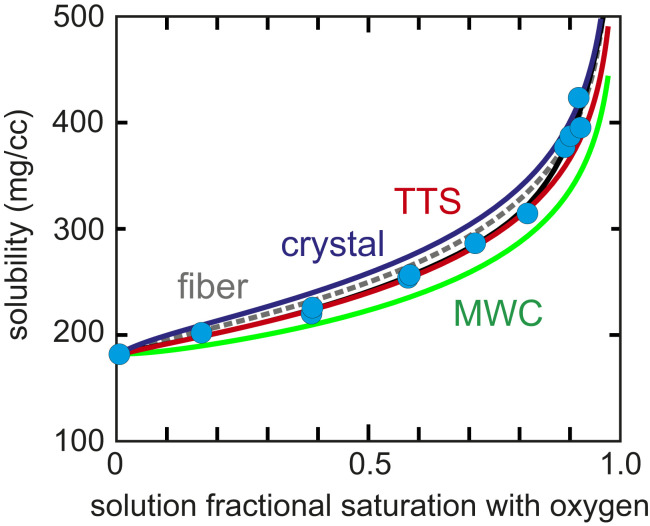
Significance: The root cause of pathology in sickle cell disease is the polymerization of the mutant hemoglobin S upon deoxygenation in the tissues to form fibers. Both the amount of fiber at equilibrium and the kinetics of fiber formation depend on the partial pressure of oxygen. We show that control of polymerization by oxygen at equilibrium can be better explained by a recent extension of the famous two-state allosteric model of Monod, Wyman, and Changeux. Because of the unusual kinetics, polymerization is far out of equilibrium, which explains why patients with the disease manage to survive, while those with high levels of fetal hemoglobin and those with sickle trait (the heterozygous condition) have relatively benign conditions.
Overview
The claims and statistics of this paper haven’t been checked yet.
Free: it reads the open-access text and checks the first 5 claims that cite a source we can check. Create a free account to check every claim.
Integrity signals
Registry
Cites
Statistics
Figures
Verification
Claims the paper makes
The claims and statistics of this paper haven’t been checked yet.
Free: it reads the open-access text and checks the first 5 claims that cite a source we can check. Create a free account to check every claim.
Claims other papers make about this one
Each is checked against this paper’s own text: does it say what the citing paper says it does?
The cited source doesn’t support the claim as written.
In the citing paper
“When HbF/F-cell is 9 to 12 pg, calculations suggested that deoxyHbS polymerization should be prevented at physiologic venous and capillary O 2 saturations of 40% to 70%, affording the sickle erythrocyte nearly total protection from HbS polymerinduced damage, although recent studies call into question this observation.3,48,49”
From Fetal hemoglobin in sickle cell anemia (2020) · cites this paper as [3]
Checked by a reasoning model — may be wrong.
Experimental — accuracy not yet measuredThe cited source says what the claim attributes to it.
In the citing paper
“HbF prolongs the time needed for HbS polymerization (delay time), allowing the escape of sickle erythrocytes from the microcirculation into larger veins and hence the lungs, where on reoxygenation, HbS polymer melts.3”
From Fetal hemoglobin in sickle cell anemia (2020) · cites this paper as [3]
Self-check
Percentages, sums and reported differences re-computed from the paper’s own numbers.
The self-check needs the paper’s full text.
Citations
Cites
On the nature of allosteric transitions: A plausible model
Monod, J., Wyman, J., & Changeux, J.-P. (1965) · Journal of Molecular Biology · doi:10.1016/s0022-2836(65)80285-6 · Cited by 8,825
Sickle Cell Anemia, a Molecular Disease
Pauling, L., Itano, H. A., Singer, S. J., & Wells, I. C. (1949) · Science · doi:10.1126/science.110.2865.543 · Cited by 2,319 · cited 2×
“deoxygenated HbS, but not oxygenated HbS, to aggregate, the amino acid replacement is on the molecular surface and that oxygenated and deoxygenated HbS molecules must have different conformations (2).”
BackgroundProliferation of amyloid-β42 aggregates occurs through a secondary nucleation mechanism
Cohen, S. I. A., Linse, S., Luheshi, L. M., Hellstrand, E., White, D. A., Rajah, L., Otzen, D. E., Vendruscolo, M., Dobson, C. M., & Knowles, T. P. J. (2013) · Proceedings of the National Academy of Sciences · doi:10.1073/pnas.1218402110 · Cited by 1,440
Why is the partial oxygen pressure of human tissues a crucial parameter? Small molecules and hypoxia
Carreau, A., Hafny‐Rahbi, B. E., Matejuk, A., Grillon, C., & Kieda, C. (2011) · Journal of Cellular and Molecular Medicine · doi:10.1111/j.1582-4934.2011.01258.x · Cited by 1,246 · cited 4×
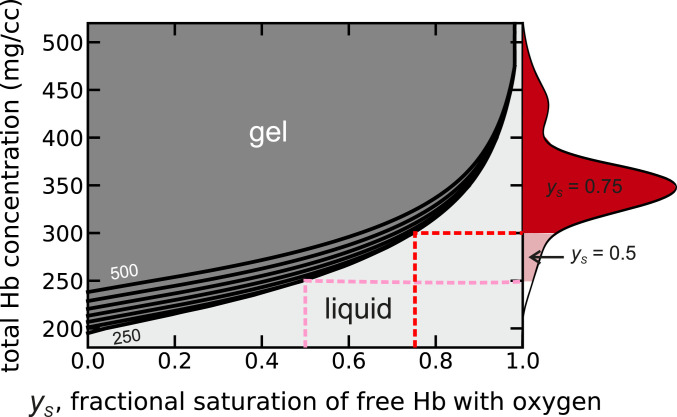
“In vivo, the distribution of intracellular HbS concentrations vary from 250 to 450 mg/cc, while the oxygen pressure is less than 40 torr in most tissues (60, 61), corresponding to a hemoglobin saturation with oxygen in the liquid phase of about 75%.”
BackgroundInfluentialThe Magnetic Properties and Structure of Hemoglobin, Oxyhemoglobin and Carbonmonoxyhemoglobin
Pauling, L., & Coryell, C. D. (1936) · Proceedings of the National Academy of Sciences · doi:10.1073/pnas.22.4.210 · Cited by 1,159
Pathogenesis and Treatment of Sickle Cell Disease
Bunn, H. F. (1997) · New England Journal of Medicine · doi:10.1056/nejm199709113371107 · Cited by 1,154
Hemoglobin: Molecular, Genetic and Clinical Aspects.
(1986) · Annals of Internal Medicine · doi:10.7326/0003-4819-105-5-820_2 · Cited by 1,006
INGRAM, V. M. (1957) · Nature · doi:10.1038/180326a0 · Cited by 978
Bohr, C., Hasselbalch, K., & Krogh, A. (1904) · Skandinavisches Archiv Für Physiologie · doi:10.1111/j.1748-1716.1904.tb01382.x · Cited by 629
A Phase 3 Randomized Trial of Voxelotor in Sickle Cell Disease
Vichinsky, E., Hoppe, C. C., Ataga, K. I., Ware, R. E., Nduba, V., El-Beshlawy, A., Hassab, H., Achebe, M. M., Alkindi, S., Brown, R. C., et al. (2019) · New England Journal of Medicine · doi:10.1056/nejmoa1903212 · Cited by 624
Research works printed but not linked: 2
- Sherman I. J., The sickling phenomenon, with special reference to the differentiation of sickle cell anemia from sickle cell trait. Bull. Johns Hopkins Hosp. 67, 309– 324 (1940).
- Oosawa F., Asakura S., The Thermodynamic of the Polymerization of Protein, (Academic Press, New York, 1975).
Cited by
Fetal hemoglobin in sickle cell anemia
Steinberg, M. H. (2020) · Blood · doi:10.1182/blood.2020007645 · Cited by 136
Long-term outcomes of lentiviral gene therapy for the β-hemoglobinopathies: the HGB-205 trial
Magrin, E., Semeraro, M., Hebert, N., Joseph, L., Magnani, A., Chalumeau, A., Gabrion, A., Roudaut, C., Marouene, J., Lefrère, F., et al. (2022) · Nature Medicine · doi:10.1038/s41591-021-01650-w · Cited by 119
Self-citationTreatment of sickle cell disease by increasing oxygen affinity of hemoglobin
Henry, E. R., Metaferia, B. B., Li, Q., Delenko, J., Best, R. B., Glass, K. E., Cellmer, T., Dunkelberger, E. B., Conrey, A. K., Thein, S. L., et al. (2021) · Blood · doi:10.1182/blood.2021012070 · Cited by 100
“In this work, we took advantage of our understanding of polymerization kinetics and how oxygen pressure controls HbS polymerization.(6,7,37) We predict when cells sickle in the tissues and how much oxygen is delivered during the in vivo oxygen pressure decrease that occurs in a few seconds as red cells pass through th…”
BackgroundSelf-citationGene editing without ex vivo culture evades genotoxicity in human hematopoietic stem cells
Zeng, J., Nguyen, M. A., Liu, P., da Silva, L. F., Levesque, S., Lin, L. Y., Justus, D. G., Petri, K., Clement, K., Porter, S. N., et al. (2024) · Cell stem cell · doi:10.1016/j.stem.2024.11.001 · Cited by 41
“…experiments have suggested that more HbF, ~50% or higher, may be required to achieve inhibition of deoxyHbS polymerization similar to that calculated or observed in in vitro studies for RBCs from patients with heterozygous sickle cell trait HbAS, where the fraction of HbA is ~65% in vivo 15,16 .”
Shrestha, A., Chi, M., Wagner, K., Malik, A., Korpik, J., Drake, A. C. B., Fulzele, K. S., Guichard, S. M., & Malik, P. (2021) · Blood Advances · doi:10.1182/bloodadvances.2020003604 · Cited by 35
Sickle cell vaso-occlusion: The dialectic between red cells and white cells
Conran, N., & Embury, S. H. (2021) · Experimental Biology and Medicine · doi:10.1177/15353702211005392 · Cited by 37
“2 Polymerization of HbS, under conditions of deoxygenation, leads to the formation of deoxy-HbS fibers in the RBC, altering the properties of these cells and leaving them less deformable and often sickle shaped.(3) The ensuing and complex pathophysiology of SCD vaso-occlusion involves multiple molecular mechanisms bey…”
BackgroundD’Alessandro, A., Nouraie, M. S., Zhang, Y., Cendali, F. I., Gamboni, F., Reisz, J. A., Zhang, X., Bartsch, K. W., Galbraith, M. D., Espinosa, J. M., et al. (2023) · Haematologica · doi:10.3324/haematol.2023.283288 · Cited by 39
“Under deoxygenated conditions, sickling of red blood cells (RBCs) occurs following crystallization of mutant globins into macrofibers,(3-5) which in turn disrupts erythrocyte morphology, rheology(6) and metabolism.”
BackgroundUchida, N., Li, L., Nassehi, T., Drysdale, C. M., Yapundich, M., Gamer, J., Haro‐Mora, J. J., Demirci, S., Leonard, A. K., Bonifacino, A. C., et al. (2021) · Cell Reports Medicine · doi:10.1016/j.xcrm.2021.100247 · Cited by 35
de Souza, D. C., Hebert, N., Esrick, E. B., Ciuculescu, M. F., Archer, N. M., Armant, M. A., Audureau, É., Brendel, C., Caprio, G. D., Galactéros, F., et al. (2023) · Nature Communications · doi:10.1038/s41467-023-40923-5 · Cited by 32
“The presenceof HbF ( α 2 γ 2 ) directlyinhibits polymer formation more effectively than HbA 9 – 11 .”
InfluentialSelf-citationMetaferia, B. B., Cellmer, T., Dunkelberger, E. B., Li, Q., Henry, E. R., Hofrichter, J., Staton, D., Hsieh, M. M., Conrey, A. K., Tisdale, J. F., et al. (2022) · Proceedings of the National Academy of Sciences · doi:10.1073/pnas.2210779119 · Cited by 32
“(43)), which decreases the delay time 4 to 7 fold (~1.”
BackgroundSelf-citationDemirci, S., Zeng, J., Palchaudhuri, R., Wu, C., Abraham, D. M., Hayal, T. B., Essawi, K., Nguyen, M. A., Stasula, U., Chu, R., et al. (2024) · Cell stem cell · doi:10.1016/j.stem.2024.10.014 · Cited by 25
Verma, A., Huffman, J. E., Gao, L., Minnier, J., Wu, W.-C. H., Cho, K., Ho, Y.-L. A., Gorman, B. R., Pyarajan, S., Rajeevan, N., et al. (2022) · JAMA Internal Medicine · doi:10.1001/jamainternmed.2022.2141 · Cited by 24
Lew, V. L. (2024) · Annual Review of Physiology · doi:10.1146/annurev-physiol-022724-105119 · Cited by 24
Tariq, H., Khurshid, F., Khan, M. H., Dilshad, A., Zain, A., Rasool, W., Jawaid, A., Kunwar, D., Khanduja, S., & Akbar, A. (2024) · Annals of Medicine and Surgery · doi:10.1097/ms9.0000000000002478 · Cited by 30
Eaton, W. A. (2021) · Molecular Aspects of Medicine · doi:10.1016/j.mam.2021.100971 · Cited by 23
Self-citationA Small Key for a Heavy Door: Genetic Therapies for the Treatment of Hemoglobinopathies
Zittersteijn, H. A., Harteveld, C. L., Klaver-Flores, S., Lankester, A. C., Hoeben, R. C., Staal, F. J. T., & Gonçalves, M. A. F. V. (2021) · Frontiers in Genome Editing · doi:10.3389/fgeed.2020.617780 · Cited by 24
“This prevents sickling as low intracellular oxygen levels are usually required for pathologic HbS polymerization to occur (Henry et al., 2020).”
BackgroundPatwa, H., Babcock, N. S., & Kurian, P. (2024) · Frontiers in Physics · doi:10.3389/fphy.2024.1387271 · Cited by 20
A study of the molecular interactions of hemoglobin with diverse classes of therapeutic agents
Zăgrean-Tuza, C., Igescu, I., Lupan, A., & Silaghi-Dumitrescu, R. L. (2024) · Inorganica Chimica Acta · doi:10.1016/j.ica.2024.122053 · Cited by 22
Oxidation of Erythrocytes Enhance the Production of Reactive Species in the Presence of Artemisinins
Tsamesidis, I., Pério, P., Pantaleo, A., & Reybier, K. (2020) · International Journal of Molecular Sciences · doi:10.3390/ijms21134799 · Cited by 21
“Antioxidant compounds hav be n produced in order to prevent oxidat ve stress p esenti g antisickling eff cts [7,8,42].”
BackgroundTargeting fetal hemoglobin expression to treat β hemoglobinopathies
Steinberg, M. H. (2022) · Expert Opinion on Therapeutic Targets · doi:10.1080/14728222.2022.2066519 · Cited by 19
Leonard, A. K., Furstenau, D. K., Inam, Z. S., Luckett, C., Chu, R., Demirci, S., Essawi, K., Gudmundsdottir, B., Hinds, M., DiNicola, J., et al. (2024) · Blood Advances · doi:10.1182/bloodadvances.2023011397 · Cited by 15
Self-citationThe vaso-occlusive pain crisis in sickle cell patients: A focus on pathogenesis
Javaherforooshzadeh, F., Fateh, A., Saffari, H., Khodadadi, M., Samarin, M. E., Nikoubakht, N., Dadgar, F., & Goodarzi, V. (2025) · Current Research in Translational Medicine · doi:10.1016/j.retram.2025.103512 · Cited by 18
Liu, Z., Gillis, T., Raman, S., & Cui, Q. (2024) · eLife · doi:10.7554/elife.92262 · Cited by 13
“…primarily seeks to identify the structural basis for signal transduction, it is implicitly assumed within the population shift perspective, which offers a comprehensive and quantitative description of allostery ( Szabo and Karplus, 1972 ; Viappiani et al., 2014 ; Henry et al., 2020 ; Eaton, 2022 ).”
BackgroundMWC allosteric model explains unusual hemoglobin-oxygen binding curves from sickle cell drug binding
Henry, E. R., Delenko, J., Glass, K. E., Metaferia, B. B., Louis, J. M., & Eaton, W. A. (2021) · Biophysical Journal · doi:10.1016/j.bpj.2021.04.024 · Cited by 14
“The molecular rationale for this strategy is that shifting the quaternary equilibrium from the polymerizing T conformation to the R conformation (14,22,24–27), which cannot copolymerize (16,17,28), will reduce sickling.”
BackgroundSelf-citationTherapeutics for sickle cell disease intravascular hemolysis
Xue, J., & Li, X. (2024) · Frontiers in Physiology · doi:10.3389/fphys.2024.1474569 · Cited by 10
Azul, M., Vital, E. F., Lam, W. A., Wood, D. K., & Beckman, J. D. (2022) · Translational research · doi:10.1016/j.trsl.2022.03.010 · Cited by 8
Kuck, L., Kaestner, L., Égée, S., Lew, V. L., & Simmonds, M. J. (2025) · Channels · doi:10.1080/19336950.2025.2556105 · Cited by 7
“…block is a common response for all three main sickle cell subtypes (discocytes, fetal hemoglobin carrying sickle cells termed F-cells and ISCs), an effect attributed to interactions between Piezo1 and the deoxy-hemoglobin fibers responsible for the familiar sickle-like RBC deformations [108–110].”
Li, Z., Alt, C., Dufu, K., Hutchaleelaha, A., Xu, Q. R., Zhang, X., Li, C.-M., Rademacher, P., Bosmajian, C., Pochron, M. P., et al. (2025) · ACS Medicinal Chemistry Letters · doi:10.1021/acsmedchemlett.5c00076 · Cited by 6
Rethinking Sickle Cell Disease as a Systemic Vasculopathy
DuPont, M., Galadanci, N. A., Patel, R. V., Lebensburger, J. D., & Kanter, J. (2026) · Cells · doi:10.3390/cells15040326 · Cited by 6
“The pathophysiology of SCD involves defective HbS polymerizing following deoxygenation in the tissues, causing RBCs to form fibers that distort and obstruct blood flow [7,14,15].”
Hyperactive deoxy-PIEZO1 shapes the circulatory life cycle of irreversibly sickled cells
Lew, V. L., & Rogers, S. D. (2025) · Biophysical Journal · doi:10.1016/j.bpj.2025.02.005 · Cited by 4
“A large body of experimental results and clinical studies, accumulated over more than seven decades, indicates that irreversibly sickled cells (ISCs) play a critical role in the pathophysiology of sickle cell disease (SCD) (1– 21).”
Esrick, E. B., Lehmann, L., Federico, A., Vincon, H., Liu, B., Daley, H., Dansereau, C., Oliveira, S. D., Everett, J. K., Kao, P., et al. (2026) · Blood · doi:10.1182/blood.2026033871 · Cited by 3
Alaimo, B., Metaferia, B. B., Cellmer, T., Thein, S. L., Bunn, H. F., & Eaton, W. A. (2024) · British Journal of Haematology · doi:10.1111/bjh.19697 · Cited by 3
Self-citationTranscriptional regulators of fetal hemoglobin
dos Santos, G. P., Rabi, L. T., Bezerra, A. A., da Cunha, M. R., Iatecola, A., & Fernandes, V. A. R. (2024) · Hematology Transfusion and Cell Therapy · doi:10.1016/j.htct.2024.06.001 · Cited by 3
Gbolo, B. Z., Eltayb, W. A., Ngbolua, K., Shabana, S., Semay, I., Hamouda, H. I., Gerbaux, P., Mohsen, M., Mulongo, E. K., Mpiana, P. T., et al. (2026) · Pharmacological Research - Natural Products · doi:10.1016/j.prenap.2026.100516 · Cited by 2
Virus-Like Particles as a CRISPR-Cas9 Delivery Tool
Shindadkar, S., & Severson, K. M. (2024) · Journal of Undergraduate Life Sciences · doi:10.33137/juls.v16i1.42386 · Cited by 2
The brief life-story of irreversibly sickled cells
Socolovsky, M. (2025) · Biophysical Journal · doi:10.1016/j.bpj.2025.03.003 · Cited by 2
Vandorpe, D. H., Rivera, A., Shmukler, B. E., Wohlgemuth, J. G., Dlott, J. S., Snyder, L. M., Trudel, M., Brugnara, C., & Alper, S. L. (2021) · Blood Cells Molecules and Diseases · doi:10.1016/j.bcmd.2021.102619 · Cited by 2
Akpan, I. S., Onukak, A. E., Iyanam, V. E., & Oyewumi, A. O. (2021) · International Journal of Blood Transfusion and Immunohematology · doi:10.5348/100066z02ia2021ra · Cited by 2
Akpan, I. S., & Asuquo, I. E. (2022) · Saudi Journal of Medicine · doi:10.36348/sjm.2022.v07i08.006 · Cited by 2
“acute chest syndrome, priapism, stroke and retinopathy [14, 16].”
BackgroundResultInfluentialGenetic cause and therapy of sickle cell disease
Zou, J. (2023) · Theoretical and Natural Science · doi:10.54254/2753-8818/22/20230999 · Cited by 2
Drug discovery by a basic research scientist
Eaton, W. A. (2022) · Frontiers in Molecular Biosciences · doi:10.3389/fmolb.2022.1062346 · Cited by 1
“The most frequent targeting approach has been to bind a drug to the nonpolymerizing R quaternary conformation of HbS (Sunshine et al., 1982; Eaton and Hofrichter, 1990; Henry et al., 2020) to reduce the population of the polymerizing T quaternary conformation (Nakagawa et al.”
BackgroundSelf-citationAssessment of D-dimer level among Yemeni Patients with Sickle Cell Anemia
Haj, F. S. M., Al-Shamahy, H. A., & Al-Nuzaili, M. A. (2025) · مجلة جامعة صنعاء للطب والعلوم الصحية · doi:10.59628/jchm.v19i2.1639 · Cited by 1
“These Proteins C and S, two plasma proteins that are dependent on vitamin K and work together as a natural anticoagulant mechanism [9].”
Yu, M., Das, P., Zhang, X., & Cheng, X. (2026) · Molecular Oncology · doi:10.1002/1878-0261.70304 · Cited by 2
“Impor-tantly, elevated HbF levels strongly associate with reduced disease severity [9 – 14], consistent with a compensatory role for c -globin in the setting of defective or absent b -globin [8,15 – 17].”
Temperature-dependent self-assembly of biofilaments during red blood cell sickling
Behera, A., Sharma, O., Paul, D., & Sain, A. (2022) · The Journal of Chemical Physics · doi:10.1063/5.0091690 · Cited by 1
Camacho, R. A., Machado, A. V., Mendonça, F. D. O., Teixeira-Alves, L. R., Guimarães-Nobre, C. C., Mendonça-Reis, E., da Silva, P. F., Cardim-Pires, T. R., Miranda‐Alves, L., & Junior, C. B. (2024) · Toxicology in Vitro · doi:10.1016/j.tiv.2024.105832 · Cited by 1
Liu, Z., Gillis, T., Raman, S., & Cui, Q. (2024) · eLife · doi:10.7554/elife.92262.2 · Cited by 1
Evaluating sheep hemoglobins with MD simulations as an animal model for sickle cell disease
Kuczynski, C. E., Porada, C. D., Atala, A., Cho, S. S., & Almeida-Porada, G. D. (2024) · Scientific Reports · doi:10.1038/s41598-023-50707-y
Ramadier, S. (2020) · theses.fr (ABES) · doi:10.70675/b75724f6zb386z4f05zae5dzc8f17b350499
Exploring the Hemoglobin T to R2 Path Using Gaussian Elastic Network Correlation Map Distance
Valenci, Y., & Tobi, D. (2025) · Proteins Structure Function and Bioinformatics · doi:10.1002/prot.70014
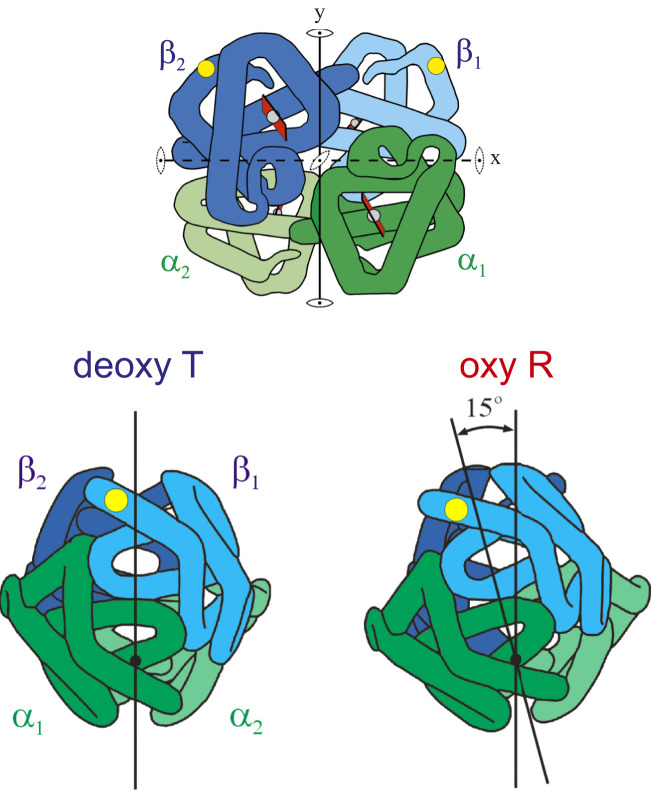
“The mechanism of the T ↔ R2 transition is a 15° rotation of one αβ dimer relative to the other [43].”
SANTOS, B. M. D. A. F. D. (2024) · Portuguese National Funding Agency for Science, Research and Technology (RCAAP Project by FCT)
Mathematical Analysis of Molecular Hypotheses for Clinical Variation in Sickle Cell Disease
Polk, M. P. (2024) · Digital Access to Scholarship at Harvard (DASH) (Harvard University)
Avaliação do SNP rs12203592 como um biomarcador de gravidade em pacientes com anemia falciforme
Fernandes, L. P. (2024) · LA Referencia (Red Federada de Repositorios Institucionales de Publicaciones Científicas)
Moduladores genéticos da doença cerebrovascular em população pediátrica com anemia falciforme
dos Anjos, A. C. M. (2023) · LA Referencia (Red Federada de Repositorios Institucionales de Publicaciones Científicas)
Development and Proposed Use of Red Cell Function Testing in SCD
Patwardhan, A. A., & Sheehan, V. (2026) · Springer eBooks · doi:10.1007/978-3-032-12532-3_7
Nsimba, M. M., Mihatano, M., Mbamu, B. M., Lubongo, A. D., Kolombo, T. N., Mukengeshaie, J. M., & Nzunzu, J. L. (2024) · Journal of Biosciences and Medicines · doi:10.4236/jbm.2024.128023
The quaternary structure origin of the fibrillation of sickle hemoglobin: a molecular dynamics study
Jiang, M., & Zhao Qin, A. (2026) · npj Soft Matter · doi:10.1038/s44431-026-00019-8
New mechanisms involved in the modulation of sickle red blood cells rheology and senescence
Esperti, S. (2023) · theses.fr (ABES) · doi:10.70675/57fbff51z05a3z4c75zbaedz4914780911db · Cited by 2
Hoffka, G., & Szabó, A. (2026) · FEBS Journal · doi:10.1111/febs.70627
N., O. G., Anekwe, D. C., & I., O. U. (2026) · Acta Botanica Plantae · doi:10.51470/abp.2026.05.02.08
Singh, K., Michaud, D. S., Parness, T., Mgbeke, O. E., Okodaso, H., Jones, K., Ikolo, B. T., Thomas, S., & Ikolo, F. (2026) · Biomedicines · doi:10.3390/biomedicines14081682
“This characteristic shape faithfully represents the experimental gelation time-courses first characterized by Hofrichter et al. [22] and extended by Ferrone [24] and Henry et al. [23].”
InfluentialPerspective Chapter: Fetal Hemoglobin Modulators
Walke, V. A. (2026) · IntechOpen eBooks · doi:10.5772/intechopen.1017037
Hemoglobin: The Ideal Conveyor of Oxygen
Deshpande, S., & Rhoades, R. (2026) · Springer eBooks · doi:10.1007/978-3-032-18934-9_9
OKONJI, K. S., Daramola, A. O., Folaranmi, O. E., & Alade, O. T. (2026) · World Scientific News · doi:10.65770/fpyd6165
MicroRNAs in hemoglobinopathy: sickle cell disease
Gupta, P., & Kumar, R. (2026) · Elsevier eBooks · doi:10.1016/b978-0-443-45118-8.00009-6
Li, L., Rejna, M. J., Woon, Z.-N., Chee, J. C., Kedir, W. M., Chen, Y.-J., & Loke, D. K. (2026) · Chemical Engineering Journal · doi:10.1016/j.cej.2026.183964
Metadata
- Authors
- Henry, E. R., Cellmer, T., Dunkelberger, E. B., Metaferia, B., Hofrichter, J., Li, Q., Ostrowski, D., Ghirlando, R., Louis, J. M., Moutereau, S., Galactéros, F., Thein, S. L., Bartolucci, P., & Eaton, W. A.
- Affiliations
- National Institutes of Health (US)
- Université Paris-Est Créteil (FR)
- Corresponding author
- Henry, Eric R.
- Eaton, William A.
- ORCID
- Venue
- Proceedings of the National Academy of Sciences
- Publisher
- National Academy of Sciences
- Published
- 2020-06-11
- Volume
- 117
- Issue
- 26
- Pages
- 15018-15027
- ISSN
- 0027-8424 (ISSN-L)
- 1091-6490
- PMC
- PMC7334536
- OpenAlex
- W3034483942
- Semantic Scholar
- d1052bd44ad316d5ecf4ea60ccefc4cd976bbdd2
- Cited by
- 65
- References
- 106
- Citations by year
- 2026: 11 · 2025: 6 · 2024: 17 · 2023: 11 · 2022: 8 · 2021: 9 · 2020: 3
- FWCI
- 4.01
- Type
- journal article
- Language
- en
- Open access
- hybrid
- doi.org
- Licence
- Locations
- Proceedings of the National Academy of Sciences (publishedVersion, cc-by)
- PubMed Central (publishedVersion, cc-by)
- PubMed (publishedVersion)
- Topics
- Health Sciences › Medicine › Genetics (clinical) › Hemoglobinopathies and Related Disorders
- Life Sciences › Biochemistry, Genetics and Molecular Biology › Biochemistry › Hemoglobin structure and function
- Health Sciences › Medicine › Hematology › Blood properties and coagulation
- Keywords
- sickle cell disease, hemoglobin S, allosteric regulation, polymerization, red blood cell sickling, quaternary structure, T to R transition, Monod-Wyman-Changeux model, supersaturation, fetal hemoglobin, sickle cell trait, hereditary persistence of fetal hemoglobin
- MeSH terms
- Allosteric Regulation, Anemia, Sickle Cell, Erythrocytes, Fetal Hemoglobin, Hemoglobin, Sickle, Humans, Kinetics, Oxygen
About these checks
Registry, retraction, Cites and statistics results are computed, not judged, with one exception: a printed reference that no index lists is read once by a model before it counts as a citation error. Claims are extracted by a model and kept only when their quote appears verbatim in the text; each cited source is then checked, with a model’s help, for whether it says what the claim relies on. Those verdicts can be wrong — read the claim’s quote and the cited source before relying on one.
Statistics and arithmetic are recomputed, not judged.
Confidence bands are shown only for fields calibrated on our annotated test set. None is calibrated yet, so no band is shown.
What counts as a claim ›How we measure confidence ›How we check this ›
Are you an author, or do you see a problem with this page? Request a review
Data sources
Bibliographic data: Semantic Scholar, OpenAlex, Crossref.
Contains information from the Semantic Scholar Academic Graph Datasets, made available under the ODC Attribution License (ODC-BY 1.0).
Semantic Scholar’s data is described in: Kinney, R., et al. (2023). The Semantic Scholar Open Data Platform. arXiv:2301.10140.
