

Disturbed glucose and pyruvate metabolism in glaucoma with neuroprotection by pyruvate or rapamycin
Open accessThe DOI matches its Crossref record; 54 of the 54 references it cites were found in a registry or an index.
Abstract
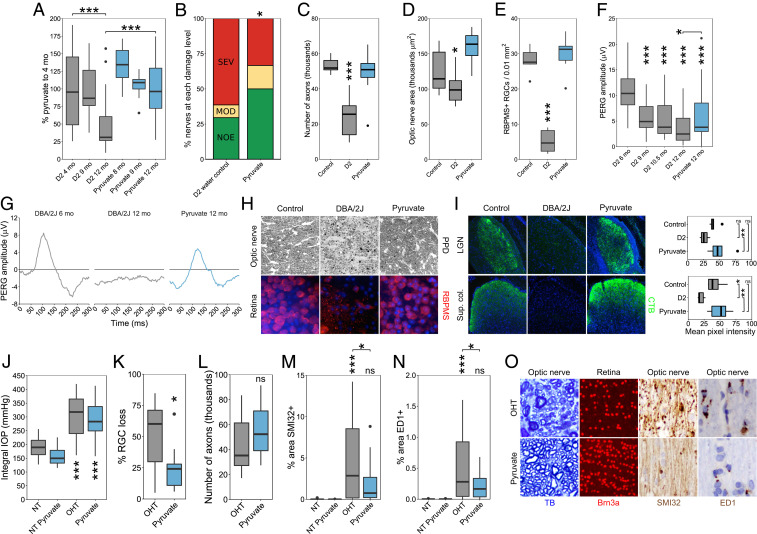
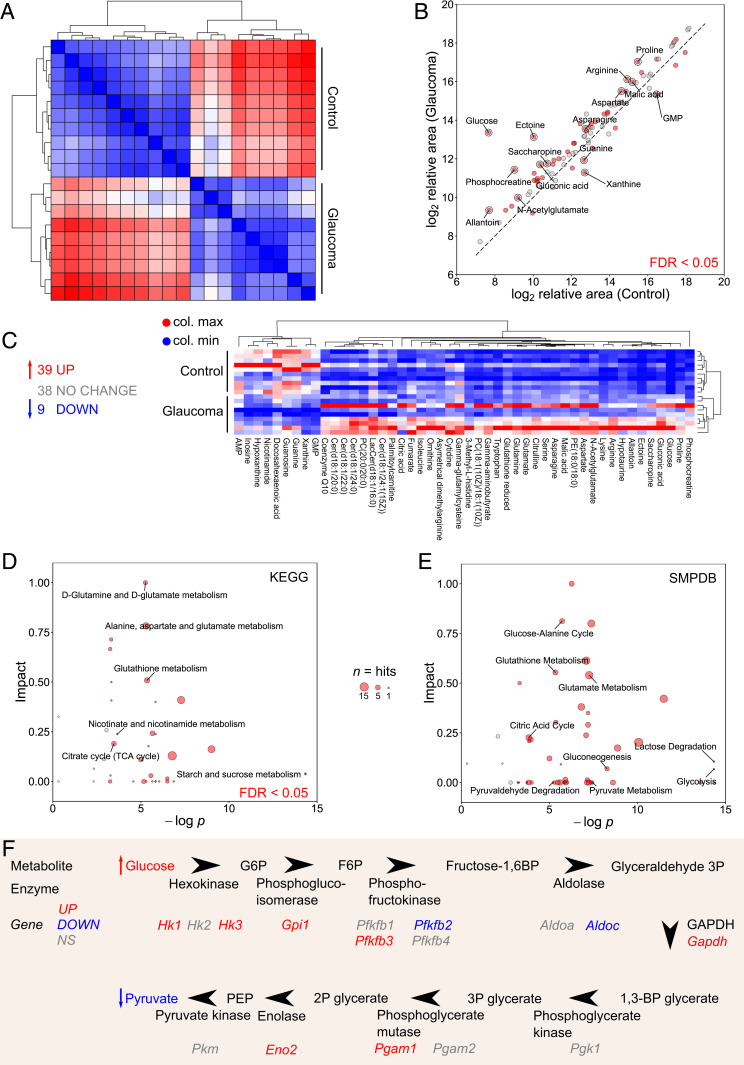
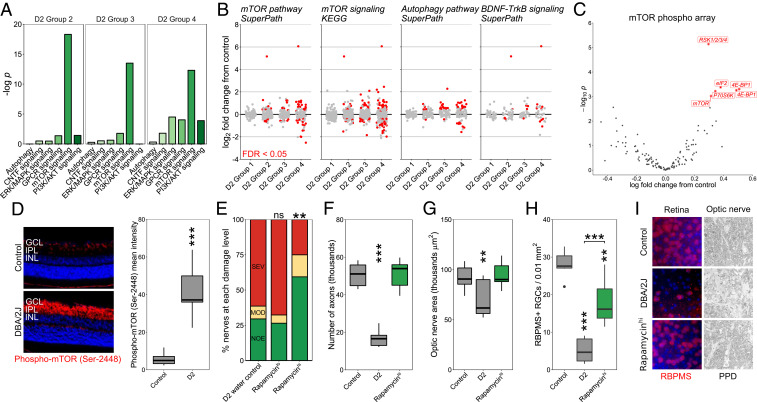
Significance: Age-related bioenergetic insufficiency increases the vulnerability of retinal ganglion cells to intraocular pressure during glaucoma pathogenesis. This paper addresses these relationships and provides a deeper understanding of this common neurodegeneration. We demonstrate an intraocular pressure-dependent decline in retinal pyruvate levels coupled to dysregulated glucose metabolism, and detected mTOR activation at the mechanistic nexus of neurodegeneration and metabolism. Supporting this, oral supplementation of pyruvate or mTOR inhibition by rapamycin strongly protects from neurodegeneration. Bioenergetic enhancement thus provides a readily clinically translatable strategy for neurodegenerative disease. This study provides important avenues for neuroprotection against glaucoma by targeting key metabolic pathways that may be mirrored in other neurodegenerative diseases in which metabolic dysregulation may play a key role.
Overview
The claims and statistics of this paper haven’t been checked yet.
Free: it reads the open-access text and checks the first 5 claims that cite a source we can check. Create a free account to check every claim.
Integrity signals
Registry
Cites
Statistics
Figures
Verification
Claims the paper makes
The claims and statistics of this paper haven’t been checked yet.
Free: it reads the open-access text and checks the first 5 claims that cite a source we can check. Create a free account to check every claim.
Claims other papers make about this one
Each is checked against this paper’s own text: does it say what the citing paper says it does?
The cited source says what the claim attributes to it.
In the citing paper
“Our results contrast with previous findings showing that the mTOR inhibitor rapamycin promoted RGC survival [63].”
From AMPK hyperactivation promotes dendrite retraction, synaptic loss, and neuronal dysfunction in glaucoma (2021) · cites this paper as [63]
Self-check
Percentages, sums and reported differences re-computed from the paper’s own numbers.
The self-check needs the paper’s full text.
Citations
Cites
limma powers differential expression analyses for RNA-sequencing and microarray studies
Ritchie, M. E., Phipson, B., Wu, D., Hu, Y., Law, C. W., Shi, W., & Smyth, G. K. (2015) · Nucleic Acids Research · doi:10.1093/nar/gkv007 · Cited by 40,458
mTOR Signaling in Growth, Metabolism, and Disease
Saxton, R. A., & Sabatini, D. M. (2017) · Cell · doi:10.1016/j.cell.2017.02.004 · Cited by 7,555 · cited 3×
“Rapamycin is an mTOR inhibitor that promotes survival mechanisms associated with fasting and decreased energy use (34).”
Global Prevalence of Glaucoma and Projections of Glaucoma Burden through 2040
Tham, Y.-C., Li, X., Wong, T. Y., Quigley, H. A., Aung, T., & Cheng, C.-Y. (2014) · Ophthalmology · doi:10.1016/j.ophtha.2014.05.013 · Cited by 7,159
Sumner, L. W., Amberg, A., Barrett, D., Beale, M. H., Beger, R., Daykin, C. A., Fan, T. W.-M., Fiehn, O., Goodacre, R., Griffin, J. L., et al. (2007) · Metabolomics · doi:10.1007/s11306-007-0082-2 · Cited by 5,368 · cited 3×
“Metabolite identities were confirmed according to level 1 of the Metabolomics Standards Initiative (16). mTOR Phospho Antibody Array. mTOR phospho antibody arrays were performed on n = 3 per condition of whole homogenized retina from 9 mo of age D2 and D2-Gpnmb + mice following the manufacturer ’ s…”
InfluentialMetaboAnalyst 4.0: towards more transparent and integrative metabolomics analysis
Chong, J., Soufan, O., Li, C., Caraus, I., Li, S., Bourque, G., Wishart, D. S., & Xia, J. (2018) · Nucleic Acids Research · doi:10.1093/nar/gky310 · Cited by 3,629 · cited 1×
“Metabolomics data were analyzed using MetaboAnalyst and R using the 86 identified metabolites as a background list for enrichment (49, 50).”
Using MetaboAnalyst 4.0 for Comprehensive and Integrative Metabolomics Data Analysis
Chong, J., Wishart, D. S., & Xia, J. (2019) · Current Protocols in Bioinformatics · doi:10.1002/cpbi.86 · Cited by 2,166 · cited 1×
“Metabolomics data were analyzed using MetaboAnalyst and R using the 86 identified metabolites as a background list for enrichment (49, 50).”
NAD+ and sirtuins in aging and disease
Imai, S.-I., & Guarente, L. (2014) · Trends in Cell Biology · doi:10.1016/j.tcb.2014.04.002 · Cited by 1,481 · cited 2×
“Animals were excluded from further analysis if severe hyphema developed subsequent to laser treatment [29% collectively, which was lower than the hyphema rate of 40% reported by Levkovitch-Verbin et al. (38)].”
Use of within-array replicate spots for assessing differential expression in microarray experiments
Smyth, G. K., Michaud, J., & Scott, H. S. (2005) · Bioinformatics · doi:10.1093/bioinformatics/bti270 · Cited by 1,405 · cited 1×
“Data were analyzed in R using limma (linear models for microarray data, designed for microarray analysis but suitable for other data types) (51 – 53).”
Birsoy, K., Wang, T., Chen, W. W., Freinkman, E., Abu-Remaileh, M., & Sabatini, D. M. (2015) · Cell · doi:10.1016/j.cell.2015.07.016 · Cited by 1,388 · cited 1×
“One is a pyruvate-induced increase in NAD availability to NAD-consuming enzymes that generate NAM (e.g., PARPs and SIRTs; although pyruvate doesn ’ t directly produce NAD in these reactions) (26, 27).”
NAD + in aging, metabolism, and neurodegeneration
Verdin, E. (2015) · Science · doi:10.1126/science.aac4854 · Cited by 1,319 · cited 1×
“One is a pyruvate-induced increase in NAD availability to NAD-consuming enzymes that generate NAM (e.g., PARPs and SIRTs; although pyruvate doesn ’ t directly produce NAD in these reactions) (26, 27).”
Cited by
Items 101–129 of 129
TLR4 deficiency does not alter glaucomatous progression in a mouse model of chronic glaucoma
Zhang, C., Simón, M., Harder, J. M., Lim, H., Montgomery, C. L., Wang, Q., & John, S. W. M. (2025) · Scientific Reports · doi:10.1038/s41598-025-00638-7 · Cited by 2
“Both female and male mice were used for analysis.”
Self-citationCurrent Status of Technical Challenges in Mass Spectrometry‐Driven Metabolomics
Qiu, S., Zhang, A., Sun, H. J., & Wang, X. (2021) · Wiley eBooks · doi:10.1002/9783527835751.ch7 · Cited by 2
Svensson, J. E., Bolin, M., Thor, D., Williams, P. A., Brautaset, R., Carlsson, M., Sörensson, P., Marlevi, D., Spin‐Neto, R., Probst, M., et al. (2024) · medRxiv · doi:10.1101/2024.02.19.24302922 · Cited by 1
Self-citationMetabolomics as Drivers for Biomarker Discovery and Mechanism Interpretation
Wang, W., Zhang, A., Sun, H. J., Yan, G., & Wang, X. (2021) · Wiley eBooks · doi:10.1002/9783527835751.ch6
Innovations in Analytical Techniques of Metabolomics
Kong, L. D., Zhang, A., Qiu, S., & Wang, X. (2021) · doi:10.1002/9783527835751.ch2
Modulation by SIRT1-mTORC1 Pathway Microglia Pruning Retinal Ganglion Cell DendritesPreprint
Yao, K., Mou, Q., Lou, X., Ye, M., Zhao, B., Hu, Y., Luo, J., Zhang, H., Li, X., & Zhao, Y. (2022) · SSRN Electronic Journal · doi:10.2139/ssrn.4097123
Zhang, J., Yang, X., Zong, Y., Yu, T., & Yang, X. Q. (2023) · SSRN Electronic Journal · doi:10.2139/ssrn.4645520
Mitochondria and Primary Open Angle Glaucoma
Williams, P. A., & Hui, F. (2024) · Elsevier eBooks · doi:10.1016/b978-0-443-13820-1.00103-1
Self-citationLi, K., Tolman, N. G., Segrè, A. V., Stuart, K. V., Zeleznik, O. A., Vallabh, N. A., Hu, K., Zebardast, N., Hanyuda, A., Raita, Y., et al. (2025) · eLife · doi:10.7554/elife.105576.1 · Cited by 1
Self-citationLi, K., Tolman, N. G., Segrè, A. V., Stuart, K. V., Zeleznik, O. A., Vallabh, N. A., Hu, K., Zebardast, N., Hanyuda, A., Raita, Y., et al. (2025) · eLife · doi:10.7554/elife.105576.2 · Cited by 2
Self-citationSong, Z., Pany, S., Guo, S., Mazumder, A. G., Itakura, T., Huang, J. H., Magarychoff, E., Gurinovich, A., Benchek, P. H., Stamer, W. D., et al. (2025) · medRxiv · doi:10.1101/2025.08.11.25333245
“Disturbances in glucose metabolism, such as reduced glycolytic activity, affect energy availability and neurotrophic support that are vital for retinal ganglion cell survival 147 .”
Gao, Y., & Zhao, C. (2025) · bioRxiv (Cold Spring Harbor Laboratory) · doi:10.1101/2025.09.21.677582
Belforte, N., Agostinone, J., Alarcón-Martínez, L., Villafranca‐Baughman, D., Dotigny, F., Vargas, J. C., & Polo, A. D. (2021) · Figshare · doi:10.6084/m9.figshare.14880590
Belforte, N., Agostinone, J., Alarcón-Martínez, L., Villafranca‐Baughman, D., Dotigny, F., Vargas, J. C., & Polo, A. D. (2021) · Figshare · doi:10.6084/m9.figshare.14880593
Cimaglia, G., Tribble, J. R., Votruba, M., Williams, P. A., & Morgan, P. J. E. (2024) · Figshare · doi:10.6084/m9.figshare.26942739
Self-citationSvensson, J. E., Bolin, M., Thor, D. E., Williams, P. A., Brautaset, R., Carlsson, M., Sörensson, P., Marlevi, D., Spin-Neto, R., Probst, M., et al. (2024) · Figshare · doi:10.6084/m9.figshare.25546915
Self-citationCimaglia, G., Tribble, J. R., Votruba, M., Williams, P. A., & Morgan, P. J. E. (2024) · Figshare · doi:10.6084/m9.figshare.26942742
Self-citationOtmani, A., Jóhannesson, G., Brautaset, R., Tribble, J. R., & Williams, P. A. (2024) · Figshare · doi:10.6084/m9.figshare.25329624
Self-citationChou, Y., Liu, W., Li, Y., Chen, C., Luo, C., Shen, S., Dai, P., Feng, L., Xiao, W., Wang, Y., et al. (2026) · Experimental & Molecular Medicine · doi:10.1038/s12276-026-01654-x
“Previous studies have shown that NAD supplementation may enhance mitochondrial redox capacity and delay visual fi eld loss 52 , while pyruvate can restore energy balance and protect RGCs by bypassing impaired glycolytic steps 16,53 .”
Suwannasual, U., Smart, K. R., Young, O., Suh, E. H., Golden, T. D., & Inman, D. M. (2026) · Scientific Reports · doi:10.1038/s41598-026-50306-7 · Cited by 1
Murinda, K. P., Morgan, A. B., & Inman, D. M. (2026) · Frontiers in Cell and Developmental Biology · doi:10.3389/fcell.2026.1805959
“Cellular deprivation of energy substrates is implicated in most neurodegenerative diseases (Chen and Zhong, 2013; Vandoorne et al., 2018), including glaucoma (Williams and Casson, 2024; Harun-Or-Rashid et al., 2018; Harder et al., 2020).”
Glaucoma and Autoimmunity: Immunopathogenic Mechanisms and Emerging Immunomodulatory Therapies
Wang, M., Liu, C., & Wei, X. (2026) · Biomedicines · doi:10.3390/biomedicines14061209
“Research confirms that rapamycin exerts significant protective effects on RGCs in glaucoma models [129,130].”
Glaucoma as a brain energy disorder: Reevaluating neurodegeneration via modified metabolic pathways
Capobianco, M., & Zeppieri, M. (2026) · Brain Network Disorders · doi:10.1016/j.bnd.2026.03.003
Moshtaghion, S. M., Shayan, M., Ramakrishnan, S., Ham, A., Gharehkoshan, A. S., Morley, M. G., Zebardast, N., Diaz-Corrales, F. J. J., Rodríguez-de-la-Rúa-Franch, E., Husain, D., et al. (2026) · Frontiers in Aging · doi:10.3389/fragi.2026.1912337
“Co-administration of NAM augments NAD + biosynthesis through the salvage pathway and complements pyruvate’s metabolic support in a mechanistically coherent manner (Harder et al., 2020; Tribble et al., 2021).”
Chen, M., Weh, E., Goswami, M. T., Weh, K. M., Hager, H. M., Sajjakulnukit, P., Weingarten, A., Subramanya, S., Miller, N., Chaudhury, S., et al. (2026) · Redox Biology · doi:10.1016/j.redox.2026.104266
“In separate experiments, sodium pyruvate (Millipore-Sigma, St. Louis, MO, USA; Cat #P5280) was added to the drinking water (2 mg/mL) of Got1 cKO mice starting at 2 months of age and refreshed weekly [41].”
Shi, Y., Lin, J., Wu, Y., Xu, S., Zhang, N., Pan, Y., Ren, A., Fang, Y., Huang, Y., Zhang, X., et al. (2026) · iMeta · doi:10.1002/imt2.70163 · Cited by 1
“…revealed metabolic abnormalities in RIR or glaucoma, including mitochondrial damage, excessive ROS, glycogen depletion, and dysregulated anaerobic glycolysis [11 – 13]; these changes often precede overt neuronal degeneration, suggesting that metabolic dysfunction is an early driving event [14, 15].”
Martucci, A., Anselmi, C., Romano, E., Bello, L., Aiello, F., Mancino, R., Russo, R., & Nucci, C. (2026) · Molecules · doi:10.3390/molecules31193367
“DBA/2J mice and rat experimental glaucoma [57]; dietary supplementation in a mouse susceptibility model [59].”
Liu, J., Liu, Y., Liao, J., Tan, J., Li, C., Yu, Y., Hu, C., Cheng, F., Feng, C., Yu, X., et al. (2026) · Journal of Medicinal Chemistry · doi:10.1021/acs.jmedchem.6c01810
Inman, D. M. (2025) · Texas Digital Library (University of Texas) · doi:10.18738/t8/qh9nxv
Metadata
- Authors
- Harder, J. M., Guymer, C., Wood, J. P. M., Daskalaki, E., Chidlow, G., Zhang, C., Balasubramanian, R., Cardozo, B. H., Foxworth, N. E., Deering, K. E., Ouellette, T. B., Montgomery, C., Wheelock, C. E., Casson, R. J., Williams, P. A., & John, S. W. M.
- Affiliations
- Jackson Laboratory (US)
- The University of Adelaide (AU)
- Karolinska Institutet (SE)
- Howard Hughes Medical Institute (US)
- Corresponding author
- Williams, Pete A.
- John, Simon W. M.
- ORCID
- Venue
- Proceedings of the National Academy of Sciences
- Publisher
- National Academy of Sciences
- Published
- 2020-12-14
- Volume
- 117
- Issue
- 52
- Pages
- 33619-33627
- ISSN
- 0027-8424 (ISSN-L)
- 1091-6490
- PMC
- PMC7776900
- OpenAlex
- W3112239941
- Cited by
- 127
- References
- 54
- Citations by year
- 2026: 22 · 2025: 26 · 2024: 24 · 2023: 19 · 2022: 16 · 2021: 20
- FWCI
- 10.90
- Type
- journal article
- Language
- en
- Open access
- hybrid
- doi.org
- Licence
- Locations
- Proceedings of the National Academy of Sciences (publishedVersion, cc-by-nc-nd)
- Europe PMC (PubMed Central) (publishedVersion, cc-by-nc-nd)
- PubMed Central (publishedVersion, cc-by-nc-nd)
- PubMed (publishedVersion)
- Adelaide Research & Scholarship (AR&S) (University of Adelaide) (submittedVersion, cc-by-nc-nd)
- The Mouseion at the JAXlibrary (Jackson Laboratory) (submittedVersion)
- Funders
- Vetenskapsrådet (2018-02124)
- HHS | NIH | National Eye Institute (EY011721)
- Topics
- Health Sciences › Medicine › Ophthalmology › Glaucoma and retinal disorders
- Health Sciences › Medicine › Ophthalmology › Retinal Diseases and Treatments
- Life Sciences › Neuroscience › Neurology › Neuroprotection in Cerebral Ischemia
- Keywords
- glaucoma, retinal ganglion cell death, intraocular pressure, glucose metabolism, pyruvate metabolism, glycolysis, mTOR signaling, rapamycin, neuroprotection, DBA/2J mice, optic nerve degeneration, glycogen mobilization
- MeSH terms
- Neuroprotection, Animals, Disease Models, Animal, Glaucoma, Glucose, Intraocular Pressure, Mice, Inbred C57BL, Mice, Inbred DBA, Nerve Degeneration, Retina, Rats, Sprague-Dawley, Neuroprotective Agents, Pyruvic Acid, Sirolimus, TOR Serine-Threonine Kinases
About these checks
Registry, retraction, Cites and statistics results are computed, not judged, with one exception: a printed reference that no index lists is read once by a model before it counts as a citation error. Claims are extracted by a model and kept only when their quote appears verbatim in the text; each cited source is then checked, with a model’s help, for whether it says what the claim relies on. Those verdicts can be wrong — read the claim’s quote and the cited source before relying on one.
Statistics and arithmetic are recomputed, not judged.
Confidence bands are shown only for fields calibrated on our annotated test set. None is calibrated yet, so no band is shown.
What counts as a claim ›How we measure confidence ›How we check this ›
Are you an author, or do you see a problem with this page? Request a review
Data sources
Bibliographic data: Semantic Scholar, OpenAlex, Crossref.
Contains information from the Semantic Scholar Academic Graph Datasets, made available under the ODC Attribution License (ODC-BY 1.0).
Semantic Scholar’s data is described in: Kinney, R., et al. (2023). The Semantic Scholar Open Data Platform. arXiv:2301.10140.
