

Lysergic acid diethylamide (LSD) promotes social behavior through mTORC1 in the excitatory neurotransmission
Open accessThe DOI matches its Crossref record; 45 of the 45 references it cites were found in a registry or an index.
Abstract
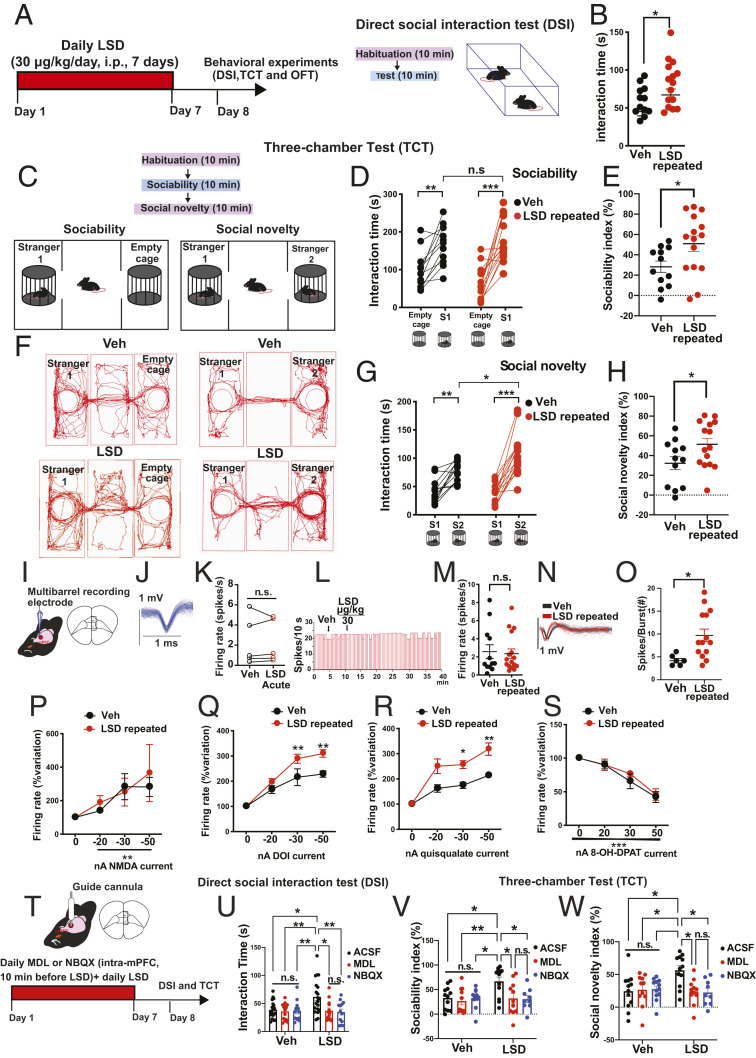
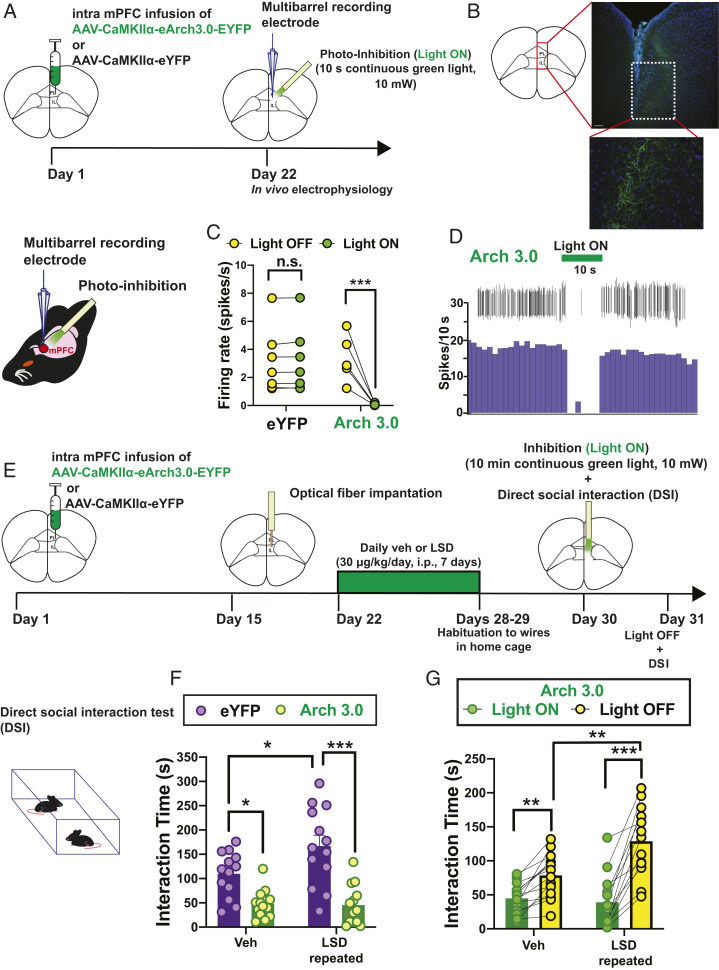
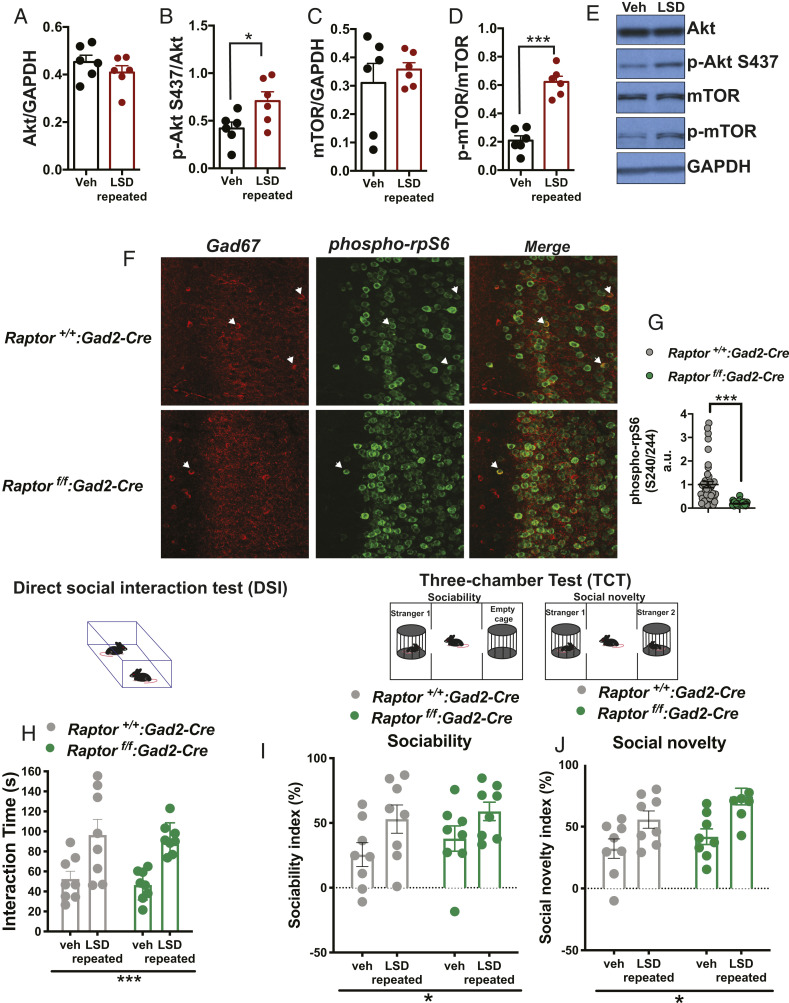
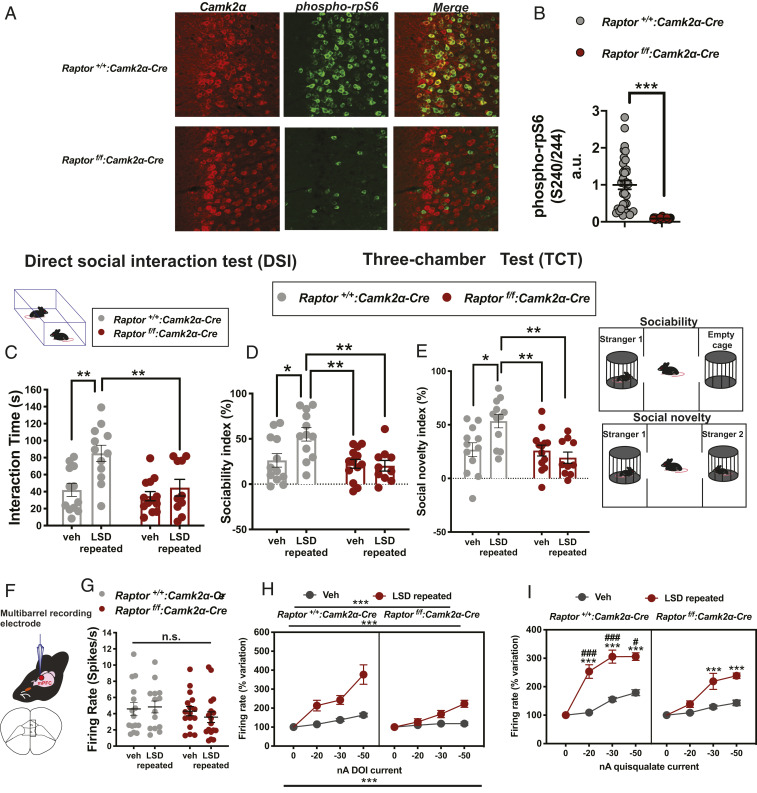
Clinical studies have reported that the psychedelic lysergic acid diethylamide (LSD) enhances empathy and social behavior (SB) in humans, but its mechanism of action remains elusive. Using a multidisciplinary approach including in vivo electrophysiology, optogenetics, behavioral paradigms, and molecular biology, the effects of LSD on SB and glutamatergic neurotransmission in the medial prefrontal cortex (mPFC) were studied in male mice. Acute LSD (30 μg/kg) injection failed to increase SB. However, repeated LSD (30 μg/kg, once a day, for 7 days) administration promotes SB, without eliciting antidepressant/anxiolytic-like effects. Optogenetic inhibition of mPFC excitatory neurons dramatically inhibits social interaction and nullifies the prosocial effect of LSD. LSD potentiates the α-amino-3-hydroxy-5-methyl-4-isoxazole propionate (AMPA) and 5-HT 2A , but not N -methyl-D-aspartate (NMDA) and 5-HT 1A , synaptic responses in the mPFC and increases the phosphorylation of the serine-threonine protein kinases Akt and mTOR. In conditional knockout mice lacking Raptor (one of the structural components of the mTORC1 complex) in excitatory glutamatergic neurons ( Raptor f/f :Camk2alpha-Cre ), the prosocial effects of LSD and the potentiation of 5-HT 2A /AMPA synaptic responses were nullified, demonstrating that LSD requires the integrity of mTORC1 in excitatory neurons to promote SB. Conversely, in knockout mice lacking Raptor in GABAergic neurons of the mPFC ( Raptor f/f :Gad2-Cre ), LSD promotes SB. These results indicate that LSD selectively enhances SB by potentiating mPFC excitatory transmission through 5-HT 2A /AMPA receptors and mTOR signaling. The activation of 5-HT 2A /AMPA/mTORC1 in the mPFC by psychedelic drugs should be explored for the treatment of mental diseases with SB impairments such as autism spectrum disorder and social anxiety disorder.
Overview
The claims and statistics of this paper haven’t been checked yet.
Free: it reads the open-access text and checks the first 5 claims that cite a source we can check. Create a free account to check every claim.
Integrity signals
Registry
Cites
Statistics
Figures
Verification
Claims the paper makes
The claims and statistics of this paper haven’t been checked yet.
Free: it reads the open-access text and checks the first 5 claims that cite a source we can check. Create a free account to check every claim.
Claims other papers make about this one
Each is checked against this paper’s own text: does it say what the citing paper says it does?
The source backs part of the claim, not all of it — or backs it for a different population, condition or comparison.
In the citing paper
“Though the primary molecular targets of ketamine and serotonergic psychedelics are distinct, their downstream pharmacology overlaps, requiring AMPA receptor, TrkB, and mTOR activation to elicit changes in neuronal structure and function (135–137, 148, 153, 154).”
From Psychedelics and Other Psychoplastogens for Treating Mental Illness. (2021) · cites this paper as [154]
Experimental — accuracy not yet measured
Self-check
Percentages, sums and reported differences re-computed from the paper’s own numbers.
The self-check needs the paper’s full text.
Citations
Cites
Molecular Mechanisms of Depression: Perspectives on New Treatment Strategies
Lang, U. E., & Borgwardt, S. (2013) · Cellular Physiology and Biochemistry · doi:10.1159/000350094 · Cited by 8,475
Upstream and downstream of mTOR
Hay, N., & Sonenberg, N. (2004) · Genes & Development · doi:10.1101/gad.1212704 · Cited by 4,181 · cited 1×
“Raptor is an adaptor protein that recruits mTOR substrates, including the ribosomal protein S6 (rpS6) kinase which phos-phorylates rpS6 (phospho-rpS6; ser240/244) (29, 30).”
Self-citationmTOR-Dependent Synapse Formation Underlies the Rapid Antidepressant Effects of NMDA Antagonists
Li, N., Lee, B., Liu, R.-J., Banasr, M., Dwyer, J. M., Iwata, M., Li, X.-Y., Aghajanian, G., & Duman, R. S. (2010) · Science · doi:10.1126/science.1190287 · Cited by 2,881 · cited 3×
“Indeed,, these effects are prevented by the intracranial administration of rapamycin (24).”
Impairment of social and moral behavior related to early damage in human prefrontal cortex
Anderson, S. W., Bechara, A., Damasio, H., Tranel, D., & Damasio, A. R. (1999) · Nature Neuroscience · doi:10.1038/14833 · Cited by 1,539 · cited 3×
“The prefrontal cortex (PFC) exerts a pivotal role in the modulation of SB in mammals (1).”
Psychedelics promote structural and functional neural plasticity
Ly, C., Greb, A. C., Cameron, L. P., Wong, J. M., Barragan, E. V., Wilson, P. C., Burbach, K. F., Soltanzadeh Zarandi, S., Sood, A., Paddy, M. R., et al. (2018) · Cell Reports · doi:10.1016/j.celrep.2018.05.022 · Cited by 1,207 · cited 1×
“In addition, an in vitro study showed that LSD and other psychedelics increase spine density in cortical neurons, an effect reverted by the mTORC1 inhibitor rapamycin (14).”
Mechanisms of ketamine action as an antidepressant
Zanos, P., & Gould, T. D. (2018) · Molecular Psychiatry · doi:10.1038/mp.2017.255 · Cited by 1,127 · cited 1×
“The mTOR pathway is activated by several psychoactive drugs, including the hallucinogen ketamine (23, 24) and selective serotonin reuptake inhibitor (SSRI) antidepressants (25).”
González-Maeso, J., Weisstaub, N. V., Zhou, M., Chan, P., Ivic, L., Ang, R., Lira, A., Bradley-Moore, M., Ge, Y., Zhou, Q., et al. (2007) · Neuron · doi:10.1016/j.neuron.2007.01.008 · Cited by 925 · cited 1×
“Layer V pyramidal glutamatergic neurons are the main output of the mPFC, and it is through these neurons that LSD exerts its behavioral effects, as observed in previous pharmacological and brain imaging studies (33, 34).”
The neurobiology of psychedelic drugs: implications for the treatment of mood disorders
Vollenweider, F. X., & Kometer, M. (2010) · Nature Reviews Neuroscience · doi:10.1038/nrn2884 · Cited by 723
mTORC1 controls fasting-induced ketogenesis and its modulation by ageing
Sengupta, S., Peterson, T. R., Laplante, M., Oh, S., & Sabatini, D. M. (2010) · Nature · doi:10.1038/nature09584 · Cited by 646
The complex relation between morality and empathy
Decety, J., & Cowell, J. M. (2014) · Trends in Cognitive Sciences · doi:10.1016/j.tics.2014.04.008 · Cited by 602 · cited 1×
“PFC pathology engenders impaired SB (2) Disrupted SB is prevalent in various mental illnesses, including autism spectrum disorder (ASD) and social anxiety disorders (SAD) (3), for which few definitive therapies are available.”
Cited by
Items 101–154 of 154
Psilocybin modulates social behaviour in male and female mice in a time-dependent manner
Shadani, S., McCoy, K., Ong, L., Greaves, E., Conn, K., Andrews, Z. B., & Foldi, C. J. (2026) · Neuropsychopharmacology · doi:10.1038/s41386-026-02450-x · Cited by 2
“Psilocybin elicits both prosocial and antidepressant-like effects in male rats [30], while LSD and psilocybin both increase social interaction, preference for social novelty [31 – 34] and social reward learning [35] in male mice.”
Ezeaka, U. C., Kim, H. J. J., & Laprairie, R. B. (2023) · Current Topics in Medicinal Chemistry · doi:10.2174/1568026623666230705151922 · Cited by 2
González, E. M. (2022) · Repositorio de Patentes de la Universidad de Almería (Universidad de Almería) · Cited by 2
Lyon, A. (2023) · Oxford University Press eBooks · doi:10.1093/oso/9780198843757.003.0009 · Cited by 1
Medical Use of Cannabinoids and Psychedelic Compounds
Inserra, A., Gregorio, D. D., & Gobbi, G. (2024) · Springer eBooks · doi:10.1007/978-3-030-51366-5_141 · Cited by 1
Self-citationEliasen, J. N., Rezagholizadeh, A., Jacobsen, H. P., Kristiansen, U., & Kohlmeier, K. A. (2025) · Neuroscience · doi:10.1016/j.neuroscience.2025.10.001 · Cited by 1
Dual Modulation of 5-HT 2A Receptors and SERT by α-Ethyltryptamine and Its Optical Isomers
Silverman, J. M., Fiorillo, M., Younkin, J., Jones, C. B., Maltman, J. L., Herszenhorn, I., Artigas, A., Wolstenholme, J. T., Dukat, M., & González‐Maeso, J. (2025) · ACS Chemical Neuroscience · doi:10.1021/acschemneuro.5c00468 · Cited by 1
Inserra, A., Murray, C. J., Campanale, A., VanderZwaag, J., & Tremblay, M. (2026) · Frontiers in Neuroscience · doi:10.3389/fnins.2025.1690318 · Cited by 1
Self-citationMedical Use of Cannabinoids and Psychedelic Compounds
Inserra, A., Gregorio, D. D., & Gobbi, G. (2023) · Springer eBooks · doi:10.1007/978-3-030-42825-9_141-1 · Cited by 1
Self-citationLyon, A. (2023) · Oxford University Press eBooks · doi:10.1093/oso/9780198843757.003.0001 · Cited by 1
Lyon, A. (2023) · Oxford University Press eBooks · doi:10.1093/oso/9780198843757.003.0005 · Cited by 1
Barnett, B. S., Anand, A., Weleff, J., King, F., & Dewey, E. N. (2025) · Psychedelic Medicine · doi:10.1177/28314425251367321 · Cited by 1
Gunten, M. V., Russell, T., Stirland, I., Parks, S., Jenkins, T. G., & Edwards, J. G. (2025) · bioRxiv (Cold Spring Harbor Laboratory) · doi:10.1101/2025.06.12.658958 · Cited by 1
Tripping over the potential of psychedelics for autism
Katsnelson, A. (2022) · The Transmitter · doi:10.53053/akmf5393
Lyon, A. (2023) · Oxford University Press eBooks · doi:10.1093/oso/9780198843757.003.0010
Lyon, A. (2023) · Oxford University Press eBooks · doi:10.1093/oso/9780198843757.003.0011
Lyon, A. (2023) · Oxford University Press eBooks · doi:10.1093/oso/9780198843757.003.0008
Lyon, A. (2023) · Oxford University Press eBooks · doi:10.1093/oso/9780198843757.003.0006
Lyon, A. (2023) · Oxford University Press eBooks · doi:10.1093/oso/9780198843757.003.0012
(2023) · Oxford University Press eBooks · doi:10.1093/oso/9780198843757.002.0006
Lyon, A. (2023) · Oxford University Press eBooks · doi:10.1093/oso/9780198843757.003.0007
(2023) · Oxford University Press eBooks · doi:10.1093/oso/9780198843757.002.0003
Lyon, A. (2023) · Oxford University Press eBooks · doi:10.1093/oso/9780198843757.003.0004
What Is Psychedelic Experience?
Lyon, A. (2023) · Oxford University Press eBooks · doi:10.1093/oso/9780198843757.003.0002
(2023) · Oxford University Press eBooks · doi:10.1093/oso/9780198843757.002.0005
Lyon, A. (2023) · Oxford University Press eBooks · doi:10.1093/oso/9780198843757.003.0003
Medical Use of Cannabinoids and Psychedelic Compounds
Inserra, A., Gregorio, D. D., & Gobbi, G. (2023) · Springer eBooks · doi:10.1007/978-3-030-42825-9_141-2
Self-citationLSD (Lysergic Acid Diethylamide)
Krishnan, J. (2024) · BENTHAM SCIENCE PUBLISHERS eBooks · doi:10.2174/9789815223828124010005
« Trip » sous LSD : le psychédélisme des sixties
Robert, F. (2025) · Drogues santé et société · doi:10.7202/1118068ar
The role of modern neuroscience in the renaissance of psychedelic research
Evans, K. E., Massengill, C. I., & Alvarado, J. S. (2025) · Revista Costarricense de Psicología · doi:10.22544/rcps.v44i01.10
“…research: optogenetic release of dopamine in the striatum produced hallucination-like behaviors in mice (Cassidy et al., 2018), and optogenetic inhibition of prefrontal cortex neurons partially blocked the prosocial effect of LSD and MDMA ( Christoffel et al., 2021 ; Gregorio et al., 2021) .”
Zhang, X., Liu, D.-N., Miao, Q.-S., Cai, X., Zong, L.-X., Hou, Y.-K., & Xiong, J. (2025) · Pharmacology Biochemistry and Behavior · doi:10.1016/j.pbb.2025.174099
Neurocomputational evidence of sustained Self-Other mergence after psychedelicsPreprint
Mallaroni, P., Mason, N. L., Preller, K. H., Razi, A., Ereira, S., & Ramaekers, J. G. (2025) · medRxiv · doi:10.1101/2025.10.07.25337510
“This window of neuroplasticity appears to be induced by 5-HT 2A -mediated increases in prefrontal excitatory signalling 77 .”
Wei, G.-Y., Zhang, Z.-X., Chen, H.-H., Qiu, B., Wang, Y.-Z., Ding, L., Jin, P., Chen, X., & Hou, Z.-S. (2025) · Fishes · doi:10.3390/fishes10120654
Lane, C. P. (2025) · eScholarship@McGill (McGill) · doi:10.82308/37282
The effect of psilocybin on serotonergic activity and social behaviour
Pileggi, M. (2023) · eScholarship@McGill (McGill) · doi:10.82308/23547
Markopoulos, A. (2023) · eScholarship@McGill (McGill) · doi:10.82308/15996
Self-citationRabinovitch, B. S., Silverman, N., Ji, D., Shizgal, D., Lewis, E. C., & Carlen, P. L. (2026) · Brain Research · doi:10.1016/j.brainres.2025.150142
Effects of Serotonergic Psychedelics on Synaptic Function and Neuroplasticity
Petrušková, A. (2026) · OPUS FAU (Kooperativer Bibliotheksverbund Berlin-Brandenburg (KOBV), on behalf of the Universitätsbibliothek Erlangen-Nürnberg) · doi:10.25593/open-fau-2619
Animal models in psychedelic research – Tripping over translation
Hay, M. Y. A. E., Cukić, A., Schölvinck, M. L., & Havenith, M. N. (2026) · Translational Psychiatry · doi:10.64898/2026.01.14.699469
Epigenetic Mechanisms of Psychedelics in Addiction: Emerging Evidence and Therapeutic Potential
Inserra, A., Zoratto, F., Pettorruso, M., & Martinotti, G. (2026) · Clinical Neuropsychopharmacology and Addiction · doi:10.53941/cna.2026.100006
Self-citationAscone, F., Giangiacomo, D., & Trezza, V. (2026) · Neuroscience & Biobehavioral Reviews · doi:10.1016/j.neubiorev.2026.106761
Lysergic acid diethylamide pretreatment prolongs brain-stimulation induced neural activity changes
Dwiel, L. L., Prina, M. L., Bragg, E. M., Drucker, L. L., Reduron, L. R., Luikart, B. W., & Doucette, W. T. (2026) · Brain stimulation · doi:10.1016/j.brs.2026.103130 · Cited by 1
Bertollo, A. G., Wippel, V. A., Mingoti, M. E. D., Prediger, R. D., & Ignácio, Z. M. (2026) · European Journal of Pharmacology · doi:10.1016/j.ejphar.2026.179036
Zhang, K., Song, D., Zhang, Y., Yang, L., Feng, B., Liu, R., Gong, H., Cui, L., Ma, S., Chen, Y., et al. (2026) · Nature Communications · doi:10.1038/s41467-026-75424-8
“Activation of the mPFC has been shown to be necessary for social interaction and empathy 16,17 ; however, the mechanisms underlying its activation in these contexts, as well as individual differences therein, remain to be further elucidated.”
Giovenzana, M., Nicosia, N., Spinosa, S., Musazzi, L., & Mingardi, J. (2026) · Pharmacological Research · doi:10.1016/j.phrs.2026.108366
Neurobiologie der Psychedelika
Schmitz, C., & Adolphi, H. (2026) · Elsevier eBooks · doi:10.1016/b978-3-437-21293-2.00004-6
Kelly, C., Cooley, B. J., Zeng, L., Hurzeler, T. P., Manning, V., McNally, G. P., Watt, J., Haber, P., & Morley, K. C. (2026) · Neuroscience & Biobehavioral Reviews · doi:10.1016/j.neubiorev.2026.106911
Tuning in together: LSD enhances inter-brain synchrony and felt connectedness in romantic couplesPreprint
Mason, N. L., Czeszumski, A., Totomanova, I., Trbusek, F., Cavarra, M., Ashton, S. M., Toennes, S. W., Theunissen, E. L., Reckweg, J. T., Lockwood, P. L., et al. (2026) · bioRxiv (Cold Spring Harbor Laboratory) · doi:10.64898/2026.08.13.744639
“In rodents, LSD increased social behavior through 5-HT2A-and AMPA-dependent excitation of medial prefrontal neurons and downstream mTORC1 signalling, with receptor blockade abolishing these effects(40).”
Kandilakis, C. L., & Papatheodoropoulos, C. (2026) · Progress in Neuro-Psychopharmacology and Biological Psychiatry · doi:10.1016/j.pnpbp.2026.111898
Xiao, W. (2025) · Brock University Digital Repository (Brock University)
Savino, A., Liaci, C., Merlo, G. R., Prandi, L., Avalle, L., & Poli, V. (2026) · bioRxiv (Cold Spring Harbor Laboratory) · doi:10.64898/2026.09.11.751070
Ahmed, M., Pereira, C. F., Best, L. M., Mahmood, R., George, T. P., Foll, B. L., Boileau, I., & Kloiber, S. (2026) · Journal of Psychopharmacology · doi:10.1177/02698811261478615
Psychedelics and disorders of consciousness: a new frontier in neurotherapeutics
Du, X., Peng, F., & Wang, X. (2026) · Molecular Psychiatry · doi:10.1038/s41380-026-03918-4
Alfieri, V., Mattera, A., & Baldassarre, G. (2022) · doi:10.3389/fnsys.2022.841085.s001
Metadata
- Authors
- De Gregorio, D., Popic, J., Enns, J. P., Inserra, A., Skalecka, A., Markopoulos, A., Posa, L., Lopez-Canul, M., He, Q., Lafferty, C. K., Britt, J. P., Comai, S., Aguilar-Valles, A., Sonenberg, N., & Gobbi, G.
- Affiliations
- McGill University
- McGill University (CA)
- Vita-Salute San Raffaele University (IT)
- Carleton University
- Corresponding author
- Sonenberg, Nahum
- Gobbi, Gabriella
- ORCID
- Venue
- Proceedings of the National Academy of Sciences
- Publisher
- National Academy of Sciences
- Published
- 2021-01-25
- Volume
- 118
- Issue
- 5
- ISSN
- 0027-8424 (ISSN-L)
- 1091-6490
- PMC
- PMC7865169
- OpenAlex
- W3121381676
- Cited by
- 139
- References
- 45
- Citations by year
- 2026: 19 · 2025: 25 · 2024: 29 · 2023: 40 · 2022: 15 · 2021: 11
- FWCI
- 16.19
- Type
- journal article
- Language
- en
- Open access
- hybrid
- doi.org
- Licence
- Locations
- Proceedings of the National Academy of Sciences (publishedVersion, cc-by)
- PubMed Central (publishedVersion, cc-by)
- PubMed (publishedVersion)
- Archivio Istituzionale della Ricerca - Università Vita-Salute San Raffaele (submittedVersion, cc-by)
- eScholarship@McGill (McGill) (submittedVersion, cc-by)
- Padua Research Archive (University of Padova) (submittedVersion, cc-by)
- Funders
- Gouvernement du Canada | CIHR | Institute of Neurosciences, Mental Health and Addiction (436986)
- The Quebec Network for Suicide, Mood Disorders and Related Disorders (268065)
- Topics
- Social Sciences › Psychology › Clinical Psychology › Psychedelics and Drug Studies
- Life Sciences › Neuroscience › Cellular and Molecular Neuroscience › Neurotransmitter Receptor Influence on Behavior
- Life Sciences › Neuroscience › Cellular and Molecular Neuroscience › Neuroscience and Neuropharmacology Research
- Keywords
- lysergic acid diethylamide, LSD, social behavior, mTORC1, medial prefrontal cortex, 5-HT2A receptor, AMPA receptors, raptors, Akt/mTOR signaling, prosocial effects, psychedelics, autism spectrum disorder, social anxiety disorder
- MeSH terms
- Mechanistic Target of Rapamycin Complex 1, Animals, Avoidance Learning, Behavior, Animal, Lysergic Acid Diethylamide, Male, Mice, Inbred C57BL, Synaptic Transmission, Neurons, Phosphorylation, Receptors, Serotonin, Social Behavior, Synapses, Receptors, N-Methyl-D-Aspartate, Prefrontal Cortex, Pyramidal Cells, Receptors, AMPA, Proto-Oncogene Proteins c-akt, Mice, TOR Serine-Threonine Kinases, Optogenetics
About these checks
Registry, retraction, Cites and statistics results are computed, not judged, with one exception: a printed reference that no index lists is read once by a model before it counts as a citation error. Claims are extracted by a model and kept only when their quote appears verbatim in the text; each cited source is then checked, with a model’s help, for whether it says what the claim relies on. Those verdicts can be wrong — read the claim’s quote and the cited source before relying on one.
Statistics and arithmetic are recomputed, not judged.
Confidence bands are shown only for fields calibrated on our annotated test set. None is calibrated yet, so no band is shown.
What counts as a claim ›How we measure confidence ›How we check this ›
Are you an author, or do you see a problem with this page? Request a review
Data sources
Bibliographic data: Semantic Scholar, OpenAlex, Crossref.
Contains information from the Semantic Scholar Academic Graph Datasets, made available under the ODC Attribution License (ODC-BY 1.0).
Semantic Scholar’s data is described in: Kinney, R., et al. (2023). The Semantic Scholar Open Data Platform. arXiv:2301.10140.
