

The DOI matches its Crossref record; 17 of the 17 references it cites were found in a registry or an index.
Cross-platform validation of neurotransmitter release impairments in schizophrenia patient-derived NRXN1 -mutant neurons
Published version of a preprint
Abstract
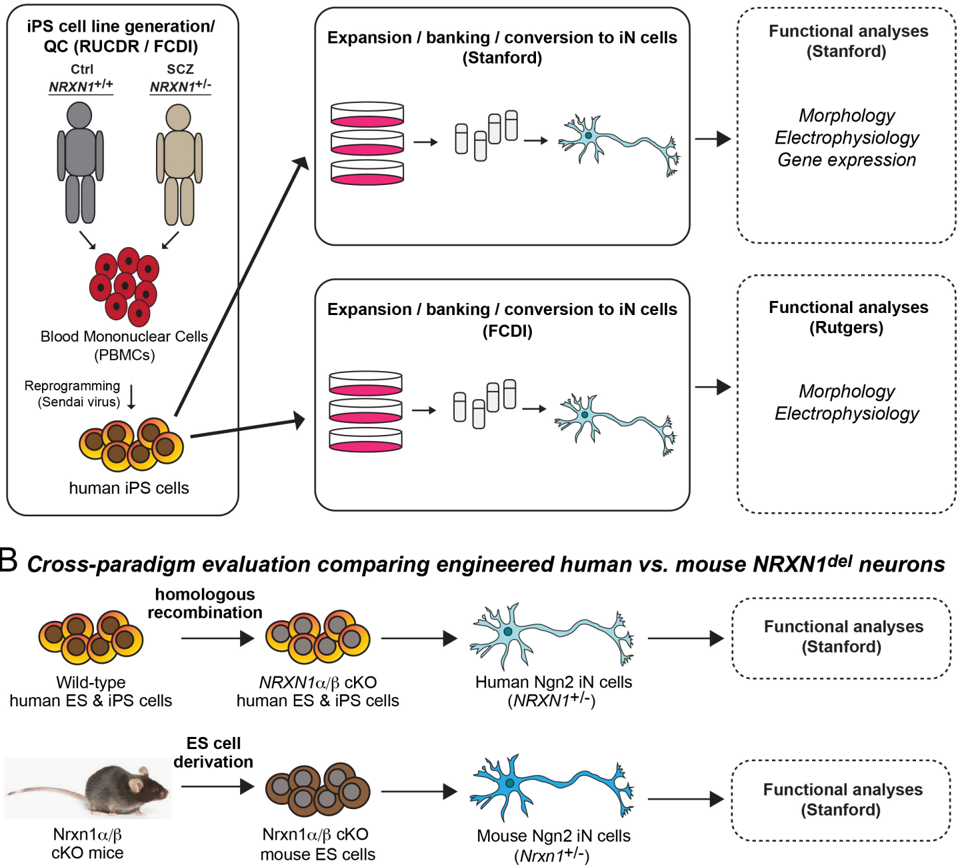
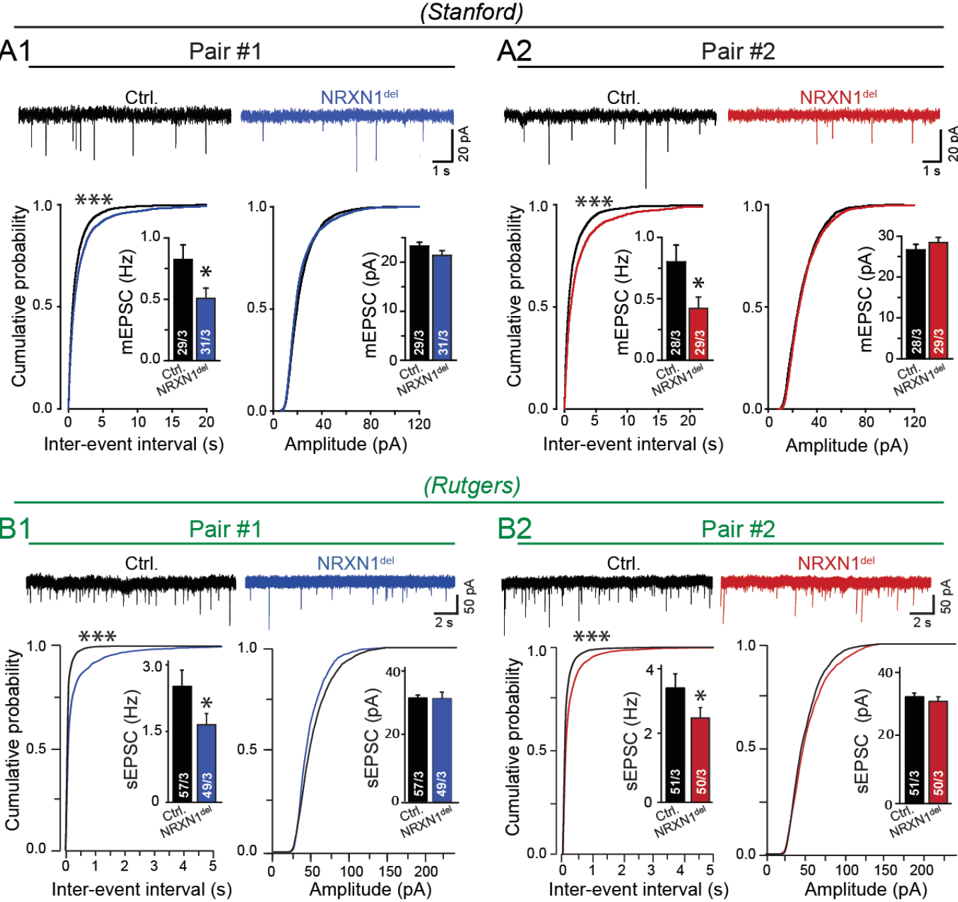
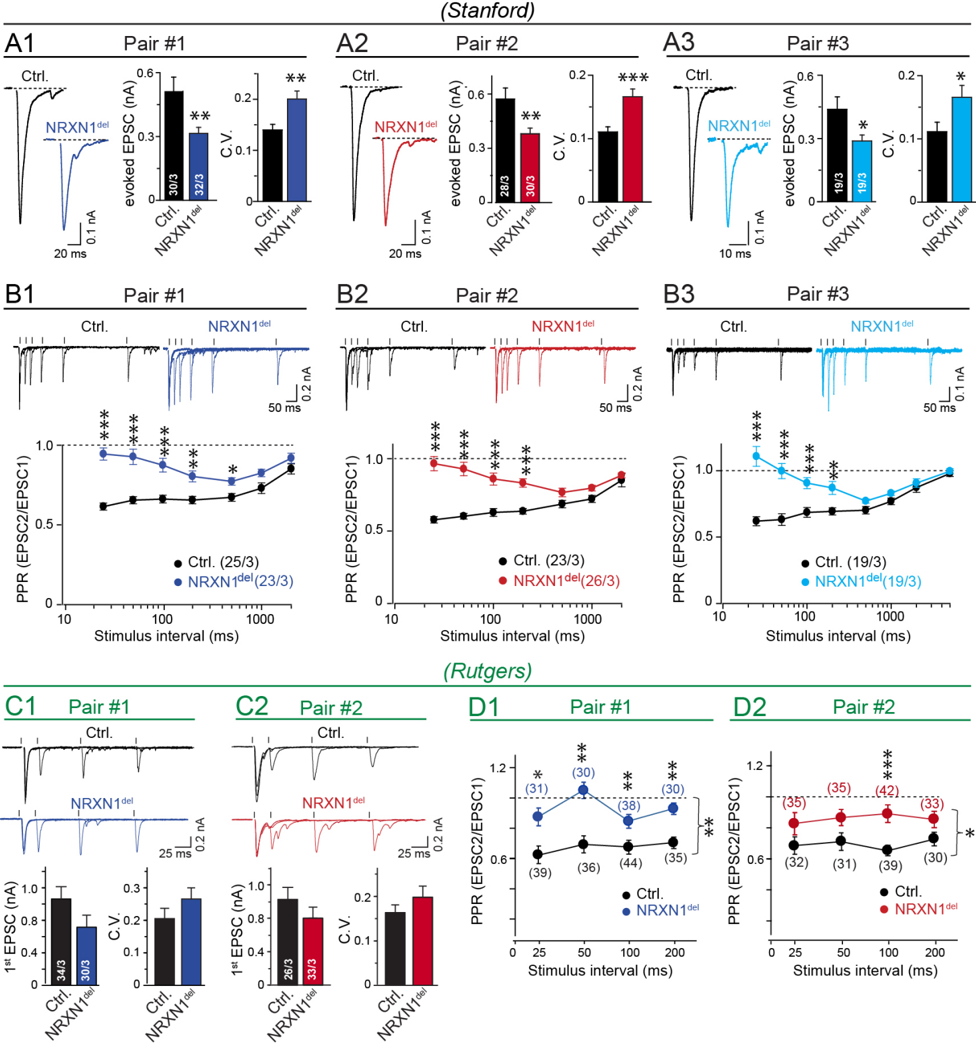
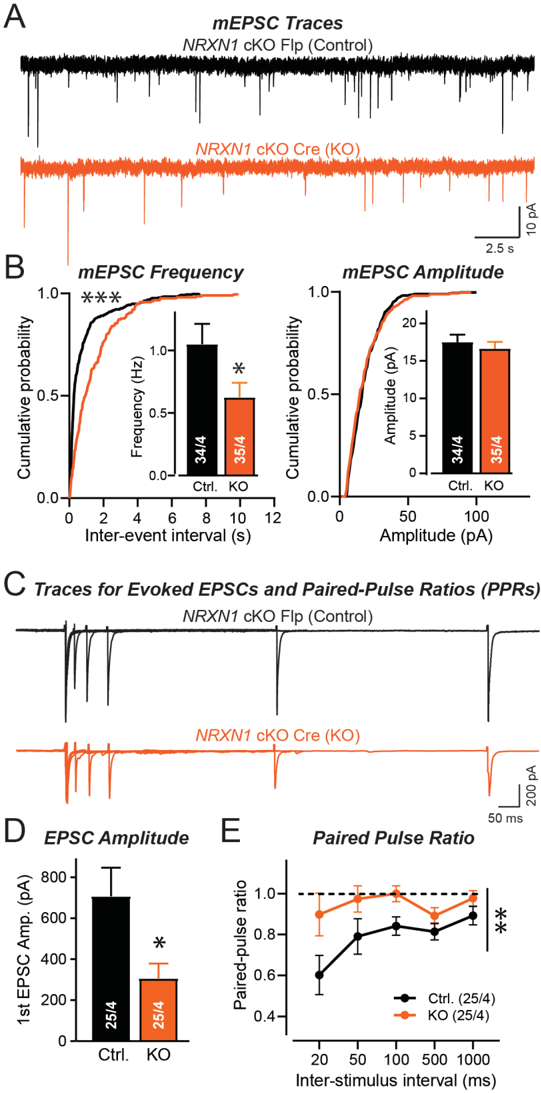
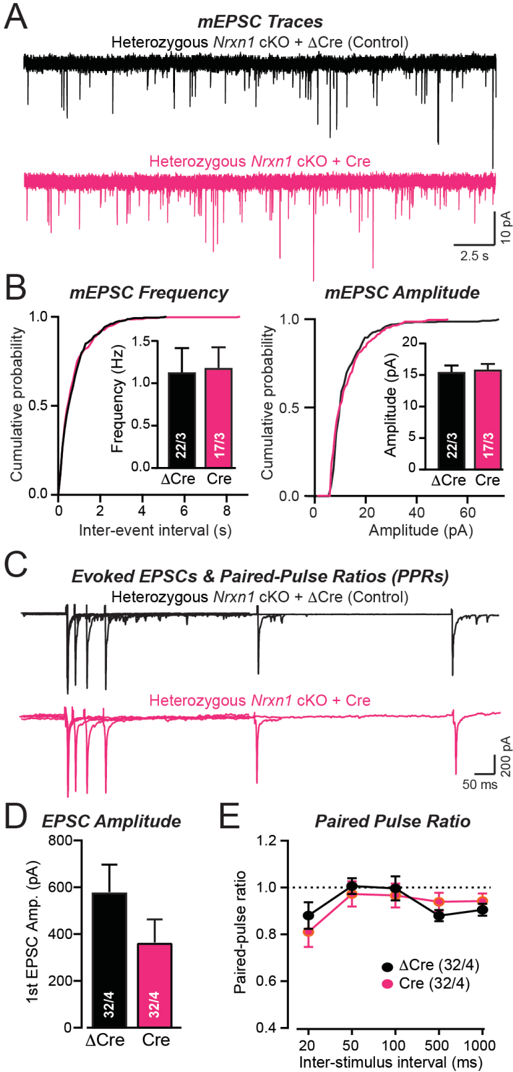
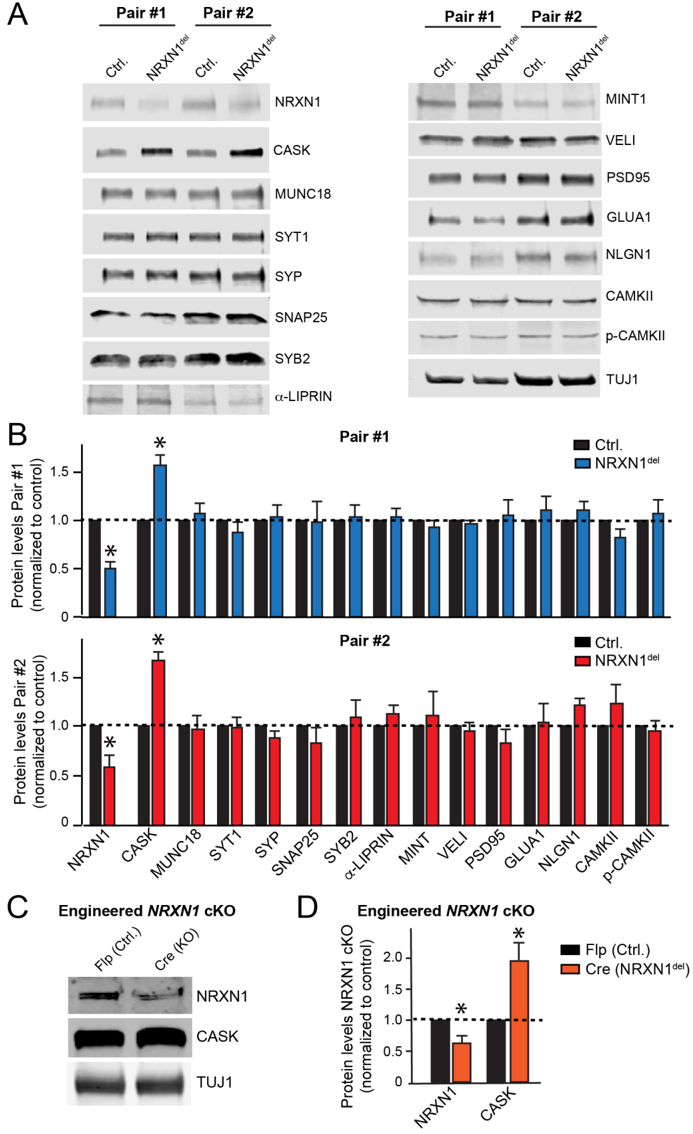
Significance: Heterozygous NRXN1 deletions predispose to schizophrenia and other neurodevelopmental disorders. Engineered heterozygous NRXN1 deletions impair neurotransmitter release in human neurons, suggesting a synaptic pathophysiological mechanism. In a multicenter effort to test the generality and robustness of this pivotal observation, we used, at two laboratories, independent analyses of patient-derived and newly engineered human neurons with heterozygous NRXN1 deletions. Schizophrenia patient-derived neurons with NRXN1 deletions exhibited the same major decrease in neurotransmitter release and an increase in CASK protein as engineered human neurons with NRXN1 deletions. Strikingly, engineered mouse Nrxn1 -deficient neurons derived by the same method displayed no such phenotype, suggesting a human-specific role for NRXN1 . Thus, heterozygous NRXN1 deletions robustly impair synaptic function in human neurons, enabling future drug discovery efforts.
Overview
The claims and statistics of this paper haven’t been checked yet.
Run the check — free, no account needed. It reads the open-access text and checks the sources it cites.
Integrity signals
Registry
Cites
Statistics
Figures
Verification
Claims the paper makes
The claims and statistics of this paper haven’t been checked yet.
Run the check — free, no account needed. It reads the open-access text and checks the sources it cites.
Claims other papers make about this one
Each is checked against this paper’s own text: does it say what the citing paper says it does?
In the citing paper
“By contrast, in vitro studies of engineered heterozygous NRXN1+/− human neurons reveal robust changes in excitatory neurotransmission that are not recapitulated in matched NRXN1+/− mouse neurons12,13”
From Phenotypic complexities of rare heterozygous neurexin-1 deletions (2025) · cites this paper as [13]
Self-check
Percentages, sums and reported differences re-computed from the paper’s own numbers.
The self-check needs the paper’s full text.
Citations
Cites
Near-optimal probabilistic RNA-seq quantification
Bray, N. L., Pimentel, H., Melsted, P., & Pachter, L. (2016) · Nature Biotechnology · doi:10.1038/nbt.3519 · Cited by 9,723
Direct conversion of fibroblasts to functional neurons by defined factors
Vierbuchen, T., Ostermeier, A., Pang, Z. P., Kokubu, Y., Südhof, T. C., & Wernig, M. (2010) · Nature · doi:10.1038/nature08797 · Cited by 3,017
Self-citationStrong association of de novo copy number mutations with autism
Sebat, J., Lakshmi, B., Malhotra, D., Troge, J., Lese-Martin, C., Walsh, T., Yamrom, B., Yoon, S., Krasnitz, A., Kendall, J., et al. (2007) · Science · doi:10.1126/science.1138659 · Cited by 2,795
De novo mutations revealed by whole-exome sequencing are strongly associated with autism
Sanders, S. J., Murtha, M. T., Gupta, A. R., Murdoch, J. D., Raubeson, M. J., Willsey, A. J., Ercan-Sencicek, A. G., DiLullo, N. M., Parikshak, N. N., Stein, J. L., et al. (2012) · Nature · doi:10.1038/nature10945 · Cited by 2,084
Patterns and rates of exonic de novo mutations in autism spectrum disorders
Neale, B. M., Kou, Y., Liu, L., Ma’ayan, A., Samocha, K. E., Sabo, A., Lin, C.-F., Stevens, C., Wang, L.-S., Makarov, V., et al. (2012) · Nature · doi:10.1038/nature11011 · Cited by 1,734
Abbott, L. F., & Regehr, W. G. (2004) · Nature · doi:10.1038/nature03010 · Cited by 1,684
De novo mutations in schizophrenia implicate synaptic networks
Fromer, M., Pocklington, A. J., Kavanagh, D. H., Williams, H. J., Dwyer, S., Gormley, P., Georgieva, L., Rees, E., Palta, P., Ruderfer, D. M., et al. (2014) · Nature · doi:10.1038/nature12929 · Cited by 1,617
A polygenic burden of rare disruptive mutations in schizophrenia
Purcell, S. M., Moran, J. L., Fromer, M., Ruderfer, D., Solovieff, N., Roussos, P., O’Dushlaine, C., Chambert, K., Bergen, S. E., Kähler, A., et al. (2014) · Nature · doi:10.1038/nature12975 · Cited by 1,385
Contribution of copy number variants to schizophrenia from a genome-wide study of 41,321 subjects
Marshall, C. R., Howrigan, D. P., Merico, D., Thiruvahindrapuram, B., Wu, W., Greer, D. S., Antaki, D., Shetty, A., Holmans, P. A., Pinto, D., et al. (2017) · Nature Genetics · doi:10.1038/ng.3725 · Cited by 1,058
Self-citationRare coding variants in ten genes confer substantial risk for schizophrenia
Singh, T., Poterba, T., Curtis, D., Akil, H., Al Eissa, M., Barchas, J. D., Bass, N., Bigdeli, T. B., Breen, G., Bromet, E. J., et al. (2022) · Nature · doi:10.1038/s41586-022-04556-w · Cited by 983
Research works printed but not linked: 55
- 10.1126/science.1098918 · DOI · Paper page
- 10.1111/ahg.12259 · DOI
- 10.1016/j.cell.2012.02.039 · DOI · Paper page
- 10.1038/mp.2013.59 · DOI
- 10.1038/s41380-019-0438-9 · DOI
- 10.1016/j.neures.2017.10.012 · DOI
- 10.1016/j.cell.2017.10.024 · DOI · Paper page
- 10.1038/gim.2016.54 · DOI
- 10.1038/nature13595 · DOI · Paper page
- 10.1038/s41588-018-0059-2 · DOI · Paper page
- 10.1038/nn.4399 · DOI · Paper page
- 10.1016/j.euroneuro.2016.09.460 · DOI
- 10.1093/hmg/ddz253 · DOI
- 10.1016/j.cell.2013.05.060 · DOI
- 10.1038/nn.4037 · DOI
- 10.1016/j.cell.2015.06.056 · DOI
- 10.1016/j.neuron.2017.04.011 · DOI
- 10.1016/j.neuron.2019.03.032 · DOI
- 10.15252/embj.2019103208 · DOI
- 10.1016/j.stem.2015.07.017 · DOI · Paper page
- 10.1016/j.neuron.2013.05.029 · DOI · Paper page
- 10.1016/j.stem.2015.08.013 · DOI
- 10.1002/stem.2295 · DOI
- 10.1038/nature08192 · DOI
- 10.1126/science.aaf2669 · DOI · Paper page
- C. Pak . Rapid generation of functional and homogeneous excitatory human forebrain neurons using Neurogenin-2 (Ngn2). Protocol Exchange [Preprint] (2018). https://protocolexchange.researchsquare.com/article/nprot-6901/v1 (Accessed 7 May 2021). · DOI
- 10.1523/ENEURO.0219-17.2017 · DOI
- 10.1113/jphysiol.2001.013455 · DOI · Paper page
- 10.1016/j.neuron.2018.11.024 · DOI
- 10.1016/j.jpsychires.2011.10.015 · DOI
- 10.1016/j.neuron.2017.06.010 · DOI
- 10.1371/journal.pone.0059061 · DOI
- 10.1038/ng1985 · DOI · Paper page
- 10.1001/archgenpsychiatry.2009.80 · DOI · Paper page
- M. S. L. Ching .; Children’s Hospital Boston Genotype Phenotype Study Group, Deletions of NRXN1 (neurexin-1) predispose to a wide spectrum of developmental disorders. Am. J. Med. Genet. B. Neuropsychiatr. Genet. 153B, 937–947 (2010). · DOI
- 10.1083/jcb.201812076 · DOI
- 10.1523/JNEUROSCI.16-08-02488.1996 · DOI · Paper page
- 10.1016/j.molcel.2011.07.021 · DOI · Paper page
- 10.1523/JNEUROSCI.22-11-04264.2002 · DOI · Paper page
- 10.1016/S0092-8674(00)81736-5 · DOI · Paper page
- 10.1083/jcb.142.1.129 · DOI
- 10.1083/jcb.142.1.139 · DOI
- 10.1038/ng.194 · DOI
- 10.1007/s00439-002-0863-7 · DOI
- 10.1111/j.1528-1167.2012.03548.x · DOI
- 10.1038/ejhg.2009.220 · DOI
- 10.1155/2015/621690 · DOI
- 10.1038/nature10202 · DOI
- 10.1093/nar/25.17.3428 · DOI
- 10.1093/molbev/msi165 · DOI
- 10.1016/j.ygeno.2013.12.001 · DOI
- 10.1002/jcp.25498 · DOI
- 10.1016/j.physbeh.2007.05.025 · DOI
- 10.1016/j.pharmthera.2019.107426 · DOI
- 10.1016/j.jneumeth.2006.10.009 · DOI
Cited by
The cell biology of synapse formation
Südhof, T. C. (2021) · Journal of Cell Biology · doi:10.1083/jcb.202103052 · Cited by 358
Self-citationMechanisms Underlying Circuit Dysfunction in Neurodevelopmental Disorders
Exposito-Alonso, D., & Rico, B. (2022) · Annual Review of Genetics · doi:10.1146/annurev-genet-072820-023642 · Cited by 49
Phenotypic complexities of rare heterozygous neurexin-1 deletions
Fernando, M. B., Fan, Y., Zhang, Y., Tokolyi, A., Murphy, A. N., Kammourh, S., Deans, P. J. M., Ghorbani, S., Onatzevitch, R., Pero, A., et al. (2025) · Nature · doi:10.1038/s41586-025-08864-9 · Cited by 30
Metadata
- Authors
- Pak, C., Danko, T., Mirabella, V. R., Wang, J., Liu, Y., Vangipuram, M., Grieder, S., Zhang, X., Ward, T., Huang, Y.-W. A., Jin, K., Dexheimer, P., Bardes, E., Mitelpunkt, A., Ma, J., McLachlan, M., Moore, J. C., Qu, P., Purmann, C., Dage, J. L., Swanson, B. J., Urban, A. E., Aronow, B. J., Pang, Z. P., Levinson, D. F., Wernig, M., & Südhof, T. C.
- Venue
- Proceedings of the National Academy of Sciences
- Publisher
- National Academy of Sciences
- Published
- 2021-05-25
- Volume
- 118
- Issue
- 22
- ISSN
- 0027-8424
- 1091-6490
- Cited by
- 84
- References
- 17
- Language
- en
- Funders
- HHS | NIH | National Institute of Mental Health (5U19MH104172, MH122519)
About these checks
Registry, retraction, Cites and statistics results are computed, not judged, with one exception: a printed reference that no index lists is read once by a model before it counts as a citation error. Claims are extracted by a model and kept only when their quote appears verbatim in the text; each cited source is then checked, with a model’s help, for whether it says what the claim relies on. Those verdicts can be wrong — read the claim’s quote and the cited source before relying on one.
Statistics and arithmetic are recomputed, not judged.
Confidence bands are shown only for fields calibrated on our annotated test set. None is calibrated yet, so no band is shown.
What counts as a claim ›How we measure confidence ›How we check this ›
Are you an author, or do you see a problem with this page? Request a review
Data sources
Bibliographic data: Semantic Scholar, OpenAlex, Crossref.
Contains information from the Semantic Scholar Academic Graph Datasets, made available under the ODC Attribution License (ODC-BY 1.0).
Semantic Scholar’s data is described in: Kinney, R., et al. (2023). The Semantic Scholar Open Data Platform. arXiv:2301.10140.
