

The geometry of decision-making in individuals and collectives
Open accessThe DOI matches its Crossref record; 62 of the 62 references it cites were found in a registry or an index.
Abstract
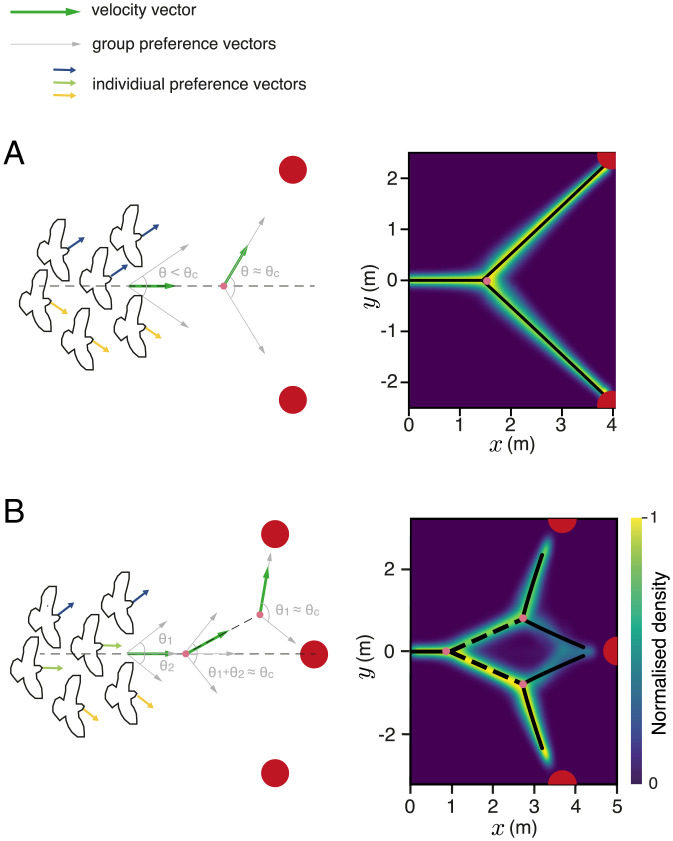
Significance: Almost all animals must make decisions on the move. Here, employing an approach that integrates theory and high-throughput experiments (using state-of-the-art virtual reality), we reveal that there exist fundamental geometrical principles that result from the inherent interplay between movement and organisms’ internal representation of space. Specifically, we find that animals spontaneously reduce the world into a series of sequential binary decisions, a response that facilitates effective decision-making and is robust both to the number of options available and to context, such as whether options are static (e.g., refuges) or mobile (e.g., other animals). We present evidence that these same principles, hitherto overlooked, apply across scales of biological organization, from individual to collective decision-making.
Overview
The claims and statistics of this paper haven’t been checked yet.
Free: it reads the open-access text and checks the first 5 claims that cite a source we can check. Create a free account to check every claim.
Integrity signals
Registry
Cites
Statistics
Figures
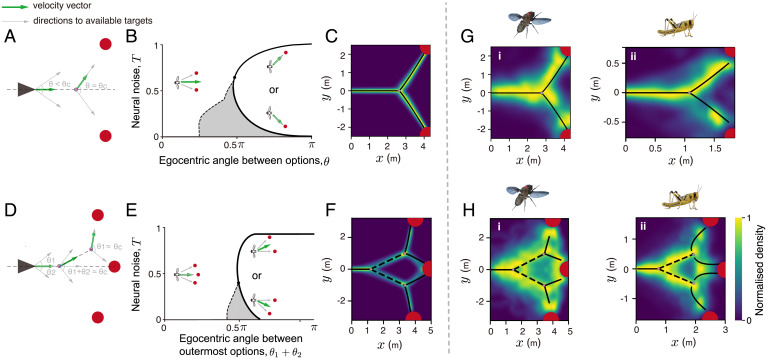
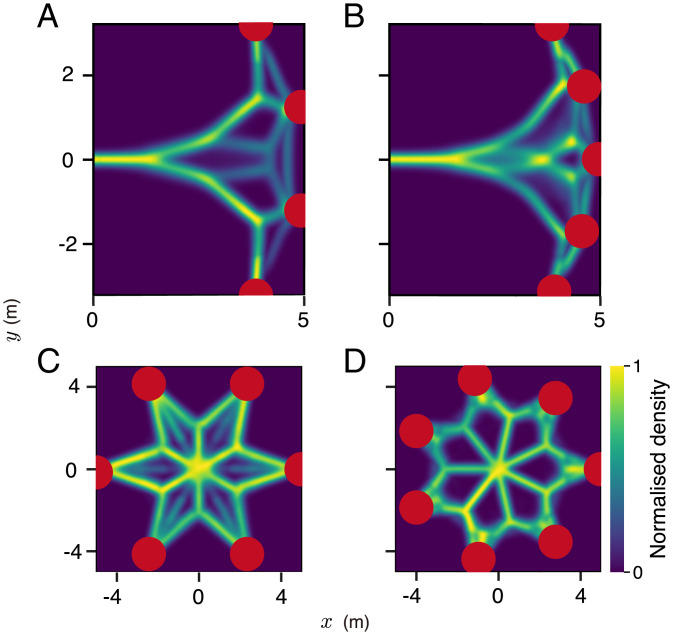
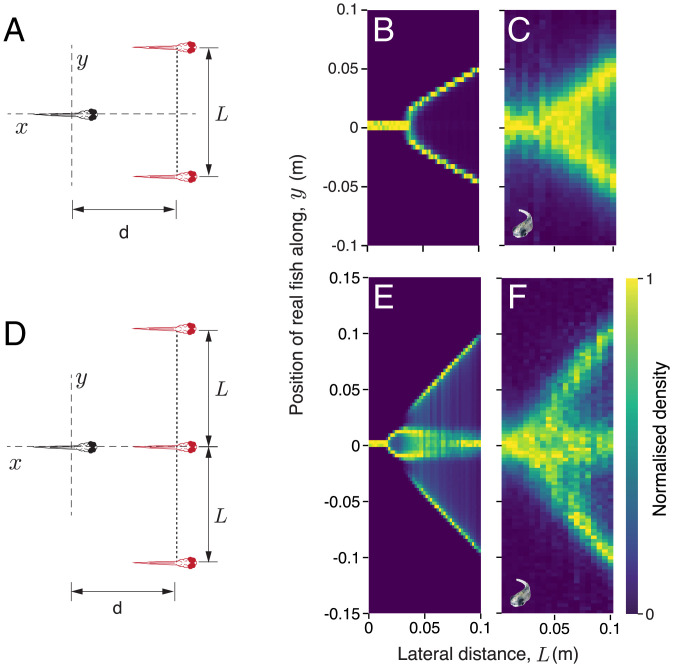
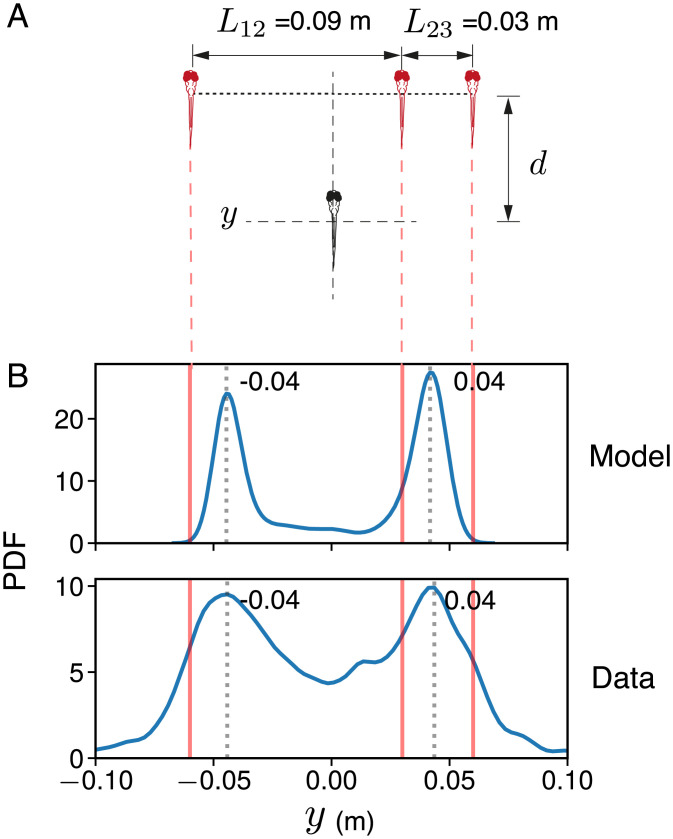
Verification
Claims the paper makes
The claims and statistics of this paper haven’t been checked yet.
Free: it reads the open-access text and checks the first 5 claims that cite a source we can check. Create a free account to check every claim.
Claims other papers make about this one
Each is checked against this paper’s own text: does it say what the citing paper says it does?
The source backs part of the claim, not all of it — or backs it for a different population, condition or comparison.
In the citing paper
“Previous research into opinion or collective dynamics has shown that such binarity may strongly determine the dynamics of the system [104,143].”
From Epistemic Communities under Active Inference (2022) · cites this paper as [143]
Experimental — accuracy not yet measured
Self-check
Percentages, sums and reported differences re-computed from the paper’s own numbers.
The self-check needs the paper’s full text.
Citations
Cites
Neural networks and physical systems with emergent collective computational abilities.
Hopfield, J. J. (1982) · Proceedings of the National Academy of Sciences · doi:10.1073/pnas.79.8.2554 · Cited by 19,270 · cited 3×
“Spin systems, which have been long studied in physics due to their ability to give insight into a wide range of collective phenomena from magnetic to quantum systems (56), were first introduced in the study of neurobiology by Hopfield (57) in a landmark paper that provided considerable insights into principles underly…”
Flocks, herds and schools: A distributed behavioral model
Reynolds, C. W. (1987) · Proceedings of the 14th annual conference on Computer graphics and interactive techniques · doi:10.1145/37401.37406 · Cited by 7,714
Novel Type of Phase Transition in a System of Self-Driven Particles
Vicsek, T., Czirók, A., Ben-Jacob, E., Cohen, I., & Shochet, O. (1995) · Physical Review Letters · doi:10.1103/physrevlett.75.1226 · Cited by 7,380
Flocks, herds and schools: A distributed behavioral model
Reynolds, C. W. (1987) · ACM SIGGRAPH Computer Graphics · doi:10.1145/37402.37406 · Cited by 5,148
Effective leadership and decision-making in animal groups on the move
Couzin, I. D., Krause, J., Franks, N. R., & Levin, S. A. (2005) · Nature · doi:10.1038/nature03236 · Cited by 2,753 · cited 4×
“Below, we consider an established model of collective decision-making (41) to draw links between these two scales of biological organization— decision-making in the brain and decision-making in animal groups.”
InfluentialSelf-citationCollective Memory and Spatial Sorting in Animal Groups
COUZIN, I. D., KRAUSE, J., JAMES, R., RUXTON, G. D., & FRANKS, N. R. (2002) · Journal of Theoretical Biology · doi:10.1006/jtbi.2002.3065 · Cited by 2,138 · cited 1×
“A long-standing approach in the study of animal collectives is to consider them integrating vectorial information from neighbors (48, 49), and there are a great number of publications of such “flocking,” “schooling,” or “herding” behaviors (48–50).”
Self-citationDynamics of pattern formation in lateral-inhibition type neural fields
Amari, S.-I. (1977) · Biological Cybernetics · doi:10.1007/bf00337259 · Cited by 2,060 · cited 2×
“The parameter η represents global inhibition 301 (second term in [3]) that takes effect at any angle θ and it is large enough to prevent the spins from changing their state from 0 302 to 1 (ηN J), unless an external stimuli induces an effective external field that cancels out the effect of the global inhibition 303 at…”
BackgroundWeak pairwise correlations imply strongly correlated network states in a neural population
Schneidman, E., Berry, M. J., Segev, R., & Bialek, W. (2006) · Nature · doi:10.1038/nature04701 · Cited by 1,760 · cited 1×
“~ V · n̂ = 1 k k ∑ i=1 1 1 + exp ( −2k ~ V0·p̂i−2kvn(p̂i·n̂0) T ) p̂i · n̂ + αp̂1 · n̂ [22]”
The renormalization group and critical phenomena
Wilson, K. G. (1983) · Reviews of Modern Physics · doi:10.1103/revmodphys.55.583 · Cited by 1,671 · cited 1×
“” Spin systems have consistently provided deep insights into complex collective phenomena from spin and molecular systems to neural systems undergoing phase transitions (58, 59) (SI Appendix has details and discussion).”
Diffusion decision model: Current issues and history
Ratcliff, R., Smith, P. L., Brown, S. D., & McKoon, G. (2016) · Trends in Cognitive Sciences · doi:10.1016/j.tics.2016.01.007 · Cited by 1,630 · cited 1×
“While the majority of decision-making studies consider only two options [due to both theoretical and experimental tractability (14, 26, 27)], animals moving in real space frequently encounter a greater number than this.”
Research works printed but not linked: 1
- B. M. McCoy, T. T. Wu, The Two-Dimensional Ising Model (Courier Corporation, ed. 2, 2014).
Cited by
Collective intelligence: a unifying concept for integrating biology across scales and substrates
McMillen, P., & Levin, M. (2024) · Communications Biology · doi:10.1038/s42003-024-06037-4 · Cited by 122
Opportunities and risks in the use of drones for studying animal behaviour
Schad, L., & Fischer, J. (2022) · Methods in Ecology and Evolution · doi:10.1111/2041-210x.13922 · Cited by 128
“…collective decisions suggest that the increased sensitivity of groups that can be observed in the form of cascading escape responses is a function of how individuals contribute and respond to the dynamic spatial organization of the group itself (Sosna et al., 2019; Sridhar et al., 2021).”
BackgroundLevin, M. (2023) · Cellular and Molecular Life Sciences · doi:10.1007/s00018-023-04790-z · Cited by 92
“This can be discovered by extracting the parts of organisms and examining their behaviors in new contexts [121].”
BackgroundBeyond simple laboratory studies: Developing sophisticated models to study rich behavior
Maselli, A., Gordon, J. R., Eluchans, M., Lancia, G. L., Thiery, T., Moretti, R., Cisek, P., & Pezzulo, G. (2023) · Physics of Life Reviews · doi:10.1016/j.plrev.2023.07.006 · Cited by 112
From the origin of life to pandemics: emergent phenomena in complex systems
Artime, O., & Domenico, M. D. (2022) · Philosophical Transactions of the Royal Society A Mathematical Physical and Engineering Sciences · doi:10.1098/rsta.2020.0410 · Cited by 103
“larger the group the smaller the needed proportion of individuals driving collective decisionmaking [80,81] (see [82] for a review).”
BackgroundThe behavioral mechanisms governing collective motion in swarming locusts
Sayın, S., Couzin-Fuchs, E., Petelski, I., Günzel, Y., Salahshour, M., Lee, C.-Y., Graving, J. M., Li, L., Deußen, O., Sword, G. A., et al. (2025) · Science · doi:10.1126/science.adq7832 · Cited by 87
Self-citationSelf-organization of collective escape in pigeon flocks
Papadopoulou, M., Hildenbrandt, H., Sankey, D. W. E., Portugal, S. J., & Hemelrijk, C. K. (2022) · PLoS Computational Biology · doi:10.1371/journal.pcbi.1009772 · Cited by 79
“Moreover, our two directions are mutually exclusive (individuals cannot move towards the average of the two [52]) and the group always collectively increases their predator avoidance rather than their alignment when closer to the predator (i.”
BackgroundA self-organizing robotic aggregate using solid and liquid-like collective states
Saintyves, B., Spenko, M. J., & Jaeger, H. M. (2024) · Science Robotics · doi:10.1126/scirobotics.adh4130 · Cited by 71
“Reminiscent of mechanisms found in living systems ( 47 ), this opens up a promising perspective in distributed robotics to develop scalable and collective behavioral capabilities.”
BackgroundEpistemic Communities under Active Inference
Albarracin, M., Demekas, D., Ramstead, M. J. D., & Heins, C. (2022) · Entropy · doi:10.3390/e24040476 · Cited by 60
“Previous research into 1393 opinion or collective dynamics has shown that such binarity may strongly determine the 1394 dynamics of the system [105,143].”
BackgroundCollective behavior from surprise minimization
Heins, C., Millidge, B., Da Costa, L., Mann, R. P., Friston, K. J., & Couzin, I. D. (2024) · Proceedings of the National Academy of Sciences · doi:10.1073/pnas.2320239121 · Cited by 55
Self-citationMechanisms of group‐hunting in vertebrates
Hansen, M. J., Domenici, P., Bartashevich, P., Burns, A., & Krause, J. (2023) · Biological reviews/Biological reviews of the Cambridge Philosophical Society · doi:10.1111/brv.12973 · Cited by 53
Fast and Flexible Multiagent Decision-Making
Leonard, N. E., Bizyaeva, A., & Franci, A. (2023) · Annual Review of Control Robotics and Autonomous Systems · doi:10.1146/annurev-control-090523-100059 · Cited by 62
Selective social interactions and speed-induced leadership in schooling fish
Puy, A., Gimeno, E., Torrents, J., Bartashevich, P., Miguel, M. C., Pastor‐Satorras, R., & Romańczuk, P. (2024) · Proceedings of the National Academy of Sciences · doi:10.1073/pnas.2309733121 · Cited by 45
“Attention switch mechanisms are believed to reduce the cognitive load of individuals and facilitate efficient and accurate decision-making processes [39–41].”
BackgroundRevealing the mechanism and function underlying pairwise temporal coupling in collective motion
Amichay, G., Li, L., Nagy, M., & Couzin, I. D. (2024) · Nature Communications · doi:10.1038/s41467-024-48458-z · Cited by 40
“…they can freely interact with a virtual conspeci fi c(withwhomtheyinteractinthesamewayastheydotoreal conspeci fi cs 18 ), whose motion can be precisely controlled in both open-and closed-loop (see 18,35 for details) we were able to overcome the inherent limitations of purely observational studies.”
InfluentialSelf-citationDynamics of collective motion across time and species
Papadopoulou, M., Fürtbauer, I., O’Bryan, L. R., Garnier, S., Georgopoulou, D. G., Bracken, A. M., Christensen, C., & King, A. J. (2023) · Philosophical Transactions of the Royal Society B Biological Sciences · doi:10.1098/rstb.2022.0068 · Cited by 37
“However, quantitative comparisons of collective behaviour across species are rare [14,19] and, to our knowledge, only a couple have focused on the specifics of collective motion [21,22].”
BackgroundAdaptive mechanisms of social and asocial learning in immersive collective foraging
Wu, C. M., Deffner, D., Kahl, B., Meder, B., Ho, M. K., & Kurvers, R. H. J. M. (2025) · Nature Communications · doi:10.1038/s41467-025-58365-6 · Cited by 42
“Since then, recent advances in animal research have incorporated rich behavioral data from visual fi eld analysis 49 , spatial trajectories 50 , and network dynamics 51 with important new implications, showing how simple (and sometimes seemingly maladaptive) social learning mechanisms can give rise…”
Examining cognitive flexibility and stability through the lens of dynamical systems
Musslick, S., & Bizyaeva, A. (2024) · Current Opinion in Behavioral Sciences · doi:10.1016/j.cobeha.2024.101375 · Cited by 41
Deep kinematic inference affords efficient and scalable control of bodily movements
Priorelli, M., Pezzulo, G., & Stoianov, I. P. (2023) · Proceedings of the National Academy of Sciences · doi:10.1073/pnas.2309058120 · Cited by 29
Sensorimotor ecology of the insect antenna: Active sampling by a multimodal sensory organ
Dürr, V., Berendes, V., & Strube-Bloss, M. F. (2022) · Advances in insect physiology · doi:10.1016/bs.aiip.2022.10.002 · Cited by 32
Compromise or choose: shared movement decisions in wild vulturine guineafowl
Papageorgiou, D., Nyaguthii, B., & Farine, D. R. (2024) · Communications Biology · doi:10.1038/s42003-024-05782-w · Cited by 29
“…two sets of testable predictions: (i) that the geometry of a con fl ict in preferences among initiators (the angle of their directional vectors) should determine the actions of followers, and (ii) that individuals should follow a majority rule when choosing which direction to follow 1,11,12 .”
BackgroundPhysics of Life: Exploring Information as a Distinctive Feature of Living Systems
Bartlett, S., Eckford, A. W., Egbert, M. D., Lingam, M., Kolchinsky, A., Frank, A., & Ghoshal, G. (2025) · PRX Life · doi:10.1103/rsx4-8x5f · Cited by 28
Options for mobility and network reciprocity to jointly yield robust cooperation in social dilemmas
Li, W., Chen, Z., Jin, K.-Z., Wang, J., Lin, Y., Gu, C., Jiang, L.-L., & Perc, M. (2022) · Applied Mathematics and Computation · doi:10.1016/j.amc.2022.127456 · Cited by 29
“To advance theory research on mobility, the further studies based on higher-order networks mechanism is urgent [35–39] , including its applications for social interactions [40–46] .”
Reverse engineering the control law for schooling in zebrafish using virtual reality
Li, L., Nagy, M., Amichay, G., Wu, R., Wang, W., Deußen, O., Rus, D. L., & Couzin, I. D. (2025) · Science Robotics · doi:10.1126/scirobotics.adq6784 · Cited by 28
“15, 16).”
Self-citationHuman Crowds as Social Networks: Collective Dynamics of Consensus and Polarization
Warren, W. H., Falandays, J. B., Yoshida, K., Wirth, T. D., & Free, B. A. (2023) · Perspectives on Psychological Science · doi:10.1177/17456916231186406 · Cited by 32
“Such “flocking” behavior also exhibits a basic form of collective decision-making (Couzin et al., 2005; Dyer et al., 2009; Leonard et al., 2012; Sridhar et al., 2021), such as a group decision to move in the same direction, to collectively turn left or right, to split into two groups, or to…”
BackgroundSensory collectives in natural systems
Williams, H. J., Sridhar, V. H., Hurme, E., Gall, G. E. C., Borrego, N., Finerty, G. E., Couzin, I. D., Galizia, C. G., Dominy, N. J., Rowland, H. M., et al. (2023) · eLife · doi:10.7554/elife.88028 · Cited by 26
“Some established methods from behavioural ecology that could be combined with methods in sensory ecology include bio-logging ( Rutz and Hays, 2009 ; Williams et al., 2020 ), virtual reality ( Sridhar et al., 2021 ; Stowers et al., 2017 ), and robotics ( Halloy et al., 2007 ; Krause et al., 2011 ).”
MethodSelf-citationEmergence of Adaptation of Collective Behavior Based on Visual Perception
Qi, J., Bai, L., Wei, Y., Zhang, H., & Xiao, Y. (2023) · IEEE Internet of Things Journal · doi:10.1109/jiot.2023.3238162 · Cited by 21
“The fascinating patterns of collective behavior exhibited by bacteria [9], [10], locusts [11], [12], fishes [13], [14], [15], [16], and humans [17], [18] have attracted many researchers in biology, physics, robotics, and computer science to study them.”
BackgroundA simple cognitive model explains movement decisions in zebrafish while following leaders
Oscar, L., Li, L., Gorbonos, D., Couzin, I. D., & Gov, N. S. (2023) · Physical Biology · doi:10.1088/1478-3975/acd298 · Cited by 26
“The lateral distance (LRD) denotes the distance between nearest neighbor VF, when the VF are moving along a line that is perpendicular to their direction of motion (modified from [14]).”
BackgroundMethodInfluentialSelf-citationTask dynamics define the contextual emergence of human corralling behaviors
Nalepka, P., da Silva, P. L. P., Kallen, R. W., Shockley, K. D., Chemero, A. P., Saltzman, E. L., & Richardson, M. J. (2021) · PLoS ONE · doi:10.1371/journal.pone.0260046 · Cited by 20
Non-Normal Interactions Create Socio-Economic Bubbles
Sornette, D., Lera, S. C., Lin, J., & Wu, K. (2022) · Communications Physics · doi:10.1038/s42005-023-01379-7 · Cited by 28
Multitopic Belief Formation Through Bifurcations Over Signed Social Networks
Bizyaeva, A., Franci, A., & Leonard, N. E. (2025) · IEEE Transactions on Automatic Control · doi:10.1109/tac.2025.3538979 · Cited by 32
“In contrast, recent studies present evidence that internal cognitive processes play a critical role in shaping the outcomes of animal collective decisions, e.g., during spatial movement [11].”
Timing decisions as the next frontier for collective intelligence
Kao, A. B., Banerjee, S. C., Francisco, F. A., & Berdahl, A. M. (2024) · Trends in Ecology & Evolution · doi:10.1016/j.tree.2024.06.003 · Cited by 20
“This can include discrete food patches (e.g., Sridhar et Biro et al. 2007).”
BackgroundMangan, M., Floreano, D., Yasui, K., Trimmer, B. A., Gravish, N., Hauert, S., Webb, B. H., Manoonpong, P., & Szczecinski, N. S. (2023) · Bioinspiration & Biomimetics · doi:10.1088/1748-3190/acc223 · Cited by 18
A collective perception model for neighbor selection in groups based on visual attention mechanisms
Li, K., Li, L., Groß, R., & Zhao, S. (2024) · New Journal of Physics · doi:10.1088/1367-2630/ad1b81 · Cited by 18
“For example, bifurcation decision-making phenomenons are observed when an individual approaches spatially distributed options [33].”
BackgroundSelf-citationGoFish: A low-cost, open-source platform for closed-loop behavioural experiments on fish
Ajuwon, V., Cruz, B. F., Carriço, P., Kacelnik, A., & Monteiro, T. (2023) · Behavior Research Methods · doi:10.3758/s13428-022-02049-2 · Cited by 18
“…optical transparency enabling non-invasive whole-brain electrophysiological recordings, and a variety of sophisticated genetic tools) the use of zebrafish for more cognitively demanding tasks may be limited (Blaser & Vira, 2014; but see: Gerlai, 2017; Santacà et al., 2021; Sridhar et al., 2021).”
MethodGeometrical Structure of Bifurcations during Spatial Decision-Making
Gorbonos, D., Gov, N. S., & Couzin, I. D. (2024) · PRX Life · doi:10.1103/prxlife.2.013008 · Cited by 21
“We introduced in [1] a new tool to study the mean field solution which we called “MF trajectory”, where we solved at each point in space the direction (or directions) of motion assuming that the system reached thermal equilibrium.”
InfluentialSelf-citationBreaking Indecision in Multiagent, Multioption Dynamics
Franci, A., Golubitsky, M., Stewart, I. N., Bizyaeva, A., & Leonard, N. E. (2023) · SIAM Journal on Applied Dynamical Systems · doi:10.1137/22m1507826 · Cited by 20
Swarm Modeling With Dynamic Mode Decomposition
Hansen, E., Brunton, S. L., & Song, Z. (2022) · IEEE Access · doi:10.1109/access.2022.3179414 · Cited by 19
“geometry often plays a role, resulting in a binary process used across biological scales [32]; whereas other studies have shown that further structure is often needed to make general statements across scales [29].”
BackgroundSelective decision-making and collective behavior of fish by the motion of visual attention
Ito, S., & Uchida, N. (2024) · PNAS Nexus · doi:10.1093/pnasnexus/pgae264 · Cited by 16
“In the case of zebrafish, the two-and three-way bifurcation for two and three virtual fish, respectively, occurs at L ∼ 6 BL (19).”
BackgroundMethodResultInfluentialFractal information dissemination and clustering evolution on social hypernetwork
Luo, L., Nian, F., Cui, Y., & Li, F. (2024) · Chaos An Interdisciplinary Journal of Nonlinear Science · doi:10.1063/5.0228903 · Cited by 16
Coherent movement of error-prone individuals through mechanical coupling
Pratissoli, F., Reina, A., Lopes, Y. K., Pinciroli, C., Miyauchi, G., Sabattini, L., & Groß, R. (2023) · Nature Communications · doi:10.1038/s41467-023-39660-6 · Cited by 14
“Information transfer within groups of movinganimals hasbeenconvenientlymodelled usingarti fi cialforces, where individuals are assumed to be capable of computing force vectors from the relative position of nearby individuals and deter-miningtheirownmovementsasthesummationofthesevectors 7,8 .”
Phaniraj, N., Wierucka, K., Zürcher, Y., & Burkart, J. M. (2023) · Journal of The Royal Society Interface · doi:10.1098/rsif.2023.0399 · Cited by 17
Noman, M., Xu, J., Kaur, A., & Fang, K. (2024) · Educational Management Administration & Leadership · doi:10.1177/17411432241230662 · Cited by 13
“Leaders who prioritize the development of strong relationships and cultivate a positive group culture can enhance group cohesion, resulting in improved group performance, alignment with group objectives, and the promotion of organizational objectives (Sridhar et al., 2021).”
Papadopoulou, M., Ball, M., Bartashevich, P., Burns, A., Chiara, V., Clark, M. A., Costelloe, B. R., Fele, M., French, F., Hauert, S., et al. (2025) · Animal Behaviour · doi:10.1016/j.anbehav.2025.123160 · Cited by 13
“…precise investigation of the effect of a phenotype or individual behaviour on social interactions and group decision-making (Lemasson et al., 2018; Sridhar et al., 2021), as demonstrated in studies manipulating robot appearance (Papaspyros et al., 2024; Polverino et al., 2012), swimming pattern…”
Self-citationOgino, M., & Farine, D. R. (2024) · Philosophical Transactions of the Royal Society B Biological Sciences · doi:10.1098/rstb.2023.0177 · Cited by 13
“For example, limiting the number of patches a group accesses can increase their familiarity with the environment, thereby allowing groups to exploit patches more effectively while having fewer conflicts in preferences among members [71– 73].”
BackgroundMiscommunication between robots can improve group accuracy in best-of-n decision-making
Zakir, R., Dorigo, M., & Reina, A. (2024) · IEEE/RSJ International Conference on Intelligent Robots and Systems (IROS) · doi:10.1109/iros58592.2024.10802464 · Cited by 11
“Decentralised decision-making, which plays a crucial role in natural systems [2], particularly among social animals [3], [4], [5], holds equal importance for autonomous systems [6].”
Collective intelligence in animals and robots
Couzin, I. D. (2025) · Nature Communications · doi:10.1038/s41467-025-65814-9 · Cited by 13
Self-citationCollective movement as a solution to noisy navigation and its vulnerability to population loss
Granger, J. N., & Johnsen, S. (2022) · Proceedings of the Royal Society B Biological Sciences · doi:10.1098/rspb.2022.1910 · Cited by 10
Salahshour, M., & Couzin, I. D. (2025) · Nature Communications · doi:10.1038/s41467-025-64676-5 · Cited by 17
“(Remarks on code availability) Version 3:”
Self-citationResource variability shapes the ecology of social information and collective sensing
Oestreich, W. K., Kohles, J. E., Abrahms, B. L., Benoit‐Bird, K. J., Berdahl, A. M., Ryan, J., & Dechmann, D. K. N. (2026) · Trends in Ecology & Evolution · doi:10.1016/j.tree.2026.01.010 · Cited by 9
Gap selection and steering during obstacle avoidance in pigeons
Pérez-Campanero, N., & Taylor, G. K. (2023) · Journal of Experimental Biology · doi:10.1242/jeb.244215 · Cited by 10
On aims and methods of collective animal behaviour
Marshall, J. A. R., & Reina, A. (2024) · Animal Behaviour · doi:10.1016/j.anbehav.2024.01.024 · Cited by 8
The Physics of Sensing and Decision-Making by Animal Groups
Chase, D. L., & Peleg, O. (2025) · Annual Review of Biophysics · doi:10.1146/annurev-biophys-061824-110733 · Cited by 11
Neural basis of compositional control
Chericoni, A., Fine, J. M., ISMAIL, T. S., Salazar, G. D., Franch, M. C., Mickiewicz, E. A., Chavez, A., Bartoli, E., Paulo, D. L., Krishnan, V., et al. (2026) · Nature · doi:10.1038/s41586-026-10896-8 · Cited by 8
Mice dynamically adapt to opponents in competitive multi-player gamesPreprint
Erlich, J. C., Rastogi, M., Yin, Q., Oršolić, I., Cruz, B. F., Almeida, A., & Duan, C. A. (2025) · bioRxiv (Cold Spring Harbor Laboratory) · doi:10.1101/2025.02.14.638359 · Cited by 8
“Inspired by the observation that mice seemed to be ‘drawn’ to the low reward patch when very close to it, we modelled the binary choice between the high and low reward patches as a bistable attractor model 44 .”
Welfare and Enrichment of Managed Nocturnal Species, Supported by Technology
French, F., Bwye, P., Carrigan, L., Coe, J. C., Kelly, R. J., Leek, T., Lynch, E. C., Mahan, E., & Mingee, C. (2024) · Animals · doi:10.3390/ani14162378 · Cited by 7
Seasonal resource scarcity reduces risk sensitivity and conflict communication in honey bees
Treanore, E. D., Young, A. M., Hagadorn, M. A., Vijaykumar, M., Cabrera, S., Carlson, M. E., Zepeda, M. B., Kennedy, E. R., Weger, A. A., Marion, R., et al. (2025) · Current Biology · doi:10.1016/j.cub.2025.07.054 · Cited by 8
abmAnimalMovement: An R package for simulating animal movement using an agent-based model
Marshall, B. M., & Duthie, A. B. (2022) · F1000Research · doi:10.12688/f1000research.124810.1 · Cited by 8
A perspective on neuroethology: what the past teaches us about the future of neuroethology
Beetz, M. J. (2024) · Journal of Comparative Physiology A · doi:10.1007/s00359-024-01695-5 · Cited by 8
“The neuroethology of collective behavior represents an exciting research topic, and the combination of virtual realities, computational simulations, and neural recordings may be a promising approach to unravelling the secrets of collective behavior (Couzin 2009; Sridhar et al. 2021).”
BackgroundSimplicial Hopfield networksPreprint
Burns, T. F., & Fukai, T. (2023) · arXiv (Cornell University) · doi:10.48550/arxiv.2305.05179 · Cited by 9
“Since its introduction, the Hopfield network has been extended and studied widely by neuroscientists (Griniasty et al., 1993; Schneidman et al., 2006; Sridhar et al., 2021; Burns et al., 2022), physicists (Amit et al., 1985; Agliari et al., 2013; Leonetti et al., 2021), and computer scientists…”
BackgroundFuture practices of interdisciplinary research in collective animal behaviour
Lecheval, V., & Romańczuk, P. (2026) · Journal of The Royal Society Interface · doi:10.1098/rsif.2025.0582 · Cited by 6
Networked collective dynamics in animal ecology and cell biology
Sun, Y., Wang, H., Liu, X., Wen, G., Lin, W., & Maini, P. K. (2026) · Physics of Life Reviews · doi:10.1016/j.plrev.2026.02.003 · Cited by 7
Phototactic Decision-Making by Microalgae
Raikwar, S., Al-Kassem, A., Gov, N. S., Pesci, A. I., Jeanneret, R., & Goldstein, R. E. (2025) · Physical Review Letters · doi:10.1103/3fry-7tsw · Cited by 8
Self-citationSocial interactions in medaka fish depend on discrete kinematic states of swimming behavior
Harpaz, R., Carneiro, P. P., Isoe, Y., Fishman, M. C., & Engert, F. (2026) · Current Biology · doi:10.1016/j.cub.2026.01.039 · Cited by 6
Formation effects on the group propulsion performance of manta rays
Gao, P., Huang, Q., Pan, G., Chu, Y., & Bai, J. (2025) · Physics of Fluids · doi:10.1063/5.0270287 · Cited by 10
Smart self-propelled particles: a framework to investigate the cognitive bases of movement
Lecheval, V., & Mann, R. P. (2023) · Journal of The Royal Society Interface · doi:10.1098/rsif.2023.0127 · Cited by 6
“Recent studies, however, demonstrate how the interplay between movement and how individuals represent space underlies a continuous feedback between decision-making and movements [1,2].”
BackgroundMethodBest-of-N Collective Decisions on a Hierarchy
Oddi, F., Cristofaro, A., & Trianni, V. (2022) · Lecture notes in computer science · doi:10.1007/978-3-031-20176-9_6 · Cited by 5
Synaptic ring attractor: A unified framework for attractor dynamics and multiple cues integration
Chen, Y. L., Zhang, L., Chen, H., Sun, X., & Peng, J. (2024) · Heliyon · doi:10.1016/j.heliyon.2024.e35458 · Cited by 5
Spatially-Invariant Opinion Dynamics on the Circle
Amorim, G., Bizyaeva, A., Franci, A., & Leonard, N. E. (2024) · IEEE Control Systems Letters · doi:10.1109/lcsys.2024.3523466 · Cited by 5
“Inspired by biological sensory processes [1], [19], the relationship between each option is encoded by the Lipschitz continuous kernel W : S 1 → R based solely on their relative positions.”
A mechanistic understanding of collective escape in starling flocks
Papadopoulou, M., Hildenbrandt, H., Storms, R. F., Carere, C., Verhulst, S., & Hemelrijk, C. K. (2026) · Communications Biology · doi:10.1038/s42003-026-10173-4 · Cited by 5
“How the geometry of a group, that in fl uences many effects of self-organization such as information propagation and hysteresis, affects its collective escape or decision-making has rarely been studied 49,50 .”
Anticipation promotes the velocity alignment in collective motion
Zhou, Y. H., Wang, T., Wang, T., Lei, X., & Peng, X. (2024) · Physica A Statistical Mechanics and its Applications · doi:10.1016/j.physa.2024.129601 · Cited by 5
Integrated Ising model with global inhibition for decision-making
Tapinova, O., Finkelman, T., Reitich-Stolero, T., Paz, R., Tal, A., & Gov, N. S. (2025) · Proceedings of the National Academy of Sciences · doi:10.1073/pnas.2423557122 · Cited by 4
Self-citationLearning is a fundamental source of individuality
Manna, R., Brea, J., Braga, G. V., Modirshanechi, A., Tomić, I., & Jakšić, A. M. (2026) · eLife · doi:10.7554/elife.111235.3 · Cited by 4
Irrational herding persists in human-bot interactions
Verginer, L., Vaccario, G., & Ronzani, P. (2025) · Scientific Reports · doi:10.1038/s41598-025-05534-8 · Cited by 4
“For example 16,17 , let animals, such as zebrafish and locusts, interact with computer-simulated conspecifics.”
Ritter, M., Pritz, J., Morscheck, L., Baumann, E., & Boos, M. (2023) · Frontiers in Psychology · doi:10.3389/fpsyg.2023.1038262 · Cited by 4
“It has been shown that groups who successfully pool private information, so information that is available to individual members, achieve higher performance or efficiency in decision making (Tomasello, 1999; Helbing et al., 2000; Couzin et al., 2002; Boyd et al., 2011; King and Sueur, 2011; Laughlin, 2011; Van Vugt and…”
BackgroundMethodResultInfluentialIndividual bias and fluctuations in collective decision making: from algorithms to Hamiltonians
Sarkanych, P., Krasnytska, M., Gómez-Nava, L., Romańczuk, P., & Holovatch, Y. V. (2023) · Physical Biology · doi:10.1088/1478-3975/acd6ce · Cited by 5
“Recently, spin models have been used, for example, to model the decision making of animal groups on the move, and have allowed us to establish a bridge to neuronal decision making within a single individual [14, 15].”
MethodOn the study of slow–fast dynamics, when the fast process has multiple invariant measures
Goddard, B. D., Ottobre, M., Painter, K. J., & Souttar, I. (2023) · Proceedings of the Royal Society A Mathematical Physical and Engineering Sciences · doi:10.1098/rspa.2023.0322 · Cited by 4
Contrast and luminance dependence of target choice and visual orientation in walking stick insects
Meschenmoser, M., & Dürr, V. (2025) · Scientific Reports · doi:10.1038/s41598-025-90650-8 · Cited by 3
Ecological and social cues orchestrate concerted courtship in Drosophila
Brand, P., Keller, K., Coleman, R. T., Eghbali, N. B., Zylka, S., Prieto-Godino, L. L., & Ruta, V. (2026) · Nature · doi:10.1101/2025.10.13.681913 · Cited by 4
“In these systems, simple local interaction rules—such as attraction and repulsion among neighbors— align the behavior of many individuals into concerted actions 19,60-62 .”
Goto, Y., & Yoda, K. (2023) · Journal of the Physical Society of Japan · doi:10.7566/jpsj.92.121006 · Cited by 3
Spatial confinement affects the heterogeneity and interactions between shoaling fish
Kuntz, G., Huang, J., Rask, M., Lindgren-Ruby, A., Shinsato, J. Y., Bi, D., & Tabatabai, A. P. (2024) · Scientific Reports · doi:10.1038/s41598-024-63245-y · Cited by 3
Boltzmann approach to collective motion via nonlocal visual interaction
Ito, S., & Uchida, N. (2025) · Physical review. E · doi:10.1103/physreve.111.044411 · Cited by 3
Feeling the Heat: A Thermodynamic Perspective on Emotions, Motivation, and Time Perception
Déli, É., Schoeller, F., Safron, A., Jain, A., Tozzi, A., Adrien, V., & Reggente, N. (2025) · New Ideas in Psychology · doi:10.1016/j.newideapsych.2025.101188 · Cited by 5
Emergence of collective adaptive response based on visual variation
Qi, J., Bai, L., Wei, Y., Zhang, H., & Xiao, Y. (2023) · Information Sciences · doi:10.1016/j.ins.2023.119846 · Cited by 3
Learning is a fundamental source of individualityPreprint
Manna, R., Brea, J., Braga, G. V., Modirshanechi, A., Tomić, I., & Jakšić, A. M. (2026) · eLife · doi:10.7554/elife.111235 · Cited by 3
Collective decision making by embodied neural agents
Coucke, N., Heinrich, M. K., Cleeremans, A., Dorigo, M., & Dumas, G. (2025) · PNAS Nexus · doi:10.1093/pnasnexus/pgaf101 · Cited by 2
“In most such models, agents have a parameter that explains their preferred target location or movement direction (6, 27, 49).”
Bio-inspired decision making in robot swarms under biases
Zakir, R., Carletti, T., Dorigo, M., & Reina, A. (2026) · Nature Communications · doi:10.1038/s41467-026-76408-4 · Cited by 2
“While natural and arti fi cial systems often approximate multi-alternative decisions as sequences of binary comparisons 62 – 64 , we also analyse best-of-n dynamics directly for n > 2 and recover the same qualitative trends as in the binary case.”
Noise-induced collective memory in schooling fish
Chan, A., & Kanso, E. A. (2026) · Bioinspiration & Biomimetics · doi:10.1088/1748-3190/ae39bd · Cited by 2
“This form of bistability, termed hysteresis, is associated with collective memory and likened to multistability in neural systems [3, 4, 43].”
Conservation of a lateralized visuomotor axis in hawkmoth proboscis probing
Walsh, L., Kannegieser, S., & Stöckl, A. (2026) · Proceedings of the National Academy of Sciences · doi:10.1073/pnas.2609365123 · Cited by 2
Animal collective behavior: Mechanisms and applications
Liu, X., Chen, G., Liu, Y., & Wang, X. (2023) · Chinese Science Bulletin (Chinese Version) · doi:10.1360/tb-2023-0165 · Cited by 3
Messaging strategies and the emergence of echo chambers in collective decision-making
Kong, L.-W., Leonard, N. E., & Hein, A. M. (2026) · Proceedings of the National Academy of Sciences · doi:10.1073/pnas.2613908123 · Cited by 2
Collective behaviour: Jackdaws vote to leave with their voice
Farine, D. R. (2022) · Current Biology · doi:10.1016/j.cub.2022.03.070 · Cited by 2
More is definitely different: The zebrafish as witness
Tyloo, M. (2023) · Physics of Life Reviews · doi:10.1016/j.plrev.2023.05.008 · Cited by 1
Algebraic Formulations and Geometric Interpretations of Decision-Theoretic Rough Sets
Xu, J., Miao, D., Zhang, L., & Yao, Y. Y. (2023) · Lecture notes in computer science · doi:10.1007/978-3-031-50959-9_3 · Cited by 1
Active Matter and Artificial Intelligence
Volpe, G., Cichos, F., & Volpe, G. (2024) · Royal Society of Chemistry eBooks · doi:10.1039/9781837674589-00565 · Cited by 2
Calculation of Expected Reward Rate in a Two-Alternative Decision Process
Sosis, B., & Rubin, J. E. (2025) · SIAM Journal on Applied Mathematics · doi:10.1137/23m1577110 · Cited by 1
Skoyles, J. R. (2023) · EcoEvoRxiv · doi:10.32942/x2rp6m · Cited by 1
Noise-Induced Collective Memory in Schooling FishPreprint
Chan, A., & Kanso, E. A. (2025) · PubMed · doi:10.48550/arxiv.2507.16102 · Cited by 1
“This form of bistability, termed hysteresis, is associated with collective memory and likened to multistability in neural systems [3, 4, 43].”
Selection rules for the harmonic spectroscopy of animal decisionsPreprint
Salahshour, M. (2026) · arXiv (Cornell University) · doi:10.48550/arxiv.2610.00990 · Cited by 1
“8 [4 .”
InfluentialEmergent processes as means of uncertainty reduction in group decision making
Ritter, M. (2022) · eDiss (Georg-August-Universität Göttingen) · doi:10.53846/goediss-9589
Determinants of vocal usage in the genus Chlorocebus
Schad, L. (2023) · eDiss (Georg-August-Universität Göttingen) · doi:10.53846/goediss-10041
Metadata
- Authors
- Sridhar, V. H., Li, L., Gorbonos, D., Nagy, M., Schell, B. R., Sorochkin, T., Gov, N. S., & Couzin, I. D.
- Affiliations
- University of Konstanz (DE)
- Eötvös Loránd University (HU)
- University of Waterloo (CA)
- Weizmann Institute of Science (IL)
- Corresponding author
- Sridhar, Vivek H.
- Li, Liang
- Couzin, Iain D.
- ORCID
- Venue
- Proceedings of the National Academy of Sciences
- Publisher
- National Academy of Sciences
- Published
- 2021-12-08
- Volume
- 118
- Issue
- 50
- ISSN
- 0027-8424 (ISSN-L)
- 1091-6490
- PMC
- PMC8685676
- OpenAlex
- W4200507653
- Cited by
- 120
- References
- 60
- Citations by year
- 2026: 19 · 2025: 28 · 2024: 26 · 2023: 31 · 2022: 15 · 2021: 1
- FWCI
- 8.41
- Type
- journal article
- Language
- en
- Open access
- hybrid
- doi.org
- Licence
- Locations
- Proceedings of the National Academy of Sciences (publishedVersion, cc-by)
- PubMed Central (publishedVersion, cc-by)
- PubMed (publishedVersion)
- KOPS (University of Konstanz) (submittedVersion, cc-by)
- ELTE Digital Institutional Repository (EDIT) (Eötvös Loránd University) (submittedVersion, other-oa)
- Funders
- National Science Foundation (IOS-1355061)
- DOD | United States Navy | Office of Naval Research (N00014-19-1-2556)
- Baden-Württemberg Stiftung (Struktur- und Innovationsfonds)
- Deutsche Forschungsgemeinschaft (EXC 2117-422037984)
- Max-Planck-Gesellschaft (Max Planck Institute of Animal Behavior)
- Minerva Foundation (712601)
- Topics
- Life Sciences › Neuroscience › Cellular and Molecular Neuroscience › Neurobiology and Insect Physiology Research
- Life Sciences › Neuroscience › Cognitive Neuroscience › Visual perception and processing mechanisms
- Social Sciences › Decision Sciences › General Decision Sciences › Decision-Making and Behavioral Economics
- Keywords
- spatial decision-making, tipping points, bifurcation, group decision making, animal movement, binary decisions, virtual reality, fruit flies, Schistocerca gregaria, zebrafish larvae, collective behavior
- MeSH terms
- Animals, Behavior, Animal, Decision Making, Drosophila melanogaster, Grasshoppers, Larva, Models, Theoretical, Motor Activity, Social Behavior, Zebrafish
About these checks
Registry, retraction, Cites and statistics results are computed, not judged, with one exception: a printed reference that no index lists is read once by a model before it counts as a citation error. Claims are extracted by a model and kept only when their quote appears verbatim in the text; each cited source is then checked, with a model’s help, for whether it says what the claim relies on. Those verdicts can be wrong — read the claim’s quote and the cited source before relying on one.
Statistics and arithmetic are recomputed, not judged.
Confidence bands are shown only for fields calibrated on our annotated test set. None is calibrated yet, so no band is shown.
What counts as a claim ›How we measure confidence ›How we check this ›
Are you an author, or do you see a problem with this page? Request a review
Data sources
Bibliographic data: Semantic Scholar, OpenAlex, Crossref.
Contains information from the Semantic Scholar Academic Graph Datasets, made available under the ODC Attribution License (ODC-BY 1.0).
Semantic Scholar’s data is described in: Kinney, R., et al. (2023). The Semantic Scholar Open Data Platform. arXiv:2301.10140.
