

The geometry of decision-making in individuals and collectives
Open accessThe DOI matches its Crossref record; 62 of the 62 references it cites were found in a registry or an index.
Abstract
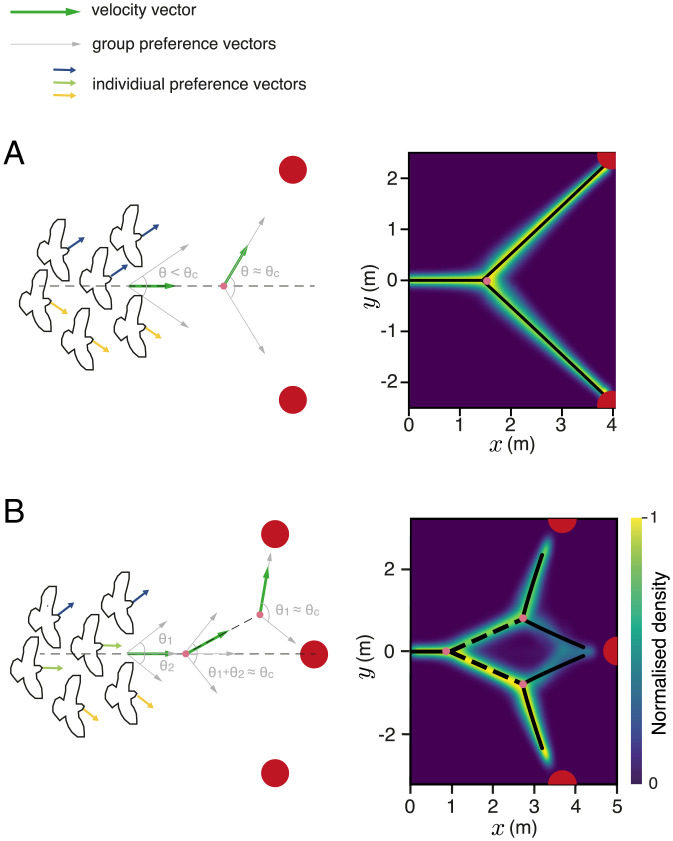
Significance: Almost all animals must make decisions on the move. Here, employing an approach that integrates theory and high-throughput experiments (using state-of-the-art virtual reality), we reveal that there exist fundamental geometrical principles that result from the inherent interplay between movement and organisms’ internal representation of space. Specifically, we find that animals spontaneously reduce the world into a series of sequential binary decisions, a response that facilitates effective decision-making and is robust both to the number of options available and to context, such as whether options are static (e.g., refuges) or mobile (e.g., other animals). We present evidence that these same principles, hitherto overlooked, apply across scales of biological organization, from individual to collective decision-making.
Overview
The claims and statistics of this paper haven’t been checked yet.
Free: it reads the open-access text and checks the first 5 claims that cite a source we can check. Create a free account to check every claim.
Integrity signals
Registry
Cites
Statistics
Figures
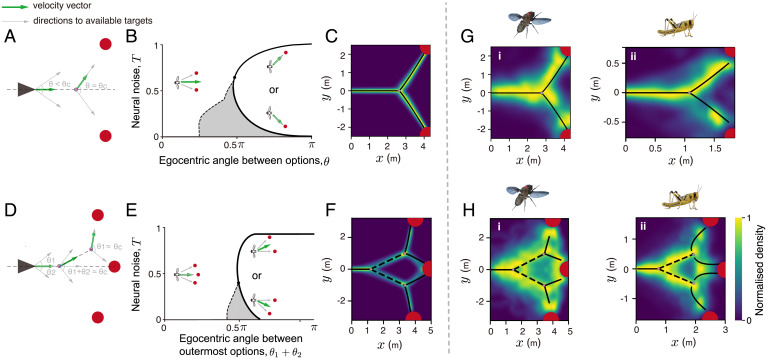
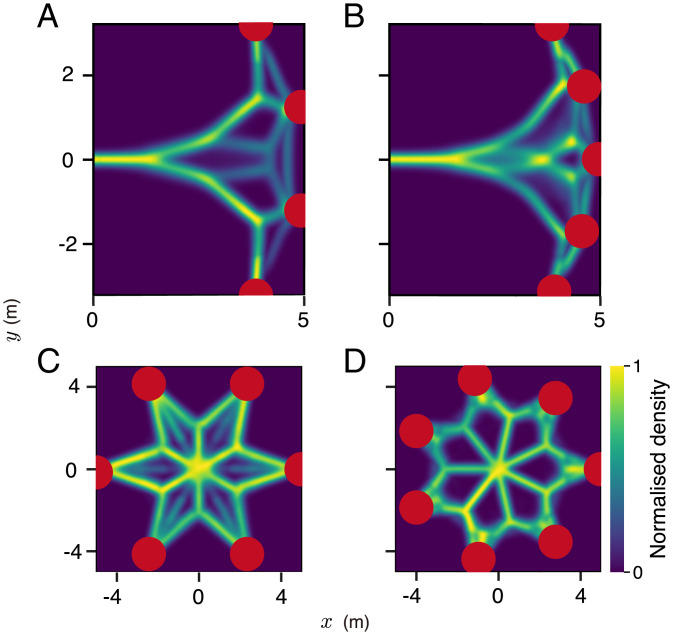
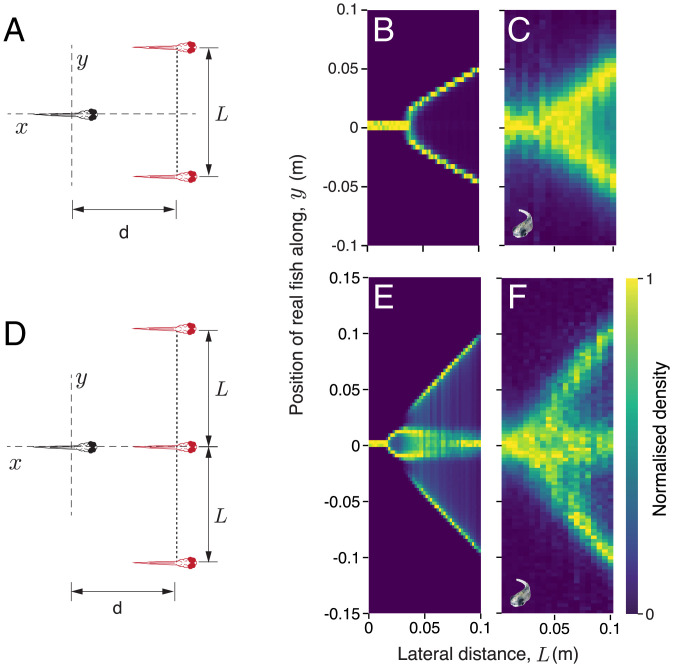
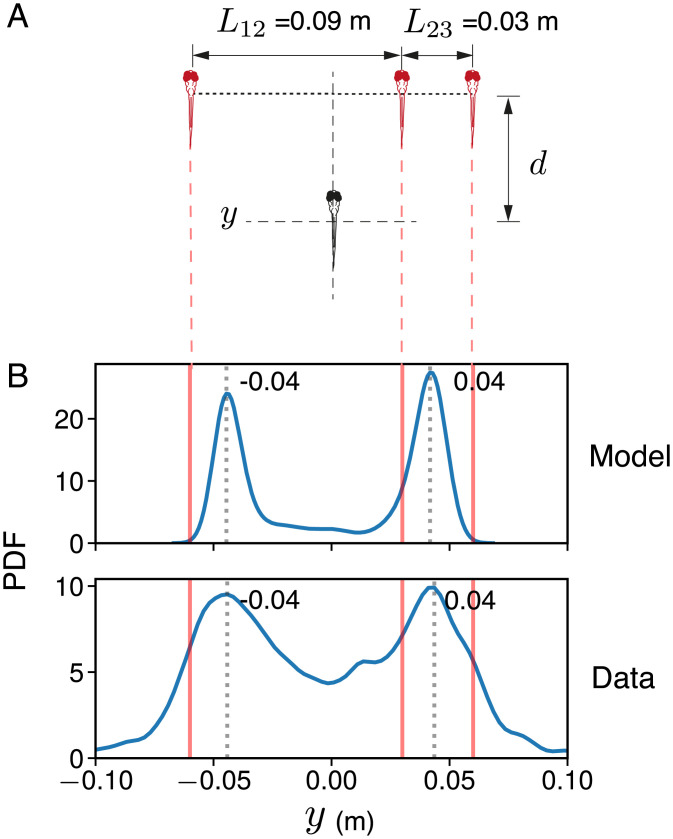
Verification
Claims the paper makes
The claims and statistics of this paper haven’t been checked yet.
Free: it reads the open-access text and checks the first 5 claims that cite a source we can check. Create a free account to check every claim.
Claims other papers make about this one
Each is checked against this paper’s own text: does it say what the citing paper says it does?
The source backs part of the claim, not all of it — or backs it for a different population, condition or comparison.
In the citing paper
“Previous research into opinion or collective dynamics has shown that such binarity may strongly determine the dynamics of the system [104,143].”
From Epistemic Communities under Active Inference (2022) · cites this paper as [143]
Experimental — accuracy not yet measured
Self-check
Percentages, sums and reported differences re-computed from the paper’s own numbers.
The self-check needs the paper’s full text.
Citations
Cites
Neural networks and physical systems with emergent collective computational abilities.
Hopfield, J. J. (1982) · Proceedings of the National Academy of Sciences · doi:10.1073/pnas.79.8.2554 · Cited by 19,270 · cited 3×
“Spin systems, which have been long studied in physics due to their ability to give insight into a wide range of collective phenomena from magnetic to quantum systems (56), were first introduced in the study of neurobiology by Hopfield (57) in a landmark paper that provided considerable insights into principles underly…”
Flocks, herds and schools: A distributed behavioral model
Reynolds, C. W. (1987) · Proceedings of the 14th annual conference on Computer graphics and interactive techniques · doi:10.1145/37401.37406 · Cited by 7,714
Novel Type of Phase Transition in a System of Self-Driven Particles
Vicsek, T., Czirók, A., Ben-Jacob, E., Cohen, I., & Shochet, O. (1995) · Physical Review Letters · doi:10.1103/physrevlett.75.1226 · Cited by 7,380
Flocks, herds and schools: A distributed behavioral model
Reynolds, C. W. (1987) · ACM SIGGRAPH Computer Graphics · doi:10.1145/37402.37406 · Cited by 5,148
Effective leadership and decision-making in animal groups on the move
Couzin, I. D., Krause, J., Franks, N. R., & Levin, S. A. (2005) · Nature · doi:10.1038/nature03236 · Cited by 2,753 · cited 4×
“Below, we consider an established model of collective decision-making (41) to draw links between these two scales of biological organization— decision-making in the brain and decision-making in animal groups.”
InfluentialSelf-citationCollective Memory and Spatial Sorting in Animal Groups
COUZIN, I. D., KRAUSE, J., JAMES, R., RUXTON, G. D., & FRANKS, N. R. (2002) · Journal of Theoretical Biology · doi:10.1006/jtbi.2002.3065 · Cited by 2,138 · cited 1×
“A long-standing approach in the study of animal collectives is to consider them integrating vectorial information from neighbors (48, 49), and there are a great number of publications of such “flocking,” “schooling,” or “herding” behaviors (48–50).”
Self-citationDynamics of pattern formation in lateral-inhibition type neural fields
Amari, S.-I. (1977) · Biological Cybernetics · doi:10.1007/bf00337259 · Cited by 2,060 · cited 2×
“The parameter η represents global inhibition 301 (second term in [3]) that takes effect at any angle θ and it is large enough to prevent the spins from changing their state from 0 302 to 1 (ηN J), unless an external stimuli induces an effective external field that cancels out the effect of the global inhibition 303 at…”
BackgroundWeak pairwise correlations imply strongly correlated network states in a neural population
Schneidman, E., Berry, M. J., Segev, R., & Bialek, W. (2006) · Nature · doi:10.1038/nature04701 · Cited by 1,760 · cited 1×
“~ V · n̂ = 1 k k ∑ i=1 1 1 + exp ( −2k ~ V0·p̂i−2kvn(p̂i·n̂0) T ) p̂i · n̂ + αp̂1 · n̂ [22]”
The renormalization group and critical phenomena
Wilson, K. G. (1983) · Reviews of Modern Physics · doi:10.1103/revmodphys.55.583 · Cited by 1,671 · cited 1×
“” Spin systems have consistently provided deep insights into complex collective phenomena from spin and molecular systems to neural systems undergoing phase transitions (58, 59) (SI Appendix has details and discussion).”
Diffusion decision model: Current issues and history
Ratcliff, R., Smith, P. L., Brown, S. D., & McKoon, G. (2016) · Trends in Cognitive Sciences · doi:10.1016/j.tics.2016.01.007 · Cited by 1,630 · cited 1×
“While the majority of decision-making studies consider only two options [due to both theoretical and experimental tractability (14, 26, 27)], animals moving in real space frequently encounter a greater number than this.”
Research works printed but not linked: 1
- B. M. McCoy, T. T. Wu, The Two-Dimensional Ising Model (Courier Corporation, ed. 2, 2014).
Cited by
Items 101–123 of 123
Skoyles, J. R. (2023) · PsyArXiv (OSF Preprints) · doi:10.31234/osf.io/swekv
Computing Life and Architecture
Ireland, T. (2023) · Biosemiotics/Biosemiotics. Bookseries · doi:10.1007/978-3-031-45925-2_4
Dator, J. (2024) · Anticipation Science · doi:10.1007/978-3-031-61294-7_14
Spatiotemporal dynamics of locomotor decisions in Drosophila melanogasterPreprint
Lebovich, L., Alisch, T., Redhead, E. S., Parker, M. O., Loewenstein, Y., Couzin, I. D., & de Bivort, B. L. (2024) · bioRxiv (Cold Spring Harbor Laboratory) · doi:10.1101/2024.09.04.611038
Self-citationHeterogeneous Robot Swarms with an Attention Mechanism for Dynamic Target Tracking
Zhou, Z., Chen, B., Ouyang, C., Dong, X., Liu, S., Hu, L., Xie, Y. Q., Zhao, Z., & Gan, Z. (2024) · Conference proceedings/Conference proceedings - IEEE International Conference on Systems, Man, and Cybernetics · doi:10.1109/smc54092.2024.10831972
“Furthermore, Vivek et al. , through both theoretical analysis and virtual reality experiments, have identified fundamental geometric principles that underpin decision-making processes in animals, highlighting spontaneous and abrupt transitions in spatially distributed choices [10].”
Karin, J., Piran, Z., & Nitzan, M. (2025) · Physical review. E · doi:10.1103/f495-8ddd
Paradoxical choice and the value of information in animals
Ajuwon, V. (2023) · Oxford University Research Archive (ORA) (University of Oxford) · doi:10.5287/ora-yrnzp9206
Optimality and Evolutionary Stability in Social Decision-Making
Sigalou, A. (2024) · White Rose eTheses Online (University of Leeds, The University of Sheffield, University of York)
Tunable Thresholds and Frequency Encoding in a Spiking NOD Controller
Belaustegui, I. X., Franci, A., & Leonard, N. E. (2025) · IEEE Conference on Decision and Control (CDC) · doi:10.1109/cdc57313.2025.11312727
“Decision-making—the integration of sensory information and internal objectives to select an action—is a fundamental process in biological systems, operating across all levels of organization, from molecular networks [1] to neural populations [2] and collective behaviors [3].”
TracktorLive: an integrated real-time object tracking and response systemPreprint
Minasandra, P., Sridhar, V. H., Roche, D. G., & Planas‐Sitjà, I. (2026) · bioRxiv (Cold Spring Harbor Laboratory) · doi:10.64898/2026.03.12.711471
“In more complex setups, a continuous display might need to be updated dynamically so an insect perceives simulated movement in a virtual landscape [10,11].”
Self-citationCouzin, I. D., Papadopoulou, M., & King, A. J. (2026) · Elsevier eBooks · doi:10.1016/b978-0-443-29068-8.00219-1
Self-citationBest-of-n decision making by human groups
Coucke, N., Dorigo, M., Cleeremans, A., & Heinrich, M. K. (2026) · PLoS ONE · doi:10.1371/journal.pone.0329722
“…requires both positive feedback, to amplify an opinion to spread it through the group, and negative feedback, to trigger individuals to leave their opposing selection in favor of the majority opinion [70,71], reminiscent of positive and negative feedback mechanisms in animal groups [18,72].”
First-nearest neighbour interactions and Vicsek-type noise in shoals of Paracheirodon axelrodi fish
Tabatabai, A. P., Chiu, J., Severson, K., Kuntz, G., & Rask, M. (2026) · Journal of The Royal Society Interface · doi:10.1098/rsif.2026.0053
A Cross-Disciplinary Way Forward in the Study of Movement
Giuggioli, L., & Maini, P. K. (2025) · Springer eBooks · doi:10.1007/978-3-032-00873-2_1
Learning is a fundamental source of individualityPreprint
Manna, R., Brea, J., Braga, G. V., Modirshanechi, A., Tomić, I., & Jakšić, A. M. (2026) · eLife · doi:10.7554/elife.111235.1
Author response: Learning is a fundamental source of individuality
Manna, R., Brea, J., Braga, G. V., Modirshanechi, A., Tomić, I., & Jakšić, A. M. (2026) · eLife · doi:10.7554/elife.111235.2.sa0
[These authors contributed equally: Mark K. Ho, Ralf H.J.M. Kurvers.]
Wu, C., Deffner, D., Kahl, B., Meder, B., Ho, M., & Kurvers, R. (2025) · MPG.PuRe (Max Planck Society)
How do Cockroach Groups Integrate Multiple Attributes in a Best-of-N Task?Preprint
Chow, P. C. K., Rotstein, H. G., & Garnier, S. (2026) · bioRxiv (Cold Spring Harbor Laboratory) · doi:10.64898/2026.07.24.740418
“Instead of using coordinated search strategies that require the group to remain as a cohesive unit (like sequential binary search (Sridhar et al., 2021)), cockroaches, like other social insect colonies, can search and evaluate many options simultaneously.”
Perception precision-induced multi-order interactions drive pattern formation in collective systems
Ye, C., Hong, H., & Zhang, K. (2026) · Physica A Statistical Mechanics and its Applications · doi:10.1016/j.physa.2026.131946
The Effect of Familiarity Among Social Partners on the Jumping Behavior of Amazon Mollies
Francisco, F. A., Kesim, A. L., & Bierbach, D. (2026) · Ethology · doi:10.1111/eth.70113
Latent factors capturing evolution of behavior in larval zebrafish
Han, C., Gong, Y., Sun, L., Du, J., & Ji, P. (2026) · Chaos An Interdisciplinary Journal of Nonlinear Science · doi:10.1063/5.0354035
Hebbian learning generates individuality in spatial decision-makingPreprint
Salahshour, M., & Couzin, I. D. (2026) · bioRxiv (Cold Spring Harbor Laboratory) · doi:10.64898/2026.10.12.758645
“This gives a mechanistic counterpart to evidence tying developmental variation in wiring to behavioral individ-uality [6, 40], and extends accounts of spatial choice built on geometry-dependent neural dynamics [55] by allowing the underlying connectivity to differ among individuals.”
InfluentialSelf-citation
Metadata
- Authors
- Sridhar, V. H., Li, L., Gorbonos, D., Nagy, M., Schell, B. R., Sorochkin, T., Gov, N. S., & Couzin, I. D.
- Affiliations
- University of Konstanz (DE)
- Eötvös Loránd University (HU)
- University of Waterloo (CA)
- Weizmann Institute of Science (IL)
- Corresponding author
- Sridhar, Vivek H.
- Li, Liang
- Couzin, Iain D.
- ORCID
- Venue
- Proceedings of the National Academy of Sciences
- Publisher
- National Academy of Sciences
- Published
- 2021-12-08
- Volume
- 118
- Issue
- 50
- ISSN
- 0027-8424 (ISSN-L)
- 1091-6490
- PMC
- PMC8685676
- OpenAlex
- W4200507653
- Cited by
- 120
- References
- 60
- Citations by year
- 2026: 19 · 2025: 28 · 2024: 26 · 2023: 31 · 2022: 15 · 2021: 1
- FWCI
- 8.41
- Type
- journal article
- Language
- en
- Open access
- hybrid
- doi.org
- Licence
- Locations
- Proceedings of the National Academy of Sciences (publishedVersion, cc-by)
- PubMed Central (publishedVersion, cc-by)
- PubMed (publishedVersion)
- KOPS (University of Konstanz) (submittedVersion, cc-by)
- ELTE Digital Institutional Repository (EDIT) (Eötvös Loránd University) (submittedVersion, other-oa)
- Funders
- National Science Foundation (IOS-1355061)
- DOD | United States Navy | Office of Naval Research (N00014-19-1-2556)
- Baden-Württemberg Stiftung (Struktur- und Innovationsfonds)
- Deutsche Forschungsgemeinschaft (EXC 2117-422037984)
- Max-Planck-Gesellschaft (Max Planck Institute of Animal Behavior)
- Minerva Foundation (712601)
- Topics
- Life Sciences › Neuroscience › Cellular and Molecular Neuroscience › Neurobiology and Insect Physiology Research
- Life Sciences › Neuroscience › Cognitive Neuroscience › Visual perception and processing mechanisms
- Social Sciences › Decision Sciences › General Decision Sciences › Decision-Making and Behavioral Economics
- Keywords
- spatial decision-making, tipping points, bifurcation, group decision making, animal movement, binary decisions, virtual reality, fruit flies, Schistocerca gregaria, zebrafish larvae, collective behavior
- MeSH terms
- Animals, Behavior, Animal, Decision Making, Drosophila melanogaster, Grasshoppers, Larva, Models, Theoretical, Motor Activity, Social Behavior, Zebrafish
About these checks
Registry, retraction, Cites and statistics results are computed, not judged, with one exception: a printed reference that no index lists is read once by a model before it counts as a citation error. Claims are extracted by a model and kept only when their quote appears verbatim in the text; each cited source is then checked, with a model’s help, for whether it says what the claim relies on. Those verdicts can be wrong — read the claim’s quote and the cited source before relying on one.
Statistics and arithmetic are recomputed, not judged.
Confidence bands are shown only for fields calibrated on our annotated test set. None is calibrated yet, so no band is shown.
What counts as a claim ›How we measure confidence ›How we check this ›
Are you an author, or do you see a problem with this page? Request a review
Data sources
Bibliographic data: Semantic Scholar, OpenAlex, Crossref.
Contains information from the Semantic Scholar Academic Graph Datasets, made available under the ODC Attribution License (ODC-BY 1.0).
Semantic Scholar’s data is described in: Kinney, R., et al. (2023). The Semantic Scholar Open Data Platform. arXiv:2301.10140.
