

Transcriptome profiling of kisspeptin neurons from the mouse arcuate nucleus reveals new mechanisms in estrogenic control of fertility
Open accessThe DOI matches its Crossref record; 38 of the 38 references it cites were found in a registry or an index.
Abstract
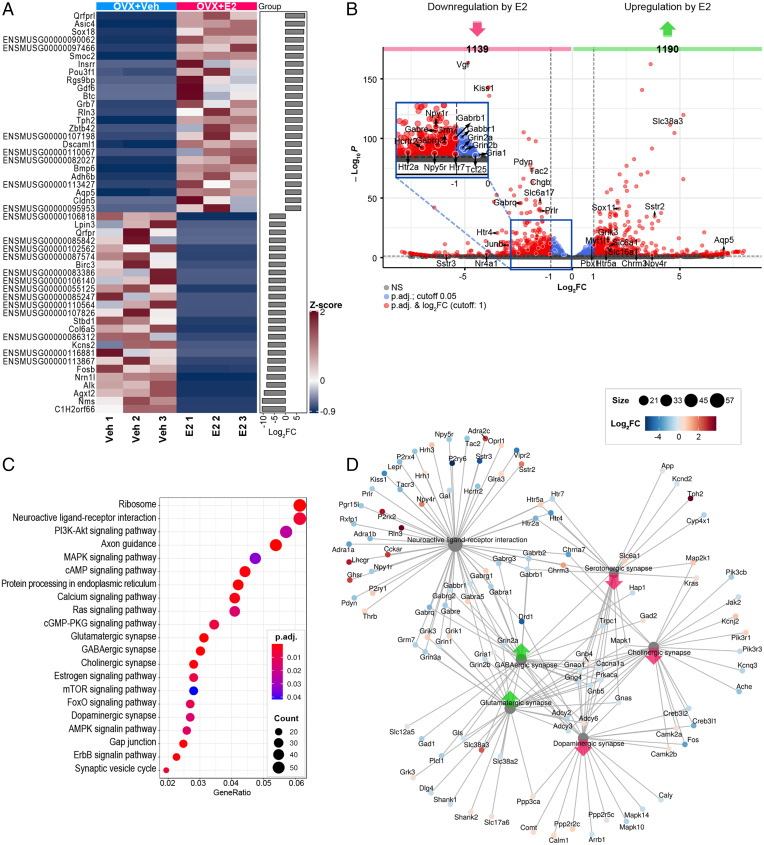
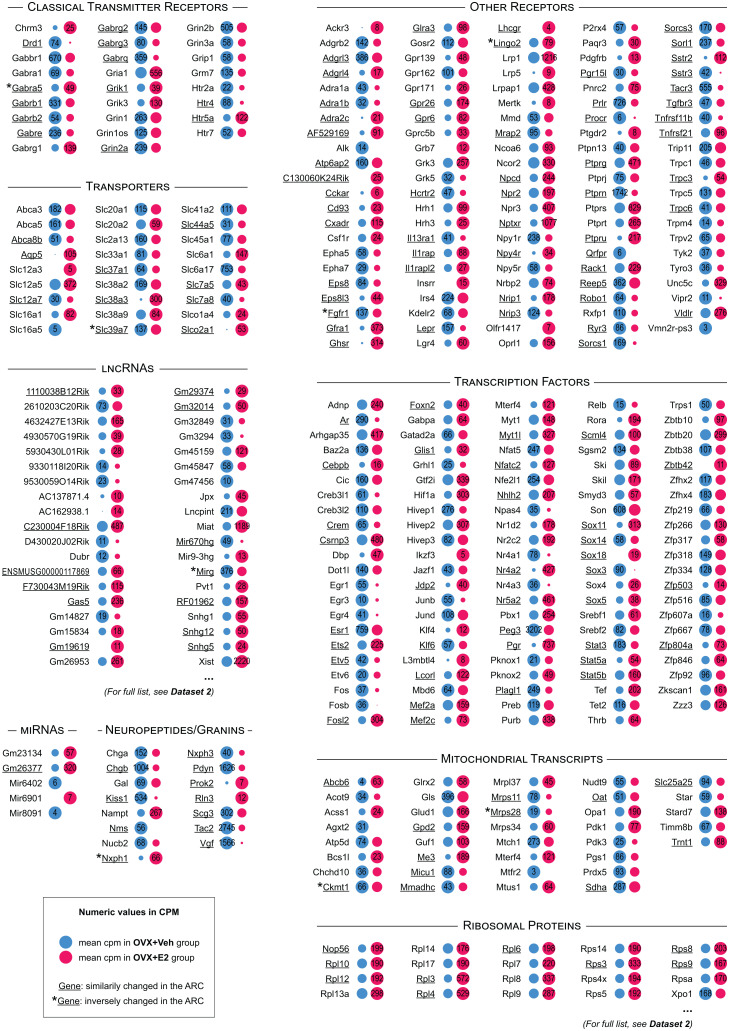
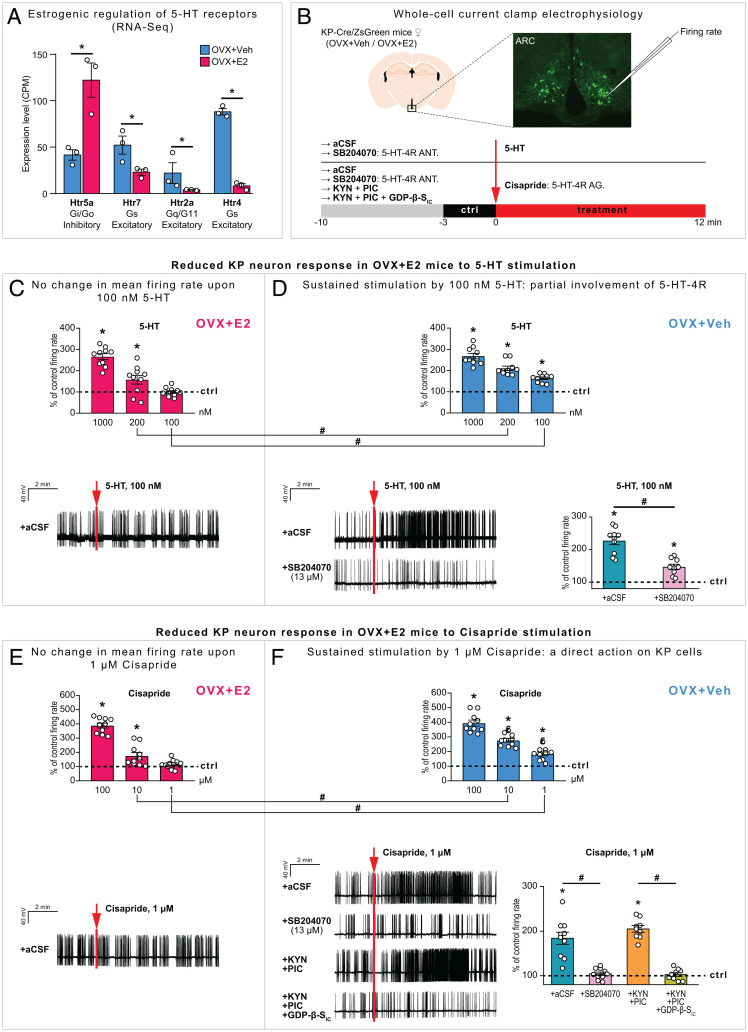
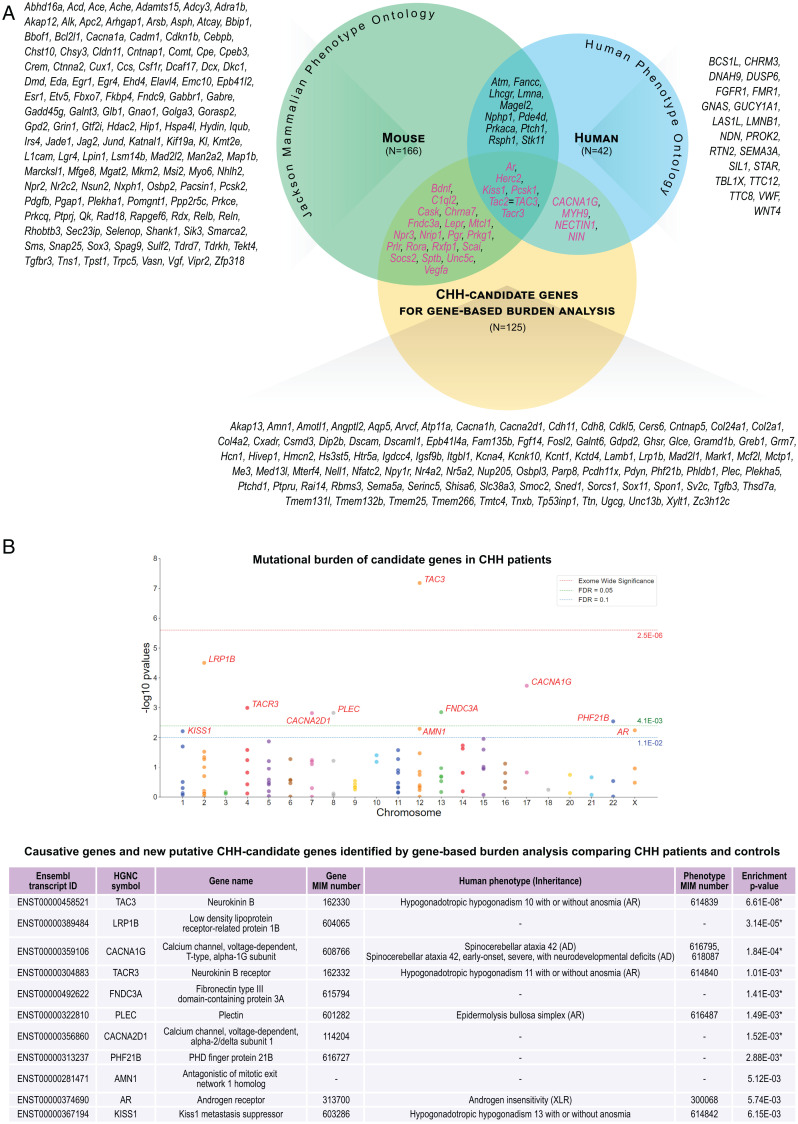
Kisspeptin neurons in the mediobasal hypothalamus (MBH) are critical targets of ovarian estrogen feedback regulating mammalian fertility. To reveal molecular mechanisms underlying this signaling, we thoroughly characterized the estrogen-regulated transcriptome of kisspeptin cells from ovariectomized transgenic mice substituted with 17β-estradiol or vehicle. MBH kisspeptin neurons were harvested using laser-capture microdissection, pooled, and subjected to RNA sequencing. Estrogen treatment significantly ( p.adj . < 0.05) up-regulated 1,190 and down-regulated 1,139 transcripts, including transcription factors, neuropeptides, ribosomal and mitochondrial proteins, ion channels, transporters, receptors, and regulatory RNAs. Reduced expression of the excitatory serotonin receptor-4 transcript ( Htr4 ) diminished kisspeptin neuron responsiveness to serotonergic stimulation. Many estrogen-regulated transcripts have been implicated in puberty/fertility disorders. Patients ( n = 337) with congenital hypogonadotropic hypogonadism (CHH) showed enrichment of rare variants in putative CHH-candidate genes (e.g., LRP1B , CACNA1G , FNDC3A ). Comprehensive characterization of the estrogen-dependent kisspeptin neuron transcriptome sheds light on the molecular mechanisms of ovary–brain communication and informs genetic research on human fertility disorders.
Overview
The claims and statistics of this paper haven’t been checked yet.
Free: it reads the open-access text and checks the first 5 claims that cite a source we can check. Create a free account to check every claim.
Integrity signals
Registry
Cites
Statistics
Figures
Verification
Claims the paper makes
The claims and statistics of this paper haven’t been checked yet.
Free: it reads the open-access text and checks the first 5 claims that cite a source we can check. Create a free account to check every claim.
Claims other papers make about this one
Each is checked against this paper’s own text: does it say what the citing paper says it does?
The source backs part of the claim, not all of it — or backs it for a different population, condition or comparison.
In the citing paper
“Molecular profiling of ARNKISS neurons in female mice has found that Adra1a, Adra1b, Adra2c and Adrab1 transcripts are expressed by these cells34 (Herbison, unpublished data) indicating the presence of α1-, α2- and β1-adrenergic receptors.”
From Brainstem noradrenergic modulation of the kisspeptin neuron GnRH pulse generator in mice (2025) · cites this paper as [34]
Experimental — accuracy not yet measuredThe check wasn’t confident either way, so it gives no verdict — never disputed.
In the citing paper
“estrogen has been shown to strongly increase Adra2c mRNA expression in ARNKISS neurons34”
From Brainstem noradrenergic modulation of the kisspeptin neuron GnRH pulse generator in mice (2025) · cites this paper as [34]
Experimental — accuracy not yet measured
Self-check
Percentages, sums and reported differences re-computed from the paper’s own numbers.
The self-check needs the paper’s full text.
Citations
Cites
Björnström, L., & Sjöberg, M. (2005) · Molecular Endocrinology · doi:10.1210/me.2004-0486 · Cited by 1,362
Cell-type-specific isolation of ribosome-associated mRNA from complex tissues
Sanz, E., Yang, L., Su, T., Morris, D. R., McKnight, G. S., & Amieux, P. S. (2009) · Proceedings of the National Academy of Sciences · doi:10.1073/pnas.0907143106 · Cited by 976 · cited 1×
“The RiboTag technique (20), which allows the selective isolation of actively translated mRNAs from a given cell population, offers an elegant alternative to our LCM-based cell harvesting approach, and it was used recently to identify estrogen-regulated transcripts of the preoptic (RP3V) KP neuron population (10).”
MethodA molecular census of arcuate hypothalamus and median eminence cell types
Campbell, J. N., Macosko, E. Z., Fenselau, H., Pers, T. H., Lyubetskaya, A., Tenen, D., Goldman, M., Verstegen, A. M. J., Resch, J. M., McCarroll, S. A., et al. (2017) · Nature Neuroscience · doi:10.1038/nn.4495 · Cited by 817
Navarro, V. M., Gottsch, M. L., Chavkin, C., Okamura, H., Clifton, D. K., & Steiner, R. A. (2009) · The Journal of Neuroscience · doi:10.1523/jneurosci.1569-09.2009 · Cited by 779
Single-Cell RNA-Seq Reveals Hypothalamic Cell Diversity
Chen, R., Wu, X., Jiang, L., & Zhang, Y. (2017) · Cell Reports · doi:10.1016/j.celrep.2017.03.004 · Cited by 592 · cited 4×
“Accordingly, earlier Drop-seq studies of the hypothalamus (13) and its ARC region (12) were able to identify basic cell-type-specific transcriptional features of KNDy neurons, with intrinsic compromises in depth of sequencing.”
BackgroundMethodInfluentialGenomic Targets of Nuclear Estrogen Receptors
O’Lone, R., Frith, M. C., Karlsson, E. K., & Hansen, U. (2004) · Molecular Endocrinology · doi:10.1210/me.2003-0044 · Cited by 441
The many faces of estrogen signaling
Vrtačnik, P., Ostanek, B., Mencej-Bedrač, S., & Marc, J. (2014) · Biochemia Medica · doi:10.11613/bm.2014.035 · Cited by 402
Rometo, A. M., Krajewski, S. J., Lou Voytko, M., & Rance, N. E. (2007) · The Journal of Clinical Endocrinology & Metabolism · doi:10.1210/jc.2007-0553 · Cited by 396 · cited 1×
“In postmenopausal women, absence of estrogen feedback causes profound morphofunctional changes within this region, characterized by neuronal hypertrophy (3) and increased neurokinin B (NKB) (4, 5), KP (5, 6), and substance P (4, 7) biosynthesis.”
BackgroundRance, N. E., Dacks, P. A., Mittelman-Smith, M. A., Romanovsky, A. A., & Krajewski-Hall, S. J. (2013) · Frontiers in Neuroendocrinology · doi:10.1016/j.yfrne.2013.07.003 · Cited by 380
Genome-Wide Identification of High-Affinity Estrogen Response Elements in Human and Mouse
Bourdeau, V., Deschênes, J., Métivier, R., Nagai, Y., Nguyen, D., Bretschneider, N., Gannon, F., White, J. H., & Mader, S. (2004) · Molecular Endocrinology · doi:10.1210/me.2003-0441 · Cited by 360
Research works printed but not linked: 2
- B. Göcz., Data from “Transcriptome profiling of kisspeptin neurons from the mouse arcuate nucleus reveals new mechanisms in estrogenic control of fertility.” BioProject. https://www.ncbi.nlm.nih.gov/bioproject/?term=PRJNA686688. Deposited 20 December 2020. PMC9271166 35763574
- B. Göcz., Data from “Transcriptome profiling of kisspeptin neurons from the mouse arcuate nucleus reveals new mechanisms in estrogenic control of fertility.” GitHub. https://github.com/solymosin/PRJNA686688_ms_codes. Deposited 18 May 2022. PMC9271166 35763574
Cited by
McQuillan, H. J., Clarkson, J., Kauff, A., Han, S. Y., Yip, S. H., Cheong, I., Porteous, R., Heather, A. K., & Herbison, A. E. (2022) · Nature Communications · doi:10.1038/s41467-022-35243-z · Cited by 76
Göcz, B., Takács, S., Skrapits, K., Rumpler, É., Solymosi, N., Póliska, S., Colledge, W. H., Hrabovszky, E., & Sárvári, M. (2022) · Frontiers in Endocrinology · doi:10.3389/fendo.2022.960769 · Cited by 49
Self-citationHypothalamic control of puberty: from neuronal circuits to mechanisms for its metabolic regulation
Jiménez-Puyer, M., Sobrino, V., Colledge, W. H., Jones, S., & Tena‐Sempere, M. (2025) · Reviews in Endocrine and Metabolic Disorders · doi:10.1007/s11154-025-10001-w · Cited by 19
Self-citationIlluminating the terminal nerve: Uncovering the link between GnRH‐1 neuron and olfactory development
Amato, E., Taroc, E. Z. M., & Forni, P. E. (2024) · The Journal of Comparative Neurology · doi:10.1002/cne.25599 · Cited by 19
Buo, C., Bearss, R. J., Novak, A. G., Anello, A. E., Dakin, J. J., & Piet, R. (2023) · Frontiers in Endocrinology · doi:10.3389/fendo.2023.1212854 · Cited by 16
Metadata
- Authors
- Göcz, B., Rumpler, É., Sárvári, M., Skrapits, K., Takács, S., Farkas, I., Csillag, V., Trinh, S. H., Bardóczi, Z., Ruska, Y., Solymosi, N., Póliska, S., Szőke, Z., Bartoloni, L., Zouaghi, Y., Messina, A., Pitteloud, N., Anderson, R. C., Millar, R. P., Quinton, R., Manchishi, S. M., Colledge, W. H., & Hrabovszky, E.
- Affiliations
- Semmelweis University (HU)
- HUN-REN Institute of Experimental Medicine (HU)
- Eötvös Loránd University (HU)
- University of Debrecen (HU)
- Magyar Agrár- és Élettudományi Egyetem (HU)
- Centre Hospitalier Universitaire Vaudois (CH)
- University of Pretoria (ZA)
- Newcastle upon Tyne Hospitals NHS Foundation Trust (GB)
- University of Cambridge (GB)
- Corresponding author
- Hrabovszky, Erik
- ORCID
- Göcz, Balázs
- Rumpler, Éva
- Sárvári, Miklós
- Skrapits, Katalin
- Takács, Szabolcs
- Farkas, Imre
- Csillag, Veronika
- Trinh, Sarolta H.
- Ruska, Yvette
- Solymosi, Norbert
- Póliska, Szilárd
- Szőke, Zsuzsanna
- Bartoloni, Lucia
- Messina, Andrea
- Pitteloud, Nelly
- Anderson, Ross C.
- Millar, Robert P.
- Quinton, Richard
- Manchishi, Stephen M.
- Colledge, William H.
- Hrabovszky, Erik
- Venue
- Proceedings of the National Academy of Sciences
- Publisher
- National Academy of Sciences
- Published
- 2022-06-28
- Volume
- 119
- Issue
- 27
- Pages
- e2113749119-e2113749119
- ISSN
- 0027-8424 (ISSN-L)
- 1091-6490
- PMC
- PMC9271166
- OpenAlex
- W4283640064
- Cited by
- 35
- References
- 38
- Citations by year
- 2026: 7 · 2025: 7 · 2024: 9 · 2023: 8 · 2022: 4
- FWCI
- 5.89
- Type
- journal article
- Language
- en
- Open access
- hybrid
- doi.org
- Licence
- Locations
- Proceedings of the National Academy of Sciences (publishedVersion, cc-by-nc-nd)
- PubMed Central (publishedVersion, cc-by-nc-nd)
- PubMed (publishedVersion)
- SERVAL (Université de Lausanne) (publishedVersion, cc-by-nc-nd)
- Repository of the Academy's Library (Library of the Hungarian Academy of Sciences) (acceptedVersion)
- IRIS (submittedVersion, cc-by-nc-nd)
- UpSpace Institutional Repository (University of Pretoria) (submittedVersion, cc-by-nc-nd)
- University of Debrecen Electronic Archive (University of Debrecen) (submittedVersion, other-oa)
- ELTE Digital Institutional Repository (EDIT) (Eötvös Loránd University) (submittedVersion, other-oa)
- Funders
- National Science Foundation of Hungary (K128317, PD134837, K138137)
- Hungarian Brain Research Program (2017-1.2.1-NKP-2017-00002)
- Topics
- Health Sciences › Medicine › Reproductive Medicine › Hypothalamic control of reproductive hormones
- Life Sciences › Neuroscience › Endocrine and Autonomic Systems › Regulation of Appetite and Obesity
- Health Sciences › Medicine › Reproductive Medicine › Reproductive Biology and Fertility
- Keywords
- kisspeptin neurons, arcuate nucleus, mediobasal hypothalamus, estrogen feedback, fertility control, congenital hypogonadotropic hypogonadism, LRP1B, CACNA1G, puberty
- MeSH terms
- Animals, Arcuate Nucleus of Hypothalamus, Estrogens, Female, Fertility, Humans, Hypogonadism, Mice, Transgenic, Neurons, Ovary, Calcium Channels, T-Type, Gene Expression Profiling, Mice, Kisspeptins
About these checks
Registry, retraction, Cites and statistics results are computed, not judged, with one exception: a printed reference that no index lists is read once by a model before it counts as a citation error. Claims are extracted by a model and kept only when their quote appears verbatim in the text; each cited source is then checked, with a model’s help, for whether it says what the claim relies on. Those verdicts can be wrong — read the claim’s quote and the cited source before relying on one.
Statistics and arithmetic are recomputed, not judged.
Confidence bands are shown only for fields calibrated on our annotated test set. None is calibrated yet, so no band is shown.
What counts as a claim ›How we measure confidence ›How we check this ›
Are you an author, or do you see a problem with this page? Request a review
How to cite
Cite CoChat for the checks on this page, and the paper for its own findings.
- This page
- CoChat. (2026). Citation check: Transcriptome profiling of kisspeptin neurons from the mouse arcuate nucleus reveals new mechanisms in estrogenic control of fertility. https://app.cochat.ai/papers/10.1073/pnas.2113749119
- The paper
- Göcz, B., Rumpler, É., Sárvári, M., Skrapits, K., Takács, S., Farkas, I., Csillag, V., Trinh, S. H., Bardóczi, Z., Ruska, Y., Solymosi, N., Póliska, S., Szőke, Z., Bartoloni, L., Zouaghi, Y., Messina, A., Pitteloud, N., Anderson, R. C., Millar, R. P., . . . Hrabovszky, E. (2022). Transcriptome profiling of kisspeptin neurons from the mouse arcuate nucleus reveals new mechanisms in estrogenic control of fertility. Proceedings of the National Academy of Sciences. https://doi.org/10.1073/pnas.2113749119
Data sources
Bibliographic data: Semantic Scholar, OpenAlex, Crossref.
Contains information from the Semantic Scholar Academic Graph Datasets, made available under the ODC Attribution License (ODC-BY 1.0).
Semantic Scholar’s data is described in: Kinney, R., et al. (2023). The Semantic Scholar Open Data Platform. arXiv:2301.10140.
