

AI-synthesized faces are indistinguishable from real faces and more trustworthy
Open accessThe DOI matches its Crossref record; 19 of the 19 references it cites were found in a registry or an index.
Abstract
Artificial intelligence (AI)–synthesized text, audio, image, and video are being weaponized for the purposes of nonconsensual intimate imagery, financial fraud, and disinformation campaigns. Our evaluation of the photorealism of AI-synthesized faces indicates that synthesis engines have passed through the uncanny valley and are capable of creating faces that are indistinguishable—and more trustworthy—than real faces.
Overview
The claims and statistics of this paper haven’t been checked yet.
Free: it reads the open-access text and checks the first 5 claims that cite a source we can check. Create a free account to check every claim.
Integrity signals
Registry
Cites
Statistics
Figures
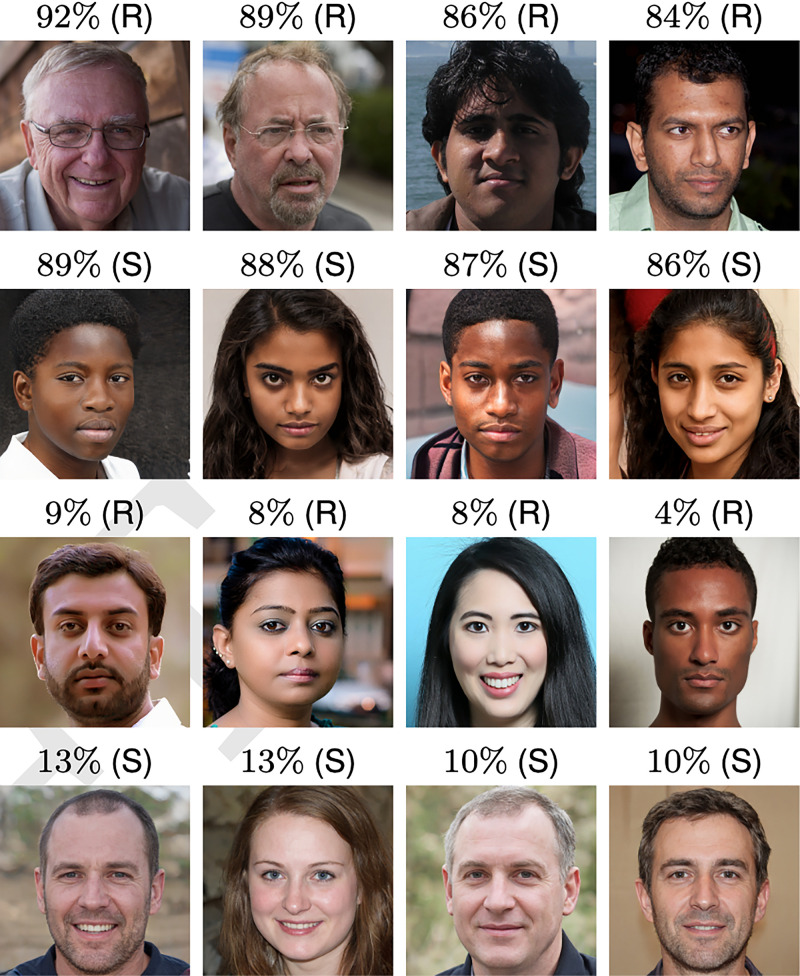
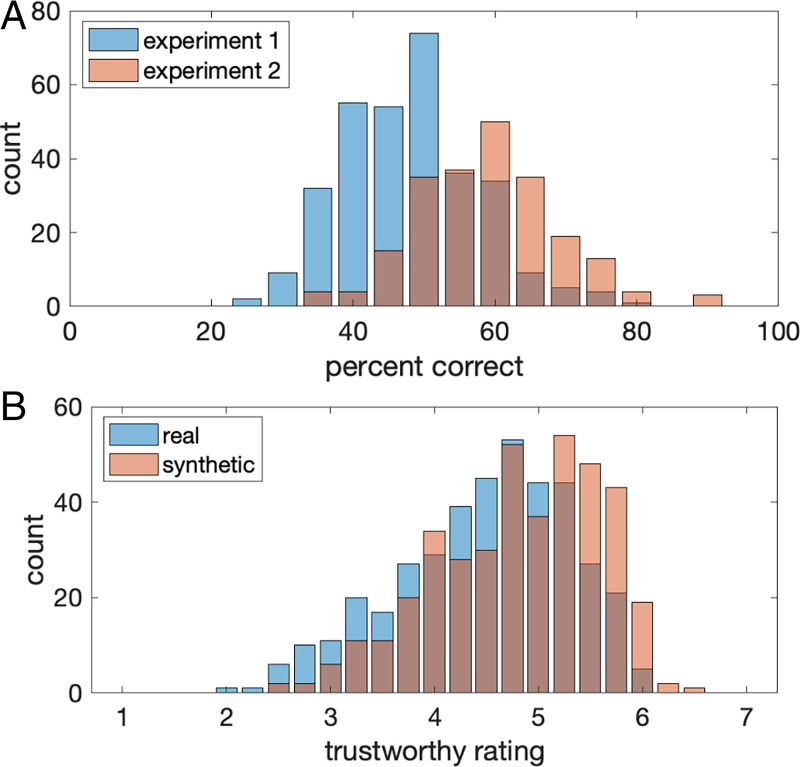
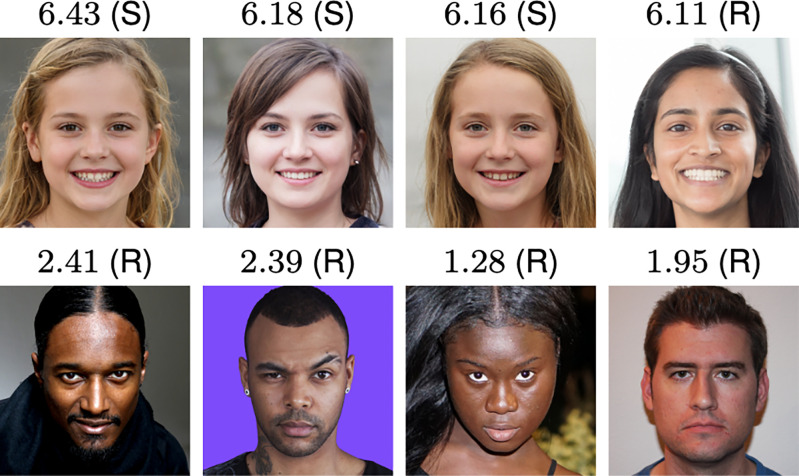
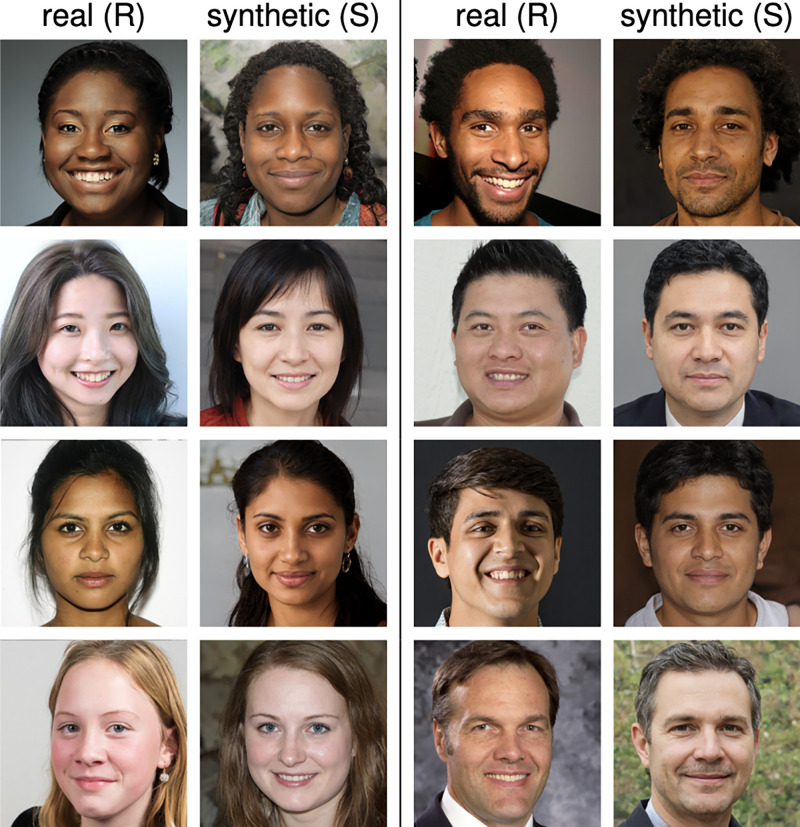
Verification
Claims the paper makes
The claims and statistics of this paper haven’t been checked yet.
Free: it reads the open-access text and checks the first 5 claims that cite a source we can check. Create a free account to check every claim.
Claims other papers make about this one
Each is checked against this paper’s own text: does it say what the citing paper says it does?
The cited source says what the claim attributes to it.
In the citing paper
“In the context of images, multiple studies show humans do not perform much better than chance [22, 23].”
From Warning: Humans cannot reliably detect speech deepfakes (2023) · cites this paper as [23]
The cited source says what the claim attributes to it.
In the citing paper
“Since early-generation LLMs, humans have been consistently poor at distinguishing AI-generated text (Mink et al., 2024), audio (Warren et al., 2024;Barrington et al., 2025) images (Nightingale & Farid, 2022;Mink et al., 2024), videos (Groh et al., 2022), and social media profiles containing AI-generated media (Mink et al., 2024).”
From Open Challenges in Multi-Agent Security: Towards Secure Systems of Interacting AI Agents (2025) · cites this paper as Nightingale & Farid, 2022
The cited source says what the claim attributes to it.
In the citing paper
“Images of synthetic faces produced by StyleGAN210 are indistinguishable from the original photos on which the StyleGAN2 algorithm was trained41.”
From Human detection of political speech deepfakes across transcripts, audio, and video (2024) · cites this paper as [41]
Self-check
Percentages, sums and reported differences re-computed from the paper’s own numbers.
The self-check needs the paper’s full text.
Citations
Cites
Analyzing and Improving the Image Quality of StyleGAN
Karras, T., Laine, S., Aittala, M., Hellsten, J., Lehtinen, J., & Aila, T. (2020) · 2020 IEEE/CVF Conference on Computer Vision and Pattern Recognition (CVPR) · doi:10.1109/cvpr42600.2020.00813 · Cited by 6,332
Analyzing and Improving the Image Quality of StyleGAN
Karras, T., Laine, S., Aittala, M., Hellsten, J., Lehtinen, J., & Aila, T. (2019) · arXiv · doi:10.48550/arxiv.1912.04958 · Cited by 6,332 · cited 5×
“We hypothesize that White faces are more difficult to classify because they are overrepresented in the StyleGAN2 training dataset and are therefore more realistic.”
BackgroundMethodInfluentialParkhi, O. M., Vedaldi, A., & Zisserman, A. (2015) · Procedings of the British Machine Vision Conference 2015 · doi:10.5244/c.29.41 · Cited by 5,479
WaveNet: a generative model for raw audio
Oord, A. V. D., Dieleman, S., Zen, H., Simonyan, K., Vinyals, O., Graves, A., Kalchbrenner, N., Senior, A., & Kavukcuoglu, K. (2016) · arXiv · doi:10.48550/arxiv.1609.03499 · Cited by 4,911 · cited 1×
“From synthesizing speech in anyone’s voice (1) to synthesizing an image of a fictional person (2) and swapping one person’s identity with another or altering what they are saying in a video (3), AI-synthesized content holds the power to entertain but also deceive.”
BackgroundFirst Impressions: Making Up Your Mind After a 100-Ms Exposure to a Face
Willis, J., & Todorov, A. (2006) · Psychological Science · doi:10.1111/j.1467-9280.2006.01750.x · Cited by 2,300
Face X-Ray for More General Face Forgery Detection
Li, L., Bao, J., Zhang, T., Yang, H., Chen, D., Wen, F., & Guo, B. (2020) · 2020 IEEE/CVF Conference on Computer Vision and Pattern Recognition (CVPR) · doi:10.1109/cvpr42600.2020.00505 · Cited by 1,211
CNN-Generated Images Are Surprisingly Easy to Spot… for Now
Wang, S.-Y., Wang, O., Zhang, R., Owens, A., & Efros, A. A. (2020) · 2020 IEEE/CVF Conference on Computer Vision and Pattern Recognition (CVPR) · doi:10.1109/cvpr42600.2020.00872 · Cited by 1,210
Synthesizing Obama: learning lip sync from audio
Suwajanakorn, S., Seitz, S. M., & Kemelmacher-Shlizerman, I. (2017) · ACM Transactions on Graphics · doi:10.1145/3072959.3073640 · Cited by 1,057
Citron, D. K., & Franks, M. A. (2014) · Digital Commons at University of Maryland Carey Law (University of Maryland Francis King Carey School of Law) · Cited by 590
(2019) · Cited by 415
Self-citation
Cited by
Items 101–200 of 405
Marini, M., Ansani, A., Demichelis, A., Mancini, G., Paglieri, F., & Viola, M. (2024) · Cognition and Emotion · doi:10.1080/02699931.2023.2296581 · Cited by 11
“…than their real counterparts (Balas & Pacella, 2017), recent research suggests that AI-synthesized faces generated by up-to-date technology are already indistinguishable from real ones, and even judged as more trustworthy (Nightingale & Farid, 2022; Tucciarelli et al., 2022, studies 1 – 2).”
BackgroundOnline safety regulation of deepfake abuse: a case study on Australia’s eSafety Commissioner
Martin, N. (2025) · Griffith Law Review · doi:10.1080/10383441.2025.2504791 · Cited by 16
Marketing in the Metaverse: Emerging Risks
Rosenberg, L. B. (2023) · Lecture notes in networks and systems · doi:10.1007/978-3-031-28076-4_5 · Cited by 11
Topsakal, O., Glinton, J., Akbaş, M. İ., & Çelikoyar, M. M. (2023) · Facial Plastic Surgery & Aesthetic Medicine · doi:10.1089/fpsam.2023.0030 · Cited by 12
Crowds Improve Human Detection of AI ‐Synthesised Faces
Kramer, R. S. S., & Cartledge, C. (2024) · Applied Cognitive Psychology · doi:10.1002/acp.4245 · Cited by 14
Understanding strategies employed by seniors in identifying deepfakes
Tang, Z., Goh, D. H., Lee, C. S., & Yang, Y. (2024) · Aslib Journal of Information Management · doi:10.1108/ajim-03-2024-0255 · Cited by 13
Rosi, V., Soopramanien, E., & McGettigan, C. (2025) · Computers in Human Behavior Artificial Humans · doi:10.1016/j.chbah.2025.100143 · Cited by 28
“…control participants were systematically selecting a human voice recording as the clone (suggesting a “ hyperrealism ” effect; Miller et al., 2023; Nightingale & Farid, 2022; Tucciarelli et al., 2022), other unfamiliar listeners performed with high accuracy (suggesting that there are perceptible…”
AI-Generated Images as an Emergent Record Format
Bushey, J. (2023) · IEEE International Conference on Big Data (BigData) · doi:10.1109/bigdata59044.2023.10386946 · Cited by 21
“Human participants in one study were only about 50% accurate in assessing whether images of human faces were authentic or synthetic [70], recalling a 2006 deception detection study that found humans detect lies at a similar rate, only about as effective as chance [71].”
BackgroundAre Deep Learning-Generated Social Media Profiles Indistinguishable from Real Profiles?
Rossi, S., Kwon, Y., Auglend, O. H., Mukkamala, R. R., Rossi, M., & Thatcher, J. B. (2023) · Hawaii International Conference on System Sciences (HICSS) · doi:10.24251/hicss.2023.017 · Cited by 17
It's Trying Too Hard To Look Real: Deepfake Moderation Mistakes and Identity-Based Bias
Mink, J., Wei, M., Munyendo, C. W., Hugenberg, K., Kohno, T., Redmiles, E. M., & Wang, G. (2024) · Proceedings of the CHI Conference on Human Factors in Computing Systems · doi:10.1145/3613904.3641999 · Cited by 11
Oliveira, M., Brands, J., Mashudi, J., Liefooghe, B., & Hortensius, R. (2024) · Cognitive Research Principles and Implications · doi:10.1186/s41235-024-00573-7 · Cited by 18
“This is supported by studies showing a substantial decrease in the human ability to distinguish natural faces from artificial faces generated with state-of-the-art AI, such as the so-called deep fakes (Nightingale & Farid, 2022; Tucciarelli et al., 2022).”
BackgroundTransforming Physiology and Healthcare through Foundation Models
Godwin, R. C., Tung, A., Berkowitz, D. E., & Melvin, R. L. (2025) · Physiology · doi:10.1152/physiol.00048.2024 · Cited by 14
Identifying Synthetic Faces through GAN Inversion and Biometric Traits Analysis
Pasquini, C., Laiti, F., Lobba, D., Ambrosi, G., Boato, G., & Natale, F. G. B. D. (2023) · Applied Sciences · doi:10.3390/app13020816 · Cited by 14
Unmasking Illusions: Understanding Human Perception of Audiovisual DeepfakesPreprint
Hashmi, A., Shahzad, S. A., Lin, C., Tsao, Y., & Wang, H. (2024) · doi:10.36227/techrxiv.171560542.29368554/v1 · Cited by 36
Media and Communication in the Digital Age: Changes and Dynamics
Topsümer, F., Durmuş, Y., & YILMAZ, B. A. (2023) · Özgür Yayınları eBooks · doi:10.58830/ozgur.pub234 · Cited by 27
AI-generated faces show lower morphological diversity than real faces do
Boudníková, O., & Kleisner, K. (2024) · Anthropological Review · doi:10.18778/1898-6773.87.1.06 · Cited by 12
“Unlike several previous studies (Bray, Johnson, and Kleinberg 2023; Lago et al. 2022; Nightingale and Farid 2022; Ros-si et al. 2022; Tucciarelli et al. 2022), we used standardized synthetized faces with a neutral expression and compared them to natural faces selected from our database of…”
BackgroundMethodResultInfluentialCan You Tell Real from Fake Face Images? Perception of Computer-Generated Faces by Humans
Bozkir, E., Riedmiller, C., Skodras, A. N., Kasneci, G., & Kasneci, E. (2024) · ACM Transactions on Applied Perception · doi:10.1145/3696667 · Cited by 17
“For this reason, studying the human perception of single-frame face images is equally important [60].”
Spotting the Fakes: A Deep Dive into GAN-Generated Face Detection
Wang, X., Tsai, T. Y., Lin, L., Hui, G., Hu, S., Chang, M., Atrey, P. K., & Lyu, S. (2025) · ACM Transactions on Multimedia Computing Communications and Applications · doi:10.1145/3742786 · Cited by 13
“Further research on this topic can be found in [117].”
Seeing through the fake: how users detect and interpret deepfakes
Shin, D. (2025) · Information Communication & Society · doi:10.1080/1369118x.2025.2518260 · Cited by 20
“Despite the importance of these cognitive mechanisms for explaining how individuals perceive and react to deepfakes, they remain insufficiently explored – largely due to the complex and often opaque nature of human interaction with synthetic media (Goh, 2024; Nightingale & Farid, 2022).”
Mitigating the harms of manipulated media: Confronting deepfakes and digital deception
Farid, H. (2025) · PNAS Nexus · doi:10.1093/pnasnexus/pgaf194 · Cited by 22
Self-citationHögemann, M., Betke, J., & Thomas, O. (2025) · Frontiers in Artificial Intelligence · doi:10.3389/frai.2025.1707336 · Cited by 21
Technology as a Threat or a Solution? The Challenges of Responding to Synthetic Media
Kalpokas, I., Šalaševičiūtė, V., & Lipskė, M. (2024) · Baltic Journal of Law & Politics · doi:10.2478/bjlp-2023-0010 · Cited by 10
Ruffin, M., Seo, H., Xiong, A., & Wang, G. (2024) · Proceedings of the International AAAI Conference on Web and Social Media · doi:10.1609/icwsm.v18i1.31392 · Cited by 15
“Third, the quality of deepfake-generated images/text can be high, making them hard to identify by humans (Nightingale and Farid 2022).”
BackgroundCharacterizing Photorealism and Artifacts in Diffusion Model-Generated Images
Kamali, N., Nakamura, K., Kumar, A., Chatzimparmpas, A., Hullman, J. R., & Groh, M. (2025) · CHI Conference on Human Factors in Computing Systems · doi:10.1145/3706598.3713962 · Cited by 38
Spontaneous Content of Impressions of Naturalistic Face Photographs
Nicolás, G., Uddenberg, S., & Todorov, A. T. (2025) · Social Cognition · doi:10.1521/soco.2025.43.2.114 · Cited by 18
Training humans for synthetic face image detection
Rehman, R. S., Meier, E., Ibsen, M., Rathgeb, C., Nichols, R., & Busch, C. (2025) · Frontiers in Artificial Intelligence · doi:10.3389/frai.2025.1568267 · Cited by 11
'There Has To Be a Lot That We're Missing': Moderating AI-Generated Content on Reddit
Lloyd, T., Reagle, J., & Naaman, M. (2025) · Proceedings of the ACM on Human-Computer Interaction · doi:10.1145/3757445 · Cited by 40
Virtual Human Definition By Analyzing Virtuality Concepts
Ahn, D. K., & Kim, S. I. (2023) · Archives of Design Research · doi:10.15187/adr.2023.11.36.4.193 · Cited by 10
Finding AI-Generated Faces in the Wild
Aniano, G., Gindi, J., Mundra, S., Verbus, J. R., & Farid, H. (2024) · IEEE/CVF Conference on Computer Vision and Pattern Recognition Workshops (CVPRW) · doi:10.1109/cvprw63382.2024.00433 · Cited by 19
“This challenge is made even more significant when the average user struggles to distinguish a real from a fake face [25].”
Self-citationSynthetic Speech Detection through Audio Folding
Salvi, D., Bestagini, P., & Tubaro, S. (2023) · ACM International Workshop on Multimedia AI against Disinformation (MAD) · doi:10.1145/3592572.3592844 · Cited by 12
“This led to the creation of highly realistic synthetic speech tracks able to deceive human listeners into thinking they are genuine [14].”
BackgroundIs Training Useful to Detect Deepfakes? : A Preliminary Study.
Mohamed, N. M. A. A., Bogdanel, G., & Gómez-Moreno, H. (2023) · Iberian Conference on Information Systems and Technologies (CISTI) · doi:10.23919/cisti58278.2023.10211622 · Cited by 9
The politics of past and future: synthetic media, showing, and telling
Hyska, M. (2023) · Philosophical Studies · doi:10.1007/s11098-023-02062-x · Cited by 14
“For a while now, the best DL-based image generators have been able to produce images of human faces that real humans can detect at rates no better than mere chance [Hulzebosch et al., 2020, Lago et al., 2022, Nightingale and Farid, 2022].”
Effects of Browsing Conditions and Visual Alert Design on Human Susceptibility to Deepfakes
Josephs, E., Fosco, C. L., & Oliva, A. (2024) · Journal of Online Trust and Safety · doi:10.54501/jots.v2i2.144 · Cited by 10
“Deepfake images have reached a point where they are indistinguishable from real images, and may even elicit higher levels of trust and social compliance (Nightingale and Farid 2022; Tucciarelli et al. 2022; Shen et al. 2021; Lago et al. 2021).”
BackgroundToo beautiful to be fake: Attractive faces are less likely to be judged as artificially generated
Makowski, D., Te, A., Neves, A. B., Kirk, S., Liang, N. Z., Mavros, P., & Chen, S. A. (2024) · Acta Psychologica · doi:10.1016/j.actpsy.2024.104670 · Cited by 12
When seeing is not believing: self-efficacy and cynicism in the era of intelligent media
Liu, Q., Wang, L., & Luo, M. (2025) · Humanities and Social Sciences Communications · doi:10.1057/s41599-025-04594-5 · Cited by 16
“The experimental materials included 32 AI-generated images, produced using Geometry-Guided Generative Adversarial Network (G2-GAN) (Song et al. 2018), Expression Generative Adversarial Network (ExprGAN) (Ding et al. 2018), and StyleGAN2 (Wang et al. 2022; Nightingale and Farid 2022).”
Training human super-recognizers’ detection and discrimination of AI-generated faces
Gray, K. L. H., Davis, J. P., Bunce, C., Noyes, E., & Ritchie, K. L. (2025) · Royal Society Open Science · doi:10.1098/rsos.250921 · Cited by 11
Gebru, T., & Denton, E. (2024) · Foundations and Trends® in Computer Graphics and Vision · doi:10.1561/0600000102 · Cited by 16
Digital Immortality in Palaeoanthropology and Archaeology: The Rise of the Postmortem Avatar
Wilkinson, C. M., Roughley, M. A., & Shrimpton, S. (2024) · Heritage · doi:10.3390/heritage7120332 · Cited by 8
Goldstein, J. A., & DiResta, R. (2022) · Harvard Kennedy School Misinformation Review · doi:10.37016/mr-2020-104 · Cited by 12
AI in Disguise - How AI-Generated Ads' Visual Cues Shape Consumer Perception and PerformancePreprint
Exner, Y., Hartmann, J., Netzer, O., & Zhang, S. (2025) · SSRN Electronic Journal · doi:10.2139/ssrn.5096969 · Cited by 24
La Revolución en la Creación Visual
Arias, M. C., Díaz, A. P., & Lara-Martínez, M. (2024) · VISUAL REVIEW International Visual Culture Review / Revista Internacional de Cultura Visual · doi:10.62161/revvisual.v16.5304 · Cited by 12
Genç, H. U., Chandrasegaran, S. K., Dingler, T., & Verma, H. (2025) · CHI Conference on Human Factors in Computing Systems · doi:10.1145/3706598.3713579 · Cited by 16
“While previous research has shown the power of visual elements in infuencing decision-making [22, 43, 63], recent research also revealed that AI-generated faces are not just highly photorealistic, they are nearly indistinguishable from real faces [64, 80, 98] and are judged more trustworthy [98].”
Advance Fake Video Detection via Vision Transformers
Battocchio, J., Dell'Anna, S., Montibeller, A., & Boato, G. (2025) · ACM Workshop on Information Hiding and Multimedia Security (IH&MMSec) · doi:10.1145/3733102.3733129 · Cited by 10
Weigelt-Marom, H., Segev, E., Kurtz, G., Kahana, O., & Raz-Fogel, N. (2025) · Computers & Education · doi:10.1016/j.compedu.2025.105529 · Cited by 13
Kshetri, N. (2025) · Telecommunications Policy · doi:10.1016/j.telpol.2025.103140 · Cited by 14
Davidson, T. (2025) · Nature Human Behaviour · doi:10.1038/s41562-025-02360-w · Cited by 12
Pataranutaporn, P., Archiwaranguprok, C., Chan, S., Loftus, E. F., & Maes, P. (2025) · ACM International Conference on Intelligent User Interfaces (IUI) · doi:10.1145/3708359.3712112 · Cited by 17
“While HCI research has extensively explored user interactions with digital misinformation and the design of interventions to combat it [6, 18, 22, 23, 25, 26, 43, 46, 69, 79], the specific challenges posed by false memories in digital contexts remain relatively understudied.”
Dunn, J. D., White, D., Sutherland, C. A. M., Miller, E. J., Steward, B. A., & Dawel, A. (2026) · British Journal of Psychology · doi:10.1111/bjop.70063 · Cited by 12
“Synthetic faces generated by artificial intelligence (AI) have become so realistic that people cannot tell them apart from human faces (Nightingale & Farid, 2022; Shen et al., 2021; Tucciarelli et al., 2022), and they may even appear more human-like than actual people's faces (Miller et al., 2023).”
The Possibilities of AI and Augmented Reality in Education
Waldamichael, F. G., & Campbell, A. G. (2024) · International Conference on Consumer Electronics · doi:10.1109/icce59016.2024.10444487 · Cited by 8
“Since then, with the development of diffusion models[25], increasing computing power and availability of very large image dataset, such as LAION-5B [21] that contain more than 5.8 billion image-text pairs; AI generated images have become indistinguishable from real images and human made art [13].”
BackgroundInfluentialReid, J. (2024) · The African Journal of Information and Communication (AJIC) · doi:10.23962/ajic.i33.18162 · Cited by 10
“Recent studies have found that AI-generated faces are now largely indistinguishable from human faces (Miller et al., 2023), and that AI-synthesised face images are routinely perceived to be more trustworthy than real ones (Nightingale & Farid, 2022).”
BackgroundZhang, J., Wang, Y., Tohidypour, H. R., & Nasiopoulos, P. (2023) · Proceedings - International Conference on Image Processing · doi:10.1109/icip49359.2023.10221905 · Cited by 7
“What makes this issue even worse is the fact that previous work showed that it is difficult for humans to distinguish between authentic and synthesized images like faces [7].”
BackgroundZheng, S. Y., & Becker, I. (2023) · European Symposium on Usable Security (EuroUSEC) · doi:10.1145/3617072.3617121 · Cited by 11
“This suggests that generative AI, capable of producing content indistinguishable from human creations [18, 35], is already being used to”
MethodGrimmer, M., Rathgeb, C., & Busch, C. (2024) · IEEE Transactions on Biometrics Behavior and Identity Science · doi:10.1109/tbiom.2024.3361657 · Cited by 8
“With the follow-up works of StyleGAN2 [12] and StyleGAN3 [13], the typical droplet-shaped artifacts and texture sticking effects of StyleGAN were eliminated, yielding face images indistinguishable from real ones by the human eye [15] [14].”
BackgroundUsing computer-generated faces in experimental psychology: The role of realism and exposure
Natale, A. F. D., Rocca, S. L., Simonetti, M. E., & Bricolo, E. (2024) · Computers in Human Behavior Reports · doi:10.1016/j.chbr.2024.100397 · Cited by 8
Emotional Reactions To AI-Generated Images: A Pilot Study Using Neurophysiological Measures
Bilucaglia, M., Casiraghi, C., Bruno, A., Chiarelli, S., Fici, A., Russo, V., & Zito, M. (2025) · Lecture notes in computer science · doi:10.1007/978-3-031-82487-6_11 · Cited by 10
Łabuz, M., & Soczyński, S. (2025) · Technology in Society · doi:10.1016/j.techsoc.2025.103060 · Cited by 6
AI-generated images of familiar faces are indistinguishable from real photographs
Kramer, R. S. S., Jones, A. L., Fitousi, D., & Tree, J. J. (2025) · Cognitive Research Principles and Implications · doi:10.1186/s41235-025-00683-w · Cited by 13
“Previous studies found that computer-generated face images were indistinguishable from real photographs (e.g. Miller et al., 2023; Nightingale & Farid, 2022).”
InfluentialAI Images vs. Real Photographs: Investigating Visual Recognition and Perception
Osińska, V., Kortas, W., Szalach, A. J., & Welter, M. (2025) · Journal of Eye Movement Research · doi:10.3390/jemr18060061 · Cited by 10
“Nightingale and Farid [11] demonstrated that AI-generated faces are indistinguishable from real ones and are often perceived as more trustworthy.”
O’Neill, S. J., White, V., Cann, T. J. B., Simon, F. M., Johnstone-Hack, A., Puttock, S., Hayes, S., Blewett, O., Camargo, C. Q., Coan, T., et al. (2025) · Digital Journalism · doi:10.1080/21670811.2025.2602870 · Cited by 6
“…AI (hence-forth, GenAI) tools can be aesthetically compelling and are increasingly similar to images produced by other means; for example, Nightingale and Farid (2022) discovered that participants found generated images of peoples’ faces indistinguishable – and more trust-worthy – than…”
Liu, M., Zhan, J., & Wang, L. (2024) · iScience · doi:10.1016/j.isci.2024.110686 · Cited by 7
Self-Supervised Learning for Detecting AI-Generated Faces as Anomalies
Zou, M., Yu, B., Zhan, Y., & Ma, K. (2025) · IEEE International Conference on Acoustics Speech and Signal Processing · doi:10.1109/icassp49660.2025.10887923 · Cited by 7
“Second, UnivFD, which utilizes semantic CLIP features [26], exhibits marginal performance, indicating that semantics of photographic and AI-generated faces become increasingly indistinguishable, consistent with the findings in [9].”
Comparative Analysis of ASR Methods for Speech Deepfake Detection
Salvi, D., Yadav, A. K. S., Bhagtani, K., Negronil, V., Bestagini, P., & Delp, E. J. (2024) · Asilomar Conference on Signals, Systems and Computers (ACSSC) · doi:10.1109/ieeeconf60004.2024.10942913 · Cited by 12
“These methods can generate highly realistic synthetic content, depicting individuals in actions or behaviors that do not belong to them, often making it challenging to distinguish such material from the genuine one [1].”
Chiu, H. T., Sou, H. I., Lam, Y. W., Ng, C. S. F., & Wong, S. W. H. (2026) · PLoS ONE · doi:10.1371/journal.pone.0342434 · Cited by 5
“For other types of stimuli, such as AI-generated faces, studies have shown that they are incredibly hard to distinguish from real-life faces (e.g., [31,32]).”
Are Deep Learning-Generated Social Media Profiles Indistinguishable from Real Profiles?Preprint
Rossi, S., Kwon, Y., Auglend, O. H., Mukkamala, R. R., Rossi, M., & Thatcher, J. B. (2022) · arXiv (Cornell University) · doi:10.48550/arxiv.2209.07214 · Cited by 5
“Similar to the results of a recent experiment with GAN profile pictures alone (Nightingale & Farid, 2022), the generated profiles were viewed as more likely to be humans than the genuine human profiles.”
InfluentialCapturing variability in children’s faces: an artificial, yet realistic, face stimulus set
Thierry, S. M., Uddenberg, S., Albohn, D. N., & Todorov, A. T. (2025) · Frontiers in Psychology · doi:10.3389/fpsyg.2025.1454312 · Cited by 6
“Researchers interested in using artificially created faces should note that these faces, although realistic, might result in different conclusions than using real faces (Balas and Pacella, 2015, 2017; Miller et al., 2023; Nightingale and Farid, 2022).”
Using Artificial Intelligence to Generate Visual Vignettes in Factorial Survey Experiments
Schwitter, N. (2025) · Social Science Computer Review · doi:10.1177/08944393251392916 · Cited by 9
“Evidence suggests people struggle to detect AI-generated content (Evsyukova et al., 2025; Nightingale & Farid, 2022).”
Fang, C., Zhang, M., Khiatani, P. V., Lin, H., Liu, W., & Wang, S. J. (2026) · Humanities and Social Sciences Communications · doi:10.1057/s41599-026-06796-x · Cited by 16
Children's susceptibility to content generated by artificial intelligence
Langer, A., Martinez, S. A., Marshall, P. J., & Chein, J. M. (2026) · Technology in Society · doi:10.1016/j.techsoc.2026.103303 · Cited by 7
“Prior work with adults has shown that AI faces are indistinguishable from human faces (Nightingale & Farid, 2022) and that adults also have the tendency to overidentify AI faces as human (Miller et al., 2023; Shen et al., 2021; Tucciarelli et al., 2022).”
InfluentialCao, Z., Setoyama, D., Daudelin, M. N., Matsushima, T., Yada, Y., Watabe, M., Hikida, T., Kato, T. A., & Naoki, H. (2025) · Dialogues in Clinical Neuroscience · doi:10.1080/19585969.2025.2513697 · Cited by 4
“Patients were recruited from Kyushu University Hospital and its affiliations (mainly outpatient clinics).”
InfluentialWang, H.-T., Chuang, K.-M., Rawat, T., Lyu, J.-L., Ali, M. A., & Chien, S. H. (2025) · Brain Sciences · doi:10.3390/brainsci15111186 · Cited by 4
Is this real? Susceptibility to deepfakes in machines and humans
Pehlivanoglu, D., Zhu, M., Zhen, J., Gagnon-Roberge, A. A. C. M., Kern, R., Woodard, D., Cahill, B. S., & Ebner, N. C. (2026) · Cognitive Research Principles and Implications · doi:10.1186/s41235-025-00700-y · Cited by 19
“…was not better than chance (Miller et al., 2023; Nightingale & Farid, 2022; Rossi et al., 2023; Shen et al., 2021), with deepfake faces typically perceived as more real (Miller et al., 2023; Shen et al., 2021; Tucciarelli et al., 2022) and trustworthy (Nightingale & Farid, 2022) than real faces.”
Fang, W., & Nie, C. (2023) · Behaviour and Information Technology · doi:10.1080/0144929x.2023.2276801 · Cited by 7
“Researchers have been working on creating tools to detect bots (Cresci 2020; Freitas et al. 2015; Nightingale and Farid 2022) and characterise bot actions (Confessore et al. 2018; Keller et al. 2020; Shao et al. 2018; Stella, Ferrara, and De Domenico 2018).”
Towards mitigating uncann(eye)ness in face swaps via gaze-centric loss terms
Wilson, E., Shic, F., Jörg, S., & Jain, E. (2024) · Computers & Graphics · doi:10.1016/j.cag.2024.103888 · Cited by 9
“The view from below”: Resistance and change in Authorised Push Payment Fraud
Ngan, J. (2025) · Journal of Economic Criminology · doi:10.1016/j.jeconc.2025.100166 · Cited by 6
Metavethics in Higher Education Institutions: Is the Metaverse Second Forbidden Fruit of Humanity?
Gündüz, N., & Sincar, M. (2024) · International Journal of Contemporary Educational Research · doi:10.52380/ijcer.2024.11.2.578 · Cited by 7
Multi-Channel Cross Modal Detection of Synthetic Face Images
Ibsen, M., Rathgeb, C., Marcel, S., & Busch, C. (2024) · International Workshop on Biometrics and Forensics (IWBF) · doi:10.1109/iwbf62628.2024.10593873 · Cited by 5
“Artificial intelligence (AI) has seen rapid development in the last few years, especially notably within generative models, which today are capable of synthesizing realistic digital content such as image and text which are almost indistinguishable from real data by humans [20].”
BackgroundOn the Realness of People Who Do Not Exist: The Social Processing of Artificial FacesPreprint
Tucciarelli, R., Vehar, N., Chandaria, S., & Tsakiris, M. (2022) · SSRN Electronic Journal · doi:10.2139/ssrn.4061183 · Cited by 7
Towards mitigating uncann(eye)ness in face swaps via gaze-centric loss terms
Wilson, E., Shic, F., Jörg, S., & Jain, E. (2024) · arXiv · doi:10.48550/arxiv.2402.03188 · Cited by 4
“…the accuracy with which humans can guess if a video is genuine (original / real) or face swapped (manipulated / fake) [49, 50, 51, 52], what artifacts they pick up on [53], if the emotions in those videos are rated as relatively in-sincere [54], and the trustworthiness of generated faces [55, 56].”
BackgroundYapay Zekâ Modelleriyle Üretilen Görsellerdeki Yaratıcılık Olgusuna Çok Boyutlu Bir Yaklaşım
GÜLAÇTI, İ. E. (2023) · JOURNAL OF SOCIAL HUMANITIES AND ADMINISTRATIVE SCIENCES · doi:10.29228/joshas.67510 · Cited by 6
Xiang, Y. (2025) · Visual Communication · doi:10.1177/14703572251328337 · Cited by 3
“Studies have shown that people frequently fail to detect deepfake images or videos as these rely on complex algorithms to generate highly detailed and realistic visuals, resulting in high levels of perceived credibility (Nightingale and Farid, 2022).”
Zhang, L., Fang, C., Wang, S. J., Wang, Y., & Luo, S. (2025) · Interactive Learning Environments · doi:10.1080/10494820.2025.2545964 · Cited by 7
“Finally, fear may be linked to the Uncanny Valley effect (Mori et al., 2012), which suggests that as AI-generated visuals become increasingly human-like, they may provoke unease once a certain threshold of similarity is surpassed (Nightingale & Farid, 2022).”
Zhou, Y., Chen, E., Pisipati, M., Xiong, A., & Rajtmajer, S. M. (2025) · Proceedings of the ACM on Human-Computer Interaction · doi:10.1145/3757588 · Cited by 9
Third‐Person Perception of Deepfake Harms: Comparing Seniors and Young Adults
Huang, S., Huang, L., & Goh, D. H. (2025) · Proceedings of the Association for Information Science and Technology · doi:10.1002/pra2.1314 · Cited by 5
“Studying such harms is necessary as deepfakes are becoming increasingly difficult for people to differentiate from real videos and may even be perceived as more trustworthy (Kietzmann et al., 2021; Nightingale & Farid, 2022).”
TrueFake: A Real World Case Dataset of Last Generation Fake Images also Shared on Social Networks
Dell’Anna, S., Montibeller, A., & Boato, G. (2025) · International Joint Conference on Neural Networks (IJCNN) · doi:10.1109/ijcnn64981.2025.11228911 · Cited by 16
“Moreover, recent studies illustrates how humans are poorly equipped to distinguish any kind of AI-generated media [8], [9], [12].”
Boosting Geometric Invariants for Discriminative Forensics of Large-Scale Generated Visual Content
Qi, S., Wang, C., Huang, Z., Zhang, Y., Chen, X., Zhang, Y., Zeng, T., & Fan, F. (2025) · IEEE Transactions on Image Processing · doi:10.1109/tip.2025.3633580 · Cited by 3
“The hyperparameter α for each convolution kernel is set by random sampling in the interval [1 , 2] for boosting over-complete and space-frequency features.”
InfluentialAI Literacy and Deepfake Detection Competence in Peruvian Higher Education
Rodriguez-Saavedra, M. O., Galindo, I. C., Ascuña, L. M. C., Gonzales, A. V. M., Cuarite, J. L. C., & Cabe, R. B. A. (2026) · European Journal of Educational Research · doi:10.12973/eu-jer.15.3.1009 · Cited by 5
Toward Open-World Multimedia Forensics Through Media Signature Encoding
Baracchi, D., Boato, G., Natale, F. G. B. D., Iuliani, M., Montibeller, A., Pasquini, C., Piva, A., & Shullani, D. (2024) · IEEE Access · doi:10.1109/access.2024.3391809 · Cited by 3
“…human performance (even of experts) in distinguishing real pictures from synthetic ones is alarmingly poor, meaning that synthesis engines have advanced beyond the uncanny valley and are now capable of creating faces that are indistinguishable or even more trustworthy than real faces [4] and [5].”
BackgroundDisinformation and Misinformation in the Age of Artificial Intelligence and the Metaverse
Kshetri, N. (2024) · Computer · doi:10.1109/mc.2024.3461325 · Cited by 6
Unmasking social bots: how confident are we?
Giroux, J., Ariyarathne, G., Nwala, A. C., & Fanelli, C. (2025) · EPJ Data Science · doi:10.1140/epjds/s13688-025-00536-y · Cited by 9
Detecting Midjourney-Generated Images: An Eye-Tracking Study
de Winter, J., Pfeifer, J., Dodou, D., & Eisma, Y. B. (2025) · Proceedings of the Human Factors and Ergonomics Society Annual Meeting · doi:10.1177/10711813251363209 · Cited by 5
“Literature indicates that humans often struggle to distinguish AI-generated from real content, with many studies reporting performance that is poor or even near chance level (e.g., Cooke et al., 2025; Diel et al., 2024; Frank et al., 2024; Nightingale & Farid, 2022; Partadiredja et al., 2020).”
Construal level mindsets modulate gender categorizations in preschool children
Halbeisen, G., & Jaffé, M. E. (2022) · Acta Psychologica · doi:10.1016/j.actpsy.2022.103708 · Cited by 4
Jiang, H., Cheng, L., Pan, D., Shi, S., Wang, Z., & Xiao, Y. (2022) · International Conference on Culture-oriented Science & Technology (ICCST) · doi:10.1109/cost57098.2022.00088 · Cited by 6
The Nature and Circulation of False Information
Bakir, V., & McStay, A. (2022) · Springer eBooks · doi:10.1007/978-3-031-13551-4_4 · Cited by 5
COVID-19 and Psychological Distress in Africa: Communitarian Perspectives
Ndasauka, Y. (2023) · Routledge eBooks · doi:10.4324/9781003425861 · Cited by 5
Realness of face images can be decoded from non-linear modulation of EEG responses
Chen, Y., Stephani, T., Bagdasarian, M. T., Hilsmann, A., Eisert, P., Villringer, A., Bosse, S., Gaebler, M., & Nikulin, V. V. (2024) · Scientific Reports · doi:10.1038/s41598-024-56130-1 · Cited by 8
SynthProv: Interpretable Framework for Profiling Identity Leakage
Singh, J., Bhatia, H. S., Vatsa, M., Singh, R., & Bharati, A. (2024) · IEEE Winter Conference on Applications of Computer Vision · doi:10.1109/wacv57701.2024.00468 · Cited by 6
“…meaningful interpolation in the latent space to construct composite images, which are used to trace the presence of identity-related information in synthetic images to contributing real images. images but are considered better than real images in aspects such as human trustworthiness [27,36].”
BackgroundConditional Face Image Manipulation Detection: Combining Algorithm and Human Examiner Decisions
Ibsen, M., Nichols, R., Rathgeb, C., Robertson, D. J., Davis, J. P., Løvåsdal, F., Raja, K. B., Jenkins, R. E., & Busch, C. (2024) · ACM Workshop on Information Hiding and Multimedia Security (IH&MMSec) · doi:10.1145/3658664.3659649 · Cited by 7
“In [13], the authors showed that face images which have been entirely synthetically generated using deep learning-based methods are indistinguishable from pristine images to humans.”
BackgroundFaces Merely Labelled as Artificial are Trusted LessPreprint
Liefooghe, B., Oliveira, M., Leisten, L. M., Hoogers, E., Aarts, H., & Hortensius, R. (2022) · doi:10.31234/osf.io/te2ju · Cited by 3
LinkedOut? A Field Experiment on Discrimination in Job Network FormationPreprint
Evsyukova, Y., Rusche, F., & Mill, W. (2024) · SSRN Electronic Journal · doi:10.2139/ssrn.5064210 · Cited by 5
Digital Literacy Interventions Can Boost Humans in Discerning DeepfakesPreprint
Geissler, D., Robertson, C. E., & Feuerriegel, S. (2025) · SSRN Electronic Journal · doi:10.2139/ssrn.5368742 · Cited by 6
Metadata
- Authors
- Nightingale, S. J., & Farid, H.
- Affiliations
- Lancaster University (GB)
- University of California, Berkeley (US)
- Corresponding author
- Nightingale, Sophie J.
- Venue
- Proceedings of the National Academy of Sciences
- Publisher
- National Academy of Sciences
- Published
- 2022-02-14
- Volume
- 119
- Issue
- 8
- ISSN
- 0027-8424 (ISSN-L)
- 1091-6490
- PMC
- PMC8872790
- OpenAlex
- W4213187648
- Cited by
- 397
- References
- 13
- Citations by year
- 2026: 118 · 2025: 110 · 2024: 84 · 2023: 57 · 2022: 28
- FWCI
- 22.82
- Type
- journal article
- Language
- en
- Open access
- hybrid
- doi.org
- Licence
- Locations
- Proceedings of the National Academy of Sciences (publishedVersion, cc-by-nc-nd)
- PubMed Central (publishedVersion, cc-by-nc-nd)
- PubMed (publishedVersion)
- Lancaster EPrints (Lancaster University) (submittedVersion, cc-by-nc-nd)
- Topics
- Physical Sciences › Computer Science › Computer Vision and Pattern Recognition › Digital Media Forensic Detection
- Physical Sciences › Computer Science › Computer Vision and Pattern Recognition › Face recognition and analysis
- Physical Sciences › Computer Science › Computer Vision and Pattern Recognition › Generative Adversarial Networks and Image Synthesis
- Keywords
- AI-generated faces, face synthesis, photorealism, uncanny valley, face perception, trustworthiness, deepfakes, disinformation, financial fraud
About these checks
Registry, retraction, Cites and statistics results are computed, not judged, with one exception: a printed reference that no index lists is read once by a model before it counts as a citation error. Claims are extracted by a model and kept only when their quote appears verbatim in the text; each cited source is then checked, with a model’s help, for whether it says what the claim relies on. Those verdicts can be wrong — read the claim’s quote and the cited source before relying on one.
Statistics and arithmetic are recomputed, not judged.
Confidence bands are shown only for fields calibrated on our annotated test set. None is calibrated yet, so no band is shown.
What counts as a claim ›How we measure confidence ›How we check this ›
Are you an author, or do you see a problem with this page? Request a review
Data sources
Bibliographic data: Semantic Scholar, OpenAlex, Crossref.
Contains information from the Semantic Scholar Academic Graph Datasets, made available under the ODC Attribution License (ODC-BY 1.0).
Semantic Scholar’s data is described in: Kinney, R., et al. (2023). The Semantic Scholar Open Data Platform. arXiv:2301.10140.
