

AI-synthesized faces are indistinguishable from real faces and more trustworthy
Open accessThe DOI matches its Crossref record; 19 of the 19 references it cites were found in a registry or an index.
Abstract
Artificial intelligence (AI)–synthesized text, audio, image, and video are being weaponized for the purposes of nonconsensual intimate imagery, financial fraud, and disinformation campaigns. Our evaluation of the photorealism of AI-synthesized faces indicates that synthesis engines have passed through the uncanny valley and are capable of creating faces that are indistinguishable—and more trustworthy—than real faces.
Overview
The claims and statistics of this paper haven’t been checked yet.
Free: it reads the open-access text and checks the first 5 claims that cite a source we can check. Create a free account to check every claim.
Integrity signals
Registry
Cites
Statistics
Figures
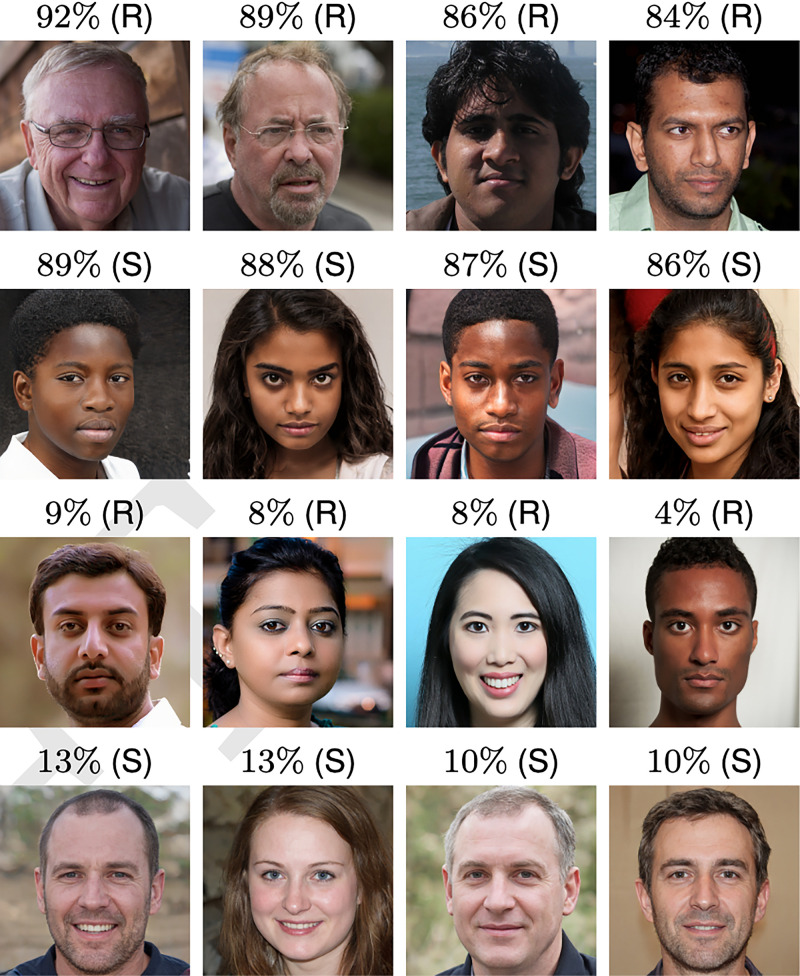
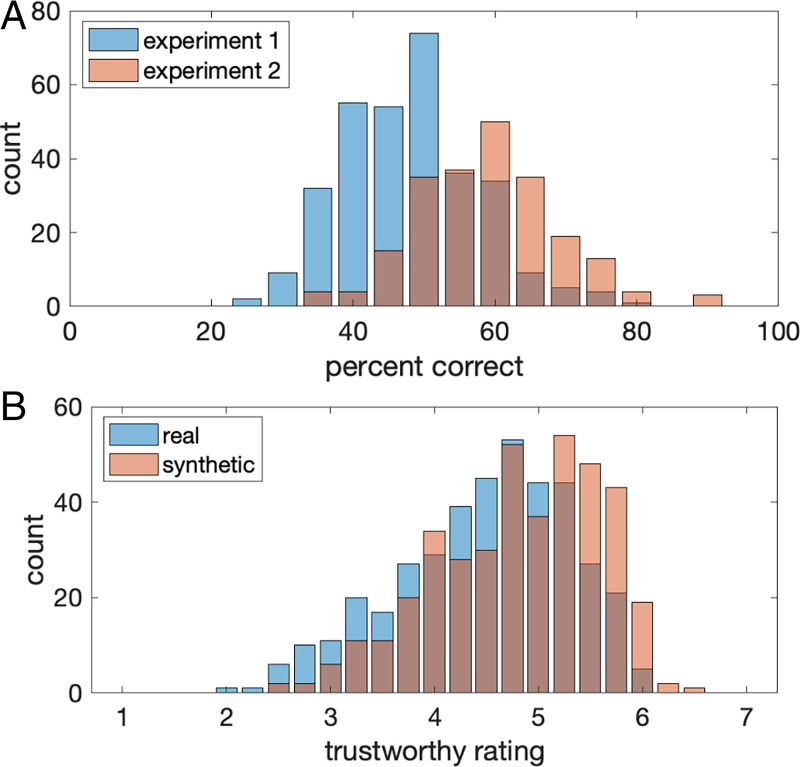
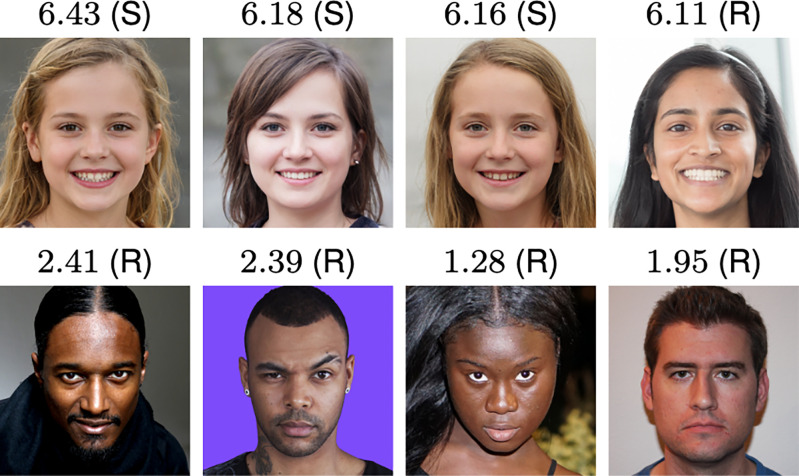
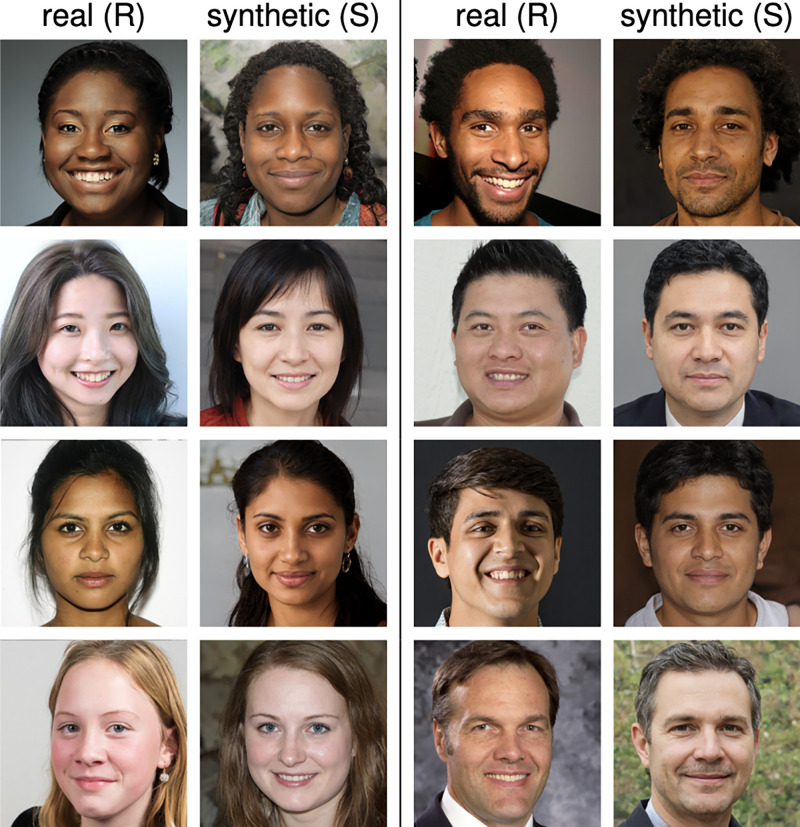
Verification
Claims the paper makes
The claims and statistics of this paper haven’t been checked yet.
Free: it reads the open-access text and checks the first 5 claims that cite a source we can check. Create a free account to check every claim.
Claims other papers make about this one
Each is checked against this paper’s own text: does it say what the citing paper says it does?
The cited source says what the claim attributes to it.
In the citing paper
“In the context of images, multiple studies show humans do not perform much better than chance [22, 23].”
From Warning: Humans cannot reliably detect speech deepfakes (2023) · cites this paper as [23]
The cited source says what the claim attributes to it.
In the citing paper
“Since early-generation LLMs, humans have been consistently poor at distinguishing AI-generated text (Mink et al., 2024), audio (Warren et al., 2024;Barrington et al., 2025) images (Nightingale & Farid, 2022;Mink et al., 2024), videos (Groh et al., 2022), and social media profiles containing AI-generated media (Mink et al., 2024).”
From Open Challenges in Multi-Agent Security: Towards Secure Systems of Interacting AI Agents (2025) · cites this paper as Nightingale & Farid, 2022
The cited source says what the claim attributes to it.
In the citing paper
“Images of synthetic faces produced by StyleGAN210 are indistinguishable from the original photos on which the StyleGAN2 algorithm was trained41.”
From Human detection of political speech deepfakes across transcripts, audio, and video (2024) · cites this paper as [41]
Self-check
Percentages, sums and reported differences re-computed from the paper’s own numbers.
The self-check needs the paper’s full text.
Citations
Cites
Analyzing and Improving the Image Quality of StyleGAN
Karras, T., Laine, S., Aittala, M., Hellsten, J., Lehtinen, J., & Aila, T. (2020) · 2020 IEEE/CVF Conference on Computer Vision and Pattern Recognition (CVPR) · doi:10.1109/cvpr42600.2020.00813 · Cited by 6,332
Analyzing and Improving the Image Quality of StyleGAN
Karras, T., Laine, S., Aittala, M., Hellsten, J., Lehtinen, J., & Aila, T. (2019) · arXiv · doi:10.48550/arxiv.1912.04958 · Cited by 6,332 · cited 5×
“We hypothesize that White faces are more difficult to classify because they are overrepresented in the StyleGAN2 training dataset and are therefore more realistic.”
BackgroundMethodInfluentialParkhi, O. M., Vedaldi, A., & Zisserman, A. (2015) · Procedings of the British Machine Vision Conference 2015 · doi:10.5244/c.29.41 · Cited by 5,479
WaveNet: a generative model for raw audio
Oord, A. V. D., Dieleman, S., Zen, H., Simonyan, K., Vinyals, O., Graves, A., Kalchbrenner, N., Senior, A., & Kavukcuoglu, K. (2016) · arXiv · doi:10.48550/arxiv.1609.03499 · Cited by 4,911 · cited 1×
“From synthesizing speech in anyone’s voice (1) to synthesizing an image of a fictional person (2) and swapping one person’s identity with another or altering what they are saying in a video (3), AI-synthesized content holds the power to entertain but also deceive.”
BackgroundFirst Impressions: Making Up Your Mind After a 100-Ms Exposure to a Face
Willis, J., & Todorov, A. (2006) · Psychological Science · doi:10.1111/j.1467-9280.2006.01750.x · Cited by 2,300
Face X-Ray for More General Face Forgery Detection
Li, L., Bao, J., Zhang, T., Yang, H., Chen, D., Wen, F., & Guo, B. (2020) · 2020 IEEE/CVF Conference on Computer Vision and Pattern Recognition (CVPR) · doi:10.1109/cvpr42600.2020.00505 · Cited by 1,211
CNN-Generated Images Are Surprisingly Easy to Spot… for Now
Wang, S.-Y., Wang, O., Zhang, R., Owens, A., & Efros, A. A. (2020) · 2020 IEEE/CVF Conference on Computer Vision and Pattern Recognition (CVPR) · doi:10.1109/cvpr42600.2020.00872 · Cited by 1,210
Synthesizing Obama: learning lip sync from audio
Suwajanakorn, S., Seitz, S. M., & Kemelmacher-Shlizerman, I. (2017) · ACM Transactions on Graphics · doi:10.1145/3072959.3073640 · Cited by 1,057
Citron, D. K., & Franks, M. A. (2014) · Digital Commons at University of Maryland Carey Law (University of Maryland Francis King Carey School of Law) · Cited by 590
(2019) · Cited by 415
Self-citation
Cited by
Generative AI Literacy: Twelve Defining Competencies
Annapureddy, R., Fornaroli, A., & Gatica-Perez, D. (2025) · Digital Government: Research and Practice · doi:10.1145/3685680 · Cited by 333
“Nonetheless, this competency differs from them as it relates more closely to the specific applications of generative AI, which may vary from case to case; moreover, although the ethical and legal contexts are important, the user should also consider the social and professional context, which may…”
The Creativity of Text-to-Image Generation
Oppenlaender, J. (2022) · Proceedings of the 25th International Academic Mindtrek Conference · doi:10.1145/3569219.3569352 · Cited by 290
“But it can be expected that we will, in the near future, no longer be able to tell text-toimage artworks apart from creations made by humans [37].”
BackgroundEvaluating Large Language Models in Generating Synthetic HCI Research Data: a Case Study
Hämäläinen, P., Tavast, M., & Kunnari, A. (2023) · Proceedings of the 2023 CHI Conference on Human Factors in Computing Systems · doi:10.1145/3544548.3580688 · Cited by 248
Artificial intelligence and consumer behavior: From predictive to generative AI
Hermann, E., & Puntoni, S. (2024) · Journal of Business Research · doi:10.1016/j.jbusres.2024.114720 · Cited by 230
The power of generative marketing: Can generative AI create superhuman visual marketing content?
Hartmann, J., Exner, Y., & Domdey, S. (2025) · International Journal of Research in Marketing · doi:10.1016/j.ijresmar.2024.09.002 · Cited by 229
The Moral Psychology of Artificial Intelligence
Bonnefon, J.-F., Rahwan, I., & Shariff, A. (2024) · Annual Review of Psychology · doi:10.1146/annurev-psych-030123-113559 · Cited by 151
Intriguing properties of synthetic images: from generative adversarial networks to diffusion models
Corvi, R., Cozzolino, D., Poggi, G., Nagano, K., & Verdoliva, L. (2023) · 2023 IEEE/CVF Conference on Computer Vision and Pattern Recognition Workshops (CVPRW) · doi:10.1109/cvprw59228.2023.00104 · Cited by 142
“These are high-quality images of impressive photorealism [29, 36].”
AI Hyperrealism: Why AI Faces Are Perceived as More Real Than Human Ones
Miller, E. J., Steward, B. A., Witkower, Z., Sutherland, C. A. M., Krumhuber, E. G., & Dawel, A. (2023) · Psychological Science · doi:10.1177/09567976231207095 · Cited by 134
“Intriguingly, Nightingale and Farid (2022) also reported more errors for White than non-White AI face detection.”
BackgroundMethodResultInfluentialAI-generated poetry is indistinguishable from human-written poetry and is rated more favorably
Porter, B., & Machery, E. (2024) · Scientific Reports · doi:10.1038/s41598-024-76900-1 · Cited by 133
Deepfake Detection: A Comprehensive Survey from the Reliability Perspective
Wang, T., Liao, X., Chow, K. P., Lin, X., & Wang, Y. (2025) · ACM Computing Surveys · doi:10.1145/3699710 · Cited by 107
La inteligencia artificial generativa y su impacto en la creación de contenidos mediáticos
Franganillo, J. F. (2023) · methaodos revista de ciencias sociales · doi:10.17502/mrcs.v11i2.710 · Cited by 265
Regulation of the Metaverse: A Roadmap
Rosenberg, L. B. (2022) · International Conference Virtual and Augmented Reality Simulations · doi:10.1145/3546607.3546611 · Cited by 128
Warning: Humans cannot reliably detect speech deepfakes
Mai, K. T., Bray, S., Davies, T., & Griffin, L. D. (2023) · PLOS ONE · doi:10.1371/journal.pone.0285333 · Cited by 98
GAN-Generated Faces Detection: A Survey and New Perspectives
Wang, X., Guo, H., Hu, S., Chang, M.-C., & Lyu, S. (2023) · Frontiers in Artificial Intelligence and Applications · doi:10.3233/faia230558 · Cited by 98
GAN-generated Faces Detection: A Survey and New Perspectives
Wang, X., Guo, H., Hu, S., Chang, M.-C., & Lyu, S. (2022) · arXiv · doi:10.48550/arxiv.2202.07145 · Cited by 98
Testing human ability to detect ‘deepfake’ images of human faces
Bray, S. D., Johnson, S. D., & Kleinberg, B. (2023) · Journal of Cybersecurity · doi:10.1093/cybsec/tyad011 · Cited by 96
Creating, Using, Misusing, and Detecting Deep Fakes
Farid, H. (2022) · Journal of Online Trust and Safety · doi:10.54501/jots.v1i4.56 · Cited by 89
“For example, in mid-May of 2020, in the midst of the global pandemic, 20% of the US public believed Bill Gates was planning to use COVID-19 to implement a mandatory vaccine program with tracking microchips (Nightingale and Farid 2020).”
BackgroundSelf-citationDeepfakes, Phrenology, Surveillance, and More! A Taxonomy of AI Privacy Risks
Lee, H.-P. (., Yang, Y.-J., Von Davier, T. S., Forlizzi, J., & Das, S. (2024) · Proceedings of the CHI Conference on Human Factors in Computing Systems · doi:10.1145/3613904.3642116 · Cited by 82
“However, we found that AI technologies can create new types of distortion risks by exploiting others’ identities to generate realistic fake images and audio that humans have difficulty discerning as fake [86, 128].”
BackgroundGenerative Visual AI in News Organizations: Challenges, Opportunities, Perceptions, and Policies
Thomson, T. J., Thomas, R. J., & Matich, P. (2024) · Digital Journalism · doi:10.1080/21670811.2024.2331769 · Cited by 128
“Research has shown, for example, how individuals can struggle to differentiate photographic and artificial images, and may indeed find synthetic faces more trustworthy, akin to “average” faces (Nightingale and Farid 2022; Seyama and Nagayama 2012).”
Human detection of political speech deepfakes across transcripts, audio, and video
Groh, M., Sankaranarayanan, A., Singh, N., Kim, D. Y., Lippman, A., & Picard, R. (2024) · Nature Communications · doi:10.1038/s41467-024-51998-z · Cited by 89
“I provide a range of comments below and also extend on my concerns above.”
On the privacy and security for e-health services in the metaverse: An overview
Letafati, M., & Otoum, S. (2023) · Ad Hoc Networks · doi:10.1016/j.adhoc.2023.103262 · Cited by 85
Bui, H. T., Filimonau, V., & Sezerel, H. (2024) · Journal of Destination Marketing & Management · doi:10.1016/j.jdmm.2024.100956 · Cited by 153
Anatomy of an AI-powered malicious social botnet
Yang, K., & Menczer, F. (2024) · Journal of Quantitative Description: Digital Media · doi:10.51685/jqd.2024.icwsm.7 · Cited by 71
“For instance, Generative Adversarial Networks can already create realistic human faces (Karras et al., 2019, 2020) that humans fail to identify (Nightingale and Farid, 2022), while the stable algorithms are capable of producing a variety of images (Rombach et al., 2022).”
BackgroundDetecting Gan-Generated Images by Orthogonal Training of Multiple CNNs
Mandelli, S., Bonettini, N., Bestagini, P., & Tubaro, S. (2022) · Proceedings - International Conference on Image Processing · doi:10.1109/icip46576.2022.9897310 · Cited by 115
“Similarly, the study conducted in [7] shows how synthetic faces prove even more trustworthy at human inspection.”
Non-Consensual Synthetic Intimate Imagery: Prevalence, Attitudes, and Knowledge in 10 Countries
Umbach, R., Henry, N., Beard, G. F., & Berryessa, C. M. (2024) · Proceedings of the CHI Conference on Human Factors in Computing Systems · doi:10.1145/3613904.3642382 · Cited by 73
“This is seen across a variety deepfake types, from deepfake audio [51] to photos [11, 58] and videos [37].”
BackgroundInitial policy considerations for generative artificial intelligence
(2023) · OECD Artificial Intelligence Papers · doi:10.1787/fae2d1e6-en · Cited by 36
TIMIT-TTS: A Text-to-Speech Dataset for Multimodal Synthetic Media Detection
Salvi, D., Hosler, B., Bestagini, P., Stamm, M. C., & Tubaro, S. (2023) · IEEE Access · doi:10.1109/access.2023.3276480 · Cited by 65
“In some cases, the generated synthetic material is so lifelike that it is difficult to discern from an authentic one [4].”
Human performance in detecting deepfakes: A systematic review and meta-analysis of 56 papers
Diel, A., Lalgi, T., Schröter, I. C., MacDorman, K. F., Teufel, M., & Bäuerle, A. (2024) · Computers in Human Behavior Reports · doi:10.1016/j.chbr.2024.100538 · Cited by 64
On the realness of people who do not exist: The social processing of artificial faces
Tucciarelli, R., Vehar, N., Chandaria, S., & Tsakiris, M. (2022) · iScience · doi:10.1016/j.isci.2022.105441 · Cited by 57
People are poorly equipped to detect AI-powered voice clones
Barrington, S., Cooper, E. A., & Farid, H. (2025) · Scientific Reports · doi:10.1038/s41598-025-94170-3 · Cited by 131
“This study reveals that, generally speaking, people are poorly equipped to identify AI-generated voice clones, both in terms of identity matching and naturalness.”
Self-citationFace/Off: Changing the face of movies with deepfakes
Murphy, G., Ching, D., Twomey, J., & Linehan, C. (2023) · PLoS ONE · doi:10.1371/journal.pone.0287503 · Cited by 72
“While computer-generated imagery is not a new technical development, the rise of deepfakes and the development of deepfake creation apps promises an especially realistic product without significant training or expensive equipment [3], and research has shown that most individuals cannot reliably distinguish AI generate…”
BackgroundSociotechnical Safety Evaluation of Generative AI Systems
Weidinger, L., Rauh, M., Marchal, N., Manzini, A., Hendricks, L. A., Mateos-Garcia, J., Bergman, S., Kay, J., Griffin, C., Bariach, B., et al. (2023) · arXiv · doi:10.48550/arxiv.2310.11986 · Cited by 49
Using deepfakes for experiments in the social sciences - A pilot study
Eberl, A., Kühn, J., & Wolbring, T. (2022) · Frontiers in Sociology · doi:10.3389/fsoc.2022.907199 · Cited by 48
Human perception of art in the age of artificial intelligence
van Hees, J., Grootswagers, T., Quek, G. L., & Varlet, M. (2025) · Frontiers in Psychology · doi:10.3389/fpsyg.2024.1497469 · Cited by 68
Detecting Real-Time Deep-Fake Videos Using Active Illumination
Gerstner, C. R., & Farid, H. (2022) · IEEE/CVF Conference on Computer Vision and Pattern Recognition Workshops (CVPRW) · doi:10.1109/cvprw56347.2022.00015 · Cited by 62
“Since they splashed onto the scene in 2017 with full force (an earlier incarnation dates to a decade earlier [9]), AIsynthesized content – so-called deep fakes – have continued their rapid trajectory of increased sophistication, realism [26], and accessibility.”
BackgroundSelf-citationMiller, E. J., Foo, Y. Z., Mewton, P., & Dawel, A. (2023) · Computers in Human Behavior Reports · doi:10.1016/j.chbr.2023.100283 · Cited by 63
Start Generating: Harnessing Generative Artificial Intelligence for Sociological Research
Davidson, T. (2024) · Socius Sociological Research for a Dynamic World · doi:10.1177/23780231241259651 · Cited by 78
“Texts generated by LLMs can be difficult to distinguish from those written by humans (Clark et al. 2021) and images of faces generated by GAI can be indistinguishable from real human faces (Nightingale and Farid 2022).”
Augmenting research methods with foundation models and generative AI
Rossi, S., Rossi, M., Mukkamala, R. R., Thatcher, J. B., & Dwivedi, Y. K. (2024) · International Journal of Information Management · doi:10.1016/j.ijinfomgt.2023.102749 · Cited by 66
Chein, J., Martinez, S., & Barone, A. (2024) · doi:10.21203/rs.3.rs-4277893/v1 · Cited by 38
“20,21 22–26 Interestingly, judgment accuracy can be near chance even when participants’ self-report high degrees of certainty about the source, a �nding that replicates in work with AI-generated faces, 22,23 videos, 27 artworks, 28,29 poetry, 30,31 and texts.”
BackgroundChein, J. M., Martinez, S. A., & Barone, A. R. (2024) · Scientific Reports · doi:10.1038/s41598-024-76218-y · Cited by 38
“However, in studies using newer gAI models, human evaluators are frequently no better than random chance 18–22 .”
BackgroundRepMix: Representation Mixing for Robust Attribution of Synthesized Images
Bui, T., Yu, N., & Collomosse, J. P. (2022) · Lecture notes in computer science · doi:10.1007/978-3-031-19781-9_9 · Cited by 70
Contenido generado por inteligencia artificial: oportunidades y amenazas
Franganillo, J. F. (2022) · Anuario ThinkEPI · doi:10.3145/thinkepi.2022.e16a24 · Cited by 48
Al-Okbi, N. K., Alomari, S. A., Hadi, W. J., Ajrash, A. S., Smerat, A., & Abualigah, L. (2025) · SN Computer Science · doi:10.1007/s42979-025-04462-8 · Cited by 39
Regulating the Metaverse, a Blueprint for the Future
Rosenberg, L. B. (2022) · Lecture notes in computer science · doi:10.1007/978-3-031-15546-8_23 · Cited by 57
A review on deepfake generation and detection: bibliometric analysis
Kaushal, A., Kumar, S., & Kumar, R. (2024) · Multimedia Tools and Applications · doi:10.1007/s11042-024-18706-x · Cited by 47
On manipulation by emotional AI: UK adults’ views and governance implications
Bakir, V., Laffer, A., McStay, A., Miranda, D., & Urquhart, L. (2024) · Frontiers in Sociology · doi:10.3389/fsoc.2024.1339834 · Cited by 34
“Responses 2 and 3 ask about concerns about being able to tell what is real or authentic—a common problem with deepfakes and bots (Dobber et al., 2020; Vaccari and Chadwick, 2020; Köbis et al., 2021; Nightingale and Farid, 2022).”
BackgroundA Representative Study on Human Detection of Artificially Generated Media Across Countries
Frank, J., Herbert, F., Ricker, J., Schönherr, L., Eisenhofer, T., Fischer, A., Dürmuth, M., & Holz, T. (2024) · IEEE Symposium on Security and Privacy (S&P) · doi:10.1109/sp54263.2024.00159 · Cited by 88
Misinformed by images: How images influence perceptions of truth and what can be done about it
Newman, E. J., & Schwarz, N. (2023) · Current Opinion in Psychology · doi:10.1016/j.copsyc.2023.101778 · Cited by 72
Non-imaging Medical Data Synthesis for Trustworthy AI: A Comprehensive Survey
Xing, X., Wu, H., Wang, L., Stenson, I., Yong, M., Ser, J. D., Walsh, S. L. F., & Yang, G. (2024) · ACM Computing Surveys · doi:10.1145/3614425 · Cited by 53
“These synthetic data can serve as a qualified training set for the trustworthy AI algorithms [82, 97].”
MethodAs Good as a Coin Toss: Human Detection of AI-Generated Content
Cooke, D., Edwards, A., Barkoff, S., & Kelly, K. (2025) · Communications of the ACM · doi:10.1145/3729417 · Cited by 106
Deepfake smiles matter less—the psychological and neural impact of presumed AI-generated faces
Eiserbeck, A., Maier, M., Baum, J., & Rahman, R. A. (2023) · Scientific Reports · doi:10.1038/s41598-023-42802-x · Cited by 45
Regulating Deep Fakes in the Artificial Intelligence Act
Łabuz, M. (2023) · Applied Cybersecurity & Internet Governance · doi:10.60097/acig/162856 · Cited by 62
On the generation of realistic synthetic petrographic datasets using a style-based GAN
Ferreira, I., Gutierrez, L. H. O., & Koeshidayatullah, A. (2022) · Scientific Reports · doi:10.1038/s41598-022-16034-4 · Cited by 41
“Images that are ’more real than real’ have already been observed in GANs trained with faces10,11, and Gestalt theory has been previously used in deep learning in preprocessing steps to obtain efficient image descriptors for CNN 53 training.”
MethodOld Threats, New Name? Generative AI and Visual Journalism
Matich, P., Thomson, T. J., & Thomas, R. J. (2025) · Routledge eBooks · doi:10.1080/17512786.2025.2451677 · Cited by 53
“For example, synthetic faces may seem more trustworthy because they appear like “average faces” (Nightingale and Farid 2022), representing “the norm for facial judgements” (Seyama and Nagayama 2012, 385).”
An Accurate and Interpretable Framework for Trustworthy Process Monitoring
Wang, H., Wang, Z., Niu, Y., Liu, Z., Li, H., Liao, Y., Huang, Y., & Liu, X. (2023) · IEEE Transactions on Artificial Intelligence · doi:10.1109/tai.2023.3319606 · Cited by 43
“Themonitoreddoseratedataismadedailyaccessiblevia ourprojectwebsite.”
A Watermark-Conditioned Diffusion Model for IP Protection
Min, R., Li, S., Chen, H., & Cheng, M. (2024) · Lecture notes in computer science · doi:10.1007/978-3-031-72890-7_7 · Cited by 77
Lapointe, V. A., Dubé, S., Rukhlyadyev, S., Kessai, T., & Lafortune, D. (2025) · Archives of Sexual Behavior · doi:10.1007/s10508-025-03099-1 · Cited by 40
Nissen, A., Conrad, C., & Newman, A. J. (2023) · CHI Conference on Human Factors in Computing Systems · doi:10.1145/3544548.3580943 · Cited by 32
“One study found that images of deepfakes may be rated even higher in perceived trust than those of real humans [71].”
BackgroundResultInfluentialKocadere, S. A., & Özhan, Ş. Ç. (2024) · The International Review of Research in Open and Distributed Learning · doi:10.19173/irrodl.v25i3.7815 · Cited by 46
“It is thought that this problem can be solved with technological developments, thanks to synthesis engines that are getting better at creating reliable faces that don’t cause uncanny valleys (Nightingale & Farid, 2022).”
Advancing GAN Deepfake Detection: Mixed Datasets and Comprehensive Artifact Analysis
Say, T., Alkan, M., & Koçak, A. (2025) · Applied Sciences · doi:10.3390/app15020923 · Cited by 30
Generative AI framework for sensory and consumer research
Motoki, K., Low, J. Y. Q., & Velasco, C. (2025) · Food Quality and Preference · doi:10.1016/j.foodqual.2025.105600 · Cited by 32
A language framework for modeling social media account behavior
Nwala, A. C., Flammini, A., & Menczer, F. (2023) · EPJ Data Science · doi:10.1140/epjds/s13688-023-00410-9 · Cited by 31
“Some display detailed profiles, either stolen from other users or generated by deep neural networks [15].”
BackgroundWhat is beautiful is still good: the attractiveness halo effect in the era of beauty filters
Gulati, A., Martínez-Garcia, M., Fernández, D., Lozano, M. A., Lepri, B., & Oliver, N. (2024) · Royal Society Open Science · doi:10.1098/rsos.240882 · Cited by 21
Marketing in the Metaverse and the Need for Consumer Protections
Rosenberg, L. B. (2022) · IEEE Annual Ubiquitous Computing, Electronics & Mobile Communication Conference (UEMCON) · doi:10.1109/uemcon54665.2022.9965661 · Cited by 21
“Even more surprising, they determined that average consumers perceived the virtual people to be “more trustworthy” than the real people [19].”
BackgroundStrategizing AI in Business and Education: Emerging Technologies and Business Strategy
Przegalińska, A., & Jemielniak, D. (2023) · Cambridge University Press eBooks · doi:10.1017/9781009243520 · Cited by 28
Balancing Realism and Trust: AI Avatars In Science Communication
Baake, J., Schmitt, J. B., & Metag, J. (2025) · Journal of Science Communication · doi:10.22323/2.24020203 · Cited by 33
Towards Frequency Band Explainability in Synthetic Speech Detection
Salvi, D., Bestagini, P., & Tubaro, S. (2023) · European Signal Processing Conference (EUSIPCO) · doi:10.23919/eusipco58844.2023.10289804 · Cited by 31
“The ability to generate forged content that is indistinguishable from real one has spread across various domains (e.g., images, videos, audio) and has captured the attention of both researchers and specialists [1].”
BackgroundDeep Learning-Based Gender Classification by Training With Fake Data
Oulad-Kaddour, M., Haddadou, H., Conde, C., Alonso, D. P., Benatchba, K., & Cabello, E. (2023) · IEEE Access · doi:10.1109/access.2023.3328210 · Cited by 24
“A recent empirical study [29] perceived that fake faces are indistinguishable from real faces and more trustworthy.”
BackgroundExamining human reliance on artificial intelligence in decision making
Pearson, J., Dror, I. E., Jayes, E., Whordley, G.-R., Mason, G., & Nightingale, S. J. (2026) · Scientific Reports · doi:10.1038/s41598-026-34983-y · Cited by 37
“Will participants who receive guidance (from AI or humans) show a similar decision accuracy to a baseline control comparison group (from 29) ?”
InfluentialSelf-citationLinkedOut? A Field Experiment on Discrimination in Job Network Formation
Evsyukova, Y., Rusche, F., & Mill, W. (2024) · The Quarterly Journal of Economics · doi:10.1093/qje/qjae035 · Cited by 41
A Quantum Model of Trust Calibration in Human–AI Interactions
Roeder, L., Hoyte, P., van der Meer, J. N., Fell, L., Johnston, P., Kerr, G., & Bruza, P. (2023) · Entropy · doi:10.3390/e25091362 · Cited by 19
“In addition, we selected the top 294 images in each category (real or fake) based on the accuracy rating in Nightingale and Farid [13]; that is, we selected the images that were most correctly identified as real or AI-synthesised by human participants in Nightingale and Farid [13] in order to better…”
MethodInfluentialYan, H. Y., Morrow, G., Yang, K.-C., & Wihbey, J. (2025) · Harvard Kennedy School Misinformation Review · doi:10.37016/mr-2020-171 · Cited by 51
“Research indicates that average consumers of online content often cannot distinguish between content created by AI and that created by humans (Nightingale & Farid, 2022).”
The impact of advanced AI systems on democracy
Summerfield, C., Argyle, L. P., Bakker, M. A., Collins, T., Durmus, E., Eloundou, T., Gabriel, I., Ganguli, D., Hackenburg, K., Hadfield, G. K., et al. (2025) · Nature Human Behaviour · doi:10.1038/s41562-025-02309-z · Cited by 87
“Recent (as yet unreviewed) work suggests that AI-generated audio and video 71 , images of human faces 72 , and tweets 73 may now be largely undetectable as such.”
The Growing Need for Metaverse Regulation
Rosenberg, L. B. (2022) · Lecture notes in networks and systems · doi:10.1007/978-3-031-16075-2_39 · Cited by 20
Exploring the Synthetic Speech Attribution Problem Through Data-Driven Detectors
Salvi, D., Bestagini, P., & Tubaro, S. (2022) · IEEE International Workshop on Information Forensics and Security · doi:10.1109/wifs55849.2022.9975440 · Cited by 26
“Furthermore, thanks to the advent of deep learning techniques as neural networks and Generative Adversarial Networks (GANs), it is possible to generate data that are hard to distinguish from the real ones [2].”
BackgroundMisinformation and the sins of memory: False-belief formation and limits on belief revision.
Newman, E. J., Swire‐Thompson, B., & Ecker, U. K. H. (2022) · Journal of Applied Research in Memory and Cognition · doi:10.1037/mac0000090 · Cited by 26
The Value of AI Guidance in Human Examination of Synthetically-Generated Faces
Boyd, A., Tinsley, P., Bowyer, K. W., & Czajka, A. (2023) · Proceedings of the AAAI Conference on Artificial Intelligence · doi:10.1609/aaai.v37i5.25734 · Cited by 31
A Geometric and Photometric Exploration of GAN and Diffusion Synthesized Faces
Boháček, M., & Farid, H. (2023) · IEEE/CVF Conference on Computer Vision and Pattern Recognition Workshops (CVPRW) · doi:10.1109/cvprw59228.2023.00094 · Cited by 25
“And, in fact, a recent set of perceptual studies [28] found that StyleGAN2 faces are nearly indistinguishable from real faces (and even slightly more trustworthy).”
BackgroundSelf-citationExperts fail to reliably detect AI-generated histological data
Hartung, J., Reuter, S., Kulow, V. A., Fähling, M., Spreckelsen, C., & Mrowka, R. (2024) · Scientific Reports · doi:10.1038/s41598-024-73913-8 · Cited by 22
Preu, E., Jackson, M., & Choudhury, N. (2022) · IEEE Annual Ubiquitous Computing, Electronics & Mobile Communication Conference (UEMCON) · doi:10.1109/uemcon54665.2022.9965697 · Cited by 28
“Therefore, researchers [3], [8], [11] stressed on the public education via targeted awareness campaign against Deepfakes.”
BackgroundThe Malicious Use of Deepfakes Against Psychological Security and Political Stability
Pashentsev, E. N. (2023) · Springer eBooks · doi:10.1007/978-3-031-22552-9_3 · Cited by 22
Generating Credibility in Crisis: Will an AI-Scripted Response Be Accepted?
Ray, E. C., Merle, P. F., & Lane, K. (2025) · International Journal of Strategic Communication · doi:10.1080/1553118x.2024.2435494 · Cited by 16
“This ability to discern human communication from machines can alter levels of trust and compliance (Cooke et al., 2024; Josephs et al., 2023; Nightingale & Farid, 2022; Shen et al., 2021; Tucciarelli et al., 2022).”
Bakir, V., & McStay, A. (2022) · Springer eBooks · doi:10.1007/978-3-031-13551-4 · Cited by 38
ForamViT-GAN: Exploring New Paradigms in Deep Learning for Micropaleontological Image Analysis
Ferreira, I., & Koeshidayatullah, A. (2023) · IEEE Access · doi:10.1109/access.2023.3291620 · Cited by 22
“Recently, these architectures have been able to deceive the human eye for both face recognition (Lago et al., 2021; Nightingale & Farid, 2022) and even for recognition of specific datasets in geology (Ferreira et al., 2022a; Ferreira & Koeshidayatullah, 2022).”
BackgroundKatirai, A., García, N., Ide, K., Nakashima, Y., & Kishimoto, A. (2024) · AI and Ethics · doi:10.1007/s43681-024-00517-3 · Cited by 26
“…images synthesized by different [diffusion models],” highlighting an urgent need for mitigation of these risks, including through mechanisms for improved detection (see also [112]), or mechanisms to make the provenance of AI-generated output clear, such as through the use of water-marks [74, 109].”
InfluentialPataranutaporn, P., Archiwaranguprok, C., Chan, S., Loftus, E. F., & Maes, P. (2025) · CHI Conference on Human Factors in Computing Systems · doi:10.1145/3706598.3713697 · Cited by 50
“Examples include changing ethnicity, time of day, or military presence, as seen in Figure 4.”
Voice clones sound realistic but not (yet) hyperrealistic
Lavan, N., Irvine, M., Rosi, V., & McGettigan, C. (2025) · PLoS ONE · doi:10.1371/journal.pone.0332692 · Cited by 38
Identifying and minimising the impact of fake visual media: Current and future directions
Nightingale, S. J., & Wade, K. A. (2022) · Memory Mind & Media · doi:10.1017/mem.2022.8 · Cited by 20
“…people are frequently fooled by deep fakes and cannot reliably distinguish between real and synthetic faces (Hulzebosch et al 2020; Lago et al 2022; Nightingale and Farid 2022) or videos (Groh et al 2021; Hughes et al 2021), yet show over-confidence in their ability to recognise deep fake content…”
BackgroundSelf-citationUtilization of Machine Learning for the Objective Assessment of Rhinoplasty Outcomes
Topsakal, O., Dobratz, E. J., Akbaş, M. İ., Dougherty, W. M., Akıncı, T. Ç., & Çelikoyar, M. M. (2023) · IEEE Access · doi:10.1109/access.2023.3270438 · Cited by 14
“A recent study that utilizes the same technology shows that synthesized photos are indistinguishable from real photos [33].”
BackgroundUllstein, C., Engelmann, S., Papakyriakopoulos, O., Ikkatai, Y., Arnez-Jordan, N. P., Caleno, R., Mboya, B., Higuma, S., Hartwig, T., Yokoyama, H., et al. (2024) · ACM Conference on Fairness, Accountability, and Transparency (FAccT) · doi:10.1145/3630106.3659038 · Cited by 18
“Despite these findings and raised concerns, computer vision AI has claimed not only being able to infer personality traits [50], emotions [8] or political orientation [53] from still images but also to create artificial faces that humans perceive as more trustworthy than real faces [65].”
BackgroundYu, Z., & Ai-zhong, H. (2025) · Journal of Product & Brand Management · doi:10.1108/jpbm-02-2024-4974 · Cited by 25
Faking It Isn’t Making It: Research Needs Spontaneous and Naturalistic Facial Expressions
Dawel, A., Krumhuber, E. G., & Palermo, R. (2025) · Affective Science · doi:10.1007/s42761-025-00320-1 · Cited by 17
“Researchers may be tempted to generate face stimuli using artificial intelligence (AI), given the high level of realism these have achieved (Miller, Steward, et al., 2023; Nightingale & Farid, 2022).”
Artificial Intelligence Physician Avatars for Patient Education: A Pilot Study
Haider, S. A., Prabha, S., Gomez-Cabello, C. A., Genovese, A., Collaço, B. G., Wood, N. G., Lifson, M. A., Bagaria, S. P., Tao, C., & Forte, A. J. (2025) · Journal of Clinical Medicine · doi:10.3390/jcm14238595 · Cited by 18
“Evidence suggests that AI-generated faces can sometimes be rated as more trustworthy than real ones [38], indicating that once deepfakes achieve sufficient realism they may bridge the uncanny valley, a pattern supported by our findings.”
Imágenes falsas, efectos reales. Deepfakes como manifestaciones de la violencia política de género
Barrientos–Báez, A., Piñeiro-Otero, T., & Renó, D. P. (2024) · Revista Latina de Comunicación Social · doi:10.4185/rlcs-2024-2278 · Cited by 28
Łabuz, M. (2025) · Policy & Internet · doi:10.1002/poi3.435 · Cited by 24
“Already in 2022, it was proven that AI ‐ synthesized faces are indistinguishable from real faces, and respondents consider them more trustworthy (Nightingale and Farid 2022), which also highlights the persuasive potential of these creations.”
TrueFace: a Dataset for the Detection of Synthetic Face Images from Social Networks
Boato, G., Pasquini, C., Stefani, A. L., Verde, S., & Miorandi, D. (2022) · IEEE International Joint Conference on Biometrics (IJCB) · doi:10.1109/ijcb54206.2022.10007988 · Cited by 20
“Adopted models for face generation produce hyper-realistic faces not distinguishable from real ones by humans, as recently demonstrated in [15,31].”
BackgroundSynthetic and natural face identity processing share common mechanisms
Uittenhove, K. L., Shahreza, H. O., Marcel, S., & Ramon, M. (2024) · Computers in Human Behavior Reports · doi:10.1016/j.chbr.2024.100563 · Cited by 16
Social perception of robots is shaped by beliefs about their minds
Momen, A., Hugenberg, K., & Wiese, E. (2024) · Scientific Reports · doi:10.1038/s41598-024-53187-w · Cited by 17
“Indeed, whereas early deepfakes were still detectable by humans 32–34 , the synthetic faces now being created are so lifelike that they are often indistinguishable from genuine human faces 11,23,24 .”
BackgroundResultInfluentialShould I trust you? Investigating trustworthiness judgements of painful facial expressions
der Biest, M. V., Cracco, E., Riva, P., & Valentini, E. (2023) · Acta Psychologica · doi:10.1016/j.actpsy.2023.103893 · Cited by 12
Exposing GAN-Generated Profile Photos from Compact Embeddings
Mundra, S., Aniano, G., Marvaniya, S., Verbus, J. R., & Farid, H. (2023) · IEEE/CVF Conference on Computer Vision and Pattern Recognition Workshops (CVPRW) · doi:10.1109/cvprw59228.2023.00095 · Cited by 15
Self-citation
Metadata
- Authors
- Nightingale, S. J., & Farid, H.
- Affiliations
- Lancaster University (GB)
- University of California, Berkeley (US)
- Corresponding author
- Nightingale, Sophie J.
- Venue
- Proceedings of the National Academy of Sciences
- Publisher
- National Academy of Sciences
- Published
- 2022-02-14
- Volume
- 119
- Issue
- 8
- ISSN
- 0027-8424 (ISSN-L)
- 1091-6490
- PMC
- PMC8872790
- OpenAlex
- W4213187648
- Cited by
- 397
- References
- 13
- Citations by year
- 2026: 118 · 2025: 110 · 2024: 84 · 2023: 57 · 2022: 28
- FWCI
- 22.82
- Type
- journal article
- Language
- en
- Open access
- hybrid
- doi.org
- Licence
- Locations
- Proceedings of the National Academy of Sciences (publishedVersion, cc-by-nc-nd)
- PubMed Central (publishedVersion, cc-by-nc-nd)
- PubMed (publishedVersion)
- Lancaster EPrints (Lancaster University) (submittedVersion, cc-by-nc-nd)
- Topics
- Physical Sciences › Computer Science › Computer Vision and Pattern Recognition › Digital Media Forensic Detection
- Physical Sciences › Computer Science › Computer Vision and Pattern Recognition › Face recognition and analysis
- Physical Sciences › Computer Science › Computer Vision and Pattern Recognition › Generative Adversarial Networks and Image Synthesis
- Keywords
- AI-generated faces, face synthesis, photorealism, uncanny valley, face perception, trustworthiness, deepfakes, disinformation, financial fraud
About these checks
Registry, retraction, Cites and statistics results are computed, not judged, with one exception: a printed reference that no index lists is read once by a model before it counts as a citation error. Claims are extracted by a model and kept only when their quote appears verbatim in the text; each cited source is then checked, with a model’s help, for whether it says what the claim relies on. Those verdicts can be wrong — read the claim’s quote and the cited source before relying on one.
Statistics and arithmetic are recomputed, not judged.
Confidence bands are shown only for fields calibrated on our annotated test set. None is calibrated yet, so no band is shown.
What counts as a claim ›How we measure confidence ›How we check this ›
Are you an author, or do you see a problem with this page? Request a review
Data sources
Bibliographic data: Semantic Scholar, OpenAlex, Crossref.
Contains information from the Semantic Scholar Academic Graph Datasets, made available under the ODC Attribution License (ODC-BY 1.0).
Semantic Scholar’s data is described in: Kinney, R., et al. (2023). The Semantic Scholar Open Data Platform. arXiv:2301.10140.
