

AI-synthesized faces are indistinguishable from real faces and more trustworthy
Open accessThe DOI matches its Crossref record; 19 of the 19 references it cites were found in a registry or an index.
Abstract
Artificial intelligence (AI)–synthesized text, audio, image, and video are being weaponized for the purposes of nonconsensual intimate imagery, financial fraud, and disinformation campaigns. Our evaluation of the photorealism of AI-synthesized faces indicates that synthesis engines have passed through the uncanny valley and are capable of creating faces that are indistinguishable—and more trustworthy—than real faces.
Overview
The claims and statistics of this paper haven’t been checked yet.
Free: it reads the open-access text and checks the first 5 claims that cite a source we can check. Create a free account to check every claim.
Integrity signals
Registry
Cites
Statistics
Figures
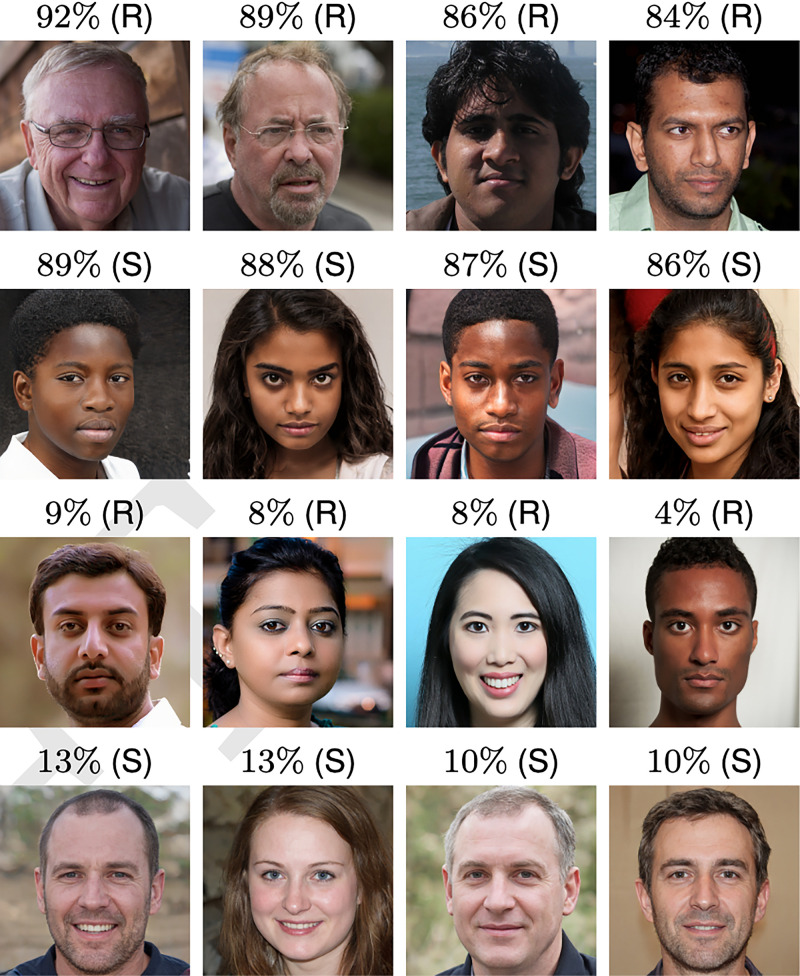
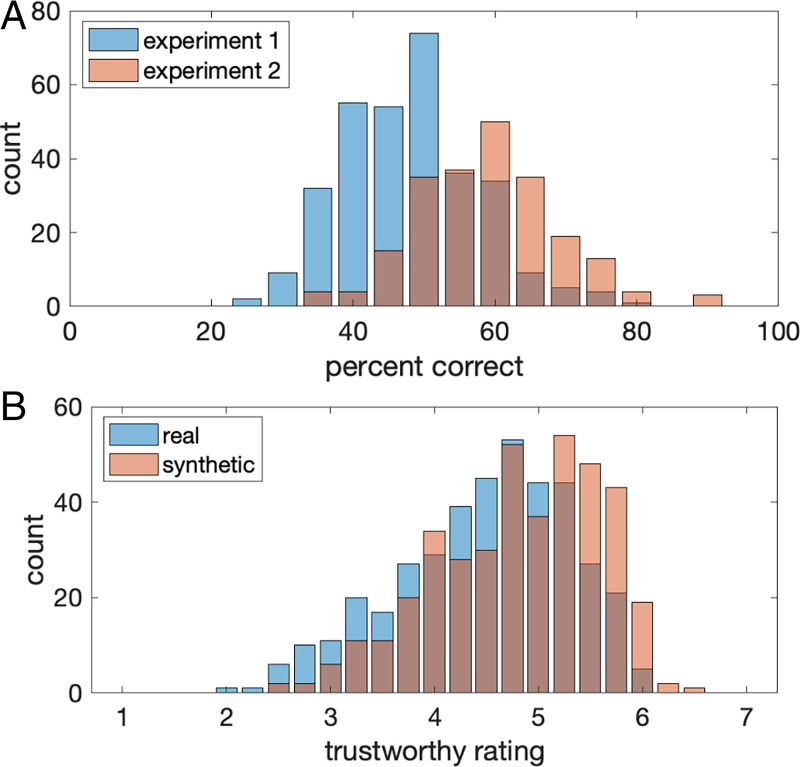
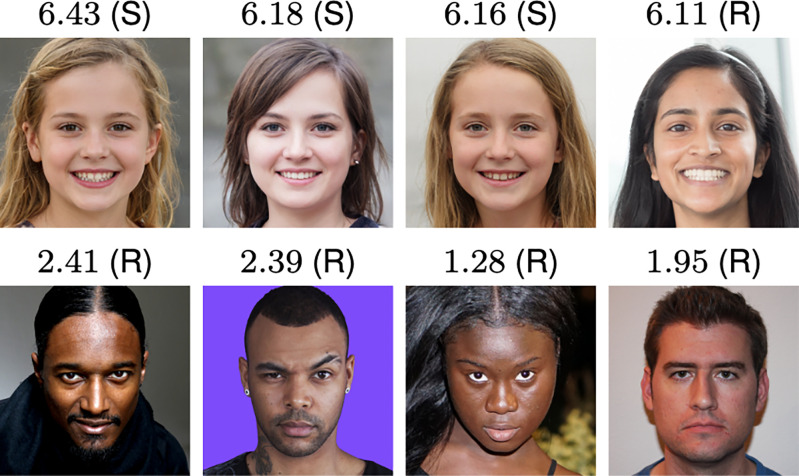
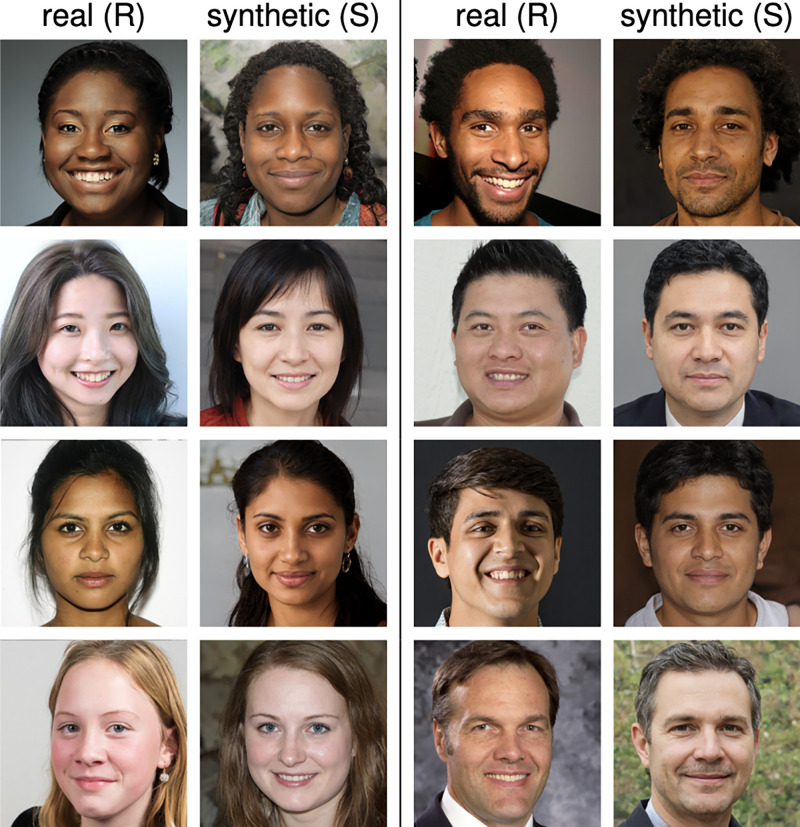
Verification
Claims the paper makes
The claims and statistics of this paper haven’t been checked yet.
Free: it reads the open-access text and checks the first 5 claims that cite a source we can check. Create a free account to check every claim.
Claims other papers make about this one
Each is checked against this paper’s own text: does it say what the citing paper says it does?
The cited source says what the claim attributes to it.
In the citing paper
“In the context of images, multiple studies show humans do not perform much better than chance [22, 23].”
From Warning: Humans cannot reliably detect speech deepfakes (2023) · cites this paper as [23]
The cited source says what the claim attributes to it.
In the citing paper
“Since early-generation LLMs, humans have been consistently poor at distinguishing AI-generated text (Mink et al., 2024), audio (Warren et al., 2024;Barrington et al., 2025) images (Nightingale & Farid, 2022;Mink et al., 2024), videos (Groh et al., 2022), and social media profiles containing AI-generated media (Mink et al., 2024).”
From Open Challenges in Multi-Agent Security: Towards Secure Systems of Interacting AI Agents (2025) · cites this paper as Nightingale & Farid, 2022
The cited source says what the claim attributes to it.
In the citing paper
“Images of synthetic faces produced by StyleGAN210 are indistinguishable from the original photos on which the StyleGAN2 algorithm was trained41.”
From Human detection of political speech deepfakes across transcripts, audio, and video (2024) · cites this paper as [41]
Self-check
Percentages, sums and reported differences re-computed from the paper’s own numbers.
The self-check needs the paper’s full text.
Citations
Cites
Analyzing and Improving the Image Quality of StyleGAN
Karras, T., Laine, S., Aittala, M., Hellsten, J., Lehtinen, J., & Aila, T. (2020) · 2020 IEEE/CVF Conference on Computer Vision and Pattern Recognition (CVPR) · doi:10.1109/cvpr42600.2020.00813 · Cited by 6,332
Analyzing and Improving the Image Quality of StyleGAN
Karras, T., Laine, S., Aittala, M., Hellsten, J., Lehtinen, J., & Aila, T. (2019) · arXiv · doi:10.48550/arxiv.1912.04958 · Cited by 6,332 · cited 5×
“We hypothesize that White faces are more difficult to classify because they are overrepresented in the StyleGAN2 training dataset and are therefore more realistic.”
BackgroundMethodInfluentialParkhi, O. M., Vedaldi, A., & Zisserman, A. (2015) · Procedings of the British Machine Vision Conference 2015 · doi:10.5244/c.29.41 · Cited by 5,479
WaveNet: a generative model for raw audio
Oord, A. V. D., Dieleman, S., Zen, H., Simonyan, K., Vinyals, O., Graves, A., Kalchbrenner, N., Senior, A., & Kavukcuoglu, K. (2016) · arXiv · doi:10.48550/arxiv.1609.03499 · Cited by 4,911 · cited 1×
“From synthesizing speech in anyone’s voice (1) to synthesizing an image of a fictional person (2) and swapping one person’s identity with another or altering what they are saying in a video (3), AI-synthesized content holds the power to entertain but also deceive.”
BackgroundFirst Impressions: Making Up Your Mind After a 100-Ms Exposure to a Face
Willis, J., & Todorov, A. (2006) · Psychological Science · doi:10.1111/j.1467-9280.2006.01750.x · Cited by 2,300
Face X-Ray for More General Face Forgery Detection
Li, L., Bao, J., Zhang, T., Yang, H., Chen, D., Wen, F., & Guo, B. (2020) · 2020 IEEE/CVF Conference on Computer Vision and Pattern Recognition (CVPR) · doi:10.1109/cvpr42600.2020.00505 · Cited by 1,211
CNN-Generated Images Are Surprisingly Easy to Spot… for Now
Wang, S.-Y., Wang, O., Zhang, R., Owens, A., & Efros, A. A. (2020) · 2020 IEEE/CVF Conference on Computer Vision and Pattern Recognition (CVPR) · doi:10.1109/cvpr42600.2020.00872 · Cited by 1,210
Synthesizing Obama: learning lip sync from audio
Suwajanakorn, S., Seitz, S. M., & Kemelmacher-Shlizerman, I. (2017) · ACM Transactions on Graphics · doi:10.1145/3072959.3073640 · Cited by 1,057
Citron, D. K., & Franks, M. A. (2014) · Digital Commons at University of Maryland Carey Law (University of Maryland Francis King Carey School of Law) · Cited by 590
(2019) · Cited by 415
Self-citation
Cited by
Items 201–300 of 405
Farid, H. (2023) · The Conversation · doi:10.64628/aai.5wp5wcut5 · Cited by 7
Self-citationCan AI-generated faces serve as fillers in eyewitness lineups?
Greenspan, R. L., & Bergold, A. N. (2025) · Memory · doi:10.1080/09658211.2025.2467134 · Cited by 3
“Even when given feedback across multiple trials, AI face detection does not seem to improve (Nightingale & Farid, 2022).”
InfluentialJust Hallucinations? The Problem of AI Literacy with a New Digital Divide
Bassi, E., & Pagallo, U. (2025) · Lecture notes in computer science · doi:10.1007/978-3-032-01429-0_18 · Cited by 6
Rahman, T., Chakma, R., & Mahmud, T. (2025) · IEEE International Conference on Quantum Photonics, Artificial Intelligence & Networking (QPAIN) · doi:10.1109/qpain66474.2025.11171737 · Cited by 5
“As these technologies become increasingly accessible and sophisticated, the gap between authentic and manipulated content continues to narrow, making manual detection increasingly difficult even for trained human observers [2].”
Alexander, D., Alexander, B., Martin, T. C., & Christoph, J. (2025) · Scientific Reports · doi:10.1038/s41598-025-21290-1 · Cited by 4
“If not labelled as AI-generated, participants are even more likely to rate trained AI voices as human, similar to how AI-generated faces may be perceived as more trustworthy and authentic compared to real faces 56 .”
Generation Z's Fight Against Deepfake Videos: A Survey on Identification Strategies
Chen, C., Goh, D. H., Qiu, H. R., & Neo, C. (2025) · Proceedings of the Association for Information Science and Technology · doi:10.1002/pra2.1309 · Cited by 4
Understanding generative AI output with embedding models
Vargas, M., Cannon, R., Engel, A., Sarwate, A. D., & Chiang, T. (2025) · Science Advances · doi:10.1126/sciadv.adx4082 · Cited by 11
“The release of ChatGPT quickly led to noticeable shifts in writing styles ( 60 ), and other studies have issued concerns for the ability of humans to detect articles produced by generative AI models ( 61 – 63 ).”
Schöning, V., & Hammann, F. (2026) · Pharmacology Research & Perspectives · doi:10.1002/prp2.70241 · Cited by 2
Khin, T. O., & Adderley, S. (2026) · AI & Society · doi:10.1007/s00146-026-02889-y · Cited by 6
“As Franke et al. (2023) and Nightingale and Farid (2022) show, high realism can blur ethical lines, especially when emotional cues are not clearly marked as synthetic.”
Cha, J., Lee, N., & Kim, S. (2026) · Frontiers in Human Neuroscience · doi:10.3389/fnhum.2026.1723608 · Cited by 3
“Recent work reports that faces newly generated by generative AI are perceived as more trustworthy than real faces, and that people often fail to accurately distinguish the two types (Nightingale and Farid, 2022).”
Wang, Z., Song, R., Shen, C., Yin, S., Song, Z., Battu, B., Shi, L., Jia, D., Rahwan, T., & Hu, S. (2026) · National Science Review · doi:10.1093/nsr/nwag223 · Cited by 17
“Some studies have had success with ethically questionable genderization [21 ,22 ], such as adding female cues of long hair to machines.”
AI-generated face images of emotional expressions
Kramer, R. S. S., Javorková, N., & Clark, P. R. (2026) · Journal of Nonverbal Behavior · doi:10.1007/s10919-026-00517-3 · Cited by 2
“…wave of AI tools now capable of generating face images, research has estab - lished that these synthetic faces are sufficiently realistic in appearance (e.g., Kramer et al., 2025 ; Nightingale & Farid, 2022 ) to provide the potential for use as both experimental stimuli and real-world content.”
Bünzli, F., & Eppler, M. J. (2026) · Communications Sustainability · doi:10.1038/s44458-026-00092-0 · Cited by 2
“Forinstance, arecentstudydemonstratedthatpeopleareoftenunabletodifferentiateAI-generatedhumanfacesfromrealphotographs 20 .”
Enhancing human detection of real and hyperrealistic AI-generated faces
Seabrooke, T., Pattni, M., & Higham, P. A. (2026) · Computers in Human Behavior · doi:10.1016/j.chb.2026.109093 · Cited by 3
Training humans to detect AI-generated faces
Dawel, A., George, T., Mah, E. Y., Dunn, J. D., Sutherland, C. A. M., Argument, N., & Tanaka, J. W. (2026) · Proceedings of the National Academy of Sciences · doi:10.1073/pnas.2602122123 · Cited by 6
Lifespan Face Age Progression using 3D-Aware Generative Adversarial Networks
Jensen, E. K., Bjerre, M., Grimmer, M., & Busch, C. (2023) · IEEE International Joint Conference on Biometrics (IJCB) · doi:10.1109/ijcb57857.2023.10448629 · Cited by 2
“With the latest advancements in 2D face image synthesis , the photorealism of facial images has reached the point where it is not distinguishable from real data [31, 26].”
BackgroundBETWEEN AN INDEX AND AN ICON: PHOTOGRAPHY IN THE CONTEXT OF NEURAL NETWORKS
Fadeeva, T. E., Staruseva-Persheeva, A. D., & Pronina, A. U. (2024) · Articult · doi:10.28995/2227-6165-2024-1-48-63 · Cited by 2
AI for Tainment Communications: Potential and Pitfalls
Ababkova, M. Y., Ilyina, I., & Melnikova, I. (2024) · Communication Strategies in Digital Society Seminar (ComSDS) · doi:10.1109/comsds61892.2024.10502065 · Cited by 3
“Some people are unable to distinguish AI-generated faces from human faces [33], some people may overidentify AI-generated faces as human ones [34; 35], as several new research have proven.”
ResultStatistical analysis of consumer attitudes towards virtual influencers in the metaverse
Soni, S., & Yadav, U. (2024) · CRC Press eBooks · doi:10.1201/9781003471059-59 · Cited by 2
Ruiz, M. J. U., Borden, S. L., & Codina, L. (2024) · Communication & Society · doi:10.15581/003.37.3.197-199 · Cited by 2
“These products, referred to in the academic literature as deepfakes or, more specifically, “AI-synthesized fakes” (Nightingale & Farid, 2022), have changed the rules of the game by making it easy to create hoaxes and damage the reputation of individuals and institutions.”
BackgroundConsidering How Machine‐Learning Algorithms (Re)produce Social Biases in Generated Faces
Gusdorff, M., Grissom, A., Neto, J. F. S. R., Lin, Y., Trotter, R., & Lei, R. F. (2024) · Social and Personality Psychology Compass · doi:10.1111/spc3.70021 · Cited by 4
Generalizable Spatiotemporal Deepfake Detection with Late-Fusion
Alfalasi, H. R., Hashem, M., & Abul, O. (2024) · International Conference on Signal Processing and Information Security (ICSPIS) · doi:10.1109/icspis63676.2024.10812603 · Cited by 2
“They are created in various ways, such as by changing the face of a person in a video, or changing the speech that they are saying to something completely different [1].”
LLMs meet the AI Act: Who’s the sorcerer’s apprentice?
Pagallo, U. (2025) · Cambridge Forum on AI Law and Governance · doi:10.1017/cfl.2024.6 · Cited by 12
Łabuz, M., Małecki, M., & Mika-Łabuz, K. (2025) · Prawo w Działaniu · doi:10.32041/pwd.6103 · Cited by 4
Makovi, K., Bonnefon, J., Oudah, M., Sargsyan, A., & Rahwan, T. (2025) · iScience · doi:10.1016/j.isci.2025.112833 · Cited by 7
“52 55 Here, we explored a different strategy: since cooperation be-tween humans can be improved with peer rewards and punish-ments, can these peer rewards and punishments also improve cooperation between humans and partners they assume to be machines?”
Conducting online randomized experiments: lessons from a policing survey using AI-Edited videos
Wu, Y., Qiu, B. R., & Swadish, S. (2026) · Journal of Experimental Criminology · doi:10.1007/s11292-025-09722-4 · Cited by 5
Rao, X., Wu, H., & Cai, Z. G. (2025) · Applied Psycholinguistics · doi:10.1017/s0142716425100404 · Cited by 9
“Research on face science revealed that AI-synthesized faces are indistinguishable from real faces and more trustworthy (Nightingale & Farid, 2022).”
On the Application of Synthetic Media to Penetration Testing
Soares, N. D. S., Seiden, S. S., Baggili, I., & Webb, A. M. (2023) · doi:10.1145/3595353.3595886 · Cited by 6
“AI can synthesize images and speech of a person, swap a person’s identity with another, and even change what someone says in a video [32].”
BackgroundVisual Realism Assessment for Face-Swap Videos
Sun, X., Dong, B., Wang, C., Peng, B., & Dong, J. (2023) · Lecture notes in computer science · doi:10.1007/978-3-031-46305-1_34 · Cited by 6
Using AI for Controllable Stimuli Generation: An Application to Gender Discrimination with FacesPreprint
Luo, L., & Toubia, O. (2024) · SSRN Electronic Journal · doi:10.2139/ssrn.4865798 · Cited by 5
Generative AI and Democracy: Risks and Impacts Behind the Production of Synthetic Public OpinionPreprint
Calvo, P., & García, C. S. (2025) · SSRN Electronic Journal · doi:10.2139/ssrn.5168233 · Cited by 4
Distinct brain mechanisms support trust violations, belief integration, and bias in human-AI teamsPreprint
Roeder, L., Hoyte, P., Kerr, G., Bruza, P., & van der Meer, J. N. (2025) · bioRxiv (Cold Spring Harbor Laboratory) · doi:10.1101/2025.08.16.670645 · Cited by 1
“%) real faces from their data set ensuring diversity across gender, age and ethnicity, and according to those most accurately identified as fake or real as rated in ( Nightingale and Farid, 2022 ).”
The Apemen Faces Database (ApeFD)
Lewandowski, Z., Wacewicz, S., Perea‐García, J. O., Fiala, V., Sibierska, M., Szala, A., & Danel, D. P. (2025) · Scientific Data · doi:10.1038/s41597-025-05813-z · Cited by 2
A generated image repository of aging faces
Pot, A., & Carstensen, L. L. (2025) · Scientific Data · doi:10.1038/s41597-025-05909-6 · Cited by 5
“This is in line with previous work that suggests that people cannot distinguish between a face generated by the StyleGAN algorithm and a picture of a real face 30,31 .”
Open Challenges in Multi-Agent Security: Towards Secure Systems of Interacting AI Agents
de Witt, C. S., Krawiecka, K., Krawczuk, I., Hagag, B., Anderson, W. L., Belcak, P., Bucknall, B., Cai, X., Chopra, A., Cohen, D., et al. (2025) · arXiv · doi:10.48550/arxiv.2505.02077 · Cited by 108
Could Human Gaze Augment Detectors of Synthetic Images?
Fotopoulos, N., Riedmiller, C., Bozkir, E., Tsinganos, P., Ampeliotis, D., Kasneci, G., Kasneci, E., & Skodras, A. N. (2023) · IEEE International Conference on Digital Signal Processing (DSP) · doi:10.1109/dsp58604.2023.10167876 · Cited by 1
“Table 1: Results of the base model evaluated on the test set of 228 images ([11]).”
BackgroundMethodInfluentialPathak, A., & Dufour, N. P. (2023) · IEEE Computer Society Conference on Computer Vision and Pattern Recognition/Proceedings - IEEE Computer Society Conference on Computer Vision and Pattern Recognition/Proceedings · doi:10.1109/cvpr52729.2023.02343 · Cited by 2
“GAN [8] architectures like StyleGAN2 [17] generate high-resolution images that appear largely indistinguishable from real images to the untrained eye [14, 18, 24].”
SANAL KARAKTERLER VE MODA TASARIMI BAĞLAMINDA YAPAY ZEKÂ VE SÜRDÜRÜLEBİLİRLİK
Atiker, E. Ş. (2024) · Adıyaman üniversitesi sosyal bilimler enstitüsü dergisi/Adıyaman üniversitesi sosyal bilimler enstitisü dergisi · doi:10.14520/adyusbd.1476657 · Cited by 1
Unveiling Universal Forensics of Diffusion Models with Adversarial Perturbations
Xie, K., Liu, J., Zhu, M., Ding, G., Liu, Z., Chen, H., & Chen, H. (2024) · International Joint Conference on Neural Networks (IJCNN) · doi:10.1109/ijcnn60899.2024.10650754 · Cited by 1
“However, AI-synthesized content holds the power to entertain but also to deceive [5], [6].”
BackgroundIA, fotografía de stock y bancos de imágenes: sesgos de género y estereotipos
Freixa, P., Arolas, M. R. I., Codina, L., & Lopezosa, C. (2025) · Hipertext net Revista Académica sobre Documentación Digital y Comunicación Interactiva · doi:10.31009/hipertext.net.2025.i30.05 · Cited by 8
Validating AI-Generated Stimuli for Assessing Implicit Weight Bias
Tassinari, M. (2025) · Lecture notes of the Institute for Computer Sciences, Social Informatics and Telecommunications Engineering · doi:10.1007/978-3-031-97254-6_14 · Cited by 2
Conrad, C., Nissen, A., Masoumi-Ravandi, K., Ramchandani, M., Braga, R. F., & Newman, A. J. (2025) · Computers in Human Behavior Artificial Humans · doi:10.1016/j.chbah.2025.100185 · Cited by 9
Are Human Judgments of Real and Fake Faces Quantum-like Contextual?
Bruza, P., Lee, A., & Hoyte, P. (2025) · Entropy · doi:10.3390/e27080868 · Cited by 3
“The experiment stimuli consisted of 80 images of white faces (40 real and 40 AI-generated), randomly selected from the set of faces studied in [2], and the number of male and female images were balanced in both the real images and the fake images.”
InfluentialGündüz, N., & Sincar, M. (2025) · Problems of Education in the 21st Century · doi:10.33225/pec/25.83.525 · Cited by 1
Emotionswahrnehmung in KI-generierten Gesichtsausdr¨ücken
Ojo, E., & Walther, M. (2025) · TH Wildau Engineering and Natural Sciences Proceedings · doi:10.52825/th-wildau-ensp.v2i.2943 · Cited by 1
“In diesen Studien konnten die Teilnehmer echte und generierte Bilder sogar nur mit einer Genauigkeit von weniger als 50 % korrekt unterscheiden [35], [36], [37].”
Synthetification of public opinion: impacts on deliberative democracies
García, C. S. (2025) · Ethics and Information Technology · doi:10.1007/s10676-025-09870-1 · Cited by 9
“…images or videos are indistinguishable by people —and also the GenAI models that have created them— from real content and in some cases are even more realistic and reliable (Helmus, 2022; Nightingale and Farid, 2022; Kreps and Kriner, 2023 ; Sharifi, 2024; Hyska, 2025; Jones et al., 2025) 6 .”
Sanders, B. J., MORRISON, D. L., & Harris‐Birtill, D. (2026) · PLoS ONE · doi:10.1371/journal.pone.0339917 · Cited by 1
“Generative Adversarial Networks (GANs) [3] were proposed by Goodfellow et al. in 2014 and are considered the first deep-learning model to generate realistic images that could not be detected by human observation [4].”
Frei, V., Lighthall, N. R., Faulkner, R., El-Shafie, D., Lin, T., ten Brinke, L., Wilson, R. C., & Ebner, N. C. (2026) · The Journals of Gerontology Series B · doi:10.1093/geronb/gbag046 · Cited by 2
Zihao, Z. H. A. O., Li, S., Lyu, M., McLoughlin, I. V., Adams Wai Kin, K. O. N. G., & Hong, X. U. (2026) · Computers in Human Behavior Reports · doi:10.1016/j.chbr.2026.101035 · Cited by 2
Deepfaking the past: Memory and perceived truth of resurrected historical figures
Soto-Sanfiel, M. T., & Fu, G. J. (2026) · Computers in Human Behavior · doi:10.1016/j.chb.2026.109008 · Cited by 2
Guberina, N., Khouya, A., Hoffmann, C., Fischedick, G., Alberti, Y., Hlouschek, J., Freisleben, F., Herz, A., Ton, T. T. M., Kiwitt, L. O., et al. (2026) · Technical Innovations & Patient Support in Radiation Oncology · doi:10.1016/j.tipsro.2026.100401 · Cited by 1
“AI-synthesized images are possibly perceived as authentic, sometimes even more than real images [40].”
Seeing, Hearing, and Knowing Together: Multimodal Strategies in Deepfake Videos Detection
Chen, C., & Goh, D. H. (2026) · CHI Conference on Human Factors in Computing Systems · doi:10.1145/3772318.3790480 · Cited by 2
Jia, H., Zhou, P., & Wang, Y. (2026) · BMC Psychology · doi:10.1186/s40359-026-04683-3 · Cited by 1
“…research has shown that after being informed that a product was created by AI, consumers’ evaluations of product authenticity and quality change significantly [27], whereas when AI involvement is not disclosed, consumers may have difficulty distinguishing between AI and human creations [28].”
A Deep Learning Framework for the Classification of AI-Generated and Authentic Images
Yadav, A., Nainwal, A., Sharma, G., Kansal, V., & Jain, U. (2025) · IEEE International Conference on Recent Trends in Computing and Smart Mobility (RCSM) · doi:10.1109/rcsm67767.2025.11507824 · Cited by 1
Chic meets tech: a text mining approach to unlock the Metaverse’s fashion potential
Nasibli, N., Su, J., & Kim, K. Y. (2026) · International Journal of Fashion Design Technology and Education · doi:10.1080/17543266.2026.2668532 · Cited by 1
Gasparello, G. G., Tirkkonen, O., Júnior, S. L. M., MARTINS, F. C., da Silva, M. A. D., & Tanaka, O. M. (2026) · Orthodontics and Craniofacial Research · doi:10.1111/ocr.70144 · Cited by 1
“As users are exposed to a constant stream of hyper-curated and synthetically perfected facial representations, perceptions of normative attractiveness are being re-calibrated toward increasingly unattainable ideals [4, 33].”
InfluentialCao, Y., Shen, Y., Zhou, J., Li, Y., & Zhu, Y. (2026) · International Conference on Generative Artificial Intelligence and Information Security (GAIIS) · doi:10.1109/gaiis69281.2026.11519152 · Cited by 1
“Nightingale and Farid reported that AI-synthesized faces can be indistinguishable from real ones, and may even be judged as more trustworthy [3].”
Distinguishing Task-Specific and General-Purpose AI in Regulation
Wang, J., Selbst, A. D., Barocas, S., & Venkatasubramanian, S. (2026) · ACM Symposium on Computer Science and Law (CSLAW) · doi:10.1145/3788646.3789523 · Cited by 9
Stockner, M., Convertino, G., Cambedda, S., & Mazzoni, G. A. L. (2026) · Computers in Human Behavior Artificial Humans · doi:10.1016/j.chbah.2026.100332 · Cited by 3
Geise, S., & Xu, Y. (2026) · Digital Journalism · doi:10.1080/21670811.2026.2700594 · Cited by 2
“AI-generated AI-generated images can capture intended emotions to some extent, and synthetic faces are sometimes rated as more trustworthy than real ones (Nightingale and Farid 2022).”
Stockner, M., Convertino, G., Marchetti, M., Corvitto, L., Maiano, L., Papa, L., Amerini, I., & Mazzoni, G. A. L. (2026) · International Journal of Human-Computer Interaction · doi:10.1080/10447318.2026.2708442 · Cited by 1
Comparative Profiling: Insights Into Latent Diffusion Model Training
Aldous, B., & Abdelmoniem, A. M. (2024) · Workshop on Machine Learning and Systems (EuroMLSys) · doi:10.1145/3642970.3655847 · Cited by 1
Ethical Challenges with Personalized Avatars in Higher Education of the Metaverse Era
Gündüz, N., & Sincar, M. (2024) · İZÜ Eğitim Dergisi · doi:10.46423/izujed.1378968 · Cited by 1
Counterforces and Detection of Disinformation
Sommarberg, S., Ketola, M., Huhtinen, A., & Sederholm, T. (2024) · Information Technology and Global Governance · doi:10.1007/978-3-031-66196-9_9 · Cited by 2
An Efficient Frequency Domain Based Attribution and Detection Network
Zhang, J., Wang, Y., Tohidypour, H. R., & Nasiopoulos, P. (2025) · IEEE Access · doi:10.1109/access.2025.3534829 · Cited by 1
“However, these technologies have been misused to generate fake news, having a destructive political, social, and security impact [1].”
Facial Trustworthiness in Artificial Faces: A Systematic Review
Wu, L., Chellappa, V., & Luximon, Y. (2025) · International Journal of Human-Computer Interaction · doi:10.1080/10447318.2025.2526589 · Cited by 2
“Recent research on AI-generated features suggests they might be more trustworthy than real faces (Nightingale & Farid, 2022).”
Inference in the Data Science Era –Do we Need a New Epistemological Debate in the Social Sciences?Preprint
Moeller, J., & Schmidt, D. (2023) · PsyArXiv (OSF Preprints) · doi:10.31234/osf.io/hj3rw · Cited by 1
‘I’ve Just Seen a Face’: The Effects of Facial Appearance on Measures of Generalized TrustPreprint
Robbins, B. G., & Grigoryeva, M. (2023) · doi:10.31235/osf.io/4awht · Cited by 1
Bots on Social Media: The Past, Present and Future
Rossi, S. (2024) · OpenArchive@CBS (Copenhagen Business School) · doi:10.22439/phd.19.2024 · Cited by 4
Distinct brain mechanisms support trust violations, belief integration, and bias in human-AI teamsPreprint
Roeder, L., Hoyte, P., Kerr, G., Bruza, P., & van der Meer, J. N. (2025) · eLife · doi:10.7554/elife.109058.1 · Cited by 1
Image and Video Generation Using Artificial Intelligence and its Detection
Arya, J., Ganesh, M. V., Nair, S. S., Thomas, J., & Dhannya, J. (2022) · International Journal of Engineering Technology and Management Sciences · doi:10.46647/ijetms.2022.v06i05.094
“Sophie J. Nightingale s.nightingale1@lancaster.ac.uk and Hany Farid (2022): AIsynthesized faces are indistinguishable from real faces and more trustworthy 16.”
BackgroundDECODING SEMIOTIC PUZZLES: MANIFEST TV SERIAL, STRUCTURAL IMPLICATIONS AND POSTHUMAN PROTAGONISTS
Yılmazkol, Ö., & Pembecioglu, N. E. (2023) · European Journal of Literature Language and Linguistics Studies · doi:10.46827/ejlll.v7i2.460
Boudníková, O., & Kleisner, K. (2023) · SSRN Electronic Journal · doi:10.2139/ssrn.4627910
The Complex Interplay of Technology and Mental Health During COVID-19
Gondwe, F., Kainja, J., & Ndasauka, Y. (2023) · Routledge eBooks · doi:10.4324/9781003425861-20
The Value of a SmilePreprint
Mai, S. T. (2024) · SSRN Electronic Journal · doi:10.2139/ssrn.4720641
Steffes, B., & Zichler, A. (2024) · Datenschutz und Datensicherheit - DuD · doi:10.1007/s11623-023-1899-1 · Cited by 2
“Des Weiteren bewerteten Personen mehr Deepfakes als authentisch als reale Gesichter [74].”
Chávez, P., & Ticona, W. (2024) · International Conference on Cloud Computing, Data Science & Engineering (Confluence) · doi:10.1109/confluence60223.2024.10463436
Liao, X., Liao, Y., She, S., Zeng, Y., & Chen, Y. (2024) · SSRN Electronic Journal · doi:10.2139/ssrn.4768794
Shaping the future: responsible regulation of generative artificial intelligence
Buzu, I. (2024) · Vector European · doi:10.52507/2345-1106.2024-1.03
The Value of a SmilePreprint
Mai, T. (2024) · SSRN Electronic Journal · doi:10.2139/ssrn.4873304
The effects of facial appearance on measures of generalized trust
Robbins, B. G., & Grigoryeva, M. S. (2024) · Scientific Reports · doi:10.1038/s41598-024-69562-6
Nishida, S. (2024) · Computers in Human Behavior Artificial Humans · doi:10.1016/j.chbah.2024.100104
Addressing Vulnerabilities in AI-Image Detection: Challenges and Proposed Solutions
Jiang, J. (2025) · IEEE International Conference on AI in Cybersecurity (ICAIC) · doi:10.1109/icaic63015.2025.10849004 · Cited by 3
Shin, D. (2025) · SSRN Electronic Journal · doi:10.2139/ssrn.5139177
Combatting Disinformation and Deepfake: Interdisciplinary Insights and Global Strategies
Hooda, A., & Kumar, M. N. V. R. (2024) · IEEE Region 10 Conference (TENCON) · doi:10.1109/tencon61640.2024.10902954 · Cited by 2
“…Models include CVAE which introduces conditional input, VQ-VAE implements vector quantization to improve the learning of latent representation [7] 2) GANs A Generative Adversarial Network is made up of two deep interconnected ANNs a generator which generates samples with the intent to deceive…”
Somatología. Conceptos y aplicaciones
Martín, A. I. J., Alvarado, Z. V. P., Cortés, J. L. V., Gómez, J. I. C., Galvan, Y. S. C., Mosqueda, A. B. C., Mendoza, A. C., Guerrero, C. A. D., Sánchez, M., Lara, P. G., et al. (2025) · doi:10.22201/fcpys.9786075873053e.2025
Bâlâşescu, A. (2025) · Artificial intelligence, simulation and society · doi:10.1007/978-3-031-90042-6_9
Democracy in the Information Era: Ensuring Free and Fair Elections
Pinto, G., & Thoene, J. (2025) · XRDS Crossroads The ACM Magazine for Students · doi:10.1145/3729505
“In 2021, generative AI became capable of producing images indistinguishable from reality, and fears of deepfakes moved from fiction to fact [3].”
How Do Humans Perceive AI-Generated Action?Preprint
Manova, A., & Bach, P. (2025) · Thesis Commons (OSF Preprints) · doi:10.31237/osf.io/j5cxs_v1
Leger, K., Jones, B. C., & Shiramizu, V. K. M. (2025) · Scientific Reports · doi:10.1038/s41598-025-07575-5
A Neuropsychological Exploration of a Society’s Ongoing Descent Into a Moral and Factual AbyssPreprint
Mattson, M. P. (2025) · PsyArXiv (OSF Preprints) · doi:10.31234/osf.io/fxzhv_v2
A Neuropsychological Exploration of a Society’s Ongoing Descent Into a Moral and Factual AbyssPreprint
Mattson, M. P. (2025) · PsyArXiv (OSF Preprints) · doi:10.31234/osf.io/fxzhv_v1
Generative AI and Deepfakes: Challenges to Epistemic Justice and Comprehensive Regulations
Deng, Y. (2025) · AMINTAPHIL · doi:10.1007/978-3-031-93783-5_11
LLMs Meet the AI Act: Who’s the Sorcerer’s Apprentice?
Pagallo, U. (2025) · Cambridge University Press eBooks · doi:10.1017/9781009492553.010
Evolving Regulatory and Governance Frameworks
Zou, M., Poncibò, C., Ebers, M., & Calo, R. (2025) · Cambridge University Press eBooks · doi:10.1017/9781009492553.009
How many bots are on Twitter? The question is difficult to answer and misses the point
Yang, K.-C., & Menczer, F. (2022) · The Conversation · doi:10.64628/aai.yrgfgcwxc · Cited by 1
Generative Adversarial DiscriminationPreprint
Fairfield, J. A. T. (2025) · SSRN Electronic Journal · doi:10.2139/ssrn.5417795
Lee, S. S., Jang, T.-Y., & Kwon, Y.-S. (2025) · SSRN Electronic Journal · doi:10.2139/ssrn.5572706
Lawrence, M., Cimermanis, K. N. E., & Collin, C. A. (2025) · AI & Society · doi:10.1007/s00146-025-02670-7
Metadata
- Authors
- Nightingale, S. J., & Farid, H.
- Affiliations
- Lancaster University (GB)
- University of California, Berkeley (US)
- Corresponding author
- Nightingale, Sophie J.
- Venue
- Proceedings of the National Academy of Sciences
- Publisher
- National Academy of Sciences
- Published
- 2022-02-14
- Volume
- 119
- Issue
- 8
- ISSN
- 0027-8424 (ISSN-L)
- 1091-6490
- PMC
- PMC8872790
- OpenAlex
- W4213187648
- Cited by
- 397
- References
- 13
- Citations by year
- 2026: 118 · 2025: 110 · 2024: 84 · 2023: 57 · 2022: 28
- FWCI
- 22.82
- Type
- journal article
- Language
- en
- Open access
- hybrid
- doi.org
- Licence
- Locations
- Proceedings of the National Academy of Sciences (publishedVersion, cc-by-nc-nd)
- PubMed Central (publishedVersion, cc-by-nc-nd)
- PubMed (publishedVersion)
- Lancaster EPrints (Lancaster University) (submittedVersion, cc-by-nc-nd)
- Topics
- Physical Sciences › Computer Science › Computer Vision and Pattern Recognition › Digital Media Forensic Detection
- Physical Sciences › Computer Science › Computer Vision and Pattern Recognition › Face recognition and analysis
- Physical Sciences › Computer Science › Computer Vision and Pattern Recognition › Generative Adversarial Networks and Image Synthesis
- Keywords
- AI-generated faces, face synthesis, photorealism, uncanny valley, face perception, trustworthiness, deepfakes, disinformation, financial fraud
About these checks
Registry, retraction, Cites and statistics results are computed, not judged, with one exception: a printed reference that no index lists is read once by a model before it counts as a citation error. Claims are extracted by a model and kept only when their quote appears verbatim in the text; each cited source is then checked, with a model’s help, for whether it says what the claim relies on. Those verdicts can be wrong — read the claim’s quote and the cited source before relying on one.
Statistics and arithmetic are recomputed, not judged.
Confidence bands are shown only for fields calibrated on our annotated test set. None is calibrated yet, so no band is shown.
What counts as a claim ›How we measure confidence ›How we check this ›
Are you an author, or do you see a problem with this page? Request a review
Data sources
Bibliographic data: Semantic Scholar, OpenAlex, Crossref.
Contains information from the Semantic Scholar Academic Graph Datasets, made available under the ODC Attribution License (ODC-BY 1.0).
Semantic Scholar’s data is described in: Kinney, R., et al. (2023). The Semantic Scholar Open Data Platform. arXiv:2301.10140.
