

Protein mishandling and impaired lysosomal proteolysis generated through calcium dysregulation in Alzheimer’s disease
Open accessPublished version of a preprint
The DOI matches its Crossref record; 99 of the 99 references it cites were found in a registry or an index.
Abstract
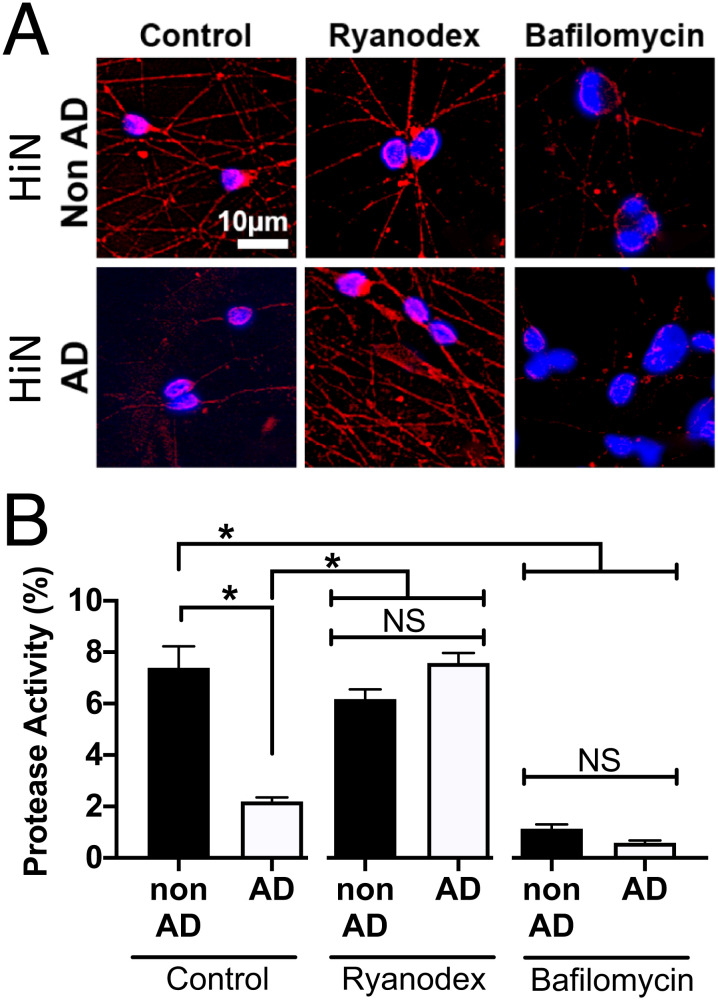
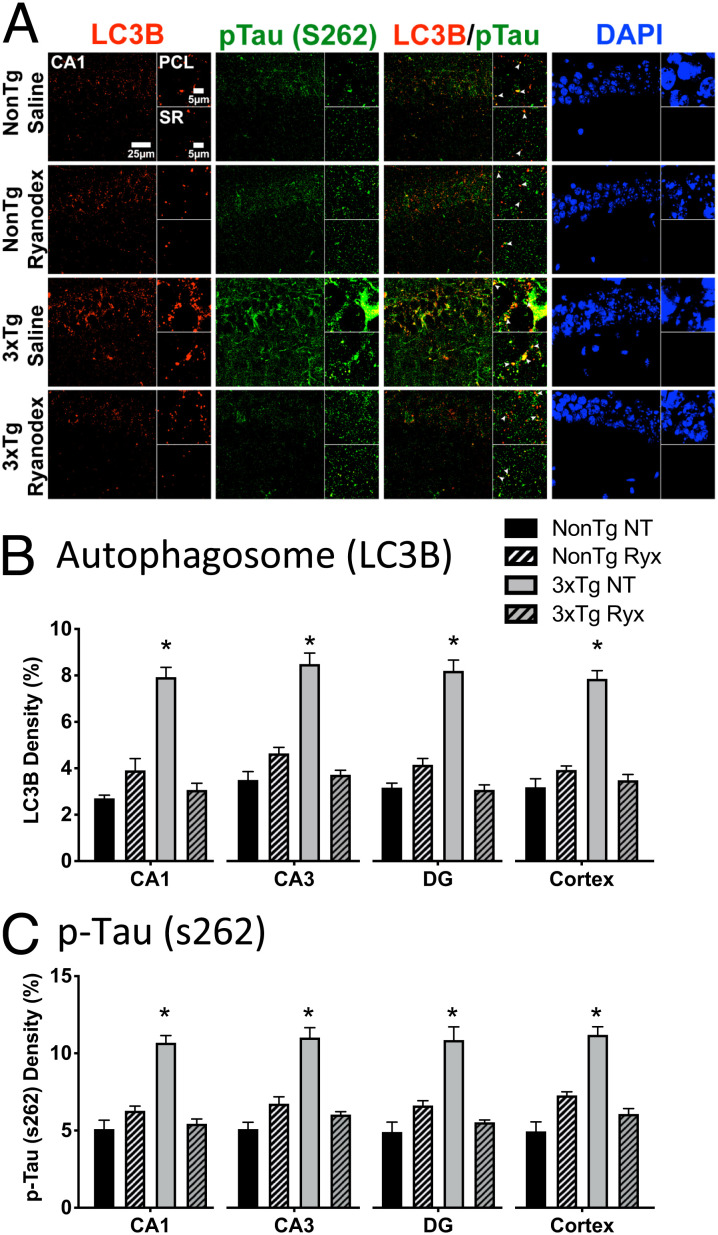
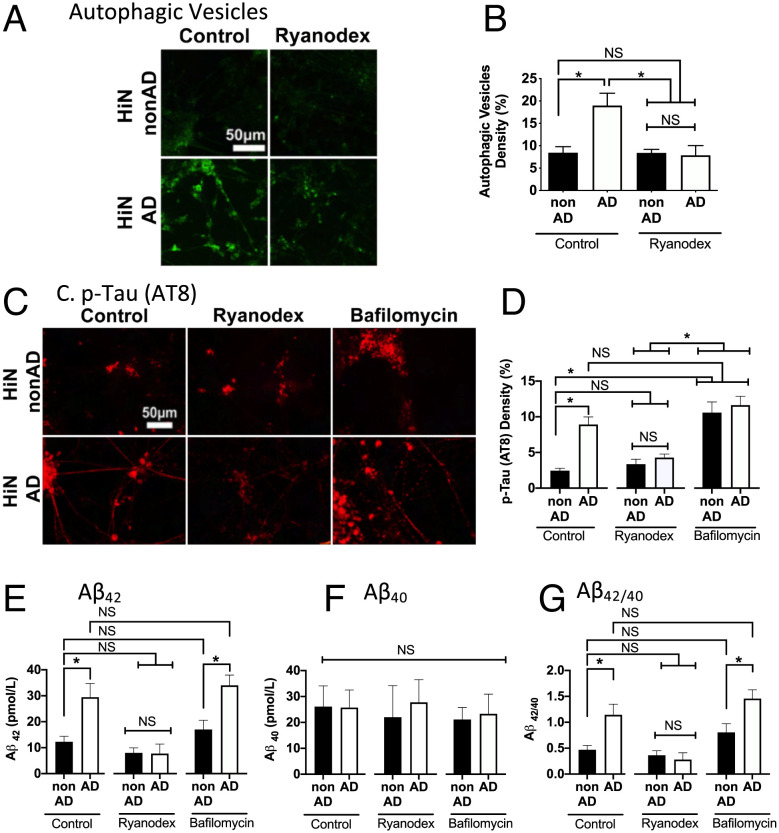
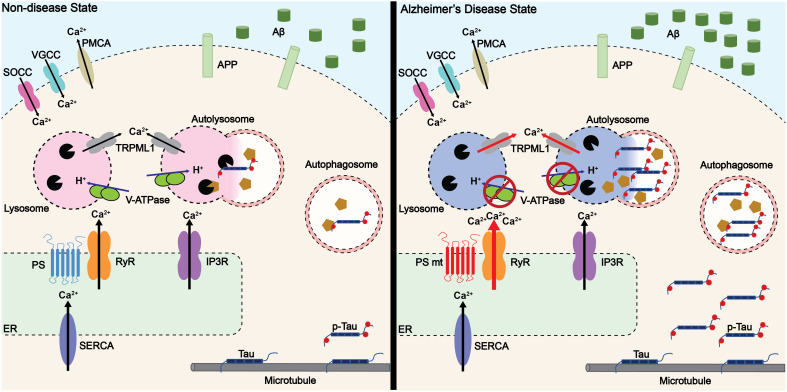
Impairments in neural lysosomal- and autophagic-mediated degradation of cellular debris contribute to neuritic dystrophy and synaptic loss. While these are well-characterized features of neurodegenerative disorders such as Alzheimer’s disease (AD), the upstream cellular processes driving deficits in pathogenic protein mishandling are less understood. Using a series of fluorescent biosensors and optical imaging in model cells, AD mouse models and human neurons derived from AD patients, we reveal a previously undescribed cellular signaling cascade underlying protein mishandling mediated by intracellular calcium dysregulation, an early component of AD pathogenesis. Increased Ca 2+ release via the endoplasmic reticulum (ER)-resident ryanodine receptor (RyR) is associated with reduced expression of the lysosome proton pump vacuolar-ATPase (vATPase) subunits (V1B2 and V0a1), resulting in lysosome deacidification and disrupted proteolytic activity in AD mouse models and human-induced neurons (HiN). As a result of impaired lysosome digestive capacity, mature autophagosomes with hyperphosphorylated tau accumulated in AD murine neurons and AD HiN, exacerbating proteinopathy. Normalizing AD-associated aberrant RyR-Ca 2+ signaling with the negative allosteric modulator, dantrolene (Ryanodex), restored vATPase levels, lysosomal acidification and proteolytic activity, and autophagic clearance of intracellular protein aggregates in AD neurons. These results highlight that prior to overt AD histopathology or cognitive deficits, aberrant upstream Ca 2+ signaling disrupts lysosomal acidification and contributes to pathological accumulation of intracellular protein aggregates. Importantly, this is demonstrated in animal models of AD, and in human iPSC-derived neurons from AD patients. Furthermore, pharmacological suppression of RyR-Ca 2+ release rescued proteolytic function, revealing a target for therapeutic intervention that has demonstrated effects in clinically-relevant assays.
Overview
The claims and statistics of this paper haven’t been checked yet.
Free: it reads the open-access text and checks the first 5 claims that cite a source we can check. Create a free account to check every claim.
Integrity signals
Registry
Cites
Statistics
Figures
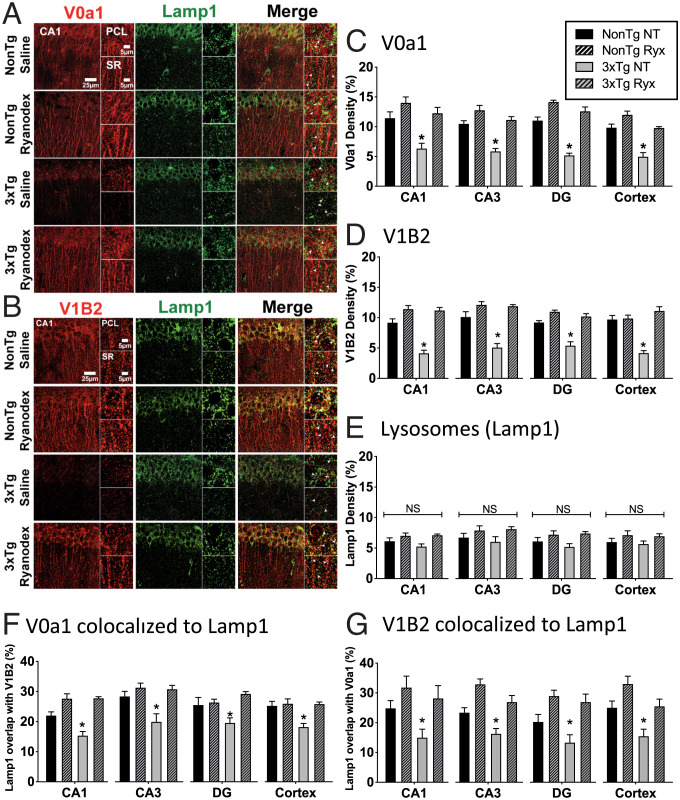
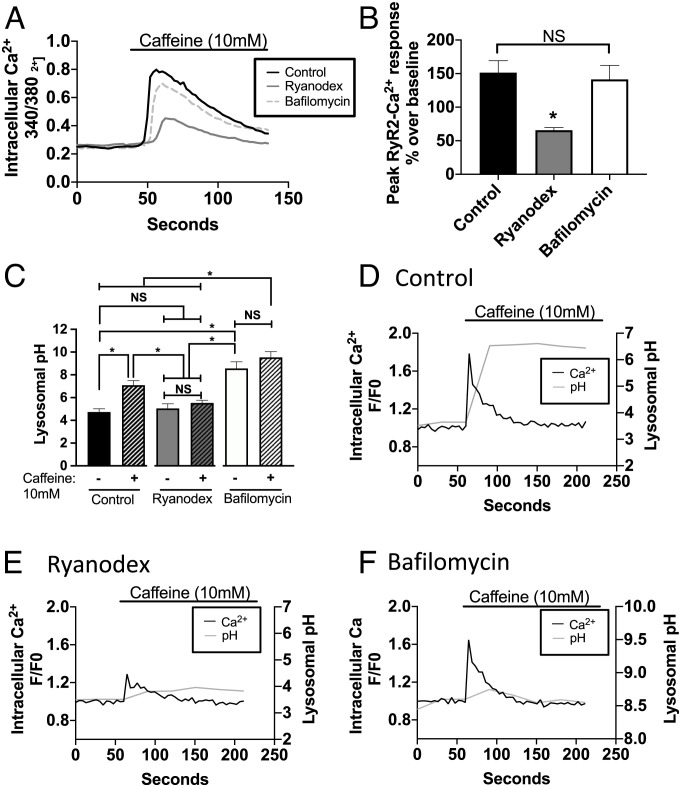
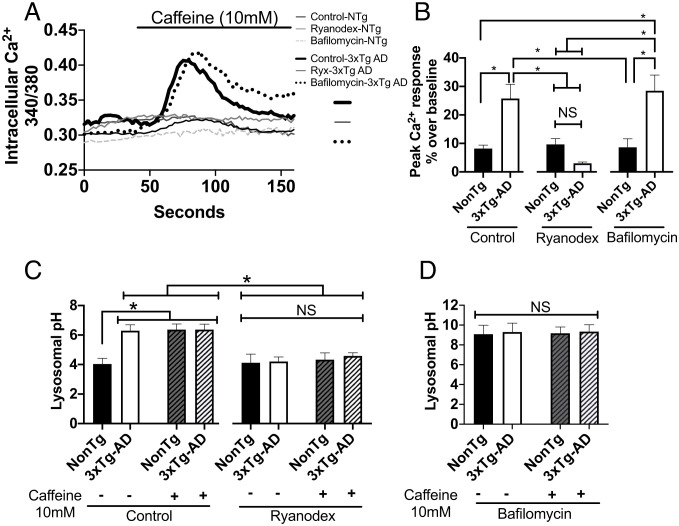
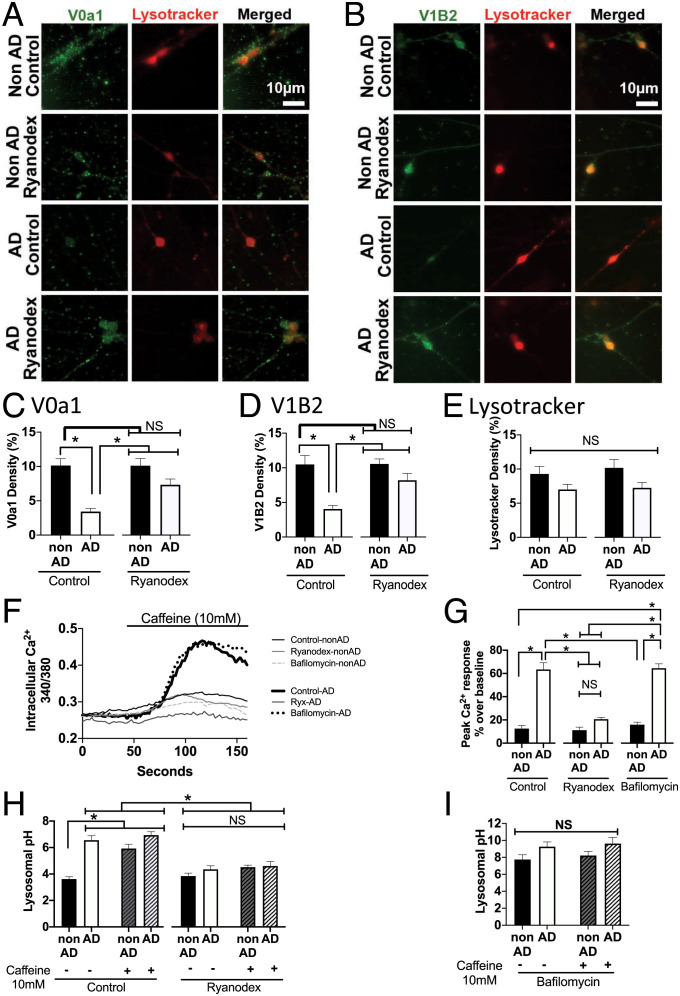
Verification
Claims the paper makes
The claims and statistics of this paper haven’t been checked yet.
Free: it reads the open-access text and checks the first 5 claims that cite a source we can check. Create a free account to check every claim.
Claims other papers make about this one
Each is checked against this paper’s own text: does it say what the citing paper says it does?
The cited source says what the claim attributes to it.
In the citing paper
“Research has found that lysosomal acidity is also within the realm of calcium regulation, where excessive Ca2+ released from the ER-resident RyR receptor can impair the function of lysosomal V-ATPase, causing lysosomal acidification defects, reducing lysosomal protease activity, and leading to the accumulation of p-tau.330”
From Recent advances in Alzheimer's disease: Mechanisms, clinical trials and new drug development strategies. (2024) · cites this paper as [330]
Self-check
Percentages, sums and reported differences re-computed from the paper’s own numbers.
The self-check needs the paper’s full text.
Citations
Cites
Repertoires of Autophagy in the Pathogenesis of Ocular Diseases
Li, Y.-J., Jiang, Q., Cao, G.-F., Yao, J., & Yan, B. (2015) · Cellular Physiology and Biochemistry · doi:10.1159/000373980 · Cited by 16,304
Calcium's Role in Mechanotransduction during Muscle Development
Benavides Damm, T., & Egli, M. (2014) · Cellular Physiology and Biochemistry · doi:10.1159/000356667 · Cited by 14,502
Guidelines for the use and interpretation of assays for monitoring autophagy (3rd edition).
Klionsky, D. J., Abdelmohsen, K., Abe, A., Abedin, M. J., Abeliovich, H., Acevedo Arozena, A., Adachi, H., Adams, C. M., Adams, P. D., Adeli, K., et al. (2016) · Autophagy · doi:10.1080/15548627.2015.1100356 · Cited by 5,894 · cited 3×
“However, blocking vATPase with bafilomycin did not significantly alter secreted A42 levels in non-AD nor AD HiN; suggesting that lysosomal defects have a profound effect on intracellular protein aggregates (Figure 7E; n=8, F(5,49)=9.”
Cui, C., Cui, J., Jin, F., Cui, Y., Li, R., Jiang, X., Tian, Y., Wang, K., Jiang, P., & Gao, J. (2017) · Cellular Physiology and Biochemistry · doi:10.1159/000479571 · Cited by 5,203
Clapham, D. E. (2007) · Cell · doi:10.1016/j.cell.2007.11.028 · Cited by 4,175
Triple-Transgenic Model of Alzheimer’s Disease with Plaques and Tangles
Oddo, S., Caccamo, A., Shepherd, J. D., Murphy, M. P., Golde, T. E., Kayed, R., Metherate, R., Mattson, M. P., Akbari, Y., & LaFerla, F. M. (2003) · Neuron · doi:10.1016/s0896-6273(03)00434-3 · Cited by 4,126 · cited 2×
“Three-to four-month-old male and female 3xTg-AD [APPswe, tauP301L, and PS1M146VKI; (90)] mice and age-matched NTg control mice [C57BL6/J9] were used in this study.”
MethodAutophagy: process and function
Mizushima, N. (2007) · Genes & Development · doi:10.1101/gad.1599207 · Cited by 3,967 · cited 6×
“08) or layer V cortex (200 μM × 200 μM region; F(3,35)= 6.”
BackgroundMethodResultInfluentialA Gene Network Regulating Lysosomal Biogenesis and Function
Sardiello, M., Palmieri, M., di Ronza, A., Medina, D. L., Valenza, M., Gennarino, V. A., Di Malta, C., Donaudy, F., Embrione, V., Polishchuk, R. S., et al. (2009) · Science · doi:10.1126/science.1174447 · Cited by 2,543
The role of autophagy in neurodegenerative disease
Nixon, R. A. (2013) · Nature Medicine · doi:10.1038/nm.3232 · Cited by 2,059
Lysosome biogenesis and lysosomal membrane proteins: trafficking meets function
Saftig, P., & Klumperman, J. (2009) · Nature Reviews Molecular Cell Biology · doi:10.1038/nrm2745 · Cited by 1,648
Cited by
Zhang, J., Zhang, Y., Wang, J., Xia, Y., Zhang, J., & Chen, L. (2024) · Signal Transduction and Targeted Therapy · doi:10.1038/s41392-024-01911-3 · Cited by 1,138
“330 Insulin signaling Insulin regulates glucose metabolism, neuronal growth and survival, synaptic plasticity, and cognition, 331 – 333 functions closely linked to two main insulin signaling pathways: phosphatidylinositol 3-kinase (PI3K)-Akt and Ras/Raf-MAPK.”
BackgroundMechanisms of autophagy–lysosome dysfunction in neurodegenerative diseases
Nixon, R. A., & Rubinsztein, D. C. (2024) · Nature Reviews Molecular Cell Biology · doi:10.1038/s41580-024-00757-5 · Cited by 435
“…that lysosome and autophagy defects in PSEN1-FAD models could be substantially rescued by blocking calcium release from the ER through overacti-vated RyRs 123 raised the question of whether the release of calcium from the ER is a cause or an effect of lysosomal pH elevation and calcium release.”
InfluentialBone targeted nano-drug and nano-delivery
Wu, Y., Sun, B., Tang, Y. K., Shen, A., Lin, Y., Zhao, X., Li, J., Monteiro, M. J., & Gu, W. (2024) · Bone Research · doi:10.1038/s41413-024-00356-2 · Cited by 150
“65,66 Similarly, pH-dependent calcium channel RECS1 induces cell death through canonical mitochondrial apoptosis pathway by regulation of endo-lysosomal acidi fi cation and calcium content.”
BackgroundAutophagy–lysosomal-associated neuronal death in neurodegenerative disease
Nixon, R. A. (2024) · Acta Neuropathologica · doi:10.1007/s00401-024-02799-7 · Cited by 134
Research progress in Alzheimer's disease and bone-brain axis
Zhang, F., & Zhang, W. (2024) · Ageing Research Reviews · doi:10.1016/j.arr.2024.102341 · Cited by 67
Webber, E. K., Fivaz, M., Stutzmann, G. E., & Griffioen, G. (2023) · Alzheimer's & Dementia · doi:10.1002/alz.13065 · Cited by 50
Self-citationGriffioen, G. (2023) · International Journal of Molecular Sciences · doi:10.3390/ijms241713243 · Cited by 37
Zhang, H., Knight, C., Chen, S. R. W., & Bezprozvanny, I. (2023) · The Journal of Neuroscience · doi:10.1523/jneurosci.1820-22.2022 · Cited by 32
Autophagy and Alzheimer’s Disease: Mechanisms and Impact Beyond the Brain
Hein, Z. M., Vishnumukkala, T., Karikalan, B., Alkatiri, A., Hussan, F., Jagadeesan, S., Kamaruzzaman, M. A., Ramli, M. D. C., Nassir, C. M. N. C. M., & Gopalakrishna, P. K. (2025) · Cells · doi:10.3390/cells14120911 · Cited by 42
“Mechanistic studies have shown that autophagy–lysosome dysfunction in AD is linked to impaired proteolysis within autolysosomes [117].”
Synaptic sabotage: How Tau and α-Synuclein undermine synaptic health
Uytterhoeven, V., Verstreken, P., & Nachman, E. (2024) · The Journal of Cell Biology · doi:10.1083/jcb.202409104 · Cited by 29
Calcium signaling hypothesis: A non-negligible pathogenesis in Alzheimer’s disease
Wang, M., Zhang, H., Liang, J., Huang, J., Wu, T., & Chen, N. (2025) · Journal of Advanced Research · doi:10.1016/j.jare.2025.01.007 · Cited by 35
“Similarly, the restoration of lysosomal v-ATPase expression following pharmacological blockade of Ca 2+ release from the ER leads to a drop in lysosomal pH, the restoration of autophagic flux, and the reduction of erroneous protein aggregation [164].”
An Alternative View of Familial Alzheimer’s Disease Genetics
Lardelli, M. T. (2023) · Journal of Alzheimer s Disease · doi:10.3233/jad-230313 · Cited by 24
Mustaly-Kalimi, S., Gallegos, W., Steinbrenner, D., Gupta, S. N., Houcek, A., Bennett, D. A., Marr, R. A., Peterson, D. A., Sekler, I., & Stutzmann, G. E. (2025) · Acta Neuropathologica Communications · doi:10.1186/s40478-025-02023-x · Cited by 29
Self-citationResearch Progress on Micro(nano)plastic-Induced Programmed Cell Death Associated with Disease Risks
Liu, H., Li, H., Chen, T., Fan, Y., Lin, Q., Zhao, H., Jin, L., & Peng, R. (2024) · Toxics · doi:10.3390/toxics12070493 · Cited by 26
Mitochondrial dysfunction, cause or consequence in neurodegenerative diseases?
Acker, Z. P. V., Leroy, T., & Annaert, W. G. (2024) · BioEssays · doi:10.1002/bies.202400023 · Cited by 21
Marchueta, M. B., Llona, L., M‐Alicante, S., Barbolla, I., Ibarluzea, M. G., Ramis, R., Salomon, A. M., Fundora, B., Araujo, A., Muguruza‐Montero, A., et al. (2024) · Biomedicine & Pharmacotherapy · doi:10.1016/j.biopha.2024.116602 · Cited by 14
“Shifting to neurodegenerative diseases, Alzheimer ’ s disease is characterized by beta-amyloid plaques and neurofibrillary tangles, and the CaM hypothesis has revealed CaM binding domains in key amyloid-related proteins [7,8].”
Zhang, W., Zhao, X., Bhuiyan, P., Liu, H., & Wei, H. (2024) · Journal of Anesthesia and Translational Medicine · doi:10.1016/j.jatmed.2024.04.002 · Cited by 12
“77 Studies also found that dantrolene preserved synaptic plasticity.”
“Dirty Dancing” of Calcium and Autophagy in Alzheimer’s Disease
Zhang, H., & Борисович, Б. И. (2023) · Life · doi:10.3390/life13051187 · Cited by 12
“Defects in V-ATPase targeting to lysoso es and lysosomal acidification were reported for PS1 knockout and FAD mutant cells [91].”
BackgroundInfluentialExploring Calcium Channels as Potential Therapeutic Targets in Blast Traumatic Brain Injury
Wachtler, N., O’Brien, R., Ehrlich, B. E., & McGuone, D. (2025) · Pharmaceuticals · doi:10.3390/ph18020223 · Cited by 14
Hao, M., Chu, J., Zhang, T., Yin, T., Gu, Y., Liang, W., Ji, W., Zhuang, J., Liu, Y., Gao, J., et al. (2024) · Neural Regeneration Research · doi:10.4103/nrr.nrr-d-23-01736 · Cited by 9
Lykhmus, O., Tzeng, W.-Y., Koval, L., Uspenska, K., Zirdum, E., Kalashnyk, O., Garaschuk, O., & Skok, M. (2024) · Biomedicine & Pharmacotherapy · doi:10.1016/j.biopha.2024.117255 · Cited by 14
Ohtonen, S., Jäntti, H., Giudice, L., Mohamed, A. Y., Shakirzyanova, A., Závodná, T., Belevich, I. N., Yan, H., Sabogal-Guáqueta, A. M., Saveleva, L., et al. (2025) · Environment International · doi:10.1016/j.envint.2025.109467 · Cited by 9
Vervliet, T., Loncke, J., Sever, M., Ahuja, K., den Haute, C. V., Luyten, T., Stutzmann, G. E., Verfaillie, C. M., Tomašič, T., & Bultynck, G. (2026) · Nature Communications · doi:10.1038/s41467-025-68054-z · Cited by 11
“Lysosomal vATPase-protein levels are also known to be downregulated in FAD conditions 18,29 .”
InfluentialSelf-citationSeeing the Unseen: Super-Resolution Microscopy in Protein Aggregation Research
Turner, M. J. M., Chen, J., Hatzakis, N. S., & Zhang, M. (2025) · Chemical & Biomedical Imaging · doi:10.1021/cbmi.5c00041 · Cited by 7
Shang, J., Yan, J., Lou, H., Jiang, X., Wang, Z., Gao, Y., Fan, X., & Lu, X. (2025) · Advanced Science · doi:10.1002/advs.202508096 · Cited by 9
Therapeutic effects of a novel synthetic α-secretase
Kim, S. B., Mun, B.-R., Kim, S. Y., Elangovan, M., Park, E. J., Choi, W., & Park, W. J. (2024) · Frontiers in Aging Neuroscience · doi:10.3389/fnagi.2024.1383905 · Cited by 5
Hossain, M. K., & Chae, H. (2024) · Neurochemistry International · doi:10.1016/j.neuint.2024.105905 · Cited by 5
Борисович, Б. И. (2026) · Cold Spring Harbor Perspectives in Biology · doi:10.1101/cshperspect.a041758 · Cited by 4
Alldred, M. J., Pidikiti, H., Ibrahim, K. W., Lee, S. H., Heguy, A., Chiosis, G., Mufson, E. J., Stutzmann, G. E., & Ginsberg, S. D. (2025) · Biomolecules · doi:10.3390/biom15081131 · Cited by 2
“Future studies may also include follow-up of driver genes identified herein for translational impact as a therapeutic intervention in iPSCs derived from individuals with DS as well as AD for mechanistic studies [103].”
Self-citationUppal, N. K., Valenzuela, A. E., Lein, P. J., & Fomina, A. F. (2025) · Cell Calcium · doi:10.1016/j.ceca.2025.103072 · Cited by 3
Organelle Dysfunction and TNT-Mediated Aggregate Spreading in Neurodegeneration
Thomas, V., & Zurzolo, C. (2026) · Physiology · doi:10.1152/physiol.00048.2025 · Cited by 3
Calcium dysregulation could underlie lysosomal impairment in AD
Kiani, L. (2023) · Nature Reviews Neurology · doi:10.1038/s41582-022-00766-y · Cited by 3
Su, J., Wei, J., Zhang, B., Wang, X., Tang, L., Yuan, Y., Sun, X., Qi, S., Yang, J., Xue, Y., et al. (2025) · Bioorganic Chemistry · doi:10.1016/j.bioorg.2025.108502 · Cited by 3
Nixon, R. A., Lee, J., Stavrides, P. H., Darji, S., Goulbourne, C. N., Berg, M. J., Mohan, P. S., Yang, D., Roussos, P., Bleiwas, C., et al. (2024) · Research Square · doi:10.21203/rs.3.rs-5306901/v1 · Cited by 3
Ryan, K. C., Laboy, J. T., Ashraf, R., Ashkavand, Z., Jayasinghe, I., & Norman, K. R. (2025) · Redox Biology · doi:10.1016/j.redox.2025.103910 · Cited by 2
Li, Q., Zhao, R., Tian, X., & Xu, H. (2026) · Frontiers in Aging Neuroscience · doi:10.3389/fnagi.2026.1780247 · Cited by 2
Ouyang, Y., Chen, Z., Huang, Q., Zhang, H., Song, H., Wang, X., Dong, W., Tang, Y. P., Shah, N., Shuai, S., et al. (2025) · Neuroscience Bulletin · doi:10.1007/s12264-025-01469-2 · Cited by 2
“Specifically, we focused on the RyR since its roles in the modulation of microglial Ca 2+ influx are unknown, and the receptor is believed to be implicated in neurodegenerative diseases [20, 21].”
Case Study 5: A 74-Year-Old Man With Dysphagia, Weakness, and Memory Loss
McGinnis, S. M., McCann, R. F., Patel, V., Doughty, C. T., Miller, M. B., Gale, S. A., Silbersweig, D., & Daffner, K. R. (2023) · Journal of Neuropsychiatry · doi:10.1176/appi.neuropsych.20230030 · Cited by 2
Pathophysiologic abnormalities in transgenic mice carrying the Alzheimer disease PSEN1 Δ440 mutation
Fuller, P. E., Collis, V. L., Sharma, P., Burkett, A. M., Wang, S., Brown, K. A., Weir, N., Goulbourne, C. N., Nixon, R. A., Longden, T. A., et al. (2024) · Human Molecular Genetics · doi:10.1093/hmg/ddae139 · Cited by 1
Tang, Y., Guo, T., He, H., & Deng, Y. (2026) · Biochemical Pharmacology · doi:10.1016/j.bcp.2026.117990 · Cited by 4
Lysosomal dysfunction in neurodegenerative disease
Brooker, S. M., Coukos, R., & Krainc, D. (2026) · Nature Reviews Neurology · doi:10.1038/s41582-026-01262-3 · Cited by 2
“…calcium release from the ER via the ryanodine receptor (RyR) is associated with reduced expression of lysosomal vATPase subunits, and pharmacological inhibition of RyR-mediated calcium release was found to rescue impaired lysosomal acidification and improve lysosomal proteolysis in AD models 204 .”
Biogenesis, function, and landscape of tsRNAs in central nervous system diseases
Yang, K., Sun, Y., Zhao, J., He, C., Pan, X., & Zhu, X. (2023) · Clinical and Translational Discovery · doi:10.1002/ctd2.221 · Cited by 1
Kraskovskaya, N., Koltsova, A. M., Parfenova, P. S., Shatrova, A. N., Yartseva, N., Назаров, В. Д., Devyatkina, E., Георгиевич, Х. М., & Mikhailova, N. (2024) · Biochemistry (Moscow) · doi:10.1134/s000629792407006x · Cited by 1
Kraskovskaya, N., Koltsova, A. M., Parfenova, P. S., Shatrova, A. N., Yartseva, N., Назаров, В. Д., Devyatkina, E., Георгиевич, Х. М., & Mikhailova, N. (2024) · Biochemistry (Moscow) · doi:10.31857/s0320972524070046
Assessing Perturbations in Lysosome Health by Flow Cytometry in iPSC-Derived Human Neuron Cultures
McDonald, K. O., Hughes, S. M., & Basak, I. (2025) · Methods in molecular biology · doi:10.1007/978-1-0716-4844-5_3
Aged brain multi-omic integration captures immunometabolic and sex variationPreprint
Whalley, J. P., Hunsberger, H. C., Bennett, D., Lamar, M., Peterson, D. A., & Stutzmann, G. E. (2025) · bioRxiv (Cold Spring Harbor Laboratory) · doi:10.1101/2025.10.10.681695
Self-citationMachine Learning Approach for Predicting Drug-Like Molecules Targeting Calmodulin Pathway Proteins
Marchueta, M. B., López, N., M‐Alicante, S., Barbolla, I., Ibarluzea, M. G., Ramis, R., Salomon, A. M., Muguruza‐Montero, A., Núñez, E., Leonardo, A., et al. (2025) · Journal of Chemical Information and Modeling · doi:10.1021/acs.jcim.5c02111
LIFE.PTML Model Development Targeting Calmodulin Pathway Proteins
Marchueta, M. B., López, N., Arrasate, S., Montemore, M. M., & González‐Díaz, H. (2025) · doi:10.3390/ecsoc-29-26890
Targeting enzyme trafficking: from molecular mechanisms to drug discovery
Dong, H., Yu, Y., Jia, B., Zhang, Q., & Kang, N. (2026) · Drug Discovery Today · doi:10.1016/j.drudis.2026.104625
Stressed lysosome: A theoretical model of lysosomal pH regulation applied to stress conditions
Nazarova, S. F., Alekhin, V. A., Pavlov, V. V., Semenov, Y. S., Bukhalovich, S. M., Tsybrov, F. M., Bogorodskiy, A. O., Bagaeva, D. F., Moiseeva, O. V., Vlasova, A. D., et al. (2026) · The Journal of General Physiology · doi:10.1085/jgp.202413745
Calcium Overloading-Induced UBE2O Upregulation Alleviates Neuronal Apoptosis
Jin, J., Yang, Z., Kang, A., Zhao, Y., Cai, Z., Qiu, M., Song, W., & Wu, Y. (2026) · Molecular Neurobiology · doi:10.1007/s12035-026-06034-0
Brain‐Targeting siRNA Delivery to Tackle Alzheimer's Disease
Yang, Q., Chen, Z., Zhu, J., Chai, T., Tang, F., Fan, M., Li, Y., Chen, S., Liu, Y., & Zheng, M. (2026) · Wiley Interdisciplinary Reviews Nanomedicine and Nanobiotechnology · doi:10.1002/wnan.70076
Autophagy-lysosomal pathway in neurodegeneration
McDonough, S. R., Rao, A. K., McAleer, J. M., Babrowicz, B. M., & Sharma, M. (2026) · Molecular Neurodegeneration Advances · doi:10.1186/s44477-026-00041-0
“Blocking Ryanodine receptors rescued lysosomal dysfunction in iPSC-derived neurons from AD patients carrying PSEN1 mutations [307], whereas restoring the lysosomal calcium balance failed to rescue autophagy defects in PSEN1 − / − blastocysts.”
Yang, H., Matsuhisa, K., Wei, T., Nishi, W., Koh, D. H. Z., Sim, A. Y., Bonne, I., & Saheki, Y. (2026) · Nature Communications · doi:10.1038/s41467-026-77423-1 · Cited by 1
“Growing evidence suggests that Ca 2+ dysregulation can impair endolysosomal function 79 – 82 .”
Polyamines across neurodegenerative proteinopathies
Ranxhi, B., LeWitt, P. A., Tsou, W., & Todi, S. V. (2026) · Neurobiology of Disease · doi:10.1016/j.nbd.2026.107629
Metadata
- Authors
- Mustaly-Kalimi, S., Gallegos, W., Marr, R. A., Gilman-Sachs, A., Peterson, D. A., Sekler, I., & Stutzmann, G. E.
- Affiliations
- Rosalind Franklin University of Medicine and Science (US)
- Center for Cancer Cell Biology, Immunology and Infection, Rosalind Franklin University of Medicine and Science, Immunology, and Infection, North Chicago, IL 60064
- Ben-Gurion University of the Negev (IL)
- Corresponding author
- Stutzmann, Grace E.
- ORCID
- Venue
- Proceedings of the National Academy of Sciences
- Publisher
- National Academy of Sciences
- Published
- 2022-11-28
- Volume
- 119
- Issue
- 49
- Pages
- e2211999119-e2211999119
- ISSN
- 0027-8424 (ISSN-L)
- 1091-6490
- PMC
- PMC9894236
- OpenAlex
- W4310102451
- Cited by
- 55
- References
- 97
- Citations by year
- 2026: 13 · 2025: 16 · 2024: 18 · 2023: 8
- FWCI
- 6.50
- Type
- journal article
- Language
- en
- Open access
- hybrid
- doi.org
- Licence
- Locations
- Proceedings of the National Academy of Sciences (publishedVersion, cc-by-nc-nd)
- bioRxiv (Cold Spring Harbor Laboratory) (acceptedVersion, cc-by-nc-nd)
- PubMed Central (publishedVersion, cc-by-nc-nd)
- PubMed (publishedVersion)
- Funders
- HHS | NIH | National Institute on Aging (AG065628)
- Topics
- Life Sciences › Neuroscience › Cellular and Molecular Neuroscience › Alzheimer's disease research and treatments
- Life Sciences › Biochemistry, Genetics and Molecular Biology › Physiology › Calcium signaling and nucleotide metabolism
- Life Sciences › Biochemistry, Genetics and Molecular Biology › Cell Biology › Autophagy in Disease and Therapy
- Keywords
- Alzheimer's disease, intracellular calcium dysregulation, ryanodine receptor, endoplasmic reticulum calcium release, lysosomal acidification, vacuolar ATPase, lysosomal proteolysis, autophagy, tau hyperphosphorylation, protein aggregates, dantrolene, iPSC-derived neurons, neurodegeneration
- MeSH terms
- Alzheimer Disease, Animals, Calcium, Calcium, Dietary, Dantrolene, Disease Models, Animal, Humans, Lysosomes, Ryanodine Receptor Calcium Release Channel, Mice, Proteolysis, Protein Aggregates
About these checks
Registry, retraction, Cites and statistics results are computed, not judged, with one exception: a printed reference that no index lists is read once by a model before it counts as a citation error. Claims are extracted by a model and kept only when their quote appears verbatim in the text; each cited source is then checked, with a model’s help, for whether it says what the claim relies on. Those verdicts can be wrong — read the claim’s quote and the cited source before relying on one.
Statistics and arithmetic are recomputed, not judged.
Confidence bands are shown only for fields calibrated on our annotated test set. None is calibrated yet, so no band is shown.
What counts as a claim ›How we measure confidence ›How we check this ›
Are you an author, or do you see a problem with this page? Request a review
Data sources
Bibliographic data: Semantic Scholar, OpenAlex, Crossref.
Contains information from the Semantic Scholar Academic Graph Datasets, made available under the ODC Attribution License (ODC-BY 1.0).
Semantic Scholar’s data is described in: Kinney, R., et al. (2023). The Semantic Scholar Open Data Platform. arXiv:2301.10140.
