

Interpersonal heart rate synchrony predicts effective information processing in a naturalistic group decision-making task
Open accessPublished version of a preprint
The DOI matches its Crossref record; 78 of the 79 references it cites were found in a registry or an index.
Abstract
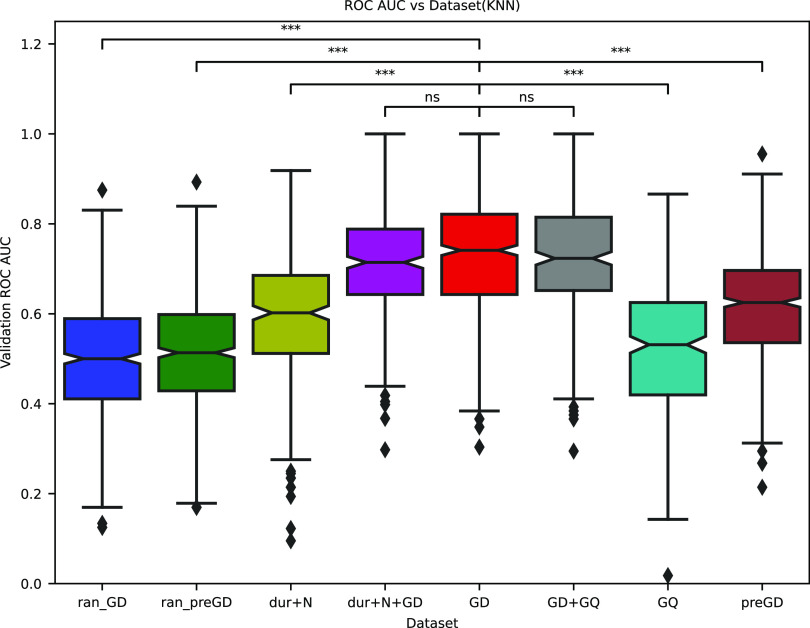
Groups often outperform individuals in problem-solving. Nevertheless, failure to critically evaluate ideas risks suboptimal outcomes through so-called groupthink. Prior studies have shown that people who hold shared goals, perspectives, or understanding of the environment show similar patterns of brain activity, which itself can be enhanced by consensus-building discussions. Whether shared arousal alone can predict collective decision-making outcomes, however, remains unknown. To address this gap, we computed interpersonal heart rate synchrony, a peripheral index of shared arousal associated with joint attention, empathic accuracy, and group cohesion, in 44 groups (n = 204) performing a collective decision-making task. The task required critical examination of all available information to override inferior, default options and make the right choice. Using multidimensional recurrence quantification analysis (MdRQA) and machine learning, we found that heart rate synchrony predicted the probability of groups reaching the correct consensus decision with >70% cross-validation accuracy–significantly higher than that predicted by the duration of discussions, subjective assessment of team function or baseline heart rates alone. We propose that heart rate synchrony during group discussion provides a biomarker of interpersonal engagement that facilitates adaptive learning and effective information sharing during collective decision-making.
Overview
The claims and statistics of this paper haven’t been checked yet.
Free: it reads the open-access text and checks the first 5 claims that cite a source we can check. Create a free account to check every claim.
Integrity signals
Registry
Cites
Statistics
Figures


Verification
Claims the paper makes
The claims and statistics of this paper haven’t been checked yet.
Free: it reads the open-access text and checks the first 5 claims that cite a source we can check. Create a free account to check every claim.
Self-check
Percentages, sums and reported differences re-computed from the paper’s own numbers.
The self-check needs the paper’s full text.
Citations
Cites
Statistical Power Analysis for the Behavioral Sciences
Muller, K. (1989) · Technometrics · doi:10.1080/00401706.1989.10488618 · Cited by 99,167
Psychological Safety and Learning Behavior in Work Teams
Edmondson, A. (1999) · Administrative Science Quarterly · doi:10.2307/2666999 · Cited by 12,026 · cited 3×
“However, continuous ECG data (as opposed to discrete beats per minute) could allow use of more sensitive physiological measures like heart rate variability (HRV) to better characterize physiological dynamics associated with effective group outcomes.”
Recurrence plots for the analysis of complex systems
MARWAN, N., CARMENROMANO, M., THIEL, M., & KURTHS, J. (2007) · Physics Reports · doi:10.1016/j.physrep.2006.11.001 · Cited by 3,814
Determining embedding dimension for phase-space reconstruction using a geometrical construction
Kennel, M. B., Brown, R., & Abarbanel, H. D. I. (1992) · Physical Review A · doi:10.1103/physreva.45.3403 · Cited by 3,776 · cited 1×
“…used the mode of the MdRQA variable distributions for further analysis since it has been independently shown to be more robust to noise levels in the signal while discriminating between the states of a dynamical system with cross-validation accuracy higher than chance (Thaikkandi & Sharika, 2023).”
Evidence for a Collective Intelligence Factor in the Performance of Human Groups
Woolley, A. W., Chabris, C. F., Pentland, A., Hashmi, N., & Malone, T. W. (2010) · Science · doi:10.1126/science.1193147 · Cited by 2,685
Nonlinear Time Series Analysis
Kantz, H., & Schreiber, T. (2003) · Cambridge University Press eBooks · doi:10.1017/cbo9780511755798 · Cited by 2,629
Dynamical Systems and Turbulence
Takens, F. (1981) · Medical Entomology and Zoology · Cited by 2,142
Stasser, G., & Titus, W. (1985) · Journal of Personality and Social Psychology · doi:10.1037/0022-3514.48.6.1467 · Cited by 1,850 · cited 2×
“We addressed this gap by examining heart rate data from 44 three-to-six member groups performing a collective decision-making task based on the Hidden Profile Paradigm, in which information is distributed unequally among group members and must be evaluated critically to reach the correct consensus decision.”
Dynamical assessment of physiological systems and states using recurrence plot strategies
Webber, C. L., & Zbilut, J. P. (1994) · Journal of Applied Physiology · doi:10.1152/jappl.1994.76.2.965 · Cited by 1,415 · cited 1×
“Multi-dimensional Recurrence Quantification Analysis (MdRQA): Recurrent quantification analysis (RQA) quantifies the pattern of recurrence (or how often a particular value is repeated over time) in the phase space of a dynamic system (Webber Jr & Zbilut, 1994; Marwan, Wessel, et al., 2002).”
Brain-to-brain coupling: a mechanism for creating and sharing a social world
Hasson, U., Ghazanfar, A. A., Galantucci, B., Garrod, S., & Keysers, C. (2012) · Trends in Cognitive Sciences · doi:10.1016/j.tics.2011.12.007 · Cited by 1,140
Statistical Comparisons of Classifiers over Multiple Data Sets
DemšarJanez (2006) · Journal of Machine Learning Research · doi:10.5555/1248547.1248548 · Cited by 1,074
Recurrence-plot-based measures of complexity and their application to heart-rate-variability data
Marwan, N., Wessel, N., Meyerfeldt, U., Schirdewan, A., & Kurths, J. (2002) · Physical Review E · doi:10.1103/physreve.66.026702 · Cited by 994
Psychological Safety, Trust, and Learning in Organizations: A Group-level Lens
Edmondson, A. C. (2003) · Cited by 964
Marital interaction: Physiological linkage and affective exchange.
Levenson, R. W., & Gottman, J. M. (1983) · Journal of Personality and Social Psychology · doi:10.1037/0022-3514.45.3.587 · Cited by 855 · cited 1×
“However, continuous ECG data (as opposed to discrete beats per minute) could allow use of more sensitive physiological measures like heart rate variability (HRV) to better characterize physiological dynamics associated with effective group outcomes.”
Zaki, J. (2014) · Psychological Bulletin · doi:10.1037/a0037679 · Cited by 821 · cited 1×
“However, continuous ECG data (as opposed to discrete beats per minute) could allow use of more sensitive physiological measures like heart rate variability (HRV) to better characterize physiological dynamics associated with effective group outcomes.”
Cui, X., Bryant, D. M., & Reiss, A. L. (2012) · NeuroImage · doi:10.1016/j.neuroimage.2011.09.003 · Cited by 807 · cited 1×
“…studies have identified similarity in brain activity between individuals as a biomarker of shared goals, perspectives or understanding of the environment (Cui et To address these questions, we measured heart rates in three-to-six member groups performing a collective decision-making task (Fig.”
Empathy: A physiological substrate.
Levenson, R. W., & Ruef, A. M. (1992) · Journal of Personality and Social Psychology · doi:10.1037/0022-3514.63.2.234 · Cited by 709 · cited 1×
“Since psychological safety is likely facilitated via empathic listening and perspective-taking (Kluger & Itzchakov, 2022) Levenson & Ruef, 1992), we predicted that successful performance in this task would be associated with enhanced heart rate synchrony between group members.”
Mutual interpersonal postural constraints are involved in cooperative conversation.
Shockley, K., Santana, M.-V., & Fowler, C. A. (2003) · Journal of Experimental Psychology: Human Perception and Performance · doi:10.1037/0096-1523.29.2.326 · Cited by 681
Using Bayes factor hypothesis testing in neuroscience to establish evidence of absence
Keysers, C., Gazzola, V., & Wagenmakers, E.-J. (2020) · Nature Neuroscience · doi:10.1038/s41593-020-0660-4 · Cited by 654 · cited 1×
“This finding suggests that the overall proportion of being together as a system in a somewhat similar physiological state space as before, at multiple times during the group discussion (i.e. degree of synchrony) and for a reasonable duration at any given state (i.e. signal stability) is likely to…”
Expert Roles and Information Exchange during Discussion: The Importance of Knowing Who Knows What
Stasser, G., Stewart, D. D., & Wittenbaum, G. M. (1995) · Journal of Experimental Social Psychology · doi:10.1006/jesp.1995.1012 · Cited by 644 · cited 1×
“However, continuous ECG data (as opposed to discrete beats per minute) could allow use of more sensitive physiological measures like heart rate variability (HRV) to better characterize physiological dynamics associated with effective group outcomes.”
Synchronized arousal between performers and related spectators in a fire-walking ritual
Konvalinka, I., Xygalatas, D., Bulbulia, J., Schjødt, U., Jegindø, E.-M., Wallot, S., Van Orden, G., & Roepstorff, A. (2011) · Proceedings of the National Academy of Sciences · doi:10.1073/pnas.1016955108 · Cited by 632
Discovery of hidden profiles by decision-making groups: Solving a problem versus making a judgment.
Stasser, G., & Stewart, D. (1992) · Journal of Personality and Social Psychology · doi:10.1037//0022-3514.63.3.426 · Cited by 617
Water associated zero maze: a novel rat test for long term traumatic re-experiencing
Ritov, G., & Richter-Levin, G. (2014) · Frontiers in Behavioral Neuroscience · doi:10.3389/fnbeh.2014.00001 · Cited by 579
Interpersonal autonomic physiology: a systematic review of the literature
Palumbo, R. V., Marraccini, M. E., Weyandt, L. L., Wilder-Smith, O., McGee, H. A., Liu, S., & Goodwin, M. S. (2017) · Personality and Social Psychology Review · doi:10.1177/1088868316628405 · Cited by 566 · cited 2×
“…procedure used by the application, given that we could still obtain significant differences in the predictive accuracy of GD vs. preGD (and other control datasets) using this data suggests that the relevant physiological dynamics was likely preserved and not lost by the pre-processing pipeline.”
Information sampling in structured and unstructured discussions of three- and six-person groups.
Stasser, G., Taylor, L. A., & Hanna, C. (1989) · Journal of Personality and Social Psychology · doi:10.1037//0022-3514.57.1.67 · Cited by 541 · cited 1×
“However, continuous ECG data (as opposed to discrete beats per minute) could allow use of more sensitive physiological measures like heart rate variability (HRV) to better characterize physiological dynamics associated with effective group outcomes.”
The Art of Conversation Is Coordination
Richardson, D. C., Dale, R., & Kirkham, N. Z. (2007) · Psychological Science · doi:10.1111/j.1467-9280.2007.01914.x · Cited by 483
Hidden Profiles: A Brief History
Stasser, G., & Titus, W. (2003) · Psychological Inquiry · doi:10.1080/1047840x.2003.9682897 · Cited by 433 · cited 1×
“However, continuous ECG data (as opposed to discrete beats per minute) could allow use of more sensitive physiological measures like heart rate variability (HRV) to better characterize physiological dynamics associated with effective group outcomes.”
Team Diagnostic Survey: Development of an Instrument
Wageman, R., Hackman, J. R., & Lehman, E. (2005) · The Journal of Applied Behavioral Science · doi:10.1177/0021886305281984 · Cited by 398
Interpersonal body and neural synchronization as a marker of implicit social interaction
Yun, K., Watanabe, K., & Shimojo, S. (2012) · Scientific Reports · doi:10.1038/srep00959 · Cited by 379
Marci, C. D., Ham, J., Moran, E., & Orr, S. P. (2007) · Journal of Nervous & Mental Disease · doi:10.1097/01.nmd.0000253731.71025.fc · Cited by 364
Mapping the information flow from one brain to another during gestural communication
Schippers, M. B., Roebroeck, A., Renken, R., Nanetti, L., & Keysers, C. (2010) · Proceedings of the National Academy of Sciences · doi:10.1073/pnas.1001791107 · Cited by 323
Bevilacqua, D., Davidesco, I., Wan, L., Chaloner, K., Rowland, J., Ding, M., Poeppel, D., & Dikker, S. (2019) · Journal of Cognitive Neuroscience · doi:10.1162/jocn_a_01274 · Cited by 312 · cited 1×
“To select the time window that can be used to compare RPs of unequal sizes, we used a bootstrapping method (Marwan et al., 2013) with sliding windows of different lengths to first estimate the lowest sliding window size likely to give MdRQA variable estimates with high statistical confidence.”
Aldag, R. J., & Fuller, S. R. (1993) · Psychological Bulletin · doi:10.1037/0033-2909.113.3.533 · Cited by 306
Shared understanding of narratives is correlated with shared neural responses
Nguyen, M., Vanderwal, T., & Hasson, U. (2019) · NeuroImage · doi:10.1016/j.neuroimage.2018.09.010 · Cited by 304
Same Story, Different Story: The Neural Representation of Interpretive Frameworks
Yeshurun, Y., Swanson, S., Simony, E., Chen, J., Lazaridi, C., Honey, C. J., & Hasson, U. (2017) · Psychological Science · doi:10.1177/0956797616682029 · Cited by 300
Stasser, G., Vaughan, S. I., & Stewart, D. D. (2000) · Organizational Behavior and Human Decision Processes · doi:10.1006/obhd.2000.2890 · Cited by 275 · cited 1×
“However, continuous ECG data (as opposed to discrete beats per minute) could allow use of more sensitive physiological measures like heart rate variability (HRV) to better characterize physiological dynamics associated with effective group outcomes.”
Twenty-Five Years of Hidden Profiles in Group Decision Making: A Meta-Analysis
Lu, L., Yuan, Y. C., & McLeod, P. L. (2012) · Personality and Social Psychology Review · doi:10.1177/1088868311417243 · Cited by 238
Synchronous brain activity across individuals underlies shared psychological perspectives
Lahnakoski, J. M., Glerean, E., Jääskeläinen, I. P., Hyönä, J., Hari, R., Sams, M., & Nummenmaa, L. (2014) · NeuroImage · doi:10.1016/j.neuroimage.2014.06.022 · Cited by 180
Leadership Style and the Discussion of Shared and Unshared Information in Decision-Making Groups
Larson, J. R., Foster-Fishman, P. G., & Franz, T. M. (1998) · Personality and Social Psychology Bulletin · doi:10.1177/0146167298245004 · Cited by 177
The Power of Listening at Work
Kluger, A. N., & Itzchakov, G. (2022) · Annual Review of Organizational Psychology and Organizational Behavior · doi:10.1146/annurev-orgpsych-012420-091013 · Cited by 175 · cited 1×
“Since psychological safety is likely facilitated via empathic listening and perspective-taking (Kluger & Itzchakov, 2022) Levenson & Ruef, 1992), we predicted that successful performance in this task would be associated with enhanced heart rate synchrony between group members.”
Building trust: Heart rate synchrony and arousal during joint action increased by public goods game
Mitkidis, P., McGraw, J. J., Roepstorff, A., & Wallot, S. (2015) · Physiology & Behavior · doi:10.1016/j.physbeh.2015.05.033 · Cited by 170 · cited 1×
“How often a trajectory revisits a point in the phase space, or recurrence, indicates how different components of a multi-variate system interact and converge on the same state across time (Mitkidis et al., 2015).”
Inter-brain synchrony in teams predicts collective performance
Reinero, D. A., Dikker, S., & Van Bavel, J. J. (2021) · Social Cognitive and Affective Neuroscience · doi:10.1093/scan/nsaa135 · Cited by 169 · cited 1×
“We also ran the whole analysis using an additional classification technique that is relatively more robust to high dimensionality (support vector classifier) and found overall consistent trends (see Supplementary Information, GD dataset predicted group performance outcome significantly better than…”
Inter-brain synchrony and cooperation context in interactive decision making
Hu, Y., Pan, Y., Shi, X., Cai, Q., Li, X., & Cheng, X. (2018) · Biological Psychology · doi:10.1016/j.biopsycho.2017.12.005 · Cited by 166
Golland, Y., Arzouan, Y., & Levit-Binnun, N. (2015) · PLOS ONE · doi:10.1371/journal.pone.0125804 · Cited by 152
Wallot, S., Roepstorff, A., & Mønster, D. (2016) · Frontiers in Psychology · doi:10.3389/fpsyg.2016.01835 · Cited by 140 · cited 4×
“While, typically, it is datasets involving hundreds or thousands of variables as features for a sample size of less than 100 or so that are considered high dimensional exemplars (L´opez & Maldonado, 2018) and in our study, the number of features considered are much lower (9 to 14) for a sample size…”
InfluentialTouch increases autonomic coupling between romantic partners
Chatel-Goldman, J., Congedo, M., Jutten, C., & Schwartz, J.-L. (2014) · Frontiers in Behavioral Neuroscience · doi:10.3389/fnbeh.2014.00095 · Cited by 135
Social–physiological compliance as a determinant of team performance
Henning, R. A., Boucsein, W., & Gil, M. C. (2001) · International Journal of Psychophysiology · doi:10.1016/s0167-8760(00)00190-2 · Cited by 130
Partner influence and in-phase versus anti-phase physiological linkage in romantic couples
Reed, R. G., Randall, A. K., Post, J. H., & Butler, E. A. (2012) · International Journal of Psychophysiology · doi:10.1016/j.ijpsycho.2012.08.009 · Cited by 128
Improved false nearest neighbor method to detect determinism in time series data
Hegger, R., & Kantz, H. (1999) · Physical review. E, Statistical physics, plasmas, fluids, and related interdisciplinary topics · doi:10.1103/physreve.60.4970 · Cited by 121 · cited 1×
“…used the mode of the MdRQA variable distributions for further analysis since it has been independently shown to be more robust to noise levels in the signal while discriminating between the states of a dynamical system with cross-validation accuracy higher than chance (Thaikkandi & Sharika, 2023).”
Sasaki, T., Granovskiy, B., Mann, R. P., Sumpter, D. J. T., & Pratt, S. C. (2013) · Proceedings of the National Academy of Sciences · doi:10.1073/pnas.1304917110 · Cited by 112 · cited 1×
“Findings across multiple research domains, including organizational psychology (Woolley et al., 2010) and ecology (Sasaki et al., 2013), have highlighted the potential of groups to outperform individuals in solving complex problems.”
Recurrence plots 25 years later —Gaining confidence in dynamical transitions
Marwan, N., Schinkel, S., & Kurths, J. (2013) · Europhysics Letters (EPL) · doi:10.1209/0295-5075/101/20007 · Cited by 111 · cited 1×
“To select the time window that can be used to compare RPs of unequal sizes, we used a bootstrapping method (Marwan et al., 2013) with sliding windows of different lengths to first estimate the lowest sliding window size likely to give MdRQA variable estimates with high statistical confidence.”
Information Sampling in Decision-Making Groups: The Impact of Members' Task-Relevant Status
Wittenbaum, G. M. (1998) · Small Group Research · doi:10.1177/1046496498291003 · Cited by 111 · cited 1×
“However, continuous ECG data (as opposed to discrete beats per minute) could allow use of more sensitive physiological measures like heart rate variability (HRV) to better characterize physiological dynamics associated with effective group outcomes.”
Recurrence plots 25 years later - Gaining confidence in dynamical transitions
Marwan, N., Schinkel, S., & Kurths, J. (2013) · Publication Database PIK (Potsdam Institute for Climate Impact Research (PIK)) · Cited by 110
We should be using nonlinear indices when relating heart-rate dynamics to cognition and mood
Young, H., & Benton, D. (2015) · Scientific Reports · doi:10.1038/srep16619 · Cited by 104 · cited 1×
“In the context of our task, the ability of teams to critically examine available information and arrive at a decision contrary to the option favored by shared information would be expected to correlate with high group psychological safety.”
Guastello, S. J., Pincus, D., & Gunderson, P. R. (2006) · PubMed · Cited by 102
Hidden Profiles: A Brief History
Stasser, G., & Titus, W. (2003) · Psychological Inquiry · doi:10.1207/s15327965pli1403&4_21 · Cited by 92
A Biologically Based Measure of Emotional Engagement: Context Matters
Marci, C. D. (2006) · Journal of Advertising Research · doi:10.2501/s0021849906060466 · Cited by 89
Exploring the Hidden-Profile Paradigm: A Literature Review and Analysis
Sohrab, G., Waller, M. J., & Kaplan, S. A. (2015) · Small Group Research · doi:10.1177/1046496415599068 · Cited by 88
Mennecke, B. E. (1997) · International Journal of Human-Computer Studies · doi:10.1006/ijhc.1997.0136 · Cited by 81 · cited 1×
“However, continuous ECG data (as opposed to discrete beats per minute) could allow use of more sensitive physiological measures like heart rate variability (HRV) to better characterize physiological dynamics associated with effective group outcomes.”
CRUZ, M. G., BOSTER, F. J., & RODRÍGUEZ, J. I. (1997) · Communication Research · doi:10.1177/009365097024003004 · Cited by 80 · cited 1×
“However, continuous ECG data (as opposed to discrete beats per minute) could allow use of more sensitive physiological measures like heart rate variability (HRV) to better characterize physiological dynamics associated with effective group outcomes.”
Consensus-building conversation leads to neural alignment
Sievers, B., Welker, C. L., Hasson, U., Kleinbaum, A. M., & Wheatley, T. P. (2024) · Nature Communications · doi:10.1038/s41467-023-43253-8 · Cited by 78
The contribution of linguistic and visual cues to physiological synchrony and empathic accuracy
Jospe, K., Genzer, S., Selle, N. K., Ong, D. C., Zaki, J., & Perry, A. (2020) · Cortex · doi:10.1016/j.cortex.2020.09.001 · Cited by 77 · cited 1×
“However, continuous ECG data (as opposed to discrete beats per minute) could allow use of more sensitive physiological measures like heart rate variability (HRV) to better characterize physiological dynamics associated with effective group outcomes.”
Nonlinear Time Series Analysis with R
Huffaker, R., Bittelli, M., & Rosa, R. (2018) · Oxford University Press eBooks · doi:10.1093/oso/9780198782933.001.0001 · Cited by 75 · cited 1×
“…has access to only one variable from a complex system governed by multiple interdependent variables, then one can reconstruct the dynamics of this system by utilizing (D number of) time delayed versions of the observable x as (D-dimensional) coordinates of the phase space (Huffaker et al., 2017).”
Interindividual synchronization of brain activity during live verbal communication
Spiegelhalder, K., Ohlendorf, S., Regen, W., Feige, B., van Elst, L. T., Weiller, C., Hennig, J., Berger, T., & Tüscher, O. (2013) · Behavioural Brain Research · doi:10.1016/j.bbr.2013.10.015 · Cited by 72
The psychiatric interview: a sociophysiologic study.
MASCIO, A. D., Rw, B., Greenblatt, M., & Hc, S. (1955) · PubMed · Cited by 66
Heart Rate Variability and Non-Linear Dynamics in Risk Stratification
Perkiömäki, J. S. (2011) · Frontiers in Physiology · doi:10.3389/fphys.2011.00081 · Cited by 62 · cited 1×
“In the context of our task, the ability of teams to critically examine available information and arrive at a decision contrary to the option favored by shared information would be expected to correlate with high group psychological safety.”
Somatic underpinnings of perceived empathy: The importance of psychotherapy training
Messina, I., Palmieri, A., Sambin, M., Kleinbub, J. R., Voci, A., & Calvo, V. (2013) · Psychotherapy Research · doi:10.1080/10503307.2012.748940 · Cited by 61
Using complexity metrics with R-R intervals and BPM heart rate measures
Wallot, S., Fusaroli, R., Tylén, K., & Jegindø, E.-M. E. (2013) · Frontiers in Physiology · doi:10.3389/fphys.2013.00211 · Cited by 45 · cited 1×
“Quantifies the degree of uncertainty in the possible states and hence, the complexity of the dynamical system, using the distribution of diagonal and vertical line lengths present in the plot, respectively.”
Gordon, I., Wallot, S., & Berson, Y. (2021) · Psychophysiology · doi:10.1111/psyp.13857 · Cited by 45 · cited 2×
“Since RQA variables are statistical measures (e.g., average, max, entropy etc.) obtained from histogram distributions of vertical or horizontal lines of different lengths in the RP, it is important that the time window being examined for generating these histogram distributions be large enough to…”
Interpersonal Physiological Synchrony Predicts Group Cohesion
Tomashin, A., Gordon, I., & Wallot, S. (2022) · Frontiers in Human Neuroscience · doi:10.3389/fnhum.2022.903407 · Cited by 45
Larson, J. R. (1997) · Small Group Research · doi:10.1177/1046496497283007 · Cited by 42 · cited 2×
“However, continuous ECG data (as opposed to discrete beats per minute) could allow use of more sensitive physiological measures like heart rate variability (HRV) to better characterize physiological dynamics associated with effective group outcomes.”
The Neuropeptide Oxytocin Enhances Information Sharing and Group Decision Making Quality
de Wilde, T. R. W., Velden, F. S. T., & Dreu, C. K. W. D. (2017) · Scientific Reports · doi:10.1038/srep40622 · Cited by 36 · cited 1×
“1) based on the Hidden Profile Paradigm (Stasser & Titus, 1985; Larson Jr 1997; De Wilde et al., 2017) in which information necessary for solving a problem is distributed unequally among group members.”
Stratford, T., Lal, S., & Meara, A. (2012) · American Journal of Psychotherapy · doi:10.1176/appi.psychotherapy.2012.66.1.1 · Cited by 26
Consensus-building conversation leads to neural alignment
Sievers, B., Welker, C., Hasson, U., Kleinbaum, A. M., & Wheatley, T. (2020) · doi:10.31234/osf.io/562z7 · Cited by 25
Redefining nearest neighbor classification in high-dimensional settings
López, J., & Maldonado, S. (2018) · Pattern Recognition Letters · doi:10.1016/j.patrec.2018.03.023 · Cited by 23 · cited 4×
“…rate synchrony predicted the likelihood of teams overriding inferior, default options and reaching the correct consensus decision, with more than 70 % cross-validation accuracy—significantly higher than either self-report assessment of team function or baseline heart rates prior to task onset.”
InfluentialWhy Study Nonlinear Time Series Analysis?
Huffaker, R., Bittelli, M., & Rosa, R. (2018) · Oxford University Press eBooks · doi:10.1093/oso/9780198782933.003.0001 · Cited by 19
Thaikkandi, S., & Sharika, K. M. (2023) · arXiv (Cornell University) · doi:10.48550/arxiv.2307.11675 · Cited by 2 · cited 2×
“…it is datasets involving hundreds or thousands of variables as features for a sample size of less than 100 or so that are considered high dimensional exemplars (L´opez & Maldonado, 2018) and in our study, the number of features considered are much lower (9 to 14) for a sample size of 44,…”
Self-citationMayton, D. M., & Brink, M. Z. (2011) · Wiley eBooks · doi:10.1002/9780470672532.wbepp124 · Cited by 1
Sliding window multi-dimensional recurrence quantification analysis (SMdRQA)
Sharika, K. M., Thaikkandi, S., Nivedita, & Platt, M. L. (2024) · Zenodo (CERN European Organization for Nuclear Research) · doi:10.5281/zenodo.10854677 · Cited by 1
Self-citation
Cited by
Wienhold, S., Bär, L., Ringleb, Z., Zirpel, V., Gomolla, A., Denk, B., Volkmer, N., Gaertner, R. J., Klink, E. S. C., & Pruessner, J. C. (2025) · Journal of Neural Transmission · doi:10.1007/s00702-025-02947-7 · Cited by 13
Validity of the Polar H10 for Continuous Measures of Heart Rate and Heart Rate Synchrony Analysis
Chung, V., Chopin, L., Karadayi, J., & Grèzes, J. (2026) · Sensors · doi:10.3390/s26030855 · Cited by 10
“…and signal stability than PPG finger monitors in contexts involving participant movement [18]. https://doi.org/10.3390/s26030855 Leveraging these advantages, more recent studies have employed Polar H10 devices to measure HR and quantify synchrony during group decision-making tasks [8,20].”
InfluentialThe neurosociological paradigm of the metaverse
Maslova, O., Shusharina, N. N., & Pyatin, V. F. (2025) · Frontiers in Psychology · doi:10.3389/fpsyg.2024.1371876 · Cited by 10
Environmental effects on inter-brain coupling: a systematic review
Leahy, O., Kontaris, E., Gunasekara, N., Hirsch, J., & Tachtsidis, I. (2025) · Frontiers in Human Neuroscience · doi:10.3389/fnhum.2025.1627457 · Cited by 6
“For example, synchrony of pupil diameter as well as heart rate has been shown to increase during joint attention (Wohltjen and Wheatley, 2021; Flory et al., 2023; Sharika et al., 2024).”
Zhao, H., & Zhang, F. (2025) · International Journal of Decision Support System Technology · doi:10.4018/ijdsst.368248 · Cited by 5
“These methods use different mathematical models and algorithms to help decision-makers integrate information and rank alternatives in complex multi-attribute scenarios (Sharika et al., 2024; Shen et al., 2024; Stolle et al., 2024).”
Metadata
- Authors
- Sharika, K. M., Thaikkandi, S., Nivedita, & Platt, M. L.
- Affiliations
- Indian Institute of Technology Kanpur (IN)
- Department of Material Science & Engineering, Indian Institute of Technology Kanpur, Kanpur, Uttar Pradesh 208016, India
- University of Pennsylvania (US)
- Corresponding author
- Sharika, K. M.
- Venue
- Proceedings of the National Academy of Sciences
- Publisher
- National Academy of Sciences
- Published
- 2024-05-16
- Volume
- 121
- Issue
- 21
- Pages
- e2313801121-e2313801121
- ISSN
- 0027-8424 (ISSN-L)
- 1091-6490
- PMC
- PMC11127007
- OpenAlex
- W4396950431
- Cited by
- 33
- References
- 79
- Citations by year
- 2026: 16 · 2025: 15 · 2024: 2
- FWCI
- 9.93
- Type
- journal article
- Language
- en
- Open access
- hybrid
- doi.org
- Licence
- Locations
- Proceedings of the National Academy of Sciences (publishedVersion, cc-by-nc-nd)
- bioRxiv (Cold Spring Harbor Laboratory) (acceptedVersion, cc-by-nd)
- PubMed Central (publishedVersion, cc-by-nc-nd)
- PubMed (publishedVersion)
- PubMed Central (submittedVersion, cc-by-nd)
- Funders
- University of Pennsylvania
- Indian Institute of Technology Kanpur
- National Institute on Aging (R21AG073958)
- National Institute of Mental Health (R01MH118203, R01MH095894, R56MH122819, R37MH109728, R01MH108627)
- National Institute of Neurological Disorders and Stroke (R01NS123054)
- Topics
- Health Sciences › Medicine › Cardiology and Cardiovascular Medicine › Heart Rate Variability and Autonomic Control
- Social Sciences › Psychology › Social Psychology › Team Dynamics and Performance
- Social Sciences › Psychology › Social Psychology › Action Observation and Synchronization
- Keywords
- group decision making, groupthink, consensus building, joint attention, empathic accuracy, group cohesion, interpersonal engagement, adaptive learning, information sharing
About these checks
Registry, retraction, Cites and statistics results are computed, not judged, with one exception: a printed reference that no index lists is read once by a model before it counts as a citation error. Claims are extracted by a model and kept only when their quote appears verbatim in the text; each cited source is then checked, with a model’s help, for whether it says what the claim relies on. Those verdicts can be wrong — read the claim’s quote and the cited source before relying on one.
Statistics and arithmetic are recomputed, not judged.
Confidence bands are shown only for fields calibrated on our annotated test set. None is calibrated yet, so no band is shown.
What counts as a claim ›How we measure confidence ›How we check this ›
Are you an author, or do you see a problem with this page? Request a review
Data sources
Bibliographic data: Semantic Scholar, OpenAlex, Crossref.
Contains information from the Semantic Scholar Academic Graph Datasets, made available under the ODC Attribution License (ODC-BY 1.0).
Semantic Scholar’s data is described in: Kinney, R., et al. (2023). The Semantic Scholar Open Data Platform. arXiv:2301.10140.
