

Do LLMs write like humans? Variation in grammatical and rhetorical styles
Open accessPublished version of a preprint
The DOI matches its Crossref record; 33 of the 33 references it cites were found in a registry or an index; 14 of the 17 sources its claims cite were checked for support.
Abstract
Large language models (LLMs) are capable of writing grammatical text that follows instructions, answers questions, and solves problems. As they have advanced, it has become difficult to distinguish their output from human-written text. While past research has found some differences in features such as word choice and punctuation and developed classifiers to detect LLM output, none has studied the rhetorical styles of LLMs. Using several variants of Llama 3 and GPT-4o, we construct two parallel corpora of human- and LLM-written texts from common prompts. Using Douglas Biber’s set of lexical, grammatical, and rhetorical features, we identify systematic differences between LLMs and humans and between different LLMs. These differences persist when moving from smaller models to larger ones and are larger for instruction-tuned models than base models. This observation of differences demonstrates that despite their advanced abilities, LLMs struggle to match human stylistic variation. Attention to more advanced linguistic features can hence detect patterns in their behavior not previously recognized.
Overview
CoChat Summary
TL;DR
This study compares the writing style of several LLMs to human-authored English texts using Biber’s linguistic features. It finds that instruction-tuned models have a distinct noun-heavy, informationally dense style that does not align with human genre conventions, even when prompted to match informal speech and writing.
Key findings
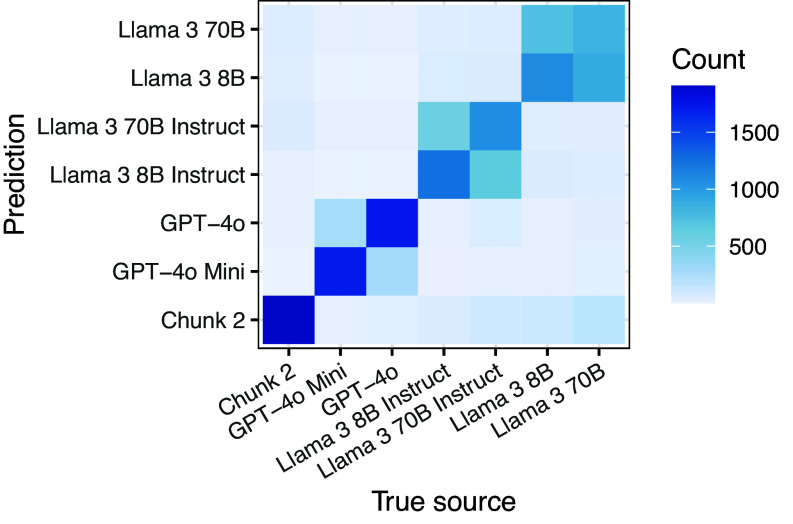
- A random forest using Biber features to classify seven text sources in HAP-E achieved 66% test accuracy versus 14% expected by chance; only 4.2% of LLM texts were falsely classified as human, and only 9.8% of human texts were falsely classified as LLMs.
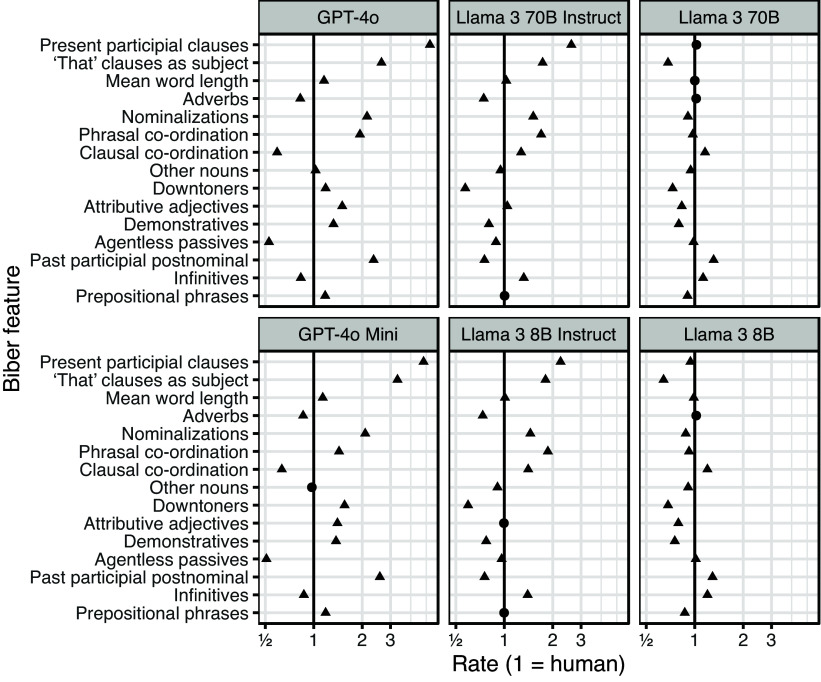
- Instruction-tuned models preferred present participial clauses, “that” clauses as subjects, nominalizations, and phrasal coordination. GPT-4o used present participial clauses at 5.3 times the human rate (paired Cohen’s d=1.38), “that” clauses as subject 2.6 times as often (d=0.77), nominalizations 2.1 times as often (d=1.23), and phrasal coordination 1.9 times as often (d=0.81); GPT-4o also used agentless passive voice at roughly half the human rate.
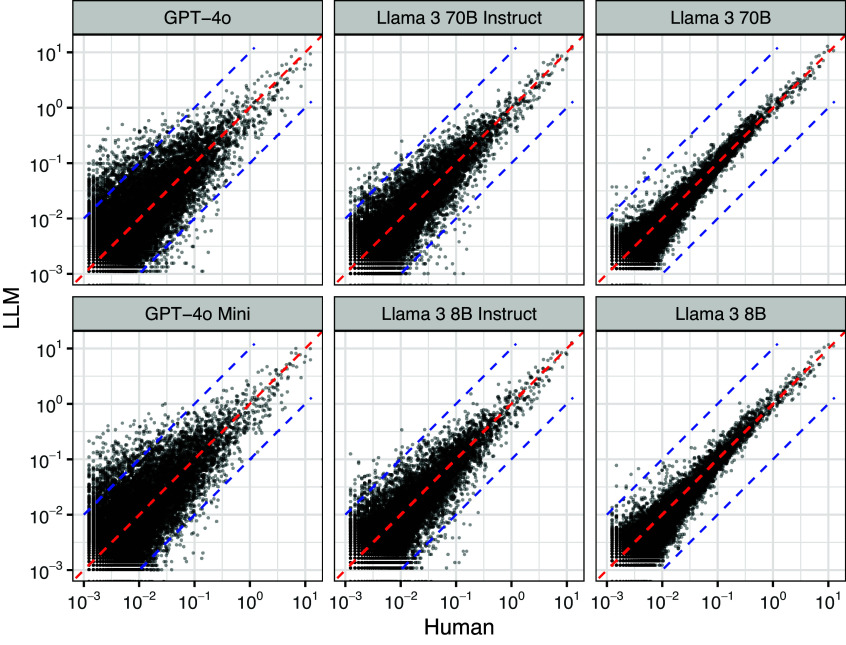
- GPT-4o and GPT-4o Mini used words such as camaraderie, palpable, tapestry, and intricate at more than 100 times the human rate; “tapestry” appeared in 23% of GPT-4o outputs and “amidst” in 27%. Instruction-tuned Llama 3 variants also favored words like camaraderie and palpable, though at lower rates than GPT-4o.
- Pairwise random forest classifiers distinguishing human text from one specific LLM achieved typical accuracies of 93 to 98%, even when trained on HAP-E and tested on CAP or vice versa; lasso-penalized logistic regression was similar except for Llama base models, which had accuracies around 75%. On M4 arXiv abstracts, classifiers trained on instruction-tuned LLMs classified GPT-3.5 output above chance, but models trained on Llama base outputs attained only 50% accuracy, equal to random guessing.
Methods
- Two parallel corpora were built from n=12,000 human-authored English texts each: HAP-E from six categories (academic, news, fiction, spoken word, blogs, TV/movie scripts) and CAP from COCA’s eight registers. After removing refusals or unusable answers, there were n=8,290 HAP-E texts and n=9,615 CAP texts with outputs from all LLMs; with two human chunks and six LLM chunks per text, HAP-E comprised n=66,320 chunks and CAP n=76,920 chunks.
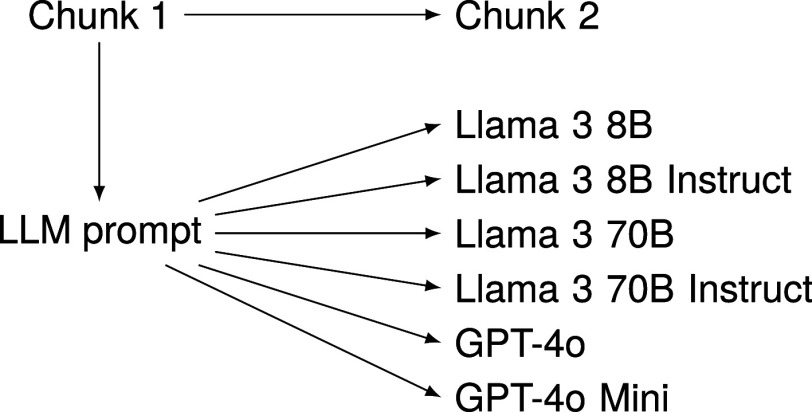
- Six LLMs were used: GPT-4o, GPT-4o Mini, and Meta Llama 3 8B, 70B, 8B Instruct, and 70B Instruct. Each human text was split into two consecutive ~500-word chunks; the first chunk prompted the LLM to write 500 more words in the same style, tone, and diction, and the generated text was compared to the second human chunk.
- Features came from Douglas Biber’s tagset of 66 linguistic categories. Differences were tested with paired Wilcoxon signed-rank tests with Bonferroni correction; random forest and lasso-penalized logistic regression classifiers were used, with M4 arXiv abstracts generated by GPT-3.5 as a generalizability check.
Limitations
- Stated: the instruction-tuning processes are not publicly documented, so the precise cause of stylistic differences cannot be determined. The paper also states that generalizability across LLMs or to different registers is difficult, as accuracy dropped significantly on M4 and Llama base classifiers reached only 50% accuracy.
- Stated: the authors do not have access to untuned versions of GPT, so comparisons between base and instruction-tuned models rely on Llama 3.
- Evident from the text: the study covers six LLMs, mostly GPT-4o and Llama 3 variants, and only English text; classification accuracy is not perfect, and the authors explicitly say their intention is not to propose another LLM detector.
Model-written summary. Check it against the paper before relying on it.
Integrity signals
Registry
Cites
Statistics
Figures
Verification
Claims the paper makes
4 Valid · 0 Not valid · 1 Not checked · 51 Own results and interpretations
Every source the paper cites for this claim was checked and supports it.
In the paper
“Similar to past research (14), we find that LLMs also favor specific vocabulary.”
§ Do LLMs write like humans? Variation in grammatical and rhetorical styles > Results > Differences in Style and Vocabulary.
What the sources say
- Supportedcites [14] W. Liang et al., “Monitoring AI-modified content at scale: A case study on the impact of ChatGPT on AI conference peer reviews” in Proceedings of the 41st International Conference on Machine Learning, Proceedings of Machine Learning Research, R. Salakhutdinov et al., Eds. (PMLR, 2024), vol. 235, pp. 29575–29620. source
The Introduction reports validation experiments showing that specific adjectives, including “commendable,” occur disproportionately more often in AI-generated text than in human-written reviews. This supports the claim that LLMs favor specific vocabulary in the peer-review setting studied. (LLM, conf=0.94)
plain- Asserted: passes — The authors put it forward as true.
- Checkable: passes — It can be checked against evidence.
- Load-bearing: passes — The paper’s conclusions depend on it.
- Based: passes — The paper gives a reason why it holds.
- Supported
Every source the paper cites for this claim was checked and supports it.
In the paper
“Though not definitive, these results suggest there are indeed structural differences between human- and LLM-written text.”
§ Do LLMs write like humans? Variation in grammatical and rhetorical styles > Abstract
What the sources say
- Supportedcites [10] R. Tang, Y. N. Chuang, X. Hu, The science of detecting LLM-generated text. Commun. ACM 67, 50– 59 (2024). source
The “Linguistic patterns” section describes differences in style, coherence, and repetition between human- and LLM-written text. The “Statistical disparities” section also describes differences in word-ranking patterns and perplexity. The paper notes limits to these signals, consistent with the citing sentence’s “not definitive” qualification. (LLM, conf=0.92)
- Supportedcites [11] L. Fröhling, A. Zubiaga, Feature-based detection of automated language models: Tackling GPT-2, GPT-3 and Grover. PeerJ Comput. Sci. 7, e443 (2021). PMC8049133 33954234 source
The Methodology > Features section describes expected differences in sentence structure and word choice between human and language-model text. The Results > Feature-set classifiers section reports that syntactic features distinguish the two across the tested datasets, supporting the citing sentence’s tentative conclusion. (LLM, conf=0.91)
- Supportedcites [12] A. Muñoz-Ortiz, C. Gómez-Rodríguez, D. Vilares, Contrasting linguistic patterns in human and LLM-generated news text. Artif. Intell. Rev. 57, 265 (2024). 39328400 PMC11422446 source
The Conclusion reports discernible morphosyntactic distinctions and variations in syntactic structures between human-written and LLM-generated texts. This supports the citing sentence’s hedged claim; the paper’s comparison concerns English news text and the models it tested. (LLM, conf=0.93)
- Supportedcites [13] S. Herbold, A. Hautli-Janisz, U. Heuer, Z. Kikteva, A. Trautsch, A large-scale comparison of human-written versus ChatGPT-generated essays. Sci. Rep. 13, 18617 (2023). 37903836 PMC10616290 source
The Discussion says ChatGPT-generated essays are highly structured and follow a more rigid pattern, while human-written essays are looser. This supports the citing sentence’s hedged claim of structural differences between human- and LLM-written text. (LLM, conf=0.92)
- Supportedcites [14] W. Liang et al., “Monitoring AI-modified content at scale: A case study on the impact of ChatGPT on AI conference peer reviews” in Proceedings of the 41st International Conference on Machine Learning, Proceedings of Machine Learning Research, R. Salakhutdinov et al., Eds. (PMLR, 2024), vol. 235, pp. 29575–29620. source
The Introduction says LLM-generated text can be indistinguishable from human writing in individual cases but shows contrasting trends at the corpus level. The Homogenization Effect section reports that reviews with more estimated LLM use tended to be more similar to other reviews, supporting the hedged claim about differences in text patterns. (LLM, conf=0.88)
hedgedstates an association- Asserted: passes — The authors put it forward as true.
- Checkable: passes — It can be checked against evidence.
- Load-bearing: passes — The paper’s conclusions depend on it.
- Based: passes — The paper gives a reason why it holds.
- Supported
A result the paper reports from its own data — it cites no other source for it, so there is none to check. The quote shows it is in the paper.
In the paper
“On the other hand, GPT-4o uses the agentless passive voice at roughly half the rate as human texts—but in each case, the Llama base models use these features at rates more closely matching humans.”
§ Do LLMs write like humans? Variation in grammatical and rhetorical styles > Abstract
plainstates an association- Asserted: passes — The authors put it forward as true.
- Checkable: passes — It can be checked against evidence.
- Load-bearing: passes — The paper’s conclusions depend on it.
- Based: passes — The paper gives a reason why it holds.
A result the paper reports from its own data — it cites no other source for it, so there is none to check. The quote shows it is in the paper.
In the paper
“A third major finding of this work is significant success of Biber’s tagset in modeling and classifying text.”
§ Do LLMs write like humans? Variation in grammatical and rhetorical styles > Discussion
boosted- Asserted: passes — The authors put it forward as true.
- Checkable: passes — It can be checked against evidence.
- Load-bearing: passes — The paper’s conclusions depend on it.
- Based: passes — The paper gives a reason why it holds.
A result the paper reports from its own data — it cites no other source for it, so there is none to check. The quote shows it is in the paper.
In the paper
“A random forest classifier using the Biber features to distinguish between the seven text sources in HAP-E (human chunk 2 and the six LLMs) achieved a test accuracy of 66%, compared to an expected accuracy of 14% from random guessing.”
§ Do LLMs write like humans? Variation in grammatical and rhetorical styles > Results > Classifying Text by Source.
plainn = 14,535- Asserted: passes — The authors put it forward as true.
- Checkable: passes — It can be checked against evidence.
- Load-bearing: passes — The paper’s conclusions depend on it.
- Based: passes — The paper gives a reason why it holds.
40 more claims
Create a free account to see all 56 claims and to verify the 1 reference still open.
- Probably not a substantial claim. 3
- It may state two separate claims as one. 9
Self-check
Percentages, sums and reported differences re-computed from the paper’s own numbers.
Each contradiction between two passages listed here was confirmed by an independent check.
Rated minor: it would not touch a result — a value no result rests on, a p-value that stays on the same side of the significance level, or a conflict that is clerical, resolved elsewhere in the paper, or outside its own findings.
In the paper
§ Do LLMs write like humans? Variation in grammatical and rhetorical styles > Results > Differences in Style and Vocabulary.
“GPT-4o and 4o Mini use words like camaraderie, palpable, tapestry, and intricate at more than 100 times the rate of humans”
§ Do LLMs write like humans? Variation in grammatical and rhetorical styles > Results > Differences in Style and Vocabulary.
“| palpable | 95 | ignite | 122 | camaraderie | 24 | waft | 28 | denis | 14 | worcester | 11 |”
Citations
Cites
Variation across Speech and Writing
Biber, D. (1988) · doi:10.1017/cbo9780511621024 · Cited by 5,227
Miller, C. R. (1984) · Quarterly Journal of Speech · doi:10.1080/00335638409383686 · Cited by 2,907
Biber, D., & Conrad, S. (2009) · Cambridge University Press eBooks · doi:10.1017/cbo9780511814358 · Cited by 1,980
Dimensions of Register Variation: A Cross-Linguistic Comparison
Biber, D. (1995) · Cambridge University Press eBooks · doi:10.1017/cbo9780511519871 · Cited by 1,270
Towards Reasoning in Large Language Models: A Survey
Huang, J., & Chang, K. C.-C. (2023) · Findings of the Association for Computational Linguistics: ACL 2023 · doi:10.18653/v1/2023.findings-acl.67 · Cited by 428
Towards Reasoning in Large Language Models: A Survey
Huang, J., & Chang, K. C.-C. (2022) · arXiv · doi:10.48550/arxiv.2212.10403 · Cited by 428
A large-scale comparison of human-written versus ChatGPT-generated essays
Herbold, S., Hautli-Janisz, A., Heuer, U., Kikteva, Z., & Trautsch, A. (2023) · Scientific Reports · doi:10.1038/s41598-023-45644-9 · Cited by 338
M4: Multi-generator, Multi-domain, and Multi-lingual Black-Box Machine-Generated Text Detection
Wang, Y., Mansurov, J., Ivanov, P., Su, J., Shelmanov, A., Tsvigun, A., Whitehouse, C., Afzal, O. M., Mahmoud, T. M., Sasaki, T., et al. (2024) · Conference of the European Chapter of the Association for Computational Linguistics · doi:10.18653/v1/2024.eacl-long.83 · Cited by 241
The emergence of economic rationality of GPT
Chen, Y., Liu, T. X., Shan, Y., & Zhong, S. (2023) · Proceedings of the National Academy of Sciences · doi:10.1073/pnas.2316205120 · Cited by 164
The Science of Detecting LLM-Generated Text
Tang, R., Chuang, Y.-N., & Hu, X. (2024) · Communications of the ACM · doi:10.1145/3624725 · Cited by 125
Cited by
Mansoor, I., Abdullah, M., Rizwan, M. D., & Fraz, M. M. (2025) · Health Information Science and Systems · doi:10.1007/s13755-025-00403-0 · Cited by 56
“Large language models (LLMs) are capable of writing grammatical text that follows instructions, answers questions, and solves problems[15].”
Zhang, M. (2025) · Frontiers in Psychology · doi:10.3389/fpsyg.2025.1641212 · Cited by 21
Survey-taking AI tools surpass human abilities. Here’s what we can do about it
Panizza, F., Kyrychenko, Y., & Roozenbeek, J. (2026) · Nature · doi:10.1038/d41586-026-00386-2 · Cited by 12
Idan, D., Shitrit, I. B., Volevich, M., Binyamin, Y., Nassar, R., Nassar, M., Abelson, N., Zlotnik, A. A., & Einav, S. (2025) · Scientific Reports · doi:10.1038/s41598-025-21689-w · Cited by 17
“As LLM capabilities continue to develop, future studies should explicitly evaluate how features such as RAG, advanced reasoning 38 and differences in writing style and flow 39,40,41 influence output accuracy, physician workflow, and overall trust in these tools.”
A Comparison of DeepSeek and other LLMs
Gao, T., Jin, J., Ke, Z. T., & Moryoussef, G. (2026) · The American Statistician · doi:10.1080/00031305.2025.2611010 · Cited by 71
“Existing studies have shown that AI-generated text and human-written text have different characteristics (e.g., Reinhart et al. 2025).”
Comparison of Large Language Model with Aphasia
Watanabe, T., Inoue, K., Kuniyoshi, Y., Nakajima, K., & Aihara, K. (2025) · Advanced Science · doi:10.1002/advs.202414016 · Cited by 6
Yao, Y., Han, T., & Li, D. (2026) · International Journal of Human-Computer Interaction · doi:10.1080/10447318.2026.2628994 · Cited by 8
How Generative AI Is Reshaping Student Writing: A Data-Driven Perspective for Writing Instructors
Eslami, M., Collins, P., & Queen, B. (2025) · Education Sciences · doi:10.3390/educsci16010001 · Cited by 8
Developing Students’ Statistical Expertise Through Writing in the Age of AI
DeLuca, L. S., Reinhart, A., Weinberg, G., Laudenbach, M., Miller, S., & Brown, D. W. (2025) · Journal of Statistics and Data Science Education · doi:10.1080/26939169.2025.2497547 · Cited by 11
“Experiments by Reinhart et al. (2025) suggest that LLMs have distinct writing styles across multiple genres of writing, often tending toward informationally dense styles, and future work could examine how these shifts apply to other writing tasks in the statistics curriculum.”
Self-citationKendro, K., Maloney, J., & Jarvis, S. (2026) · International Journal of Applied Linguistics · doi:10.1111/ijal.70115 · Cited by 15
How AI and Humans Express Comfort Differently: A Corpus-Based Appraisal Analysis
Hu, B., & Zhang, Y. (2025) · Corpus Pragmatics · doi:10.1007/s41701-025-00204-6 · Cited by 4
“This pattern aligns with the findings of Markey et al. ( 2024 ) and Reinhart et al. ( 2025 ), who demonstrated that LLMs disproportionately rely on nominalizations, producing highly informationally dense prose.”
A linguistic comparison between human- and AI-generated content
Rodrigues, F. A., Sturm, N. F., & Pinheiro, F. L. (2026) · iScience · doi:10.1016/j.isci.2026.114976 · Cited by 11
The New Editorial Gatekeepers: Understanding LLM-Based Interfaces, Their Benefits, Risks and Design
Floridi, L. (2026) · Philosophy & Technology · doi:10.1007/s13347-026-01068-7 · Cited by 5
“others have been trialled to flag submissions with a high probability of being machine-written (Liu et al. 2024, Reinhart et al. 2025).”
Lodoen, S., & Orchard, A. (2025) · IEEE International Symposium on Ethics in Engineering, Science, and Technology (ETHICS) · doi:10.1109/ethics65148.2025.11098367 · Cited by 6
“Topics of investigation include “Socratic” chatbots for pedagogical purposes [3], [4], [5], concerns over perceptions of accuracy and truthfulness [6], [7], [8], and testing of various LLMs’ capabilities to produce rhetorically effective, i.e. persuasive, content [9], [10], [11], [12], [13].”
Tao, Z., Xi, D., Li, Z., Zhao, J., & Xu, W. H. (2025) · Information Sciences · doi:10.1016/j.ins.2025.122858 · Cited by 4
AI delivers creative output but struggles with thinking processes
Zhang, M., Li, Y., Peng, Y., Sun, Y., Guo, W., Hu, H., Chen, S., & Zhao, Q. (2026) · Thinking Skills and Creativity · doi:10.1016/j.tsc.2026.102196 · Cited by 16
Stefanovič, P., Radvilaitė, U., Pliuskuvienė, B., & Ramanauskaitė, S. (2025) · Scientific Reports · doi:10.1038/s41598-025-11877-z · Cited by 3
“The latest scientific studies 33 emphasize that natural, human-written text differs from text generated by different text generators.”
Identifying Bots Through LLM-Generated Text in Open Narrative Responses: A Proof-of-Concept Study
Claassen, J., Höhne, J. K., Bach, R. L., & Haensch, A. (2026) · Social Science Computer Review · doi:10.1177/08944393251408022 · Cited by 4
Intent-Driven Machine Learning for Fake News Detection: A Referential Domain Adaptation Approach
Lee, K., & Ram, S. (2026) · Production and Operations Management · doi:10.1177/10591478261419269 · Cited by 1
“This aligns with recent research examining the rhetorical, stylistic, and lexical features of language-model-generated text in comparison to human-generated content (Reinhart et al., 2025; Tang et al., 2024).”
Exploring the architectures of large language models and impact across multiple domains: a review
Waqas, M., Rajab, R., Laghari, A. A., Kryvinska, N., Hejaili, A. A., Khan, N., Khuhro, M. A., & Zhang, F. (2026) · Artificial Intelligence Review · doi:10.1007/s10462-026-11609-3 · Cited by 2
“This teaches them grammar, facts, reasoning, and writing styles (Samadi 2025 ; Reinhart et al. 2025 ).”
Informality features in AI-generated and human-written academic discourse
Alghazo, S. M., Rabab'ah, G. A., El‐Dakhs, D. A. S., & Salem, M. N. A. (2026) · European Journal of Applied Linguistics · doi:10.1515/eujal-2025-0055 · Cited by 1
“In a similar study, Reinhart et al. (2025) utilised Biber ’ s lexical, grammatical, and rhetorical features of texts, juxtaposing texts written by a human with Llama 3 and GPT -4 outputs.”
AI, Evidentiary Authority, and the Right to a Fair Trial in Criminal Proceedings
Kocagul, H., & Kartal, M. (2026) · Laws · doi:10.3390/laws15030058 · Cited by 8
Welch, C. J., Dunbar, S. B., & Vo, Y. (2026) · Assessing Writing · doi:10.1016/j.asw.2026.101107 · Cited by 3
Benchmark of stylistic variation in LLM-generated texts
Milička, J., Marklová, A., & Cvrček, V. (2025) · International Journal of Corpus Linguistics · doi:10.1075/ijcl.25151.mil · Cited by 11
“This observation is in accordance with findings by (Reinhart et al., 2025).”
Gui, X., Xia, D., Colley, M., Li, Y., Chauhan, V., Anubhav, A., Zhou, Z., Javanmardi, E., Seo, S. H., Chang, C.-M., et al. (2026) · CHI Conference on Human Factors in Computing Systems · doi:10.1145/3772318.3790537 · Cited by 1
“Previous research has conducted various textual analyses to compare humans and LLMs, aspects such as response length, word usage, tone, writing style [130], and human-likeness (e.g., through Turing tests [80]), showing that LLMs can generate human-comparable text.”
Mak, M. H. C., & Walasek, L. (2025) · Computers and Education: Artificial Intelligence · doi:10.1016/j.caeai.2025.100507 · Cited by 10
StoryScope: Investigating idiosyncrasies in AI fiction
Russell, J., Rajendhran, R., Pham, C. M., Iyyer, M., & Wieting, J. (2026) · arXiv · doi:10.48550/arxiv.2604.03136 · Cited by 13
“LLM text exhibits systematic lexical and syntactic patterns (Shaib et al., 2026; Kobak et al., 2025; Shaib et al., 2025), and parallel-corpus studies show LLMs converge on a narrow grammatical and rhetorical style distinct from human variation (Reinhart et al., 2025).”
Describing Images: Linguistic Signatures of AI and Humans
Litvinova, T., Molchanova, V. A., Dekhnich, O. V., & Seredin, P. V. (2025) · Conference of Open Innovations Association (FRUCT) · doi:10.23919/fruct67853.2025.11239274 · Cited by 1
“At present, various linguistic perspectives are frequently overlooked during the development and internal evaluation of these models [6].”
InfluentialPsychometric Comparability of LLM-Based Digital TwinsPreprint
Zhang, Y., & Ma, Z. (2026) · SSRN Electronic Journal · doi:10.2139/ssrn.5967255
Rybicki, J.-M., Sarsa, S., Leinonen, J., & Hellas, A. (2025) · IEEE Frontiers in Education Conference (FIE) · doi:10.1109/fie63693.2025.11328569
“This is in-line with recent comparative findings concerning the differences be-tween human and generative AI writing [26].”
InfluentialLin, M., & Liu, D. (2026) · Research Methods in Applied Linguistics · doi:10.1016/j.rmal.2026.100297 · Cited by 2
AI See What You Did There – The Prevalence of LLM-Generated Answers in MOOC Responses
Nurmi, P., Khan, M., Safaei, Z., Nguyen, N. T., Sarhaddi, F., Tompuri, M., Nygren, H., Kinnunen, P., & Zuniga, A. (2026) · ACM Technical Symposium on Computer Science Education (SIGCSE) · doi:10.1145/3770762.3772602 · Cited by 2
Human writing and machine patterns: analyzing a decade of convergence
Chang, E. (2026) · Scientometrics · doi:10.1007/s11192-026-05589-y
Attribution Quality in AI-Generated Content: Benchmarking Style Embeddings and LLM Judges
Abbas, M. (2025) · IEEE ... International Conference on Data Mining workshops · doi:10.1109/icdmw69685.2025.00205 · Cited by 1
How AI English and human English differ – and how to decide when to use artificial language
Aull, L. L. (2026) · The Conversation · doi:10.64628/aai.6g5jsmq3s
¿Pueden las inteligencias artificiales ser creativas?
Osorio, J. D. Á. (2026) · trilogía Ciencia Tecnología Sociedad · doi:10.22430/21457778.3710
Comparing the Humanness of Machine-Generated and Human-Authored Text
Toney, A., Bode, L., Ventura, T., Wilcox, E., & Singh, L. (2026) · ACM Computing Surveys · doi:10.1145/3806206
“Creating two parallel corpora (human-authored and machine-generated), Reinhart et al. selected a range of genres to evaluate (e.g., podcast transcripts, news stories, academic writing) using GPT-4o, GPT4o Mini, and four variations of LLaMA 3 (8B, 8B Instruct, 70B, 70B Instruct).”
InfluentialTran, M. (2026) · SSRN Electronic Journal · doi:10.2139/ssrn.6512707
DiRusso, C., & Harrison, V. (2026) · Journal of Nonprofit & Public Sector Marketing · doi:10.1080/10495142.2026.2666200
Sinha, N., Saravindu, S., Maitra, T., & Giri, D. (2026) · International Conference on Emerging Systems and Intelligent Computing (ESIC) · doi:10.1109/esic68176.2026.11495939
Gang, H., Kang, W., Wang, Q., Wang, Q., & Peng, M. (2026) · Information Processing & Management · doi:10.1016/j.ipm.2026.104835
When LLMs meet creativity: rethinking GFL writing through Human–LLM co-creation
Guo, X. (2026) · Innovation in Language Learning and Teaching · doi:10.1080/17501229.2026.2678315
An exploration of safety analytics for proactivity in workplace safety using large language models
Bayramova, A., Edwards, D. J., & Rillie, I. (2026) · Quality & Quantity · doi:10.1007/s11135-026-02842-7 · Cited by 1
“Examples of analysis performed are regression analysis (Ni et al. 2024), random forest regression (Reinhart et al. 2025) or decision-tree analysis (Erinjogunola et al. 2025) to prognosticate upcoming events both short-term via active LeIs (EM3) and long-term via passive LeIs (DP4).”
The Imitation Game: Evaluating Persona-Driven LLM Response Behavior in Web Surveys
Shahania, S., Spiliopoulou, M., & Broneske, D. (2026) · Lecture notes in computer science · doi:10.1007/978-981-92-1468-6_33
Dietrich, J. (2026) · Trends in Computer Science and Information Technology · doi:10.17352/tcsit.000111
“Guo et al. [10] demonstrate that LLMs exhibit consistent grammatical and rhetorical style variation across model families, providing an empirical basis for stylometric attribution.”
Understanding and Supporting Online Discussion with Opinionated Chatbots
Song, T., Yang, C.-L., Liu, Z., Xu, Z., Feng, Y., & Lee, Y.-C. (2026) · Proceedings of the ACM on Human-Computer Interaction · doi:10.1145/3817024
“As generative AI systems increasingly exhibit socially responsive behaviors [78] and become harder for people to distinguish from human counterparts [59], according to social influence theory, interactions with opinionated AI may similarly exert social influence on humans.”
The case for humanities-based studies of AI production and effects
Asscher, O. (2026) · AI & Society · doi:10.1007/s00146-026-03170-y
A Persona-Augmented Multi-Agent System for Varied Narrative Generation
Sillano, A., Arbore, G., & Russis, L. D. (2026) · ACM SIGCHI Symposium on Engineering Interactive Computing Systems (EICS) · doi:10.1145/3807968.3810931
Carlo, M., & Takeuchi, O. (2026) · International Journal of Applied Linguistics · doi:10.1111/ijal.70284 · Cited by 1
Zhang, W., Xie, R., & Hu, J. (2026) · Ethics & Behavior · doi:10.1080/10508422.2026.2696829 · Cited by 1
From Doxa to Logos in Scientific Peer Review
Arabzadeh, N., Ebrahimi, S., DaghighFarsoodeh, A., Sadeghian, S., Hosseini, S. M. B., Le, H. S., Bashari, M., & Bagheri, E. (2026) · International ACM SIGIR Conference on Research and Development in Information Retrieval (SIGIR) · doi:10.1145/3805712.3808494 · Cited by 2
“In reality, many reviews are produced through collaboration, where a human reviewer develops the core evaluative ideas and an LLM helps rewrite, expand, or polish the final text [20].”
Modeling Cross-Paragraph Consistency for Few-Shot AI-Generated Text Detection: A Dual-Path Framework
Jiayi, X., Liu, Y., & Wang, Y. (2026) · Lecture notes in computer science · doi:10.1007/978-981-92-3423-3_5
A Corpus Linguistic Comparison of Human-Written and ChatGPT-Generated Nursing AbstractsPreprint
Danis, N., Bordbarjavidi, F., Becker, K., & Parker, J. L. (2026) · SSRN Electronic Journal · doi:10.2139/ssrn.7153816
A Structural Shift in the Readability of Ophthalmology Abstracts in Late 2023
Neubauer, J., Bartz‐Schmidt, K. U., & Gelişken, F. (2026) · Ophthalmology Science · doi:10.1016/j.xops.2026.101337
“9,10 To date, readability research in ophthalmology has primarily focused on patient education materials.”
Three Stance Corridors: Hedging, Engagement, and Task-Flex in AI-Generated Academic WritingPreprint
Curfman, E. (2026) · SSRN Electronic Journal · doi:10.2139/ssrn.7195350
LLMs Can Amplify Emotion While Preserving Analytic Style in AI-mediated Communication
Mazzone, S. B., Harlan, J., Islam, K. M. S., Xu, L. Z., & Ow, T. T. (2026) · ACM Transactions on Social Computing · doi:10.1145/3839336
“Because DeepSeek R1 was selected from Ollama as a widely used developer-facing model rather than from a community fine-tuning platform, we retain it in the custom-model category while noting this important specialization.”
Who is mimicking whom? The mutual shaping effect between AI and college students’ English writing
Qin, X. (2026) · Computer Assisted Language Learning · doi:10.1080/09588221.2026.2723281
Attunement Costs: How Interaction Locks Users into Specific LLMsPreprint
Hanschur, L., Obermeier, D., & Henkel, J. (2026) · SSRN Electronic Journal · doi:10.2139/ssrn.7354642
Lu, H., Huo, Y., Xie, R., Qu, Z., Li, Y., Wang, S., Zou, H., & Wang, Y. (2026) · Journal of Ophthalmology · doi:10.1155/joph/4163980
“GPT-5. complex syntax, LLMs tend to replicate these patterns, preserving domain-specifc terminology and mirroring syntactic style [23].”
Tunç, Y., & Çeber, B. (2026) · Uluslararası Halkla İlişkiler ve Reklam Çalışmaları Dergisi · doi:10.61766/hire.1933255
Training an LLM for Grammaticality Judgements in Romanian
București, U. D., & Hartular, Ș. (2026) · Studii și cercetări lingvistice · doi:10.59277/scl.2026.1.05
“…outputs text in, while a negative answer, coupled with the observation that LLMs “prefer specific grammatical structures and struggle to match the stylistic variation present in human communication” (Reinhart et al. 2025:1), would imply that LLMs’ model of natural language is partial, incomplete.”
PeerPrism: Peer Evaluation Expertise vs Review-writing AI
Sadeghian, S., Daghighfarsoodeh, A., Cheraghi, R., Ebrahimi, S., Arabzadeh, N., & Bagheri, E. (2026) · Proceedings of the 49th International ACM SIGIR Conference on Research and Development in Information Retrieval · doi:10.1145/3805712.3808602
Metadata
- Authors
- Reinhart, A., Markey, B., Laudenbach, M., Pantusen, K., Yurko, R., Weinberg, G., & Brown, D. W.
- Affiliations
- Carnegie Mellon University (US)
- New Jersey Institute of Technology (US)
- Corresponding author
- Reinhart, Alex
- Venue
- Proceedings of the National Academy of Sciences
- Publisher
- National Academy of Sciences
- Published
- 2025-02-18
- Volume
- 122
- Issue
- 8
- ISSN
- 0027-8424 (ISSN-L)
- 1091-6490
- PMC
- PMC11874169
- OpenAlex
- W4407695356
- Cited by
- 107
- References
- 30
- Citations by year
- 2026: 82 · 2025: 25
- FWCI
- 27.29
- Type
- journal article
- Language
- en
- Open access
- hybrid
- doi.org
- Licence
- Locations
- Proceedings of the National Academy of Sciences (publishedVersion, cc-by-nc-nd)
- PubMed Central (publishedVersion, cc-by-nc-nd)
- arXiv (Cornell University) (submittedVersion, cc-by-nc-nd)
- arXiv (Cornell University)
- Funders
- Carnegie Mellon University
- College of Humanities and Social Sciences, United Arab Emirates University
- Topics
- Physical Sciences › Computer Science › Artificial Intelligence › Authorship Attribution and Profiling
- Physical Sciences › Computer Science › Artificial Intelligence › Natural Language Processing Techniques
- Physical Sciences › Computer Science › Artificial Intelligence › Topic Modeling
- Keywords
- large language models, LLM-generated text, human-written text, rhetorical style, grammatical style, stylistic variation, Llama 3, GPT-4o, parallel corpus, model size, instruction tuning
About these checks
Registry, retraction, Cites and statistics results are computed, not judged, with one exception: a printed reference that no index lists is read once by a model before it counts as a citation error. Claims are extracted by a model and kept only when their quote appears verbatim in the text; each cited source is then checked, with a model’s help, for whether it says what the claim relies on. Those verdicts can be wrong — read the claim’s quote and the cited source before relying on one.
The claim verdicts this report counts are experimental: their accuracy is not yet measured.
A language model drew the claims from the paper on 2026-10-10, under version 3 of the claim definition (model deepseek-v4.1-flash, prompt extract-v3).
A second model labelled each claim on 2026-10-10 (model jev-1.13-20260917, definition revision gold-guideline-v0.2).
Cited sources are checked with a language model’s help (gpt-6-sol).
Statistics and arithmetic are recomputed, not judged.
Confidence bands are shown only for fields calibrated on our annotated test set. None is calibrated yet, so no band is shown.
What counts as a claim ›How we measure confidence ›How we check this ›
Are you an author, or do you see a problem with this page? Request a review
Data sources
Bibliographic data: Semantic Scholar, OpenAlex, Crossref.
Contains information from the Semantic Scholar Academic Graph Datasets, made available under the ODC Attribution License (ODC-BY 1.0).
Semantic Scholar’s data is described in: Kinney, R., et al. (2023). The Semantic Scholar Open Data Platform. arXiv:2301.10140.
